



Archive for livestock disease prevention

The Day LSD Crossed the Channel: Why This Changes Everything for Dairy Producers

Think LSD would affect you? Italy thought the same thing… until June 23rd changed everything for European dairy

EXECUTIVE SUMMARY: Here’s what happened that should scare the hell out of every dairy producer: LSD isn’t staying “over there” anymore—it’s crossed into Europe and the economic fallout is brutal. Thailand’s outbreak data shows affected farms lost $727 per operation compared to $349 for clean herds, with milk production dropping 20-30% during acute phases… and some operations seeing losses up to 50%. Recovery isn’t quick either—we’re talking six months or more to get back to normal production levels, which means your feed conversion ratios go to hell while your cows burn energy fighting this virus instead of filling the bulk tank. The trade response was immediate and devastating: Australia and the UK suspended imports overnight, wiping out decades of market development in a single day. Climate change is extending vector seasons everywhere, making this a when-not-if scenario for most dairy regions. You need to start preparing your biosecurity protocols now, not after LSD shows up in your neighborhood.

KEY TAKEAWAYS

  • Vaccination ROI beats outbreak costs by 10:1 — Mass vaccination runs $8-10 per head all-in, while outbreak losses can hit $200-500 per cow monthly during acute phases. Start conversations with your vet about homologous vaccine availability before you need it.
  • Vector control investments pay for themselves fast — European operations spending €50,000 on enhanced insect management systems are seeing immediate returns compared to potential 6-month recovery timelines. Audit your standing water, manure management, and housing ventilation this month.
  • Monthly clinical inspections are your new normal — Train your crew to spot skin lesions and nodules during high-risk periods (April-October) because early detection is the difference between managing a case and losing your herd. Document everything for insurance and trade certification purposes.
  • Insurance companies are already pricing LSD risk — Some providers are offering 3-5% premium discounts for documented biosecurity plans that include vector control measures. That’s $1,500-2,500 back in your pocket on a $50,000 annual premium, plus you’re ahead of the curve when regulations tighten.
  • Trade certification requirements are changing fast — Enhanced quarantine protocols and source verification are becoming standard for cattle purchases, so build relationships with suppliers who can meet the new documentation standards before they become mandatory.
You know that feeling when something you’ve been dreading actually happens? That’s exactly what hit me when I heard about Italy’s first LSD case back in June. We’d all been watching this disease tear through Africa and Asia for years, telling ourselves it was “their problem.” Well… not anymore.

The thing about Lumpy Skin Disease is that most of us dairy folks figured it would stay put in those distant regions. But June 23rd changed everything. Italy confirmed their first case on a farm in Sardinia, and within days, France had their own outbreak up in Chambéry. Their very first case ever.

I’ve been tracking disease patterns for over two decades, and this one’s keeping me up at night.

How Fast Everything Went Sideways

The European LSD Incursion (June 2025). The map shows the initial outbreak sites in Sardinia (Italy) and Chambéry (France), along with the documented spread to mainland Italy. EU protocols mandate 20-km protection zones and 50-km surveillance zones to contain the disease.

What strikes me about this whole situation is the speed—we’re talking days, not weeks or months. Italy went from zero cases to implementing stamping-out protocols across multiple sites faster than you could say “movement restriction.” France took the nuclear option and depopulated that entire Chambéry operation. When you’re talking about complete herd elimination, you know the veterinary authorities aren’t messing around.

Here’s what really gets you, though… the pathway tells you everything about how vulnerable our cattle movement systems actually are. Contact tracing showed animals moved from that original Sardinian farm straight to Lombardy’s Mantua province, carrying LSD right along with them. Despite all our protocols, despite everything we thought we had, we were still vulnerable.

The trade response was brutal and immediate. Australia pulled Italy and France from their LSD-free country lists faster than you could process an export certificate. Live cattle, genetics, raw milk products—all suspended overnight. The UK followed within hours. I’m talking about twenty years of market development, gone in a single day.

The Numbers That’ll Ruin Your Sleep

I’ve been digging through recent work from the Journal of Dairy Science on Thailand’s 2021 outbreak, and honestly… the economics are terrifying. According to research published in Transboundary and Emerging Diseases (2022), dairy operations during active outbreaks showed average total financial losses of $727 per farm compared to $349 for non-affected operations. That’s not just a statistical difference—that’s real money that determines whether you make your next loan payment or start having very uncomfortable conversations with your banker.

But here’s what really hits home for those of us in the milk business… the production impacts are devastating. You’re looking at milk yield drops that can reach 20-30% during acute phases, and some operations—especially those caught completely off guard—have seen losses pushing 40-50%. Your feed conversion ratios? They basically collapse when cattle are burning energy fighting this virus instead of putting it into the bulk tank.

What’s particularly troubling is how long recovery takes. This isn’t like treating a case of mastitis, where you see improvement in a few days. According to field observations across multiple countries (and I’ve talked to producers who’ve lived through this), it can take six months or more to get back to normal production levels. Factor in the reproductive impacts—and trust me, they’re significant—and you’re looking at a multi-year recovery timeline.

Europe’s Response Actually Worked… Sort Of

The EU’s response impressed me, and I don’t often say that about government responses to anything. They’ve got this vaccine bank system they built after that Balkan disaster from 2015-2017, and it actually functions when they need it to. According to work published in the EFSA Journal (2023), they maintain substantial vaccine reserves with established deployment protocols that can be activated within 48 hours of outbreak confirmation.

What’s fascinating is how much they learned from those Balkan outbreaks. Back then, according to the World Organisation for Animal Health surveillance data, they went from over 7,400 outbreaks in 2016 down to just 385 in 2017. That’s a 95% reduction in one year, and it came down to one thing: mass vaccination campaigns using homologous vaccines, not the cheap alternatives some countries tried.

The current protocol—20-kilometer protection zones with 28-day movement restrictions, 50-kilometer surveillance zones with enhanced monitoring—it’s all based on hard-won experience. The Balkans collectively spent over €20 million during their outbreak period, but they actually eradicated the disease completely. Compare that to the alternative…

Trade Reality That Changes Everything

Here’s where this gets personal for anyone moving genetics or dairy products internationally. I know folks in the genetics business who literally watched their European shipments stop overnight. Years of relationship building, market development, and customer trust—all put on indefinite hold because of disease detection.

That’s how the international trade system works with notifiable diseases under OIE protocols. LSD detection triggers automatic restrictions. It’s not negotiable, it’s not political—it’s just how the system functions globally. And with dairy genetics becoming increasingly international (artificial insemination companies are shipping semen globally now more than ever), these restrictions hit hard and fast.

The ripple effects extend way beyond direct exports, though. Feed suppliers, equipment dealers, and even AI companies feel the pinch when movement restrictions go up. I talked to a Wisconsin-based genetics company last week—they can’t name names, but they’re a major player—and their European business dropped 80% overnight. “Twenty years building those relationships,” the VP told me, “and one disease detection basically shuts it all down.”

The Vector Problem We Can’t Fence Out

An Integrated Vector Control Program. Since LSD is primarily spread by biting insects, biosecurity must extend beyond the fenceline. These four practices form the foundation of a robust program to reduce insect pressure and lower transmission risk.

This is where it gets really interesting—and honestly, scary. Recent work published in Medical and Veterinary Entomology (2024) has confirmed that stable flies, mosquitoes, and various tick species can all transmit LSD virus between cattle. These aren’t just theoretical vectors—they’re proven disease spreaders in real-world conditions.

The transmission dynamics are eye-opening. According to research from veterinary entomologists, clinical animals are significantly more likely to infect by feeding insects compared to subclinical cases. That differential explains why outbreaks can seem to explode seemingly out of nowhere. You might have subclinical circulation for weeks before seeing your first clinical case, then suddenly you’re dealing with a full-blown outbreak.

Most herd-to-herd spread happens over relatively short distances—often within 2-3 kilometers. What that means for producers in dense dairy regions like the Po Valley, Brittany, or even parts of Wisconsin and California… well, let’s just say traditional biosecurity just got a lot more complicated. You can’t exactly build a fence to keep out flies.

The Vaccination Game Changer

The data from mass vaccination programs tells a compelling story. Research published in Preventive Veterinary Medicine (2023) shows that properly implemented vaccination campaigns using homologous vaccines can achieve up to a 119% reduction in new case numbers. But here’s the critical part—and this is where I’ve seen producers get burned—vaccine choice matters more than most people realize.

Vaccines made from actual LSD virus (homologous vaccines) work. Period. Vaccines based on related poxviruses like sheep pox or goat pox… not so much. I’ve heard from producers in Eastern Europe who used heterologous vaccines and kept seeing cases despite achieving 90% coverage rates in their herds. The serology looked good, but the protection just wasn’t there.

The European experience during the Balkans outbreak proves this point perfectly. Countries that invested in homologous vaccines—Serbia, Bulgaria, North Macedonia—they eliminated the disease. Countries that went with cheaper alternatives because of budget constraints? Some are still dealing with sporadic cases eight years later.

What This Means for Your Bottom Line

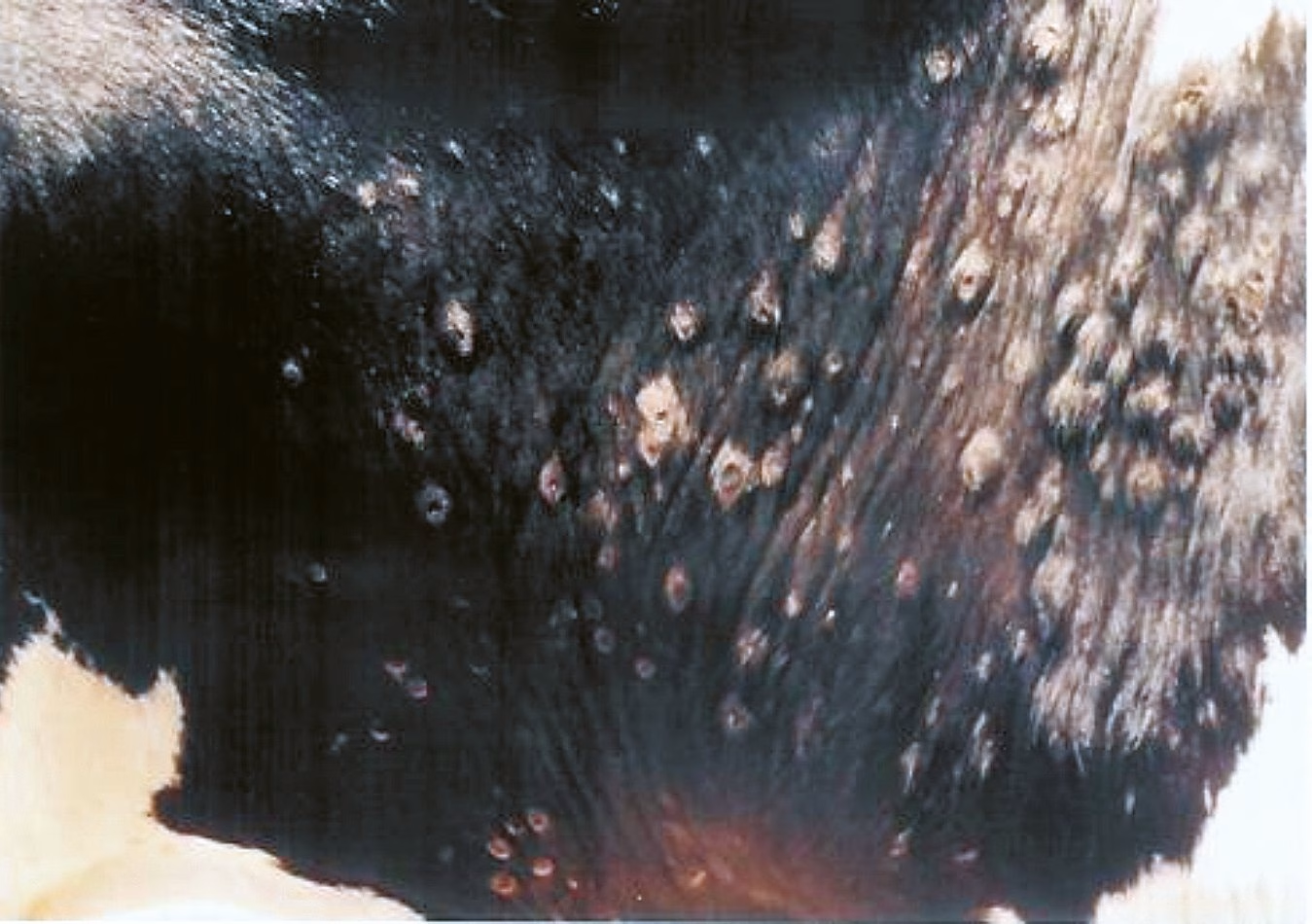
Telltale Signs of Lumpy Skin Disease. Characteristic skin nodules on an infected bovine. Training all farm personnel to identify these lesions during routine checks is the most critical factor for early detection and containment.

Look, the climate data suggests vector seasons are getting longer everywhere. I’m seeing reports from extension services across multiple states showing warmer temperatures and extended insect activity periods. That’s creating more opportunities for disease spread, plain and simple.

According to global surveillance data compiled by veterinary epidemiologists, we’re seeing new countries report LSD outbreaks at a rate that’s frankly alarming. Since 2012, the pattern has been consistent—about 2-3 new countries per year joining the “LSD-affected” list. And that trend isn’t slowing down.

For dairy producers, this changes the biosecurity conversation completely. We’re not just talking about limiting visitors anymore (though that’s still important). We’re talking about integrated vector control programs, standing water management, and manure handling protocols that consider insect breeding sites. It’s a completely different level of operational complexity.

Here’s what monthly clinical inspections need to look like now: Train your crew to recognize skin lesions, nodules, and any suspicious clinical signs. I’m talking about systematic visual inspections of every animal, not just the ones that look “off.” The sooner you catch something, the better your chances of limiting the spread and avoiding worst-case scenarios.

Real Changes Happening Right Now

I’m seeing operations across different regions starting to adapt, and the investment levels are significant. Some dairies in the Netherlands (I can’t name specific operations, but these are 800+ cow facilities) have invested upwards of €50,000 in enhanced vector control—improved ventilation systems, strategic insecticide programs, even housing modifications to reduce insect pressure. That’s real money, but when you consider the alternative…

Others are completely overhauling their cattle purchase protocols. One large dairy in northern Germany told me they’ve extended their quarantine periods from 7 days to 30 days, added pre-movement health screening that goes way beyond basic health certificates, and implemented source verification protocols that would have seemed excessive just two years ago.

The insurance angle is particularly interesting. I’m hearing from farm insurance providers across multiple states that they’re starting to incorporate disease preparedness into their risk assessments. Some are offering premium discounts of 3-5% for operations with documented biosecurity plans that include vector control measures. That might not sound like much, but on a $50,000 annual premium, that’s $1,500-2,500 back in your pocket.

Regional Differences That Actually Matter

What’s fascinating is how different regions are responding based on their specific challenges. Operations in Mediterranean climates—southern Italy, parts of Spain, even southern California—are focusing heavily on vector control because their insect seasons are longer and populations are higher. Makes perfect sense when you think about it.

But up north in places like Denmark, Wisconsin, or even parts of New York, they’re more concerned about cattle movement patterns because their vector pressure is still relatively seasonal. Different problems, different solutions.

Feed costs are playing into the economics, too, and this is where regional differences really show up. Producers in France are telling me they’re paying €300-320 per metric ton for quality corn, up from €200 just three years ago. When you’re already dealing with elevated feed costs, any production hit from disease becomes even more devastating to already tight margins.

The Vaccination Investment Reality Check

The ROI on LSD Preparedness. The economics are not close. A one-time investment in a proper vaccination program is dwarfed by the potential monthly per-cow losses during an active outbreak, making proactive vaccination one of the highest-return biosecurity investments an operation can make.

Here’s what producers need to understand about vaccination economics, and I’m going to give you real numbers based on recent procurement data. Mass vaccination campaigns using homologous vaccines typically run $4-6 per head for the vaccine itself, plus administration costs. Let’s say you’re looking at $8-10 per head all-in for a proper vaccination program.

Compare that to the documented losses from outbreak situations… according to economic analysis published in the Journal of Dairy Science (2024), affected operations are seeing monthly losses that can run $200-500 per cow during acute phases. The math isn’t complicated—vaccination is cheap insurance.

Countries and regions with pre-positioned vaccine stocks consistently fare better than those scrambling to react. The EU’s vaccine bank model, supported by regional cost-sharing agreements, represents what every major dairy region should be implementing. But it requires upfront investment and political coordination that isn’t always easy to achieve.

Where This All Leads

The European outbreaks of 2025 probably mark the beginning of something much bigger. Vector-borne diseases don’t respect borders, and our global cattle trade networks create pathways for spread that simply didn’t exist fifty years ago. I mean, we’re moving genetics internationally at a scale that would have been unimaginable to previous generations.

Smart producers are already thinking ahead, and the investment levels I’m seeing suggest they’re taking this seriously. Enhanced surveillance systems, improved biosecurity protocols, vaccination preparedness—these aren’t just regulatory compliance exercises anymore. They’re business survival strategies.

What really worries me is how unprepared some regions still are. LSD has been devastating operations across Africa and Asia for decades, but somehow we convinced ourselves it wouldn’t reach European or North American shores. Well, it’s here in Europe now, and the learning curve is steep.

I keep thinking about that genetics company executive I mentioned earlier. Twenty years of building European markets, gone overnight because of disease detection. That’s the new reality we’re all operating in, whether we like it or not.

The Bottom Line for Your Operation
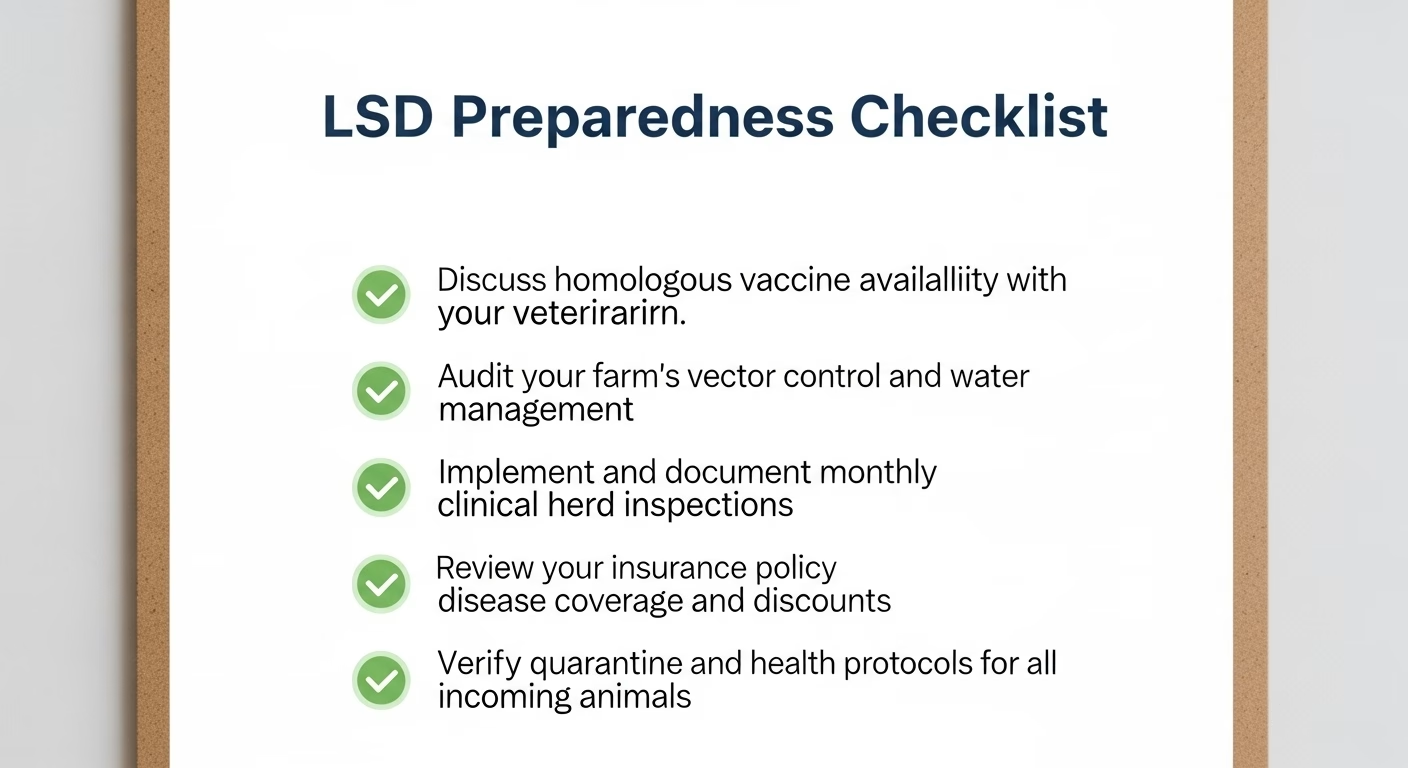
Don’t Wait, Prepare. The lesson from Europe is that reaction is exponentially more costly than preparation. Use this checklist to start a conversation with your team and your advisors this week.

The lesson from Europe is crystal clear: preparation costs way less than reaction. Whether you’re running 50 cows or 5,000, whether you’re in Wisconsin or Waikato, the economics of preparedness versus panic response aren’t even close.

This isn’t just about animal health anymore—it’s about protecting the economic foundation of dairy operations worldwide. Because once LSD gets established in a region, eradication becomes exponentially harder and more expensive. Look at how long it took to clear it from the Balkans, and they had the EU’s resources behind them.

The European dairy industry will adapt, like it always does. We’re resilient that way—we’ve weathered price crashes, regulatory changes, trade wars, and everything else thrown at us. But the cost of that adaptation… that’s what we’re all still calculating.

The producers who get ahead of this curve? They’re the ones who’ll still be in business when the dust settles. And the ones who wait until LSD shows up in their neighborhood? Well, let’s just say the Thailand and Balkan experiences suggest that’s not a strategy you want to bet your operation on.

Complete references and supporting documentation are available upon request by contacting the editorial team at editor@thebullvine.com.

Learn More:

Join the Revolution!

Join over 30,000 successful dairy professionals who rely on Bullvine Weekly for their competitive edge. Delivered directly to your inbox each week, our exclusive industry insights help you make smarter decisions while saving precious hours every week. Never miss critical updates on milk production trends, breakthrough technologies, and profit-boosting strategies that top producers are already implementing. Subscribe now to transform your dairy operation’s efficiency and profitability—your future success is just one click away.

NewsSubscribe
First
Last
Consent

FDA’s Gene-Editing Breakthrough: How Pork’s $1.2 Billion Victory Just Unlocked Dairy’s Genetic Future

Stop waiting for conventional breeding to solve disease resistance. FDA’s gene-editing approval just unlocked $1.2B in savings potential for dairy.

EXECUTIVE SUMMARY: The dairy industry’s biggest productivity breakthrough isn’t coming from nutrition or management – it’s sitting in research labs right now, waiting for farmers to embrace gene editing technology. The FDA’s April 30th approval of PRRS-resistant pigs using CRISPR technology represents a $1.2 billion annual savings opportunity for livestock producers and establishes the regulatory framework that will govern dairy applications within the next 3-5 years. Slick-coat cattle genetics are already FDA-approved and commercially available today, delivering measurable heat tolerance improvements for operations dealing with climate stress, while disease-resistant cattle targeting BVDV and mastitis are moving through development pipelines. Countries like Brazil and Argentina require no additional regulation for gene edits that could occur through conventional breeding, creating competitive advantages for international producers while U.S. farmers wait for regulatory clarity. University of California-Davis research shows homozygous polled animals typically fall 0 less in genetic merit compared to horned animals – a trade-off that gene editing eliminates completely by introducing polled traits into elite genetic lines. Smart dairy farmers need to start planning gene-editing integration into their breeding strategies now, because the technology that’s transforming pork profitability is about to do the same for dairy operations worldwide.

KEY TAKEAWAYS

  • Heat Tolerance Available Today: FDA-approved slick-coat genetics are commercially available right now, delivering lower body temperatures, reduced respiration rates, and improved reproductive efficiency in tropical conditions – providing immediate productivity gains for operations dealing with increasing heat stress in 2025.
  • Disease Resistance Pipeline Ready: Gene editing applications targeting BVDV resistance and mastitis prevention are moving through development pipelines, potentially eliminating diseases that currently cost operations thousands in treatment expenses, reduced milk yield, and premature culling within the next 3-5 years.
  • Polled Genetics Without Merit Sacrifice: Gene editing can introduce polled traits into high genetic merit sires without the typical $150 drag on productivity, eliminating dehorning costs and welfare concerns while maintaining elite milk production capabilities from top genomic bloodlines.
  • Global Competitive Disadvantage Risk: Brazil, Argentina, and other countries require minimal regulation for gene-edited traits, meaning international producers will deploy disease-resistant, heat-tolerant cattle years before U.S. operations if current FDA regulatory delays continue through 2025.
  • Economic Impact Beyond Production: Early adopters of gene-editing technology will gain multi-generational competitive advantages in feed efficiency, environmental sustainability metrics, and premium market access as consumer preferences shift toward welfare-friendly and environmentally responsible dairy products.
gene editing dairy, CRISPR livestock technology, dairy genetics innovation, livestock disease prevention, dairy farm profitability

The FDA just approved the first gene-edited livestock designed to prevent viral disease, and while everyone’s talking about pigs, the real story is what this means for your dairy operation. The April 30th approval of PRRS-resistant pigs using CRISPR technology isn’t just a win for pork producers – it’s the regulatory green light that dairy farmers have been waiting for to deploy disease-resistant, heat-tolerant, and productivity-boosting cattle that are already sitting in research labs worldwide.

The numbers tell the story better than any press release. PRRS costs the pork industry $1.2 billion annually, according to Iowa State University’s 2024 study. But here’s what should grab every dairy farmer’s attention: the same CRISPR technology that just eliminated this massive economic drain is already being used to create cattle resistant to bovine viral diarrhea virus (BVDV), equipped with heat-tolerant slick coats and producing hypoallergenic milk.

Why This FDA Decision Changes Everything for Dairy

Let’s face it – the FDA has been treating gene editing like it’s genetic modification on steroids. Until now, every gene-edited animal had to go through the same regulatory nightmare as a new pharmaceutical drug. That meant years of testing, mountains of paperwork, and costs so high that most innovations never made it past the lab.

Matt Culbertson, chief operating officer at Genus PIC, confirms the significance: “The challenges the industry is experiencing today and the specific strains of the virus that seem to be causing those challenges, the pigs do appear 100% resistant to those strains”. The technology could save the pork industry an estimated $2.5 billion yearly.

The PRRS pig approval changes that equation fundamentally. The FDA used CRISPR technology to “switch off” the CD163 gene that allows the virus to enter cells, slamming the door shut on infection. This isn’t introducing foreign DNA; it’s precision breeding that accomplishes in months what conventional breeding would take decades to achieve if it could accomplish it at all.

The Cattle Technologies Ready for Prime Time

Slick-coat cattle are already FDA-approved and commercially available. In March 2022, the FDA made a “low-risk determination” for gene-edited beef cattle with the slick hair coat, declaring them safe for human consumption. Acceligen can now market these cattle, their genetic material, and their offspring without further regulatory approval.

The performance data is compelling. Mississippi State University and the University of Puerto Rico studied 84 Holsteins with the naturally occurring slick gene and found lower body temperatures, reduced respiration rates, and improved reproductive efficiency in tropical conditions compared to traditional hair coats.

But slick coats are just the beginning. Researchers at the U.S. Meat Animal Research Center in Clay Center, Nebraska, have successfully produced cattle with dramatically reduced susceptibility to BVDV through targeted gene editing. The genome alteration was shown to inhibit infection with no discernible effects on animal physiology during the first 20 months of life.

Disease Resistance: The Billion-Dollar Opportunity

Here’s where the economics get really interesting. If gene editing can save the pork industry $1.2 billion annually by preventing one viral disease, what’s the potential for dairy operations dealing with mastitis, BVDV, and other endemic challenges?

The BVDV research represents a major breakthrough for dairy health. BVDV stands as a prominent worldwide cause of morbidity and distress among cattle populations. The innovative approach holds the potential to elevate animal welfare standards and conceivably reduce the need for antibiotics, as BVDV infections are known to increase the overall risk of secondary bacterial diseases in calves.

Disease resistance represents the sweet spot for gene editing because multiple genes control the most economically important traits like growth rate and feed conversion and have already been optimized through conventional breeding. However, disease resistance can often be achieved through targeted gene modifications interrupting specific pathological processes.

Heat Tolerance: Climate Adaptation in Your Herd

Climate change isn’t waiting for regulatory approval, and neither should your heat mitigation strategy. New Zealand researchers are taking a different approach to heat tolerance by using gene editing to change Holstein hides color from heat-absorbing black to silvery-gray.

They’ve successfully swapped the black gene with a color dilution trait from Galloway and Highland cattle, creating calves with typical spotted patterns but dramatically reduced solar radiation absorption. The science is straightforward: black absorbs more solar radiation, contributing to heat stress.

Think about the implications for your operation. Instead of investing in expensive cooling systems or accepting reduced production during summer months, you could build heat tolerance directly into your herd’s genetics.

Polled Genetics: Welfare Without Compromise

Every dairy farmer knows the polled genetics dilemma. University of California-Davis researcher Alison Van Eenennaam explains the challenge: “Homozygous polled animals in both Holstein and Jersey breeds typically fall about $150 less in genetic merit compared to horned animals”.

“Producers don’t like to use polled animals because you have this big drag on genetic merit,” Van Eenennaam shared at the 2021 University of California Golden State Dairy Management Conference.

Gene editing solves this trade-off completely. Van Eenennaam notes: “We have the ability to precisely knock out undesirable traits and knock in desirable traits like polled. This technology has the potential to impact global agriculture for the better dramatically”.

The Global Regulatory Race Creates Winners and Losers

Here’s where the story gets frustrating for American dairy farmers. While the U.S. treats gene editing as a “New Animal Drug Application,” requiring case-by-case approval, countries like Brazil and Argentina require no additional regulation for traits that could be produced through conventional breeding.

Van Eenennaam warns that the FDA’s current approach is “an awkward fit, costly, and excessively time-consuming.” The National Pork Producers Council has repeatedly called for USDA to assume regulatory oversight, with NPPC president Jim Heimerl stating: “The pace of FDA’s process to develop a regulatory framework for this important innovation only reinforces our belief that the USDA is best equipped to oversee gene editing for livestock production.”

Dr. Liz Wagstrom, NPPC chief veterinarian, emphasizes the stakes: “FDA wants to regulate gene-edited animals as new animal drugs. It is an approval process that is onerous—it is over-the-top—and it has a lot of potential repercussions”.

Recent developments offer hope. USDA has proposed taking primary oversight over gene-edited livestock, potentially ending the regulatory tug-of-war that has put U.S. agriculture in a holding pattern while competitors like China, Brazil, and Canada moved ahead.

What This Means for Your Operation

Start planning now. Gene editing isn’t science fiction anymore – it’s commercial reality being deployed globally. The FDA’s approval of PRRS-resistant pigs establishes the regulatory framework governing dairy applications.

Immediate Actions You Can Take:

Evaluate Slick-Coat Genetics Today: The technology is FDA-approved and commercially available now. For operations dealing with heat stress, this represents immediate productivity improvements. Contact your semen supplier about the availability of slick-coat genetics.

Assess Your Disease Challenges: Identify your farm’s biggest disease-related costs. Mastitis, BVDV, and other endemic problems that currently require treatment and cause production losses could be prevented through genetic resistance within the next 3-5 years.

Plan Your Breeding Strategy: Consider how gene-edited traits align with your operation’s goals. Will polled genetics reduce labor needs? Could mastitis-resistant genetics reduce treatment costs and improve milk quality premiums?

Engage Your Industry Representatives: Contact your cooperative, breed association, and industry representatives to push for accelerated development. NPPC’s advocacy helped secure the approval of the pig, as dairy needs similar pressure.

Prepare Your Consumer Story: Start developing messaging about animal welfare improvements, reduced antibiotic usage, and environmental benefits. The farms that thrive will be those that can tell compelling stories about why technology adoption aligns with consumer values.

The Bottom Line: Embrace the Revolution or Get Left Behind

The FDA’s approval of gene-edited pigs isn’t just news – it’s the starting gun for a transformation that will reshape dairy farming within the next decade. The technology works, the economics make sense, and regulatory barriers are falling worldwide.

Dr. Steven Solomon, director of the FDA’s Center for Veterinary Medicine, said: “We expect that our decision will encourage other developers to bring animal biotechnology products forward for the FDA’s risk determination in this rapidly developing field, paving the way for animals containing low-risk IGAs to reach the marketplace more efficiently.”

Smart dairy farmers need to start thinking about how gene editing fits into their long-term strategies. Disease resistance, heat tolerance, and improved genetics aren’t science fiction anymore – they’re commercial realities being developed right now.

The countries and producers that embrace this technology first will gain competitive advantages that could last for generations. The regulatory framework is established. The science is proven. The only question is whether you’re ready to embrace it.

Action Steps for Forward-Thinking Dairy Farmers:

  1. This Month: Contact your genetics supplier about slick-coat availability
  2. Next Quarter: Evaluate which diseases cost your operation the most annually
  3. This Year: Engage with industry organizations advocating for streamlined regulation
  4. Long-term: Develop breeding plans that incorporate gene-edited traits as they become available

The future belongs to farmers who understand that gene editing isn’t about playing God with genetics – it’s about using precision tools to solve real problems faster than ever before. From disease-resistant herds to climate-adapted cattle, the technology is ready. The only question is whether you’re ready to embrace it.

Learn More:

Join the Revolution!

Join over 30,000 successful dairy professionals who rely on Bullvine Weekly for their competitive edge. Delivered directly to your inbox each week, our exclusive industry insights help you make smarter decisions while saving precious hours every week. Never miss critical updates on milk production trends, breakthrough technologies, and profit-boosting strategies that top producers are already implementing. Subscribe now to transform your dairy operation’s efficiency and profitability—your future success is just one click away.

NewsSubscribe
First
Last
Consent

FMD at The Doorstep: Why Poland’s Dairy Industry Is Holding Its Breath

Poland’s dairy sector faces a ‘ticking bomb’ as FMD outbreaks creep closer. Can biosecurity measures prevent economic catastrophe?

EXECUTIVE SUMMARY: Poland’s $1.15B dairy export industry is on high alert as Foot and Mouth Disease (FMD) outbreaks in Hungary and Slovakia threaten its borders. With 30% of production exported, an outbreak could trigger immediate trade bans, culling of millions of animals, and catastrophic revenue loss. Despite robust EU-aligned contingency plans, smaller farms’ inconsistent biosecurity practices create vulnerabilities. Authorities have ramped up border controls and surveillance, but experts warn airborne transmission and pre-clinical viral shedding could outpace defenses. The industry’s survival hinges on urgent farm-level action and cross-border cooperation to avert a crisis likened to “dairy Armageddon.”

KEY TAKEAWAYS:

  • Immediate threat: FMD outbreaks <60km from Poland’s borders risk wiping out 30% of dairy exports overnight.
  • Export apocalypse: Losing WOAH FMD-free status could trigger global trade bans lasting years, devastating a sector generating €586M in trade surplus.
  • Biosecurity gaps: Small farms (38% of Poland’s dairy herd) struggle with protocols, creating weak links in national defenses.
  • Economic domino effect: Milk yields could drop 80%, with culling costs and supply chain paralysis compounding losses.
  • Call to action: Farmers must treat biosecurity like “mastitis prevention on steroids” – strict access controls, disinfection, and zero tolerance for risky animal imports.
Foot and mouth disease Poland, dairy farm biosecurity, FMD outbreak Europe, Polish dairy exports, livestock disease prevention

Poland’s dairy sector has faced its most serious disease threat in over 50 years. Foot and Mouth Disease (FMD) outbreaks in neighboring countries have placed this highly contagious livestock disease at Poland’s doorstep. With multiple confirmed outbreaks in Hungary and Slovakia since early March 2025, Polish authorities have mobilized extraordinary biosecurity measures to protect the nation’s vital dairy industry, which exports approximately 30% of its production.

“Right now, we’re sitting on a ticking bomb,” says Tadeusz Mroczkowski, president of Mlekpol, one of Poland’s largest dairy cooperatives. “It might end quickly with nothing but become very complicated. We don’t know that.”

The stakes couldn’t be higher. As the EU’s third-largest milk producer, Poland has transformed its dairy sector into a continental powerhouse since joining the European Union in 2004. But with FMD now confirmed just kilometers from its borders, the industry faces a threat that could devastate it overnight.

THE NIGHTMARE SCENARIO: WHAT HAPPENS IF FMD HITS POLAND

Let’s not sugarcoat this. If FMD breaches Poland’s defenses, the consequences would be catastrophic for dairy farmers and the entire agricultural economy. It’d be like having your entire herd come down with a severe case of mastitis overnight, but infinitely worse.

First, there’s the direct hit to your cows and milk check. Infected animals suffer sharp drops in milk yield – we’re talking 80% in some cases – and these losses often persist even after recovery. Imagine your best 40-liter cow suddenly struggling to produce 8 liters a day. The pain doesn’t stop there. FMD causes abortions, reduced fertility, and increased mortality rates, particularly among calves due to heart inflammation. It’s like having your entire replacement heifer program wiped out in one fell swoop.

But here’s where it gets truly brutal: the control measures. FMD detection triggers immediate “stamping out” – culling all infected animals and potentially susceptible animals on affected farms and linked premises. We’re talking about the potential slaughter of thousands or even millions of animals. It’d be like emptying your entire barn, from your prize-winning show cow to that stubborn heifer you’ve been trying to breed for months.

Strict movement controls would apply within legally mandated protection zones (minimum 3km radius around an outbreak) and surveillance zones (minimum 10km radius). Milk collection from farms within these zones would likely be prohibited or subject to stringent conditions, such as mandatory on-farm heat treatment (pasteurization) or even destruction, depending on the specific risk assessment and EU/national rules. Imagine your bulk tank full of milk, but no tanker allowed to collect it – day after day.

And then there’s the market access apocalypse. For an export-oriented dairy sector like Poland’s, losing international market access represents the most devastating economic consequence. Confirming even a single FMD case would immediately suspend the country’s World Organisation for Animal Health (WOAH) recognized FMD-free status.

This action would trigger importing countries worldwide to impose immediate bans on imports of live susceptible animals and a wide range of animal products (including fresh meat, milk, and dairy products) from Poland. These trade restrictions can remain in place for extended periods, often months or years, until the country regains its FMD-free status. It’s like having your milk processor suddenly refuse to buy your milk but on a national scale.

The resulting loss of export revenue would be catastrophic for Poland’s dairy sector, which relies on exports for nearly one-third of its production. The economic shockwaves would extend throughout the agricultural supply chain, affecting feed suppliers, transport companies, processing plants, and related service industries. Imagine not just your farm but your feed mill, your veterinarian, your equipment dealer – all suddenly without customers.

THE ADVANCING THREAT: WHY THIS TIME IS DIFFERENT

The FMD situation in Central Europe has escalated dramatically in the first quarter of 2025, shattering the region’s long-standing disease-free status. It’s like watching a wildfire spread across neighboring fields, getting closer and closer to your farm.

The sequence began in January when Germany confirmed its first FMD case since 1988 in a small herd of water buffaloes near the Polish border. While Germany successfully contained this outbreak through swift action and regained its FMD-free status by mid-March, the situation took a severe turn when Hungary reported its first FMD case in over 50 years on March 6-7.

The Hungarian outbreak occurred at a large dairy cattle farm with 1,400 animals in Győr-Moson-Sopron County, close to the Slovakian border. Unlike Germany’s isolated case, the Hungarian situation quickly escalated with confirmations in at least three additional large cattle farms within the same region. The virus was identified as FMD Serotype O but had a different lineage than that found in Germany, suggesting a separate introduction event.

Here’s what should keep you up at night: we’re not dealing with a single outbreak from a source. We’re facing multiple introduction events with different viral strains. This isn’t just bad luck – it suggests systematic failures in Europe’s biosecurity shield.

The crisis expanded further when Slovakia confirmed its first FMD cases in over 52 years on March 21. Initial outbreaks were detected in multiple cattle farms in the Dunajská Streda district, with subsequent cases bringing the total to at least six confirmed locations by early April. One particularly concerning development was the infection of a large farm with over 3,500 cattle near the Austrian border.

Poland’s proximity to these outbreaks immediately threatens its dairy sector. As Robert Piłat, deputy director for international cooperation at Poland’s Ministry of Agriculture and Rural Development, has acknowledged, “in some member states—Hungary, Slovakia, and parts of Austria—there are declared cases of foot and mouth disease.” While no cases have been reported in Poland, the nation shares borders with affected or at-risk countries.

FMD’s multiple potential transmission pathways magnify the risk. The virus can spread through direct animal contact, indirect contact via contaminated vehicles or equipment, ingesting contaminated materials, and, significantly, through airborne transmission. Under favorable conditions, FMD-laden aerosols can travel considerable distances – potentially up to 60 km over land. This creates a particularly dangerous situation for Polish farms near borders with affected countries. It’s like trying to keep flies out of your milking parlor on a hot summer day – but with infinitely higher stakes.

Adding to this concern is the virus’s remarkable environmental persistence. FMD can survive for up to a month in contaminated fodder, weeks in manure, up to 20 weeks in hay or straw, and even months in slurry or frozen meat products. This resilience creates numerous potential entry pathways despite border controls. Think of it like trying to keep Johne’s disease out of your herd – but with a pathogen that’s far more persistent and easier to spread.

THE BIOSECURITY BATTLEFRONT: YOUR FARM IS THE LAST LINE OF DEFENSE

Let’s be brutally honest: all the government measures worldwide won’t stop FMD if farmers don’t implement serious biosecurity in their operations. This is where the rubber meets the road – or, in dairy terms, the teat meets the inflations.

The virus can spread even before infected animals show symptoms – potentially up to 4 days prior in milk and 9 hours post-infection in other secretions. This pre-clinical shedding significantly complicates control efforts as seemingly healthy animals can already spread the infection. It’s like dealing with subclinical mastitis but with the potential to infect your entire herd and every herd in the country.

But let’s face an uncomfortable truth: how many Polish dairy farms practice meaningful biosecurity? Not just the large operations with 500+ cows but the thousands of smaller farms with 20-50 cows that make up the backbone of the industry. Are we prepared or just paying lip service to biosecurity while continuing business as usual?

Here’s what you need to do right now:

Access Control: Lock It Down

  • Implement strict visitor policies, allowing only essential personnel on farms. This isn’t the time for farm tours or casual visits. Think of your farm as a Level 3 biosecurity lab – because that’s essentially what it needs to be.
  • Clean protective clothing and footwear are required for anyone entering animal areas. No exceptions. This includes your veterinarian, AI technician, and even family members who might visit other farms.
  • Install and maintain physical barriers (fences, gates) to control entry points. Your farm should be as secure as Fort Knox.
  • Create clear “clean” and “dirty” zones on your farm with specific transition protocols. Think of it like the transition from the holding area to the milking parlor – but for every area of your farm.

Disinfection: Kill The Virus Before It Kills Your Business

  • Establish disinfection points for vehicles and personnel at farm entrances. Use approved disinfectants effective against FMDV, such as sodium carbonate (4% soda ash), citric acid (0.2%), or sodium hypochlorite (3% bleach).
  • Regularly clean and disinfect all equipment that contacts animals. Treat every piece of equipment like a milking machine that needs thorough cleaning after every use.
  • Install footbaths with fresh disinfectant at entrances to animal buildings. And make sure they’re used – a dry footbath is about as proper as an empty water trough.

New Animal Management: Think Twice

  • Avoid introducing new animals during this high-risk period. Full stop. It’s like voluntarily introducing a cow with Staph aureus into your milking herd – just don’t do it.
  • If necessary, source animals only from known disease-free herds with proper documentation. Implement strict quarantine for at least 14 days before mixing new animals with the main herd.
  • Never buy animals at suspiciously low prices – this is a red flag for potential disease issues. If a deal seems too good to be true, it probably is. Remember, cheap heifers can be the most expensive animals you’ll ever buy.

Feed and Water Security: Don’t Feed the Problem

  • Source feed, hay, and straw from FMD-free areas or ensure safe storage/treatment. Treat imported feed like you would treat colostrum from a Johne’s positive cow – with extreme caution.
  • Protect feed and water stores from contamination (wildlife, pests). A single contaminated feed delivery could infect your entire herd.
  • Implement rodent control measures. Rats and mice can be mechanical vectors for FMD like they can spread Salmonella.

Daily Monitoring: Early Detection Saves Herds

  • Implement rigorous daily health checks of all animals. Watch for early signs of FMD: fever, excessive salivation, reluctance to eat, and lameness. It’s like checking for mastitis – early detection is key.
  • Immediately report any suspicious symptoms to veterinary authorities (PIW/private vet). Don’t wait to see if animals improve – with FMD, every hour counts.
  • Don’t wait to see if animals improve – with FMD, every hour counts. It’s like dealing with a twisted stomach – the quicker you act, the better the outcome.

THE HARD TRUTH: OUR INDUSTRY ISN’T READY

Let’s stop kidding ourselves. Despite all the warnings and government measures, the Polish dairy industry isn’t fully prepared for an FMD outbreak. Too many farms still operate with minimal biosecurity. Too many farmers still think, “It won’t happen to me.” Too many industry leaders are afraid to speak the uncomfortable truth: we’ve grown complacent after decades without FMD.

Are we willing to bet the entire industry on the assumption that FMD won’t cross our borders? Because that’s exactly what we’re doing every time we skip a biosecurity measure, take a shortcut, and think, “Just this once won’t matter.”

The reality is that Poland’s diverse farm structure – from large, modern operations to small traditional farms – creates significant vulnerability. While larger farms often have the resources to implement robust biosecurity, many smaller operations struggle with the practical and economic challenges of maintaining high-level protection. Yet FMD doesn’t discriminate based on farm size or profitability. One breach anywhere becomes a threat everywhere.

Have we learned nothing from African Swine Fever? For years, ASF has ravaged Poland’s pig industry despite control efforts. Yet many dairy farmers seem to think FMD is someone else’s problem. It’s not. It’s our problem, and it demands our immediate attention.

THINKING THE UNTHINKABLE: ARE YOU PREPARED FOR THE WORST?

While prevention is paramount, smart dairy farmers are also preparing for the worst-case scenario. What would you do if FMD hit your area? How would you manage if milk collection was suspended? What’s your financial contingency plan if exports collapse and domestic prices plummet?

Here are some hard questions you need to answer now:

  1. Cash Flow Resilience: How long could your operation survive with severely reduced or no milk income? Do you have financial reserves or credit lines that could sustain your business through a prolonged crisis?
  2. Feed Security: Do you have sufficient feedstocks if movement restrictions were imposed? Could you source feed if standard supply chains were disrupted?
  3. Animal Welfare Planning: How would you manage full udders and animal welfare issues if milk collection stopped? Do you have protocols in place for this scenario?
  4. Disposal Capacity: In a worst-case scenario where milk couldn’t be collected or sold, do you have the capacity to dispose of it in an environmentally acceptable way?
  5. Communication Channels: How would you stay informed about rapidly changing regulations and restrictions? Are you connected to official information sources?
  6. Compensation Awareness: Do you understand the compensation mechanisms that would apply if your animals were culled as part of control measures? Have you reviewed your insurance coverage?
  7. Mental Health Support: Have you identified support resources for the psychological impact of potentially losing animals or facing severe business disruption?

Are you prepared to answer these questions or gamble with your farm’s future?

BEYOND THE CRISIS: RETHINKING INDUSTRY RESILIENCE

The current FMD threat should force us to reconsider fundamental aspects of our industry structure. The ongoing consolidation trend – with fewer, larger farms producing an increasing share of the nation’s milk – creates strengths and vulnerabilities.

More extensive operations typically have more resources to implement robust biosecurity measures and can potentially better weather market disruptions. However, concentration also means that disease impacts on a large farm can outsize regional production.

The industry’s heavy export orientation has driven impressive growth and creates significant vulnerability to trade disruptions. Should we develop stronger domestic consumption to provide some buffer against future animal disease-related trade shocks? Or investing more in processed products with longer shelf life that can weather temporary market closures?

And let’s ask the question no one wants to ask: should we reconsider our approach to vaccination? The EU’s non-vaccination policy for FMD has regularly served us well, facilitating trade. But in this new era of increased global movement and climate change affecting disease patterns, is it time to debate whether strategic preventive vaccination might be a more sustainable approach for the future?

Digital technologies offer promising tools for enhancing disease surveillance and response. Real-time monitoring systems that track animal health parameters could enable earlier disease detection. At the same time, blockchain-based traceability could help maintain market access by providing verifiable proof of product origin from disease-free zones.

THE BOTTOM LINE: THE TIME FOR ACTION IS NOW

Poland’s dairy industry stands at a critical juncture as FMD threatens from neighboring countries. The economic stakes couldn’t be higher – with nearly one-third of the country’s substantial dairy production destined for export markets, an outbreak would trigger immediate and potentially long-lasting trade bans. The direct consequences for individual farms would also be severe, with significant drops in milk production, animal suffering, and potential culling.

The country’s veterinary authorities have mobilized an impressive array of preventative measures, from enhanced border controls to extensive surveillance and farmer education. However, the ultimate effectiveness of these efforts depends largely on the consistent implementation of biosecurity measures at the farm level – a significant challenge given Poland’s diverse farm structure.

For Polish dairy farmers, the coming weeks and months will require exceptional vigilance and discipline in maintaining stringent biosecurity protocols—the investments required for these preventative measures pale compared to the devastating costs of an outbreak. While the industry has already demonstrated remarkable resilience and adaptability through its post-EU transformation, the FMD threat may be its greatest challenge.

The time for half-measures and complacency is over. This is a fight for survival, and every farm is on the front line. Just as you wouldn’t ignore a somatic cell count creeping up or skip a crucial vaccination, you can’t afford to let your guard down against FMD.

Will you be part of the solution, implementing rigorous biosecurity and demanding the same from your neighbors? Or will you be part of the problem, hoping someone else will protect the industry while you continue business as usual?

The future of Polish dairy farming depends on the actions we take today. Let’s ensure we’re doing everything possible to keep FMD out and our cows healthy and productive. Because if we fail, we won’t just be dealing with a disease outbreak – we’ll be fighting for the very survival of our industry.

The choice is yours. What will you do differently tomorrow?

Learn more:

Join the Revolution!

Join over 30,000 successful dairy professionals who rely on Bullvine Daily for their competitive edge. Delivered directly to your inbox each week, our exclusive industry insights help you make smarter decisions while saving precious hours every week. Never miss critical updates on milk production trends, breakthrough technologies, and profit-boosting strategies that top producers are already implementing. Subscribe now to transform your dairy operation’s efficiency and profitability—your future success is just one click away.

NewsSubscribe
First
Last
Consent
Send this to a friend





