







11 pounds more milk daily. 50% less disease. All from one dose of meloxicam 14 days before calving. Penn State proved it.
EXECUTIVE SUMMARY: Your transition cow problems have been starting 21 days before calving—you just didn’t know it. Revolutionary research from Penn State and Iowa State proves inflammation, not energy balance, drives fresh cow disease by hijacking glucose worth 68 pounds of milk daily. The solution is surprisingly simple: targeted anti-inflammatory treatment that costs $10 per cow but delivers 15:1 returns. Progressive farms using these protocols are cutting disease rates in half (from 25% to 12%) while increasing milk production by 3-11 pounds per day. First-calf heifers get meloxicam prepartum, overconditioned cows get aspirin, and normal cows get treated postpartum—timing is everything. Even farms that can’t use medications are seeing 60% of the benefits through management changes alone. This isn’t incremental improvement—it’s a paradigm shift that’s redefining what’s possible in transition cow performance.
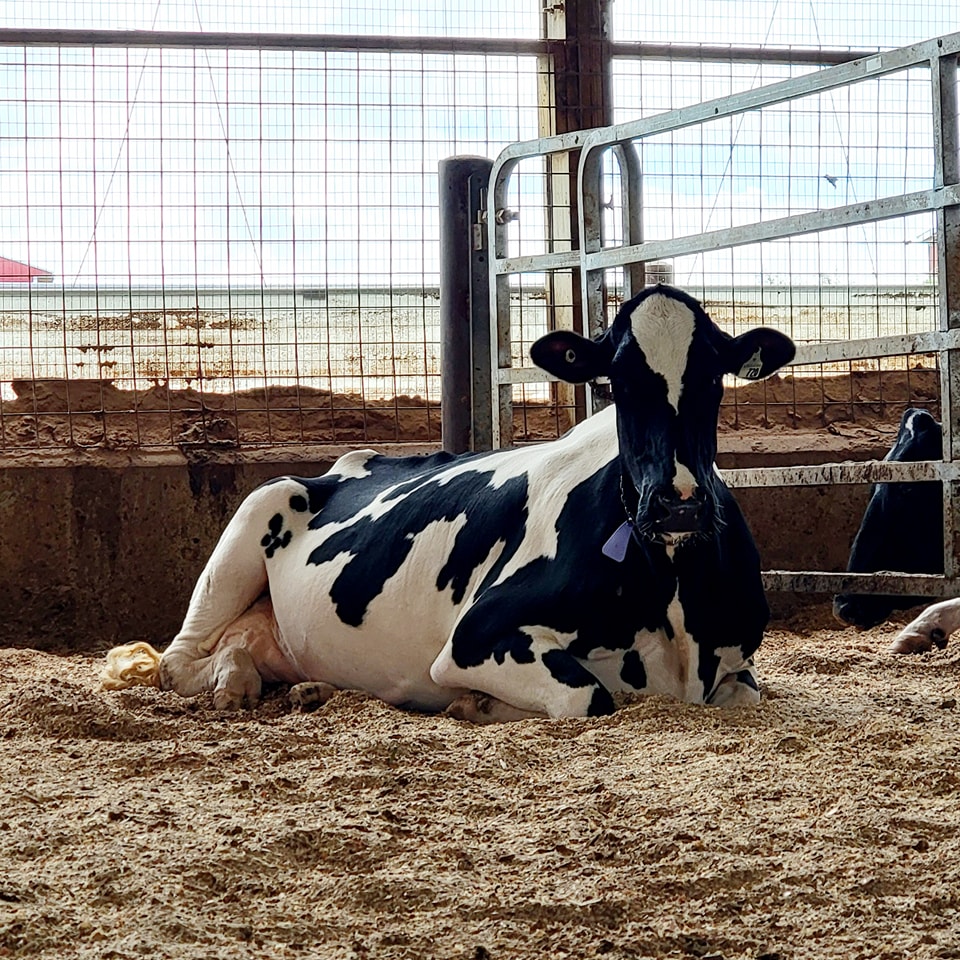
You know, there’s a pattern I’ve been noticing in fresh cow pens across the country—something that’s probably been bothering you too. Some cows sail through transition while others struggle, even when they’re getting identical feed and care. For years, we’ve all just accepted that 20-30% of our fresh cows will develop some kind of metabolic or infectious disease in early lactation. Cost of doing business, right? The price of pushing biology to produce 100+ pounds of milk daily.
But here’s what’s interesting… recent research from Iowa State, Penn State, and the University of Alberta is turning this thinking on its head. What I’ve found is that many transition cow problems aren’t coming from where we thought they were. And the solutions emerging from this research? They’re both simpler and way more profitable than any of us expected.
The whole thing centers on inflammation—though not the kind you can see. Research teams have identified an inflammatory cascade that starts — get this — 14 to 21 days before calving. It’s essentially programming your cows for success or failure before they even hit the maternity pen.
What’s encouraging is that forward-thinking operations—and I’ve talked with quite a few lately—are already putting this knowledge to work. They’re cutting fresh cow disease rates by 40-50% while bumping milk production by anywhere from 3 to 11 pounds per day. Real milk in the tank, not theoretical gains.

Understanding What’s Really Going On
So Barry Bradford—he was at Kansas State, now he’s up at Michigan State—and Lance Baumgard at Iowa State discovered something that seemed impossible at first. When a dairy cow’s immune system really kicks into gear, it burns through 2 to 3 kilograms of glucose daily. Think about that for a second. That’s enough glucose to produce 44 to 68 pounds of milk. Just gone. Hijacked by the immune system.
The Iowa State team demonstrated this with elegant work published in the Journal of Dairy Science in 2017. They challenged cows with lipopolysaccharide—basically a bacterial toxin—while infusing glucose to keep blood glucose levels normal. And even with all that extra glucose… milk production still crashed by 42% on day one. The immune system was outcompeting the mammary gland for glucose, despite plenty being available in the bloodstream.
This flipped everything we thought we knew. For decades, right? We’ve blamed negative energy balance for problems during transition. Cow doesn’t eat enough; it mobilizes body fat; metabolic problems follow. Simple story. But Baumgard’s comprehensive review in 2021 suggested something completely different—that inflammation might be causing both the reduced intake and the metabolic dysfunction. Cart before the horse, so to speak.
Meanwhile—and this is where it gets really interesting—Elda Dervishi’s team was tracking inflammatory markers in transition cows. What they found back in 2016 was that cows destined to develop retained placenta, metritis, or ketosis showed elevated inflammation markers starting 14 to 21 days before calving. Way before any clinical signs. The inflammation came first.
And here’s the kicker… Burim Ametaj’s team at Alberta just published work showing that hypocalcemia—which we’ve always treated as a simple calcium deficiency—might actually be the body’s intelligent response to control inflammation. Pro-inflammatory cytokines upregulate calcium-sensing receptors, actively lowering blood calcium as a protective mechanism. That’s why some cows don’t respond to calcium supplementation, no matter how much you give them. Their inflammatory state won’t let calcium normalize.
What Progressive Farms Are Actually Doing
I’ve been talking with producers who aren’t waiting for this to become mainstream. They’re implementing targeted anti-inflammatory protocols based on individual cow risk, and the results… honestly, they’re pretty compelling.
Adrian Barragan’s team at Penn State developed these risk-based protocols—just published this year—that have been validated across commercial dairies in Pennsylvania and Ohio. What they’re finding is that precision targeting beats blanket treatment every time:
First-calf heifers receiving meloxicam 2 weeks before expected calving are producing an extra 11 pounds of milk per day during the first 150 days. At current milk prices—anywhere from $0.14 to $0.22 per pound, depending on your market—that’s substantial money.
For overconditioned cows (body condition score 3.75 or higher), prepartum aspirin treatment has reduced disease rates from around 38-46% to 21%. Makes sense when you think about it—Michigan State research shows these heavier cows experience enhanced inflammatory stress from all that adipose tissue metabolism.
Normal-condition multiparous cows do best with postpartum treatment. Aspirin given 12 to 36 hours after calving—and this is critical, after the placenta passes—yields about 3.6 pounds more milk daily for over 60 days. Penn State documented what happens if you give NSAIDs too early: stillbirths increase fivefold. So timing really matters here.
A California producer who shared their experience (requesting anonymity due to ongoing research participation) is milking about 1,800 Holsteins near Turlock. After tracking haptoglobin levels following a Michigan State extension workshop, they found their fresh cow average was running 0.9 grams per liter—way above the 0.5 target. Six months after implementing targeted protocols and improving their heifer housing, they’re down to 0.6 and still dropping. Michigan State data shows that improvement correlates with about 1,000 pounds of additional milk per lactation. That’s real money.
Now, different systems face different challenges. A Vermont producer managing 450 Jerseys in tie-stalls (who asked to be identified only by state) told me, “We can’t easily separate heifers, and we’re dealing with humidity rather than dry heat. But focusing on bunk space, ventilation, and treating our at-risk cows has still cut fresh cow problems by 40%.” You work with what you’ve got, right?
Managing the Triggers You Can Control
What’s empowering about all this is learning how much inflammation we can actually control through management. Research has identified several key areas where relatively simple changes yield big results.
Heat stress during the dry period… this one’s huge, and I think we’ve all been underestimating it. Geoffrey Dahl’s extensive work at the University of Florida shows that cows experiencing THI values above 72 during the final three weeks before calving produce 5 to 16 pounds less milk daily throughout the next lactation. The damage persists for months.
Now, investing in cooling for dry cows—you’re looking at $2,000 to $5,000 depending on your setup—can return $60 to $160 per cow in additional milk revenue. I’ve seen operations in Arizona and New Mexico where dry cow cooling pays for itself in under a year.
Stocking density in closeup pens is another big one. Wisconsin research by Cook and Nordlund consistently shows that keeping close-up pens below 80% capacity improves dry matter intake, reduces cortisol levels, and cuts fresh cow disease rates. Many farms could achieve this tomorrow just by adjusting group movements or repurposing existing space. I know it’s tempting to pack that closeup pen when you’re tight on space, but the data is crystal clear on this.
Dietary transitions cost nothing to improve but pay huge dividends. Limiting starch increases to less than five percentage points when moving to lactation rations helps prevent what Baumgard’s team calls “leaky gut,”—where bacterial endotoxins flood into circulation and trigger systemic inflammation. Pure management discipline, no capital required.
Social dynamics… this one surprises people. Mixing first-lactation heifers with mature cows exposes them to about twice the inflammatory stress. An Idaho producer (name withheld at their request) invested $45,000 in separate heifer facilities and watched fresh cow disease rates drop from 35% to 18%.
But you don’t need $45,000. A Georgia dairyman with 2,200 Holsteins shared an innovative approach: they achieved meaningful improvements just using portable gates to create separate feeding areas within existing pens. Cut competitive displacements by 60%. Sometimes the simple solutions work best.
Treatment Protocols That Actually Work
Quick Protocol Reference
Prepartum Treatment (14 days before expected calving):
- First-calf heifers: Meloxicam (1 mg/kg) or Aspirin (125g)
- Overconditioned cows (BCS ≥3.75): Aspirin (125g)
- Previous problem cows: Aspirin (125g)
Postpartum Treatment (12-36 hours after calving, placenta must be expelled):
- Normal multiparous cows: Aspirin (4 boluses)
- Never give before the placenta passes—can increase stillbirths 5x
Note: Meloxicam requires a veterinary prescription in most jurisdictions. These protocols are based on North American research and regulations—international producers should consult local veterinary guidelines. Aspirin boluses are available through most veterinary suppliers.
The Economics Make This a No-Brainer
Let’s talk money. Consider a typical 500-cow dairy implementing basic protocols:
Investment runs about $3,250 annually. That’s assuming 25% first-calf heifers at $10 each for meloxicam, 10% overconditioned cows at $8 for aspirin, and treating 40% of your multiparous cows at $8 each.
Returns? Based on documented improvements, you’re looking at around $52,400. That breaks down to $37,125 from heifer milk increases, $7,500 in disease-reduction savings, and $7,776 in multiparous production gains.
That’s better than a 15-to-1 return at $0.18 per pound of milk. Even at $0.14 milk, you’re still over 11-to-1. And if you’re getting $0.22 with premiums? The numbers get even better.
For organic operations or those choosing to minimize pharmaceutical use, just implementing the management changes—cooling, stocking density, dietary transitions—captures about 60% of the total benefit. Tie-stall operations might see slightly different results than freestalls, but the principles hold. Spring-calving herds might implement differently than year-round operations, but the biology remains consistent.
Want to track your own results? Most dairy management software systems can help monitor the key metrics: disease incidence, milk production by treatment group, and actual ROI based on your specific costs and milk price.
Spotting Hidden Inflammation
What farmers are finding is that several subtle signs suggest excessive inflammation before obvious disease appears:
- Daily rumination below 500 minutes that first week fresh—if you’re tracking this
- More than 15% of fresh cows with any disease event within 30 days
- Butterfat dropping below 3.2% in Holsteins, 3.8% in Jerseys
- Wide swings in peak milk between seemingly similar cows
- Discharge hanging around beyond 21 days postpartum
These metrics give you an early warning that inflammation’s impacting performance.
Getting Your Team on Board
The biggest challenge isn’t technical—it’s cultural. Most vets and nutritionists were trained when metabolic theories dominated. Jessica McArt from Cornell’s College of Veterinary Medicine suggests approaching advisors as partners in exploration rather than challenging their expertise.
A Wisconsin producer near Shawano (requesting anonymity) shared their approach: “We presented the research to our vet and suggested testing protocols on half our fresh cows for 90 days. When the disease dropped from 31% to 18% in the treatment group, everyone became believers.”
A practical trial might run like this: Two weeks of collecting baseline data. Ten weeks with half your cows on treatment, half as controls. One week to analyze and discuss results with your team.
The key is establishing clear baseline metrics first. Without knowing current disease rates and production patterns, you can’t convincingly demonstrate improvement.
Where This is All Heading
The inflammation paradigm is just the beginning. Three areas show particular promise:
Microbiome analysis is getting close to commercial reality. Garret Suen’s team at Wisconsin has identified specific bacterial changes that precede ketosis. While full profiling services are probably still 3-5 years out, some probiotic companies are already developing targeted products based on this research. Current options include various yeast products and bacterial probiotics that support gut health during transition—ask your nutritionist about what’s available in your area.
Specialized pro-resolving mediators—compounds that actively turn off inflammation rather than just suppressing it—are showing promise. Lorraine Sordillo at Michigan State has been pioneering this work. Human medicine’s already using these successfully; dairy applications are coming.
AI integration with monitoring systems shows immediate potential. Companies like CowManager are testing systems that predict disease 5-7 days before clinical signs with accuracy approaching 85%, though these are still early-stage claims needing field validation.
For producers looking to stay current, the annual conferences at Penn State and Iowa State, as well as the American Dairy Science Association meetings, are excellent sources of the latest transition cow research.
Making This Work on Your Farm
After talking with dozens of early adopters, several principles keep coming up:
Start with a simple risk assessment. Score body condition at closeup entry—shoot for 90% of cows between 3.0 and 3.5. Separate heifers from mature cows when possible. Flag cows with previous transition problems.
Target your interventions rather than treating everyone. Focus prepartum treatments on heifers and high-risk cows. Save postpartum for normal multiparous animals. And never, ever give NSAIDs before that placenta passes.
Fix the management basics alongside any pharmaceutical approach. If dry cows are panting, they need cooling. Keep stocking densities reasonable. Make dietary changes gradually. These management factors contribute as much as the medications.
Track everything. Disease rates, milk differences, and actual ROI based on your milk price. This data becomes invaluable for refining protocols and convincing skeptics.
Most importantly, shift your thinking from treatment to prevention. We’re not trying to manage sick cows better—we’re creating conditions where fewer cows get sick in the first place.
The Bigger Picture
This isn’t just incremental improvement—it’s a fundamental shift in how we think about transition biology. Operations implementing comprehensive inflammation management report not just better numbers but cultural changes in how teams approach fresh cows.
An Idaho dairyman running 2,000 cows near Twin Falls (who shared their story on condition of anonymity) put it perfectly: “We used to budget for 25% morbidity. Now we’re under 12% and still improving. But the bigger change? Our team focuses on creating optimal conditions rather than preparing for problems. That mindset shift changes everything.”
Success factors vary by region and system. Grazing operations face different triggers than confinement dairies. Humid climates present different challenges than arid regions. But that’s the beauty—you can identify and address your specific inflammatory triggers.
The evidence keeps strengthening. Peer-reviewed research confirms the biology. Field implementation proves it’s practical. Economic analysis shows compelling returns across all pricing scenarios.
For progressive producers, the question isn’t whether to consider inflammation management—it’s how quickly to adapt it to your operation. This evolution in understanding might well define the difference between thriving and just surviving in today’s competitive environment.
The transition period will always be dairy’s greatest metabolic challenge. But we’re learning it doesn’t have to be our greatest source of loss. By understanding and managing inflammatory processes, we can help cows navigate this critical period more successfully than ever.
And that’s what this is really about, isn’t it? Not just the science or the economics, but giving our cows the best chance to do what they do best—make milk efficiently and stay healthy doing it.
KEY TAKEAWAYS
- The game-changer: Inflammation starts 21 days before calving—treat it then, not after
- ROI that matters: Spend $10 per cow, get $150 back in milk and health
- Know your protocol: Heifers = meloxicam prepartum | Fat cows = aspirin prepartum | Normal cows = aspirin postpartum
- Management alone works: Can’t use NSAIDs? Fix cooling, crowding, and feed changes for 60% of benefits
- Field-proven: 50% less disease, 11 extra pounds of milk in heifers, under 12% morbidity achievable
Producers interested in implementing these approaches should work with dairy veterinarians familiar with current transition cow research. Key resources include Baumgard’s 2021 comprehensive review “The influence of immune activation on transition cow health and performance” and Barragan’s 2024 work on targeted protocols, both published in the Journal of Dairy Science. Extension specialists at Penn State, Iowa State, Michigan State, and Cornell offer excellent implementation guidance tailored to regional conditions. The principles discussed here are based primarily on North American research—international producers should consult local experts for region-specific adaptations.
Learn More:
- Unlocking Cow Comfort: The Hidden Driver of Milk Production in 2025 – This article provides the tactical “how-to” guide for managing the triggers mentioned in the main piece. It details how to optimize lying time, bedding, and stocking density to boost production and reduce the base-level stress that fuels inflammation.
- Navigating Record Dairy Cow Prices in 2024: Farmers’ Guide – This strategic analysis quantifies the high cost of failure. It details the record $2,600 price for replacement cows, providing the critical financial incentive for implementing the main article’s protocol to reduce culling and keep mature, healthy cows in the herd.
- Genetic Revolution: How Record-Breaking Milk Components Are Reshaping Dairy’s Future – This piece explores a different path to profitability. While the main article focuses on protecting milk volume through health, this innovative guide reveals how to use genetic strategy to increase milk value by prioritizing fat and protein in a post-2025 market.
 Join the Revolution!
 Join the Revolution!
Join over 30,000 successful dairy professionals who rely on Bullvine Weekly for their competitive edge. Delivered directly to your inbox each week, our exclusive industry insights help you make smarter decisions while saving precious hours every week. Never miss critical updates on milk production trends, breakthrough technologies, and profit-boosting strategies that top producers are already implementing. Subscribe now to transform your dairy operation’s efficiency and profitability—your future success is just one click away.






