A textured calf starter can boost your calf’s growth by up to 35% — are you still grinding your feed?
You know that moment when the feed truck rolls up and you’re staring at invoices, wondering if that premium for textured calf starter is really worth it? Well, here’s something that might change how you look at those feed bills forever.
Across dairy farms of all sizes and regions, the message is consistent: the physical form of the starter feed isn’t just about convenience anymore. It’s about setting up heifers that will become profitable foundations of the herd.
Numbers That Get Your Attention
Here’s what caught my eye in the research: Cornell’s solid work (Soberon et al., 2012) found every extra pound of pre-weaning gain means 850 to 1,113 kilograms (1,875 to 2,450 pounds) more milk in first lactation alone. For example, even with milk prices in the $17-19/cwt range, that’s an extra $200 to $300 in your pocket — just in year one.
This chart visualizes how strategic investments in calf nutrition, particularly a premium starter, offer a substantial return. The data shows that while there is an initial added cost per calf (red bars), the net economic benefit (blue bars) from improved health, faster growth, and enhanced lifetime production significantly outweighs the investment.
But here’s the thing: it’s not about dumping more grain on calves. It’s about recognizing a newborn’s rumen as a construction site — and us, the contractors.
Research from Coverdale et al. (2004) was pivotal in demonstrating how textured starters increase dry matter intake and promote superior rumen development compared to other feed forms. Their work showed that physical feed characteristics aren’t just about palatability — they’re fundamental to proper digestive development.
Visual evidence of superior rumen development. Images (a) and (c) show the rumen lining of calves fed only milk (M), with smaller papillae and thinner epithelial layers. In contrast, images (b) and (d) display significantly longer, more numerous papillae and a more mature rumen epithelium in calves fed milk plus a starter diet (M+S), highlighting the critical role of solid feed in early rumen development.
I found biology fascinating: volatile fatty acids, especially butyrate, act as molecular messengers signaling the rumen lining to grow while reducing cell death. Texture matters because coarse particles make calves chew more and ruminate more — that ramps up saliva flow, and saliva brings bicarbonate that keeps rumen pH around 6.2 to 6.8, avoiding acid damage as the rumen builds its engine.
As Dr. Sarah Mills, a ruminant nutritionist at Midwestern University, says, “You only get one chance to build that rumen. Butyrate in a textured starter signals the rumen lining to grow and mature, setting the calf up for a lifetime of production. It’s a biological investment with compounding returns.”
This aligns with what veterinarians and nutritionists observe on farms: fewer digestive issues when calves consume textured starter.
Textured vs Pelleted: The Research Data
The facts are clear, and recent studies like Jafari et al. (2018) confirm what progressive producers have been seeing on-farm:
Calves on textured starters eat 15-25% more
They achieve 20-35% higher average daily gain
They spend over 140% more time ruminating
They wean about a week earlier
They digest feed 7-13% better
A side-by-side comparison of key performance metrics, demonstrating the measurable advantages of a textured starter. The data highlights significant gains in starter intake, average daily gain (ADG), rumination time, and overall digestibility, all of which contribute to a more robust and profitable calf.
That rumination difference — 20% for textured vs. 9% for pelleted — is big. Jafari’s work specifically linked this to more stable rumen pH and better overall digestion, which sets calves up for healthier transitions throughout their development.
Checking the Local Pulse
Premiums for textured starters vary widely by region and market conditions, typically ranging from $40 to $85 per ton, based on a compilation of regional feed market reports from the past year. However, producers should always check local pricing to understand their investment.
In Wisconsin and other traditional dairy regions, adoption is increasing because growers recognize the value, especially during tough winters. In newer dairy regions, progress is slower — a natural consequence of such a significant change.
Payback? Most farms see it in 6 to 8 months, thanks to better health and growth.
Sponsored Post
Making It Work on Your Farm
Here’s what successful farmers do:
Get colostrum fed on time
Start textured starter early — even just a taste
Keep water clean and free
Maintain robust milk feeding while pushing starter intake
Keep feed fresh — no stale piles
Look for rumination starting around 3-4 weeks
Push past 3 pounds of starter by 4-8 weeks
Add small, quality forage portions after that
Wean gradually, based on feed intake, not calendar
Dealing with Practical Stuff
Yes, textured feeding takes some attention:
Store feed in climate-controlled bins
Control dust when humid
Use a twice-daily feeding schedule
But the payback is real.
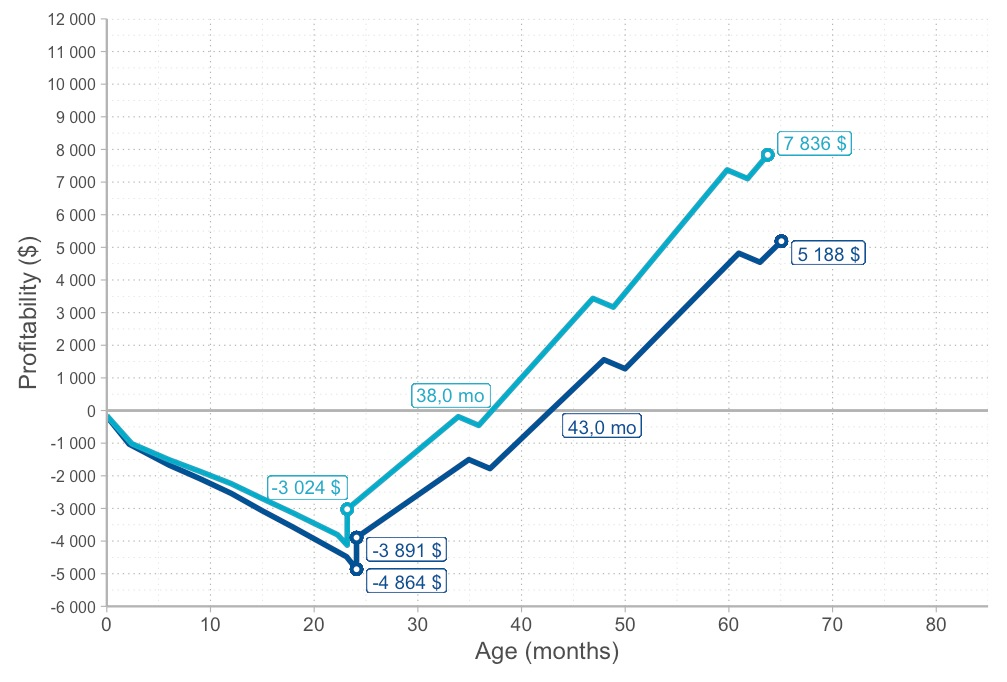
This graph illustrates the long-term financial impact of strategic heifer rearing. The lines show profitability over a heifer’s lifetime, demonstrating the initial cost of raising the animal (the negative curve) followed by the eventual positive return. The investment in superior early nutrition helps the heifer reach profitability sooner (as early as 38 months), demonstrating the long-term financial payoff of building a strong foundation. (Source: Lactanet)
Bottom Line
The window for building optimal rumen capacity closes between 8 and 10 weeks of age. Miss it, and you’re managing the consequences for that cow’s entire productive life. Get it right, and you’ve built yourself a money-maker.
KEY TAKEAWAYS:
Textured starters spark up to 25% higher intake — calves eat more willingly, grow stronger, and develop better digestive foundations from week one
Pre-weaning growth boosts up to 35% translate into hundreds of extra pounds of milk per cow over her lifetime — that’s real money in your pocket, not just better-looking calves
Coarser feed textures promote natural chewing and rumination, boosting saliva flow that buffers rumen pH to a healthy 6.2-6.8 range — preventing costly acidosis and digestive upsets
Farmers worldwide report smoother weaning transitions and healthier calves with textured feeds — especially crucial in today’s tight economic conditions, where every animal needs to perform
Research from Cornell, Purdue, and European universities backs this strategy with hard data linking texture-focused feeding to superior rumen development and lifetime productivity gains
EXECUTIVE SUMMARY:
At The Bullvine, we’re seeing that the old “grind-everything” approach to calf starters is quietly holding back performance across dairy operations. Textured starters improve intake by up to 25% and growth by up to 35%, delivering concrete ROI with long-term economic impact — including an extra $200-$300 per heifer in first-lactation earnings from better pre-weaning development. This isn’t just about feeding more grain; it’s about nurturing a robust rumen foundation from day one that pays dividends for years. Around the globe, progressive dairies from New Zealand to Europe are already making this switch, focusing on digestion quality that pairs perfectly with farm economics. With university studies from Cornell to Europe confirming these benefits — improved rumen health, more stable fermentation, and healthier calves with fewer digestive issues — the path forward is clear. It’s time to challenge assumptions and make textured starters a cornerstone of your 2025 calf program.
Complete references and supporting documentation are available upon request by contacting the editorial team at editor@thebullvine.com.
Learn More:
Calf Rearing Excellence: Finding the Perfect Feeding Plan for Your Farm – This tactical guide offers a variety of practical strategies for structuring milk and starter feeding programs, with insights on how to achieve optimal rumen development and overall health through different feeding methods, including TMR.
Maximizing Calf Performance: The Million-Dollar Investment in Your Dairy’s Future – This strategic article provides a high-level economic perspective, demonstrating how early calf management decisions, like achieving target ADG, translate into thousands of dollars in long-term profitability and improved lifetime productivity for your herd.
Every week, thousands of producers, breeders, and industry insiders open Bullvine Weekly for genetics insights, market shifts, and profit strategies they won’t find anywhere else. One email. Five minutes. Smarter decisions all week.
Are you discarding liquid gold? Discover how extended colostrum feeding adds $500 per heifer while slashing treatment costs and boosting lifetime milk.
Your current calf feeding program may be limiting your profitability by up to $500 per heifer. Discover how leading producers are capitalizing on the untapped potential of extended colostrum feeding.
Traditional calf feeding approaches that transition quickly from colostrum to milk replacer could be limiting your herd’s genetic potential and reducing your operation’s future revenue. Recent research challenges conventional wisdom about colostrum feeding and reveals significant economic opportunities.
Groundbreaking research from Dr. Michael Steele at the University of Guelph is transforming our understanding of how early nutrition impacts lifetime performance and profitability in dairy cattle.
While many producers still follow traditional colostrum protocols and early weaning schedules, forward-thinking dairy farmers are implementing science-backed feeding strategies that maximize lifetime performance and profitability.
“Think of a calf as a ball rolling down a hill. The nutrition and management decisions made in those first weeks determine the trajectory of that animal’s entire productive life,” explains Dr. Michael Steele, University of Guelph.
YOUR COLOSTRUM PROGRAM HOLDS UNTAPPED POTENTIAL
The dairy industry is moving beyond viewing colostrum as simply a one-time immunology booster. Progressive producers recognize that traditional approaches have limited their operations’ potential for decades.
“Many farms feed one or two servings of colostrum and then switch calves over to whole milk or milk replacer at 12 hours or 24 hours of age,” notes Dr. Michael Steele from the University of Guelph. “But this approach overlooks the additional benefits available in that valuable first milk”.
The science is clear: colostrum contains peptides, carbohydrates, and fatty acids that are unique compared to whole milk. These components benefit the calf in multiple ways.
Colostrum also provides immune system modulators, cytokines, hormones, and a rich supply of vitamins and minerals critical for gut health, function, and development. These bioactive compounds support the developing calf beyond basic nutrition, setting the foundation for lifetime performance.
THE VALUABLE RESOURCE YOU MIGHT BE DISCARDING
The composition of milk changes dramatically across the first four milkings, highlighting why transition milk remains valuable beyond just the first colostrum feeding:
Component
Colostrum (Milking 1)
Milking 2
Milking 3
Milking 4
Total solid
26.7%
18.3%
14.8%
13.8%
Fat
5.7%
4.6%
4.0%
3.7%
Protein
15.7%
8.6%
5.4%
4.8%
IgG
94.1 g/L
39.3 g/L
13.9 g/L
6.1 g/L
Lactose
2.4%
3.7%
4.1%
4.1%
Milk yield
5.9 kg
7.7 kg
9.7 kg
12.3 kg
“Many producers discard transition milk, which is essentially a valuable resource. The second milking contains nearly 40g/L of immunoglobulins—nutrition that’s often not being utilized,” notes Dr. Alex Bach, ICREA Research Professor.
Even the second milking contains 39.3 g/L of IgG—still 6.5 times higher than conventional milk. These valuable proteins and solids continue outperforming conventional milk through the fourth milking.
THE EXTENDED FEEDING ADVANTAGE
Research conducted at the University of Guelph under Dr. Steele’s supervision has demonstrated that replacing part of the milk diet with either 50% colostrum for 2 days or 10% colostrum for 14 days reduced the incidence of diarrhea and mortality while improving growth at specific time points.
This extended colostrum feeding approach also reduced gut permeability and positively impacted insulin metabolism in the developing calves.
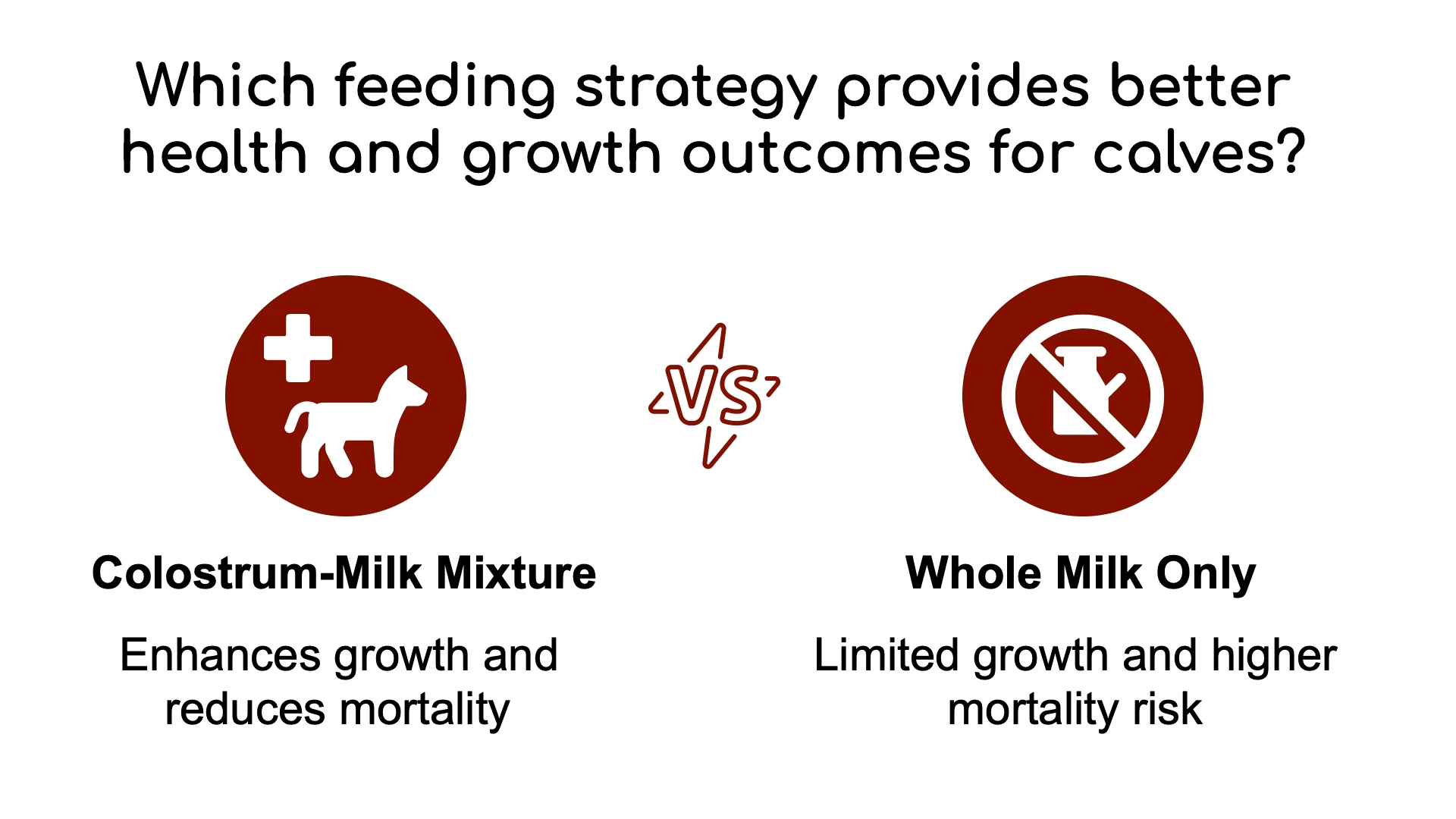
Multiple studies confirm these benefits. Calves fed a mixture of 50% whole milk and 50% colostrum on Day 2 and Day 3 showed better intestinal development, higher immunoglobulin levels, and lower mortality risk than calves that received only whole milk.
IgG (Immunoglobulin G): The primary antibody in colostrum that provides passive immunity to calves. Calves with blood serum IgG concentrations >10 g/L have successful passive transfer, significantly lowering disease and mortality risk.
Transition Milk: Milk collected from the 2nd through 8th milkings post-calving. It contains higher levels of beneficial compounds than regular milk but less than first-milking colostrum.
Bioactive Compounds: Non-nutritive elements in colostrum, including growth factors, antimicrobial peptides, and oligosaccharides that support gut development and immune function beyond essential nutrition.
FPCM (Fat and Protein Corrected Milk): A standardized measure of milk production adjusted to 4.0% fat and 3.3% protein, allowing for more accurate comparisons between different feeding protocols.
COLOSTRUM AS A NATURAL HEALTH SUPPORT
Research from the University of Guelph demonstrates the potential of colostrum as a therapeutic intervention for calves experiencing digestive challenges.
In one controlled study, calves with diarrhea were divided into three treatment groups: a control group, a group receiving a mixture of 50% milk replacer and 50% colostrum replacer for two days (four meals), and a group receiving the same mix for four days (eight meals).
The results were compelling: calves receiving the extended colostrum therapy for four days resolved their diarrhea cases more quickly than other calves and demonstrated higher average daily gain.
“Our data shows that extended colostrum therapy resolved diarrhea cases faster than conventional treatments while supporting continued growth. This isn’t just about treating disease—it’s about maintaining growth trajectories during health challenges,” explains Dr. Michael Steele, University of Guelph.
This finding is further supported by a large-scale study involving 144 heifer calves, which found that diarrhea was significantly more prevalent in calves fed only milk compared to those receiving colostrum supplements.
Calves receiving 700g of colostrum in 5kg of milk daily for 14 days had greater weaning weight, final body weight, enhanced feed efficiency, and superior average daily gain. They also experienced fewer days with elevated rectal temperature, poor general appearance, diarrhea, and pneumonia.
ADDRESSING COMMON MISCONCEPTIONS
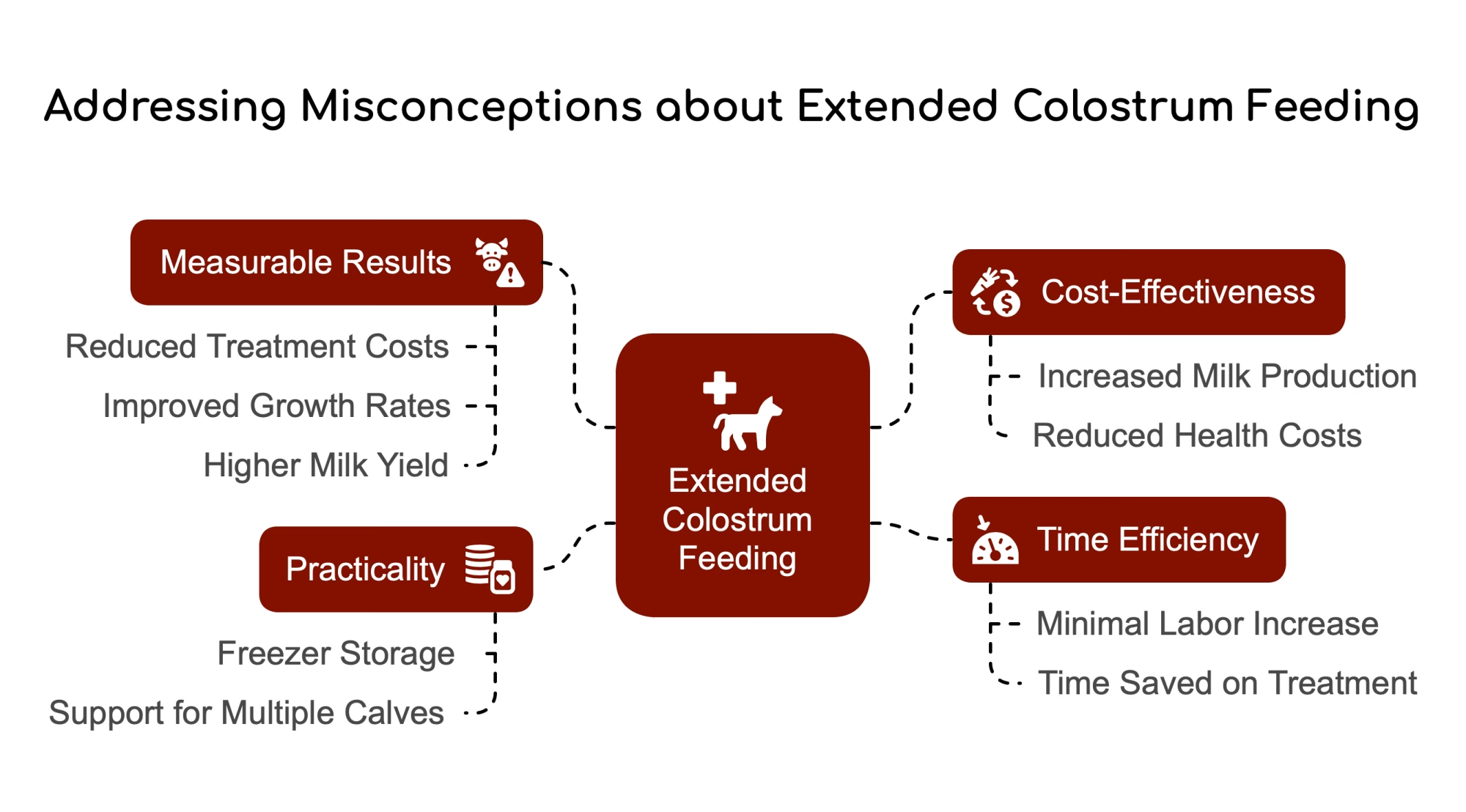
MISCONCEPTION #1: “Extended colostrum feeding is too expensive.”
REALITY: Research from Cornell University demonstrates every invested in improved calf nutrition returns in increased lifetime milk production and reduced health costs. The colostrum you’re currently not fully utilizing already represents a resource—using it more effectively captures potential value.
MISCONCEPTION #2: “I don’t have time to implement a more comprehensive feeding protocol.”
REALITY: Extended colostrum feeding requires minimal additional labor. Progressive producers report 5-10 minutes of extra daily time to prepare colostrum supplements, while treating a sick calf requires 30+ minutes per day plus medication costs.
MISCONCEPTION #3: “The results aren’t measurable enough to justify changing.”
REALITY: Data from multiple university studies shows quantifiable improvements: reduced treatment costs ($15-25 per calf), reduced mortality (5-7% improvement), improved average daily gain (80-150g/day), and increased first lactation milk (500-1,000 pounds). These are measurable returns.
MISCONCEPTION #4: “It’s impractical to store that much colostrum.”
REALITY: Economic analysis shows that even small operations can justify dedicated freezer storage for this purpose. A standard chest freezer (15 cu. ft.) costs approximately $500 and can store enough colostrum to support 30-40 calves—a one-time investment that delivers returns with each calf raised.
WEANING TIMING: A CRITICAL DECISION POINT
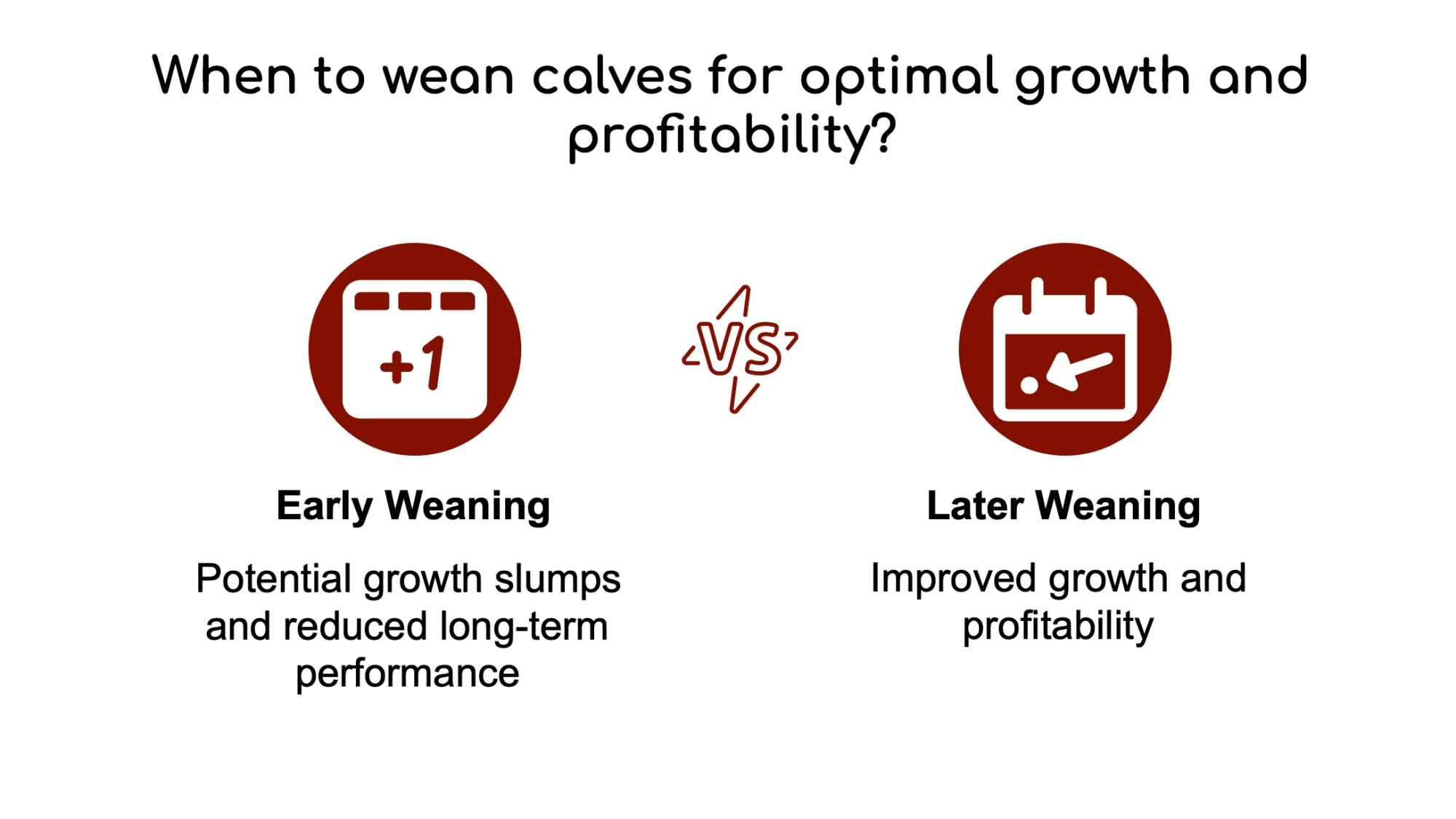
An important factor that impacts profitability is weaning timing. “The number one factor to remember is that weaning later is better,” emphasizes Dr. Steele, challenging the conventional rush to solid feeds.
“We consistently see producers weaning calves at 6 weeks when their starter intake is nowhere near adequate. That’s like taking the training wheels off a bicycle while the child is still learning to pedal,” explains Dr. Michael Steele, University of Guelph.
The economic reality is that calves under 8 weeks of age often aren’t physiologically ready for complete weaning, especially those receiving higher levels of nutrition. Their digestive systems are still developing, their starter intake may be inconsistent, and premature weaning can trigger growth slumps that affect long-term performance.
Progressive producers understand that timing weaning based on starter intake—not an arbitrary calendar date—ensures each animal maintains its growth trajectory. When your heifers enter the milking herd 22-24 months later, this approach pays dividends that outweigh the short-term feed savings from early weaning.
Before implementing extended colostrum feeding, understand the options and ensure proper preservation. The term “extended colostrum feeding” can apply to:
Transition milk feeding (from the second to eighth milkings postpartum)
Addition of true first-milking colostrum to milk replacer or whole milk
Incorporating commercial colostrum replacer into the liquid diet
Each approach can be practical, but implementation requires proper planning. Colostrum may be preserved for extended feeding using low temperatures or potassium sorbate.
ADDRESSING PRACTICAL IMPLEMENTATION CHALLENGES
While the science is compelling, practical implementation requires addressing several real-world challenges:
SOLUTION: Implement a color-coded labeling system for different milkings. According to the University of Minnesota Extension, colostrum can be refrigerated for up to one week or frozen for up to one year when stored correctly in one or two-quart containers. Commercial colostrum preservatives containing potassium sorbate extend refrigerated shelf life to two weeks.
CHALLENGE: Labor Management During Feeding
SOLUTION: Penn State research suggests batch preparation of colostrum supplements. For a 10% inclusion rate, mix 1 part colostrum with nine parts milk replacer in a dedicated container each morning, then use this pre-mixed solution for all feedings that day. This requires just 5-10 minutes of additional preparation time.
CHALLENGE: Disease Transmission Risk
SOLUTION: When using pooled colostrum in herds with known disease concerns, heat treatment at 60°C (140°F) for 60 minutes significantly reduces pathogen concentration while preserving IgG functionality. Commercial colostrum replacers provide a viable alternative for high-risk herds.
BIOSECURITY CONSIDERATIONS
Assess your herd’s disease status before implementing extended colostrum feeding. When pooling colostrum, pathogens like Johne’s, Mycoplasma, and Salmonella pose transmission risks.
Progressive operations mitigate this through pasteurization (60°C for 60 minutes), while others opt for commercial colostrum replacers as a biosecurity measure.
THE LIFETIME RETURNS ON INVESTMENT
Many producers still view the pre-weaning period as maintenance rather than the critical developmental window that sets lifetime performance trajectories.
The science is clear: higher planes of nutrition during the first 8 weeks directly correlate with enhanced milk production in the first lactation.
“If you are not feeding high levels of milk the first four weeks of life, you are missing out on growth potential,” Dr. Steele states.
Research consistently shows that increased average daily gain during this critical period positively impacts future milk production.
EVIDENCE-BASED RESULTS
Recent research from Trouw Nutrition provides evidence of this lifetime impact. Their LifeStart program study followed two groups of Holstein dairy calves from birth through their productive lives, with one group receiving a higher plane of nutrition (8 liters daily vs. 4 liters for controls).
The pre-weaning average daily gain was 155 g/day higher in the LifeStart group. Here’s what happened when these animals reached lactation:
First Lactation Results:
Measure
LifeStart
Conventional
p-value
Milk production (FPCM), kg/d
30.8
29.9
0.01
Fat, g/d
1296
1213
<0.05
Protein, g/d
995
996
0.95
Lactose, g/d
1363
1368
0.86
Second Lactation Results:
Measure
LifeStart
Conventional
p-value
Milk production (FPCM), kg/d
36.8
35.5
0.12
Fat, g/d
1536
1464
<0.05
These aren’t minor differences—they represent competitive advantages that compound with each animal in your herd. The LifeStart calves produced nearly a kilogram more fat-corrected milk per day in the first lactation, with benefits continuing into the second lactation.
CASE STUDY: TRANSFORMATION AT RIVERVIEW DAIRY
When Ed Malecha at Riverview Dairy in Minnesota implemented extended colostrum feeding in 2022, he was initially skeptical about the return on investment. “We were already getting good results with our calves compared to industry averages,” says Malecha. “I wasn’t convinced this change would make a significant difference”.
One year after implementing a 14-day colostrum supplementation protocol, the results were clear:
Treatment rates for scours decreased from 23% to 8% of calves
Average daily gain increased by 0.24 pounds per day
Treatment costs dropped by $18.50 per calf
Labor requirements for treating sick calves decreased by 1.2 hours per calf
“The most surprising benefit was how quickly we recouped our investment,” notes Malecha. “The dedicated freezer for colostrum storage cost $650, but we recovered that within the first month through reduced treatment costs alone”.
Riverview now extends the protocol to include colostrum therapy for any calf showing early signs of scours. “We’ve significantly reduced the need for antibiotics in our pre-weaning calves,” says Malecha. “That’s better for the calves and our bottom line”.
YOUR 5-STEP ACTION PLAN
If you’re still considering your calf program primarily as a cost center rather than an investment opportunity, here’s a science-backed action plan:
MAXIMIZE FIRST COLOSTRUM IMPACT Ensure colostrum feeding of 10% to 12-15% of body weight within the first 12 hours. This adjustment dramatically improves immunity and development.
IMPLEMENT EXTENDED COLOSTRUM FEEDING Choose a 50% colostrum mix for days 2-3 or a 10% colostrum inclusion for 14 days. Research from the University of Guelph confirms both approaches reduce diarrhea risk and mortality while boosting growth.
CONSIDER COLOSTRUM THERAPY FOR DIGESTIVE CHALLENGES A 50/50 milk-colostrum mix fed for four days (eight meals) helps resolve diarrhea while supporting continued growth.
INDIVIDUALIZE WEANING DECISIONS Delay weaning until calves consistently consume adequate starter. Let individual calf development guide your weaning timing, not calendar dates.
PRESERVE COLOSTRUM PROPERLY Use refrigeration, freezing, or approved preservatives like potassium sorbate to maintain colostrum quality for extended feeding.
The economic implications of these changes are substantial. Studies consistently show that calves receiving adequate colostrum and proper nutrition during the pre-weaning period experience improved growth rates, reduced morbidity and mortality, and fewer treatments than calves with inadequate passive transfer or nutrition.
“The most expensive feed you’ll ever give a calf is the feed you don’t give them in those first two months of life. Every kilogram of growth not achieved pre-weaning costs three times more to achieve post-weaning,” notes Dr. Jud Heinrichs, Penn State University.
START TODAY: THREE IMMEDIATE STEPS
Don’t wait to begin capturing these economic benefits. Here are three actions you can implement immediately:
THIS MORNING: Order colostrum storage supplies. Basic supplies needed: chest freezer (if not already available), 1-quart storage bags, permanent markers, and labels. Total investment: approximately $600-800, depending on freezer size.
TOMORROW: Begin collecting and storing transition milk. Label milk from the first eight milkings post-calving and refrigerate rather than discard. Even without a complete protocol, this transitional step begins capturing value immediately.
THIS WEEK: Schedule a protocol development meeting. Include your veterinarian, nutritionist, and calf manager to customize an extended colostrum protocol for your specific operation.
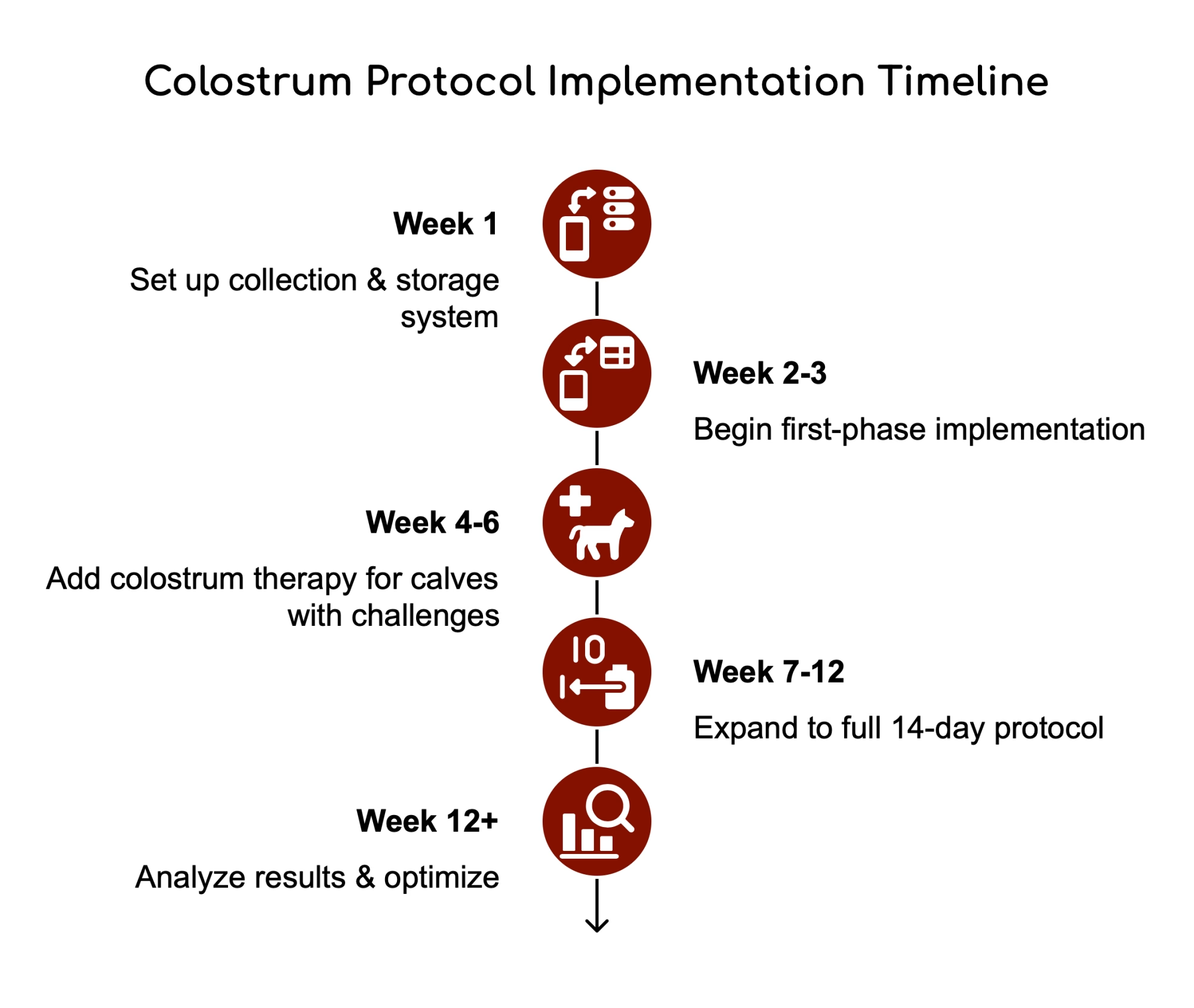
IMPLEMENTATION TIMELINE
Week
Priority Action
Key Focus
1
Set up collection & storage system
Create protocols for properly identifying, testing, and storing colostrum
2-3
Begin first-phase implementation
Start with colostrum feeding for days 2-3 (easier to implement than 14-day protocol)
4-6
Add colostrum therapy for calves with challenges
Train staff to identify early signs and implement colostrum treatment
7-12
Expand to full 14-day protocol
Gradually transition to complete implementation
12+
Analyze results & optimize
Evaluate health records, growth data, and financial metrics to fine-tune protocol
LOOKING FORWARD: INNOVATION IN CALF NUTRITION
The science of calf nutrition continues to evolve beyond traditional practices. The choice is clear: embrace research-backed protocols that maximize lifetime performance or risk falling behind as competitors gain these advantages.
Dr. Steele aptly compares a calf to “a ball rolling down a hill,” where early feeding decisions determine its future trajectory. The investment in higher planes of nutrition, extended colostrum feeding, and individualized weaning isn’t just about raising better calves—it’s about securing your operation’s financial future in an increasingly competitive dairy landscape.
Research from the University of Guelph and other institutions provides evidence that enhanced feeding protocols deliver measurable improvements in health outcomes, growth efficiency, and long-term productivity.
Progressive producers are already implementing these protocols and seeing the returns on their investment.
Key Takeaways
Transition milk value: Even second-milking colostrum contains 39.3 g/L of IgG—6.5 times higher than conventional milk—yet most farms discard this valuable resource after the first feeding.
Protocol options: Producers can choose either 50% colostrum for days 2-3 (simpler implementation) or 10% colostrum for 14 days (maximum benefit), with both approaches scientifically proven to reduce disease and boost growth.
Disease management: Extended colostrum feeding serves as both prevention and treatment—a 50/50 milk-colostrum mix fed for four days resolves diarrhea cases more effectively than antibiotics while supporting continued growth.
Implementation simplicity: Basic infrastructure (freezer storage, proper labeling system) and 5-10 minutes of daily preparation time can transform calf raising from a cost center into a high-return investment.
Long-term profitability: The investment delivers measurable improvements in first and second lactation performance, with studies showing nearly a kilogram more fat-corrected milk per day from properly fed calves.
Executive Summary
Research from the University of Guelph reveals that traditional calf feeding practices substantially limit dairy operations’ profitability through missed growth opportunities and increased health challenges. By implementing extended colostrum feeding protocols—either using 50% colostrum for 2-3 days after birth or incorporating 10% colostrum for 14 days—producers can significantly reduce disease incidence, improve daily weight gain by 80-150g, and increase first lactation milk production by 500-1,000 pounds. Implementation requires minimal additional labor (just 5-10 minutes daily) while delivering approximately $4 return for every $1 invested. The economic impact is substantial, with case studies showing treatment rates for scours dropping from 23% to 8% and average daily gain increasing by 0.24 pounds per day, ultimately adding around $500 per heifer to the operation’s bottom line.
Learn more:
COLOSTRUM: Stop Making Costly Mistakes – Explores how only 39.4% of colostrum samples meet industry standards, highlighting the importance of quality assessment and proper administration timing.
Join over 30,000 successful dairy professionals who rely on Bullvine Daily for their competitive edge. Delivered directly to your inbox each week, our exclusive industry insights help you make smarter decisions while saving precious hours every week. Never miss critical updates on milk production trends, breakthrough technologies, and profit-boosting strategies that top producers are already implementing. Subscribe now to transform your dairy operation’s efficiency and profitability—your future success is just one click away.
To provide the best experiences, we use technologies like cookies to store and/or access device information. Consenting to these technologies will allow us to process data such as browsing behavior or unique IDs on this site. Not consenting or withdrawing consent, may adversely affect certain features and functions.
Functional
Always active
The technical storage or access is strictly necessary for the legitimate purpose of enabling the use of a specific service explicitly requested by the subscriber or user, or for the sole purpose of carrying out the transmission of a communication over an electronic communications network.
Preferences
The technical storage or access is necessary for the legitimate purpose of storing preferences that are not requested by the subscriber or user.
Statistics
The technical storage or access that is used exclusively for statistical purposes.The technical storage or access that is used exclusively for anonymous statistical purposes. Without a subpoena, voluntary compliance on the part of your Internet Service Provider, or additional records from a third party, information stored or retrieved for this purpose alone cannot usually be used to identify you.
Marketing
The technical storage or access is required to create user profiles to send advertising, or to track the user on a website or across several websites for similar marketing purposes.
To provide the best experiences, we and our partners use technologies like cookies to store and/or access device information. Consenting to these technologies will allow us and our partners to process personal data such as browsing behavior or unique IDs on this site and show (non-) personalized ads. Not consenting or withdrawing consent, may adversely affect certain features and functions.
Click below to consent to the above or make granular choices. Your choices will be applied to this site only. You can change your settings at any time, including withdrawing your consent, by using the toggles on the Cookie Policy, or by clicking on the manage consent button at the bottom of the screen.
Functional
Always active
The technical storage or access is strictly necessary for the legitimate purpose of enabling the use of a specific service explicitly requested by the subscriber or user, or for the sole purpose of carrying out the transmission of a communication over an electronic communications network.
Preferences
The technical storage or access is necessary for the legitimate purpose of storing preferences that are not requested by the subscriber or user.
Statistics
The technical storage or access that is used exclusively for statistical purposes.The technical storage or access that is used exclusively for anonymous statistical purposes. Without a subpoena, voluntary compliance on the part of your Internet Service Provider, or additional records from a third party, information stored or retrieved for this purpose alone cannot usually be used to identify you.
Marketing
The technical storage or access is required to create user profiles to send advertising, or to track the user on a website or across several websites for similar marketing purposes.










 The Sunday Read Dairy Professionals Don’t Skip.
 The Sunday Read Dairy Professionals Don’t Skip.