






At 4:47 AM, with a calf in one hand and dirty twine in the other, you find out which gifts actually work.
Walk into any dairy shop in January, and you can usually spot the Christmas gifts that didn’t make the cut. The shiny 150-piece “homeowner” tool kit with half the sockets missing. The clever farm sign is still leaning against the wall. The boots that were worn twice and then quietly retired.
I recently heard from a herd manager who described grabbing one of those 150-piece kits to tighten a sagging sort gate in a transition pen. The lower hinge bolt had worked loose after months of fresh cows rubbing on it. If the gate dropped, close-up dry cows and fresh cows would mix—a fresh cow management headache no one wants on a cold December afternoon.
He reached for the new kit because it was closer than his regular socket set. The ratchet looked the part, but it wasn’t built for “agricultural torque” on a rusted bolt that had endured years of urine, slurry, and freeze-thaw cycles. Under a hard pull, the internal gear stripped, his hand smashed into the gate upright, and the plastic case went face-down into the straw, scattering bits and sockets into the bedding. The bolt was still loose; his knuckles were bleeding; the impressive gift had just proven it didn’t belong on a working dairy.
That story keeps repeating because dairy farmers don’t need more stuff. They need gear that withstands the realities of a working barn—ammonia exposure, acidic silage leachate, and sand bedding that grinds through anything with moving parts. With the holiday season here, it seemed like a good time to put together something more useful than the typical gift roundup.
The Four-Question Filter
Before spending anything, run potential gifts through these questions. They separate the gear that gets used from the gear that collects dust:
Can they operate it with one hand? Farmers are constantly holding halters, steadying calves, and carrying buckets. If something requires two hands or setup time, it probably won’t get used when it’s most needed.
Does it solve an existing problem? A cordless grease gun makes an existing chore less painful. A fitness tracker creates a new routine—charging, remembering, checking. Most producers aren’t looking to add complexity.
Will it hold up in barn conditions? Consumer-grade tools use thin chrome plating over soft metal. Professional agricultural tools use vanadium- or molybdenum-alloy steels that flex under stress rather than shatter.
Are you adding something missing, or replacing something that works? That worn Carhartt jacket with the torn pocket has been field-tested for years. Sometimes the best approach is to fill gaps rather than replace favorites.
Recommendations by Price Tier
| Price Range | Recommendation | What Makes It Work | Current Pricing |
| Under $25 | Milwaukee Fastback Utility Knife | One-handed opening, disposable blades | $15-20 |
| $25-50 | Darn Tough Merino Socks | Lifetime replacement, no receipt needed | $25-32/pair |
| $35-50 | Knipex Cobra Pliers | One-hand adjustment, 61 HRC hardened teeth | $35-50 |
| $50-150 | ISOtunes PRO 3.0 Earbuds | 27 dB hearing protection with Bluetooth | $99-120 |
| $120-160 | Carhartt Insulated Bib Overalls | 12-oz duck shell, quilted lining | $120-160 |
| $150-300 | Milwaukee M18 Grease Gun | 10,000 PSI, battery-powered | $149-279 |
| $180-250 | Women’s Work Boots (Ariat Krista/Muck Arctic Ice) | True women’s last, proper biomechanics | $180-250 |
| $300+ | FLIR One Edge Pro | Thermal imaging for preventive maintenance | $499-549 |
Pricing verified December 2025 from Northern Tool, Tractor Supply, and manufacturer sites. U.S. pricing shown; Canadian readers should expect some variation. Regional differences apply.
Practical Picks Under $50
Milwaukee Fastback Utility Knife ($15-20)
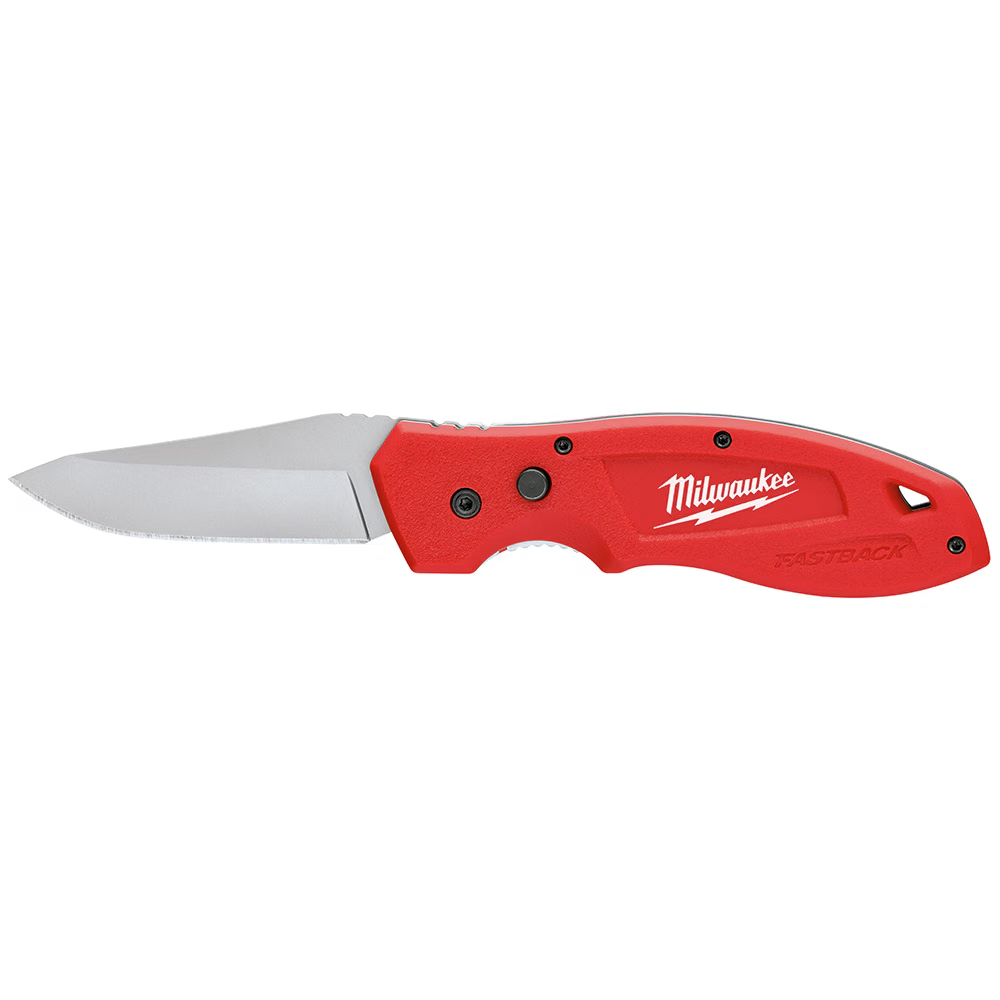
It doesn’t look like much—essentially a warehouse box cutter. But consider how much baling twine and silage plastic gets cut on a dairy operation. That twine picks up grit and dried mud that will destroy the edge on a nice pocket knife surprisingly fast.
One freestall manager in central Wisconsin put it this way when we talked: “My ‘good’ knife is for clean work. The utility knife is for everything else. I don’t feel bad abusing it, and that means I actually carry it.”
The Fastback uses disposable blades you can flip or swap in seconds. The one-handed opening mechanism means a farmer can hold a calf’s head, flick the knife open, cut through a twisted ear tag, and close it—all without letting go.
Darn Tough Socks ($25-32/pair)

Feet are cold and wet on a dairy. That’s just the reality, whether you’re in Vermont or California’s Central Valley. Darn Tough manufactures these merino wool socks with reinforced heels and toes at their Vermont facility. When they eventually wear out, you mail them back and receive a replacement pair. No receipt required.
This solves friction in an existing routine. Everyone puts on socks every morning. You’re just making that existing habit more comfortable.
Knipex Cobra Pliers ($35-50)

These German-made pliers are showing up in more pockets around barns. The push-button adjustment lets you change jaw width with one hand—useful when your other hand is occupied holding something in place. According to Knipex specifications, the gripping teeth are induction-hardened to approximately 61 HRC, providing a firm grip on rusted nuts without slipping.
I watched a producer use these to get a grip on a corroded water line fitting that had defeated two other pliers. The jaw teeth bit in, the fitting turned, and he was back to chores in under a minute. That’s the kind of moment where good tools earn their place in a pocket.
The $50-200 Range
ISOtunes Bluetooth Hearing Protection ($99-120)

Dairy barns are louder than most people realize. OSHA standards require hearing protection when workers are exposed to 85 decibels or higher averaged over eight hours—and between milking equipment, ventilation fans, skid steers, and tractors, many operations regularly exceed that threshold.
The ISOtunes PRO 3.0 provides 27 dB of noise reduction (ANSI-rated) while allowing phone calls and audio. The IP67 rating protects against dust and moisture, and the 20-hour battery life lasts multiple shifts. From a practical standpoint, this means a farmer can take a call from the vet while standing in a running parlor without removing ear protection or shouting over the equipment.
Carhartt Insulated Bib Overalls ($120-160)

The 12-ounce cotton duck shell handles encounters with barbed wire and gate latches. The quilted lining extends to the waist for easier on-and-off, while the insulation maintains core temperature during early-morning chores when it’s well below zero.
What makes the bib design valuable: it eliminates that cold gap at the lower back when you’re bending to check a calf or working on a water line. The pocket placement works with gloves on, and the construction—triple-stitched seams, rivets at stress points—holds up to daily use.
A note for warmer regions: if you’re buying for someone in Texas, the Southeast, or other warmer climates, the unlined duck version makes more sense. Insulation that’s essential for a Wisconsin or Minnesota winter becomes a liability when you’re dealing with heat and humidity.
The Body-Saving Investments: $150-300
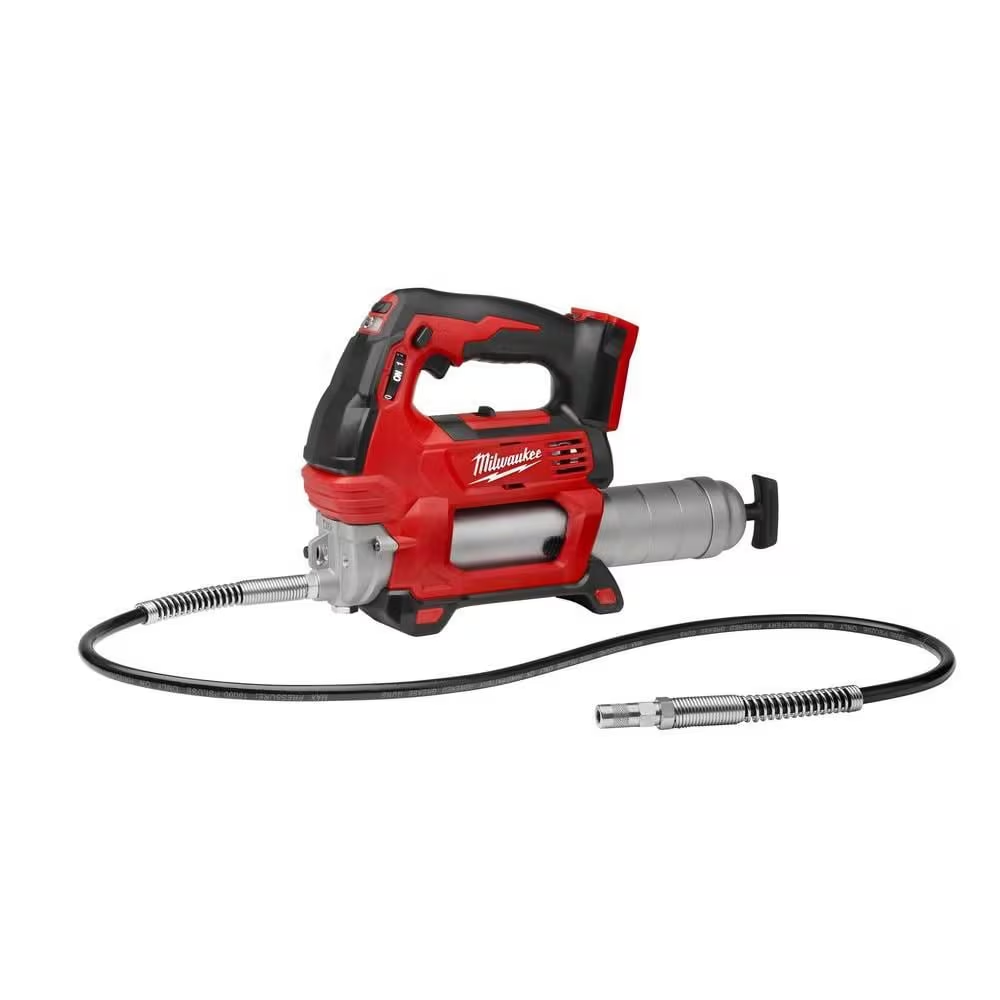
Milwaukee M18 Cordless Grease Gun ($149-279)
A 2012 study in the Journal of Agromedicine found that 47% of dairy farmers reported work-related shoulder pain. More recent research in Healthcare (2024) puts that number at 61%, with lower back complaints affecting 65% of workers.
When you think about the mechanics of manual greasing—lying on your back in mud, reaching up into a dark chassis to hold a coupler on a Zerk fitting at an awkward angle, pumping a stiff lever against high pressure—those numbers make sense.
One producer running a 900-cow freestall in upstate New York was blunt about it: “I’ll be honest—before the cordless gun, the hardest Zerks got ‘missed’ too often. Now we run the grease list properly, and my shoulders don’t hate me for it.”
The Milwaukee M18 delivers 10,000 PSI through an electric motor. Trigger replaces pumping. When greasing becomes less physically demanding, the maintenance actually gets done consistently. For smaller operations, the manual Milwaukee with the same coupler design runs $40-50.
Women’s Work Boots: A Design Problem Worth Understanding
The USDA’s 2022 Census of Agriculture shows that 36% of all U.S. producers are women. Yet most “women’s work boots” are essentially men’s boots scaled down and offered in different colors. Women’s feet aren’t simply smaller versions of men’s feet—the skeletal structure differs significantly.
A herd manager at a 600-cow Holstein freestall in central Wisconsin described her experience: “Once I switched from ‘women’s’ fashion boots to a pair actually built on a women’s work last, my heels stopped bleeding, and my back quit screaming halfway through the shift.”
Boots explicitly designed for women’s biomechanics—like the Ariat Krista Steel Toe ($180-220) or Muck Boot Arctic Ice ($200-250)—position the safety toe correctly and distribute impact appropriately. Look for companies that explain how they design for women’s feet, not just smaller sizes.
The Strategic Investment: Thermal Imaging
FLIR One Edge Pro ($499-549)

At first glance, spending $500 on a camera seems difficult to justify. But the economics of disaster prevention change that calculation.
Consider: an electrical breaker overheating due to internal corrosion, running at 150°F inside a panel where it’s invisible to normal inspection. Without thermal imaging, that heat builds until insulation melts and sparks fly. With thermal imaging, a routine evening walkthrough catches the hot spot—and an electrician replaces the breaker for under $100.
Beyond electrical panels, it’s useful for:
- Catching overheating bearings before they seize
- Identifying early hoof inflammation through heat signatures (tissue runs warmer before visible lameness develops)
- Spotting insulation gaps in calf housing during cold weather
This tool makes more sense at scale. A 60-cow tie-stall probably won’t encounter enough scenarios to justify the investment. A 500-cow freestall with multiple buildings might use it weekly—and one prevented fire or caught bearing failure pays for itself many times over.
Experience Gifts That Actually Work
Most experience gifts for dairy farmers hit the same wall: cows still need milking twice daily. Tickets to Hawaii create an impossible choice.
Experience gifts that succeed are those that handle the logistics of absence.
World Dairy Expo with Coverage Arranged

World Dairy Expo 2025 runs September 30 through October 3 at the Alliant Energy Center in Madison, Wisconsin. Daily admission is $15-20, season passes $40-50.
But the meaningful gift isn’t the ticket itself. It’s arranging and confirming relief milking coverage, providing the crew with detailed protocols, and covering those costs. When logistics are genuinely handled, the farmer can focus on the genetic information, the new equipment, and conversations with producers from other regions—without checking their phone every half hour.
What Tends Not to Work
Novelty items. The “World’s Best Farmer” mug signals the giver doesn’t quite understand daily life.
Consumer-grade tool sets. One quality tool that solves one specific problem beats 150 pieces that disappoint when needed most.
Gadgets requiring new routines. Fitness trackers need charging, remembering, and checking. That’s adding complexity.
Time-off gifts without coverage. A spa certificate sounds relaxing, but the gift needs to include arranging the coverage that makes the break possible.
The Bottom Line
When someone gives you a tool that shows they understand what 4:47 AM looks like in January—that they get that you’re cutting dirty twine in the cold while trying to get through morning chores—that’s more than useful. It’s recognition that your work is seen and understood.
Every time a farmer flicks open a one-handed knife to cut filthy bale wrap, greases a hard-to-reach fitting without their shoulder lighting up, or steps into boots that don’t chew their heels raw, they’re quietly reminded that someone understood what their actual day looks like and respected it enough to invest in the right solution.
For someone working 365 days a year, that acknowledgment carries real weight. Sometimes that message, delivered through something as simple as a tool that works when you need it, matters more than the price tag suggests.

Key Takeaways:
- Four questions separate gear that earns a pocket from gear that earns a shelf: One-handed operation. Solves existing friction. Survives ammonia and slurry. Adds what’s missing instead of replacing what works.
- Consumer chrome can’t handle agricultural torque: Hardware-store tools strip and shatter. Professional alloys flex.
- Shoulder pain hits 61% of dairy workers: A cordless grease gun turns the chore everyone skips into one that actually gets done.
- Women’s work boots aren’t shrunken men’s boots: True women’s lasts stop heel slip, prevent gait compensation, and end the back pain that comes halfway through the shift.
- Experience gifts without coverage arranged are just guilt trips: The real gift isn’t the Expo ticket. It’s confirming relief milking so they can actually enjoy it.
Editor’s Note: Product pricing verified December 2025 from major U.S. retailers. Prices vary by region; Canadian readers should expect some variation in pricing and warranty terms. Musculoskeletal data from peer-reviewed studies in the Journal of Agromedicine (2012) and Healthcare (2024). Producer statistics from USDA 2022 Census of Agriculture. World Dairy Expo dates confirmed via Alliant Energy Center. We welcome producer feedback and additional gear recommendations at editors@thebullvine.com.
Learn More:
- Forget Keeping Barns Warm: Why Winter’s Your Most Profitable Season – Reveals why smart ventilation management beats expensive heating systems, providing a specific protocol for humidity monitoring that protects herd health and efficiency without capital-intensive equipment upgrades during cold months.
- Why 150 Well-Managed Cows Beat 500 Poorly-Run Ones – Demonstrates how optimizing existing operations often yields higher returns than expansion, aligning with the “fix what you have” philosophy by outlining specific financial benchmarks for cost-per-cwt and labor efficiency.
- Tech Reality Check: The Farm Technologies That Delivered ROI in 2024 – Analyzes which recent ag-tech investments actually paid off versus those that became expensive yard ornaments, offering a data-driven filter for producers considering automation or monitoring technology upgrades in 2025.
 The Sunday Read Dairy Professionals Don’t Skip.
 The Sunday Read Dairy Professionals Don’t Skip.
Every week, thousands of producers, breeders, and industry insiders open Bullvine Weekly for genetics insights, market shifts, and profit strategies they won’t find anywhere else. One email. Five minutes. Smarter decisions all week.






