



Archive for dairy farming trends

Forget Feed Costs: The 3 Survival Strategies Defining Dairy’s Future as 12,000 Farms Face Exit by 2030

As 8,000-12,000 mid-sized operations prepare to exit by 2030, successful farmers are discovering that traditional optimization strategies no longer work—and the real winners are those managing total margins, not just feed costs

EXECUTIVE SUMMARY: Wisconsin dairy farmer Dave Miller’s $180,000 investment in automation for just 1,100 cows seemed irrational—until it increased his net income by $165,000 annually and revealed why 12,000 farms face exit by 2030. The new reality: traditional feed cost optimization is obsolete, as successful producers focus on total margins, where labor exceeds $20/hour, hauling costs have doubled, and feed accounts for only 35-40% of true costs. Three models will dominate 2030: mega-operations (3,500+ cows) achieving $14.20/cwt costs through scale, niche producers capturing $35-50/cwt premiums through direct marketing, and multi-family partnerships sharing resources and risk. Mid-size single-family farms (500-700 cows) face a crushing $250,000-375,000 annual profit gap and must choose among five strategic paths immediately. As California loses 350,000 cows to water restrictions while Wisconsin gains 180,000, the geographic and economic landscape is transforming rapidly—and every year producers delay strategic decisions, they cost them $200,000-300,000 in equity.

Dairy Survival Strategies

I recently spoke with a Wisconsin dairy producer who invested $180,000 in automation technology while running only 1,100 cows in a barn designed for 1,500. His neighbors initially questioned the decision.

Three years later, he’s maintaining profitability with manageable 65-hour work weeks while operations twice his size are experiencing burnout or considering exits.

Dave’s approach reflects a broader pattern I’ve been observing across the industry. The optimization strategies we’ve relied on for decades are evolving.

And producers adapting to these new economic realities are finding sustainable paths forward.

What’s particularly noteworthy is the convergence of data we’re seeing. The USDA National Agricultural Statistics Service reports dairy cow numbers at 9.36 million head as of December 2024. University of Wisconsin dairy economic studies and Cornell’s Dairy Farm Business Summary all point to significant structural changes.

Statistics show the annual average number of commercially licensed dairy farms fell to 24,811—part of a consolidation trend that deserves careful attention.

This transformation raises important questions about operational strategies, regional dynamics, and what success looks like moving forward. The data tells a compelling story about who’s thriving, who’s struggling, and perhaps most importantly, which assumptions may need updating.

The Feed Cost Discussion: Examining Traditional Metrics

Look Beyond Feed: Feed isn’t the 55% villain it used to be—labor now devours 30% of your true cost structure. Are you tracking the right benchmarks?

For generations, we’ve focused intently on feed cost per hundredweight as a primary performance metric. The benchmarks are well-established—Cornell and Wisconsin extension programs suggest feed should account for 45-55% of total costs, and efficient operations can achieve $6.50-7.00/cwt, according to recent enterprise analyses.

This approach has served the industry well. Yet conversations with producers and emerging data suggest we might benefit from a broader perspective.

Consider the economics facing a typical 500-cow operation. They might spend $7.20/cwt on feed and achieve $0.40 savings through optimization—roughly $25,000 annually on 12.5 million pounds of production.

Meanwhile, USDA Economic Research Service data shows agricultural labor costs exceeded $53 billion in 2025, with dairy-specific wages averaging $17.55/hour—representing a 30% increase since 2021.

Transportation costs present another consideration. Producers across multiple regions report that hauling fees have increased from $0.35 to $0.65/cwt as processing plants consolidate.

Processing premiums have shifted as well, with many areas seeing reductions from $0.45 to around $0.20/cwt as competition for plant capacity evolves.

“We’re observing producers who optimize feed costs effectively but encounter challenges in overall profitability. Operations might save $0.30/cwt on rations, yet experience breeding rate declines of 3% or cull rate increases of 5%, resulting in larger losses in areas they’re monitoring less closely.”
— Dr. Mark Stephenson, University of Wisconsin’s Center for Dairy Profitability

Wisconsin’s June 2025 dairy sector assessment provides additional context: feed accounts for approximately 35-40% of total costs when debt service, family living expenses, and working capital needs are included.

These comprehensive costs often determine long-term viability. They suggest the value of holistic margin management.

Individual Cow Economics: A Developing Approach

An interesting development among progressive producers involves shifting from herd averages to individual cow economics. This approach, enabled by recently more accessible monitoring technology, reveals nuanced profitability patterns.

I visited a 1,200-cow Michigan operation using individual cow monitoring systems—technology similar to that documented by the Journal of Dairy Science in smart dairy farm analyses. Their data revealed striking variations:

  • Top 20% of cows generated $3,100 annual profit each
  • Middle 60% generated $950 profit
  • Bottom 20% showed losses of $420 per head annually

The producer—let’s call him Steve to respect his privacy—took an innovative approach based on this data.

“We reduced our herd from 1,200 to 1,050 cows by identifying chronic underperformers,” he explained during my visit. “Total milk production decreased 8%, but net income increased $165,000 because we eliminated negative-margin animals that were affecting overall profitability.”
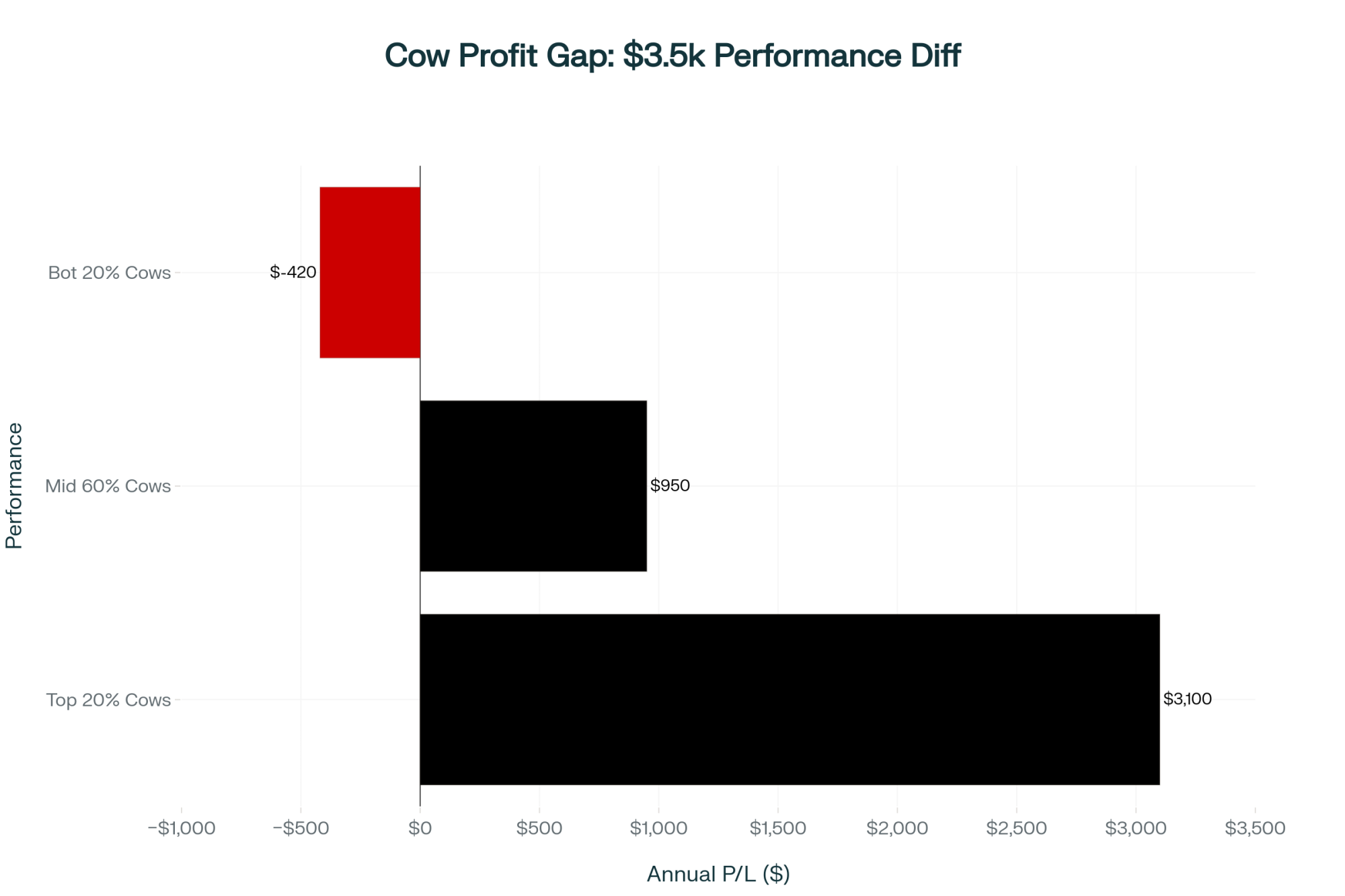
Stop Guessing—Start Culling: The average herd hides a profit gap of $3,520 per cow. Trash the laggards, pump up the leaders, and watch your bottom line soar.

This individual-animal strategy extends beyond culling decisions. Progressive operations now adjust feeding programs, breeding protocols, and housing assignments based on profitability projections.

High-performing cows receive premium nutrition and genetic improvements. Marginal performers might receive commodity feed and beef semen—a practice that’s created its own market dynamics, with National Milk Producers Federation data showing beef-on-dairy calves commanding $1,400 premiums.

Technology Adoption: Finding Practical Solutions

While industry publications often feature multi-million-dollar robotic installations, the reality for most producers is more modest investments. NASS data indicate that approximately 70% of U.S. dairy farms operate with fewer than 200 cows and an annual capital budget of under $50,000.

Through farm visits this year, I’ve identified what many call a “minimum viable technology stack” that delivers measurable returns for mid-sized operations:

Practical Investments ($30,000-60,000 total):

  • Basic activity monitors for breeding detection: $8,000-12,000 (typical payback within 14 months through improved conception rates)
  • Used plate cooler and variable speed milk pump: $15,000-25,000 (energy cost reductions of 20-30% commonly reported)
  • Automated feed pusher: $12,000-18,000 (saves approximately 2 hours of daily labor)
  • Margin tracking systems: $0-500 (spreadsheet templates providing valuable decision support)

A 400-cow Wisconsin operation shared their experience: $45,000 in basic automation reduced labor requirements by 20 hours weekly—valued at $31,200 annually at current wages—while improving breeding rates by 15% and reducing feed waste by 8%.

“Everyone discusses robots and advanced genetics, but my most valuable investment was a $3,000 used generator for power outage protection. It’s prevented milk dumping three times this year—preserving about $40,000 in revenue. Sometimes, straightforward solutions address real challenges effectively.”
— Tom Peterson, Pennsylvania dairyman managing 380 cows

Regional Dynamics: Understanding Geographic Shifts

The geographic distribution of dairy production continues evolving, influenced by water availability, regulatory frameworks, and processing infrastructure. USDA milk production reports and state-specific data from June 2025 reveal emerging patterns worth monitoring through 2030.

Regions Experiencing Growth:

Wisconsin appears poised to add 130,000-180,000 cows between now and 2030, benefiting from factors such as water availability. University of Wisconsin studies indicate the state’s dairy industry contributes $52.8 billion in economic impact—a substantial increase from five years ago.

South Dakota represents an unexpected growth area, potentially adding 60,000-90,000 cows given favorable regulatory conditions and new processing investments.

Michigan shows expansion potential of 45,000-75,000 cows, leveraging Great Lakes water access and existing infrastructure advantages.

Regions Facing Challenges:

California confronts difficult decisions as the Sustainable Groundwater Management Act (SGMA) potentially removes 500,000 to 1 million acres from irrigation by 2040, according to UC Davis and ERA Economics research. This could result in 200,000-350,000 fewer dairy cows.

The Southwest, particularly Texas and Arizona, faces a contraction of 120,000-200,000 cows due to concerns about water scarcity.

Southeastern states continue gradual adjustments, potentially losing 50,000-90,000 cows to heat stress and feed cost pressures.

The Northeast presents an interesting case. Vermont and New York operations are finding success with value-added production and agritourism, though total cow numbers remain relatively stable.

A New York producer recently told me, “We can’t compete on volume, but our proximity to Boston and New York City markets gives us premium opportunities California can’t match.”
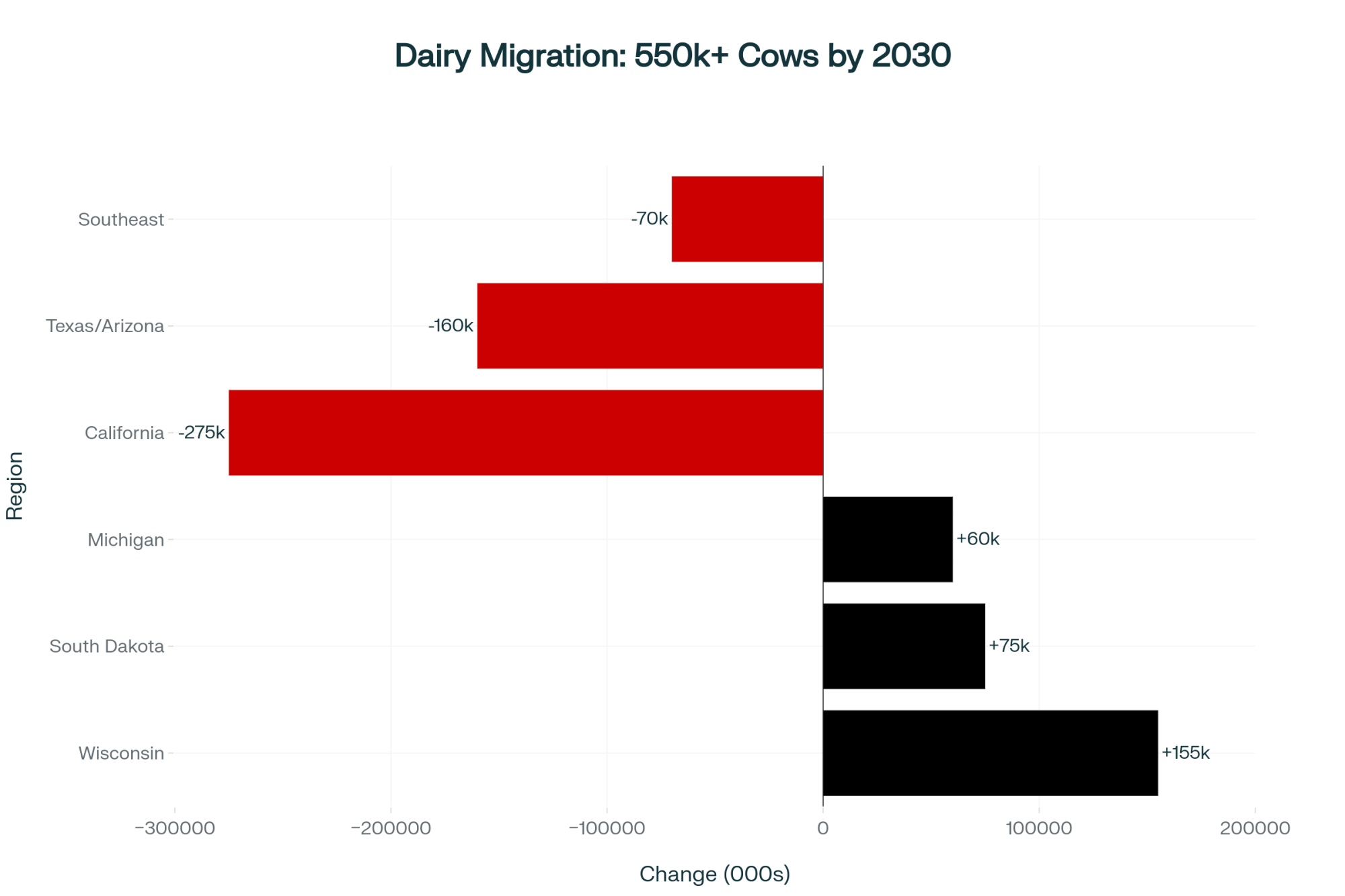
Coast-to-Coast Cow Shuffle: The SGMA is triggering America’s biggest dairy redraw in history. Is your state benefiting—or bleeding cows?

A Wisconsin processor shared an observation that captures the transformation: “When California loses a 5,000-cow operation, we typically don’t see a single 5,000-cow dairy relocate here. Instead, we might see three 1,500-cow operations emerge, each requiring different infrastructure support. It represents structural transformation, not simple geographic relocation.”

This fragmentation creates complex dynamics. Regions gaining production face intensified labor competition, increased regulatory attention, and community adaptation challenges.

Areas losing production experience, processor consolidation, and service reductions that can accelerate further exits.

Mid-Size Operations: Evaluating Strategic Options

The 500-700 cow operations that have long anchored American dairying face particularly complex decisions. Cornell’s Dairy Farm Business Summary and related financial analyses reveal that these farms occupy a challenging position—scale limitations for certain efficiencies, yet size constraints for niche-market approaches.

Recent extension analyses suggest that a typical 500-cow operation experiences:

  • Production costs: $16.30-17.80/cwt
  • Large-scale operations (2,500+ cows): $14.20-15.80/cwt
  • Average revenue: $20.90/cwt (based on June 2025 Class III pricing at $18.82/cwt)
  • Resulting margins: $3.10-4.60/cwt

That $2-3/cwt cost differential translates into $250,000-375,000 in annual profit lost compared to larger operations—ironically, approximately the capital needed for modernization investments.
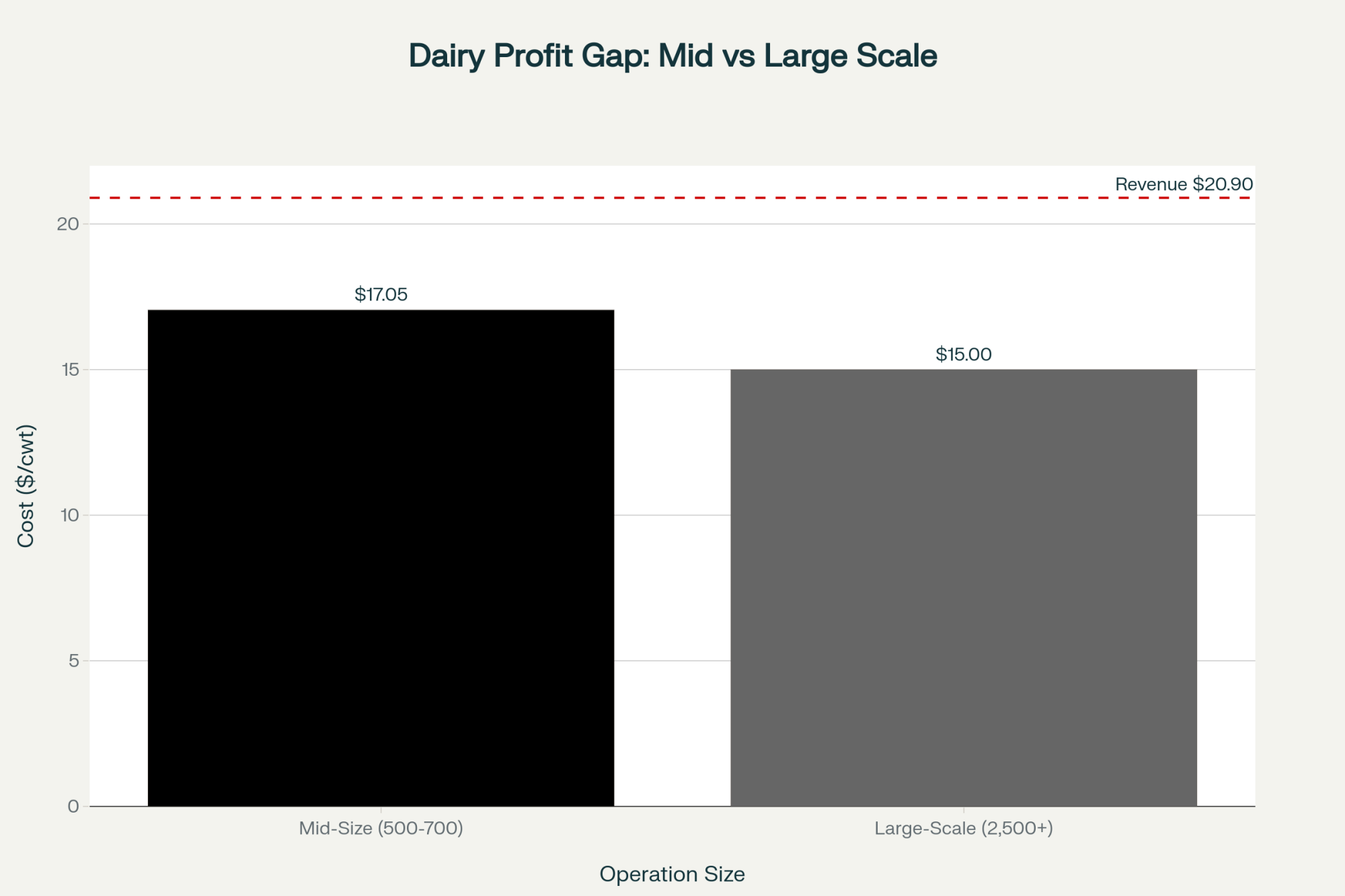
Mid-Size Meltdown: A brutal $2.05/cwt cost gap leaves mid-size farms with a $375k annual hole—survival requires a radical pivot or exit.

Working with producers, we’ve identified five primary strategic paths:

  1. Scale expansion (to 1,500+ cows): Requires $6-8 million investment, with industry data suggesting 60-70% success rates for well-planned expansions
  2. Niche market transition (organic/direct marketing): Requires proximity to urban markets, with approximately 20-30% of attempts achieving sustainable success
  3. Efficiency optimization (robotics at current scale): $1.5 million investment potentially extends viability 8-12 years
  4. Partnership formation (combining with neighbors): Offers shared resources, though approximately 40% encounter challenges within five years
  5. Strategic exit (while retaining equity): Can preserve $2-4 million for life’s next chapter

“The most difficult conversations involve 50-year-old producers who believe market cycles will improve their situation. Each year of delayed decision-making can reduce equity by $200,000 to $ 300,000. By the time action feels necessary, options have often narrowed considerably.”
— Dr. Wayne Knoblauch, farm management specialist at Cornell University

Understanding Expansion Challenges: Learning from Experience

Industry data and lender interviews suggest 30-40% of major expansions encounter significant challenges. Through analysis of expansions from 2018 to 2023, patterns emerge that deserve careful consideration.

A typical challenge sequence often unfolds like this…

  • Initial phase (Months 1-6): Construction frequently exceeds budgets by 15-20% due to weather delays or supply chain issues, affecting working capital before operations commence.
  • Staffing phase (Months 7-12): Labor recruitment proves more difficult than anticipated. Facilities designed for eight workers might operate with four, creating unsustainable workloads.
  • Operational phase (Months 13-18): Production often falls 15-20% below projections due to transition stress, learning curves with new facilities, and management bandwidth constraints.
  • Stress phase (Months 19-24): Family and personal stress intensifies. Health impacts, relationship strains, and succession uncertainties become pronounced.
  • External pressure phase (Months 25-30): Market changes (milk price adjustments, disease challenges, equipment issues) expose accumulated vulnerabilities.
  • Resolution phase (Months 30-36): Financial covenants trigger lender discussions, though operational challenges typically preceded financial ones.

A producer who experienced expansion difficulties shared powerful insight: “The financial pressure arrives last. Before that comes health impacts, family stress, and loss of purpose. The paperwork simply documents what already occurred.”

Analysis suggests successful expansions share common elements: 20-30% budget contingencies (versus 5-10% in struggling expansions), 10-15% excess labor capacity from day one, management teams sharing responsibilities, and 10-12 months working capital reserves.

The difference often lies in maintaining adequate buffers—financial, operational, and personal.

Future Operating Models: Three Viable Paths for 2030

Looking toward 2030, current trends and economic modeling suggest three primary operating models will emerge, each with distinct characteristics.

Large-Scale Operations (3,500-8,000 cows)

These operations achieve $14.20-15.80/cwt costs through scale efficiencies and automation. Many generate $800,000-1.8 million annually from renewable energy credits via anaerobic digesters.

The investment requirements are substantial—$25-$35,000 per cow—and management resembles agricultural business leadership more than traditional farming. IDFA’s 2025 report indicates these operations collectively employ 3 million people nationally, generating nearly $780 billion in economic impact.

Premium Niche Operations (40-120 cows)

These farms capture $35-50/cwt through direct marketing, compared to $21/cwt under commodity pricing. They generate $220,000-650,000 family income with minimal debt, according to Cornell’s organic dairy studies.

Marketing and customer relations consume 25-35% of time—it’s farming combined with retail business management. Success requires proximity to metropolitan areas where customers value and can afford premium products.

USDA organic price reports from September confirm these premiums remain stable.

Strategic Mid-Scale Partnerships (800-1,800 cows)

This model involves 2-3 families collaborating to share resources and responsibilities. They achieve $200,000-250,000 income per family with 50-60 hour work weeks.

Technology adoption is selective—perhaps 50-70% robotic milking, 30-50% conventional systems. While these partnerships provide operational scale and lifestyle benefits, they haven’t eliminated all structural pressures.

Notably, the 200-700 cow single-family operations that historically defined American dairying face the most challenging path forward, caught between scale requirements and market opportunities.

ModelHerd SizeCost ($/cwt)Revenue ($/cwt)Annual IncomeCapital NeedWork Hours/WeekSuccess Factor
Mega-Operations3,500-8,000$14.20-15.80$20.90 (commodity)$800K-1.8M+$25-35KMgmt roleScale/automation/bili…
Premium Niche40-120N/A$35-50 (premium)$220K-650K<$5K60-70 hrsMetro/direct marketing
Mid-Scale Partnerships800-1,800$15.50-16.80$22-25 (value-added)$200K-250K$15-20K50-60 hrsShared resource/risk

Emerging Considerations: Factors to Monitor

While the industry focuses on immediate challenges such as labor and milk prices, several emerging factors deserve attention.

Immigration policy represents significant uncertainty. The National Milk Producers Federation estimates that 70% of dairy labor depends on immigrant workers, which could lead to disruption if policies shift dramatically.

Recent enforcement actions reported by industry media in June 2025 provided early indicators of possible impacts.

Replacement heifer availability has become constrained following years of beef-on-dairy breeding programs. Those $1,400 beef-cross calves seemed profitable, but now replacement heifers command $4,000 or more in some regions,according to recent market reports.

This affects expansion possibilities and disease recovery capacity.

Environmental regulations continue evolving. California’s experience with digester requirements and proposed discharge rules requiring 10 mg/L nitrogen limits may preview broader regulatory trends.

Compliance costs could affect financing availability for highly leveraged operations by 2028-2030.

The technical skills gap presents ongoing challenges. Operations investing in automation sometimes struggle finding qualified technicians.

I visited one farm where a $2 million robotic system remained idle for three days awaiting a specialist from Europe. This dependency represents an underappreciated vulnerability.

Practical Considerations: Strategic Planning for 2025-2030

Based on comprehensive industry analysis, producer experiences, and economic projections, several key considerations emerge for dairy farmers navigating this transition.

Decision timing matters significantly. Strategic choices about expansion, market positioning, partnerships, or transitions have relatively narrow windows.

USDA projections showing 1.1% production growth in 2025, ahead of processing capacity, suggest timing considerations remain critical.

Comprehensive margin management supersedes single-metric optimization. Wisconsin’s dairy market assessments emphasize total cost consideration, including labor (exceeding $20/hour in many markets), transportation, premiums, and capital requirements.

Scale positioning requires honest assessment. Operations with 200-700 cows lacking clear succession plans benefit from proactive transition planning.

Farms with 500+ cows and strong financials need a clear strategic direction—whether pursuing scale or niche opportunities.

Adequate reserves prove essential. Cornell studies indicate successful operations maintain 20-30% financial contingencies10-15% excess labor capacity, and 10-12 months working capital.

Monitoring emerging risks provides an advantage. Immigration policy, disease risks (particularly HPAI in dairy), replacement availability, and environmental regulations could trigger disruptions.

California’s SGMA implementation offers valuable lessons for planning.

Adapting to new models requires flexibility. Wisconsin economic impact studies show successful operations evolving into diverse models—large-scale operations function as agricultural businesses, niche producers combine farming with marketing, and mid-scale operations rely on complex partnerships.

Success depends on matching capabilities with chosen strategies.

The industry continues consolidating from approximately 35,000 farms today toward a projected 24,000-28,000 by 2030, alongside $11 billion in new processing investments. These changes create both opportunities and challenges.

What emerges from observing hundreds of operations navigating this transition is the importance of recognizing when fundamental business model evolution—not just operational refinement—becomes necessary. Producers actively adapting to new realities position themselves more favorably than those hoping traditional approaches will remain viable.

A successful producer who recently navigated significant transitions shared a valuable perspective: “The question isn’t whether traditional farming methods can continue. The question is whether we’re prepared to evolve to meet the requirements of the 2030 market. That decision—and acting on it promptly—shapes everything that follows.”

The transformation continues, and the industry’s evolution won’t pause for individual decisions. Yet within this change lies opportunity for those prepared to embrace new approaches while honoring agriculture’s enduring values.

Key Takeaways for Dairy Producers

  • Focus on total margins, not just feed costs—labor now exceeds $20/hour in many markets and represents 35-40% of true cost structure (Wisconsin Extension, June 2025)
  • Adopt individual cow economics to identify top 20% profit cows ($3,100/head) vs. bottom 20% losses ($420/head) (Cornell Dairy Farm Business Summary)
  • Invest in practical technology$30,000-60,000 stack can yield $31,200 annual labor savings (producer case studies)
  • Regional shifts are accelerating—Wisconsin is gaining 130,000-180,000 cows, while California faces 200,000-350,000 cow reductions due to SGMA (UC Davis/ERA Economics)
  • Mid-size farms (500-700 cows) face $2-3/cwt disadvantage—choose from five strategic paths with 60-70% success rates for expansions (Cornell analyses)
  • 30-40% of expansions fail—build 20-30% budget buffers and 10-12 months working capital to succeed (industry lender data, 2018-2023)
  • Three 2030 models emerge: Large-scale ($14.20-15.80/cwt costs), niche ($35-50/cwt premiums), mid-scale partnerships ($200K-250K/family income)
  • Monitor blind spots70% immigrant labor dependency (NMPF), $4,000+ replacement heifers (market reports), evolving environmental rules (California preview)
  • Act now1.1% production growth projected for 2025 leaves narrow decision windows (USDA projections)

Complete references and supporting documentation are available upon request by contacting the editorial team at editor@thebullvine.com.

Learn More:

Join the Revolution!

Join over 30,000 successful dairy professionals who rely on Bullvine Weekly for their competitive edge. Delivered directly to your inbox each week, our exclusive industry insights help you make smarter decisions while saving precious hours every week. Never miss critical updates on milk production trends, breakthrough technologies, and profit-boosting strategies that top producers are already implementing. Subscribe now to transform your dairy operation’s efficiency and profitability—your future success is just one click away.

NewsSubscribe
First
Last
Consent

CDCB Unveils Net Merit 2025: Updating Dairy Genetic Selection

Net Merit 2025 is set to revolutionize dairy breeding. Launching April 1, 2025, this updated index emphasizes butterfat, feed efficiency, and cow longevity. Discover how these changes could boost your herd’s profitability and shape the future of dairy farming. Are you ready for the next generation of genetics?

Summary:

The Council on Dairy Cattle Breeding (CDCB) is set to launch Net Merit 2025 on April 1, 2025, introducing significant updates to the genetic selection index for dairy farmers. This revision adjusts trait emphases to reflect current market trends and production realities, with notable changes including increased butterfat production, a greater focus on feed efficiency, and more weight on cow and heifer livability. The update aims to improve cow profitability over generations by combining economic values for 12 individual traits and five composite subindexes into a single value. While the changes are substantial, the high correlation between the 2025 and 2021 indexes suggests stability in genetic evaluations. Dairy farmers are encouraged to consider these updates in their long-term breeding strategies, considering that the index may not perfectly reflect individual farm conditions. Additional specialized indices are available for specific production systems, offering farmers flexibility in aligning genetic selection with their particular market and operational needs.

Key Takeaways:

  • The Council on Dairy Cattle Breeding (CDCB) will release Net Merit 2025 to enhance dairy genetic selection based on current market trends.
  • The updated index emphasizes butterfat production and livability while de-emphasizing protein to align with economic changes.
  • Specialized indices, such as Cheese Merit, Fluid Merit, and Grazing Merit, help tailor genetic selection to various production systems.
  • Net Merit provides a long-term strategy for improving dairy cow profitability, emphasizing trends of economically vital traits.
  • Farmers are encouraged to stay informed through USDA resources and industry workshops to incorporate Net Merit into breeding decisions optimally.
Net Merit 2025, dairy breeding, genetic selection index, cow profitability, dairy farming trends

The Council on Dairy Cattle Breeding (CDCB) will introduce Net Merit 2025, which includes updated genetic selection methods for dairy farmers, on April 1, 2025. This update revises genetic selection for dairy farmers nationwide and adjusts trait emphasis to reflect current market trends and production realities. 

What is Net Merit? 

The Lifetime Net Merit (NM$) index ranks dairy animals based on their combined genetic merit for economically important traits. Net Merit 2025 introduces innovative methods for evaluating traits and economic factors in dairy animals. 

Dr. Paul VanRaden, a Research Geneticist at USDA, highlights Net Merit 2025 as a strategic response to the evolving dairy industry. The update integrates recent economic data and research to assist farmers in breeding more profitable cows.

NM$ combines values of particular traits and subindexes to improve the profitability of cows over multiple generations. 

The Evolution of Net Merit 

First published in 1994 by the USDA’s Animal Improvement Programs Laboratory, Net Merit has been routinely updated at three—to four-year intervals. The index weights are based on an economic model that considers incomes and expenses over a dairy cow’s lifetime, using data from public sources when possible. 

Net Merit 2025 is the result of extensive collaboration. The process included: 

  • Initial drafting by USDA’s Animal Genomics and Improvement Laboratory (AGIL) in the summer of 2024
  • Public discussion at the CDCB Industry Meeting during World Dairy Expo
  • Presentation to university experts at the S-1096 Multistate Research Project meeting
  • Review by CDCB’s Genetic Evaluation Methods and Producer Advisory Committees
  • Final approval by the CDCB Board of Directors in December 2024

Key Changes in Net Merit 2025 

Comparison of Trait Weights

The following table shows the expected relative value of economically rooted weights of traits in the revised April 2025 Net Merit $ formula, compared to weights in the current formula:

TraitCurrent NM$April 2025 NM$
Protein19.6%13.0%
Fat28.6%31.8%
Feed Saved12.0%17.8%
Productive Life11.0%8.0%
Cow Livability7.0%8.0%
Udder Composite7.0%7.0%
Fertility6.8%6.8%
Heifer Livability1.3%2.0%

The 2025 revision includes significant changes: 

  • Butterfat Emphasis: The emphasis on butterfat production has increased, aligning with recent price trends. The weight of fat in NM$ has risen from 28.6 to 31.8.
  • Protein De-emphasis: The weight for protein decreased from 19.6 to 13.
  • Livability Focus: Greater emphasis on cow and heifer livability, reflecting higher cull cow and heifer calf prices.
  • Feed Efficiency: More negative emphasis on Body Weight Composite and greater focus on Residual Feed Intake to address feed costs.
  • Minimal Reranking: The 2025 and 2021 NM$ indexes show a high correlation of 0.992 for young Holstein bulls and 0.981 for recent progeny-tested bulls, indicating stability in genetic evaluations.

Customized Selection Indices 

In addition to NM$, CDCB offers three more indices customized for specific dairy operations: Cheese Merit (CM$), Fluid Merit (FM$), and Grazing Merit (GM$). 

  • Cheese Merit (CM$): Tailored for cheese producers, this index emphasizes protein and somatic cell score.
  • Fluid Merit (FM$): Designed for fluid milk producers, focusing on milk volume and butterfat.
  • Grazing Merit (GM$): Optimized for pasture-based systems, prioritizing fertility and adaptability.

These specialized indices allow farmers to align genetic selection with their specific market and production system. 

Applying Net Merit to Your Farm 

While Net Merit is a valuable tool, it may not comprehensively capture each farm’s conditions. Therefore, it is recommended that farmers prioritize evaluating the genetic progress trends for traits most vital to their operations. 

“Rather than focus on one number or another, it’s more helpful to look at the big picture,” suggests VanRaden. “USDA provides the expected genetic progress in each trait from selection on NM$, and it’s better to see if the trends for the traits most important to you are in the desired direction.” 

Long-Term Strategy for Herd Improvement 

Farmers should adopt a long-term perspective when considering Net Merit 2025 to achieve sustainable improvements in their herds. The index has been designed to improve cow profitability over the generations, requiring patience and consistent application. 

Staying Informed 

For the latest information on Net Merit and its applications: 

  1. Review USDA AGIL’s technical document detailing Net Merit calculations.
  2. Watch Paul VanRaden’s PowerPoint presentation, which summarizes changes and provides examples of how genetic values affect a cow’s lifetime profit.
  3. Engage with industry workshops and webinars to stay updated on genetic selection strategies.

Conclusion: Embracing the Future of Dairy Genetics 

Net Merit 2025 signifies the dairy industry’s dedication to advancement, efficiency, and sustainability beyond an index update. Embracing these tools and staying informed about industry developments can empower dairy farmers to succeed in a constantly evolving market. 

Looking ahead, farmers should actively engage with and adapt to these modifications. How do you plan to incorporate Net Merit 2025 into your breeding decisions? Share your thoughts and join the conversation shaping the future of dairy farming

Learn more:

Feeding Strategies for Robotic Milking Success

Uncover the secret to doubling your dairy farm’s productivity with strategic feeding. Ready to boost your robotic milking herd and milk production?

Summary:

Dairy farming is evolving, and robotic milking is leading the charge by reducing labor, boosting milk production, and improving farmers’ lifestyles, especially for herds of 40 to 250 cows. Success in this field often hinges on effective feeding management, as ranked by experienced dairy producers. Understanding the interplay between cow behavior, diet, health, and milk production is crucial for these systems, leading to more frequent voluntary visits to milking stalls and healthier herds. While popular in Western Europe, Canada, and the US, these systems require careful attention to feeding methods to thrive. Factors like heat stress and social dynamics can impact feed consumption and robot visits. Three main approaches to feeding robotic milking herds in confined housing include partial mixed ration (PMR), feeding solely fodder on the bunk, and guided traffic systems.

Key Takeaways:

  • Effective feeding management can be a game-changer for robotic milking success.
  • Robotic milking systems significantly reduce labor and enhance cow health and performance.
  • Understanding the complex relationship between cow behavior, diet, health, and milk production is vital.
  • Heat stress and social dynamics can affect feed intake and milking frequency.
  • Three main feeding strategies: partial mixed ration (PMR), feeding forage only on the bunk, and guided traffic systems.
robotic milking, dairy farming technology, feeding management, cow behavior, milk production, dairy herd health, automated milking systems, dairy farming trends, feeding methods for cows, robotic milking benefits

Robotic milking systems are rapidly gaining popularity, especially in Western Europe, Canada, and the United States. These systems save time, increase milk supply, and promote a healthier lifestyle for the cows. However, to fully reap these benefits, efficient feeding methods are crucial. More than merely installing a robot is required; you must also manage your herd’s nutrition. Proper feed management ensures cows visit the milking box frequently, increasing efficiency and productivity. It leads to less effort, more productivity, and a better lifestyle. So, how can you effectively feed a robotic milking herd? Explore the best methods and ideas to transform your dairy farm.

The Game-Changer for Robotic Dairy Farmers: Turning Feed into an Irresistible Milking Magnet!

Typical dairy feeding regimens aim to fulfill the cow’s nutritional requirements while keeping her healthy, maximizing feed efficiency, and lowering expenses wherever feasible. If you’re a dairy farmer, you already know this.

But here’s the twist: if you’ve mastered robotic milking, you have a game-changing fifth target on your list. What is it? It all comes down to making the feed appealing enough to entice your cows to walk to the robotic milking cubicle regularly. Consider this: your cows are motivated, making regular excursions independently, reducing the need for fetching and milking more often at regular intervals. It’s like winning the jackpot for milk production!

Why is this so important? Motivated cows with a regular milking schedule reduce your work burden and feed more, increasing milk output. Isn’t this a win-win for everyone?

Navigating the Intricate Web: Cow Behavior, Diet, Health, and Milk Production 

The delicate balance between cow behavior, food, health, and milk output becomes even more complex in a voluntary milking system. Consider this: when cows are given fresh, nutritious feed regularly, they consume more. This alteration in eating habits results in increased feed intake, which boosts milk production. It’s a win-win, right? But wait on—things aren’t always that simple. Assume a cow’s diet is high in grain and poor in fiber. This imbalance might result in health problems such as lameness. A lame cow will visit the milking robot less since moving is difficult. Reduced visits lead to reduced feed intake and, subsequently, a decrease in milk production. Diet impacts health, which in turn influences behavior and productivity.

Hot weather adds another level of intricacy. Cows under heat stress tend to be less active and consume less. Fixed milking intervals in a conventional milking arrangement may reduce output loss; however, feeding and milking frequency decrease in robotic milking systems, causing a negative spiral. Less frequent trips to the robot result in reduced feed consumption, reducing milk production. More frequent milking may enhance milk supply, meeting the cow’s nutritional requirements. Her health may suffer if her diet cannot keep up with her increased output. Inadequate nutrition may cause ketosis or acidosis, negatively impacting cow health and production.

The social dynamics of the herd also play a significant influence. In guided traffic systems, subordinate cows may be harassed by dominant cows, restricting their access to food and the milking robot. This social stress deleteriously influences their health, behavior, and milk supply. The relationships between behavior, food, health, and milk production are dynamic. Any change in one element causes ripples in the others, necessitating a vigilant eye and careful supervision to ensure the system operates harmoniously.

Imagine Your Cows Aren’t Just Not Feeling Up to It—they’re Hurting. Lameness is like the Kryptonite of Robotic Milking Systems. 

Assume your cows are more than just unmotivated. They are suffering. Lameness is like the kryptonite of robotic milking machines. You see, lame cows visit the robotic milker less often. Instead of trotting over like the others, they hobble, pause, and usually have to be retrieved.

But don’t just take my word for it. Studies have found that lame cows have a much-decreased frequency of voluntary milking. These cows are more likely to stay in the barn until fetched. This adds to your workload and causes stress for the cow, which may impact its general health and milk output.

So, what can you do about this? Understanding the underlying dietary variables that lead to lameness is critical. Keeping an eye on your herd’s foot health may greatly influence their enthusiastic trips to the robotic milking station, minimizing the need for human intervention and increasing overall farm efficiency.

Three Routes to Feed Success with Robotic Milking Herds 

Let’s look at three primary techniques for feeding robotic milking herds in confined housing. First, a partial mixed ratio (PMR), including pelleted concentrate, is employed. This system includes a PMR for output levels lower than the herd average, with extra pelleted concentrate supplied in the robotic milking box. Feeding a PMR ensures that cows get constant nutrition, while the concentrate encourages them to visit the robots often. These pellets are usually made with highly appetizing components to increase uptake during milking. According to studies, pellet quality is critical to encourage frequent robot visits.

Another technique is to feed solely fodder on the bunk and provide complete concentrate in the milking box. This technique may be beneficial in inaccessible traffic sheds. This system uses robotic feeders to give cows personalized grain allocations during milking. This approach may improve milking frequency, but it needs thorough supervision to ensure that cows get appropriate daily feed. Limiting feed pace to match the cow’s eating rate is also essential for avoiding leftover feed and keeping appetite for the next visit.

Finally, let’s discuss guided traffic systems. These systems use an organized strategy to direct cows to milking robots before or after feeding, depending on their eligibility for milking. Cows are driven to robots along planned paths in guided traffic barns. This may minimize concentrate allocation in the milking box. This may frequently reduce the number of cows that must be fetched while increasing labor efficiency but at the expense of lower cow comfort and natural eating behavior. What is your experience with these methods? Would changing your present method provide better results?

Free vs. Guided Traffic Systems: Which Path Leads to Farm Success? 

Free vs. directed traffic systems offer two separate approaches to regulating cow movement on the farm, especially regarding milking robots. Cows in free traffic systems may travel freely between feeding, resting, and milking facilities, with no physical obstacles or stringent guidelines. This approach encourages natural behavior and increases cow comfort. One research study (Hermans et al., 2003) indicated that cows in free traffic systems consumed more dry matter and spent more time lying down than in guided systems. Furthermore, research shows that free traffic reduces waiting times and stress for cows, making it a more natural and welfare-friendly option.

In contrast, directed traffic systems employ gates and obstacles to manage cow movement, ensuring cows pass through the milking robot before or after accessing the feed. This strategy reduces the number of cows that must be fetched, increasing labor efficiency. For example, research comparing various traffic systems found that directed traffic decreased the number of fetch cows while increasing labor efficiency. However, this strategy has a significant influence on cow comfort. The research found that cows in guided traffic systems consumed fewer meals daily (6.6 vs. 8.9 meals in free traffic) and spent more time waiting for milking.

Regarding feeding tactics, free traffic necessitates using appealing concentrates in the milking robot to attract cows. Failure to do so may result in fewer voluntary visits to the robot. For example, on one Ontario farm, switching to a more vital, appealing pellet boosted voluntary visits per cow per day from 3.40 to 4.04. Guided traffic systems may allow for less attractive, less costly feed choices without affecting milking frequency since cows are led to the milking station regardless of the meal’s attraction. Finally, the decision between free and directed traffic should include labor efficiency, feed prices, and, most significantly, cow comfort and welfare. According to recent statistics, free-traffic farms may produce more milk per cow, increasing by 2.4 lbs and 148 lbs per cow and robot daily.

Picture This: Cows Eagerly Lining Up for Milking, Not Out of Necessity, But Because They Crave the Tasty Treats in the Milking Stall 

This is more than a pipe dream; giving palatable concentrate in the milking stall is critical to the success of your robotic milking system. Look at why these tempting pellets may make or ruin your dairy enterprise. One Ontario farm experienced considerable increases after switching to a higher-quality pellet, with voluntary visits jumping from 3.40 to 4.04 per cow per day and voluntary milkings increasing from 1.72 to 2.06. It’s like moving from generic goodies to gourmet munchies; the cows enjoyed it and milked more often.

Another research showed that various pellet compositions significantly influenced cow behavior. Danish researchers tested seven pellet compositions and determined that a barley and oats combination resulted in the most visits and milk production. In contrast, less appealing elements like maize and dried grass resulted in fewer visits and lower output. In Pennsylvania, a study of eight dairy farms utilizing robotic milking systems indicated that cows fed better-quality pellets containing wheat midds as a critical element had more excellent milking rates, ranging from 2.7 to 3 times daily. Each cow generated around 77.6 pounds of milk each day.

But it’s not only what’s in the pellet; how it’s created is as important. Weaker pellets may degrade, producing fines that cows dislike. One research study found that when cows were given pellets with greater shear strength and fewer fines, they visited and milked more. Canadian research confirmed this, finding that cows given a combination of high-moisture corn and pellets had fewer visits and milkings than those fed stronger commercial pellets, decreasing milk output. In conclusion, investing in pleasant, high-quality pellets is essential. The more appealing the reward, the more eagerly the cows approach the robotic milker. So, when you prepare your feeding strategy, remember that a happy cow is more productive.

Looking to Boost Your Feeding Management Game? Here Are Some Practical Tips! 

Do you want to improve your feeding management game? Here are some practical ways to maintain your robot pellets in good condition while ensuring that your storage and distribution systems work correctly. First and foremost, pellet quality is critical. While your feed provider should emphasize quality, your farm practices may make a significant impact. Ideally, you should have two bins for each kind of feed. This enables a thorough cleanup, reducing the accumulation of stale or damaged pellets.

Next, pay attention to your drills. Flex augers should have a maximum length and mild bends, ideally in the same direction as the drill revolves. If feasible, utilize chain and paddle augers—they cause less damage to pellets and help preserve quality. Clear plastic hoppers above the robots allow you to evaluate whether or not there is feed inside. Incorporating this into your everyday cleaning and maintenance regimen will help keep things running smoothly.

Now, let us discuss about calibrating. The pellet distribution system must be adjusted regularly, preferably once every few weeks. Proper calibration ensures that the appropriate number of pellets are distributed, critical for consistent feeding and little waste. By following these guidelines, you’ll be well on your way to improving your robotic milking process, making you and your cows happy!

Ever Thought About Organizing Your Cows Like a High School Yearbook? 

In robotic milking herds, cows are often grouped by age and size. The concept is straightforward: similar-sized cows may compete more equitably for resources like feed and space, resulting in a more peaceful barn environment. Imagine sharing a living space with someone three times your size; that wouldn’t be ideal for anybody. Stable social groupings considerably improve overall cow contentment and lower the amount of dominance-related conflicts. When cows understand their position in the social structure, there is less stress, less injury, and overall higher morale. As you would expect, happy cows are typically more productive cows.

Cows in larger herds may be categorized based on age and output levels. For example, new cows may have a group to alleviate stress and ensure they get the additional care they need soon after calving. As cows proceed through their lactation cycle, they may be assigned to various groups to fulfill their changing nutritional and social demands.

One area suitable for future investigation is the grouping of cows at the same stage of lactation. This technique is not popular, mainly because it may underutilize robotic milking systems at specific periods. However, the benefits might be significant. Consider how much simpler it would be to handle feed and healthcare if all of the cows in a bunch had identical nutritional and medical requirements. Cows would benefit from a more stable social structure, which boosts milk output and cow health. What are your thoughts? Is it worth a shot?

Have you ever Wondered How Robotic Milking Fits into Grazing-Based Dairy Production Systems? 

Have you ever wondered how robotic milking integrates into grazing-based dairy production systems? This is an excellent task! Consider maintaining ideal milking frequency while your cows roam out in the pasture. Getting cows to approach the robots is more difficult when they are far from the milking machines. One major challenge is ensuring that cows’ visits are fairly distributed. But do not fear; there are answers. The FutureDairy initiative in Australia has done an excellent job of devising ways to deal with this issue.

Guided cow movement and selective access to new grass are sensible strategies. FutureDairy discovered that providing cows access to fresh pasture portions after each milking increased the frequency with which cows visited the robotic milking stations. Imagine your cows knowing they’ll be able to eat fresh, luscious pasture right after milking! Their findings revealed that transferring cows to fresh pastures every eight hours instead of twelve decreased milking intervals by 31% and increased milk yield by 20%.

Another option is supplementing with grass on a feed pad or in the barn when pastures are scarce. Timing is critical here. Offering additional feed after milking may increase milking frequency and ensure that cows make the most of their pasture. So, although pasture-based robotic milking may seem complicated, FutureDairy’s ideas demonstrate that with some fine-tuning, it can be a very efficient and productive system. It’s crucial to keep the cows interested and follow a constant regimen!

The Bottom Line

Robotic milking has transformed the dairy business by reducing labor demands and increasing milk output. Still, the key to realizing these advantages is appropriate feeding tactics. Cows are more likely to attend milking stations when fed high-quality, tasty pellets, which increases production and reduces labor costs. Furthermore, whether free or guided, comprehending traffic networks influences feed intake and cow comfort. Practical recommendations such as assuring pellet quality, correct storage, and system calibration are critical for smooth operations, and incorporating robotic milking into grazing systems shows potential if done carefully. Success in robotic milking systems ultimately depends on innovative feeding management, which allows dairy producers to reach their full potential. Dive further into the study and apply the findings to your operations; the future of dairy farming starts with what we feed our cows.

Learn more: 

Join the Revolution!

Bullvine Daily is your essential e-zine for staying ahead in the dairy industry. With over 30,000 subscribers, we bring you the week’s top news, helping you manage tasks efficiently. Stay informed about milk production, tech adoption, and more, so you can concentrate on your dairy operations. 

NewsSubscribe
First
Last
Consent
Send this to a friend





