Archive for Dairy Cattle Shows

What Dairy Shows Must Learn from the Booming Stock Show World

Dairy shows fading while stock shows boom? Discover how youth engagement, tech, and agri-tainment can revive dairy’s legacy.

Look around any dairy show lately. You’ll probably recognize almost everyone there: the same faces you’ve seen for years. Fewer vendors than a decade ago. And those grandstands? Well, they’ve got plenty of empty seats. Compare that with the electric atmosphere at major beef, swine, and sheep shows across North America.

You know that feeling when you walk into a dairy show barn and… something’s just missing? The energy isn’t quite there anymore. Meanwhile, down the road at the county fair, the beef and swine shows are packed with families, buzzing with excitement, and creating memories that’ll last generations. What’s going on here?

I’ve been watching this trend for years, and it’s time we had an honest conversation about why our counterparts are thriving while we’re just… surviving. If we don’t embrace some significant changes soon, we might look at empty grandstands and faded ribbons instead of a vibrant future.

The Houston Livestock Show and Rodeo pulled in a staggering $190 million in revenue in 2022 and attracted over 2.5 million attendees in 2023. The National Western Stock Show generated $171 million in economic activity in 2023 alone. And then there’s the San Antonio Stock Show & Rodeo delivering an economic impact exceeding $288 million while investing $12 million in youth education programs.
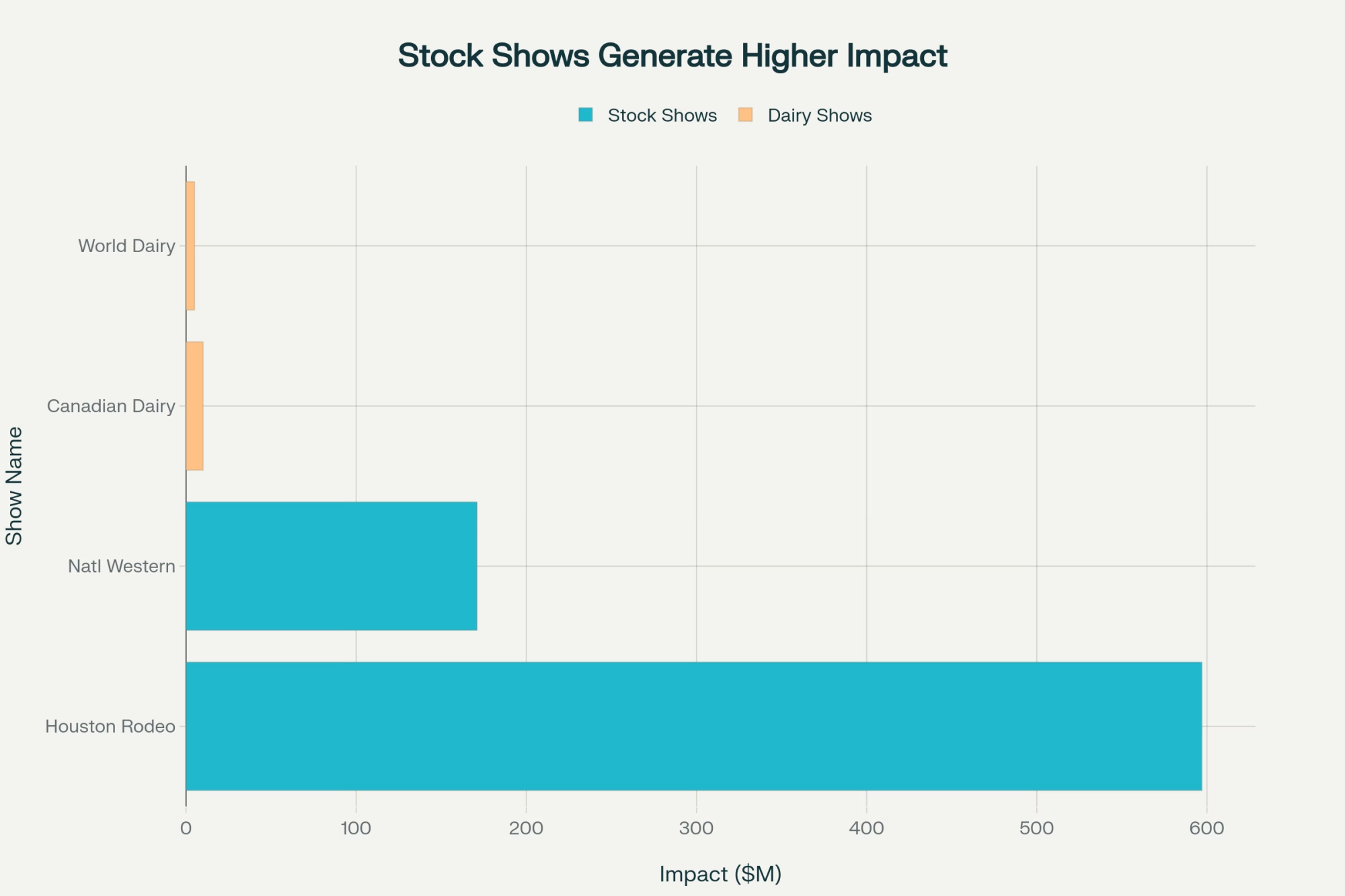
Major stock shows generate hundreds of millions in economic impact through their entertainment-focused model, while dairy shows produce significantly less economic activity despite their technical excellence.

These aren’t just livestock competitions anymore—they’ve become cultural phenomena that appeal to people who’ve never set foot on a farm. And here’s what should keep you up at night: they’re growing while we’re shrinking.

The Hard Truth About Dairy Show Participation

According to USDA data, the U.S. lost over 5,000 dairy farms between 2020 and 2023, a decline of nearly 16%. In states like Wisconsin, the trend is relentless, with hundreds of multi-generational farms closing their doors each year.

The majority of dairy cattle are now on large farms that typically don’t participate in shows, leaving smaller farms to maintain the show ring tradition

This consolidation hits show participation hard. Larger operations rarely prioritize showing cattle, while smaller family farms that have traditionally filled our show rings are disappearing. When you’re focused on component pricing and robotic milking efficiency, fitting a show string often falls off the priority list. But I wonder: Is that a mistake that costs us more than we realize?
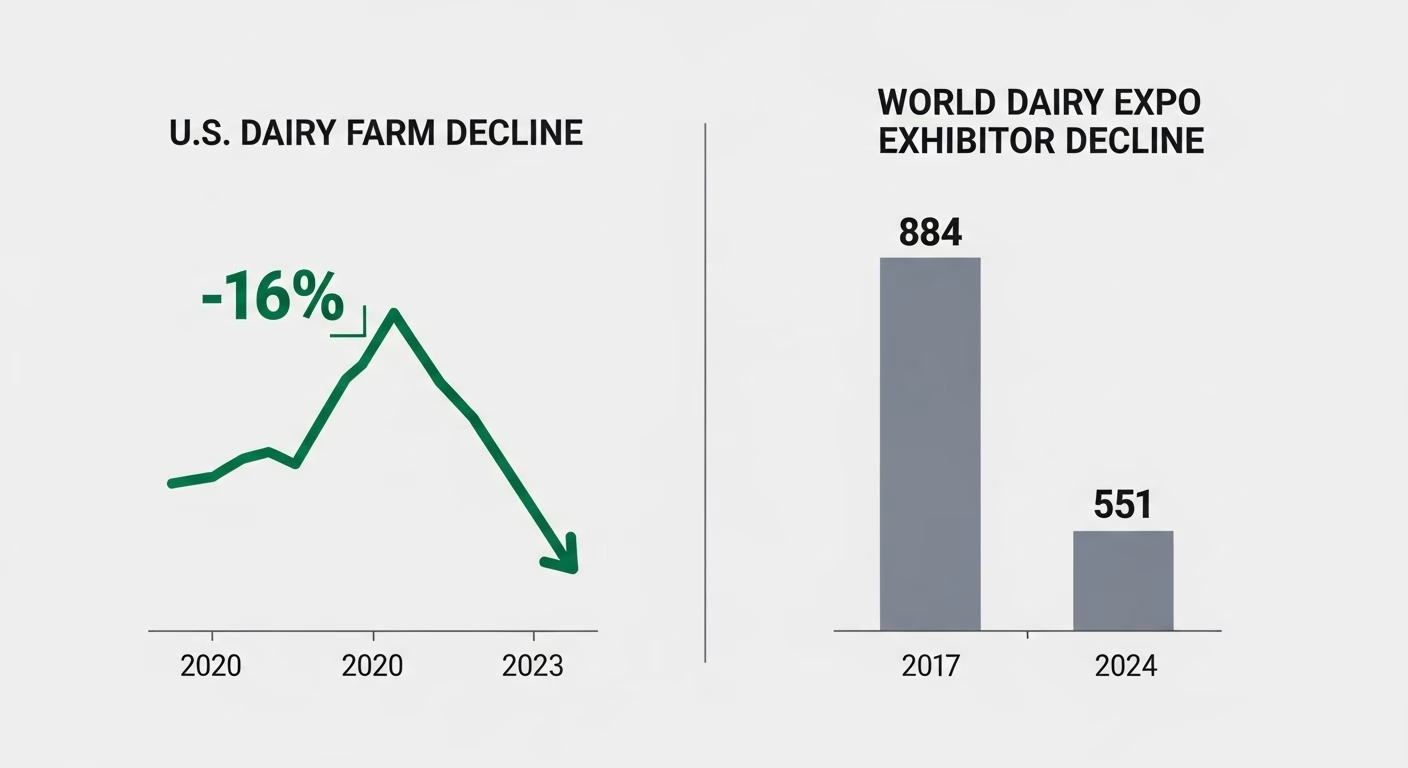
The Numbers Don’t Lie: Key indicators, from the farm gate to the trade show floor, show a clear downward trend in the ecosystem supporting traditional dairy shows.

Even our premier showcase, World Dairy Expo, is feeling the pinch. Commercial exhibitor numbers declined from 884 participating companies in 2017 to 551 in 2024—a nearly 38% reduction. But declining farm numbers aren’t our only challenge. Preparing and showing dairy cattle demands substantial time, expertise, and resources. Plus, recent health challenges like Highly Pathogenic Avian Influenza (HPAI) add another layer of complication with testing protocols and movement requirements for exhibitors in at least 16 states with affected herds.

What This Means for Your Operation

If you’re still actively showing cattle, you compete in a shrinking arena, literally and figuratively. Fewer participants mean less competitive diversity, potentially diminished prestige, and ultimately, reduced value for your marketing efforts. Those gorgeous show photographs of your “EX-96” champion Holstein mean less when there are fewer eyes to see them and fewer progressive breeders to purchase your genetics.

What’s Working for Stock Shows (That We’re Missing)
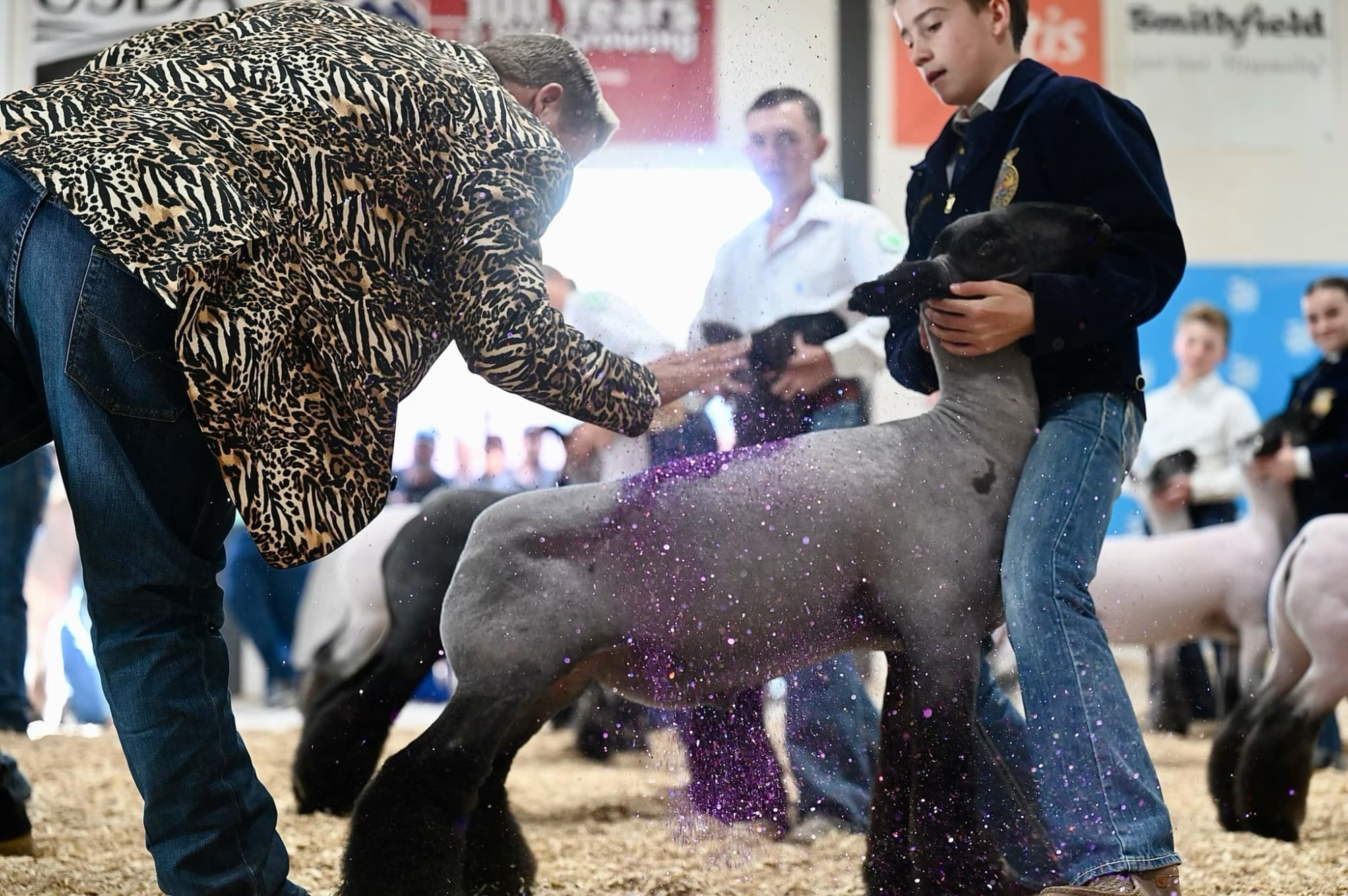
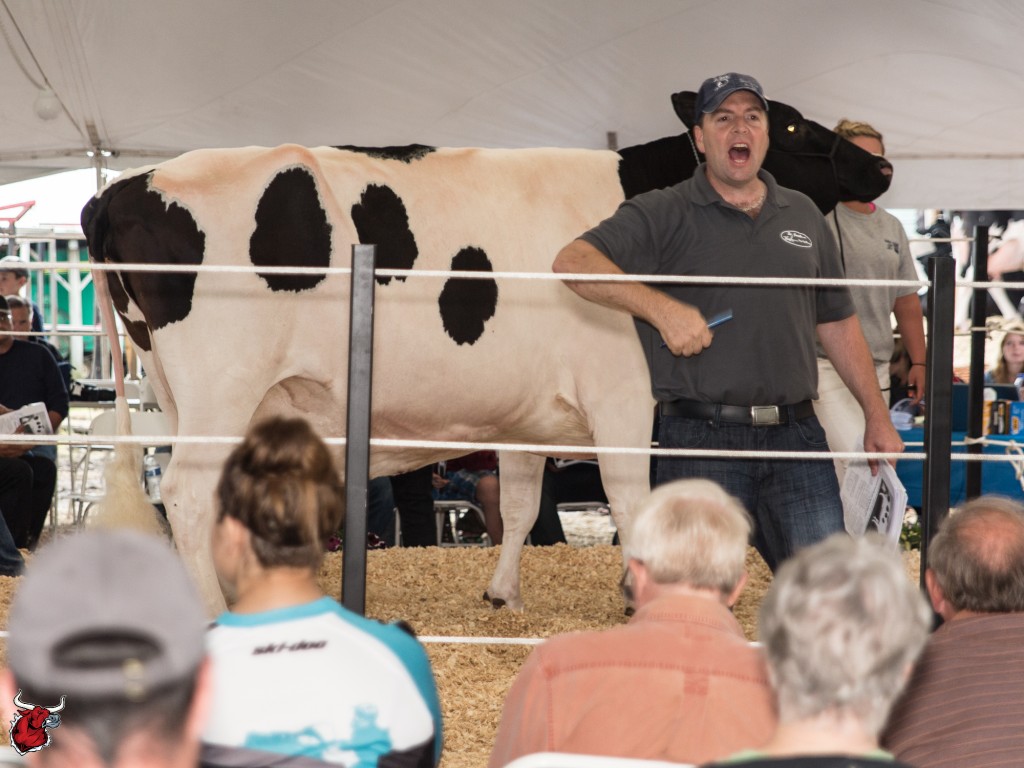
More Than a Judgment, It’s a Spectacle: Famed stock show judge Ryan Rash creates a memorable moment by selecting the champion lamb with a shower of glitter. This brand of ‘agri-tainment’ generates an electric atmosphere often missing from the more reserved dairy show ring. (Read more: Emulating Ryan Rash: The Dire Need for Revolutionizing Dairy Cattle Judging Standards)

For decades, the dairy show’s singular focus on genetic evaluation and type classification has served the purebred industry well, but in a changing world, this narrow focus has become a liability. The most successful stock shows have mastered three key areas we’re struggling with:
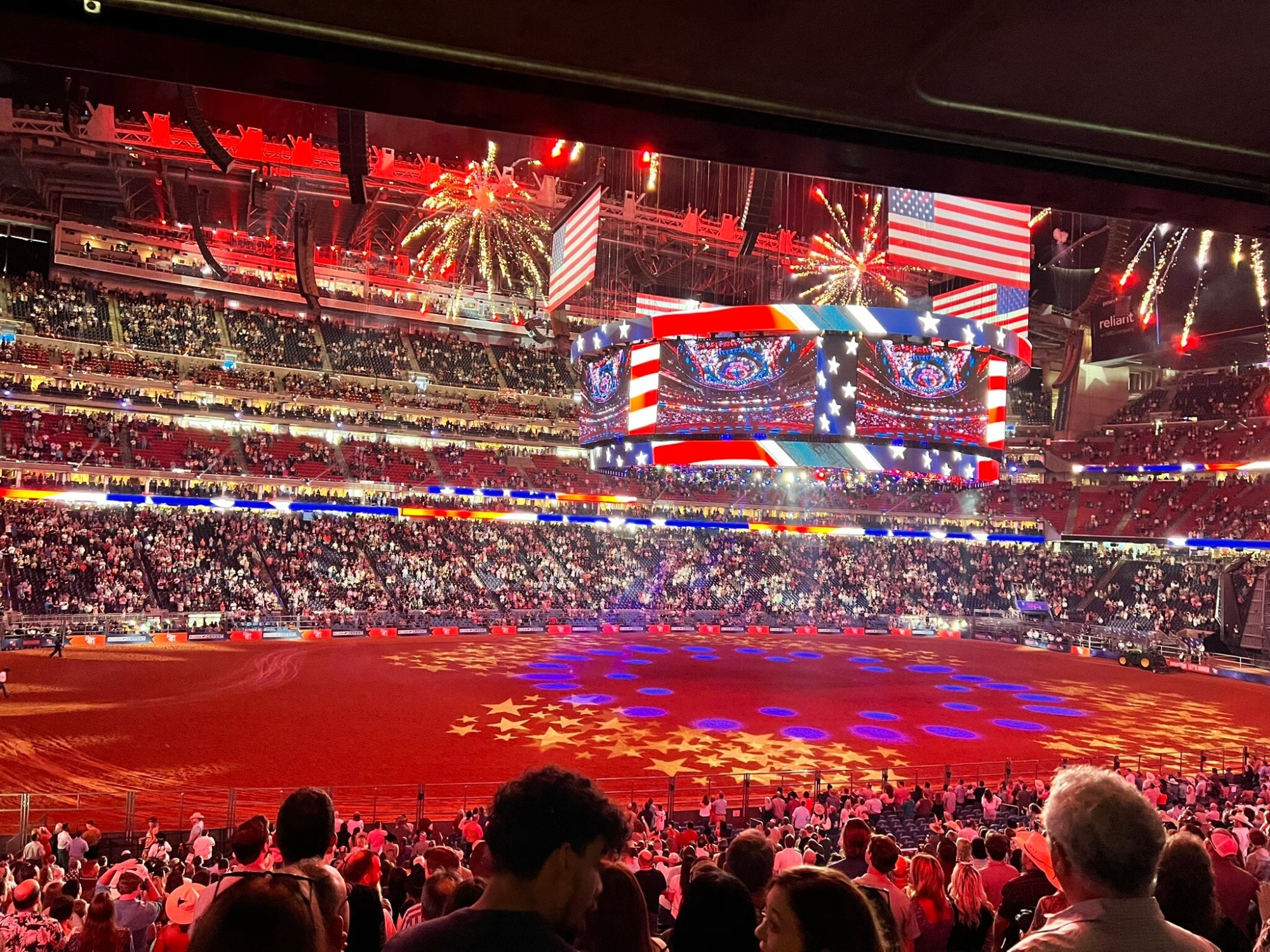
The ‘Other’ Barn: Major stock shows have become cultural phenomena, drawing massive crowds by blending competition with entertainment and broad community appeal.

Multiple Demographic Appeal

The most successful stock shows have created “something for everyone” environments. The Houston Rodeo’s blend of livestock events, headline entertainment, educational exhibits, and carnival atmosphere isn’t just about attendance numbers—it’s about cultivating relationships with urban and suburban communities.

Youth Development Powerhouses

Stock shows excel at jackpot circuits—frequent, accessible events that allow young exhibitors to gain experience in competitive but lower-stakes environments. As one source notes, “The more Jackpot Shows a youth goes to, the more they’ll learn about raising livestock, showing, and winning at fair.” We have strong programs like Dairy Bowl and Dairy Challenge, but we’ve failed to create the same accessible “feeder system.”
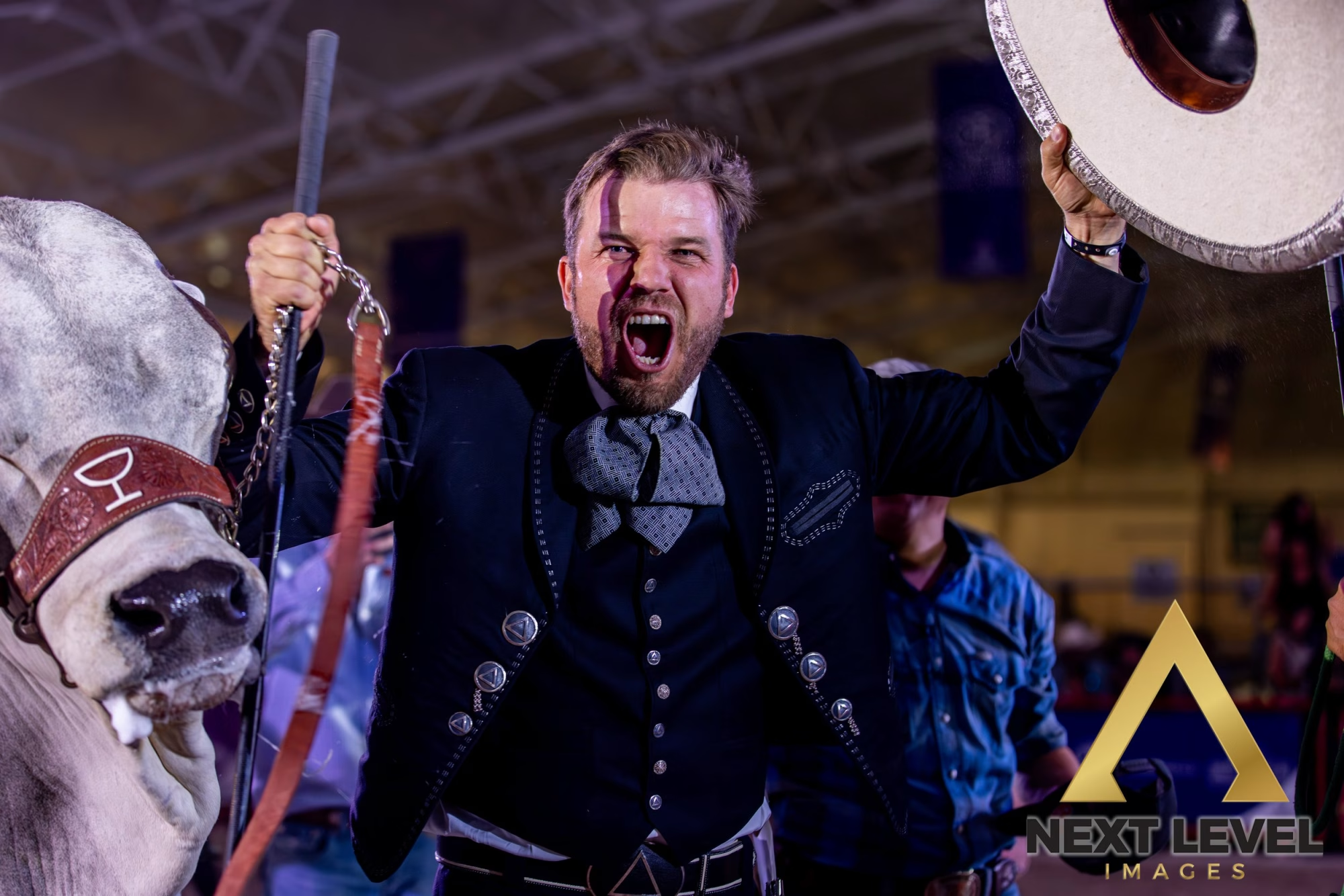
This is What Passion Looks Like. When shows create an environment that celebrates culture and encourages raw emotion, the result is a magnetic energy that pulls in crowds—a far cry from a quiet nod from the judge. (Photo Next Level Images)

Event Experiences, Not Just Competitions

Leading stock shows have transformed from simple competitions into comprehensive entertainment destinations. Too many dairy shows still operate primarily as insider events, technically excellent but failing to create the same magnetic appeal that draws in the broader community.

Your Blueprint for a Dairy Show Revolution
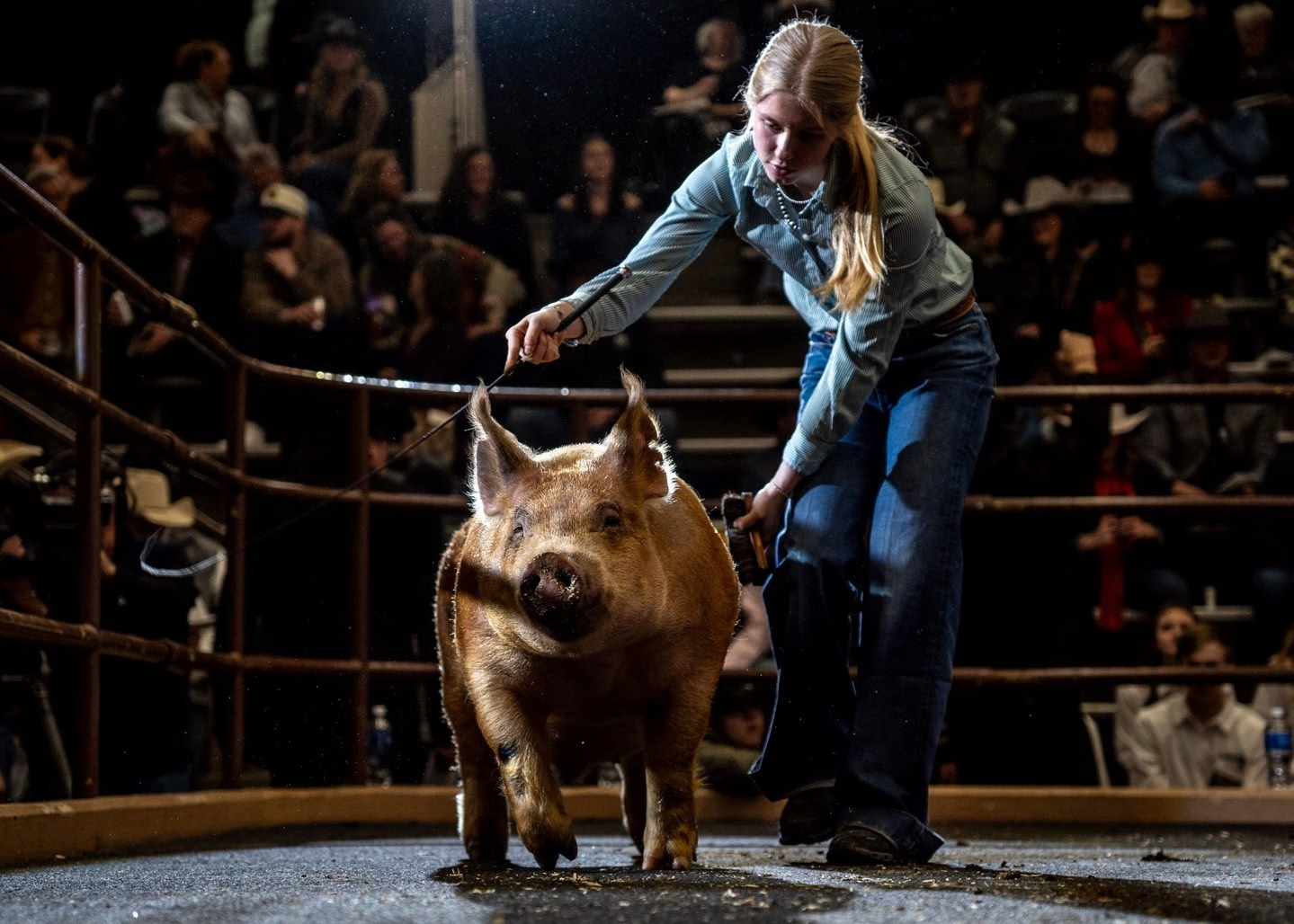
Where Youth Take the Spotlight: The high-stakes, high-reward atmosphere of champion auctions at major stock shows like the National Western creates unforgettable, career-defining moments for young exhibitors.

It’s time to stop lamenting declining participation and start implementing bold changes. Here’s your action plan for revitalizing dairy cattle shows:

1. Reimagine Youth Engagement

Create More Accessible Entry Points

The jackpot show model has proven extraordinarily effective in the beef, sheep, and goat sectors. We need dairy-specific jackpot circuits that provide:

  • Regular, affordable practice opportunities
  • Lower-stakes environments for skill development
  • Consistent feedback from varied judges
  • Geographic accessibility for more participants

Diversify Youth Programming

While dairy shows have strong youth components like showmanship, stock shows excel in offering a wider array of skill-building activities:

  • Skillathons and knowledge competitions that test comprehensive understanding of dairy husbandry
  • Marketing and communication contests focused on promoting dairy genetics
  • Structured mentorship programs pairing experienced exhibitors with newcomers

4-H Canada reported 17,434 members involved in 45,460 projects in 2022, with Ontario seeing significant 30% growth that year. This demonstrates that youth interest exists, but are we capitalizing on it with innovative, accessible programs?

Break Down Financial Barriers

More Than a Ribbon: Stock show circuits have mastered the art of high-stakes competition, offering life-changing payouts that justify the investment of time and money. For dairy shows to attract the best, the rewards must match the dedication required. (Photo: Next Level Images)

We need creative solutions to reduce financial barriers:

  • Robust animal leasing programs connecting farms with interested youth
  • Project scholarships beyond traditional show ring prizes
  • Community-sponsored animals for youth without farm backgrounds
  • Grant programs to assist new families with expenses

2. Modernize Show Formats

Introduce New and Engaging Classes

Consider innovative show categories that increase audience involvement:

  • “People’s Choice” awards allow spectators to vote for their favorites
  • “Functional Type” classes focus on traits important for modern production
  • Youth-focused fun classes, like costume contests, create memorable experiences

Improve Presentation and Commentary

Make dairy shows more accessible to newcomers through:

  • Professional, educational announcing that explains judging criteria in accessible language
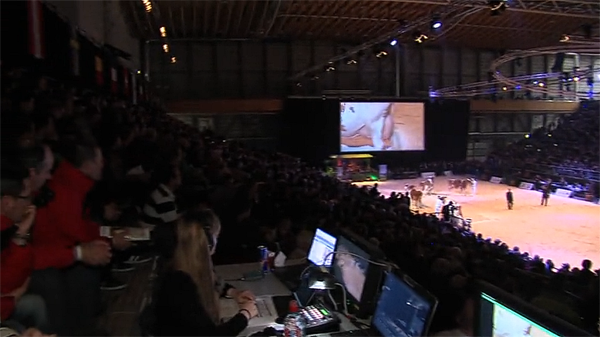
  • Clear visuals, including large screens showing class information
  • Streamlined show scheduling that maintains audience interest

The recent Purebred Dairy Cattle Association (PDCA) updates to its Show Ring Code of Ethics, effective March 1, 2025, demonstrate our willingness to adapt. We need to extend this innovative thinking to the entire show experience.

Integrate “Agri-tainment”

Add complementary attractions enhancing the overall experience:

  • Dairy product tastings and cooking demonstrations
  • Interactive educational exhibits about modern dairy farming
  • Family-friendly activities connecting visitors to dairy agriculture
Traditional Dairy Show ApproachModernized Experience
Technical judge’s reasons focused on linear trait evaluationClear commentary explaining decisions in accessible language while referencing key conformation traits
Limited audience engagementInteractive elements like “People’s Choice” voting and educational displays
Focus solely on competitionComplementary attractions (tastings, demonstrations, education)
Complex class structureStreamlined schedule with variety for spectator interest

3. Harness Technology for Wider Reach

Digital Engagement Strategies

  • High-Quality Livestreaming: Professional broadcasts with commentary make events accessible globally
  • Show-Specific Apps: Digital tools for schedules, entries, results, and exhibitor information
  • Social Media Integration: Create consistent, engaging content before, during, and after shows
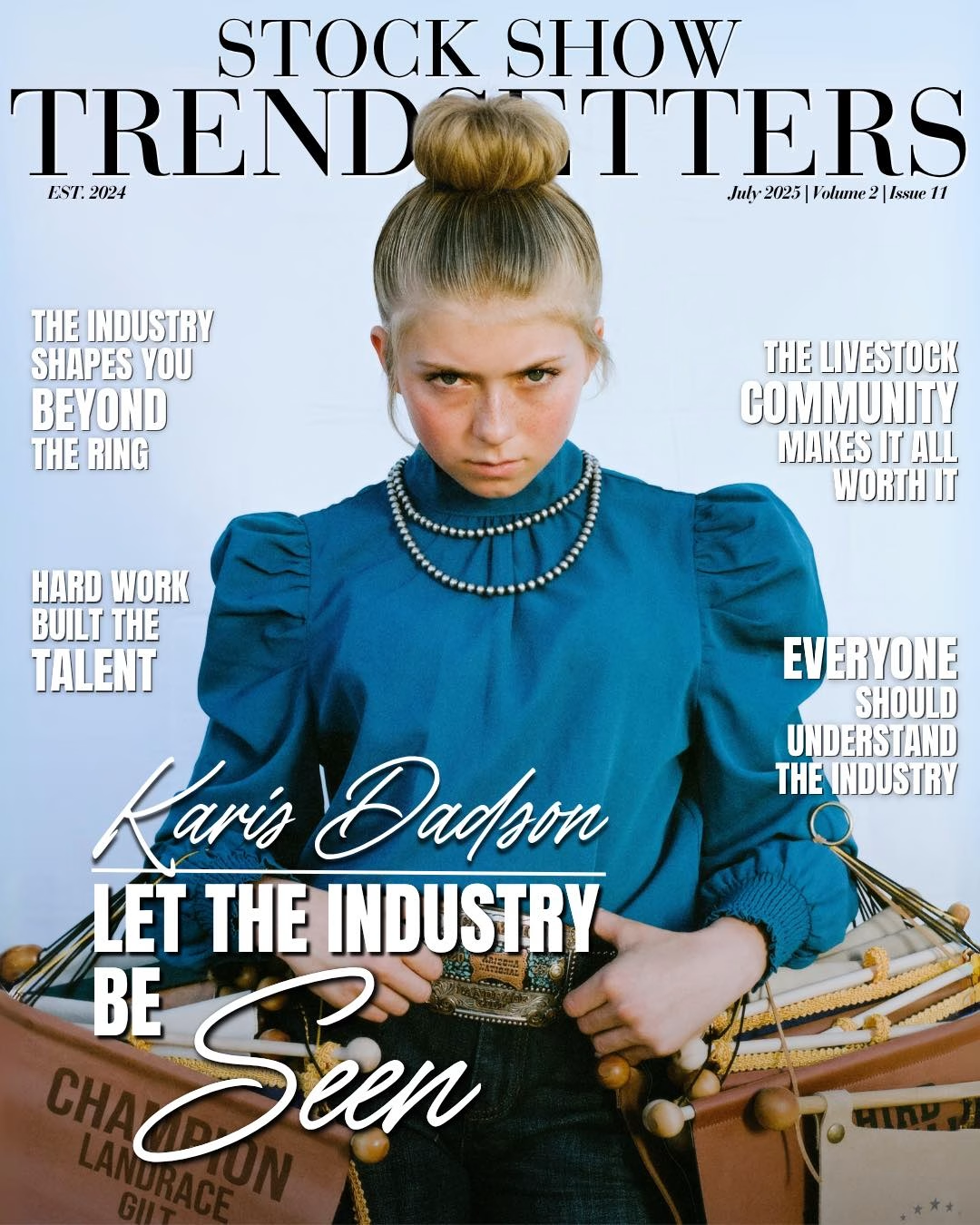
Creating Stars, Not Just Champions: In the stock show world, social media can turn a young exhibitor’s fierce determination into a viral moment. This kind of organic marketing and personality-driven content, exemplified by sensations like Karis Dodson, is a powerful tool dairy shows have yet to fully harness.

Show management technology like Showman.app can streamline online entries, process payments securely, and disseminate results quickly. This frees up valuable time for more strategic activities.

Why This Matters

The digital audience for your show could potentially be many times larger than your in-person attendance. Failing to embrace technology limits your reach and misses opportunities to showcase your animals to a global audience.

4. Market Strategically to Multiple Audiences

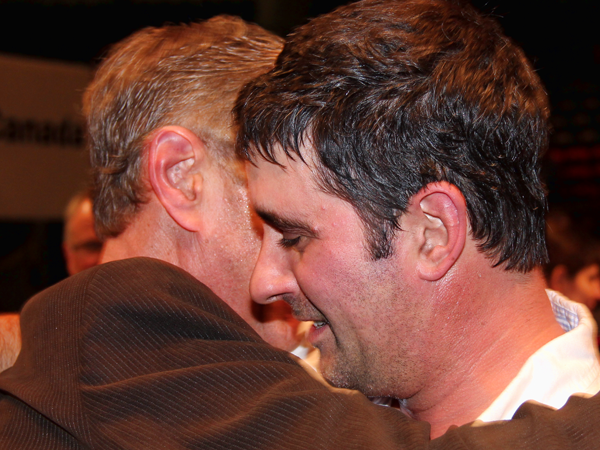
The Heart of the Matter: Beyond the wins and the banners, the show ring is forged by quiet dedication, the partnership between exhibitor and animal, and a passion that defines a lifestyle. This is the powerful, human story our marketing must learn to tell. (Photo: Showtimes Magazine)

Tell the Dairy Story

Focus marketing on the people, passion, and heritage:

  • Highlight the dedication of exhibitors and their deep connections with their animals
  • Showcase family traditions and multi-generational aspects of dairy farming
  • Connect show ring excellence to broader food system contributions

Target Diverse Audiences

Develop distinct marketing strategies for different segments:

  • Families and Youth: Promote shows through schools, 4-H clubs, and community groups
  • General Public: Frame events as educational entertainment and agritourism opportunities
  • Potential New Exhibitors: Offer introductory clinics and “learn to show” days

Breed Association Perspective

For perspective, Holstein USA reports that across 11 National Holstein Shows in 2022, 463 different animals placed in the top three of their classes, while the 2024 National Holstein Convention attracted over 700 enthusiasts. These numbers demonstrate continued interest but also point to a need for growth strategies.

5. Enhance Exhibitor and Spectator Experience

Facility Comfort and Accessibility

Ensure venues provide:

  • Adequate seating with clear sightlines
  • Good lighting and audio systems
  • Accessible amenities for all attendees
  • Comfortable environments for both animals and people

Create a Welcoming Atmosphere

Foster inclusivity through:

  • Making events inviting for newcomers and first-time exhibitors
  • Providing clear explanations of processes and expectations
  • Celebrating participation alongside competitive achievement

Value-Added Activities

Incorporate complementary elements:

  • Trade shows featuring dairy equipment and genetics
  • Educational workshops on topics like genomic selection
  • Networking opportunities for industry professionals

The Ethics Balancing Act
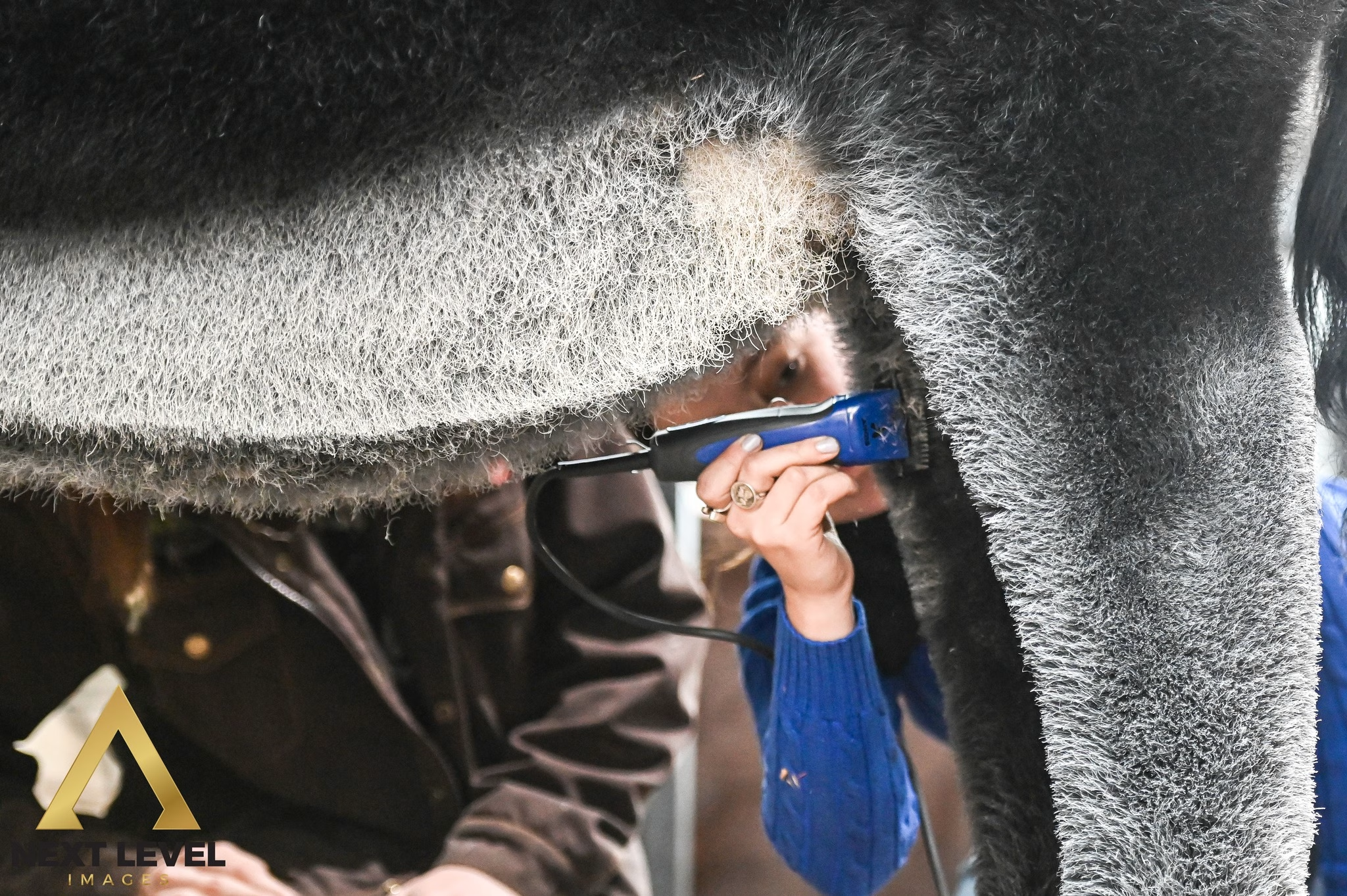
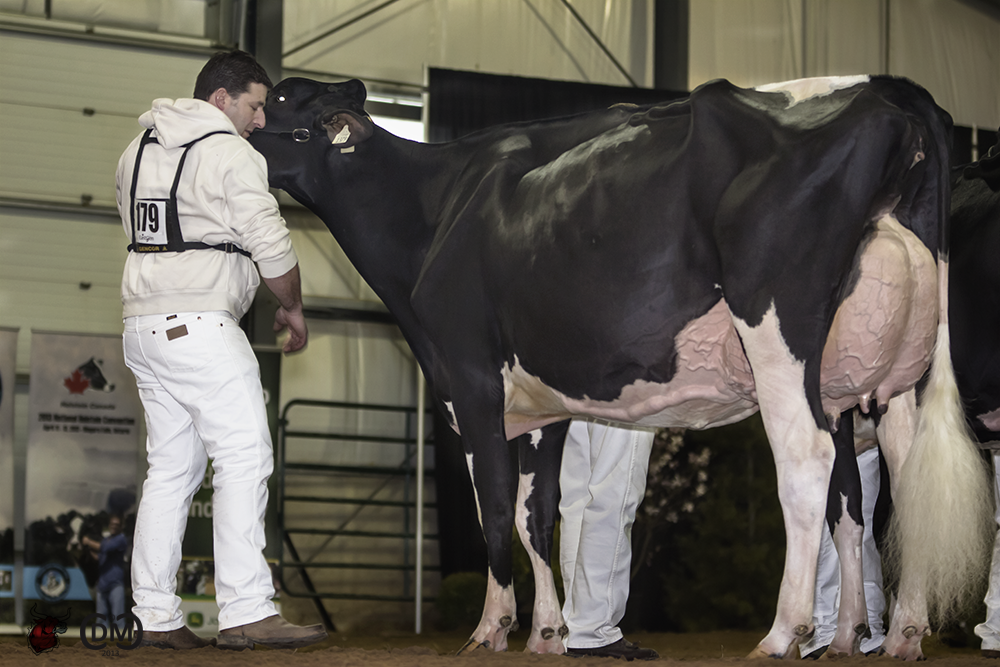
Integrity in the Details: As the industry innovates, maintaining the highest ethical standards in animal care and presentation is critical for preserving the credibility of dairy shows. (Photos: Next Level Images)

As we innovate, we must maintain our industry’s integrity. Recent updates to the PDCA Show Ring Code of Ethics reflect a proactive effort to address evolving fitting techniques and reinforce ethical conduct.

The allowable topline hair length was increased from 1 inch to 1.5 inches. More critically, the code now specifically addresses controversial practices such as teat setting, over-bagging, and misrepresentation of lactation status.

These changes strike a necessary balance between tradition and evolution. But let’s be brutally honest: our industry has too often turned a blind eye to questionable practices in the name of show ring glory.

We can modernize our shows while maintaining ethical standards that preserve public trust in dairy exhibitions.

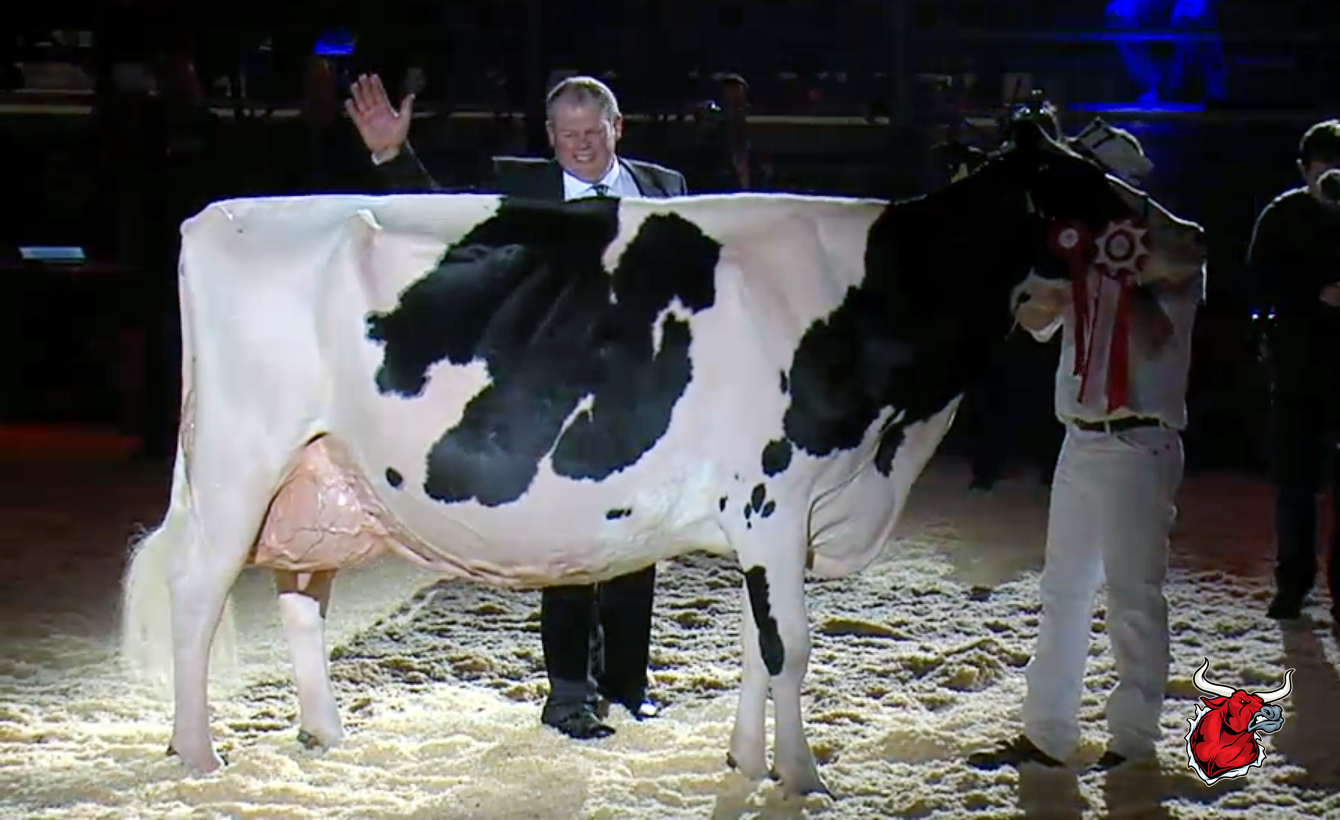
The Moment We Strive For: The selection of Erbacres Snapple Shakira-ET as Grand Champion at World Dairy Expo represents the pinnacle of dairy show prestige and excitement. The challenge now is to build a system that creates more of these captivating moments and shares them with a wider audience.

The Bottom Line

The dairy cattle show scene is pivotal, much like the crossroads many operations faced when deciding whether to invest in robotic milking systems. The status quo simply isn’t sustainable.

Success will require abandoning our rigid adherence to tradition and embracing necessary innovations. The recent PDCA updates demonstrate our industry’s willingness to evolve. This same adaptive mindset must extend to youth engagement strategies, show formats, marketing approaches, and technology integration.

Most critically, dairy shows must reconnect with their fundamental purpose: celebrating excellence in dairy breeding while fostering the next generation of industry leaders. By emphasizing the unique attributes of dairy cattle while making shows more accessible and engaging, we can secure their place in agriculture’s future.

The path forward involves collaboration among breed associations, show organizers, industry partners, and educational institutions. As dairy cooperatives leverage many farms’ collective strength, our show community must work together toward a common goal.

The question isn’t whether dairy shows will change—it’s whether you’ll be part of driving that change or be left behind when it happens.

What bold moves will you make to reinvigorate your dairy show participation this year? The future of dairy exhibitions depends on your answer.

Key Takeaways:

  • Reimagine youth engagement through jackpot shows, skillathons, and financial aid to lower entry barriers
  • Modernize events with “People’s Choice” classes, agri-tainment, and professional commentary
  • Leverage technology via apps, social media, and live-streaming to broaden reach
  • Market strategically by highlighting dairy’s heritage and life skills for urban audiences
  • Balance tradition with ethics to maintain credibility and animal welfare

Executive Summary:
Dairy cattle shows face declining participation amid industry consolidation and high barriers to entry, while stock shows thrive through youth programs, entertainment-driven events, and strategic marketing. To revitalize, dairy shows must adopt proven strategies: create accessible youth pathways, modernize formats with spectator-friendly classes and tech integration, and rebrand as community-focused experiences blending education and entertainment.

Complete references and supporting documentation are available upon request by contacting the editorial team at editor@thebullvine.com.

Learn more:

Join the Revolution!

Join over 30,000 successful dairy professionals who rely on Bullvine Weekly for their competitive edge. Delivered directly to your inbox each week, our exclusive industry insights help you make smarter decisions while saving precious hours every week. Never miss critical updates on milk production trends, breakthrough technologies, and profit-boosting strategies that top producers are already implementing. Subscribe now to transform your dairy operation’s efficiency and profitability—your future success is just one click away.
NewsSubscribe
First
Last
Consent

Has the Show Ring Lost Its Function?

Over the past year, I have found myself wondering, “What is the function of the show ring?”  Attendance at shows has gone down, and there are fewer animals coming out.  But more concerning than anything else is that it seems that too many of the winners at the major shows  have had significant flaws and   do not truly represent the most productive, long-lived cows that were at the show.  This has me wondering if the show ring still has a function in today’s dairy industry.

Long have I listened to the three functions of showing dairy cattle: breed improvement, merchandising and marketability.  So as I am now pondering show ring relevance, I figured I would look at each of these three areas and see how well each one actually performs.

Breed Improvement

For years, there has been an ongoing debate about how well a top show cow would last in a commercial environment.  Over the past eight months, pretty much every cow that I have seen named Grand Champion at a Holstein show has had a significant functional flaw.  This definitely raises an issue for me because, if the show ring is supposed to be the best of the best, shouldn’t the Grand Champion be a great example of that?  For me, the question now becomes, “What is it that we are looking for?” For that, I turn to the Dairy Cow Unified Score Card (US) and Holstein Cow Score Card (Canada), and I find myself looking at the relative emphasis of each major category.  I question the relative weightings in relation to what a long-lived productive cow truly looks like.  (Read more:  She Ain’t Pretty – She Just Milks That Way!).  This became very evident to me at a judging school I recently attended.  On that day, the official panel (which was two representatives from AI) placed a cow at the top of the class who had a major rump problem which is usually associated with reproductive issues. Something you would expect someone who worked in the AI industry to be cognizant of.  At the bottom of the class was a very sound cow, placed there because she was not as “deep bodied and dairy as the other cows in the class.”  This caused me extreme concern. Not only did it kill my score/performance for the day, but also on a more significant scale, what does it say about us as an industry, if we are selecting these animals to represent the best of the best.

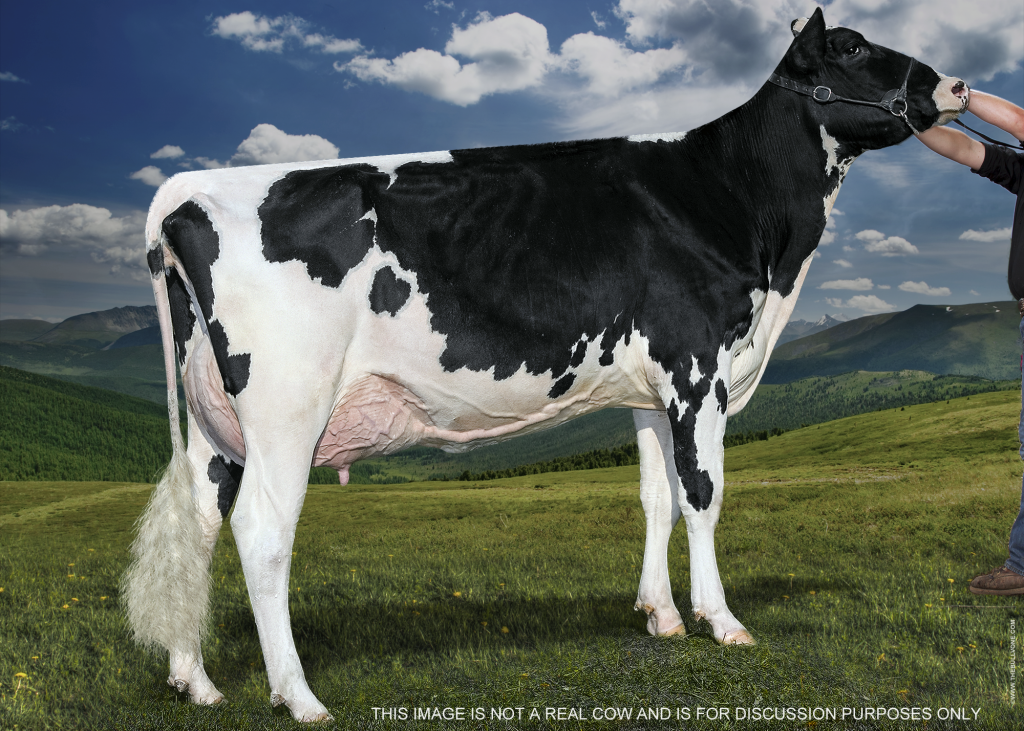
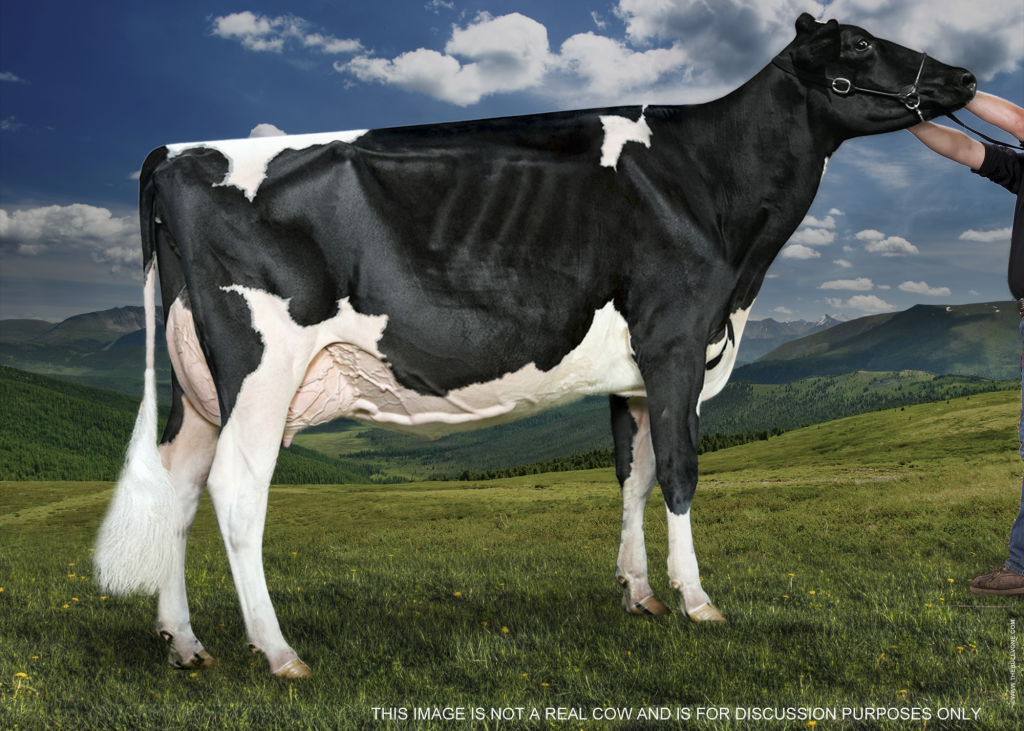
2year old - composite background

Ideal Show/Classification 2 year old

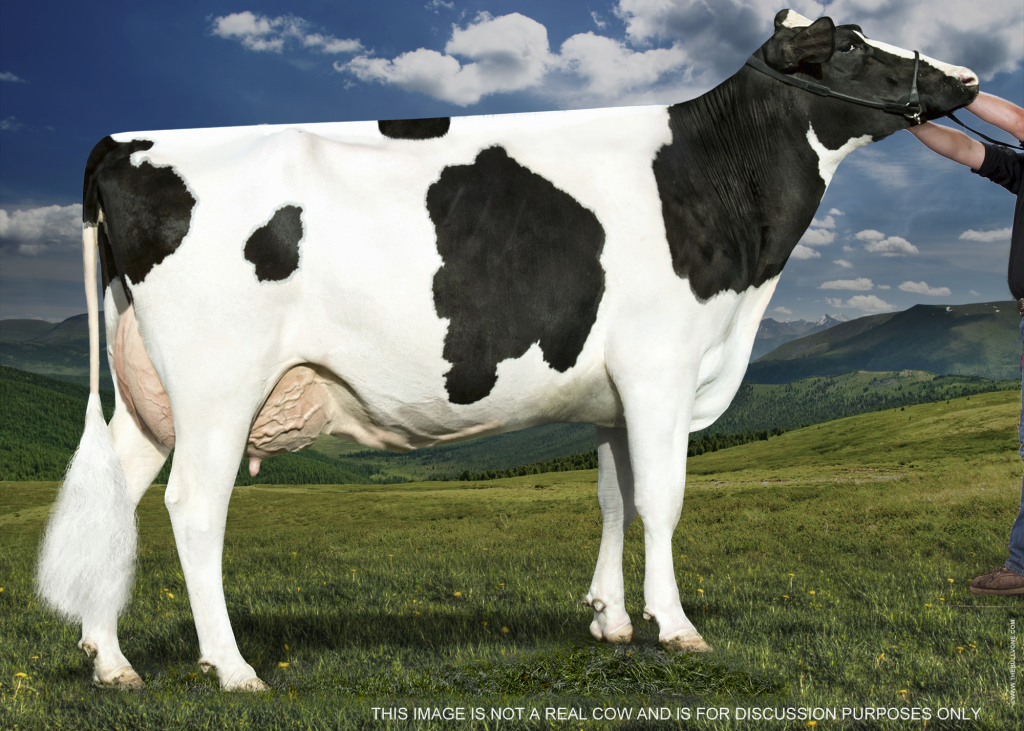
genomic 2 year old - composite background

Typical High Index 2 year old

efficient 2 year old - composite background

High productive and efficient production 2 year old.

For me, the issue here is not just a show ring problem.  It is also a classification issue.  The weighting on the score card is the same for both classification and show ring.  If we look at the score card and compare the correlations between production and productive life, we see significant issues arising around what should be benchmarks for a long-lived productive cow.

funtiontable

*Performance based score developed by using weights of correlations for productive life and production to each of the four major trait areas.

By looking at the correlations between actual performance data and the breed scorecards, two glaring issues come to light:

Too much emphasis on Mammary System

For years I have heard it said, again and again, it all begins with the cow’s udder.  Naturally, that makes sense, since we are talking about milk production.  What is interesting is that, while the correlation between Mammary System and Productive Life are very high, the correlation between Mammary System and actual milk production is actually negative.  My belief on this matter is that, since we have put so much emphasis on udders over the past 30 years, the Mammary Systems on most cows are to the point where they are more than sound for productive reasons.  In other words, we have done such a good job at breeding for strong well-attached udders that are well above the hock that we now have taken it to the extreme, where even cows with average udders are still correct enough to last several lactations and be productive cows.  Furthermore, and this is where the problem lies, the sires who provide the greatest udder improvement don’t actually sire enough milk.

Top 10 Proven UDC Proven Sires April 2014

NameMilkFatProtSCSConfStatureBody Depth
DE-SU OBSERVER-ET233691832.7112-2-4
BADGER-BLUFF FANNY FREDDIE171766592.745-3-6
DE-SU CIMARRON-ET289599882.691000
LONG-LANGS OMAN OMAN149083823.11126-2
DE-SU HISTORY-ET2083101812.72802
MORNINGVIEW LEVI132186742.5730-3
DE-SU ALTAGOALMAN-ET2856107892.773-2-3
CO-OP BOSSIDE MASSEY-ET115175662.52600
ENSENADA TABOO PLANET249789822.888-61
WELCOME BOL LATHAM-ET179778812.94722
KINGS-RANSOM B RUBLE307887922.987-2-2

In looking at the top 10 proven sires for Udder Composite you will notice that only 5 sires have a positive value for milk (PTAM) and only two sires (Buxton and Golf) are over 1000 lbs. of milk.  The top 100 UDC proven sires from the April 2014 Genetic Evaluations average a very low 551 lbs of milk (PTAM).

Top 10 Proven Production (PTAM) Sires April 2014

NameMilkFatProtSCSConfStatureBody Depth
DE-SU MUCHO 11209-ET1319102852.63920
MR CHARTROI ELOQUENT-ET1740106862.791231
PARILE LOCARNO177486842.67122-3
SANDY-VALLEY PANAMA-ET1841108742.4911-1-2
BUTZ-HILL LETTERS-ET199986852.7110-2-1
DE-SU THUNDER-ET1339100602.63164-2
WELCOME ARMITAGE PESKY-ET1088101712.7294-5
DE-SU PHOENIX 588-ET2659113952.768-1-3
DE-SU SKYMONT 11195-ET163194742.7412-1-3
CHAMPION ALTABOOKEL196394792.8115-1-1

Conversely, if you look at the top 10 proven sires for milk (PTAM) you will notice that there are two sires (Ruble and Jigsaw) that are over +2.00 for UDC in fact the top 100 milk sires have an average UDC of 1.16.  In the top 100 proven Productive Life sires average +1.44 for UDC and +1.48 for PTAT. Therefore it’s very clear that the top sires for milk do not always have the best udders, and the top udder sires are not typically you high production sires.  Interestingly this leads to the conclusion that a high UDC is not as strong an indicator of either production or the ability to have high production over a cows lifetime as many believe.

Not enough emphasis on Functional Rumps

There certainly has been a strong positive trend over recent years to breed and select cattle with greater emphasis on reproduction.  With that has come a greater focus on rump angle.  This is an area where I am noticing the greatest discrepancy between the show ring and what it truly takes to be a long-lived functional cow.  It has been generally accepted that a level wide rump was a show ring rump and a high rump angle rump was a calving ease rump.  The challenge is that, over the past year, I have seen cows with extremely high pins being made Grand Champion.  While I love a nice boxcar rump as much as the next person does, it still needs to be at least level and not have a severe tilt from back to front.

Merchandising

There used to be a time that you could take a heifer to a spring show with the expectation that, if she did well, you would be able to sell her for significant dollars.  That has changed to such an extent that not nearly as many breeders are even sending animals to the spring shows anymore.  In fact, those that are looking to sell their animals are opting to send them to a Tag Sale instead.  Lately, that is proving to be a better avenue for merchandising your show animals.  For a couple of hundred dollars you can have your heifer clipped, fitted and worked with.  That is a fraction of the cost of taking them to a show yourself.  (Read more:  TAG – You are it! How and Why TAG Dairy Sales Are Successful)

One thing that came to light for me, as I was sitting watching the Best of Both World’s sale this week, hosted by St. Jacobs ABC, Ferme Blondin, and Crasdale Auctions, was that there is still  a  market for “show cattle.”  (Read more: Best of Both Worlds – Sale Report)  Now I am not saying that they are topping the major sales or bringing the highest revenue (Read more: An Insider’s Guide to What Sells at the Big Dairy Cattle Auctions 2013).  What I am saying is that a cow that has had some success in the show ring and that can produce desirable type calves reliably is still very profitable.  An example of this was Ernest-Anthony Aphrodite-ET 2E 95 who sold for $21,000 at the sale.  While her show days are long behind her, she still carries significant value.  That is because she is able to reliably produce nice cut calves. She also flushes well, as was evident at the sale with many of those nicely cut daughters selling for $5,000 to $10,000. (Read more:  KUEFFNER DAIRY TEAMWORK “2 Dream the Impossible Dream!”) While the price of genomic animals has certainly fluctuated, a well-bred, nice pedigreed calf from a fairly well known show cow family continues to be one of the most stable markets. (Read more: The Judge’s Choice – Investment advice from Tim Abbott)

IMG_3110

Ernest-Anthony Aphrodite-ET 2E 95 the Member 2009 All-American Produce of Dam, Member 2009 All-American Senior Best 3 Females, Member of 2007 Unanimous All-American Senior Best Three Females and Reserve All-American Produce of Dam sold for $21,000 at the Best of Both Worlds Sale. Of course Aphrodite is from the great Tri-Day Ashlyn-ET EX 96, the Supreme Champion from the 2001 World Dairy Expo and Royal Winter Fair.

Marketability

Over the past two years, I have noticed a drastic decrease in the number of people attending cattle shows.  This has gotten to the point where many have started openly raising concerns about what is happening.  Take for example the recent Maxville Holstein Show (Read more: Maxville Holstein Show Results 2014) where it would have been generous to say there were 100 spectators in the crowd.  Furthermore, the average age of those spectators was well over 60.  If you were evaluating marketability by that attendance at the show, you would certainly have been disappointed.  However, here again, times have changed. Today, due to the Internet, more and more people are watching from home.  Especially if they live a significant distance away.  (Read more: Who is going to the show? Why attendance is down at the dairy cattle shows).  The statistics from our own coverage tell a very different story than does the attendance at the show.  We had over 10,000 people view the show results on our website on show day alone.  Over 1,300 people shared our webpage on Facebook and another 3,000 people liked or shared our pictures on Facebook.  Therefore, what has really happened? The answer is that the marketability of a show has gone from being that of a local attendance market to a worldwide market, where you can merchandise to people from around the globe (as long as the right dairy publications attend).  If the dairy publications don’t choose to attend your local show, there is still an opportunity to snap your own pictures, get them liked and shared around the world and produce your own viral marketing.  I have often seen a quick selfie by breeders at a show far outperform a professional side photograph on Facebook.

The Bulvine Bottom Line

When all is said and done, the viral nature of show results, pictures, and videos on the Internet prove that the show ring still serves a relevant position in today’s dairy industry.  There are certainly opportunities to further enhance the relevance of the show ring to the rest of the industry.  The best way to do that is in the type of cattle that we select at the shows.  For years, the show ring and type classification led the charge on the need to focus more on mammary system improvement.  Today we are at the point where cows’ udders in most herds in the world are very sound.  It’s now time for the show ring and type classification to again lead the charge when selecting for long-lived productive cows.  This will mean putting greater emphasis on functional rumps and functional cows.

Let`s ensure that the show ring has a relevant function in the dairy industry for years to come.

Get original “Bullvine” content sent straight to your email inbox for free.

[related-posts-thumbnails]

Who is going to the show? Why attendance is down at the dairy cattle shows

Over the past month I have been to 5 cattle auctions and 7 cattle shows in 4 different states or provinces. To say that I spent some time on the road driving from one event to the next is an understatement. And, while all of these events were amazing in their own unique way, there was one consistent thing that surprised me. Less and less people are attending these events.

RF Goldwyn Hailey - Grand Champion NY Spring Show

RF Goldwyn Hailey – Grand Champion NY Spring Show

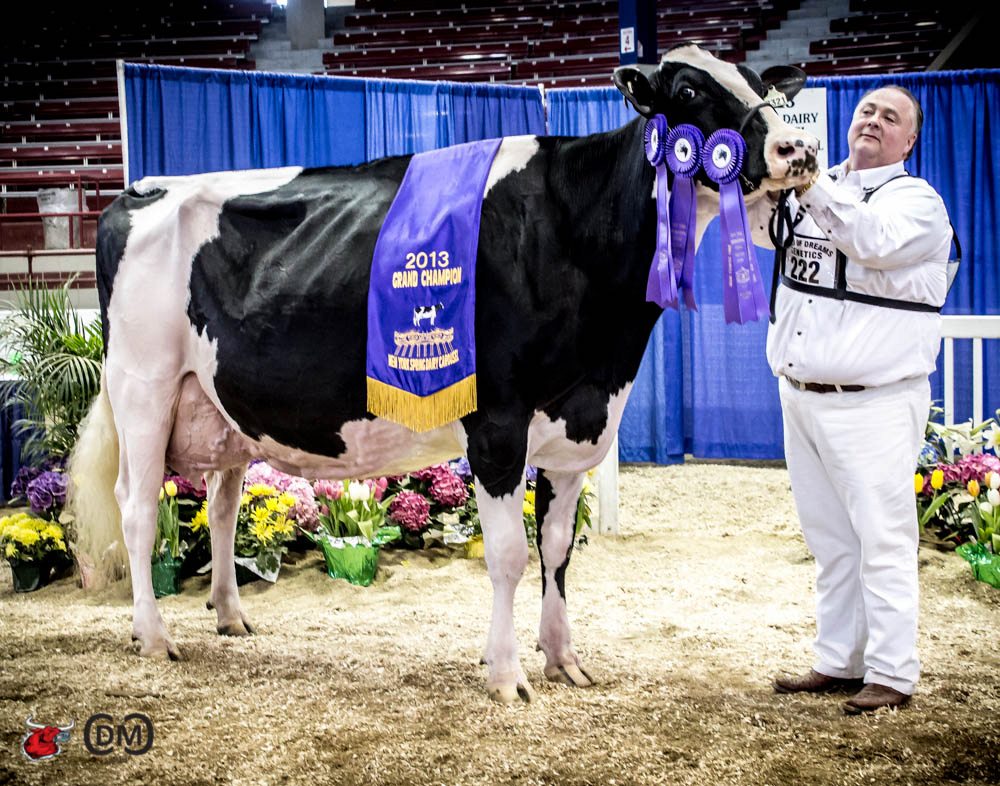
Now normally this would cause one to think that dairy cattle showing is dying, but in reality I actually think that the exact opposite is true. Consider this. The quality of cattle at these shows has been the best I have ever seen. I have had the opportunity to see the great RF Goldwyn Hailey multiple times, and this last time at NY Spring Show I would say that she looked the best I had ever seen her (Read more: RF Goldwyn Hailey Rides to the Top Spot at NY Spring Carousel and New York Spring Holstein Show 2013 Results). Also in NY I saw one of the most competitive Sr. 2 year old classes ever, where the legend in the making R-E-W Happy Go Lucky was beaten for the first time in milking form. Though in all fairness she is in the later stage of her lactation and the others are peaking.

R-E-W HAPPY GO LUCKY

R-E-W HAPPY GO LUCKY

At the Ontario Spring Show, I saw what I think to be a future World Dairy Expo and Royal Winter Fair Grand Champion, Valleyville Rae Lynn, giving Hailey a run for her money, though as Hailey has shown this spring she is untouchable. (Read more: Ontario Spring Discovery – Nothing Slipped Past Judge “Crack” and Ontario Spring Discovery Results). And at Quebec Spring Show I get to visit with many of the most passionate breeders in the world today (Read more: Do We Speak the Same Language? and Quebec Spring Show Results).

Valleyville Rae Lynn

Valleyville Rae Lynn – Reserve Grand Ontario Spring Show

So what is it then? Why are less and less people attending the shows?

In discussing this with Randy Blodgett, newly appointed publisher of Holstein World and mastermind behind Holstein World Productions, the answer becomes pretty clear. They are all watching the coverage online.

Decrausaz Iron O'Kalibra  Class 9 winner, Sr & Grand Champion - 2013 All European Championship

Decrausaz Iron O’Kalibra
Class 9 winner, Sr & Grand Champion – 2013 All European Championship

During the recent NY Spring Show, there were over 5,000 people watching on the live video stream. This reminded me of the video stream we shared of the EU Championship Show where there were so many people wanting to watch that we had up to 1,000 people waiting to get one of the coveted spots to watch the live stream on the Bullvine alone(Read more:The All European Championship Show: The Greatest SHOW on Earth and Decrausaz Iron O’Kalibra Wins Grand at the 2013 All European Championship). Interesting note about the EU Championship show. The show itself did such a great job of covering the show, we here at the Bullvine didn’t even have to attend the show and we had the largest viewership in the world, thanks to the power of digital and social media.

3X as many people watched the 2013 All European Championships on www.bullvine.com then all other publications combined.

And now we are talking about just those who are able to take the time to watch it live. If you add in those that watch the coverage on the various publications and Facebook you would easily be over 12,000 viewers. There are more publications than ever covering the shows. Gone are the days when you were lucky to get covered in your national breed publication and that’s it. In today’s digital dairy media world, you are likely to have 4 or 5 publications there taking pictures and sharing the results. Who knows maybe someday we will have coverage comparable to a professional sporting event? Imagine it, commentators during the cow show bring you all the play by play.

From the great camera angles combined with the very professional in ring cameras combined with the outstanding music and exceptional ring announcer the experience was riveting for all.

From the great camera angles combined with the very professional in ring cameras combined with the outstanding music and exceptional ring announcer the experience was riveting for all at the 2013 All European Championships.

But already even this is starting to change. We here are the Bullvine try to do even more. While we have not gotten into the live streaming of the shows, we have started to do more and more stories about what happens beyond the placings. We try to bring you the story behind the story, such as (Read more World Dairy Expo 2012 Holstein Show – A Battle for the Ages and The 2012 Royal Winter Fair Holstein Show – One of the greatest ever told!).

Brian and Rob Eby embrace

Brian and Rob Eby embrace after Ebyhomle Goldwyn Marcia is named Reserve Grand Champion at the 2012 RAWF

Watch out for those “Moovie” Stars

Actually, it’s almost scary how much some things have changed. Just write or share a picture of Hailey, O’Kalibra, Happy Go Lucky, or Rae Lynn and the piece goes viral. These cows have become “Moovie” Stars. They have their own cult following that would rival that of One Direction, Maroon 5 or Justin Bieber.

While I am sure that many dairy breeders are not “Beliebers”, they are very passionate about great cows and these four certainly are that. And yes I am sure that many of the showmen that show these animals do have egos as big as Justin’s is. Things have changed so much that the showmen of these cattle have gone from complaining about or at least ignoring the photographers in the ring, to a point where they make sure they have the animal set up correctly. They are all looking good and appreciate the exposure. So much so that in the past 2 weeks alone we have had over 20 requests by breeders for pictures from the show for use in ads and other marketing efforts. A “money shot” of their animal winning their class or better yet the show, brings coverage you just can’t buy and a boring side shot cannot compare with. (Read more No Cow Is Perfect – Not Even in Pictures and Introducing the Dairy Marketing Code of Conduct)

The Power of Social Media

Starting today in Wisconsin is the Mid-West Spring National. This is a show that I am sure will be great. But I will not be there. That’s because between, myself and my trusty traveling partner (my father and Bullvine writer), we need time to rest. Yes the time in the car is fine for discussing many of the great events or challenges facing the dairy industry and leads to some great articles (Read more: Where is the Balance in Balanced Breeding?)., we need time to get caught up on the other things in our lives.

We were stressing out that we needed to be there but just couldn’t do the 11hr drive back and forth and still get everything done that we need to do. So we are not going. The amazing part is, when I mentioned on Facebook about the show and asked what animals were there and who looked good, we got some super responses. The best of them were the people that said they would take some pictures for us and share with us all the “juicy” details about the stories behind the story. To our faithful readers who are doing this for us we send a BIG thank you. To those looking for results, we say “Don’t worry we’ve got you covered”.

Touch my heart

Now there is one event that I would love to be at. And yes it does happen today, and yes it is at a cattle show, but NO it is not happening in the show ring. Since starting the Bullvine we have had the opportunity to get to know many amazing people. One such case is Beverly Donavon, the passionate owner of the great Ayrshire show cow Sweet-Pepper Black Francesca. Their story has touched our hearts and made us huge fans of both (Read more: The Magic of Francesca).

Through the power of social media we have gotten to know Beverly and her husband Richard. Recently Richard mentioned to me that a great young artist, Emma Caldwell, had painted an amazing picture of “Frannie” and that he would be attending the Ayrshire Spring Show in Quebec today with Beverly to meet the artist and pick up the picture (Read more Emma Caldwell’s Art Stirs Mind and Heart!). Now you see Richard may come sometimes come across as a sarcastic wrangler but when you get to know him, you can’t help but like him. This special event that he has arranged, and that Beverly knows nothing about, is just another reason why. When Frannie passed this past winter, Beverly was understandably devastated and Richard has done everything he could think of to help her through this tough time. This picture is just one of the many things he has done to help her through it. Emma Caldwell has graciously agreed to auction of her latest painting “Hailey” with a portion of the proceeds to go towards a charity (click here to learn more).

Emma Caldwell's painting of the great "Frannie"

Emma Caldwell’s painting of the great “Frannie”

So my interest in being there has nothing to do with the show, which I am sure will be great. It has nothing to do with covering this story, which I am sure will be a tearjerker. But rather, it has EVERYTHING to do with the power of the human spirit. Three amazing people will get to meet, share a few tears (Bev most certainly), and celebrate an amazing cow and a very thoughtful gesture by all in involved. There will not be a big presentation in the center of the ring. There will not be any announcement over the public address system. If you see Bev with tears in her eyes over her trademark heartwarming love for one of her favorites , be sure to give her a big hug and say, “Way to go, we all loved Frannie and she was one of the best ever.”

So this is where I will be this weekend.

The Bullvine Bottom Line

While we here at the Bullvine will not be able to attend as many shows as we would like, I think that is also the case for many passionate dairy breeders. However thanks to the power of social media and the enhanced coverage many of the trade publications are providing, you can rest assured that you will be able to get the full story. To those who pioneered this, such as Randy Blodgett over 16 years ago, when he first did digital real time coverage at Expo, “Way to go Randy”. To those that have stepped up to help bring us the story behind the story at Mid-West Spring National, we say “Thanks”. Yes show attendance is down, but there is no question that the show passion lives on.


Get original “Bullvine” content sent straight to your email inbox for free.


[related-posts-thumbnails]

Spring Show Madness – The 2012 Show Season is HERE!

Let the insanity begin!  With the BC Spring show starting today, the 2012 show season officially begins.  While everyone gets really excited about spring shows and finding that diamond in the rough 47-inch summer yearling.  I find myself asking, “Does spring show really matter that much?”

To find answers to this question I checked out the results of the 2011 All-Canadian contest to see which animals were exhibited at spring shows last year:

A Closer Look

Therefore, thirteen of twenty-eight, or forty-six percent (46%) were at spring shows.  Let’s take a closer look.  Consider that, other than 2 year olds and milking yearlings, most cattle that were exhibited were well-established show cows.  The ones that were not were either too late in their last lactation or calving in the summer for the fall show season.  In addition, most 2 year olds and for sure milking yearlings have not calved yet.  These facts make it’s hard to consider the cow classes as an indicator of the relevance of spring shows.

By far the most interesting result is that of the 12 All-Canadian or reserve heifers 9 of them were exhibited at a spring show.  That’s 75% of them that were found by spring show time.  Most people think that the great show heifers are found as diamonds in the rough through the summer and the county fair show season, While I am sure the guys that run the roads looking for that next great one are looking just as hard all year long, it goes to show that by spring show time, many of the great show calves have already been found!

The Bullvine Bottom Line

As you head out to the spring shows, keep a close eye on the heifer classes.  Chances are you will see many of the same animals at the top of the class come Expo and Royal time!

[related-posts-thumbnails]

Send this to a friend