Archive for China dairy market

September 16 Is Coming Fast: China’s Fresh-Milk Rule Could Lock Out Your Q4 Loads

China blocks 80% of sterilized milk imports; fresh-only loads command a 12% premium as of September 16. Ready?

EXECUTIVE SUMMARY: Look, here’s what’s happening in China — and it’s bigger than most folks realize. Starting September 16, 2025, only fresh raw milk can be used for the production of sterilized milk imports into China. No more powder blends, period. This isn’t some regulatory hiccup that’ll get delayed… China’s milk production dropped 2.3% last year, while consumer demand remained steady, and Rabobank forecasts a 2% import increase this year. That creates real opportunities for compliant loads. Here in the States, the USDA has the June milk price at $21.30/cwt, with strengthening export forecasts — meaning the margin math works if you get compliance right. Early trade data indicate that compliant, sterilized milk is already commanding premiums of 8-12% in spot markets. This isn’t about following rules; it’s about capturing premium pricing while your competition scrambles to catch up.

KEY TAKEAWAYS

  • Lock in 8-12% premium pricing immediately — compliant, sterilized milk is already trading higher in spot markets. Reformulate your China lines to use fresh-only inputs now and capture that margin boost through Q4.
  • Avoid the customs detention trap — update all HS codes, export paperwork, and strip “reconstituted” from every label heading to China; one mislabeled container can hold up your entire shipment after September 16.
  • Turn UHT validation into a competitive advantage — test your sterilization process against real shipping temps and retail conditions; proper data logging beats blockchain every time and keeps your loads moving.
  • Leverage China’s supply squeeze — with domestic production down 2.3% and imports rising 2% — by positioning your operation to fill the gap with premium fresh-milk loads while competitors are left with non-compliant inventory.
  • Make cold chain monitoring pay — implement continuous temperature logging and bulletproof SOPs; it’s not just quality insurance, it’s profit protection when every degree matters for premium placement.
China dairy market, dairy exports, UHT milk, dairy compliance, dairy profitability

Let’s be clear about the new China regulation: it’s moving faster than most exporters realize. Fresh raw cow or goat milk only—period. The USDA’s Foreign Agricultural Service issued the official order, and China’s own media aggressively promoted the message. This isn’t just another regulation; it’s a sweeping move tied to government goals on quality and supporting local dairy, so it’s going to have real teeth.

Industry sources confirm that compliance expectations are being communicated clearly across trade channels. The Global Dairy Platform has recently advised its members that products containing reconstituted milk will no longer meet the definition of sterilized milk, and therefore, will risk detention at Chinese customs after the enforcement date. Vietnam’s Ministry of Industry and Trade is telling exporters the same — no compromises when it comes to fresh milk content. That’s a shift all exporters have to respect.

The numbers also support this urgency. AHDB’s recent report reveals China’s milk output dropped noticeably late last year and looks set to decline further, despite consumers keeping a steady demand. Rabobank forecasts imports will increase by a modest 2% in 2025, signaling growing opportunities for compliant imports. And US government data? The USDA ERS projects a June 2025 milk price of $21.30/cwt, with export forecasts on the rise. Match your shipments to this reality, and you’re positioning your operation well.

From Regulatory Flexibility to Zero Tolerance

Some producers I speak with still believe this is label panic or regulatory theater. From what I’ve seen of the actual amendment text, there’s no slack anymore. It cuts the grey zone around reconstituted milk — the phrase “with or without reconstituted milk” is fully deleted from the standard’s legal language. Customs officers have clear authority and are ready to enforce. Get your formulations, labels, and documentation in order, or your shipments risk rejection.

So what’s your action plan? Focus on these three critical areas:

First, pivot your products to use only fresh milk. Second, put your sterilization processes to the test—don’t just assume they’ll work over the flight and shelf time; validate them with real shipping and retail temperature data. Third, remove all labeling references to reconstituted milk and ensure that your export documents—Harmonized System (HS) codes and all—reflect the new policy of using only fresh milk. Miss any part of this, and you risk your shipments getting stuck or rejected.

I talked to a quality assurance manager who told me, “The idea that fresh milk can’t survive high-summer shipments is bunk. With proper aseptic processes and live temp monitoring, we’re seeing loads meet standards consistently.” Blockchain tech is helpful but not a silver bullet — solid SOPs and clear data do most of the heavy lifting.

Here’s an interesting recent win: a European exporter began including a “Made from 100% Fresh Milk” certificate directly with their shipping documents and on their packaging. The buyers appreciated the transparency, and port delays dropped significantly.

New Zealand is well-positioned with abundant fresh milk, proven aseptic technology, and zero duties since its trade agreement upgrade in early 2024. Europe faces longer shipping routes and stricter retailer requirements, yet remains competitive. The United States enjoys USDA-backed export momentum, and Australia is eyeing high-value niche pathways.

Pre-Deadline Compliance Checklist

StepKey Focus AreaRequired Documentation
ReformulateEnsure exclusive use of fresh milkHACCP records, process validation reports
RelabelRemove all reconstituted claimsUpdated label artwork, regulatory approvals
ReclassifyAlign HS codes with fresh-milk classificationCustoms broker instructions, sample declarations
Cold ChainImplement temperature control and loggingCarrier contracts, temperature logs, SOPs

Note on temperature controls: Although some shippers prefer maintaining a temperature of 2-4°C during transport, ultra-high temperature (UHT) milk is designed and validated for storage at ambient temperatures after sterilization. Exporters should perform lane-specific validation and rely on empirical temperature data rather than blanket assumptions.

Market Math and Motivations

The market signals are unequivocally positive. With domestic supply tightening and expected import growth, compliant sterilized milk products are forecast to command pricing premiums of 8% to 12%, based on recent trade market analyses. This trend suggests not only supply-demand dynamics but also aligns with growing consumer preference for fresh, high-quality milk products in China.

The regulatory push also reflects government support for domestic dairy production and the strengthening of food safety standards, creating a milestone that exporters must meet.

Regulatory pivots like this occur more quickly than most operations anticipate. The early movers who adapt now will capture disproportionate returns. The only question is which side of that equation you plan to be on.

Bottom line: nail formulas, labels, paperwork, and cold chain — that’s the path to keeping your Q4 shipments moving efficiently and profitably.

Complete references and supporting documentation are available upon request by contacting the editorial team at editor@thebullvine.com.

Learn More:

Join the Revolution!

Join over 30,000 successful dairy professionals who rely on Bullvine Weekly for their competitive edge. Delivered directly to your inbox each week, our exclusive industry insights help you make smarter decisions while saving precious hours every week. Never miss critical updates on milk production trends, breakthrough technologies, and profit-boosting strategies that top producers are already implementing. Subscribe now to transform your dairy operation’s efficiency and profitability—your future success is just one click away.

NewsSubscribe
First
Last
Consent

China’s Dairy Shift: What the Numbers Tell Us About a Market in Transition

China’s dairy dropped 2.8%—but they doubled down on efficiency over volume. Game changer.

EXECUTIVE SUMMARY: Here’s what’s happening: China’s milk production hit 40.8 million tonnes in 2024, down 2.8% from last year, but don’t let that fool you. They’ve systematically shifted from chasing volume to maximizing efficiency per cow—we’re talking 9,600 kg annually on average, with elite operations pushing 12+ tonnes. That’s putting them toe-to-toe with Wisconsin and New Zealand’s best. Their self-sufficiency jumped from 70% to 85% in four years while imports surged 16% in February alone, but here’s the kicker—they’re buying premium cheese and whey, not commodity powder. Feed conversion ratios are now reaching 1.4:1, compared to traditional systems at 1.8:1, which translates to real cost savings of approximately $340 per cow annually, based on current feed prices. New Zealand’s cashing in big with duty-free access, while U.S. exporters are getting hammered by tariffs. Bottom line? If you’re not tracking feed efficiency, product differentiation, and shifting buyer preferences, you’re leaving serious money on the table.

KEY TAKEAWAYS:

  • Benchmark your feed conversion ratio immediately—Chinese mega-dairies are hitting 1.4:1, saving roughly $340 per cow annually on feed costs compared to traditional 1.8:1 ratios
  • Pivot to premium product positioning now—buyers are abandoning commodity powder for cheese, whey proteins, and specialty ingredients that command higher margins
  • Track Chinese import data monthly through GACC reports—early indicators of product category shifts can help you adjust marketing strategy before pricing impacts hit
  • Evaluate financing options with agricultural lending rates—China’s effective 3% rates are driving their technology investments, so secure competitive financing for your own efficiency upgrades
  • Focus on supply chain transparency and traceability systems—Chinese buyers increasingly demand full documentation, creating competitive advantages for operations that can deliver verified quality
China dairy market, dairy farm efficiency, global dairy trends, feed conversion ratio, dairy profitability

The Chinese dairy market is changing—not in the dramatic way headlines suggest, but through calculated moves that savvy producers and exporters need to understand.

The Production Reality

Let me start with what we actually know. According to the Chinese Ministry of Agriculture’s latest sector report, China’s raw milk production reached 40.8 million tonnes in 2024. That represents a modest 2.8% decline from 2023—the first drop since 2018.

But here’s what that number doesn’t tell you. Chinese farms have been systematically culling less productive animals while increasing per-cow yields. We’re seeing average production climb toward 9,600 kg per cow annually, with top operations reaching 12 tonnes or more per cow per year. That puts their elite herds right alongside what we’re seeing in Wisconsin’s best farms or Canterbury’s most efficient operations.

The bigger shift? China’s dairy self-sufficiency has increased from around 70% to approximately 85% over the past four years, according to official agricultural policy documents. They’re producing less milk overall but depending less on imports—that’s strategic, not accidental.

What’s particularly striking is how they’ve approached this transition. Instead of the boom-bust cycles we’ve seen in other markets, Chinese policymakers have implemented what amounts to controlled market rebalancing. Feed conversion improvements are real—operations are reporting ratios approaching 1.4:1 compared to 1.8:1 for traditional systems, according to recent dairy efficiency research.

Import Patterns Are Shifting

Now, here’s where it gets interesting for those of us watching export markets. China’s General Administration of Customs reported dairy imports rose in early 2025 compared to the previous year. But they’re not buying the same products.

The shift is away from commodity milk powder toward specialty items, such as cheese, whey proteins, and functional ingredients. Think premium rather than volume. New Zealand is significantly benefiting from its duty-free access arrangements, while U.S. exporters face substantial tariffs that have effectively closed major market segments.

Recent trade analysis indicates that sweet whey powder imports have reached 237,000 tonnes year-to-date in 2025, a 30% increase year-over-year. The driver? China’s recovering swine sector needs high-quality protein sources. The U.S. maintained 43% market share, followed by the EU at 30%.

“We’re seeing Chinese buyers bypass traditional tenders for long-term partnerships focused on quality and traceability,” notes Michael Harvey, a trade analyst at Rabobank. “The message is clear: if you’re competing on price alone, you’ve already lost.”

What’s driving this product mix evolution? Chinese consumers are willing to pay premiums for quality, traceability, and health benefits. The days of competing purely on price are ending—something every exporter needs to understand.

The Consolidation Story

The scale transformation happening in China is worth paying attention to, especially if you’re trying to benchmark your own operation’s efficiency. Large operations—farms with 1,000+ head—now account for nearly 56% of the national herd, up from 24% just five years ago.

These aren’t just larger farms; they’re entirely different operations. Take the mega-dairies in Inner Mongolia—some managing 80,000+ cows with automated milking systems, integrated feed programs, and genetic optimization. Companies like Yili, which reported 115.8 billion yuan in revenue for 2024, are investing heavily in R&D and processing technology, positioning them to compete globally.

Here’s what really gets my attention, though—the operational metrics these Chinese mega-farms are achieving. Recent industry reports describe milking carousel systems completing rotations in 2 minutes 45 seconds with 99%+ uptime. That’s not just impressive technology; it’s setting new competitive benchmarks.

Financial Realities and Regional Variations

The financing environment creates both opportunities and constraints. While China’s Loan Prime Rate sits at 3.00%, actual agricultural lending rates vary significantly by region and farm size. Most producers are seeing rates between 4% and 6% for expansion capital, according to data from the Agricultural Bank of China’s sector.

Feed Conversion RatioFeed Cost per Cow/YearSavings vs 1.8 FCR
1.8 (Traditional)$2,840Baseline
1.6 (Improved)$2,650$190
1.4 (Chinese Elite)$2,500$340

Feed costs, labor availability, and local policy support vary dramatically by province. Inner Mongolia and Heilongjiang possess natural advantages, including better forage production, established infrastructure, and proximity to processing facilities. But other regions are struggling with the transition to larger, more efficient operations.

What strikes me about the regional differences is how stark they are. Ningxia province, for instance, had 920,000 dairy cows producing 4.3 million tonnes of fresh milk in 2023, with plans to reach 1.1 million cows and 5.5 million tonnes by 2025. Meanwhile, southern provinces are experiencing farm consolidation and exits as producers struggle to compete with the efficiency levels of their northern counterparts.

The human aspect of this transformation is also significant. USDA reports indicate that over 90% of dairy farms are operating at a loss with raw milk prices near 3 RMB (€0.36) per kg. That’s forcing smaller operations out while rewarding those who can achieve scale efficiency.

What This Means for Your Operation

For exporters: Commodity approaches are no longer effective. The buyers I talk to want consistency and innovation, not just competitive pricing. Focus on differentiation—quality specifications, supply chain transparency, products that deliver demonstrable value.

Think about it this way: if Chinese operations can achieve 12+ tonnes per cow with automated systems running at exceptional uptimes, what does that mean for your cost structure? For your technology investment priorities?

For domestic producers: These efficiency benchmarks aren’t just interesting statistics—they’re becoming global competitive standards. Whether you’re in California, Ontario, or Canterbury, these are the metrics against which your products compete in international markets.

For strategists: This represents calculated market evolution, not emergency response. China’s approach to managing oversupply through structural adjustment rather than emergency intervention offers lessons for other markets facing similar challenges.

Here’s what you need to track and act on:

  • Monitor Chinese trade data monthly through GACC reports to identify product category shifts before they affect global pricing
  • Benchmark feed conversion efficiency against the documented performance of 1.4:1 achieved by top Chinese operations
  • Evaluate export product positioning for premium segments rather than commodity competition
  • Assess supply chain transparency requirements as Chinese buyers increasingly demand full traceability
  • Review financing strategies, as agricultural lending conditions affect expansion capability globally

The Chinese dairy story isn’t about dramatic overnight changes—it’s about systematic improvements in efficiency, quality, and market positioning executed with impressive consistency. Those who understand this evolution will find opportunities. Those who don’t may find themselves competing for markets that no longer exist.

What impresses me most about this transformation is how methodically it’s been executed. Rather than reacting to market pressures, Chinese producers and policymakers have implemented structural changes aimed at creating sustainable competitive advantages. The question for the rest of us isn’t whether this transformation will continue—the evidence suggests it will. The question is whether we can adapt our strategies to compete effectively in this evolving market environment, because, ready or not, the global dairy landscape has undergone a fundamental change.

Complete references and supporting documentation are available upon request by contacting the editorial team at editor@thebullvine.com.

Learn More:

Join the Revolution!

Join over 30,000 successful dairy professionals who rely on Bullvine Weekly for their competitive edge. Delivered directly to your inbox each week, our exclusive industry insights help you make smarter decisions while saving precious hours every week. Never miss critical updates on milk production trends, breakthrough technologies, and profit-boosting strategies that top producers are already implementing. Subscribe now to transform your dairy operation’s efficiency and profitability—your future success is just one click away.

NewsSubscribe
First
Last
Consent

U.S. Dairy Farmers Unlikely to Cash in on Chinese Demand

84% tariffs slam U.S. dairy exports to China. Why can’t farmers capitalize on China’s milk shortage despite crashing prices & production?

EXECUTIVE SUMMARY: China’s dairy production is plummeting (-9.2% in 2025), but U.S. farmers face insurmountable barriers: 84% retaliatory tariffs, New Zealand’s duty-free dominance, and China’s lactose-intolerant population. While milk prices crashed by 15% and skim powder production dropped by 30%, structural issues like shrinking birth rates and economic stagnation limit demand. With FTAs favoring competitors and trade tensions escalating, experts urge dairy producers to pivot to Mexico, Southeast Asia, and value-added niches instead of chasing China’s shrinking market.

KEY TAKEAWAYS:

  • 84% tariffs make U.S. dairy exports to China 104% more expensive than New Zealand’s duty-free shipments.
  • New Zealand controls 46% of China’s import market—their FTA advantage is irreversible without policy shifts.
  • China’s milk consumption growth is capped by lactose intolerance (87% in teens) and declining birth rates.
  • Diversify or die: USDA grants and co-ops offer lifelines for exploring Latin America, MENA, and specialty markets.
  • Economic headwinds (real estate crisis, youth unemployment) slash Chinese spending on “non-essential” dairy.
U.S. dairy exports, China dairy market, 84% tariffs, New Zealand dairy dominance, trade war impact

China’s dairy sector is shrinking fast, with milk collections down 9.2% in early 2025 compared to last year. Milk prices have dropped 15%, and skim milk powder production has plummeted by more than 30%. While this might sound like an opportunity for U.S. dairy exports, the reality is much more brutal.

Why China’s Dairy Market is Shrinking

After years of pushing hard to expand its dairy industry, China is now dealing with serious oversupply problems. Between 2018 and 2023, their milk production jumped by 27% (24.7 billion pounds) as part of their national plan to rely less on imports.

“Dairy production has remained stable, and the number of cows has been gradually adjusted,” China’s agriculture ministry stated in December 2024. “While the oversupply of milk will continue in the first half of 2025, it is expected that supply and demand imbalances will ease in the second half of the year.”

The problem? Chinese consumers aren’t drinking enough milk to keep up with all this production. Raw milk prices crashed from 4.38 yuan/kg in 2021 to just 3.14 yuan/kg by September 2024 – a brutal 28% drop forcing many smaller farms out of business.

Why China Isn’t Buying

Trouble Digesting Milk

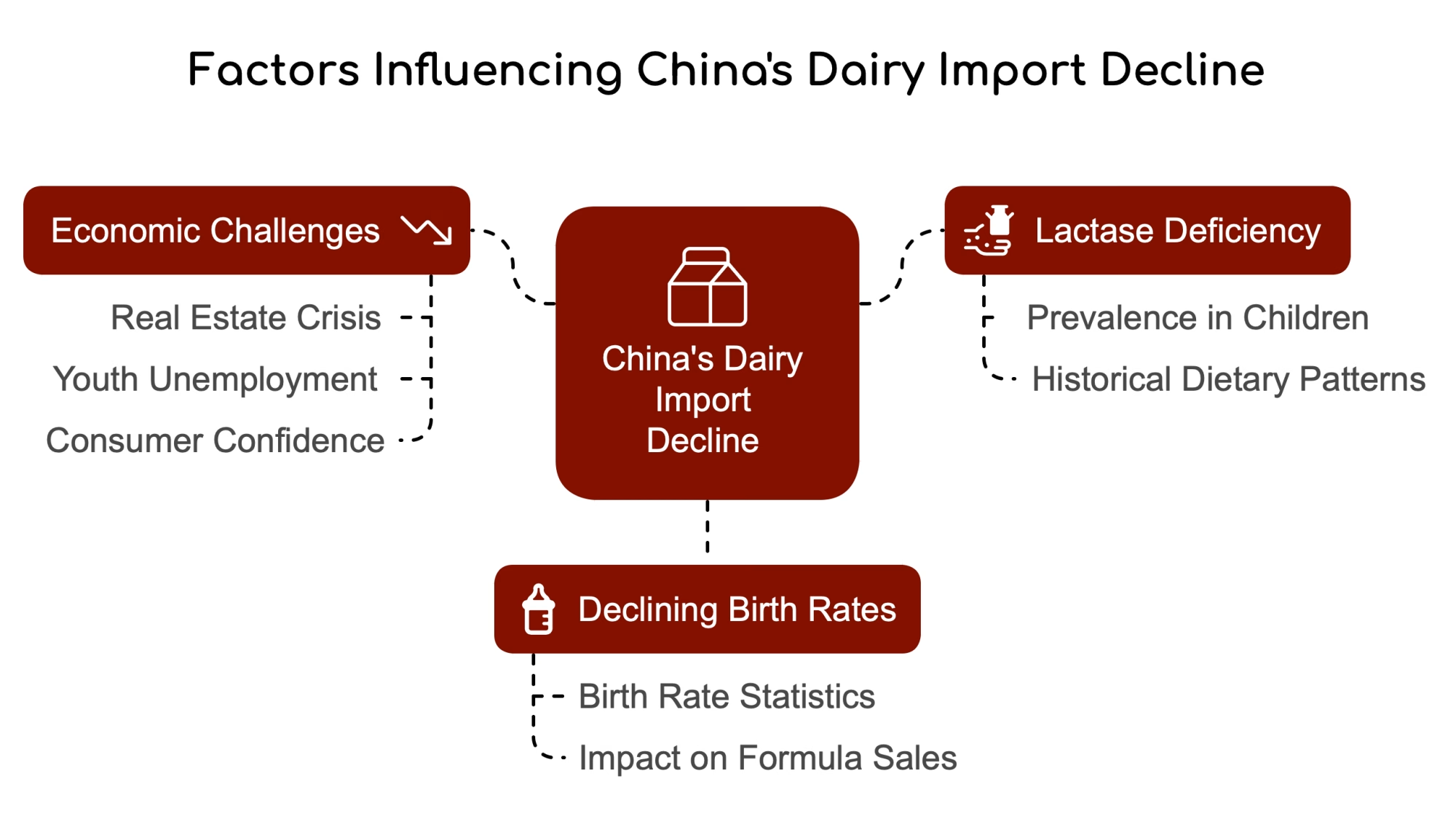
Let’s face it – many Chinese people simply can’t comfortably digest milk. Studies show that lactase deficiency affects about 38.5% of Chinese children aged 3-5, jumping to a whopping 87% in older kids. This biological reality means milk has never been a staple in Chinese diets.

Declining Birth Rates

China’s birth rate has fallen, dropping from 13.03 births per thousand people in 2013 to just 6.39 in 2023. This hits infant formula sales hard – historically a major driver for dairy imports.

There was a small bump in 2024 during the “Year of the Dragon” (considered lucky in Chinese culture), but that’s a blip in the long-term downward trend.

Economic Challenges

China’s economy struggles with real estate problems, high youth unemployment, and weak consumer confidence. As USDEC notes: “China’s economy continues to be challenged on multiple fronts—a real estate crisis; elevated youth unemployment; underfunded local governments; deflation; and disappointing GDP growth—not to mention potential fallout from trade battles with the U.S.”

When money’s tight, dairy products are often the first thing cut from shopping lists.

The Competitive Landscape: Why New Zealand Wins

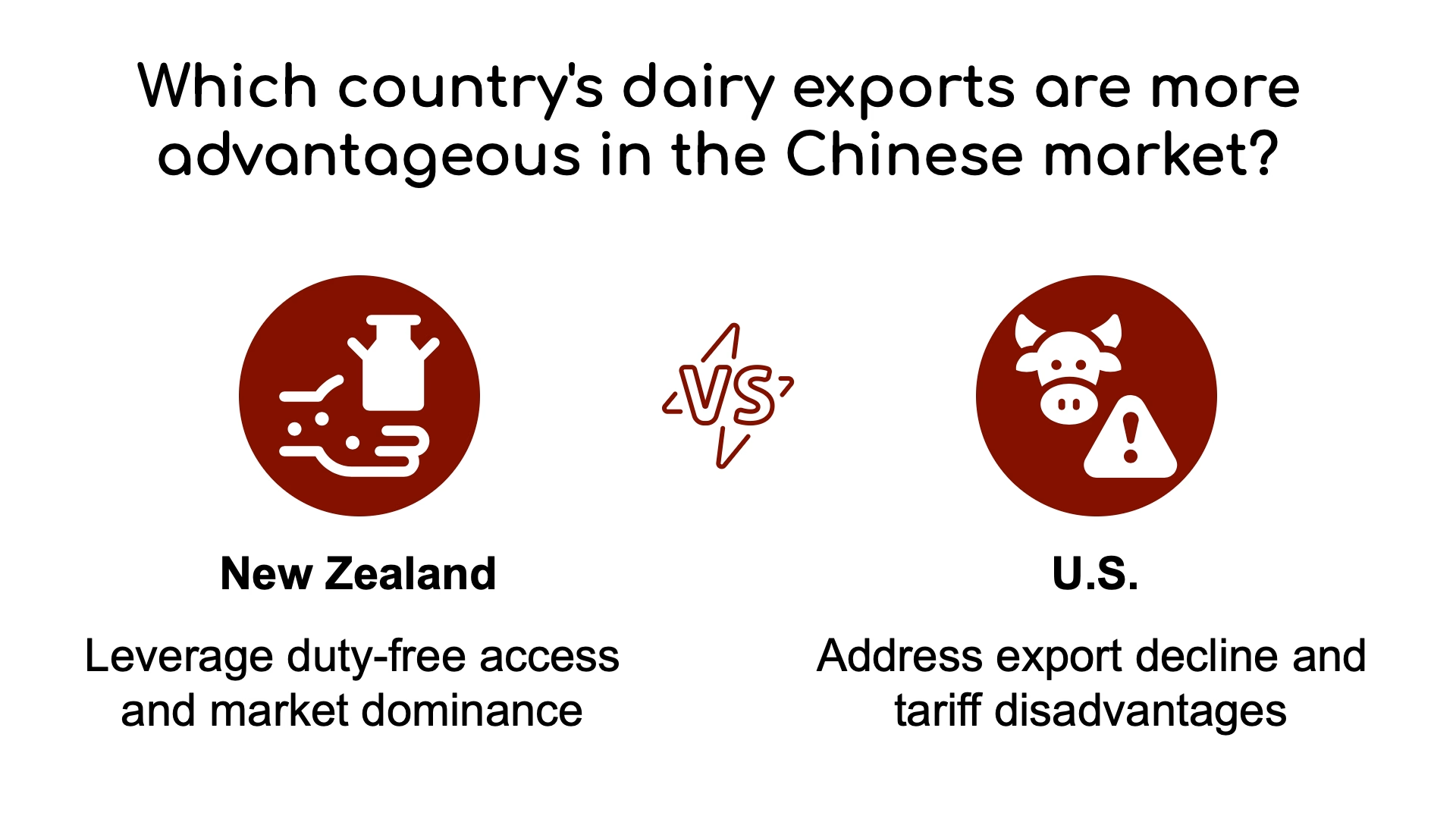
  • New Zealand’s Duty-Free Advantage: As of January 1, 2024, all New Zealand dairy products enter China completely duty-free. This gives Kiwi producers roughly $350 million in annual tariff savings compared to U.S. suppliers.
  • Dominant Market Position: New Zealand commands a 46% share of China’s dairy import market. Their exports to China jumped significantly in late 2024, especially milk powder, butter, and cheese.
  • U.S. Export Decline: Meanwhile, U.S. dairy exports to China tanked in 2024, falling to $584 million – the lowest since 2020. Overall volume dropped 9%, according to USDEC.

Bottom Line: New Zealand’s free trade advantage is practically impossible to overcome without significant policy changes. Any import opportunities created by China’s production decline will benefit New Zealand, not U.S. producers.

The Trade War Impact: 84% of Tariffs Close the Door

The trade relationship between U.S. dairy and China has gone from bad to worse. Here’s how quickly things escalated:

Tariff Timeline:

  • February 1, 2025: U.S. slaps 10% tariff on all Chinese imports
  • March 3, 2025: U.S. increases tariff to 20%
  • March 4, 2025: China announces 10% retaliatory tariff on U.S. dairy (effective March 10)
  • April 2, 2025: U.S. imposes additional 34% “reciprocal” tariff
  • April 4, 2025: China matches with a 34% retaliatory tariff (effective April 10)
  • April 9, 2025: U.S. increases reciprocal tariff to 84%
  • April 9, 2025: China immediately matches with an 84% retaliatory tariff (effective April 10)

“China will impose a 10% tariff on US dairy products starting March 10 as the trade war intensifies,” reported The Bullvine in early March.

As of today (April 9, 2025), the U.S. has just announced an increase of its tariff on China from 34% to 84%, with China immediately matching. Starting tomorrow, virtually all U.S. dairy products entering China will face an additional 84% tariff on top of existing rates – effectively slamming the door shut on exports.

Quick Takeaways for Dairy Farmers

  • Small Operations: Focus on domestic specialty markets; consider joining cooperatives with diversified export portfolios
  • Medium Operations: Explore USDA Market Access Program funding for new market development in Southeast Asia and Latin America
  • Large Operations: Evaluate product mix to target markets less impacted by tariffs; consider joint ventures with partners in FTA countries

Bottom Line for Dairy Producers

The brutal truth? U.S. dairy producers shouldn’t expect any meaningful export opportunities to China shortly. The triple whammy of sky-high tariffs, weak Chinese consumer demand, and competition from duty-free suppliers like New Zealand create a perfect storm that effectively locks us out of the market.

3 Steps for Farmers:

  1. Explore USDA Market Access Program grants for export market development (applications due June 14, 2025)
  2. Contact your co-op or industry association about market diversification strategies
  3. Look beyond China to Mexico, Southeast Asia, and the Middle East/North Africa markets

This trade war highlights why putting all your eggs in one export basket is risky. The most brilliant move now is to diversify your markets and focus on regions where U.S. dairy still has competitive advantages.

Learn more:

Join the Revolution!

Join over 30,000 successful dairy professionals who rely on Bullvine Daily for their competitive edge. Delivered directly to your inbox each week, our exclusive industry insights help you make smarter decisions while saving precious hours every week. Never miss critical updates on milk production trends, breakthrough technologies, and profit-boosting strategies that top producers are already implementing. Subscribe now to transform your dairy operation’s efficiency and profitability—your future success is just one click away.

NewsSubscribe
First
Last
Consent

China’s Dairy Shift: From Powder to Cheese

China’s dairy market is shifting gears. While milk powder imports are shrinking, demand for cheese and butter is soaring. What’s driving these changes, and how can global dairy farmers adapt? Discover the trends reshaping China’s dairy appetite and the opportunities they churn out for exporters.

Summary:

China’s dairy market is changing fast, moving from milk powders to cheese and butter, giving global dairy farmers a chance. In 2024, imports of Whole Milk Powder dropped, while cheese imports hit the third-highest record. China’s local milk production faces challenges, offering global farmers new opportunities. As people in emerging markets try more value-added dairy products, farmers should diversify, keep up with trends, stay efficient, and explore new markets to succeed in this shifting landscape.

Key Takeaways:

  • China’s dairy market is experiencing a shift from traditional milk powders to cheese and butter.
  • Whole Milk Powder imports decreased by 5% but saw a resurgence in December 2024.
  • Cheese imports in 2024 were the third-largest on record despite slight declines from 2023.
  • Domestic milk production in China has declined, opening opportunities for global dairy exporters.
  • Farmers need to adapt strategies to capitalize on changing global dairy demand.
China dairy market, milk powder imports, cheese demand, butter imports, global dairy trends

Imagine China’s dairy market as a giant buffet. For years, milk powders were the main course, but now, Chinese consumers are interested in new dairy products like cheese and butter. While moving away from milk powder, they are now opting for cheese and butter. 

Milk Powder: Yesterday’s Leftovers? 

Product2024 Import TrendNotable Statistic
Whole Milk Powder↓ 5%899 million pounds imported
Skim Milk Powder↓ 34%The steepest decline in dairy imports
Cheese↓ 3%Third-largest import volume on record
ButterA record high of 28.4 million pounds

In 2024, China’s appetite for Whole Milk Powder (WMP) shrunk by 5%, with imports falling to 899 million pounds – that’s less than half of what they gobbled up in 2021. Skim Milk Powder? Even less prevalent, with imports plummeting by 34%. Hold onto your seats – December 2024 witnessed a sudden doubling of WMP imports compared to the previous year. Could this be the start of a comeback tour for milk powders? 

According to Li Wei, a dairy analyst at the China Dairy Association, Chinese consumers now seek a wider variety of flavors and textures in dairy products, moving beyond essential nutrition.

Cheese and Butter: The New Crowd Pleasers 

While milk powder’s star may fade, cheese and butter steal the spotlight. Cheese imports in 2024 were the third-largest on record despite a slight dip from 2023. And butter? It’s on a roll, with imports hitting a record high of 28.4 million pounds

Key Takeaways 

  • China’s dairy preferences, shifting towards a wider variety of dairy products like cheese and butter, are evolving rapidly.
  • In 2024, Whole Milk Powder imports dropped by 5%, but December witnessed a surprising comeback.
  • Cheese imports are rising like well-proofed dough, ranking third-largest on record in 2024
  • The decline in China’s domestic milk production has opened up opportunities for dairy farmers worldwide.
  • It’s time for farmers to churn their strategies to match these new flavors of demand

Economic and Policy Flavors 

China’s economy grew by 5% in 2024, but that’s like skimmed milk compared to the growth of whole milk in previous years. Add a shrinking population, and you have a recipe for changing the dairy market’s taste. 

Current trade policies are complicating the situation in the dairy market. While the specter of trade wars has receded, new challenges have emerged. The U.S.-China Phase One trade deal has helped stabilize dairy trade, but ongoing tensions over technology and geopolitics could curdle the relationship at any time. Farmers need to stay alert to these policy shifts.

Global Dairy Trends: It’s Not Just a China Story 

China’s dairy market changes are part of a more significant global trend. Consumers from Southeast Asia to Latin America are developing a taste for value-added dairy products such as artisanal cheeses and probiotic yogurt. 

“We’re seeing similar patterns in markets like Vietnam and Indonesia,” notes Maria Rodriguez, a dairy market analyst at a global food consultancy. “As incomes rise, consumers are experimenting with new dairy products, especially cheese and yogurt. It’s a trend that’s rippling across emerging markets.” 

What’s a Farmer to Do? 

  1. Diversify your dairy products to reduce risk, like spreading your investments. Consider expanding into cheese or butter production.
  2. To adapt successfully, keep abreast of market trends. China’s dairy demand can change direction faster than a cat chasing a laser pointer.
  3. Efficiency is crucial: Invest in technologies that make your farm run as smoothly as fresh cream. In a volatile market, the lean operations will rise to the top.
  4. Consider expanding to new markets. Don’t rely solely on China for exports. There is a high global demand for quality dairy products.

The Bottom Line 

The Chinese dairy market is changing rapidly. However, new opportunities emerge for dairy farmers to explore and capitalize on. Dairy farmers can turn these challenges into a tall glass of success by staying informed, adapting production, and exploring new markets. 

Want to learn more about adapting your farm to these global trends? Check out our “Future-Proofing Your Dairy Farm” article on The Bullvine. And don’t forget to sign up for our weekly newsletter for the latest updates on global dairy markets and innovative farming techniques. Join us in spearheading innovation and progress in the dairy industry together! 

Learn more:

Join the Revolution!

Bullvine Daily is your essential e-zine for staying ahead in the dairy industry. With over 30,000 subscribers, we bring you the week’s top news, helping you manage tasks efficiently. Stay informed about milk production, tech adoption, and more, so you can concentrate on your dairy operations. 

NewsSubscribe
First
Last
Consent
Send this to a friend