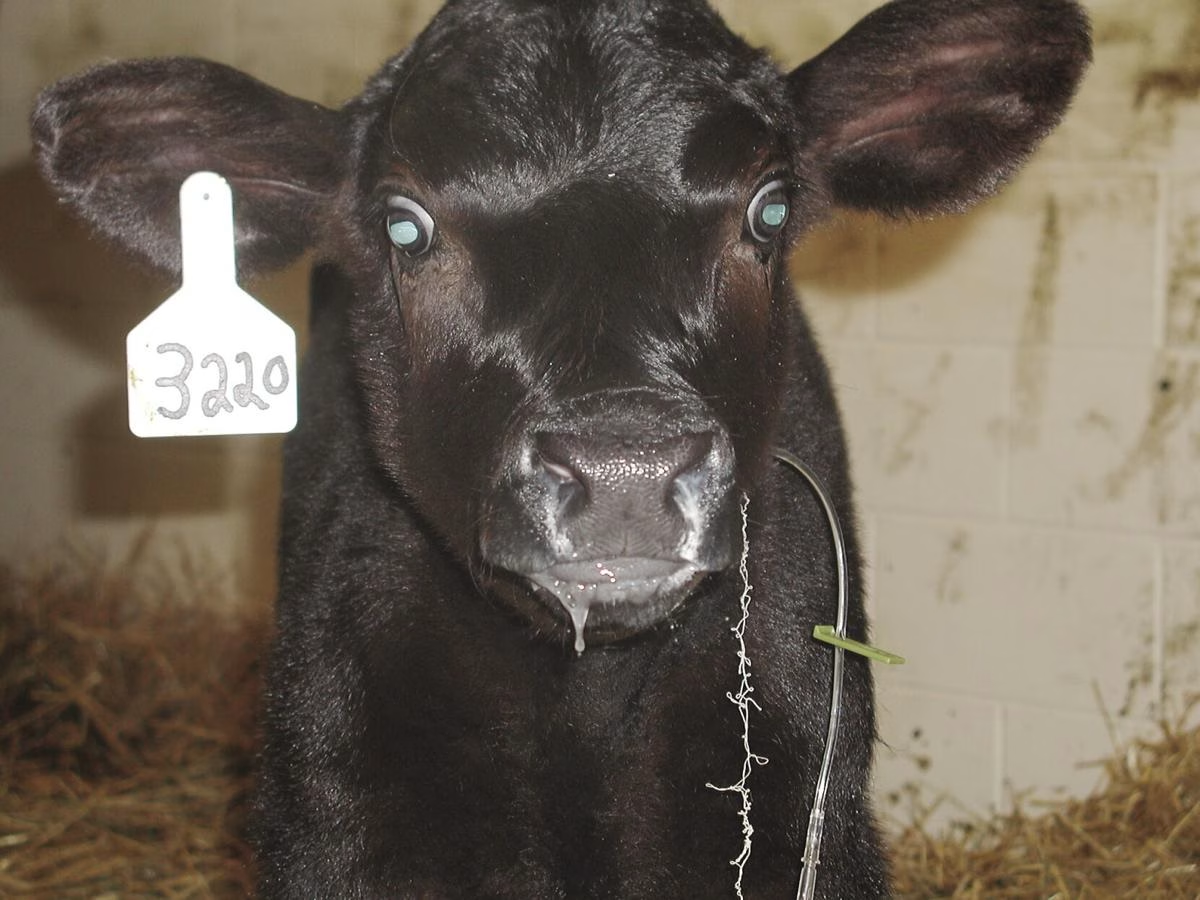
Your calf’s spit holds a goldmine of health data. Discover how saliva testing slashes costs, detects disease early, and revolutionizes calf care.
EXECUTIVE SUMMARY: Saliva is emerging as a game-changer in calf health monitoring, offering non-invasive, real-time insights into stress, disease, and immunity. Studies from Hungary and Spain reveal that salivary cortisol spikes predict birth stress severity, while biomarkers like haptoglobin flag respiratory disease 48+ hours before symptoms. Farmers can now assess colostrum uptake via salivary IgG and optimize vaccination timing using oxidative stress markers. While challenges like milk contamination and standardization persist, AI-driven biosensors and automated sampling innovations promise to transform this from a lab curiosity to an on-farm reality. Early adopters report 30% lower mortality and $18/calf treatment savings.
KEY TAKEAWAYS:
- Saliva replaces invasive blood tests, detecting stress (cortisol), inflammation (haptoglobin), and disease 2+ days before visible symptoms
- Non-invasive IgG testing cuts the failure of passive transfer (FPT) risks, improving colostrum management
- Field trials show $18/calf savings in BRD treatment via early saliva-based detection
- Milk contamination in pre-weaned calves remains a hurdle for some biomarkers
- Emerging tech (AI, biosensors) will enable real-time herd health monitoring by 2025

The future of calf health monitoring isn’t hiding in your medicine cabinet – it’s dripping from your calves’ mouths. While the industry continues to rely on outdated, invasive diagnostic methods, the solution to slashing treatment costs, reducing mortality, and revolutionizing preventative health has been staring us in the face all along: saliva.
The Costly Delusion of Reactive Calf Management
Let’s face it – most dairy operations live in the diagnostic dark ages. You’re still taking rectal temperatures, observing behavior changes, and waiting for visible symptoms before treating your calves. By then, performance is already compromised, your medication costs are skyrocketing, and you’re fighting yesterday’s battle.
When a calf shows clinical pneumonia, you’ve already lost -95 in treatment costs, labor, and production losses – not to mention the 5-15% mortality risk you’re now facing. But here’s what should keep you up at night: for every clinical case you see, 3-4 subclinical cases silently drain your profits.
Are you comfortable with this outdated, reactive approach? Because your competitors who’ve embraced early detection technologies certainly aren’t.
What Your Calves Are Telling You – If You’d Only Listen
That clear fluid your calves are drooling? It’s not “just spit” – it’s a sophisticated biological matrix containing hormones, proteins, enzymes, antibodies, and metabolites that reveal everything happening inside your animals’ bodies. Hungarian and Spanish researchers have proven that saliva contains dozens of biomarkers signaling stress, inflammation, immune responses, and disease, days before visible symptoms appear.
Why should you care about salivary diagnostics? Because they’re:
- Non-invasive (no stressed calves, no needle sticks)
- Accessible (no vet required for collection)
- Economical (sampling materials cost 40% less than blood collection supplies)
- Practical for frequent monitoring (try getting daily blood samples during calving season)
- Earlier detection (biomarkers change 48-72 hours before clinical signs)
The Truth About Stress Your Calves Can’t Tell You
Think you can visually identify stressed calves? Think again. Hungarian researchers found dystocic calves show 12.2% higher salivary cortisol levels than eutocic calves, with elevated levels persisting for 24 hours. But can you quantify the difference between your hutches and group housing? Between your weaning protocols? Between your transportation methods?
Salivary cortisol gives you the objective data to separate management fact from fiction.
Spanish researchers demonstrated that weaning and grouping trigger measurable oxidative stress responses in saliva, with markers increasing 50-135%. This allows you to identify which practices minimize stress, not just which ones look better to your untrained human eye.
The 48-Hour Head Start That Changes Everything
Here’s the game-changer: salivary biomarkers change up to 48-72 hours before clinical symptoms appear. This isn’t marginal improvement – it’s revolutionizing the treatment timeline:
- Salivary haptoglobin rises 48 hours before visual BRD symptoms
- Salivary pH drops significantly in calves developing diarrhea before you see loose stool
- Salivary biomarker patterns can predict pneumonia with 87% accuracy using AI algorithms
A Wisconsin dairy reduced BRD treatment costs by $18/calf after implementing weekly salivary haptoglobin screening. They weren’t treating fewer cases – they were catching them earlier, when treatment is more effective and less expensive.
Are you still comfortable waiting for visual symptoms when your competitors gain a 48-hour head start on disease management?
Beyond Sick/Not Sick: Management Precision That Drives Profitability
Salivary diagnostics isn’t just about disease detection – it’s about optimizing every aspect of your calf program:
Vaccination Timing That Works
Ever vaccinated calves only to have a BRD outbreak anyway? Salivary biomarkers can tell when a calf’s system is under oxidative stress, compromising vaccine efficacy. By monitoring salivary stress markers, you can:
- Delay vaccination during high-stress periods
- Sequence management events to minimize immune suppression
- Identify individual calves that need vaccination postponement
One California dairy reported a 27% improvement in vaccine response rates after implementing salivary oxidative stress monitoring. That’s the difference between actual protection and expensive placebos.
Colostrum Management That Delivers Results
Failure of passive transfer (FPT) remains stubbornly common despite decades of colostrum education. Salivary IgG testing provides:
- Non-invasive monitoring of colostrum uptake
- Real-time feedback on colostrum protocols
- Early identification of at-risk calves
Farms using saliva-based IgG testing report a 30% reduction in pre-weaning mortality through targeted intervention. How many calves are you losing because you’re not identifying FPT early enough?
Why Aren’t We All Doing This Yet?
Let’s address the elephants in the room:
1. The Industry Resistance to Change
The biggest barrier isn’t technology – the industry’s stubborn “we’ve always done it this way” mindset. Early adopters are gaining competitive advantages while skeptics wait for perfect solutions that will never come. Innovation requires pioneers willing to implement workable advances.
2. Standardization Needs Work
Sampling techniques and reference ranges aren’t fully standardized yet. But this problem is being solved rapidly as interest grows. The technology is developing faster than most realize.
3. The Milk Contamination Challenge
Pre-weaned calves present a challenge: milk residues in the mouth can interfere with some assays. Current solutions include:
- Sampling before feeding
- Developing milk-resistant assays
- Using biomarkers minimally affected by milk
This isn’t insurmountable – it’s just another challenge being actively addressed by researchers who understand the massive potential at stake.
The Future Is Already Here: Are You?
The most exciting developments combine salivary diagnostics, automation, and artificial intelligence:
- Pen-side tests providing results in 10-15 minutes
- Systems integrated with automated feeders that collect samples without human intervention
- AI algorithms predicting disease 7-10 days in advance with 87% accuracy
- Integration with herd management software for automated early warnings
The question isn’t whether salivary diagnostics will transform calf management – it’s whether you’ll be at the forefront or playing catch-up. Early adopters gaining 5-7% improvements in survival rates and 10-15% reductions in treatment costs will reshape industry economics.
The Hard Truth: Adapt or Get Left Behind
The dairy industry loves to talk about innovation, but when it comes to diagnostic technologies, we’re still using methods from the last century. Blood draws and rectal thermometers belong in a museum, not your modern dairy operation.
Every day you wait to implement advanced monitoring technology costs you lost calves, wasted treatments, and compromised performance. Forward-thinking producers are already implementing these systems and gaining substantial competitive advantages.
Your choice is simple: embrace the cutting edge of diagnostic technology or watch your competitors do it first. Can you ignore a technology that gives you a 48-hour head start on disease in an industry with razor-thin margins?
Here’s my challenge: Contact your veterinarian this week about available salivary testing options. Identify key transition points (arrival, weaning, grouping) where monitoring could provide the most value. Calculate your current costs from delayed disease detection and treatment failure.
The revolution in calf management isn’t coming – it’s already here, and it’s nothing to spit at.
Want to share how you’re implementing advanced monitoring in your operation? Have questions about getting started? Share your experiences in the comments below.
Learn more:
- Breath Doesn’t Lie: Why Your Outdated Monitoring Methods Are Costing You Thousands
- Top 5 Must-Have Tools for Effective Calf Health and Performance
- How to Gauge Your Dairy Farm’s Success through Key Tests
 The Sunday Read Dairy Professionals Don’t Skip.
 The Sunday Read Dairy Professionals Don’t Skip.
Every week, thousands of producers, breeders, and industry insiders open Bullvine Weekly for genetics insights, market shifts, and profit strategies they won’t find anywhere else. One email. Five minutes. Smarter decisions all week.