Training cattle to poop and pee in a designated area could revolutionize manure management, pen and barn design, animal health and welfare.
And research proves it can be done, although more study is needed on the specifics.
Jennifer Van Os, a post-doctoral scholar in the University of British Columbia’s animal welfare program, is interested in taking up that study.
She would like to build on work done by Dr. Alison Vaughan, formerly of UBC, who undertook a study and published a paper in 2015 indicating dairy calves can be trained to urinate in a specific area.
Van Os was among several UBC researchers on hand March 8-10 to explain their work during the Western Canadian Dairy Seminar.
“I’m interested in taking over this,” she said about Vaughan’s initial study. “Part of the reason we design these barns on concrete is to manage manure and that’s why we want cows to lie in cubicles in a certain direction so that we can keep them clean.
“But then if they’re on concrete it results in lameness and all these other issues and I just love this idea because it could possibly improve or reduce lameness, reduce dirtiness problems and then also reduce pneumonia because of the urine and the feces combining.”
In her initial study, Vaughan focused on urination training for six one-month-old Holstein heifers. The animals were put in a stall and given a diuretic. As soon as they urinated, they were released from the stall and given a 20-millilitre milk reward from a teat.
They were then returned to the stall for two more urinations, each followed by two more milk rewards.
The next day, the calves were tested in the same pen. They were not given a diuretic but if they urinated within 15 minutes of entry, they were released to get a milk reward. Those that failed were given a time out with no reward.
The experiment went on for 17 days, with training days followed by testing days.
Vaughan found that calves urinated more often in the stall on test days than the calves used as a control.
One apparently precocious heifer learned to urinate in the required spot after only one training day and another heifer, apparently less trainable, failed to urinate more than the control animal during the entire test.
“This study is the first to show that cattle can be trained to urinate in a specific place and demonstrates that calves have both the cognitive ability and the physiological control required for toilet training,” said the study synopsis.
Van Os said the next step may be to see if calves can learn the desired place to urinate but also identify and avoid the wrong place.
The synopsis indicated that UBC’s department of physics is helping develop an automated system for detecting and rewarding urination and defecation in specific areas so producers wouldn’t have to spend time training animals individually.
“I’d love to see it someday come to fruition,” Van Os said about the research.
Japanese telecommunications giant NTT Docomo will launch an internet-linked monitoring service later this month that will help farmers better determine whether a cow is in heat.

Dairy cows are said to produce more milk when in estrus, and the innovation would also promote the efficient breeding of beef cattle.
Docomo’s system will adopt devices developed by Hokkaido startup Farmnote. The plan is to market the product via regional agricultural associations and have 1,000 dairy farmers adopt the technology in two years.
Sensors placed on the cows’ necks will monitor their movement, rumination times and other data. That information will be collected wirelessly to determine whether those activities have escalated — a sign that a cow is in heat. This internet of things application is believed to be at least 90% accurate for free-range cattle.
Artificial intelligence programs will enable determinations based on individual differences. Prices for sensors and other devices come to 29,800 yen ($264) per head, along with a monthly service fee of 200 yen a cow. Data-relaying equipment and placing the sensors on the cattle will cost extra.
Dairy farmers who own 50 cows stand to lose nearly 4 million yen annually in reduced milk volume if they miss estrus cycles. For that reason, producers are expected to recoup initial costs after using Docomo’s system for a year.
The devices will also quickly detect signs of sickness or similar problems within cattle. Docomo is also looking at providing additional services, including those that would aid raising calves, monitor feed levels and support farm produce logistics.
Docomo aims to take in about 100 billion yen from its internet of things business in fiscal 2020, or triple fiscal 2016’s estimate.
Small actions can lead to large gains in farm profitability.
Kristjan Hebert is Canadian farmer who has presented on a farm improvement framework he calls “The 5% Rule”. This is a simple rule where farmers should aim to increase yield and price received by 5% and decrease expenses by 5%.
I should note that we have no affiliation with Kristjan or any of his business interests (I simply really like his business philosophies).
The small 5% improvements have a large compounding effect on farm profitability.
This rule/mindset is the backbone of a great farm business. It’s not something that can be acheived overnight. It’s a long-term, ROI-focused approach to business decisions.
See below for a simple illustration on the power of small, incremental improvements using soybeans as an example.
The power of compounding! 5% + 5% + 5% = +132%
See below for a great presentation that Kristjan gave on this topic. I particularily enjoy his commentary regarding cutting expenses and increasing efficiency while focusing on not hurting your yield prospects. I call this “trim the fat, not the muscle”.
While I love this concept, there is one point that I would like to build on. I think producers need to be careful with the goal of increasing price by 5%.
Every successful business tries to maximize revenue. Increasing pricing in a major component in achieving that.
But most businesses are not farms.
The truth is that a commodity-based business is a price “taker”(at least from a futures market standpoint). Individual producers have no control over futures prices.
It’s dangerous to get stuck in a cycle of always wanting 5% more.
My 5% rule clarification: Get 5% more by maximizing the basis and carry on your futures sales/hedges.
In the video shown above Kristjan alludes to the fact that most farms don’t separate the futures and basis side of their sales. I agree with that but I want to add some additional commentary on the increasing price component of the 5% rule.
I like to break marketing decisions down into the following steps:
Set the futures price when that price that work for your farm’s financials. This often occurs during the growing season when your crop is in a state of uncertainty. That’s the reality of farming.
Ignore the dozens of market predictions that are thrown at you every week.
Make store vs not-store decisions by the amount of carry in your specific commodity market.
Ignore the dozens of market predictions that are thrown at you every week.
Set the basis on your futures sales when your local market is hungry for your commodity. Click here for a blog post on maximizing storage ROI.
Ignore the dozens of market predictions that are thrown at you every week.
I will admit that the steps listed above are much easier said than done. But running a farm is not easy. Make strategic investments in your farm business that will allow you to better accomplish these steps.
In any aspect of grain marketing, there are no certainties. Just like on the agronomy side of your operation, use a probability-based decision making process.
It’s common sense that you’re rarely 100% certain that an incremental input purchase will produce a positive ROI. You make your decision based on the probability of said purchase giving you that positive ROI. We need to apply that same logic to our marketing.
Agricultural commodity markets tend to price in risk premium when the future crop size is in question. This tends to happen from March-July. Once the market is comfortable with the crops size, we can quickly see risk premium come out of the market.
Once again, nothing is a certain but over time the market offers risk premium before and during the first couple months of the growing season. Be aware of this seasonal pattern.
See below for a video I produced for a now-closed course we offered this past winter.
(On a side note, we’ll be launching a new and improved course in December. Keep your eye open for it.)
Another important consideration is the fact that we can’t change past decisions. If you sell 20% of your wheat the day before the market goes up $.20, it’s over and done with. Don’t dwell on it.
Kristjan hammers home the point that farmers need to measure their profitability on an accrual basis. Doing this focuses a farm on the fact that higher prices are great! Don’t let a fear of higher future prices stop you from making a sound marketing decision today.
Furthermore, there’s a popular quote in business that states, “What Gets Measured Gets Improved”. Accrual-based accounting allows a farm to meaure their profitability on a crop year-basis rather than simply monitoring the cash flow. A farm’s cash flow can be a dangerously lagging measure of farm profitability.
In summary, every business decision needs to be approached from an ROI-standpoint and a farm business is no different. If you focus on making small, incremental improvements to your farm it will pay big dividends in the long run.
Though he didn’t come from a farming family, from a young age Tim Joseph was fascinated by the idea of living off the land.
Reading magazines like The Stockman Grass Farmer and Graze, he “got hooked on the idea of grass-fed agriculture — that all energy and wealth comes from the sun,” he explains, “and the shorter the distance between the sun and the end product,” the higher the profit to the farmer.
Joseph wanted to put this theory to the test, so in 2009, he and his wife Laura launched Maple Hill Creamery, an organic, all grass-fed yogurt company in upstate New York. He quickly learned what the market has demonstrated: Demand for grass-fed products currently outstrips supply.
Grass-fed beef is enjoying a 25 to 30 percent annual growth rate, while sales of grass-fed yogurt and kefir have in the last year increased by over 38 percent, compared with a drop of just under 1 percent in the total yogurt and kefir market, according to natural and organic market research company SPINS.
Joseph’s top priority became getting his hands on enough grass-fed milk to keep customers satisfied, since his own 64-cow herd wasn’t going to suffice.
His first partnership was with Paul and Phyllis Van Amburgh, owners of the Sharon Springs, N.Y., farm Dharma Lea. The Van Amburghs, too, were true believers in grass-fed. In addition to supplying milk from their own 85-head herd, they began to help other farmers in the area convert from conventional to certified organic and grass-fed in order to enter the Maple Hill supply chain. Since 2010, the couple has helped close to 125 small dairy farms convert to grass-fed, with more than 80 percent of those farms coming on board during the last two years.
All this conversion has helped Maple Hill grow 40 to 50 percent every year since it began, says Joseph, with no end in sight.
Joseph has learned that a farmer has to have a certain mindset to successfully convert. But convincing open-minded dairy people is actually not that hard, when you look at the economics.
Grass-fed milk can fetch up two-and-a-half times the price of conventional milk. Another factor is the squeeze that conventional dairy farmers have felt as the price of grain they feed their cows has gone up, tightening their profit margins. By replacing expensive grain feed with regenerative management practices — grazing animals on grasses coaxed from the pastureland’s latent seed bank, and fertilized by the cows’ own manure — grass-fed farmers are completely insulated from spikes in the price of feed.
Champions of this type of regenerative grazing also point to its animal welfare, climate and health benefits: Grass-fed animals live longer out of confinement. Grazing herds stimulate microbial activity in the soil, helping to capture water and sequester carbon. And grass-fed dairy and meat have been shown to be higher in certain nutrients and healthy fats.
In the grass-fed system, farmers are also not subject to the wildly fluctuating milk prices of the international commodity market. The unpredictability of global demand and the lag-time it takes to add more cows to a herd to meet demand can result in events like the recent cheese glut. Going grass-fed is a “safe refuge,” says Joseph, a way for “family-scale farms to stay viable.”
“Usually a farmer will get to the point where financially, what they’re doing is not working,” says Paul Van Amburgh. That’s when they call Maple Hill. If the farm is well managed, has enough land, and the desire to convert is sincere, a relationship can begin.
Through regular regional educational meetings, a large annual meeting, individual farm visits and thousands of phone calls, the Van Amburghs pass on the principles of pasture management. Maple Hill signs a contract pledging to buy the farmer’s milk at a guaranteed base price, plus quality premiums and incentives for higher protein, butterfat and other solids.
While Maple Hill’s conversion program is unusually hands-on and comprehensive (Joseph calls sharing his knowledge network through peer-to-peer learning “a core piece of our culture”), it is just one of a growing number of businesses committed to slowly changing the way America farms.
Last summer, Massachusetts grass-fed beef advocate Ridge Shinn launched Big Picture Beef, a network of small grass-fed beef farms in New England and New York that is projected to bring to market 2,500 head of cattle from more than 125 producers this year.
Early indications are that Shinn will have no shortage of farm members. Since he began to informally announce the network at farming conferences and on social media, he’s received a steady stream of inquiries from interested farmers.
Shinn says he will provide services ranging from formal seminars to on-farm workshops on holistic management, to “one-on-one hand-holding and an almost 24/7 phone hotline” for farmers who are converting. In exchange, he guarantees an above-market price for each animal and, for maximum traceability, a calf-to-customer electronic ear tag ID system like that used in the European Union.
Though advocates portray grass-fed products as a win-win situation for all, they do have downsides.
Price, for one: Joseph says his products are priced 10 to 20 percent above organic versions, but depending on the product chosen, compared to non-organic conventional yogurt, consumers could pay a premium of 30 to 50 percent or more for grass-fed.
As for the meat, Shinn says his grass-fed hamburger will be priced 20 to 25 percent over the conventional alternative. But a peek at the prices on online grocer Fresh Direct suggests a grass-fed premium of anywhere from 35 to 60 percent.
And not every farmer has the option of going grass-fed: For both beef and dairy production, it requires, at least in the beginning, more pastureland. Grass-fed beef production tends to be more labor intensive as well.
But Shinn counters that if you factor in the hidden cost of government corn subsidies, environment degradation, and decreased human health and animal welfare, grass-fed is the more cost-effective model. “The sun provides the lowest cost of production and the cheapest meat,” he says.
Another grass-fed booster spurring farmers to convert is EPIC, which makes meat-based protein bars. Founders Taylor Collins and his wife, Katie Forrest, used to be vegan endurance athletes; now they’re advocates of grass-fed meat. Very soon after launching EPIC’s most successful product – the Bison Bacon Cranberry Bar – Collins and Forrest found they’d exhausted their sources for bison raised exclusively on pasture.
“When we started digging into the supply chain,” says Collins, “we learned that only 2 to 3 percent of all bison is actually grass-fed and grass-finished. The rest is feed-lot confined and fed grain and corn.”
So two years ago, the company created a secondary, clearly labeled line of “natural” bars using animals that had eaten grain as well as grass. Collins wrote this post to explain the move to customers.
But after General Mills bought EPIC in 2016, Collins and Forrest suddenly had the resources they needed to expand their supply chain. So the company teamed up with Wisconsin-based rancher Northstar Bison. EPIC fronted the money for the purchase of $2.5 million worth of young bison that will be raised according to its grass-fed protocols, with a guaranteed purchase price.
The message to young people who might not otherwise be able to afford to break into the business, explains Collins, is, “‘You can purchase this $3 million piece of land here, because I am guaranteeing you today you will have 1,000 bison on it.’ We’re bringing new blood into the old, conventional ranching ecosystem, which is really cool to see.”
Dairy producers in the United States are feeling the stress of volatile markets, increasing regulation and consumer demands. During stressful times, it can be easy to let emotions overtake rational thinking, which often leads to poor decision making. Dr. Chris Canale, Cargill U.S. dairy technology manager, offers these tips to ‘hold the line’ when it comes to making decisions:
Utilize a systematic review approach.
“Have a disciplined approach to decision making. Write out all pros and cons and discuss them with a trusted advisor. Make sure you always follow the approach to help limit gut reaction decision making.”
Detach yourself from the emotion.
“Removing the emotion from a decision can be very difficult, but it’s something that must be done. When our emotions take over, it can cloud our judgement, and lead to a decision we likely would not have made. Following a systematic review can often help keep rational thinking at the forefront when emotions are attached.”
Evaluate the decision before, during and after you make it.
“Evaluate decisions, especially ones that are significant, to improve future decision making. Don’t just evaluate the outcome though, look back and assess your motivations; did you make the decision for the right reasons? Assess your process: did you stick with your system, or did something cause you to deviate? Confront emotions: Were sentiments or stress under control, or heavily influencing you? By taking the time to evaluate these things you will be better able to hold the line the next time you’re under pressure to make a significant decision.”
Checking colostrum quality is easy to do and very beneficial when investigating calf health problems
Teagasc’s George Ramsbottom has recently reported on the best ways to store the valuable resource that is colostrum.
He says research at Teagasc Moorepark reported that 90% of Irish dairy producers store colostrum.
“Colostrum has traditionally been stored in a freezer, as this prevents changes in quality and growth of bacteria.
“However, defrosting colostrum can take more than an hour and if completed incorrectly can render the colostrum useless,” he said.
Tips
According to Ramsbottom, a good practice to follow is to submerge the sealed, frozen container in a bath of warm (not hot, body temperature) tap water until it thaws completely, stirring occasionally.
“Thawing time will vary depending on container size.
“A good option is to use freezer bags to store it as they take up less room in the freezer and have a greater surface area which means they should defrost faster.
“About one in five farmers store colostrum at room temperature, or in a refrigerator, for up to one week.
“Storing colostrum at room temperature, particularly as the temperature increases in March, does not affect the quality (i.e., the antibody level) of colostrum, but bacterial numbers increase and the pH reduces.
“Calves fed colostrum with extremely high levels of bacteria absorb fewer antibodies, which can have implications for their health and well-being,” he said.
Ramsbottom said farmers can store fresh colostrum safely for up to two days in a fridge.
“Store it as soon as possible after collection because bacterial growth is highest in the first three to six hours after collection.
“And, make sure that the containers used to both collect and store it are thoroughly cleaned before use,” he advised.
Dairymen who use the right feed at the right time can maintain profitability even in down times, says Mike Hutjens.
“Every dairy farmer should be feeding corn silage,” Hutjens, a retired University of Illinois dairy specialist, told producers at a meeting here.
“We call it Christmas corn silage. You do not feed corn silage until Christmastime. It’s been fermenting in a bag for three or four months, which makes the starch more available.”
That is among several tips Hutjens provided to help dairy farmers who have struggled through low milk prices over the past couple of years.
Many are optimistic that prices will improve this year. Still, economical feeding solutions can help bridge the gap.
“Dry matter is 10 to 12 cents per pound. Every dairy farmer in Illinois needs to know that number,” Hutjens said. “What’s it cost for a pound of dry matter for your cow? The magic number is that 1 pound of dry matter should support 2 pounds of Jersey or 2 ½ pounds of Holsteins. I’ve already paid her maintenance costs.”
With milk prices at 17 cents per pound, a dime’s worth of dry matter yields 24 cents more profit, numbers indicate. There are some feed bargains out there that are on the good side of the break-even price.
One is distillers grains. Another is corn gluten feed.
“You’ve got to be feeding distillers grains,” Hutjens said. “It’s half price. Corn gluten feed is almost half price. Then there are soy hulls and fuzzy cotton. They’re still not break even, but at a good price this year.”
But making economical feed available doesn’t do much good if the cow doesn’t eat it. Hutjens points to a University of Wisconsin study giving three reasons for under consumption:
A cow may be physically full and is unable to eat any more feed.
Something tells the cow it is time to stop feeding. Researchers believe it could be related to rumen pH, fat level in the diet or other factors.
Lameness may restrict feeding. Studies show 18 to 20 percent of cows are considered lame.
“What do lame cows not do? They don’t go to the feedlot eight to 10 times a day to get that extra mouthful of feed,” Hutjens said. “This lameness thing is huge.”
Additives that may also make economic sense include rumen-protected amino acids, which may increase milk protein and may yield more milk.
A study by The Ohio State University showed adding amino acids to the ration can add as much as 8 more pounds of milk daily.
“If your cows are producing 2.4 pounds of true protein, I would really check out your amino acid balance. There may be an opportunity for you,” Hutjens said. “And mycotoxin binders. This should be in every ration in Illinois.”
One survey indicated that many dairymen aren’t aware of exactly what they’re feeding their cows. For lactating animals, Hutjens recommends additives of rumen buffers, yeast products, silage inoculants, biotin and organic trace minerals.
For dry cows, the list changes, and includes organic trace minerals plus chromium, and anionic product.
A consultant says there are benefits to expanding dairy farms during times of low milk prices.
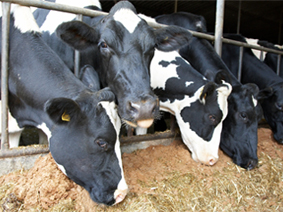
Dairy business consultant John Roach tells Brownfield farmers often expand dairies when milk prices are down. “Some of the best to expand historically has been when low milk price has been there because there’s not as much demand from the builders because there’s not as much building being planned, so often times you’re able to generate a better price.”
For producers that expand during times of low milk prices, Roach says producers usually get to capitalize on the price rebound. “Generally, the cycle will give you an upside on the other side, so expand that year when you have low milk prices, and then when the milk price rebounds, your expansion is fully populated and ready to go, but that assumes that you’ve got enough cash flow and ability in your balance sheet to be able to absorb that.”
Roach says if the decision to expand is made, don’t present lenders with a request that barely meets construction costs as unexpected expenses usually happen with construction projects.
It can be as easy to do it right as wrong so manage animal health by doing the basics right.
At this time of the year, most livestock farmers haven’t time enough for their normal workload – without also having to care for sick animals. However, when sick animals appear they must be cared for and, with labour limited, many will look to prevention rather than treatment.
Higher vaccine use is good, but it must be matched with the basics of good farm management. Scour in calves is the biggest calf killer and usually reaches a peak in early March, as sheds fill up and newborn calves are housed in pens where older calves have just moved away from.
Kieran Mailey and the Journal Vet go through some of the calf-care basics that are essential to manage scour. While vaccination is effective when managed properly, it is not a cure-all and often the management around newborn calves is just as important.
With the start of breeding around the corner in suckler and dairy herds, go back through the calving notebook and think now about cows that had the hard calvings, the retained placenta, the twins, etc.
They might need a bit more attention and, if lacking in condition score, now is the time to mind them before the start of breeding and maybe a little extra feed or once-a-day milking might improve the situation.
On many sheep farms, given the exceptional rainfall, it is proving difficult to turn out ewes and lambs.
The increased risk of mastitis is a challenge and Darren Carty discusses what to look out for with the Journal Vet.
Rather than fire fighting individual herd health problems, farmers need to develop annual herd health plans that can allow for more structured and cheaper herd health control.
Farmers involved in the Knowledge Transfer Programme rightly need to complete an annual herd health plan.
Dairymen who use the right feed at the right time can maintain profitability even in down times, says Mike Hutjens.
“Every dairy farmer should be feeding corn silage,” Hutjens, a retired University of Illinois dairy specialist, told producers at a meeting here.
“We call it Christmas corn silage. You do not feed corn silage until Christmastime. It’s been fermenting in a bag for three or four months, which makes the starch more available.”
That is among several tips Hutjens provided to help dairy farmers who have struggled through low milk prices over the past couple of years.
Many are optimistic that prices will improve this year. Still, economical feeding solutions can help bridge the gap.
“Dry matter is 10 to 12 cents per pound. Every dairy farmer in Illinois needs to know that number,” Hutjens said. “What’s it cost for a pound of dry matter for your cow? The magic number is that 1 pound of dry matter should support 2 pounds of Jersey or 2 ½ pounds of Holsteins. I’ve already paid her maintenance costs.”
With milk prices at 17 cents per pound, a dime’s worth of dry matter yields 24 cents more profit, numbers indicate. There are some feed bargains out there that are on the good side of the break-even price.
One is distillers grains. Another is corn gluten feed.
“You’ve got to be feeding distillers grains,” Hutjens said. “It’s half price. Corn gluten feed is almost half price. Then there are soy hulls and fuzzy cotton. They’re still not break even, but at a good price this year.”
But making economical feed available doesn’t do much good if the cow doesn’t eat it. Hutjens points to a University of Wisconsin study giving three reasons for under consumption:
A cow may be physically full and is unable to eat any more feed.
Something tells the cow it is time to stop feeding. Researchers believe it could be related to rumen pH, fat level in the diet or other factors.
Lameness may restrict feeding. Studies show 18 to 20 percent of cows are considered lame.
“What do lame cows not do? They don’t go to the feedlot eight to 10 times a day to get that extra mouthful of feed,” Hutjens said. “This lameness thing is huge.”
Additives that may also make economic sense include rumen-protected amino acids, which may increase milk protein and may yield more milk.
A study by The Ohio State University showed adding amino acids to the ration can add as much as 8 more pounds of milk daily.
“If your cows are producing 2.4 pounds of true protein, I would really check out your amino acid balance. There may be an opportunity for you,” Hutjens said. “And mycotoxin binders. This should be in every ration in Illinois.”
One survey indicated that many dairymen aren’t aware of exactly what they’re feeding their cows. For lactating animals, Hutjens recommends additives of rumen buffers, yeast products, silage inoculants, biotin and organic trace minerals.
For dry cows, the list changes, and includes organic trace minerals plus chromium, and anionic product.
There is no question that Robotic Milking Machines seem to be the hottest thing on the market. With over 35,000 robotic milking systems (RMS) operational on dairy farms around the world, it more than just a fad, it is an epidemic. It seems almost daily you hear about another operation deciding to switch to Robots. With many producers citing the improved lifestyle and the ability to expand or even stay in business without having to hire more labor. And it’s not just the old dairy farmers with kids who don’t want to work hard, more and more it seems like even large dairies are considering the change. But the Bullvine asks “At what cost?”. Are these farmers generating greater income and because of better results on the bottom line that they can justify the expense? With that in mind, we decided to look at the economics of investing in robotic milking and determine if these farmers are lazy or are they smart business people.
Labor is the second largest expense on the dairy farm. Considering the actual cost of hired labor and when an appropriate value for unpaid family help is included, investing in labor-saving automation may be the best way to improve your bottom line.
Are you cheap or wise?
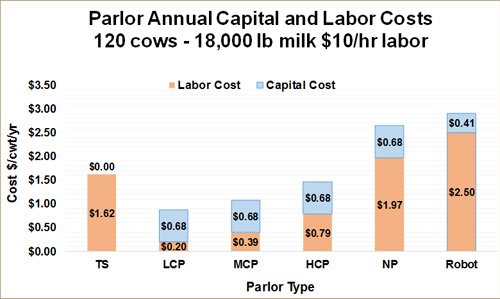
First, let’s get one thing clear, most producers do not install robots because it is the lowest cost option for harvesting milk. Historically, for a 120-cow dairy, the total cost per cwt of milk of a robotic milking system was similar to a new modern parlor.
Tie stall (TS) – $35,400 labor/yr
Low cost parlor (LCP) – $25,000 capital ($4,250 annual), $14,600 labor
Medium cost parlor (MCP) – $50,000 capital ($8,500 annual), $14,600 labor
High cost parlor (HCP) – $100,000 capital ($17,000 annual), $14,600 labor
New parlor (NP) – $250,000 capital ($42,500 annual), $14,600 labor
Robot – (10% increase in milk) $59,600 annual
(Source: http://www.extension.umn.edu/agriculture/dairy/precision-dairy/milking-robots-do-they-pay/)
But how many decisions on the average dairy farm are made to be at the lowest cost? Most of us decide not to live in the cheapest house or drive the cheapest car because we want a nicer lifestyle. But at the rate at which labor expenses are increasing, especially when the appropriate value for unpaid family help is included, not to mention the scarcity of labor, combined with the increased performance that is tied to the improved management, more and more Robots are beginning to make economic sense.
While coming up with hard numbers, which are applicable are specific to each situation, is almost impossible, one thing is clear is that robotic milking becomes more affordable every year as the cost of labor increases and the availability of labor decreases. There is no question that robotic milking saves labor, and based on surveys done by the Progressive Dairy Operators group (PDO), dairy farm labor is going up in cost. In 2004 the average wage for dairy farm workers described as “milkers” was $12.65 per hour. By 2004 this had gone up 7% to $13.55. Then in 2010 117 herds reported an average wage of $14.21 per hour for milkers, up 5% again plus an additional $0.28 in non-monetary benefits. So in 6 years, the benefit of owning a robotic milking system has increased by roughly 12%. (Read more: Robotic milking gets more affordable every year by Jack Rodenberg)
So how do you determine the ROI of an RMS?
To determine the real return of investing in a Robotic Milking System, you need to look at milk production per cow, milk produced per robot per day, labor savings, the length of useful life of the system.
The main cost of robotic milking is the capital invested in the technology. From 2004-2010 the price for a new robot went from $250,000 to about $220,000. That is a 15% decrease in the cost while labor costs have typical gone up 12%. That is a 27% swing in a six-year period. And in the last six years, prices for a robot to milk 50-70 cows is about $150,000 to $200,000, another 20 decrease. In that same time, the cost of wages paid to livestock workers per USDA has increased 19%. Researchers have reported up to 29% savings with RMS.
Another aspect that may be even more important, than the increased cost of labor for dairy farm workers, is the decreased availability. A 2014 survey indicated that 51% of all farm labor was immigrant labor (Adcock et al., 2015). The future availability of immigrant workers may be reduced if less foreign workers choose to work on farms or if tighter immigration laws are passed in the US as the Trump administration seems to be leaning towards. And if Trump is successful at re-igniting the US economy revs up with reductions in regulations or the anticipation of that, the demand for labor is only going to increase in all industry, causes an even greater shortage of farm laborers. This will force producers to either use new workers who are very inexperienced yet demand a high wage or use an aging workforce that is not as productive as it once was. This already causing producers of all sizes to determine if they should either automate milking and eliminate task oriented positions, or increase productivity efficiencies to 180-200 cows per man with such technologies as teat spray robots in large rotaries.
So does an RMS make economic sense for your operation?
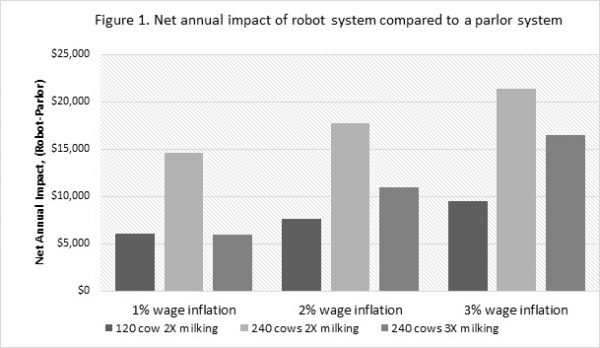
To answer this question, the University of Minnesota developed a web application to compare the profitability of robots and parlors: http://z.umn.edu/RobotParlor. This tool was used to compare the economics of RMS and parlor systems on farms with 120, 240 and 1,500 lactating cows over a 20-year payback time. Milking labor costs were set at $16/hr with a milk price of $17/cwt. They assumed milk production would increase 5 lb/day per cow with RMS compared to milking 2X and decrease 2 lb/day compared to 3X milking. The per cow barn investment is higher for the RMS, reflecting the additional cost to install labor savings features typical in RMS barns. We inflated labor costs at 1, 2, or 3% annually. Net annual impact refers to the net present value of projected differences in RMS cash flows converted to an annuity.
The 120 and 240 cow RMS systems had a higher net annual impact compared to a double 8-parlor system (Figure 1). Labor cost inflation and milk production per cow had a large impact on profit. For each pound change in daily production per cow, the net annual impact changed by $931.
The 1,500-cow parlor system was more profitable than RMS. A 1% annual wage inflation resulted in a $162,672 (3X milking) and $51,177 (2X milking) more profit for the parlor. The difference was $130,570 (3X milking) and $32,395 (2X milking) at 3% wage inflation. Using similar milk production and 3% wage inflation the parlor had $80,672 higher annual impact.
The primary reason for the differences in profit is the more intensive use of the milking system. The RMS assumed full utilization at 60 cows per robot across all herd sizes. The parlor was only being used four hours per day with the 120-cow system. In the 240-cow simulations, the parlor was being used 8 and 12 hr/day in the 2X and 3X respectively. For the 1,500-cow herd, both the robot and parlor were at near maximum utilization.
Milk production and labor assumptions between the systems significantly affect the profitability projections. More research is needed to understand the economics of how these systems perform with different herd sizes and management practices.
The University of Minnesota also determines just what are the breakeven rates for the Robotic system.
Breakeven labor rate.
Since the 1,500-cow RMS was less profitable than the parlor system at $16/hr labor, they determined the breakeven labor rate at which the two systems would have similar annual incomes. At the wage inflation rate of 1% and a 2 lbs. lower milk production with the RMS, the breakeven labor rate is $32.30/hr. If similar milk production levels are assumed with a 3% annual wage inflation, the breakeven wage rate drops to $22.91/hr.
Breakeven milk production
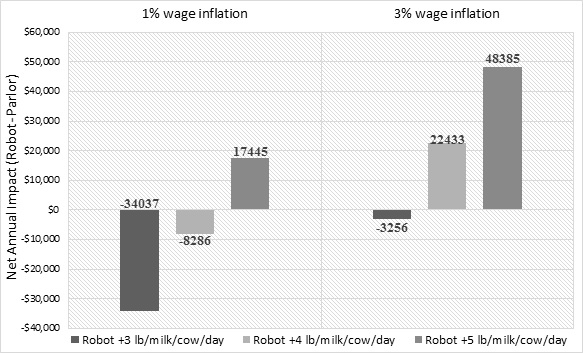
The University of Minnesota also examined how increased milk production per cow in RMS would affect the profit comparison (Figure 2). If the robot system achieves 3 lbs /cow per day higher milk production than the parlor with 3% annual wage inflation, the annual income is only $3256 higher for the parlor for the 1,500 cow herd. At 5 lbs./day more milk, the RMS is more profitable at all wage inflation rates. Current research indicates that RMS do not achieve milk production as high as 3X milking, but as RMS management and facility design improve, this may change. Another potential advantage is that cows in RMS can be managed and milked in stable groups within the pens. Cows have access to resources (feed, water, beds, and milking) at all times. More precise feeding management can potentially increase milk per cow.
Figure 2. Net annual impact of a 1,500-cow dairy with 25 robots compared to a double-24 parlor milking 3X at different increases in daily milk production and wage inflation rates
Maximizing the Robotic Impact
Maximizing daily milk per robot is important to maximize profit. In a four-robot system using 2% annual wage inflation and a 20-year time horizon, net annual income increases approximately $4,100 for every 500 lbs. increase in daily milk per robot. Currently, some US farms are consistently harvesting more than 6,000 lbs. of milk per robot daily. This is achieved by a combination of high daily milk per cow and a high number of cows per robot (often over 60). The most important factors to achieve this are:
Milking permission settings and strategies that get the correct cows milked at the correct times
Reduced box time per cow
RMS in top working condition
Retrofit vs. New Barn
One question many producers must consider is it better to retrofit your current barn or build a new one? The University of Minnesota also examined how the economic life, labor efficiency, and milk production change affects the profitability of RMS. They developed two scenarios using an 180-cow dairy: RMS replacing a parlor and retrofitted in an existing freestall barn and an RMS in combination with a new high technology freestall barn. Here is what they found:
Robot retrofit
For the retrofit scenario, they assumed that there was no remaining debt with the previous The increases in costs with the robots were payments for the three robots ($63,000) for ten years, higher insurance ($2,700) and higher maintenance ($9,000/robot per year). They examined profitability using milking labor of 45, 60 and 75 minutes per robot. They also varied daily milk per cow using a 2 lb decrease, no change, and 2 lb increase compared to the previous system. Their survey of producers indicated that well designed (automatic manure removal and split entry pens), well managed free flow barns average about 45 minutes of daily milking like labor per robot. In this scenario, if producers can get 2 lb/day more milk and robots last longer than ten years, the RMS system is more profitable than the parlor system. If there is no change in milk production, robots must last 13 (with 45 minutes of daily labor per robot) to 17 (with 75 minutes of daily labor per robot) years to break even. If milk production decreases 2 lb in the RMS system, it is never as profitable as the previous parlor system.
Robot with a New Barn
To achieve the maximum benefit of robots, it is preferable to design them into a new, high technology, low labor requirement facility. This includes various upgrades, such as wider more frequent crossovers, automated manure removal, and automated feed pushers. The projected new facility resulted in annual payments of about $101,000 over 20 years for the 180-cow farm. A 10 lb/ day increase in milk production along with the anticipated labor savings is required before robots are consistently more profitable than the previous parlor system. A key factor is the benefit of a Cow Comfort Upgrade and its effect on performance with robotics. When cow comfort is done right (sand is the gold standard) 60% of the milk increase in robotics can be attributed to the updated free stall barn. These things matter. The key benefit of individual robots is the elimination of the holding pen and the extra hours per day that the cow gets to eat, lay down, and chew her cud.
There are Economic tools available to do the deep dive and evaluate the many factors that affect performance and economics in a robotic milking facility. Contact your Robotic Specialist to sit down and go over the numbers and conditions specific to your dairy. Also, talk to your local dealer, banker, nutritionist, veterinarian, and genetics supplier. It takes a team working together to cover all the bases and give you the honest feedback to understand your operations strengths and weakness. 0ver 40,000 robots milk over 2.2 million cows worldwide and robots put in 16 years ago, are still operating today. It may be new to you, but it is not new to the industry. My Grandfather milked cows by hand, and 90 years later we are milking cows with no hands….amazing progress with more to come.
The Bullvine Bottom Line
While many producers look at income over feed to determine how their operation is doing. I argue that given the fact that labor is your actual greatest non-feed expense on a dairy farm, and that it is also the resource that is typically in the shortest supply, we should be looking at income per full-time labor unit. When you look at your operation, and if there is the capital required to invest in an RMS unit, there is not question that Robotic Milking Systems make perfect sense for most dairy operations under 1,000 milking cows. There is no doubt there will always be demand for high-quality people both immigrant and citizens. WE NEED COW PEOPLE!! Good people will always have a place in this industry, and they will have great value. The best robot barn in the world with poor management is a failure in the making. As someone recently said “Management Makes Milk” and “Good People make Managers Look Good.” There are more career opportunities in dairy than ever before, and those that can operate robotic facilities and use technology will have a very bright future. Especially with rising labor rates and less supply, there are also scenarios where a robotic milking system makes sense even for larger operations. Treat your cows with care, treat your employees with respect and develop them and the results can be predictable and positive.
Watch TRANSITIONING INTO THE ROBOTIC WORLDAn increase in labour productivity is desired to ensure a healthy dairy business. Achieving more litres of milk per worker in an animal‑friendly way is possible with a robotic milking system. But you can not just rush out and buy a robotic milking system. There are many factors that you need to consider. In this video the topic of transitioning into the robotic world and its influences on cow management will be covered. What things need to be considered? How do we ensure we have the most successful adaptation of the technology to optimize cow health and performance? Watch this video for a look into how robotics can improve the way we manage our cows.
Listen to what other producers have to say: Top Producer Panel – Robotics conference. Join seven of the top DeLaval VMS producers from North America, Europe, Oceania and Latin America as they share and build knowledge around the DeLaval integrated robotic solution and best practices for robotic milking.
One third of the cows is not making it in their barns. Why? Because of diseases, and one in particular. Subclinical rumen acidosis is barely visible, but will weaken you cows, leading to other diseases. In the end, this is cutting cow lives short. If we want to do something about this, we need to broaden our knowledge of feed. There’s plenty of information about feed quality available, but more knowledge of housing and management with regard to feeding is much needed.
In the titel of this blog we specifically mention advisors. That doesn’t mean farmers can lie back and relax. It’s a farmer’s reponsibility to keep their cows healhty. So this is as much of an appeal to farmers as it is to advisors. We just want to challenge the advisors to do better as well, because we believe they can have a crucial role in changing things.
By the time you catch it (or not), the other trouble has already started: mastitis, lameness, low fertility..
One third of the cows is not making it. ‘Not making it’, is saying that the average productive lifetime for cows is below 3 lactations, where it can be 5 lactations. Did you know 20% of lactating heifers doesn’t make the second lactation? When we’re looking at why cows don’t go the distance, we’re quickly faced with disease numbers:
50% bloody soles after calving
50% subclinical milk fever
30% mastitis or much more
20% ketosis
x % subclinical rumen acidosis
Shocking numbers and there’s plenty to say about each disease individually. But let’s look at one disease in particular: rumen acidosis. This disease is hard to recognize for farmers, but will seriously weaken the cow. It starts with nausea and by the time you catch it (or not), the other trouble has already started: mastitis, lameness, low fertility rates and so on. This is what in the end is keeping cows from happily and healthy making it to five lactations.
Rumen acidosis is the silent killer of our cows.
So if you can hardly catch it in time, it is even more crucial to prevent it. For prevention farmers need a good understanding of how the rumen functions and an excellent feeding program. A major issue is feed quality and luckily, most farmers have a good feed advisor for this. What the feed advisor often doesn’t tell the farmer is how management and housing effect feed intake. Without broadening knowledge about feeding to these areas as well, rumen acidosis just will keep happening.
Like we said, it is a farmer’r responsibility to keep their cows healthy. They need to actively search for broader knowledge on feeding. However, we believe that advisors have an important role in providing this information more easily. We like to challenge them to do a better job.
What the feed advisor often doesn’t tell you, is how management and housing effect feed intake
Farm advisors that can advise on a broader scope, will probably do a lot better than their competitors. They can actually help farmers solve problems that are of key importance to them. This makes them highly valuable. Also, instead of just advising farmer to just buy their product, they will also be giving farmers advice on things they don’t earn a penny from. This will make them a more trustworthy partner for their clients. Expending their knowledge is in the best interest of the advisors as well.
In summary, rumen acidosis is a very serious disease that has enormous effects on both the cow’s as the farmer’s life. Good farmers will actively search for new insights and improvement opportunities in the housing and management department. Good advisors, that are keen on giving quality advice and creating a sustainable relationship with their clients by constantly being of added value, face the challenge to give advice on a broader scope and involve all factors needed for a good feeding program. This will not only benefit cows and farmers, but also the farm advisor. Together, we can do a better job.
About Feeding Signals
We just developed a new video learning ‘Feeding Signals’. It focuses on housing and management with regards to feeding and it provides solutions that have proven themselves in practice. The video learning is for both farmers and feed advisors, vets, fertility specialists and barn designers. Feeding Signals is also available as a day training.
U.S. dairy producers work hard every day to provide the safest food in the world to consumers, but there is always room for improvement. Although dairy cattle make up less than one tenth of the total cattle sent to market, dairy and bob veal from dairy account for 90% of the violative residues on an annual basis. Just one single residue violation can erode consumer confidence and a dairy operation’s reputation.
We have a huge responsibility to consumers to supply a safe, wholesome and quality product with no residues — in both milk and meat. If we can do that, they’ll have confidence in buying our products, which will help producers and the dairy industry in the long run.
When inspectors find drug residues in milk and meat, it’s most often because product labels or withholding times for milk and meat weren’t followed at the farm level. Help your dairy avoid the damage of drug residue violations by recognizing their leading causes and establishing procedures to avoid them. Start with these tips:
Consult with your veterinarian regularly
Having a strong veterinarian-client-patient relationship and including your veterinarian in regular conversations with your management team not only helps improve cow health and the overall performance of your herd, but also helps prevent residues in milk and meat.
Keep written treatment protocols up to date
All treatment protocols provided by your veterinarian should be in writing. Review protocols with your veterinarian at least twice a year to make sure they are up to date and appropriate for your operation. Also review protocols with farm employees — especially those administrating animal health treatments. Written protocols should include:
How to diagnose the disease
Which medications and doses are approved for treatment
Instructions for administration
Milk discard and pre-slaughter withdrawal times
Steps to ensure that cows are withheld the appropriate amount of time
Maintain accurate treatment records
The risk of a drug residue violation is significantly increased if your operation does not keep accurate records. All records should note the:
Animal treated
Date and time of treatment
Drug and dosage administered
Route of administration
Length of any milk discard or pre-slaughter withdrawal times
Who administered the treatment
Always follow labeled instructions
Make sure your operation always follows labeled dosages for any drugs prescribed by a veterinarian or purchased over the counter. When it comes to using pharmaceuticals, never make guesses on weight, treatment frequency or route of administration, no matter where they are purchased. Only a veterinarian can prescribe extra-label uses and determine appropriate withholding times based on dosage and route of administration.
Retrain employees on treatment protocols at least twice a year
Keep all employees on the same page and prevent treatment protocol drift by retraining employees who administer medications at least every six months. Train new employees before allowing them to administer products.
Use separate drug storage areas for lactating and nonlactating cows
Most violative drug residues are caused by human error. Clearly labeling and keeping medicines for lactating and nonlactating cows in separate areas is an easy way to avoid a simple mistake that can have major consequences.
Don’t think residue violations could affect you? Know the risks. Take this 10-question Residue Risk Assessment to learn how your operation needs to maximize its residue avoidance procedures.
Reviewing the numbers probably isn’t the most exciting thing at your dairy farm. But if you want to be around next year, and the year after, you better know where you stand.

That was part of the message delivered by Gary Sipiorski, dairy development manager with Vita Plus, and Dianne Shoemaker, Ohio State University dairy field specialist, during the Northeast Ohio Regional Dairy Conference March 1 at the OARDC.
Sipiorski told dairy farmers how to manage budgets, feed and operating costs, if they want to be in the top third of dairy producers.
“The financial clock is ticking,” he said. “If you don’t like numbers, it’s time to start liking them. It’s time to start knowing what’s going on, because top-third dairy producers know how to manage money.”
Managing debt
One of the biggest factors is managing debt. Sipiorski said top-third producers keep debt at 20 percent of their income or less. Put another way, they don’t carry more than $20 of debt for every 100 pounds of milk they sell.
He said it’s OK to borrow money — and borrowing can lead to a good investment, “as long as you can pay it back in a reasonable amount of time.”
Shoemaker, who also dairy farms in Mahoning County, said having no debt is fine, but sometimes producers who have no debt should look at the next best area to invest.
“If there is no debt, a good question is ‘are there some things I could do, to do better,’” she said.
She also cautioned producers about taking too short of a loan term, especially when the term is much shorter than the usable life of the product. She said it’s usually better to take the longer term debt, and pay it off more aggressively, than limit yourself to too short of a term.
Balance sheets
Sipiorski told producers they need to keep accurate balance sheets, and do their budgeting three months before end of year. They also need to be reviewing their cash flow on a quarterly basis, monitoring key financial ratios like debt-to-asset and return-on-investment, and they need to be risk managers.
“You’ve got to educate yourself on risk, and if you don’t want to educate yourself on risk, stay away from it (dairy farming), because you will get smucked,” he said.
On the milk production side, Sipiorski said top dairy farmers know how to maximize cow comfort and feed efficiency. They limit calf loss to less than 1 percent, their heifers freshen at 22-24 months, somatic cell count is kept to 100,000 or less, and top producers think about cow comfort on a daily basis.
On the feed side, top-third producers are working with crop advisors, planning for the growing season in winter, and they also know when to harvest, store and transport their feed in a way that maximize energy and protein, while reducing shrink and loss.
Improving relations
On the social side, the best producers also spend time improving their relations with farm employees, family members, and the different people they interact with. Sipiorski said it’s a good idea to attend at least two or three educational events each year, and to look for ways to improve as an employer.
Some important steps are keeping current on your OSHA paperwork, hiring people who share the same values, and providing opportunities for your employees to advance and grow within the industry.
Shoemaker said dairy farms also need mission statements, and everyone involved with the operation needs to be on the same page.
“Do the people involved agree with the mission,” she asked. “You have to know and agree on why you are in business.”
By the numbers
Shoemaker reminded farmers that the number of dairy farms in Ohio are rapidly decreasing, and if they want to be in it for the future — they need to be among the top.
In 2007, there were 2,517 licensed Grade A milk producers in Ohio, and in January 2017, the number dropped to below 2,000 — for a decrease of nearly 600 producers.
She said managing your numbers is important, “if you don’t want to be part of that next group that leaves the industry in the next 10 years.”
She also reviewed the results of OSU’s Ohio Farm Business Analysis program, which tracked the performance data of 40 Ohio dairy herds. The top 20 percent of producers kept feed costs to just $10.42 per cwt. (100 pounds), compared to $11.88 for the average of all farms.
The top 20 percent sold nearly 2,000 pounds more milk per cow, and the top 20, on average, kept total costs per 100 pounds of milk to about $3 less ($15.28) than the average of all farms ($18.21).
The net return per cow, before labor and management, showed producers in the top 20 netting $905 per cow, compared to only $36 per cow for the average of all farms.
Looking at everything
Like Sipiorski, she reminded farmers to review the critical benchmarks and ratios of their business, but reminded them that they need to look at more than just one number.
“One number will not give you the whole picture, and if you calculate one number and it’s excellent, that doesn’t mean you don’t keep looking at what the other numbers are,” she said.
Sipiorski said there isn’t necessarily a magical herd number, or size of farm that is most profitable.
“I’ve seen all the different size dairies that are out there, I see them on a regular basis. And it isn’t a number, it’s the bottom line number,” he said.
He said they should keep an open and honest communication line with their lender. Lenders should visit the farm, and be kept in the light.
“The best lender is one that’s real honest with you, and the best customer is the customer that’s honest with the lender,” he said.
There are many half-truths out there about what makes some dairies significantly more successful than others. They range from “they’re lucky” to “they have a lot of money behind them. In our family, we have an old saying we haul out whenever we hear people using these truths. We say, “Don’t believe everything you hear and only half of what you see.” What this means is that, there are many ways to be successful and judging others on surface appearances or hearsay isn’t going to provide any insight into ways to move your own dairy forward. In our opinion, action is the ONLY way to forge ahead. In the same way that exercise builds heart muscle, action builds the dairy success muscle. Here are three take-action exercises that successful dairies actually use.
They Pull out MORE Data
They Pull for MORE Longevity
They Pull for MORE Profitability
At first glance, those three directives may seem too vague to be of help. But short and sweet is always easier to remember. If you want longer lists, you might be interested to find out that there are almost 100 measurable variables that contribute to the bottom line on operations. Or, you could learn from the extensive experience of others. Our source for saying this is an eleven-year study conducted by Zoetis and AgStar of herds ranging from 500 to 4,715 cows, to look at 90 variables in the management and financial records of 90 Midwest herds starting in 2006. The herds are based in Ohio, Michigan, Wisconsin, Minnesota and South Dakota.
Focus for Success
If you find that you are doing the six main things that separate top herds from their peers, then you will be a believer in the statement that,” Just six factors account for 85% of variation in farm profitability, says Mike Lormore, Director of Cattle Technical Services for Zoetis. “Herds which perform well in these factors are being propelled forward by healthier cows, higher profits and likely greater staying power in the industry.”
Everyone connected to the dairy industry has a vested interest in finding ways for dairy operations to make money. Consultants, veterinarians, banks and consumers all lose when margins are too narrow to support everyone who draws on dairy success.
Walking into the barn every day with 90 variables on your mind isn’t likely to make your job easier, your herd healthier or your bottom line more profitable. However, it is somewhat easier to use the idea of looking at the data (pulling out the stats) reducing the problems (pulling out the stops) and always improving (pulling ahead).
You have waited patiently long enough. Here are the six factors that the Zoetis study identified as separating those who perform best.
Somatic Cell Counts
Energy Corrected Milk Per Cow
Death Losses
Net Herd Replacement Costs
Pregnancy Rates
Heifer Survival
So, let’s look at the six factors in terms of our three simplified areas:
NUMBER 1: SUCCESSFUL DAIRIES PULL OUT MORE DATA
Progressive, successful dairy operators know that they are only as good as the data they use for decision making. For some that may mean the cow-sense they were born with. That is not a problem, if it’s working. But how many times, have they called in a consultant or supplier to help them do some problem-solving. If you’re unwilling to change your approach when results start to slide, you’re not recognizing that the dairy industry is continuing to become more complex in response to the huge number of issues that impact it. So, keep an open mind and start with data on somatic cell counts and pregnancy rates.
Data on Somatic Cell Counts
You can’t help but love it as strategic dairy managers, when data and research come up with significant findings. In the case of this study, somatic cell scores showed that “for every 100,000 increase in bulk tank somatic cell count, milk yield declines 5.2 lb. per cow per day.” This is 3.9 lb. more than the results of the 1980s work done by George Shook at the University of Wisconsin.
In the 30 years between the two studies, milk production per cow has nearly doubled. Furthermore, today it is recognized that SCC impacts several other areas, including health, reproduction and culling. Lorimore makes another important point, “The death rate is much higher in high cell count herds and you get more lifetime milk production with lower cell counts because your cows live longer.”
Data on Pregnancy rates
Limited data in this area affects conclusions, however, preliminary results show higher pregnancy rates drive higher profits to the tune of about $50 dollars per cow per year.
Higher pregnancy rates equate to cows spending less time at lower production at the end of the lactation. It means less time in the dry pen and older cows producing at a higher level. This translates into owners being more willing to spend more money on higher merit semen which impacts the success of future generations.
NUMBER 2: SUCCESSFUL DAIRIES PULL FOR MORE LONGEVITY
The road to success doesn’t need more “STOP” signs. As grim as it is, death is definitely a stopping point on the road to dairy success. Heifer survival, herd replacement costs and death for any reason, are “Stops” that pull down the lifetime longevity of your dairy herd.
Successful Dairies Constantly Strive (and succeed) at Reducing Death Losses
This is another area where you want your numbers to be low. Your animal health and husbandry skills will decide whether you are in the top one-third of herds or the lowest.
Successful Herds Go Beyond Good Calf Raising to Excellent Heifer Survival
Only 2% points separated the herds in the study, when it came to doing a good job of raising heifers. The highest profit group managed to achieve a score averaging 95%. Low profit herds had an average heifer survival rate of 93%. Certainly, heifer survival is good but keeping them past their first and second lactation is even more desirable. “By culling cows early, farms are giving up tremendous volumes of milk each and every day.” says Mike Lormore. Herds with high culling rates often have a higher proportion of first and second lactation animals. Lorimore points out, “These younger cows don’t produce nearly as much milk as mature animals. A second lactation cow will produce 15% more milk than a first lactation heifer, and third lactation cow will produce 10% more milk than a second lactation animal.”
Successful Herds Know Their Net Herd Replacement Cost
Finding effective ways to interpret data means we can find effective ways to take action. In the Zoetis-Ag Star study a formula is used to determine Net Herd Replacement Cost. NHRC is defined in the study as number of cows removed from the herd times their replacement value minus the salvage value of culled cows (including dead cows) divided by the amount of milk shipped during this time period. As NHRC increases, profits decrease.
As already noted by Mike Lormore, “You’re making a ton more money if you have more aged cows in your herd,” He urges dairy managers to change. “As an industry, we need to move from an average age of 2 ½ lactations in herds to 3 ½ lactations to get to more optimal profitability levels.” It is tempting to get into a debate on this point, especially if cull cow prices are high. Some would reason that it doesn’t cost anything to replace cows because high beef prices offset heifer raising costs. “That’s wrong,” says Lormore. “Every time you cull an aged cow, it costs you a lot of money and time to get her replacement to the same point of production.”
NUMBER 3: SUCCESSFUL HERDS PULL FOR HIGHER PROFITABILITY
As discussed throughout this article, actions taken are the drivers that put successful dairies out in front of the crowd. Success needs to translate into profitability and here is what the study found, results that you can actually take to the bank.
Higher Profit from lower SCCs:
Little things can make a big difference. In the case of somatic cell scores, there were not big differences between top herds and the lowest herds and yet bulk tank SCCs were shown to be one of the greatest drivers of profitability. The top third profitability herds have bulk tank SCCs that average 196,000 cells/mL while the lowest one-third of profitability herds had SCCs that averaged 239,000 cells/mL. There is a difference of only 19 lbs. “But the high herds average 91 lb/cow/day of energy corrected milk versus 72 lb/cow/day for the low herds.” Here is where the numbers prove the profitability point. “On an annual basis, it translates to $1.14/cwt in more profit, or for the average size herd in the study, $115,000 more net income.”
Higher profit from lower NHRC:
Once again dollars are available. “The herds with the lowest NHRC were seeing $2.04/cwt more profit than herds with the highest NHRC, or some $60,000 more profit per year. The herds with lowest NHRC were also seeing 10 lb. more milk per cow.”
Higher profit from lower Death Losses
Everyone can acknowledge that death losses have a direct affect on profitability, but perhaps it is surprising at how much this is. The study reports, “The top one-third of herds with the lowest death losses were 86¢/cwt more profitable than the lowest one-third of herds. That translates to $70,000 per year more income.”
The Bullvine Bottom Line
Use your data. Don’t settle for roadblocks. Target continuous improvement. Success isn’t a matter of luck, inheritance or entitlement. You must be willing to take action. Don’t fear change. Never settle for the status quo. Do this and you too will take your place with your peers at the top of the dairy industry and that is definitely worth pulling for!!
Millennials, those born after 1982, will soon make-up 50% of the workforce. This generation, often misunderstood and identified as being lazy, was raised on grading rubrics. Every performance expectation and academic milestone was carefully spelled out, clearly outlining the necessary steps to achieve an ‘A’ or just get by with a ‘D’. When millennials fell short, a parent, teacher, or mentor coached them to success.
Farm owners and managers in need of more than ‘D’ performers must also integrate the use of grading rubrics and coaching strategies to ensure the success, growth, and development of their employees. According Dr. Robert Milligan, Professor Emeritus from Cornell University and consultant at Dairy Strategies LLC, every successful employee needs clear responsibilities, performance expectations, and an improvement plan. Just as the Kindergarten grading rubric spelled out the standards for exceeding counting standards, managers must carefully spell out and measure the standards for success on their farms.
Managers and owners have the responsibility of facilitating employee success through continuous monthly performance measures. A simple excel spreadsheet could serve as a performance grading rubric for employees. As displayed in Table 1, the left hand column represents jointly agreed upon performance measures. Next room exists for the expected and actual performance. A 12 month rubric provides opportunity for monthly discussion and corrective actions of performance.
Monthly discussions of performance measures provides both managers and employees with opportunities to communicate and assess business performance. As stated by Erica Leubner, a personal consultant with New York FarmNet, “Lack of effective communication is the number one reason (I have observed) why farm businesses experience conflict and dysfunction”. Clearly stated performance measures are the first step in effective communications with family and non-family members.
The performance evaluation and communication process breeds accountability and success for the entire organization. Similar to the kindergarten grading rubric, employees (family and or non-family) need clear responsibilities, performance expectations, and an improvement plan. The role of the farm manager/owner is to coach the employees, including the often misunderstood Millennials, to success.
The maternity pen is a calf’s first contact with her environment, and what the calf is exposed to can make or break her future in your dairy herd. That’s why maternity pen management needs to be a high priority on your dairy. Here are some opportunities for you to help get your calves off to a healthy start.
Calving area hygiene Before the calf arrives, make sure the calving area is clean by following these steps:
Freshly bed calving pen before each calving, and clean out dirty bedding after each calving.
Provide a deep bed (minimum of 6 inches) of straw, shavings or sand.
Sanitize pen floors, walls and gates.
Calving observation It’s important for the health of both the cow and calf that each cow has a safe calving. Reference your dairy’s calving procedures, including monitoring progress and assisting. Consider these tasks:
Monitor close-up cows for calving signs every two to four hours.
Provide cows one to four hours of labor; examine if no progress.
Allow first-calf heifers two to four hours of labor; examine if no progress.
Watch for early calving signs:
Swollen udder and teats
Cow looking uneasy or pacing around pen
Enlargement or softening of the vulva
Raised tailhead
Visible water bag
If possible, avoid disturbing cows and replacement heifers during pre-calving and post-calving to help ease the natural calving process.
Post-calving navel dipping Dipping a newborn calf’s navel helps protect the calf against disease during the first days of life. Follow these tips for administration and timing of navel dipping:
Dip the calf’s navel immediately after birth.
Use a strong tincture of iodine (at least 7%). If availability is limited, consult your veterinarian.
Redip the calf’s navel when the calf is moved to an individual hutch or pen.
Redip the calf’s navel again 12 to 18 hours after moving to its individual hutch or pen.
Trim the end of the navel with a clean scissors.
Vaccinating with an intranasal vaccine Vaccinating calves with INFORCE™ 3 respiratory vaccine at birth can help calves build strong immunity against respiratory disease-causing pathogens.
Administer 2 mL intranasally using a cannula or a syringe with the needle removed, placing 1 mL in each nostril.
Work with your veterinarian to establish vaccination programs that may include revaccination for transition calves.
Feeding colostrum Providing newborn calves with the necessary level of protective antibodies is essential to achieve successful immunoglobulin transfer as well as absorption of other important nutrients and compounds.
Ensure colostrum is harvested clean to keep bacteria levels as low as possible.
Feed first feeding of colostrum within two hours of birth.
First feeding of colostrum should amount to 10% of a calf’s body weight (e.g., Holstein newborns require about 4 quarts per feeding and Jersey newborns require about 3 quarts).
Feed second feeding (two quarts of colostrum) before 12 hours of life.
Remember that cleanliness is key around calves. Be sure to wear clean clothes and boots, wash your hands or wear gloves, and wash and sanitize calf equipment between calves.
Review the maternity pen assessment portion of the Zoetis Calf & Heifer Assessment with your Zoetis representative or veterinarian to develop and incorporate proper calf management protocols in your calf care program.
There is no question that Michigan dairy farms have been experiencing tough economic conditions over the past two years. Some drivers of these conditions are new, or at least greater in scale than have been experienced previously. The response by individual farms is critical to their ability to survive and thrive.
When we travel to dairy farms to talk with producers that are going through these tough times, we cover three areas that we believe are important to turning the operation around. These areas include: maximizing the resources that you have, reducing waste, and re-evaluating the business structure.
Maximizing resources means getting more out of investments you have already made, particularly resources that are currently underutilized. Examples could include milking cow barns that are not full, work schedules that don’t fully utilize workers time, and parlor underutilization. Milking cow housing that is only partially full is an automatic red flag. Farms can ill afford to have assets that are not being fully utilized to generate revenue. Underutilized cow housing is often associated with other problem areas, including higher cull and death rates, poor reproductive performance and compromised calf raising.
Another underutilized resource that farms may not immediately recognize is the external resources that they have available to them. One such resource is your Michigan State University Extension Dairy Team. The MSU Extension Dairy Team consists of six field educators and several campus-based specialists who can bring varied expertise to help producers identify opportunities and pathways to improvement. Like other outside people resources, MSU Extension educators offer an external perspective, and we also are a link to unbiased research-based information.
Reducing waste on farms means identifying any area where there are losses of value. This includes animals that should be pregnant and are still open, dead animals, disease that robs production or decreases reproduction or milk quality, wasted feed, wasted seeds, and wasted time. This area requires the farm manager to take a step back, observe, do inventory and look for opportunities to cut waste without hurting performance. This is a great area to utilize employees as they are your eyes on the front lines. Seek their input, thank them for their input and use their ideas. Even when an idea is off the mark, recognize that employees are trying to help your business succeed. Use these ideas that are “off the mark” to help train employees on why it is important not to cut a certain area.
Reevaluating the business structure means that you critically evaluate each operation and whether you consistently, efficiently and profitably perform it. Oftentimes, that will take bringing in some outside thinking and ideas. The newest economic realities may necessitate that your business structure change from what you have always done. That could be using a custom heifer grower to free up facility space, feed and human resources. It could be contracting with a custom harvester to free up financial resources that have been dedicated to machinery that is underutilized and improving the harvested product by getting it put up in a narrower window. Finally, it may mean changing debt structure to enable you to weather these tough economic times.
In all of these cases, you will need to have a firm grasp on your farm’s cost of production, balance sheet information, net income and cash flow. You’ll need to be able to determine what areas of your farm are profitable and which areas are not. If this is where you could use assistance, there is a MSU Extension resource available to help you.
Michigan State University Extension is offering a program entitled Newest Economic Realities in Agriculture: Building Your Farm’s Plan. This program is designed to help everyone, from a novice to an advanced farmer, understand your business’ numbers and how that translates into prioritizing options and making timely management decisions. There will be breakout sessions for dairy/livestock, field crops, and fruits/vegetable production.
The program is being held on March 8 at the Kellogg Hotel and Conference Center in East Lansing. It runs from 8:30 to 5:00 p.m. with an optional dinner with Question and Answer session from 5:30 – 7 p.m. To view the full program agenda and register for the program, please go to the event page online.
Tough times demand re-evaluation. Don’t miss the opportunity to re-evaluate your business and put it on a path to greater profitability.
Agricultural debt on a nominal basis in Illinois has been increasing since 1991. Data from the U.S. Department of Agriculture (USDA) and Illinois Farm Business Farm Management (FBFM) are shown to see if increasing debt levels pose problems for the financial health of Illinois farms. With the continued downturn in the farm economy, increasing debt levels need to be monitored closely.
Overall Agricultural Debt Levels
USDA publishes estimates of total agricultural debt outstanding in the United States (see Economic Reporting Service, USDA website). This series is available from 1960 onwards and gives the amount of debt outstanding as of the year-end.
Nominally, agricultural debt reached a peak in 1984 of $188.8 billion (see the nominal line in Figure 1). From 1984 through 1989, agricultural producers retired debt and agricultural lenders wrote off some debt, resulting in a decline in total debt. By 1989, agricultural debt had declined by 31%, reaching a level of $131 billion.
Since 1990, agricultural debt increased an average of 4.1% per year. The rate of increase varied from year-to-year but exhibited no escalating or decreasing trends. The highest rate increases occurred between 2006-2007 and 2007-2008 when increases were 11.6 and 8.4%, respectively. Increases of less than 3% occurred 6 times in this period while decreases happened in 3 years with the greatest at negative 3.2% in 2002-2003.
At the end of 2004, agricultural debt reached $197.6 billion, surpassing the previous high set in 1984. Increasing debt levels may cause concerns that financial stress occurring during the 1980s may repeat. However, the above debt levels are stated in nominal terms and do not take into consideration inflation’s devaluing impacts on the dollar.
Using the gross national product – implicit price deflator to state nominal debt levels in terms of 2009 dollars gives a different picture of debt levels (see the real line in Figure 1). In terms of 2009 dollars, agricultural debt started at $365 billion in 1980 before declining until 1994. Since 1993, agricultural debt in real terms increased all but three years 2000, 2003 and 2012. Since 1990, the rate of increase averaged 2.1% for real debt levels, much lower than the 4.1% nominal rate increase. The forecasted numbers for 2016 and 2017 are the highest levels in real terms since 1985
Debt Levels on FBFM Grain Farms
Additional perspective on debt can be obtained by analyzing farm level data from FBFM. Table 1 presents average data for grain farms enrolled in FBFM who have certified-useable balance sheets. The data is stated in nominal terms and debt levels are stated as of year-end 1991 through 2015. Three measures of debt level are presented in Table 1: debt-to-asset ratio, debt per tillable acre, and interest expense per tillable acre.
The debt-to-asset ratio had a very slight downward trend from 1991 to 2003. In 1991 and 2003, the debt-to-asset ratio was 33.4% and 29.2%, respectively. From 2004 to 2012, the debt-to-asset ratio decreased at a faster pace, averaging 5.2%. In 2004 and 2012, the debt-to-asset ratios were 28.5% and 18%, respectively. Since 2012, the debt-to-asset ratio has increased 4.3% annually. Since 1991, both asset and liability levels rose, with asset levels increasing slightly faster than debt levels.
Increases in debt can be seen by examining debt per tillable acre. Debt levels were $258 per tillable acre in 1991 compared to $372 in 2004, an increase of over $100 per acre (see Table 1). Since 2005, debt levels per tillable acre increased almost $300 per acre. Between 1991 and 2004, debt per tillable acre increased an average of 2.9%, which is about equal to the 3% for all U.S. agricultural debt. However since 2005, Illinois FBFM grain farms debt per tillable acre increased 5.7%, slightly higher than the national average of 5.6%.
While debt levels have increased, interest expense per tillable acre declined from 1999 to 2013, except for 2006, 2007 and 2008 which saw double-digit increases of 11.7%, 18.9% and 11.8%, respectively as well as 2.0% in 2011. Interest per tillable acre has been increasing since 2014. Interest expense was $20.72 per tillable acre in 1991 and $18.63 in 1992, while in 2014 and 2015 interest expense was $18.50 and $20.20, respectively. Lower interest rates in the late 90s and early 2000s caused the reduction in interest expense per tillable acre in the face of rising debt levels per acre. However, an interest rate increase in the mid-2000s caused an increase in interest expense per tillable acre during that period. From the mid-2000s until 2013, interest rates have decreased, but the amount of debt has increased more rapidly. Interest rates as well as debt has begun to increase since 2013, leading to interest expense per tillable acre to increase on average 7.5%.
Summary
The importance a farmer puts on monitoring their debt level is becoming increasingly important in this period of lower farm returns. With lower crop prices and higher inputs, we will continue to see the increase in debt per acre. With interest rates moving higher, this mean a rising interest expense as well. In addition, with some farm assets decreasing in value, this can also lead to higher debt-to-asset ratios even without any additional debt. Finally, as debt levels increase, farmers need to monitor their term debt and capital lease ratio. The greater the number, the greater the margin to meet all term debt and capital lease payments. A ratio of one means that income available is equal to the term debt and lease payments. In 2015, the average for the 2,601 IL farms enrolled in FBFM with useable data was 0.42 compared to 1.48 in 2014. Establishing or maintaining good recordkeeping during these times will help farmers identify areas of concern faster and be able to make better farm financial decisions.
Farmers looking at the dairy shed and pasture from a cow’s perspective could reduce cow stress and end up with more milk in the farm vat, says DairyNZ.
The dairy industry organisation ran a Milk Smart seminar near Palmerston North at a dairy farm, and about 20 people went to find out more about cow senses.


“Think from a cow’s point of view,” said Murray Holt from DairyNZ
“A fearful cow makes adrenaline and that stops her letting down her milk. if a cow is upset, even when she is calm, it takes half an hour for her to be ok.”
Holt told farmers calm cows produced 4 per cent to 14 per cent more milk.
He said all domesticated cows came from 70 auroc cattle, and they were prey animals.
“Even though we have bred a quieter cow, they still have the basic instincts of being a hunted animal.”
Holt said cows had social interactions with other animals.
“They have friends and remember family. They are curious. if a sick TB possum crosses their paddock what do they do? Go over and investigate, and smell it. Sheep run away. Cows also have moods and emotions. They are intelligent.”
He said a cow’s sense of smell was better than humans, and they could smell other animals eight kilometres away.
“They can smell the urine of other cows, and if a cow is afraid it shows in the urine and other cows know. They also use smell to recognise other cows in the herd, and they use their sense of smell to recognise you.”
Holt said cows had two or three times as many taste buds as humans and could hear higher frequencies than people.
“Don’t have the radio on full in the cow shed. If a cow can’t hear, it would be like she is wearing a blindfold.”
He said cows could see more widely than people, with a 330 degree vision. A cow had 30 degrees at the back which she could not see. In contrast, people can see 170 degrees.
“But we work behind a cow in her blind spot. She can’t see us, and often when the [milking] cups go on a cow, she jumps. She only knows you are there because she can hear you.”
There is no question that Michigan dairy farms have been experiencing tough economic conditions over the past two years. Some drivers of these conditions are new, or at least greater in scale than have been experienced previously. The response by individual farms is critical to their ability to survive and thrive.
When we travel to dairy farms to talk with producers that are going through these tough times, we cover three areas that we believe are important to turning the operation around. These areas include: maximizing the resources that you have, reducing waste, and re-evaluating the business structure.
Maximizing resources means getting more out of investments you have already made, particularly resources that are currently underutilized. Examples could include milking cow barns that are not full, work schedules that don’t fully utilize workers time, and parlor underutilization. Milking cow housing that is only partially full is an automatic red flag. Farms can ill afford to have assets that are not being fully utilized to generate revenue. Underutilized cow housing is often associated with other problem areas, including higher cull and death rates, poor reproductive performance and compromised calf raising.
Another underutilized resource that farms may not immediately recognize is the external resources that they have available to them. One such resource is your Michigan State University Extension Dairy Team. The MSU Extension Dairy Team consists of six field educators and several campus-based specialists who can bring varied expertise to help producers identify opportunities and pathways to improvement. Like other outside people resources, MSU Extension educators offer an external perspective, and we also are a link to unbiased research-based information.
Reducing waste on farms means identifying any area where there are losses of value. This includes animals that should be pregnant and are still open, dead animals, disease that robs production or decreases reproduction or milk quality, wasted feed, wasted seeds, and wasted time. This area requires the farm manager to take a step back, observe, do inventory and look for opportunities to cut waste without hurting performance. This is a great area to utilize employees as they are your eyes on the front lines. Seek their input, thank them for their input and use their ideas. Even when an idea is off the mark, recognize that employees are trying to help your business succeed. Use these ideas that are “off the mark” to help train employees on why it is important not to cut a certain area.
Reevaluating the business structure means that you critically evaluate each operation and whether you consistently, efficiently and profitably perform it. Oftentimes, that will take bringing in some outside thinking and ideas. The newest economic realities may necessitate that your business structure change from what you have always done. That could be using a custom heifer grower to free up facility space, feed and human resources. It could be contracting with a custom harvester to free up financial resources that have been dedicated to machinery that is underutilized and improving the harvested product by getting it put up in a narrower window. Finally, it may mean changing debt structure to enable you to weather these tough economic times.
In all of these cases, you will need to have a firm grasp on your farm’s cost of production, balance sheet information, net income and cash flow. You’ll need to be able to determine what areas of your farm are profitable and which areas are not. If this is where you could use assistance, there is a MSU Extension resource available to help you.
Michigan State University Extension is offering a program entitled Newest Economic Realities in Agriculture: Building Your Farm’s Plan. This program is designed to help everyone, from a novice to an advanced farmer, understand your business’ numbers and how that translates into prioritizing options and making timely management decisions. There will be breakout sessions for dairy/livestock, field crops, and fruits/vegetable production.
The program is being held on March 8 at the Kellogg Hotel and Conference Center in East Lansing. It runs from 8:30 to 5:00 p.m. with an optional dinner with Question and Answer session from 5:30 – 7 p.m. To view the full program agenda and register for the program, please go to the event page online.
Tough times demand re-evaluation. Don’t miss the opportunity to re-evaluate your business and put it on a path to greater profitability.
Skills in detective work are sometimes more valuable than knowing the ins and outs of nutrition. Today’s computer models make ration formulation almost too easy. When troubleshooting “nutrition” problems many people start with the paper ration. However, in reality the problem many times is in the implementation. This is where science and art come into play.
Production Perspective
Experience has shown that there is normally not just one area that is causing low milk production or performance. It is usually multifaceted, which makes it even more difficult to find and correct the problem. The other challenge is there may not be a cost effective immediate solution, which can be difficult to accept. There are some major steps in drilling down to the bottleneck(s) affecting performance.
Evaluating herd records is a good first step. Using DHIA or on farm data systems can help locate the potential problem areas. Examining peak milk, days in milk, performance by lactation number, grouping strategies, milk quality, reproduction, reasons for animal sold are just a few areas that can give indications of where or what the problem may be. Forage and TMR analysis reports are needed to make connections between nutrition and animal performance. The next action is a visual appraisal of the animals and feeds.
Animals never lie and thus they are the best indicators of what is really happening on farm. Also, answering the question of does the herd information match the visual appraisal of animals and feed can be extremely enlightening. Body condition scores by group, change in body condition over time, manure consistency, animal behavior including lying time, walking, interaction with people, access to water are just a few observations that can narrow down problem areas. Forage and feed assessment in and out of storage can determine how much they are factoring into the performance problems.
Feed management weighs heavily in evaluating low performance. Some common areas to check is ration consistency, frequency of feeding and ration push-ups, time away from feed, sorting, and particle size to name a few. To accurately assess what is happening may require checking feeding management practices at different times during a 24-hour period. Troubleshooting problems rarely has a one stop solution.
Dairying is a dynamic process so keep in perspective that what is observed one day may change tomorrow. This can challenge any troubleshooting endeavor and may explain why animals may not respond to recommended changes. Continual monitoring of herd data and management are necessary to confirm that practices have been properly implemented and are working.
A common scenario playing out this year is corn silage with diverse ranges in starch content, within farm and structure due to the erratic weather during the growing season. This has resulted in unexpected low performance, which is not necessarily the fault of the producer or nutritionist, but challenges associated with forage inconsistency. More frequent forage testing may not be enough to keep on top of the constant changes. In the short-term there may be limited solutions to this bottleneck. The best approach is to discuss how to minimize or manage the problem for the next growing season. Keeping expectations realistic can minimize frustrations when positive results are not immediately forthcoming.
Action plan for troubleshooting low milk production
Goals
Evaluate all pertinent information related to cows, feeds and management to determine possible bottlenecks to low performance. Develop a strategy to improve production and monitor key metrics over time to assess results.
Steps
Step 1: Work with an advisory team to evaluate herd data and visually appraise all animals and feeds on the farm.
Step 2: Conduct tests on feeds, rations, manure, or other items to validate the bottleneck(s) affecting animal performance.
Step 3: Evaluate feeding management practices over time to confirm proper protocols are being followed.
Step 4: Based on the findings, develop a plan to correct the problem area(s) affecting production.
Step 5: Monitor key production metrics including income over feed cost.
Economic perspective
Monitoring must include an economic component to determine if a management strategy is working or not. For the lactating cows income over feed costs is a good way to check that feed costs are in line for the level of milk production. Starting with July’s milk price, income over feed costs was calculated using average intake and production for the last six years from the Penn State dairy herd. The ration contained 63% forage consisting of corn silage, haylage and hay. The concentrate portion included corn grain, candy meal, sugar, canola meal, roasted soybeans, Optigen (Alltech product) and a mineral vitamin mix. All market prices were used.
Also included are the feed costs for dry cows, springing heifers, pregnant heifers and growing heifers. The rations reflect what has been fed to these animal groups at the Penn State dairy herd. All market prices were used.
The youngest animals on a dairy are often the most vulnerable. Improving mortality rates in this susceptible population can be the key to decreasing costs and improving productivity.
On U.S. dairies, the average mortality rates for pre-weaned calves is about 7.8 percent,1 which means nearly all operations can make improvements in this area, says Angel Aguilar, Ph.D., Dipl. ACAN, Technical Services Manager, Lallemand Animal Nutrition.
“Supporting calf health can pay dividends in reduced treatment costs, lowered death loss and improved gain,” he says. “To meet these goals, operations must ensure calves get a good start before they are challenged with stress. That takes attention to management practices and nutrition.”
To improve calf health, Aguilar suggests producers tackle the main causes of calf illness, which are scours, digestive and respiratory disorders associated with stress.1 He recommends reducing or eliminating the main causes of stress, such as:
・ Abrupt feed changes
・ Poor ventilation
・ Overcrowding
・ Exposure to sudden weather changes
・ Excessive heat or cold
Aguilar recommends producers also carefully transport, vaccinate and handle pre-weaned calves to reduce the stress associated with these events.
In addition, a healthy and balanced digestive system can support a calf’s overall immune system. One way to do this is to include an active dry yeast (ADY) probiotic to the milk replacer, raw or waste milk fed to neonatal calves. ADY probiotics containing Saccharomyces cerevisiae boulardii CNCM I-1079 have been shown to help reduce the negative impact of stress in cattle.
“Saccharomyces cerevisiae boulardii CNCM I-1079 is a proven probiotic that positively activates the immune system of cattle during times of stress,” Aguilar says. “It actually works in the animal’s lower gut to influence the calf’s natural immunity through an internal active process.”
Aguilar cautions that not every probiotic can deliver these effects, particular in newborn calves. Producers should look for specific strains that are proven to deliver results.
“At birth, the digestive system of a calf is just beginning to develop,” Aguilar says. “It’s one of the many ways calves are vulnerable. Probiotics can help alleviate stress that so often damages the productivity potential of the calf — and the herd as a whole. Healthy calves provide a strong foundation for the health of a herd and profitability of an operation.”
Lallemand Animal Nutrition is committed to optimizing animal performance and well-being with specific natural microbial product and service solutions. Using sound science, proven results and knowledge, Lallemand Animal Nutrition develops, manufactures and markets high value yeast and bacteria products ─ including probiotics, silage inoculants and yeast derivatives. Lallemand offers a higher level of expertise, leadership and industry commitment with long-term and profitable solutions to move our partners Forward. Lallemand Animal Nutrition is Specific for your success. For more information, please visit www.lallemandanimalnutrition.com.
“NO ONE PLANS TO WASTE RESOURCES.” A lot of planning and hard work goes into growing, purchasing, and formulating the best feed rations. But then what do we do with it? Are we throwing away all that hard work, before it has any opportunity to affect the health and production of our dairy herd?”
“It’s not what a few cows get fairly often, but what the whole herd gets consistently that shapes the success of a milking herd.”
#1 “You forget that the HOW can be as important as the WHAT.”
Simply placing feed in front of the cows and leaving the rest up to them, is a recipe for failure.
This is one of the most important places to use our knowledge of cows’ feeding behavior. We have lots of evidence to build on, using the particular conditions of our own herd. Have you ever analyzed the difference in the feed from the first cattle to it until the last?
#2 “You’re okay with Survival of the Fittest!”
It could be that the first to the buffet have the pick of everything. The last ones have something quite different. The subordinate cows do not get the same feed. First cows mow down on what’s right in front of them. Like people, cows will eat the stuff they like first. A knee-jerk solution might be to raise the energy of all rations. But, once again, you could just be giving more to the boss cows.
#3 “You Don’t MAKE ROOM for ALL your Cows to Reach the Feed!”
Use observation to confirm that the second ones to the feed you are providing have a different selection to choose from. You will probably be able to confirm that they are getting the sloppy leftovers. If animals are preventing other animals from getting to the best feed, you have to make some changes. Or not. The goal is to provide enough bunk space to allow all animals to eat simultaneously. You might also decide to add a physical solution such as headlocks or a partition. These steps will limit the number of cows that can eat at one time, but they will also make it harder for one cow to push another one away from feed.
#4 You provide WAITING room, not EATING room!”
It may appear to be normal behavior for cows to be waiting to get to the feed bunk. The only problem with this assessment of normal is that it is causing abnormal problems in other areas of the daily dairy cow routine. While waiting, the cows lose resting time and, in turn, this will decrease milk production.
#5 “You WON’T sort the Cows! “
There are many reasons given for not sorting cows. You can run through them in your head. In reality, when cows are fed a TMR they have a natural tendency to sort through the feed. They then toss it forward to where it is no longer in reach. This is the reason that shy cows have to reach and lick even to get “seconds.” This is particularly problematic when feed is delivered via a feed alley.
#6. “You Let THE COWS SORT the Feed!”
When you are told about the benefits of grouping you prefer to follow a more familiar, but probably less effective, path. There are benefits to creating a first lactation group. Older cows will not be able to push smaller ones away from the feed bunk. With specific grouping, the ration can be modified for the specific needs of these younger animals.
#7 “To save work, you accept the DOWNSIDE of Less Frequent PUSH UPS.”
When it comes to getting cows to make milk from the feed you put in front of them – it makes sense that the feed must actually get in front of them. Frequent push ups stimulate cows to eat. Adding more feed to push ups will attract cows that haven’t had enough feed intake for the day to get up and eat. When feeding dairy cows, it’s good to let push come to shove!
#8 “Your Cows are Lying Down, and Your Infections are Rising”
Okay, we are now behind the #8 ball. Suffice it to say cows that are laying down are not merely contented especially if it occurs right after they’ve been milked. Here is what research has proven. “Results suggest that management practices that discourage cows from lying down immediately after milking, such as providing fresh food frequently through the day (near the time of milking) may help decrease the risk of intramammary infection. For robotic milked cows, which milk frequently throughout the day, ensuring continual access to feed in the bunk via frequent fresh feed delivery as well as feed push-up is important to promote standing time after milking and reduce the risk of intramammary infection (DeVries et al., 2011b).”
#9 “You Mistakenly believe that cows CAN make up for LOST TIME!”
It is important to understand that cows do not make up for lost time. The idea that they will self-manage by coming back to the feed bunk is….bunk. What actually happens is that cows will eat 25 percent faster and eat larger meals. “This will lead to ruminal acidosis, which happens when the pH of the rumen drops drastically for an extended period of time. Acidosis in dairy cows can result in lower milk yields, lower milk fat yield, and sole ulcers.”
#10 “Your cows need MORE WATER, and Your PROFITS are DRYING UP TOO! “
Another forgotten nutrient is water. Water is perhaps the most necessary nutrient (NRC, 2001), yet its quality and availability is often overlooked. Interestingly, in a recent field study of free-stall herds in Eastern Ontario, Sova et al. (2013) found that that milk yield tended to increase by 0.77 kg/d for every 2 cm/cow increase in water trough space available in the study herds.
#11 “Increased Frequency is too much for you to consider!”
No doubt you are aware that problems listed here for making better use of your feed dollars are repetitive. We are aware of that, and we are striving to make the point — over and over again — that dairy cows need to be able to eat frequent, small meals when they want to. Feed less feed more often. (Read more: CALF FEEDING FREQUENCY: The more often, the merrier?)
#12 “Small Changes (see #’s 1-11) Make a BIG Difference! Do you care?”
We all would like someone to “Show me the money!” and “Show me the research” question too. Because nothing will help if you aren’t willing to take action. Here’s some useful facts to start you planning your action strategy. The results are measurable.
Bach et al. (2008) found in a cross-sectional study of 47 herds, fed the exact same ration, that 56% of the variation in observed milk production was explained by non-dietary factors (i.e. presence or absence of feed refusals, free stall stocking density, and whether feed was pushed up in the feed bunk).
Sova et al. (2013), found in a cross-sectional study of parlour-milked, free-stall herds that every 10 cm/cow increase in feed bunk space was associated with 0.06 percentage point increase in group average milk fat and a 13% decrease in group-average somatic cell count.
Research suggests that feed push-up does not have the same stimulatory impact on feeding activity as does fresh feed delivery (DeVries et al.,2003); nonetheless, push up does play a vital role in ensuring that feed is accessible when cows want to eat.
IT’S TIME FOR A POSITIVE TURNAROUND
Managing a profitable dairy isn’t about what you DON’T do. It’s time to turn those negatives into positives.
How you feed dairy cows is just as important as WHAT you feed them.
Provide equal opportunity feed access for ALL dairy cows.
Start by making room for ALL cows to reach the feed.
Provide at least the recommended bunks space of 24 inches.
Sort cows. Create a first lactation group.
Find an effective way to prevent feed sorting
Push feed up frequently.
Prevent excessive lying down time right after milking. Cut down on infections.
Recognize that managing cow behavior also manages your profits.
Provide clean, easily accessible water.
Feeding frequency can positively affect milk production.
Have an action plan so that the small things can actually make a BIG difference.
THE BULLVINE BOTTOM LINE
There are many steps from field to feed bunk. Each small decision along the way can affect the outcome in the milking line. Profitable dairies don’t squander dairy feed dollars. The future of the herd depends on achieving the best results from all your feed all the time.
“It’s not what a few cows get fairly often, but what the whole herd gets consistently that shapes the success of a milking herd.”
When the feed bunk is overstocked it can have negative impacts on profits.
Overstocking at feed bunks can impact the time budget and behavior of a dairy cow. This occurs if a cow spends longer than 2.5-3.5 hours a day away from the barn. This time budget includes 5 hours for eating, 12-14 hours for lying and resting and 2-3 hours for walking. Disruption of this time budget can occur if a cow has to wait at the feed bunk to eat. The cow will lose time in one of the other areas of her time budget impacting productivity.
The recommended amount of bunk space per cow is 24 inches. Less than 24 inches of bunk space per cow is considered to be overstocking of the feed bunk. When a feed bunk is overstocked, cows will have to wait to eat. While waiting, she is losing time to rest which in turn will decrease milk production. Overstocking at the feed bunk will also make it more likely that a cow will be displaced by another cow due to increased competition.
It is important to understand that cows do not make up for lost feed time. They do not come back to the feed bunk when there are less cows. Cows will instead eat 25 percent faster and eat larger meals. This will lead to ruminal acidosis, which happens when the pH of the rumen drops drastically for an extended period of time. Acidosis in dairy cows can result in lower milk yields, lower milk fat yield, and sole ulcers.
The design of a dairy free stall barn has an impact on bunk space. In a 4-row free stall barn, bunk space per stall is 24 inches. However, in a 6-row free stall barn, there are 18 inches of bunk space per stall. This means that if a 6-row free stall barn has more than one cow per stall the negative impacts of feed bunk overstocking will be seen sooner than in a 4 row free stall barn.
Inadequate feed bunk space in the transition cow pen will negatively impact a dairy herd. Michigan State University Extension recommends that each transition cow has 30 inches of bunk space and the stalls are only 80 percent stocked. Close-up dry and fresh cows are already predisposed to decreased dry matter intake and a sensitivity to acidosis. In order to have a smooth transition period, it is important to plan ahead and make sure your transition animals have the space they need.
If the feed bunk is overstocked there are ways to decrease some of the negative impacts. Some of these are:
Develop a long term strategic culling plan to keep the ideal number of animals in each pen.
Add cows to the “Do not breed” list earlier.
This will allow cows to complete the lactation without spending money on breeding for an inferior cow.
Look at your replacement heifer inventory.
Many farms have more heifers than they need. They can be sold young or as fresh 2-year-olds.
The decision as to which heifers to sell can be done by looking at health events and genetic potential.
Feed more times per day and/or add more feed push-ups to the daily routine.
This will attract a cow who has not had enough feed intake for the day to get up and eat.
Add head locks to the feed bunk.
Headlocks will limit the number of cows that can eat at one time, but they make it harder for one cow to push another one away from feed.
Create a first lactation group
Older cows will not be able to push the smaller ones away from the feed bunk.
The ration can be tailored to help continued growth for those younger cows.
Several changes in the way dairy farms can use antibiotics came into effect January 1st, 2017. At this point, most people are aware of the Veterinary Feed Directive (VFD) and the effect it has on some of the practices we used in raising replacement heifers. The same legislation that brought in the VFD also changed access to certain over-the-counter (OTC) drugs. One of the drugs affected by this change were the tetracyclines that hoof trimmers commonly used to treat digital dermatitis (hairy heel warts). On top of this, it is expected that at some point in 2017, the National Conference on Interstate Milk Shipments (NCIMS) is going to start a pilot tetracycline testing program. This pilot program will test 1/15 of all grade A raw milk for tetracycline residues on a quarterly basis.
What does this all mean for your farm? Primarily you will notice that your hoof trimmer will no longer be able to show up on your farm with tetracycline powder that they purchased themselves and farms will have to supply it. Unfortunately, there are no antibiotics with a licensed label claim for the treatment of digital dermatitis. This means that the use of tetracycline to treat these cows is considered extra-label drug use.
For farms to be able to continue to use tetracycline powder, the farm will need to get their veterinarian to write a prescription. To write a prescription, your veterinarian will require the farm to have a veterinary client patient relationship (VCPR). The VCPR means that:
The veterinarian is familiar with the client (farm owner)
The veterinarian is familiar with the herd being treated
The client must agree that the people who use antibiotics on their farm (including hoof trimmers) follow the veterinarian’s specific directions.
A prescription needs to include:
A dose
An application method
Appropriate milk and slaughter withdrawals information
To ensure your farm continues to use antibiotics responsibly and is not affected by the change in both access to tetracycline powder and the pilot testing program, it is important that your veterinarian and hoof trimmer communicate and develop a treatment protocol that they are both comfortable with. Your veterinarian will want to be certain that the specific instructions they provide on their prescriptions are followed to ensure the milk withdrawal period is appropriate.
Research conducted at the University of Minnesota has shown that treatment with tetracycline powder does create residues in the milk and teats do become contaminated with the treatment. This raises some questions for veterinarians writing prescriptions and they will want to ensure a system exists to ensure proper dosages are used to prevent violative residues.
A violative residue is a residue that is above the maximum residue limit (MRL) of 300 ppb for tetracycline. From this University of Minnesota research, we know that applying 2 grams or less of tetracycline powder per lesion for a maximum of two lesions per cow will not cause violative residues in individual cows and is enough to successfully treat the lesion (Figure 1). A complicating factor is that although the MRL is 300 ppb, some of the tests used to screen milk can detect tetracycline residues at a much lower level. What you and your veterinarian will need to consider is how your milk processor is going to implement the NICMS pilot program and how they will use the results of tests that find tetracycline residues below the MRL. In most cases, if an appropriate dose of tetracycline is used on individual animals, the risk of contaminating the food supply with violative residues is minimal. However, in some cases, your veterinarian might be uncomfortable with the risk of potentially contaminating the milk supply and include a milk withdrawal period.
The bottom line in all of this is for you to be sure your hoof trimmer and veterinarian have developed a protocol that ensures cows with digital dermatitis receive appropriate treatment and also address the new rules around the use of and testing for tetracycline.
On average, a Danish dairy cow calve once a year. However, there are many indications that fewer calvings and extended milking periods have more advantages.
By extending the lactation by up to six month both the environmental and climate impact of the livestock production may be reduced, whereas productivity and animal welfare potentially improve.
Moreover, research now shows that the milk quality is not affected negatively – contrary to previous fears:
There are a very limited number of studies examine the impact of extended lactation on milk quality; but previous studies have caused some concern. However, it is worth noticing that these studies date far back – and therefore they do not take modern livestock production into consideration, explains Assistant Professor Nina Aagaard Poulsen from the Department of Food Science at Aarhus University.
Higher protein and fat contents
Within the context of the research project REPROLAC she and a number of colleagues have joined forces with representatives from the industry in order to clarify all aspects of the production method – including the effect on milk quality.
A PhD student from the Department of Food Science has been affiliated with the project, the efforts of which e.g. includes a comparison of milk samples from different stages of lactation – focusing specifically on taste and the properties making milk suitable for cheese production.
As expected, milk yield decreases over time. However, the contents of protein and fat increased. Our investigations thus show that the cheese-making properties of milk improve during lactation, Nina Aagaard Poulsen says.
No negative effect on taste
Apart from measurable factors, the researchers have used a professional taste panel to investigate whether the extended lactation strategy affects the taste of the milk.
Previous investigations have indicated that milk from cows in extended lactation may have an undesirable and salty taste.
In addition, problems with increased proteolysis or protein breakdown may occur, especially if increased cell count problems arise during lactation.
As mentioned before, milk from cows in extended lactation contains more fat and protein and this is reflected in the taste panel evaluation. As an example, panel participants state that the milk is more creamy and fat. Most importantly, however, they do not indicate any negative impact on the milk taste, Nina Aagaard Poulsen says. In other words, there is no reason to fear that milk quality is reduced by extended lactation – neither with regard to the composition, the cheese-making property nor the taste of the milk.
At the Cargill Animal Nutrition Meeting recently, speakers Dr. Chris Canale and Dr. Gordie Jones showed us the feeding and cow care practices that lose milk production in their presentation, “Thrive: Finding lost milk and profit at any price”. In the case of corn silage, starch availability is a big predictor of how well it feeds. 20-30 percent of the starch value depends on the amount of processing and grinding prior to feeding or ensiling. Kernel processing scores (KPS) can be a helpful guideline. A KPS under 65% leads to a loss of about 4 pounds of milk/cow/day. Genetic differences in hybrids are a major factor as well – PDMP data illustrates clear differences in starch availability by hybrid early on in the fermentation cycle, so starting out with more floury starch hybrids can prove to be a great advantage.
There’s more to NDF than we often think, and this goes for all forages. Fast and slow pools and UNDF240 were discussed by both speakers to get at the heart of fiber digestibility. Low UNDF240 is critical to predicting fiber digestion in cows, and even though no feedstuffs remain in the cow for that length of time, the analysis is used to predict KP and KD rates in high producing cows, and to understand the total kinetics of NDF digestion.
Small grain forages are a good double-cropping option as well as an excellent way to add a high yield of highly digestible fiber to your rotation. Not only do winter small grains give you a chance to bring extra tonnage from the same land area, they have very high NDFd values and low UNDF 240. Also, if the DM is low in small grains there is a lower probability of butyric acid formation compared to alfalfa silages. Dr. Canale’s data showed that the very worst grass or small grain is more digestible than the best alfalfa, and that another 4-5 lbs of milk is potentially achievable by replacing poor forage with highly digestible cereal silage.
In addition, 1 pound of rumen digestible starch can yield 2.7 lbs of milk.
Recumbent cows and time budgets are critical. Every hour of rest for a cow equals about 3.7 lbs of milk.
Dr. Jones shared his four rules for cow performance:
Cow comfort
Forage is King
Better forage is BETTER
Pregnancy rate – keep cows in the herd!
As he reminded us, “cows do not cause problems; cow problems are caused by people.” He also urged us to find bottlenecks in our production system by looking at industry and internal benchmarks. Fix the bottleneck or flow rate problem, then look for the next bottleneck. Repeat, repeat, repeat!
Dr. Jones also explained his Three Circles of Excellence:
Time budget-
Time to milk, time in transit, time to eat and drink and rest. No more than four hours out of the day should be spent away from feed, water, and beds.
When is she fed? Feed 50 percent or more of DMI so it is present at the exit of the parlor. If you are tie stall herd, feed before you milk.
Cows and managers shouldn’t see the concrete or tiles under the feed until after noontime. Every spot of concrete or feed liner visible is $1 in lost milk value.
No more than one hour in headlocks.
Feed 105-110 percent of actual DMI; push feed up every two hours.
What does the cow experience in a year-long time budget?
Group changes can knock off 6 lbs/cow/day
Social groups are needed to restore, boss cows, water placement and number of waterers (never less than two for any size group)
Pen population size is critical for social groups – 2-100 cows you have a single group; 100-300 cows and you have 2 groups
Over 300 cows in a pen and you have no social groups.
Dr. Jones recommends only 1 ration be fed.
Two more time points are critical: when is she bred and confirmed, and how long is the cow dry? She required 55-60 days dry.
Two year cycle of growth for heifers. Maternity pen clean and dry, calves in hutches.
Always wean calves in even numbers (they are herd “prey” and everyone needs a buddy).
Always wean into groups of 20 or less
Breeding at 13 months, vaccinate, feed
Though cow management is a key to productivity, recovering milk production starts in the field, with more and better forage. I connected with this message because King’s AgriSeeds emphasizes building a profitable operation on a foundation of high energy forages grown on the farm. In our product selection process, we look for the genetics that lead to the most digestible products.
Even in the best of times, small farms struggle to remain profitable. Dairy producers have come through years of pressure from all sides of the industry – economic, political and environmental – to name only a few. Many, regardless of size, are having serious concerns about the future of their dairy farm.
Before we look at this question, we have to set some parameters. Let’s begin with a look at what defines a small farm. Are we talking the romanticized version of dairy farming which non-dairy perception mostly pegs at 30 milking cows or less? Or are we closer to today’s reality? In the USA small now means herds with fewer than 100 milking cows. In Canada, the cross Canada numbers might peg small at 50 milkers.
The second major question is, “Do we want small farms to merely survive? Or do we want them to thrive? The global and North American dairy community has been through almost a decade of economic crisis. If you’re small and still here, you have figured out how to survive? But is survival a benefit to our families, our communities or the dairy industry?
Popular advice would say that smaller farms should cut back during adverse periods. Others would say, focus on highly specific market segments. Both options assume that small dairy producers are willing to be proactive and aggressive even as the economic returns continue to shrink. At this point, either option seems somewhat ludicrous.
In the worst of times, when waning consumer demand combined with falling milk prices is hitting their bottom line right beside rising labor and feed costs, small farms face an even steeper climb. Admittedly, some small businesses, usually outside of agriculture, adapt to adversity by turning to new products, services or processes. Small dairy farms in survival mode are in no position to take these initiatives. Like deer in the headlights they are almost frozen in place not thinking of aggressive strategies.
Reports to the National Milk Producers Federation recently stated that, “Its far more lucrative to operate large-scale dairy farms with 500 cows or more.”
At the same time that small dairy farms struggle, their larger dairy counterparts who produce larger volumes can take advantage of their greater income to consider automation of their milking operations. This means they have more strategic options despite economic downturns.
Some analysts still say that small farms have the advantage. While large farms are hampered by their size, small farms can change their plan or tactics much faster. While the larger operations are studying options, small farms can make a quick turnaround. This looks good in theory, but in actual fact all dairy farms are dealing with live animals, financial constraints, and the immediacy of providing the cash flow necessary for the maintenance of the operation and the day-to-day needs of the people and livestock depending upon it.
Larger farms, and particularly growing ones, are more competitive, invest more, offer better wages and benefits and are more likely to contribute to export markets. Put simply, growing farms, not small ones, drive economic growth. Governments should want more growth but policies are sending exactly the opposite signal: “Stay small. Don’t grow.”
Small may be beautiful but not when it gets to the point of recklessness. We cheer when headlines announce that government plans to give small farms and small business in general a break. Surely, they deserve special help – in order to survive in a world that is more and more dominated by everything big: big business, big box stores, big, big, big. Ironically there may be farms that are consciously choosing to remain small to remain eligible for government assistance.
Small may be beautiful, but not if it becomes a roadblock. It’s unfortunate when popular politics doesn’t actually represent what is good for the economy. Handouts and tax breaks may even cause harm by creating a perverse discouragement for growth. It takes growing companies to drive economic growth. For small farms that means that political and financial policies are sending exactly the opposite message: “Stay small. Don’t grow.”
It’s time for governments and lenders to encourage strategies that encourage growth.
For example, in 2013 the Canadian Federal Finance department pointed out that small businesses, which would include smaller farms, “play an important role in the economy,” and tax breaks help them “retain more of their earnings for investment, expansion and job creation.” However, there is no evidence to support these objectives and one is left to conclude that the voting block represented by 600,00 voters is more of a political incentive than an economic one.
Will Political Agendas Backfire? Further along this line of considering how political agendas diverge from farm reality, are the issues of international trade and protectionism. On the one hand watching government leadership proclaim support for agriculture by making protectionist moves against trade agreements and foreign goods being blocked from competition, seems to support both small and large dairy operations. In reality, in the US, when such barriers come into play, it merely allows other international competitors to scoop up markets that, before US withdrawal, saw themselves as too small to compete in. While North America goes into “I don’t wanna play in your yard” mode, the rest of the world greedily anticipates cherry picking in their former markets.
The Bullvine Bottom Line
For small dairy farms, these continuing periods of financial turmoil and the competition from more and more large dairy farms, means that they face a unique set of challenges. Selecting a strategy for the future will directly impact whether small dairies thrive, survive or give up.
Bovine respiratory disease (BRD) is an economic challenge to dairy producers. It continues to be the major cause of death in weaned calves and can lead to poor performance later in a cow’s life.
Dr. Mark van der List, Professional Services Veterinarian with Boehringer Ingelheim Vetmedica, Inc. (BIVI), suggests implementing the following management practices on your operation to help reduce the impact of BRD in your herd:
Reduce cow stress
BRD often presents itself in times of stress: weaning, feed variations, high humidity, calving and season changes. During these periods, it’s important to reduce stress factors and keep a close watch on your herd. Stress can also lead to immunosuppression — especially around calving. A focus on cow comfort and other management practices, including avoiding overcrowding, using low-stress handling techniques, and good calving management can help reduce stress and improve transition cow health.
Ensure proper housing
One of the biggest risk factors for BRD is poor ventilation. Make sure cows are in an area where there is fresh air flow, with clean, dry bedding to improve cow comfort.
Monitor herd closely
Recognize the signs of sickness, especially after calving. Fever, increased respiratory rate, discolored nasal discharge and coughing are all symptoms of BRD. Work with your veterinarian to properly treat a cow with pneumonia.
Implement a sound vaccination program
Vaccination against BRD is crucial to prevention. Take the time to vaccinate cows in the dry period to help boost not only the cow’s immunity, but also to boost immunoglobulins in colostrum and start the calf off on the right foot. Dr. van der List recommends working with your local veterinarian to develop a vaccination program to prevent BRD in your herd.
Daily in-line milk analysis with the Afimilk’s AfiLab milk analyzer may be more useful in predicting a cow’s future lactation than monthly DHIA tests, according to a recently published study of 37,486 Holstein cows over a two-year period.
Unprecedented in scope, the study “Genetic and phenotypic analysis of daily Israeli Holstein milk, fat, and protein production as determined by a real-time milk analyzer,” selected for “Editor’s Choice” in the December 2016 issue of the Journal of Dairy Science, appears to validate the hypothesis that AfiLab daily analysis of milk components provide a more representative measure of a cow’s total lactation when compared with monthly DHIA tests.
Joel Weller and Ephraim Ezra from the Agricultural Research Organization, Volcani Center, compared daily records of milk production, protein and fat concentration collected by the AfiLab with monthly test day records of the same statistics derived from the central laboratory of the Israel Cattle Breeders Association. They concluded that real-time daily recording may be preferable to monthly DHIA testing based on several findings:
Lactation means were similar for the two methods for all traits except fat production, with minor differences of up to 0.1 percent.
First-parity heritabilities were higher for lactations computed from daily records for all traits except protein percentage, but differences were not significant.
At only 30 days in milk (DIM), high genetic correlations ranging from 0.73 to 0.79 were observed between predicted and actual lactations using in-line milk sampling.
Daily first-parity partial lactations for milk, fat and protein production with <150 DIM predicted future lactation more accurately than corresponding monthly partial lactations.
According to Weller & Ezra: “The AfiLab phenotypic correlations are higher than the ICBA correlations for all 3 traits at all 9 truncation points, even though DIM at truncation was lower for the AfiLab records.”
Afimilk’s In-line Milk Lab measures milk yield, components and conductivity every milking to help manage cow selection, and alert when cows are at risk for diseases such as mastitis and ketosis, and nutritional changes affecting the entire herd.
Afimilk, a global leader in farm management tools, provides dairy farmers in over 50 countries with technology and expertise to profitably produce milk for over 40 years. Read more: http://www.Afimilk.com. Visit us at World Ag Expo stand DS69,70,83,84.
When Adam Faust purchased his parents farm four years ago, he was determined to carry on his grandfather’s legacy, and had already had his sights set on updating the old bank barn for creature comforts during his 15-year partnership with his father. The last update was in 1974.
The work began in October 2015. Two months later, he was milking cows in the renovated tie-stall barn on Christmas Day 2015.
“I spent a lot of time researching. I looked at all types of ventilation systems and all types of facilities and milking systems. I looked at Nigel Cook’s designs at the University of Wisconsin. but when it came right down to it, Tom Kestell (Ever-Green-View) encouraged me by telling me the walls here are strong, and that what’s between them can be replaced, and so that’s what I did,” Adam reflects. “He told me there is not a better system for making milk than a properly designed and managed tie-stall barn.”
While he farms 500 acres, runs a custom harvesting business and sells Latham seed, it is the cows on the Northeast Wisconsin farm that are his biggest focus. Whether it’s the cows or the crops, Adam enjoys developing genetics in all that he does. He has a few Excellent cows, including an Adonis daughter with four out of five dams all Excellent that he purchased as a calf, and calved into his herd last summer.
Adam was one of five finalists for the 2017 Wisconsin Outstanding Young Farmer award. He is president of the Calumet County Forage Council, has served several years on the county dairy promotion board, is a member of the Holstein Association and Farmers Union, as well as participating actively in various community civic organizations and volunteering as a member of AgrAbility.
But those aren’t the things I found so inspiring during my summer visit to the rejuvenated Faustone Holstein Farm, Chilton, Wisconsin.
Born with spina bifida, Adam has overcome mobility challenges from the various degrees of paralysis. He has worked hard and persevered to pursue his passion for dairy farming. His recent remodel of the bank barn added a few touches for his own assistance, but his focus has admittedly always been the cows.
AgrAbility partnered with Easter Seals and the Wisconsin Division of Vocational Rehabilitation to help Adam realize his dream of independent farming, including custom steps for the tractor and feed bins instead of carrying feed bags for the youngstock and the detacher rails for moving milkers from stall to stall.
“I have always known this is what I wanted to do,” the young dairyman said. He has been mentored by some of the best in the community, like Tom Kestell, getting him involved in showing at the age of 12. From these mentors, he learned how to pick a calf that will make a good cow. Some of his best can be traced to the Ever-Green-View cow family that produced Kestell’s single-lactation milk yield world record holder for 2013 and 2016.
Adam has been thinking about modifying the dairy’s bank barn ever since he completed the two-year University of Wisconsin short courses in agronomy and dairy at the Madison campus in 1999. He did his own research on dairy systems in Europe and Canada, and he was inspired by Kestell’s comments, especially since Ever-Green-View is home to the cow that set the world record for single-lactation milk production in two of the past five years.
Top on his cow comfort list was to increase the stall size. He added 10 inches to the width and length and increased the neck rail space for lunging from 48 inches to 54.
He deep beds the tie-stalls using “Alternative Animal Bedding” produced from a byproduct of recycled de-inked paper from a mill outside of Green Bay. Each load is mixed with deep-bedding lime to reduce moisture and increase pH. Adam grooms the stalls each day to keep the deep-bedded material flat and adds fresh as needed. The cows are free to nestle in just like a sand bed.
“I like big powerful cows, so I wanted the stalls to fit the kind of cows I like, and I wanted them to be comfortable,” said Adam as he showed me around and pointed out a few of his top producers and Excellent cows. He has built up the pedigrees for type, relying on quality forages, a high forage TMR and improved cow comfort for increased production among his 70 cows. Production continues to climb into the upper 70s with good components and low somatic cell counts as the comfort has improved.
Milk from the Faustone Holsteins is shipped nearby through membership in a small local marketing cooperative and is used for both cheese as well as soft serve made famous by the farmer-appreciating Midwestern restaurant chain: Culver’s.
While he uses genomics to a point, Adam is building his herd’s genetics by investing in cow families and is quick to point out that the world record milk production cow from Ever-Green-View was not a high genomic testing cow on paper. Adam is proud to have daughters from her in his herd because, as he points out, “that family has produced tremendous milk cows.”
“I will use high genomic bulls — if the pedigree behind them in decent,” he explains. “I want the bulls to have something real behind them. I look for deep cow families and components. I want a balanced cow that I can feed for yield. They need to be big enough to consume enough forage to make the milk.”
To that end, he feeds a 65% forage TMR that consists of hay, corn silage, corn and soybeans — all grown on the farm.
Adam has made numerous other cow comfort modifications to the bank barn.
The detacher rails are helpful to him, allowing him to pull the milkers to each tie-stall on the rail system instead of carrying them. And he has equipped each tie-stall with a deep Canadian-style drinking cup.
He has opened up the window sections of the concrete block walls for larger glass-block windows to let in more light and added long-day LED lighting. This concept can be a bit difficult for the previous generation when walking through the barn feeling as though lights need to stay off. But Adam is happy with the atmosphere for the cows.
To increase air flow through the barn, he put into the wall at the far end of the stable two 72-inch ceiling-to-floor fans for air-intake year-round and small directional fans over stalls for summer. The two large intake fans produce air exchange every 14 seconds and air movement at 12 to 15 miles per hour.
The barn is now wireless equipped, and Adam uses the Del Pro system, allowing the DHIA testing to be done electronically.
In addition to the tie-stall renovation and the deep bedded stalls, Adam has adopted the 7-day fresh cow routine for his fresh cows and two-year-olds. “I picked up a sample on the first day of the 2016 Oshkosh show. Two days later, after using it on a high-pedigree 2-year-old, I had my hired man go back to buy a whole gallon.”
That fresh heifer had not been milking out completely and was giving well below her production potential. “I sprayed her udder after each milking, and by the 3rd time, she was milking out to a dishrag. Her 7-day average rose quickly from 15 to 94 lbs after the Udder Comfort straightened her out,” he explained. “I am sold on this product. It gets edema out fast for a complete milkout. Now we spray it on all fresh udders after each milking for 7 days to improve comfort and reduce stress. I see them get going and their SCCs coming down faster with far fewer high-count cows. ”
All of these changes will help Adam further build the herd’s performance at Faustone, and he has no regrets about renovating instead of building new. He wanted to continue with the tie-stall style of management and wanted to keep the herd small.
Dairying is something he loves, and now he loves the way the barn suits both him, and his cattle.
Today, prevalence of anestrous cows is estimated at 20% to more than 40% in U.S. dairy herds.1 The complications can be detrimental to your reproductive success. These cows have lower probability of breeding, lower conception rates and longer intervals to conception than cycling herdmates.2
What are anestrous cows costing you?
Anestrus, or missed estrous periods, can significantly reduce reproduction efficiency. Missed estrous periods increase the animal’s number of days in milk, which in turn costs producers lost income. The cost per extra day open beyond the voluntary waiting period can be more than $3.00 per cow per day,3 which can add up quickly if cows are not managed properly.
It’s important to rule out poor heat detection before assuming cows are not cycling. The following methods can be used to identify anestrous cows:
Observation: No signs of estrus since calving
Ultrasound: No corpus luteum detected on either ovary in two exams at seven- to 14-day intervals, such as on Day 35 and Day 42 post-calving
Blood or milk samples: Low concentrations of progesterone discovered in two samples collected at seven- to 14-day intervals, such as on Day 35 and Day 42 post-calving
Can anestrous cows be treated?
Work with your veterinarian to properly identify anestrous cows or other reproductive issues. Once diagnosed, Eazi-Breed™ CIDR® Cattle Insert can be used for the induction of estrous cycles in anestrous dairy cows, which is the only on-label treatment option available. Continue to work with your veterinarian to implement protocols that follow the product label and will help get your cows cycling again.
How do I prevent anestrus?
Nutrition plays a large role in the prevention of anestrus. Following calving, make sure you’re getting cows to a positive energy balance as soon as possible to improve body condition score and their overall health. Cows with a body condition score (BCS) ≤ 2.50 have a significantly lower probability of becoming pregnant by 150 days postpartum than cows with higher BCS.4
Work closely with your veterinarian to make reproductive health a Dairy Wellness priority. Discuss estrous detection with your employees to help minimize anestrus incidence on your dairy. Visit DairyReproSolutions.com for more information.
IMPORTANT SAFETY INFORMATION FOR EAZI-BREED CIDR: Avoid contact with skin by wearing protective gloves when handling Eazi-Breed CIDR inserts. Do not use in heifers of insufficient size or age for breeding or in cattle with abnormal, immature, or infected genital tracts. Do not use inserts more than once.
The success of fresh cows can determine the success of your dairy. But why do some transition programs yield success while others do not? And how do you know? With guidance from the Transition Cow Management Report (TCMR), your veterinarian can help you use data to evaluate the performance of your transition cow program. The TCMR uses four objective measures to rate your transition program performance:
Transition Cow Index®-Daily (TCI-D®)
First test fat% to protein% ratio (FPR)
Linear score at first test date
Percentage of fresh cows sold/died less than 60 days in milk (DIM)
With this data, you can:
Identify new profit opportunities by getting cows to optimum performance
Consistently monitor herd health from month to month
Evaluate how on-farm decisions translate into lactation and health outcomes
Protect Dairy Wellness by improving the health of your herd and your dairy business
Talk with your veterinarian about harnessing the power of the Transition Cow Management Report.
Transition Cow Index and TCI are registered trademarks of Wisconsin Alumni Research Foundation.
When choosing a milk replacer, calf raisers often look at two key ingredients: fat and protein. But did you know there are four major ingredients in milk replacer?
“Milk replacers are made with four major components: protein, fat, lactose and ash. All four work in collaboration with one another,” says Skip Olson, Technical Services Veterinarian for Milk Products, LLC, Chilton, Wis.
Protein and fat are traditionally used to describe a specific milk replacer’s formulation, with the first number representing protein and the second, fat. For example, a 24:20 milk replacer would contain 24 percent protein and 20 percent fat.
Ash (mineral) percentage is determined by the ash content of the various ingredients.
“Ash is a naturally occurring substance in milk- and plant-based feed products,” says Olson. “It is made up of minerals, including sodium, potassium, chloride, calcium and trace minerals. Many of these essential elements contribute to the cellular function of calves that allow for both growth and strong immunity.”
The fourth ingredient, lactose, is variable. Its percentage changes because it completes the formulation based on the protein, fat and ash content. In a 20:20 milk replacer with 10 percent ash, lactose would make up the remaining 50 percent. If the protein level was changed to 24 percent, lactose would drop to 46 percent.
“Whole, raw milk contains about 5.5 to 6.5 percent ash,” says Olson. “Milk replacers usually contain more ash because they often are manufactured using primarily milk-based ingredients that concentrate natural minerals.”
An example is reduced-lactose whey, or “delac,” which is a coproduct of cheese production.
Milk replacers also often contain additional additives – trace minerals, vitamins and medications – which increase ash content. The result is a 7 to 12 percent range in commercial milk replacers, with most containing about 9 percent ash. Olson says a higher number is not necessarily detrimental to the calf for a number of reasons:
Protein, fat and lactose are variable influencers. Protein is required by the calf for lean tissue and structural growth. Fat and lactose combine to provide energy to fill in the skeletal frame. Ash levels only become “too high” and limit growth when they don’t allow for enough lactose to provide a total energy package that maximizes growth based on the amount of protein in the ration. Even in those cases, the setback in weight gain is minor. For example, when a 25:20 milk replacer containing 9 percent ash is fed at 1.5 pounds of dry matter per day, National Research Council (NRC) predicted gain at 60 degrees Fahrenheit is reduced by only 0.03 pound per day compared to a formulation containing 7 percent ash. Over a 5-week period, that amounts to just a 1-pound difference in total gain.
Feeding rate matters. Using the same formulation of 25:20 milk replacer but increasing the feeding rate to 2 pounds of dry matter per day means the 9 percent ash level won’t have any influence on predicted gain. That’s because feeding at this higher rate provides more than enough available energy (fat + lactose) to accommodate the protein in the ration.
Cost of adjustment usually is not recouped in gain. The primary challenge in manufacturing milk replacers is providing high-quality nutrition at the least cost. “Delac” often is a key ingredient to accomplish both. It is higher in ash than other common ingredients. But, given the examples above, it can be used to develop milk replacer formulations that still result in acceptable ash levels. For example, choosing a 12 percent ash product versus a 9 percent product saves $1.50 to $2.00 per bag, while sacrificing only 2 pounds of total predicted gain for the first 5 weeks of feeding.
Moisture also is a factor. Probably a more important variable than ash is moisture level in milk replacer. Moisture can vary from 2.5 to 7 percent. As an example, a bag of milk replacer with 7 percent moisture has 4 percent less dry matter (and 4 percent more water) than a bag with 3 percent moisture. That represents a 50-pound bag of milk replacer with 2 pounds less dry matter and nutritional value. Essentially, you’re paying for added water. High moisture content has a much more detrimental effect on calf growth and cost efficiency than high ash content. A 20:20 milk replacer with 7 percent moisture, fed at the same volume as a 20:20 formulation with 3 percent moisture, will result in 0.07-pound lower average daily gain, or a total of 2.45 pounds of gain in the first 5 weeks of feeding.
Olson says the last example is especially telling, because the two bags of milk replacer likely would sell at a very similar price.
“Unlike ash, where a small sacrifice in gain would be offset by a more affordable product, moisture levels at the high end of the acceptable range usually do not come at a lower price. But they have similar, or more profound, impact on gain,” he states.
“Ash is not added to milk replacer as a ‘filler,’” says Olson. “It is a natural and varying component based on the ingredients selected for the formulation.”
The reasons dairy producers invest in genomic testing are as unique as the print patterns in a herd of Holsteins.
Hear four dairy producers from across the United States discuss different reasons behind their decisions to introduce genomic testing on their operations in a webinar, “Genomic Testing in Action: How Dairies Use Data to Improve Herd Productivity and Profitability”, held Nov. 30, 2016. The four panelists also share the progress made with CLARIFIDE® and CLARIFIDE Plus, new offerings that provide direct indication of the genetic risk for six of the most common and costly animal health diseases: mastitis, lameness, metritis, retained placenta, displaced abomasum and ketosis.
Participating panelists were:
Brian Houin — Homestead Dairy in Plymouth, Indiana
Paul Van Warmerdam — PH Ranch in Winton, California
Brian Fiscalini — Fiscalini Farms in Modesto, California
Simon Vander Woude — Vander Woude Farms in Merced, California
Their reasons for investing are unique, but all producers share one thing in common — positive results. This includes the ability to make earlier culling decisions to right-size their heifer inventory or improvements to production, reproduction or herd health progress. Some shared that they have a new stream of income for the farm as a result. For Fiscalini Farms, examples of progress made with the help of genomic testing include earlier culling of lower-ranking heifers and a higher, more productive proportion of third-lactation or higher cows, which are contributing to $300,000 in feed savings and improved production, respectively.
Watch the webinar to learn more about how you can unlock your herd’s genetic potential and increase your dairy’s profitability, just like these producers.
Successful strategies follow integrated, multifaceted approach that takes local livestock production system into account and involves all relevant stakeholders.
Reducing the use of antimicrobials in food-producing animals, replacing them where possible and rethinking the livestock production system is essential for the future of animal and public health, according to experts from the European Food Safety Authority (EFSA) and the European Medicines Agency (EMA).
Antimicrobial resistance (AMR) is one of the world’s most pressing public health issues, and the use of antimicrobials in animals contributes to this problem, so limiting their use to the minimum necessary to treat infectious diseases in animals is crucial, EFSA and EMA said.
The ESFA and EMA experts have reviewed the measures taken in the European Union to reduce antimicrobial use in animals and stress that there is no one-size-fits-all solution; successful strategies follow an integrated, multifaceted approach that takes into account the local livestock production system and involves all relevant stakeholders — from governments to farmers.
“It is clear that strategies that are already available can be implemented immediately and will have a positive impact on levels of antimicrobial resistance. At the same time, there is a need for innovative solutions. We need to find alternative ways to prevent and treat bacterial infections in animals,” EFSA executive director Dr. Bernhard Url said.
“There are only a few new antibiotics in the development pipeline; hence, those already available need to be used responsibly, both in humans and animals,” professor Guido Rasi, EMA executive director, added. “Collecting data on AMR and antibiotic consumption is key to putting into place effective measures to control AMR and retain the effectiveness of antimicrobials for the benefit of public and animal health.”
Measures
Control strategies that have been important drivers of change include setting national targets to reduce antimicrobial use, EFSA and EMA said. The use of antimicrobials in animals should be reduced to the minimum necessary to treat infectious diseases. Other than in exceptional cases, their use to prevent such diseases should be phased out in favor of alternative measures, the European agencies added.
Critically important antimicrobials for human medicine should be used in animals only as a last resort.
Alternatives to antimicrobials that have been shown to improve animal health and, thereby, reduce the need to use antimicrobials include vaccines, probiotics, prebiotics, bacteriophages and organic acids, EFSA and EMA said.
However, reducing the use of antimicrobials and finding alternatives is not enough. There is a need to rethink the livestock system by implementing farming practices that prevent the introduction and spread of the disease into farms and by considering alternative farming systems that are viable with reduced use of antimicrobials. Education and awareness of AMR should be addressed to all levels of society but with veterinarians and farmers in particular.
The experts concluded that it is reasonable to assume that reducing antimicrobial use in food-producing animals will result in a general decrease in antimicrobial resistance in the bacteria the animals they carry and the food products derived from them. However, the experts could not quantify the impact single reduction measures or antimicrobial alternatives would have on levels of antimicrobial resistance in food-producing animals and their food products due to a lack of data, EFSA and EMA reported.
Next steps
In February, EFSA and the European Centre for Disease Prevention & Control (ECDC) will publish their annual report on the levels of antimicrobial resistance in food, animals and humans across the EU.
EFSA, EMA and ECDC are also working on a report that assesses the link between consumption of antimicrobials and development of resistance in bacteria found in animals and humans. This report is due to be published at the end of July.
By the end of 2017, the three agencies will propose a list of indicators enabling risk managers to monitor the reduction of AMR and the use of antimicrobials in people, food-producing animals and food.
Heifers represent the future potential of a dairy operation. Raising heifers is costly and labor intensive. Recommended age at first calving is between 22-24 months of age.
Improving efficiency in raising heifers can have a significant impact on the overall profitability of a dairy operation. In order for heifers to reach optimal body size and weight at breeding and calving, certain growth goals must be met.
Heifers should be at 55 percent of their mature body weight at breeding, and at 85 percent of their mature body weight at calving. At freshening, the target body condition score should also be 3.5 on a 5-point scale. Neglecting heifer nutrition and feeding management can lead to heifers that are much smaller during these critical periods.
On the other hand, excessive energy intake can lead to heifers with extra condition, both of which can compromise future production potential and lead to calving problems and a greater incidence of metabolic diseases after calving. Because of genetic differences, some farms may have smaller or larger body-type animals.
Smaller framed animals will reach mature body weight with an average daily gain that is less than a larger framed animal. Therefore, it is important to balance rations for the correct targeted average daily gain based on mature body size for your herd.
When to measure heifer growth
In order to best evaluate the success of a heifer feeding program, routine weight checks and measurements should be taken. Ideally these should be taken every three months to ensure that growth and body weight goals are on track. Body condition score should also be assessed at this time using a five-point scale with 1 = thin and 5 = obese. This measurement is subjective, so the same trained individual should assess the animals to increase accuracy.
Young calves should have a body condition score of 2.0 to 2.5 since they are naturally thin, and this should increase to 3.0 by breeding age, and 3.5 by calving age.
Obtaining these measurements will give an indication of heifer growth at critical time points in development such as preweaning, post-weaning/pre-puberty, breeding age, and calving age and allow the producer to compare heifer weights (Figure 1) and withers height (Figure 2) to optimal ranges during these stages of development.
Figure 1. Holstein heifer weight by age ranges1
Figure 2. Holstein heifer withers height by age ranges1
How to measure heifer growth
By monitoring the height and weight of heifers and comparing these measures to breed averages, the success of the heifer-raising program can be easily evaluated. A scale or weight tape can be used to evaluate weight.
Most weight tapes are accurate within 5 to 7 percent of the animal’s actual body weight. The animal should be standing in a natural position with her head upright. The weight tape should then be placed behind the front legs and shoulder blades around the heart girth and pulled snug (Figure 3).
Withers height measurement can be obtained using a measuring stick by measuring the animal at the highest point of the withers. When measuring withers height, the animal should be standing on a level surface with its head upright. Hip height can also be measured as shown in Figure 4 and assessed by shifting the withers height curve up by two inches. Body condition score should be assessed by a trained individual.
Figure 3. Proper weight tape placement around the heart girth1
Conclusion
Because raising heifers is costly and labor intensive, any efficiency gained during that time is of benefit to the producer. Delaying calving over the goal of 24 months costs the producer approximately $50 per heifer per month or more. Monitoring heifer growth and condition throughout the rearing period allows producers to evaluate their heifer program to ensure that individual farm goals are met and heifers that are more profitable and able to reach their production potential are produced.
Safety message: Keep safety in mind when moving and handling heifers. Strive to create a low stress environment to ensure safety for livestock and handlers.
An ag lender says a tough farm economy forces farmers to be more meticulous with their on-farm management decisions. But, Bill Watson, president of the agribusiness division for UMB Bank says it’s also important for farmers to continue those diligent management practices when the economy isn’t bad. “In 2014 we had tremendous prices – we saw people do silly things,” he says. “What they should have been doing then was taking some of that surplus cash and reducing leverage and even making some investments into improving efficiencies.”
Dr. Eunsung Kan sees his concept of a closed-loop dairy farm, which reuses wastewater, emits zero waste and powers itself on manure, as the future of sustainable animal farming.
Kan, a Texas A&M AgriLife Research chemical and environmental engineer in Stephenville, said his concept could change the way dairies, swine and poultry farms deal with manure, wastewater and greenhouse gasses while utilizing the waste to generate electricity.
Animal waste is a blessing and curse for dairies.
Manure is sold to local farmers who need to infuse nutrients into the soil for crops and forage. However, tons of manure can also be logistically taxing as facilities keep up with the treatment and distribution of large quantities of environmentally problematic materials monitored by state and federal environmental regulators.
Farm operations have been implicated in higher-than-normal levels of nitrogen and phosphorous, antibiotics, heavy metals and hormones in surface and groundwater downstream from facilities. Manure is also a known contributor to greenhouse gas emissions, such as methane and carbon dioxide.
The U.S. Department of Agriculture Natural Resources Conservation Service estimates manure from a dairy milking 200 cows can produce as much nitrogen as is in the sewage from a community of 5,000-10,000 people.
Kan’s research would utilize existing technology – biochar, a carbon material similar to charcoal, created from animal manure and agricultural waste, such as corn stubble or rice straw – that would be used to filter solid waste and effluent. The biochar could be used as a slow-release fertilizer or converted, via pyrolysis, which is the decomposition of organic material by heat, into energy to power the farm.
The closed-loop dairy concept focuses on three main goals – wastewater treatment using dairy manure-derived biochar, producing bioenergy using dairy manure and capturing greenhouse gasses via adsorption onto dairy manure-derived biochar, Kan said.
Biochar has proven to provide a beneficial surface chemistry that can filter a wide range of contaminants, including nitrogen and phosphorous, he said. When the surface of biochar is modified with several methods in a lab, it has shown an ability to capture antibiotics, pesticides, hormones, heavy metals and other possible contaminants.
“The mission is the treatment and reuse of dairy wastewater and the conversion of dairy waste into energy to power the facility,” he said. “It focuses on providing a model for sustainable farming.”
Last year, Kan received a $1 million grant from the Texas A&M University Chancellor’s Research Initiative Fund to research the viability of the closed-loop dairy system. Before joining AgriLife Research, he also received about $400,000 in research grants from the Environmental Protection Agency, U.S. Department of Agriculture and U.S. Geologic Survey to research the concept’s potential to treat animal waste, control greenhouse gas emissions and convert manure to energy.
CONCEPTUAL SYSTEM
The closed-loop dairy is a relatively simple concept, Kan said.
Cows produce manure, which when mixed with remnants of local crops, can become a seemingly endless supply of filtering material, fertilizer and energy.
Columns filled with biochar would act as a water purification system that filters nitrogen, phosphorous and other contaminants from liquid as it passes through, Kan said.
“The effluent from the column would then be very low in nitrogen and phosphorous,” he said. “If we filter to low levels of nitrogen and phosphorus it wouldn’t cause any environmental problem.”
The biochar used to filter nitrogen and phosphorous could then be used as slow-release fertilizer that provides needed nutrients to plants and would not wash away as runoff from heavy rains. In addition, biochar immobilized with photocatalysts would decompose toxic contaminants to harmless products when irradiated by exposure to ultraviolet light.
For instance, Kan’s study has shown that a biochar immobilized with photocatalysts completely degraded antibiotic and hormone compounds while effectively controlling pathogens. The potential for biochar’s use to filter wastewater goes beyond agriculture and could be applied at any wastewater treatment plant, or even to filter contaminants in injection water used in the petroleum industry for fracking.
For energy, dairy manure would be fed into a pyrolysis reactor on site that would use relatively low heat, 500-1,000 degrees Fahrenheit, to create compressed hydrogen and carbon monoxide syngas that can be used to create electric power, Kan said. Excess electricity could be sold to local utility companies. The byproduct from pyrolysis of dairy manure is biochar.
“The principle is very simple,” Kan said. “The dairy would just need a different size reactor to meet its scale of manure output and energy needs.”
Dr. Sergio Capareda, an AgriLife Research agricultural engineer in College Station, proved the pyrolytic conversion of dairy manure to syngas and biochar from his USDA-funded project, Kan said. Kan plans to advance this concept by biologically converting syngas to butanol and bio-jet fuel as alternative transportation fuels, and developing biochar-based processes for wastewater treatment and greenhouse gas control.
Several other researchers and engineers within the Texas A&M system are collaborating with Kan, and interest in the concept is growing among public institutions and private companies.
CONCEPT TO REALITY
Kan will produce a lab-scale version of the closed-loop dairy to determine the necessary scale for application and experimentation at the neighboring Southwest Regional Dairy Center in Stephenville, a privately owned working dairy operated by Tarleton State University used for educational purposes. He hopes to have a system, including the pyrolysis reactor, operating at the dairy within three to four years.
“Having the dairy farm here provides a good opportunity for field data,” he said. “The field demonstrations will help us work out any problems that might arise at the various scales that might be applied by commercial animal farms.”
The dairy produces milk that is processed for consumption and into products such as cheese and yogurt and sold in local grocery stores.
Clay Dameron, the dairy’s waste manager, said between 300-400 cows are milked daily. Those cows produce manure and effluent that is treated via a conventional lagoon system. Around 90-130 tons of solids are moved to nearby croplands and pastures every three weeks where it’s used as fertilizer. Treated liquids from the lagoon are dispersed via sprinklers in nearby fields.
Kan said he believes the closed-loop system will prove to be a logistically and financially viable model for dairy producers to implement in the future. He expects his pilot project at the regional dairy to produce data that will draw more interest and investment from public institutions and private companies.
“It is very exciting,” he said. “I look forward to working with my collaborators and colleagues to make this concept a reality that could change the way dairies operate by providing a self-sustaining, environmentally friendly model.”
To provide the best experiences, we use technologies like cookies to store and/or access device information. Consenting to these technologies will allow us to process data such as browsing behavior or unique IDs on this site. Not consenting or withdrawing consent, may adversely affect certain features and functions.
Functional
Always active
The technical storage or access is strictly necessary for the legitimate purpose of enabling the use of a specific service explicitly requested by the subscriber or user, or for the sole purpose of carrying out the transmission of a communication over an electronic communications network.
Preferences
The technical storage or access is necessary for the legitimate purpose of storing preferences that are not requested by the subscriber or user.
Statistics
The technical storage or access that is used exclusively for statistical purposes.The technical storage or access that is used exclusively for anonymous statistical purposes. Without a subpoena, voluntary compliance on the part of your Internet Service Provider, or additional records from a third party, information stored or retrieved for this purpose alone cannot usually be used to identify you.
Marketing
The technical storage or access is required to create user profiles to send advertising, or to track the user on a website or across several websites for similar marketing purposes.
To provide the best experiences, we and our partners use technologies like cookies to store and/or access device information. Consenting to these technologies will allow us and our partners to process personal data such as browsing behavior or unique IDs on this site and show (non-) personalized ads. Not consenting or withdrawing consent, may adversely affect certain features and functions.
Click below to consent to the above or make granular choices. Your choices will be applied to this site only. You can change your settings at any time, including withdrawing your consent, by using the toggles on the Cookie Policy, or by clicking on the manage consent button at the bottom of the screen.
Functional
Always active
The technical storage or access is strictly necessary for the legitimate purpose of enabling the use of a specific service explicitly requested by the subscriber or user, or for the sole purpose of carrying out the transmission of a communication over an electronic communications network.
Preferences
The technical storage or access is necessary for the legitimate purpose of storing preferences that are not requested by the subscriber or user.
Statistics
The technical storage or access that is used exclusively for statistical purposes.The technical storage or access that is used exclusively for anonymous statistical purposes. Without a subpoena, voluntary compliance on the part of your Internet Service Provider, or additional records from a third party, information stored or retrieved for this purpose alone cannot usually be used to identify you.
Marketing
The technical storage or access is required to create user profiles to send advertising, or to track the user on a website or across several websites for similar marketing purposes.