Archive for News – Page 54

Several Animals Lost in Marathon County Barn Fire

A dairy barn in central Wisconsin is a total loss after being destroyed by fire last week. Authorities say the blaze happened last Tuesday on a dairy farm in Rozelville, which is a small community near Stratford in Marathon County. According to reports, the fire started around 5 a.m. in a small barn that was being used as a milking parlor.  No people were injured, but a heifer and two calves were lost to the fire.  Fire crews from Stratford, McMillan, Edgar, Marshfield, and Hewitt responded to the call.

Source: wisconsinagconnection.com

Trump signs massive omnibus spending, coronavirus relief package

President Donald Trump on Sunday signed a massive government funding and pandemic aid package, despite earlier calling it a “disgrace” and demanding that lawmakers amend it.

The outgoing president’s decision to sign the mega spending bill removes the threat of a partial government shutdown that would have started early Tuesday after a temporary spending law expired.

In a statement, Trump said he was signing the measure because “it is my responsibility to protect the people of our country from the economic devastation and hardship” wrought by COVID-19.

With the president’s signature, federal unemployment benefits that lapsed Dec. 26 while Trump was mulling his options can start to flow again. Jobless aid recipients will get an extra $300 per week on top of regular benefits for 11 weeks.

A federal eviction moratorium for renters behind on their payments, which had been set to expire New Year’s Day, is now extended for another month and at-risk renters will receive $25 billion in financial assistance.

Trump released a video on Dec. 22 demanding lawmakers increase the size of tax rebate checks from $600 to $2,000 per person, and drop numerous spending line items ranging from $566 million for FBI construction to $3 million for poultry production technology. Many of the provisions had the express backing of Senate Appropriations Chairman Richard C. Shelby, R-Ala. 

Trump also criticized foreign aid provisions, including assistance to Egypt, Cambodia and Myanmar, that were part of the White House budget request for fiscal 2021.

The president’s signature came with a catch, however. Trump said he’d send a “redlined version” back to Capitol Hill along with a formal request for lawmakers to rescind, or cancel, spending items he finds objectionable.

Under a process outlined in the 1974 law establishing the modern budget process, a rescissions message puts a 45-day hold on the targeted funds while Congress weighs legislation to approve the presidential request. If lawmakers don’t act, the funds must be released.

In a statement Sunday night, House Appropriations Chairwoman Nita M. Lowey, D-N.Y., said Democrats in that chamber “will reject any rescissions submitted by President Trump.”

The White House unsuccessfully tried to cut about $15 billion in federal spending through the rescissions process in 2018 when both the House and Senate were in GOP hands. The measure barely passed the House and then was blocked on a procedural vote in the Senate.

In his video last week, Trump didn’t explicitly say he would veto the package which both chambers passed with veto-proof majorities on Dec. 21.

The House used a procedural move known as “dividing the question” that allowed members to vote 327-85 on the fiscal year 2021 Commerce-Justice-Science, Defense, Financial Services and Homeland Security spending bills, and 359-53 to approve the other eight fiscal 2021 appropriations bills, $900 billion in COVID-19 aid, and more than a dozen other bills. The Senate then cleared the measure by a vote of 92-6 a few hours later.

Increasing the tax rebates to $2,000 per person would have been too high for many congressional Republicans, some of whom advocated for $1,200 direct checks in the aid package but were unsuccessful.

House Democrats said they backed the higher amount and tried to pass it Thursday via unanimous consent, which Republicans blocked.

The House was scheduled to take up a new version of the bill on Monday when the chamber reconvenes for votes, including to override Trump’s defense authorization bill veto. Even if the bill passes the House, Senate action looked unlikely with the chamber unlikely to muster 60 votes to advance it, Sen. Roy Blunt, R-Mo., told reporters Thursday.

Trump cited congressional movement on legislation to boost the checks’ amount in his Sunday night statement explaining why he signed the bill.

‘Chaos and misery’

Trump’s move to sow uncertainty over the holidays, with unemployment benefits lapsing and the government on the verge of a partial shutdown, had caused great frustration on Capitol Hill. 

Sen. Bernie Sanders, I-Vt., said on ABC’s “This Week” on Sunday that lawmakers could take up the $2,000 checks legislation on Monday and Tuesday after Trump signed the initial package.

“What we need to do is have the president sign that bill today, right now, or else the suffering in this country will be immense. And then we can immediately deal with the 2,000,” Sanders said.

Speaking separately on “Fox News Sunday,” Sen. Patrick J. Toomey said despite Trump’s misgivings he ought to sign the bill.

“I understand he wants to be remembered for advocating for big checks, but the danger is he’ll be remembered for chaos and misery and erratic behavior if he allows this to expire,” Toomey said.

The Pennsylvania Republican said he opposed the $2,000 checks proposal because millions of Americans who’ve remained employed during the pandemic don’t need that much help.

Lawmakers sent Trump the massive bill at his Mar-a-Lago resort in Florida on Christmas Eve. On Saturday, while he was still mulling his options, Trump reiterated his frustrations with the package.

“I simply want to get our great people $2000, rather than the measly $600 that is now in the bill,” the president tweeted. “Also, stop the billions of dollars in ‘pork’.”

Last week House Republicans said they agreed with the president’s critiques of foreign aid spending in the bill and offered legislation, which Democrats blocked, to strip the fiscal 2021 State-Foreign Operations title from the package.

Blunt said Thursday that it would be a “mistake” to reopen the omnibus as Trump demanded.

“Frankly if you start opening part of the bill up, it’s hard to defend not opening the whole bill up,” said Blunt, chairman of the Labor-HHS-Education Appropriations subcommittee. “It took us a long time to get to where we are. I think, reopening that bill would be a mistake.” 

Source: rollcall.com

3166Jacint selected Prim’Holstein France Cow of the Year 2020!

This year after a fortnight of voting, it is a cow in 4th lactation: 3166Jacint, owned by Gaec Elissetchia (64), who wins the title of the cow of the year 2020 in the competition organized by Prim’holstein France.

3166Jacint is a Windbrook on Shootle in 4th lactation, owned by Gaec Elissetchia (64), who succeeds Galaxie.

Age Milk TB TP NG Avg cell. IVV
6 years and 4 months 55,000 l 44.3 36.2 91 56,300 414

Her breeders attest to the website of Prim’Holstein France: “Cows like this show that Prim’Holstein is the 1 st race and we need not go to others to search for rates or fertility! Currently, revealed for 45 days, it produces more than 60 kg of milk. It also has 4 daughters and his mother just passed the 100 000 kg during 7 th lactation. “


Photo taken by the breeder in 2019 during his 4 th calving:

The SCEA des Quarante: best breeding 2020

With 28 farms in contention for the prize of best breeder is the SCEA Forty (59) won the title, competing with 15 cows and riding on the top step in the top raw milk.

The family prize is awarded to Gaec Elissetchia (64) for 3166Jacint, his mother and half-sister, followed by Gaec de Kerguelvez Saluden (29) and Earl PJP Pasquet Jean-Pierre (35).

Source: Web-Agri

New technology has transformed working life of Cumbrian farming family

AN increasing number of dairy farmers in Cumbria are seriously embracing the latest innovation to make their lives easier, put more milk in the tank with less effort and achieve optimal feed efficiency for healthy and productive cows and calves. Amongst them is Agnes Robinson and her family.

“I used to carry 12 litre buckets of milk twice a day, seven days a week from dairy to the calf shed before lifting to pour in to the troughs. It seemed like a life sentence,” says Agnes who farms a 230-cow herd near Kendal, with her husband Raymond, daughter Tracy and family.“Twelve months ago, we decided to invest in a Calm automatic calf feeding system, and it’s not only transformed my whole working life, but also calf performance.

“The system is saving me over two hours a day repetitive manual work, whilst nowadays I’ve quality time to spend with each calf. First thing in the morning, I check through the system to see how much every calf has drunk during the last 24 hours, an indicator of their health status and the onset of any potential issues. I then keep a close eye on the pen to make sure there are no signs of infections. The system has also given me more time to daily thoroughly clean out the water buckets and concentrate troughs.”Agnes spends approximately 10 minutes at each end of the day filling the machine with milk powder and checking it over, whilst it automatically cleans itself which makes for ease of management as well as good hygiene.

The family has also invested in four A5 robotic milking systems in the last 12 months during which period average herd yield has increased by 15 percent to 9,200 litres. “Apart from improved performance, the robots are enabling our cows to make their own choices, they are giving us more flexibility and they are guaranteeing a future for the family farm.”

Source: thewestmorlandgazette.co.uk

Dean Foods Trying To Shakedown American Dairy Farmers

The American Farm Bureau Federation said hundreds of dairy farmers across the U.S. were targeted by lawyers representing Dean Foods in its bankruptcy proceedings.

“Over the Thanksgiving holiday, Dean Foods Estate sent out hundreds of letters to dairy producers across the country, demanding that they repay three months’ worth of milk payments they would have received in the three months prior to when the company went bankrupt, which was in November of 2019,” said Travis Cushman is senior counsel for public policy at the AFBF. “And these letters demanded that the farmers repay the money by Christmas Eve or else, essentially, we’ll see you in court.”

Cushman added the AFBF responded immediately.

“We found these letters to be highly misleading and essentially a predatory shakedown written in legal language. We wrote them our own letter and have been explaining to them why we felt these letters were inappropriate, notably because we believe that most, if not all farmers have a complete defense to these claims. Most farmers shouldn’t have to pay anything.”

Cushman said the right form for farmers to sign is available through your local Farm Bureau office, or by visiting the AFBF’s Website.

CIIE drives Polish dairy product sales boom in China

On October 15, 20 days before the opening of the 3rd China International Import Expo (CIIE), a China-Europe freight train from Malasević, Poland arrived in Central China’s Wuhan, Hubei province, with 50 containers loaded with 16,770 cartons of pure liquid milk and milk powder weighing more than 1,100 tons.

Andrzej Juchniewicz, chief representative of the Polish Investment and Trade Agency’s China Office, said that the freight train shipment of dairy products was not only the first of its kind from Poland, but also the first from the European Union.

The opening of the freight train service provides a brand new international logistics solution for dairy product exports to China that shortens transportation time and thus extends the product sales period.

This is undoubtedly a major benefit for dairy products with a short shelf life and contrasts with previous shipping that needed at least 70 days.

During a CIIE press conference, Magdalena Czechonska, counselor of agriculture and trade from the Polish embassy in China, said that Poland’s dairy product exports to China surged 70 percent year-on-year during the first half of this year despite the COVID-19 pandemic.

The CIIE has not only brought a wealth of living supplies to the Chinese people, but also provided business opportunities for products from developing countries involved in the Belt and Road Initiative.

Since healthy and safe diets have become particularly significant to consumers due to COVID-19, the booming sales of Polish dairy products in China have proved that their quality has won the trust of Chinese consumers.

In addition to dairy products, sale of fruits from Poland such as apples and blueberries, as well as cosmetics, in China has grown significantly this year. “We hope that our poultry meat can enter the Chinese market as soon as possible,” said Czechonska.

Unswervingly expanding opening-up in an all-round way, China is committed to offering more market and investment opportunities for global enterprises.

Source: ciie.org

Demand for organic milk has gone up during the pandemic

Demand for organic milk in Vermont has gone up during the pandemic, welcome news for organic farmers, particularly after a three-year period without growth in consumption.

Cooperatives such as Organic Valley,  the largest farmer-owned organic cooperative in the United States, have responded by allowing some farmers to increase production. 

The cooperative says demand for organic milk has gone up across the country by 11.3% in the past 52 weeks, based on data from SPINS MULO, a multi-outlet tracking service, looking back from Nov. 29. Over the past 12 weeks, it’s grown by 8.4%.

The increase is encouraging news for the future of organic dairy farming in Vermont, said John Cleary, New England manager for Organic Valley Cooperative. “We do hope to bring on more farmers in Vermont in the future,” he said. Many farmers have gone organic to get a premium price.

Even a modest 5% to 7% increase in consumption “means we need quite a bit more milk,” Cleary said. He estimates that market demand could sustain about 50 more organic dairy farms in the next five to 10 years.

Vermont now has about 200 organic dairy farms, with herds ranging in size from 15 cows to 350 or so. Vermont has about 650 total dairy farms in all, accounting for 80% of the state’s working landscape. But dairy has been in crisis for years, with farmers losing money and many farms going out of business.

Organic dairy is an attractive option for farmers because it pays more than conventional milk. Right now, organic milk in Vermont is sold for $30 to $35 a hundredweight, and there’s an extra premium for grass-fed milk, which ranges from $35 to $40. Conventional dairy farmers get about half that much.

With organic milk, “that’s a price that farmers can make money, if you’re a good manager,” said Cleary.

However, too much organic milk can cause a glut in the market and lead to a decrease in price, as happened in 2017. So, cooperatives have to coordinate carefully with the market.

VTDigger is underwritten by:

While conventional dairy farms have been getting bigger in an effort to compete, organic dairies can do well on a smaller scale, and Cleary says that’s an opportunity for Vermont. 

“A lot of other parts of the country don’t have the same number of small-scale dairies left,” he said.  

Dairy farmers in Vermont have been grappling to find solid financial footing, and the pandemic made things worse. One casualty was Thomas Dairy in Rutland, a family business that closed in October after nearly 100 years in operation. 

But while conventional milk lost the regular business they did with restaurants at the start of the governor’s stay-home order, organic dairy got a boost at a time when people were staying — and eating — at home more often.

Demand for retail grocery products has increased, while food service has gone down, as people are eating more meals at home and fewer meals out, said Elizabeth McMullen, a spokesperson for Organic Valley. E-commerce has also been affected, according to McMullen, and demand for single-service milk products has gone up. 

“We have seen an impact in demand because of social distancing and more consumers eating at home. As more and more people look for healthy, quality ingredients, we have seen increased demand for our organic products,” McMullen said in a written statement. 

“During stressful times, or for other reasons, maybe people are looking for healthy foods and foods that align with their values,” said Cleary, who made a presentation to the Citizens Advisory Council on Lake Champlain’s Future as it discussed the future of dairy farming in Vermont and its impact on water quality.

Longtime organic practices like cover-cropping are now being used by some conventional farmers to keep soil from eroding into nearby waterways; the practice keeps roots in the soil year-round. 

And organic farms are held to other standards, like crop rotation and pasturing animals. Rotating crops keeps the soil healthy and able to hold more water, while pasturing animals allows manure to spread onto soil more gradually than liquid storage. So, more organic dairies could benefit the environment, keeping waters clean.

Maddie Kempner of the Northeast Organic Farming Association said Vermont producers report higher demand for organic food across all product categories, even beyond dairy. 

“People are going more out of their way to seek out options that they feel are supporting their overall health and well-being at a time when that’s really, really necessary,” she said.

Kempner said too much of Vermont’s agricultural economy is based on dairy, and that poses a risk.

“I don’t think there’s any other state in the country who has as much of their farmland tied up in producing one commodity. So that’s an economic reality that we really need to look at and think about how to diversify, for our own food security and the future of that working landscape,” Kempner said.

Source: vtdigger.org

Last dairymen standing: Pandemic bolsters sales at Anderson County’s remaining dairy farm

Call it good fortune, being business savvy, a blessing or something else, Milky Way Farm – Anderson County’s last dairy farm – is expanding in a year many businesses couldn’t dream of large investments.

In fact, the COVID-19 pandemic boosted the farm’s sales as demand for milk stayed steady while the inventory on grocery store shelves dwindled in the spring.

“The pandemic increased our raw milk sales quite a bit because, when it first hit, it got the point where there was no milk in stores,” L.D. Peeler said. “People were wanting milk, and I reckon a few people got brave enough to try raw milk. And sales haven’t dropped, so they must be loving it.”

L.D. Peeler and his son, Davis, cut their herd size and took steps toward adding robotic milkers and a creamery on the farm – an investment of around $1 million, he said – in summer 2019.

A cow stands in the pasture near the milking barn at Milky Way Farm. The farm will soon be home to a roughly $1 million investment of robotic milkers and a creamery to offer more products -- like chocolate milk and butter -- in 2021.

The vats are now in place, one of the milkers has been delivered and, by the end of this year, Peeler said it should all be up and running. The creamery provides processing for Milky Way’s dairy products, though raw milk will still be bottled on-site.

The farm is namely recognized for its raw milk, which isn’t pasteurized or homogenized, leaving all the natural enzymes intact.

It’s one of the main reasons some of Peeler’s customers can digest Milky Way’s products where the versions on store shelves can cause gastrointestinal issues.

“Raw milk is just as clean as what’s in the store, and it’s not pasteurized which means all the live enzymes that the cow put in there and all the vitamins that she put in there is still there because it wasn’t heated and all of it killed,” Peeler said. “That’s what helps you digest your food. I have had several people who had to give up drinking milk because they could not drink the stuff in the store but have no problem drinking the raw milk.”

There are 73 cows currently being milked at Milky Way farm and a handful of curious younger cows who will be added to the herd in coming years. Farm owner L.D. Peeler anticipates the automatic milker and creamery additions to require more cows in the daily milking lineup.

Everyday social distancing

Many modern industries forced workers into tight spaces to increase productivity and lessen overhead costs.

That’s never been the case on a farm, Peeler said.

“I don’t know that the pandemic has really — I can’t say for the row croppers — but as far as the labor involved, it’s still pretty much the same ol’ same ol’,” he said. “When you’re out in the field in the summertime harvesting hay, you’re on a tractor by yourself anyway. You’re social distancing whether it’s 2019, 2020 or 2021 – you don’t have a lot of people around you.”

His family has stayed healthy throughout the pandemic, Peeler said, and continued to work its regular schedule on the farm. The same has held true for most farms in Anderson County, according to 4H agent Sam Quinney.

L.D. Peeler stands in one of the pastures at Milky Way Farm in Starr. Peeler said the grocery concerns during COVID-19 pandemic sparked interest in the farm's products, and he hasn't seen sales drop even though store shelves are stocked.

“I know people are still struggling, but not to my knowledge have any farms shut down,” Quinney said. “We’ve seen a huge number in small farms pop up because everyone — when everything went south in the grocery stores — decided, ‘Well, I need to get some chickens and goats and some cows and try and feed myself.’”

Farms that can process their own products didn’t hit too much of a slump, Peeler said, noting many meat producers ran into backlogs at processing facilities. With minimal processing at Milky Way Farm and on-site bottling, they were able to continue nearly uninterrupted.

A demand for diversity

Peeler always said he would install a creamery if his kids came back to the farm, and Davis came back in 2004. His daughter began discussing coming back in early 2019, so he bought the first of two automatic milkers.

Then, in August 2019, the local co-op that purchased their product stopped.

“I had to look at other avenues to try to make money and not have to ship milk because they weren’t going to take it anyway,” Peeler said. “That’s when we started talking about putting in the creamery.”

Then the pandemic hit.

Stress levels are typically pretty high for farmers, Peeler said, but this year saw it go “through the roof” with the added worry of keeping his family and two other employees safe. The Paycheck Protection Program didn’t offer much assistance with such a small payroll, he said, and he’s had a hard time finding reliable part-time workers.

L.D. Peeler stands in one of the pastures at Milky Way Farm in Starr. Peeler said the grocery concerns during COVID-19 pandemic sparked interest in the farm's products, and he hasn't seen sales drop even though store shelves are stocked.

But the increase in demand — for raw milk and pasteurized versions — reassured him in staying the course of installing the creamery, Peeler said.  If all goes well, it should be running by the end of this year.

There are 73 cows who show up twice a day, every day, to be milked at 4:30. To keep the fridges full of the butter and chocolate milk he plans to add to the Milky Way brand, he may have to add a few girls back to the starting lineup.

“We started milking a few more cows to get what we need for the increase in sales, so moving forward with the creamery will increase milking also,” Peeler said.

The cows don’t know anything about COVID-19, delivery protocol or dairy prices. They still expect two milkings a day, every day. The mental burden of worrying about and planning for the unknown — as farmers have done for generations — lies with the Peelers.

“I don’t know what this last flood of COVID is going to do with the cold weather and everything now,” Peeler said. “We’ll just keep on doing what we do, I guess.”

Source: independentmail.com

New COVID Package Helps US Farmers Previously Left Out of Aid

Congress agreed on a $900 billion COVID stimulus package, which will include up to $13 billion in funding that directly benefits agriculture. Nearly $1 billion will support a dairy donation program and supplemental Dairy Margin Coverage payments for small and medium-sized producers. More help will be made available to specialty and non-specialty crop growers, and the Paycheck Protection Program (PPP) will be expanded, which will allow small farmers to continue operating and paying their employees.

Many farmers and ranchers who were previously left out of aid will now qualify for assistance, including growers who were forced to euthanize livestock during the initial wave of the pandemic.

The American Farm Bureau Federation worked for several months to ensure the needs of America’s farmers and ranchers were brought forward to lawmakers as they considered the latest stimulus package.

“We’re pleased that Congress understands the toll the pandemic continues to take on farmers, ranchers and rural Americans,” said AFBF President Zippy Duvall. “Farmers who were left out of previous aid packages or whose losses were far more devastating than recognized in initial aid are grateful that their families will be helped, too. We recognize the need is great across our entire economy and farm families will join the rest of America in our determination to recover from the hardships caused by the COVID-19 pandemic.”

Highlights of the coronavirus stimulus bill include:

  • 80% reimbursement for losses due to premature euthanization or canceled orders.
  • $20 per planted acre for non-specialty crops.
  • Crop insurance payments and disaster payments may be used to calculate 2019 sales.
  • $7 billion is allocated for broadband, including $300 million for rural broadband and $250 million for telehealth.
  • PPP funding may be used for COVID mitigation expenses.
  • Expenses paid with PPP loans will now be allowed as a tax deduction.
  • 15% increase in SNAP benefits.

Read the Market Intel on the COVID relief package.


Bay of Plenty farmers fined $58,000 over dairy effluent discharges

The owner and manager of a Bay of Plenty farm have been fined a combined total of $58,100 for failing to properly manage dairy effluent discharges.

Kaimai Dairy Farm Limited, the farm owner, and Glen John Ashford, the director of Kaimai Dairy Farm Ltd and manager of the farm, both pleaded guilty to an offence of discharging dairy effluent on to land in circumstances where it may enter water.

Kaimai Dairy Farm Ltd was fined $23,450 and Ashford was fined $34,650.

The charge related to a farm in the Kaimai Ranges, at the corner of Hanga Rd and State Highway 29, in 2018.

During a compliance visit, an inspector from the Bay of Plenty Regional Council found a new effluent storage pond required under resource consent conditions was not in use.

The inspector also found a build-up of effluent in one of the sprinkler pods, indicating it had not been operating correctly, and a modification to the rain gun irrigator, which was not in accordance with the manufacturer’s specifications.

A nozzle from another brand of irrigator had been attached and the stainless steel arm designed to break the flow of effluent as it exits the nozzle was flicked up instead of pointing down.

Although the effluent pump was switched off, effluent continued to siphon through the effluent line and discharge from the nozzle of the rain gun irrigator.

A large quantity of effluent had ponded beside the irrigator, indicating that it had malfunctioned and, instead of rotating, had discharged effluent in only one direction downhill during its operation.

Bay of Plenty Regional Council compliance manager, Alex Miller, said everyone involved in effluent on a dairy farm had a responsibility.

“These cases show the importance of everyone monitoring what’s happening on the farm and being engaged with their role in dairy effluent disposal. That includes the resource consent holders, farm owners, directors, managers, and staff.

“The maintenance of irrigators and active monitoring of effluent irrigation is critical to avoiding adverse environmental impacts.”

The prosecutions come at a time when freshwater management is in the national spotlight and regional implications are being assessed.

New national rules and requirements now apply for certain land and water use activities. These mainly affect farmers, growers, people who take water from natural waterways, and anyone working in or near waterways or wetlands.

“Our water and land management practices maintain and improve the life-giving ability of the region’s freshwater resources,” Miller said.

“Healthy waterways are the lifeblood of thriving people, businesses and environments.”

Source: Source Stuff

Victoria’s dairy exports hit $2 billion in value

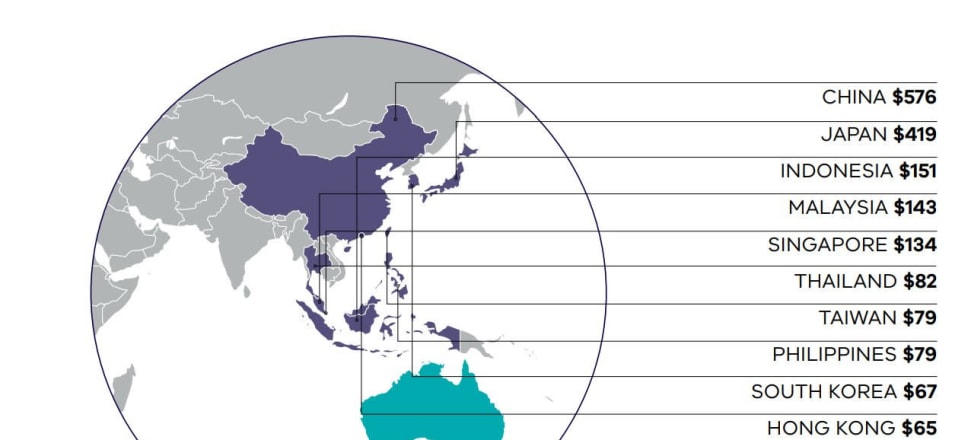
Top 10 countries for Victorian dairy exports by value. Source: Victorian Food and Fibre Export Performance Report 2019-20.

International demand for Victorian dairy products remained strong in 2019-20, despite disruptions to markets, a Victorian Government report has found.

Released earlier this month, the Victorian Food and Fibre Export Performance Report 2019-20 found dairy exports were valued at $2.1 billion last financial year, an increase of three per cent on 2018-19.

Milk and cream products were the highest value dairy category, contributing to 48 per cent of Victoria’s dairy exports.

Cheese and whey products were the second highest value category at $869 million, making up 41 per cent of dairy exports, the report found.

China continued to be the highest value export market for Victorian dairy products, making up 27 per cent of dairy export total value.

Value of Australian dairy exports by state in 2019-20. Source: Victorian Food and Fibre Export Performance Report 2019-20.

Japan was the second largest consumer of Victorian dairy products, with a value of $419 million (20 per cent of total dairy exports), decreasing 10 per cent from 2018-19.

“Improved seasonal conditions, particularly in the second half of 2019-20, lifted dairy farm profits and production as compared to the previous year,” the report said.

“Greater pasture availability in regions south of the Great Dividing Range and lower feed prices enabled farmers to source relatively cheap feed

“Farmers in the north of the state budgeted for high water prices and many chose to purchase fodder instead of irrigating.

“The lower costs along with a 17 per cent improvement in milk price, increased average farm profits three-fold to $346,000 before interest and tax ($1.68/kg of milk solids).”

While nearly all surveyed farms experienced positive profits, with consistent performance reported across the regions, many farms are still not fully recovered from the recent years of drought and challenging conditions, the report found.

The improved conditions and confidence have supported higher milk production.

According to Dairy Australia, Victorian milk production improved by six per cent in 2019-20 compared to the previous year, accounting for 63 per cent of Australia’s dairy production by volume.

Source: countrynews.com.au

American Dairy Association launches “Make Milk Moments” sweepstakes

The American Dairy Association is reminding people that they can create fun, festive treats using nutritious milk.

American Dairy has partnered with registered dietician Molly Morgan of Apalachin to promote the Make Milk Moments campaign.

Morgan suggests creating a hot cocoa board with a wide variety of special add-ins such as wafer cookies, yogurt-covered pretzels, peppermint sticks and chocolate-covered granola bars.

Morgan says the wholesome recipe is a great way to make a winter memory at home.

“As a registered dietician and a mom, I’m always looking for ways to sneak more nutrition into fun things, even like that cup of hot cocoa with that nice warm milk to pack in that protein, calcium, vitamin D that I know my kids and all of us need,” she says.

You can watch a demonstration of the hot cocoa board and some hot cocoa bombs that Morgan made on our website http://BinghamtonHomepage.com.

American Dairy has also launched a sweepstakes.

Take a photo or video of your family enjoying milk or a milk recipe and post it with the hash tag ‘Make Milk Moments’ for your chance to win $500 and a nostalgic gift basket.

More info at http://AmericanDairy.com/MakeMilkMoments.

Lactalis Canada to acquire Agropur’s Canadian yogurt business

Lactalis Canada Inc., formerly Parmalat Canada Inc., a Toronto-based subsidiary of Lactalis Group, said it has reached a definitive agreement with Agropur Cooperative to acquire all shares of its Canadian yogurt business, Ultima Foods Inc. The agreement includes the Iögo and Iögo Nanö yogurt brands, as well as the Olympic yogurt, sour cream and kefir brand. The acquisition is subject to approval by Competition Bureau Canada. Financial terms of the agreement were not disclosed.

The proposed transaction expands Lactalis Canada’s yogourt portfolio of iconic brands, which include Astro, siggi’s and Stonyfield, with the addition of three highly recognizable and popular homegrown yogurt names, Lactalis Canada said.

«As a broadly-based dairy products company in Canada, producing and supplying a wide variety of popular brands, this transaction will reinforce Lactalis Canada’s position in the dairy category and will help enable key customer partners in both the retail and foodservice channels meet the growing consumer demand for yogurt products,» said Mark Taylor, president and ceo, Lactalis Canada.

In addition to the brands, the transaction includes yogurt production facilities in Granby, Quebec, and Delta, British Columbia, as well as the operations at a leased distribution center in Longueuil, Quebec. Lactalis Canada said it will add approximately 450 employees from across the country, who will join the company’s existing 3,500 employees and 30 operating sites, including 17 manufacturing facilities in Ontario, Quebec, Alberta and Manitoba.

«Lactalis Canada’s mission is to build on its family heritage to delight consumers with life-enriching dairy products, while making sustainable economic and social contributions that benefit its people, industry, partners and the communities in which it operates,» added Taylor. «In keeping with our mission, Lactalis Canada is confident that this transaction will positively support dairy farmers, retailers, consumers and the communities of Granby and Longueuil, Quebec, as well as Delta, British Columbia.»

Source: dairyfoods.com

How America’s dairy farmers help fight hunger crisis

Dairy farmers have been working tirelessly to provide food for our homes, schools and restaurants throughout the pandemic. Now, by sharing their stories in a seven-episode digital series hosted by national country music DJ Amy Brown, their goodness is extending even further to help to fight hunger in the U.S.

In the series “Where Goodness Grows,” Brown (co-host of iHeartRadio’s The Bobby Bones Show) speaks with Land O’Lakes farmer-owners, sharing their inspiring stories and trying some of their home-crafted recipes. It’s an upbeat celebration of the work they do and the lives they lead on and off the dairy farm.

As part of its ongoing commitment to ending hunger in the U.S., Land O’Lakes is donating one pound of macaroni and cheese for a guaranteed maximum donation of 100,000 pounds of macaroni and cheese (equivalent to 83,000 meals) to Feeding America for every comment on or share of the series’ episodes.

Amy highlights the new video series and explain how viewers can help feed America simply by engaging.

Click here for more information.

Wisconsin dairy farmers returning to their roots

For as long as he can remember, Jason Gruenfelder wanted to be a dairy farmer.

But after 10 years of doing it the way his father and grandfathers had, he was tired. Tired of hauling feed into the barn each day and manure back out. Tired of long nights on the tractor. Tired of sending his milk checks to seed and fertilizer vendors.

So, in 2018, he decided to do something different.

Now his cattle spend their days munching fresh grass on his 335-acre farm, leaving Gruenfelder, 35, more time to spend with his family and more money in his pocket, the Wisconsin State Journal reported.

In an era when farmers have been told to go big or get out, Gruenfelder found a way to make his small farm more profitable and more sustainable through managed rotational grazing, a modern take on an old-fashioned practice.

“It’s very simple,” Gruenfelder said. “This is going back to the roots of what dairying was a hundred years ago.”

A new initiative based at University of Wisconsin-Madison is helping others do the same in a bid to boost Wisconsin’s struggling ag economy while promoting healthy food and the environment.

Since switching from confinement feeding to rotational grazing, Jason Gruenfelder said his cows produce less milk, but the farm is more profitable because his costs are so much lower.

Funded by a $10 million grant from the National Institute for Food and Agriculture, the collaborative — called Grassland 2.0 in a nod to the prairies that once dominated the landscape — brings together farmers, researchers, food processors and government officials to find new opportunities for grazing and other perennial grassland farming practices.

For an industry battered by unstable commodity prices, rising costs, market constraints and extreme weather, grassland farming represents a bright spot, said Randy Jackson, the UW researcher leading the project.

Jackson, a professor of grassland ecology, envisions a future of profitable, productive farmland that also promotes clean water, healthy soil, biodiversity and resilience — much like the region’s original prairie landscape did.

He considers the grant a “major win” for residents of the Upper Midwest.

“We’re going to need farming practices that simultaneously produce healthy food, support thriving communities and restore ecosystem processes,” Jackson said. “Grazed perennial grasslands do that.”

Wisconsin lost 773 dairy farms in 2019, and another 266 so far this year, according to the U.S. Department of Agriculture’s statistics service.

Yet the total number of milk cows is virtually the same as it was five years ago, and milk production hit an all-time high last year as farmers squeezed a record 24,152 pounds of milk from each cow.

Speaking at the World Dairy Expo in Madison last year, U.S. Secretary of Agriculture Sonny Perdue warned small farmers there may be no place for them in this economy.

“In America, the big get bigger and the small go out,” Perdue said. “I don’t think in America we, or any small business, we have a guaranteed income or guaranteed profitability.”

But the loss of small and mid-size farms is draining rural communities, leaving behind “a disaffected and underemployed” population, Jackson argues, while row-crop farming and confined feeding operations contribute to flooding, water pollution, loss of biodiversity and climate change.

Meanwhile, the focus on increased production has led to an oversupply of milk and increased reliance on export markets, leaving farmers vulnerable to volatile milk prices and dependent on government subsidies.

“It’s astounding the things we do to maintain the current agricultural system. It’s failing. It’s failing economically. It’s failing environmentally. It’s killing the farmers, sometimes literally,” Jackson said. “It’s not the farmers’ fault that this is happening. It’s the system.”

About 16% of Wisconsin dairy farmers were using some form of managed grazing as of the USDA’s 2012 Census of Agriculture, said Laura Paine, an outreach coordinator with Grassland 2.0 and former grazing specialist for the state Department of Agriculture, Trade and Consumer Protection. More recent figures have yet to be tabulated.

“There are people doing it now,” Jackson said. “But not enough of them.”

About 90% of the milk produced in Wisconsin comes from “confinement” farms, where cows spend most of their time in barns eating diets rich in grains like corn and soybeans that are grown, harvested and delivered to them.

Researchers have shown this system is more energy and carbon intensive and results in problems like erosion and excess nutrients like phosphorus and nitrogen finding their way into streams, rivers and lakes.

The system also has become increasingly unprofitable.

After accounting for all the costs of running a farm, including labor, capital and general overhead, the average Wisconsin farmer actually lost $1.40 for every hundred pounds of milk produced last year, according to USDA statistics.

Grass-fed cattle produce less milk than their confined counterparts, but the economics are much more favorable. And while overall consumption of milk — and red meat — are declining, grass-fed dairy and meat sales are both surging.

“The people who were raising grass-fed beef during COVID were out of beef in minutes,” Jackson said. “It’s really an interesting exposé on the supply chain.”

Gruenfelder, whose farm is not certified organic, doesn’t get paid any more for his milk, and his cows produce about 30 to 50 pounds per day instead of the standard 80 to 100.

But with no seed and fertilizer bills and less machinery to maintain, Gruenfelder is able to keep more of his income.

“We don’t go into town and brag about the milk production,” he said. “They’d just laugh at me. I’m OK with that, as long as I’m turning a profit.”

An analysis by the UW-Madison Center for Dairy Profitability found dairy farms where cattle graze often produce less milk per cow, but are ultimately more profitable.

“It’s clearly a more profitable way to do dairy farming,” Jackson said. “Almost twice as profitable.”

There are environmental benefits, as well.

According to research by the USDA, UW-Madison and DATCP, well-managed grasslands can reduce soil erosion and nutrient runoff, which improves water quality, reduces flooding while also supporting wildlife, like pollinators, birds and trout.

Grasslands also trap carbon in the soil, which could allow agriculture to become part of the solution to climate change and potentially generate additional revenue if carbon markets are developed.

“It’s really a win-win-win across the board if it’s done well,” Jackson said.

Source: agrinews-pubs.com

Biden’s secretary of agriculture: We need change, not corporate ag’s best friend

President-elect Biden announced that Tom Vilsack, former secretary of ag under President Obama, “Biotech Governor of the Year” from Iowa and Dairy Checkoff funded millionaire will be his choice for United States Secretary of Agriculture.

Here at Missouri Rural Crisis Center, we have a 35-plus year history of fighting for independent family farms, resilient rural communities, and a food supply that is diverse, democratic and fair. Unfortunately, Tom Vilsack would be one of our last choices for Secretary of Agriculture, and we say that because of history.

A brief history of Vilsack:

• In 2001, as governor of Iowa, Vilsack was named “Biotech Governor of the Year.” Through biotechnology and lack of enforcement of anti-trust laws, the seed and chemical industries have become highly concentrated and now are largely owned by foreign multi-national corporations.

• In 2009, MRCC with other statewide farm organizations sent 25,000 signatures to Sec. Vilsack demanding that USDA stop providing taxpayer-backed guaranteed loans to support the building of more corporate factory farms while the federal government was simultaneously spending millions of taxpayer dollars buying meat off the open market to offset massive corporate overproduction and low prices. We asked USDA to instead direct those public dollars to independent family farm livestock producers who were facing devastatingly low prices due to this corporate overproduction. In our meeting with Vilsack in D.C., he was adamant that USDA was not going to stop federally backing loans for corporate CAFOs.

• One of President Obama’s campaign promises was to enforce anti-trust laws—and thousands of farmers believed him and participated in the process just to have Vilsack decide to do nothing in spite of the critical importance. Sec. Vilsack ultimately blocked attempts to put in place anti-trust enforcement of the livestock industry (named the GIPSA Rule) that would have decreased the extreme corporate control of food production and begin to establish fair markets for independent family farmers. When Vilsack sacked this rule, family farmers and rural Americans lost hope and trust in him.

• In 2014, Sec. Vilsack worked with the National Cattlemen’s Beef Association to implement a mandatory second beef checkoff, a mandatory tax paid for by cattle farmers that would have been a slush fund for corporate ag interests at the expense of family farmers.

• While under Vilsack’s leadership since 2017, the U.S. Dairy Export Council shored up the interests of large-scale dairy processors while nearly 10,000 family dairy farmers were put out of business.

This is not leadership; it’s part of the problem. The bottom line is, during Sec. Vilsack’s tenure as governor of Iowa and U.S. Secretary of Agriculture, he has promoted policies that fueled agribusiness consolidation and control, while the number of family farms shrank and rural communities got smaller and poorer.

Vilsack has compared corporate agriculture and family farm agriculture to his “two sons,” saying they are both different and there is room for both of them. Unfortunately, this analogy is dishonest and dangerous. The problem with his “two sons” propaganda, is that corporate agriculture is doing everything they can to put independent family farms out-of-business and push them off the land, and they are doing it with the policies and checkoff dollars that Vilsack has vehemently promoted.

President-elect Biden should appoint someone that would champion open, fair and competitive livestock markets and a healthy functioning marketplace that would provide the foundation for good jobs and opportunities in agriculture, stop price manipulation, discrimination, and collusion in agriculture and food production, and promote family farmers getting a fair price for what they produce, as opposed to the current “race to the bottom” system.

If we have learned anything from this pandemic, it’s that the current centralized corporate controlled food and ag system does not work. It does not work for farmers, workers, or consumers. We need change. President Biden’s selection of Vilsack is a pick that signals the continuation of the same failed policies that got us here.

Source: hpj.com

Top Dairy Industry News Stories from December 12th to 18th 2020

Feature:

Top News Stories:

Dry Ice Producers Confident They Can Still Supply Dairy Industry

As the Pfizer vaccine continues to be shipped around the country It has to remain at sub-zero temperatures. However, the way it’s kept cold is also crucial to Wisconsin’s $45 billion dollar dairy industry.

The vaccines are shipped using dry ice, and dry ice producers are ready for the increased need. 

“The dry ice supply is good,” said Rick Gottwald, president and CEO of the Compressed Gas Association. “We’ve been working on this, on the vaccine issue, talking to people on the supply chain for the past six weeks or so, and we’re confident that the supply chain has the capability to meet the demands that are coming at us because of the vaccine.”

Most of the dry ice manufacturers in the country are members of the association. Gottwald said even with the increased need for dry ice, it only adds about 5% over what is being used regularly.

“So it’s not a huge amount,” Gottwald said. “It’s a critical need, it’s a critical application, but it’s not something that we think is going to impact the supply for other applications of dry ice.”

Demand for dry ice persists in other industries. In Wisconsin, the dairy industry needs about 350 thousand pounds of it per week.

“Our primary need is super chilled dairy cultures,” said Rebekah Sweeney, policy director with the Wisconsin Cheese Makers Association.

Wisconsin has three massive manufacturers of dairy cultures.

“They are responsible for making the bulk of dairy cultures for the entire world,” Sweeney said. “So if they don’t have dry ice, the world can’t make cheese and yogurt and all the other great dairy products we all enjoy.”

The association has contacted and sent letters to elected officials, letting them know about the critical need the industry has.

They’ve been happy with the response and support from politicians like Senator Tammy Baldwin and Governor Tony Evers — who allocated more than $3 million to ethanol producers last week. Ethanol is key in the production of dry ice.

Sweeney said The Cheese Makers Association appreciates the actions and assurances politicians and trade groups have made, but it will continue to keep an eye on the dry ice supply.

“It’s something that we’re going to continue to watch very closely,” Sweeney said. “All it takes is mishandling of dry ice from folks that maybe aren’t as used to using it and we could be in real trouble.”

Dry ice manufacturers remain confident that industries like dairy will be well supplied.

“I don’t think it’s going to be a challenge, but they should should continue to get the dry ice that they need,” Gottwald said.

Compressed gas companies have already been working to supply healthcare system with more oxogen tanks during the pandemic. Now they’re playing a role in transporting the vaccine around the country.

“We’re really proud to be part of this whole solution and treatment to this pandemic,” Gottwald said.

Source: spectrumnews1.com

California Milk Advisory Board names dairy innovation center director

The CDIC was recently created to further product-oriented innovation and enhance productivity for the California dairy industry. Working with the CMAB and the California Dairy Research Foundation (CDRF), Lagrange will act as a liaison for researchers, educators, business development representatives, and processors interested in innovation efforts.

Most recently Lagrange held the position of director of business development for the American Dairy Products Institute (ADPI), where she also chaired the Center of Excellence; as well as several industry taskforces. She also spearheaded The Strong Inside campaign, and served as a subject matter expert for business strategies, nutrition and scientific matters; in addition to the organizer of technical programs and conferences.

Lagrange previously held roles at the US Dairy Export Council (USDEC), which included senior vice president of business development, strategies and insights, and director of international marketing. She has conducted food technology programs for the California Raisin Advisory Board, Almond Board of California, and National Honey Board.

“Veronique will be a tremendous asset to California dairy innovation, as she brings a breadth of experience and skills to our team,”​ said John Talbot, CEO of the CMAB.

“It is truly an honor to have this opportunity for leadership of this unique program, which will be guided by the goals and priorities established by a cross-industry committee. I look forward to being an active partner and advocate within the dairy community to promote innovation and also to support the development of the workforce which will, in turn, ensure the global competitiveness of the California dairy industry in the future,”​ said Lagrange.

“CDRF is pleased to welcome Veronique as the new director of the CDIC,”​ said Denise Mullinax, executive director of CDRF.

“We look forward to collaborating with her in the expansion of research in the areas of innovation and development on behalf of the California dairy industry.”  

Dean Foods asks for money back from U.P. diary farmers amidst bankruptcy

Dean Foods, the largest dairy processor in the United States, sent notices to a handful of Michigan dairy farmers who direct-shipped their milk to a former Dean dairy plant in Michigan’s Upper Peninsula, according to the Michigan Department of Attorney General and the Michigan Department of Agriculture and Rural Development (MDARD).

The notices demand the return of money paid to them by Dean in the months leading up to the company’s bankruptcy. The company filed for bankruptcy in November 2019.

The notice is an attempt to force those dairy farmers who previously direct-shipped milk to Dean Foods to repay a portion of the amount Dean paid the farmers during the 90-day period before Dean filed for bankruptcy. While this action is a common practice under bankruptcy law, not all amounts paid in the normal course of business are subject to such claims.   

The issue was brought to the attention of Attorney General Dana Nessel last week by state Sen. Ed McBroom, R-Vulcan, who represents a few dairy farmers who direct shipped milk to a Dean Foods plant in Marquette and may be affected.

These farms are not represented by either the Michigan Milk Producers Association or the Dairy Farmers of America co-ops. A dairy inspector from MDARD  is personally reaching out to these farmers to provide them with information on how to respond to the Dean notice.  

“We are disappointed that hard working dairy farmers and their families are put in the position of having to incur costs, either in paying the amount demanded or from obtaining legal counsel to defend themselves – and I want to personally thank Sen. McBroom for bringing this issue to my attention,” said Nessel.   

“Michigan’s dairy farmers provided milk in good faith fulfilling their contract with Dean Foods,” said Gary McDowell, MDARD director. “It’s disheartening that the company is now questioning those payments made to farming families.” 

“These U.P. dairy farms, and many others like them throughout Michigan, have suffered greatly during the coronavirus pandemic,” said McBroom.

“Now, again, through no fault of their own, they are being punished for simply and responsibly doing their jobs to provide healthy products to consumers. I appreciate the Attorney General and MDARD taking an interest in this unfortunate situation and am hopeful it can be resolved without further harming these small family farms.”  

Dairy farmers with legal questions should consult their private legal counsel. Questions regarding the Dean Foods notice can be directed to Jeff Haarer in the Agriculture Development Division of MDARD at 517-896-2236.   

Source: upmatters.com

Australian dairy farmers leaving industry amid major loss of confidence

Hundreds of Victorian dairy farmers have left the industry so far this season — and not because of price, with some pointing the finger in an unexpected direction.

Onein four Victorian dairy farmers has left the milking shed since the 2016 milk price clawback ripped through the industry, with farmer numbers plummeting from 4141 four years ago to 3069 today.


But it was not just the clawback that has stripped 1072 farmers out of the most productive dairying state in the nation.

Preliminary Dairy Food Safety Victoria figures show 393 farmers have left dairying since July 1 this year, in what appears to be a major loss of confidence in a sector that many feel fails to deliver profitable returns.

“My take is there’s a series of reasons, not just clawback,” Cohuna dairy farmer Stephen Henty said. “It’s been a combination of prices, climate and input costs.”

Others said age was another major issue, as farmers, who had hung on trying to build enough equity to retire were getting out now, while cattle and property prices were strong.

Former Dairy Australia chair and Tallygaroopna farmer Geoff Akers said “it’s about long-term confidence”, not just among farmers, but even among processors. “We’ve had two fall over in the past six months.”

However, Wonthaggi dairy farmer Daryl Hoey, who left northern Victoria’s Katunga district to set up in Gippsland early last year, said farmers needed to stop blaming milk prices for their woes and take a good hard look inside the farm gate.

Daryl Hoey, who left his Katunga dairy farm last year to grow more grass in Gippsland, says the industry is still very profitable despite a lot of negativity.

“If farmers say they can’t make money after three years of the highest prices ever, it tells me their farming systems are not stacking up,” Mr Hoey, who is also the former chair of the Australian Dairy Farmers Basin Taskforce, said.

“Imagine if grain growers had three years running of getting $300 a tonne off the header, would they be losing money?”

He said some dairy farmers needed to stop chasing production per cow and focus on profit per hectare.

“Dairy farmers also have this inherent negativity … you just have to listen to ABC Country Hour to hear the whingeing,” Mr Hoey said. “I think some of the biggest issues in the dairy industry are above the shoulders.”

Longwarry dairy farmer and former ADF director John Versteden said he was also sick of the negativity, when many farmers were doing well.

“There are farmers in every region of Australia, including Queensland, that are making really good money,” Mr Versteden said. “(But) we don’t talk about that we talk about all the negatives.”

Mr Hoey highlighted recent results of the 2019-20 Victorian Dairy Farm Monitor Project, which showed the average level of equity among 250 Victorian operations was 67 per cent.

“Banks would be more than willing to loan money to farmers with (almost) 70 per cent equity. But they’ve (farmers) got into this mind set of saying ‘I don’t want to borrow”.

Another measure of just how well some Victorian dairy farmers are doing can be seen in their level of Farm Management Deposits as of June 30, which at $209 million outstripped beef producers’ holdings.

Mr Hoey said the real problem was farmers who had really good equity, but did not have enough cash flow to service existing debt, due to inefficiencies – such as not calving cows at a time that maximised on-the-ground feed and buying in too much fodder.

But farmers in Northern Victoria and the Riverina have had little choice, given the high temporary water prices last season, with Dairy Farm Monitor results showing they grew just half their herds’ feed, compared to 32 per cent in Gippsland and the South West.

Dairy Australia figures show northern Victoria has lost almost 21 per cent of its farmers since 2016, while the southwest and Gippsland have lost 14 per cent up until June 30.

However DA was unable to give a regional breakdown of the additional 393 farmers who have left dairying so far this season.

Mr Henty said at 68 years of age he understood that with record cattle prices and farms selling for good prices many farmers were taking the opportunity to retire or close just grow feed for others.

As for his own future Mr Henty said he had no succession plan, but had already slashed his reliance on bought in feed from 55 per cent to just 15 per cent and was happy to keep dairy farming, as he enjoyed the lifestyle.

The latest figures has triggered a war of words in Canberra with Victorian Labor senator Raff Ciccone saying Federal Agriculture Minister David Littleproud had been sitting on his hands while the dairy sector declined.

“The Federal Coalition Government should ensure they provide certainty for the industry,” Senator Ciccone said.

“Instead, eight years since the Liberal-National Government won power in Canberra, dairy farmers have not seen meaningful action to support their industry, and as a result, we now see more than one in ten farmers leaving the industry (in Victoria).”

Mr Littleproud hit back: “Senator Ciccone having been tucked away in Melbourne all his life may not of realised that the rest of Victoria has experienced one of the nations worse droughts in living memory over the last couple of years.

“Sadly, the drought has impacted these numbers despite the federal government having committed over $10 billion towards the drought while the Labor Victorian government has committed close to nothing.”

Source The Weekly Times

Sale of former De Pere Dean Foods plant finalized

Jugs of McArthur Dairy milk, a Dean Foods brand, are shown at a grocery store, Tuesday, Nov. 12, 2019, in Surfside, Fla. Dean Foods, America’s biggest milk processor, filed for bankruptcy Tuesday amid a steep, decades-long drop-off in U.S. milk consumption blamed on soda, juices and, more recently, nondairy substitutes. (AP Photo/Wilfredo Lee)

A food plant in De Pere is getting new owners in a move that will save jobs.

Dairy Farmers of America tells FOX 11 it reached an agreement with the Justice Department.

It requires DFA to sell the plant in De Pere, since the farming company now owns Dean Foods.

The plant’s new owners will be «The Borden Dairy Company» and «Select Milk Producers.»

Source: Fox11news

How Vilsack Should Use His Second Chance

It’s not often that politicians get the chance for a “do-over.”  

Yet this is happening with President-elect Joe Biden’s nomination of Tom Vilsack as secretary of agriculture, the same position the former Iowa governor held during the Obama administration.

Vilsack has also been criticized for inaccurately stating that the number of farmers of color increased during his first go as secretary of agriculture.

The choice of Vilsack to lead the USDA can be read as part of Biden’s effort to show continuity with the Obama years. But the problems that Vilsack struggled with during his first stint as agriculture secretary, from corporate concentration to racism, have not gone away. The incoming secretary must also confront serious food and farm problems that the Trump administration has left unaddressed.

Specifically, while it’s true that farm earnings rose in 2020, that’s largely because government subsidies constituted about 40% of farm income this year.  “If not for those subsidies,” The New York Times reported, “U.S. farm income would be poised to decline in 2020.”

Farmers find themselves in this situation, in large part, due to the failure of processors to adapt to the changing consumer habits that the coronavirus pandemic created. The USDA’s response was to launch the “Farmers to Families Food Box” program, using the government as an intermediary to get food from producers to consumers. This effort received mixed reviews for favoring large-scale operations and dropping Black farmers.

While laying the blame on Trump for these challenges is not entirely fair, he did make matters worse for farmers by initiating a trade war with China; afterward, his administration had to bail out farmers to make up for China’s retaliatory tariffs.

Meanwhile, instead of making markets more competitive for farmers, the Trump administration nixed provisions — the GIPSA (Grain Inspection, Packers and Stockyards Administration) rule — from the 2008 Farm Bill that would have helped producers hold processors accountable for unfair and discriminatory practices.

Basically, Vilsack has his work cut out for him. 

He faces criticism from Black farmers for his mishandling of a 2010 dust-up involving Shirley Sherrod, the Black Georgia state director of rural development. Vilsack fired Sherrod after a video surfaced showing her apparently making discriminatory statements against white farmers. He later had to apologize when the video was proven a fake.  

Vilsack has also been criticized for inaccurately stating that the number of farmers of color increased during his first go as secretary of agriculture. In fact, a change in the USDA’s method of accounting — not an attempt to confront racism — made the population of farmers appear more diverse than it really is.

Meanwhile, between the Obama and Biden administrations, Vilsack became president of the U.S. Dairy Export Council. With Vilsack at the helm of this organization, corporate concentration continued apace, as Dairy Farmers of America acquired Dean Foods. Moreover, dairy farmers entered bankruptcy in record numbers as prices plummeted.   

According to the Open Markets Institute, fewer and fewer corporations dominate the American food system from seed to plate. This not only subjects farmers to predatory pricing, but hurts consumers at the grocery aisle.

If given a second chance to lead the USDA, Vilsack should use its powers from the Packers and Stockyards Act of 1921to investigate corporate agribusiness giants and punish wrongdoing. He should throw his support behind the recently introduced “Justice for Black Farmers Act,” which would help aspiring farmers of color to acquire land and training.

Vilsack knows the USDA and the problems facing rural America. He must not lead the agency according to the past, but make amends with those who have been wronged and lay the groundwork for a more fair and equitable food and farm system.  

This column was produced for the Progressive Media Project, which is run by The Progressive magazine, and distributed by Tribune News Service. 

Starbucks Works With Dairy to Go Net Zero

A new report says Americans are spending less of their disposable personal income on food. Take a look at this graphic from USDA. It shows that in 1960, people spend an average of 17-percent of their disposable income on food. But last year that has shrunk to 9.5 percent. Experts say the decrease was driven by a decline in the share of income people spend on food at home instead of at restaurants. Over the same period, the share of disposable income spend at restaurants rose from 3.3 percent to more than 4-percent.

Starbucks is joining forces with the dairy community in support of the Net Zero Initiative. The aim of the group is to work to help the dairy industry achieve net-zero greenhouse gas emissions, optimize water usage, and improve water quality on farms. Starbucks is one of the largest users of fluid milk in the country.

If you’ve ever grown a garden you know how challenging it can be to grow big crops. The National Corn Growers Association holds their own yield contest every year and the results are in. Don Stall of Charlotte, Michigan is this year’s winner with a whopping 476- point-9 bushels per acre yield in the conventional irrigated category. The projected national average was 175 bushels per acre. Stall was followed by George Andrew of Evansville, Wisconsin, And Ashton Peterson of Bertrand, Nebraska.

Source: wiproud.com

Holstein Association USA Recognizes 2020 National Holstein Show Champions and Class Winners

Holstein Association USA is thrilled to recognize outstanding cows and their breeders and owners who did well at National Holstein Shows this year. 

Due to COVID-19, Holstein Association USA is not having the All-National Showcase program in 2020. Instead, Holstein Association USA is recognizing the Grand Champions, Champion Bred and Owned, Junior Champions, Intermediate Champions, and Senior Champions along with the top two winners in each class from the four National Holstein Shows held in 2020.

“We appreciate all of you who exhibited at shows this year,” says Jodi Hoynoski, Executive Director, Holstein Identification & Member Services. “We wanted to find a way to continue to honor outstanding cows and their breeders and owners, even during this unusual year.”

Holstein Association USA is excited to be able to provide well-deserved recognition for these cows and their owners and looks forward to continuing with the All-National Showcase Program in future years. A complete list of the champions and class winners recognized can be found on our website


Junior Champions

Midwest Fall National

MS ROLLNVEW JUMP4FUN-RED-ET, Jacob, Logan & Madison Harbaugh, Marion, WI


Western Spring National

RUANN DOORMAN GAY-91519-ET, Graisson & Mandy Schmidt & Tyler Dickerhoof, Melrose, WI

Southern Fall National

OPSAL AMMO CALEESI, Drew D & Shana M Lueking, Centralia, IL


Mid-East Fall National

KRULLCREST RCH DM LUNA-ET, Kevin Doeberiener, Lindsay Bowen & John Cannon, West Salem, OH


Intermediate Champions

Midwest Fall National

LE-O-LA ARVIS LAURALEE, Royce & Regan Demmer, Peosta, IA


Western Spring National

MS PG PV DOORMAN ASPIRE-ET, Stephen & Patrick Maddox, Riverdale, CA


Southern Fall National

KCCK JORDY RACHEL-RED, Cole & Carter Kruse, Dyersville, IA


Mid-East Fall National

TEX-STEIN JACOBY BRYANNA, Gavin Steinberger, Windthorst, TX


Senior Champions

Midwest Fall National

FARNEAR TBR ARIA ADLER-ET, Rick & Tom Simon, Farley, IA


Western Spring National

APGAMBO ATWOOD KEENAN, Stephen & Patrick Maddox & Alexandra Gambonini, Riverdale, CA


Southern Fall National

FARNEAR TBR ARIA ADLER-ET, Rick & Tom Simon, Farley, IA


Mid-East Fall National

LINDALE DOORMAN FELINA, Ackley Holsteins & Pat Conroy, East Liberty, OH


Champion Bred & Owned

Midwest Fall National

FARNEAR TBR ARIA ADLER-ET, Rick & Tom Simon, Farley, IA


Western Spring National

APGAMBO ATWOOD KEENAN, Stephen & Patrick Maddox & Alexandra Gambonini, Riverdale, CA


Southern Fall National

FARNEAR TBR ARIA ADLER-ET, Rick & Tom Simon, Farley, IA


Mid-East Fall National

KINGS-RANSOM MONTRY CANS-ET, Lauren King, Schuylerville, NY


Grand Champions

Midwest Fall National

FARNEAR TBR ARIA ADLER-ET, Rick & Tom Simon, Farley, IA


Western Spring National

APGAMBO ATWOOD KEENAN, Stephen & Patrick Maddox & Alexandra Gambonini, Riverdale, CA


Southern Fall National

FARNEAR TBR ARIA ADLER-ET, Rick & Tom Simon, Farley, IA


Mid-East Fall National

LINDALE DOORMAN FELINA, Ackley Holsteins & Pat Conroy, East Liberty, OH

EU farming unions pen open letter urging the European Commission to adjust policy to reflect market realities

European agri-food associations urge the Commission to adjust the 2021 Annual Work Programme with a less dogmatic approach to make efficient use of its promotion budget for sustainable agri-food goods.

The open letter reads:

We ten of the leading European associations in agriculture and agri-food, strongly urge the European Commission to adjust the budget of its 2021 Annual Work Programme (AWP) of the Promotion Policy to better reflect market reality and use promotion funds in a way that will truly allow all players in the sector to maximise its reach and sustainability impact.

We believe that the promotion of organic products should be supported, even above their market share in order to boost its development. However, with an 8 percent market share, we fear that focusing 30 percent of the whole budget on this single production method, will prove to be both economically and environmentally inefficient as well as detrimental for the organic sector itself. Furthermore, in times of crisis, a reduction of 9 percent of the promotion budget is also a real contradiction and a signal hard to accept by the whole agri-food sector.

In view of the upcoming decision on 17 December, we expressed our strong concerns in a letter to Agriculture Commissioner Wojciechowski on the overall reduction and imbalance of the budget allocation of the 2021 AWP. We greatly regret that the 2021 budget is decreased to €183 million, a 9 percent reduction compared to the AWP 2020, and far beyond the foreseen 4 percent reduction of the overall agriculture budget. In times during which additional support for agricultural products promotion is particularly needed due to the consequences of the COVID-19 pandemic and the forthcoming Brexit, this budget reduction is particularly inappropriate.

In addition to the budget erosion, we are highly concerned by the imbalance of the AWP 2021. We believe that the organic sector should especially be supported by the promotion policy, even above its market share. We fear that the Commission’s ambition to dedicate 30 percent of the total promotion budget to organic, to enhance the sustainability of the promotion policy, is well intentioned but inappropriate.

Today the organic agriculture segment represents only 8 percent of the total EU agricultural production. While the organic sector certainly has growth perspective, the current budget proposal does not correspond to market reality and is therefore not realistic. To secure long term viability of the organic sector, growth needs to follow consumer demand.

Promotion opportunities should therefore be adjusted to the natural growth of the production potential and the market demand, otherwise the profitability for this agriculture segment will be seriously at risk. The Commission could thus end up fragilising the organic sector instead of enhancing it, which we would prefer to avoid.

Furthermore, we strongly believe that due to the often small size of their structure, the applicants representing the organic sector may not have the necessary resources to submit projects for the budget share proposed for organic on the internal market.

To efficiently enhance the sustainability of the promotion policy, the 2021 AWP should proportionately support all agricultural practices that are showing commitments when it comes to sustainability. Disproportionately focusing on a single production method could prevent the others from contributing further to the EU agricultural sustainability, which would reduce the overall capacity of the Promotion Policy to increase sustainability. Considering that the annual growth of “sustainable” consumption is around 10 percent, while organic is around 3 percent, our proposition will improve the efficiency of the actions and reinforce both the sustainability and the competitiveness of EU products on the international market.

Consequently, we urge the Commission, before the final adoption of the decision, to further amend the proposal with a view to responding to its current shortcomings by proportionately promoting all sustainable agricultural practices in accordance with the reality of their market prospects. This will better reflect the societal expectations of consumers, which are moving to a more holistic “sustainability” concept broader than just the organic specification.

Source: thedairysite.com

Scholarship Winners Announced for USJersey Organization

The American Jersey Cattle Association (AJCA) has awarded 12 Jersey youth over $31,000 in scholarships for the 2020-21 school year. Selection was based on scholastic achievement as well as participation in Jersey and other agricultural activities.

Two Russell Memorial Scholarships were awarded in memory of the late William A. Russell. The first scholarship, the William A. Russell Memorial Scholarship, was established in his name in 1977 and is designated for students who have completed high school and are beginning their university studies. The second, the Russell-Malnati Scholarship for Advanced Studies, was established to honor the late J. J. “Doc” Malnati of Bush River Jerseys, Newberry, S.C. The recipients were Caroline C. Arrowsmith, Peach Bottom, Pa., and Jessica Marie Hanson, Ulysses, Kan.

Arrowsmith is a freshman at Pennsylvania State University majoring in animal science with a dairy focus. She received a $2,750 award. Hanson received $5,000 to continue her education at the Kansas State University College of Veterinary Medicine.

The Jack C. Nisbet Scholarship is awarded to a participant in the National Jersey Youth Achievement contest.  It was created in 1965 to honor the AJCA’s seventh Executive Secretary, who served the organization from 1943-1947. This year’s recipient was Lydia Rose Chittenden, Schodack Landing, N.Y.

Chittenden is a sophomore at State University of New York (SUNY)-Cobleskill. She is majoring in animal science with a focus on dairy. She plans to transfer to Cornell University next fall to earn her bachelor’s degree. Her scholarship award was $2,750.

The V.L. Peterson Scholarship is awarded to youth who have completed at least one year of college. It commemorates “Vic” Peterson, the dean of Jersey area representatives, and was established in 1972. The scholarship is available to students who have completed at least one year of college. Colin R. Wussow, Cecil, Wis., was this year’s recipient.

Wussow is a junior at the University of Wisconsin-River Falls majoring in agriculture business and minoring in dairy science and crop science. He received an award of $2,750.

The Paul Jackson Memorial Scholarship is also awarded to youth who have completed at least one year of college. This award was created in 1965 to honor Paul Jackson’s service to the Jersey breed, which spanned more than half a century. The 2020 winner was Meghan Jo Hettinga, Orange City, Iowa.

Hettinga is a junior at South Dakota State University studying dairy production with a minor in communications. This year’s scholarship award was for $2,000.

The Cedarcrest Farms Scholarship was established in 1999 and has been funded by the sale of a bull at two of the Cedarcrest sales. It is awarded to a student pursuing large animal veterinary medicine, dairy production, dairy manufacturing or dairy product marketing. Undergraduate and graduate students are both eligible for the award. This year’s recipient was Mary Elizabeth Holtz, Maquoketa, Iowa.

Holtz just began her first year at Iowa State University where she plans to study to become a large animal veterinarian. She received an award of $2,250.

In 2003, the Bob Toole Youth Award was established to honor the lifelong enthusiasm Bob Toole felt for the Jersey cow. The award is given to a young person who seeks formal education or practical experience related to the breeding, developing and showing of Jerseys. Gracelyn “Gracie” Jane Krahn, Albany, Ore., was named this year’s award recipient.

A freshman at Linn Benton Community College, Krahn is currently taking her general education classes. She plans tot transfer to Oklahoma State University next fall where she will major in agriculture communications and animal sciences with a dairy emphasis and minor in agriculture business. She received $2,000 for her educational endeavors.

In 2005, with special encouragement from the late Donnie Sherman in his role as president, the AJCA leadership established a long-range goal of increasing scholarship funds. A young bull bred by Sherman, D&E Rebel Scholar {6}-ET, was syndicated in The All American Jersey Sale, with all proceeds from his sale and future royalties earmarked for the AJCA Educational, Youth Activities and Special Awards Fund. This scholarship—called the AJCA Directors’ Scholarship—was awarded for the first time in 2016. Joshua “Josh” David Seals, Tillamook, Ore., received this year’s scholarship.

Majoring in agriculture science and animal science, Seals is a sophomore at Eastern Oregon University. He received $2,500 from the fund.

The Morris B. Ewing ABS Genetic Performance Scholarship is awarded annually to a junior or senior undergraduate student seeking a career in genetics, dairy production, large animal veterinary medicine or milk marketing. It honors the dedicated efforts of the long-time sire analyst to improving the productivity and profitability of Jersey cows and Jersey genetics. The award includes a copy of Ewing’s autobiography, A Time with Jerseys. The 2020 recipient was Katarina Lee Emerich, Mooers, N.Y.

Emerich is majoring in agribusiness with a concentration in agribusiness marketing and a minor in animal science at Purdue University. Her award was $3,250.

A generous contribution from Dr. Joe Lineweaver and his wife Beverly established The Lineweaver Scholarship for students who have completed at least one year at an accredited four-year college/university in a dairy science, animal sciences or dairy products department. Selection is based on financial need, leadership skills and academic performance. It may be automatically renewed twice or until completion of the recipient’s undergraduate degree (whichever comes first) provided eligibility requirements are met, continuing financial need exists, and academic performance is maintained. Kathryn Marie Bosley, Malone, N.Y., received this year’s scholarship award.

Bosley attends SUNY-Cobleskill where she is a senior working to obtain a bachelor’s degree in animal science and an associate’s degree in dairy production and management. Her award is $3,500.

The Anne E. Perchard Challenge Award recognizes the accomplishments, abilities and leadership potential shown to date by the recipient and challenges them to achieve their potential through continued participation in Jersey activities. It was made possible by a bequest from the late Anne Perchard of St. Martin, Jersey, Channel Islands, an independent entrepreneur who built La Ferme, the largest dairy herd in Jersey, with her sons. This year’s recipient was Catherine Tess Savage, Dickerson, Md.

Savage is finishing her final semester at Virginia Polytechnic State University where she majored in dairy science with dual minors of agribusiness and animal and poultry sciences. She received a cash award of $350.

The Cowles Educational Fund was established as a tribute to North Carolina Jersey breeder Reuben R. Cowles for his dedication to the Jersey breed. He served as a director of the AJCA and received the Distinguished Service Award in 1977. He was known as Mr. Jersey in the southeast and was instrumental in developing All-Jersey milk markets. The 2020 recipient of Reuben R. Cowles Youth Educational Award was Sydney Renee Brady, Cleveland, Tenn.

A freshman at Middle State University, Brady is majoring in animal science and agriculture. She was awarded $2,500.

Scholarship winners were recognized at the Youth Award Ceremony held in Louisville, Ky., November 8, 2020. The Youth Award Ceremony is held in conjunction with All American Jersey activities in Louisville including the All American Open and Junior Jersey shows, the All American Sale, Pot O’ Gold Sale.

Applications for 2021-2022 Jersey Youth Scholarships will be accepted from April 1 through July 1, 2021, and forms will be available closer to the deadline on the USJersey website. For more information, contact Kim Billman, Director of Communications, at info@usjersey.com or by phone at 614.322.4451.

The American Jersey Cattle Association, organized in 1868, compiles and maintains animal identification and performance data on Jersey cattle and provides services that support genetic improvement and greater profitability through increasing the value of and demand for Registered Jersey™ cattle and genetics, and Jersey milk and milk products. For more information on the association’s complete line of services for dairy business owners, visit the websiteor connect on Facebook.

Dairy industry worried about dry ice shortage with COVID-19 vaccine

We’re mere days away from when we are expected to begin receiving a COVID-19 vaccine.

The topic of conversation is now focused on the logistics of transporting these vaccines using dry ice.

“We recognize obviously that the COVID-19 vaccine is the number one priority, but as you prioritize other uses of dry ice in the country, we ask that the dry ice used for dairy cultures is a high priority,” John Umhoefer, executive director of the Wisconsin Cheese Makers Association, said.

The Pfizer vaccine requires extreme cold, and that’s where dry ice comes in.

This week, the Wisconsin Cheese Makers Association issued a letter to federal and state leaders saying its products also rely heavily on dry ice. Dairy culture is used for cheese and yogurt and it needs to be cold so those dairy products don’t spoil.

Most of the nation’s culture manufactures are in Wisconsin, and they use about 350,000 pounds of dry ice a week to distribute products around the world.

“Cultures are shipped weekly in the industry, and of course milk is a perishable product, so we have to make dairy products each day with what that cow gives us,” Umhoefer said.

A dry ice company Action 2 News spoke with said it is receiving calls from local doctors inquiring if there’s enough dry ice in stock. Nonetheless, those calls haven’t translated into orders just yet.

Governor Tony Evers on Thursday made $3.25 million available to nine ethanol producers in the state. Ethanol is used to make dry ice, and the industry was impacted negatively by the pandemic.

Umhoefer with the Wisconsin Cheese Makers Association said this is a positive step in keeping the dry ice supply strong.

Source: wbay.com

U.S. files trade-deal enforcement action to ensure access to Canadian markets for dairy farmers

In a move to protect dairy farmers, the U.S. government this week filed its first-ever enforcement action under the United States-Mexico-Canada Agreement seeking to ensure access to Canadian markets for farmers.

U.S. Trade Representative Robert E. Lighthizer announced Wednesday that he is seeking a consultation with Canadian officials to discuss measures through which Canada allocates its dairy tariff-rate quotas (TRQs) under the USMCA. TRQs are designed to provide U.S. dairy producers with greater access to Canada’s dairy market.

In a prepared statement, Mr. Lighthizer said that by setting aside and reserving a percentage of each dairy TRQ exclusively for processors, Canada has “undermined the ability of American dairy farmers and producers to utilize the agreed-upon TRQs and sell a wide range of dairy products to Canadian consumers.”

“Canada’s measures violate its commitments and harm U.S. dairy farmers and producers,” Mr. Lighthizer said. “We are disappointed that Canada’s policies have made this first ever enforcement action under the USMCA necessary to ensure compliance with the agreement.”

Canada’s dairy TRQ allocation measures set limits on the quantity of certain dairy products, including butter, all cheeses, milk and others, that may be imported at a lower rate of duty. Under USMCA, Canada has a right to maintain 14 TRQs on dairy products.

According Mr. Lighthizer, in notices to importers that Canada published in June and October for dairy TRQs, the country set aside and reserved a percentage of the quota for processors and “further processors,” which he contends undermine the value of Canada’s TRQs for U.S. producers and exporters by limiting their access to in-quota quantities negotiated under the USMCA.

In a joint statement, U.S. Sens. Charles E. Schumer and Kirsten Gillibrand “applauded” Mr. Lighthizer’s enforcement action.

“New York’s dairy industry must have Canada fully abide by its USMCA dairy pricing and export policy commitments,” the senators said. “We must continue to hold Canada and our other trading partners accountable and ensure equitable trading practices to help New York’s dairy farmers churn up profits that mitigate the huge losses they have suffered this year.”

Source: nny360.com

Biden USDA secretary choice, Vilsack, will face little opposition in US Senate

Vilsack’s return to the USDA top post is being applauded by Midwestern US groups and lawmakers, including Sen. Chuck Grassley (R-Iowa). Vilsack is currently chief executive of the U.S. Dairy Export Council, which promotes sales of American dairy products abroad.

Vilsack has been a proponent of international trade who criticized President Donald Trump’s tariff war with China and has shown a willingness to build consensus with agricultural interests. He is well-known and supported by farm and biofuel groups.

As US Agriculture secretary for eight years, he was Barack Obama’s longest-serving Cabinet member. Biden set a goal during the campaign to bring U.S. agriculture’s net greenhouse gas emissions down to zero. Biden stressed voluntary payments to create incentives for farmers.

In an interview after the November election, Vilsack suggested the new administration would seek common ground between agricultural groups and the environmental movement.

“Given the vice president’s call for unity and the need for the country to unify to get us to a better place, I wouldn’t be surprised if there was an effort to convene and bring people together people from the farm groups and the environmental groups,” Vilsack said in a November interview with Bloomberg News.

Under Obama, Vilsack publicly promoted the Trans-Pacific Partnership (TPP) along with other Cabinet officials and he supported Trump’s U.S.-Mexico-Canada agreement at the Dairy Export Council.

Sen. Grassley said he liked what Vilsack did as the secretary of Agriculture for eight years.

“I would be glad, if he wants me to, to speak for him before the Agriculture Committee,” said Grassley.

Former agriculture secretaries Dan Glickman and Mike Espy, who served in the Clinton era, said this week that farming was likely to remain the focus of the USDA, despite the hopes of reformers.

“USDA focuses on production agriculture because the Congress wants it to focus on production agriculture,” said Glickman. “All these functions are very important, but the production function still leads the rest,” said Espy. “But it’s closely followed on by the nutrition and (rural) development and the rest of them, so you can’t sacrifice one to the good of the other. The secretary, whoever he or she might be, has to balance all the equities.”

Vilsack will reportedly have a broader portfolio than just agriculture. Being friends with the Bidens for a long time, Vilsack will likely be one of Biden’s trusted advisors on several topics. Vilsack will have to tread carefully regarding dairy trade policy due to his former CEO position at a dairy group. Those who know Vilsack the best say he is a consensus builder, bringing in stakeholders groups impacted by a coming decision on important topics.

Source:thepoultrysite.com

Lawsuit that claimed San Jacinto dairy abused its cows is dismissed

A judge has dismissed a lawsuit brought by an animal rights organization that sought to shut down a dairy in San Jacinto because, it claimed, the owners were abusing their cows.

Riverside County Superior Court Judge Irma P. Asberry ruled Thursday, Dec. 10, that Animal Legal Defense Fund lacked the legal standing to bring the lawsuit, said attorney Stephen G. Larson, who with Dana M. Howard of Larson LLP represented Dick Van Dam Dairy.

Asberry also ruled that the lawsuit cannot be refiled, Larson said.

The case had not reached the stage where Asberry might have ruled on the merits of the allegations themselves, Larson said.

The lawsuit was filed in October after an activist with Animal Outlook, which promotes a vegan diet, went undercover at the dairy, posing as an employee. The activist, later identified as Erin Wing, shot photos and videos that purported to show corpses of newborn calves rotting in pens, blood-tainted milk being squirted into milk cans, employees striking animals with metal poles and workers using bulldozers to lift cows.

Larson said the Van Dam family was pleased with the dismissal.

“Frankly, this has hurt,” Larson said, “because the accusation that they mistreated their cows is something that cuts very deeply, because they care deeply about their cows.”

Family members check on the cows every day, and a veterinarian examines each of the 1,500 cows at least once every two weeks, said Glen Van Dam, son of the owner.

Larson said there has never been an animal care issue on the farm in its 63 years and that the images were either staged or taken out of context.

Kelsey Eberly, senior staff attorney at Animal Legal Defense Fund, took issue with Larson’s statement.

“We categorically reject the assertion that the video footage set forth in the complaint was either staged or taken out of context and more broadly, the charge that our complaint was false or manufactured,” Eberly said. “The video was taken by someone who worked as a milker on the farm over the course of two months. The investigator videotaped hours of abuse and neglect, in which virtually all dairy employees participated. There is no proper context in which to understand the beating of cows with broken canes or the dragging and lifting of downed cows with tractors. We stand by the allegations in our complaint.”

Federal law states that plaintiffs must have personally suffered some sort of injury in order to sue. In a 1992 case, Lujan vs. Defenders of Wildlife, the U.S. Supreme Court ruled that members of the wildlife conservation organization were not personally harmed by a Department of the Interior policy on endangered species and therefore did not have standing to sue.

Another Animal Legal Defense Fund spokesperson said in an email that organizations such as the Society for the Prevention of Cruelty to Animals should be allowed to sue anyone believed to be abusing animals.

“The statues under California Corporations Code sections 10404 and 14501 allow SPCAs to ‘proffer a complaint…for the violation of any law relating to or affecting animals’ and ‘to enforce the provisions of laws of this state for the prevention of cruelty to animals, or arresting or prosecuting offenders thereunder, or preventing cruelty to animals,’ respectively, the unidentified spokesperson wrote.

“The SPCA enforcement statutes are in place so SPCAs can combat animal cruelty and abuse. This dismissal of this case is in direct opposition to the will of the public and the legislature who instituted these laws.”

Kevin Abernathy, general manager of California’s Milk Producers Council, said dairies nationwide are being targeted by activists. Most complaints are aired “in the court of public opinion,” Abernathy said, and not in courtrooms.

“I would say there is a small, vocal group of anti-agriculture folks and they can be on the animal rights side or the environmentalist side. They misrepresent things that are done in animal agriculture to support their views,” Abernathy said.

Dairy Farmers of America, which produces Alta Dena Dairy and other brands, suspended its purchase of milk from Van Dam after the lawsuit was filed and commissioned an audit of the dairy. A message was left with Dairy Farmers seeking comment on the dismissal.

Source: pe.com


Ten Jersey Youth Honored by National Jersey Association for Achievements

Ten young Jersey cattle owners were recognized Sunday, November 8 in Louisville, Ky., for their accomplishments in the National Jersey Youth Achievement Contest.

Winners of the Jersey Youth Achievement Contest were recognized in November by President Jonathan Merriam, far right. Pictured are Katarina Emerich (1st), Kathyrn Bosley (2nd), Gracie Krahn (3rd), Kylie Lehr (5th), Colin Wussow (6th), and Willow Voegtlen (10th). ©USJersey

The contest recognizes outstanding achievement by junior Jersey owners in four areas: work with Registered Jerseys™, related dairy activities, relative progress, and future goals. They were selected from 15 outstanding youth nominated by state Jersey associations, based on their cumulative record through December 31, 2019.

The American Jersey Cattle Association (AJCA) presented cash awards totaling $4,500, including $750 to the contest winner, at the Youth Award Ceremony held in conjunction with The All American Junior Jersey Show.

The Top Three Honorees

Ranked first was Katarina Emerich, Mooers, N.Y. A junior at Purdue University majoring in agribusiness, she placed third in last year’s contest. Katarina has participated in the National Youth Production Contest, Class V of Jersey Youth Academy and has received several scholarships through the AJCA. She has developed a herd with animals focused on both type and production, allowing her to compete well in the show ring and production contests. Katarina was also the 2019 First Alternate National Jersey Queen. In the future, she would like to work as a consultant or in marketing for a dairy cattle genetics company.

Kathryn Bosley, Malone, N.Y., placed second in the contest. She is active on her family’s Registered Jersey dairy, Tierney Farm, where she has a herd of 35 cows. Kathryn is in her senior year at the State University of New York (SUNY)-Cobleskill where she will obtain a bachelor’s degree in animal science and associate’s in dairy production and management. She frequents the tanbark trail and has exhibited many class winners and champions at various local, state and national shows. Kathryn is an avid dairy cattle evaluator and is active in many organizations through her university.

Placing third was Gracie Krahn of Albany, Ore. The 2019 National Jersey Queen, Gracie owns and manages a herd of 33 Registered Jerseys on her family’s operation, Royal Riverside Farms, which includes on-farm milk processing and bottling. Gracie currently attends Linn Benton Community College in Albany but plans to transfer to Oklahoma State University where she will dual major in agriculture communications and animal sciences. Passionate about the dairy industry, Gracie frequently gives presentations on the benefits of dairy products and the Jersey cow. She’s also active exhibiting her Jersey cattle and in the Oregon Junior Jersey Association.   

Rounding Out The Top 10
Ranking fourth through tenth in the contest were:

  • Kylie Lehr, Canastota, N.Y., an animal science major at Cornell University who has participated in many AJCA youth programs, including production contests, the All American Junior Jersey Show and Class V of Jersey Youth Academy;
  • Lydia Chittenden, Schodack Landing, N.Y., a sophomore at SUNY-Cobleskill working to obtain a bachelor’s degree in animal science who has regularly competed in the Pot O’Gold and National Jersey Youth Production contests and attended Class VI of Jersey Youth Academy;
  • Colin Wussow, Cecil, Wis., attending the University of Wisconsin-River Falls with an agriculture business major, was a finalist for the National FFA Dairy Entrepreneurship Proficiency, recently obtained his American FFA Degree and a member of Jersey Youth Academy Class VI in 2019;
  • Erin Leach, Linwood, Kan., has exhibited champion animals at the All American Jersey Shows, was a member of the fifth class of Jersey Youth Academy in 2017 and recently graduated from Oklahoma State University with a bachelor’s degree in animal science;
  • Joshua Seals, Tillamook, Ore., a sophomore at Eastern Oregon University majoring in agriculture science, active in the Oregon Jersey Cattle Association and participated in Class VI of Jersey Youth Academy;
  • Abigail Grimm, Princeton, Minn., former Fred Stout Experience on-farm intern at Broumley Dairy in Hico, Texas, attended Jersey Youth Academy in 2019 and gained a majority of her dairy cattle experience by working for various dairy farms; and
  • Willow Voetglen, Columbia Cross Roads, Pa., has a career in the dairy cattle A.I. industry, co-owner of August Gold Jerseys, a newly established REAP herd, and was a member of the fifth class of Jersey Youth Academy.

The National Jersey Youth Achievement Contest has been sponsored annually since 1957 by the American Jersey Cattle Association.

About the National Jersey Youth Programs          

Organized in 1868, the Jersey association has sponsored educational programs and activities for young people interested in the Jersey breed since 1917. Junior members have the same registration privileges as Lifetime Members, and also the incentives of a comprehensive program leading to national recognition for their achievements with Jersey cattle.

These programs include:

  • Free membership in the association until the youth’s 21st birthday (upon application to the association);
  • The All American Junior Jersey Show in Louisville, Ky., providing the thrill of competition in the largest show of Registered Jerseys™ in the world and introductions to lifelong friends from across the United States;
  • the National Jersey Youth Production Contest and Pot O’Gold sales, which create incentives for keeping production and management records;
  • national scholarships that help pay for hands-on work experiences and college educations;
  • the National Jersey Youth Achievement Contest, the ultimate recognition for Jersey youth between the ages of 16 and 20; and
  • Jersey Youth Academy, an intensive educational program that will be conducted in 2021 in Columbus, Ohio.

The annual National Heifer Sale is the primary source of funding for the AJCA’s youth program. The 2020 sale on June 26 in Columbus, Ohio, set new records with 16 lots averaging $10,996.88 and raising over $17,500 for Jersey youth programs. Additional funds are available from the Maurice E. Core Jersey Youth Fund, the Charlene Nardone National Jersey Queen Fund and scholarship funds managed by the American Jersey Cattle Association.

For More Information

For more information about the American Jersey Cattle Association’s youth programs, contact the Communications Department at 614/322-4451, or visit the USJersey website.

Holstein Association USA Seeks Nominations for Annual Awards

Nominations are now open for the 2021 Holstein Association USA annual awards including the Distinguished Young Holstein Breeder, Elite Breeder, and Distinguished Leadership awards.

The Distinguished Young Holstein Breeder Award recognizes significant accomplishments of young Registered Holstein® breeders ages 21 to 40. Submissions can be made for individuals, a couple, or business partners.

The Elite Breeder Award honors a living Holstein Association USA member, family, partnership, or corporation who has bred outstanding animals and thereby made a notable contribution to the advancement of U.S. Registered Holsteins.

The Distinguished Leadership Award is given to an individual who has provided outstanding and unselfish leadership that has contributed to the improvement of the Holstein Association USA and/or dairy industry.

Applications for the Elite Breeder and Distinguished Leadership awards are considered for three years after submittal.

Download award applications on the Holstein Association USA website, www.holsteinusa.com. Nomination applications must be postmarked by January 31, 2021. Honorees will receive their recognition during the 2021 National Holstein Convention, June 20-24, in Lancaster, Pennsylvania.

Additionally, a scholarship is available to students interested in agriculture who plan to pursue their master’s degree in business administration. The Robert H. Rumler MBA Scholarship awards $3,000 to a qualified individual pursuing their MBA at an accredited university. Applications for this scholarship must be received by April 15, 2021.

Recognized below are previous award winners since 2007. Congratulations again to these well-deserving recipients.

Previous Distinguished Young Holstein Breeder Award Winners
2020 – Kurt and Sarah Loehr, WI
2019 – Sheri Regan-Danhof, IA
2018 – David Harvatine, NY
2017 – Craig Carncross, WI
2016 – Joe Loehr, WI
2015 – Joel Mills, PA
2014 – Greg Anderson, ID
2013 – Chad & Amt Ryan, WI
2012 – Jonathan & Alicia Lamb, NY
2011 – Brad Groves, MO
2010 – Timothy Baker, MI
2009 – Jan & Jeff King, NY
2008 – Mark & Angie Ulness, WI
2007 – Bruce & Brenda Long, WI

Previous Distinguished Leadership Award Winners
2020 – Patricia Gifford, NY
2019 – George A. Miller, OH
2018 – William C. Nichol, PA
2017 – Jerry Strandlund, WA
2016 – Dick Witter, PA
2015 – M. Duane Green, MI
2014 – Marlowe Nelson, WI
2013 – Horace Backus, NY
2012 – Dr. Robert E. Walton, WI
2011 – Charles E. Iager, MD
2010 – Ida B. Ruby, OR
2009 – Dennis C. Wolff, PA
2008 – Richard T. Coyne, NY
2007 – William T. McKarns, OH

Previous Elite Breeder Award Winners
2020 -James and Nina Burdette, PA
2019 – David Bachmann Sr., WI
2018 – Tom and Gin Kestel, WI
2017 – Olmar Farms, MN
2016 – Harvue Farms – David Hardesty, VA
2015 – Conant Acres, ME
2014 – Robthom Holsteins, MO
2013 – Robert Miller, IL
2012 – Regancrest, IA
2011 – Frank Raymond Ruby, OR
2010 – Doug Maddox, CA
2009 – Robert J. Schauf, WI
2008 – Max “Kip” Herzog, CA
2007 – Marvin Nunes, CA

Previous Robert H. Rumler MBA Scholarship Recipients
2018 – Tera Baker, MI
2017 – Kelly Driver, NY
2014 – Susie Chelesvig, IA
2010 – John Tauzel, NY
2008 – Kasey Osborn, NY
2007 – Nikolaus Sutter, WI

Holstein Association USA, Inc., provides programs, products and services to dairy producers to enhance genetics and improve profitability — including animal identification and ear tags, genomic testing, mating programs, dairy records processing, classification, communication, consulting services, and Holstein semen.

The Association, headquartered in Brattleboro, VT., represents approximately 25,000 members throughout the United States. To learn more about Registered Holsteins® and the other exciting programs offered by the Holstein Association, visit HolsteinUSA, and follow us on InstagramFacebook, and Twitter.

Scholarship Winners Announced for USJersey Organization

The American Jersey Cattle Association (AJCA) has awarded 12 Jersey youth over $31,000 in scholarships for the 2020-21 school year. Selection was based on scholastic achievement as well as participation in Jersey and other agricultural activities.

Two Russell Memorial Scholarships were awarded in memory of the late William A. Russell. The first scholarship, the William A. Russell Memorial Scholarship, was established in his name in 1977 and is designated for students who have completed high school and are beginning their university studies. The second, the Russell-Malnati Scholarship for Advanced Studies, was established to honor the late J. J. “Doc” Malnati of Bush River Jerseys, Newberry, S.C. The recipients were Caroline C. Arrowsmith, Peach Bottom, Pa., and Jessica Marie Hanson, Ulysses, Kan.

Arrowsmith is a freshman at Pennsylvania State University majoring in animal science with a dairy focus. She received a $2,750 award. Hanson received $5,000 to continue her education at the Kansas State University College of Veterinary Medicine.

The Jack C. Nisbet Scholarship is awarded to a participant in the National Jersey Youth Achievement contest.  It was created in 1965 to honor the AJCA’s seventh Executive Secretary, who served the organization from 1943-1947. This year’s recipient was Lydia Rose Chittenden, Schodack Landing, N.Y.

Chittenden is a sophomore at State University of New York (SUNY)-Cobleskill. She is majoring in animal science with a focus on dairy. She plans to transfer to Cornell University next fall to earn her bachelor’s degree. Her scholarship award was $2,750.

The V.L. Peterson Scholarship is awarded to youth who have completed at least one year of college. It commemorates “Vic” Peterson, the dean of Jersey area representatives, and was established in 1972. The scholarship is available to students who have completed at least one year of college. Colin R. Wussow, Cecil, Wis., was this year’s recipient.

Wussow is a junior at the University of Wisconsin-River Falls majoring in agriculture business and minoring in dairy science and crop science. He received an award of $2,750.

The Paul Jackson Memorial Scholarship is also awarded to youth who have completed at least one year of college. This award was created in 1965 to honor Paul Jackson’s service to the Jersey breed, which spanned more than half a century. The 2020 winner was Meghan Jo Hettinga, Orange City, Iowa.

Hettinga is a junior at South Dakota State University studying dairy production with a minor in communications. This year’s scholarship award was for $2,000.

The Cedarcrest Farms Scholarship was established in 1999 and has been funded by the sale of a bull at two of the Cedarcrest sales. It is awarded to a student pursuing large animal veterinary medicine, dairy production, dairy manufacturing or dairy product marketing. Undergraduate and graduate students are both eligible for the award. This year’s recipient was Mary Elizabeth Holtz, Maquoketa, Iowa.

Holtz just began her first year at Iowa State University where she plans to study to become a large animal veterinarian. She received an award of $2,250.

In 2003, the Bob Toole Youth Award was established to honor the lifelong enthusiasm Bob Toole felt for the Jersey cow. The award is given to a young person who seeks formal education or practical experience related to the breeding, developing and showing of Jerseys. Gracelyn “Gracie” Jane Krahn, Albany, Ore., was named this year’s award recipient.

A freshman at Linn Benton Community College, Krahn is currently taking her general education classes. She plans tot transfer to Oklahoma State University next fall where she will major in agriculture communications and animal sciences with a dairy emphasis and minor in agriculture business. She received $2,000 for her educational endeavors.

In 2005, with special encouragement from the late Donnie Sherman in his role as president, the AJCA leadership established a long-range goal of increasing scholarship funds. A young bull bred by Sherman, D&E Rebel Scholar {6}-ET, was syndicated in The All American Jersey Sale, with all proceeds from his sale and future royalties earmarked for the AJCA Educational, Youth Activities and Special Awards Fund. This scholarship—called the AJCA Directors’ Scholarship—was awarded for the first time in 2016. Joshua “Josh” David Seals, Tillamook, Ore., received this year’s scholarship.

Majoring in agriculture science and animal science, Seals is a sophomore at Eastern Oregon University. He received $2,500 from the fund.

The Morris B. Ewing ABS Genetic Performance Scholarship is awarded annually to a junior or senior undergraduate student seeking a career in genetics, dairy production, large animal veterinary medicine or milk marketing. It honors the dedicated efforts of the long-time sire analyst to improving the productivity and profitability of Jersey cows and Jersey genetics. The award includes a copy of Ewing’s autobiography, A Time with Jerseys. The 2020 recipient was Katarina Lee Emerich, Mooers, N.Y.

Emerich is majoring in agribusiness with a concentration in agribusiness marketing and a minor in animal science at Purdue University. Her award was $3,250.

A generous contribution from Dr. Joe Lineweaver and his wife Beverly established The Lineweaver Scholarship for students who have completed at least one year at an accredited four-year college/university in a dairy science, animal sciences or dairy products department. Selection is based on financial need, leadership skills and academic performance. It may be automatically renewed twice or until completion of the recipient’s undergraduate degree (whichever comes first) provided eligibility requirements are met, continuing financial need exists, and academic performance is maintained. Kathryn Marie Bosley, Malone, N.Y., received this year’s scholarship award.

Bosley attends SUNY-Cobleskill where she is a senior working to obtain a bachelor’s degree in animal science and an associate’s degree in dairy production and management. Her award is $3,500.

The Anne E. Perchard Challenge Award recognizes the accomplishments, abilities and leadership potential shown to date by the recipient and challenges them to achieve their potential through continued participation in Jersey activities. It was made possible by a bequest from the late Anne Perchard of St. Martin, Jersey, Channel Islands, an independent entrepreneur who built La Ferme, the largest dairy herd in Jersey, with her sons. This year’s recipient was Catherine Tess Savage, Dickerson, Md.

Savage is finishing her final semester at Virginia Polytechnic State University where she majored in dairy science with dual minors of agribusiness and animal and poultry sciences. She received a cash award of $350.

The Cowles Educational Fund was established as a tribute to North Carolina Jersey breeder Reuben R. Cowles for his dedication to the Jersey breed. He served as a director of the AJCA and received the Distinguished Service Award in 1977. He was known as Mr. Jersey in the southeast and was instrumental in developing All-Jersey milk markets. The 2020 recipient of Reuben R. Cowles Youth Educational Award was Sydney Renee Brady, Cleveland, Tenn.

A freshman at Middle State University, Brady is majoring in animal science and agriculture. She was awarded $2,500.

Scholarship winners were recognized at the Youth Award Ceremony held in Louisville, Ky., November 8, 2020. The Youth Award Ceremony is held in conjunction with All American Jersey activities in Louisville including the All American Open and Junior Jersey shows, the All American Sale, Pot O’ Gold Sale.

Applications for 2021-2022 Jersey Youth Scholarships will be accepted from April 1 through July 1, 2021, and forms will be available closer to the deadline on the USJersey website. For more information, contact Kim Billman, Director of Communications, at info@usjersey.com or by phone at 614.322.4451.

The American Jersey Cattle Association, organized in 1868, compiles and maintains animal identification and performance data on Jersey cattle and provides services that support genetic improvement and greater profitability through increasing the value of and demand for Registered Jersey™ cattle and genetics, and Jersey milk and milk products. For more information on the association’s complete line of services for dairy business owners, visit the websiteor connect on Facebook.

Top Dairy Industry News Stories from December 5th to 11th 2020

Top News Stories:

India’s bull semen industry could be used to fight Covid-19

There’s a long path after production and approval.

The Covid-19 pandemic has seen many companies pivot to producing personal protective equipment, ventilators, and masks.

Now the Indian bull semen industry is looking at whether its refrigerated supply network—known as the cold chain—can help with vaccine distribution efforts.

The Covid-19 vaccines from Pfizer and Moderna need to be kept at extremely low temperatures due to their mRNA genetic material. The AstraZeneca vaccine needs to be kept cold, but not as cold the other two. The tropical temperatures that cover much of India create a challenge to the upcoming nationwide vaccination effort. It’s a logistical challenge the country’s bull semen industry is familiar with and wants to help solve.

How bull semen transport works

Bull semen is a crucial part of the global dairy industry’s ability to maintain sufficient milk output and help farmers breed better, more productive animals. Modern cattle breeding is done by artificial insemination because it is often quicker, simpler, and more efficient for dairy farmers than natural breeding. The productivity of Indian cows is steadily increasing.

Average milk production of a crossbred cow in India

Quartz | qz.com Data: India Department of Animal Husbandry and Dairying

After the raw material is collected from bulls, it is packaged and frozen in vials or straws for easier insertion into cows. The process of freezing semen and transporting it involves temperatures as low as -196°C (-321°F) through the use of liquid nitrogen. Frozen shipments of semen are sold around the world, and straws are currently used for breeding in most Indian states through 56 bull stations spread around the country. In the most recent year of reported statistics, India inseminated 75.8 million animals.

The Moderna and Pfizer Covid-19 vaccines require storage temperatures of -20 and -70°C. Like bull semen, the viability of the new vaccines would be lost if stored at normal room temperatures.

India’s dairy industry keeps its cold chain for bull semen reliable and widely accessible through a steady supply of liquid nitrogen.

What sets India’s bull semen industry apart from insemination industries in other countries is how it manages the logistics of reaching farms in remote areas. Paraveterinary workers travel to villages on two-wheeled vehicles with 3-liter (0.79 gallon) containers containing over 700 straws of frozen semen, according to Ashok Pande, the leader of scientific research and livestock development at BAIF, an Indian charity focused on agriculture development.

Keeping the vaccine cold is just one part of a complex system
While India’s bull semen industry is successful and growing, its scope is still much smaller than a national effort to vaccinate a population of 1.4 billion people during a global pandemic. India has 300 million people who—by way of profession, age, or medical history—are deemed as priority candidates for vaccination.

Union health secretary Rajesh Bhushan, who co-chairs the National Expert Group on Vaccine Administration of Covid-19 told the Indian Express that additional cold storage equipment would be provided to the states beginning on Dec. 10, as the current capacity is only enough for storing vaccines for 30 million healthcare and frontline workers.

Even if Indian health and agriculture officials are able to convert much of the cold chain being used for delivery of bull semen for storage and distribution of Moderna’s vaccine, that would solve just one aspect of a vaccination drive. The logistics of producing, purchasing, storing, distributing, tracking, and keeping secure more than a billion doses of vaccines still remain after health and government officials figure out how to keep it cold.

Source: qz.com

Scientists Smell Profit in Cow Emissions

Cattle produce more methane than many large countries. A solution could be an ecological and financial breakthrough — and a Swiss biotech company may be on the cusp.

Peaches, a brown-and-white Jersey cow weighing 1,200 pounds, was amiably following Edward Towers through a barn on a sunny March morning when the 6-year-old dug in her front hooves.

Mr. Towers, a 28-year-old-farmer whose family owns Brades Farm, near Britain’s rugged Lake District, slapped Peaches gently to move her along. She didn’t budge. Already muddy from a morning herding hundreds of cows to a milking session, Mr. Towers leaned all his weight into Peaches’ ample backside, until she finally stepped through a metal gate that would hold her head still for an exam.

Deepashree Kand, a scientist studying animal nutrition, stepped forward with a device about the size of a grocery-store scanner. As David Bowie’s “Changes” played on a radio, Ms. Kand pointed a green laser at the cow’s nostril and waited for Peaches to belch.

Ms. Kand’s employer, a Swiss company called Mootral, is studying whether an altered diet can make cattle burp and fart less methane — one of the most harmful greenhouse gases and a major contributor to climate change. If they were a country, cows would rank as the world’s sixth-largest emitter, ahead of Brazil, Japan and Germany, according to data compiled by Rhodium Group, a research firm.

It is a well-known problem that has had few promising solutions. But in the last five years, a collection of companies and scientists has been getting closer to what would be an ecological and financial breakthrough: an edible product that would change cows’ digestive chemistry and reduce their emission of methane.

Several companies are pursuing a seaweed-based compound, and a Dutch firm, DSM, is testing a chemical supplement with promising results. Mootral is one of the furthest along. By mixing compounds from garlic, citrus and other additives into a pellet that’s mixed with a cow’s regular diet, the start-up has surprised scientists by significantly and consistently cutting the toxic output of animals like Peaches.

At Brades Farm, Ms. Kand kept her laser steady. Changes in the light beam would measure the methane in Peaches’ burps, which she produced about once every four minutes. Soon, there was a subtle flex in the cow’s neck, and Ms. Kand’s device put out a few readings: 32 to 38 parts per million.

“That’s good,” Ms. Kand said. “A reduction of about 30 percent.”

The drop was consistent with the findings of several peer-reviewed studies of Mootral’s food supplement. Additional trials are underway in the United States and Europe. The product is being tested at dairy and meat farms, including a Dutch farm used by McDonald’s for studying new techniques in its supply chain. The venture capitalist Chris Sacca, who became a billionaire with early bets on Uber and Twitter, has invested.

Many questions of viability remain. Mootral must prove that its product works on different breeds of cows and in different climates. It has had success in areas with mild weather, like Northern Europe, but is now conducting experiments in hotter locations.

Most urgent, the company must find its place in the coronavirus economy. An investment round that was scheduled to close in March fell apart because of the crisis. The start-up’s business model depends on convincing typically conservative livestock and dairy companies that they will receive credits they can sell in the unpredictable and largely unregulated carbon-offset market for using what is basically Gas-X for cows.

But if Mootral or one of its competitors can withstand the challenges of the coronavirus era and hold up at scale, the result could be one of the simplest and fastest ways to cut a major source of greenhouse-gas emissions.

“It is something, to be honest, that I never expected,” said Gerhard Breves, a longtime livestock researcher in Germany who performed one of the first independent tests of Mootral’s product and is now an unpaid member of its advisory board.

‘An existential threat’

Cows are a digestive miracle. Inside their stomach is an oxygen-free environment with a steady temperature, similar to the fermentation tanks used to make beer. Microbes decompose and ferment materials like cellulose, starch and sugars. Cows can eat just about anything — grass, hay, cornstalks, rapeseed — and turn it into energy for producing milk and meat.

“They could live on wood,” said Mootral’s director of science, Oliver Riede, a molecular biologist who started his career studying vaccines and infection management.

But just as a midnight pizza can come with a gaseous cost, a cow’s digestive system has a way of retaliating. Methane is a main byproduct of the enzymes that help break down the food. The gas can’t be turned into energy, so as it builds up, a cow must burp, sending little puffs of pollution into the atmosphere. (A small amount is released by farting.) Up to 12 percent of a cow’s energy intake from food is lost this way.

There are about 1.4 billion cattle globally, each emitting the equivalent of 1.5 to 2.5 metric tons of carbon dioxide each year, roughly half the output of an average American car.

As awareness of cattle’s environmental impact has reached the mainstream, thanks to compelling media campaigns by environmentalists and Netflix documentaries, the meat and dairy industries have felt the effects. Sales of alternative milks and meat substitutes have soared. Vegetarianism and veganism have spread.

“This is an existential threat,” said Joe Towers, Edward Towers’s older brother, who also works at Brades Farm. “Farmers are keen to improve and show they aren’t the bad guys.”

‘Want to smell it? It smells like fart’

Mootral’s main research lab is at the base of a lush valley, in a former coal-mining region of Wales. The company’s work on cows dates to 2010, when a group of researchers participated in a European Union research effort to explore ways to reduce methane from cattle.

The team, working for a company called Neem Biotech, had studied garlic’s antimicrobial properties in humans. In lab trials, the scientists found that it also reduced methane in cows thanks to allicin, the same strong-smelling compound that’s produced when a garlic clove is cut with a knife. But the company was small and didn’t see a business case for the finding, so the work didn’t go any further.

In 2012, Neem was sold to a life sciences company, Zaluvida, that developed over-the-counter diet and allergy supplements. One product, derived from compounds found in prickly pears, gave people the sensation of feeling full. Another helped with digestion.

Zaluvida’s founder, Thomas Hafner, bought Neem intending to work on drugs for people, but during a review of past research, a colleague found the methane work in a computer file named “Mootral.” It explained how allicin interacted with microbes inside a cow’s stomach.

After becoming rich by manipulating the human digestive tract — he sold the supplements business for about $150 million in 2014 — Mr. Hafner saw an opportunity in doing the same with cows. By 2016, he put a team of scientists to work testing different combinations of garlic extracts.

The challenge, they learned, was finding the right balance between delivering the maximum amount of allicin without triggering adverse effects. The chemical targets enzymes in the cow’s gut that create methane. Too much could harm the cow’s ability to process food, or give the milk and meat a garlic flavor.

“The first thing the farmer will ask is, ‘What will this do to my animal?’” said Mr. Riede, the Mootral science director.

Allicin is volatile, and the team struggled at first to come up with a consistent blend that would work across members of a herd of cattle. In the lab, researchers used bacteria from the stomachs of sheep — members, like cows, of the ruminant family — to see how certain combinations would change methane levels.

They’re still tweaking the formula. Every few weeks, Daniel Neef, a biochemist, travels to a nearby butcher in Wales to buy a stomach from a freshly slaughtered sheep. He cuts it open to extract a wet, tangled ball of grass and other feed. He squeezes the substance through cheesecloth to extract a liquid that he puts in glass milk jars — making what looks like a green vegetable drink available at Whole Foods.

“Want to smell it?” Mr. Neef asked one day at the Mootral lab, opening the lid. “It smells like fart.”

The juice was filled with scores of different kinds of bacteria, which interact in ways we don’t fully understand. At one point, Mootral’s scientists improved results by adding a trace amount of citrus from Spanish oranges. New additives like seaweed and other different kinds of garlic are being tested.

Mr. Neef combined the bacterial juice with droplets of extracts in medical vials, which he then moved to a machine that sucked out the oxygen and reported how much methane was produced.

“You overlook plants and think they are quite simple,” said Robert Saunders, a Mootral scientist whom colleagues call Mr. Garlic, “but when you realize the complexity going on inside them, you can exploit them and make products from this.”

He added: “We’re not just buying garlic and putting it in a pellet. Chemistry is at the center of it.”

The benefits of garlic breath
Mootral leases farmland in China’s Gansu and Shandong Provinces, where garlic is picked by laborers, stuffed in bags and stored in a warehouse. It is peeled, dried and milled into a fine powder at a plant in China before being sent via train to Germany and trucked to Wales, where it is mixed with other food extracts. The company recently installed a shower at the facility so staff don’t have to go home reeking of garlic.

By 2017, Mootral was confident enough in its work to ask outside scientists to perform their own trials. That year, researchers in Denmark and Germany published findings saying the company had reduced cows’ methane emissions more than 50 percent in lab simulations. In Mootral’s first tests in dairy cows on a fully functioning farm, Brades, methane emissions fell 38 percent. A California study found a reduction of about 20 percent in meat cattle.

Sixteen tests and studies are scheduled once work stoppages from the coronavirus lifts, including at Purdue University and the University of California, Davis, Mr. Hafner said. The Swiss and Irish governments are funding Mootral research. In one testing technique, the cow is put inside a tent — a little like the ones that pro football players enter when injured — that is outfitted with methane-detecting sensors.

There have been unexpected results. Researchers have shown an increase in milk production, possibly because cows that expend less energy expelling methane produce more dairy. The farmers at Brades said flies weren’t bothering their cows as much, perhaps as a result of garlic breath.

“I was skeptical when we started,” said Professor Breves, director of the Physiological Institute of the Veterinary University of Hannover, who has spent three decades studying livestock biology and emissions. “I do not remember any other compounds having such a pronounced and significant effect without any negative effects.”

Many scientists need more convincing. Hanne Hansen, who performed an early lab test on Mootral and is an associate professor at the University of Copenhagen’s department of veterinary and animal sciences, said more published research was needed to prove the food additive would work on different breeds and in various climates. Much of the research, she said, has been performed in labs that only simulate the chemistry of a cow. Mootral also hasn’t been tested on cows at large industrial farms, like those in the United States, which are notorious hubs for methane emissions.

“What happens in the laboratory is not always what happens in real life,” Professor Hansen said. “Mootral has potential, but we need to see more proof.”

Fund-raising during a pandemic
Mr. Hafner, who is German and has a buttoned-up manner that is more boardroom than barn, puts an optimistic spin on Mootral’s prospects. If the world economy opens up in the coming months, he expects to have roughly 300,000 cows taking its supplements by next year, and 7.5 million by 2024.

Yet he is realistic about the challenges. In March, agreements with several investors were put on hold as the coronavirus spread. One group had pledged to put in 6.5 million euros (about $7 million) and another €6.5 million if certain scientific targets were met.

“Has that put us in a pickle? Of course,” Mr. Hafner said recently by phone from Austria, where he owns a home and spent parts of March and April recovering from what was diagnosed by a doctor as coronavirus. (He did not receive a test.) Having already put more than $20 million of his own money into the business, he added, “We have a plan to weather the storm and come out the other end.”

Eventually, Mootral’s plan is to sell its food additive for about €50 per year per cow. Mr. Hafner, whose first job after dropping out of college was at Burger King, said it would add only a few pennies to the cost of meat or dairy. He figures that grocery stores, restaurant chains, and large milk and livestock companies will be willing to bear the cost because they are under increasing pressure to appeal to eco-minded customers and satisfy sustainability mandates from investors and governments. If Mr. Hafner hits his 2024 goal, he will have annual revenue of €375 million.

An important financial incentive for companies to use Mootral are the carbon credits it would generate. The credits could offset the companies’ own emissions levels or be sold to others that have pledged to cut theirs. In December, the manager of the world’s largest voluntary carbon offset program, Verra, said Mootral would be the first company able to sell credits for reducing methane from cows.

The approval means a grocery chain or fast-food brand could require meat producers in its supply chain to use Mootral, then use the resulting carbon credits to meet its corporate sustainability goals. The credits could also be sold to companies, such as Microsoft, Royal Dutch Shell and Delta Air Lines, that have pledged to buy credits to offset their carbon footprint.

The problem is that carbon markets are still voluntary in most industries, and the system’s credibility has been hampered by concerns that many offsets are tied to projects that don’t have a measurable effect on climate change. In 2018, the entire voluntary carbon market was about $300 million, according to Forest Trends, a research group.

Mr. Hafner is convinced demand will grow as more governments mandate reductions, particularly to meet the targets of the international Paris climate agreement. In Europe, countries have pledged to cut greenhouse gas emission levels from 1990 by 40 percent by 2030 — commitments that will affect every industry, including agriculture.

“We are working from the assumption that down the line every cow will be regulated to be on a methane reducer,” Mr. Hafner, 56, said over a steak dinner in Wales in early March. “This is going to come.”

That is a risky bet. Meat consumption continues to rise globally as a result of an emerging middle class in countries like China. And national leaders have been reluctant to impose tough rules on politically influential agriculture and farming industries. Many fear climate change will take a back seat to getting the global economy back on track after the coronavirus pandemic.

“Are we going to offset our way out of the problem? No,” said David Antonioli, the chief executive of Verra, referring to climate change. “If we all continue to eat as much meat as we do, no matter what we do with Mootral or other products, we are probably not going to address the problem.”

Mr. Hafner is frustrated that Mootral and its competitors have products that could help address sea-level rise and other perils but are hamstrung by financial and political constraints.

“There isn’t enough urgency,” he said. “The scale of Covid is nothing like the climate crisis.”

A dating-show strategy

In Britain, Brades Farm has seen hard times before. Five years ago, it nearly closed after milk prices collapsed. Documentaries detailing the environmental harm of cattle farming — like “Cowspiracy,” produced by Leonardo DiCaprio — didn’t help. At one point, the Towers brothers got so desperate that in a bid for attention, Edward became a contestant on a dating show, “Love in the Countryside.”

“We didn’t sell any milk,” Edward Towers said of the experience, “but I’ve been with my girlfriend for three years.”

Mootral provided a lifeline. Marketing its cows as low methane, Brades Farm has found a niche selling climate-friendly milk to cafes and artisanal baristas around Britain, in bottles labeled “Less CO₂W Burps.”

In March, behind the barn where the cows eat and rest, the smell of garlic wafted from piles of Mootral feed. Twice a day, it is mixed with grass, maize, wholecrop and rapeseed. The additive accounts for about 1 percent of the 75 to 110 pounds of food a cow eats every day.

“Just feeding this to 400 cows isn’t going to change the world, but by setting an example, and being first, that can have an impact,” Mr. Towers said. “That’s what’s cool about our little farm.”

Source The New York Times

Fonterra’s New ‘Carbon Zero’ Milk

Reading this week about the launch of Fonterra’s ‘Five anchor milks are now carbon zero’ we learned that this product claim would be achieved by gaining off-sets through funding a solar farm in India and a wind farm in New Caledonia.

In our opinion the embracing of the ETS and the use of off-setting is being used simply as a greenwashing marketing tool and duping New Zealanders who perhaps don’t understand the nuance of offsetting on our country.

It’s the ETS and off-setting mentality that is currently ruining our rural communities, replacing good productive farms and displacing people that live and work there with carbon pine forests, that will, far from being a solution, grow old, rot and burn. A disaster of our own short sighted making.

At 50 shades of green we love renewable energy projects, unlike carbon farming, renewable energy projects are tangible. They provide jobs and are good for the environment. Really Fronterra? funding a solar farm in India makes about as much sense as funding a dairy farming operation in China!

Cowshed roofs in New Zealand would surely be a better place to put solar panels, why not come up with a way to incentivise their installation here?

Everybody needs to do what they can to reduce pollution and fossil fuel usage, how inspirational if we could see our largest company lead by example and come up with some creative solutions that aren’t based on the ETS and all it’s perverse outcomes.

Source Scoop Media

Researchers have identified what makes foot-and-mouth disease so infectious

Scientists have conducted a “molecular dissection” of a part of the virus that causes foot-and-mouth disease, to try and understand why the pathogen is so infectious.

Foot-and-mouth disease is a highly contagious infection of cloven-hoofed animals, which impacts on agricultural production and herd fertility. Global economic losses due to the disease have been estimated at between $6.5 billion and $22.5 billion each year, with the world’s poorest farmers hit the hardest.

A team of scientists from the University of Leeds and University of Ilorin, in Nigeria, has investigated the significance of the unusual way the virus’s genome – or genetic blueprint – codes for the manufacture of a protein called 3B. The protein is involved in the replication of the virus.

Researchers have known for some time that the virus’s genetic blueprint contains three separate codes or instructions for the manufacture of 3B. Each code produces a similar but not identical copy of 3B. Up to now, scientists have not been able to explain the significance of having three different forms of the protein.

In a paper published in the Federation of American Societies for Experimental Biology Journal, the researchers reveal the results of a series of laboratory experiments which has demonstrated that having multiple forms of 3B gives the virus a competitive advantage, increasing its chances of survival.

Dr Oluwapelumi Adeyemi, formerly a researcher at Leeds and now with the University of Ilorin and one of the paper’s lead authors, said: “Our experiments have shown that having three forms of 3B gives the virus an advantage and that probably plays a role in why the virus is so successful in infecting its hosts.

“It is not as straightforward as saying because there are three forms of 3B – it is going to be three times as competitive. There is a more nuanced interplay going on which needs further investigation.”

The paper describes how the scientists manipulated the genetic code, creating viral fragments with one form of 3B, two different forms of 3B and all three forms of 3B. Each was then measured to see how well they replicated.

They found there was a competitive advantage – greater replication – in those samples that had more than one copy of 3B.

Dr Joe Ward, post-doctoral researcher at Leeds and second co-lead author of the study, said: “The results of the data analysis were clear in that having multiple copies of the 3B protein gives the virus a competitive advantage. In terms of future research, the focus will be on why is that the case, and how the virus uses these multiple copies to its advantage.

“If we can begin to answer that question, then there is a real possibility we will identify interventions that could control this virus.”

The study involved using harmless viral fragments and replicons, fragments of RNA molecules, the chemical that make up the virus’s genetic code.

The paper can be accessed by clicking this link.

Source: thedairysite.com

A Special Format for SwissExpo

SwissExpo 2021, originally scheduled for 13 to 16 January, will have no exhibitors or visitors. However, the cattle show should be held at Palexpo in the presence of Swiss and foreign cattle breeders only and will be streamed from 24 to 27 February 2021.

Due to Covid, SwissExpo will not take place as planned in January 2021. The organizing committee is currently developing a digital platform and is considering broadcasting the cattle show on the net from 24 to 27 February. No exhibitors or visitors in 2021 and a deadline in mid-January to decide whether or not to maintain the competition.

Send this to a friend