Archive for News – Page 53

Boehringer Ingelheim Animal Health Announces New U.S. President

Boehringer Ingelheim Animal Health, a leading provider of medicine for pets, horses and livestock, announced today the appointment of Randolph Legg as its U.S. President. He succeeds Everett Hoekstra, who retired in December. Legg will remain head of the Company’s U.S. commercial business while serving as president.

“It’s my honor to lead an organization dedicated to enhancing the well-being of people and animals,” he said.

Legg held various commercial leadership roles in Boehringer Ingelheim’s Human Pharmaceutical division before moving to the company’s Animal Health business in 2019 to lead the U.S. Pets Commercial team. He is based at the U.S. headquarters of Boehringer Ingelheim Animal Health in Duluth, Ga.

Hoekstra retired after holding a variety of leadership roles at Boehringer Ingelheim. As president of Boehringer Ingelheim Animal Health in the U.S. for the last two years, he oversaw the final integration activities after Boehringer Ingelheim acquired Merial in 2017 to become the world’s second-largest animal health company.

Boehringer Ingelheim Animal Health also is transitioning a key global manufacturing role from its global headquarters in Ingelheim, Germany, to the United States. The company has named Dr. Helmut Finkler as Head of Regional Bio Manufacturing Americas & Global Manufacturing Science & Technology. He will oversee vaccine-production sites in the Americas, including in Athens, Ga., Gainesville, Ga., St. Joseph, Mo., and Guadalajara, Mexico. Finkler most recently served as Head of Global BIO Operations in Global Operations Animal Health.

Legg and Finkler report to Jean-Michel Boers, President and CEO of Boehringer Ingelheim USA Corp. He oversees Boehringer Ingelheim’s three business units in the United States: Human Pharmaceuticals, Animal Health and Bio-Pharmaceutical Contract Manufacturing.

Former CALS dean Neal Jorgensen, professor emeritus of dairy science, dies at 85

Neal Jorgensen, an emeritus professor of dairy science who served the University of Wisconsin–Madison College of Agricultural and Life Sciences in numerous leadership positions including dean, passed away on December 22, 2020. He was 85 years old.

Jorgensen grew up on a dairy farm near Luck, Wisconsin. After high school, he spent two years in the army, and then earned a bachelor’s degree in agricultural education at UW­–River Falls. In 1960 he came to UW–Madison, where he earned his master’s and doctorate degrees in dairy science, with a minor in biochemistry. He joined the faculty in the UW–Madison Department of Dairy Science (now the Department of Animal and Dairy Sciences) as a dairy nutritionist in 1968, and went on to serve the college as associate dean, executive associate dean and dean. He retired in 1998.

“Neal was a very hard working, thorough and detail-oriented person, and a planner of the fist magnitude,” says Louis Armentano, emeritus professor of dairy science, who was department chair during part of Jorgensen’s time in CALS administration. “He was also caring and fun, a nice guy to be around. His service ethic was second to none, and he really cared about Wisconsin, CALS, agriculture in general and the dairy industry in particular. We were lucky to have had him [as a leader and faculty member].”

Jorgensen was an outstanding teacher who was well liked and highly respected by Farm and Industry Short Course, undergraduate and graduate students alike. He received numerous teaching awards throughout his career, including a dairy production teaching award from the American Dairy Science Association. Over the years, he trained more than 65 graduate students, many of whom went on to be leaders in academia or the feed and dairy industries.

“As a graduate student, you want to work on something that might make a difference. In Neal’s dairy cattle nutrition research lab, you always felt that what you were working on had relevance and was highly important to the state’s dairy industry,” says Randy Shaver, an emeritus professor of dairy science, who did his graduate training under Jorgensen’s supervision.

Jorgensen’s research studies on forage quality and forage harvesting practices, which involved UW–Madison agronomists and agricultural engineers, resulted in improvements for dairy farmers and laid the groundwork for much of the research still being done today. Other research contributions included work on preservation and utilization of forages, and the extraction of protein from forages. His lab produced hundreds of peer-reviewed publications, and Jorgensen shared his findings with Wisconsin farmers as a frequent speaker at conferences and workshops.

“Neal was very practical, and his research programs for dairy farmers were always closely tied to their needs, and he was well respected for that,” notes Shaver.

Jorgensen also crossed campus to collaborate with biochemist Hector DeLuca to explore the roles of vitamin D and calcium in a metabolic disorder of lactating dairy cows called milk fever, an expensive problem for dairy farmers. The work led to practical feeding and management guidelines that helped farmers reduce the disorder’s occurrence and adverse effects in dairy cows.

“Neal was an outstanding faculty member, administrator, and collaborator. Personally, he was an outstanding friend and colleague,” says DeLuca, emeritus professor and former chair of the biochemistry department, who at the time of Jorgensen’s retirement described working with him as “one of the most fruitful and pleasurable experiences I’ve had.”

In 1984, Jorgensen was named associate dean of CALS and associate director of the CALS Research Division, responsible for day-to-day leadership and coordination of the college’s research programs. In 1992 he became executive associate dean, where he coordinated budget and personnel issues, program development, faculty and staff recruitment and development, and department and program reviews. Jorgensen was set to retire in summer 1997, but instead stepped up to serve as CALS dean after the resignation of Roger Wyse, helping the college navigate a difficult transition period. He retired in early 1998, after Elton “Abe” Aberle was named dean.

Jorgensen was active in dozens of professional organizations and producer groups throughout his career. He served as president of the American Dairy Science Association (ADSA) and sat on the ADSA Foundation board of directors. He was chairman of Farm Progress Days Inc. of Wisconsin and active in several other Wisconsin farm organizations. He also served on the board of the Council for Agricultural Science and Technology and on the National Research Council Board on Agriculture, which advised the U.S. Secretary of Agriculture on research, extension and farm policy.

Jorgensen received many awards throughout his life. In 1997, he was honored by the Farm and Industry Short Course with a Service to Agriculture Award. The following year he was given the college’s Distinguished Service Award. In 2004, Jorgensen received the ADSA Award of Honor for his many contributions to the association. These honors, among others, highlight his exemplary teaching, research and outreach endeavors.

“CALS lost a great friend, scientist and leader with the passing Neal Jorgensen,” says Dick Straub, emeritus professor in the Department of Biological Systems Engineering and former CALS senior associate dean. “Neal was a role model and mentor for many of us who demonstrated the value of collaboration in his research success. He cared deeply about the college and Wisconsin agriculture and stepped up to help lead CALS through some critical periods. Neal will be deeply missed.”

Memorials may be directed to the Neal and Darlyne Jorgensen Fund, #132270937, and sent to the UW Foundation, US Bank Lockbox, P.O. Box 78807, Milwaukee, WI 53278-0807.

Kreider Farms is first American Humane Certified™ Dairy East of Mississippi

Kreider Farms, Central Pennsylvania’s favorite producer of farm fresh milk, ice cream, premium eggs, and more, is proud to be the first dairy farm to be American Humane Certified™ on the East Coast.

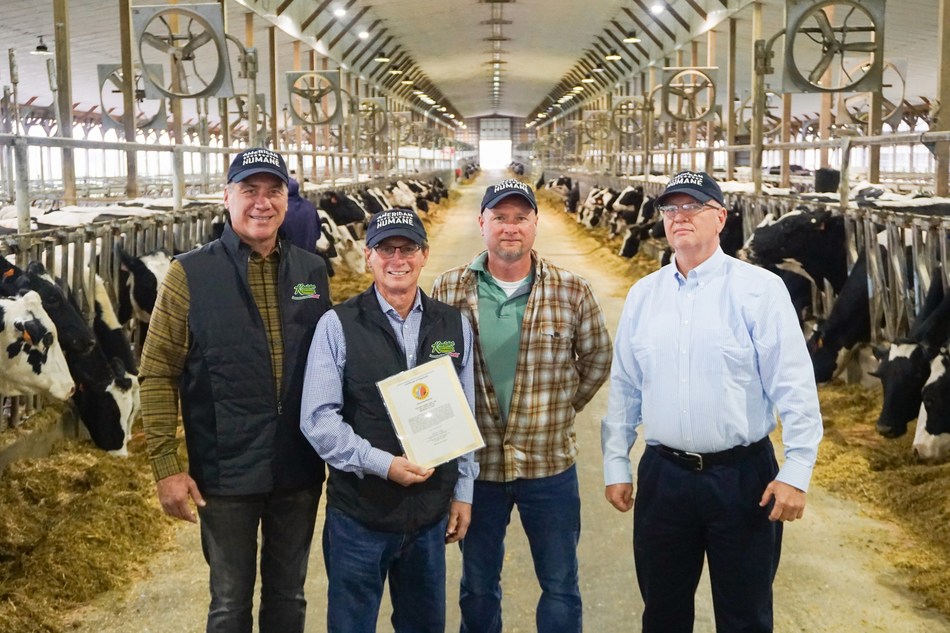
Ron Kreider, Tom Beachler, Rick Cramer and Byron Shaffer of Kreider Farms with their American Humane Certified Dairy Certificate

Animal welfare has always been top-of-mind for the team at Kreider Farms and they know that consumers are looking for products they can purchase with confidence. In fact, consumer demand for humanely raised products has grown tremendously over the last two decades with ten of the nation’s top 12 grocery retailers carrying American Humane Certified™ products according to American Humane.

“We are pleased and proud to be the first dairy farm East of the Mississippi to achieve AHA animal welfare certification and we hope to be the first of many more to follow. This certification demonstrates our commitment to our animals and our customers,” says Ron Kreider, 3rd generation CEO and President.

The American Humane Certified™ program is the United States’ first and fastest-growing independent animal welfare program dedicated to the humane treatment of farm animals. Certified farms undergo stringent inspections from independent auditors and pass over 200 multi-pronged, science-based welfare standards developed in collaboration with, and regularly reviewed by, a Scientific Advisory Committee.

“American Humane is thrilled by the dedication to excellent animal welfare protocols and practices that the fine folks at Kreider Farms exhibit,” said Robin Ganzert, president and CEO of American Humane. “As the first dairy on the East Coast to become American Humane Certified™, Kreider Farms is a shining example for other dairy farmers in the region.”

Kreider Farms officially became American Humane Certified™ for their dairy farm in November 2020, although their cage free hen laying operation, under the brand Noah’s Pride, has been certified American Humane since 2016.

Interested in carrying farm fresh Kreider Farms products at your store? Contact us and let us know!

Connect with Kreider Farms: Facebook | Instagram

About Kreider Farms
Though family-owned since Christian Hershey settled in Manheim in the early 1700s, Noah and Mary (Hershey) Kreiderofficially started Kreider Farms in 1935 with 102 acres of land, a dozen dairy cows, and 200 chickens. Now under the leadership of third-generation CEO Ron Kreider, the farm is still family-owned, but has expanded to over 3,000 acres and 450 employees. To learn more, visit https://www.kreiderfarms.com.

SOURCE Kreider Farms

Entries now open for the virtual Dairy Farmers of Ontario AGM and Lactanet AGM

Dairy Farmers of Ontario (DFO) invites all Ontario dairy producers and industry partners to attend the annual general meeting (AGM), which is being held virtually for the first time. See more information and the registration link in the below section.

DFO’s 2021 AGM

January 13, 2021
DFO: 10 a.m. to 12:30 p.m.
Virtual event – register here 
 To view the agenda, click here. 

The Lactanet 2021 AGM will take place before DFO’s AGM. Note, a new event page has been created for Lactanet. Please click here to register separately for Lactanet’s AGM.

Maryland & Virginia Milk Producers Cooperative Association is embracing the winds of change

With a recent shift in its go-to-market strategy and an emphasis on ‘fresh and local,’ the cooperative is positioned for growth.

Maryland & Virginia Milk Producers Cooperative Association Inc. (MDVA) lays claim to much more than a long name. The Reston, Va.-based dairy cooperative also boasts an impressively long history, celebrating its 100th anniversary in 2020.

MDVA operates a very vibrant, growing business, too. According to CEO Jay Bryant, the cooperative now delivers the equivalent of more than 5 billion glasses of milk each year to both consumers and food manufacturers here and abroad.

MDVA traces its roots to 1920, when an “impassioned group of dairy farmers” got together with the aim of supplying consumers in the nation’s capital with fresh milk, Bryant explains.

“They staked their claim on high quality standards and proximity to the market,” he notes. “The first decade was brutal, and the cooperative nearly folded. But those farmers didn’t quit — they put their heads together and found compromise with the milk dealers that resulted in much-needed market stability.”

John McGill, who led the organization as general manager from 1923 to 1934, really focused on forming the foundation of the cooperative, with the help of Frank Walker, who served as president. Since then, 10 other general managers/CEOs and 11 other presidents have worked to elevate MDVA to where it is today.

Bryant himself has been with MDVA for 21 years, becoming part of the organization when his employer of 12 years, Carolina Virginia Milk Producers, merged with MDVA back in 1999. He actually grew up on a small dairy farm in North Carolina, returning to work on the farm for a couple of years after graduating from North Carolina State.

The cooperative has grown considerably, of course, since its start more than a century ago. Its farmer-members now span from New York to Georgia. And MDVA operates four plants these days — two for consumer products and two for ingredients. But its mission has stayed the same.

“True to our roots, we’re still owned by farmers — over 900 of them, in fact,” Bryant says. “They’re as dedicated to supplying fresh, wholesome and nourishing dairy products today as they were in 1920. We’ve ratcheted up our standards, diversified our product offerings and expanded to serve customers around the world.”

Wide range of products, channels

MDVA’s products under its own brand or others’ brands include milk and flavored milk in multiple fat levels, half & half, heavy whipping cream, buttermilk, sour cream, cottage cheese, yogurt and eggnog, as well as dairy-based ingredients (bulk cream, condensed milk, butter and nonfat dry milk powder) that are marketed worldwide, notes Brian Linney, chief operating officer. He joined the cooperative in 2013 after spending 14 years with Seattle-based Darigold.

The products find a home in multiple channels, ranging from grocery stores, mass merchants and drug stores to foodservice outlets, schools, manufacturers and more. The cooperative’s brand, Maola Local Dairies, serves as the local dairy brand for the mid-Atlantic and Southeastern United States, Linney says. It covers a variety of milk products, as well as half & half, buttermilk and eggnog.

“Since 1920, the local dairy farm families who supply Maola fresh milk have been at the heart of everything we do,” he points out. “Each farm is unique, but there is one thing our farmer-owner families have in common: a shared passion for nourishing their communities with fresh, wholesome dairy goodness.”

To communicate that reality for its Maola brand, Linney notes that MDVA partners with key retail customers to develop print and digital promotions that are targeted to their specific consumers. The cooperative uses social media, too, to drive brand awareness and deliver key brand messages to consumers.

“It is also used to tell our farmers’ stories and make the connection back to our local brand,” he says.

A go-to-market shift

Today’s product mix reflects a major shift for MDVA. As recently as six or seven years ago, the cooperative’s primary business was selling raw milk to third-party processors, Bryant says. But margin pressures and changing market conditions prompted him to approach MDVA’s board with the idea of “getting closer to the consumer” while retaining a few key third-party processor customers.

“I said No. 1, it isn’t going to be easy, and more importantly, No. 2, it isn’t going to be cheap,” he explains. “And I made the comment that it’s going to take a lot of capital investment in our facilities. We can’t play the New York Yankees with the JV baseball team.”

The board has been extremely supportive of the shift, Bryant notes. In fact, MDVA has invested more than $50 million in three of its four plants since changing its go-to-market strategy. It now runs approximately two-thirds of its members’ milk through its own plants.

“We’ve spent a lot of capital, but we have increased the capacity of the plants,” he says. “We’ve also put in some different technology. … We’ve got a management team that has seen the opportunity to put capital into these plants and to grow the business, to have direct relationships with retailers like Costco, Food Lion, Giant Foods and Walmart and other leading retailers in our marketplace.”

The strategy seems to be working. In fact, unlike some other cooperatives, MDVA has not had to ask its farmers to dump any milk during the COVID-19 pandemic. Although the demand for school milk declined when the pandemic hit, the demand for dairy at retail ramped up, and the cooperative was able to pivot quickly to meet changing market needs.

“We were able to take all of our product in, and we had to deal with the crazy volatility in the powder market and the butter market and, quite frankly, the Class 1 and every other market,” Bryant says. “We could take our milk into our system and could make products out of it.”

In addition to plant investments, he credits MDVA’s leadership team with the pandemic-related response. In addition to himself and Linney, that team includes:

Jon Cowell, chief financial officer. He joined MDVA in 2018 after spending more than 20 years with Ocean Spray Cranberries Inc.

Mike John, chief operating officer, milk marketing. He joined MDVA in 2004 after spending six years with Land O’Lakes Inc. Prior to working for Land O’Lakes, John was with Atlantic Dairy Cooperative.

Todd Aarons, executive vice president of operations. He joined the cooperative in 2015 and boasts 30-plus years of dairy plant experience, including 10 years with Darigold.

Lindsay Reames, vice president of sustainability and external relations. Like Bryant, Reames grew up on a dairy farm. Prior to joining MDVA five years ago, she served as assistant secretary of agriculture and forestry for the Commonwealth of Virginia.

“We communicate to death, which I think is great,” Bryant says. “We also have leaders who understand that at our size and scale, we have to wear a lot of hats. So Brian Linney is over the sales and marketing … but at the same time, he might have to be out in a store at 4:00 in the morning checking the milk cooler to see how the deliveries are going.”

That wearing of multiple hats is something in which Bryant takes particular pride. It allows MDVA to be not only lean, but also responsive to its customers and members, he says.

Community-minded

As a cooperative touting a local brand produced by local farmers, MDVA long has been involved in its local communities. For example, it has lent its support to local state dairy shows and donated to local food banks, Bryant says. And back in May, MDVA members partnered with the Land O’Lakes Foundation to distribute 2,160 gallons of Maola milk in New Windsor, Md.

However, MDVA had no formal program in place for giving back to the community until only recently. And it was the pandemic that wielded an influence here. Members were calling to ask for truckloads of product to be sent here and there, and the cooperative stepped in “with both feet” whenever possible, Bryant notes.

“So it’s just been a matter of putting a lot of things that we’ve done into a more organized fashion and then growing and building on that,” he says, noting that Reames has been taking the lead in doing so.

The MDVA Fund is one thing to come out of those efforts. The cooperative established the fund in honor of its 100th anniversary to continue its charitable efforts, Reames says, and seeded it with $10,000.

“The MDVA Fund will embody the generosity of the cooperative’s membership and the organization’s long-standing tradition to support scholarships, sponsorships and product donations for a variety of dairy industry events, programs and organizations,” she says.

Although price “is still front and center” in customer conversations, Bryant says service has become an important topic as well.

“They now want to talk about what you’re doing in your community and what kind of a corporate citizen and leader you are,” he explains. “That’s another one of those stories that we love to tell, and we like it when they ask because we’ve got good things we can show.”

Sustainability standout

Another good “thing” MDVA has to show customers is a major award for its sustainability efforts. The Innovation Center for U.S. Dairy awarded the cooperative (in partnership with Turkey Hill Dairy and the Alliance for the Chesapeake Bay) the 2020 Sustainability Award for Supply Chain Collaboration for its work with the Turkey Hill Clean Water Partnership (THCWP), Reames points out.

“The award recognizes innovative projects and collaborative partnerships that have outstanding economic, environmental and social benefits, and that serve as a replicable model to inform and inspire others in advancing dairy sustainability leadership,” Reames notes.

To offset the costs of on-farm conservation practices such as creating and updating nutrient management plans, THCWP seeks out private funds, she explains. The money also helps fund projects such as forested buffer strip planting, manure storage capacity expansion and heifer barn construction for runoff reduction.

“Since its inception in 2018, THCWP has secured over $2 million in grants from the Natural Resources Conservation Service and the National Fish and Wildlife Foundation to support on-farm conservation efforts,” Reames says. “They have also helped farmers utilize over $2.5 million in support from PENNVEST, which provides low-interest loans and grants for nonpoint-source pollution-prevention best management practices.”

Thus far, THCWP has funded 42 conservation plans and committed $800,000 for implementation of on-farm conservation practices, she adds.

“Currently, 96% of the farms supplying milk to Turkey Hill Dairy have an updated conservation plan or are in the process of receiving an updated plan,” Reames says. “Through these efforts, the partnership has achieved pollutant load reductions totaling 421,327.5 pounds/year of nitrogen, 7,198.3 pounds/year of phosphorus [and] 2,920.9 tons/year of sediment.”

Looking to grow

As MDVA’s leadership team looks ahead to the next five years, it wants to further expand the amount of members’ milk running through its own plants, Bryant says. However, 100% is not the goal, as the cooperative does have “some very strategic core customers” on the raw milk side.

“It puts us more in control of our own destiny,” he explains. “It puts us more in a position to be able to tell our own story to our customers, who are the retailers that are actually interacting with the consumers in the marketplace. They want to see local. They want to see fresh. They want to see member-owned.”

MDVA’s position as local, fresh and member-owned certainly should help in its quest for growth. After all, these attributes mesh with those that younger generations desire in the foods and beverages they consume.

“We don’t live in Idaho. We don’t live in South Dakota. The majority of our footprint for our members is central Pennsylvania down through the Carolinas,” Bryant points out. “And there are a lot of people who live there, so local farmer-owned … two counties away means something to people, and they want to support that.”

Should the need arise, an additional plant also is a possibility, he suggests.

“We’ve never bought a plant and then looked around and tried to figure out, ‘OK, now what are we going to do with it?’ As we have more and more demand for our business or our supply and we grow relationships with retailers, if there’s an opportunity to continue to grow our business, we will do that,” Bryant says.

Source: DairyFoods

Indian farmers to continue highway protests after talks fail

Representatives of the Indian government and protesting farmers failed again Monday to reach an agreement on the farmers’ demand that new agricultural reform laws be repealed.
With the government refusing to revoke the legislation, the farmers pledged to continue blockading key highways linking the capital with the country’s north. The two sides agreed to meet for more talks on Friday.

“It is up to the government whether it wants to solve the farmers’ problems. We will not end our protests until our demands are met,” said Hannan Mollah, a leader of the farmers.

Tens of thousands of farmers have been blocking the highways for nearly 40 days despite the coronavirus pandemic, rains and an ongoing cold wave.

Farmers fear the government will stop buying grain at minimum guaranteed prices under the laws and that corporations will then push prices down. The government said it is willing to pledge that guaranteed prices will continue.

The farmers say the laws will lead to the cartelization and commercialization of agriculture and make farmers vulnerable to corporate greed.

The farmers have threatened to hold a rally on Jan. 26 when India celebrates Republic Day if their demands are not met.

In their last meeting on Dec. 30, the two sides reached a consensus on two issues — that the government would continue its subsidy of electricity for irrigating farms and that farmers would not be punished for burning crop residues, a cause of air pollution.

Source: fox40.com

‘Count on Us’ program connects lenders, dairy producers

The second and third Professional Dairy Producers Financial Literacy for Dairy Program will be held January through March.

A clear understanding of financial concepts and how they can be used to measure and manage a dairy farm is the foundation of business success, especially in today’s fast-paced and uncertain economic environment.

To support dairy producers who are taking steps to better understand and put those financial concepts to work, several dairy lenders and financial institutions are participating in the “Count on Us” campaign.

Through this campaign, these lenders have generously agreed to provide partial scholarships to dairy producers who participate in the Financial Literacy for Dairy series from Professional Dairy Producers.

Registration is currently open for the second and third Financial Literacy for Dairy Series, which will be held in January, February and March at PDPW headquarters in Juneau.

This multi-level, multi-session financial development program is designed to provide dairy farmers and other agribusiness professionals with a solid financial base to understand their current situation and plan for the future.

PDPW has developed a list of lenders, financial institutions and consultants who are willing to provide partial scholarships to dairy producers who participate in the PDPW Financial Literacy for Dairy program.

Class attendees will pay the training program fee to PDPW upon registration, then consult with their “Count On Us” partners to determine the scholarship amount.

At registration, interested participants will complete an online placement assessment to determine which level best suits the degree of the individual’s financial comprehension. Each training group offers a multi-session, multi-date format.

Level 2 will start Jan. 13-14; continue Feb. 10-11 and concludes March 3-4. This series will offer an in-depth look at financial tools such as income statements, inventories, and depreciation.

A study of profitability and cost-center tracking will show trainees how to separate various parts of their operation to measure the profitability of each enterprise such as raising heifers, steers and crops.

Level 3 will be held March 24-25. This session will cover budgeting tools for planning and performance monitoring, trend analysis, key metrics to monitor, and benchmarking.

This level will stretch attendees with managing capital investment for their business, how to optimize capital purchases and protocols for sharing records.

Level 1 sessions concluded in November and December 2020.

Sessions are being planned for November and December this year.

To learn more about Financial Literacy for Dairy and to register online for upcoming levels, visit www.pdpw.org, or call the PDPW office at 1-800-947-7379.

Professional Dairy Producers (PDPW) is the nation’s largest dairy producer-led organization of its kind, focusing on producer professionalism, stakeholder engagement and unified outreach to share ideas, solutions, resources and experiences that help dairy producers succeed.

Relief for farmers for now, but long-term threat remains

It was a relief last week when New York’s newly created Farm Labor Wage Board chose not to immediately lower the state’s current 60-hour overtime threshold for farm workers.
The relief is only temporary, however. The three-member Board made it clear that it will revisit the potential change next November with an eye toward moving ahead on a lower, likely 40-hour threshold.

A lot can happen between now and next November, but make no mistake this is where we stand: farmers and their advocates, including me and many other Upstate legislators, must continue making the case that now is no time to risk the future of any of our farmers.

Equally important, in my opinion, will be the need to keep working against the power given to this unelected, unaccountable Farm Wage Board to unilaterally decide, without legislative approval, a move that could change the face of New York State agriculture as we have always known it.

In short, among the most important work ahead of us this new year will be the need to keep close watch on the future of our family farms.  

The case against the Farm Wage Board has not and will not change between now and November.

The controversial legislation (S6578/A8419, Chapter 105 of the Laws of 2019) that established the Board is known as the “Farmworkers Fair Labor Practices Act.” It was pushed hard as a “progressive” benchmark by Gov. Andrew Cuomo and its New York City legislative sponsors.

Repeatedly throughout the past year, I joined many opponents — including, among numerous others, the New York Farm Bureau, Unshackle Upstate, and the Northeast Dairy Producers Association — to warn about its potential consequences, especially its impact on farm labor costs and the ramifications for farm labor, the food supply chain, and local economies that absolutely depend on a strong agricultural sector.

Keep in mind that statistics show that farm labor costs in New York State increased 40 percent over the past decade and that the 2019 law could result in another crippling 44-percent increase in wage expenses. Total farm labor costs are at least 63 percent of net cash farm income in New York, compared to 36 percent nationally.

This burden has already led to many farm losses, particularly within the critical dairy industry.

I debated and voted against this move when the Senate approved it in June 2019. The bottom line, for me, is that this Board’s existence will continue to have profound implications throughout local farm economies across rural, upstate New York, including the risk of driving more family farms out of business.

That was the case even before COVID-19, which we now know has taken its own toll on our farmers and the entire agricultural industry.

For starters, then, one priority in this new legislative session will be to enact legislation to delay any action by the Board to lower the overtime threshold for at least several years, which is the timeframe that the Farm Bureau and others have argued is necessary to fully and fairly assess the economic impact.

I fully agree. For example, I currently co-sponsor legislation that would prevent the Board from acting until 2025, thereby allowing the time necessary to collect and assess data that would provide a more definitive picture of the impact of the 60-hour threshold on the finances and operations of New York farms, as well as consider additional factors including the COVID-19 impact on the agricultural industry.

In a November letter to Governor Cuomo, a large coalition of New York State agriculture and farming leaders, including the Farm Bureau, Northeast Dairy Producers Association, New York Wine Industry Association, Empire State Council of Agricultural Organizations, and many others, delivered a strong, compelling message that read, in part, “Please know that if the overtime threshold for New York farm workers is lowered to a level below 60 hours per week, the face of New York agriculture will be irreparably altered and we will no longer remain economically competitive in the crops and commodities that require a labor force. As farmers testified this year before the wage board, varieties of vegetables that require hand labor will continue to disappear, increasingly relying on imports from places that do not have strong worker protections like inNew York State. Orchards will be pulled in lieu of field crops that only require machines for planting and harvest. Dairy farms will turn to robotic milking machines at a faster rate than today.

“Our regional and worldwide competitors — who have no such requirements — will only gain advantage from these changes, not New York farmers. We recognize that New Yorkis leader in the nation in many areas, and even though we currently may be leading other states when it comes to farm labor protections, we are on the precipice of policy that will lead farmers out of business. We the undersigned organizations respectfully request that the 60-hour overtime threshold be made permanent. Our industry’s future, particularly the next generation of New York farmers and the communities they support, are dependent upon it.”

It will be important to keep these words in mind as we move through this legislative session because they will be as true and relevant next November as they are right now

Source: eveningtribune.com

Alberta Milk’s New Entrant Assistance Program Now Accepting Applications

Alberta Milk is now accepting applications for the New Entrant Assistance Program (NEAP). The program helps qualified new farmers enter the dairy industry in Alberta by offering a quota loan at no cost. Applications will be accepted from January 1 to March 31, 2021.

Enhancing the Program

This year, the Alberta Milk Board of Directors sought direction on how to improve the sustainability of the program. All accepted new entrants will now be allowed to use the NEAP loaned quota as equity/security with financial institutions.

“The New Entrant Assistance Program is a way our industry is trying to support those coming into the dairy industry in Alberta,” says Stuart Boeve, chair of the Alberta Milk Board of Directors. “We continually review the program to make improvements to ensure we can continue to meet the needs of new dairy farms. We’re proud that 22 new farms have entered the industry through this program.”

About the Program

The program works by matching 2 kilograms of quota from Alberta Milk for every kilogram of quota purchased by the new entrant up to 25 kilograms/day at no cost. This loan translates to enough quota to milk about 20-25 additional cows. While using the program, new entrants can expand up to 100 kg/day of total quota holdings, or about 80-100 cows. The loaned quota usage gradually expires beginning in the 11th year and reduces to zero at the end of year 19, marking the end of participation in the NEAP for the new entrant.

The process to qualify for the program consists of submitting an application that includes a two-year financial business plan, a 10-year implementation plan, a risk mitigation plan, and a signed conditional letter of approval from the applicant’s financial institution agreeing to finance their operation. Further details about the program can be found at albertamilk.com or by calling 1-877-361-1231. Joining this program is not a pre-requisite to becoming a dairy farmer in Alberta.

Organic Entrants Assistance Program

Alberta Milk is also continuing to accept applications for our Organic Entrants Assistance Program (OEAP). Similar to the NEAP, the program is designed to encourage growth in organic dairy production in Alberta but has different guidelines. You can review the OEAP requirements at albertamilk.com.

Researchers find that removal of Dairy Cows would have minimal impact on Greenhouse Emissions

The removal of dairy cows from the United States would only slightly reduce greenhouse gas emissions while reducing essential nutrient supply, Virginia Tech researchers say.

The dairy industry in the United States is massive. It supplies dietary requirements to the vast majority of the population.

This same industry also contributes approximately 1.58 percent of the country’s total greenhouse gas emissions. A commonly suggested solution to reduce greenhouse gas output has been to reduce or eliminate this industry in favor of plant production.

A team of Virginia Tech researchers wanted to uncover the actual impact that these cows have on the environment.

The researchers found that the removal of dairy cows from the United States agricultural industry would only reduce greenhouse emissions by about 0.7 percent while significantly lowering the available supply of essential nutrients for humans.

“There are environmental impacts associated with the production of food, period. The dairy industry does have an environmental impact, but if you look at it in the context of the entire U.S. enterprise, it’s fairly minimal,” said Robin White, an associate professor in the Department of Animal and Poultry Sciences and a member of the research team. “Associated with that minimal impact is a very substantial provision of high quality, digestible, and well-balanced nutrients for human consumption.”

White was part of a team that included scientists from the U.S. Dairy Forage Research Center, part of the U.S. Department of Agriculture, and supported Dairy Management Inc. that examined a few different scenarios for dairy cattle in the United States that factored in current management practices, retirement, and depopulation from the United States agricultural industry.

White’s team looked at both the environmental and nutritional impact of three different scenarios.

Greenhouse gas emissions were unchanged in the herd management scenario, in which cattle become an export-only industry and the supply of available nutrients decrease. In this economically realistic scenario, the industry stays similar to how it is now, but the United States no longer benefits from the human consumable nutrients that dairy cows provide.

The scenario where cows were retired — where cows lived out the remainder of their lives in pastures or free-range — resulted in a 12 percent reduction in agricultural emissions and all 39 nutrients considered declined.

The depopulation scenario — where cows are killed off — resulted in a 7 percent reduction in agricultural emissions. Thirty of 39 nutrients increased for the depopulation scenario, though several essential nutrients declined.

A major factor in all of the scenarios is the use of the land that has to be managed after the removal of the cows. The impact on the industry downstream must be factored into the scenario results. For example, a pasture that was formerly used for cattle would no longer be used for that resource. Areas used for grain, fertilizer, and more would also change functionality.

“Land use was a focus in all animal removal scenarios because the assumptions surrounding how to use land made available if we remove dairy cattle greatly influence results of the simulations,” White said. “If dairy cattle are no longer present in U.S. agriculture, we must consider downstream effects, such as handling of pasture and grain land previously used for producing dairy feed, disposition of byproduct feeds, and sourcing fertilizer.”

Plants have long been thought of as a more renewable method to obtain nutrients essential for humans, but that requires farming of the land, which also produces emissions.

A significant reason why the impact of dairy cows on the environment is minimal is because of advancements in the industry over the last 50-plus years, White said. As with most industries, efficiency improves over time. To produce the same 1 billion kilograms of milk in 2007 as in 1944, it required just 21 percent of the animals, 23 percent of the foodstuffs, 35 percent of the water, and only 10 percent of the land.

For White, this was an extension of previous research conducted in 2017 on the reduction of animals in U.S. agriculture and the associated impacts on nutrition and greenhouse gasses.

Source: Virginia Tech Daily

2020 Brown Swiss All-American Nominees Announced

With 2 National Shows and 17 Qualifying Shows for the show season, 171 individuals including 92 cows and 79 heifers were entered along with 18 group classes for the All-American Brown Swiss competition. A very impressive showing considering the circumstances with still the same upstanding quality of animals. 

See the All-American Brown Swiss nominees here! 

2020 Holstein Canada Education Award Winners Announced

In a year of constant change due to the global pandemic, it gives Holstein Canada great pleasure to continue with one annual tradition: the 2020 Education Awards.

The Young Leader Advisory Committee evaluated all the applications from this year’s group based on several criteria: their farm and work involvement; youth and community involvement; career choice; scholastic achievements; and an essay question addressing how they see the dairy industry evolving over the next five years. Congratulations to this year’s Education Award winners:

• Brooke Boonstoppel, Dumfries, New Brunswick
• Brooke McNeil, Guelph, Ontario
• Sabrina Van Schyndel, Woodstock, Ontario
• Catherine Bourdeau, Rimouski, Quebec
• Maude Labbé, St-Lambert-de-Lauzon, Quebec
• Tara Sweetnam, Winkler, Manitoba

The goal of the Education Award is to select and award well-rounded individuals in the Canadian dairy industry that have made a commitment to their career, community, schooling, and the industry at large. On behalf of the Young Leader Advisory Committee, congratulations to all applicants for being exceptional candidates who all have bright futures in agriculture.

Holstein Canada’s commitment to young dairy leaders across the country remains evident in the annual Education Award. The $1000 Education Awards fall under Pillar Three of “Awards and Recognition” in the Young Leader Program, and are annually awarded to six recipients from across the country.

Entries now open for the virtual Dairy Farmers of Ontario AGM and Lactanet AGM

Dairy Farmers of Ontario (DFO) invites all Ontario dairy producers and industry partners to attend the annual general meeting (AGM), which is being held virtually for the first time. See more information and the registration link in the below section.

DFO’s 2021 AGM

January 13, 2021
DFO: 10 a.m. to 12:30 p.m.
Virtual event – register here 
 To view the agenda, click here. 

The Lactanet 2021 AGM will take place before DFO’s AGM. Note, a new event page has been created for Lactanet. Please click here to register separately for Lactanet’s AGM.

Top Dairy Industry News Stories from January 2nd to 8th 2021

Feature:

Top News Stories:

First all-female dairy farm class at Wisconsin college

The future of the dairy industry could be female. For the first time in program history, Lakeshore Technical College’s Dairy Herd Management class is entirely female.

MANITOWOC — The future of the dairy industry could be female. For the first time in program history, Lakeshore Technical College’s Dairy Herd Management class is entirely female.

“It’s definitely cool to kind of break the stereotype and have that role and see more woman go into the (agriculture) industry,” student Lily Charapata said.

She joined because she grew up around dairy farms and wants to develop her passion into a career.

Lily Charapata said she joined the program to pursue her passion of dairy farming.

The same goes for Emily Kroll.

“I would like to run my own dairy farm,” she said.

Source: tmj4.com

Dairy farmer fined $103,500 for effluent discharge, storing silage near water

A dairy farmer who consistently caused issues for inspectors trying to access his property has copped a big fine for allowing effluent to enter a waterway and keeping silage too close to water.

But the farmer, described as engaging in “aggressive non-cooperation” with authorities, has said he would not pay a fine.

Derek Aaron Berendt​ and his company Huka View Dairies​ were collectively fined $103,500 when sentenced in the Palmerston North District Court in December for breaching the Resource Management Act.

Berendt owns a 50 per cent share of, and is a director and the manager of, Huka View.

According to sentencing notes published in January, the company and Berendt faced the same four charges, related to the management of silage and effluent on the farm on Kākāriki Road, Eketāhuna.

About 300 cows are milked on the farm, which had consents for discharging effluent and storing silage refuse.

However, effluent could not be allowed to enter surface water or encroach within 20 metres of watercourses. The silage refuse had similar rules.

Horizons Regional Council officers found a myriad of issues when visiting Huka View multiple times between October 2017 and 2018.

Silage refuse was once found two metres from a flowing stream and was still there a year later, despite Berendt being told to move it.

Effluent flowed overland and 150 metres along a dry tributary on one visit, while it was seen going into a tributary of the Hukunui Stream – which flows into the Mangatainoka River which, in turn, flows in to the Manawatū River – another time.

Berendt was not helpful when officers either arrived or called to tell him they were going to do an inspection.

He once told them not to turn up unless they had police.

Another time he told them not to enter unless they undertook certain procedures because he was afraid of M.bovis contamination, but still refused them entry when they did the procedures.

Judge Bryan Dwyer​ said it was hard to draw any other conclusion other than Berendt knowing he had issues and actively trying to hinder inspections.

Samples of the tributary found elevated levels of E Coli, nitrogen and nitrates, creating a significant risk to the waterway and those it fed.

The Mangatainoka River was a trout spawning and fishing site, while it was also used for water supply, the judge said.

The pollution of waterways was a frustration to iwi and the wider community.

“The whole river zone is … an aquatic site of significance.”

A pre-sentence report writer recommended Berendt be sentenced to community work, but the judge said that was done because Berendt had refused to pay a fine.

The writer also noted Berendt had an attitude which could be “accurately be described as aggressive non-cooperation”, the judge said.


Why? Because Stuff is as Kiwi as T-sauce in a tomato-shaped bottle. Part of the daily diet of millions of New Zealanders, we’re wholly locally owned and it’s our mission to make Aotearoa a better place.

And we need your help.

Stuff has more journalists than any other newsroom in New Zealand – we represent the full length of the long white cloud. But the way journalism is funded is changing.

We need your support to keep fighting for justice like we did for Teina Pora, Angela Blackmoore and the victims of Erebus; to keep breaking major news, like when we were first on the scene as terror struck Christchurch; to champion the causes that matter to your communities, like we did to get NZ history taught in our schools, plastic bags banned, and Matariki in our national calendar.

Source: stuff.co.nz

Central Plains Dairy Expo: Now more than ever, connecting with others in the industry is imperative

Here’s one thing we know: COVID-19 and the ongoing pandemic have altered our business and personal lives in a myriad of ways. So, when we have the opportunity to come together as an organization and industry, it’s vital that we do so. That’s why the Central Plains Dairy Association (CPDA) board of directors and staff are excited to welcome you in person to the 2021 Central Plains Dairy Expo (CPDE), March 24-25, 2021, at the Denny Sanford Premier Center, Sioux Falls, S.D.

The event will celebrate the industry’s essential nature, the vital role dairy farmers continue to play in the health and well-being of our communities, and our ongoing commitment to further enhance the success of the region’s dairy producers. From new innovations offered by CPDE exhibitors to educational opportunities surrounding the “latest and greatest” products, services and technologies that can greatly benefit a dairy’s success, this year’s CPDE will be filled with opportunities aplenty to connect in person and celebrate the successes of the past and highlight the hopeful future facing the industry.

“This year’s Expo will provide attendees with a safe way to interact, in person, with dairy industry representatives and others in the industry,” says Kristopher Bousquet, CPDA president. “We are working diligently with the Denny Sanford Premier Center staff to ensure a safe environment while offering ample opportunities for attendees to get the most out of the event.” In addition to using leading-edge environmental hygiene protocols, through ASM Global’s VenueShield, educational session rooms throughout the Expo will have social distancing to allow safe interaction among attendees and presenters. Come to reconnect, network with others and learn from exhibitors.

And while this year’s concert will not take place due to health and safety precautions, we are thrilled to announce that the annual Prayer Breakfast on March 24, kicking off the Expo, will be free for all attendees! This popular gathering will be the ideal time for attendees to enjoy a hot bag breakfast, for the first 300 attendees, and see friends new and old. CPDE is excited to welcome Sioux Falls Mayor Paul TenHaken as the keynote speaker for the Prayer Breakfast. TenHaken holds degrees from Dordt College and the University of Sioux Falls. He founded the marketing technology agency Click Rain as well as a 501(c)3 non-profit organization that creates international service trip opportunities and philanthropic outlets for business leaders. He is a frequent speaker on empowerment, workplace culture and leadership. An active runner, obstacle course racer and triathlete, he is also active in his church. The mayor credits his personal faith for much of what he defines as success.

Registration to the 2021 Central Plains Dairy Expo and Prayer Breakfast is free for all dairy producers. All attendees should register online at least 30 days prior to the event. Simply visit here to register. For hotel accommodations, make your reservation at Sheraton Sioux Falls & Convention Center. A link to the reserved block of rooms can be found here.

To learn more about the Central Plains Dairy Expo, visit Central Plains Dairy and sign up to receive our monthly newsletter – EMOOs – for ongoing and updated info about CPDE 2021. If you have questions, contact Renee Brod at: renee@centralplainsdairyexpo.com.

U.S. land values report reveals land values to hold steady

Owning farmland has always been a priority for farmers, but interest in this real asset by investors has grown in the past year.

“Prices for top quality cropland sold at our auctions are up $1,000 per acre or more since before harvest,” said David Whitaker, area sales manager for Farmers National Company. “Demand for good farmland has definitely increased.”

Despite the challenges faced by agriculture and producers in 2020, the farmland market remained stable throughout the year and strengthened in the last quarter. Iowa agriculture especially endured economic challenges with interruptions to livestock deliveries, the derecho storm, lower ethanol demand and a late season drought across much of the state.

“Government payments, crop insurance, low interest rates and rising grain prices sustained farmers’ interest in buying land especially in the fall time frame. Add in the growing number of investors who want to own farmland and you have a strong demand driven land market,” Whitaker said.

Public auctions are a common means of selling farmland in Illinois, Missouri and Iowa. COVID- 19 restrictions changed how farms were sold during the year depending on the time and the rules.

“We are fortunate at Farmers National to have the most complete tool box of auction and sales methods of anyone to sell land. This includes all variations of online auctions. Our agents and auctioneers were able to pivot on a dime when needed to bring about a successful sale for our clients no matter how we had to perform the sale,” Whitaker said.

Farmers National Company’s land sales volume was up 49 percent during October and November compared to last year despite there remaining a normal to lower supply of land for sale in the overall market. Looking ahead, Whitaker said, “Investor interest and farmer demand will continue to drive the land market in 2021 and I expect we will see strong prices as we start the year.”

Indiana, Michigan, Ohio and Kentucky

Owning farmland has always been a priority for farmers, but interest in this real asset by investors has grown the past year.

“Prices for top quality cropland sold at our auctions and through our listings have increased significantly since before harvest,” said Linda Brier, area sales manager for Farmers National Company. “Demand for good farmland has definitely increased.”

Despite the challenges faced by agriculture and producers in 2020, the farmland market remained stable throughout the year and strengthened in the last quarter. Producers across the Midwest endured economic challenges with interruptions to livestock deliveries, weather issues, lower ethanol demand and a late season drought in some areas.

“Government payments, low interest rates and rising grain prices sustained farmers’ interest in buying land especially in the fall time frame. Add in the growing number of investors who want to own farmland and you have strong demand driven land market,” Brier said.

Public auctions are a common means of selling farmland in the Midwest. COVID-19 restrictions changed how farms were sold during the year depending on the time and the rules.

“We are fortunate at Farmers National to have the most complete tool box of auction and sales methods of anyone to sell land. This includes all variations of online auctions. Our agents use the best sales method available to bring about a successful sale for our clients,” Brier said.

Farmers National Company’s land sales volume was up 49 percent during October and November compared to last year despite there remaining a normal to lower supply of land for sale in the overall market. Looking ahead, Brier said, “Investor interest and farmer demand will continue to drive the land market in 2021 and I expect we will see strong prices as we start the year.”

North Dakota, South Dakota and Minnesota

Owning land has always been a priority for farmers and ranchers, but interest in this real asset by investors has grown the past year.

“Prices for top quality cropland sold through our auctions and listings have increased significantly since harvest,” according to Brian Mohr, area sales manager for Farmers National Company. “Demand for good farmland has definitely increased.”

Despite the challenges faced by agriculture and producers in 2020, the farmland market remained stable throughout the year and strengthened in the last quarter. Producers across the Northern Plains endured economic challenges with interruptions to livestock deliveries, weather issues, lower ethanol demand and a late season drought in some areas.

“Government payments, crop insurance, low interest rates and rising grain prices sustained farmers’ interest in buying land, especially in the fall time frame. Farmers are currently buying 90 percent of the top quality farmland that comes up for sale and are fueling the strong demand-driven land market. Demand and prices for lower quality cropland are flat,” Mohr noted.

“We are fortunate at Farmers National to have the most complete tool box of auction and sales methods of anyone to sell land. This includes all variations of online auctions and written bid sales. Our agents use the best sales method available to bring about a successful sale for our clients,” Mohr added.

Farmers National Company’s land sales volume was up 49 percent during October and November compared to last year despite there remaining a normal to lower supply of land for sale in the overall market. Looking ahead, Mohr comments, “Investor interest and farmer demand will continue to drive the land market in 2021 and I expect we will see strong prices as we start the year.”

Nebraska, Kansas, Oklahoma, Texas and Arkansas

Owning land has always been a priority for farmers and ranchers, but interest in this real asset by investors has grown the past year.

“Prices for top quality cropland in the Eastern Plains sold through our auctions and listings have increased since the beginning of the year,” said Paul Schadegg, area sales manager for Farmers National Company. “Demand for good farmland has definitely increased.”

Despite the challenges faced by agriculture and producers in 2020, the land market remained stable throughout the year and strengthened for good cropland in the last quarter. Producers across the Southern Plains endured economic challenges with interruptions to livestock deliveries, weather issues, lower ethanol demand and a late season drought in some areas.

“In East Texas, our sales of timberland are increasing as sellers and buyers get more active. Ranchland prices in the state are strong as demand grows for that type of investment. Good Delta cropland continues to strengthen. Western Kansas dryland farms are selling at prices not seen for almost a decade,” Schadegg said.

“We are fortunate at Farmers National to have the most complete tool box of auction and sales methods of anyone to sell land. This includes all variations of online auctions and written bid sales. Our agents use the best sales method available to bring about a successful sale for our clients,” Schadegg added.

Farmers National Company’s land sales volume was up 49 percent during October and November compared to last year despite there remaining a normal to lower supply of land for sale in the overall market. Looking ahead, Schadegg comments, “Investor interest and farmer demand will continue to drive the land market in 2021 and I expect we will see strong prices as we start the year.”

Thorp dairy farmer Amy Penterman picked as new DBA president

Amy Penterman, a dairy farmer from northwestern Wisconsin, was chosen as the next Dairy Business Association president today during the advocacy organization’s annual meeting.

“I’m honored to serve in this role going forward,” Penterman, who will be the first woman to lead the group, said. “Dairy is the backbone of our state’s economy and rural communities, and I am passionate about keeping it strong now and for future generations.”

Penterman, who is also a crop insurance agent, was first elected to the board of directors in 2017. She farms with her husband, Sander, at Dutch Dairy. She has been part of the farm since 2007, which milks 850 cows and farms 1,300 acres. Penterman was chosen as DBA’s president elect in 2019 and previously served as secretary.

“DBA’s leadership is forward-thinking and focused on the success of farms of all sizes and business models. Members count on us to stand up for their interests in Madison and to provide them with other critical support,” Penterman said. “Our success lies with each and every farmer, and we must stay vigilant. I look forward to working alongside fellow board members and the staff to keeping dairy moving forward in Wisconsin.”

DBA members elected a new member to the board and re-elected two others.

The newcomer is Spencer Frost, who runs Frost Farms, along with his brothers, in Waterford. He has been involved in DBA policy advocacy efforts.

Other board changes:

  • Lee Kinnard, an incumbent, was chosen as president-elect. He operates Kinnard Farms in Casco.
  • Greg Siegenthaler was re-elected and chosen to serve as secretary.
  • Paul Fetzer was re-elected.
  • Outgoing DBA President Tom Crave becomes president emeritus, and Mike North’s term as president emeritus ended.

Other incumbents: Steve Bodart, treasurer; Kevin Collins; Bob Nagel and Jack Hippen.

Federal checks salvage otherwise dreadful 2020 for US farms

Thanks to the government paying nearly 40% of their income, U.S. farmers are expected to end 2020 with higher profit than 2019 and the best net income in seven years, the Department of Agriculture said in its latest farm income forecast.

Farmers faced challenges throughout 2020 that included the impact of trade dispute s; low prices that drove down cash receipts for corn, cotton, wheat, chicken, cattle and hogs; and weather difficulties such as drought in some areas and an unusual August wind storm stretching from South Dakota to Ohio that centered on Iowa.

Farm cash receipts are forecast to decrease nearly 1% to $366.5 billion, the lowest in more than a decade, measured in real dollars. Direct federal government payments saved farmers’ bottom line: Farmers overall saw a 107% increase in direct payments from 2019, when a third of net income came directly from the government.

The impact of the money varies from one farm to another, depending on whether a farmer owns the land, has significant capital to draw from, has manageable debt and aggressively manages wide commodity price swings.

“The payment to one farm could be a matter of life and death of that farm and for another farm maybe just makes it not quite as bad of a year as it was going to be and everywhere in between,” said Mike Paustian, a farmer who raises hogs and grows soybeans and corn near Walcott in eastern Iowa. “I’ve described it as: If you’re drowning and somebody throws you a life preserver, you’re not going to argue too much about grabbing ahold of it.”

Excluding USDA loans and insurance indemnity payments made by the Federal Crop Insurance Corporation, farmers are expected to receive $46.5 billion from the government, the largest direct-to-farm payment ever. That includes $32.4 billion in assistance through coronavirus pandemic relief food assistance and Paycheck Protection Program payments to farmers. Additional support comes from more traditional revenue loss programs due to low commodity prices, compensation for trade disruptions resulting from tariff battles and conservation programs assistance.

Federal court bankruptcy data indicates 433 U.S. farms filed for reorganization as of Sept. 30, down from 454 during the same period the previous year.

Overall, net farm income in the United States is expected to increase 43% from 2019 to $119.6 billion, the USDA estimated. Farmers will see the highest level of net farm income, a broad measure of profitability, since 2013, the agency said.

One northeast Iowa farmer said without the federal money it would have been difficult to make ends meet this year but it began to feel like the government checks were motivated by politics from a president seeking support for reelection.

“At first it did help, but then we kept getting payments and I don’t know that those were warranted,” said Rick Juchems, 65, who grows corn and soybeans and custom raises hogs. “The markets had already recovered quite a bit and they’re recovering yet more, so it helps some but it’s one of those things that the second one was more than we needed.”

In a late October campaign appearance in Omaha, Nebraska, President Donald Trump said he believed farmers were better off getting government payments than relying solely on their farming receipts.

“In fact, some people say our farmers do better now than when they actually had a farm,” he said.

Many top farm states voted again for Trump in November, including Iowa, Nebraska, Texas and Kansas. Several, however, left Trump to vote for Democrat Joe Biden, including Wisconsin, Michigan and Georgia.

Bill Gordon, who with his father raises soybeans and corn in southwestern Minnesota, hopes for improved free trade agreements and a less confrontational approach under Biden in 2021.

“Volatility definitely causes volatility,” he said. “And so if we can get these free trade agreements set up, that are better, and not as confrontational but still benefit both sides, that just benefits agriculture and rural America.”

Source: apnews.com

American Guernsey Association Announces 2020 All-American Winners

The American Guernsey Association has announced their 2020 All-American and Junior All-American Winners! Congratulations to all nominees and winners! 
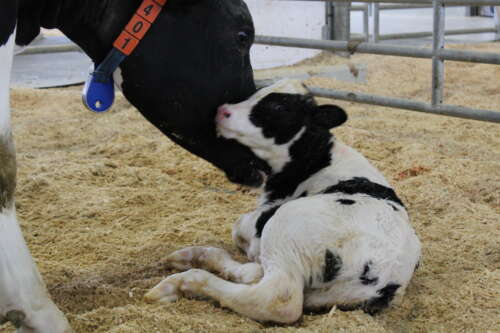
View the All-American Guernsey results HERE. 

NY Dairy Farmers Provide Milk, Food to Families in Need

American Dairy Association North East partnered with New York dairy farmers and local businesses who donated milk, food and household items to families in need on Wednesday, Jan. 6, in Watertown, N.Y.

Lisa Porter of Porterdale Farms, Adams Center, N.Y., and the Jefferson County Dairy Promotion team participated in the distribution event that served 500 families in one hour. They also assisted with several distributions last year in the county.

“This event was local people, farmers and businesses making direct donations to our local community because we care about our neighbors and we want people to have what they need,” said Porter.

Families received 1,000 gallons of milk donated by Dairy Farmers of America; dairy products from Cabot Cheese and Great Lakes Cheese; meat donated by Lucki 7 Livestock Company; and produce. In addition, Hannaford Supermarkets contributed $10 gift cards, tissues and toilet paper, and the United Way of Northern New York distributed hand sanitizer.

Porter participated in several media interviews related to the milk drive, including a pre-event interview on WWNY-TV in Watertown, explaining why dairy farmers support these distribution opportunities.

“Clearly, families’ need for daily essentials like milk and food continues to be a real concern in our local communities,” said ADA North East CEO Rick Naczi. “Dairy farmers joining forces with other local organizations to provide these necessities is really just ‘all in a day’s work,’ as they are committed to being good neighbors.”

Dairy farmers, working through ADA North East and its partners, have distributed more than 800,000 gallons of milk at more than 200 drive-through and drop-off events through the six-state region since April 2020. 


Canadian Scholars Leading Global Dairy Farming Genomics Project

dairy cow calf being nuzzled by its mother on a bed of hay

Dairy cow and calf at U of G’s Ontario Dairy Research Centre

Improved human, animal and environmental health is the goal of a $12-million, University of Guelph-led international genomics project expected to revolutionize breeding in Canada’s multibillion-dollar dairy farming industry.

The four-year project will be the first large-scale project integrating novel genetic traits for fertility, health and feed efficiency into a national database to help farmers and breeders, said U of G animal biosciences professor Christine Baes, who is leading the project.

Genome Canada will provide $4 million toward the project, and $3 million will come from regional genome centres: Ontario Genomics (including the Ontario Research Fund), Genome Alberta, Genome Quebec and Genome British Columbia.

“Ontario Genomics is grateful for the Ontario government’s support for this important genomics dairy farming project,” said Bettina Hamelin, president and CEO of Ontario Genomics. “Genomics tools and technologies are revolutionizing how we breed healthier and more resilient livestock, which is great news both for farmers and consumers. By investing in Ontario’s prominent and leading genomics research and innovation, we are making certain that Ontario’s agriculture and agri-food sectors thrive while contributing to a healthier planet and healthier people.”

Mike Harris, MPP for Kitchener-Conestoga, said this provincial investment will lead to a sustainable, more competitive Canadian dairy industry.

“This innovative project will help build a stronger agricultural sector and food system in our province.”

head and shoulder shot of Prof. Christine Baes with her arms folded

Prof. Christine Baes

The project will also receive funding support from Lactanet Canada – a partnership launched in 2019 by Quebec-based Valacta along with CanWest DHI and the Canadian Dairy Network, both based in Guelph – as well as companies and organizations in dairy genetics and production, including Growsafe, Allflex, Afimilk, NEDAP and Illumina. The project also involves collaborators in the United States, Europe, Brazil and Australia.

The project builds upon the world-class platform created for dairy research at U of G through its partnership with the Ontario Ministry of Agriculture, Food and Rural Affairs (OMAFRA), the Ontario Agri-Food Innovation Alliance, said Malcolm Campbell, vice-president (research).

“The generous support from government and industry partners across Canada will enable U of G researchers to collaborate nationally and globally on projects that will benefit dairy farmers and dairy consumers alike, with phenomenal environmental and economic benefits,” he said.

“This initiative is yet another example of how University of Guelph researchers connect many disciplines to find solutions that promote healthy populations, healthy ecosystems and a healthy economy that collectively improve life.”

Project members aim to identify novel genetic traits for a new selection index for dairy cattle resilience. Baes said the group will develop traits that help animals adapt to changing environmental conditions while maintaining milk productivity, dairy herd health and cow fertility – all in a way that feeds people and protects the environment.

The results will directly benefit farmers and cattle breeders, helping them to identify superior livestock for breeding, said Baes. She said the system will ultimately help farmers save some $200 million in costs associated with poor cow fertility and disease, as well as animal feed that makes up the largest expense in milk production.

The new project is intended to satisfy growing consumer demands and ensure the competitiveness of Canada’s dairy industry. It’s also meant to help address increasing concerns about human health, animal health and welfare, and the environmental impacts of greenhouse-warming methane emissions as well as water, energy and land use.

“This project can address key challenges that the industry is facing, enhance sustainability of dairying and provide a long-term competitive advantage for Canada’s dairy industry,” said Baes, who holds the Canada Research Chair in Livestock Genomics.

dairy cow looking at the camera with a tag in its ear

Dairy cow at U of G’s Ontario Dairy Research Centre

Baes leads the initiative along with co-principal investigators at the University of British Columbia, the University of Alberta and Université Laval. Other Canadian partners include researchers at the University of Prince Edward Island and at companies and industry organizations across the country.

About 40 U of G researchers, including eight faculty members and numerous staff and student researchers from the Ontario Agricultural College and the Ontario Veterinary College, will take part.

U of G researchers include population medicine professor David Kelton, holder of the Dairy Farmers of Ontario Chair in Dairy Cattle Health, and Prof. Flavio Schenkel, director of the Centre for the Genetic Improvement of Livestock in the Department of Animal Biosciences.

The U of G researchers will work with the dairy herd at the state-of-the-art Ontario Dairy Research Centre in Elora, which is owned by the Agricultural Research Institute of Ontario and was established in partnership with OMAFRA, U of G and Dairy Farmers of Ontario (DFO).

The research team will also work with cattle at more than a dozen area farms to gather health and feed efficiency data for the national project.

Project partners will use that information along with fertility data from other members and centres across Canada and partner countries to develop and refine a national evaluation system for individual animals. The system will be run by Lactanet Canada.

“Building on previous work, this is the first time that traits for calf health, fertility and feed efficiency will be collectively implemented into a genetic evaluation program for dairy cattle,” said Baes. “This will definitely improve how we breed cattle in Canada.”

That information will be shared with evaluation centres around the world, she added.

Besides improving animal health, the project is intended to make milk production more environmentally sustainable.

Researchers will study genetic traits for feed efficiency, or how efficiently a cow turns feed into milk or weight gain. By improving feed efficiency, Baes said farmers can help limit livestock emissions of methane, a more potent greenhouse gas than carbon dioxide. She said this research may also help reduce the environmental impact of dairy farming by limiting the amount of cropland needed to produce cattle feed.

As one of Canada’s most important agri-food sectors, the dairy industry contributes nearly $20 billion a year to the country’s gross domestic product. Canadian dairy genetics exports are worth another $150 million a year.

Baes said U of G is a natural base for the project. She points to the University’s long-standing agri-food and dairy expertise and its proximity to genetics and dairy organizations in southern Ontario, from Guelph-based livestock genetics company Semex to DFO in Mississauga.

“We have a lot of expertise in quantitative genetics, and we have excellent ties with the industry here in Guelph,” she said. “The University of Guelph holds a very strong position in dairy research not only in Canada but also globally. We’re working closely with partners across Canada and around the world. There’s no better place to run this research than in Guelph.”

Referring to the project’s country-wide academic and industry partners, Baes said, “This collaboration among researchers in very different fields will be a great opportunity to tie in all those different avenues of research and get the most out of the research dollars being spent. This project will help ensure that Canada has a safe, affordable and ethically sustainable food system.”

Julia Nunes to Serve as Alice in Dairyland Through 2022

Wisconsin’s 74th Alice in Dairyland has been granted a one-year extension of her contract in order to maximize her experience as the state’s official agricultural ambassador. The Wisconsin Department of Agriculture announced that Julia Nunes of Chippewa Falls will continue in her current role through July 15, 2022 due to the COVID-19 pandemic.

As a result of the decision, the 2021 Alice in Dairyland finals, which had been scheduled for May 2021 in Walworth County, will be canceled. As of now, Dane County is slated to host those events in mid-2022 to commomorate the 75th anniversary of the Alice in Dairyland program.

“Alice in Dairyland is a long-standing Wisconsin tradition. Even during the unexpected challenges of COVID-19, Alice has reminded us all of the diversity and strength of Wisconsin agriculture,” said DATCP Secretary-designee Randy Romanski. “While 2020 may be behind us, the pandemic is not. Cancelling the 74th Alice in Dairyland finals is an unfortunate but necessary step to help protect the health and safety of our staff and the public we serve.”

Each year, the reigning Alice travels about 40,000 miles as a spokesperson for Wisconsin’s food, fiber, and natural resources industry. She has the duty of presenting hundreds of speeches, media interviews, and educational presentations throughout the year.

It was announced earlier that Wisconsin’s Fairs of the Fair Cayley Vande Berg of Rosendale will also serve a two-year stint because of the pandemic.

Australian Government announces plan for long-term engagement with Indian dairy sector

Dairy Australia is exploring opportunities to develop long-term strategic partnerships with India’s dairy industry across science, capability development, policy, and trade.

To aid with this, Dairy Australia has been awarded a $76,400 grant under the Agricultural Trade and Market Access Cooperation (ATMAC) program to build a long-term engagement plan with Indian dairy sector counterparts.

Consumer demand in India for dairy milk products is expected to outpace supply until 2035 and there will also be enormous demand for value-added milk products.

The ATMAC project will support long-term strategic engagement between the Australian and Indian dairy sectors to explore ways to improve collaboration and identify mutually beneficial opportunities.

The project is taking a long-term focus and aims to position Australian dairy farmers, processors and supply chains are preferred partners for their Indian counterparts into the future.

Dairy Australia Managing Director David Nation said that the agreement will provide long term opportunities for the industry.

“Dairy Australia recognises the importance of long term partnerships in trade that include both government and industry support. The ATMAC project is timely to help focus Australian dairy businesses on possible areas for cooperation and relationships.

“Joint activities are supporting trade to India, with comprehensive research into the Indian dairy market to gain an understanding of India’s supply chain, state of the industry, key stakeholders and consumer behaviours.

“Australian industry participants are much better informed of Indian production systems and the market and the project will support a series of senior level meetings with key Indian dairy industry stakeholders” Mr Nation said.

You can find out more about the ATMAC project, including an overview presentation at International Market Programs.

Large dairy co-op asks Congress for more milk options for school children

Cash cattle saw gains during the last two weeks of the year. Winter storms in parts of the Plains and Cornbelt created some problems with the ability for feeders to load cattle last week. At least one Wisconsin auction market cancelled their regular Wednesday sale due to weather. Fed cattle buyers were looking to secure cattle for the first week of the New Year. The USDA will release a Cattle Inventory report the end of January. The nation’s beef cow herd is expected to be lower than at the beginning of 2020 as cow and heifer harvest levels indicate expansion in the sector has ended and not resumed. Feed costs continue to increase, but the smaller supply of feeder cattle has so far kept feeder cattle demand strong. Corn futures contracts closed higher 11 sessions in a row through the start of last week. Traders are also watching a port worker strike in Argentina. The strike has backed up grain shipments there and could mean more U.S. grain heading overseas.

Leaders of Edge Dairy Farmer Cooperative, one of the largest dairy co-ops in the country, have urged Congress to help broaden the milk options children have in schools. The call for greater flexibility came after the federal government on released the 2020 update to the Dietary Guidelines for Americans. Every five years, the U.S. Department of Agriculture and the Department of Health and Human Services release the guidelines offering advice on what to eat and drink to promote health, reduce risk of chronic disease and meet nutrient needs. Brody Stapel, president of Edge and a dairy farmer in Wisconsin, said Edge welcomes the continued recognition of the importance of dairy in the daily diet with the release of the 2020-2025 Dietary Guidelines for Americans. But, he added, the lack of recognition of the nutritional benefits from fuller-fat dairy in the new guidelines will continue to hinder the availability of these food options in our schools.

The Land Stewardship Project has released a pair of music videos highlighting key themes of the growing farmer interest in building soil health. The two songs-of-the-soil, “Got Cover Crops” and “Back to Soil,” were commissioned from Austin, Minn., native and singer-songwriter Bret Hesla and performed with the band Six Feet Deep. While writing the songs, Hesla got deeply grounded in the subject matter through visits to the farms of soil health farmers and Land Stewardship Project members Tom and Alma Cotter, of Austin, and Kaleb and Angie Anderson of Goodhue, Minn. LSP hoped the videos can further build the energy and community that’s been growing among farmers interested in improving soil health in the Upper Midwest.

Source: weau.com

SmARtview Research Project Provides New Ways of Looking at Dairy Farming

Dairy farmers and vets have enlisted the help of video gaming experts to help enhance cow health in a new study which they hope will be a ‘game-changer’ for the care and treatment of dairy cattle.

The SmARtview research project aims to develop a virtual reality-type headset that can recognize a cow by its skin patterns and use artificial intelligence algorithms to display health and productivity data about an animal as a user views it.

Duncan Forbes head of dairy at Agri-EPI, where the research is being conducted, said that by harnessing advanced technology currently used in video-gaming the researchers hope to be able to take the care and treatment of dairy cattle into a new era:

“The beauty of this project is that it combines farmers’ and vet’s experienced ‘eyes’ with real-time data – technology is being used to enhance, rather than replace, human skills.”

And he added that while different devices like robotic milkers, sensors and collars on cattle could already collect plentiful data, the SmARtview project would be designed to integrate this information in a way which could improve insight and drive decision-making.

He said that typically, a vet or farmer faced the time-consuming process of examining a cow then going to the farm office to review a variety of paper or PC-based records before determining what kind of intervention may be needed:

“SmARtview would make the whole process much more efficient and effective,” he said

The new system will be trialled by vets and allied professional from VetPartners’ practices around the UK.

Director of clinical research with the group, Rachel Dean said that SmARtview had huge potential for vets and allied professionals, such as foot trimmers and veterinary technicians, who worked on farms of all types and sizes.

“It is a unique and very innovative project which could transform the way they practice.”

Gaming company, Pocket Sized Hands and Abertay University will develop the AI technology capable of recognising individual animals.

“Our aim is to put new technology to best use in order to solve problems in the real world,” said Abertay’s Professor Ruth Falconer.

“We aim to develop ‘marker-less’ technology which can achieve the difficult task of recognising a cow by the patterning of its skin and shape in an environment where it is likely to be dirty and the light and weather conditions change frequently.”

When the researchers have cracked the challenge of cow-recognition, Pocket Sized Hands (PSH) will develop the augmented reality display which allows the data to be presented to the user in an engaging way.

“AR combines the real world with digital assets – information that is usually tied to a screen can now be viewed in the real world,” said PSH chief executive Gary McCartan.

“Use of the technology is in its early stages. For example, current headsets are quite bulky which would not be practical in a farm situation. We will be looking at ways to allow cow data to be easily accessed and understood.”

Source: The Scotsman

Holstein Association USA Announces Barry Cavitt as National Sales Manager

Holstein Association USA is pleased to announce the promotion of Barry Cavitt to National Sales Manager. Cavitt is an experienced leader, communicator, motivator, and collaborator equipped to foster an accountable, effective, and dynamic sales team. He succeeds Steve Peterson, who retired after 36 years of dedicated service to Holstein Association USA.
“I am very excited about and greatly appreciate this new opportunity and look forward to leading, assisting, and cultivating Holstein Association USA’s national sales team through strategic planning to make a positive and significant impact on dairy producers and the Association,” Cavitt said.

Cavitt has been with Holstein Association USA since 2016, previously serving as a Regional Sales Representative for members in Texas, New Mexico, Oklahoma, Louisiana, Mississippi, and Alabama. He enjoys going out on farms and working with producers to evaluate the needs of their diverse operations and discuss how Holstein Association USA’s products and services can help make their farms more profitable and efficient. As National Sales Manager, he is eager to travel the country to meet and work with producers and their respective regional sales representative.

“Building relationships and a positive rapport with producers is not only key to effectiveness in providing products and services but also something I truly enjoy,” Cavitt says. “I especially appreciate taking walks through producers’ barns with them as they tell me about their cows, breeding program, nutrition programs, and operations and have found it provides opportunities for me to evaluate how I can provide better assistance to them.”

Cavitt’s passion for the dairy industry stemmed from spending time on his grandparent’s dairy farm as a youth and continued as he raised, showed, and judged dairy cattle with his FFA chapter. He earned his bachelor’s and master’s degrees in agricultural science from Tarleton State University and started as a Vocational Agricultural Science Teacher in Texas before advancing to vice principal, principal, and school superintendent roles.

Next, Cavitt went on to serve as the Collegiate Dairy Judging Coach and adjunct instructor at Tarleton State University for five years where he developed curriculum and taught dairy cattle evaluation courses. His teams successfully competed at national and intercollegiate competitions across the United States. Cavitt begins his new position on January 4, 2021. 

56th National DHIA Annual Meeting & Field Service Managers’ Meeting

The National DHIA and QCS Boards of Directors and the staff have been planning the 56th National DHIA Annual Meeting and shoulder meetings such as the Leadership Session and Field Service Managers’ Meeting.  In an effort to have a workable set of meetings and risk management for these meetings, the National DHIA Board and staff decided the 2021 meetings would be held in a virtual format in February and March of 2021.  This allows for financial, health and travel concerns to appropriately be managed by individuals and organizations that will be participating in these upcoming meetings.

The format of the meetings will be all virtual and expected to be 2.5 hours each day for the meeting sessions. The agendas, topics and technology platform will be forwarded in early January for your information.  The tentative schedule is as follows:

Field Service Managers’ Meeting (all times Central)

Tuesday, February 2             1000 am to 1230 pm

Thursday, February 4            1000 am to 1230 pm

NDHIA Leadership Meeting and Annual Meeting (all times Central)

Wednesday, March 10          1000 am to 1230 pm

Thursday, March 11              1000 am to 1230 pm

The NDHIA Board and staff also determined that in these unprecedented times, in order to facilitate and ease of delegate and management participation, both the National DHIA Annual Meeting and Field Service Managers’ Meeting will have no registration fee for 2021. There will be registration required for each of the meetings with the registration to be handled in January.  Also, delegates will need to be identified for the annual meeting voting purposes.

The Scholarship Fund Auction will have a different format which is being determined at the present time.  Further details will be forwarded in early January.

Some of the shoulder meetings such as the QCS Advisory Meeting will be scheduled in the weeks before or after the National DHIA Annual meeting.

Thank you for understanding these important changes and efforts serving the business, training, collaboration and education of the DHI sector of the dairy industry.

Watch for meeting updates at www.dhia.org

Robert “Bob” Crowe Obituary

It’s with heavy hearts that we say goodbye to Bob Crowe. Our deepest thoughts and condolences to the family and friends of Bob. 

Robert (Bob) Crowe passed away unexpectedly December 23, 2020. 

Bobby was raised on a dairy farm in Gilbert Plains but soon took flight to Winnipeg to start one of his many adventures ….pumping gas, changing tires and delivering fuel oil.   Then back to Dauphin to sell vehicles and be a parts manager.  Enjoyed all the great times hanging out with the Hydes at their cottage, playing volley ball, frisbee and waterskiing by day and cards late into the night.
Again back to Winnipeg to manage a gas station /car wash.  Dauphin called him back to build a greenhouse/garden center/ florist shop.  In his spare time he became a correctional officer.  His love of dairy cattle,  their caregivers and their families took him across Canada and down to Madison USA.

Bob loved every show, sale and exhibition and all the friends that he made along the way. He wore many hats;  poet, mentor, barn boss, bus driver, story and joke teller and our own Mr. Fixit.  Bob could imitate his good friends Ray Brown and  Norm Atkins so well.  Bob was the glue that kept our families together.

Survived by wife Marilyn, daughters Erin (Brian) Mckenzie, and Brett (Jamie) Hogue and his pride and joy; grandsons, Finn and Kade.   Sisters; Heather (Rod) Hart of Carmen and Noreen (Les) Chudyk of Winnipeg ; sister-in-laws Kathy Crowe of Gilbert Plains and Wanda (Lindsay) Harris of Stonewall. 3 brother-in-laws; Kelly (Heather) Secord of Winnipeg, Kim (Susie) Secord of Dauphin, and Kirk of Dauphin. 2 sister-in-laws; Wanda (Owen) Connolly of Dauphin and Susan (Ed) MacQuarrie of Dauphin and cousin/almost brother Neil Hyde, along with extended families and friends.  His dairy family, his greenhouse family, his corrections family, his hockey family …he loved and cherished you all. 

Bob was predeceased by his parents Jim and Birda Crowe and brothers Bill and Dean, niece Denise, and sister in law Shawna Secord  and in-laws Freda and Rollie Secord.  
He will be fondly remembered for his endless jokes and welcoming smile….but oh my, Crowbar could snore.                                                     

In lieu of a service, go to that cattle show, sale or event… share a story, tell a joke and make more great memories. That was his wish.     

If friends desire please donate to the Dauphin Friendship Center Hot Lunch Program or your local Food Bank.

Ohio Holstein Annual Convention Cancelled for 2021

As a result of the ongoing COVID-19 concerns, the Ohio Holstein Association has decided to cancel the annual Ohio Holstein Convention slated for February 26-27, 2021.  

More details about a convention sale and the handling of the annual awards and the queen contest will be forthcoming.  Further updates can be found on the Ohio Holstein Association website and Facebook pages.

The Ohio Holstein Association was founded with a mission to provide services and programs to its members and young people so that they might attain a better living from their involvement with Holsteins.  Questions or concerns can be directed to the Ohio Holstein Association at 330-264-9088.

Top Dairy Industry News Stories from December 19th 2020 – to January 1st 2021

Feature:

Top News Stories:

Is Dairy Farming Cruel to Cows?

The 1,500 Jersey cows that Nathan Chittenden and his family raise in upstate New York seem to lead carefree lives. They spend their days lolling around inside well-ventilated barns and eating their fill from troughs. Three times a day, they file into the milking parlor, where computer-calibrated vacuums drain several gallons of warm milk from their udders, a process that lasts about as long as a recitation of “The Farmer in the Dell.”
Chittenden, 42, a third-generation dairy farmer whose family bottle-feeds each newborn calf, expresses affection for his animals. It is a sentiment they appeared to return one recent afternoon as pregnant cows poked their heads through the enclosure to lick his hand.

“I’m in charge of this entire life from cradle to grave, and it’s important for me to know this animal went through its life without suffering,” he said, stroking the head of one especially insistent cow. “I’m a bad person if I let it suffer.”

Animal welfare activists have a markedly different take on farms like Chittenden’s that satiate the nation’s appetite for milk, cheese and yogurt. To them, dairy farmers are cogs in an inhumane industrial food production system that consigns these docile ruminants to a lifetime of misery. After years of successful campaigns that marshaled public opinion against other long-accepted farming practices, they have been taking sharp aim at the nation’s $620 billion dairy industry.

How to Eat Less Sugar in 2021What Everyone Should Know About Sugar Substitutes

Some of their claims are beyond dispute: Dairy cows are repeatedly impregnated by artificial insemination and have their newborns taken away at birth. Female calves are confined to individual pens and have their horn buds destroyed when they are about eight weeks old. The males are not so lucky. Soon after birth, they are trucked off to veal farms or cattle ranches where they end up as hamburger meat.

The typical dairy cow in the United States will spend its entire life inside a concrete-floored enclosure, and although they can live 20 years, most are sent to slaughter after four or five years when their milk production wanes.

“People have this image of Old MacDonald’s farm, with happy cows living on green pastures, but that’s just so far from reality,” said Erica Meier, president of the activist organization Animal Outlook. “Some farms might be less cruel than others, but there as no such thing is cruelty-free milk.”

The effort to demonize dairy as fundamentally cruel has been fanned by undercover farm footage taken by groups like Animal Outlook that often are widely viewed on social media. In October, the organization released a short video filmed undercover on a small, family-owned farm in Southern California that revealed workers casually kicking and beating cows with metal rods, and a newborn male calf, its face covered with flies, left to die in the mud. One segment showed an earth-moving bucket hoisting an injured Holstein into the air by its hindquarters.

Stephen Larson, a lawyer for the Dick Van Dam Dairy, described the images as staged or taken out of context. Earlier this month, a judge dismissed a lawsuit against the farm filed by another animal welfare organization, saying it lacked standing. “The accusation that they mistreated their cows is something that cuts the Van Dam family very deeply, because the truth is that they have always, for generations, cared about and cared for all of their cows,” Larson said.

Dairy industry experts and farmers who have viewed the footage expressed revulsion and said the abuses depicted were not the norm. “These videos make every dairy farmer and veterinarian sick to their stomach because we know the vast majority of farmers would never do such things to their cows,” said Dr. Carie Telgen, president of the American Association of Bovine Practitioners.

The effort to turn Americans against dairy is gaining traction at a time when many of the nation’s farms are struggling to turn a profit. Milk consumption has dropped by 40% since 1975, a trend that is accelerating as more people embrace oat and almond milk. Over the past decade, 20,000 dairy farms have gone out of business, representing a 30% decline, according to the Department of Agriculture. And the coronavirus pandemic has forced some producers to dump unsold milk down the drain as demand from school lunch programs and restaurants dried up.

During his Academy Awards speech last February for best actor, Joaquin Phoenix drew rousing applause when he urged viewers to reject dairy products.

“We feel entitled to artificially inseminate a cow and when she gives birth we steal her baby, even though her cries of anguish are unmistakable,” he said, his voice cracking with emotion. “And then we take her milk that’s intended for the calf and we put it in our coffee and cereal.”

The National Milk Producers Federation, which represents most of the country’s 35,000 dairy farmers, has been trying to head off the souring public sentiment by promoting better animal welfare among its members. That means encouraging more frequent veterinarian farm visits, requiring low-wage workers to undergo regular training on humane cow handling, and the phasing out of tail docking — the once-ubiquitous practice of removing a cow’s tail.

“I don’t think you’ll find farmers out there who are not trying their best to enhance the care and welfare of their animals,” said Emily Yeiser Stepp, who runs the federation’s 12-year-old animal care initiative. “That said, we can’t be tone-deaf to consumers’ values. We have to do better, and give them a reason to stay in the dairy aisle.”

Among those caught in the battle to win the hearts and minds of dairy consumers is a small group of animal welfare scientists quietly working to answer knotty questions: Are cows that spend their entire lives confined indoors unhappy? Does the separation of a newborn calf from its mother result in quantifiable anguish? And are there ways to improve the life of a dairy cow that are both scientifically sound and economically viable?

Marina von Keyserlingk, a researcher at the University of British Columbia in Canada and a widely recognized pioneer in the field of animal welfare, has made some headway in trying to understand whether certain aspects of modern dairy farming lead to avoidable suffering.

Raised on a cattle ranch, von Keyserlingk says she can empathize with farmers who resent being lectured by urbanites disconnected from animal husbandry. Still, part of her job is helping persuade dubious farmers to accept improvements in animal welfare backed by science.

“As a little girl, I castrated thousands of calves without pain-relieving drugs and never thought to tell my dad, ‘This isn’t OK,’” she said. “But would I castrate a calf now without pain mitigation? Absolutely not.”

Divining the inner life of animals is notoriously elusive, but scientists like von Keyserlingk have created experiments that seek to quantify bovine desires and learn whether some farming practices lead to poorer health and subpar milk production.

The studies she and other scientists have designed include installing weighted swinging gates inside barns to gauge whether pregnant cows prefer to remain in their climate-controlled enclosures and munch on their favorite food or push through the gate to reach pasture. They found that cows’ desire to go outside depends on the weather (they avoid rain and snow) and the time of day (they prefer the outdoors at night).

One experiment sought to determine whether housing two calves together, as opposed to keeping them isolated in pens, could improve their learning abilities. (They found it did, and that paired housing also made them less fearful and easier to manage.)

Another study highlighted the value of mechanical scratching brushes to a cow’s well-being. Using the same weighted gate setup, it found that cows were as interested in rubbing up against the spinning bristles as they were in gaining access to fresh feed. Although the brushes are not cheap, the findings have convinced a growing number of farmers that they are worth the expense.

“It’s really important that we don’t just anthropomorphize cows based on our human experience, but we do know that they can experience negative emotions like pain and fear that we want to minimize,” said Jennifer Van Os, an animal welfare scientist at the University of Wisconsin-Madison. “On the flip side, they can have positive experiences like pleasure, reward and contentment that we want to try to promote.”

Research by animal welfare scientists has led to a number of changes in the industry. Many large dairy farms have begun housing multiple cows together, abandoning the age-old tradition of keeping solitary cows tied up inside barn stalls, and a number of studies over the past two decades found there was no hygienic benefit to removing a cow’s tail, which they use to swat away flies.

(Until recently it was widely believed a swishing tail spread feces and bacteria, but farmers mostly found the tails to be annoying.)

Other changes promoted by scientists have led to the widespread adoption of pain-relief medication during dehorning, a process that has long angered animal welfare activists but one that veterinarians say is necessary to protect both livestock workers and cows from being gored.

Chittenden’s farm is entirely populated by Jerseys, a smallish, tawny breed made incarnate by Elsie the Cow, the daisy-garlanded Borden Dairy mascot who provided generations of Americans with quaint notions of the happy, lovable milk cow. Jerseys are known for their gentle disposition, and for producing milk with a high buttermilk content.

A loquacious man whose weather-beaten hands reflect a lifetime of toil, Chittenden said low prices, increasingly stringent environmental rules and heightened attention from animal welfare groups had made the past five years especially stressful. He and other farmers say the allegations of widespread abuse from animal welfare activists are exaggerated, contending that unhappy cows are poor milk producers.

“Fortunately for me, all the things that result from an animal being better cared for are better for my bottom line because these animals will never produce more milk than when they are well fed, well cared for and don’t have a single stress in the world,” he said.

He scoffed when asked about the practice of artificial insemination, which People for the Ethical Treatment of Animals has described as rape. Cows seldom resist artificial insemination, he said, and the alternative — being mounted by a 1,500-pound bull — is an often brutal act that can injure females. “When a cow is in heat, she is not looking for a relationship,” he said.

Spencer Fenniman, who helps manage Hawthorne Valley Farm, an organic milking operation in Ghent, New York, has a deep appreciation for cow horns. He loves showing visitors how the rings on a horn can reveal an animal’s age, and without them, he would also have a hard time identifying Nutmeg from Martha or any of the other 70 Normande and Brown Swiss cows that graze on the farm’s verdant fields. Though there have been a handful of injuries over the past decade, he said it was rare for a cow to wield her horns as weapons, and even Elvis the bull, the sole sire of the herd, was docile one recent afternoon as a group of humans moved through his fenced-in enclosure.

There is another striking thing about his cows: Many of them spend months alongside their offspring. Allowing a calf to nurse decreases the amount of milk available for human consumption, but Fenniman said his cows largely repaid the debt by producing extra milk, which is notably richer and sweeter.

“I think we have to acknowledge that taking milk from mammals is inherently subverting a natural process,” he said. “But we can provide them a certain amount of freedom, which includes the light and air they get at pasture.”

With its acres of open space and a nonprofit operating structure, Hawthorne Valley’s model of dairy production isn’t easily replicable, Fenniman acknowledges. Another obstacle is the limited pool of consumers willing to pay as much as double for organic milk that has been certified as “high-welfare produced” by third-party auditing groups.

Soft-spoken and contemplative, Fenniman, 38, knows that some aspects of dairy farming — most notably the fate of male calves — will always upset animal lovers. A proponent of ethically raised veal, he said that getting more consumers to eat veal would help farms like Hawthorne Valley remain financially viable. The lack of demand means that two-thirds of newborn males are sold off to beef producers.

“It’s a tough conversation to have, but if you can raise a veal calf on pasture with the herd, that’s a good thing,” he said.

Von Keyserlingk, the Canadian researcher, has similarly tough conversations with the farmers she meets across North America. Like many animal welfare scientists, she rejects the notion that dairy farming is fundamentally inhumane, but she says farmers have a responsibility to continuously improve the well-being of their herds. That means reconsidering — or at least talking about — some bedrock practices, like cow-calf separation.

Von Keyserlingk often tells recalcitrant farmers that ignoring the issue could come back to haunt them if enough consumers turn against dairy.

“We live in societies where people can make decisions about what they eat based on their values,” she said. “This is one of the biggest challenges facing all of animal agriculture because although the public doesn’t expect farming to change overnight, they expect that farmers give their cows a reasonably good life, even if it’s a short one.”

Pappy’s Farms’ Harry Papageorge Obituary

Our deepest condolences to the family and friends of Harry Papageorge. A legend in the dairy industry, Harry has developed Pappy’s Holsteins into one of the most recognized in the dairy industry.Harry A. Papageorge passed away at age 87 on Tuesday, December 29, 2020. He was born on November 29, 1933 to Alexander and Anastasia Papageorge in Ogden, Utah and lived his entire life on Farr West Drive. He was a graduate of Weber High School where he was a state champion wrestler. He married Helen Klieros on March 1, 1964.

Harry, along with his brother Jim and their families. developed Pappy’s Farms.  Pappy’s Farms has received the Holstein Associations PBR award for 50 consecutive years, one of the longest, continuous PBR-winning herds in history.  He served on the Holstein USA Board of Directors, and was the chairman of the Executive committee. He also served as a director for Dairy Farmers of America and the National Dairy board.  He helped organize and served as Chairman of the Utah Dairy Commission and served on the Weber County Fair Board.  He was an accomplished dairy judge and officiated at shows all over the United States, Mexico, and South America. In 2017, Harry was presented with the Klussendorf Memorial Trophy at World Dairy Expo in Madison WI, the highest award given to an individual in the purebred dairy cattle industry.

He was an active member of the Transfiguration Greek Orthodox Church in South Ogden.  He was also a lifelong member of the American Hellenic Educational Progressive Association. His faith was a guiding force in his life.

He will be remembered for his smile, kindness, work ethic and pride in the cattle developed with his family.

Harry is survived by his wife Helen; children, Ted (Debbie) Papageorge, Anna (Robert) Mathews, and Pipena (Jason) Klomp; grandchildren, Lacey, Lexie, Landon, Kyler, and Elliott. He was predeceased by his siblings Mary, Jimmie and Florence.

Minnesota barn blaze kills 1,000 dairy goats, but owners rely on faith with vow to rebuild

A dairy-farming couple is reeling from a Christmas Eve blaze that destroyed a barn, killing 1,000 goats and other animals, but Stephen and Brittany Springer are relying on the faith that spurred them to name their enterprise Cornerstone Farm to help them pull through.

Cornerstone After

A day-after photo of the burned barn shows a mere shell of the structure. (Cornerstone Farm Facebook photo)

The Springers say they intend to rebuild the barn when weather allows such work, with some of the money coming from contributions to a fundraiser friends launched. The fundraiser, through PayPal,  had raised $9,261.14 of its $20,000 goal from 140 contributors as of Tuesday evening.
In a Facebook post on Christmas Day, Brittany recalled her discovery of the blaze on their rural Henning farm in the middle of the night Christmas Eve, writing, “We have been struggling with words, but we see each of you as family. So bear with me as i fumble through.
“I woke up at 3am on Christmas Eve to a noise in our basement followed by the house losing power. I looked out our bedroom window and the whole sky was glowing orange,” she wrote.
“Our beautiful barn was lighting up the night sky with the horrific glow of fire. I immediately woke up Stephen and called 911. All we could do was stand there and watch our dreams burn for 15 mins before the fire departments got there,” wrote the mother of five young children: Savhannah, Gracie, Peter, Paisley and Amelia.
“Our beautiful barn built from the ground up, was taken back down. The whole barn and all the goats inside were a complete loss. There were no survivors. The goats that were our family … gone.
“We even lost one of our beloved dogs, and all 15 of our peacocks (this is super hard for me),” she wrote.
The LGD (livestock guardian dog) canine was trained to herd the goats. Also lost in the conflagration were at least two tractors and dozens of tools, according to the according to the Otter Tail County Sheriff’s Office.
Although the cause of the fire remains undetermined, Otter Tail sheriff’s Lt. Greg Steim issued a statement Monday saying, “There is nothing suspicious noted at this time.”
Cornerstone Farm, which uses “Founded in Faith” as its mantra and a barn with a cross on it as its logo, is an organic, CSA farm in west central Minnesota. It also produces beef, hogs, chicken and a host of vegetables it sells, according to its website.  The site offers a host of products, including ground beef and a variety of beef and pork cuts,
Brittany credits one of the farm’s employees with starting the goat portion of the farm.
“She loved the goats as much as we did and she wants us to succeed just as much as we do. … God is faithful and is getting us through this,”
Brittany wrote on Facebook.
“God gives and takes away, but God is still good. We are waiting to see His plan of whats next for us. Waiting to find the beauty in the ashes,” her Facebook entry concluded.

Source: news8000.com

Mailbox Milk Prices Expected to Normalize in 2021 Following Year of Extreme

COVID-19 pandemic broke the relationship between monthly mailbox milk prices and Class III milk prices

The pandemic in 2020 caused unprecedented market volatility in dairy prices, leading to lower milk checks for dairy producers. However, the price spread is expected to realign in the first half of 2021, bringing normalcy to producer price differentials (PPDs) and mailbox milk prices, according to a new report from CoBank’s Knowledge Exchange division.

Extreme volatility in cheese and milk prices resulted from supply chain disruptions, government purchasing, and changes in consumption habits during the COVID-19 pandemic. Record-high cheese prices lifted Class III milk prices disproportionately higher than Class IV milk prices, which were held in check by low butter and milk powder prices.

Because of higher Class III milk prices, cheese manufacturers were incentivized to depool milk from Federal Milk Marketing Order (FMMO) marketing regions. The loss of higher-priced Class III milk from the pool resulted in negative PPDs for dairy farmers and lower mailbox milk prices.

“The coronavirus pandemic broke the relationship between monthly mailbox milk prices and monthly Class III milk prices,” said Tanner Ehmke, manager of CoBank’s Knowledge Exchange. “But the spread between Class III and IV milk prices is expected to realign in the first half of 2021, bringing normalcy back to PPDs and mailbox milk prices.”

Pooling and De-Pooling

While most Class I processors are legally obligated to pool milk in an order, handlers of other classes of milk have the option to participate based on certain order performance requirements and the financial incentive.

Between June and November 2020, cheese processors mostly found themselves in a disincentivized position. The cost of milk would be higher if processors had pooled milk in the order. As a result, cheese manufacturers have in many cases chosen to “de-pool” milk.

The effect of de-pooling has been most dramatic in California, where the FMMO pool consisted of an average of just 0.8% Class III milk between June and October 2020. This followed an average of 29% of the order in the same period in 2019.

De-pooling is incentivized when the blend or uniform price in an order pool falls below either Class III or Class IV prices. Historically, de-pooling also tends to coincide with a negative producer price differential.

Future of PPDs

Negative PPDs occur when milk in a federal milk pool is less than the Class III price. This tends to happen when the Class III price is at a significant premium to Class IV milk prices.

New cheese manufacturing plants coming online and expanding in Iowa, Michigan, Minnesota, South Dakota, and Wisconsin will increase annual production of American-type cheese by an estimated 8% by June 2021. When at capacity, the addition in manufacturing will utilize approximately 4.6 billion lbs. of milk annually—roughly equivalent to 1.5 years of increases in annual U.S. milk production.

The increase in plant capacity, combined with the slowing of government programs like the Food Box Program, should contribute to Class III and Class IV milk prices returning to more historical price spreads in the second quarter of 2020, resulting in positive PPDs.

Read the report, When the Pandemic Breaks Milk Prices: A Study in Returning to Normal.

About CoBank

CoBank is a $148 billion cooperative bank serving vital industries across rural America. The bank provides loans, leases, export financing and other financial services to agribusinesses and rural power, water and communications providers in all 50 states. The bank also provides wholesale loans and other financial services to affiliated Farm Credit associations serving more than 70,000 farmers, ranchers and other rural borrowers in 23 states around the country.

CoBank is a member of the Farm Credit System, a nationwide network of banks and retail lending associations chartered to support the borrowing needs of U.S. agriculture, rural infrastructure and rural communities. Headquartered outside Denver, Colorado, CoBank serves customers from regional banking centers across the U.S. and also maintains an international representative office in Singapore.

WI Junior Holstein to Hold Convention

A number of students will be recognized during the upcoming Wisconsin Junior Holstein Convention in 2021. The event, which has been postponed until spring, will commence with numerous activities like a dairy bowl contest and dairy jeopardy, as well as a contest room with arts and crafts, advertising, county scrapbook, and photography contests. Junior members also have the opportunity to participate in prepared speaking contests and a dairy promotion contest.

In addition to participating in these activities, junior members will be recognized for their achievements throughout 2020. Acknowledgment is given to those receiving 12 and under, Younger Member, and Distinguished Member recognition, and a new Outstanding Boy and Girl will be named.

Students being recognized for 12 & Under Award include Justin Brandel, Lake Mills; Katie Brandel, Lake Mills; Kayla Buttles, Lancaster; Makenna Bilbertson, Hollandale; Vivian Lichty, Beaver Dam; Leah Mess, Rosendale; Ella Raatz, Colby; Miles Rickert, Van Dyne; Cameron Ryan, Fond du Lac; Dylan Ryan, Fond du Lac; Braelyn Sarbacker, Verona; Madison Sarbacker, Whitewater; and Payton Sarbacker, Verona.

YMR honorees are Ashley Brandel, Lake Mills; Ava Endres, Waunakee; Cathryn Gunst, Pine River; Christopher Gunst, Pine River; Elena Jarvey, Pulaski; Austin Meyer, Chilton; Emily Stumpf, Appleton; Garrett Ulness, Valders; Madison Wiese, Wrightstown.

A number of older students will earn Distinguished Junior Members honors this year. Their names will be released in January.

Meanwhile, a new Wisconsin Holstein Princess and Attendant will also be named during the convention.

The Wisconsin Junior Holstein Association strives to positively influence young people by recognizing and congratulating their achievements and accomplishments in the industry.

Collin Peterson: Dairy has support in COVID relief compromise package

“This compromise package contains strong support for dairies nationwide. Support for product donations, improvements to Dairy Margin Coverage for small and medium farms, additional help for larger farmers that have previously been payment limited, authority to make recourse loans on dairy products, funding for animal health, and investments in meat processing are all programs that will help dairy farmers, in the near term and in the long run,” Peterson said in a news release. “While it’s not perfect, and there are areas within the package that could be improved, it’s a good down payment on the help that dairy producers in Minnesota and across the country need. I’m encouraged that the package got such overwhelming bipartisan support, and I strongly urge the President to sign it into law so we can get these dairy farmers the help the package provides.”

The bill provides necessary cash flow assistance to small- and mid-sized dairies that have grown over the last seven years by establishing supplemental margin coverage based on the difference between 2019 actual production and Dairy Margin Coverage production history. It requires the Secretary to make additional payments to those operations that were previously payment limited to help their assistance be more commensurate with loss, and further enables the Secretary of Agriculture to consider additional direct assistance or purchases in the future.

The bill also provides $400 million to pay for milk to be processed into dairy products and donated to non-profit entities like food banks and other feeding programs. Under the framework of the program, the dairy processor and recipient non-profit develop a plan for donation and distribution, and USDA reimburses the processor for the associated cost of milk. The bill allows USDA to adjust the existing Milk Donation Program payments to match the level of payment provided by this new program.

The bill grants the Secretary flexibility to make recourse loans available to processors, packagers, and merchandisers of dairy products; and it establishes that dairy animals not in production are also eligible for assistance under the bill’s provisions for Coronavirus Food Assistance Program (CFAP) cattle payments.

The bill also invests in animal health, directing the Secretary to invest a minimum of $20 million in animal health and disease prevention initiatives, as well as $60 million to make facility upgrade and planning grants to existing meat and poultry processors to help them move to Federal inspection and be able to sell their products across state lines.

Source: Di-Online

Pascal Lévêque selected Prim’Holstein France Breeder of the Year.

Passionate about genetics since he was 12 years old, Pascal Lévêque this year won the prize for the best breeder by Prim’holstein France. One more title for this breeding which nevertheless relies on simplicity, and this after having climbed the first step of the top raw milk classification 2020.

Latvia of the Forties

Latvia des Quarante (Kingboy x Meridian), cow of SCEA des Quarante (59), produced several sires known as Nigeria DQ and Norty DQ. (© Alger Meekma)

At 35 years old, it is in all modesty that Pascal Lévêque is awarded his title of best breeder 2020 at the Cow of the Year competition organized by Prim’holstein France. “My cows won, not me. I just continued the work my parents and their partner started years ago, ”he explains.

The SCEA des Quarante, located in the North, nevertheless achieves a fine doublet in 2020 by accumulating first place in the top raw milk with 12,969 l of average and the title of best breeding. He completed this year with 15 cows Lesly Forty (daughter of Commander and granddaughter Shottle ) that ranks 7 th of the cows of the Year, won by Almacombe of livestock Girard Jean-Bernard (25) .

The 15 cows of the SCEA des Quarante (59) entered in the competition:

Name (section) Sire / GPM Milk TP TB MU NG Cell IVV MU / JDV Milk / JDV
NATIONALITY (1) Tabasco / Mardigras 18681 30.2 40.0 1313 83 24.5 508 1.09 15.5
NAMIBIA (1) Koning / Kingboy 16319 33.2 41.6 1220 84 178.1 467 1.02 13.6
NICOTINE (1) Galore / Payton Mat 13689 31.1 46.6 1064 76 258.2 434 0.94 12.1
LESLY (2) Commander / Shottle 28475 33.9 51.1 2436 84 60.4 387 1.65 19.3
LEBANESE (2) Order / Meridian 26112 34.2 37.1 1860 84 458.7 347 1.33 18.7
LIBYA (2) Abs Silver / Meridian 33032 30.8 39.1 2325 86 132.6 482 1.39 19.8
LATVIA (2) Kingboy / Meridian 27447 33.3 41.1 2041 85 154.1 416 1.35 18.2
LITHUANIA (2) Kingboy / Meridian 24515 35.7 40.5 1867 84 552.7 412 1.24 16.3
LIGHT (3) Rubicon / Day 38217 31.6 39.0 2698 83 197 370 1.5 21.2
ITALY (4) Mayfield / Tigger The 58697 30.5 40.8 4181 87 271.3 411 1.79 25.1
IRISE (4) Iota / Couscous 63215 33.6 47.7 5144 85 97.5 418 2.17 26.6
HASHLEY (5) Iceman Co / Mickey 62274 32.3 41.8 4622 84 124.6 379 1.8 24.2
HELODY (6) Planet / Mascol 73322 30.8 42.9 5378 83 112.7 367 1.87 25.5
FINLEY (7) Mickey / Marion 95747 32.2 42.2 7150 85 159 382 2.14 28.6
GRIOTTE (7) Gerard / Bolton 98605 31.2 41.9 7209 85 215.4 386 2.16 29.5

Simple and efficient driving

For Pascal, there are three fundamental pillars in dairy farming: “It is first of all the herd, its genetics but also the management of breeding, the fodder (both in quality and quantity), although it is complicated. in some regions, and herd management. By that I mean the regularity, the requirement, the setting up of processes held over time and efficient. ”

The SCEA des Quarante (59) in a few figures:
3 UMO (Pascal and 2 employees)
256 ha of UAA (120 ha wheat, 30 ha corn, 30 ha sugar beets, 30 ha flax, 20 ha potatoes, 16 ha meadows , 10 ha canned peas)
90 LV Prim’holstein
12,500 l / LV achieved on average over 2019
Rate: 42/34
210,000 cells on average
Dairy reference: 1,180,000 l (Sodiaal)

If the breeding has seen a dozen cows with more than 100,000 l in its herd, the management is nevertheless very simple: in one and the same batch, only the dry ones being divided into two batches. Pascal does not have a mixer and distributes the ration in the bucket. “I mainly manage the quantities based on refusals,” he explains. I always prepare 5-8% extra rations to make sure they have enough. And that allows me to then give the refusals to the males and dry cows. ”

Ration for dairy cows:
45 kg of maize
12 kg of pulp
10 kg of wrapping
4 kg of soybeans
1.2 kg of linseed meal
On average 2 kg of feed (LV 3 l with flax)
400 g of minerals
50 g salt
50 g clay

As far as the students are concerned, it’s just as simple: the calves are hay + a store-bought food. They spend 6 months on the ration of heifers composed of straw at will, wrapping of ryegrass / autumn clover (rich in water) and 1.5 kg of complete feed. They only have corn in their ration two months before calving because, as Pascal explains, “corn is used to make milk, not cows. ”

“An almost natural selection of the herd”

It was at the age of 12, participating in an animal sale that Pascal Lévêque set foot in the stirrup. Very quickly fascinated by genetics, he remembers: “My father liked it too, but he didn’t look at the papers, relying only on the descendants. I do and I love it. We were then very complementary. ”

By keeping only the best cows, we arrive after 20-30 years of selection to have a performing herd.“The herd quickly evolved in the right direction. At the time of the quotas, the selection pressure was quite important and was done naturally since only the best cows were kept with the aim of not exceeding the quota. The rate of reform was important. It is also for this reason that we are now at a good level of fertility even though we do not select specifically on this criterion. It’s a rather natural selection. Pascal even stopped the sexed semen three years ago.

However, he keeps insight a few important criteria in his eyes: the legs (being in a straw area), the cells and the overall strength. “My goal is profitability,” he explains. The profitable cow is for me the one that gives a lot while consuming the least (especially on the side of the veterinarian and the inseminator). The perfect cow comes in heat, filled well, and calved well. In fact, we do not know it since it goes unnoticed. And for that, there is no recipe. It is up to everyone to find their balance in their system. ”

His best heifers are genotyped by  Genes Diffusion to be collected and produce interesting males (around 35 males sold / year at 10 months). Among them, some well-known from his cows: Luxembourg, Lebanon (his brother), Nigeria DQ or Norty DQ. Last year, the breeder collected about ten heifers but did not do it again this year for lack of time. Yet the breeder remains convinced: “  Genomics is an interesting tool. She showed us some very good cows that we had not necessarily noticed. ”

Luxembourg Holstein bullBorn in 2015 on breeding, Luxembourg is one of the outstanding bulls produced by the SCEA des Quarante (59). (© Alger Meekma)

The comment of David Tesson – head of the pointing department and genetic counselor (59-62) Prim’holstein France:

“The genetic level of the SCEA des Quarante herd reflects the objective of Pascal and his father before him: very cows. productive. The herd’s average milk index is 459 kg, well above the departmental average and the rates are not to be outdone. Even more impressive, the milk herd effect is + 4740 kg. The SCEA des Quarante team manages to express the herd’s milk potential in an exceptional way.

Cows give a lot and quickly, but also age, as evidenced by the number of cows having produced more than 100,000 kg in their career. Production has always been Pascal’s goal in his genetic choices. Sticking to it and not dispersing is undoubtedly one of the keys to success in reaching this level. ”

Lift your foot on the milk

On the SCEA des Quarante, the situation has evolved well since the installation of Pascal in 2012. Indeed, if he was at the time associated with his parents and a third party, he is today the sole manager, supported by two. employees. And the situation weighs on him: “  In breeding, there is a dire lack of labor. I run everywhere. ”

And motivation crumbles: “I have a cow in my stomach, that’s for sure! But I can’t stand being 7 days a week in my herd anymore. I was not made to join forces so I rather seek to hire, or even reduce milk production, ”says the breeder.

Pascal sets himself a new goal: to satisfy his passion for genetics by freeing himself up to have time to develop his skills on this subject, “and why not make my expertise available to other breeders …” It is currently being considered. The breeder does not close any doors and is even willing to work outside to live from his passion to the maximum. (It is also open to job offers).

Source: Web-Agri

Farm Bureau looks to help dairy farmers targeted by Dean Foods

The American Farm Bureau Federation continues to stand up for farmers against Dean Foods. 

Hundreds of U.S. dairy farmers were targeted by lawyers representing Dean Foods in its bankruptcy proceedings. Travis Cushman is the Senior Counsel for Public Policy with AFBF. He said that the trouble for many dairy farmers began during Thanksgiving.

According to Cushman, “Over the Thanksgiving holiday, Dean Foods estate sent out hundreds of letters to dairy producers across the country demanding that they repay three months’ worth of milk payments they would have received in the three months prior to when the company went bankrupt, which was in November of 2019, and these letters demanded that the farmers repay the money by Christmas Eve or else. Essentially, we’ll see you in court.”

He says that the American Farm Bureau immediately sent a letter responding to what it called a “predatory shakedown”.

“We found these letters to be highly misleading and, essentially, a predatory shakedown written in legal language,” he states. “We wrote them our own letter and have been explaining to them why we felt these letters were inappropriate, notably because we believe that most, of not all farmers, have a complete defense to these claims. Most farmers shouldn’t have to pay anything.”

He says that the right form for farmers to sign is available through their local Farm Bureau offices.

“The Pennsylvania Attorney General and the Pennsylvania Milk Marketing Board had already worked with Dean Foods to create a one page form that can be filled out to claim this exemption, rather than going through a complicated process that was otherwise required by these letters,” he adds. “We have just now confirmed with Dean Foods’s lawyers that this form can be used anywhere, not just in Pennsylvania, which should provide a much easier solution for the folks that are grappling with these letters.”

To check out the form click HERE.

Source: rfdtv.com

Send this to a friend