
• Home
  • Articles Old
  • Articles
  • News Old
  • News
  • Breeders
  • Photos
  • Webinars
  • Proofs
  • Resources
  • About Us
    • Advertise with us
  • Free Subscription
Image

Search

FacebookEmailTwitterRSS

Slide 8
Slide 8
Slide 8
Slide 8
Slide 8
Slide 8
Style_Bullvine
Style_Bullvine
Style_Bullvine
Slide 10
Slide 10
Slide 10
Slide 5
Slide 5
Slide 5
Slide 5
Slide 5
Slide 5
Overlays
PreviousNextPreviousNext

Archive for News – Page 14

Climate change activists are being met with resistance from radical farmers throughout the globe.

Friday, January 6th, 2023


Around the world, rebel farmers are pushing back on climate action
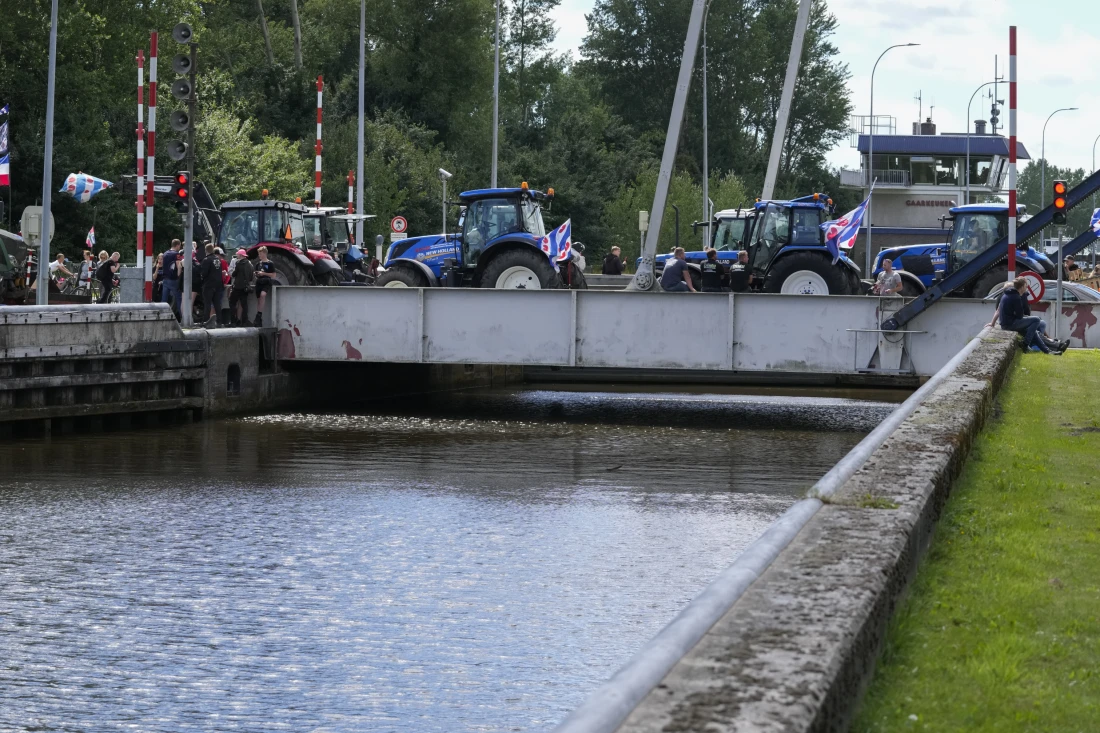
Protesting farmers block a draw bridge over a canal, preventing all ship traffic from passing in Gaarkeuken, northern Netherlands, in July. AP

For a fifth-generation dairy farmer to start protesting against the government, he had to feel like his life was in danger. In western Holland, 120 cows are raised by Bart Kooijman on 50 hectares of land. If the government goes ahead with plans to cut nitrogen emissions from farms in half by 2030, his farm could be one of thousands that will have to get smaller or shut down.

In an effort to calm angry farmers who burned hay bales and dumped manure on highways during the summer, the government announced in November that it would buy out as many as 3000 of the biggest polluters in a one-time, voluntary offer. It set aside €24.3 billion ($38.3 billion) to pay for the transition. Those who don’t agree will have to close their businesses.

Kooijman, a father of two, says, “We don’t want to start fires or block roads, but if we do nothing, it’s over.” “We’ll just have to leave the land.”

The Netherlands’ biodiversity has been destroyed by intensive farming and decades of inaction by the government. This has forced the government to take drastic steps. But the Dutch crisis is a lesson for governments all over the world as a year of record drought, floods, and fires forces us to think about how we make food, the most important thing we make.

Agriculture is a big cause of climate change, even though it is one of the biggest victims of more extreme weather. From the farm to the table, the food system is responsible for about 31% of all greenhouse gas emissions around the world.

By digesting their food, cows and sheep give off methane, which warms the planet. Their manure and urine contain nitrogen oxide, which, in large amounts, throws ecosystems out of balance. Too many fertilisers and pesticides are poisoning soils and water, and farmers are clearing ever-larger areas of rainforest for cattle or monoculture, destroying complex systems that protect wildlife and keep the Earth’s temperature stable.

The Food and Agriculture Organization of the United Nations says that emissions from agriculture went up 14% between 2000 and 2018. Researchers say that if nothing is done soon, food-related emissions alone would cause the Earth to warm by 1.5C more than what world leaders agreed to in the 2015 Paris Agreement.

So, after putting most of their attention on fossil fuels for years, policymakers are now starting to look at farming as well.

In December, the most important meeting on biodiversity in a decade took place in Montreal. It came after the UN-sponsored climate talks in November, where agriculture was talked about for one day of the two-week programme. More than 150 countries have now agreed to cut methane emissions by 30% by the end of the decade. This event built on the 2021 summit in Glasgow.
Climate action is being fought back against by rebel farmers all over the world.
In July, farmers in Gaarkeuken, in the northern Netherlands, block a drawbridge over a canal so that no ships can pass. AP

Some of the most powerful agricultural countries in the developed world are putting out bold new plans to reach this goal. Prime Minister Jacinda Ardern said this would be the first time anywhere in the world that agricultural emissions would be taxed. New Zealand is the largest exporter of dairy products. Before 2030, Irish farmers should be able to cut their emissions by a quarter. Denmark wants its farming and logging industries to cut their emissions by up to 65%.

Agriculture, on the other hand, could be harder to deal with politically than industries like mining, energy, or cars, which are run by a small number of big corporations. There are millions of farmers, and some of them have small farms that have been in their families for generations. This gives them a connection to the land and to farming that goes beyond making money.

Rising prices for food, fuel, and fertiliser are already making people unhappy. In 2022, Polish and Greek farmers drove tractors to their capitals to voice their complaints. Protests all over Europe were held in support of Dutch farmers.

A tracker made by the political risk consultancy Verisk Maplecroft shows that farmer protests are on the rise around the world. In Europe, they are up 30% from 2021, and they are expected to keep growing in the coming months and years because of inflation, drought, and stricter environmental regulations.

Agriculture is a big part of many countries’ exports, but people also need food, and what we eat is often tied to our history and sense of who we are. It has more political weight than many other issues.

Because of this, the Dutch standoff has gotten a lot of attention around the world. This has put farmers in the middle of a global culture war, with vegan activists calling them “monsters” and right-wing groups opposing government regulations on everything from COVID to climate calling them “heroes.”
A farmer in the Dnipropetrovsk region of Ukraine looks at his field that is on fire because of the fighting. AP

Even Donald Trump, who used to be president of the US, used them to get his ideas across. At a rally in July, he said, “Farmers in the Netherlands, of all places, are bravely standing up to the Dutch government’s climate tyranny.”

Activists who use the hashtag #NoFarmersNoFood on Twitter have tapped into an old fear: that putting environmental protections in place will stop the world from making enough food for a growing population. By driving up the price of grains and fertilisers, Russia’s invasion of Ukraine has already made people worry about not having enough food. Farmers are now saying the same thing, saying that climate-related regulations will mean less food and higher prices at the grocery store for people who are already dealing with the worst inflation in decades.

The debate has made the gap between people who live in rural areas and people who live in cities even bigger, turning an old political divide into a cultural chasm. When the Dutch town of Haarlem banned advertising meat because modern livestock farming has a big effect on the climate, some farmers saw it as another part of a larger campaign that could eventually put an end to their way of life.

Farmers are “normal people, but they feel like they’re being treated like criminals. Caroline van der Plas, the leader of the populist Farmer-Citizen Movement, which exploded onto the Dutch political scene in 2019, says that farmers are bad because they spray poison, pollute the environment, and mistreat animals. “They feel undervalued and have nowhere to grow or develop their business. They are very worried about their future.”

But Dhanush Dinesh, the founder of Clim-Eat, a think tank in Utrecht, says that the idea that climate policies will lead to food shortages is “a misconception.” He says that most of the world’s efforts have been focused on solutions like finding better ways to manage soil and water and changing a food production system that wastes food.

About a third of the food that is grown or raised never gets eaten. Livestock are raised and fed on a lot more land than crops that people eat. And governments are pushing for healthier and more sustainable diets not just because they are worried about the environment, but also because obesity and disease are on the rise.
A robot picking crops at a US vertical farm Spencer Lowell/Plenty/AP via Walmart/Courtesy of

Dinesh says that the climate crisis needs specific solutions, such as reducing the amount of meat we eat, finding other sources of protein, and using vertical farming. The problem is that farmers don’t always have a say in how policies are made.

“Climate policies need to be made more gradually and with more people in mind,” he says. “The most important thing is to figure out how to work better with farmers and meet their needs.”

On a bright October morning, about 18,000 kilometres from the Netherlands, farm trucks with signs that said “No Farmers, No Food” and “No Fart Tax” drove into Wellington, New Zealand, while the Twisted Sister song “We’re Not Gonna Take It” played over loudspeakers. About 30 cars drove to parliament to protest the government’s policy on climate change.

Almost half of New Zealand’s export income and half of its greenhouse gas emissions come from farming. It passed a law in 2019 that aims to cut net agricultural emissions by 24% by 2050. When the emissions levy goes into effect in three years, farmers must cut their emissions by 10%.

Government forecasters think that the amount of land used to raise lamb, beef, and dairy will go down, and that land will be turned into forests and sold for money through carbon credits. The so-called “fart tax” will be put back into the industry through incentives, research, and technology. This will help New Zealand reposition itself as a leader in ethically produced, higher-value food, a growing market as people become more concerned about the environment and their health.

Start-ups are racing to create new technologies like seaweed-based pellets that reduce emissions, but farmers are frustrated because, for now, the only realistic way to meet the targets is to reduce herd sizes.

Bryce McKenzie is a dairy farmer in Otago on the South Island. In the past year, he has cut his herd of 700 cows by 50, but that isn’t enough. He helped start Groundswell NZ, the fringe farmers group that organised the protests, two years ago, after losing hope that the government’s much-touted partnership with big agricultural lobby groups could save the sector.

McKenzie says, “We don’t want a country full of pine trees that can’t grow food.” “We want to be able to eat in the future.”

Other places have more cautious governments. In Ireland, where farming makes up about a third of greenhouse gas emissions, farmers are expected to cut their emissions by 25%, compared to targets of 75% for electricity and 50% for transportation. So far, Australia has ruled out new taxes and reducing the number of animals it owns. Instead, it is focusing on better ways to manage the environment.

In the European Union, some plans have been put on hold for now because of rising energy and food costs. Tim Rees, a meat industry consultant at Euromonitor International, calls the idea of a meat tax a “political hot potato.” In the past, the idea of a meat tax was hotly debated.
Farmers in New Zealand drive through Warkworth as part of a protest against policies to cut emissions. Warkworth is near Auckland. Getty

The Global Alliance for the Future of Food says that so far, only 3% of all money spent on climate change has gone into food systems.

Farmers, consumers, and policymakers all have to deal with the fact that time is running out. In the last 50 years, the number of weather-related disasters has gone up by a factor of five. Last year, climate change made it worse for floods to cover large parts of Pakistan and for drought to burn crops from the US to Brazil.

Chuck Fossay has been farming outside of Winnipeg, Manitoba, for more than 50 years. On his piece of the Canadian prairies, he has seen bad weather happen more often. Last year, drought made his wheat and canola plants much smaller than they would have been otherwise. Heavy rains this year flooded some of his fields. At the same time, growing seasons are longer, and the first frost doesn’t come until the end of September.

Fossay grew corn for the first time in 2007. Back in the 1970s, he wouldn’t have even tried. But rules about the climate are making him worry even more.

This year, Fossay paid 7.7 Canadian cents ($0.06) more per litre to fuel his grain dryer because of Canada’s carbon tax. Federal goals to cut nitrogen emissions by 30% on a voluntary basis could make things even tighter. Farmer groups think that lost production will cost them $8 billion over the next 10 years.

Fossay is part of a pilot programme that tries to get farmers to use fertiliser that is more effective. Even though he can get up to $C4,400 in rebates for his canola acres, the extra fertiliser costs $C3.7 per acre and would cost $C13,300 to use on his whole farm.

Fossay farms with his brothers on land that has been in the family since the early 1900s. He says, “We’re asked to do something that will help everyone, but we’re the ones who have to pay for it.” “We have to do what we can, but what we do has to be fair and doable.”

The Netherlands is the second-biggest exporter of agricultural goods in the world, after the US, but it is smaller than the state of West Virginia. It is a good example of what happens when climate action is put off. It is able to do this in part because it has more animals per hectare than any other European country.
Large parts of Brazil’s Amazon rainforest have been burned because farmers cleared the land to grow crops. AP
A lot of the Amazon rainforest in Brazil has been burned down because farmers cleared the land to grow crops.

Before, the government didn’t do what the European Union wanted to protect the environment, in part because of worries about the economic and political effects. Nitrogen pollution is so bad because of this inaction that it is threatening whole ecosystems. To protect EU-protected natural habitats, the Dutch courts have even put limits on building and other things.

One of Holland’s largest nature reserves, De Hoge Veluwe National Park, which is more than an hour’s drive east of Kooijman’s farm, is in danger of losing species at a rate that could be very bad. Nitrogen that seeps into the soil from nearby farms is making some plants grow too fast while depriving others of the calcium they need to stay healthy. The balance of nutrients is so off that snails are having trouble making shells. Even Veluwe’s oak trees are sick. The main cause is animal waste, especially cow urine.

To help bring things back into balance, farms have to cut their emissions by as much as 70%. The rules are stricter for farms that are close to one of the 160 protected natural areas in the country. To meet them, the total number of animals needs to go down by a third. If the government gets its way, the biggest polluters will be shut down by this time next year.

Dutch farmers see the plans as an attempt by the government to take over their land, and some have already started to protest again. Ecologists say that the only way to make sure we can keep making enough food in the decades to come is to act now.

Wieger Wamelink, a researcher at Wageningen University who did a study at the Veluwe reserve, says, “They couldn’t wait.” “Because by then, probably a lot of trees will have died, and you’ll be talking about an ecosystem collapse.”

Categories : News

During a dairy plant fire in Wisconsin, melted butter poured into the nearby Portage Canal.

Friday, January 6th, 2023

In a situation that could only happen in Wisconsin, a fire at a dairy plant in Portage on Monday night caused the butter to melt and spill into the old Portage Canal.

The Portage Fire Department says that at 9:15 p.m. Monday, fire crews were sent to Associated Milk Producers, Inc. at 301 Brooks St.

When first responders arrived, they saw a lot of smoke and fire coming from the plant. Heavy smoke and melted butter were the main things that made it hard to put out the fire.

The fire started in a room at the plant where butter was kept, according to the fire department. As the building heated up, the melted sweet cream started to flow through it, making it harder for fire crews to get into the plant.

The fire was put out after several hours. No one was hurt, and authorities are still trying to figure out what started the fire.

The Portage Fire Chief, Troy Haase, said that “99%” of the melted butter stayed in the plant. However, some of the liquid got into the nearby historic Portage Canal.

Haase said that the spill was floating on top of the canal in a space about 30 feet long and 20 feet wide. The fire department said that boom absorbents, which are also used to clean up oil spills, were used by a hazmat team to clean up the mess in the canal.

The AMPI butter mess isn’t nearly as bad as the “butter fire” at the Central Storage & Warehouse Co. in Madison in 1991, but it still has the same effect on the environment. The Environmental Protection Agency says that butter spills can have the same bad effects as petroleum-based oil spills, like bad smells and damage to plants and animals.

The Wisconsin Department of Natural Resources has been working for decades to clean up and fix up the Portage Canal, which was finished in 1876.

In a statement released on Thursday, the DNR said that during the fire, about 20 gallons of butter got into the canal. The butter has since been taken out, and the DNR says that the environment has been affected “minimally” so far. Most of the butter that left the plant went to a nearby plant that cleans up wastewater, which has been running normally.

Categories : News

A dairy farm owner said, “I’ve never been tested so much in my life” after enduring the aftermath of Hurricane Ian.

Friday, January 6th, 2023

Even though he tries to be positive, Jerry Dakin, who owns Dakin Dairy in east Manatee County, says that 2023 will be very hard for his business.

Dakin says, “I’ve never been so challenged in my life because there are things I need to fix but can’t.” “Right now, we’re using money from our savings to keep it going. “That can only go on for so long.”

When Hurricane Ian hit Myakka City on September 28 and 29, it did a lot of damage to a famous dairy farm. The farm lost more than 200 cows, and its cattle barns and tour barn were severely damaged.

Dakin says that milk production has dropped by at least 35% since the cattle barns don’t have roofs, which are needed to keep the cows cool. Because of problems with the supply chain, the farm couldn’t get materials to fix the roofs or make other repairs.

One more problem? Getting help from the state and local government. For example, Dakin’s executive assistant, Louise Coogan, says that the state turned down Dakin Dairy’s request to use new technology that would have made the milk last longer. She says that the farm will file an appeal.

“Agriculture just seems to be going uphill in general, and in the state of Florida in particular,” she says. “I don’t know if the developers have someone’s ear, but they would love to get their hands on these 1,200 acres of buildable land.”

Nate and Rachel Thomas from Nokomis are now in charge of the Dakin Dairy Cafe, tours, and market. (Photo taken by Liz Ramos)

Farm officials say that the support from the community has been overwhelming.

As soon as people in the area heard that Hurricane Ian had caused damage to Dakin Dairy, they went to the farm to help.

“It was humbling,” Dakin says. “People felt like they did something, even if all they did was pick up a piece of metal or trash that had blown around. They helped us out a lot.”

Because it is in the middle of Myakka City, Dakin Dairy became a distribution centre after the hurricane. People brought supplies not only for the farm and its staff, but also for the whole community.

Dakin and Coogan say that when people brought supplies and helped out on the farm, it showed people what it’s like to work on a farm and made them aware of how hard it is for Dakin Dairy.

Coogan says that when word got out about the damage to one of the 66 remaining dairy farms in Florida, people from all over the country sent cards and letters to Dakin Dairy with donations and words of support.

As of December, Dakin Dairy had 1,800 cows. By 2023, the company wants to have 2,300 cows.

Dakin is glad that the weather is getting cooler because it will help the cows until the farm can get the materials for the roofs and fix the cooling system.

“Because it’s been cool, the cows haven’t been stressed out,” says Dakin. “This is the time when we’ll clean up. It’s good to see the farm coming back together.”

Dakin says he wants to focus more on the cows and making sure the farm is sustainable in 2023, so he has given the market and tours to Nate Thomas and his wife, Rachel Thomas, of Thomas Family Concessions.

Nate and Rachel Thomas took over the market, tours, and petting zoo officially on December 5. In honour of Dakin’s father, Pete Dakin, the name of the Dakin Dairy Cafe will be changed to Pete’s Place at Dakin Dairy.

Nate Thomas says that taking over the cafe and other things is a lot of fun. “We’ve never done anything like this before, so it’s been a lot of fun.”

The Thomases want the market and cafe to be a place where people can hang out with their friends and families. They also want it to be a one-stop shop for things like milk, eggs, bacon, butter, cheese, and more so that people don’t have to drive to Lakewood Ranch to go to a grocery store. In the past, Manatee County schools and community groups have taken field trips to the farm.

The Thomases want to offer things like art classes for kids and a place where people can have parties. Rachel Thomas says that they hope to open the kitchen and start giving tours again in January.

Categories : News

Fire at Portage dairy plant started in room storing butter, firefighters report

Friday, January 6th, 2023

A fire at a Portage dairy plant was believed to have started in a room where butter was located, according to firefighters.

The Portage Fire Department responded just after 9 p.m. Monday to Associated Milk Producers Inc. (AMPI) at 301 Brooks Street for a fire alarm.

Upon arrival, fire crews reported heavy smoke and fire from the roof of the dairy plant, according to the Portage Fire Department.

A fire at Associated Milk Producers Inc. started in a room that stored butter.
A fire at Associated Milk Producers Inc. started in a room that stored butter.(Gunnar Bortz)

Firefighters stretched lines to the entrance door but were pushed back by the heat and smoke. Unable to access the structure, they used their monitor to fight the fire until Poynette and Kilbourne Fire arrived with their aerial apparatus.

The butter runoff and heavy smoke slowed access to the structure. After multiple hours with many crews fighting the blaze, the fire was contained and extinguished before it could spread past the firewalls and throughout the building. Crews were on scene just past 3 a.m. Tuesday.

A fire at Associated Milk Producers Inc. started in a room that stored butter.
A fire at Associated Milk Producers Inc. started in a room that stored butter.(Gunnar Bortz)

Portage Fire Chief Troy Haase said the butter was the main obstacle to containing the fire.

“When we first tried to go up the stairs to that part that collapsed, this stuff, the butter was running down like 3 inches thick on the steps so our guys were up to their knees trying to go up the steps to get to the top and they’re trying to drag the hose line, the hose line got so full of butter they couldn’t hang onto it anymore,” Haase said.

Visible chunks of butter could still be seen at the plant on Tuesday.

A fire at Associated Milk Producers Inc. started in a room that stored butter.
A fire at Associated Milk Producers Inc. started in a room that stored butter.(NBC15/Phoebe Murray)

No injuries have been reported, and Smith Bus brought two buses in for AMPI workers and firefighters to stay warm.

The fire department noted that the Wisconsin Department of Natural Resources would visit the plant Tuesday to assess the butter runoff. Members of the Portage Hazmat Team had attempted to keep the runoff from going into storm sewers and into the canal.

The cause of the fire is under investigation.

A spokesperson with AMPI tells NBC15 that 30 employees were in the building at the time of the fire. They were all safely evacuated. Operations have been halted, no shipping will take place Tuesday and customers have been contacted.

The roof is visibly caved in on the AMPI dairy plant. A spokesperson with AMPI headquarters...
The roof is visibly caved in on the AMPI dairy plant. A spokesperson with AMPI headquarters tells NBC15 30 employees were evacuated from the building shortly after the fire broke out.(wmtv)

Source: nbc15.com

Categories : News

Why are Saudi farmers taking water from the ground in Arizona?

Wednesday, January 4th, 2023

In August, Arizona’s attorney general asked for an investigation into a 2015 “sweetheart deal” between the Saudi agribusiness company Fondomonte and the Arizona State Land Department. This deal let Fondomonte lease desert farmland west of Phoenix for one-sixth of its market value and pump groundwater from Phoenix’s water reserves. Professor of geography at Syracuse University Natalie Koch, who was born and raised in Arizona and studies the Arabian Peninsula, began looking into the deal in 2018. By doing this, she found out that the deal wasn’t a one-time thing, but was part of a long history of cooperation between Arizona and the Arabian Peninsula. HCN talked to Koch about her new book, Arid Empire, which comes out in January from Verso Books and looks at how the history of the two deserts is linked.

News from High Country:

You start the book by talking about a double exposure, which is a slide with two pictures on it: one of a camel and one of a Coke ad. Why did you think that was a sign of how Arizona and the Arabian Peninsula are connected?

Natalie Koch: A double exposure, which is when two images are mapped on top of each other, is usually a mistake made when a photo is being developed. But the double-exposure photo helped me see both the past and the present at the same time.

When I started this project, I thought it would be about the farm in Arizona that is currently owned by Saudi Arabia. But I kept finding that the stories I was finding kept coming back around. I would start with a question about the present, like the Saudi farm deal, and then go right back to the past. So the double exposure is a way to think about both the past and the present at the same time, to be able to pay attention to both at the same time.

HCN: About the Saudi farm you talk about, there has been a lot of noise in Arizona lately. How did a farm owned by Saudi Arabia get to Arizona?

Fondomonte, the Saudi company that owns the farm, is a branch of Almarai, which is a bigger dairy and farm business. Almarai owns a lot of land outside of Saudi Arabia, which is where most of their grain comes from now. They have a lot of cows in Saudi Arabia, so they need a lot of grain.

A big reason why so many people in Arizona are upset is that the farm grows alfalfa, which needs a lot of water. But Arizona has grown alfalfa for a long time, because in the desert, as long as you have enough water, you can get more than one harvest in a year. So it was appealing to them for the same reason. Fondomonte also owns a farm in Blythe, California, which is not too far from the site near Phoenix.

I kept finding that the stories I was finding kept coming back to themselves.

Arizona also has a deeper historical role. Almarai’s main office is in the middle of Saudi Arabia, not far from Riyadh. Since the 1930s, when King Ibn Saud wanted to grow it, the farming business has been very important there. In 1942, the U.S. government sent a group of farmers from Arizona to share their knowledge about growing alfalfa and all the ways they had learned to get water in Arizona.

Then it came full circle: King Saud and his family went to Arizona on a royal visit. They went on this whole tour of Arizona’s farms and looked at the state’s dairy business. King Saud went back to Saudi Arabia and tried to get a dairy industry started there. What we see now is how that turned out. But that’s not the only way Arizona and the Arabian Peninsula are linked.

HCN:

In your book, you talk about how the Arizona Experiment Station helped people move to Arizona in the past. High Country News has talked about “land-grab universities” in the past. What does the Arabian Peninsula have to do with the University of Arizona and its farming?

The University of Arizona was first thought of in the 1860s, but the territory didn’t have enough money to start it. Then, the regents found out that the 1887 Hatch Act, an addition to the Morrill Act (which made land-grant universities possible), was giving out new federal money to set up university agriculture experiment stations. The regents figured out that they could get $15,000 to set up an agricultural station on paper and use the money to help fund and start the university.

But in the end, they had to make sure that the agricultural station was legal. And the first directors, like the camel promoters, looked to the Middle East and asked, “How do we settle this desert we know nothing about?” What are the most valuable and useful crops in the Middle East? Arizona farmers and boosters had already been putting a lot of attention on fruit production, so they asked farmers around the state what they thought about date farming. So they sent some test date palms to Arizona to see what would happen. The one from Oman was the first. And that led to the University of Arizona’s big investment in farming, which is still going on today. Like the story in the HCN article, the goal was to help Arizona farmers. Not the Native American farmers who had been doing irrigated agriculture in Arizona for hundreds of years, but the white settler farmers who wanted to come to Arizona and be part of the colonisation project.

It’s easy to forget how hard it was for the U.S. government to take control of the parts of the country that are now called Arizona.

HCN: Before these changes in agriculture, Arizona had other connections to the Arabian Peninsula, such as camels. Why are there camels in Arizona?

In the middle of the 1800s, camels were brought to Arizona. When Jefferson Davis was secretary of war, he gave permission for an expedition to go to the Middle East and bring back a lot of different kinds of camels.

It’s easy to forget how hard it was for the U.S. government to take control of the parts of the country that are now called Arizona. The Army and other parts of the government tried to bring these areas into the United States, but they didn’t know how to set up state power in a place with no roads and a harsh environment. So the plan was to bring in a lot of camels that could carry the huge, heavy loads that were needed to set up the military outposts in the Southwest.

Camels were also a big part of biblical stories and the idea of the desert as a biblical place. Even though no one knew them personally, they felt like they knew them because of their religion. This helped establish state power, which was also a project to bring more Christians to the area. So the people who wanted to sell camels and the first people in charge of the experiment station were thinking the same thing: how do we sell a desert we know nothing about? The Middle East was where they thought they should look.

Categories : News

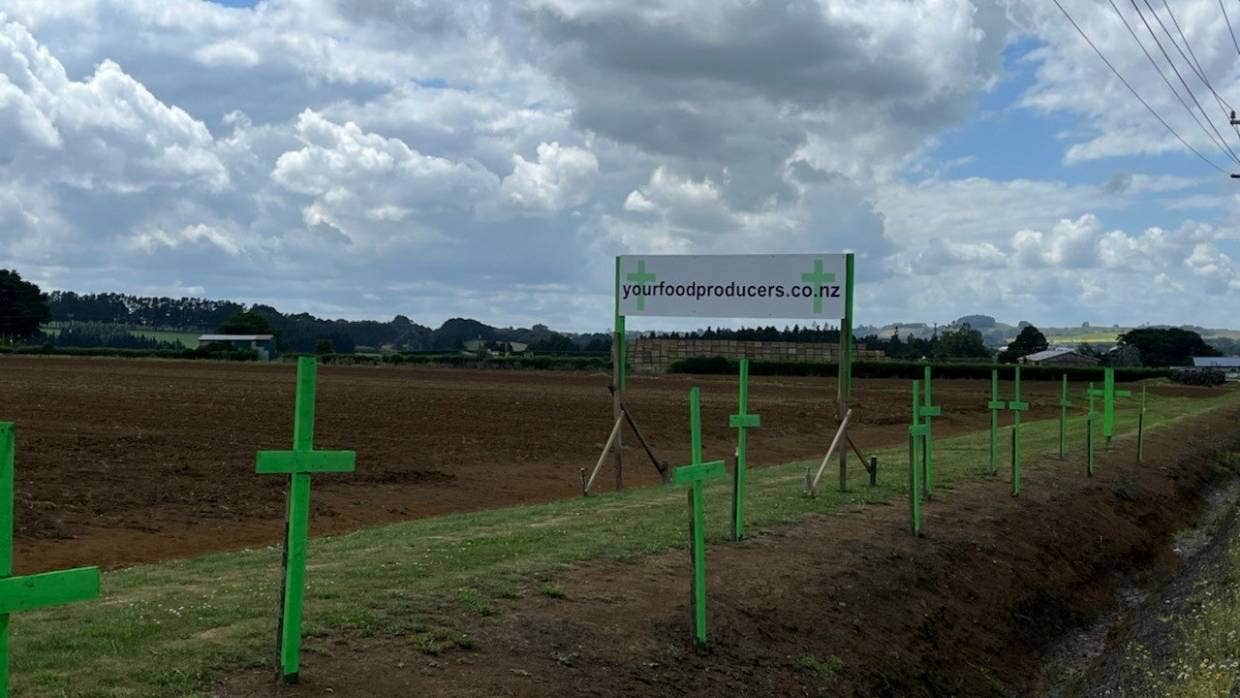
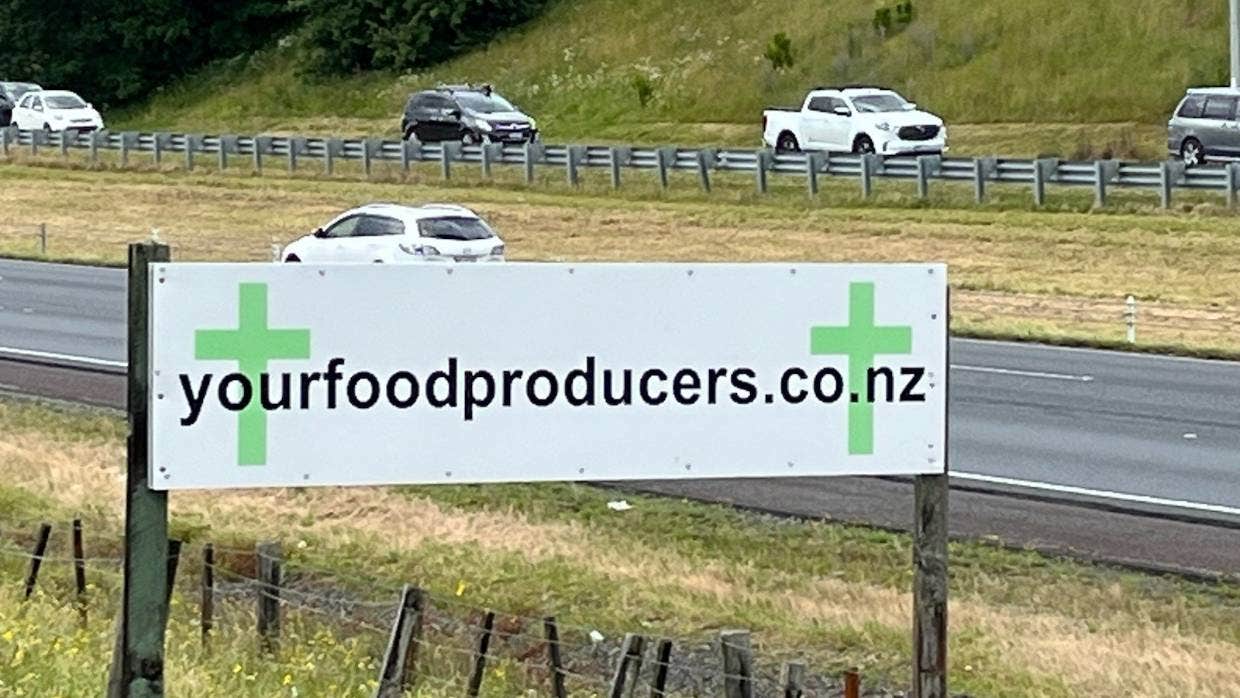
In defiance of New Zealand agricultural restrictions, green crosses have been painted on fences beside highways.

Wednesday, January 4th, 2023

It’s hoped the Your Food Producers group-inspired crosses – already estimated to be in their hundreds in the two areas – will spread nationally to highlight the agricultural sector’s various concerns.

A group spokesperso,n Rosemarie Costar, a dairy farmer from Onewhero in north Waikato, said the campaign, which includes a website, was inspired by a similar initiative in Germany.

Costar, also the dairy chairperson of Auckland Federated Farmers, said it stemmed from a small group of farmers getting together to discuss issues.

SUPPLIEDYour Food Producers sign and green crosses on Buckland Rd, Tuakau.
SUPPLIED
Your Food Producers sign and green crosses on Buckland Rd, Tuakau.

“We sat down and had a conversation about our concerns and thought we had to do something.”

Group member Bruce Cameron had seen the German campaign while visiting that country.

“We’ve adapted their campaign and started here.”

The signs and crosses started going up in October.

“For us it was about making sure consumers were educated” about how regulations – new and old – can help push up food prices.

SUPPLIEDA Your Food Producers Green Cross sign beside the motorway between Ramarama and Bombay.
SUPPLIED
A Your Food Producers Green Cross sign beside the motorway between Ramarama and Bombay.

For example, new requirements to get resource consents for things previously freely permitted – such as spraying and fertiliser application – could add to costs, she said.

Other concerns included how reducing farm carbon emissions and new animal welfare requirements could add to costs without necessarily achieving all they were designed to do globally and locally.

For example, plans to reduce emissions could cut New Zealand sheep and beef production by 20% and dairy by 5%, resulting in less carbon efficient producers picking up the lost market share.

Restrictions on farrowing crates could lead to higher mortality rates for piglets. Imports from overseas producers, with lower animal welfare standards, may result.

“For us it’s about making sure that legislation that is going through is practical, sensible and workable.”

SUPPLIEDRosemarie Costar and husband Bryce are Franklin dairy farmers – she says the campaign is not a party political exercise.
SUPPLIED
Rosemarie Costar and husband Bryce are Franklin dairy farmers – she says the campaign is not a party political exercise.

Costar said others around the country had shown interest in the campaign via social media.

“We would like to see it go nationally.”

Her group had started off with signs at 12 sites.

“Now we want people putting their own crosses up.”

Based on what she’s seen and anecdotal feedback, she’s confident the green crosses are becoming widespread in north Waikato and South Auckland.

“I would hope there’s a 1000 up there.”

Her daughter had counted 46 crosses on one road heading towards Waiuku, she said.

Costar said her group – with a core membership of six – had no party political affiliations as such.

“We’re all involved in agriculture in one way or another.

“It’s definitely not a political exercise.”

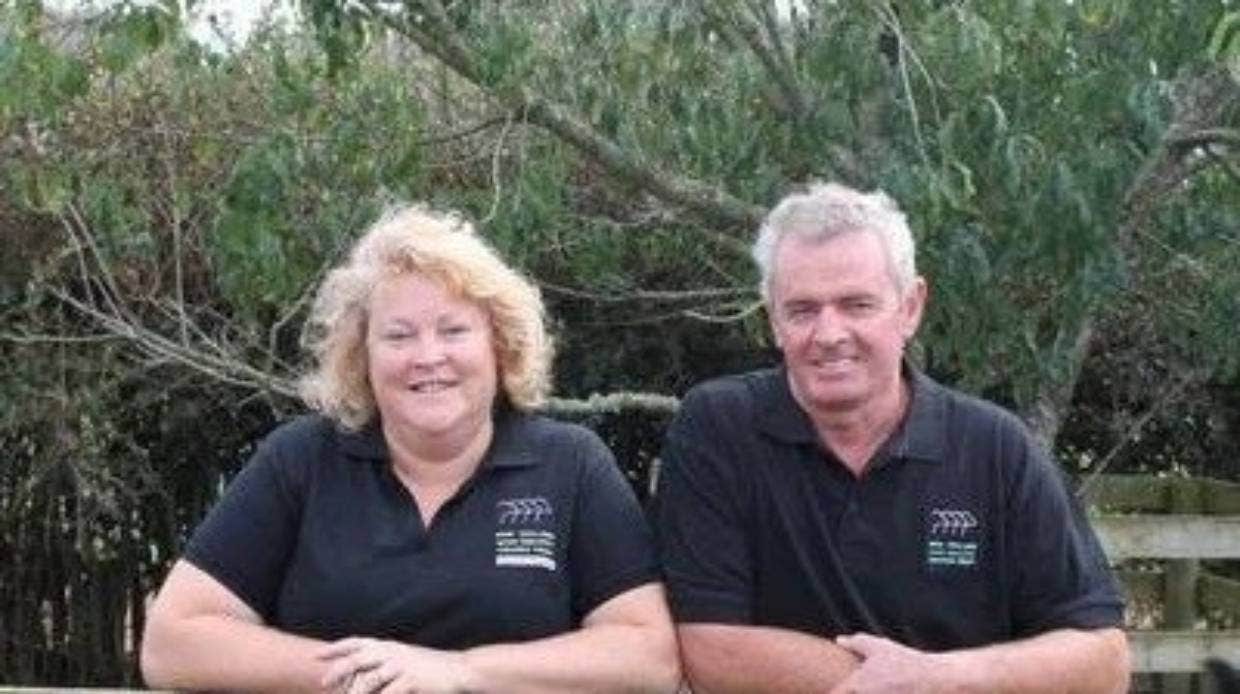
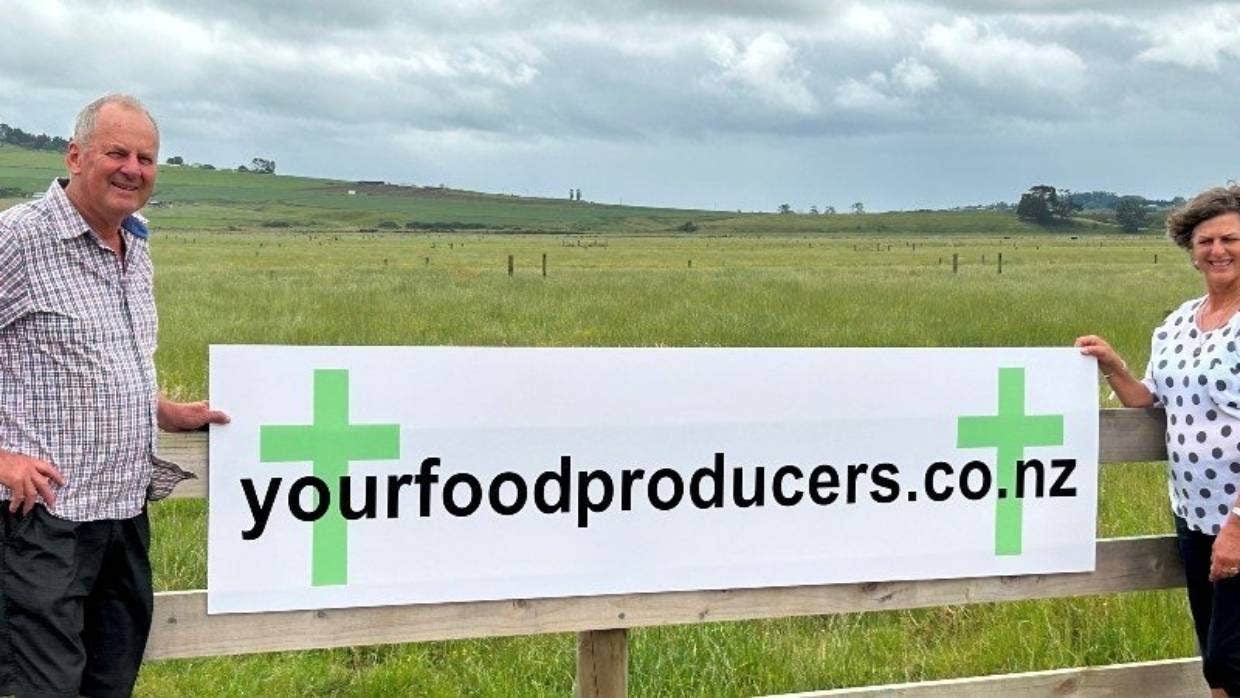
SUPPLIEDWaikato sheep and beef farmers Bruce and Yvonne Cameron with one of the group’s signs.
SUPPLIED
Waikato sheep and beef farmers Bruce and Yvonne Cameron with one of the group’s signs.

Other members of the group include former Waikato Federated Farmers president and regional council chairperson Peter Buckley.

The group’s website says: “We support regulations which achieve the desired outcome without compromising the NZ economy.

“We as NZ’s food producers are passionate about producing safe and high quality food for you, our consumers. NZ food producers have one of the lowest carbon footprints in the world.”

Categories : News

The EU’s benefits to farmers are quantifiable.

Wednesday, January 4th, 2023

After almost a decade of talking about the European Economic Community and what it would mean for sovereignty, independence, and trade, 83% of voters strongly supported the decision to join.

Farmers liked the idea because they had a lot to gain from joining a free trade group of 10 countries at the time. So, Ireland joined the EEC on January 1, 1973.

Agriculture was a very important part of the economy at the time. It gave us 25% of our jobs and almost 50% of our exports. Ireland, on the other hand, was very dependent on the UK, which was its closest neighbour and biggest trading partner.

When Ireland was talking about joining the Common Market, the idea of getting access to new markets in Europe was very appealing to Irish farmers and the government.

Farmers also saw that getting payments from the Common Agriculture Policy (CAP) and having a stable income would be very helpful.

The CAP was already in place to protect the production and supply of food in Europe, keep prices low for consumers, and help farmers and communities in rural areas.

1

In the five years after Ireland joined the EU, agricultural output went up by 31% and 183% in terms of value, farm incomes went up by 30%, the average income of industrial workers went up, and exports to Britain went down as European markets opened up.

Even after 50 years, the numbers still tell the story. €70 billion in CAP funding has helped Irish farming and rural communities.

Changes have been made to the agricultural sector. Irish agri-food exports are now worth €15,4 billion per year, and we send them to all of Europe and 180 other countries around the world.

When the new CAP starts on January 1, 2007, agriculture will get another €9.8 billion in benefits, of which the Irish State will pay €2.3 billion.

Now, unlike 50 years ago, it is very important to think about how farming affects the environment. For the EU to keep giving money to Ireland and Europe, farming must become more environmentally friendly.

Changes started around the middle of the 1990s, and EU payments have been slowly changed to encourage farmers to protect and preserve the environment.

In the new CAP next year, this theme will be shown in the best way yet. Green house gas reduction, water body protection, and increasing biodiversity are all important rules that Irish farmers must follow.

For their own good and the good of society as a whole.

Categories : News

Jersey Canada Award Nominations Due

Wednesday, January 4th, 2023

This is a reminder that the nominations for the 2023 Individual Awards are due by Friday January 13th, 2023. These prestigious awards allow Jersey Canada members to recognize individuals that are making an impact with the Jersey breed in Canada.

The awards and qualifications required for nominees are:

Youth of Distinction
To be eligible for the Jersey Canada Youth of Distinction award you must be 18 to 25 years of age and be involved with the Jersey breed in Canada. This award is presented at the Jersey Canada Annual Meeting. We encourage nominations for eligible aged candidates with strong leadership and involvement in agriculture, the community, and the Jersey breed.

Jersey Young Achievers
The Jersey Young Achievers award recognizes the accomplishments of Jersey breeders under the age of 40. Must be accompanied by a resume of accomplishments with Jerseys, the community and family.

The Honourary Life Member Award
The Honourary Life Member Award recognizes long-term leadership contribution to the Jersey breed. Nominations must be accompanied by a resume outlining the nominee’s Jersey involvement through the years.

Distinguished Service Award
Periodically the association will present a Distinguished Service Award. This award recognizes a unique long-term commitment to the betterment of the Jersey cow in the areas of leadership, promotion, genetic improvement, marketing – open to any member of the Jersey fraternity – few such awards have been given in the history of the association. This is the highest honour given by Jersey Canada and is therefore given when deemed appropriate. 

Certificate of Appreciation
A Certificate of Appreciation is awarded periodically to people within the agricultural industry who render a particular service above and beyond the call of duty to the goals and the objectives of the association. Recipients have often been employees of industry partner companies. 

Visit the Jersey Canada website for nomination forms.

Categories : News

Floods from the River Murray are threatening this dairy farm, but people in the area are keeping the water away.

Tuesday, January 3rd, 2023

An overhead view of Ian Mueller’s dairy farm at Riverglen along the River Murray in South Australia.(ABC News: Che Chorley)

In a small town south of Murray Bridge, people are working day and night to save a family’s dairy farm from the rising River Murray.
Important:

The Riverglen community is doing more sandbagging to protect homes that are in the way of the water.

The goal is to keep more than 500 hectares of land from being completely flooded. Ian Mueller’s dairy farm is one of those places.

On their Riverglen farm, Ian Mueller and his family have been making milk for more than 20 years.

If 240 hectares of their land flooded, they might lose their jobs.

“We might not be able to use it for about a year before we can plant grass on it,” he said.

“If we can stay strong, we’ll be able to keep grazing here and milking our cows the same way we have for years.”

With the help of neighbours and family, the Muellers are now fighting for their lives. In just over a week, 190 to 220 gigaliters of water a day are expected to hit nearby Murray Bridge.

“We have probably put between 30,000 and 35,000 tonnes of clay on this levee bank,” Mr. Mueller said.

“We’re still transporting.”

The people in the area, who all live on the same flood plain, have doubled the size of the private levee, which is 5 km long, by making it wider and taller.

The mission could keep water from taking over more than 500 hectares of land.

Some people have rushed to get sandbags that were badly needed, and others have let them use their cement trucks to fill them up faster.

The Muellers own their own quarry, which is where most of the clay for the levee is coming from.

Mr. Mueller said, “We probably still have about a metre to go before the water goes over the levee.”

“I’m pretty happy with what we’ve been able to do here.”

“But nature is a very strong force that is stronger than our community here in Riverglen.”

On New Year’s Day, a group of locals worked from 10 am to 8 pm to fill hundreds of sandbags that will be used to strengthen parts of the levee that are weaker.

Stuart Padman has kept horses next to the Muellers’ house for many years, and he said he would be happy to help.

“I can’t water my animals because I don’t have power to run my irrigation system,” Mr. Padman said.

So the Muellers have been kind enough to say, “Hook onto our line.”

“If they didn’t, I’d have to move all the horses and all my trees would die.”

Mr. Padman said that they were going to do whatever it took to stop the water, no matter how much it cost.

“The levee might be broken, but you have to do what you can to stop it,” he said.

“Ian is trying to stop it day and night.”

Even if the levee holds, Mr. Mueller thinks that their community would have a hard time getting back on its feet after such a hard time.

Mr. Mueller said, “It wouldn’t surprise me if all the land owners here spent $300,000 to $400,000 on [the levee].”

“We would be grateful for any help from the government.”

Categories : News

Fonterra aims for protein powder

Tuesday, January 3rd, 2023

Fonterra wants to “restock the cupboard” with new nutrition solutions and supplements to meet consumers’ changing dietary needs in a post-covid world.

Fonterra’s new CEO for global markets, Judith Swales, said that after a lot of travel in Asia, Japan, and the United States, it was becoming clear that consumers were becoming more aware of the need to take more responsibility for their own health.

“They have realised that governments can’t protect them completely and that they need to take better care of themselves.”

Along with the fact that people were getting older in most developed markets, there was a growing group of consumers who had good incomes and wanted to live a long, healthy later life.

In the meantime, Fonterra’s new products are the result of research and development done before covid. These products are just starting to hit the market.

These included “Sure Protein,” a protein supplement with a trademark, and the BioKoDelab brand, which was made to improve eyesight and brain health.

Probiotics and proteins were the two things that people were most interested in learning more about for the post-covid wellness market.

“The protein component is becoming more and more known for its value in helping older people keep their muscle mass, which often goes down as they age,” Swales said.

Research has shown that muscle mass can drop by 1% a year between the ages of 40 and 45, and this can speed up to 3% a year after 60.

“When I went to Japan, it was clear that people there are very aware of the need for more protein, and many products have protein added to them.”

About a third of the people in Japan are over 65, which is one of the highest percentages in the world. At the same time, Japan’s population keeps going down. It went down by 820,000 people last year, and there are no signs that it will stop.

“It’s likely at the oldest end of the age range, but it shows where other markets are going.”

Fonterra sees more potential with long-term clients in Japan. Because Japan’s population is shrinking, these clients also want to grow in south-east Asia.

A study that came out last year showed how adding more protein from dairy to the diets of seniors can help improve muscle mass and bone density.

Based on a study of 7100 Australian care home residents with an average age of 86, those who ate 1.5 times more dairy products fell 10% less often than those in the control group, who fell 60% more often and hurt themselves.

People over 65 who fall and break their hips are said to cost Australasia about $1 billion a year.

Due to more muscle mass and stronger bones, people who ate a lot of dairy were more stable.

By 2050, the number of people over 65 around the world is expected to double, from 1 billion today to 2 billion.

Fonterra is also looking into its library of more than 300 probiotic cultures. They have already found and protected two probiotic strains, LactoBHN001 and BifidoBHN019. These strains are meant to improve gut health and reduce gut infections.

The ability to put probiotics in capsules so they don’t break down on the way to the human gut has changed the game. It makes it possible for them to be put into other products.

Swales said that a client from Asia wants to add a “shot” of probiotics to coffee, for example.

“As we learn more about the brain-gut health axis, we’re trying to find more strains that are good for health there.”

Swales said that she didn’t see much evidence that dairy production was going up all over the world. It might be harder to tell in the USA, though.

Fonterra recently invested in the Dutch company Royal DSM to speed up research and development in precision fermentation. By combining Fonterra’s dairy knowledge with DSM’s fermentation techniques, synthetic milk production can be looked into.

“We don’t see it as an either/or situation,” she said. “Quality dairy products are in high demand, and there are still another two billion people who will need nutritional products.”

She said that because goats and sheep produce less milk than cows, it was unlikely that the co-op would invest in these kinds of businesses in the coming years.

Categories : News

In the wake of the Christmas storm, Ontario dairy farmers dumped hundreds of litres of milk.

Monday, January 2nd, 2023

Rob Vanden Hengel lost roughly $3,000 in milk after having to dump it to free up space for fresher product. (@rjvandenhengel/Twitter)

Farmers in Ontario will lose thousands of dollars because of a big winter storm that started on December 23 and shut down roads, making it impossible for drivers to pick up milk and forcing farmers to use up their stock.

Dairy Farmers of Ontario (DFO), which represents the province’s 3,300 licenced dairy producers, put out a statement on December 24 telling farmers about dangerous road conditions and asking them to get rid of milk that wouldn’t be picked up by drivers.

“A cow gives milk no matter what the weather is like. She makes milk all the time, and that milk has to go somewhere “Andrew Campbell, a farmer in Strathroy, Ontario, who lost about 5,000 litres of uninsured milk worth about $4,000 on Saturday.

In Ontario, there are a lot of rules about the dairy industry. DFO buys all of the fresh milk, and then transports, processes, pasteurises, and distributes it.

Campbell said that every 48 hours, refrigerated trucks come to farms to pick up milk. This is because most farms don’t have enough space to store more than 48 hours’ worth of product.

Because the snow got in the way of the supply chain, farmers had to drain what they already had to make room for the milk their cows kept making.

On Christmas Eve, farmers from as far north as Thunder Bay, Ontario, used social media to show what it looks like to get rid of thousands of litres of milk. Twitter posts showed cow’s milk going down drains from the tanks that are usually used to store the milk and move it into trucks.

Rob Vanden Hengel got up early on Saturday to clear the snow off the driveway of his farm so the milk truck could get there. By 12:30 p.m., he heard from another dairy farmer that DFO was telling producers to dump their product if their truck hadn’t arrived.

“We think, “Well, that stinks.” I probably said a few other words that I can’t really say on the radio, “Vanden Hengel, whose dairy farm is just north of Seaforth, Ontario, in Huron County, where all roads were closed because of the storm, said.

About 3,400 litres, or close to $3,000 worth, of milk was lost by Vanden Hengel. But he has insurance.
He said, “I’ve been milking cows since 2005, and I’ve never had to do that before.”

Another farmer who is being affected by the storm is Bernie Kamphof. Near Thunder Bay, he has a farm with 400 animals, 250 of which are dairy cows.

Kamphof said that the storm didn’t have as much of an effect on driving in northern Ontario as it did in southern Ontario. However, his pickup day was still late because a truck was stuck behind a closed road hundreds of kilometres from his farm.

Kamphof had to drain milk not only over the Christmas holiday, but also on Tuesday. Because of this, 24,000 litres of milk, worth almost $20,000, were lost.

He says that his farm has never dumped milk since 1953, when his family bought it.

“It was something this farm had never seen before,” Kamphof said. “As farmers, we make something that can be eaten. I think I can speak for every farmer when I say that we’re proud to feed people, and it’s not a good feeling to have to throw away our food.”

A statement from DFO to CBC News says that even though most routes in the province are open, there are still delays in some remote areas. Farmers who don’t have insurance are likely to lose tens of thousands of dollars, but the DFO is looking into ways to help them.

“It is good business to have insurance, but the DFO Board will look into the issue of compensation in the coming weeks,” the statement said.

Kamphof wants the business world to work together to make up for losses.

“If you use your insurance, you’ll have to pay more in premiums if you have to make a claim. We’re big enough that we can pretty much cover ourselves against risks like this. I think it’s something we should look into and think about as a possibility, “he said.

DFO says that shoppers probably won’t notice any changes at the grocery store because of the last few days of trouble.

Categories : News

Florida goat farm struggling after hurricanes, freezes, and high feed prices

Monday, January 2nd, 2023


A farm in Central Florida is hoping for better luck in the new year. Carol Peters used to work as an engineer and beat breast cancer. She and her husband John, who used to be a firefighter in Orange County and is now retired, run Slow Turtle Farms in Eustis. It is one of only two Grade-A dairy farms in the state, but it is now out of milk.

Peters pointed to some of her stock and said, “This is the only group we still milk.” “They only give a small amount of what they give now.”

Goats can stop making milk when they are stressed. Because of the hurricane and the recent cold weather, production has almost come to a stop.

Together with the fact that the prices of alfalfa, hay, and feed have nearly doubled, this has made things very hard for the farm.

Peters said, “I remember crying when it went up to $400.” “It’s now $668.”

During the pandemic, the dairy was too new for the government to help, so Peters’ husband, John, used all of his retirement savings to keep the farm going.

“It’s scary,” Peters said. “And it’s not something that can’t be fixed. All we have to do is get back to the point where milk is flowing again.”

A lot of the goats are pregnant right now, which means they will soon start making milk again.

Peters is selling some of her goats to get by until then. She is going to sell fudge soon after the new year begins. She is thinking about doing farm-to-table events as a way to raise money. She is asking for help through GoFundMe, which hurt her.

She also tells people how important it is to buy local.

“You’re keeping your money in the area,” Peters said. “We then support all the other small farms and businesses in the area.”

Categories : Management, News

The expansion of Saputo Dairy USA in New Mexico is done four years ahead of schedule.

Monday, January 2nd, 2023

The expansion of a cheese and dairy plant in Las Cruces, which was paid for by the state and the city, is done about four years ahead of schedule.

Jamie Dickerman, vice president of public relations at Sunny505, says that with the expansion, Saputo Dairy USA has added 300 jobs in administration, manufacturing, quality assurance, and maintenance. The public relations firm in New Mexico put out a news release for the city of Las Cruces.

According to the news release, the expansion was first thought to be done in December 2026.

In an email to the Journal, Sunny505 said that the additions were two buildings, a parking lot, and a break room for employees.

Saputo Inc., which is based in Montreal and is the parent company of Saputo Dairy USA, did not want to say anything about the expansion. A person from the city of Las Cruces didn’t know what was included in the buildout. All they knew was that the project needed more than one permit.

Las Cruces City Manager Ifo Pili said in a statement, “This is a huge project for the city of Las Cruces, and we applaud Saputo for their commitment to growth and expansion in Las Cruces.” “Saputo’s expansion not only gives people in southern New Mexico full-time jobs that pay well, but it also helps our agricultural industry and our local economy as a whole.”

Dickerman told the Journal in an email that the hourly pay for the new jobs starts at $16 and that the best annual salary is around $100,000.

Bruce Krasnow, a spokesman for the New Mexico Economic Development Department, said Tuesday that the facility has 375 employees. He also said that “the company is exceeding its goal of creating jobs.”

For the expansion, the state and city had given Saputo $2.8 million through the Local Economic Development Act. Krasnow says that $2.5 million came from the state and $300,000 came from the city of Las Cruces. The money came in June and August. $30 million was spent on capital for the project as a whole.

Krasnow said that the amount of LEDA money given to Saputo is more than is usually given for a project of this size. That’s because the state was giving the project a boost if it was built in an Opportunity Zone, which is usually a poor area. Hiram Roman-Chavez, who is in charge of human resources at Saputo’s Las Cruces plant, said that the expansion made sense from a geographic point of view so that products could be sent all over the country.

Categories : News

Brazil’s mega-cheese plant receives an investment of $84.5 million

Thursday, December 22nd, 2022

In the city of Ponta Grossa in the Brazilian state of Paraná, a consortium of three cooperatives (Frisia, Castrolanda, and Capal) spent €84.5 million to build a massive cheese factory.

The plant can handle as much as 3 000 t of milk and other dairy products every month when operating at full capacity.

The new cheese factory, to be known as Queijaria Unium, will be a state-of-the-art operation and one of the largest in the country. Right now, we’re within 30% of the last stage.

The target launch date is the first half of 2024, and once fully operational, the project is expected to provide 66 direct and 1,570 indirect employment.

To begin in the first half of 2024, industrial activity are anticipated. According to Egdio Maffei, the facility’s commercial manager, 600,000 litres of milk per day would be required.

Maffei claims that the structure will increase members’ earnings by adding value to fresh goods. Daily, 96 metric tonnes of output (including goods and by-products) are expected from the undertaking.

With cutting-edge technological solutions, the facility represents a step forward in the Brazilian dairy sector. He predicts a technological breakthrough and increased productivity in the industry as a result.

It is possible to produce up to 80 metric tonnes of cheese in a variety of flavours and 40 metric tonnes of whey powder at the cheese plant. Mozzarella, cheddar, cheese paste, salt, unsalted butter, and powdered whey will all be manufactured in the industrial site.

Egdio notes that when the cooperative’s members increased their milk output, the organisation actively sought a viable solution to demonstrate to its business partners that the surplus would be reinvested in high-value items.

Categories : News

BLONDIN RD UNSTOPABULL MAPLE – Sep 2018 – Dec 2022

Monday, December 19th, 2022

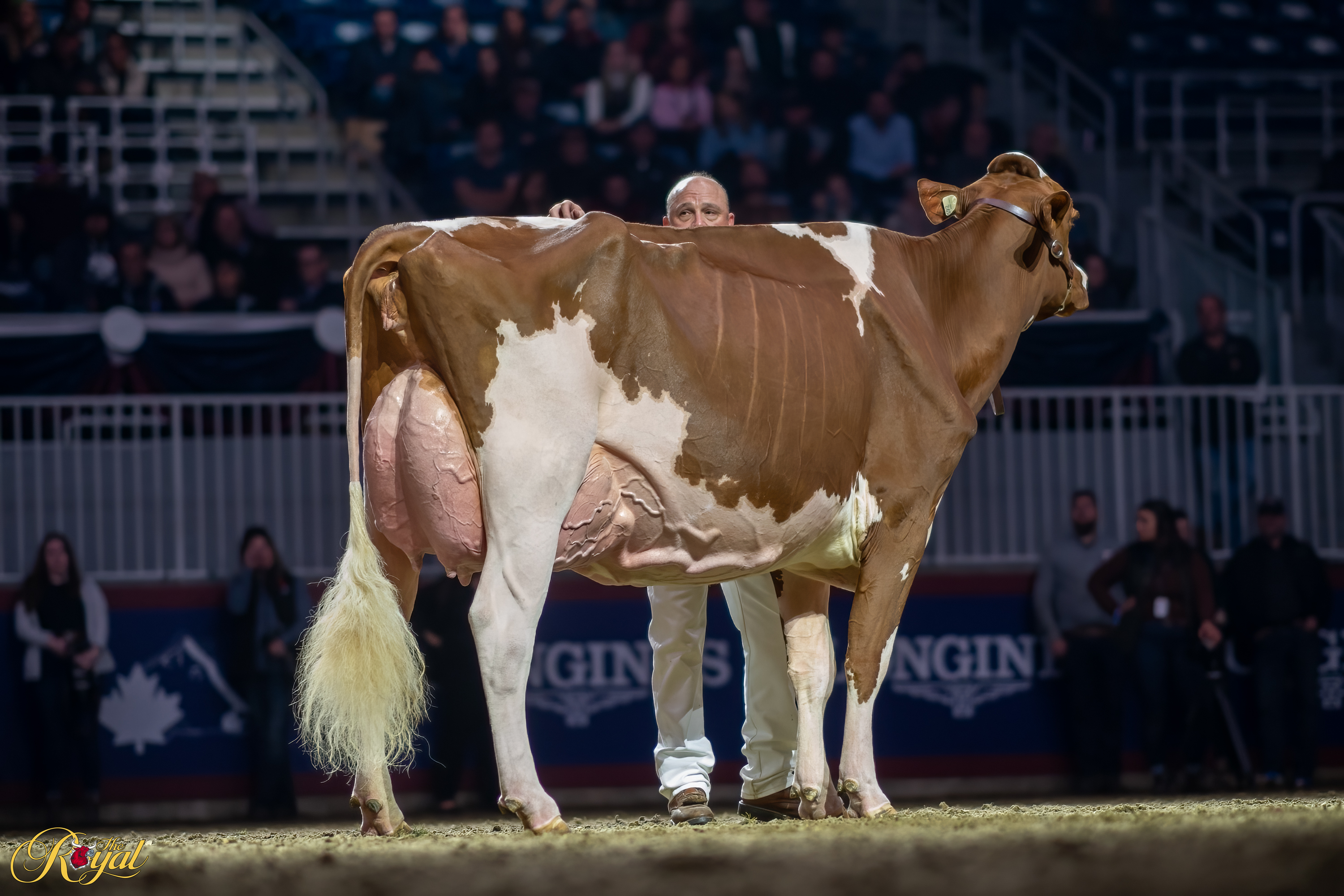
A month ago, BLONDIN RD UNSTOPABULL MAPLE appeared to have no limits in a three-day period she took home Grand Champion of the Red and White Show, The Holstein Show and then Supreme Champion at the 100th Royal Winter Fair. Unfortunately, this month she passed away at 4 years old.  She was owned by K Doeberiener, L Bowen,  W Schilling & T&S Abbott.

Maple’s List of accomplishments:

  • Supreme Champion Royal Winter Fair 2022
  • Grand Champion B&W Holstein Royal Winter Fair 2022
  • Grand Champion R&W Holstein Royal Winter Fair 2022
  • Reserve Grand Champion International Holstein Show 2022
  • Intermediate Champion International Holstein Show 2022
  • Inter & Grand Champion R&W NY Spring Show 2022
    Inter Champion NY Spring Show 2022
  • All-Canadian Snr 2 yr old 2021
  • Inter & Grand Champion R&W National Show 2021

Sire: Riverdown Unstopabull

Dam: Kawartha Armani Memory EX92
2nd: Lochdale Shaquille Missy EX93-2E
3rd: Lochdale Redman Melissa GP84-2yr 3*
4th: Lochdale Lee Macy VG85
5th: Marvans Raider Kacey EX-6E
6th: Marvans Tab Stacy EX-2E 9*

Categories : News

Shared stories shape lives

Monday, December 19th, 2022

The 2023 calendar was launched in Lakes Entrance in mid-December, at Gippsland Jersey’s milk processing facility, and involves the families behind 12 dairy farms across the region.

The calendar is a passion project of the founders of Gippsland Jersey, Steve Ronalds and Sallie Jones, who bring their philosophy of wellbeing and wellness into their business.

It is the fifth annual calendar the business has produced in the past six years and there is now an online community of dairy farmers supporting each other.

This support has extended to groups of dairy farmers camping on each others’ properties and helping clean up burned fences and re-fence farms after the 2019-20 bushfires in East Gippsland.

“People need people, and doing this calendar every year helps us all recognise the impact we have when we do something that helps other people,” Steve said.

The public launch of the 2023 calendar was attended by dairy farmers from across Gippsland. Six dairy farmers spoke about the stresses of farming and how they coped with them.

Ross Anderson, from Dennison, said it was easy to become “drowned in daily issues of calving, flooded paddocks, relationship breakdowns and family stresses”.

Having experienced the gamut of these stresses, “adversity is an opportunity for growth,” Ross said.

“Stop and do what you need to do to reset.”

He uses exercise, mindfulness, breathing and listens to podcasts to help him cope.

“There are a lot of resources out there,” Ross said.

“All the stuff that happens has already happened. I don’t need to keep going over it, but I do need to find ways to move ahead.”

When it comes to wellbeing, particularly mental wellbeing, Chris Kane, a dairy farmer at Marlo, said it was important to have conversations that broke open the stigma attached to talking about mental health.

“Ten years ago, people would’ve avoided having that conversation with me, but I think we’ve made progress [as a society] and today people will drop in to the farm and see how I’m going,” Chris said.

Making sure your family and friends were part of your support network was important, according to Matt Willis, whose dairy farm is at Yarram.

“Talk about what’s going on so people in your community know and are open to having a chat when you see them walking along the street in town,” Matt said.

He practices being grateful for the family and other people around him and his opportunity to farm every day.

“Make sure you have someone to reach out and talk to,” Matt said.

The Federal Government announced in December it would reduce psychological and counselling support funded by Medicare.

When the COVID-19 pandemic occurred, the Federal Government announced an additional 10 sessions annually — on top of the existing 10 sessions — would be funded by Medicare.

The decision recognised the impact of the 2019-20 bushfires and the pandemic, and has also been available for people affected by floods to access psychological and counselling support.

That additional 10 sessions have been cancelled, as of the beginning of 2023.

Co-founder of Gippsland Jersey, Sallie Jones, whose father committed suicide in 2016, was scathing of the decision.

“The system is fairly broken when you’re in need and can’t get help,” Sallie said.

“When people are in mental distress, it’s a challenging time for everyone involved.

“Mental health is a real problem. The statistics of suicide, and its ripple effect in our communities, are enormous.”

Federal Member for Macnamara Josh Burns has publicly called out his party for the decision to withdraw funding.

His maiden speech in 2019 addressed the need for mental health funding and support.

After the announcement in mid-December, the Labor MP contacted the health minister and assistant mental health minister.

“One of the most difficult problems that confronts our healthcare system, is ensuring access to affordable and adequate mental health treatment for those who need it,” Mr Burns said.

“I believe that while there are real challenges in managing access to services [including not enough healthcare professionals], the answer is not to reduce support for those people who need it.

“For those people who require more than 10 sessions of Medicare-funded mental healthcare, the extra sessions can be the difference between someone’s anxiety increasing or being effectively managed.

“It can be the difference between everyday functioning — participating with family, friends, at school or work — or not coping at all.

“And it can affect how often someone with mental health challenges can see their mental health professional.”

Mr Burns has committed to lobbying for reinstatement of the additional 10 Medicare-funded mental health care sessions.

Source: Dairy News Australia

Categories : News

Hellenbrand Lasting Legacy Award Deadline is January 1st

Monday, December 19th, 2022

There are only 16 days left for your opportunity to be selected for the 2023 Hellenbrand Lasting Legacy Award calf – a daughter from the 2021 Grand Champion Ayrshire Marilie Gentleman Karmina! This is an amazing opportunity to feed your passion, grow your potential in and out of the show ring, and to showcase a heifer with Karmina’s outstanding pedigree at local, state and national shows.

The purpose of the Hellenbrand Lasting Legacy Award (HLLA) is to provide an aspiring and deserving dairy youth a chance to own and show a high-end genetic heifer at local, district and state shows including World Dairy Expo.

The winner of the HLLA will receive 50% ownership in a September, December or March calf from a recent breed champion at the World Dairy Expo. The breed of the calf awarded is expected to rotate on an annual basis amongst all the dairy breeds. The 2022 award will be an Ayrshire heifer calf from the 2021 WDE Ayrshire Grand Champion Marilie Gentleman Karmina. The breeders, Budjon Farms and Peter Vail will provide the calf to the HLLA award winner for the 2023 show season.

The deadline to apply is January 1, 2023. Visit www.hellenbrandlastinglegacy.com for details and the application!

Categories : News

Dairy Girl Network Seeking New Board Members for 2023

Monday, December 19th, 2022

The Dairy Girl Network (DGN), an organization supporting all women in dairy by enhancing lives and creating opportunities, is seeking nominations of dairy women to join their Board of Directors!

The Dairy Girl Network Board of Directors includes elected representatives serving as dairy farmers and industry professionals. The Dairy Girl Network Board of Directors oversees the overall execution of the organization’s mission and is made up of up to 12 voting members. Terms are set for three years and each individual can serve three terms. Board member responsibilities include attendance at one in-person meeting per year, as well as conference calls once a month, and active conversations as part of board committees. Periodically the board will hold additional meetings or planning sessions.

There is currently one Board of Director position open for a producer and one Board of Director position open for an industry representative.

To apply, individuals can nominate a fellow dairywoman for one of our open Board positions. Self-nominations can also be made. Nominees are urged to consider personal priorities for the next years as well as the ways to contribute to the development of our organization.

To apply, please complete the Nomination Form on the Dairy Girl Network website located here: https://dairygirlnetwork.com/board-of-directors-nomination. Nominations are due no later than Wednesday, January 11th. Late applications will not be accepted, so hurry and apply today!

If you have any questions, please contact, Lynn Bartholomew at contact@dairygirlnetwork.com.

Categories : News

Recent research indicates that the state of California is well on its way to significantly lowering methane emissions from its dairy industry.

Monday, December 19th, 2022

The paper’s authors, from UC Agriculture and Natural Resources at UC Davis, find that progress is on pace to meet the state’s world-leading aim of a 40% reduction in dairy methane emissions by 2030.

Distinguished scholars in the fields of animal emissions and agricultural economics compiled this paper, which goes beyond the examination of progress made by the California Air Resources Board. The research provides a feasible plan for reaching California’s target by demonstrating past successes, further reduction measures already financed, historical and present economic trends, and expected availability of new solutions. According to the plan, California’s dairies will be “climate neutral” by 2030 after cutting their methane emissions from cows by 40%. After reaching climate neutrality, no more warming of the atmosphere will occur.

According to CDRF Executive Director Denise Mullinax, “this research reveals that California’s dairy sector is well on its way to fulfilling the objective that was established by SB 1383 in 2016.” While there is still more to be done, it is much easier for dairy farmers, policy officials, academics, and other partners to move forward strategically if they have a firm grasp of this road.

Farm efficiency and herd attrition, methane avoidance (alternative manure management), methane collection and utilisation (digesters), and enteric methane reduction are the four pillars of California’s effort to reduce methane emissions from dairies. Maintenance of success will also depend on the continued convergence of state and federal climate-smart farming policies and incentives.

The need for milk continues to rise, and California is one of the world’s most cost-effective producers of dairy goods. According to Daniel Sumner, Distinguished Professor in the Department of Agricultural and Resource Economics at UC Davis and co-author of the study, “policies that induce milk production to quit the state do not ameliorate global climate change.” In this light, economically sound strategies include those that “help offset mitigation costs,” “offer positive incentives for adoption of low-cost emission-reducing methods,” and “help drive innovation in methane reduction.”
Enteric methane emissions from California’s dairy herd might be reduced with the use of a number of feed additives that are expected to become commercially accessible in the next few years. Image courtesy UC Davis’ Gregory Urquiaga

The study acknowledges that the production of dairy and other animals accounts for a sizeable portion of the United States’ and California’s total greenhouse gas emissions. Enteric methane emissions from California’s dairy herd might be reduced with the use of a number of feed additives that are expected to become commercially accessible in the next few years.

Professor Ermias Kebreab, assistant dean of global engagement and director of the World Food Center at UC Davis, and co-author of the study, has predicted that the widespread adoption of enteric feed additives will help the dairy industry achieve its greenhouse gas reduction targets. Although this paper only gives a high-level overview of some of the most potential answers, an unbelievable amount of research is being undertaken at UC Davis on a local, regional, national, and worldwide scale. Consistent funding for enteric mitigation research comes from a wide variety of sources, including the dairy sector, multinational food corporations, state and federal governments, and others.

The report concludes that California is on track to reduce between 7.61 and 10.59 million metric tonnes of methane (CO2e) by 2030, all from the dairy sector alone, thanks to methane reductions from current programmes and projects and the implementation of a moderate feed additive strategy to reduce enteric emissions.

Public and private financing sources have combined to provide more than $2 billion to California’s dairy methane mitigation initiative. Together with the California Department of Food and Agriculture, the United States Department of Agriculture has given up to $85 million to the Golden State’s dairy industry as part of the Partnerships for Climate-Smart Commodities programme. Over $300 million in further investment is expected as a result of the funding’s ability to attract matching state funds and private capital commitments.

Co-author and UC Davis animal science professor, air quality specialist in Cooperative Extension, and director of the UC Davis CLEAR Center, Frank Mitloehner, stressed the importance of highlighting California’s investments and success to date as an example of what is possible within the global livestock sector. Dairy producers in California have made great strides in recent years toward the state’s aim of reducing methane emissions. Given the relatively short half-life of methane, this rapid reduction is a significant boost to the international effort to curb climate change.

Read the report here

Categories : News

Farmer sparks debate after milking cows in bikini: ‘Attention seeker’

Thursday, December 15th, 2022

A farmer has sparked furious debate online after she shared videos of herself going about her farm work in a bikini.

The New Zealand woman, who has more than 100,000 followers on TikTok, often dons a bikini while milking cows and riding tractors with a full face of makeup.

She has been criticised for a series of videos she’s uploaded to TikTok of her undergoing her daily routine, with many slamming her for wearing swimwear while others were concerned she was breaking health and safety rules.

“Saddest thing I’ve seen,” one commented.

“No health and safety,” another said.

“Attention seeker,” a third added while somebody else said, “Who milks cows in their underwear?”

A farmer poses in a bikini with ear muff around her neck (left) and milks a cow while wearing a bikini (right).
The farmer sparked debate after sharing videos of her milking a cow while wearing a bikini. Source: TikTok/@itsthatkiwigirl
 

Others however threw their support behind the farmer, with one suggesting it got too hot in the shed, to which the farmer replied, “Yes! And when it’s just you and the cows who cares?”

“Keep doing what you enjoy doing,” a follower said in support.

“People have no idea how hot it is in the shed in summer,” another claimed.

“Ignore the haters,” a third added.

“My mate milks and will sometimes wears a bikini top when it’s really hot here so you ain’t the only one,” somebody else said.

The farmer shared a video on TikTok hitting back at those trolling her over her unconventional work attire.

“Ima keep milking in a bikini and y’all can keep hating,” she captioned a video that highlighted some of the negative comments she had received.

One of the comments she shared suggested she was working on “daddy’s farm” while another claimed, “Real farmers don’t wear makeup”.


source: yahoo

 
Categories : News

Forty cows were killed in a Vermont dairy farm fire.

Wednesday, December 14th, 2022

On Tuesday, Vermont State Police reported that a fire had burned a dairy barn near Grand Isle and killed around 40 cows who were trapped inside.

On Monday evening, a nearby resident observed flames emerging from the barn’s northernmost corner and immediately dialled 911. According to the authorities, he then walked to the barn and attempted to free several of the cows from their stalls there.

When the fire department came, they and the locals were able to unlock the doors, allowing many of the cows that had been locked within to escape. The fire was contained to around 140 cows, according to the police.

Investigators of the blaze discovered that the blaze began in a nook of the barn next to a garage entrance that led to the manure dump. According to the police, a farm worker had used a propane torch to defrost the frozen manure that was around the entrance, and investigators suspect that this was the cause of the smouldering fire that spread.

According to the authorities, the barn is a total loss and the estimated value is $300,000.

Categories : News

A new bill aims to stop foreigners from owning U.S. farmland.

Tuesday, December 13th, 2022

A bill introduced by Republicans in Congress is meant to make it easier to find out who owns foreign farmland. Reps. Elise Stefanik (R-NY) and Rick Crawford (R-AR) introduced the Agricultural Foreign Investment Transparency Act on December 8, with support from many other Republican lawmakers.

Rep. Crawford said, “This bill would bring to light American farmland that is owned by entities in communist China and other places, so we can figure out how much of a threat it is to our national security and take action.”

Farms.com says that the bill calls for the Agricultural Foreign Investment Disclosure Act to be changed. In 1978, the U.S. passed this law to set up a way to find out who owns farmland outside of the country.

Reps. Stefanik and Crawford’s bill would: require the Secretary of Agriculture to put all new and old AFIDA reports on the USDA website for everyone to see; Expand the information that needs to be reported to AFIDA to include security interests and land leases for any length of time, including agricultural land that isn’t being used. Increase oversight and broaden the scope of reporting to make sure that there is a report of all acquisitions of land that isn’t being used, companies that issue foreign-traded equity securities, and all interests bought, sold, or held by a foreign person.

USDA data shows that as of December 2019, foreign investors owned about 35.2 million acres of farmland, which was worth about $63 billion and made up about 3% of all farmland. About the size of the state of Iowa, this area is about this big.

About 29% of this land is owned by Canadian investors, but people from more than 100 other countries, like the Netherlands, Italy, Germany, the UK, and China, also own parts of U.S. farmland.

Categories : News

As the ban on live exports gets closer, New Zealand farmers get more money for live cattle

Tuesday, December 13th, 2022

In response to a question from Parliament this week, Minister for Agriculture Damien O’Connor said that this year, animals worth about $406 million will be exported.

The value of livestock exported in 2021 was about $340 million, which was up from $261 million in 2020.

Mark Willis, who is the chair of Livestock Export NZ, said that the value of animals exported went up by more than 20% from the previous price highs.

He said that Chinese importers and farmers wanted to get breeding stock from New Zealand before the ban, so the demand for breeding stock from New Zealand went up.

Data from the Ministry of Primary Industries showed that 109,921 animals were exported in 2020 and 134,722 animals were exported in 2021. So far this year, 109,835 had been sent abroad.

Willis said that a cow meant for export now sold for between $2,000 and $2,200 at the farm gate.

He said that China had a lot of dairy farms, but it could only breed about 40% of the cows it needed. The rest had to be brought in from other countries.

Willis said that about 4000 farmers sold their goods on the export market.
Reproductor de vídeo 00:00 00:52

Lyle Williams is a dairy farmer in Ashburton. For the last three years, he has sold about 150 young cows for export each year.

He said that he would usually get between $1600 and $1900 for an export cow.

In New Zealand, where there were already too many young cows on the market, he would get $500 to $600 for the same animal.

Williams said he was worried that putting even more animals on the local market that aren’t needed would hurt the whole business and cause prices to drop.

Williams said that the dairy industry was getting smaller and wouldn’t need the cows that were being sent abroad.

Since it costs him about $400 to raise one cow, he would also lose a lot of money if he raised them himself.

He thought that cows might be sold as bobby calves, but he said that this made about $25 per animal.

He said that there wasn’t enough grass to raise the replacement cows that were already there, and that more cows would put pressure on the grass.

Richard McColl, who works for the Meat Industry Association as manager of industrial operations and innovation, said that the export dairy cows couldn’t be raised for the meat trade because there wasn’t enough demand for meat in the country.

McColl said that the extra animals would also take the place of animals that are already raised for meat.

He said that when the live trade market was shut down, the animals lost a way to make a living.

He also said that farms wouldn’t be able to raise them because they would take the place of cows that are raised to give milk.

Categories : News

Sad State Of Things In Australia’s Food Production Business

Tuesday, December 13th, 2022

If you think of the “food industry” as a single entity, you ignore the fact that its three main parts—raw material production, or “farming,” manufacturing, and retail—have very different strategic drivers.

In the FMCG basket, you can find many grocery items that aren’t food. These range from cleaning and home goods to health, beauty, personal, and pet care. If you go to any grocery store, these non-food categories take up about 20% of the shelf space.
Farming

The “family farm” used to be the most common type of farm, but that is becoming less common as scale, which is made possible by capital, replaces intergenerational family ownership.

When a company owns a farm, the costs go down, but the farm is more likely to become a monoculture as short-term profits become more important.

Even though it isn’t perfect, the register of foreign ownership shows that 14.1% of agricultural land is owned by foreigners as of June 2021. This is up from 10.9% the year before.

The National Farmers Federation says that Australians own about 99 percent of farm businesses. It’s clear that the big are getting bigger at the expense of the small.

Infrastructure for farm production management needs a lot of money spent on it. Rail networks are broken, and the roads are a mess. This is a long-term problem, and the costs of running a farm will go up faster than the rate of inflation.
Manufacturing

A report from the AFGC says that retail concentration is a big reason why profits are going down, which means that imports will gain ground.

At the moment, the industry that makes food and drinks employs 276,000 people, 40% of whom work in rural areas. The industry’s output is worth $127 billion, which is 32% of all manufacturing output in Australia.

In other words, it is big and has a lot of different people and places, so it should be a big part of how we think about educating and training future leaders.

Gross numbers for the industry show that almost 30% of the value of what is made is exported. The problem is that most of this is raw or only lightly processed meat and grains, which don’t hire many people anywhere along their supply chains and compete in commodity markets.

One of the eight directors of the Australian Food and Grocery Council, the industry’s “representative” body, is the CEO of an Australian beverage company. The other nine directors are all CEOs of multinational companies.

This is not a bad thing, except for the obvious fact that it keeps lobbying and government policy in favour of MNCs instead of locally owned businesses.

As a young man in the late 1970s who had been a nomad for a few years, there were many different kinds and sizes of businesses I could work for. Over time, both the number and variety have dropped by a lot.

Important industries, like dairy, are almost entirely run by multinationals now. The only exception is produce, where there are still a lot of farm suppliers, even though a few very large consolidators, like Costas, now control most of the retail supply chain.

Aside from a few small organic brands, there are no proprietary produce brands in retail. This is because retailers have made sure to absorb all the proprietary margin in produce.

If there is a light at the end of the tunnel, it may be Bega. The disruption of supply chains and the low profit margins of FMCG manufacturing have made it harder to see the light.

Bega Cheese was saved from the receiver in the early 1990s by Dairy Farmers Ltd, which is now owned by a foreign company. Since then, Bega Cheese has been able to grow by buying the Port Melbourne site of Kraft, which was sold to Mondelez, and by buying the Vegemite brand and, more recently, the rebranded peanut butter business.

Maybe this is the start of something good?
Retail

The size and share of Australia’s food and grocery market depend on what is included.

Most studies show that Woolworths has about 37% of the market, Coles has about 28%, and Aldi, which is now the real third force, has about 11%. The wholesaler supplied groups have about 7%.

The last 17 percent is made up of a mix of fresh and farmer’s markets, delivery straight from the farm, small independent stores, and convenience stores.

There is also a huge food service market, with everything from small restaurants and takeout to fast food chains and five-star restaurants. This industry uses a lot of goods and puts thousands of people to work.

This group of 76 percent of food and grocery sales has a lot of power. As they have grown, they have moved out of the crowded retail market of the 1970s and 1980s, taking over or leaving behind weaker competitors.

They have used a variety of strategic weapons that are a perfect example of Michael Porter’s five forces to squeeze the profit margins of manufacturers.

As a result, manufacturers have also grown by using regional manufacturing hubs, which are usually in Asia.

The effect on domestically owned manufacturing has been huge, and it got worse when the Australian dollar was worth more than the US dollar. This made more people buy house brands made overseas, wiping out most of what was left of locally owned manufacturing.

With a few notable exceptions, like San Remo, Bega, and Sanitarium, which do not pay tax, most Australian-owned food manufacturing is done by small-scale cottage manufacturers who depend on the 24 percent of the market that is not controlled by the three retail “gorillas.”

It is fair to point fingers at the retailers while acknowledging that the local management failed to come up with a good plan.

The big FMCG brands that were built up by domestic companies over a long time didn’t realise how important it was to keep their brands in the long run.

Instead, they gave in to retailers’ demands for short-term promotional dollars that helped retailers’ profit margins and kept prices low.

Short-term, consumers may have benefited from the competition between prices, but they had a lot less to choose from.

In the long run, they will have to deal with the effects of an economy where only a small part of its biggest manufacturing industry is able to make strategic decisions based on what is most important to the country.
A few ideas about what’s to come

Technology has no choice but to take over more and more of the industry in all of its parts.

Australia is already one of the best places in the world to make and use agricultural technology.

If we don’t speed up the rate of innovation, Australian agriculture will lose the productivity edge it has now. Even though we have great farmers, the continent’s soils are old and poor, and there are a lot of climate risks.

So, if we want to keep our position, we need to keep getting smarter.

Changes in retail are happening in other places. Technology like “Amazon Go” will change the way people shop, and home delivery won’t go away.

Australian retailers, on the other hand, are set on improving the business model that has made them successful in the past. This will make room for different retail formats and ways of doing business.

Retailers are good at selling things, but they aren’t very good at making new ones.

In the past, businesses came up with new products and categories by getting to know their customers.

Those businesses are almost gone, though, so where will the next big idea come from? Not from the office of a buyer whose key performance indicators today are all about margin.

In a country as big and diverse as Australia, where logistics are so important, the logistics infrastructure is in bad shape.

Rail networks are broken, roads are getting worse, which was made worse by recent flooding, and it’s hard to find drivers for heavy and long-distance equipment.

The average age of all transport drivers is getting close to 50, and the average age of long-haul semi drivers is now 55, and no one is replacing them. When you think about jobs like picking up cattle from farms, which require specialised driving skills, the situation is already bad.

In short, the Australian food industry is facing a number of big problems that have been building up for a long time.

They will not be effectively addressed by industry or public authorities that think in terms of only a four or five year strategic horizon.

Allen Roberts is the head of StrategyAudit, a company that helps companies find and get rid of the things that stop them from doing their best.

Categories : News

Get in the Game

Tuesday, December 13th, 2022

Dairy has been a longtime partner of athletics due to the nutritional benefits of milk, yogurt, cheese, and other dairy products that help players perform their best. Since entering the virtual world of video games in 2021 as the Official Nutrition Partner of Complexity Gaming dairy’s digital game is stronger than ever. Staking its claim in the world of esports, also known as electronic sports – a form of competition where professional esports athletes play games against each other online – dairy now has an extended platform to interact with a broader audience.

Making a move into the esports space was the natural next step to better market dairy to the next generation by meeting them where they’re spending time — in the digital world. Gen Z, who are individuals born after 1996, are digital natives who have never experienced life without cell phones or internet access. This constant need for virtual connection has driven Gen Z to consider gaming as more than a hobby, but a lifestyle. In fact, 96 percent of Gen Z games, and 46 percent watch esports, giving way to another channel of marketing opportunities.

With a focus on better reaching Gen Z consumers to extend nutrition education, Dairy MAX has announced a new partnership with OpTic, one of the most winning esports organizations in the world. This partnership will allow collaboration at live and virtual events, integrated social media campaigns, and video content showcasing esports pros and gaming personalities testing dairy’s benefits on their cognitive performance and opportunities for students to compete and learn.

To further the work in esports, Dairy MAX and Gaming Community Network (GCN), recently held the Fuel Up to Play 60 Madden NFL 23 Open Tournament, an online EA SPORTS competition for students in the Dallas Cowboys’ viewing area. The free tournament tested middle and high school students’ gaming skills for a chance to live like the Dallas Cowboys for a day. The tournament also educated the youth gaming community on the importance of fueling their bodies with healthy foods, so they have the energy to perform at their highest level.

“For more than 100 years, dairy farmers have been focused on youth health and wellness, starting with feeding kids in schools,” said Mike Konkle, CEO, Dairy MAX. “For the past decade, we’ve worked closely with traditional sports – most notably with the NFL through our Fuel Up to Play 60 program – to help teach kids and their families that performing at your best starts with eating right.

The grand prize winner of the Fuel Up to Play 60 Madden Open Tournament, Quiterence Cotton is a 7th-grade student at Dr. Frederick Douglass Todd Sr. Middle School in Dallas. Cotton’s school was awarded a branded breakfast cart for having the most students registered for the tournament, courtesy of the Hubert Company. The breakfast cart makes it incredibly easy for students to get breakfast on the go, increasing the likelihood that they will eat this important meal. Cotton also won free Whataburger for a year and in addition to ultimate bragging rights, he will become an honorary Dallas Cowboys player for a day, which allows him to sign a team “contract” and attend a Dallas Cowboys game and practice.

Categories : News

Public comment period for NY farm overtime plan ends Sunday

Tuesday, December 13th, 2022

You can send comments to regulations@labor.ny.gov by email.

In September, a three-person wage board voted to send its suggestion to state Labor Commissioner Roberta Reardon for her to look over. Over the next ten years, that recommendation was to lower the overtime limit for farmworkers from 60 to 40 hours.

Reardon agreed to that plan, and the process of making rules started. The public has 60 days to say what they think about the process.

Starting in 2024, the number of hours a farm worker must work before getting overtime will drop from 60 to 56. The limit will drop by four hours every two years, from 52 in 2026 to 48 in 2028 to 44 in 2030 to 40 in 2032.

Farmers and state lawmakers don’t like the plan because they think it will hurt farming in New York. They point to a Cornell report that surveyed dairy farmers and found that almost two-thirds of farms would stop making milk, move out of state, or leave the industry. Half of the people who grow vegetables said they would either cut back or stop.

The lower overtime threshold is supported by groups that speak up for farmworkers. One of their main points is that it would make farmworkers the same as workers in other industries who get overtime after 40 hours of work.

Categories : News

Increasing dairy production and starting a DTC bottling company at age 16

Monday, December 12th, 2022


“Dairy farming isn’t done by as many people as it used to be. Maggie Mathews said, “It’s the fastest way for me to see the results of my work because it’s almost instant.”

Mathews, who is 19 years old, is the third generation of his family to work on the farm, carrying on a 60-year-old practise.

Her stepfather, Donald Bickel, and Matthew’s mother, Jackie Bickel, own and run the business.

“You have to want to do it and love it, or else milking cows every day can get pretty boring,” said Donald Bickel.

The dairy business is getting smaller.

In 2021, the United States Department of Agriculture said that there were 1,620 dairy farms in Ohio. There were 3,170 in use ten years ago.

Jackie Bickell said that 2015 was a bad year for the dairy business.

“My husband and I stuck it out for about a year and a half, and we were seriously thinking about a way out,” she said.

Mathews, on the other hand, had an idea that changed the way their farm was run.

“In agriculture class, we had to come up with a business plan for a class project. We had just been to Swallow Hill farms, so I thought it would be a good idea to have my own bottling plant,” she said.

It was a good idea.

Happy Cows Creamery now sells directly to customers through its farm store and online through Market Wagon.

“The farm is much more sustainable and financially healthy now than it was five years ago. We still have a ways to go, but every year we definitely grow and get bigger,” Jackie said.

Categories : News

The National Holstein Show Judge confirmed for UK Dairy Day

Monday, December 12th, 2022

Holstein UK is delighted to announce that South Wales dairy farmer Iwan Morgan has been appointed as the judge of The National Holstein Show at UK Dairy Day 2023.
The ninth UK Dairy Day takes place at the International Centre in Telford on Wednesday, 13th September. The event is the leading dairy trade event in the UK and brings together over 300 businesses, over 8,000 visitors, leading suppliers, dairy farmers and industry representatives.

Iwan and his father Edward run the Erie herd of 150 Holsteins and 30 Jerseys. The grazing herd, based near Carmarthen, is well known nationally with prominent cow families such as the Lustre’s, Supreme Maude’s, Roxy Red’s and Gold Barbara’s.

The Morgan family have had great success over the years, twice receiving the Holstein UK Master Breeder award and achieving over twenty wins in the Holstein UK All Britain Awards. They have won Supreme Champion three times at The Royal Welsh Show, won Champion Red and White at the National Holstein show and twice won Champion Jersey at UK Dairy Day.

Iwan is experienced in the show ring, having judged all dairy breeds at many shows. His highlights include Balmoral Show, The Bailey’s Virginia Show, The Irish National Calf Show, The Great Yorkshire Show, The Royal Cornwall Show and The All Breeds All Britain Calf Show. He has also been fortunate to judge internationally in New Zealand, Italy and Australia. Iwan and his wife Menna, have three children who all love the farm and sports, especially football and gymnastics.

Iwan Morgan, 2023 National Holstein Show judge, said; “It is a great honour to be asked to judge the National Holstein Show. I have competed there for many years. I look forward to having my opportunity to stand in the ring as the judge. There is always a superb display of cows from all over the UK at UK Dairy Day, it is the show to be at. I look forward to tapping out my class winners and champion.”

Lynden Bustard, UK Dairy Day Cattle Show Manager, added, “We are delighted to welcome Iwan to judge The National Holstein Show. He brings a wealth of breeding and showing experience to the ring. We look forward to seeing his winners.”

Categories : News

2023 Dairy Margin Coverage Deadline Extended – Jan. 31, 2023, Last Day to Enroll

Monday, December 12th, 2022

The U.S. Department of Agriculture (USDA) has extended the deadline for producers to enroll in Dairy Margin Coverage (DMC) and Supplemental Dairy Margin Coverage (SDMC) for program year 2023 to Jan. 31, 2023.   

DMC is a voluntary risk management program that offers protection to dairy producers when the difference between the all-milk price and the average feed price (the margin) falls below a certain dollar amount selected by the producer.    

“We recognize this is a busy time of year with many competing priorities, so we’ve extended the DMC enrollment deadline to ensure every producer who wants coverage for 2023 has the opportunity to enroll in the program,” said Farm Service Agency (FSA) Administrator Zach Ducheneaux. “Early projections indicate DMC payments are likely to trigger for the first eight months in 2023. We all know that markets fluctuate, sometimes at a moment’s notice and sometimes with no warning at all, so now’s the time to ensure your operation is covered. Please don’t let this second chance slide.”  

Nearly 18,000 operations that enrolled in DMC for 2022 have received margin payments for August and September for a total of $76.3 million. At $0.15 per hundredweight for $9.50 coverage, risk coverage through DMC is a relatively inexpensive investment.   

DMC offers different levels of coverage, even an option that is free to producers, aside from a $100 administrative fee. Limited resource, beginning, socially disadvantaged, and military veteran farmers and ranchers are exempt from paying the administrative fee, if requested. To determine the appropriate level of DMC coverage for a specific dairy operation, producers can use the online dairy decision tool.    

Supplemental DMC  

Last year, USDA introduced Supplemental DMC, which provided $42.8 million in payments to better help small- and mid-sized dairy operations that had increased production over the years but were not able to enroll the additional production. Supplemental DMC is also available for 2023.  The enrollment period for 2023 Supplemental DMC is also extended to Jan. 31, 2023. 

Supplemental DMC coverage is applicable to calendar years 2021, 2022 and 2023.  Eligible dairy operations with less than 5 million pounds of established production history may enroll supplemental pounds.    

For producers who enrolled in Supplemental DMC in 2022, the supplemental coverage will automatically be added to the 2023 DMC contract that previously established a supplemental production history.   

Producers who did not enroll in Supplemental DMC in 2022 can do so now. Producers should complete their Supplemental DMC enrollment before enrolling in 2023 DMC. To enroll, producers will need to provide their 2019 actual milk marketing, which FSA uses to determine established production history.  

DMC Payments  

FSA will continue to calculate DMC payments using updated feed and premium hay costs, making the program more reflective of actual dairy producer expenses.  These updated feed calculations use 100% premium alfalfa hay rather than 50%. 

For more information on DMC, visit the DMC webpage or contact your local USDA Service Center. 

Categories : News

WI Charges DNR Forged Manure Report

Thursday, December 8th, 2022

The owner of a dairy farm in Kewaunee County, the manure hauler he hired to spread manure on the farm’s land, and an agronomist who submitted a false report about that waste to the Department of Natural Resources have all been charged by the Wisconsin Department of Justice. These individuals are being held accountable for their roles in spreading manure on the farm’s land.

According to the complaint, Gregory Stodola was hired by Johannes Wakker of Kewaunee in late 2019 to disperse extra manure on the farm that Johannes Wakker owned. Because the quantity exceeded what was allowed by Wakker’s permit, some of it was discharged into tributaries that lead to Lake Michigan with E. coli bacteria readings that were as much as 100 times higher than those that would result in the closure of a public beach.

According to the records, Stodola was responsible for creating a document that severely under stated the amount of manure that was really spread by more than 1.9 million gallons. After that, Stodola delivered the document to Wakker, and Wakker gave it to the defendant Benjamin Koss, who was a consultant engaged by Wakker to complete a mandatory report with DNR on the spreading of manure.

Before filing charges, the Department of Natural Resources conducted an investigation into the incident.

On the 12th of January, everyone of individuals implicated in the case is scheduled to make their initial appearance in the Kewaunee County Circuit Court.

Categories : News

Friends of Expo Honored at Annual Event

Thursday, December 8th, 2022

On Wednesday, November 30, World Dairy Expo hosted its annual Friends of Expo celebration, honoring the hundreds of volunteers, paid workers, and partners who make World Dairy Expo possible. Highlighting the evening was the presentation of the 2022 Friends of Expo awards. Receiving recognition this year were Bob and Marge Kaether, Berta Hansen and Adam Alesch.
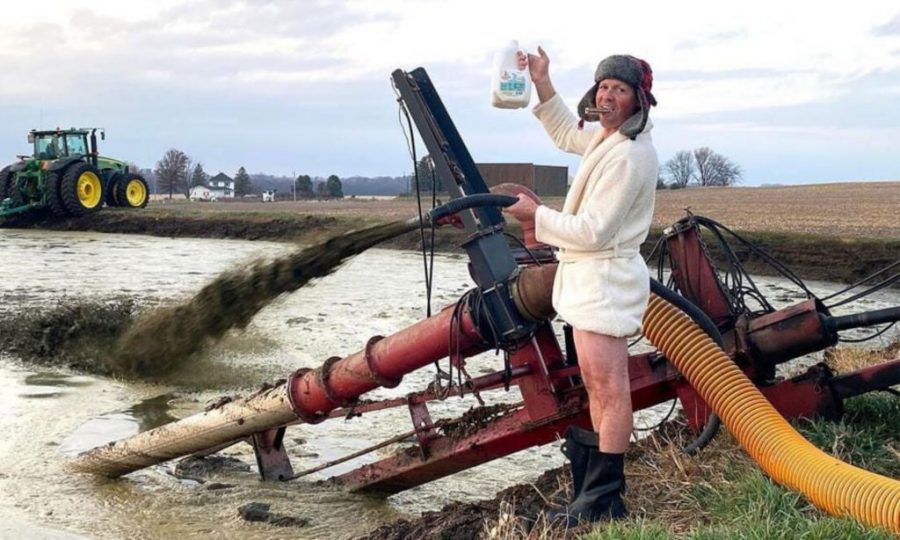


Bob and Marge Kaether, Waunakee, Wis., have been essential in the success of World Dairy Expo, specifically in the Purple Cow Gift Shop and WDE’s School Tour program. After a two-year hiatus of school tours, no one was more excited to see them return than Bob, who has led numerous fourth-grade students around Expo grounds, sharing his passion for the dairy industry. Marge can be found in the Purple Cow Gift Shop throughout the week, doing everything from sorting hangers and inventory to helping customers find the perfect gifts for their loved ones.

For over 20 years, Berta Hansen, Evansville, Wis., has served as the International Registration Coordinator. During this time, she has personally greeted over 58,000 international guests and manages the on-site interpreter team. Hansen has created a team that is compassionate, dedicated and essential to creating a memorable experience for Expo’s international guests.

The final friend honored was Adam Alesch of Madison, Wis. As an employee at Alliant Energy Center, Alesch touches every part of Expo and ensures its success. From setting the Showring and booths for the Trade Show to creating a home for dairy cattle and their exhibitors in the New Holland Pavilions, his work begins weeks in advance of the event and concludes weeks after the last cow goes home.

 Serving as the meeting place of the global dairy industry, World Dairy Expo brings together the latest in dairy innovation and the best cattle in North America. The global dairy industry will return to Madison, Wis. for the 56th event, October 1-6, 2023, when the world’s largest dairy-focused trade show, dairy and forage seminars, a world-class dairy cattle show and more will be on display. Download the World Dairy Expo mobile event app, visitworlddairyexpo.com or follow WDE on Facebook, Twitter, LinkedIn, Spotify, Instagram or YouTube for more information.

Categories : News

This season, Pepsi recommends that you enjoy your soda with a glass of milk.

Wednesday, December 7th, 2022

Pepsi started a promotion on Thursday that encourages people to try the combo and use the hashtag #PilkandCookies (as in Pepsi plus milk) to exhibit their Santa-friendly concoctions. The campaign will run through December 24. Those who take part in the online challenge that will be running until Christmas Day will be entered into a drawing for a chance to win cash prizes.

“Combining Pepsi with milk has long been a hidden hack among Pepsi lovers,” said Todd Kaplan, Pepsi’s chief marketing officer, in a statement about the campaign. “Combining Pepsi and milk has long been a secret hack among Pepsi fans.”

Pepsi is now promoting the cocktail as its own unique take on the popular TikTok craze known as “dirty soda,” which consists of combining soda with syrup and cream. Companies such as PepsiCo pay attention to what is going on on TikTok, and they frequently search for ways to join in on trends as a way to ensure that they continue to be relevant to young consumers.

“With the rise of the ‘dirty soda’ trend on TikTok and throughout the country, we thought Pilk and Cookies would be a great way to unapologetically celebrate the holidays,” said Kaplan. “With the rise of the ‘dirty soda’ trend on TikTok and throughout the country, we thought Pilk and Cookies would be a great way to una

Pepsi wanted to make the campaign even more popular, so they recruited Lindsay Lohan, who stars in the Christmas movie “Falling for Christmas” that is available on Netflix, to promote the combo.

Pepsi is attempting to create its own viral combination, so the company is providing a variety of recipe suggestions for anyone who want to expand their options beyond just mixing Pepsi with milk.

Some of these recipes include the Naughty & Ice, which combines Pepsi with one cup of whole milk, one tablespoon of heavy cream and one tablespoon of vanilla cream in addition to Pepsi; the Cherry on Top, which combines Pepsi Wild Cherry with half a cup of 2% milk, two tablespoons of heavy cream, and two tablespoons of caramel creamer; and the Snow Fl(oat), which combines Pepsi Zero Sugar and half a cup of oat milk

TikTok trends

The soda cocktails are relatively new to TikTok, but they have been popular in Utah for years. Utah has a significant proportion of Mormons, and some members of this religious group refrain from alcoholic beverages as well as hot beverages.

TikTok found out about the beverage after the Gen Z pop diva Olivia Rodrigo shared a photo of herself holding a Swig cup in December of the previous year. The image sent people searching for information about the Utah-based brand. Swig, which has been in business since 2010 and proclaims to be “home of the original dirty soda,” provides a wide variety of carbonated mash-ups and calls itself “home of the original dirty soda.”

According to a report published in April by Eater, the trend gained momentum very quickly. The article stated that “TikTok is now replete with more than 700,000 mentions of the #dirtysoda hashtag,” the majority of which accompany videos of creators showing viewers how to make their own dirty sodas at home.

Corporations have been motivated to capitalise on culinary trends by viral food sensations. Sometimes, these companies even create new goods based on what they see in the market.

For example, in September 2020, Dunkin’ Donuts collaborated with the popular TikTok star Charli D’Amelio to create a limited-time beverage called The Charli. This drink consisted of cold brew with whole milk and three pumps of caramel swirl, and it was modelled after D’Amelio’s preferred beverage order. On the day the app was launched, Dunkin’ Donuts broke their own record for the number of daily active app users. And during the course of the previous year, Starbucks conducted several tests about the viability of selling the popular Iced Matcha Latte with Chai on social media sites.

This year, Kraft Heinz introduced a new product called Dip & Crunch, which is a dipping sauce for burgers that comes packaged with “salty potato crunchers.” People are supposed to start by dipping a burger or sandwich into the sauce, then into the crunchers, and finally take a bite off of it. This is something that has supposedly been popular on TikTok, with some users praising the fad while others questioned it.

Categories : News

The United States has discovered a simple solution to lessen the environmental toll of the dairy industry.

Wednesday, December 7th, 2022

A recent study conducted by researchers at the University of California, Merced shows that the addition of even a small amount of biochar, which is a material similar to charcoal that is produced by burning organic matter, to the manure-composting process at a dairy can reduce methane emissions by 84%.

One of the most significant contributors to methane emissions in California is the dairy business, which is responsible for fifty percent of the state’s total methane output. The efforts being made by the state and the federal government to combat climate change must include the reduction of these emissions.

Rebecca Ryals, a professor of life and environmental sciences, referred to this phenomenon as a “great example of an undiscovered climate solution.” “Pollutant emissions from open burning of biomass and methane emissions from decomposing biomass are both reduced by using biochar,” says one study.

It is not common for dairies to have equipment like anaerobic digesters, but the dairy that the researchers worked on did so that it could properly manage the waste produced by its livestock. To achieve the climate goals that have been set, it is anticipated that most dairies will have digesters by the year 2030; however, at the moment, only a small fraction of dairies actually have them. One of the most significant contributors of organic waste in the state is manure from dairy farms. According to Brendan Harrison, a graduate student in his fourth year who is studying agroecology under Ryals and explains that farmers drain the waste from their barns and the liquids go into enormous uncovered ponds, while the solids are built up, the ponds are not covered. The farmers may sometimes cover the ponds in order to collect the methane emissions, which are then piped into generators and burned in order to produce energy.

According to Harrison, with the technology that are currently available, this strategy for cutting methane emissions is “really a pretty good way to reduce methane emissions.” “However, it does not account for any of the solids, which is an issue since in order to get rid of it, they either pile it up in large mounds or spread it out over areas that are close to the one in which it was produced. When you drive by a dairy, you’ll notice them covered in white plastic and kept down by tyres; they’re easy to spot. They are capable of generating so much heat that it causes them to spontaneously ignite.

Instead of hoarding the manure, the researchers looked into the possibility of composting it with biochar. According to Mechanical Engineering Professor Gerardo Diaz, biochar enhances the quality of composted manure, making it a more effective fertiliser for farmers to use on other portions of their land. This is one of the many benefits of using biochar.

“We were looking at ways to minimise emissions, but we were also looking at ways to bring some value to the community, particularly in areas that are disadvantaged,” Diaz said. “We investigated the potential of creating a mobile machine that we might take to various locations in order to process part of the material there.”

According to the findings of the study, smaller farmers would be able to utilise the improved fertiliser on their own farms to raise production or sell it to other people who have a requirement for it.

The study was made possible by funding from the California Strategic Growth Council. The research team, which was directed by Diaz, collaborated with Philip Verwey Dairy as well as industrial partners such as Golden State Carbon, LLC, and made use of the biomass that was found locally.

According to Diaz, “there is an urgent need to do something with that biomass because open-air burning is going to be banned in 2025.” Burning in an enclosed environment is required for the production of biochar.

The researchers, which included Diaz, Ryals, and professors Teamrat Ghezzehei, Asmeret Asefaw Berhe, YangQuan Chen, and Catherine Keske, examined the project from a variety of perspectives, such as emissions, a life-cycle analysis, the economic viability of such work, and how it affected the soil. The researchers also looked at how the project affected the soil.

Biochar, which was used by Indigenous people in their own farming practises, has the propensity to stay in the soil for much longer than other types of compounds, but the length of time it spends there is contingent on how the biochar is interacted with by the ecosystem of the soil, which includes the myriad of different microbes that can be found there. According to Ryals’ explanation, the longevity of any carbon that does remain in the soil is dependent on the ecosystem.

The conclusion that can be drawn from this research is that biochar is beneficial to dairy farmers as well as the environment. Diaz stated that additional research will investigate the various types of biochar that are composted together with dairy manure in an effort to encourage farmers to adopt this technology.

“Composting the solid manure isn’t the common practice, but if we go from stockpiling to composting, now we’ve gone from a carbon source to a carbon sink,” said Ryals. “If we go from stockpiling to composting, now we’ve gone from a carbon source to a carbon sink.” “Composting, by its very nature, is an activity that is incredibly good to the environment. And if you add just a tiny bit of biochar to that compost, you can basically double the impact that you have.

Categories : News

The decline of Vermont’s dairy farms ushers in an era of shrimp, saffron, and fresh perspectives.

Wednesday, December 7th, 2022

In response to the increased difficulty of producing milk and maple syrup due to climate change and other environmental concerns, a slew of new crops and agricultural enterprises have emerged.  Saffron, communal farming, and Vermont goats: The agricultural landscape of Vermont is shifting due to the introduction of new crops and industries.

There was a time when every country store in Vermont was stocked to the ceiling with homemade maple syrup and candies and the state’s landscape was lined with weathered red barns housing herds of dairy cows. Still present are the barns with their deteriorating cow paintings and the sugar maples that continue to attract autumn leaf peepers. However, the state’s most important agricultural products are in jeopardy due to changes in industry and environment.

According to the University of Vermont’s Climate Assessment 2021, the average temperature in Vermont has risen by over 2 degrees Fahrenheit since 1900, and the state has seen a worrisome 21 percent increase in precipitation. The state’s freeze-free period has expanded by three weeks since 1960, while winter temperatures have increased at a rate that is 2.5 times the yearly average. More flooding and drought are expected, which will make it harder to cultivate important crops and create additional problems for the state’s dairy farmers, according to experts.

As traditional crops grow more difficult to cultivate, a new wave of “agripreneurs” are jumping in to attempt something new. These farmers tend to be young, have never farmed before, and be more likely to be women or people of colour. And over time, these new crops and farmers have the potential to change the character of a state that has been defined for generations by its relationship to the soil.

Here are some examples of the innovative food and farming projects that are reshaping Vermont.

John Brawley cares for something considerably smaller than the cows that previously inhabited an ancient milking barn near Charlotte. He collects 100 pounds of Pacific white-leg shrimp every week from above-ground, indoor recirculating saltwater pools at Vermont’s first shrimp aquaculture business, Sweet Sound Aquaculture.

Seventy percent of the state’s agricultural economy was historically dependent on the dairy industry. However, Vermont’s small-scale operations lost ground to California’s expansive undertakings, and the state’s total number of dairy farms fell from more than 4,000 in 1969 to fewer than 600 in 2021. Hotter weather played a role in that change as well by making cows reduce their food intake and milk output. Charlotte’s 600-acre Nordic Farms, a dairy farm, went bankrupt in 2017. After a year, everyone sold their cows at auction. The area, however, was eventually incorporated into Vermont’s agricultural landscape. Gardener’s Supply’s creator, Will Raap, purchased the land with the intention of making it a showcase for Vermont’s “post-dairy agricultural economy.”

Raap decided that a cooperative farming model could succeed where Nordic Farms had failed, and thus Earthkeep Farmcommon was founded in 2021. Farmers markets and other events help more than a dozen farms, including Brawley’s, increase their customer base and strengthen their brands in the eyes of the general public.

Brawley wanted to cultivate locally caught shrimp, the United States’ second most popular seafood, in a landlocked state far from coastlines without negatively impacting the local ecosystem.

Brawley said as he used a net to collect virtually transparent mature shrimp, “This is efficient, sustainable, healthful, and helps the local economy.” The shrimp were kept in insulated lumber-framed ponds with smoother rubber liners. As of right now, Brawley is working solo, ensuring that the tanks have adequate oxygen levels and pH. Still, it costs him between $6 and $9 to produce a pound of shrimp, and the barn still reeks of a combination of shrimp and cows.

An outdated land-use regulation is partially responsible for Vermont’s renewed agricultural vitality. Act 250 went into effect in 1970, when Vermont was facing significant pressure to grow, and has proved crucial in preserving the state’s distinctive character. Because of its stringent evaluation process for new uses of farmland, commercial development is slowed down and other viable agricultural companies are given higher priority.

Vermont now enjoys a longer growing season thanks to global warming, making the state ideal for the cultivation of cereal crops like wheat. Russia’s invasion of Ukraine has increased global grain prices, helping to fuel the industry’s expansion. The viability and competitiveness of regional grains have increased, but they still face challenges due to a lack of processing facilities and infrastructure.

In order to “relocalize the grain industry,” as stated by Vermont Malthouse general manager Rob Hunter, the only malthouse in the state supplies malted grains obtained locally to the state’s brewers and distillers.

The grain “right now” comes from “a multitude of places geographically,” he said. We work with local farmers to grow as much as we can, and for the remainder, we look no more than 500 miles away,” Hunter explained. The majority of Vermont’s breweries (about 77) are interested in producing at least one beer made entirely from local ingredients.

Before Earthkeep’s release, one of Nordic Farms’ two main barns had been transformed into a granary, serving as a grain co-op that enabled milling, flaking, roasting, smoking, and blending. By installing steep tanks, a heating system, a chiller, and a flaker, the malthouse was able to increase its output by a factor of two.

Malting often occurs with rye, wheat, and barley. The process of steeping grain involves soaking the grain in water to reawaken the dormant seeds, which are then given time to germinate and grow. The sprouting grain is kilned after about four days of growth, after which it is cleaned and bagged. Eventually, Hunter hopes to crank out 75 metric tonnes of finished malt per month. In its current, more modest form: Yesterday I hauled 30 fifty-pound bags to the original Foam Brewers location in Burlington, Vermont, on the banks of Lake Champlain. We’re trying out a new method for making koji malt, the rice malt used in making sake. It’s a group effort,” Hunter remarked.

To prevent milk prices from plummeting in 2020, the co-op that the Jones family was a part of mandated that all members reduce production to 85 percent of capacity and dump the excess. (Because at the start of the pandemic, businesses and institutions didn’t feel comfortable purchasing milk.) Meanwhile, due in part to drought and climate change-related harsh weather, the cost of feed, hauling fees, and even manure disposal had soared. There was a common belief that you needed at least a thousand cows to make a profit. No one in the Jones family owned enough land to house that many people.

The Jones family parted ways with their 320 milkers in April of 2020, selling them to a New York farmer. The Jones family had a dreadful day, but sons Brian and Steven, the fifth generation to farm the land, were prepared.

Carolyn, their mother, still gets emotional recalling her cows and the painted plywood cow head that she installed atop their barn. Now, though, 1,500 goats are seen inside the pen, parkouring across the hay piles and each other. The goat milk produced at Joneslan Farm in Hyde Park is sold to Vermont Creamery, making it the state’s largest goat dairy.

What’s the deal with the goats? Because it is solid rather than liquid, their waste does not pose the same environmental problems as cow manure does. Furthermore, it’s much less of a hassle to compost. Since the Joneses have stopped spreading 2 million gallons of liquid manure across their farm, their diesel use has decreased. Goats benefit from the milder environment of Vermont, where the Jones brothers farmed feed grains on 300 of their acres and rented other fields to meet the family’s needs while they had cows.

According to Todd Haire, co-owner of Burlington’s Foam Brewers, “changes have occurred that have allowed grapes to grow — and people are betting on it.” Haire’s passion project is the production of organic wines. Until recently, Vermont wineries could only use hybrid grapes that were resistant to the state’s cold climate. The changes in climate are also allowing him to use a wider variety of ingredients in his brews.
This past month’s selections from House of Fermentology. The changing climate has allowed the brewery to use a wider variety of ingredients. The Washington Post’s Zoeann Murphy.

For a while, “this is the fruit we have, so these are the beers we can create,” Haire explained. The ability to cultivate a peach in Vermont was severely limited 15 years ago. And now they’re wherever you look.

Haire’s side endeavour, House of Fermentology, is located at Earthkeep and is one of Vermont Malthouse’s clientele. The beers he is ageing in barrels are made with local ingredients like honey and botanicals from the farm, as well as ingredients like regional grains and hops and local fruits.

The sugar maple’s ideal climate is moving farther north into Canada as the planet warms. Shorter seasons, lower sap flow rates, and reduced sugar content in the syrup have resulted from not-as-cold low temperatures, higher high temperatures, and a lack of cold nights. (More sap is needed to boil into syrup when the sugar level is low.) The soil in Vermont is becoming less sugar maple-friendly as a result of climate change, and pests have a longer growing season as a result.

The state’s agricultural scientists are looking into methods through which farmers might “hedge their bets” by increasing the variety and economic value of their harvests. Saffron is one of Vermont’s up-and-coming spices.

About $16 million worth of the tiny red crocus pistils used to season and colour dishes like bouillabaisse and risotto are imported annually by the United States. Even though Iran and Spain have long been associated with the cultivation of the world’s most expensive spice, over 200 growers in Vermont are now doing it as well. Arash Ghalehgolabbehbahani, an agroecologist specialising in sustainable agriculture and crop diversification, and University of Vermont research professor Margaret Skinner established the North American Center for Saffron Research & Development in South Burlington, pioneering the farming of this lucrative crop as a way for small Vermont farmers to expand their options.

These low-growing floral plants are typically planted around the outside of a solar array, nestled in the shadow of the panels. In a world with increasingly harsh sun, drought, and extreme rain events, a new field of agricultural study called agrovoltaics uses the same land to capture solar energy and food.
Saffron is harvested in South Burlington, where the North American Center for Saffron Research and Development is located. The Washington Post’s Zoeann Murphy.

After most of the state’s other crops have been harvested, late summer is when you plant these bulblike corms to enjoy their purple blossoms in October and November. Harvesting the flowers and removing the vivid red filaments requires farmers to work quickly. About 75,000 blooms are required to produce a pound of the prized spice, which is then dried and stored. Farmers can leave the corms in the ground for three to five years before replanting, which is beneficial for the soil and helps absorb carbon from the atmosphere because there is less need for tilling and field disturbance.

Because of the extremes and unpredictability brought on by climate change, diversification is crucial for farmers. Skinner said on Monday that saffron “fits nicely into that model.” Even though we only had our first hard frost a week ago, saffron flowering is nearly complete this week in the Burlington area. I don’t care about the numbers; I care about what I see: if we keep having drops like this year, I’m not sure I want to invest in the state’s ski industry.

Categories : News

Movie scene from “Christmas Vacation” recreated by Iowa dairy farmer

Tuesday, December 6th, 2022

“The idea to reproduce the moment from the film “Christmas Vacation,” about a family whose Christmas plans turn into a massive disaster,” he said, “came at the ideal time, when we were emptying out the manure pit.” “Christmas Vacation” is about a family whose Christmas plans turn into a huge disaster.

In reference to the endeavour that his farm undertakes twice each year, he stated, “When she’s full, she’s full.”

In the film, the character of Cousin Eddie, who is portrayed by Randy Quaid, is seen parking his recreational vehicle in front of the house of a relative, saying, “That there’s an RV. It’s a nice-looking motor vehicle, wouldn’t you say? He then goes on to shake hands with the neighbours while simultaneously emptying the septic tank of the camper into the storm sewer. He does all of this while wearing a bathrobe and a winter cap, smoking a cigar, and drinking a beer.

“Farmer Blake” can be seen in the Hansen video, which was initially published on TikTok on Monday, “agitating the manure” in order to make it simpler to empty the pit. He puffs on a cigar while wearing an identical getup, which includes the bathrobe that belonged to his wife. He is not holding a drink but rather a gallon of Hansen’s milk in his hand.

According to Hansen, “we hope that it lightens the mood around the holidays, especially during these terrible times with the economy being how it is.”

TikTok, along with other sites such as Facebook, has already seen a significant number of users click on the video.

He initially watched the movie around the time it was released three decades ago, and ever since then, his family has made it a tradition to watch it at least once a year.

Hansen said that the book “has so many good lines that you can use in everyday life.” [Citation needed]

The farm is always looking for new and inventive methods to demonstrate its business practises and the steps that are taken to bring its produce “from the cow to the table.”

“People don’t comprehend how much money the manure saves us in fertiliser,” Hansen said. “People don’t grasp how much money the manure saves us.” It is of great assistance to us in the cultivation of our crops, which in turn provide food for our cattle.

Hansen thinks that the thing that’s really getting people’s attention is the fact that they can see his legs through the white bathrobe.

Hansen cracked a joke by saying, “My family claims I have the ugliest legs.”

Categories : News

Dairy Girl Network Recognizes Forward Under 40 (+4) Award Winners

Tuesday, November 29th, 2022

Dairy Girl Network (DGN) honored four dairywomen with awards of leadership achievement at the recent DGN Forward TogetHER biennial national conference in Prior Lake, Minnesota. The four dairywomen recognized for the DGN Forward Under 40 (+4) sponsored by Compeer Financial were Julie Abrahamzon, Kansas City, Mo.; Amanda Freund, East Canaan, Conn.; Leaine Souza, Tulare, Calif., and Emily Yeiser-Stepp, Leesburg, Virginia.

The DGN Forward Under 40 (+4) Award sponsored by Compeer Financial, recognized four passionate dairywomen working to better our industry today. The DGN Forward Under 40 award is presented biennially at the Forward TogetHER Conference. For 2022 only, women age 44 and under were eligible for the DGN Forward Under 40 (+4) award. Because the 2020 DGN Forward TogetHER event was held virtually, award recipients were not honored. Therefore, the 2022 award criteria was modified to Forward Under 40 (+4) opening the door for women who may have missed the opportunity in 2020.

Julie Abrahamzon, Kansas City, Mo., was one of the DGN Forward Under 40 (+4) honorees of 2022 sponsored by Compeer Financial. Abrahamzon has experience in leading high performing teams, business development, strategy and financial management. She has a deep passion for delivering value to dairy customers and developing her teammates. Starting as an “only” in her early days as a management associate, she has risen to be an outstanding leader and enacted positive change for the Cargill organization along the way. Early in her career, she became one of the first, and youngest, female sales leaders within the Cargill Animal Nutrition business. Thanks to her incredible work ethic and key allyship—which she always is quick to mention— she became “the only” female on the Cargill dairy leadership team before she turned 30. She is currently the commercial director for the Cargill Animal Nutrition North America Dairy Business. She has been with Cargill for 16 years in a variety of leadership roles, all within animal nutrition and health.

Amanda Freund, East Canaan, Conn., was one of the DGN Forward Under 40 (+4) honorees of 2022 sponsored by Compeer Financial. Freund was raised on a multi-generational dairy farm, embracing responsibilities and privileges from childhood through her adulthood. She served in the Peace Corps in Zambia. Freund is involved with her family’s farm market, nursery and catering operation, in addition to being a principal employee of CowPots. She is active with her Cooperative’s Young Cooperators organization, served with Connecticut Farm Bureau, Connecticut Dairy Board and hosts her own podcast that focuses on connecting people to their food. She opens her farm and business to the public to encourage and improve consumer and neighbor perceptions and knowledge. Freund has been featured by Forbes, has engaged policy makers at every level from hosting the Undersecretary of the USDA to local and congressional officials. She lends her voice and talents as a speaker and panelist often, including at the DGN Forward TogetHER Conference.

Leaine Souza, Tulare, Calif., was one of the DGN Forward Under 40 (+4) honorees of 2022 sponsored by Compeer Financial. Souza is making a difference in her local, state and national community. Her husband’s family has a dairy farm in which she is active along with her husband and children, giving back to their local community and involvement in 4-H. She continually advocates for dairy producers to ensure their voice and specific issues and concerns are being heard. Souza also serves on the board of DairyCares and the California Ag Council. She has volunteered to assist DGN in organizing events at the World Ag Expo for dairywomen to connect during the event. Souza has been a Land O’ Lakes employee for over 15 years starting her career at the Tulare Butter Manufacturing Facility, holding several roles in quality and member and government relations organization. She is currently the director of the western region for member & government relations.

Emily Yeiser-Stepp, Leesburg, Va., was one of the DGN Forward Under 40 (+4) honorees of 2022 sponsored by Compeer Financial. Yeiser-Stepp has impressed many people by how she manages a team and the dairy farmers she serves. Through her professional career, she has always made it a point to uplift those around her. Her confidence and integrity have allowed her to always speak her mind and stand up for what she believes in – and who she believes in. This has a domino effect because of her mentorship and sponsorship of other women, they have been able to do the same. Her confidence and open mind allow her to effectively lead the National Dairy FARM Program, which is creating a better life for dairy animals and a stronger trust between farmers and consumers. She has been involved in a lot of dairy organizations including, but not limited to, Dairy Girl Network, YDLI, WDE Youth Planning Committee, WDE Dairy Judging Contest Official, Maryland State Fair, PSU Dairyman’s Scholarship Committee and her local bible study. Today, she serves as the Vice President of the NMPF FARM program.

Dairy Girl Network partners with organizations valuing personal and professional development for dairywomen. DGN national partners supporting all women in dairy by enhancing lives and creating opportunities are Undeniably Dairy, Cargill, Dairy Farmers of America, Diamond V, The National Dairy FARM Program, Farm Credit Services of America, Land O’ Lakes, Merck Animal Health, Michael Best and Zoetis.

Categories : News

In October of 2022, dairy commodity markets fell further.

Tuesday, November 29th, 2022

Dairy

In October of 2022, dairy commodity markets fell further.

Spot prices throughout the dairy industry dropped by nearly double digits. Investors are getting increasingly anxious as they try to predict the future of consumer demand.

The current trend in prices is driven largely by the fact that Chinese buyers are not actively buying imports.

As of September 2022, New Zealand’s milk production had dropped back to 3.2% YOY, continuing a trend that began in the previous season. Year-on-year, seasonal supply is down 3.7% so far.

A lacklustre spring has impacted production in most regions. By the time peak flows occurred in late October, production may have been recouped in part.

Beef

The final tally for the 2022 season’s processing has been tallied. A total of 5.2% fewer cattle were processed this season compared to the 2020-21 period, with reductions across the board but especially noticeable in the numbers of prime beef, cows, and bulls.

In 2022, it was predicted that both the number of cattle slaughtered for beef and the number of female cattle slaughtered for meat would be about 1.5% and 5% lower year over year, respectively. Slaughter rates had been rising steadily since 2021, when they hit a peak due to rising bobby calf retention in 2019. There were about 69,000 fewer cows slaughtered in comparison to the previous year. This is likely because farmers were encouraged to keep more dairy cows by the high milk price.

Additionally, there was a 3% decrease from 2021 to 2022 in the number of bobby calves processed during the spring of 2022 (July, August, and September). Dairy farmers who supply Fonterra have been preparing for the implementation of zero on-farm euthanasia of bobby calves beginning in 2023, prompting the meat industry to anticipate an increase in the number of bobby calves presented for processing.
Sheepmeat

The price of South Island lamb reached its all-time high in September and has since steadily declined, reaching NZ$ 9.25/kg cwt by the end of October. Although the current price of lamb is still above average, it has dropped below the projection for the same period in 2021 (by NZc 15/kg cwt).

About 560,000 lambs were slaughtered in 2022, down 3.1% from the previous season.

New Zealand’s key lamb markets, including China, Europe, and the United States, are experiencing economic instability, which is affecting both demand and export earnings.
Fertiliser

Reduced natural gas prices restored manufacturers’ profitability, resulting in a drop from 67% to 37% for nitrogen plant curtailments across Europe.

This adds about 4 million tonnes of urea per year to the supply chain, which is a 45% increase in site numbers since the energy price increase in 2022. Prices around the world are starting to reflect this new reality, though in some areas, the effects have been muted. Spot prices for urea in the Baltic Sea decreased by 3% MOM in October, going from NZ$ 940 to 1,030/tonne to NZ$ 910 to NZ$ 1,000/tonne.
Quote for Exchange

By the end of October, the New Zealand dollar had recovered slightly from its year-low level of US$ 0.55, trading between US$ 0.55 and US$ 0.58.

The US dollar is expected to remain strong in the near future as investors prepare for the Federal Reserve to raise interest rates by another hawkish 75 basis points.

The New Zealand dollar’s correlation with commodity prices suggests further downside in NZ$/US$ despite forecasts for further RBNZ rate hikes.

In a year, we anticipate a reversal in the US dollar’s strength that will allow the NZD/USD exchange rate to recover to 0.62.

Categories : News

Dairy Girl Network Announces Leading Impact Award Winner

Tuesday, November 29th, 2022

Dairy Girl Network (DGN) awarded Pam Selz-Pralle, of Humbird, Wis., with the Leading Impact sponsored by Beck’s at the recent DGN Forward TogetHER biennial national conference in Prior Lake, Minn.

New this year, the DGN Leading Impact Award sponsored by Beck’s, honored a distinguished dairywoman with passionate involvement and leadership achievements positively impacting the dairy industry. Members of the Dairy Girl Network from across the country nominated a dairywoman in their life who they believe is impacting the industry right now. The pool of applicants was judged by an outside panel of anonymous industry professionals and producers.

“Dairywomen are moving the arrow forward contributing success to the dairy industry,” said DGN President and Founder Laura Daniels. “DGN’s awards are milestone achievements honoring women in dairy who are positively influencing dairy farming into the future.”

The DGN Leading Impact nominations exemplified passionate involvement and leadership achievements that have impacted the dairy industry. Candidates have impacted dairy farming and are leaders within the agricultural industry, and their communities and paved the way for youth and/or young adults.

Pam Selz-Pralle, Humbird, Wisc., was honored with the first DGN Leading Impact Award sponsored by Beck’s. Selz-Pralle mentors and models making better leaders to lead stronger dairy organizations, be leaders in their communities, and the voice of dairy farming. Her experience and leadership range from production agriculture to industry development to consumer advocacy. Yet, Selz-Pralle still manages to adventure into new projects while still keeping things going strong at home farming with her husband, Scott. They have been awarded Holstein USA Outstanding Younger Breeders, Wisconsin Jaycee Outstanding Young Dairymen and bred the World Record Milk Cow. She was honored as a Wisconsin Master Agriculturalist, one of four women in its 45-year history to receive this award. On the farm, she instituted an uncommon calf feeding system of mob feeding, group pens, in a positive pressure ventilated barn. She has become a national spokesman for her program at major events and fields questions regularly from those touring her innovative, data-supported calf feeding program.

Selz-Pralle testifies and speaks directly to legislatures coordinated discussion forums for Wisconsin Farm Bureau and the American Dairy Coalition. She has served countless organizations impacting dairy through local, state, national, and international boards. She volunteers and speaks to consumers at farm-to-table events. She is a spokesman for Common Ground and has participated in national radio tours, national cooking shows hosted right from her calf barn, as well as in-person consumer connection events ranging from a Kansas City daycare moms’ event to regularly attending Wisconsin Dietetics annual meetings.

Selz-Pralle is a trainer in teaching other dairywomen how to tell their story. She’s also developing a “Speak up for Ag” 4-H training program to teach dairy and livestock kids not growing up on farms how to be our future farm storytellers. She has shared her successful “Dairy Day on The Farm” template with other farm women. Nearly 12,000 students follow her calves, podcasts, videos, and “Farmer Pam’s Moos” blog.

Dairy Girl Network partners with organizations valuing personal and professional development for dairywomen. DGN national partners supporting all women in dairy by enhancing lives and creating opportunities are Undeniably Dairy, Cargill, Dairy Farmers of America, Diamond V, The National Dairy FARM Program, Farm Credit Services of America, Land O’ Lakes, Merck Animal Health, Michael Best and Zoetis.

Categories : News

2023 World Dairy Expo Judges Announced

Monday, November 28th, 2022

World Dairy Expo announced the official judges for the eight dairy shows to be held October 1-6, 2023:

International Ayrshire Show – Kurt Wolf, Guttenburg, IA
International Brown Swiss Show – Chris Lahmers, Marysville, OH
International Guernsey Show – Kevin Hartmann, Mulberry Grove, IL
International Holstein Show – Lynn Harbaugh, Marion, WI
International Junior Holstein Show – Callum McKinven, Canton de Hatley, QC
International Jersey Show – Mike Duckett, Rudolph, WI
International Milking Shorthorn Show – Brandon Ferry, Hilbert, WI
International Red & White Show – Phillip Topp, Botkins, OH

Congratulations to these judges – see you in the middle of the ring!

Categories : News, World Dairy Expo

$100,000 Raised for NY Siblings Blake & Ryleigh

Monday, November 28th, 2022

Since Seth Wadsworth, a dairy farmer and father in Ballston Lake, New York, died recently, people in the dairy industry in New York and beyond came together to set up a benefit auction for his children, Blake and Ryleigh Wadsworth. Last week, the benefit sale was held on Cowbuyer.com. People brought all kinds of things to sell, from embryos to paid show entries to baskets of goodies. The dinner at The Barn at Hansen Hill Farm on Saturday night was the last part of the fundraiser. People came from all over to help raise money for Blake and Ryleigh Wadsworth. By the end of the night, they had raised $100,000. This is on top of the $60,917 that was raised through a GoFundMe page set up for them.

Categories : News, Show Reports
« Previous Page
Next Page »
Slide 1
Slide 1
Slide 1
Slide 3
Slide 3
Slide 3
Slide 4
Slide 4
Slide 4
Slide 2
Slide 2
Slide 2
Slide 6
Slide 6
Slide 6
Overlays
PreviousNextPreviousNext

Slide 5
Slide 5
Slide 5
Style_Bullvine
Style_Bullvine
Style_Bullvine
Slide 8
Slide 8
Slide 8
Slide 10
Slide 10
Slide 10
Slide 5
Slide 5
Slide 5
Slide 8
Slide 8
Slide 8
Overlays
PreviousNextPreviousNext

Recent Articles

  • Does Your Breeding Program Fit Your Milk Market?
  • 40% Muscle Loss in 60 Days: The Genetic Time Bomb Hiding in Your Fresh Pen
  • Biology Repriced Dairy: $4,000 Heifers Created a 90-Day Window When You Have Leverage, Not Processors
  • The $23,000 Mistake: Why ‘Immune Support’ Isn’t Fixing Your Fresh Cow Problems
  • Your Lender’s Already Doing the Math: The 45-Day Survival Guide for Mid-Sized Dairy Operations

News

  • Does Your Breeding Program Fit Your Milk Market?
  • 40% Muscle Loss in 60 Days: The Genetic Time Bomb Hiding in Your Fresh Pen
  • Biology Repriced Dairy: $4,000 Heifers Created a 90-Day Window When You Have Leverage, Not Processors
  • The $23,000 Mistake: Why ‘Immune Support’ Isn’t Fixing Your Fresh Cow Problems
  • Your Lender’s Already Doing the Math: The 45-Day Survival Guide for Mid-Sized Dairy Operations
The Bullvine LLC © 2024 | Terms of Use | Community Guidelines | Privacy Policy |
Manage your privacy
To provide the best experiences, we use technologies like cookies to store and/or access device information. Consenting to these technologies will allow us to process data such as browsing behavior or unique IDs on this site. Not consenting or withdrawing consent, may adversely affect certain features and functions.
Functional Always active
The technical storage or access is strictly necessary for the legitimate purpose of enabling the use of a specific service explicitly requested by the subscriber or user, or for the sole purpose of carrying out the transmission of a communication over an electronic communications network.
Preferences
The technical storage or access is necessary for the legitimate purpose of storing preferences that are not requested by the subscriber or user.
Statistics
The technical storage or access that is used exclusively for statistical purposes. The technical storage or access that is used exclusively for anonymous statistical purposes. Without a subpoena, voluntary compliance on the part of your Internet Service Provider, or additional records from a third party, information stored or retrieved for this purpose alone cannot usually be used to identify you.
Marketing
The technical storage or access is required to create user profiles to send advertising, or to track the user on a website or across several websites for similar marketing purposes.
Statistics

Marketing

Features
Always active

Always active
Manage options Manage services Manage {vendor_count} vendors Read more about these purposes
Manage options
{title} {title} {title}
Manage your privacy

To provide the best experiences, we and our partners use technologies like cookies to store and/or access device information. Consenting to these technologies will allow us and our partners to process personal data such as browsing behavior or unique IDs on this site and show (non-) personalized ads. Not consenting or withdrawing consent, may adversely affect certain features and functions.

Click below to consent to the above or make granular choices. Your choices will be applied to this site only. You can change your settings at any time, including withdrawing your consent, by using the toggles on the Cookie Policy, or by clicking on the manage consent button at the bottom of the screen.

Functional Always active
The technical storage or access is strictly necessary for the legitimate purpose of enabling the use of a specific service explicitly requested by the subscriber or user, or for the sole purpose of carrying out the transmission of a communication over an electronic communications network.
Preferences
The technical storage or access is necessary for the legitimate purpose of storing preferences that are not requested by the subscriber or user.
Statistics
The technical storage or access that is used exclusively for statistical purposes. The technical storage or access that is used exclusively for anonymous statistical purposes. Without a subpoena, voluntary compliance on the part of your Internet Service Provider, or additional records from a third party, information stored or retrieved for this purpose alone cannot usually be used to identify you.
Marketing
The technical storage or access is required to create user profiles to send advertising, or to track the user on a website or across several websites for similar marketing purposes.
Statistics

Marketing

Features
Always active

Always active
Manage options Manage services Manage {vendor_count} vendors Read more about these purposes
Manage options
{title} {title} {title}
Send this to a friend