


Archive for Southeast Asia dairy market

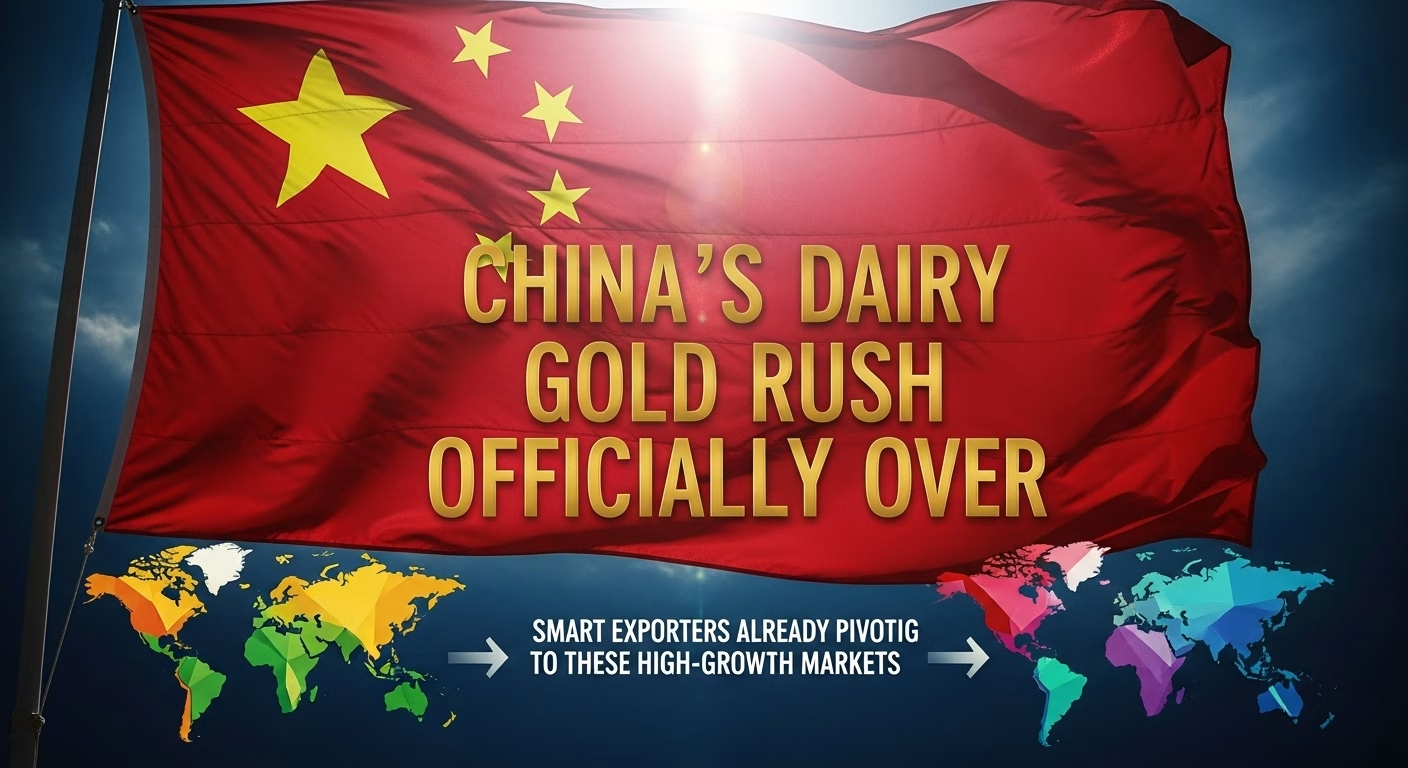
China’s Dairy Gold Rush Officially Over: Smart Exporters Already Pivoting to These High-Growth Markets

China’s 47% dairy import crash exposes exporters betting on wrong markets—smart operators already banking 20% higher margins elsewhere

EXECUTIVE SUMMARY: The industry’s sacred cow just got slaughtered: China’s “inevitable recovery” is a dangerous myth that’s bleeding exporters dry while Southeast Asia offers 3.14% annual growth and genuine import demand. The data destroys conventional wisdom—China’s milk powder imports crashed 47% since 2021, with 80% of Chinese farms now selling below their cost of production due to government-subsidized oversupply. Meanwhile, progressive exporters are capturing 15-20% higher margins in growth markets where structural milk deficits create sustainable pricing power instead of taxpayer-funded competition. Southeast Asia’s 3.14% CAGR and the Middle East’s 4.6% growth represent $3.3 billion in redirected revenue that China’s structural decline is permanently redistributing to operators smart enough to pivot. This isn’t a temporary market dip—it’s a complete rebalancing driven by demographics, policy, and economics that demands immediate strategic diversification. Stop chasing China’s shrinking margins and start banking profits in markets that actually want your milk equivalent instead of trying to replace it with subsidized domestic production.

KEY TAKEAWAYS

  • Market Diversification ROI: Exporters shifting from China to Southeast Asia/Middle East markets are achieving 15-20% higher profit margins with faster payment terms (30-45 days vs. China’s 60-90 days), creating immediate cash flow improvements and reduced political risk exposure
  • Strategic Pivot Framework: The 90-day diversification blueprint redirecting 25-30% of marketing resources toward growth markets delivers measurable revenue protection against China’s structural $3.3 billion import contraction while competitors fight over subsidized scraps
  • Alternative Market Fundamentals: Southeast Asia’s structural milk production deficit and 3.14% CAGR growth, combined with Middle East’s 4.6% expansion driven by health campaigns, creates genuine import demand versus China’s policy-driven substitution of foreign supply with domestic surplus
  • Technology Integration Advantage: North American exporters leveraging genomic testing expertise, precision agriculture systems, and processing technology partnerships can capture defensible high-value niches worth $2,000-4,000 per MT premiums versus commodity powder’s break-even margins in oversupplied Chinese markets
  • Implementation Urgency: The 18-month competitor lag time for market diversification creates a critical advantage window for exporters who establish distributor relationships in Indonesia, Malaysia, Saudi Arabia, and Mexico before intensified competition arrives from redirected New Zealand and EU volumes
China’s dairy import collapse isn’t a temporary dip—it’s structural devastation. With milk powder imports crashing 47% since 2021 and 80% of Chinese farms selling below cost, the exporters still chasing Beijing’s “recovery” are about to get crushed by operators who’ve already captured Southeast Asia’s 3.14% annual growth.

Here’s the brutal truth your industry consultants won’t tell you: China’s era as the volume-driven growth engine “capable of absorbing near-limitless quantities of commodity dairy products” is definitively over. The numbers don’t lie—total milk powder imports collapsed from 2.58 million metric tons in 2021 to just 1.36 million MT by 2024, representing a catastrophic 47% market contraction.

But while your competitors fight over China’s shrinking margins, the smartest operators are already banking serious profits in markets that actually want what you’re selling.

The Demographic and Policy Reality That Killed China’s Appetite

Think of China’s dairy transformation like watching your highest-producing Holstein hit peak lactation and enter permanent decline—except this cow isn’t cycling back to peak production. The fundamentals have shifted permanently.

The Birth Rate Catastrophe China’s demographic collapse has demolished the foundation of dairy demand growth. Infant formula imports plummeted 37.1% from 350,000 MT in 2021 to just 220,000 MT in 2024. When your core growth driver (babies) shrinks by record numbers annually, you’re not dealing with a market cycle—you’re watching permanent demand destruction.

The Self-Sufficiency Sledgehammer Beijing’s food security obsession created something exporters never saw coming: a policy-driven supply glut so severe that 80% of Chinese dairy farms are now selling milk below their cost of production. Raw milk prices crashed 30% from their 2021 peak by mid-2024, forcing processors to convert surplus milk into powder with government subsidies.

The government of Xinjiang alone offered subsidies of 4,000 RMB per metric ton for whole milk powder production starting in mid-2024. Translation? China is now competing against its own imports with a taxpayer-funded domestic product.

The Economic Slowdown Reality China’s economy entered “a period of protracted slowdown, marked by a deep crisis in the real estate sector, high youth unemployment, and persistently weak consumer confidence”. Cautious consumers began cutting back on premium-priced imported dairy products, creating a perfect storm of reduced demand and increased domestic competition.

Where the Real Money Is Moving: Verified Growth Markets

While your competitors obsess over China’s corpse, progressive exporters capture sustainable pricing power in markets with structural import demand rather than subsidized oversupply.

Southeast Asia: The Premier Growth Engine Southeast Asia represents the strongest fundamentals for long-term success, with a projected 3.14% CAGR growth through 2033. Unlike China’s policy-driven self-sufficiency push, Southeast Asia has structurally low domestic milk production, unable to meet escalating demand.

The region’s demand is powered by fast-paced urbanization, a growing middle class with rising disposable incomes, and heightened consumer consciousness around health and nutrition. The Philippines exemplifies this opportunity—local production accounts for only 1% of domestic requirements, creating massive import dependency.

Middle East: Health-Driven Premium Demand The Middle East offers even stronger growth at 4.6% CAGR through 2030, driven by government-led health and wellness campaigns to combat high rates of lifestyle diseases and a growing affluent expatriate population. Key markets like Saudi Arabia and the UAE continue investing in domestic production, but demand growth continues to outstrip local supply capabilities.

Latin America: The Steady Recovery Play Latin America’s dairy market projects steady growth at +0.4% CAGR through 2035. The region is emerging from a period of significant volatility caused by severe weather events and economic instability, with Mexico representing a large, stable import market for North American exporters.

The New China Strategy: Defensible High-Value Niches Only

Here’s where conventional industry wisdom gets dangerous. Most exporters still believe they can “pivot to premium products” in China. According to the research data, this advice isn’t just wrong—it’s catastrophic.

The Premium Product Myth Destroyed Cheese, long touted as the “next high-growth frontier,” has faltered dramatically. Cheese sales value declined for three consecutive years through the first half of 2024. This collapse occurred despite years of industry predictions about China’s premium product opportunity.

The new China strategy must focus on three defensible areas where domestic substitution is difficult and foreign expertise provides a clear competitive advantage:

  • Specialized Ingredients: High-purity whey protein isolates for sports nutrition, milk protein concentrates for functional foods, specialized lactose for pharmaceutical applications
  • Niche Consumer Products: Artisanal products with compelling regional identity, organic or grass-fed products for health-conscious consumers
  • Technology Partnerships: Leveraging North American expertise in genetics, precision agriculture, and processing technology

Your 90-Day Market Diversification Blueprint

Month 1: Intelligence Gathering & Risk Assessment

  • Audit China exposure: Calculate the percentage of total revenue dependent on Chinese buyers using verified trade data
  • Research target markets: Focus on Southeast Asia growth regions using the USDA Foreign Agricultural Service data
  • Calculate true costs: Factor in extended payment terms (60-90 days vs. 30-45 days in growth markets), tariff risks, margin pressure

Month 2: Market Testing & Relationship Building

  • Ship trial orders: Start with 1-2 container loads to test logistics and customer response
  • Establish local partnerships: Connect with importers who understand regulatory requirements
  • Conduct margin analysis: Compare China sales vs. alternative market opportunities using verified pricing data

Month 3: Strategic Reallocation

  • Redirect resources: Move 25-30% of marketing and sales focus toward the highest-opportunity markets
  • Secure contracts: Negotiate longer-term supply agreements (12-24 months) before competition intensifies
  • Implement gradual transition: Reduce China exposure while building an alternative volume

Global Impact: How Major Exporters Are Already Adapting

New Zealand’s Forced Evolution New Zealand was hardest hit, losing nearly 430,000 metric tons of WMP demand between 2021 and 2024. The country accounted for 46% of China’s total dairy imports by volume in 2024 and an astonishing 92% of its WMP imports, making it the epicenter of the shock.

European Union’s Diversification Success The EU experienced a massive 31% drop in dairy product volumes shipped to China in 2022 alone. However, exporters with diversified portfolios maintained better overall performance, particularly Danish and Dutch cooperatives leveraging specialty cheese expertise in Middle Eastern markets.

United States’ Strategic Focus U.S. dairy exports to China peaked in 2022 at over $800 million before falling to an estimated $583 million by 2024. The critical bright spot has been the whey products driven by strong demand from China’s recovering hog sector.

Market Comparison: Where Your Margins Thrive vs. Die

Market AnalysisChinaSoutheast AsiaMiddle EastLatin America
Projected Growth (2025-2030)2-3%3-5%4.6%~1.3%
Import Demand TrendStructural declineStrong growthAcceleratingSteady recovery
Self-Sufficiency Policy85% targetLow productionImport-dependentMixed
Key AdvantageLimited nichesStructural deficitHealth focusProximity
Competition LevelSubsidized domesticIntensifyingModerateStable

Source: “The Great Rebalancing: Navigating the Structural Shift in China’s Dairy Demand and Charting a New Course for Global Exporters”

Why This Matters for Your Operation: The ROI Reality

Current China Strategy Costs (Verified Data):

  • Payment terms: 60-90 day cash flow impact vs. 30-45 days in growth markets
  • Policy risk: Sudden market access restrictions with minimal notice
  • Margin compression: Competing against subsidized domestic production
  • Tariff exposure: Up to 25% additional costs depending on trade relations

Alternative Market Benefits (Research-Backed):

  • Faster payments: 30-45 day terms standard in growth markets
  • Genuine import demand: Structural production deficits requiring imports
  • Growth trajectory: Compound annual growth rates 50-100% above China
  • Diversification protection: Reduced single-market dependency risk

The Bottom Line: Your Export Future Depends on This Pivot

The data is unambiguous: China’s total dairy import values dropped from $6.8 billion in 2021 to an estimated $3.5 billion in 2024—a staggering $3.3 billion market contraction. This isn’t a temporary dip; it’s a structural rebalancing driven by policy, economics, and demographics.

China’s dairy market’s compound annual growth rate over the next two decades is projected at just 2-3%, half the pace of the previous 20 years. Meanwhile, Southeast Asia offers 3.14% CAGR, the Middle East delivers 4.6% CAGR, and these markets actually need your imports instead of trying to replace them.

Research from leading dairy economists confirms that exporters with diversified portfolios performed better during China’s downturn than those with concentrated exposure. The evidence is overwhelming—diversification isn’t just a smart strategy, it’s survival.

Your competitors won’t make this pivot for another 18 months—that’s your advantage window. The operators who establish positions in Southeast Asia, the Middle East, and Latin America now will capture the revenue that China’s structural decline is permanently redistributing.

Here’s your immediate next step: Contact three distributors in Southeast Asia or Middle East markets this week. Request current pricing for SMP, WMP, and specialty products. Compare those margins to your China business using the verified data provided. The numbers will make your decision obvious.

The dairy gold rush isn’t over. It just moved to markets that actually want what you’re selling instead of trying to replace you with subsidized domestic production.

The structural shift is permanent. The question isn’t whether China will recover—it’s whether you’ll still be waiting for that recovery while your smarter competitors are banking profits elsewhere.

Complete references and supporting documentation are available upon request by contacting the editorial team at editor@thebullvine.com.

Learn More:

  • Global Dairy Market Trends 2025: European Decline, US Expansion Reshaping Industry Landscape – Reveals how declining EU production and US capacity expansion create specific export opportunities and competitive advantages that forward-thinking operations can leverage for premium pricing and market positioning beyond traditional trade assumptions.
  • Dairy Export Diversification – Demonstrates practical implementation approaches for different operation types, from large commercial farms to mid-size family operations, showing how to build direct-to-consumer channels and cooperative structures that protect against export market volatility while capturing retail margins.
  • The Future of Dairy Farming: Embracing Automation, AI, and Sustainability in 2025 – Explores how emerging technologies like indwelling sensors, computer vision, and AI-driven analytics can optimize genetic potential for export competitiveness while meeting sustainability standards that emerging markets increasingly demand from international suppliers.

Join the Revolution!

Join over 30,000 successful dairy professionals who rely on Bullvine Weekly for their competitive edge. Delivered directly to your inbox each week, our exclusive industry insights help you make smarter decisions while saving precious hours every week. Never miss critical updates on milk production trends, breakthrough technologies, and profit-boosting strategies that top producers are already implementing. Subscribe now to transform your dairy operation’s efficiency and profitability—your future success is just one click away.


NewsSubscribe
First
Last
Consent

How U.S. Dairy Exports to Southeast Asia Dropped 20%: Challenges and Opportunities

Find out why U.S. dairy exports to Southeast Asia fell 20% in November. What challenges and opportunities await? Dive into the insights.

Summary:

In November, US dairy exports to Southeast Asia took a surprising dive, dropping 20% compared to last year, mainly due to a 43% decrease in nonfat dry milk sales—the lowest since mid-2019. Despite this, exports of other products like milk, cream, and cheese grew, showing both challenge and potential. As Southeast Asia made up about 20% of US dairy exports in 2023, maintaining this market is essential. US producers face tough competition, especially in pricing. Meanwhile, the growing middle class in the region offers a chance for specialized products. New Zealand has seized opportunities in this shifting market by keeping prices competitive. For US dairy to succeed, there’s a need for trade deals and products that fit local tastes, such as lactose-free and organic options. Freedom in trade could also help reduce tariffs.

Key Takeaways:

  • U.S. dairy exports to Southeast Asia decreased by 20% in November, indicating a need for competitive strategy adjustments.
  • The significant 43% drop in nonfat dry milk sales was a major factor in the overall decline of exports.
  • New Zealand has capitalized on the U.S. market gap, increasing their nonfat dry milk exports to the region.
  • Positive trends noted in other dairy products like fluid milk, cream, and cheese, showcasing potential growth areas.
  • Southeast Asia remains a critical market for U.S. dairy, with its growing middle class potentially boosting demand for value-added products.
  • Adaptation and innovation are crucial for U.S. dairy producers to regain and expand their market share in Southeast Asia.
US dairy exports, Southeast Asia dairy market, New Zealand dairy competition, NDM export decline, dairy industry strategies, premium dairy products, trade agreements dairy, competitive pricing dairy, milk cream cheese exports, lactose-free organic dairy.

A few short years ago, US dairy farms were doing very well. They were sending everything from cheese to butter to Southeast Asian markets, which would make up almost 20% of their exports in 2023. But by November 2024, things had changed. Exports dropped by 20%, surprising industry professionals. This isn’t just a number; it’s a significant change that makes us wonder what the future holds for American dairy farmers.

ProductNovember 2023 (Million Pounds)November 2024 (Million Pounds)Change (%)
Total Dairy Exports84.2567.40-20%
Nonfat Dry Milk (NDM)47.9027.30-43%
Fluid Milk and Cream13.0013.917%
Cheese23.3524.987%

Southeast Asia: A Crucial Market Battleground for US Dairy Producers 

Several years ago, the U.S. was a major player in the world dairy market, with Southeast Asia being a key area. Because of its changing diets and growing population, the area is a great place for American dairy farmers to sell their products. There are many chances to make money in places like Vietnam, the Philippines, Indonesia, Thailand, and Malaysia. Many people are now middle-class thanks to economic growth, which has raised the demand for healthy foods like dairy. As the economy improves, people are more interested in Western food styles. US dairy farmers have taken advantage of this trend.

However, the United States has recently sent less dairy to Southeast Asia. As of November, all exports were down 20%, and sales of nonfat dry milk were down an impressive 43%. New Zealand and other countries with low prices have taken market share from the United States. The lower prices of European and Oceanian nonfat dry milk than those in the US suggest a shift in regional preferences or economic considerations.

The significant drop in US dairy exports to Southeast Asia is not just a short-term problem; it could potentially jeopardize the US’s ability to sell goods in this crucial market. Maintaining a strong presence is paramount because this region accounts for almost 20% of US dairy exports. If the downward trend continues, it could severely hamper the growth of the US dairy industry. Understanding the implications of these more significant changes is crucial for devising effective strategies for production and pricing. Dairy farmers and industry stakeholders must adapt to these changes and develop new strategies to capitalize on the vast market potential of Southeast Asia.

Nonfat Dry Milk (NDM) Faces a Significant Setback: Navigating Challenges in Fierce Global Competition 

Nonfat dry milk (NDM) exports to Southeast Asia dropped by 43%, which has caused the US dairy industry to be nervous. This is primarily due to prices and tough competition. Since July, the price of NDM in the US has been higher than in Europe and Oceania. Due to this price gap, consumers seeking products will seek better bargains elsewhere.

So, why are prices going up in the US? The costs of making things like feed and energy have increased. In contrast, costs have stayed low in other places, allowing companies to offer lower prices and gain a larger market share.

Europe and Oceania have used this to their advantage. They’ve sold more NDM because the prices are better, making up ground where the US is losing it. Losing market share is not fun, but it sends a strong message about changing global trade.

The good thing is that it’s an opportunity to change. “How can we cut production costs without losing quality?” is a question that US producers might ask. The US could get ahead of the competition if it faced these problems instead of trying to avoid them. The drop in NDM exports is a significant setback. Still, it also allows the company to rethink its plans and remain a significant global dairy market player.

New Zealand’s Strategic Moves: Lessons from the Kiwi Dairy Playbook

The case of New Zealand’s successful exploitation of the drop in US NDM exports to Southeast Asia underscores the changing dynamics of the global dairy market. New Zealand swiftly capitalized on the US’s NDM issues, offering lower prices to attract Southeast Asian buyers. This is a crucial lesson for American dairy farmers, highlighting the need to monitor global price trends and adjust prices to remain competitive, particularly in sensitive markets like Southeast Asia.

New Zealand has maintained competitive prices to attract Southeast Asian buyers. European and Australasian NDM prices are lower than US prices. Still, New Zealand has used its lower prices to attract Southeast Asian buyers. That’s why it’s essential to monitor price trends worldwide. The US might have to change its prices to stay competitive, especially in Southeast Asia and other sensitive markets.

Another reason is New Zealand’s strong trade ties in the area. Even though there is competition, these long-lasting ties help the country maintain and grow its market share. Building more substantial trade agreements to ensure reliable market access would suit the US dairy industry.

New Zealand has also made products that meet the market’s needs well. They’ve changed what they sell to suit Southeast Asian tastes, ensuring their exports do well. US dairy farmers could make more money if they knew about and catered to people’s tastes in different areas.

New Zealand’s well-run supply chain and logistics also play a big part. To stay competitive, you must deliver fresh products on time and reasonably priced. The United States can use what it has learned to improve its supply chains. This could be done with technology or by working with logistics companies.

In Southeast Asia, the business world is challenging but full of opportunities. Opportunities are enormous because the middle class is growing, and people’s diets are changing. New Zealand’s success shows how important it is to be flexible, offer competitive prices, build relationships, and know what the market wants. The US must use these plans to regain its position in this critical area.

Uplifting Market Dynamics: Fluid Milk, Cream, and Cheese Showcase Promising Growth for US Dairy Farmers

It’s good news for US dairy farmers and exporters that more milk, cream, and cheese are being sent abroad. Nonfat dry milk (NDM) exports are going down, but these goods are going up, which can help make up for it. Fluid milk and cream exports increased by 7% in November, which is in line with rising demand in the area. Thailand and the Philippines are becoming more interested in buying US goods, which shows that consumer tastes are changing and could lead to long-term partnerships.

Cheese exports also increased by 7%, a testament to the adaptability of the US dairy industry. This progress shows how flexible and competitive the industry is. As more cheese-making facilities open, the focus must shift to these products to keep exports to Southeast Asia high and compensate for losses caused by lower NDM sales.

Targeting areas with growing demand for premium dairy products can help compensate for revenue drops in the NDM segment, ready to capitalize on these changes by offering products like fortified drinks, lactose-free milk, and organic options that suit Southeast Asian tastes and health trends.

Freedom of trade agreements could also lower tariffs and make it easier for US dairy farmers to sell their products in other countries. If American dairy farmers use these chances wisely, they can meet and even exceed the needs of Southeast Asian consumers. To predict and prepare for future growth in the dairy trade, it’s essential to be aware of these economic changes. This will lead to shared success.

Global Dairy Game: Navigating the Competitive Landscape of Southeast Asia

The dairy market worldwide is busy and competitive. New Zealand and the EU are two big players changing the rules, especially in Southeast Asia.

  • New Zealand’s Plan: New Zealand is close to Southeast Asia, which helps its exports. It has a strong dairy industry and has done a good job of marketing its nonfat dry milk (NDM) and setting its prices to be competitive with US products. Thus, it has increased the amount of NDM it exports, which means it is taking market share away from the US.
  • Strategy of the European Union: The European Union uses trade agreements to lower tariffs and make it easier for people to access its markets. The EU is more common in Southeast Asia because it knows what consumers want and builds long-term relationships. However, this has decreased its share of the US market.

New Zealand and the EU focus on quality, price, and competitive partnerships. These changes the market and put US producers to the test. These countries are doing more, which shows that the US needs to develop new ideas and change its strategies to strengthen its position in these critical markets.

Navigating Headwinds: The Multifaceted Challenges Facing US Dairy Exports to Southeast Asia

High prices, trade barriers, and logistics problems make it hard for the US to send dairy to Southeast Asia:

  • US goods usually cost more than cheaper ones from Europe and Oceania because they have to be made more expensively. New Zealand and Europe often have the upper hand because Southeast Asian buyers care a lot about price. 
  • The rules regarding trade in Southeast Asia can be complex to understand. It may be challenging for US goods to enter these markets because of tariffs, quotas, and standards.  The lack of trade agreements can also affect this entry. Getting from the United States to Southeast Asia is a long trip that can be hard to track. 
  • Delays, problems at the port, and traffic jams can make delivery times and costs longer and more expensive.
  • In addition, keeping food fresh on such long trips can be challenging.

US exporters must revamp their strategies to overcome these challenges and protect their market position in Southeast Asia.

Navigating Opportunities: Harnessing Growth Within Southeast Asia’s Dynamic Dairy Market

There is a lot of competition in the US dairy industry worldwide, but Southeast Asia is a place where it could grow. Increasing exports requires the development of new strategies and partnerships. Here are some ways the US can be more present in this exciting area. Making New Products: The evolving preferences in Southeast Asia present an opportunity for the creation of novel products to cater to the changing tastes in the region. US dairy companies can leverage this trend to introduce innovative products such as exotic cheeses, flavored beverages, or lactose-free options tailored to health-conscious consumers. Better advertising: It’s essential to understand Southeast Asian customers. By tailoring their ads, US dairy brands can connect with local customers better. To achieve this, US dairy brands can leverage digital platforms, targeted campaigns focusing on price and quality, and collaborate with local influencers to expand their reach. Building Trade Bonds: To get better market access, you must have strong relationships with local stores and distributors. Collaborating with trade groups in Vietnam, the Philippines, Indonesia, Thailand, and Malaysia can facilitate smoother trade agreements, reduce export barriers, and establish enduring connections.

The US dairy industry can turn problems into opportunities to profit by using new ideas, innovative marketing, and tact. These plans can help Southeast Asia’s economies grow and give businesses better market access.

Strategic Innovation: Reclaiming Market Presence in Southeast Asia

Southeast Asia is having a hard time with US dairy exports. So, dairy farmers and exporters need to think of new ways to get back on track and strengthen their position in this critical market. They can do it this way:

  • Better Pricing Strategies: Dr. Sarah Campbell recommends that US dairy companies price their products the same as or less than those in New Zealand. Regaining market share could mean carefully considering prices and costs. According to data, competitive pricing has worked in the past.
  • Focus on High-Quality Products: As the middle class in the region grows, so does the demand for high-quality goods. According to the International Dairy Foods Association, US companies could prioritize producing organic, fortified, or flavored products due to consumer willingness to pay higher prices.
  • Getting more known in the market: Marketing with local partners or influencers can help spread the word about your brand. Market Intelligence Analytics says digital marketing is critical because, in 2024, more than 30% of dairy purchases were made online.
  • Building Alliances: According to a report from Global Trade Partners, collaborating with local businesses can improve distribution efficiency and reduce expenses. This collaboration could also help US companies reach more people.
  • Changing Products: US dairy could be more appealing if products were changed to fit local tastes. To be successful in a niche, you need to know about cultural preferences and consumer trends.
  • Putting money into research and development (R&D): R&D can lead to new ideas that meet local and government needs. A way to get ahead might be to learn from the best players, focusing on research and development.
  • Looking at New Markets: Vietnam, Indonesia, and the Philippines are essential, but new markets like Myanmar could open up new sales opportunities for US dairy products.

Through these strategies, US dairy exporters can reclaim lost market share and explore new avenues for Southeast Asian growth. Success requires smart pricing, new products, innovative marketing, strong partnerships, customized offerings, and constant innovation. Expertise and adaptability are crucial for US dairy exporters to regain their leadership position in this ever-changing market.

The Bottom Line

To sum up, recent Southeast Asian events that affected the US dairy industry remind us of the difficulties and opportunities in today’s global market. While the decrease in nonfat dry milk sales is concerning, the increase in milk, cream, and cheese exports indicates growth potential. We must develop innovative new ideas and solid market plans to compete with New Zealand. When you adapt, you don’t just fix problems; you also take advantage of new opportunities for long-term growth. To succeed, you must know how to work with new partners in growing economies like Southeast Asia and understand how consumer tastes change. The expanding middle class presents an excellent opportunity for US dairy farmers to thrive.

Learn more:

Join the Revolution!

Bullvine Daily is your essential e-zine for staying ahead in the dairy industry. With over 30,000 subscribers, we bring you the week’s top news, helping you manage tasks efficiently. Stay informed about milk production, tech adoption, and more, so you can concentrate on your dairy operations. 

NewsSubscribe
First
Last
Consent
Send this to a friend




