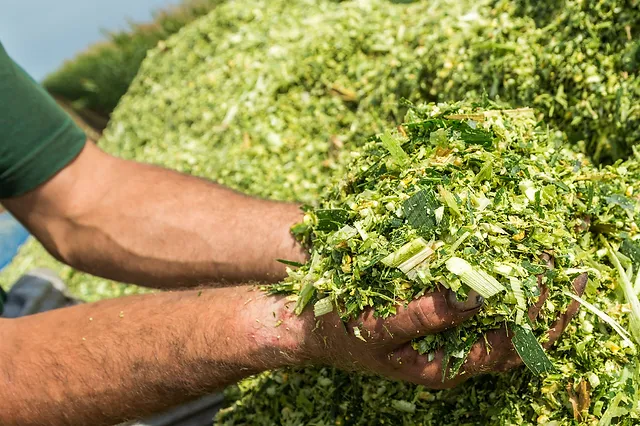
Spring’s thaw awakens feed-destroying microbes. Protect every bite-discover the 3-pillar strategy slashing silage losses 15%+ and boosting milk checks.
EXECUTIVE SUMMARY: As temperatures rise, dairy feed faces a microbial siege-yeasts, molds, and bacteria devour nutrients, slash milk yields, and threaten herd health. The solution? A clean feed approach leveraging elite forage inoculants (like Lactobacillus hilgardii), bulletproof hygiene protocols, and rumen-boosting probiotics. Proven to reduce dry matter losses by 5-10%, prevent mycotoxin risks, and unlock up to 2.5 lbs more milk/cow/day, this system turns preserved feed into profit. From silage face management to TMR hygiene, we break down actionable steps to safeguard your feed’s journey from field to bulk tank. Stop wasting feed-start banking results.
KEY TAKEAWAYS:
- Spring’s hidden tax: Warming temps spike yeast/mold activity, risking 20-40% feed losses without rapid pH control from inoculants.
- Inoculant ROI: Strains like Pediococcus pentosaceus cut DM losses to 5-8%, paying $8 back per $1 spent via preserved nutrients and milk gains.
- Feedbunk warfare: Remove 12-18” of silage daily in summer, clean TMR mixers religiously, and push feed 6-8x/day to outpace spoilage.
- Data-driven wins: Audit silage pH, fecal starch, and TMR particle size-high fecal starch >3% signals $0.85/cow/day milk leaks.
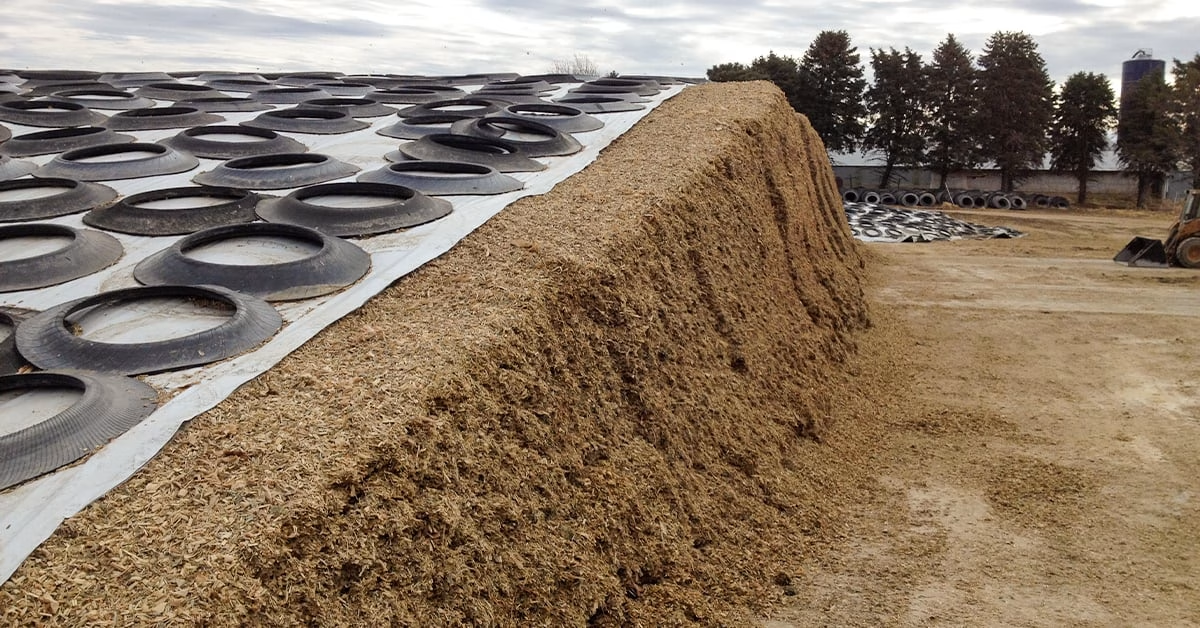
Your dairy’s untapped profit center isn’t in new genetics or expansion, it’s in preventing the silent hemorrhage of nutrients between harvest and feedbunk. Most operations lose 15-20% of their feed value before cows even take a bite, costing tens of thousands annually. This article reveals the three-pillar approach progressive dairies are using to slash these losses, boost components, and add substantial profit without adding a single cow.
The Hidden Cost of Poor Feed Management: What’s Really at Stake?
Let’s be honest about something costing you big money: Dairy farming in 2025 looks nothing like it did a generation ago, yet many operations still treat feed preservation like 1995. With milk markets swinging wildly, component premiums driving profitability, and feed expenses gobbling up 50-65% of production costs, can you keep losing 20-40% of your harvested nutrients to spoilage?
Here’s a reality check your feed consultant might be too polite to deliver: Most dairies are hemorrhaging profits through preventable feed losses. You’ve invested thousands in precision breeding and top-notch facilities. Yet, you’re watching hard-earned money literally rot in front of your eyes and then wondering why your components aren’t hitting targets.
The “clean feed” philosophy represents a fundamental shift from reactive firefighting after problems emerge to proactive prevention that preserves every nutrient you grow and harvest. It’s about applying the same meticulous standards to your feed program that you already demand from your parlor routine or breeding decisions.
What makes feed truly “clean”?
- Microbiological quality: Free from harmful levels of Listeria, Clostridia, and other pathogens that can crash components faster than a computer during DHI testing
- Chemical integrity: Protected from contaminants that compromise rumen function
- Nutritional preservation: Maximum retention of every penny you’ve invested in growing high-quality forages
Let me ask you this: Would you spend thousands on genomic testing and premium semen, only to house those genetic superstars in a leaky, poorly-ventilated barn? Of course not. Yet many producers invest heavily in growing top-quality forages, then surrender 20-40% of their nutrients through subpar preservation practices. It’s the nutritional equivalent of pouring milk down the drain.
Spring’s Microbial Assault: Understanding Your Invisible Enemy
When warm weather hits, the battle for your feed intensifies.
As your cows shed their winter coats, the microbes in your silage piles and commodity sheds simultaneously wake up from their cold-weather dormancy. These organisms, primarily yeasts, molds, and problematic bacteria, are poised for explosive growth once temperatures consistently hit the 50-60°F range, particularly when combined with the moisture from spring rains and snowmelt.
What’s really at stake?
- Dry matter losses: With good management, you’re looking at 6-7% shrink. Let things slide, and you feed 20-40% of your crop to microbes rather than your milking string.
- Component killers: Microbes first attack your most valuable nutrients, the very energy and protein fractions that drive milk components and production.
- Mycotoxin multiplication: Aspergillus, Fusarium, and their cousins don’t just eat your feed- they leave behind toxic calling cards that hammer immunity, reproduction, and components without obvious clinical signs.
- Intake depression: Cows have more sensitive noses than the best TMR consultants-they’ll back away from spoiled feed faster than you can say “mold inhibitor.”
Table 1: Your Feed’s Microbial Adversaries
| Microbe | Peak Season | Primary Damage | Dairy Herd Impact |
| Yeasts | Spring-Fall | Initiate heating, raise pH | Reduced DMI, butterfat depression |
| Molds | Spring-Fall | Mycotoxin production | Immune suppression, reproductive failure, milk drop |
| Clostridia | Year-round | Destroy protein, produce butyric acid | Ketosis, reduced fertility, MUN spikes |
| Enterobacteria | Early ensiling | Compete with beneficial fermentation | Endotoxemia, reduced feed efficiency |
Why does this matter on your dairy:
For a 500-cow herd producing 85 pounds per cow, losing just 3 pounds of milk daily from feed-related issues means kissing goodbye to over $75,000 annually. Not counting the added costs of reproductive lags, higher SCC, and increased culling. The good news? These losses are largely preventable with a strategic, science-based approach.
Pillar I: Elite Forage Inoculants- Your Microbial Workforce
The Fermentation Battlefield: Strategic Microbial Management
Think of ensiling as microbial warfare happening in your bunker silo or ag-bag. Your job as a general is to ensure the beneficial bacteria overwhelm the spoilage organisms before they can establish a foothold. Good silage doesn’t just happen- it’s engineered.
Let’s challenge a persistent myth: Many producers still view inoculants as an optional “insurance policy” rather than a core management practice. This outdated thinking costs the industry millions in preventable losses every year. Modern inoculants aren’t expensive- among the highest-ROI investments you can make on your dairy.
Today’s advanced products use carefully selected bacterial strains, each with specific tactical advantages:
- Pediococcus pentosaceus: The rapid deployment force. According to research in the Journal of Dairy Science, these specialists quickly flood the environment with lactic acid, driving pH down before Clostridia and other undesirables mobilize. Think of them as your first responders, containing the threat before it spreads.
- Lentilactobacillus hilgardii CNCM I-4785 + Lactobacillus buchneri: The security detail. After an initial pH drop, these specialists convert some lactic acid to acetic acid and 1,2-propanediol compounds that lock the silage face against oxygen invaders during feedout. A recent meta-analysis published in the Journal of Dairy Science confirms this combination improves aerobic stability by up to 73.8% while reducing yeast counts seven-fold. Like having a robust security system that keeps working 24/7, even when you’re not watching.
Why is this combination revolutionary:
You get immediate protection plus long-term stability- the equivalent of an excellent vaccination program and effective treatment protocols. This approach allows you to open newer silage when inventory is tight (sometimes in just 15 days) without facing the traditional stability challenges of fresh silage faces.
The Economic Case: Dollars and Sense
- Reduced shrink: Cutting DM losses from 15-20% to 5-8% is like finding extra acres you didn’t know you had.
- Milk response: Studies with specific inoculant combinations have shown up to +60 kg milk per tonne of treated silage, like the boost you’d get from adding an extra pound of bypass protein, but at a fraction of the cost.
- Fiber digestibility: Up to 5.4% higher NDF-D, worth potentially 0.92 kg more DMI and 1.23 kg more milk per cow, daily, equivalent to what you’d expect from mechanical fiber processing.
The bottom line:
At around $1-2 per treated ton (costs vary by product and application rate), quality inoculants can deliver ROI ratios of 8-to-1 or better. Ask yourself: What other investment on your dairy consistently returns for every dollar spent? This investment pays dividends throughout the lactation cycle, like precision feeding or automated heat detection.
Pillar II: Bulletproof Hygiene- Winning the Battle Against Contamination
TMR Management: Protecting Your Most Vulnerable Feed Asset
Your TMR is essentially a high-value perishable product- think of it like milk. Would you store milk in dirty tanks or transport it in contaminated pipes? The same thinking should apply to your TMR system.
Here’s where many dairy producers have a massive blind spot: The milking parlor gets meticulous attention to hygiene, but the same operators will feed cows from a mixer that hasn’t been properly cleaned in months. According to feed hygiene research from the University of Wisconsin-Madison, this disconnects costs your money daily.
Pro tips from top-performing dairies:
- Clean mixers daily- your vertical or horizontal TMR mixer can be your greatest ally in feed consistency or your worst enemy for harboring spoilage organisms.
- Dedicate specific loader buckets exclusively to feed handling- handling the bucket that just cleaned the heifer lot has no business in your commodity shed.
- Keep feed alleys as clean as your milk house floor. Contamination at delivery creates problems that even the best feed additives can’t fully overcome.
Moisture Control: The Universal Amplifier of Problems
Moisture is to feed spoilage what gossip is to small towns- it makes everything worse, faster.
- Store ingredients at appropriate moisture levels- commodities stored at more than 15% moisture might as well have a “Microbes Welcome” sign posted.
- Use covered commodity bays with proper drainage. Investing in good storage is like buying insurance, you can see the value working.
- Consider seasonally adjusting TMR dry matter targets- what works at 30°F often fails miserably at 80°F.
Silage Face Management: The Oxygen Exclusion Zone
- Remove 6-12 inches (15-30 cm) per day in winter, 12- 18+ inches (30- 45+ cm) in summer- think of your silage face like a freshly exposed apple; the longer it sits, the browner it gets.
- Use a defacer rather than your regular loader bucket- the difference in oxygen exposure is like comparing a clean, sharp clipper to rusty scissors when trimming hooves.
- Keep plastic covers weighted tightly, square inch exposed, releasing valuable volatile fatty acids and admitting oxygen.
The industry’s most expensive self-deception: Many producers convince themselves their silage management is “good enough” while losing thousands in preventable shrinkage. Have you calculated what that 15% DM loss is costing you annually? For a 500-cow dairy, it’s likely over $ 50,000, enough to hire a dedicated feed manager or invest in proper silage facing equipment.
Feedbunk Excellence: Where Theory Meets Practice
- Clean bunks completely between feedings- yesterday’s refusals are today’s spoilage starters.
- Consider feeding twice daily in hot weather, just as you’d adjust cow cooling systems seasonally.
- Push up feed 6-8 times daily, access drives intake as surely as milking frequency drives production.
- Monitor TMR temperature with the “fist test”-if it’s warm to your hand, it’s already harboring excessive microbial activity.
Hygiene isn’t just for milking parlors anymore.
The same attention to detail that produces low-SCC milk is essential for producing high-quality feed. A clean system means less competition from unwanted microbes, more palatable rations, and ultimately, cows that perform to their genetic potential rather than being limited by feed quality.
Pillar III: Strategic In-feed Solutions- Optimizing Rumen Function
Precision Probiotics: Engineering the Rumen Ecosystem
The modern dairy cow’s rumen is like a complex industrial fermentation system- it needs precision management to operate at peak efficiency. Saccharomyces cerevisiae CNCM I-1077 is the gold standard for rumen-specific yeast probiotics, with a robust research portfolio backing its efficacy. Here’s why it works:
- Oxygen scavenging: Creates a more anaerobic environment in which cellulolytic bacteria thrive in a way that provides the perfect barn conditions for your most productive cows.
- Microbial promotion: Research published by Ding et al. in the Journal of Animal Science and Biotechnology shows that it enhances populations of key fiber digesters and lactate utilizers, reshaping the rumen microbiome toward greater efficiency.
- SARA protection: Helps prevent subacute ruminal acidosis by stabilizing pH, like having an automatic buffer system working 24/7, especially valuable during diet transitions or heat stress.
- Performance impact: Documented improvements of up to 5 percentage points in NDF digestibility, 2.5 lbs more milk per cow daily, and 7.6% enhanced feed efficiency, comparable to what you might see from moving to a higher-quality forage base.
When to consider implementation:
- During summer heat stress, when ruminal pH naturally fluctuates
- When feeding diets with higher grain-to-forage ratios
- During the transition to fresh spring forages or when opening new silage faces
- Any time DMI is at risk due to environmental or management challenges
The investment perspective:
Probiotic supplementation typically costs $0.06-0.15 per cow per day. Still, it can deliver returns of 3:1 or better through improved component yield and feed efficiency, like the economics of good transition cow management or heat abatement systems.
Feed Quality Audits: Your Data-Driven Management Edge
The era of “looks good enough” is over.
As you’ve evolved beyond eyeballing body condition scores or guessing pregnancy status, modern feed management requires objective metrics tracked over time. Regular silage, TMR, and even fecal sample testing give you the data to move from reactive to proactive decision-making.
Let me put this plainly: If you’re not measuring, you’re guessing. And guessing costs money.
Essential Testing Protocols for Modern Dairy Operations
- Silage analysis: Beyond basic nutrients, monitor fermentation profiles (lactic: acetic ratio, pH), yeast/mold counts, and mycotoxin screens, particularly after weather challenges or when opening new silage faces.
- TMR evaluation: Regular particle separation testing (Penn State boxes), dry matter monitoring, and heating checks can reveal issues before production drops.
- Fecal diagnostics: Fecal starch levels above 3% are essentially undigested corn kernels, dollars literally down the drain. Regular monitoring can reveal processing issues before they impact your milk check.
Table 2: Key Feed Quality Indicators and Action Thresholds
| Parameter | Target Range | Risk When Outside Range | Corrective Action |
| Silage pH | 3.7–4.2 (corn), 4.3–4.8 (legume) | Poor preservation, protein degradation | Adjust inoculant strategy, harvest maturity |
| TMR sorting (top screen retention) | 6–10% | Component depression, SARA, displaced abomasums | Adjust chop length, mixing time, and ingredient sequence |
| Fecal starch | <3% | Energy loss (2-5 lbs of milk potential) | Evaluate grain processing, silage kernel score |
| Yeast count | <100,000 CFU/g | Heating, aerobic instability | Assess face management, consider silage stabilizers |
How top managers use this data:
- High fecal starch? Check your corn processor settings or kernel processing score, such as noticing high SCC and examining your milking routine.
- Excessive sorting? Adjust your feed management as you’d adjust breeding strategies based on conception rate data.
- Mycotoxin detection? Implement dilution strategies or binders, like how you’d manage a disease outbreak in your herd.
Here’s a stark reality check: The difference between average and top-tier dairies isn’t just genetics or facilities-it’s this kind of data-driven management. When was the last time you had a comprehensive feed audit conducted on your operation? If it’s been more than 6 months, you’re flying blind.
The Economic Reality: Feed Spoilage Costs vs. Clean Feed ROI
Let’s translate feed management into the language that matters most on any dairy: dollars and cents.
The Real Cost of Spoilage
- Direct feed waste: That $50/ton corn silage becomes $83/ton when 40% disappears to spoilage, like buying replacement heifers and watching them walk off your property.
- Milk production impact: Feeding spoiled TMR can drop production by 7 pounds per cow daily, the equivalent of skipping a milking every few days.
- Herd health expenses: Mycotoxin-related immune suppression increases treatment costs across all health categories, from mastitis to metritis to lameness.
- Reproductive losses: Every 21-day pregnancy delay costs about $125 per cow. Feed-quality issues can easily add 30+ days open, like throwing away a month’s milk check from affected animals.
The Clean Feed Advantage
- Inoculants: Save 5-10% in spoilage and boost milk yield with ROI ratios up to 8:1, better returns than most capital investments on your dairy.
- Improved silo management: 15-20% less DM loss translates to $108,000 annually on a 500-cow operation-equivalent to finding an extra 40 acres of corn silage you didn’t have to plant.
- Rumen optimization: Probiotics deliver 2+ pounds more milk per cow daily through improved efficiency, like getting free concentrate without the risk of acidosis.
Table 3: The Financial Equation of Feed Management
| Management Area | The Cost of Doing Nothing | The Return on Getting It Right |
| Silage preservation | $13,000+ shrink per 100 cows | $13/ton saved, 8:1 ROI potential |
| Component quality | 0.1-0.3-point butterfat depression | Premium capture worth $0.30-0.50/cwt |
| Health costs | $160+ per clinical case | Reduced incidence of multiple disorders |
| Reproductive efficiency | $125 per 21-day pregnancy delay | 5-15 fewer days open per cow |
Bottom line:
The same level of management precision you apply to your breeding program or parlor routine needs to extend to your feed program. Every percentage point of improvement cascades through your entire operation, from healthier cows to more substantial cash flow.
Your Clean Feed Blueprint: Practical Implementation for Real Dairies
Ready to implement? Here’s your roadmap:
Forage Production & Harvest
- Select hybrids and varieties with the right agronomic and nutritional profile for your feeding program, not just tonnage.
- Monitor crop moisture with actual testing, not just the “twisted sample” method. Invest in a good moisture tester.
- Set mower height to minimize ash content. A 1% increase in ash is like diluting your TMR with a shovelful of dirt.
- Apply research-proven inoculants at proper rates. Under-application is like skimping on the teat dip concentration.
Silage Storage & Face Management
- Pack to achieve 15+ lbs DM/cubic foot density pound below the target doubles the spoilage rate.
- Use oxygen-barrier film under conventional plastic, an extra $2-3 per ton protected is among the best investments on your farm.
- The size of the bunker face width is according to the removal rate, just as you’d size your parlor for cow throughput.
- Consider a silage facer for cleaner cuts- the investment pays back in reduced shrink alone.
TMR Management & Delivery
- Clean mixers thoroughly; build-up in the corners is like biofilm in milk lines.
- Sequence ingredients properly- liquids, premixes, proteins, forages, grains- to ensure proper distribution.
- Monitor mix times; undermixing is as problematic as overmixing.
- Check scales regularly- you wouldn’t accept inaccuracy in your milk weights; don’t accept it in your feed weights.
Feedbunk Management
- Maintain 3% refusals for lactating cows- clean bunks mean hungry cows, and hungry cows mean lost production.
- Feed multiple times daily in hot weather, synchronized with your cooling system management.
- Push up feed at least 6-8 times daily. Accessibility drives intake as surely as water availability.
- Keep water troughs clean and full. Cows drink 4-5 pounds of water for every pound of milk produced.
Monitoring & Evaluation
- Partner with your nutritionist for regular forage and TMR testing and treat feed evaluation with the same importance as milk testing.
- Track particle size distribution monthly- your early warning system for mixer wear or ingredient changes.
- Monitor cow signals systematically- rumination time, manure consistency, and rumen fill tell you what’s happening.
- Maintain detailed records to identify trends- the best managers know today’s issues before they show up in tomorrow’s tank.
The Bottom Line: Clean Feed, Profitable Dairy
Here’s what sets apart the most profitable dairies:
Feed quality isn’t a single practice but a systematic approach touching every aspect of your operation. The top-performing herds don’t view clean feed as an expense but as the foundation upon which all other management rests. When every mouthful delivers maximum nutrition with minimum spoilage, everything else improves components rise, health incidents decline, pregnancies establish earlier, and ultimately, your cost per hundredweight drops.
Let me challenge you with this thought: Are you still budgeting for silage shrink as an inevitable cost rather than treating it as a controllable expense? It’s time to stop accepting 15-20% of DM losses as “normal” and start managing for the 5-8% achievable with proven technologies and management practices.
The clean feed revolution mirrors what happened with milk quality two decades ago. Just as progressive dairies moved from accepting high SCC as inevitable to managing for premium-level quality, today’s leaders are applying the same precision to their feed programs. The herds consistently earning top component premiums aren’t necessarily those with the best genetics- they protect those with impeccable feed management.
It’s time for a hard look at your feed management priorities. Ask yourself:
- When did you last thoroughly clean your TMR mixer?
- Do you know your current silage DM loss percentage?
- Have you calculated what a 5% improvement in feed preservation would mean financially?
- Is your silage face management optimized for your climate and season?
Ready to transform your feed program?
Start with one pillar- perhaps implementing a research-backed inoculant program, establishing rigorous face management protocols, or incorporating targeted probiotics. Monitor the results objectively, then expand your approach. Like genetic progress, the improvements compound over time, creating a more resilient, profitable operation built to thrive regardless of market conditions.
The path to dairy excellence runs through your bunker silo, commodity shed, and feedbunk. Make every bite count.
Learn more:
- Boost Dairy Cow Resilience with Clean, Consistent Feed
- The $150,000 Silage Gamble: Why Your “Good Enough” Approach Is Killing Your Dairy
- 5 Steps to Minimize Feed Refusals in Dairy Cattle
 Join the Revolution!
 Join the Revolution!
Join over 30,000 successful dairy professionals who rely on Bullvine Weekly for their competitive edge. Delivered directly to your inbox each week, our exclusive industry insights help you make smarter decisions while saving precious hours every week. Never miss critical updates on milk production trends, breakthrough technologies, and profit-boosting strategies that top producers are already implementing. Subscribe now to transform your dairy operation’s efficiency and profitability—your future success is just one click away.