








Still say ‘cull cow’? This mindset costs $$ & hurts welfare. Switching to ‘market cow’ boosts your bottom line & improves animal care. Maximize value!
EXECUTIVE SUMMARY: This article argues for a critical shift in dairy industry terminology, advocating for “market cow” to replace the detrimental “cull cow.” The term “cull” implies inferiority, negatively impacting animal management, welfare, and economic returns by fostering a disposal mindset. Conversely, “market cow” frames these animals as valuable assets, encouraging proactive management, better pre-sale conditioning, and adherence to fitness-for-transport standards. Recognizing that these cows contribute significantly to farm revenue (around 6.6% of sales) and the broader beef supply (20-25%), this change promotes practices that enhance their value. Adopting “market cow” aligns with higher animal welfare standards, addresses issues like bruising and transport stress, and improves the dairy industry’s public perception through responsible stewardship.
KEY TAKEAWAYS:
- Language Matters: The term “cull cow” devalues animals and can lead to suboptimal care, while “market cow” frames them as assets, encouraging better management and welfare.
- Significant Economic Impact: Cows transitioning to beef are a major revenue source for dairies (avg. 6.6% of farm sales) and contribute substantially (20-25%) to the U.S. beef supply; managing them as “market cows” captures more of this value.
- Improved Animal Welfare: A “market cow” approach promotes better pre-sale conditioning, ensures animals are fit for transport, and aligns with industry welfare guidelines (AABP, BQA, FARM), addressing issues like bruising and transport stress.
- Proactive Management Pays: Viewing these animals as “market cows” encourages strategic decisions regarding feeding, health, and timing of sale, leading to better prices and healthier animals.
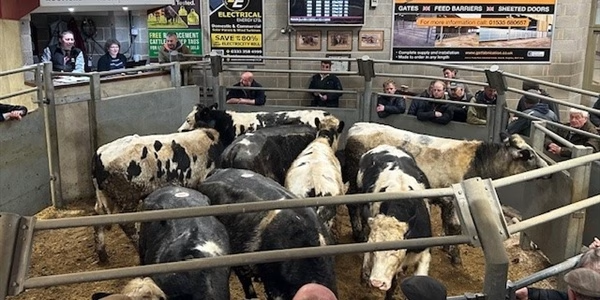
A single outdated term is sabotaging your profitability, compromising animal welfare, and reinforcing negative perceptions about dairy farming. It’s time we kill “cull cow” and start treating end-of-lactation animals like the valuable assets they truly are.
When was the last time you thought strategically about the cows leaving your dairy? Most producers meticulously plan heifer development, obsess over breeding decisions, and fine-tune rations down to the gram, yet treat departing cows as afterthoughts to be discarded rather than assets to be maximized. This blind spot costs the dairy industry millions annually while undermining animal welfare and consumer trust.
Our language-“cull cow”-is actively working against us. The dictionary defines “cull” as “to select from a group and remove as inferior or worthless.” Is that really how you view the animals that have faithfully produced milk for your operation for years? As worthless?
The $100 Million Question: Are You Leaving Money on the Table?
Let’s talk numbers. According to industry data, dairy cows sold for slaughter contribute about 6.6% of total farm sales annually for a 250-cow Holstein operation, which translates to between ,000 and 0,000 annually. That’s equivalent to the component premium you might receive for an extra 0.2% butterfat across your entire herd for the year.
Yet how many hours did you spend last year analyzing your butterfat percentage versus strategically managing your market cow program?
When you mentally label a cow as a “cull,” you’re setting up a self-fulfilling prophecy. If you’ve already decided an animal is “inferior” or “waste,” why would you invest the feed, care, and attention needed to maximize her value? The “cull” mindset is a psychological barrier between you and thousands of potential profits.
The Beef Industry Already Knows What Most Dairy Farmers Don’t
Here’s a reality check that should make every dairy producer uncomfortable: Whether you acknowledge it or not, you’re in the beef business. And right now, most of you are doing it badly.
Dairy cattle contribute 20-25% of the U.S. beef market. Think about that. Nearly a quarter of America’s beef comes from dairy animals, yet most dairy producers treat this as an afterthought rather than a significant profit center deserving of strategic management.
Even more striking: the 2012 National Beef Quality Audit revealed that 75% of individual dairy cow carcasses are sold as whole cuts, particularly valuable rear leg round cuts. We’re not just talking about cheap ground beef here. These animals deliver high-value protein to consumers, and that value should be reflected in how you manage and market them.
The beef industry has already adopted the term “market cows and bulls,” while dairy clings to outdated “cull cow” terminology. Why is the beef sector, the actual end market for these animals, more progressive in its thinking than the dairy industry that supplies them?
Five Profit-Killing Mistakes Most Dairies Make With Their Market Cows
The National Beef Quality Audits consistently expose how dairy producers leave money on the table with their market cows:
1. Injection Site Damage
Dairy carcasses show over twice as many rear leg injection lesions as beef cattle. These high-value cuts must then be trimmed away and discarded. Are you still giving shots in the wrong location even though BQA guidelines have been clear for decades? Since you’d never drain antibiotic milk into the bulk tank, why do you compromise beef quality with poor injection practices?
2. Poor Body Condition
About 90% of dairy cows arrive too lightly muscled. While dairy breeds naturally favor glucose partitioning toward milk production, are you trying to transition these animals metabolically before marketing? As you meticulously formulate your lactating cow TMR for optimal milk components, have you considered developing a specific market cow ration that optimizes energy density for efficient weight gain?
3. Bruising and Contamination
66.7% of cow carcasses have bruises, and over 70% of dairy cows arrive with visible mud contamination. As you would never accept a bulk tank with high SPC or SCC, why are you accepting bruised or dirty market cows leaving your farm? Each bruise represents devalued meat and indicates poor handling or facility design.
4. Pregnant Cows at Harvest
25.4% of all cows surveyed at harvest carried a fetus, an increase from previous audits. Are you running basic pregnancy checks before shipping cows to market? Every pregnant cow represents lost genetic potential and wasted resources. Checking market cows for pregnancy should be as routine as your herd’s pregnancy diagnosis protocol.
5. Fitness for Transport Issues
The 2016 National Beef Quality Audit found that cows arriving at processing plants nationwide were in transit for an average of 6.7 hours, with some riding over 24 hours. Are your cows ready for this journey? Most dairies have more rigorous protocols for determining when a cow needs mastitis treatment than if she can travel hundreds of miles to slaughter.
The Market Cow Mindset: Transform Your Thinking, Transform Your Profits
Adopting the term “market cow” isn’t just semantics; it’s a fundamental shift in how you view and manage these animals. A market cow is “an asset with value and opportunity” and “a quality animal in good health, fit for transport to the processing plant for beef.”
This perspective encourages you to:
- Evaluate each cow’s potential market value
- Optimize her condition before sale
- Ensure proper handling to preserve meat quality
- Verify she’s truly fit for transport
The economic upside can be substantial. Studies have demonstrated remarkable improvements in cows fed for an additional time before marketing:
- One Canadian study showed fed cows gained an average of 188 pounds and improved BCS by 1.2 points over just 60 days
- Another found fed cows had hot carcass weights 179 pounds heavier, with a 6.5% greater dressing percentage compared to those marketed immediately
- Strategic feeding leads to improved marbling, tenderness, and whiter fat attributes that enhance value
Why Your Cows Leave (And How It Affects Their Value)
Understanding why cows exit your herd is crucial for optimizing their market value. Historical data from APHIS surveys show remarkable consistency in departure reasons over decades:
- Reproduction issues: 27%
- Udder/mastitis problems: 27%
- Poor production: 22%
- Lameness/injury: 15%
- Other (disease, behavior, etc.): 9%
Cows generally leave under two conditions: voluntary (based on milk production, reproduction, or genetics) or involuntary (health issues like lameness, mastitis, or injury). Voluntary removals present the most significant opportunity for planned conditioning to optimize value.
Think of it like strategic dry-off timing- you wouldn’t abruptly stop milking a high-producer without preparation, so why would you market a cow without proper conditioning?
Is That Cow Ready for Transport?
Before any market cow leaves your operation, your personnel should assess:
- Body condition (score greater than 2)
- Mobility (no severe lameness or fractures)
- Health status (no fever over 103°F, peritonitis, cancer eye)
- Pregnancy status (not imminently calving)
- Drug withdrawal (all withdrawal times met)
- Udder condition (not distended, causing pain/mobility issues)
The American Association of Bovine Practitioners (AABP), Beef Quality Assurance (BQA), and FARM Animal Care Program all provide clear guidelines on fitness for transport. But how many dairy operations are performing these assessments systematically?
Dr. Jennifer Van Os from the University of Wisconsin-Madison recommends asking three simple questions for every animal: Can she travel today? Does she need to recover? Or does she need to be euthanized?
Remember: your responsibility for that animal’s welfare doesn’t end when she leaves your farm gate.
Stop Making Excuses – Start Making Changes
I already hear the objections: “We don’t have space.” “We don’t have time.” “We don’t have the labor.” But here’s the uncomfortable truth: these aren’t reasons, they’re excuses. They’re signs that you don’t value this revenue stream enough to allocate resources.
For smaller operations, start with the easiest changes:
- Correct injection site placement (costs nothing)
- Identify cows in better initial condition for potential feeding
- Consider cooperative arrangements for transportation or marketing
- Implement simple record systems to track market cow performance
For medium to large dairies:
- Develop dedicated market cow protocols
- Train specific personnel in market cow assessment
- Create a dedicated pen space for transition animals
- Analyze the return on investment for conditioning programs
Regardless of size, every dairy farm can implement at least some aspect of better market cow management. Continuing to do nothing is a choice to leave money on the table.
The Bottom Line: Evolution or Extinction
Language shapes thinking, and thinking drives action. By replacing “cull cow” with “market cow” in your vocabulary, you acknowledge these animals for what they truly are: valuable assets that deserve strategic management.
This isn’t just semantics, a fundamental shift that can improve animal welfare, enhance beef quality, strengthen consumer trust, and significantly boost your bottom line.
Ask yourself these uncomfortable questions:
- Why am I still using terminology from the 1950s to describe a significant profit center on my farm?
- Am I truly managing these animals to maximize their value, or am I treating them as an afterthought?
- What would change if I viewed every cow leaving my farm as a beef product rather than a dairy discard?
Then take action:
- Eliminate “cull cow” from your vocabulary and farm documents. Make this change today- it costs nothing and starts the mindset shift.
- Work with your veterinarian to establish clear fitness-for-transport guidelines. Develop a simple checklist for every animal before it leaves the farm.
- Train all staff on proper handling to reduce bruising and stress. Low-stress handling preserves beef quality and improves animal welfare.
- Consider feed strategies to improve body condition for thin cows. Even short feeding periods can significantly increase value.
- Monitor market prices and timing to maximize returns. Historical data suggests higher prices in spring months compared to late fall.
Remember: you’re not just a dairy farmer but also a beef producer. Every market cow leaving your operation should receive the same careful attention you give to your high genetic merit heifers or top-producing cows. As you’d never tolerate 300,000 SCC milk in your bulk tank, you shouldn’t accept compromised animals entering the beef supply chain.
The industry continues to evolve through innovation, and managing lactation curves, reproduction protocols, and udder health have all seen tremendous advancements. Now it’s time for market cow management to experience the same evolution.
Will you be a pioneer in this shift, or will you be dragged along reluctantly while more progressive producers capitalize on the opportunity?
The choice is yours. But know this: continuing to use “cull cow” isn’t just outdated vocabulary, it’s a public admission that you’re leaving money on the table and failing to maximize the value of every animal in your care.
Learn more:
- Why Are Fewer Dairy Cows Being Culled? Discover the Principal Reasons Behind This Shift
- The Perfect Storm: Why Cattle Prices Have Gone Nuclear
- Dairy Slang: 22 Phrases that mean different things to dairy breeders
 Join the Revolution!
 Join the Revolution!
Join over 30,000 successful dairy professionals who rely on Bullvine Weekly for their competitive edge. Delivered directly to your inbox each week, our exclusive industry insights help you make smarter decisions while saving precious hours every week. Never miss critical updates on milk production trends, breakthrough technologies, and profit-boosting strategies that top producers are already implementing. Subscribe now to transform your dairy operation’s efficiency and profitability—your future success is just one click away.




