Think feed efficiency can’t improve? Mexico has just revealed a 280% yield gap that we’re ignoring.
EXECUTIVE SUMMARY: Mexico’s throwing $4.1 billion at their dairy industry, and here’s what caught my attention… they’ve got farms producing 9 liters per cow while others hit 37 liters daily—that’s a staggering 280% difference. Now, they’re importing 8,000+ Australian Holsteins and betting big on genomic selection to close that gap. The kicker? Research shows that they could see a 20% productivity gain just from better genetics. Meanwhile, their precision feeding systems are paying for themselves in 18-24 months, even with heat stress reducing summer production by 25%. With cheese demand climbing 5% this year and lending rates around 11-12%, the message is clear: upgrade now or watch your margins shrink. Don’t let your neighbors get ahead while you’re still trying to figure out genetics.
KEY TAKEAWAYS:
Close that productivity gap quickly — genomic testing and elite breeding can boost your yields by 15-20%. Contact your genetics representative this week and inquire about genomic selection programs.
Precision feed equals precision profits — Install automated feeding systems that tailor rations to each cow. Track your feed conversion rates monthly to see where you’re leaving money on the table.
Beat the heat, keep the milk — Invest in cooling systems and water conservation technology now, before summer heat steals 25% of your production, as it does in Mexico.
Finance smart in this rate environment — With lending at 11-12%, explore government subsidies and co-op financing to make capital improvements pencil out.
Ride the cheese wave — Partner with local processors targeting the 5% growth in cheese consumption. Value-added products mean better milk prices for you.
Mexico has launched a $4.1 billion initiative to increase dairy production by 13% and reduce milk powder imports by 30% by 2030, reshaping its dairy industry and altering North American trade dynamics.
Currently, Mexico accounts for nearly 30% of U.S. dairy exports, totaling approximately $2.47 billion in 2024, making it America’s largest foreign dairy market—surpassing exports to Canada and China combined (USDA Foreign Agricultural Service). The Mexican government plans to invest roughly 13.6 billion pesos (~$680 million) in 2025 to upgrade dairy processing infrastructure.
A massive productivity gap defines the central challenge: farms in southern Mexico produce approximately 9-10 liters per cow daily, while northern operations achieve 37 liters—a 280% difference (The Bullvine). This disparity highlights the urgent need for genetic advancements and improved management, rather than simply expanding herds.
To address this deficit, Mexico imported over 8,000 Australian Holstein heifers, averaging 10,220 kilograms per lactation, demonstrating a commitment to genetic improvement. Research confirms genomic evaluations can deliver productivity gains up to 20% when implemented effectively.
Technology adoption accelerates rapidly. Precision feeding and automated milking systems are estimated to have payback periods of 18-24 months, depending on farm conditions. Meanwhile, heat stress reduces milk yields by up to 25% during summer months (Frontiers in Veterinary Science) in northern Mexico, driving demand for cooling and water conservation technologies.
Financing remains challenging, with lending rates ranging from 11% to 12% (Trading Economics), necessitating clear returns on investment. Government subsidies and innovative financing models support adoption.
Consumer demand continues to expand, with cheese consumption projected to grow 5% in 2025, opening new avenues for specialized dairy ingredients and advanced processing technology.
The dairy sector is bifurcating into a public segment focused on self-sufficiency and import reduction, and a dynamic private sector pursuing innovation and operational efficiency.
To capitalize on this shift, U.S. suppliers should focus on three key areas:
🧬 Genetic Improvement: With a documented 280% productivity gap, the demand for elite genetics is undeniable. Genomic testing, embryo transfer, and high-quality semen offer immediate solutions to Mexico’s biggest operational challenge.
🤖 Precision Agriculture: Technologies addressing heat stress and water scarcity are critical tools in Mexico’s challenging climates. Cooling systems, water conservation tech, and automated feeding deliver measurable returns.
⚙️ Processing & Automation: A wave of government and private spending targets plant modernization, creating sustained demand for everything from pasteurizers to advanced automation and quality control systems.
Regional differences necessitate tailored approaches; northern producers exhibit higher technology adoption rates and greater financial capacity compared to southern operations.
Mexico’s dairy transformation signals opportunity rather than market exit for U.S. industry participants. The documented productivity gaps and infrastructure investments create sustained demand for proven genetics, advanced technology, and operational expertise.
The question is no longer if U.S. suppliers can succeed in Mexico, but who will move fast enough to capture the opportunity. The smart money isn’t just selling products anymore; it’s selling solutions.
This analysis incorporates data from USDA, industry reports, and credible sources to provide accurate market intelligence for dairy industry professionals.
Complete references and supporting documentation are available upon request by contacting the editorial team at editor@thebullvine.com.
Learn More:
Genomic Testing: A Step-by-Step Guide for Dairy Producers – This guide provides a practical framework for implementing the genomic selection programs discussed in the main article. It details how to interpret results and make breeding decisions that directly boost herd productivity and profitability.
The 5 Key Trends Shaping Dairy Farm Profitability in 2025 – For a wider market view, this article analyzes the economic forces impacting dairy operations. It offers strategic insights into navigating market volatility and aligning your business model with long-term trends beyond the immediate opportunities in Mexico.
Automated Dairy Farming: A Case Study in Efficiency and Profit – See precision agriculture in action with this deep dive into a fully automated operation. The piece demonstrates the real-world ROI of robotic milking and automated feeding systems, revealing methods for maximizing labor efficiency and animal welfare.
Join the Revolution!
Join over 30,000 successful dairy professionals who rely on Bullvine Weekly for their competitive edge. Delivered directly to your inbox each week, our exclusive industry insights help you make smarter decisions while saving precious hours every week. Never miss critical updates on milk production trends, breakthrough technologies, and profit-boosting strategies that top producers are already implementing. Subscribe now to transform your dairy operation’s efficiency and profitability—your future success is just one click away.
Stop believing the production-twinning trade-off myth. German genomics proves you can eliminate $161 disasters without losing one pound of milk.
EXECUTIVE SUMMARY: The dairy industry’s most costly genetic assumption just got demolished by massive German research analyzing 37 million Holstein calvings. For decades, we’ve accepted that pushing for elite milk production inevitably increases expensive twin births—but VIT researchers prove this fundamental belief is dead wrong. The genetic correlations between twinning and production traits are negligible, indicating that it is feasible to select against these traits in a targeted manner. The science is settled, the tools exist, and the economic case is overwhelming—it’s time to demand that your genetics suppliers provide twinning breeding values alongside every bull evaluation.
KEY TAKEAWAYS
Economic Liberation: Twin births create cascading disasters costing $59-161 per incident, with cows suffering 5.38x higher retained placenta risk, 1.77x higher dystocia rates, and 76-96 days shorter productive lives—yet genetic selection against twinning causes zero production losses.
Proven Genetic Opportunity: Bulls in the worst quartile for twinning produce daughters with 3.6 percentage points higher twin rates than top quartile bulls, with heritability estimates of 13-14% placing twinning squarely within successfully improved health traits through genomic selection.
Selection Index Scandal: While commercial companies like Zoetis incorporated twinning predictions into selection indices years ago, the newly updated Net Merit 2025 continues to ignore this economically relevant trait despite its 31.8% emphasis on fat and 13.0% on protein production.
Implementation Reality Check: German research using single-step SNP BLUP technology across 87% of the nation’s dairy cows proves genetic correlations with milk traits are “close to zero”—eliminating the last excuse for not treating twinning as a primary breeding target.
Industry Accountability Gap: The genetic tools to reduce twinning exist right now, but producers are being held hostage by an industry that prioritizes marketing convenience over economic reality—demand twinning breeding values from your suppliers or question what else they’re hiding.
A landmark German study published in the Journal of Dairy Science analyzing population-wide Holstein data proves dairy farmers can eliminate costly twin births without sacrificing a single pound of milk production, demolishing the industry’s most persistent genetic assumption and opening the door to immediate herd profitability gains.
The conventional wisdom that’s been handcuffing dairy breeding decisions for decades just got obliterated by hard science. For years, we’ve accepted that pushing for elite milk production inevitably leads to more twin births—and the cascade of economic disasters that follow. A comprehensive new study by VIT researchers published in the Journal of Dairy Science proves this fundamental assumption is dead wrong.
What really matters is genetic selection for milk production, and twinning operates completely independently. You can aggressively breed against twin births while simultaneously cranking up genetic gain for milk, fat, and protein. The genetic correlations between twinning and production traits? “Close to zero,” according to the published research.
The $100 Million Industry Blind Spot
Let’s face it—while you’ve been accepting costly disasters as “inevitable,” the science to prevent them has been sitting on the shelf. Here’s the scandal that should make every progressive producer furious: Zoetis has been incorporating genetic selection against twinning in their Dairy Wellness Profit Index (DWP$) since at least 2020, yet our industry-wide Net Merit index—the tool that drives the majority of breeding decisions—completely ignores this economically devastating trait.
The 2020 Zoetis DWP$ formulation “applies increased genetic selection against abortion, twinning, cystic ovaries, cow respiratory disease, and cow size.” Meanwhile, the newly released Net Merit 2025, with its sophisticated weighting of nearly 40 individual traits, still has zero economic penalty for twinning. How could a commercial company have recognized this opportunity years ago while our national breeding program remains blind?
Why This Changes Everything for Your Bottom Line
Every twin birth in your calving pen isn’t a bonus, it’s a financial disaster waiting to unfold. The published economic research quantifies exactly how much these “double blessings” cost you: “the estimated losses due to twinning range between $59 to $161 per twin pregnancy”.
But here’s the devastating reality most producers miss—twinning doesn’t just cost you money directly. It “compromises milk production, increases the incidence of dystocia and perinatal mortality, decreases calf birth weight, increases the…and shortens the productive lifespan of cows”. This isn’t just bad luck; it’s a predictable pattern of economic destruction that the genetics industry has the tools to prevent.
The Science That Exposes Industry Failures
The German VIT researchers didn’t mess around with small-scale university trials. Using population-wide data from German Holstein cattle, they employed single-step SNP BLUP technology to analyze the genetics of twin births as two genetically correlated traits: first parity and later parities.
Their findings are unambiguous and industry-changing:
Heritability estimates: 0.008 for first parity and 0.026 for later parities. These numbers place twinning squarely within the range of successfully improved health traits through genomic selection.
Genetic correlations with production: The researchers found that “genetic correlations with milk traits were close to zero.” This definitively proves that selecting against twinning causes zero collateral damage to milk, fat, or protein production.
Bull variation proves genetic potential: The study revealed “substantial variability among bulls, whose genetic potential was expressed in varying twin birth rates among their daughters.” This isn’t theory—it’s measurable genetic variation that can be captured through proper selection.
The Selection Index Scandal We Must Address
Here’s what should make every dairy producer demand answers from their genetics suppliers: while Zoetis has been offering genomic predictions for twinning and incorporating them into selection indices for years, the industry’s primary selection tool continues to ignore this economically relevant trait.
The newly updated Net Merit 2025 places 31.8% emphasis on fat, 13.0% on protein, and 17.8% on feed efficiency, yet zero percent on preventing a trait that costs $59-161 per incident and creates cascading health disasters. By Net Merit’s own definition—maximizing lifetime profitability through economic weighting of heritable traits—this represents a fundamental failure of the index to serve dairy producers.
Meanwhile, commercial genomic tools have already demonstrated that “twinning can be proactively managed on dairy farms using genetically powered tools” and present “a compelling opportunity for dairy producers to proactively reduce the incidence of twin pregnancies on commercial dairy operations.”
What Your Genetics Supplier Isn’t Telling You
The German research reveals the most damaging genetic correlation in the study: twinning shows a correlation of 0.326 with the stillbirth rate. This means that the genetic factors predisposing cows to twin births also increase the likelihood of dead calves. Every time you select a bull without considering his twinning genetics, you’re potentially increasing both twin disasters AND stillbirth losses in your herd.
What else are they hiding if your bull catalog doesn’t include twinning breeding values? The genetic tools to address this problem exist right now, but the industry’s failure to prioritize economic reality over marketing convenience is costing you money every breeding season.
Your Action Plan: Stop Managing, Start Selecting
The message from this landmark research published in the Journal of Dairy Science is crystal clear: transform how you think about twinning from an unavoidable consequence to a controllable genetic trait. Here’s your roadmap:
Immediate Actions:
Demand twinning breeding values from your genetics supplier—if they don’t have them, ask why
Calculate your current twinning costs using the established $59-161 per case range
Question every bull selection based purely on Net Merit—demand comprehensive genetic information
Strategic Confrontation:
Challenge the Council on Dairy Cattle Breeding to explain why economically devastating traits remain excluded from Net Merit
Push AI companies to provide transparency on twinning genetics across their bull lineups
Support research and industry pressure to update selection indices based on complete economic reality
The Bottom Line: Stop Subsidizing Industry Failures
The German VIT study published in the Journal of Dairy Science represents more than scientific advancement—it’s an indictment of an industry that has allowed preventable economic disasters to persist while the genetic solutions sit unused. The data is definitive: you can pursue elite genetic merit for milk, fat, and protein while simultaneously selecting against the costly disasters that twin births represent.
This isn’t about choosing between production and profit anymore. It’s about demanding that your genetics suppliers and industry organizations provide tools that reflect complete economic reality rather than selective marketing convenience.
The choice is yours: keep subsidizing an industry that ignores economically relevant genetics, or start demanding the comprehensive breeding tools that maximize your actual profitability.
The science is settled, commercial tools exist, and the economic case is overwhelming. What are you waiting for—and more importantly, why are our industry leaders still making you wait?
5 Technologies That Will Make or Break Your Dairy Farm in 2025 – Demonstrates practical implementation strategies for precision breeding technologies that complement genetic selection, showing how smart monitoring systems can validate and enhance your breeding program results.
Join the Revolution!
Join over 30,000 successful dairy professionals who rely on Bullvine Weekly for their competitive edge. Delivered directly to your inbox each week, our exclusive industry insights help you make smarter decisions while saving precious hours every week. Never miss critical updates on milk production trends, breakthrough technologies, and profit-boosting strategies that top producers are already implementing. Subscribe now to transform your dairy operation’s efficiency and profitability—your future success is just one click away.
U.S. milk components hit record highs as genomics outpaces old breeding methods. Are you leaving $$$ in your bulk tank?
The dairy industry is experiencing an unprecedented boom in milk components, with butterfat smashing through the 4% ceiling and protein climbing steadily. But here’s the uncomfortable truth: while your neighbors are mining gold from their bulk tanks, many farmers are still chasing outdated volume metrics like it’s 1990. This genetic revolution is putting real dollars in the milk check for forward-thinking producers while positioning processors for explosive growth if you’re still selecting bulls the old way, you’re leaving serious money on the table.
Look around your barn today. Those cows lined up at your headlocks are either money-printing machines or cash-burning liabilities- and the difference has nothing to do with how many gallons they’re pumping out. We’re living through the most transformative period in dairy genetics history, with advances driving component levels that would have seemed impossible back when you were still using daughter averages, and selection was based on milk poundage.
Yet despite these record gains, too many producers remain fixated on bulk tank readings rather than component percentages. Are you one of them? It’s like focusing on the many acres your tractor covers instead of your crop yield. Wake up! The milk check math has fundamentally changed, and if you haven’t adjusted your breeding program accordingly, you’re fighting yesterday’s battle while innovative farms leave you in the dust.
The Record-Breaking Component Surge That’s Rewriting Milk Check Rules
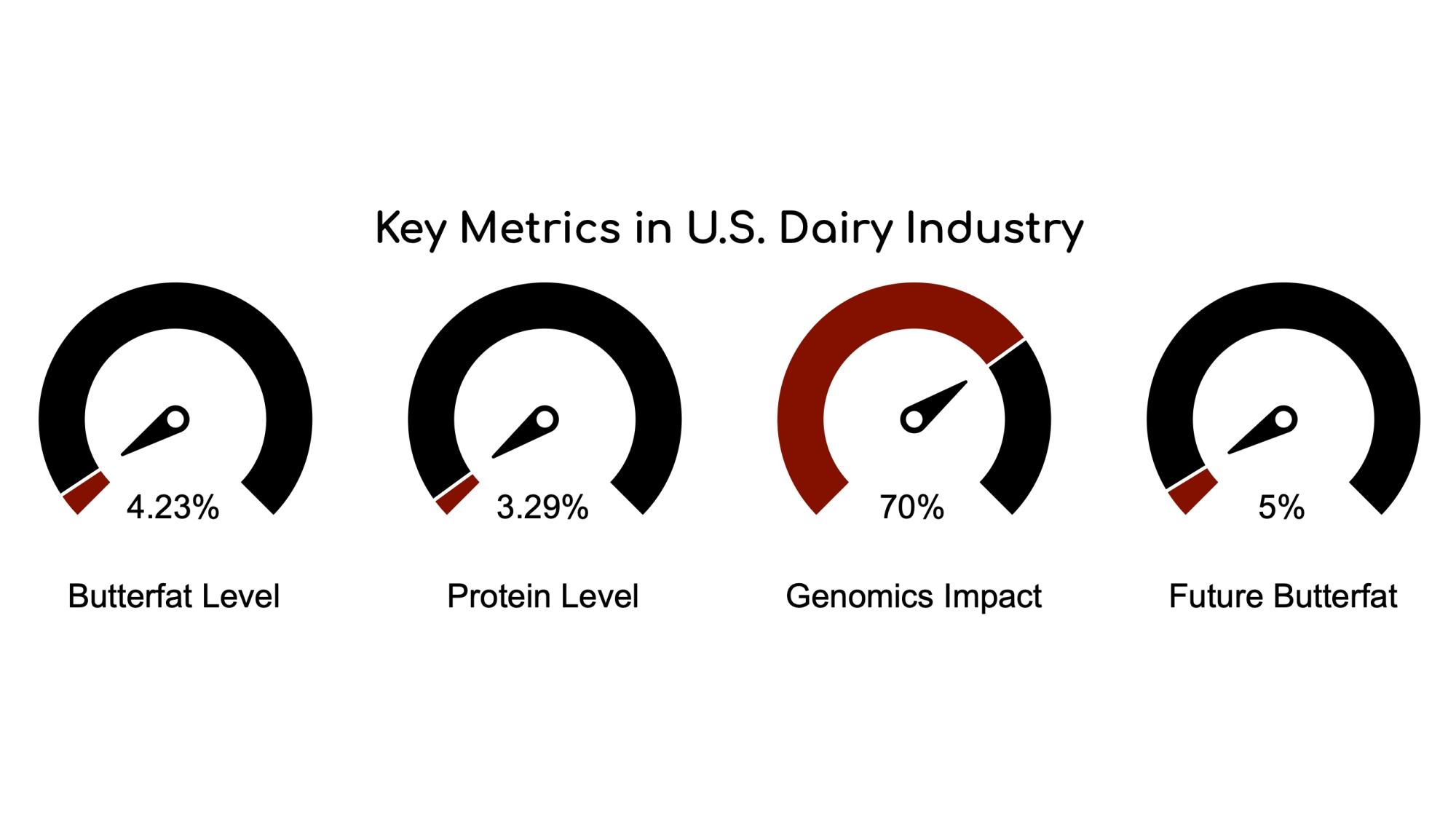
Let’s cut through the bull: component percentages in U.S. milk have shattered records that stood for generations. In 2021, milkfat finally broke through the 4% ceiling nationally, besting a 76-year-old record that had stood since World War II. Not impressed? Based on USDA data, by 2024, butterfat levels will be charged even higher, to an average of 4.23% nationally.
Protein is surging, too, posting consecutive yearly records from 2016 through 2024. The 2024 milk marketing year finished with a 3.29% average protein content- a leap from the 3.04% level recorded in 2004. Think about that: your industry is now packing nearly 9% more protein in the same milk volume as 20 years ago. If you’ve made zero breeding changes focused on components, you’re barely treading water while progressive farms ride a profitable wave.
These numbers are even more remarkable because they’ve occurred while milk production has declined. The U.S. dairy industry has experienced its first back-to-back years of declining milk production since the 1960s, with national output decreasing by 0.04% and 0.23% in 2023 and 2024, respectively.
Despite producing less milk, America’s dairy farmers deliver more butterfat and protein than ever. This isn’t just some interesting footnote for your next co-op meeting-it’s a fundamental reshaping of milk’s value proposition that demands you rethink how you breed, feed, and manage your herd.
Why Your Bulk Tank Reading Is Increasingly Irrelevant
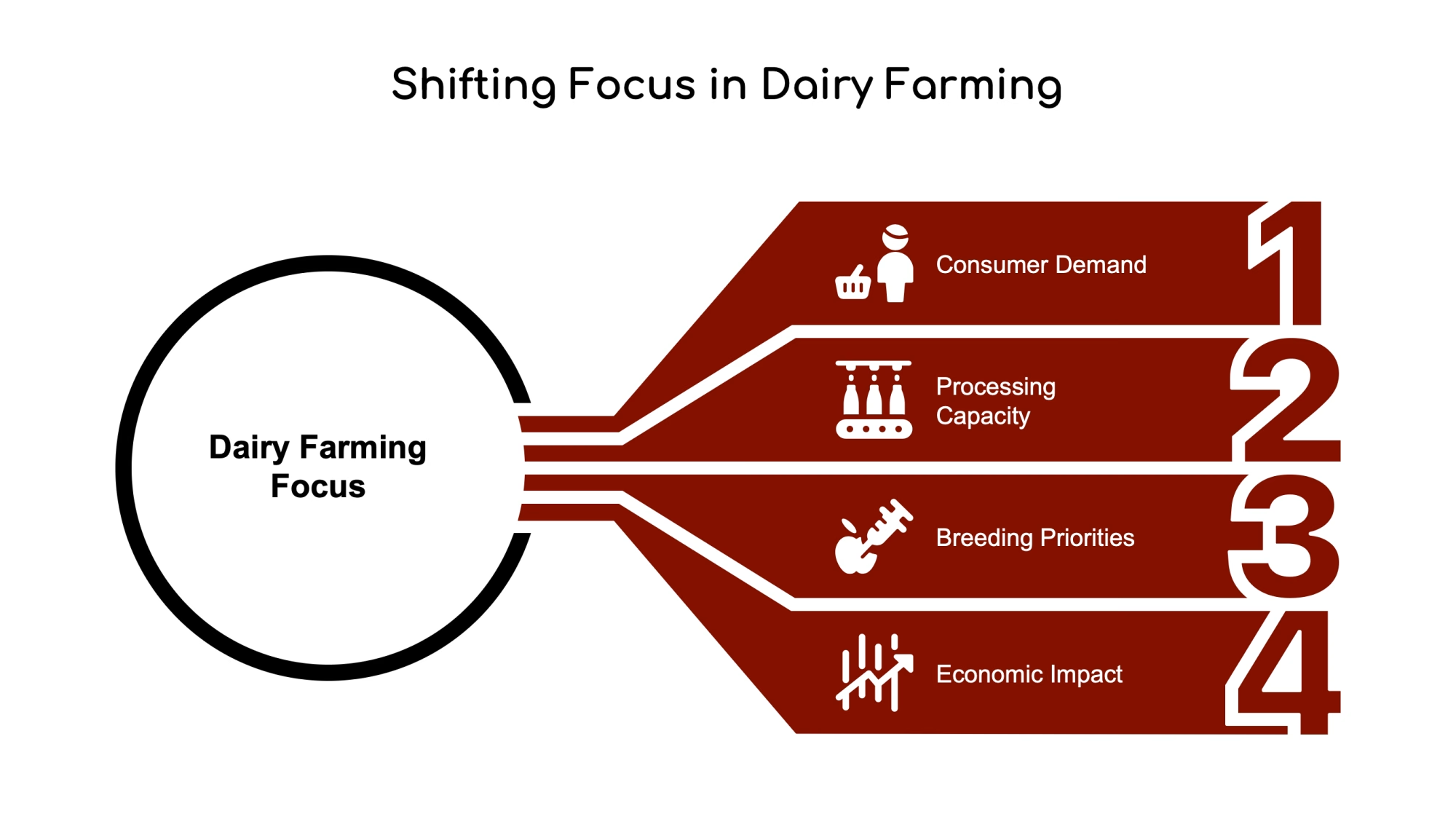
Over 80% of what leaves your farm in milk trucks now goes into manufactured dairy products that rely on butterfat and protein content. That cheese plant down the road doesn’t care about your tank volume-they care about how many pounds of cheese they can make from your components. The same goes for butter, powder, and nearly every other dairy product except fluid milk (which continues to lose market share faster than a fresh heifer loses body condition after calving).
This shift drives massive investment: more than $8 billion of new dairy processing capacity is online through 2027. Processors aren’t building these plants on a whim- they’re responding to strong consumer demand for higher-fat, higher-protein dairy foods. The message couldn’t be clearer: your mailbox price is increasingly tied to components, not volume. So why are you still selecting sires primarily for milk production?
Why This Matters for Your Bottom Line
If you’re still primarily focused on milk volume, you run your dairy based on outdated economics. It’s like breeding for udder attachments when your cows are housed in sand-bedded free stalls and milked in a rotary- a luxury you can’t afford when margins are tight and getting tighter. The milk check math has fundamentally changed:
Metric
Old Paradigm (2000-2010)
New Reality (2011-2024)
Milk volume growth
14.2%
16.0%
Butterfat pound growth
15.4%
29.5%
Protein pound growth
13.8%
23.3%
Primary driver of the milk check
Volume
Components
This decoupling of volume and components means your breeding priorities need serious recalibration. If you focus on the right genetics, every 0.1% component increase translates to significantly more revenue without requiring additional stalls, bunks, or TMR.
The Genomic Revolution: Time to Ditch Your Outdated Breeding Strategy
The game-changing force driving these unprecedented component levels is genomics. Let’s be brutally honest: if you’re not leveraging genomic testing in your breeding program in 2025, you’re not even in the same league as progressive dairy farms.
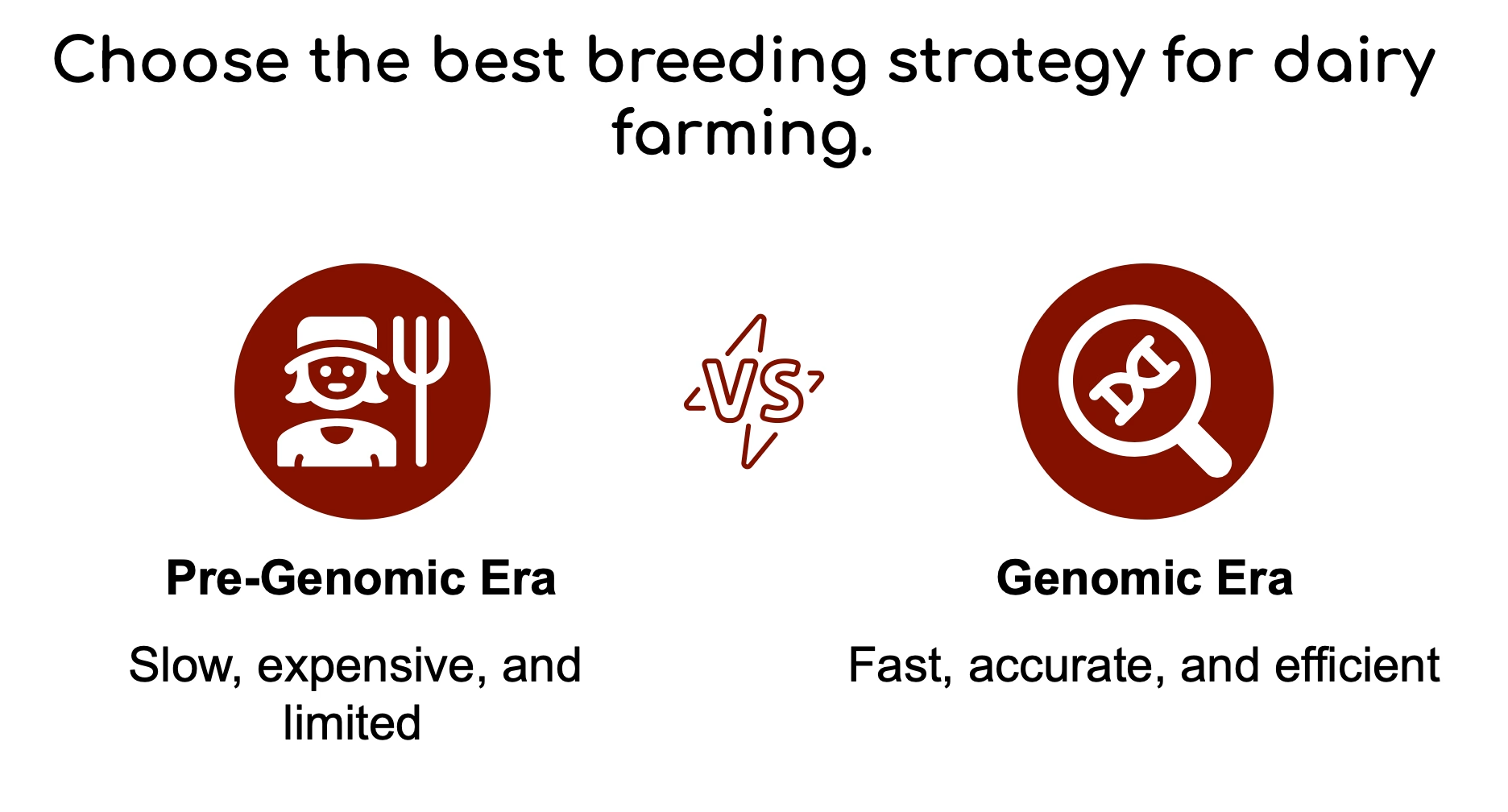
Before genomics, you’d wait 5-7 years to see if a bull’s daughters performed as promised. You were essentially driving while looking in the rearview mirror, making selection decisions based on data from cows that calved half a decade ago. The process was slow, expensive, and limited. Today, we can evaluate an animal’s genetic potential by analyzing its DNA at birth with remarkable accuracy.
The impact has been nothing short of revolutionary. Genomic selection effectively doubled the rate of genetic progress compared to the pre-genomic era by:
Drastically reducing generation intervals (from 5-7 years to 1-2 years for bulls)
Significantly increasing selection accuracy for young animals (reliability of 70-75% for genomic young sires vs. 35% for parent averages)
Allowing for more intense selection across larger populations (screening thousands of potential bulls rather than dozens)
Yet despite this transformation, many dairy farmers remain stuck in pre-genomic selection habits. Why are you still making breeding decisions like it’s 2005?
The adoption rate tells the story: After genomic technology was released in 2009, it took seven years to genotype the first 1 million dairy males and females. Then, it took just two years to reach the 2 million thresholds. By December 2024, the industry surpassed the 10 million marks. The train has left the station. Are you on it, or are you still standing on the platform?
Two Pathways to Component Profits Every Smart Farmer Is Already Exploiting
Genetic progress in components takes place in two primary ways:
Sire Selection: AI companies select elite young bulls based on genomic tests. This has become increasingly sophisticated, with the Net Merit index now placing more emphasis on fat (31.8% in 2025, up from 28.6% in 2021) while still valuing protein. It’s not enough to look at the total NM$ or TPI™ number anymore. We need to dig into the PTA fat, protein numbers, and percentages. Are you still selecting bulls based only on their overall index? If so, you’re missing half the story.
On-Farm Female Selection:This is where most farms are dropping the ball. You wouldn’t buy a bull without seeing his proof, so why keep heifers without knowing their genetic potential? By genomic testing your heifer calves, you can identify which females have the highest component potential and make informed decisions about which animals should produce your next generation. The ROI can be substantial at $30-40 per test, but many farmers still insist that this technology is “too expensive.” Really? Too expensive compared to raising a genetically inferior heifer that will cost you thousands in lost component revenue over her lifetime.
The use of gender-sorted semen amplifies these genetic gains further. By 2024, 61% of all dairy semen sold in the U.S. came from this category. This has given rise to what some farmers call “sexed semen on the best and beef semen on the rest, “a strategy that accelerates genetic progress while creating valuable crossbred calves for beef channels. Even more progressive operations are creating conventional and in vitro fertilized embryos from their elite females, accelerating genetic progress exponentially.
If you’re not strategically combining genomic testing, sexed semen, and beef-on-dairy strategies, you’re falling behind, period.
The Economic Engine: Your Components Are Worth More Than You Think
Under multiple-component pricing systems used in most Federal Milk Marketing Orders, you’re paid based on the actual pounds of butterfat, protein, and other solids delivered just on milk volume. Fat and protein can account for nearly 90% of your milk check value. The math becomes compelling, with fat prices consistently above $3.00 per pound and protein often exceeding $2.50.
Consider this real-world example: Two 500-cow dairies ship 70 lbs per cow daily, but Dairy A averages 3.7% fat and 3.0% protein, while Dairy B focuses on components and achieves 4.3% fat and 3.3% protein. The component advantage translates to an additional $1.39 per cwt, or about $177,000 annually-roughly the cost of a new TMR mixer or several months of feed bills. Which farm would you rather own?
Why Processors Are Willing to Pay
Each 0.1% increase in milk protein content for cheese manufacturers translates to approximately 0.25 pounds more cheese per hundredweight of milk. Similarly, butter yield rises by about 0.12 pounds per hundredweight for each 0.1% increase in butterfat. These yield improvements dramatically improve processing efficiency and profitability.
Industry analysts suggest that increased component levels between 2010 and 2023 boosted theoretical cheese yields by approximately 11%. Similarly, the butter yield from 100 lbs of milk increased from about 4.4 lbs in 2010 to 5.1 lbs in 2024, a 15.5% increase directly attributed to rising milk fat percentages.
This enhanced productivity is fueling the wave of investment in dairy processing. By mid-2025, these investments are expected to process nearly 20 million pounds of additional milk daily, primarily targeting high-component milk for cheese and butter production. Are you positioned to supply what processors are investing billions to utilize?
Balancing Act: The Component-Only Trap Some Farmers Are Falling Into
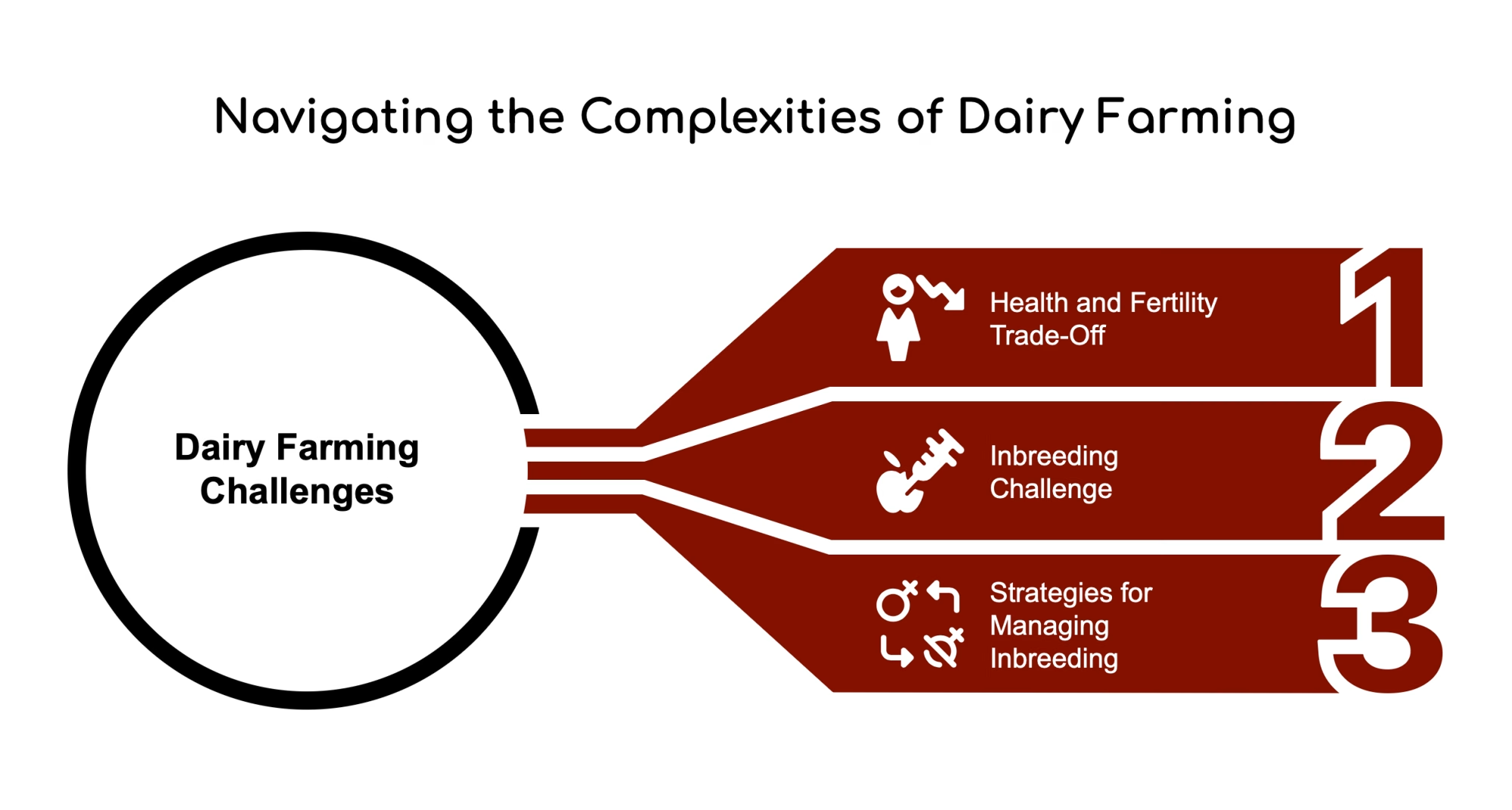
While the economic signals strongly favor higher components, selecting exclusively for fat and protein is dangerously shortsighted feeding for maximum production without considering rumen health. Historical data has shown unfavorable genetic correlations between extremely high output and key functional traits like fertility and health.
The Health and Fertility Trade-Off
Diverting more physiological resources towards maximizing component production can compromise resources available for reproduction and health maintenance, much like how a fresh cow mobilizing too much body condition can sacrifice fertility. This is why modern breeding programs use balanced selection indices like Net Merit (NM$), which assign economic weights not only to production traits but also to health, fertility, and longevity.
The 2025 Net Merit index still strongly emphasizes components (31.8% on fat, 13.0% on protein) but balances this with significant weight on health traits, fertility, and, increasingly, feed efficiency (17.8%). As you balance your ration between energy, protein, and fiber, your breeding program must balance production, health, and efficiency traits.
The Inbreeding Challenge
Accelerated genetic gain through genomics has come with increased rates of inbreeding. By 2017, average genomic inbreeding in Holstein bulls reached 12.7%, raising concerns about inbreeding depression-reduced performance in traits like fertility, health, and survival.
Some progressive breeders are managing this challenge with strategies many conventional farmers ignore:
Using genomic mating programs that consider relationships to minimize inbreeding
Diversifying sire selection beyond just the top-ranked bulls
Considering crossbreeding in commercial operations for hybrid vigor
Feed Efficiency: The Next Frontier Smart Breeders Are Already Conquering
As component levels continue to rise, the focus is increasingly on producing these valuable solids more efficiently. Feed represents 50-60% of your operating expenses-typically your largest cost center-making feed efficiency is a significant profit driver.
The increased emphasis on Feed Saved (FSAV) in the 2025 NM$ index (17.8%, up from 10.7% in 2021) highlights this shift. FSAV combines Residual Feed Intake (RFI) and Body Weight Composite (BWC) to identify cows that eat less while maintaining high production, identifying animals that convert your TMR to milk components more efficiently.
Think of it this way: if components are the gold you’re mining, feed efficiency is about reducing your extraction costs. Two cows might produce the same pounds of fat and protein, but if one does it while consuming 10% less feed, she’s significantly more profitable over her lifetime.
Yet how many farmers are selecting for feed efficiency in their breeding programs? If you can’t answer that question about your operation, you’re probably not.
Your Component Strategy: Five Actions to Take Before Your Next AI Technician Visit
Genomic test ALL your heifer calves: Not just a sample, not just the ones from your best cows- ALL of them. If you’re not already doing this, you’re leaving money on the table. The ROI is substantial at approximately $35-40 per test, considering that each elite heifer could produce daughters’ worth $200+ more in lifetime profit compared to your herd average. Stop making excuses about the cost and start realizing you can’t afford NOT to test.
Revise your sire selection criteria: Ensure component traits receive appropriate emphasis in your selection decisions, but within the context of balanced indices like NM$ to avoid sacrificing health and fertility. Look beyond the total index value to examine specific PTAs for fat and protein pounds and percentages. A bull with +0.15% PTA for fat percentage will have a much bigger impact on your component levels than one at +0.05%, even if their total merit indexes are similar. When did you last look at component percentages in your sire selection, or are you still just scrolling to the TPI column?
Implement strategic use of sexed semen: Use gender-sorted semen on genomically superior heifers and cows to generate replacements, coupled with beef semen on lower genetic merit animals. This approach has become standard on progressive operations, with many reporting that the premium price of sexed semen is easily offset by the value of dairy replacements from elite females and beef-cross calves from the bottom end that fetch $150-300 per head instead of $25-50 for dairy bull calves. The old practice of breeding everything to dairy bulls costs you money with every insemination.
Consider advanced reproductive technologies: For elite females, embryo transfer or IVF can multiply their genetic impact on your herd. While once viewed as only practical for registered breeders, the economics now make sense for commercial operations focusing on the top 1-2% of females. One elite donor can produce 20+ pregnancies annually through IVF, compared to just one through natural calving. Are you still treating your genetically elite heifers the same as your average ones?
Monitor component trends in your herd: Track your progress against benchmarks and adjust your strategy as needed. Many herd management software systems now provide genetic trend analysis tools. Just as you regularly check somatic cell counts or pregnancy rates, you should monitor your rolling herd average for fat and protein percentages and set clear improvement goals. What gets measured gets managed what exactly are you measuring?
Future Outlook: Could Your Holsteins Hit 5% Fat and 3.5% Protein?
If current trends continue, genetic selection could push butterfat content to over 5% in the next decade, if herd management, particularly nutrition, can keep up with genetics. Top herds achieve 4.5-4.8% fat tests without sacrificing volume levels previously associated only with Jersey or Guernsey breeds.
Protein will likely follow suit, potentially reaching 3.5% or higher. While this might sound far-fetched for Holstein herds that hovered around 3.0% protein for decades, other species like sheep and goats routinely produce milk with 5-6% protein content. The biological potential exists- we just need to select for it.
The industry has barely scratched the surface of what’s genetically possible. Based on December 2024 genetic evaluations, the theoretical “Super Cow” could reach , compared to the top Holstein bull available at . This suggests a 400% upside potential for genetic improvement.
Some traditionalists might question whether these levels are realistic or sustainable. However, water buffalo milk (used for premium mozzarella) averages over 7% butterfat, demonstrating the biological potential for high-component milk production in related bovine species. Are you letting outdated beliefs about “normal” component levels limit your genetic progress?
The Bottom Line: You’re Either Moving Forward or Being Left Behind
The component boom has just begun, representing one of the greatest profit opportunities for dairy farmers in a generation. While overall milk volume has stagnated, the value of what’s in your bulk tank continues to climb at an unprecedented rate.
For forward-thinking producers, the path is clear: embrace genomics, prioritize components within a balanced breeding strategy, and position your operation to capitalize on the processing sector’s increasing demand for high-component milk.
Those who cling to old volume-focused paradigms will be left behind in an industry where milk’s value is increasingly determined by what’s dissolved in it, not how much you produce. The question isn’t whether components will continue their upward trajectory or whether your herd will be riding that profitable wave or watching it pass by.
It’s time to be brutally honest with yourself: Is your breeding program designed for today’s economic reality, or are you still operating on outdated assumptions? Are you investing in the genetic technologies that will position your dairy for success, or are you saving pennies on genomic testing while losing dollars on every milk check?
The genetic tools are available, the market signals are clear, and the processors are investing billions to handle the high-component milk of the future. What are you waiting for? Your competitors certainly aren’t standing still- they’re already mining their component gold rush while you may still be panning for volume.
Key Takeaways:
Genomics dominates: 10M+ cattle genotyped since 2009, doubling genetic gains via sexed semen and IVF.
Components = cash: Fat/protein now drive 90% of milk checks under FMMO pricing, with cheese/butter yields up 11-15.5%.
Volume is obsolete: Milk production declined in 2023/24, yet component pounds hit records – genetics trumps gallons.
Balance or bust: Top herds use NM$ indexes to boost feed efficiency (+17.8% weight) while managing inbreeding (12.7% in Holsteins).
5% fat horizon: Water buffalo genetics show 7% fat potential – U.S. Holsteins could hit 5% by 2035 with optimized breeding.
Executive Summary:
The U.S. dairy industry is achieving historic butterfat (4.23%) and protein (3.29%) levels through genomic selection, decoupling component gains from stagnant milk volume. Genomics now drives 70% of production improvements, with gender-sorted semen and embryo transfer accelerating genetic progress. A $8B processing expansion leverages these components, while balanced breeding strategies mitigate health/fertility trade-offs. Farmers using outdated volume-focused approaches risk missing 400% upside in milk value. The future points to 5% butterfat herds if management keeps pace with genetics.
Join over 30,000 successful dairy professionals who rely on Bullvine Weekly for their competitive edge. Delivered directly to your inbox each week, our exclusive industry insights help you make smarter decisions while saving precious hours every week. Never miss critical updates on milk production trends, breakthrough technologies, and profit-boosting strategies that top producers are already implementing. Subscribe now to transform your dairy operation’s efficiency and profitability—your future success is just one click away.
Heifer prices hit record highs! Discover why raising your own replacements is now 54% cheaper than buying.
The North American dairy industry is witnessing a dramatic shift in replacement heifer economics. With market prices at historic highs and inventory at a 47-year low, the traditional “buy versus raise” equation has fundamentally changed. This comprehensive analysis reveals why 2025 has become the pivotal year when raising your replacements has regained its economic advantage for forward-thinking producers.
The Perfect Storm: Record Prices Meet Vanishing Supply
The current replacement heifer market is experiencing unprecedented pressure from multiple directions. Recent auction data from Ontario reveals the staggering reality: replacement heifers weighing over 900 pounds are commanding between $326.50 and $328.00 per hundredweight (cwt), averaging $326.92. Lighter replacement heifers in the 800-899 pound category fetch even higher prices, ranging from $372.00 to $383.00/cwt, while those in the 700-799 pound range are selling for $356.07 to $407.11/cwt, with peaks reaching $412.00.
These aren’t just numbers—they represent a financial barrier reshaping dairy farm economics. A single 900-pound replacement heifer costs approximately $2,942, making the purchase option increasingly prohibitive for many operations.
37,000 Heifers Vanished: Why Your Replacement Pipeline Is Drying Up
This price surge stems directly from a dramatic contraction in heifer availability. As of January 1, 2025, dairy heifers expected to calve totaled just 2.5 million head, down 0.4% from the previous year and representing the lowest level since USDA began tracking this metric. The broader category of dairy heifers weighing 500 pounds or more totaled merely 3.914 million head—a decline of 0.9% year-over-year and the smallest inventory since 1978.
What’s particularly alarming is that these official figures understate the actual severity of the shortage. USDA has made significant downward revisions to previous years’ inventory numbers. Between January 2023 and January 2024, the agency revised dairy replacement numbers by a staggering 371,600 head—an 8.6% reduction that wasn’t initially reported.
“We’re seeing the beef-semen-on-dairy-cow trend taking hold like shoppers looking to grab deals on a Black Friday shopping spree,” notes James Wilson, a dairy market analyst with AgriTrends. “With beef cattle numbers in retreat nationwide, this trend shows no signs of slowing.”
Unlock Hidden Profits: The True Economics of Home-Raised Replacements
While market prices for purchased heifers have skyrocketed, the cost structure for raising heifers on-farm offers a compelling alternative for producers who can manage their expenses effectively.
According to data from the Canadian Cow-calf Cost of Production Network, the average cost of raising a replacement heifer in 2023 was estimated at $2,904. This comprehensive figure includes opportunity costs, feed, labor, housing, and health management expenses.
“When we adjusted for a 10% open rate, the cost for each bred heifer was $2,382, assuming bred heifers will bear the cost of developing the opens,” explains Dr. Sarah Johnson, extension specialist at the University of Guelph. “That’s a significant savings compared to current purchase prices.”
The most significant component—approximately 60%—is attributed to the opportunity cost of not selling the heifer calf at weaning. Other significant expenses include labor (9%), feed (6%), machinery (6%), land (5%), and various smaller cost categories such as veterinary medicine, fuel, and building maintenance.
Labor Efficiency: The Make-or-Break Factor in Heifer Economics
Labor represents a critical component in the raise-versus-buy equation. Research from the Canadian Cow-calf Cost of Production Network reveals that labor intensity averages 15 hours per cow but varies dramatically based on operation size and management practices.
“The most profitable operations demonstrate significantly greater labor efficiency,” says Michael Thompson, who manages a 300-cow dairy in eastern Ontario. “We’ve cut labor costs by 40% by implementing automated feeding systems and strategic grouping. It’s made raising our replacements financially viable again.”
High-profit farms average 8.8 hours per cow compared to 23.9 hours in low-profit operations. This efficiency translates directly to the bottom line, with labor costs averaging $327 per cow and accounting for 18% of total production costs.
Genomics: The Game-Changer That Purchased Heifers Can’t Match
The most compelling reason to raise your replacements in 2025 isn’t just about avoiding high purchase prices—it’s about capturing the unprecedented value of genetic selection that purchased animals simply can’t match.
“Genomics cut our heifer losses by 40%—it’s not just for mega-dairies,” reports David Williams, who operates a 120-cow dairy near Woodstock, Ontario. “We’re seeing conception rates above 65% in our genomically-selected heifers compared to 52% in our conventionally-selected animals.”
Modern genomic testing has revolutionized replacement selection. The Replacement Heifer Profit Index (RHPI) places 80% emphasis on hybrid vigor score and 20% on seven traits associated with efficiency, growth, fertility, and longevity.
The results are remarkable: heifers with above-average RHPI scores demonstrated significantly lower open rates (13.7%) than below-average heifers (23.4%). This 9.7 percentage point difference resulted in nine more calves per 100 replacement heifers—a productivity improvement that no AI company can match regarding ROI.
Genomic Selection ROI Comparison
RHPI Score Tier
Conception Rate
Avg Lactations
Lifetime Revenue Premium
Top 25%
86.3%
4.7
+$2,810
Bottom 25%
76.6%
3.1
Baseline
3 Questions Every Dairy Breeder Should Ask Before Buying Heifers
What’s the true genetic potential? Purchased heifers often represent someone else’s genetic culls, while raising your own lets you implement your specific genetic strategy.
What’s your labor efficiency? If you’re averaging more than 15 hours per cow annually, focus on improving labor efficiency before committing to raising replacements.
What’s your feed cost advantage? Operations with homegrown forage typically save 30-40% on feed costs compared to purchased feed operations.
Critical Benchmarks That Determine Your Heifer Program’s Success
Producers should track several key benchmarks that provide insights into both short-term costs and long-term returns to evaluate the financial sustainability of an on-farm heifer-raising program.
The payback period—the years required for a replacement heifer to recover her development costs—is a critical benchmark for financial sustainability. Analysis of Canadian benchmark farms revealed that depending on the total cost of raising a replacement heifer, the payback period ranged from 5 years for low-cost operations to 7 years for medium-cost operations.
“We’ve found that operations with lower development costs not only achieve shorter payback periods but also maintain greater flexibility to adapt to changing market conditions,” explains Dr. Robert Chen, agricultural economist at the University of Manitoba. “The most successful operations maintain replacement costs under $2,400 per heifer.”
From a whole-herd perspective, the total cost of replacements distributed across the entire cow herd provides a valuable benchmark for comparing different operations. Canadian research indicates that the average replacement cost per cow was approximately $139 in 2023, ranging from $50 to $272 per cow, depending on the replacement rate and the cost of developing each heifer.
Cost Breakdown for Raising Dairy Heifers (2025 Projections)
Cost Component
% of Total
$/Heifer
Key Drivers
Opportunity Cost
60%
1,742
Record calf prices
Labor
9%
261
$23.50/hr avg wage
Feed
6%
174
Lower 2025 grain costs
Veterinary
4%
116
Vaccine price increases
Why Mega-Dairies Are Hoarding Heifers (And What It Means For You)
The current heifer shortage isn’t just a market anomaly—it’s a strategic play by the industry’s largest operations. As milk production becomes increasingly concentrated among fewer, larger dairies, these operations have recognized the strategic advantage of controlling their replacement pipeline.
With milk margins expected to remain above historical levels at $13.37/cwt in 2025, these mega-dairies are positioning themselves for expansion while smaller operations struggle to maintain herd size. The result is a self-reinforcing cycle: larger operations secure their replacement needs, driving prices higher for everyone else and further challenging smaller producers.
Health Management: Turning Science Into Survival
Implementing comprehensive health management protocols is essential for minimizing losses in replacement heifers and maximizing the return on investment in an on-farm raising program.
A well-structured vaccination program protects against common bovine diseases affecting heifer development and future productivity. Key vaccines include those for infectious bovine rhinotracheitis (IBR), bovine viral diarrhea (BVD), bovine respiratory syncytial virus (BRSV), parainfluenza-3 (PI3), and clostridial diseases.
Optimal vaccination timing generally includes initial immunization at about 4 months of age, with boosters administered 4-5 weeks before weaning, at pre-breeding (13-16 months), and 40-60 days before calving. This comprehensive approach helps ensure that heifers develop strong immunity to key pathogens at critical stages of development.
While feed prices dip in 2025, labor costs now eat 15% of heifer budgets—making robotic feeders and automated health monitoring systems increasingly essential rather than optional for competitive operations.
Long-Term Planning: Securing Your Herd’s Future Against Rising Costs
The ideal replacement rate varies depending on herd goals, but research indicates that most efficient operations maintain replacement rates between 10% and 14% annually. Data from Canadian benchmark farms showed that low-cost operations averaged a 10.4% replacement rate, medium-cost operations averaged 12.5%, and high-cost operations averaged 13.7%.
Modern reproductive technologies can help producers optimize their replacement strategies. Using sexed semen for genetically superior animals can increase the number of potential replacement heifers from the best cows in the herd. Conversely, using beef semen on lower genetic merit cows can reduce the number of dairy heifer calves while producing valuable beef-cross calves that generally command higher prices in the market.
This strategic approach to breeding allows producers to precisely manage their replacement pipeline while maximizing the value of all calves produced, whether destined to become herd replacements or marketed for other purposes.
The Bottom Line: 2025’s Replacement Reality
The current market dynamics, characterized by record-high heifer prices and reduced inventories, have created a favorable economic environment for raising replacement heifers on many operations. While purchasing replacements remain viable for some producers, particularly those facing resource constraints or seeking rapid genetic change, the financial advantages of raising replacements have become increasingly compelling in 2025.
Several factors contribute to this shift in the economic equation. The substantial gap between market prices for purchased heifers and the cost of raising replacements on efficient operations provides a direct financial incentive for on-farm development. The ability to implement targeted genetic selection programs enhances this advantage by improving the productivity and longevity of home-raised animals.
That “bargain” $3,000 heifer? She’ll need to birth 24 calves just to break even compared to the genetically superior animal you could raise yourself. The real question isn’t whether you can afford to raise replacements—it’s whether you can afford not to when your competitors are already breeding tomorrow’s profit engines today.
Key Takeaways:
54% Savings: Raising replacements beats buying at 2025’s record prices (700-799 lb heifers: $388.81/cwt).
Genomic ROI: Top 25% RHPI-scored heifers deliver +$2,810 lifetime revenue via 86.3% conception rates.
Ideal Rates: Maintain 10-14% replacement rates for herd sustainability.
Toolkit: Use the BCRC Calculator to model break-even points and genetic ROI.
Executive Summary:
In 2025, soaring heifer prices and shrinking supply have flipped the economics of herd replacements. Raising heifers on-farm now offers up to 54% cost savings over purchasing, driven by genomic tools that slash infertility rates by 41% and labor strategies saving $261/heifer. The article provides a roadmap for dairy producers, including critical benchmarks (10-14% replacement rates), real-world case studies, and the BCRC Replacement Heifer Calculator to optimize decisions. With mega-dairies strategically hoarding replacements, smaller operations must leverage these insights to remain competitive.
Should You Raise Replacement Heifers Yourself? A deep dive into the pros and cons of on-farm rearing versus custom heifer rearing services, including cost management, genetic selection, and biosecurity considerations.
Replacement Heifer Prices Reach Record Territory Analyze the impact of record-high replacement prices and strategies like beef-on-dairy breeding, extending cow longevity, and precision breeding to adapt to the crisis.
Join the Revolution!
Join over 30,000 successful dairy professionals who rely on Bullvine Daily for their competitive edge. Delivered directly to your inbox each week, our exclusive industry insights help you make smarter decisions while saving precious hours every week. Never miss critical updates on milk production trends, breakthrough technologies, and profit-boosting strategies that top producers are already implementing. Subscribe now to transform your dairy operation’s efficiency and profitability—your future success is just one click away.
To provide the best experiences, we use technologies like cookies to store and/or access device information. Consenting to these technologies will allow us to process data such as browsing behavior or unique IDs on this site. Not consenting or withdrawing consent, may adversely affect certain features and functions.
Functional
Always active
The technical storage or access is strictly necessary for the legitimate purpose of enabling the use of a specific service explicitly requested by the subscriber or user, or for the sole purpose of carrying out the transmission of a communication over an electronic communications network.
Preferences
The technical storage or access is necessary for the legitimate purpose of storing preferences that are not requested by the subscriber or user.
Statistics
The technical storage or access that is used exclusively for statistical purposes.The technical storage or access that is used exclusively for anonymous statistical purposes. Without a subpoena, voluntary compliance on the part of your Internet Service Provider, or additional records from a third party, information stored or retrieved for this purpose alone cannot usually be used to identify you.
Marketing
The technical storage or access is required to create user profiles to send advertising, or to track the user on a website or across several websites for similar marketing purposes.
To provide the best experiences, we and our partners use technologies like cookies to store and/or access device information. Consenting to these technologies will allow us and our partners to process personal data such as browsing behavior or unique IDs on this site and show (non-) personalized ads. Not consenting or withdrawing consent, may adversely affect certain features and functions.
Click below to consent to the above or make granular choices. Your choices will be applied to this site only. You can change your settings at any time, including withdrawing your consent, by using the toggles on the Cookie Policy, or by clicking on the manage consent button at the bottom of the screen.
Functional
Always active
The technical storage or access is strictly necessary for the legitimate purpose of enabling the use of a specific service explicitly requested by the subscriber or user, or for the sole purpose of carrying out the transmission of a communication over an electronic communications network.
Preferences
The technical storage or access is necessary for the legitimate purpose of storing preferences that are not requested by the subscriber or user.
Statistics
The technical storage or access that is used exclusively for statistical purposes.The technical storage or access that is used exclusively for anonymous statistical purposes. Without a subpoena, voluntary compliance on the part of your Internet Service Provider, or additional records from a third party, information stored or retrieved for this purpose alone cannot usually be used to identify you.
Marketing
The technical storage or access is required to create user profiles to send advertising, or to track the user on a website or across several websites for similar marketing purposes.









 Join the Revolution!
 Join the Revolution!