Archive for dairy showmanship

The Kid Who Forgot His White Pants: How Bert Stewart Became Dairy’s Greatest Showman

From not having white pants to an unrivaled 16 Grand Champions, Bert Stewart’s story is dairy’s ultimate tale of grit and greatness.

Bertram Stewart, captured in his element, doing what he loved. He passed away on February 12, 2018, at the age of 86, leaving behind a legacy defined by an unrivaled eye for cattle and an unmatched presence in the show ring.

You know how the best stories usually start with someone making a call they probably shouldn’t?

Picture this: It’s 1960, and Bert Stewart just convinced Angelo Agro to drop $4,500 on a nine-week-old calf at the Sheffield Dispersal. Now, $4,500 doesn’t sound like much until you realize most families were buying entire houses for less back then. His mother called that very night, her voice tight with worry: “Bert, please be careful when you’re spending other people’s money.”

The thing is, Bert wasn’t gambling. He was investing in what would become Sheffield Climax Pansy—the only cow in dairy history to produce daughters that went Grand and Reserve Grand Champion at the Royal Winter Fair in the same year. It was the kind of prescient call that would define a career spanning seven decades and cement Stewart’s reputation as the man with perhaps the greatest eye for cattle the dairy industry has ever seen.

Bertram Stewart at the halter of A Millervale Brett Maude, one of the 16 Grand Champions he led at the Royal Winter Fair. This photo perfectly encapsulates the unparalleled showmanship that defined his seven-decade career.

When Stewart passed away on February 12, 2018, at age 86, he left behind a record that’ll probably never be touched: 16 Grand Champions led at the Royal Winter Fair. But numbers only tell part of Bert’s story.

When Disaster Breeds Resilience

The Stewart farm north of Bolton, Ontario, was your typical mixed operation in the 1930s. Percheron horses thundering across the fields, their hooves drumming against packed earth. Ayrshire cattle dotting the pastures, their red and white coats bright against the green Ontario landscape. Eight kids who all learned that success wasn’t just about profits—it was about how you treated your animals.

The complete Stewart clan on their Bolton, Ontario farm in the 1930s. Pictured are parents Ernest and Jennie Stewart, along with children Andrew, Dorothy, Isabel, RJ, Henry, Hillard, Bertram (the smallest in the front row), and Murray. This dual-purpose Shorthorn, as Uncle Murray remembered, helped feed the entire family of ten – a testament to the grit and self-reliance that would later define Bert’s career, especially after their herd was devastated by Brucellosis.

Then Brucellosis hit like a freight train.

Back in the mid-1930s, when Bert was just a little guy, the disease swept through their herd like wildfire. Everything had to go. Can you imagine? One day you’re a dairy family, the next morning you’re watching the truck doors slam shut on everything you’ve built. The smell of disinfectant hanging heavy in the empty barn… the silence where lowing cattle should be.

The Stewarts didn’t quit. They rebuilt with purebred Ayrshires, even though, as Bert would later say with that trademark honesty, “there wasn’t much market for them.”

That disaster taught young Bert something that would serve him his entire career: you study what works, you adapt, and you never stop learning. His family called him “a consummate student” even as a kid. While other teenagers were goofing off, Bert was watching, listening, and figuring out why some showmen succeeded and others didn’t.

The White Pants Moment

At 15, Bert was hired to work for an Ayrshire breeder for just one month before the Canadian National Exhibition. He spent his days clipping cattle, the steady buzz of the hand-turned clippers filling the barn—his brother cranking the handle while Bert guided the blades through coarse hair. Getting six head ready for the show. Standard summer job, right?

The night before the show, he asks the obvious question: “Who’s going to show these tomorrow?”

“You are.”

Picture this: a 15-year-old kid who doesn’t even own white showing clothes, suddenly facing off against the biggest names in Ayrshire breeding with an imported bull from Scotland. The barn is buzzing with pre-show energy, that mix of anticipation and nervous sweat you can taste in the air. His parents had to make an emergency run to bring him proper show attire.

The whole time, his hands are shaking with nerves, the lead rope slick with perspiration.

That bull went Junior Champion. Then Grand Champion.
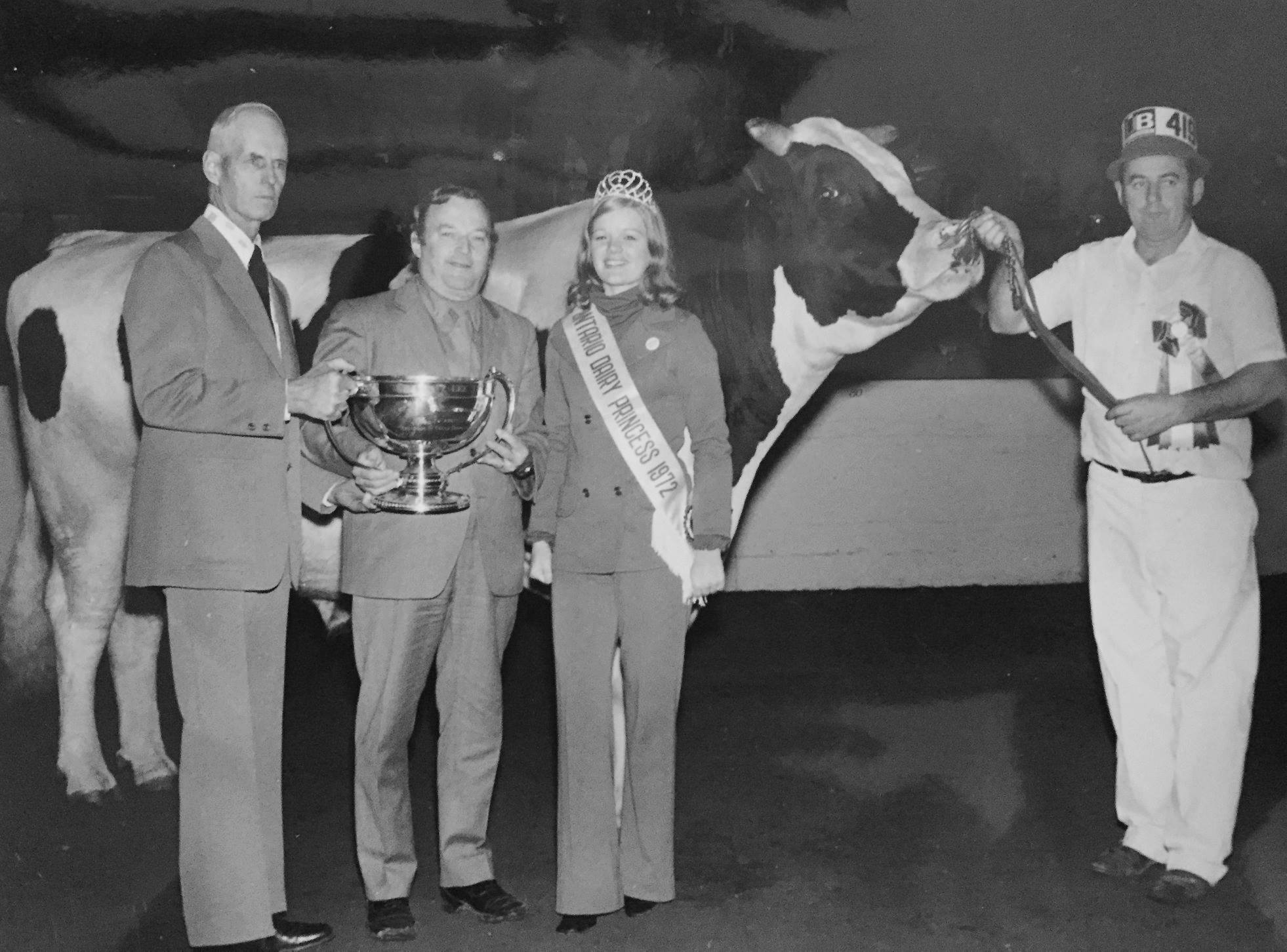
A young Bert Stewart at the halter of the Grand Champion bull at the 1972 CNE. This victory, mirroring his first major win years earlier with an imported Scottish bull, highlights the consistent mastery that would later make him a legend in the ring.

“It was the beginning of a great long career in the show ring,” Stewart would later reflect. What made it special wasn’t just winning—it was how he handled the pressure. That calm demeanor everyone talks about? It wasn’t natural. “I’m not sure it came naturally,” he admitted years later. “The more you go into those big classes and shows, the more you become more relaxed.”

The Education of a Master

What separated Bert from other talented kids was his systematic approach to learning. While others might’ve been content with natural ability, Bert studied the masters like he was cramming for finals.

He worked summers at Romandale Farms with Dave Houck, hand-milking Mahoney Babe Lochinvar three times a day to 120 pounds—that’s serious production even by today’s standards. Picture those pre-dawn milkings, steam rising from warm milk hitting cold pail, the rhythm of it all. (Read more: THE ROMANDALE REVOLUTION: How a Uranium Billionaire & Cow Sense Conquered the Holstein World)

Breaking five mature daughters of Lonelm Texal Highcroft to lead. A very tough assignment! “An experience that will never be forgotten,” he said. These weren’t your average show cows—they were genetics that would reshape the breed.

At the 1969 Chicago International, Bert Stewart (at the halter of the cow on the left) showed the Senior and Grand Champion, C Locklo Reflection Shirley, while his partner led the Reserve Grand Champion. This win exemplifies Bert’s mastery in the show ring and his consistent ability to bring out the best in his animals.

The thing about Bert: he didn’t just work with the cattle, he studied the people. Ed Miscampbell, the legendary fitter known for his preparation techniques—you could hear his clippers from three stalls away, that distinctive rhythm that meant perfection was happening.

Owen Richards from Alberta, who could clip a heifer so perfectly it looked like art, each stroke deliberate, creating lines that would make judges stop and stare. “Any time I asked them, they were happy to tell you,” Bert remembered.

That’s the thing about our industry—the best people share what they know. And Bert? He soaked it all up like a sponge.

His big break came in 1951 when he won the Royal Winter Fair’s youth judging contest, earning high individual honors and the F.K. Morrow Scholarship to O.A.C. at Guelph. But even as a college student, he couldn’t stay away from the cattle. He’d skip classes to help legendary breeders like J.M. Fraser, working with animals that were literally rewriting Holstein standards.

Decades after they first pooled their money to buy a heifer, Paul Ekstein receives the prestigious Robert ‘Whitey’ McKown Master Breeder Award from his lifelong friend and mentor, Bert Stewart. It’s a perfect snapshot of a partnership that began with two college students holding a heifer in the back of a car and ended with them as giants of the dairy world

College Bonds That Built Legends

At the Ontario Agricultural College, Bert’s circle included future industry legends—including a young refugee from Czechoslovakia named Paul Ekstein (Read more: From Czechoslovakia to Quality Holsteins: Paul Ekstein’s Unbreakable Legacy).

Years later, Paul would recall those formative days with characteristic humor:

“Bert Stewart and Morley Trask were two of my classmates,” Paul remembered. “Bert and I used to go to the Royal Winter Fair to work. The night before the show, we picked up cow flops from about 400 head.”

But here’s where it gets interesting—while Paul was doing the grunt work, “Bert made a good amount of money playing cards” during the shows. Classic Bert: always finding an angle, always thinking ahead.

The real magic happened when they pooled their resources. “The first heifer I ever bought, I bought with Bert. We bought her from Gerald Livingstone—a Sunny Maple heifer by Franlo Gen Treasure Model.”

Picture this: two broke college students who couldn’t afford a truck, so committed to their shared dream that Paul “sat on the car holding the heifer with a halter while Bert drove” to deliver her to Ewald Lammerding’s farm on Airport Road.

That leap of faith paid off. A year later, their heifer was junior champion at Halton and Peel, and they sold her to someone out west—probably for enough money to make both young men feel like cattle barons.

It’s a perfect snapshot of what made Bert special: even as a student, he was building the relationships and partnerships that would define the industry for decades. That scrappy kid holding a heifer on a car hood? Paul Ekstein would go on to found Quality Holsteins and become one of Canada’s most respected breeders (Read more: Paul Ekstein – 2013 Recipient of the Prestigious McKown Master Breeder Award).

Building an Empire, One Smart Decision at a Time

After graduation, Bert’s career took what looked like a detour but turned out to be genius preparation. He started with Canada Packers, collecting unpaid bills—not a glamorous task, but it taught him the harsh realities of agricultural economics and how to work with people under pressure.

Sound familiar? Today’s producers dealing with volatile milk prices and input costs would recognize that skill set.

Then came the Holstein Journal gig. “Working for the Journal, I got to know just about everybody in the Holstein business,” he said. Think about that network—every major breeder, every important show, every significant sale. By the time he left, Bert knew the pulse of the entire industry.

Angelo and Frank Agro gave him the platform to really shine. The Italian immigrant brothers wanted to build a world-class Holstein herd and gave Bert the resources to make it happen. That $4,500 calf his mother worried about? Sheffield Climax Pansy became the foundation of a dynasty that dominated show rings for decades.

A legendary partnership begins: Angelo Agro, owner of Agro Acres, with Bertram Stewart. The resources provided by Agro Acres gave Bert the platform to build a world-class herd, beginning with the $4,500 calf, Sheffield Climax Pansy, that would become the foundation of a showring dynasty.

The Oak Ridges Years

When Bert left Agro Acres in 1963—and there’s a story there involving principles and pig-headed interference—he didn’t retreat. He launched his own cattle business and hooked up with Oak Ridges Farm for what became a legendary 13-year run.

This wasn’t just about winning shows, though they did plenty of that. Premier Exhibitor banners nine times. Premier Breeder awards. Five different Royal Grand Champions. What made it special was the partnership between Bert, farm manager George Darrach, and herdsman Eric Neilson.

Bertram Stewart, center, in action for Oak Ridges Farm, alongside owner R.R. Dennis (far left), judge Fred Griffin, and R. Peter Heffering (far right). This iconic image from the legendary 13-year run at Oak Ridges embodies the partnerships and consistent showring excellence that earned them nine Premier Exhibitor banners and five Royal Grand Champions under Bert’s guidance.

“The best two cowmen I have ever worked with were Erik Neilson and Barry Quickfall,” Bert later said. “They are as good as it comes when working with somebody if I am out in the show ring and they are in the barn getting them ready.”

And then there was Sonwill Reflection Bee.

She wasn’t the best Holstein Bert ever led, but she was his favorite. “She was the closest thing to a human,” he said. “I could throw the lead strap over her neck, and she’d follow me through the crowd and go to the ring at the Royal Winter Fair.”

Picture that—the controlled chaos of a major show, hundreds of people milling around, and this cow just trusting Bert completely. As Stewart famously described it, when she entered the ring, she put her head up and said, ‘I’m here to win!”

Twenty-five shows. Twenty-one victories. That’s not just good cattle—that’s understanding your animals at a level most of us never reach.

The Philosophy That Changed Everything

What made Bert different from other showmen: his philosophy about working with cattle wasn’t about domination—it was about partnership. Revolutionary thinking for the time, and honestly? Still ahead of where some people are today.

“I’ve always told 4-H kids you have to relax,” he’d say. “If you are uptight, the animal is going to know it. Don’t hold them too tight. You’ve got to let the animal be herself.”

This wasn’t some feel-good nonsense. This was practical wisdom born from decades of experience. In an era when some showmen relied on force and intimidation, Bert preached relaxation and respect. And it worked—16 Grand Champions at the Royal don’t lie.

You hear echoes of this in the low-stress handling methods that forward-thinking dairies are adopting. Temple Grandin’s work on animal behavior… the research showing how stress affects milk production and reproduction… (Read more: The World Through a Cow’s Eyes: How Temple Grandin’s Unique Vision Continues to Reshape Dairy)

Bert was living these principles decades before science caught up.

He applied the same principles as a judge. “To be a good judge, you have to do a lot of it,” he said. “You can’t just go and judge an important show, and that is the only show you do in a year.”

Some of his judging decisions became legendary. Northcroft Ella Elevation, first in the 3-year-old class at Madison in 1977—she went on to be Grand Champion at multiple major shows. Duncan Belle, Grand Champion at World Dairy Expo in 1991—she became one of the greatest brood cows in Jersey history.

One of Bert’s most legendary selections: Duncan Belle, who he judged as Grand Champion at World Dairy Expo in 1991. The same cow is pictured here a year later at the Royal Winter Fair with Bert at the halter, illustrating the powerful combination of his judging expertise and showmanship that shaped the industry.

These weren’t lucky guesses. This was an educated eye trained through decades of observation.

By 2005, Bert Stewart was a living legend, seen here receiving the prestigious Klussendorf award at World Dairy Expo—a testament not just to his unparalleled success in the ring, but to the integrity and sportsmanship that defined his entire career.

Paying It Forward

Maybe Bert’s greatest legacy wasn’t the championships or the cattle he selected. It was what he gave back to the next generation.

In 2010, Bertram Stewart was inducted into the Canadian Agricultural Hall of Fame, a fitting tribute to a seven-decade career. He is seen here with his family, the ultimate legacy of a life built on integrity, hard work, and a deep love for the industry he helped shape.

For 27 years, from 1990 to 2017, he brought champion 4-H teams from Ontario to World Dairy Expo. Picture those road trips—van loaded with teenagers, coolers full of sandwiches, the excitement building as they crossed the border into Wisconsin.

Over twenty trips to Madison without an accident—and trust me, anyone who’s driven a bus full of teenagers to Wisconsin knows that’s no small feat.

He helped establish what’s now the Canadian 4-H Classic, giving young people the competitive opportunities that had shaped his own career… The Bertram & Hazel Stewart Award encourages kids aged 12-21 to stay in 4-H when they might otherwise drift away.

He helped establish what’s now the Canadian 4-H Classic, giving young people the competitive opportunities that had shaped his own career (Read more: TD Canadian 4-H Dairy Classic). The Bertram & Hazel Stewart Award encourages kids aged 12-21 to stay in 4-H when they might otherwise drift away.

“Many people gave me quite a bit of their time,” he explained. “I played a lot of softball when I was young, and my coach actually drove out to the farm and picked me up to play ball. My parents didn’t have time to take me.”

Bert never forgot the people who helped him along the way. And he spent the rest of his life ensuring that young people had the same opportunities.

The Complete Competitor

Want to know how competitive Bert was? For 20 years, he coached fast-pitch softball teams. His boys’ teams won five Ontario championships. His girls’ team won two titles in just four years.

Same principles that made him successful with cattle worked with athletes: careful preparation, attention to detail, and helping people perform their best when it mattered most.

Even in his later years, Bert Stewart remained a fixture at World Dairy Expo, a legendary ‘rail bird’ watching the next generation of champions from his reserved seat. This simple gesture from a friend and fellow cattleman, Rodney Hetts, speaks volumes about the respect and admiration Bert commanded throughout his life in the dairy industry.

The Bottom Line

What strikes me about Bert’s story, especially in our world where we’re all wrestling with labor shortages, trying to pass operations to the next generation, and wondering how to maintain that personal touch in an increasingly automated world…

The fundamentals haven’t changed. Good cattle are still good cattle. Relationships still matter. And there’s no substitute for taking time to really understand your animals.

Walk through any modern dairy operation—even the robot-milked ones—and you’ll find the most successful producers are still the ones who know their cows individually. They might use apps to track performance instead of pencil and paper, but they’re still watching for that subtle behavior change that signals a problem.

Most important: mentorship isn’t just nice to have—it’s essential. Every kid who went to Madison with Bert, every young person he taught to judge cattle, every 4-H member who benefited from the programs he built… that’s his real legacy.

You see it in operations across Ontario today. Third and fourth-generation farmers who trace their passion back to a 4-H leader who took time to teach them. Industry professionals who credit their careers to someone who believed in them when they were teenagers.

In an industry that’s changing faster than ever, where the average dairy producer is getting older and fewer young people are choosing agriculture, we need people who can see potential before others recognize it. We need mentors who’ll take time to share what they know.

And we need that combination of deep knowledge and generous spirit that made Bert Stewart legendary.

The boy who scrambled for white pants grew up to become a man who understood that true success isn’t measured just in championships won, but in the people you help along the way. In our dairy industry today—where consolidation pressures are real and the next generation faces challenges we never imagined—that lesson matters more than ever.

That’s Bert Stewart’s real championship record—not just the 16 Grand Champions he led, but the countless lives he touched and the standard he set for how to live a life in service to something bigger than yourself. The genetics may have evolved, the technology may have advanced, but the need for that kind of leadership remains. That’s never going out of style.

Want More Bert Stewart in His Own Words?

If this glimpse into Bert Stewart’s remarkable life has left you wanting more, you’re in luck. Two exceptional books capture Bert’s story through extensive interviews and his own reflections, giving you the chance to hear directly from the man himself.

Legends of the Cattle Breeding Business by Doug Blair and Ronald Eustice features an in-depth interview with Bert conducted in 2002. Over dozens of pages, Bert shares candid stories about his early days with legendary breeders like J.M. Fraser and Dave Houck, his transformative years at Agro Acres, and his partnerships with industry giants like Angelo Agro and George Darrach. You’ll hear about the $4,500 gamble on Sheffield Climax Pansy, the behind-the-scenes drama at Oak Ridges, and his adventures showing cattle from Mexico to Brazil. It’s Bert at his most authentic—honest, insightful, and never short of a good story.

Legends of the Tanbark Trail by Timothy Edward Baumgartner captures Bert’s reflections on his seven-decade career from his own perspective. In this collection, Bert looks back on “an unbelievable era” with the wisdom that comes from leading 16 Grand Champions and judging cattle in 16 countries. He shares his thoughts on the greatest cattle he ever handled, from Sonwill Reflection Bee to Duncan Belle, and reflects on the industry legends who shaped his career.

Both books offer something you can’t get anywhere else: Bert Stewart’s authentic voice telling the stories that made him a legend. Whether you’re interested in the business side of cattle breeding or the personal relationships that built our industry, these books provide the kind of insider perspective that only comes from someone who lived it all.

Key Takeaways:

  • From panic to poise under pressure: At just 15 years old, Bert Stewart was unexpectedly told he’d be showing cattle the next day without proper white show clothes, yet his first major win with an imported Scottish bull launched a legendary career that would see him lead an unmatched 16 Grand Champions at the Royal Winter Fair.
  • Calm confidence creates champions: Stewart’s signature philosophy that “if you’re uptight, the animal will know it” became the foundation of his success—his ability to stay relaxed and let cattle “be themselves” made him the most sought-after leadsman of his era and a master teacher of showmanship.
  • Lifelong learning fuels greatness: Throughout his career, Stewart studied and absorbed techniques from industry masters like Ed Miscampbell and Owen Richards, constantly evolving his skills from hand-powered clippers on the family farm to becoming a world-renowned judge in 16 countries.
  • Success demands giving back: Grateful for the mentors who helped him as a youth, Stewart dedicated over 50 years to developing the next generation through 4-H leadership, creating the Canadian 4-H Classic, and personally coaching Ontario teams at World Dairy Expo for nearly three decades.
  • Excellence requires versatility and integrity: Stewart’s career spanned every aspect of the dairy industry—showman, judge, farm manager, cattle buyer, and mentor—while maintaining his principles, including famously walking away from a lucrative position at Agro Acres when his authority was undermined.

EXECUTIVE SUMMARY:

Bert Stewart’s remarkable seven-decade career, highlighted by an unrivalled 16 Grand Champions at the Royal Winter Fair, demonstrates a blend of visionary cattle selection, calm mastery in the ring, and a deep commitment to youth mentorship. Rising from a resilient family farm, he transformed dairy showmanship through a philosophy of respectful, stress-free cattle handling, supported by scientific insights into animal welfare and productivity. His leadership in founding the Canadian 4-H Classic and guiding teams at the World Dairy Expo helped shape the future of the dairy industry. Beyond trophies, Bert’s approach delivers measurable economic benefits for dairies, linking animal care with profitability. As the modern dairy sector navigates sustainability and talent challenges, his enduring legacy offers invaluable guidance on blending tradition with innovation.

Join the Revolution!

Join over 30,000 successful dairy professionals who rely on Bullvine Weekly for their competitive edge. Delivered directly to your inbox each week, our exclusive industry insights help you make smarter decisions while saving precious hours every week. Never miss critical updates on milk production trends, breakthrough technologies, and profit-boosting strategies that top producers are already implementing. Subscribe now to transform your dairy operation’s efficiency and profitability—your future success is just one click away.

NewsSubscribe
First
Last
Consent

Canada’s Young Breeders Take Europe by Storm: Full Results and Future Stars from Young Breeders School 2025

The maple leaf just planted its flag on Europe’s biggest youth dairy stage—against more than a dozen nations, Canada didn’t just win, they set a new standard for dairy youth excellence.

Ariane Lebel of Canada reacts with emotion after being announced as the top overall winner at Young Breeders School 2025—a defining moment for the next generation of global dairy talent.

The Young Breeders School 2025 wasn’t just a show—it was the international proving ground for tomorrow’s dairy leaders. Over 100 talented competitors from 13 countries brought their A-game, and at the end of the day, it was a Canadian sweep to remember.

Top Results: Canada Leads the Charge

  • Ariane Lebel and Audrey Labbé from Canada staked their claim at the top of the individual rankings, fueling industry buzz about North America’s youth development pipeline. Their showmanship, animal presentation, and judging precision set benchmarks for their peers.
  • Nicole Verhof added even more maple flavor, earning the coveted Leadership Award—a nod to her ability to motivate and guide her team under pressure.
  • Canada’s program is walking the talk with multiple under-18 winners and top team finishes, powered by hands-on training and steady support from mentors and industry champions.

Europe’s Best: Team Depth and Judging Skills

Austria’s young breeders erupt in celebration as they clinch the team championship at Young Breeders School 2025, marking a defining moment for European dairy youth and showcasing the pride and unity fueling their industry-leading program.

The team competitions proved Austria and Switzerland aren’t just keeping pace—they’re building deep benches loaded with future all-stars.

  • Austria claimed top team honors, and Christophe Fink (Austria) earned “Best Judge”—proving their youth programs are honing skills beyond the ring.
  • Germany’s [V.O.ST] brought home a podium result with a blend of technical expertise and cow sense.

U.S. Clipping Skills: Presentation Still Rules

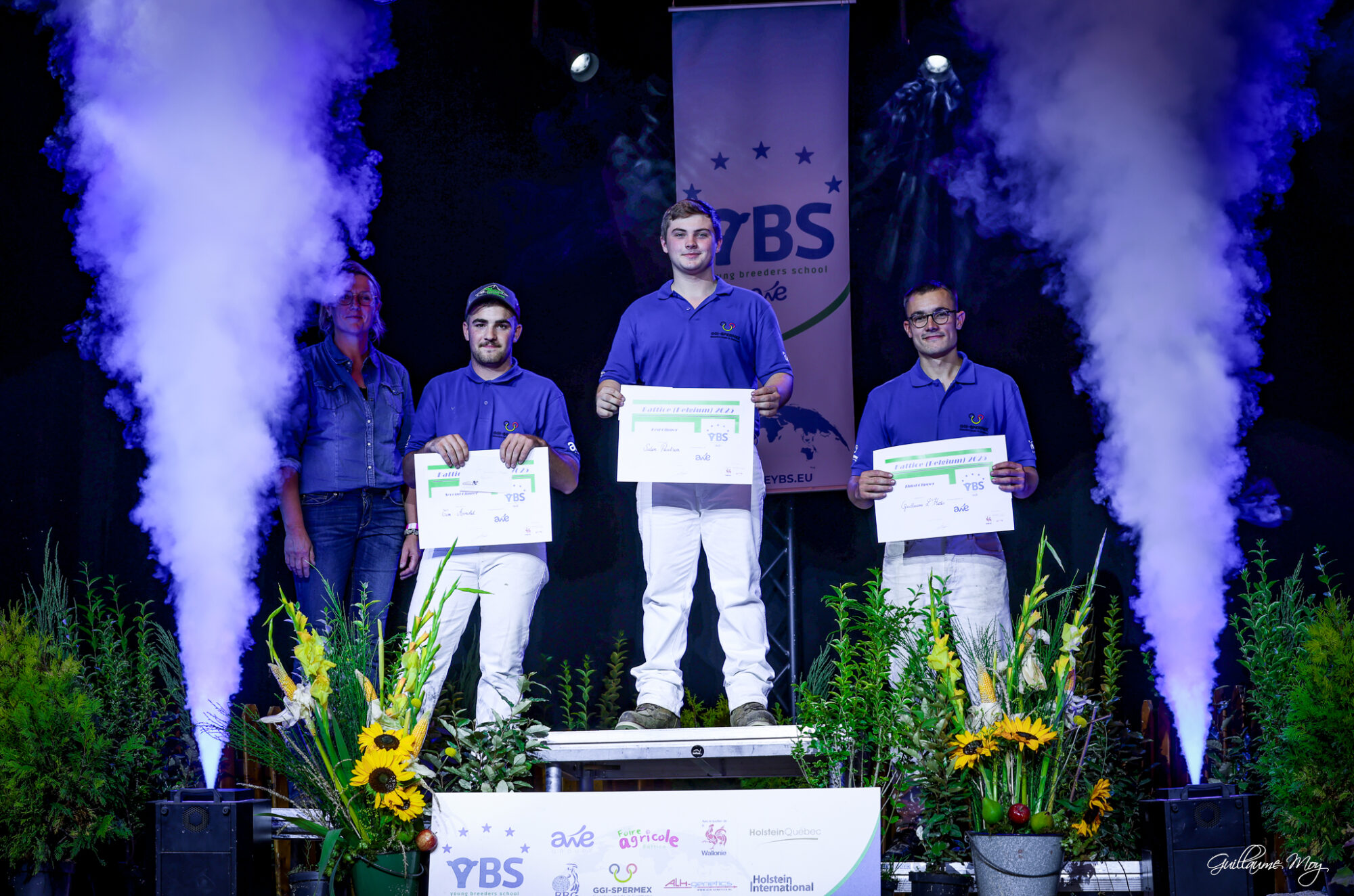
Suton Paulson stands atop the podium alongside fellow champions, celebrating their triumph in the Young Breeders School 2025 clipping competition—a showcase of American skill and precision that set the standard in cattle presentation for this year’s international event.

The United States made waves in the clipping arena, with Suton Paulson named Best Clipper—showing that American youth aren’t just about big genetics, they know how to prep and present cattle for maximum advantage. In a field of more than 100 animals, that edge made all the difference.

Data Drill: Young Breeders School by the Numbers

Metric2025 Figure
Countries Competing13
Total Participants~110
Age Range12–25 years
Classes Judged24
Breed DivisionsHolstein, BBB, More

Bottom Line: Excellence Is International

This event shows that youth programs build tomorrow’s market-makers, managers, and genetic innovators. The judging, clipping, and teamwork are more than sport—they’re training tools for real-world dairy success. Today’s Young Breeders School champions are tomorrow’s global exporters and herd improvement leaders.

Keep an eye on rising stars; the dairy youth movement is global and only getting hotter:

  • Maria Otero Naval (Spain) and Claudia Laupez (Spain), both top finishers, signal Spain’s continued momentum.
  • Under-16 division winners are maturing into serious junior judges and presenters—look for surprise names next year.

Young Breeders School 2025 proved that the next generation of dairy leaders isn’t waiting for permission—they’re earning their stripes and driving change now. Canada may have led the pack this time, but with so much international talent on display, next year’s battle for youth supremacy is wide open.

Invest in youth, invest in the future—the world’s best dairy farms are already doing it.

Showmanship Classes

  • Classe 1: Engelen Rian (South Netherlands), Müller Renato (Austria), Zonnenberg Jade (South Netherlands)
  • Classe 2: Eiting Katharina (V.O.S.T.), Spenle Thomas (The French Dream), Gavranovic Jasenko (USA)
  • Classe 3: Coz Romain (The French Dream), Mudd Jackie (USA), Kocieba Aleksandra (Poland)
  • Classe 4: Steiner Fabian (Switzerland), Lebel Ariane (Canada), Williamson Sarah (Ireland)
  • Classe 5: Labbé Audrey (Canada), Uhr Nadia (Canada), Hammann Summer (USA)
  • Classe 6: Otero Naval Maria (Spain), Dickson Leah (Australia), Bloemhof Evelien (Young NL)
  • Classe 7: Gutzwiller Olivier (The French Dream), Spriet Antoine (Wallonia II), Logtenberg Ida (Luxembourg)
  • Classe 8: Gumtz Marie-Luise (R.S.H.), Klasson Emilia (Sweden), Montes Xabi (Spain)
  • Classe 9: Gutzwiller Alicia (The French Dream), Otero Naval Andrea (Spain), Versteeg Sarah (Canada)
  • Classe 10: Eickhoff Laura (Masterrind), Groot Wassink Isa (Young NL), Van Overbeek Eva (South Netherlands)
  • Classe 11: Croat Lena (Luxembourg), Zonnenberg Lieve (South Netherlands), Bezdeliga Lasma (Latvia)
  • Classe 12: Niskanen Emmi (Finland), Gunnink Jarn (Young NL), Lopez Claudia (Spain)

Showmanship BBB (Belgian Blue Breed)

  • Classe 1: Withagen Zélie, Delatte Florian, Jost Carmen
  • Classe 2: Bontemps Oscar, Havart Germain, Mary Lucas
  • Classe 3: Desmet Clément, Dambly Louise, Dewaele Vincent
  • BBB Championnat: Desmet Clément, Withagen Zélie, Bontemps Oscar

Showmanship Champions (General)

  • Championnat: Gutzwiller Alicia (The French Dream), Labbé Audrey (Canada), Gutzwiller Olivier (The French Dream)

Type Show Classes — Holstein

  • Classe 1: Anastasia du Luce, Roumanie du Mont des Faucons, Rover du Mont des Faucons
  • Classe 2: Lak Transfer Finale, Vita, Orchidee du Moligna
  • Classe 3: Las Vegas de la Garde-Dieu, EHB Venteuse, Rodania de Bois Seigneur
  • Classe 4: Randa, Vuvuzela, Victorine
  • Classe 5: Vileda de l’Herbagere, Sunday de la Garde-Dieu, Shake de Bois Seigneur
  • Classe 6: Vodka, Ninon de la Garde-Dieu, Deception de la Tour de Lisogne
  • Classe 7: Shana de Bois Seigneur, April de la Garde-Dieu, Volda
  • Classe 8: Nafi du Moligna, 2320 du Chai d’Herchies, Volka du Luce
  • Classe 9: Vanille du Luce, 8938 du Chai d’Herchies, EHB Valana Chief
  • Classe 10: 8924 du Chai d’Herchies, Vita du Luce, Ophelia de la Garde-Dieu
  • Classe 11: Vertue de l’Herbagere, Valeureuse de l’Herbagere, Debordee de la Tour de Lisogne
  • Classe 12: EHB Uriel Chief, Josephine de Sanzinnes, Zolomita
  • Champion Heifers: Vertue de l’Herbagere, Vodka, Randa

Type Show Classes — BBB (Belgian Blue Breed)

  • Classe 1: Paprika d’Othee, Tangible de Saile, Taniere de Saile
  • Classe 2: Vouee de Lez Fontaine, Tabelle de Saile, Platine de Waret l’Eveque
  • Classe 3: Trottinette de Cras Avernas, Camelia de Forseilles, 9228 de Waret l’Eveque
  • Championnat: Paprika d’Othee, Vouee de Lez Fontaine, Trottinette de Cras Avernas

Join the Revolution!

Join over 30,000 successful dairy professionals who rely on Bullvine Weekly for their competitive edge. Delivered directly to your inbox each week, our exclusive industry insights help you make smarter decisions while saving precious hours every week. Never miss critical updates on milk production trends, breakthrough technologies, and profit-boosting strategies that top producers are already implementing. Subscribe now to transform your dairy operation’s efficiency and profitability—your future success is just one click away.

NewsSubscribe
First
Last
Consent

A.C. “Whitie” Thomson Memorial Award: Celebrating Adam Liddle’s Journey in Dairy Excellence

Explore what makes Adam Liddle’s path to the A.C. “Whitie” Thomson Memorial Award unique. How did his passion for dairy excellence shape his success?

Summary:

The article highlights Adam Liddle’s receipt of the 2024 A.C. “Whitie” Thomson Memorial Award, acknowledging his dedication, leadership, and sportsmanship in the dairy industry. Starting from humble beginnings in Argyle, New York, Liddle forged a path in dairy farming after his family farm was sold, eventually growing Liddleholme Holsteins into a prestigious name in the show circuit. Recognized as a global dairy judge, Liddle’s career spans exhibitions on four continents, illustrating his profound influence and commitment to excellence. His inclusive family dynamics, with contributions from his children and their spouses, underscore the success of their herd. Ultimately, Liddle’s journey embodies the values central to the Whitie Thomson award, showcasing his exemplary commitment, local influence, and global impact as a role model for future generations in the dairy community.

Key Takeaways:

  • Adam Liddle received the prestigious A.C. “Whitie” Thomson Memorial Award, underlining his leadership and sportsmanship in the dairy industry.
  • The Liddleholme Holsteins, operated by the Liddle family, have become a recognized name within the dairy show circuit, gaining numerous accolades.
  • Adam Liddle’s journey from losing his family farm to developing a successful dairy operation demonstrates resilience and passion.
  • Liddle’s active involvement in judging dairy shows internationally has broadened his influence and insight within the global dairy community.
  • His commitment to excellence and fostering community spirit in the dairy industry makes him a deserving award recipient.
dairy industry pioneer, Adam Liddle, A.C. "Whitie" Thomson Memorial Award, Liddleholme Holsteins, dairy showmanship, cattle selection, global dairy judging, family farm legacy, high-quality cattle production, dairy farming standards

Every industry has its legends, those extraordinary people whose contributions influence the future and inspire future generations. The A.C. “Whitie” Thomson Memorial Award highlights such heritage in the dairy industry. It recognizes extraordinary devotion, leadership, and sportsmanship among dairy aficionados. This award is more than simply a personal distinction; it honors the ideals that propel the industry ahead, encouraging innovation and success.

This year’s honor goes to Adam Liddle, an outstanding herdsman from Argyle, New York. His narrative is a personal accomplishment that demonstrates the power of unwavering enthusiasm and perseverance. Liddle’s experience demonstrates the immense influence that one person can have on a whole community.

“Being chosen as the winner of such a prestigious prize reflects acknowledgment for one’s commitment beyond cattle showmanship. It’s an homage to the ideals that run throughout our business.”

Stay with us as we examine Adam Liddle’s outstanding career. His accomplishments, from modest beginnings to becoming a well-known character on the dairy show circuit, are admirable and educational. His career echoes many dairy producers’ obstacles and possibilities worldwide.

dairy industry pioneer, Adam Liddle, A.C. "Whitie" Thomson Memorial Award, Liddleholme Holsteins, dairy showmanship, cattle selection, global dairy judging, family farm legacy, high-quality cattle production, dairy farming standards

Honoring a Legacy: The A.C. “Whitie” Thomson Memorial Award

The A.C. “Whitie” Thomson Memorial Award honors one of the dairy industry’s most prominent personalities. Established to honor White Thomson’s legacy, this award reflects his steadfast dedication to developing talent and fostering excellence in the dairy industry. White was regarded for his exceptional herding and showman talents and his ability to set a good example.

The award emphasizes essential qualities that Whitie exemplified, beginning with leadership. Authentic leadership in the dairy sector entails more than simply directing operations; it also means motivating people, cultivating a learning environment, and pushing innovation. Another essential tenet of the award is sportsmanship, representing Whitie’s belief in fair competition and peer respect. This characteristic highlights the necessity of humility and grace in success and failure.

Finally, contributions to the dairy sector are essential. The A.C. “Whitie” Thomson Memorial Award honors people who have had a substantial influence, whether via breeding excellence, raising industry standards, or teaching future generations. Those who earn this honor are regarded as torchbearers of Whitie’s vision to preserve the enthusiasm for dairy farming and enhance the sector.

From Crossroads to Legacy: The Making of a Dairy Advocate

Adam Liddle’s foray into the dairy sector began under unusual circumstances: as an eighth-grader, his life took an unexpected turn. Adam was at a crossroads when his parents decided to sell the family farm. Rather than being discouraging, this change served as a crucible for developing his enthusiasm for dairy farming. High school was the start of his active engagement in the show circuit, aided by his father’s move to manage Pamtom Farm in Hudson Falls, New York.

This formative year at Phantom Farm was essential, providing Adam with his first significant exposure to dairy showmanship’s complex demands and complexities. Adam had a profound respect for the art and science of dairy farming as he saw and participated in the everyday operations of the farm under his father’s stewardship. This event was revolutionary, developing fundamental knowledge and encouraging a long-term devotion to the sector. The skills and insights gained during these early years undoubtedly influenced Liddleholme Holsteins’ subsequent triumphs. They solidified Adam’s image as a knowledgeable and ardent dairy industry champion.

From Humble Beginnings to Show Circuit Prestige: Liddleholme Holsteins’ Ascent 

From modest beginnings, Liddleholme Holsteins has grown into a dairy show powerhouse. The journey, profoundly connected with the Liddle family’s passion and shared goal, started when Adam and Nicole Liddle set out to refine their herd and become a top name among Holstein breeders.

The farm’s success may be traced mainly to the cohesive family dynamics at work, in which each member plays a unique function that adds to the operation’s overall success. Adam’s cattle selection, management knowledge, and Nicole’s administrative skills establish the foundation for a successful company. Their children, Anthony, Brock, Hailee, and their wives are critical in overseeing daily operations and growing their reputation for producing high-quality cattle.

This united family effort has resulted in a flawless farm business and multiple awards on the show circuit. Liddleholme Holsteins has a fantastic list of award-winning cows, including All-NY, All-American, and Junior All-American. A noteworthy occasion was Liddleholme Resurrect Lu, an excellent cow that captivated the industry’s attention by receiving an Excellent-97 grade and becoming the first Production Cow at the renowned World Dairy Expo, followed by All-American recognition.

The Liddles’ ability to thrive consistently in breeding and display demonstrates their continuous dedication to the dairy sector. Liddleholme Holsteins’ long-term success reflects their dedication and hard work, establishing them as a leading dairy farming company.

From Victory to Vanguard: Liddleholme’s Path to Dairy Distinction

From the victory of Liddleholme Resurrect Lu to the overall prosperity of his farm, Adam Liddle has constantly exhibited an unwavering dedication to excellence in the dairy sector. Liddleholme Resurrect Lu’s historic victory as the first Production Cow at the World Dairy Expo in 2018 was more than a triumph; it was a monument to Adam Liddle’s imaginative breeding and persistent commitment to excellence. This achievement catapulted the Liddleholme prefix into the forefront, solidifying its reputation by producing high-quality cows that succeed in both the show ring and the production line. Such awards do not come quickly; they result from years of painstaking planning, strategic breeding, and an unwavering determination to push the limits.

Liddle’s path in the dairy industry exemplifies the combination of enthusiasm and tenacity. His skill is evident not only in his cattle accomplishments but also in his broad international judging portfolio. Liddle offers a lot of expertise and an acclaimed viewpoint to the judging arena, having evaluated exhibitions on four continents (Canada, Europe, Australia, and Africa). This worldwide experience broadens his perspective and adds to his status as a leading figure in the global dairy industry. These successes demonstrate Liddle’s breadth of expertise, elevating him not just as a herdsman but also as a worldwide champion for dairy excellence.

The Global Influence of Adam Liddle: A Judge Beyond Borders

Adam Liddle’s significance as a judge at some of the world’s most famous dairy exhibitions should not be underestimated. His discriminating eye and insightful observations have earned him a place in the dairy world, where he is tasked with assessing top-tier cattle at various international events. Liddle’s experience extends beyond the United States, having officiated at Junior Holstein exhibitions and overseen Red & White and Guernsey exhibits at the World Dairy Expo. His impact extends to cattle exhibitions in Canada, Europe, Australia, Africa, and Switzerland.

This global reach has elevated Liddle’s status as a judge and positioned him as a critical factor in establishing the standards of excellence in the global dairy business. His efforts go beyond the show ring; they are reflected in the breeding choices of cow farms aiming for the gold standard of dairy excellence. Through these responsibilities, Adam Liddle continues to inspire current and future generations of dairy show professionals, establishing a high standard for judging excellence. His status as a judge has undoubtedly strengthened the worldwide dairy community, underlining his invaluable role in promoting a culture of world-class excellence in dairy cow contests.

Adam Liddle: Embodying Excellence and Community in Dairy 

Adam Liddle’s unrelenting dedication to the dairy sector and his profound love for excellence and sportsmanship make him the ideal winner of the A.C. “Whitie” Thomson Memorial Award. His career in the business exemplifies not just his personal and professional accomplishments but also the community and spirit that the award recognizes. Liddle has constantly displayed the qualities that the medal honors by devoting decades to mastering the dairy farming profession and relentlessly contributing as a prominent figure in the show community.

His leadership in establishing the Liddleholme Holsteins brand speaks volumes. Liddle has raised dairy farming standards via diligent breeding and displaying and created a culture of excellence that extends beyond his farm. The many honors received by Liddleholme, particularly the extraordinary success of Liddleholme Resurrect Lu, demonstrate a constant pursuit of quality and innovation. This influence exemplifies the award’s ideals: leadership, sportsmanship, and community service.

Liddle’s inclusive family style, in which each member is excited about the collective farm’s success, exemplifies Whitie Thomson’s collaborative attitude. As a dairy sector steward, Liddle has brought his global experience, sharing information and ideas while establishing international dairy relationships. His considerable judging experience, ranging from the World Dairy Expo to international circuits, demonstrates his competence and responsibility as a champion for dairy excellence.

Liddle’s combination of local development and worldwide impact throughout his career makes him a role model for future generations in the dairy industry. Adam Liddle’s honor aligns with the objectives and ideals of the A.C. “Whitie” Thomson Memorial Award, promoting honesty and leadership in the dairy sector.

The Bottom Line

Adam Liddle’s path from a fresh eighth-grade student to the dairy show circuit to a world-renowned judge and award-winning dairy advocate exemplifies devotion and enthusiasm. His accomplishments with Liddleholme Holsteins, which established industry standards, demonstrate personal success and a dedication to raising the bar for dairy quality and leadership. Liddle’s tale is of endurance and impact, demonstrating how one man’s idea can inspire a community and affect an industry worldwide. With leaders like Liddle at the helm, what new heights may dairy innovation and leadership achieve? In today’s quickly changing world, who will take the next step to lead with distinction?

Learn more:

Join the Revolution!

Bullvine Daily is your essential e-zine for staying ahead in the dairy industry. With over 30,000 subscribers, we bring you the week’s top news, helping you manage tasks efficiently. Stay informed about milk production, tech adoption, and more, so you can concentrate on your dairy operations. 

NewsSubscribe
First
Last
Consent

From Snapshot to Champion: Understanding the Challenging Perspective of Dairy Cattle Judges

Have you ever wondered how judges make snap decisions? Read more to see just how and why the Judges make the decisions they do.

Imagine entering the show ring, heart racing, with your finest dairy animal at your side. You have worked toward this moment—every early morning feeding, practice session, and late-night grooming. Now, beneath the blazing lights and scrutinizing eyes of the judge and onlookers, you hope she performs as well as she does at home. What if she does not? What if months of complex study do not pay off in that short, essential moment before the judge?

The often-overlooked truth about showing dairy cattle in conformation classes is that the judge views your animal differently than you do. You spend hours, days, or months with your animal, learning her every quirk and nuance. The judge has just a few minutes, a “snapshot,” to assess her beauty, movement, demeanor, and general conformation.

At a recent show, I overheard a young competitor question why they were positioned lower than they deserved. With that in mind, I want to offer some insight into the unique “snapshot” technique that judges must use to assist young showpeople in comprehending why the animal that they admire may not get the attention they believe she deserves in the show ring. We will examine what goes into a judge’s rapid appraisal, what external factors may influence your animal’s performance, and why a judge’s perceptions may differ. A judge must evaluate what you have spent months learning and teaching in just a minute.

The Heart Behind the Show: Emotional Ties and Lifelong Lessons 

More than just the practicalities of judging and presentation, the emotional journey of showing a dairy animal profoundly impacts a showperson’s experience. The bond formed with their dairy animal often extends beyond the arena. This connection is nurtured over countless hours of feeding, grooming, and spending time together, resulting in a deep relationship.

Imagine getting up at daybreak every day, rain or shine, to care for your animal. You learn their peculiarities, preferred locations to scratch, and how they react to your voice. This partnership is more than simply getting ready for the next competition; it is also about developing trust and mutual respect. These experiences build a feeling of duty and pride beyond the ribbons and medals.

Yet, as in any endeavor, emotional highs are often followed by lows. The competition can be fierce, and not every show will be a win. It can be disheartening when an animal you have worked so hard with fails to perform as expected or when judging decisions do not align with your expectations. However, these challenges provide crucial lessons in resilience and tenacity, inspiring a renewed determination for future contests.

Triumphs, no matter how modest, are incredibly fulfilling. Watching your dairy animal stand correctly in the ring or being recognized for one’s hard work with a medal is more than just a victory for the animal; it is a testament to your dedication and the bond you have formed. These highs fuel the drive to achieve success in future contests.

For youth competitors, livestock exhibiting is as much about personal development and emotional connection as it is about technical judging and competition. This human aspect is what makes each show and occasion so memorable.

A Peek Behind the Judging Curtain: Understanding the “Snapshot” Approach in Dairy Cattle Shows

Dairy animal judging is a complex procedure that requires experience, keen observation, and rapid decision-making abilities. It is fundamentally about assessing dairy cattle based on specific criteria, such as conformation, functioning, and, in some cases, breed features. This assessment aids in evaluating which animals best fit the industry and breed groups’ expectations.

Judges, who often have years of experience and a good eye for detail, must thoroughly understand animal anatomy, breed standards, and the desirable features of various species. They must also be able to quickly assess the strengths and flaws of the animals paraded before them. This short evaluation is typically called obtaining a “snapshot” of the animal. Just like a picture captures a moment, the judge’s assessment is based on what is seen in the ring during those critical seconds.

Animals are evaluated based on their structure, mobility, breed characteristics, and how they exhibit themselves in the arena. Proper positioning of your animal’s feet, head carriage, and ability to move gracefully are all crucial factors since they enable the judge to observe the animal from the best perspective. For example, while grading dairy showmanship, having the appropriate foot forward, depending on the judge’s side, is critical since it helps the judge to examine the cattle more efficiently.

Furthermore, livestock judges play a crucial role in maintaining the integrity and quality of animal breeding. Although their selections are quick, they are based on a thorough understanding of what makes an exceptional dairy specimen. By choosing animals that best represent desired features, judges contribute to establishing quality standards and improving breeding programs.

Finally, dairy judging is a challenging but necessary component of the purebred dairy sector. It requires a combination of information, experience, and immediate judgment ability. Expert judges stand out because they can quickly make precise and fair verdicts, guaranteeing that only the best animals are rewarded and providing concise and accurate reasons for their placings.

Judging Through a ‘Snapshot’ Lens: A Balancing Act of Expertise and Brief Encounters

The ‘snapshot’ moment is a crucial concept in dairy cow judging. It is the brief period when the judge must assess the animal’s strengths and flaws. This is a challenging task, akin to completing a jigsaw puzzle with missing pieces. In those critical seconds, the animal might be scared, exhausted from travel, or not at its best. The judge must navigate these challenges to make a fair and accurate assessment.

Contrast this with the owner’s viewpoint. You have been with your animal from day one, feeding, grooming, and noting every tiny quirk and characteristic. You see your animal in the finest possible conditions: calm at home, functioning well in everyday activities, and looking its best. The judge does not have this long-term perspective at that ‘ snapshot’ moment.

This disparity in perception may sometimes lead to irritation. You know precisely how your animal should appear and behave, but the judge can only make conclusions based on a quick peek in the ring. It serves as a reminder of how subjective and complex animal judgment can be, requiring experience and an appreciation of the inherent limits of quick assessments.

Factors Influencing Animal Presentation: From Travel Stress to Environmental Changes

Several variables may greatly influence an animal’s performance in the show ring, leading it to seem or behave differently than it would at home. These factors include: 

  • Travel Stress: Animals may find the trek to the exhibition intimidating. Long hours on the trailer, unexpected surroundings, and a break from their typical routine may all cause stress. This stress may cause weariness, reduced hunger, and changed behavior, making it difficult for the animal to demonstrate its full potential.
  • Changes in Environment:  Animals are accustomed to their home environment, food, and water sources. The abrupt transition to a new setting with unfamiliar bedding, lighting, and temperature may create pain and anxiety. For example, an animal used to a climate-controlled barn may suffer in an open, hot exhibition arena. These environmental changes may influence the animal’s posture, movement, and presentation.
  • Animal Behavior:  Animals are sensitive to their trainers’ tone and conduct. A worried or unskilled showman may unintentionally communicate nervousness to the animal, harming its performance. Furthermore, the presence of other animals and viewers might be distracting, prompting the animal to misbehave. Exhibitors must control these behavioral issues to ensure the animal performs as desired.

Understanding these aspects allows exhibitors to prepare their animals for the show ring properly. Proper acclimation to travel, experience with diverse habitats, and consistent handling procedures may help offset these impacts, enabling the animal to perform at its best.

The Judging Challenge: Balancing Quick Assessments with Deep Insights

From the judge’s standpoint, assessing dairy cattle in a restricted window may be exciting and challenging. Consider standing in the center of a crowded stadium, with bright lighting projecting intense glares and several environmental factors at play. Each judge is responsible for quickly and adequately analyzing the animals, which requires keen attention, acute observational abilities, and a thorough grasp of animal shape and behavior.

The pressure to make such rapid, correct selections is enormous. Judges know that the exhibitors and the public examine every action they make, which might number in the hundreds. Each animal must be judged based on a brief ‘snapshot’ of its presentation, giving judges a few seconds to watch, compare, remember, and choose the winners. The judge must effectively balance their knowledge and intuition to make fair and acceptable choices based on this momentary meeting with each animal.

Poor lighting exacerbates the challenge. Many show rings use lighting that produces confused shadows or causes glare, making it challenging to see minute details. Environmental factors, such as uneven flooring or harsh temperatures, might impede an animal’s performance, making it more difficult for the judge to appreciate its full potential. For example, an animal may seem smooth and graceful at home but agitated and uncomfortable in the showing’s unfamiliar setting.

Given these challenges, a judge’s function goes beyond determining the best-looking animal. It entails knowing the intricacies of how animals respond under stress, identifying the influence of travel tiredness, and considering how these factors may momentarily affect how an animal appears. The judges’ selections must represent an instant snapshot and a deeper understanding of the animal’s overall quality and potential. This is a tricky balance to achieve under such high-pressure circumstances.

The Disconnect Between Expectation and Reality in Dairy Cattle Shows

A frequent disconnect occurs when the owner/showperson enters the ring with lofty expectations, seeing their animal at its peak performance. This mental picture contains scenes where the animal is well-groomed, stands correctly, and exudes confidence in its comfortable, familiar surroundings. However, the reality of the show ring might be radically different. Under the strain of bright lighting, unusual circumstances, and the presence of other animals, the animal may have performed better at home.

Consider the numerous hours you spent caring, training, and honing your dairy animal in a controlled, familiar environment. Every step in your barn is recognizable, and every posture has been trained. You understand its peculiarities, strengths, and the specific viewpoint that displays its most significant characteristics. But personal knowledge may be a double-edged sword. The animal’s performance at home is firmly entrenched in your memory, resulting in a high standard that ignores the tension and spontaneity of a showring setting.

On the other hand, judges do not always have the advantage of knowing the animal’s history or its greatest moments. Instead, they must make rapid judgments based only on performance in high-pressure situations. The judge’s evaluation is a transient “snapshot” impacted by various circumstances, including the animal’s behavior, showmanship, and environmental conditions like heat or noise. What you consider a minor fault may seem to others as a significant flaw simply because they lack the background you have.

The disparity between anticipation and reality may sometimes lead to irritation. Owners may wonder why their beautifully trained animal did not win the championship, failing to see that the judge’s evaluation is restricted to those essential few seconds in the ring. Instead of perceiving the animal as the result of months of care, experience, and bonding, the judge examines it in its raw, unedited form.

Fairness and Objectivity: The Cornerstones of Great Dairy Cattle Judging

Fairness and objectivity are essential components of successful dairy animal judging. Judges have the arduous challenge of assessing animals simply on their appearance and performance in the ring at that time. Judges try hard to retain an objective viewpoint despite previously stated constraints, such as travel stress, ambient changes, and transitory behavioral modifications.

To be fair and unbiased, judges use defined criteria for the animal’s conformation, movement, and general appearance. This ensures that all animals are evaluated on the same core characteristics. Judges have significant training and constantly improve their abilities to stay sharp and impartial even under less-than-ideal circumstances. The idea is to offer each exhibitor a fair assessment while recognizing the time and attention required to prepare an animal for the show.

It is also worth mentioning that judges seek to remove preconceived beliefs and personal prejudices, concentrating only on what the animal shows during those critical minutes. This dedication to fairness and objectivity supports the integrity of livestock shows. It guarantees that the finest animals are recognized on show day.

Sportsmanship: The Unseen Champion 

Sportsmanship is essential in all competitive environments, including dairy animal showring competitions. While training your animal and presenting its most outstanding qualities, good sportsmanship is also required. It entails treating your fellow competitors, judges, and oneself with dignity, regardless of the result.

Handling success and failure graciously may teach us priceless lessons. If you win, remember to respect the efforts of others and acknowledge that many factors, including chance and the judge’s brief evaluation, contributed to your victory. Celebrate with humility and thank those who assisted you along the path.

On the other hand, when the outcomes are not in your favor, it is critical to have a respectful attitude. Use the experience as a chance to learn and grow. Ask for criticism from the adjudicator and seek assistance from more experienced performers. Remember, every competition will teach you something new about yourself and your animal, which is much more important than any ribbon or prize.

A positive attitude toward competition will make the experience more rewarding. Whether you help others with their preparations or congratulate them on their accomplishments, expressions of compassion and humility will go a long way. They encourage others and create a supportive atmosphere that benefits everyone involved.

In essence, sportsmanship is more than playing fairly; it is about building a society where everyone may prosper. With each show, strive to embody these ideals, and you will discover that the actual joy is not simply winning but learning and connecting with people through your mutual passion for dairy animal exhibiting.

Embrace the Journey: Every Moment in the Ring Is a Learning Opportunity

Remember that every minute in the ring is a tremendous learning opportunity for all young show fans out there. Showing dairy cattle is more than simply getting ribbons; it is also about comprehending the subtleties and nuances of the judging procedure. When you are in the ring, remember that judges make quick decisions based on brief interactions with your animal. Appreciate the effort and experience they bring to their assessments, and be patient while you work to improve your abilities.

Each show is a chance to learn something new. Whether you’re honing how you display your animal or learning how to properly prepare them for difficult situations, every bit of experience matters, and you shouldn’t get dismayed if a placement falls short of your expectations. Instead, use it as an incentive to continue improving and polishing your methods.

Take the opportunity to ask questions and get comments from judges. Many are eager to give information that will help you grow. Remember, even the finest judges had to start like you. Accept the trip, remain enthusiastic about your animals, and enjoy your accomplishments.

Your hard work and commitment are not overlooked. Continue striving, learning, and demonstrating with passion. You will discover that the information and talents you exhibit in the showring will serve you beyond the performance itself. Every detail you learn today will provide the groundwork for your future success in the dairy animal exhibiting industry.

The Bottom Line

Judging dairy cattle is a facts-based matter and a challenge that requires quick evaluations, based on brief time, combined with extensive knowledge and expertise. While efficient, this “snapshot” approach has limitations and biases, which are impacted by variables like travel stress, ambient changes, and the comfort levels of both animals and handlers. Understanding these complications is critical to comprehending the judge’s responsibility in making timely and informed judgments. Let us recognize everyone’s hard work, devotion, and expertise and aim for ongoing development in the fairness and accuracy of dairy animal judging, ensuring that every show is competitive, satisfying, and informative.

Remember, each show is a step forward in your journey of growth as a showperson and individual. Embrace every challenge, critique, and triumph, honing your skills, seeking advice, and striving for excellence because your dedication, knowledge, and passion will set you apart and inspire others. Keep showing up and let your passion shine through. Your best performance is always ahead of you!

Key Takeaways:

  • Judges in dairy cattle shows base their decisions on a brief “snapshot” encounter with each animal.
  • The conditions at home significantly influence how exhibitors perceive their animals, which might differ under show conditions.
  • Environmental changes, such as travel stress, new bedding, and heat, can impact an animal’s performance in the ring.
  • Judges face challenges such as limited time and sometimes poor lighting, making it hard to assess animals accurately.
  • Show participants often envision their animal’s best appearance, which may not match the judge’s brief assessment.
  • Judges are expected to condense months of animal care and analysis into just a few minutes during the show.
  • Maintaining fairness and objectivity is crucial for judges, even when faced with various ring-side distractions and pressures.
  • Sportsmanship and a focus on learning and improvement are essential for all participants, regardless of the judge’s decision.

Summary:

Judging shows animals and is about making quick assessments based on a “snapshot” of the animal’s condition and behavior. This brief observation can differ significantly from owners’ detailed knowledge from spending lots of time with their animals. Factors like travel stress, environmental changes, and the animal’s reaction to the show ring can affect its performance and appearance. Judges, under the scrutiny of many eyes, have limited time to make their decisions, adding complexity to the task. Understanding this dynamic helps others appreciate the judging process better. The emotional journey of judging dairy animals involves practicalities, emotional connections, and lifelong lessons. The bond between the showperson and their animal goes beyond the arena, fostering trust and mutual respect. Competition challenges build resilience and determination for future contests, while triumphs showcase dedication. Dairy animal judging is complex and requires experience, keen observation, and quick decision-making. Judges need years of practice and a good eye for detail to assess an animal’s strengths and flaws, while owners have a more profound perspective from day one. Fairness and objectivity are crucial. Every moment in the ring is a learning opportunity for young show enthusiasts.

Learn more: 

Dairy Showmanship 101: Key PDCA Guidelines to Ensure Success for Youth and Coaches

Master dairy showmanship with essential PDCA guidelines. Are you ready to excel this fair season? Learn the rules to coach, compete, and judge effectively.

Are you going to shine this fair season? Learning dairy showmanship will set you apart from the competitors and create memorable memories. Whether your role is that of an enthusiastic exhibitor, loving parent, wise leader, seasoned instructor, or discriminating judge, a fair and consistent environment depends on knowing the PDCA Showmanship rules. Showmanship honors your abilities, expertise, and dedication more than it does your dairy animal presentation. The PDCA rules provide a consistent structure that guarantees equitable evaluation of every contestant. Thorough knowledge of the regulations will significantly affect coaching, learning, and judging when presenting dairy products!

The PDCA: Upholding Excellence and Fairness in Dairy Showmanship 

The Purebred Dairy Cow Association (PDCA) is a pillar of the dairy sector, establishing first-rate showmanship rules for dairy cow contests. Designed by professionals, these rules guarantee equity, education, and enrichment for everyone—from young rivals to seasoned judges—including animal presentation to exhibitor clothing; they provide everything so exhibitors may highlight their cattle’s qualities and abilities.

The PDCA guidelines are indispensable. They create a level playing field with uniformity across various shows and regions, which is crucial for several reasons: 

  • Educational Value: They provide a standardized learning tool for youth and newcomers, detailing what is expected in the ring.
  • Judging Consistency: Judges use these rules to measure performance, minimize bias, and ensure impartial evaluations.
  • Competitor Preparation: Coaches and leaders benefit from a standardized expectation, streamlining training and ensuring consistent preparation.
  • Event Integrity: Uniform guidelines uphold the integrity and prestige of dairy shows, focusing on skill and preparation as success determinants.

The PDCA showmanship guidelines are the backbone of dairy cattle exhibitions, upholding the highest standards of fairness, education, and respect for animals and exhibitors. For a detailed review, refer to the PDCA Showmanship Guidelines.

The Importance of Early Familiarization 

It is essential to familiarize yourself with the PDCA rules before show day. The foundation of dairy showmanship, these guidelines define the expectations for exhibitors and their animals. Early, regular instruction grounded on these principles might help reduce frustration resulting from inconsistent competition. Knowing the PDCA rules beforehand enables appropriate method application, assuring that kids display their animals ideally while preserving cleanliness and behavior criteria. Parents and coaches may help young exhibitors more effectively support a consistent and informed preparation process when equally educated.

Tips for Practicing at Home 

  • Study the Guidelines: Youth and parents should read and discuss the PDCA showmanship guidelines to ensure everyone understands the expectations. Resources from organizations like the Holstein Foundation are beneficial.
  • Consistent Training Schedule: Establish a regular training routine that mirrors show-day rigors. This includes setting up a practice ring, practicing leading the animal, and ensuring the animal responds to commands.
  • Focus on Cleanliness: Emphasize cleanliness for both exhibitor and animal. Practice grooming and clipping techniques as outlined in the PDCA guidelines and ensure the animal’s apparel complies with standards.
  • Behavioral Training: Work on the animal’s temperament and demeanor, ensuring it is accustomed to the sights and sounds of a show environment to remain calm and composed in the ring.
  • Appearance and Equipment: Review appearance guidelines for the exhibitor and their equipment. Ensure everything is in top shape and ready for show day.
  • Utilize Multimedia Resources: Watch videos covering showmanship, such as entering the show ring, circling techniques, and setting up in line. Visual aids reinforce learning and provide practical insights.

Early, continuous preparation lets young exhibitors and their support teams approach show day with confidence, talent, and a thorough awareness of what is needed to achieve dairy showmanship.

The Vital Role of Coaches and Leaders in Dairy Showmanship 

Development of the abilities and confidence of young people in dairy showmanship depends mostly on coaches and leaders. Their responsibilities go far beyond teaching methods; they also have to teach a strong understanding of the PDCA Showmanship rules and the moral standards of integrity and commitment. Therefore, Participants should be taught about equipment requirements, behavioral expectations, and animal sanitation.

Good coaching begins with consistent, well-planned practice sessions replicating show settings. These sessions allow participants to hone their abilities and increase confidence. Visual learning may be improved by using tools such as videos on clipping procedures and showy clothing.

One needs constructive comments greatly. Coaches should provide targeted, doable recommendations in a supportive way that promotes slow but steady progress. Group conversations and peer evaluations help to encourage cooperative learning by letting members draw on shared experiences.

Young people may stay motivated and monitor their development with well-defined, reasonable objectives based on PDCA recommendations. Whether learning entrance into the show ring, circling, or setting up in line, every success adds to the general showmanship quality.

Effective coaching depends on striking a balance between demanding practice and encouraging words. Coach and leader who commits time and effort to improve competition performance and foster a lifetime of respect for dairy showmanship.

Mastering the Art of Judging Criteria: Key Elements for Showmanship Success 

As stated by the PDCA standards, evaluating criteria in dairy showmanship is complex and includes several factors that reveal the exhibitor’s competency and the animal’s preparedness.

Appearance: This feature represents discipline and respect for dairy showmanship traditions, not just appearance. Exhibitors have to dress professionally and cleanly, fitting their commitment. Perfect grooming for the animal should highlight breed traits via appropriate trimming and cleanliness. Common mistakes—like unclean clothes, poorly groomed animals, and ill-fitting halters—can be avoided with careful planning and frequent inspections before the event.

Favorable animal treatment highlights the relationship between the exhibitor and the animal. Judges want handlers who are graceful, confident, and controlled. Leading the animal smoothly, maintaining good posture, and ensuring the animal feels safe all count here. Mistakes, usually too solid or soft, might upset the animal. Regular home practice enables one to reach the balance required for seamless contest performance.

Showmanship depends much on good presenting abilities. This entails deliberately orienting the animal, negotiating the ring skillfully, and keeping a calm head. Judges evaluate the exhibitor’s presentation of the animal in many positions to guarantee it stands properly and make quick corrections as needed. Honing presenting skills, mock contests, and practice help reduce common mistakes, including inadequate ring awareness and inappropriate spacing.

Learning these standards can help one perform much better and guarantee that the animal and the exhibitor satisfy the judges. Concentrate on appearance, animal handling, and presenting techniques to reflect the essence of dairy showmanship.

Navigating Common Frustrations: Achieving Consistency and Confidence in Dairy Showmanship

Common grievances among participants and families include inconsistent judging standards and uncertain show results. Judges’ different interpretations of PDCA Showmanship rules usually lead to this discrepancy. Participants and coaches should get acquainted with these rules well before the tournament. Frequent mock judging sessions help to clear expectations and minimize surprises on show day.

Another often expressed worry is the appropriate clothing and look for exhibitors and animals. Referring to the official PDCA criteria, which include proper clothing and cleanliness requirements, helps to offset conflicting recommendations frequently. Making a checklist grounded on these rules guarantees attention to detail and compliance.

Exhibitors need help arriving at and negotiating the showring, particularly in foreign environments. Practicing many situations at home and watching instructional films on methods for entering the ring, guiding the animal, and placing it up in line can provide insightful analysis and increase confidence.

They are controlling the. The conduct of the exhibitor and the animal is vital. Parents and coaches should help people develop regular handling techniques and soothing rituals. Seeing and copying methods from instructional films helps teach these practices. Encouraging a good attitude and conducive surroundings improves the whole experience for young exhibitors.

On Show Day: Meticulous Preparation and Strategic Planning 

On show day, meticulous preparation and strategic planning are pivotal for a smooth and successful showing experience. Here is a streamlined checklist to navigate the competitive atmosphere with confidence: 

Early Morning Routine: Start early to avoid any rush.

Final Animal Check: Ensure your animal’s coat is clean and groomed.

  • Finish any necessary clipping.
  • Check animal equipment for cleanliness and proper fit. 

Exhibitor Appearance:

  • Ensure your attire is clean, well-fitted, and follows PDCA guidelines.
  • Have a spare set of clothes ready.

Equipment Readiness:

  • Check all equipment for cleanliness and functionality.
  • Have an equipment checklist to avoid forgetting anything crucial.

Pre-Show Warm-Up:

  • Walk your animal to get used to the environment and help calm nerves.
  • Practice fundamental movements like leading, stopping, and setting up in line.

Managing Nerves:

  • Engage in calming activities like deep breathing or visualization to stay focused.
  • Maintain a positive mindset by focusing on your preparation.

Know the Schedule: Know your class timing and arrive at the ring well in advance to avoid last-minute stress. 

Remember, thorough preparation and a calm and focused demeanor set you and your animal up for excellence in the ring.

The Bottom Line

A good dairy show experience mainly depends on carefully following PDCA Showmanship rules. Every participant—from young exhibitors to seasoned judges—helps to create a fair, excellent atmosphere by following these guidelines and promoting educational development. Everyone engaged should remain well-versed in these rules, reflecting a shared dedication to ongoing growth in this beloved legacy. Assuming the roles of instructors and students will help us to emphasize the purity and beauty of dairy showmanship. Every tournament will show our commitment to expertise and acceptance of accepted norms. Remember, our relentless quest for perfection will inspire the next generations to come and shape the direction of dairy showmanship, not simply on today’s efforts.

Key Takeaways:

  • Read and understand the PDCA Showmanship guidelines well before the show.
  • Ensure that all coaching and practice sessions at home are aligned with these guidelines.
  • Leaders and coaches should emphasize the importance of rule familiarity to participants.
  • Judges must strive to apply the guidelines consistently to avoid confusion and ensure fairness.
  • On show day, meticulous preparation and strategic planning can make a significant difference.
  • A thorough understanding of the judging criteria is essential for showmanship success.
  • Acknowledge and navigate common frustrations to build confidence and consistency.

Summary:

Dairy showmanship is a vital aspect of fairness in dairy cattle exhibitions, and the Purebred Dairy Cow Association (PDCA) provides standardized rules for contests. Early familiarization with these rules is crucial for reducing frustration and ensuring proper application. Parents and youth should study the guidelines, establish a consistent training schedule, focus on cleanliness, behavioral training, appearance, and equipment, and use multimedia resources. Coaches and leaders play a vital role in developing young people’s abilities and confidence in dairy showmanship. The PDCA standards outline appearance, animal handling, and presenting abilities, reflecting the exhibitor’s competency and the animal’s preparedness. Regular home practice helps achieve balance and smooth contest performance. Complimentary preparation and strategic planning are pivotal for a successful showing experience.

Learn more:

Send this to a friend