Think feed additives are the only way? There’s an air-based fix to check out.
EXECUTIVE SUMMARY: MEPS slashes barn methane by up to 90% and ammonia by 80%—far beyond the ~30% cut from feed additives like Bovaer. It even converts ammonia into ammonium chloride fertilizer, which is worth money. With milk at $21.60/cwt and carbon credits near $60/t CO₂e, controlling methane at the source can boost your bottom line. Proven in Denmark and now in large-scale U.S trials at Benton Group (4,000 cows), this tech is poised to reshape dairy in 2025. You owe it to your profit and planet—give it a try.
KEY TAKEAWAYS
Achieve up to 90% methane and 80% ammonia reduction in barn air—tested in real barns.
Optimize ventilation: about 4,200 m³/hr per 250 cows maximizes gas removal.
Monetize offsets: carbon credits trading at $50–$75/t CO₂e add revenue.
Plan for a 5–7 year payback on $500 K–$1 M installs—plus fertilizer byproduct sales.
Start measuring methane now; partner with extension specialists and neighbors for joint trials.
The thing about methane is, it’s sneaking into every corner of the barn—from fresh-cow breath to manure heaps—and with regulations tightening across the U.S. and Canada, it’s shifted from an environmental buzzword into a real cost on the farm.
But here’s an interesting twist. Ambient Carbon, a company that flies somewhat under the radar, is taking a different approach. Instead of fiddling with feed additives or wrestling manure, they’ve built a system that zaps methane right out of the barn air. Their Methane Eradication System, MEPS, has achieved significant results in the field.
Breaking Down the Barn Barrier
A 250-cow Danish farm running MEPS 12 hr/day at ~4,200 m³/h airflow saw barn-air methane plunge by 90% and ammonia by 80%, turning that ammonia into ammonium chloride fertilizer—a potential revenue stream (University of Copenhagen study). MEPS achieves this by generating chlorine radicals through saltwater electrolysis and UV light—tiny molecular scissors that slice methane apart at room temperature, thereby avoiding the high-heat safety risks associated with traditional methods.
Scaling Up in the U.S.
Danone North America is funding a large-scale trial at Benton Group Dairies in Indiana—a 4,000-cow freestall facility—so we can see how this Danish technology performs in American barns and climates (PR Newswire).
How It Stacks Up
Bovaer cuts ~30% of rumen methane (FDA approved) but ignores barn-air emissions (Elanco data).
Anaerobic digesters trap methane from manure, but do nothing to address airborne off-gassing.
MEPS addresses all emission streams—enteric, manure, and bedding—for a comprehensive barn solution.
Does It Pencil Out?
Milk price: ~$21.60 per hundredweight (Aug 2026, USDA AMS).
Carbon credits: $50–$75 per tonne of CO₂ equivalent (tCO₂e) on voluntary markets.
At $60/tCO₂e, a 250-cow MEPS unit can earn ~$45 K/year, yielding a 6–8 year payback on a $500 K–$1 M install—before fertilizer value or low-carbon milk premiums.
On-the-Ground Realities
MEPS arrives containerized, plugs into the barn’s ventilation and power system, and requires routine UV lamp swaps, as well as effective saltwater management. It draws ~3 kW continuously, and farmers must safely manage the ammonia-rich byproduct.
Dr. Amanda Stone of Cornell’s Ag & Biological Engineering cautions that long-term durability and total cost of ownership remain unknown—multi-year performance data are vital.
Regional Adaptation Matters
Wisconsin’s climate-controlled freestalls aren’t the same as California’s cross-ventilated barns baking under Central Valley sun. Upcoming regional trials will reveal whether MEPS can flex across extremes.
Your Monday-Morning Action Plan
Measure methane at the barn exhaust using a certified NDIR/FTIR device, aiming for a concentration of under 10 parts per million (ppm).
Target an airflow of approximately 4,200 cubic meters per hour (m³/h) per 250 cows.
Investigate opening accounts with carbon credit registries (e.g., Verra) to monetize offsets in the $50–$75/tCO₂e range.
Develop safe protocols for handling ammonium chloride fertilizer byproduct.
Coordinate trial collaborations or shared equipment purchases with nearby farms to maximize resources and efficiency.
Keep your eyes on Benton’s Indiana pilot—if it confirms the early Danish results, comprehensive methane management could become a competitive advantage.
Where do you stand? Are you lining up your next steps or waiting to see how the dust settles? Share your thoughts below. If you’d like a copy of our ROI worksheet to run your own numbers or some social media templates to spark conversation, let us know in the comments.
Learn More:
The Carbon Credit Programs Every Dairy Should Join Before 2026 – This article provides a strategic deep-dive into monetizing carbon credits. It reveals specific aggregator programs, typical revenue splits, and the critical cost considerations, demonstrating how to turn environmental compliance into a robust profit center for your operation.
Sustainable Dairy Farming: Revolutionizing Practices for a Greener, Profitable Future – This piece offers tactical, on-farm strategies beyond air-based fixes. It explores practical methods for water conservation, waste-to-energy conversion, and soil health improvement, showing how holistic management can boost both sustainability and overall farm productivity.
6 Game-Changing ID Technologies Every North American Dairy Farm Needs Now – Look to the future with this overview of innovative herd management tools. It details how technologies like facial recognition and rumen biosensors are creating data-driven efficiency gains, offering a complementary view on how tech can optimize your entire operation.
Join the Revolution!
Join over 30,000 successful dairy professionals who rely on Bullvine Weekly for their competitive edge. Delivered directly to your inbox each week, our exclusive industry insights help you make smarter decisions while saving precious hours every week. Never miss critical updates on milk production trends, breakthrough technologies, and profit-boosting strategies that top producers are already implementing. Subscribe now to transform your dairy operation’s efficiency and profitability—your future success is just one click away.
Natural daffodil extract could slash dairy methane 30% without TMR dependency – challenging synthetic supremacy while unlocking pasture profits
EXECUTIVE SUMMARY: The dairy industry’s blind faith in synthetic methane inhibitors has created a massive market failure, systematically excluding 60% of global dairy operations from carbon revenue opportunities simply because they can’t guarantee daily TMR delivery. Lincoln University’s February 2025 trials of daffodil-derived haemanthamine represent more than scientific curiosity – they’re a direct challenge to the synthetic establishment that’s built climate solutions for the wrong farms. Early laboratory results showing 96% methane reduction in artificial rumen systems, combined with AgriZeroNZ’s $4 million NZD investment, position this natural alternative to deliver the same 30% efficacy as Bovaer while potentially solving the delivery crisis through slow-release bolus technology. For progressive producers, the economic stakes are substantial: a 1,000-cow operation achieving 30% methane reduction could generate $40,000-50,000 annually in carbon credits at current market rates of $40-80 per metric ton. While commercial availability remains 3-5 years away, the strategic implications are immediate – farms that position for natural methane reduction technologies today will capture the greatest financial benefits when pasture-friendly solutions reach market.Stop accepting that your grazing system excludes you from methane reduction profits and start preparing for the natural alternative that could democratize carbon markets across all production systems.
KEY TAKEAWAYS
Revenue Opportunity Gap: Current synthetic solutions like Bovaer ($90-110/cow annually) exclude pasture-based operations from carbon markets worth $40,000-50,000 per 1,000-cow herd, creating systematic profit discrimination against grazing systems that represent 60% of global dairy operations.
Technology Disruption Timeline: Lincoln University’s February 2025 in-vivo trials targeting 30% methane reduction through slow-release bolus delivery could unlock methane mitigation for dry cows, replacement heifers, and seasonal grazing operations currently shut out by TMR-dependent additives.
Supply Chain Control Revolution: The daffodil model enables producer ownership of methane reduction inputs through on-farm cultivation integrated with existing sheep systems, potentially shifting farmers from passive consumers to active participants in a circular bio-economy worth millions annually.
Strategic Positioning Advantage: Farms establishing methane baselines and engaging carbon markets now will maximize returns when natural alternatives reach commercial availability in 2028-2030, while competitors remain locked into synthetic dependency or excluded entirely from revenue opportunities.
Competitive Economics: Natural haemanthamine’s dual benefit of methane reduction plus improved protein utilization efficiency could deliver superior ROI compared to single-purpose synthetic alternatives, especially when combined with government cost-share programs covering 50-75% of implementation costs.
The dairy industry’s obsession with synthetic solutions has created a massive blind spot: we’ve convinced ourselves that TMR-dependent additives represent the future of methane reduction, while ignoring that most global dairy operations can’t access these technologies. Lincoln University’s February 2025 daffodil extract trials aren’t just another research project – they’re a direct challenge to the synthetic supremacy that’s left pasture-based producers in the cold.
Let’s be brutally honest about something the industry doesn’t want to admit: our current approach to methane reduction is fundamentally elitist. We’ve built an entire mitigation strategy around feeding systems that exclude the majority of the world’s dairy operations.
The TMR Trap: How We’ve Built Climate Solutions for the Wrong Farms
Here’s the uncomfortable truth that keeps surfacing at producer meetings: Bovaer delivers consistent 30% methane reductions but requires daily TMR incorporation. This isn’t a minor limitation – it’s a systematic exclusion of pasture-based operations worldwide.
Think about the global reality. New Zealand’s pastoral systems, much of Europe’s grazing operations, and countless developing world dairies operate without the infrastructure for TMR delivery. We’ve essentially developed climate solutions for the minority while ignoring the majority.
The industry has celebrated synthetic breakthroughs while conveniently ignoring their fatal flaw. According to research published in the Journal of Dairy Science, 3-NOP consistently delivers 26-29% reductions in controlled feeding environments. But here’s what the industry reports don’t emphasize: these results are meaningless for farms that can’t guarantee controlled daily delivery.
The Welsh Discovery That Exposes Our Strategic Blindness
Enter haemanthamine – the daffodil-derived compound that could shatter our synthetic assumptions. Laboratory results showing up to 96% methane reduction in artificial rumen systems aren’t just impressive – they’re a direct indictment of our narrow focus on incrementally improving synthetic alternatives.
AgriZeroNZ’s investment of up to NZD $4 million in Lincoln University trials represents more than research funding – it’s a bet against the industry’s conventional wisdom. The February 2025 trials target a conservative 30% reduction in live animals, matching Bovaer’s efficacy while potentially solving the delivery system crisis.
Here’s where it gets interesting for strategic thinkers. Professor Jamie Newbold from Scotland’s Rural College, who verified that haemanthamine “essentially switched off” bovine methane emissions in laboratory conditions, states: “Based on our experience of taking things from a lab to the animal before, we’re confident we’ll see a 30% reduction”.
The mechanism is devastating to methane production. Research published in PMC demonstrates that haemanthamine derivatives exhibit strong antiprotozoal activity, reducing rumen protozoa populations by 64-84% at optimal concentrations. Since these protozoa are major hydrogen producers and provide protective environments for methanogenic archaea, their reduction effectively starves methane-producing microbes.
The Supply Chain Revolution You Haven’t Considered
Conventional thinking assumes farmers should remain passive consumers of external inputs. The daffodil model flips this assumption entirely. Kevin Stephens, Agroceutical’s founder and sheep farmer, has proven the integration model works: sheep naturally avoid daffodils, allowing farmers to plant bulbs directly into existing pastures for dual revenue streams.
As Stephens explains: “Daffodils are easily integrated into sheep farming systems as sheep don’t eat the plants, and simply graze around them. The daffodil bulbs can be planted directly into pasture and then harvested for extraction with no significant capital expenditure or damage to the surrounding pasture”.
Think about the strategic implications. While Bovaer requires global manufacturing and distribution infrastructure, daffodil extract could create localized supply chains where producers control input costs rather than accepting whatever price multinational corporations set.
The Competitive Reality Check That Changes Everything
Let’s examine the verified performance data. Bovaer delivers consistent 30% reductions with regulatory approval in over 65 countries and known costs of approximately $0.30 per cow per day. That’s $90-110 annually per cow – a significant expense that requires carbon revenue stacking to achieve profitability.
But here’s the critical analysis the industry avoids: consistency in controlled environments doesn’t equal practical viability across diverse production systems.
Asparagopsis seaweed offers higher reduction potential – studies show 50% to over 98% reductions. However, it faces massive scalability and safety challenges. The active compound bromoform is “probably carcinogenic” and creates palatability issues, with some studies reporting decreased dry matter intake and milk production.
The daffodil extract sits in the strategic sweet spot: natural origin, reasonable efficacy targets, and unique delivery system advantages. Most critically, AgriZeroNZ chief executive Wayne McNee notes that “further development could see the compound being administered via a slow-release bolus within the rumen, which would make the tool accessible to a wider range of ruminant animals including sheep, deer and goats”.
Why This Matters for Your Operation Right Now
Current market conditions support strategic positioning. Forward-thinking dairy producers are already capitalizing on carbon markets, with verified agricultural methane reduction credits hitting $40-80 per metric ton, and premium contracts exceeding $100.
Here’s the economic reality: a 1,000-cow operation achieving a 30% reduction could generate 400-500 metric tons of credits annually, potentially $40,000-50,000 in new revenue streams.
But profitability requires strategic thinking beyond the additive cost alone. As David Macdonald from AgriZeroNZ explains: “We’re investing in a wide range of technologies — boluses, vaccines, probiotics, feed additives, and low emissions pasture. We’ve realised that farmers are going to need more choices regarding what they use”.
Success comes from stacking carbon revenues, efficiency gains, and government cost-share programs that can cover 50-75% of implementation costs.
The Regulatory Timeline Reality
Don’t expect this on your feed truck tomorrow. Using Bovaer’s regulatory precedent – over a decade of research and multiple studies for approval – daffodil extract faces a 3-5 year pathway before reaching commercial markets.
The comprehensive regulatory process demands extensive safety studies for animals, humans, and environmental impact, plus robust efficacy validation across multiple trial conditions.
Here’s what the timeline looks like based on industry precedents:
2025: Lincoln University trials begin collecting in-vivo data
2026-2027: Regulatory submissions to key markets
2027-2028+: Multi-year regulatory review period
2028-2030: Potential commercial launch if approvals succeed
The Bottom Line: Strategic Positioning for the Future
The Lincoln University daffodil extract trials represent more than scientific curiosity – they’re a direct challenge to the synthetic supremacy that’s dominated methane reduction thinking. The February 2025 trials will provide critical answers about whether natural alternatives can deliver practical solutions for the global dairy operations that current technologies can’t serve.
As Wayne McNee from AgriZeroNZ states: “It’s been widely acknowledged that a technology-led approach is the best way to support farmers to reduce emissions without compromising on profitability”. The farms that understand this evolution and position accordingly will turn environmental compliance into a competitive advantage.
Your strategic action plan starts now:
Establish your methane baseline – You can’t monetize reductions you can’t measure. Work with extension services or carbon market aggregators to quantify current emissions.
Evaluate your feeding system compatibility – If you’re TMR-based, Bovaer provides immediate solutions at $0.30/cow/day. If you’re pasture-based, daffodil extract’s bolus development could be transformational.
Engage with carbon markets today – Don’t wait for technology approval to understand pricing, verification requirements, and contract terms.
Stack your revenue opportunities – Success requires combining carbon revenues, efficiency gains, and program incentives. Single-source profitability rarely works.
The methane reduction race is accelerating beyond synthetic solutions toward natural alternatives that democratize access across all production systems. The farms that recognize this shift and prepare accordingly will capture the greatest financial benefits when these technologies reach commercial availability.
The question isn’t whether natural methane inhibitors will challenge synthetic dominance – it’s whether you’ll be positioned to capitalize when they do.
Complete references and supporting documentation are available upon request by contacting the editorial team at editor@thebullvine.com.
Learn More:
How Smart Dairy Farmers Are Slashing Methane While Boosting Profits – Practical strategies for implementing immediate methane reduction solutions like Bovaer, breeding genetics, and feed management that complement future daffodil extract adoption with proven ROI calculations.
New Zealand Leads Global Charge in Methane Reduction – Comprehensive analysis of breakthrough vaccine and bolus technologies emerging from New Zealand’s research ecosystem, demonstrating how pasture-based solutions are reshaping the global methane reduction landscape.
Join the Revolution!
Join over 30,000 successful dairy professionals who rely on Bullvine Weekly for their competitive edge. Delivered directly to your inbox each week, our exclusive industry insights help you make smarter decisions while saving precious hours every week. Never miss critical updates on milk production trends, breakthrough technologies, and profit-boosting strategies that top producers are already implementing. Subscribe now to transform your dairy operation’s efficiency and profitability—your future success is just one click away.
Amazon’s 85% methane cut sounds great—but at $308/cow break-even, is Big Tech overselling dairy sustainability solutions?
EXECUTIVE SUMMARY: The dairy industry’s been sold a false narrative that methane reduction automatically destroys profitability—but Journal of Dairy Science research reveals the brutal economic reality behind the hype. Amazon-backed Windfall Bio just proved 85% methane reduction is possible, while Bovaer delivers 30.6% cuts in commercial trials, but here’s what no one’s telling you: break-even requires $308 per cow annually from carbon markets or processor premiums. Meta-analysis of 119 peer-reviewed studies confirms that feed efficiency optimization can reduce methane by 15-25% while actually boosting income over feed costs—meaning the best solutions might already be in your barn. With EU regulations creating trade barriers for high-emission dairy products by August 2030 and major processors like Danone achieving 25% supply chain reductions, early adopters are gaining competitive advantages through strategic implementation rather than waiting for Silicon Valley promises. California operations using proven digesters are hitting 82% methane reductions with positive ROI, while 500-cow operations face $154,000 annual costs for Bovaer compared to $616,000 for 2,000-cow herds. Stop waiting for Amazon’s methane miracle—calculate your operation’s baseline, implement proven feed efficiency strategies, and position yourself for the regulatory reality that’s already reshaping global dairy markets.
KEY TAKEAWAYS
Feed Efficiency Trumps Feed Additives: Optimize nutrition strategies to achieve 15-25% methane reduction while improving milk yield and feed conversion ratios—delivering immediate ROI without external technology dependence or regulatory approval delays.
Size-Specific Economic Reality: 500-cow operations need $308/cow annually in carbon credits to break even on Bovaer, while 2,000-cow herds face $616,000 total costs—making farm-scale economic modeling critical before adopting methane reduction technologies.
EU Trade Barrier Timeline: Maximum methane intensity values for dairy imports take effect August 2030, creating competitive advantages for operations demonstrating verified reductions through processor partnerships and premium pricing opportunities.
Proven Technology vs. Promise: California digesters deliver 82% methane reduction with positive ROI, while Amazon’s 85% microbe results remain limited to single-location pilots—focus on commercially available solutions while monitoring emerging technologies.
Strategic Implementation Roadmap: Start with baseline measurement and feed optimization (0-12 months), evaluate proven technologies like digesters or Bovaer based on processor partnerships (12-24 months), then integrate emerging solutions when economically viable (24+ months).
What if the biggest breakthrough in dairy sustainability isn’t coming from traditional agricultural research, but from a tech giant’s bet on biology? Amazon-backed methane solutions just proved they can slash emissions by over 85% in real-world trials—but every dairy operator should ask whether these innovations will actually pencil out on your farm.
Here’s what makes this revolutionary: these microbes don’t just eliminate methane—they convert it into nitrogen-enriched organic fertilizer. A 1,000-cow operation producing roughly 80 tons of manure daily transforms waste management from a cost center into a potential revenue stream.
The Science Behind Farm-Level Emissions
Research published in Rabobank’s comprehensive dairy emissions analysis shows that farm-level methane from enteric fermentation and manure management accounts for 75% to 85% of direct on-farm emissions. The remainder consists largely of nitrous oxide from soil management and manure application, meaning methane reduction strategies can address the majority of your operation’s climate impact.
The Global Investment Reality
Amazon isn’t the only player recognizing this opportunity. The Bezos Earth Fund committed €9 million to methane vaccine research at the Pirbright Institute and Royal Veterinary College, targeting 30%+ methane reduction through immune system responses that inhibit rumen methanogens.
Meanwhile, Windfall Bio secured $28 million in Series A funding from Amazon’s Climate Pledge Fund, positioning them for commercial scale deployment by 2025.
Amazon’s Two-Pronged Strategy: Microbes vs. Vaccines
Windfall Bio’s technology deploys specialized microbes that consume methane and convert it to organic fertilizer. The microbes are grown in fermentation vats, dried, packed like yeast, and deployed near manure lagoons where they consume biogas without electricity or high-temperature processing.
In their pilot project, the bioreactor consumed raw manure biogas without disruption and removed hydrogen sulfide from the manure gas, potentially reducing odors and improving local air quality.
Strategy #2: Methane Vaccines (Research Phase)
The Pirbright Institute research focuses on developing antibodies that target methane-producing microbes in cattle digestive systems. Early trials by startup Arkebio showed 12.9% methane reduction over 105 days with no adverse side effects.
The Reality Check: While Amazon solutions show promise, University of Cattolica trials confirmed that Bovaer reduces methane emissions by 44-50% when fed to dairy cows at 60ppm while maintaining milk composition and production levels.
Economic Reality: Will These Solutions Actually Pencil Out?
Consider a practical example from Feed and Additive’s economic analysis: a farm with 1,000 cows weighing 1,500 pounds each, consuming 60 pounds of dry matter daily. If management improvements could boost milk production from 80 to 90 pounds per day while maintaining the same methane yield:
Methane intensity reduction: From 0.004375 to 0.00389 kg CH₄ per pound of milk
Daily savings per cow: $0.0073 based on the social cost of methane
Annual herd-level savings: $2,665 for emission reduction value alone
While that might sound small, it’s just the beginning. The real value comes from the milk production increase—an extra 10 pounds daily per cow generates $20 additional revenue at current prices, or $7.3 million annually for the herd.
Implementation Barriers: The Real Obstacles You’re Thinking About
Let’s address the elephant in the room—your concerns about adopting these technologies. Because if we’re gonna talk implementation, we need to tackle the real barriers head-on.
But here’s what’s changing: Elanco reports that carbon markets, federal conservation programs, and processor incentives could generate $20 or more per lactating cow annually. That’s not enough to cover full costs yet, but it’s moving in the right direction.
The EU isn’t messing around with methane regulations. Here’s what’s coming:
Methane emission reporting requirements effective August 2025
Prohibition on routine methane venting begins in February 2026
Maximum methane intensity values for imports effective August 2030
These regulations will create trade barriers for high-emission dairy products, potentially providing market advantages for operations demonstrating verified methane reductions.
International Innovation Examples
Research from Russia’s Volga Research Medical University developed a wood waste feed additive that delivers 30% methane reduction plus 12% milk yield increases, proving that sustainability and productivity can work together when approached strategically.
Real Farm Implementation: Different Strategies for Different Operations
Large Operations (2,000+ cows): Can justify capital-intensive solutions like digesters or comprehensive feed additive programs. Research shows these operations benefit from economies of scale that make substantial infrastructure investments viable.
Engage with carbon markets: Explore opportunities through USDA conservation programs and voluntary markets
Monitor emerging technologies: Track Amazon-backed solutions for future integration opportunities
The question isn’t whether Amazon’s methane microbes will revolutionize dairy farming—it’s whether you’ll be positioned to capitalize on the methane reduction opportunity using whatever technologies prove most effective for your operation. Start reducing methane emissions today with proven methods backed by peer-reviewed research, and you’ll be ready to integrate breakthrough technologies when they become commercially viable and economically justified.
Complete references and supporting documentation are available upon request by contacting the editorial team at editor@thebullvine.com.
Learn More:
How Smart Dairy Farmers Are Slashing Methane While Boosting Profits – Discover practical strategies for implementing proven methane reduction technologies today, including Bovaer implementation timelines, breeding approaches, and feed management tactics that deliver immediate ROI without waiting for Amazon’s experimental solutions.
Join over 30,000 successful dairy professionals who rely on Bullvine Weekly for their competitive edge. Delivered directly to your inbox each week, our exclusive industry insights help you make smarter decisions while saving precious hours every week. Never miss critical updates on milk production trends, breakthrough technologies, and profit-boosting strategies that top producers are already implementing. Subscribe now to transform your dairy operation’s efficiency and profitability—your future success is just one click away.
Climate zealots call your cows climate criminals, but savvy dairy farmers are turning methane reduction into cold, hard cash. Here’s how they’re doing it.
The climate crusaders have dairy in their crosshairs, but savvy farmers aren’t waiting for the regulatory hammer to drop.
While environmental zealots paint cows as climate criminals, innovative producers are discovering that fighting methane isn’t just about appeasing the green lobby—it’s about boosting efficiency and padding the bottom line.
The FDA’s approval of Bovaer on May 28, 2024, a feed additive that slashes methane emissions by 30%, has sparked excitement and controversy. Farmers face a critical question as Arla Foods rolls out trials with supermarket partners: Can these methane-busting technologies deliver profits while silencing the critics, or are they just another expensive hoop for struggling producers to jump through?
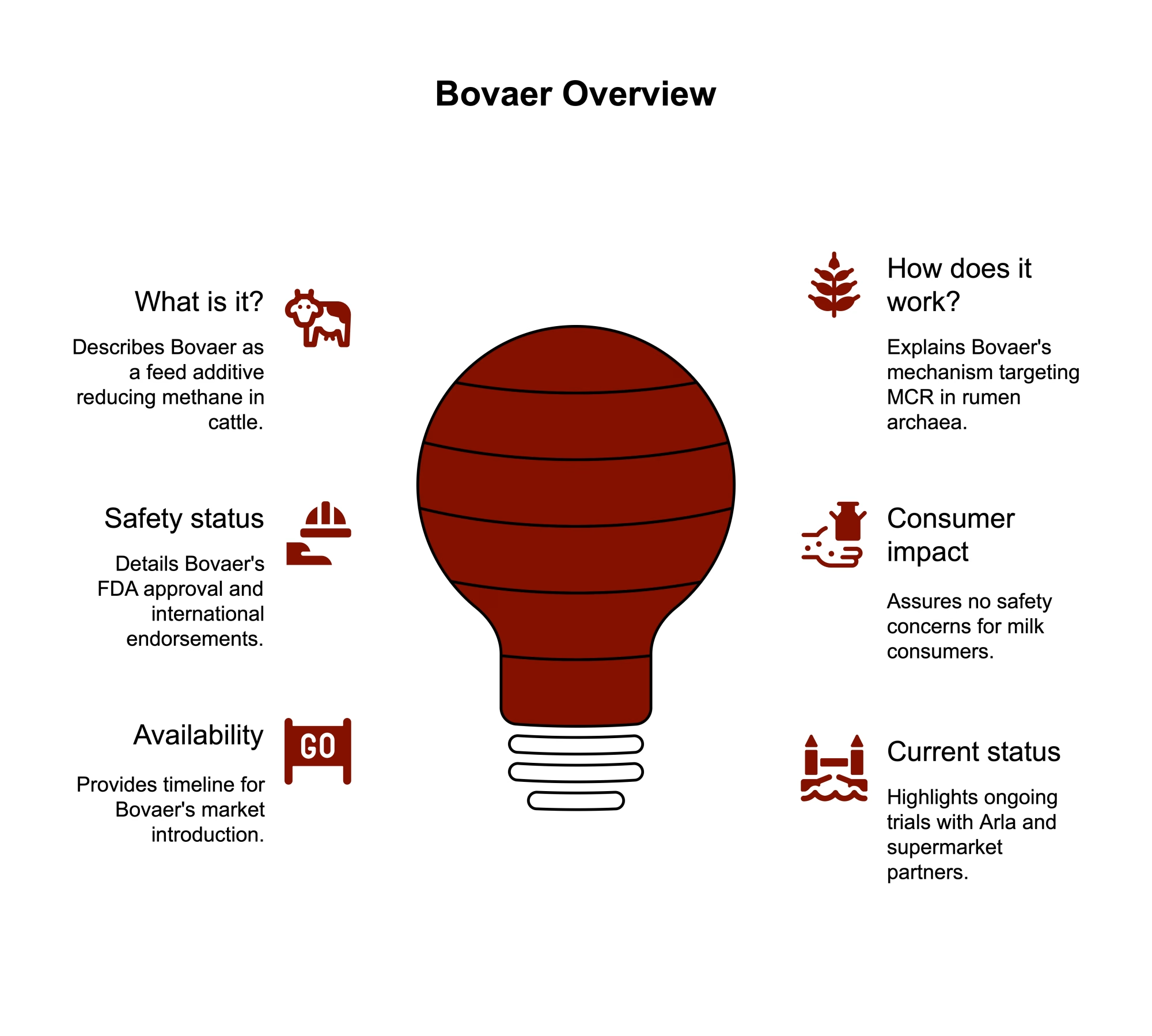
What is it? 3-Nitrooxypropanol (3-NOP), a feed additive that reduces methane production in cattle How does it work? Targets methyl-coenzyme M reductase (MCR) in rumen archaea to reduce methane formation. Safety status: Approved by FDA (May 2024) and approved in Great Britain, EU, Australia, and Canada. Consumer impact: There are no safety concerns for milk consumers—”The cows metabolize the additive so it does not pass into the milk.” Availability: Expected in the U.S. market by the third quarter of 2024 Current status: In trials with Arla and supermarket partners in Great Britain
Dairy Diet Revolution: When Your Cow’s Feed Becomes Political
Bovaer Battles: Science vs. Social Media
The latest flashpoint in dairy’s climate wars isn’t happening in Parliament—it’s happening at your local grocery store and on social media.
Arla’s rollout of Bovaer has triggered a social media firestorm. Some TikTok users post videos of pouring milk down the sink, claiming they want to prevent Arla from profiting from their purchases.
“It’s essentially another anti-vaccine campaign,” says one online commenter. “People claim this feed additive is unsafe for humans when the science is clear. Bovaer has undergone extensive safety evaluations and received regulatory approval for use in dairy cattle.”
Bovaer (3-nitrooxypropanol or “3-NOP”) works by targeting methyl-coenzyme M reductase (MCR) in rumen archaea, effectively reducing methane production in the cow’s digestive system. According to Elanco Animal Health data, this equals approximately 1.2 metric tons of CO2e reduced annually per cow.
“Milk from cows given Bovaer, a feed additive used to reduce methane emissions, is safe to drink. The cows metabolize the additive so it does not pass into the milk.” — Food Standards Agency.
Despite thorough safety assessments by the FSA that concluded “there are no safety concerns when Bovaer is used at the approved dose,” concerns have been amplified by questionable social media content, with some posts attempting to link the additive to Bill Gates—a familiar tactic in anti-science campaigns.
“The term ‘additive’ has been associated with negativity for years,” explains one industry commentator. “When consumers hear chemicals and cows in the same sentence, they panic—even though milk naturally contains thousands of chemical compounds.”
According to extensive testing reviewed by the European Food Safety Authority, 3-NOP is not detectable in a cow’s plasma, milk, or other edible tissues because the animal’s stomach rapidly breaks it down into metabolites—primarily 1,3-propanediol—which is mainly exhaled as carbon dioxide.
Silage Strategy: The Quiet Methane Fighter
While Bovaer grabs headlines, innovative farmers quietly slash emissions with a less controversial approach: upgrading their silage game.
Higher digestibility forage means less fermentation time in the rumen, which translates to fewer burps and more milk per ton of feed.
It’s about energy efficiency as much as environmental impact. Every methane molecule represents lost energy that could have gone into milk production.
“Protein content is the whole ballgame,” explains nutrition specialist Tom Wilson, a Yorkshire dairy farmer participating in emission reduction trials. “Young grass with high digestibility can dramatically reduce methane output, but you’ve got to balance the nutrition carefully.”
Third-generation Wisconsin dairy farmer Pete Larson used to select bulls based solely on milk components and conformation. Today, he’s pioneering a different approach: breeding cows that naturally produce less methane.
“We’ve identified significantly more gas-efficient bloodlines,” Larson explains, showing off his sleek, compact Holsteins. “Smaller frame, same production, less feed, less methane—it’s not rocket science, it’s just smart breeding.”
Researchers from the University of Pennsylvania School of Veterinary Medicine have confirmed what innovative farmers discovered through trial and error—low-emitting cows tend to be smaller and house different microbial communities, and these differences were not associated with reduced milk production.
“Low methane emitters are more efficient cows,” said Dr. Dipti Pitta, associate professor at the University of Pennsylvania School of Veterinary Medicine. “Methane formation is an energy-inefficient process, so reducing methane production gives that energy back to the cow for metabolic activities including improved growth rate and milk production.”
“We’re taking control of the narrative. Instead of waiting for regulations to crush us, we’re solving the problem ourselves and making more profitable cows.” — Pete Larson, Wisconsin dairy farmer.
Despite the promising potential of methane reduction technologies, dairy farmers face legitimate hurdles in implementation.
“The upfront costs of feed additives like Bovaer remain a concern for many producers,” explains Dr. Frank Mitloehner, Professor and Air Quality Extension Specialist at UC Davis. “Without processor premiums or carbon market access, producers must carefully evaluate the return on investment.”
Industry analysts point to several common barriers:
Initial implementation costs without immediate financial returns
Integration complexities with existing feeding systems
Market uncertainty around carbon credit pricing
Consumer acceptance of new technologies
The good news? Early adopters are finding these barriers surmountable. “We started with a small test group to minimize upfront costs,” explains Larson. “This allowed us to document benefits before scaling up. The key is starting small and expanding as you see results.”
Processor Power: How Milk Buyers Are Driving Change
Cooperatives and processors are quickly becoming key players in the methane reduction ecosystem. As Nestlé, Danone, and other major dairy buyers set ambitious carbon reduction targets, they’re developing incentive programs for producers.
Dairy Farmers of America (DFA), the largest U.S. dairy cooperative, has launched sustainability programs to help its 12,500 family farm owners reduce environmental impact while improving profitability.
“We’re working with partners across the value chain to develop incentives and support systems for our members who implement climate-smart practices,” explains Jackie Klippenstein, Senior Vice President of Government, Industry and Community Relations at DFA. “Our Gold Standard Dairy Program helps producers document their sustainability efforts and prepare for future market opportunities.”
Processors are increasingly linking sustainability to market access. Land O’Lakes’ Truterra sustainability program connects farmers with buyers willing to pay premiums for verified sustainable practices, creating financial incentives for methane reduction.
Methane Reduction Arsenal – Battle-Tested Solutions
Strategy
Methane Reduction
Implementation Timeline
Additional Benefits
Feed Additives
Bovaer (3-NOP)
Up to 30%
Available Q3 2024
1.2 metric tons CO2e/cow/year
Diet Management
Young/Digestible Grass
Up to 30%
Seasonal/Immediate
Improved feed efficiency
Maize Silage Increase
5-10%
Next harvest
Improved nitrogen efficiency
Breeding Approaches
Methane-Focused Genetics
Up to 22%
Long-term/Requires program
Maintains production levels
Safety Assurance
Bovaer in milk/meat
“No residues detected in milk or tissues”
“Additive is metabolized by cows”
“No safety concerns”
Natural Solutions: Alternative Approaches to Methane Reduction
While synthetic additives like Bovaer face consumer resistance, other interventions are gaining traction among organic producers looking for natural approaches to emission reduction.
“It’s a potential marketing win,” says Oregon organic dairy owner Melissa Chambers. “We’re reducing our carbon footprint while improving cow health with management practices consumers understand. There’s less pushback when the approach seems natural.”
Show Me The Money: The Economics of Low-Methane Milk
The economic reality is that methane-reduction strategies require investment. Farmers have significant support through USDA programs for Bovaer implementation. For fiscal year 2023, the department awarded more than $90 million to dairy farmer-owned cooperatives and partner organizations for innovative feed management under the Regional Conservation Partnership Program.
“Innovations such as Bovaer will help U.S. dairy farmers remain globally competitive and maintain their role as leaders in more sustainable dairy production.” — Gregg Doud, President and CEO, National Milk Producers Federation.
The financial rewards come through multiple channels. Elanco has developed a platform that helps producers connect with carbon markets, providing “an opportunity for a diversified income stream that’s not dependent on milk markets.”
Innovative producers are finding economic solutions through these emerging carbon markets. Some dairy operations sell carbon credits from documented methane reductions, generating additional revenue. Others leverage sustainability grants to modernize feed systems while cutting emissions.
“This isn’t charity,” Larson insists. “Every methane molecule we eliminate represents energy that stays in our production system. The climate benefit is just a bonus.”
Methane Math: Why Cutting Cow Gas Makes Business Sense
Methane is the second-most plentiful and potent greenhouse gas, packing a punch in the short term. When cows produce methane through their digestive process, it’s not just an environmental concern—it represents an energy loss and reduction in feed efficiency.
This explains why focusing on methane reduction makes business sense: if we can keep that energy in the animal instead of losing it as gas, we may see significant efficiency gains. It’s the same reason car manufacturers work to eliminate wasted fuel as exhaust.
Getting Started: Implementation Steps for Dairy Producers
Your Methane Reduction Roadmap
1. Assess your current emissions baseline
Connect with your cooperative or processor about carbon measurement tools
Consider working with Elanco’s UpLook sustainability insights engine
2. Explore funding options
USDA Regional Conservation Partnership Program: $90+ million available
Contact your local NRCS office for application guidance
Feed additives (Bovaer): Available Q3 2024 through Elanco
Breeding: Work with genetics providers on methane-efficient bloodlines
Feed management: Consult with a nutritionist on silage optimization
4. Monetize your reductions
Carbon credit verification through third parties like Athian or Truterra
Potential premium market access through sustainable milk programs
Expert Q&A: Straight Talk on Methane Reduction
Q: Is methane reduction economically viable for small and mid-sized dairies?
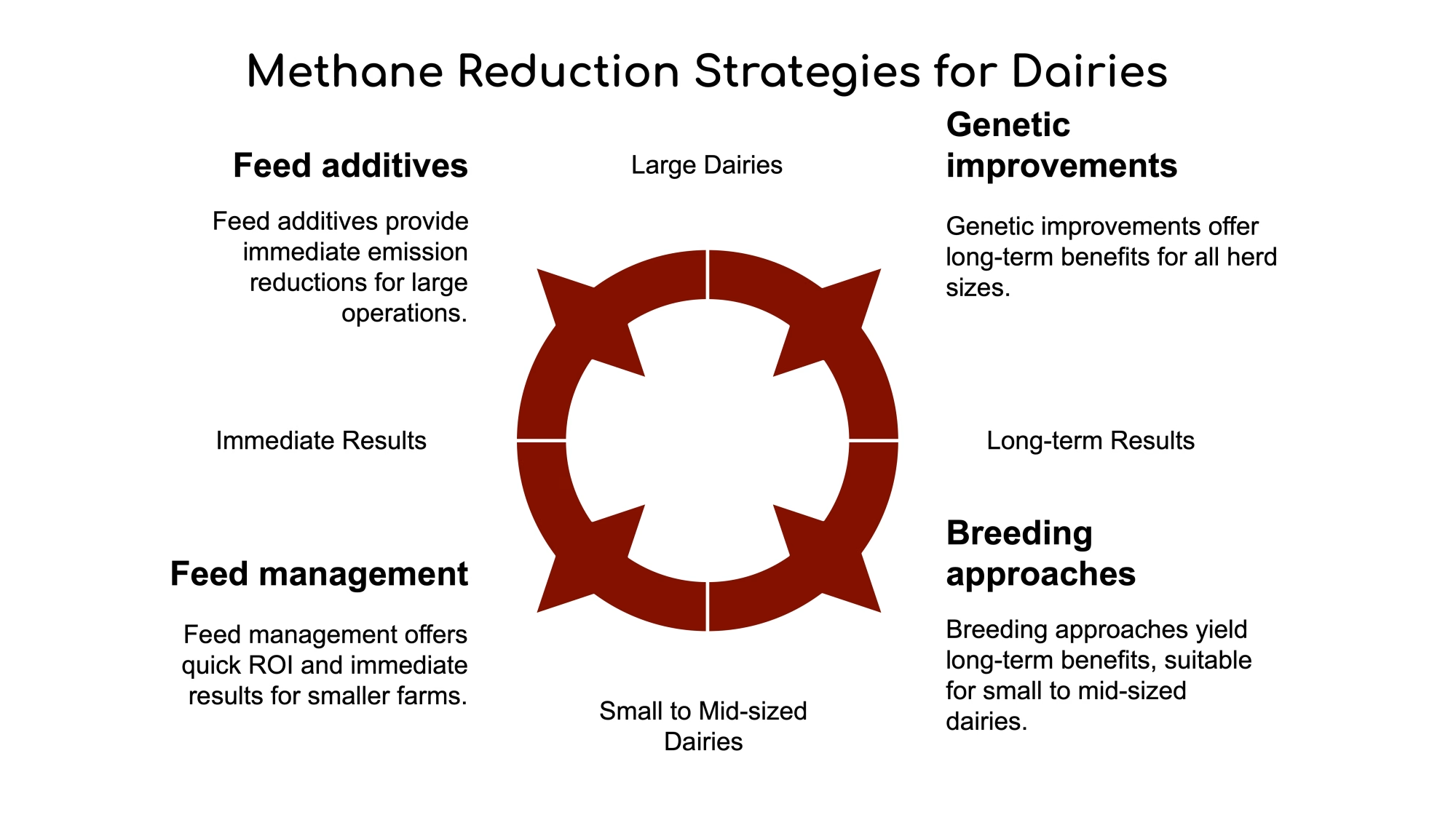
A: “Absolutely. While large operations may have more resources for implementation, smaller farms often have greater flexibility to adapt quickly. The key is choosing the right strategy for your operation size. Feed management improvements typically have the fastest ROI for smaller farms, while genetics provide long-term benefits for all herd sizes.” — Dr. Frank Mitloehner, UC Davis
Q: How soon can farmers expect to see results from methane reduction efforts?
A: “Feed additives can reduce emissions almost immediately while breeding approaches take longer—typically several years to see significant herd-wide changes. The feed efficiency benefits often appear before the full climate benefits are realized, which helps offset implementation costs.” — Dr. Dipti Pitta, University of Pennsylvania
Q: Where can producers go for implementation support?
A: “Start with your cooperative or processor, as many have sustainability teams dedicated to helping members. The Innovation Center for U.S. Dairy (www.usdairy.com) offers excellent resources, and your local extension office can connect you with regional experts.” — Jackie Klippenstein, Dairy Farmers of America
The Bullvine Bottom Line: Climate Compliance = Competitive Edge
The battle for dairy’s climate future won’t be won by government edicts or activist pressure. It will be decided by farmers who recognize that emission reduction isn’t just an environmental imperative—it’s a competitive advantage.
“The early innovators in methane reduction won’t just be climate heroes—they’ll be the ones still in business when others can’t afford to comply with inevitable regulations.”
As methane-reducing innovations move from university labs to farm feed bunks, the producers outcompeting their neighbors won’t be those who resist change but those who harness it strategically.
“Consumers worldwide demand lower-carbon foods,” notes National Milk Producers Federation CEO Gregg Doud. “Innovations like Bovaer will help U.S. dairy farmers remain globally competitive and maintain their role as leaders in more sustainable dairy production.”
Whether through breeding, feeding, or advanced additives, tomorrow’s dairy leaders will cut gas while pumping up profits today.
The climate critics don’t want you to know the truth: dairy farmers aren’t the problem. They’re pioneering the solution—one burp-free cow at a time.
Key Takeaways
Multiple reduction strategies exist – from immediate-impact feed additives to long-term breeding approaches, giving farmers flexibility based on their operation size and management style
Economic returns come through multiple channels: improved feed efficiency (8% in documented cases), access to premium markets, and carbon credit opportunities worth $20+ per cow annually.
Start small and document results – successful implementers recommend testing technologies on subgroups before full-scale adoption to minimize upfront costs and prove ROI
Cooperatives and processors are becoming gatekeepers to implementation resources and premium markets, making relationships with these partners increasingly valuable.
Regulations are coming either way. Early adopters will have systems in place, and costs amortized before compliance becomes mandatory, creating a competitive edge.
Executive Summary
As environmental pressure on dairy intensifies, innovative producers discover that methane reduction technologies offer substantial profit opportunities beyond climate compliance. The FDA’s recent approval of Bovaer, which cuts cow methane by 30%, joins breeding strategies and feed management approaches as tools farmers use to boost efficiency while slashing emissions. Though implementation barriers exist—from upfront costs to consumer acceptance—early adopters like Wisconsin’s Pete Larson are reporting 8% feed cost reductions while maintaining production. With processors like DFA creating market incentives and USDA offering $90+ million in support programs, methane reduction is evolving from a regulatory burden to a competitive advantage, positioning innovative farmers for long-term success in a carbon-conscious marketplace.
Join over 30,000 successful dairy professionals who rely on Bullvine Daily for their competitive edge. Delivered directly to your inbox each week, our exclusive industry insights help you make smarter decisions while saving precious hours every week. Never miss critical updates on milk production trends, breakthrough technologies, and profit-boosting strategies that top producers are already implementing. Subscribe now to transform your dairy operation’s efficiency and profitability—your future success is just one click away.
To provide the best experiences, we use technologies like cookies to store and/or access device information. Consenting to these technologies will allow us to process data such as browsing behavior or unique IDs on this site. Not consenting or withdrawing consent, may adversely affect certain features and functions.
Functional
Always active
The technical storage or access is strictly necessary for the legitimate purpose of enabling the use of a specific service explicitly requested by the subscriber or user, or for the sole purpose of carrying out the transmission of a communication over an electronic communications network.
Preferences
The technical storage or access is necessary for the legitimate purpose of storing preferences that are not requested by the subscriber or user.
Statistics
The technical storage or access that is used exclusively for statistical purposes.The technical storage or access that is used exclusively for anonymous statistical purposes. Without a subpoena, voluntary compliance on the part of your Internet Service Provider, or additional records from a third party, information stored or retrieved for this purpose alone cannot usually be used to identify you.
Marketing
The technical storage or access is required to create user profiles to send advertising, or to track the user on a website or across several websites for similar marketing purposes.
To provide the best experiences, we and our partners use technologies like cookies to store and/or access device information. Consenting to these technologies will allow us and our partners to process personal data such as browsing behavior or unique IDs on this site and show (non-) personalized ads. Not consenting or withdrawing consent, may adversely affect certain features and functions.
Click below to consent to the above or make granular choices. Your choices will be applied to this site only. You can change your settings at any time, including withdrawing your consent, by using the toggles on the Cookie Policy, or by clicking on the manage consent button at the bottom of the screen.
Functional
Always active
The technical storage or access is strictly necessary for the legitimate purpose of enabling the use of a specific service explicitly requested by the subscriber or user, or for the sole purpose of carrying out the transmission of a communication over an electronic communications network.
Preferences
The technical storage or access is necessary for the legitimate purpose of storing preferences that are not requested by the subscriber or user.
Statistics
The technical storage or access that is used exclusively for statistical purposes.The technical storage or access that is used exclusively for anonymous statistical purposes. Without a subpoena, voluntary compliance on the part of your Internet Service Provider, or additional records from a third party, information stored or retrieved for this purpose alone cannot usually be used to identify you.
Marketing
The technical storage or access is required to create user profiles to send advertising, or to track the user on a website or across several websites for similar marketing purposes.









 Join the Revolution!
 Join the Revolution!