Archive for dairy biosecurity protocols

Bird Flu Math: Why 43% of California’s Emergency Funds Went to the Same Farms Twice

California’s bird flu math: 43% of payments went to farms hit twice. The 57% that broke the cycle share three strategies you can implement before the virus arrives.

EXECUTIVE SUMMARY: One number from California’s bird flu outbreak demands attention: 43% of emergency payment dollars went to farms hit more than once, while 57% collected a single check and moved on. The difference came down to timing and preparation. Farms with monitoring systems detected illness 2-3 days before clinical signs—early enough to isolate and contain, cutting recovery from 60 days to 45. Operations using aggressive treatment protocols brought cows back to 88 lbs/day, compared with 77 lbs/day at comparable dairies using standard care. The economics are significant: Cornell research shows outbreaks cost $950 per affected cow, but ELAP covers only about half of actual losses, leaving a 1,000-cow operation to absorb $100,000-$150,000 per outbreak—doubling with reinfection. Prevention investments of $160,000-$270,000 can pay for themselves by avoiding a single repeat cycle. For producers in states where bird flu hasn’t yet arrived, California’s lesson is clear: the farms that fared best made prevention decisions before the virus showed up.

You know that feeling when a number just stops you in your tracks? Here’s one that did it for me: 43% of California’s H5N1 emergency payment dollars went to farms experiencing repeat infections—some collecting up to five payments in a six-month period, according to Farm Forward’s FOIA analysis of USDA data reported by Dairy Reporter. The same operations, cycling through outbreak after outbreak.

But here’s what I find genuinely useful for the rest of us: the remaining payment dollars went to farms that collected once and moved on. Same virus, same challenging Central Valley conditions, dramatically different outcomes.

So what separated these two groups? I’ve spent the past several months digging through the data, talking with producers who’ve navigated this, and reviewing the research. What’s emerged isn’t some simple checklist—it’s a clearer picture of which strategies actually work, why they work, and how you can evaluate whether prevention investments make sense for your specific situation.

For producers in Texas, Idaho, Michigan, and other states where dairy bird flu has already shown up, this isn’t theoretical anymore. And for operations in the Upper Midwest, Northeast, or Pacific Northwest that haven’t yet seen cases, the California experience offers valuable lead time. You can think through these decisions now rather than making them under pressure.

The Biology of a Second Wave

Let me walk through the biology first, because understanding why reinfection happens is really the key to preventing it.

The pattern turns out to be surprisingly straightforward once you see it. Dairy herds naturally turn over 25-35% of animals annually through normal replacement cycles—you probably know this already from your own operation. USDA and industry data track these numbers pretty consistently.

When an infected herd recovers, the surviving cows have developed immunity. But here’s the challenge: replacements arriving afterward have never been exposed to the virus. These naive animals enter facilities where environmental contamination may still be hanging around in milking equipment, waste systems, and barn surfaces.

Research teams at UC Davis and other institutions have documented that H5N1 can remain viable on contaminated surfaces and in waste lagoons under certain conditions, with persistence times varying with temperature, pH, and organic matter content. When naive replacement heifers arrive—often from calf ranches serving multiple dairies across a region—they encounter residual viral material in an environment where most of the existing herd is immune but no longer actively shedding detectable virus.

The result looks like a new outbreak, but is actually the same facility’s unresolved contamination finding new susceptible hosts.

California’s veterinary officials have been clear about this pattern. Dr. Annette Jones, the state’s veterinarian who has overseen California’s H5N1 response, has publicly called for dairy cattle vaccination and noted that “of the 17 states with known infected dairy cows, 12 have experienced poultry cases directly from these herds.” The underlying message from state veterinary authorities: these serial infections aren’t random bad luck—they follow predictable patterns that facility management and herd timing can interrupt.

That insight matters enormously—because if reinfection follows predictable patterns, it means prevention is actually possible for operations willing to address those patterns directly.

What the Single-Outbreak Farms Actually Did

I want to be specific here because, honestly, general “improve your biosecurity” advice doesn’t help anyone make real decisions. The farms that collected only one ELAP payment share several operational characteristics worth looking at closely.

Early Detection Made the Difference

I’ve been following what happened at Valadao Dairy, a 2,000-cow operation in California’s Central Valley that had deployed CowManager ear-tag sensors—the kind that continuously track rumination, activity, and temperature patterns. You know, similar to what many of us use for fresh cow management and catching transition period problems early.

When H5N1 reached their facility, the system flagged potentially affected animals 2-3 days before clinical symptoms appeared, according to case study documentation. That early warning enabled the immediate isolation of flagged animals in separate pens with dedicated equipment.

By the time testing confirmed the virus, it was contained to a small portion of the herd rather than spreading facility-wide. As reported in August 2025, veterinarian Parreria noted: “At Valadao, they saw a 45-day recovery period. Milk production, which had dropped by 20 pounds per cow per day on average, returned to normal.”

Compare that to the typical experience. The same Hoard’s article noted: “On dairies without CowManager, I’m seeing an average turnaround time of 60 days to rebound from bird flu.”

And here’s the key point for preventing reinfection: naive replacement animals arriving during that shorter recovery period went directly to clean facilities rather than contaminated barns.

Time Is Milk: Farms with real-time monitoring systems recovered 15 days faster—cutting revenue losses by over $15,000 per outbreak through earlier detection and containment.

Similar patterns showed up at Horizon Dairy in Wisconsin, where comparable monitoring logic limited infection to 97 of 2,800 cows—a 3.4% herd infection rate, substantially below rates reported at many California operations during the same period. Operations manager Sarah Jensen told The Bullvine: “By catching it early, we limited the spread to just 97 of our 2,800 cows… We estimate this early detection saved us over $1.2 million in potential losses.”

What’s particularly encouraging about both these examples is that neither farm did anything revolutionary. The technology has been available for years. Many of us already use similar systems to capture fresh cow issues and monitor the transition period. The difference was having it in place before the virus arrived rather than scrambling afterward.

Aggressive Individual Cow Care Accelerated Recovery

Joe Soares at Turlock Dairy took a different approach that’s worth understanding, particularly for operations that may not have monitoring systems in place.

Standard recovery protocols—vitamin B injections and supportive care over time—typically require 14-21 days for affected cows to return to production. Soares, working with his veterinary team, implemented more intensive single-day bolus treatments that shortened recovery to 3-7 days in most cases.

“We didn’t wait to see how bad it would get,” Soares explained in industry coverage of his operation’s experience. “We hit it hard on day one with everything we had.”

The 11-Pound Decision: Aggressive treatment protocols produced an 11 lb/cow/day advantage over standard care—worth $3,300+ annually per recovered cow.

The production numbers tell the story. His operation came back at 88 lbs/cow/day post-recovery, compared to 77 lbs/cow/day at a comparable facility using traditional protocols.

That’s an 11 lb/cow/day sustained advantage—the kind of difference that compounds significantly over a full lactation and really shows up in your bulk tank.

But the mechanism that matters for preventing reinfection is this: faster recovery means faster return to normal immune function, which means less time for naive animals to accumulate as a susceptible population before the herd re-establishes baseline immunity.

Temporary Herd Closure Worked for Some Operations

A smaller group of successful farms implemented temporary restrictions on incoming cattle for 30-60 days post-infection. These decisions aren’t tracked systematically, so it’s harder to quantify, but several California producers told me this was the single most effective intervention they tried.

The logic is pretty elegant when you think about it: if no naive animals enter during the acute outbreak phase, the existing herd has time to mount population-level immunity. By the time replacement animals resume arriving, they’re entering a herd where 70%+ of animals are already immune. That dramatically reduces transmission probability.

This approach obviously requires coordination with your calf ranch partners and careful cash flow management—it’s definitely not feasible for every operation. But for farms with the flexibility to manage replacement timing, it’s worth considering.

The Economics of H5N1 Prevention

Now let’s talk about the numbers, because that’s ultimately what determines whether any of this makes sense for individual operations. And I’ll be honest—this is where I’ve spent the most time trying to understand what the research actually shows.

What the Research Says About Per-Cow Costs

Research by Liang and colleagues at Cornell University, published in the Journal of Dairy Science in 2025, established baseline costs of approximately $950 per clinically affected cow. As Hoard’s Dairyman summarized: “The 60-day period of illness and postclinical recovery showed an average production drop-off of nearly 2,000 pounds per cow, which, when added to mortality, replacement, and early removal from the herd, brings the total cost to about $950 per clinically affected cow.”

That’s a staggering number when you multiply it across a significant portion of your herd.

The Gap Between Real Losses and ELAP Coverage

But here’s what California producers have discovered—and this aligns with what agricultural economists analyzing the gap between payments and actual costs have found: 40-50% of actual losses fall outside ELAP coverage.

The Cornell researchers were explicit about this limitation: their $950 figure “did not include any ongoing herd dynamics or reproductive losses.” That’s the stuff that doesn’t show up in the immediate payment calculation but really hits your operation hard—abortions, extended return-to-conception intervals, and permanent fertility damage in affected cows that can persist for 12-18 months post-infection.

“The ELAP payment covered maybe half of what this actually cost us. And that’s before you factor in the genetics we lost when we had to cull cows that wouldn’t breed back.”

— Central Valley dairy producer, 1,800-cow operation

For a 1,000-cow operation with a 20% infection rate, here’s how the numbers actually break down based on the Cornell research methodology:

Cost CategoryEstimated Loss (1,000 cows)ELAP Coverage
Acute Milk Loss$100k – $120kMostly Covered
Mortality/Culling$70k – $90kPartially Covered
Repro Impact (18mo)$35k – $45k$0
Treatment & Labor$15k – $20k$0
Total$220k – $275k~$110k

That gap of $100,000-$155,000 in uncovered losses? If reinfection occurs within 6 months—which happened on a significant portion of California farms, according to USDA payment data analysis—those uncovered losses essentially double.

What Prevention Investments Actually Cost

I’ve gathered current pricing from multiple equipment suppliers. Here’s what the investment tiers actually look like:

Baseline Biosecurity (Isolation + Equipment Focus): $50,000-$85,000 capital plus $5,000-$8,000 annual operating

  • Dedicated milking equipment for the isolation pen
  • Waste milk acidification system
  • PPE program with worker training
  • Generally reduces reinfection risk by around 30%

Real-Time Monitoring System: $160,000-$270,000 capital plus $6,000-$12,000 annual operating

  • Options include CowManager, SCR by Allflex, Smartbow, or comparable systems
  • Early detection typically occurs 5-10 days before clinical symptoms show up
  • Generally reduces reinfection risk by around 50%

Combined Approach: $210,000-$360,000 capital plus $11,000-$20,000 annual operating

  • Integrates early detection with facility separation capability
  • Generally reduces reinfection risk by 70-80%

When Does the Investment Actually Make Sense?

This is where your individual circumstances really matter.

For a high-risk operation—within 25 miles of confirmed positives or sharing supply chain with affected herds—the math often favors prevention investment. For a low-risk operation with geographic distance and a closed herd, the calculation looks quite different.

“We ran the numbers three different ways. Every scenario showed that if we got hit twice, we’d have been better off spending the money upfront on monitoring. The second outbreak is what kills you financially.”

—Idaho dairy manager, 15 years in the industry

The Reinfection Math: Prevention investments pay for themselves by avoiding a single repeat outbreak—which creates $275k in uncovered losses versus $160k-$270k for monitoring systems.

The core insight I keep coming back to: farms that prevent even one reinfection cycle save $100,000-$150,000 in uncovered losses. That often exceeds the cost of prevention equipment—but only if your risk profile makes reinfection a realistic concern.

I want to be honest about the uncertainty here. We’re working with limited data from California’s experience. Different regions, herd structures, and management systems may show different patterns. These projections are useful for thinking through decisions, not precise predictions of what any individual farm will experience.

Learning from International Approaches

I’ve seen commentary suggesting American dairy should simply adopt European protocols. The reality, as many of us have seen with other regulatory comparisons, is more nuanced than that.

European responses to avian influenza—primarily in poultry rather than dairy cattle, it’s worth noting—include rapid depopulation of infected premises, mandatory facility decontamination, and source verification for replacement animals.

To give you a sense of how this works in practice: when a Dutch poultry operation confirmed H5N1 in late 2024, government veterinarians arrived within 24 hours. The flock was culled within 72 hours. The facility then underwent mandatory cleaning to international OIE standards—a process that took three weeks and cost the farmer approximately €180,000 (roughly $195,000 USD) out of pocket, according to European industry estimates. Only after environmental testing confirmed no viral presence could restocking begin, typically 8-12 weeks after the initial detection.

The economic structure differs substantially from our system: while initial depopulation is government-funded, farmers bear the secondary decontamination costs, which can reach $150,000-$300,000 or more, depending on facility size, according to industry estimates.

European veterinary professionals have noted that their system creates different incentives—reinfection carries significant financial consequences for farmers, whereas the American system provides continued compensation. That’s a fair observation about how incentive structures shape behavior.

But before concluding Europe has it all figured out, some context matters:

European dairy operations are generally smaller and more geographically dispersed than California’s concentrated regions. What works for a 200-cow operation in the Netherlands may not translate to a 5,000-cow Central Valley facility.

The regulatory frameworks differ dramatically. And European authorities have decades of experience with foot-and-mouth disease that has shaped their rapid-response infrastructure.

What we can take from the European approach is the principle: creating financial consequences for reinfection changes behavior in ways that universal compensation may not. How that principle gets adapted to American agricultural realities is still an open question.

The Worker Health Dimension

Here’s an aspect that I think often gets underweighted in purely agricultural discussions: what’s happening with dairy workers. And honestly, this affects your operation’s bottom line more than you might initially think.

CDC has confirmed 70 human H5N1 cases in the United States through mid-2025, with 41 linked to exposure to dairy cattle, according to surveillance data published in the Morbidity and Mortality Weekly Report. The vast majority—around 93%—presented with conjunctivitis, and most cases resolved within 4-5 days.

But serology data from CDC studies conducted in Michigan and Colorado reveals something the clinical count doesn’t capture. As CIDRAP reported in November 2024: “An eagerly anticipated serology study in farm workers exposed to H5N1-infected dairy cattle shows that 7% had antibodies suggesting prior infection,“—indicating substantial underdiagnosis of mild cases.

The highest-risk activity, consistently: cleaning milking parlors. The CDC study noted that tasks included milking cows and cleaning barns, and that none of the workers in the study wore respiratory protection.

Why does this matter economically for your operation?

Worker illness creates a disruption that doesn’t appear in ELAP calculations. When your experienced parlor staff get sick during an outbreak, you’re suddenly managing training gaps, coverage challenges, and potential spread to other workers. One California operation I heard about lost three of its five most experienced milkers to a series of illnesses over two weeks.

The practical takeaway: PPE and worker health protocols aren’t just compliance boxes—they’re operational continuity investments. Eye protection and respirators for parlor cleaning, training in whatever language your workers speak best, protocols for reporting illness without wage loss concerns… these reduce outbreak costs in ways that aren’t always visible during the immediate crisis.

A Decision Framework for Your Operation

Before bird flu reaches your region, there’s real value in working through some structured questions with your veterinarian, lender, and accountant. Here’s how I’d think about it:

Honestly Assess Your Risk Exposure

  • How far are you from the nearest confirmed dairy with a positive case?
  • Do you share calf ranches, veterinarians, or equipment vendors with operations in affected areas?
  • What percentage of your replacements come from external sources?

A Wisconsin operation 200 miles from any confirmed case, with a closed herd, faces economics completely different from those of a California facility 15 miles from multiple positives, sourcing replacements from a regional calf ranch.

Calculate Your Actual Outbreak Cost

Work through your specific numbers rather than relying on industry averages:

  • Your average cow production and current milk price
  • Your replacement cow cost and realistic mortality expectations
  • Your herd’s genetic value—how many years of selection work is at stake?
  • Your current labor situation and coverage capacity

The point isn’t precision—it’s getting a realistic range that reflects your operation.

Get Real Equipment Quotes

Contact 2-3 suppliers in your region. Get written quotes for different investment tiers. This costs nothing except time and gives you actual numbers rather than estimates.

Have the Necessary Conversations

With your lender: Can your operation service additional debt if milk prices drop 10%?

With your veterinarian: Given your herd’s genetics and structure, what’s a realistic recovery if you get hit?

With your calf ranch partner: Can they accommodate timing changes if you implement quarantine periods?

With your team: Can you actually execute isolation protocols consistently, day after day?

Equipment sitting idle accomplishes nothing. Implementation matters as much as investment.

What Industry Groups Are Saying

It’s worth understanding where our industry associations stand on this, even if you don’t agree with every position.

Dairy industry associations have generally supported voluntary biosecurity improvements while expressing concern about mandatory requirements. The National Milk Producers Federation has emphasized producer education and voluntary adoption. Their position: individual farms are best positioned to evaluate their own risk and make appropriate investments.

“One-size-fits-all mandates don’t account for the diversity of American dairy operations,” NMPF has stated in public communications. “We believe in supporting producers with information and resources while respecting their operational decision-making.”

This perspective has merit—you and I both know dairy operations vary enormously in size, structure, geography, and resources. What makes sense for a large California operation differs from what fits a mid-size Wisconsin dairy or an Idaho facility.

At the same time, the significant reinfection rates in California suggest purely voluntary approaches haven’t achieved optimal outcomes industry-wide. There’s real tension here between respecting individual farm decisions and addressing what’s ultimately a shared regional problem. How this plays out will likely look different across states over the coming months.

Key Takeaways

The fundamental insight: Reinfection follows predictable patterns that facility management and herd timing can interrupt. The farms that avoided repeat infections implemented specific strategies that broke the transmission cycle.

For high-risk operations:

  • Prevention investment often makes economic sense when reinfection probability is factored in
  • Early detection and immediate isolation offer the highest-value interventions
  • Temporary herd closure during acute phases can prevent naive animals from entering contaminated facilities

For medium-risk operations:

  • Baseline biosecurity often offers a favorable cost-benefit
  • Supply chain assessment matters—understand where your replacements come from
  • Develop protocols now; implementation under crisis pressure is always harder

For all operations:

  • Calculate your actual outbreak costs, including what ELAP won’t cover
  • Build supplier and consultant relationships before you need them urgently
  • Consider worker health protocols as operational continuity investments

A necessary caveat: These projections rest on limited California data. Different regions and management systems may show different patterns. Work with your own advisors using your own numbers before making major investment decisions.

The farms that navigated California’s H5N1 wave most successfully made prevention decisions before the virus arrived. Their experience offers a roadmap—not a guarantee, but better odds for operations willing to think ahead.

For current bird flu biosecurity information, consult your state veterinarian, extension service, or USDA resources at aphis.usda.gov.

Complete references and supporting documentation are available upon request by contacting the editorial team at editor@thebullvine.com.

Learn More:

Join the Revolution!

Join over 30,000 successful dairy professionals who rely on Bullvine Weekly for their competitive edge. Delivered directly to your inbox each week, our exclusive industry insights help you make smarter decisions while saving precious hours every week. Never miss critical updates on milk production trends, breakthrough technologies, and profit-boosting strategies that top producers are already implementing. Subscribe now to transform your dairy operation’s efficiency and profitability—your future success is just one click away.

NewsSubscribe
First
Last
Consent

Why Every Calf Ranch Owner Is Rethinking Biosecurity (And You Should Too)

Still treating biosecurity like optional insurance? What if I told you it’s the difference between profit and going under in 2025?

EXECUTIVE SUMMARY: Look, I’ve been watching this industry long enough to know when something’s a game-changer—and biosecurity isn’t just about keeping bugs out anymore, it’s about keeping your operation profitable. The HPAI outbreak affected 930+ farms across 17 states, costing producers $800-$ 1,100 per cow, when factoring in lost milk and culling. But here’s what caught my attention: farms with solid biosecurity protocols saw 420% returns on their calf investments while others watched $5,000 walk out the door with every dead calf. Meanwhile, 80% of Salmonella Dublin strains are now resistant to multiple antibiotics, making prevention your only effective defense. Countries like New Zealand reduced BVD infections from 15% to 5% by implementing coordinated biosecurity—proof that this approach works when done correctly. Bottom line? With milk prices around $20/cwt, you can’t afford NOT to get serious about biosecurity.

KEY TAKEAWAYS:

  • Cut calf losses by $5,000 each through strict 21-30 day quarantine protocols—test every new animal for BVD and Salmonella Dublin before they touch your herd. One infected calf can cost you more than most people’s annual salary.
  • Generate 420% ROI on calf health investments by implementing the “High-Impact Five” protocol—quarantine, zoning, visitor control, feed protection, and proper sanitation. Smart producers are turning biosecurity from a cost center into a profit driver.
  • Avoid BVD outbreaks, which can cost $ 2,600-$100,000+, by following New Zealand’s playbook: bulk milk testing, targeted individual testing, and systematic removal of persistently infected animals. They cut infection rates by two-thirds using simple, cost-effective tools.
calf health management, dairy biosecurity protocols, dairy farm profitability, calf mortality reduction, HPAI dairy impact

The thing about calf ranches these days is you can’t just treat biosecurity like another box to check — it’s become the backbone of every successful dairy operation’s survival.

What’s happening right now across the industry is pretty eye-opening. In 2024 and 2025, Highly Pathogenic Avian Influenza (HPAI) spread through over 930 dairy farms in 17 states, according to USDA reports. Areas like California’s Central Valley and Texas took a serious hit — losses sitting somewhere between $800 and $1,100 per cow on affected farms when you count lost milk, sickness, and culling. But here’s the kicker: this virus jumped species — from birds to cattle and then to people working those dairies, flipping our whole understanding of risk on its head.

When Reality Hit Hard

We saw a rapid federal response. By April 2024, the USDA required negative Influenza A tests on all lactating cows moving between states, and later that year, it launched a National Milk Testing Strategy. Dairy producers had been sounding the alarm about animal movement being the weak link, and this finally pushed regulation to catch up.

Now, here’s the thing, though — it’s not just about the new kid on the block. Salmonella Dublin, for instance, is sneaking in the back door, and the problem’s only getting worse. According to recent work by Michigan State University Extension and veterinary researchers, more than 80% of Salmonella Dublin strains in North America are resistant to multiple antibiotics. This is more than a treatment headache; it’s a game-changer. And Mycoplasma bovis? That bacterium’s not just stubborn; it’s shape-shifting its way around vaccines and hitching rides in colostrum and waste milk, making respiratory disease and arthritis a constant challenge.

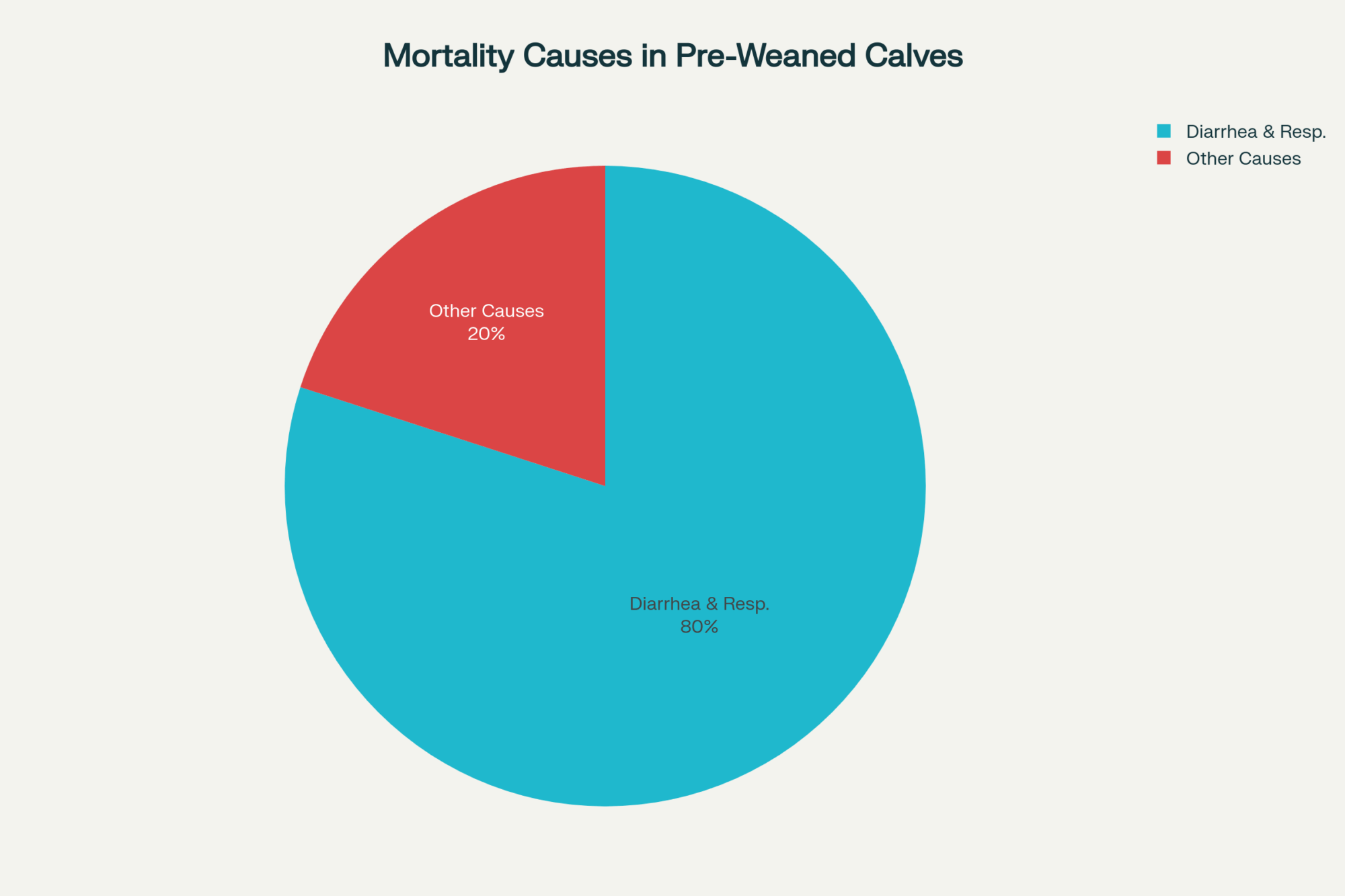
Dairy calf groups recommend keeping pre-weaning mortality below 5% and scours under 25%, but hitting those marks? It’s still an uphill battle for many. I keep hearing about producers losing calves — and financially, it adds up fast. A 2023 University of Minnesota Extension study estimates the total economic impact of a lost calf, factoring in genetics, treatment, and future production, to be approximately $5,000. That’s serious money walking out the gate.

The Numbers That Make Sense

What about the ROI for all this biosecurity talk? A 2022 study examining 156 Irish dairy farms found that vaccination and bulk tank milk testing were associated with improved gross margins. Not exact dollar-for-dollar returns, but the evidence is there that investing in solid biosecurity pays off. The Bullvine’s 2025 analysis estimates a potential return of up to 420% per calf when top protocols are in place.

With milk prices hovering around $20 per hundredweight lately, these numbers aren’t just academic. Bovine Viral Diarrhea outbreaks are costing farms between $2,600 and over $100,000, depending on herd size and the severity of the infection. That’s something you can’t ignore.

Learning from the Winners

There’s a lot we can learn from the global stage as well. New Zealand’s industry-driven BVD program, for example, has reduced active infections from 15% to under 5% by identifying persistently infected calves, utilizing bulk milk testing, and strategically culling. A laser-focused but straightforward approach.

Canada, meanwhile, kept their herds HPAI-free through aggressive cattle import testing and domestic milk surveillance — solid border biosecurity at work.

Across the pond, European farms are taking biosecurity seriously — they build it in. Young calves and adult herds are kept well apart, quarantine areas are clearly defined, and there’s tight perimeter fencing to keep wildlife out. Additionally, their traceability systems enable outbreaks to be identified and contained quickly.

What Actually Works (From Someone Who’s Seen It)

Here’s what’s really getting the job done day-to-day:

  • First, quarantine. Every. Single. New animals spend at least 21-30 days apart, are tested for BVD, Salmonella Dublin, and other threats.
  • Then, zoning. Keep clean and dirty spaces separate. Handle your youngest and healthiest calves first, then move on to older or sick animals.
  • Manage people and vehicles closely — visitors must log in, wear farm boots and coveralls, and trucks aren’t allowed to travel through manure-heavy areas.
  • Keep feed and water safe. Never use tools for manure handling to deliver feed, and pasteurize waste milk before giving it to calves.
  • And clean right. Scrape off all dirt and manure first, then wash with hot water and disinfect thoroughly. Sunlight drying on hutches isn’t just nature’s bonus—it’s free sanitizer.

Technology’s buzzing in the background with AI sensors, rapid DNA tests, even drones, but most producers I talk to? They see tech as a luxury, not a lifesaver just yet.

Dr. Sarah Raabis, DVM — a seasoned veterinary consultant in dairy calf health — hits the nail on the head: “Technology can enhance what you do, but it can’t replace consistent, disciplined biosecurity by your staff. The culture is what drives success.”

The Human Factor (Always the Wild Card)

And culture’s tricky. Without management buying in and staff fully engaged, even the best plans fall flat.

With all this uncertainty — fluctuating markets, changing rules, and evolving pathogens — the farms that stick to smart, evidence-based biosecurity will have the upper hand.

When winter hits the Upper Midwest, for instance, I’ve seen that dry lot sanitation and keeping vehicle traffic out of frozen, mushy lanes make a huge difference. Small dairies have their own challenges, but these core principles hold true everywhere.

Your Monday Morning Game Plan

If you’re wondering what to tackle next Monday morning, here’s what I’d do: pull your calf morbidity and mortality numbers and benchmark them against the Dairy Calf and Heifer Association standards; get serious about quarantines; walk through your barn with fresh eyes to spot contamination risks; separate your feed and manure tools; and run a solid staff training on biosecurity basics.

This is no longer an optional extra. It’s what profitable, sustainable dairy farming looks like in 2025 — and beyond.

Complete references and supporting documentation are available upon request by contacting the editorial team at editor@thebullvine.com.

Learn More:

  • The 10 Commandments for Healthy Calves – This article provides a tactical checklist for daily calf management, from colostrum to weaning. It offers practical strategies for executing the hands-on protocols the main article advocates, helping you turn biosecurity theory into consistent, actionable results in your barns.
  • The 5 Biggest Threats to the Future of the Dairy Industry – Gain a strategic market perspective on why biosecurity matters beyond your farm gate. This piece reveals how managing disease and animal welfare directly impacts consumer trust and your social license, connecting on-farm practices to long-term industry viability and profitability.
  • Dairy Cattle Breeding: Are We Sacrificing Health for Production? – Look beyond immediate prevention and explore the future of herd resilience. This innovative article demonstrates how to leverage genomics and balanced breeding to create inherently healthier animals, reducing your reliance on reactive treatments and building a more robust, profitable future herd.

Join the Revolution!

Join over 30,000 successful dairy professionals who rely on Bullvine Weekly for their competitive edge. Delivered directly to your inbox each week, our exclusive industry insights help you make smarter decisions while saving precious hours every week. Never miss critical updates on milk production trends, breakthrough technologies, and profit-boosting strategies that top producers are already implementing. Subscribe now to transform your dairy operation’s efficiency and profitability—your future success is just one click away.

NewsSubscribe
First
Last
Consent

What European Dairy Producers Know About Disease Management That’s Saving Them Hundreds of Thousands

$950 lost per infected cow?  Europeans are cutting disease losses 80% with biosecurity. Time to catch up, don’t you think?

Executive Summary: Look, I’ve been diving deep into this H5N1 mess, and here’s what’s keeping me up at night. European dairy producers are making us look like amateurs when it comes to disease management—they’re bouncing back from outbreaks in 60 days while we’re still scrambling. California alone lost $400 million in 2024 from a 9.2% production drop, and that’s just the beginning. What really gets me is that farms investing just 2-3% of their production value in proper biosecurity are seeing 60-80% fewer outbreak costs when disease hits. The Europeans figured this out decades ago with foot-and-mouth and bluetongue—they treat biosecurity like they treat feed costs, as essential business expenses. With milk sitting around $21.30 per hundredweight and operating loans costing 5.6%, every cow matters more than ever. You can’t afford to wait until H5N1 shows up at your gate—you need to start thinking like a European dairy producer today.

Key Takeaways

  • Cut potential losses by $950 per cow with proactive biosecurity audits—start by mapping your current weak spots and comparing against European protocols, especially with today’s tight margins on milk checks.
  • Deploy IoT rumination sensors immediately to catch production drops 3-5 days before clinical symptoms—that early warning system could save 80% of your herd like it did for that Green Bay operation.
  • Invest 2-3% of production value in integrated disease monitoring—with feed costs crushing everyone, this ROI of 60-80% cost reduction during outbreaks is money in the bank.
  • Build rapid response agreements with neighboring farms—coordinate movement controls now before disease pressure hits, protecting both your genetic program and butterfat production.
  • Follow Canada’s playbook with systematic milk surveillance—they’ve tested 4,500+ samples with zero H5N1 cases while maintaining strong genomic testing protocols throughout 2025.

A persistent challenge with the H5N1 outbreak in U.S. dairy herds is the reactive nature of the response, leaving producers playing catch-up as losses stack up nationwide. Recent work from Cornell University examined a 3,900-cow Ohio operation, finding economic losses of approximately $950 per infected cow, totaling nearly $ 3.7 million. These numbers reflect the reality faced by large-scale commercial operations, not just smaller farms.

In stark contrast, European dairy producers have spent decades preparing for these scenarios. Their experience in managing foot-and-mouth disease, bluetongue, and African swine fever has led to the development of well-established biosecurity protocols that consistently reduce outbreak costs. Notably, Germany’s rapid recovery from foot-and-mouth disease in early 2025 saw the country go from outbreak to disease-free status in just sixty days—a level of swift recovery that materially benefits export negotiations and market stability.

The Financial Stakes Keep Rising

Financial context matters significantly. Milk prices reached $21.30 per hundredweight in May 2025, while operating and ownership loan rates stand between 5.1% and 5.6% according to the USDA’s recent data. Every day lost to disease equates to real revenue losses.

California exemplifies these challenges, experiencing a 9.2% reduction in milk production in 2024, equivalent to approximately $400 million in lost revenue amid rising feed and labor costs. The virus’s insidious impact stems from its direct targeting of the mammary gland, causing prolonged mastitis and viral shedding in milk—even among asymptomatic cows, as documented in EFSA’s comprehensive 2025 review.

Average daily milk production of infected versus non-infected cows over 60 days post H5N1 infection

The data reveal a stark reality: modeling shows that current U.S. intervention strategies have prevented only an estimated 175 additional outbreaks. By comparison, European emergency response teams deploy within hours and implement cross-border movement restrictions seamlessly. This seamless, cross-border approach is a key differentiator, while coordination between U.S. states is still in development.

Europe’s Systematic Advantage

Europe’s systematic approach features 3-kilometer protection zones and 10-kilometer surveillance zones, with government co-financing covering substantial response costs—facilitating rapid containment while allowing operational continuity beyond outbreak zones. Conversely, fragmented U.S. federal and state responses contribute to delayed containment and complicated ELAP compensation eligibility, limiting producer recovery.

Forward-looking U.S. operations in Michigan and Wisconsin have begun adopting IoT monitoring technologies that can detect production declines days ahead of clinical symptoms. For example, an 850-cow dairy near Green Bay identified decreased rumination before symptomatic onset, enabling early intervention that likely prevented wider exposure.

The USDA’s commitment of over $1 billion in biosecurity and response funding for 2025 underlines official support for these measures. The challenge, however, is that these funds are only effective when paired with the right on-farm technology, rigorous protocols, and regional cooperation.

The Investment Decision Every Producer Faces

Producers face a fundamental choice: treat biosecurity as an essential investment or accept the escalating cost of disease-related disruption. The European experience demonstrates that budgeting 2–3% of production value toward integrated biosecurity protocols can reduce outbreak costs by 60–80%, a compelling view supported by industry insights compiled by The Bullvine.

The challenges are real: rising input costs, labor shortages, and the initial capital required for advanced monitoring systems. Regulatory complexity, which varies by state, presents additional obstacles.

Your Actionable 30-60-90 Day Gameplan

Based on what’s working for progressive operations, here is a practical timeline for implementation:

First 30 Days: Conduct a Comprehensive Audit Start with a peer-reviewed biosecurity audit modeled on successful European frameworks. Simultaneously, open discussions are being held with neighboring farms about regional movement controls, an approach gaining traction in Wisconsin and Pennsylvania.

Next 60 Days: Implement Basic Monitoring You don’t need the most advanced system overnight. Begin by installing foundational tools, such as rumination sensors or milk yield meters, to establish a baseline and detect early deviations.

By 90 Days: Solidify Your Response Plan Formalize a rapid response agreement with your herd veterinarian and at least one neighboring operation. Ensure everyone understands their role before an emergency occurs.

Proof That Prevention Works

Canada, for instance, provides a compelling case study. The country’s dairy industry maintains an H5N1-free status, as evidenced by over 4,500 negative milk samples from surveillance testing, which illustrates the efficacy of rigorous surveillance and integrated biosecurity.

The Bottom Line

Ultimately, successful disease management is defined by proactive investment and systematic preparation, which consistently outperform reactive responses. As climate patterns potentially extend disease pressures and mathematical models show current responses need improvement, the competitive advantage clearly belongs to operations that adapt proven strategies now.

The European playbook provides a proven path forward. The choice is no longer whether to invest in strategic biosecurity, but how quickly it can be made the centerpiece of your operation.

Complete references and supporting documentation are available upon request by contacting the editorial team at editor@thebullvine.com.

Learn More:

  • Biosecurity – Your first line of defense – This article provides a tactical checklist for on-farm biosecurity implementation. It details practical strategies for managing visitors, controlling animal movement, and sanitizing equipment to create a robust, cost-effective barrier against disease transmission on your operation.
  • The Dairy Industry’s Top 5 Trends for 2024 That Will Redefine The Future – For a strategic view, this piece connects biosecurity to larger market forces like sustainability and consumer transparency. It reveals how proactive health management is essential for building brand trust and meeting the evolving demands of the global marketplace.
  • Precision Dairy Farming – The next generation of dairy farm management – Dive deeper into the innovative technology discussed in our feature. This article demonstrates how to harness data from automated sensors and monitoring systems to preemptively manage herd health, optimize labor, and drive profitability through data-driven decisions.

Join the Revolution!

Join over 30,000 successful dairy professionals who rely on Bullvine Weekly for their competitive edge. Delivered directly to your inbox each week, our exclusive industry insights help you make smarter decisions while saving precious hours every week. Never miss critical updates on milk production trends, breakthrough technologies, and profit-boosting strategies that top producers are already implementing. Subscribe now to transform your dairy operation’s efficiency and profitability—your future success is just one click away.

NewsSubscribe
First
Last
Consent

H5N1 Dairy Crisis Enters Critical Phase as Economic Losses Exceed $950 Per Infected Cow

H5N1 devastates milk yield with 900kg losses per cow while 90% spread silently. Your milking parlor = ground zero. Are you prepared?

EXECUTIVE SUMMARY: The dairy industry’s traditional biosecurity playbook just became obsolete—H5N1 has rewritten the rules by turning your milking parlor into the primary disease transmission vector, not wild birds. Cornell University’s groundbreaking research reveals that infected operations face catastrophic losses averaging $950 per clinically affected cow, with total herd impacts reaching $737,500 for large-scale operations[1][2]. Mathematical modeling confirms current industry interventions have prevented only 175.2 additional outbreaks, proving our response strategies are barely scratching the surface of this evolving threat. While Europe congratulates itself on zero confirmed cases, research shows European cattle breeds possess identical susceptibility patterns to U.S. herds, with the virus’s inevitable arrival being a matter of “when,” not “if”[1]. The virus spreads with alarming stealth—90% herd exposure despite only 20% showing clinical symptoms—making traditional visual monitoring completely inadequate for early detection[3]. Canada’s proActive program has successfully prevented H5N1 entry through mandatory biosecurity integration, proving that proactive preparation works infinitely better than reactive crisis management[1]. Forward-thinking producers must immediately abandon outdated poultry-focused biosecurity models and implement “Fortress Farm” protocols before this industry-defining threat reaches their operation.

KEY TAKEAWAYS

  • Eliminate raw waste milk feeding immediately to prevent 50%+ mortality in farm cats and potential viral amplification—switch to pasteurized alternatives or milk replacer to break the deadliest transmission pathway that most operations ignore. This single change can prevent catastrophic spillover events that transform your farm into a multi-species disease reservoir.
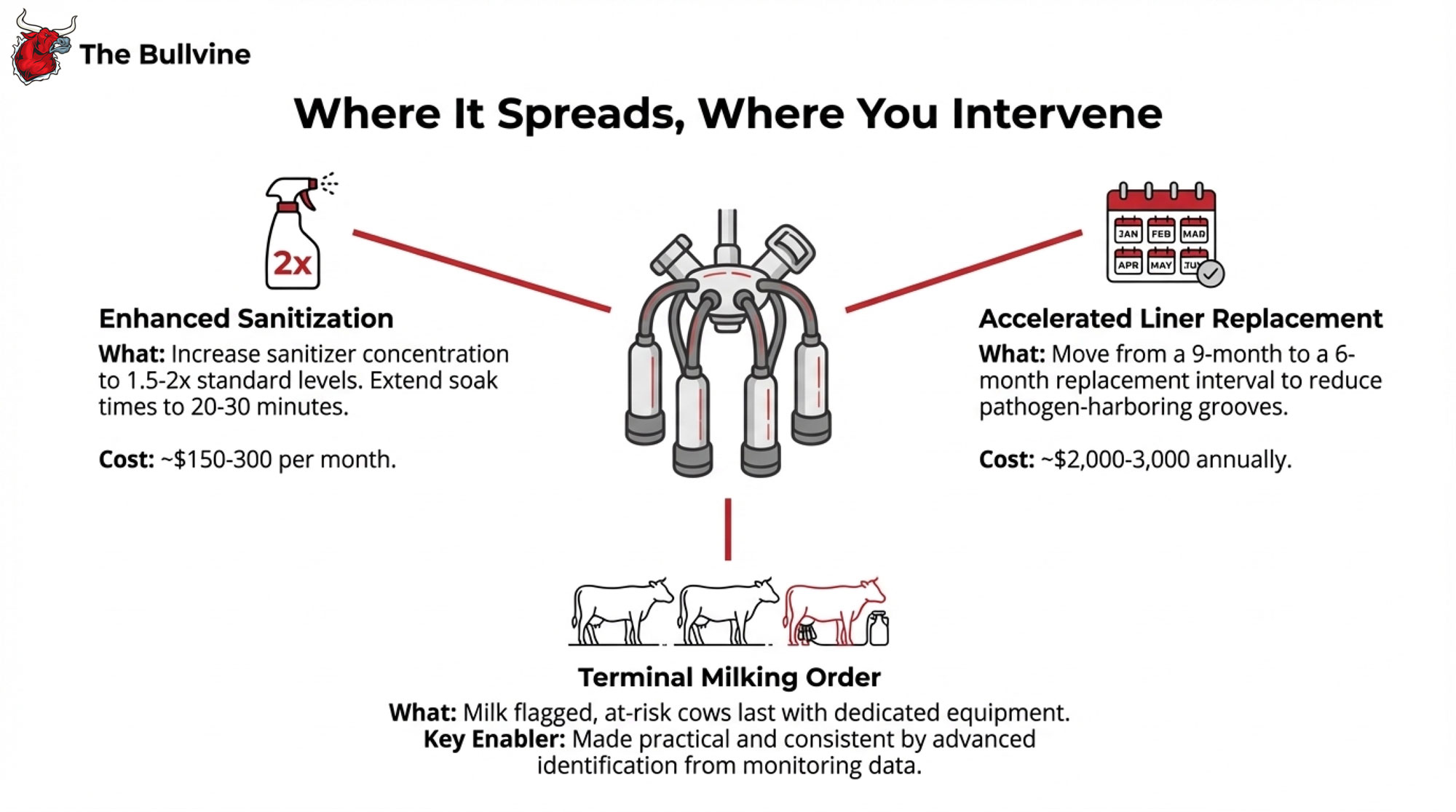
  • Implement dedicated milking parlor biosecurity with N95 respirators, dedicated gloves per cow, and complete equipment disinfection cycles after every session—the mammary gland-centered pathogenesis means your milking equipment has become the primary cow-to-cow transmission vector, not respiratory droplets. Operations ignoring this shift face inevitable herd-wide contamination within days of introduction.
  • Adopt Canadian-style “closed herd” philosophy with mandatory 30-day quarantine and pre/post-movement testing for all animal introductions—mathematical models show this approach prevents the interstate spread patterns that have devastated over 959 U.S. dairy herds across 16 states. The $28,000 USDA biosecurity support per farm proves prevention costs far less than outbreak response.
  • Install precision monitoring systems that detect rumination and milk production declines 5-7 days before clinical diagnosis—Cornell research confirms behavioral changes precede visual symptoms, enabling isolation protocols that could prevent the 90% herd exposure rates documented in infected operations. Early detection transforms potential $737,500 losses into manageable, isolated cases.
  • Prioritize genetic resilience in breeding decisions as H5N1 targets your highest-producing, most genetically valuable multiparous cows disproportionately—the virus’s mammary gland tropism means superior TPI scores amplify economic vulnerability, requiring breeding programs to balance production traits with disease resistance markers. This genetic shift protects decades of genetic investment from permanent productivity compromises.
dairy biosecurity protocols, H5N1 dairy outbreak, farm profitability protection, dairy production losses, dairy risk management

Let’s be honest – while you’ve been focused on optimizing genetics and precision agriculture, a biosecurity disaster has been quietly devastating the industry’s foundation. Comprehensive research now reveals H5N1’s catastrophic economic impact has reached $950 per infected cow, with total herd losses exceeding $737,500 for large operations. As the outbreak enters its second year, are you prepared for the harsh reality that your operation could be next?

The numbers don’t lie, and they’re brutal. The latest research from Cornell University and other academic institutions confirms that H5N1’s emergence in dairy cattle represents more than just another disease challenge – it’s a fundamental threat to everything progressive dairy producers have built through decades of genetic advancement and technological investment.

Here’s what the industry doesn’t want to admit: this outbreak has already changed the game permanently.

How Bad Is “Bad” Really?

The U.S. Department of Agriculture confirms H5N1 has now devastated over 959 dairy herds across 16 states, making this the largest mammalian influenza outbreak in modern agricultural history. However, here’s the kicker: mathematical modeling published in Nature Communications reveals that current interventions have prevented only 175.2 reported outbreaks.

Translation? We’re barely making a dent in this thing.

What This Means for You: The outbreak’s geographic spread proves no dairy region remains immune. The virus has established itself as a permanent feature of the North American disease landscape, with spillover events documented in multiple mammalian species, including red foxes, sea lions, and bears.

Think your state’s doing better? Think again. Current CDC surveillance data indicate that the outbreak began in March 2024, when HPAI H5N1 was first confirmed in Texas dairy cattle. The virus has maintained relentless spread patterns despite everything we’ve thrown at it, with genetic sequencing revealing the emergence of genotype B3.13 through multiple reassortment events.

Production Disasters That’ll Keep You Up at Night

Remember all those efficiency gains you’ve worked years to achieve? H5N1 can destroy them in weeks. Cornell University’s devastating analysis of a 3,900-cow Ohio operation reveals the brutal truth: the total economic loss for the herd reached $737,500 over the observation period.

Here’s the reality check: individual cow losses average $950 per clinically affected animal. However, it gets worse – studies show that milk production can plummet by 10-20% for periods of 7-10 days during acute infections. A Michigan dairy study demonstrates the virus’s devastating efficiency, with a cumulative incidence of 32% among herds during outbreaks.

Real-World Impact: The primary site of viral replication isn’t the lungs, but rather the mammary gland. Post-mortem examinations reveal severe necrotizing and suppurative mastitis, with viral loads in raw milk measuring between 10⁴ and 10⁸ plaque-forming units per milliliter.

But wait – it gets worse. Research confirms that a significant drop in milk production can persist for at least 60 days following an outbreak. These aren’t just sick cows anymore – they’re “zombie cows” that survive but never regain economic viability.

Are you starting to see why this isn’t just another case of mastitis?

The Genetic Nightmare You Haven’t Considered

Here’s something the genetics companies aren’t advertising: this virus targets your most productive animals explicitly. The high concentration of virus in milk, combined with the physical milking process, creates perfect conditions for transmission. Contaminated milking equipment—specifically clusters, liners, and milk lines—serves as the primary vector for mechanically transmitting viruses from infected udders to healthy ones.

Your milking parlor has become a biocontainment hot zone. The process involves pressure changes and potential aerosolization of milk droplets, transforming what should be your most efficient operation into a high-risk environment for both animals and workers.

How much genetic progress are you willing to lose to preventable biosecurity failures?

The European Wake-Up Call

While Europe congratulates itself on zero confirmed cases, the reality is sobering. Research conducted at Wageningen Bioveterinary Research confirms that European H5N1 isolates can efficiently replicate in cultured bovine airway epithelial cells. European cattle breeds exhibit identical susceptibility patterns to those of U.S. herds.

European Food Safety Authority risk assessments identify two primary pathways for virus introduction: migratory birds using transatlantic flyways and contaminated trade products. Key stopover sites, such as the Wadden Sea region, are designated as critical surveillance zones.

The threat isn’t theoretical – it’s inevitable. The only question is whether European operations will learn from America’s disaster or repeat it.

Technology Failures When You Need Them Most

Think your precision agriculture investments will save you? Think again. The outbreak highlights how modern dairy technology can become a liability without proper biosecurity integration. The milking parlor has emerged as the epicenter of cow-to-cow spread, transforming your automated systems into disease amplification vectors.

Farm-to-farm spread occurs through the movement of infected but often asymptomatic lactating cows, which is definitively linked to the transmission of the virus across state lines. Secondary vectors include shared personnel, vehicles, and farm equipment.

Your technology is only as good as your biosecurity protocols. Currently, most operations are failing in both areas.

The Amplification Pathway Nobody Talks About

Here’s a particularly dangerous discovery: the common practice of feeding raw, unpasteurized waste milk to other farm animals creates a deadly amplification pathway. Research documents mortality rates exceeding 50% in farm cats that consumed raw milk from infected cows, starkly illustrating the virulence of bovine-passaged virus.

This finding transforms waste milk management from a routine operation into a critical biosecurity control point. The high viral loads in raw milk make it the single most high-risk material on infected farms.

European Vulnerability: The Policy Gap

The European Union has sophisticated animal health frameworks in place, as outlined in the Animal Health Law, which grants authorities the power to implement rapid, harmonized control measures. However, the EU framework is overwhelmingly poultry-centric, currently lacking specific, mandated HPAI biosecurity protocols for dairy farms.

This creates a significant policy gap. While Europe maintains robust general biosecurity principles, these are insufficient to counter the unique udder-to-udder transmission pathway of HPAI in dairy herds.

What’s next when this virus inevitably reaches European shores?

The Immunity Breakthrough That Changes Everything

Finally, some good news. Groundbreaking research from the Vaccine and Infectious Disease Organization provides the first evidence that dairy cattle can develop natural immunity following H5N1 exposure. Studies conducted in containment Level 3 Agriculture facilities demonstrate that cows re-exposed to the virus showed no signs of disease and maintained steady milk production.

“Our findings demonstrate that natural infection can induce immunity that protects against reinfection in other parts of the udder,” confirms research from VIDO. This discovery suggests vaccine development could prove highly effective for herd protection.

But here’s the question: how many more operations will we lose before effective vaccines reach the market?

Financial Reality Check: The True Cost of Complacency

The U.S. response demonstrates the massive public cost of reactive biosecurity. The USDA has allocated $824 million in new funding, with up to $28,000 per farm in biosecurity support. Financial assistance programs offer up to $10,000 for veterinary costs and $8,000 for milk disposal per premises.

But prevention costs far less than response. The economic devastation stems from morbidity, not mortality, with principal financial damage from sustained milk production losses and premature culling of “recovered” animals.

Think about the math: individual farm losses of $737,500 for a 3,900-cow operation translate to approximately $950 per clinically affected cow. How does that compare to your annual biosecurity budget?

The Canadian Model: What Success Looks Like

Want to see what proactive biosecurity actually accomplishes? Look north. Canada’s approach centers on the national proAction program, an industry-led quality assurance framework mandatory for all Canadian dairy producers. This program integrates biosecurity as a core component of farm management, requiring regular risk assessments and documented protocols.

The Canadian model promotes a “closed herd” philosophy as the gold standard, with rigorous testing and quarantine protocols. This comprehensive system has prevented HPAI from entering Canadian dairy herds, demonstrating that preparation is more effective than response.

Critical Biosecurity Failures: Learning from Disaster

The U.S. experience identifies specific failure points that every operation must address immediately. Detection of HPAI in asymptomatic cattle complicates surveillance and control, suggesting the virus may be more widespread than clinical signs indicate.

The phenomenon of “recovered” but permanently less productive cows represent a hidden, long-term economic drain not captured in initial loss estimates. These “zombie cows” become capital liabilities, challenging traditional economic models of disease impact.

Mandatory Action Items:

  • Immediate cessation of raw waste milk feeding to any farm animals
  • Implementation of dedicated glove policies for milking personnel
  • Establishment of physical separation protocols for equipment and personnel
  • Adoption of closed herd management philosophy

The Latest: Where We Stand Now

Here’s the bottom line: H5N1 has permanently altered the dairy industry landscape. The virus’s unique pathogenesis centered on mammary gland tissue fundamentally challenges existing biosecurity paradigms focused on respiratory transmission routes.

Mathematical modeling confirms that current interventions have prevented only a fraction of potential outbreaks, highlighting both the virus’s efficient adaptation to dairy environments and the critical importance of implementing comprehensive biosecurity.

The harsh reality: This isn’t a crisis you can wait out. Research confirms the virus has established itself as a permanent feature of the disease landscape, with spillover events continuing to occur across multiple mammalian species.

The difference between survival and devastation comes down to one fundamental choice: Will you implement fortress-level biosecurity now, or become another casualty statistic?

Your immediate action checklist:

  • Stop feeding raw waste milk today – switch to pasteurized alternatives or milk replacer
  • Implement dedicated PPE protocols – N95 respirators and eye protection for all milking personnel
  • Establish quarantine procedures – 30-day isolation for all new animals with pre- and post-movement testing
  • Create equipment sanitation cycles – complete disinfection after every milking session
  • Adopt closed herd management – minimize animal movements and maintain detailed visitor logs

As this outbreak enters its second year, operations that refuse to prioritize biosecurity will face elimination through preventable economic losses. The choice is stark: adapt immediately or join the growing list of casualties in agriculture’s most devastating disease outbreak.

The virus isn’t going away. The question is whether you’ll be prepared when it arrives at your farm gate.

Complete references and supporting documentation are available upon request by contacting the editorial team at editor@thebullvine.com.

Learn More:

Join the Revolution!

Join over 30,000 successful dairy professionals who rely on Bullvine Weekly for their competitive edge. Delivered directly to your inbox each week, our exclusive industry insights help you make smarter decisions while saving precious hours every week. Never miss critical updates on milk production trends, breakthrough technologies, and profit-boosting strategies that top producers are already implementing. Subscribe now to transform your dairy operation’s efficiency and profitability—your future success is just one click away.

NewsSubscribe
First
Last
Consent

BIO-SECURITY BANKRUPTCY: How H5N1 Exposed Dairy’s Vulnerability While Threatening Your Bottom Line

H5N1 strikes dairy farms with devastating stealth: 90% infection rates, $737,500 losses, and viral spread BEFORE symptoms appear. Is your herd next?

EXECUTIVE SUMMARY: Cornell research reveals H5N1 avian influenza has established itself in U.S. dairy herds with devastating financial implications, causing approximately $950 in losses per clinically affected cow and striking nearly 90% of animals in infected operations with most showing no obvious symptoms. The virus reaches peak loads within 1-2 days and spreads for 6+ days, often before clinical signs appear, making traditional visual monitoring ineffective. While FDA testing confirms pasteurized milk remains safe for consumers, the rapid transmission kinetics and genetic evolution of the virus demand immediate enhancements to biosecurity protocols. Forward-thinking producers must implement comprehensive biosecurity measures, enhanced monitoring systems, and breeding strategies that prioritize resilience before spring breeding season to protect their operations from potential financial devastation.

KEY TAKEAWAYS:

  • Scientific evidence shows infected cows lose approximately 900kg of milk over 60 days, with total losses reaching $737,500 in a single 3,900-cow operation
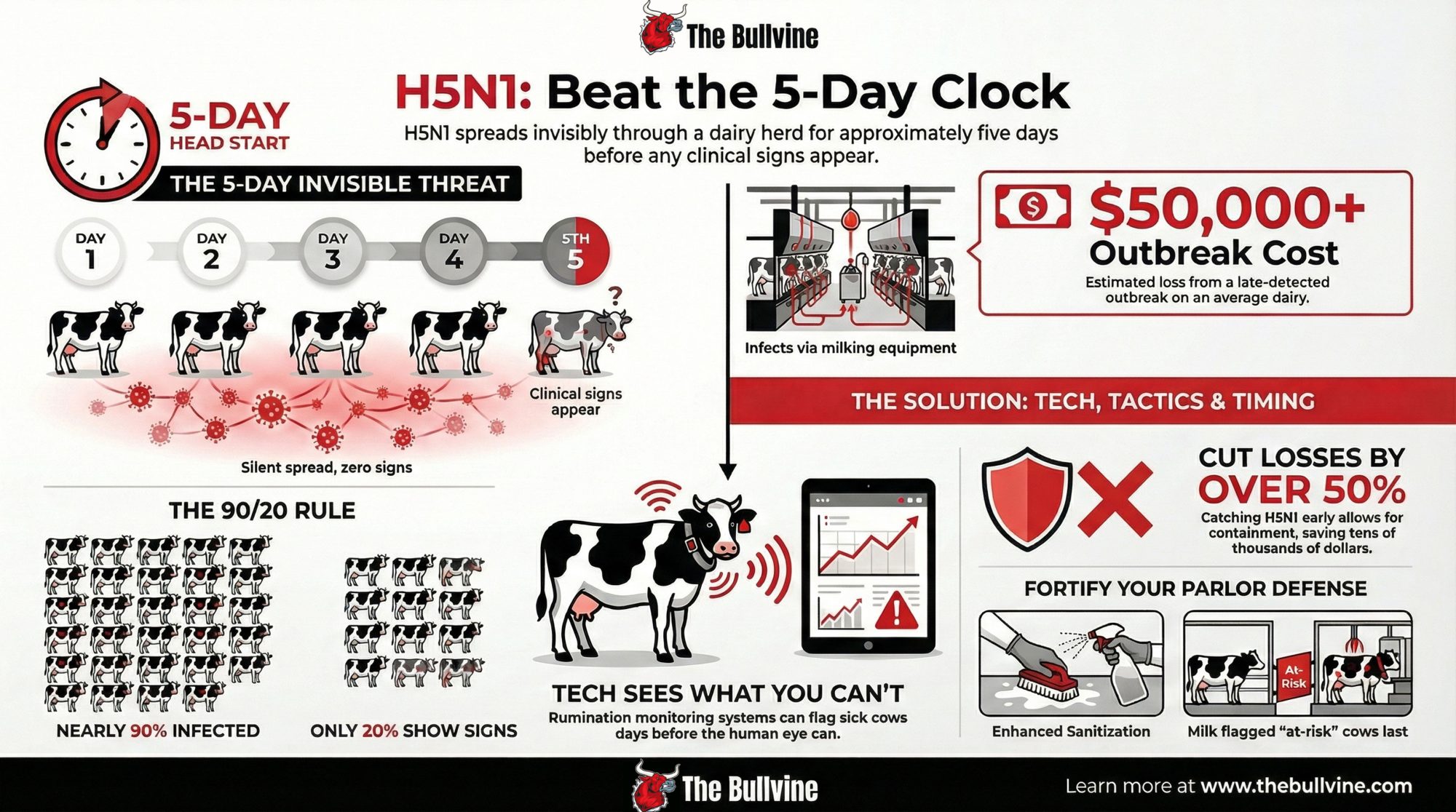
  • H5N1 spreads with alarming efficiency – 90% of herd exposure despite only 20% showing clinical symptoms, and virus peaks within 48 hours of infection
  • Immediate action is required BEFORE spring breeding season: implement enhanced milk monitoring, isolation protocols for genetic material, and comprehensive biosecurity plans
  • Breeding programs should track genetic resilience to H5N1, focusing on recovery efficiency and potential markers for superior immune response
  • Standard pasteurization effectively eliminates H5N1 from milk, with FDA testing confirming zero viable virus in 297 retail samples despite widespread bulk tank contamination
H5N1 dairy cattle, avian influenza dairy farms, dairy biosecurity protocols, dairy farm economic losses, milk production H5N1

The nightmare scenario dairy farmers have feared is officially here, backed by complex scientific data and carrying profound implications for herd health and farm economics. H5N1 avian influenza has found a new home in America’s dairy herds, spreading with alarming efficiency and challenging our traditional biosecurity assumptions. While experts continue researching this unprecedented situation, one thing is becoming increasingly clear: the dairy industry must rapidly adapt to this emerging threat before more operations face devastating consequences.

THE INVISIBLE THREAT: UNDERSTANDING H5N1’S STEALTH ATTACK

What makes H5N1 particularly dangerous is how quickly it establishes itself in dairy herds. Recent scientific research published in February 2025 reveals that peak viral loads rapidly reach within 1-2 days following infection, with a population mean Ct value of 16.9. This rapid onset gives producers little time to identify and respond to outbreaks.

“Following infection, dairy cattle reach peak viral loads within 1-2 days and remain infectious for a median duration of 6.2 days – often before showing any clinical symptoms.”

Even more concerning, researchers have identified that dairy cattle remain infectious for a median duration of 6.2 days. During this critical window, infected animals efficiently spread the virus throughout your operation while potentially appearing utterly normal during the early stages of infection.

The smoking gun? Milk. The evidence is clear: raw milk from infected herds contains significant viral loads. In a comprehensive study of 275 bulk tank samples from affected states, researchers found 57.5% tested positive for influenza A genetic material, with 24.8% of those samples containing infectious virus at concerning levels – averaging 3.5 log10 EID50 per milliliter. These aren’t just numbers – they represent unprecedented virus shedding that explains the wildfire-like spread through affected herds.

Texas Outbreak Reveals Dangerous Evolution

The outbreak’s origin in Texas deserves special attention. Groundbreaking research published just this month (March 2025) has identified specific mutations that make this virus particularly concerning. Scientists comparing human and bovine isolates from Texas found that the PB2 protein in the human isolate showed enhanced polymerase activity, primarily due to an E627K mutation. This mutation and others identified (E362G and M631L) contributed to increased viral replication and pathogenicity.

This molecular evidence confirms what many have feared – the virus adapts as it moves between species, potentially becoming more efficient at replication in mammalian hosts. The threat isn’t static but evolving for dairy producers, requiring vigilance and updated protocols as new information emerges.

THE FINANCIAL IMPLICATIONS: COUNTING THE REAL COSTS

When H5N1 hits your dairy, the production impacts can be substantial. While specific financial losses will vary by operation size, management approach, and outbreak severity, the documented economic consequences demand immediate attention from forward-thinking producers.

The Cornell researchers documented precisely how these numbers played out in a real-world outbreak. As shown below, the financial impact is substantial and scientifically verified:

H5N1 Impact MetricsVerified Data from Ohio Outbreak
Economic loss per clinically affected cow$950
Milk production loss per affected cow900 kg over 60 days
Total cost for 3,900-cow operation$737,500
Percentage of herd showing clinical disease20%
Percentage of herd with H5N1 antibodiesNearly 90%

“One Ohio dairy operation watched $737,500 evaporate from their bottom line in just 60 days due to H5N1 – approximately the cost of a new high-end milking parlor.”

The financial math gets serious quickly. With an infected cow’s production potentially compromised for weeks, the cumulative impact across even a moderate-sized herd can rapidly escalate into tens or hundreds of thousands in lost revenue. And that doesn’t account for longer-term genetic and replacement implications that may continue affecting your operation months after the initial outbreak.

THE MILK SAFETY BATTLEGROUND: SCIENCE SPEAKS CLEARLY

While H5N1’s impact on dairy operations is undeniable, the latest research provides reassuring news about milk safety. According to a September 2024 study published in the Journal of Dairy Science, the theoretical transmission of avian influenza through consumption of affected milk depends on several critical parameters that have been closely studied.

Research has evaluated the initial levels of infective virus in raw milk, how long the virus maintains infectivity over time, and, most importantly, the impact pasteurization and other typical milk-processing parameters have on virus inactivation.

These findings were further validated using a pilot-scale continuous-flow pasteurizer that closely simulates commercial processing systems. Among all replicates at two different flow rates, no viable virus was detected post-pasteurization. This provides strong scientific evidence that properly pasteurized milk remains safe for consumption.

The FDA has conducted extensive retail testing to verify that commercial milk remains safe, with results conclusively showing no viable virus in the marketplace:

FDA Retail Milk Safety Testing (2024-2025)Sample SizeViable H5N1 Virus Detected
First FDA survey130None
Second FDA survey (June-July 2024)167None
Total retail samples tested297None

“Despite testing 297 retail milk samples in multiple FDA surveys, researchers found ZERO viable H5N1 virus in the commercial milk supply – pasteurization works.”

However, detecting H5N1 genetic material in one out of five retail pasteurized milk samples in the USA emphasizes the need for continued vigilance and monitoring throughout the dairy supply chain. The research is clear: commercial pasteurization works, but raw milk remains a high-risk product in the context of H5N1.

BREEDING IMPLICATIONS: GENETIC CONSIDERATIONS IN THE H5N1 ERA

The H5N1 outbreak raises critical questions about selection priorities for breeding programs and genetic improvement strategies. While no conclusive research shows genetic resistance to H5N1 infection in cattle, the differential impact on individual animals suggests potential genetic components to disease response and recovery.

Progressive breeding programs should consider the following:

  1. Resilience tracking: Recording which genetic lines maintain better production during and after infection
  2. Recovery efficiency: Monitoring time to production recovery among different sire groups
  3. Cross-breeding implications: Evaluating whether certain breed combinations show improved resistance
  4. Immune response markers: Beginning to collect data on potential genetic markers for superior immune response

The genetic time bomb aspect of H5N1 cannot be overlooked. With each infected animal providing millions of opportunities for viral mutation, strategic breeding decisions become essential for production efficiency and disease resilience.

BEYOND THE MILKING STRING: VIRAL KINETICS REVEAL NEW CHALLENGES

Recent research has illuminated critical insights about how H5N1 behaves in dairy cattle. Scientists have established that a Ct value of 21.5 represents a critical threshold – values above this level indicate little to no infectious viral load. This provides a valuable benchmark for testing and monitoring programs.

“While only 20% of cows showed clinical disease in the Ohio outbreak, Cornell researchers detected H5N1 antibodies in nearly 90% of the herd – revealing the true scale of silent infection.”

The science also reveals why this virus spreads so efficiently through dairy operations. With infected animals reaching peak viral loads within 1-2 days and remaining infectious for nearly a week, the virus has ample opportunity to establish itself throughout a herd before clinical signs might alert producers to its presence.

These findings demand a comprehensive whole-farm approach to biosecurity. Regardless of production status, every animal must be considered in your protection strategy. The rapid infection timeline means traditional visual monitoring alone is insufficient – proactive testing and monitoring systems become essential components of modern dairy management in the H5N1 era.

“In the H5N1 era, traditional visual monitoring alone is insufficient – proactive testing and enhanced biosecurity protocols are essential for operational survival.”

WHAT SAVVY PRODUCERS MUST DO NOW: THE BULL VINE’S SURVIVAL CHECKLIST

The scientific data points to one crystal-clear conclusion: the dairy industry’s standard biosecurity playbook needs significant enhancement. Producers who want to stay ahead of this threat should implement a more aggressive approach:

  1. Enhanced Milk Monitoring: Research shows that 57.5% of bulk tank samples from affected regions test positive for influenza A genetic material. Implement regular screening of your bulk tank milk as an early warning system.
  2. Understand Viral Kinetics: Recognize that infected animals reach peak viral loads within 1-2 days and remain infectious for approximately 6 days. This rapid timeline requires equally rapid response protocols.
  3. Pasteurization Protocols: If you operate an on-farm processing facility, ensure strict adherence to validated pasteurization parameters (72°C/161°F for 15 seconds or 63°C for 30 minutes) to ensure complete viral inactivation.

Before Spring Breeding Season Starts

  • Implement comprehensive biosecurity plans specific to reproductive management
  • Establish isolation protocols for all incoming genetic material
  • Create contingency plans for breeding programs if an outbreak occurs
  • Document baseline production metrics to quickly identify potential outbreaks
  • Train all staff on early detection protocol implementation

5 Questions to Gut-Check Your Operation

  • Does your biosecurity plan account for a virus that spreads before symptoms appear?
  • Can you detect a production drop within 24-48 hours of occurrence?
  • Is your milk testing protocol more comprehensive than your standard SCC tests?
  • Have you calculated your financial resilience to a 2-month production disruption?
  • Does your team understand the critical action steps if H5N1 is suspected?

THE BRUTAL BOTTOM LINE: ADAPT OR FACE THE CONSEQUENCES

The H5N1 situation represents a watershed moment for the American dairy industry. This isn’t just another disease challenge – it’s a fundamental test of our ability to adapt to emerging biological threats.

The combination of rapid viral kinetics, high transmission efficiency, and significant presence in milk creates an unprecedented challenge for dairy operations. The scientific research isn’t just academic – it provides crucial insights for producers determined to protect their herds and livelihoods.

For dairy farmers, the choice is clear: implement enhanced biosecurity protocols based on the latest scientific understanding or risk facing the consequences. The message for industry organizations and regulatory agencies is equally clear: ongoing research, monitoring, and support are essential as this situation continues to evolve.

As one of the most resilient agricultural sectors, the dairy industry has weathered countless storms. With science-based approaches, transparent communication, and proactive management, American Dairy will navigate this challenge as it has so many others – by facing reality head-on and adapting to ensure continued success.

Learn more

Join the Revolution!

Join over 30,000 successful dairy professionals who rely on Bullvine Daily for their competitive edge. Delivered directly to your inbox each week, our exclusive industry insights help you make smarter decisions while saving precious hours every week. Never miss critical updates on milk production trends, breakthrough technologies, and profit-boosting strategies that top producers are already implementing. Subscribe now to transform your dairy operation’s efficiency and profitability—your future success is just one click away.

NewsSubscribe
First
Last
Consent
Send this to a friend