



Archive for climate impact on dairy

Global Milk Shortage Could Reach 30 million Tons by 2030

30M ton milk shortage by 2030 threatens US dairy profits. Climate stress, global shifts demand urgent action. Can farmers adapt?

EXECUTIVE SUMMARY: The International Dairy Federation warns of a potential 30-million-ton global milk shortage by 2030, driven by population growth, climate-driven yield declines, and shifting production patterns. While traditional dairy powerhouses like the U.S. and EU face stagnation, emerging regions like India struggle to fill the gap. U.S. producers must adapt through protein-focused breeding, feed cost management, and specialty product diversification as milk prices rise. Climate stress compounds challenges, with heat reducing yields by 7% per 1°C. The crisis presents both risks and opportunities for U.S. dairy, leveraging innovation to counter global competition.

KEY TAKEAWAYS:

  • IDF vs. IFCN divide: 30M vs. 6M ton shortage forecasts highlight uncertainty in balancing global supply/demand.
  • Climate costs: Heat stress threatens 7% yield drops per 1°C, disproportionately impacting small farms.
  • US stagnation: 0.9% production growth lags India’s 5%, risking lost export market share.
  • Price surge: USDA forecasts $22.60/cwt milk prices in 2025, with further hikes likely.
  • Adapt now: Focus on component pricing, feed contracts, and A2/organic diversification to survive.

The global dairy industry faces a looming crisis as the International Dairy Federation (IDF) projects a potential milk shortage of 30 million tons by 2030. This alarming forecast, announced by Laurence Rycken, Director General of IDF (Belgium), during her presentation at the 2025 Dairy Olympics in Al Ain, UAE, signals a fundamental shift in the global dairy landscape that demands immediate attention from producers, processors, and policymakers alike.

Why Your Dairy Farm’s Future Hangs in the Balance: Population Boom vs. Shrinking Herds

The projected milk deficit stems from a perfect storm of converging factors. Global population growth, expected to reach 10 billion by 2050, combined with rising prosperity in developing nations, dramatically increases demand for dairy products. Meanwhile, production in traditional dairy powerhouses is stagnating or declining under mounting pressures. “We are facing not only a volume challenge but also the need to preserve nutritional value and ensure the sustainability of production,” Rycken emphasized during her presentation. “The solutions must be global in design, but local in execution.” This 30-million-ton shortage projection starkly contrasts the International Farm Comparison Network’s (IFCN) more modest forecast of a 6-million-ton deficit by 2030. This discrepancy highlights the uncertainty in long-term dairy forecasting and underscores the complexity of the challenges ahead.

Competing Shortage Projections (2030)

OrganizationProjected Global Milk Shortage (2030)Key Drivers Cited
International Dairy Federation (IDF)30 million tonsPopulation growth, declining production in developed regions
International Farm Comparison Network (IFCN)6 million tonsDeveloping regions’ deficit (14M tons) is partially offset by developed regions’ surplus (8M tons)

7% Less Milk Per Cow: Climate’s Crushing Impact on Your Dairy Profits

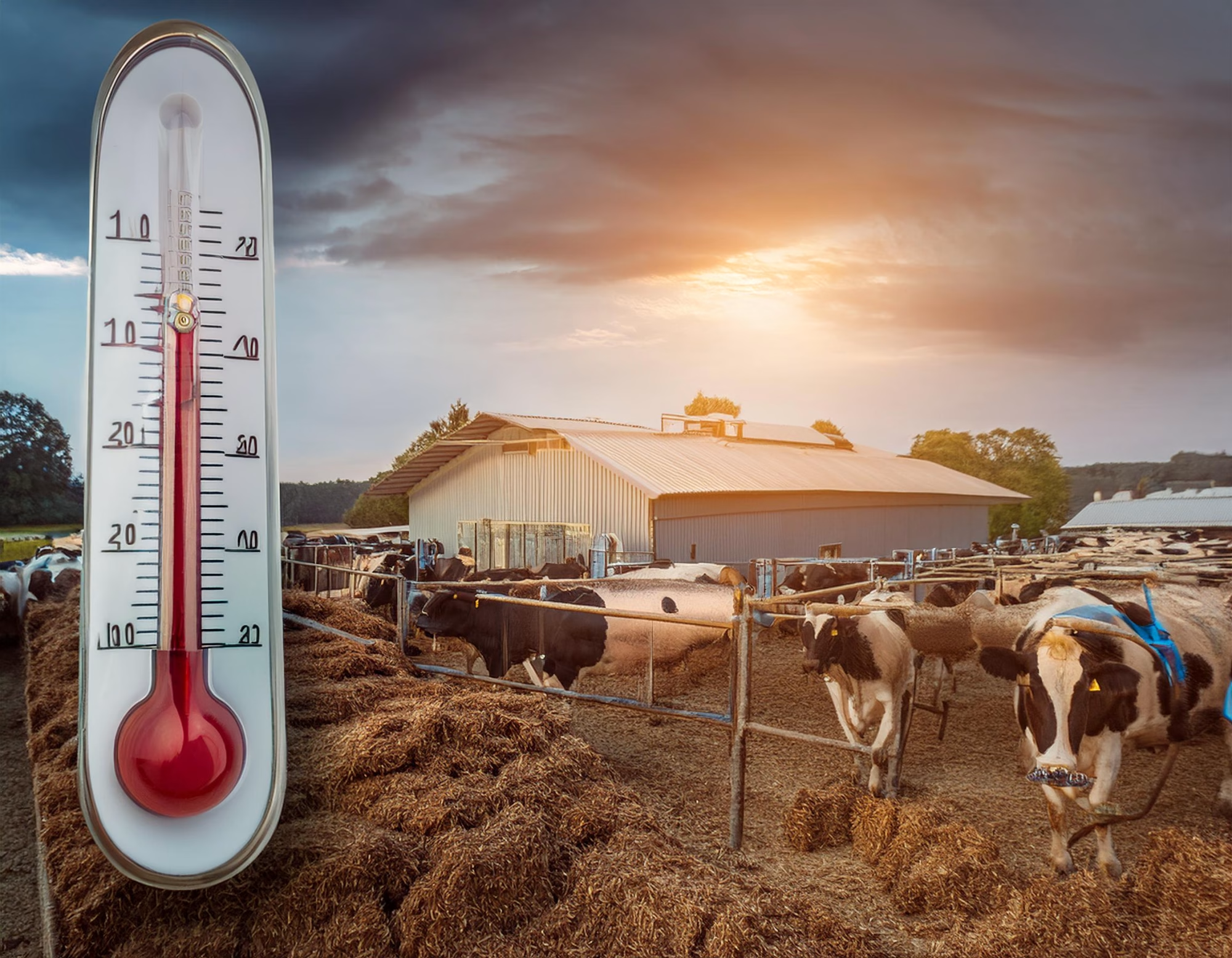
Climate change is emerging as a critical threat to dairy production worldwide. Research shows that for every 1°C rise in temperature, dairy cows experience a 7% drop in milk yield due to heat stress. This translates to billions of dollars in lost production annually. A University of Illinois study found that high temperatures and humidity already lead to a 1% annual decline in milk yield in the U.S. Midwest alone. Smaller farms disproportionately lack resources for cooling systems and other mitigation strategies. As global temperatures continue to rise, these losses could increase by 30% in the coming decades, further exacerbating the projected shortage.

The Winners and Losers: Which Dairy Regions Will Survive the Coming Shortage?

While the European Union and the United States experience production stagnation, countries including India, Pakistan, and nations across Africa and Latin America are showing growth potential. Traditional dairy exporters—the EU, New Zealand, and Australia—face mounting resource constraints and environmental pressures that limit their ability to increase output. “While the EU debates nitrogen caps, New Zealand farmers are culling herds. Your takeaway? Sustainability policies without profitability are a recipe for collapse.” The changing landscape is already reshaping global dairy trade flows. New Zealand’s share in global exports is shrinking while China and other Asian countries are bolstering local production. For every 1kg of milk powder China produces domestically, it imports 2kg from struggling EU farms—a rapidly changing ratio as Asian production capacity grows.

Regional Production Outlook (2025)

Region2025 Production ForecastChange from Previous YearKey Factors
United States227.2 billion pounds+1.7 billion poundsNew cheese processing capacity, herd expansion despite HPAI challenges
European Union149.4 million metric tons-0.2 million metric tonsDeclining cow numbers, environmental regulations
ArgentinaIncrease of 1.1 billion pounds+1.5%Improved producer economics, better weather conditions
New ZealandModest increaseNot specifiedHerd expansion, improved feed management
IndiaContinued growth+5% (2023 figure)Recovery after disease impact

$22.60 Per CWT: The Economic Reality of Dairy’s New Scarcity

Current USDA forecasts put the all-milk price at $22.60 per cwt for 2025, reflecting the tightening supply situation. However, if the IDF’s shortage projections materialize, prices could climb significantly higher, creating profitability challenges for processors and affordability issues for consumers. India’s 5% production growth vs. the U.S.’s 0.9% stagnation isn’t just a gap—it’s a chasm. This divergence highlights the shifting center of gravity in global dairy production and suggests emerging markets may be key to addressing the looming shortage.

Survive and Thrive: 3 Critical Strategies Every U.S. Dairy Producer Needs Now

Adaptation is not optional for dairy farmers facing this changing landscape—it’s essential. Three critical strategies emerge for producers looking to thrive in this new environment:

  1. Breed for protein, not just volume – With component pricing becoming increasingly important, genetics focused on protein and fat content rather than fluid volume will maximize returns.
  2. Lock in feed contracts now – With 2025 prices projected to spike 12% amid global grain market volatility, securing long-term feed supplies at current prices provides crucial cost stability.
  3. Diversify into specialty products – A2 milk, grass-fed, and organic dairy products command premium prices and offer some insulation from commodity market volatility.

Can India’s Dairy Surge Save the World? (Spoiler: Not Without These 3 Fixes)

India shows significant potential to bridge the growing supply-demand gap in the global dairy sector. IDF President Piercristiano Brazzale states that India’s dairy industry is positioned to play an increasingly important role in meeting global demand. However, realizing this potential requires addressing three critical challenges:

  1. Infrastructure investment – Cold chain development and processing capacity must expand dramatically
  2. Quality standards harmonization – Export growth depends on meeting international standards
  3. Climate adaptation strategies – India’s producers face some of the most severe heat stress challenges globally. “The global dairy trade is reshuffling faster than a Vegas blackjack table. Bet on Asia’s production—or fold.”

Global Milk Production Growth by Region (2017-2030)

RegionProjected Growth (2017-2030)
South Asia (India & Pakistan)+64%
Africa+33%
Near & Middle East+37%
East & Southeast Asia+22%
Latin America+24%
North America+14%
Western Europe+6%
Eastern Europe & CIS+32%
Oceania+22%
Global Average+35%

Adapt or Perish: Why Dairy’s Golden Era Is Over

The IDF’s warning isn’t a forecast—it’s a wake-up call. Forget “milk does a body good.” By 2030, it might just harm the bank account. With global shortages looming, dairy’s golden era is over. The question isn’t if you’ll adapt—it’s how bloody the transition will be. As dairy producers worldwide navigate these challenges, the industry faces a critical adaptation period. Success will require balancing increased production with sustainability concerns while ensuring nutritional quality remains paramount—a complex but essential task for securing the future of global dairy. For U.S. producers specifically, this global shortage presents both challenges and opportunities. While competition for export markets will intensify, domestic production advantages—including technological innovation, established infrastructure, and the U.S. Dairy Net Zero Initiative—position forward-thinking American dairy farmers to capitalize on higher prices while addressing sustainability demands.

Learn more:

Join the Revolution!

Join over 30,000 successful dairy professionals who rely on Bullvine Daily for their competitive edge. Delivered directly to your inbox each week, our exclusive industry insights help you make smarter decisions while saving precious hours every week. Never miss critical updates on milk production trends, breakthrough technologies, and profit-boosting strategies that top producers are already implementing. Subscribe now to transform your dairy operation’s efficiency and profitability—your future success is just one click away.
NewsSubscribe
First
Last
Consent

Facing the Heat: Thriving in Global Dairy Amidst Climate Challenges

How are global dairy farmers facing climate and competition hurdles? Are innovative strategies enough to ensure a sustainable future?

dairy farming challenges, global dairy summit, innovative dairy solutions, sustainable dairy production, dairy industry collaboration, climate impact on dairy, dairy technology advancements, milk production growth, dairy nutrition essentials, international dairy federation

Can the world’s dairy farmers sustain their businesses in a rapidly changing climate while meeting the demands of a burgeoning global population? This question was central to the International Dairy Federation (IDF) World Dairy Summit in Paris, where leading industry experts tackled the looming challenges and untapped opportunities in global dairy farming as discussions at the summit underscored the critical need for innovative solutions and international collaboration, a key speaker emphasized that the transformation of dairy farming is not just an industry concern but a global priority. Amid rising temperatures and evolving markets, the summit provided a platform for sharing insights on how different regions can adapt and harness these changes to drive growth and sustainability.

Milking Opportunities: The Dairy Industry’s Pathway to Feeding 10 Billion 

The world’s population is increasing, predicted to reach 10 billion by 2050. This swift growth presents a formidable challenge: ensuring that everyone, everywhere, has access to sufficient, safe, and nutritious food. In this quest for food security, dairy farming plays a pivotal role, providing critical sources of nutrition essential to diets around the globe. 

Dairy products are not just about milk and cheese; they are a vital source of essential nutrients, including calcium, vitamins, and proteins. As such, dairy farming becomes indispensable in meeting the dietary needs of billions, especially as people aspire to healthier eating habits. But here’s the catch: how do we increase production sustainably without compromising our environment?

The answer lies in embracing innovation. 

Globally, the dairy industry is at a crossroads, compelled to find more innovative solutions that align with our escalating demands. Innovation in breeding, feeding, and milking practices are already transforming traditional approaches. Technologies that optimize supply chain efficiency and enhance product quality could be our necessary game-changers. Think genetic advancements, feed efficiency, and technologies that reduce greenhouse gas emissions. 

Are we, as an industry, ready to rise to the occasion? Navigating this complex terrain will require collaboration, creative thinking, and a willingness to adapt. Solutions may involve policy shifts, research investments, or new partnerships. But whatever form they take, these innovations are not just necessary—they are essential. As we chart this course, let’s embrace the imperative for change and pioneer a future where dairy nourishes and sustains our planet.

South America’s Dairy Revolution: From Small Farms to Production Giants

Marcelo Carvalho, a critical voice at the International Dairy Federation World Dairy Summit, offered a fascinating glimpse into the transformation of milk production in South America. From his insights, the region is clearly amid a significant shift. Brazil is a cornerstone, contributing more than half of the continent’s milk supply. The numbers don’t lie—a decade ago, small-scale farms dominated the landscape, with 60% producing just 27% of the region’s output. Fast forward to today, and this has changed dramatically. Now, a select few farms churning out more than 10,000 liters daily are responsible for a third of total production. 

But these gains aren’t without their hurdles. Climate variability hits South American dairy farmers hard, with phenomena like La Niña and El Niño wreaking havoc on production stability. In addition to the severe floods in Brazil this year, it’s a wonder these farmers manage to keep the milk flowing. 

The trend towards more significant, more consolidated farming operations is unmistakable. Yet, by global standards, most farms are still relatively small, with an average daily output of just 437 liters. As these more prominent players gain ground, what will happen to the myriad of smaller farms? It seems only time will tell. But one thing’s sure: carving a path to opportunity amid these challenges requires resilience and innovation. 

North America’s Dairy Dilemma: Growth Amidst Climate Challenges

Dr. Andrew Novakovic from Cornell University spotlights North America’s remarkable 1.02% per capita production growth, which positions the continent favorably against global growth trends. This uptick in production places North America second only to Asia and starkly ahead of other regions like Africa and Oceania. 

Despite the promise this growth holds, it’s challenging. Climate change looms over the continent, threatening to alter traditional farming regions drastically. In Canada, warmer temperatures are expected to shift beneficial agricultural conditions further north and west. Meanwhile, the U.S. will see similar transformations, with the southeastern U.S.’s hotter climes moving northward, while California’s famed Central Valley weather patterns may migrate toward the Pacific Northwest. 

Yet, with these challenges come opportunities. North America’s natural advantage in ample rainfall could act as a buffer. The Eastern U.S. and Canada, known for their generous precipitation, may find solace in this consistency. This advantage isn’t merely about dodging dry spells but also ensuring sustainable farming amidst regional climate shifts.

Antipodean Dairies: Unraveling the Complexities of a Changing Climate

Joanne Bills illuminates the parallels and distinctions between Australia’s and New Zealand’s dairy landscapes. Both nations have remarkably stabilized milk production, pivoting towards higher-value dairy products to bolster their market positions. Yet, the scenarios aren’t different. 

While similar strategies are employed, such as increased cheese production, Australia caters to domestic demands. In contrast, New Zealand has sharpened its focus on exports. Such strategic differences underscore the unique market dynamics each country navigates. 

Climate impacts, however, cast a shadow over both dairy industries. Australia grapples with limited government pressure to drive changes despite facing severe climate repercussions. On the other hand, New Zealand’s farmers, equipped with the infrastructure and skills, are increasingly responsive to commercial drivers pushing for greenhouse gas reductions. Yet, they face the potential pitfalls of policy overreactions amid significant community pressures. 

Water policy is a critical concern on both sides of the Tasman Sea. New Zealand imposes winter grazing restrictions, directly impacting milk production capabilities. Meanwhile, Australia contends with water scarcity, which results in dwindling water availability for dairying, particularly in irrigation-dependent regions.

Europe’s Dairy Predicament: Survival of the Fittest Amid Rising Pressures

Milica Kocic delivers a stark overview of the current state in Europe, where sustainability constraints and intense competition for land are reshaping the dairy landscape. Farmers’ profitability in 2022 felt like a long-awaited respite after years of struggle. Yet, rising costs and diminishing land availability overshadow these gains, forcing many smaller farms to confront an uncertain future. 

Smaller farms, particularly those with fewer than 100 dairy cows, are precarious. Kocic notes that these operations are particularly vulnerable to shifting economic and regulatory tides. With increasing land prices and newer, more efficient farming practices gaining popularity, smaller farms need help to stay afloat amid escalating expenses. Robust, cost-effective policy solutions are critical to their survival. 

However, the path forward could be more straightforward. Kocic warns that without proactive policy interventions focused on reducing overheads and optimizing resources, many of these farms might be forced out of business entirely. Comprehensive yet affordable policy measures could provide a crucial lifeline, ensuring that farms of all sizes can navigate this challenging competitive landscape. 

Africa’s Dairy Conundrum: Navigating a Complex Web of Challenges and Opportunities

As the sun rises over Africa’s vast landscapes, the challenges faced by the dairy industry become increasingly apparent, echoing Bio Goura Soule’s observations. Low productivity remains a fundamental hurdle. In regions dominated by pastoral practices, the output per dairy cow is notoriously low, stifling the potential to meet burgeoning demand. 

The cost factor looms, casting a shadow over the industry’s growth. Rapidly escalating animal feed and healthcare expenses increase producers’ financial stress, constraining their ability to expand and innovate. Soule emphasizes collection difficulties, another thorn in the side of progress. The diverse and fragmented supply chain and inadequate infrastructure present logistical nightmares, hindering efforts to streamline milk collection. 

Imports, chiefly powdered milk, further complicate this intricate tapestry. While these imports initially satisfy immediate consumer needs, they inadvertently stall investments in the nascent stages of the value chain, causing long-term stagnation in local production capabilities. The precarious balance between meeting consumer demand and fostering local growth remains a quintessential conundrum for Africa’s dairy sector. 

Asia’s Dairy Dynamics: China’s Bold Revitalization and Southeast Asia’s Struggles

Li YiFan has shared noteworthy insights on China’s ambitious dairy industry revitalization plan, outlining strategic goals for 2025. This includes a significant boost in raw milk production, targeting 41 million metric tons, and a concerted effort to reduce feed costs, pivotal to maintaining competitive pricing. Notably, there is a strong focus on large-scale farming, with over 75% of farms housing more than 100 cows, thus promoting higher efficiency and productivity. The initiative also aims to enhance cattle breeding capacities and encourage dairy enterprises to establish farms, fostering direct integration of dairy farming and processing. 

As for Southeast Asia, the region contends with unique challenges that starkly contrast with China’s advancements. The intense heat stress prevalent in Southeast Asia poses a substantial constraint to dairy farming, affecting the well-being and productivity of dairy cows. Such climatic conditions make it difficult for local producers to compete, further complicated by fierce market competition. Imported dairy products, often cheaper and perceived as superior quality, dominate the market, making it an uphill battle for regional producers to secure their foothold. Consumer preference for these imports exacerbates the struggle, hindering the growth potential of local dairy operations.

India’s Dairy Narrative: Empowered Women and Economic Hurdles 

Sudha Narayana vividly describes India’s dairy landscape. Women are the primary caregivers in animal rearing, accounting for 60% of the labor force invested in this sector. Their role isn’t just supportive; it’s pivotal, as they contribute significantly to the dairy industry’s operations and decision-making processes. 

However, these contributions strain as rising milk prices challenge the sector. The economic barriers beset many Indian households and prevent more than half of the population from affording a healthy diet—a cultural aspiration deeply rooted in the community’s desire for wellness. This financial hurdle isn’t just about numbers; it’s about accessing nutrition and maintaining health within economic confines. This scenario underscores the need for more inclusive strategies that bridge the gap between aspiration and reality, ensuring that the labor force, led prominently by women, can thrive in a more supportive economic environment.

The Bottom Line

The global dairy industry is at a critical juncture, with each region facing unique challenges and opportunities. From the fluctuating farm sizes and production rates in South America to the climate shifts impacting North America, the path forward requires innovation and resilience. Meanwhile, in Europe, survival hinges on adapting to tight economic and policy pressures. At the same time, Africa struggles with infrastructure and productivity issues. In Asia, particularly in China and India, the focus is on self-sufficiency and leveraging cultural shifts. Australia’s and New Zealand’s climatic adversities demand responsive strategies. What binds these diverse challenges is the undeniable need for collaboration across borders. Whether through sharing sustainable practices, developing technology, or forming supportive policies, the answer lies in working together to secure a prosperous future. Let’s ignite this conversation—how can you contribute to the change? Share your thoughts and insights in the comments below, or spread awareness by sharing this article. Together, we can shape the future of dairy farming.

Summary:

The global dairy industry is on the edge of transformation, addressing climatic shifts and fierce competition amid a booming global population. Insights from the International Dairy Federation World Dairy Summit emphasize the urgent need for sustainable practices. Industry experts discuss how regions like South America and Asia manage challenges specific to their climates while strategies unfold in North America, Europe, and beyond. The question remains: can the dairy sector innovate swiftly to guarantee food security for 10 billion people by 2050? Embracing innovations, from genetic advancements to feed efficiency and reducing emissions, is crucial. Climate variability affects South American farmers, while North America’s per capita production growth is notable. International collaboration is vital for a sustainable future.

Key Takeaways:

  • The global dairy industry is navigating complex challenges, including climate variability, market competition, policy changes, and economic constraints.
  • Collaborative efforts among global regions are essential for a sustainable future in dairy production.
  • South America has significant trends towards larger consolidated dairy farms amidst climate variability challenges.
  • North America’s ample rainfall provides potential benefits despite shifting climate conditions favoring certain regions.
  • Australia and New Zealand emphasize higher-value dairy products and strong trade linkages, though they face severe climate impacts and water policy issues.
  • European dairies face a shrinking raw milk pool and must adapt to sustainability constraints and policy uncertainties.
  • Africa faces low productivity and high costs in dairy production but has potential for growth through targeted initiatives.
  • China’s dairy sector aims for self-sufficiency with government-backed large-scale farms, while Southeast Asia struggles with market fragmentation.
  • economic barriers impact India’s dairy production, though it shows potential growth through increased crossbred cattle and commercialization of dairying.

Learn more:

Join the Revolution!

Bullvine Daily is your essential e-zine for staying ahead in the dairy industry. With over 30,000 subscribers, we bring you the week’s top news, helping you manage tasks efficiently. Stay informed about milk production, tech adoption, and more, so you can concentrate on your dairy operations. 

NewsSubscribe
First
Last
Consent

U.S. Milk Production Decline Continues for 14th Consecutive Month

Why has U.S. milk production declined for 14 consecutive months? What challenges are dairy farmers facing, and how can they adapt to sustain their operations?

Summary:

August marked the 14th consecutive month of falling U.S. milk production compared to the previous year, with output dipping by 0.1%  despite a slight uptick in butterfat production. This ongoing decline raises questions about the sustainability of current practices and the resilience of dairy farms facing fewer heifers and harsher climate conditions. While dairy producers strive to keep barns full, the average dairy cow is older and less productive, indicating the need for innovative solutions. Though regional outputs show gains—California at 2%, Texas at 7.8%, and Florida at 0.6%—national yields continue to fall short, emphasizing the challenges ahead.

Key Takeaways:

  • U.S. milk production in August dropped 0.1% compared to the previous year, marking the 14th consecutive month of decline.
  • The decline in August was the smallest within the 14-month span, but it still marks a problematic trend.
  • Despite holding steady cow numbers from July to August, the U.S. had 40,000 fewer milk cows compared to the previous year.
  • Arizona experienced a decrease in milk yields, while California, Texas, and Florida showed improvements.
  • Nationally, the average U.S. milk cow produced 4 lbs. less milk in August than in the same month in 2023.
  • Persistent low dairy slaughter and avian influenza have resulted in an older and less productive dairy herd.

The consistent decline in milk output over the past fourteen months is not just a statistic; it’s a pressing issue that demands our attention. This prolonged slump is more than a blip on the radar; it’s a wake-up call for dairy farmers and industry experts. This article delves into the figures and trends affecting dairy operations, including cow numbers and milk output, as well as the more significant ramifications for processors and the supply chain. Understanding these trends is critical for dairy farmers trying to adapt and prosper; the more you know, the more prepared you will be to protect your future.

MonthMilk Production (Billion Pounds)Production Change (% YoY)
July 202318.5-0.3%
August 202318.8-1.0%
September 202318.3-0.4%
October 202318.6-0.7%
November 202318.1-0.5%
December 202318.7-0.2%
January 202418.4-0.8%
February 202417.9-0.6%
March 202419.1-0.5%
April 202418.2-0.9%
May 202418.9-0.3%
June 202418.4-0.7%
July 202418.6-0.1%
August 202418.8-0.1%

Milk Production: A Deep Dive into the Numbers 

To understand the present situation of milk production in the United States, we must examine the most recent data. In August, the United States produced 18.8 billion pounds of milk, representing a 0.1% decrease from the previous year. This statistic is part of a troubling pattern since August was the 14th month in which milk output fell short of the previous year’s amounts.

In context, the August decline is the smallest in this downward trend. However, it is essential to note that milk output was already 1% lower in August 2022 than the previous year. This identifies a recurring problem in the industry.

Furthermore, although higher milk component levels indicate that processors may have more dairy nutrients, this is not all good news. Butterfat production may have reached August 2022 levels, but milk solids output is expected to remain lower than two years ago. This raises concerns about dairy farms’ long-term sustainability and production throughout these changes.

From 2018 to 2022, milk output increased by around 2% yearly. This recent departure from the trend suggests that the sector may need to rethink its tactics and processes to maintain sustainable development. However, this also presents an opportunity for innovation and growth in the industry.

Regional Milk Production: Climate as a Silent Player

Examining geographical differences in milk production reveals some fascinating tendencies. California recorded a 2% increase in milk production, Texas experienced a staggering 7.8% increase, and even Florida, with its traditionally challenging environment, produced a slight 0.6% gain. These advances contrast significantly with the drop in Arizona, where milk production fell below the previous year’s.

So, what’s driving these geographical differences? It all comes down to climatic circumstances. The South and West saw extreme heat last year, significantly affecting milk output. This year’s heat was not without challenges, but it paled compared to the high temperatures predicted for 2022. The warmer environment allowed cows to produce more milk year after year, particularly in Texas and California.

However, the continued high temperatures in Arizona strained the dairy animals, resulting in lower milk output. This clearly demonstrates how regional climates may make or break output rates. Warmer-climate producers may need to spend more on cooling systems and other heat-mitigation techniques to maintain or increase future milk output.

These regional differences remind us that although national averages give a broad picture, local realities can reveal a more complex narrative. Understanding these variances may help dairy farmers and other companies better adjust their tactics to regional demands.

Decoding the Decline: Why Are Milk Yields Falling? 

We must ask ourselves: What variables are causing the decline in milk yields? It’s not just one issue; it’s a slew of obstacles. First, let us examine the scorching weather. Cows do not tolerate heat well, especially when it is hot for an extended period. The weather fluctuates, but milk production suffers when temperatures are continuously high. It’s like a marathon runner attempting to compete without a good diet; it’s unsustainable.

Then there’s the scarcity of heifers. I don’t need to remind you that maintaining, let alone increasing, milk output is complex without a consistent intake of young cows. Let’s speak about statistics. Heifer supplies have decreased. Thus, farmers depend on older cows.  And speaking of older cows, the average age of dairy cows has increased. Who implies we’re dealing with animals who are inherently underproductive. It’s more than simply having fewer gallons per cow; it’s also about the quality and consistency of those yields.

Finally, we cannot dismiss the importance of avian influenza. You may question, “What does bird flu do with cows?” But consider the interconnectedness of agricultural life. Avian influenza may wreak havoc on agricultural ecosystems. Health scares may alter management techniques and impact milk production, either directly or indirectly.

So we’ve got the ideal storm: hot weather, fewer heifers, aged cows, and avian influenza. It is, without question, a challenging atmosphere. However, recognizing these elements will allow us to plan more successfully in the future. We’re all in this together, and it’s time to think critically about overcoming these challenges.

What These Trends Mean for Dairy Farmers 

So, how do these developments affect dairy farmers? The implications are far-reaching. At the same time, an aged herd may indicate more experience and lower output. Milk yields are directly affected by the number of heifers and the age of the cattle. For many, this means a daily fight to sustain output levels.

Consider the economic impact: Reduced milk yields result in less product to sell. Farmers are dealing with the challenges of lower income and growing operating expenditures. Inflation needs to help, too. Feed costs have risen, and utilities show no indications of dropping. This economic downturn may make breaking even tricky, especially when generating a profit alone.

Despite these challenges, dairy producers are famed for their perseverance. They are not just facing these issues but actively finding solutions. Some are using modern farming methods. For example, automating milking and feeding systems may improve efficiency while lowering labor expenses. Others prioritize herd management tactics, refining feeding planning, and investing in cow comfort to increase output. Some even diversify their revenue sources by offering value-added goods such as cheese, yogurt, and agritourism. Their resilience and adaptability are truly commendable.

However, these adjustments have their own set of obstacles. Technological investments involve substantial resources, and rapid profits are rarely assured. Furthermore, diversifying might reduce resource availability. Some farmers, however, can survive because of government aid programs and cooperative initiatives.

Ultimately, these patterns are more than numbers on a page. They illustrate the real-world issues and changes that dairy producers confront every day. The industry can overcome this challenging moment by being inventive and adaptable.

Strategies for a Sustainable Future in U.S. Milk Production 

Looking forward, the future of U.S. milk production is dependent on many crucial elements. First and foremost, every approach should focus on improving cow health and production. Implementing sophisticated veterinarian care and unique breeding strategies may dramatically improve herd health. Regular health checks, appropriate diet, and ideal living circumstances are critical for sustaining a profitable dairy herd.

Another method worth examining is expanding heifer availability. Supply constraints have hampered herd replacements, directly affecting milk output. Dairy producers may boost their heifer population and milk output by investing in reproductive technology and increasing breeding efficiency. Embryo transfer and in-vitro fertilization are two methods that, although initially expensive, may provide long-term advantages by maintaining a consistent supply of high-quality heifers.

Technology and data analytics may have a transformational impact. Precision dairy farming tools, which monitor numerous real-time health and production data, enable early problem diagnosis and better decision-making. Embracing these technologies may result in more sustainable and productive operations.

Market dynamics also need consideration. Dairy producers must remain adaptable, responding to changing market needs and seeking new income sources such as organic milk or specialty dairy products. Engaging with policymakers to establish supportive agriculture policies may offer the needed buffer against market volatility.

Strategic cooperation and information exchange among dairy farmers, academics, and agricultural technology businesses may spur innovation and best practices. Associations and cooperatives may be essential in creating a collaborative environment by ensuring that critical resources and information are available to all stakeholders.

Finally, correcting the present fall in U.S. milk output requires a diversified strategy that seeks higher efficiency and sustainability. With determined effort and wise investments, the sector may survive and prosper in the following years.

The Bottom Line

The future of milk production in the United States is still being determined. We’ve witnessed 14 consecutive months of dropping milk output, posing severe issues for dairy producers nationwide. Significant contributors are to regional climatic variations and an aged cow herd owing to fewer heifers. While some states, such as California and Texas, have managed to raise production, the overall national picture remains a worry.

Why does this matter? Reduced milk yields indicate smaller profit margins for producers and possibly higher consumer costs. The pressure on current dairy cows to produce more can only go so far, primarily when they work in less-than-optimal circumstances.

So, where are we going from here? Dairy producers must innovate and adapt to ensure long-term production. Can the industry find the strength to overcome these obstacles, or are we on the verge of a significant shift in dairy farming?

Learn more:

Join the Revolution!

Bullvine Daily is your essential e-zine for staying ahead in the dairy industry. With over 30,000 subscribers, we bring you the week’s top news, helping you manage tasks efficiently. Stay informed about milk production, tech adoption, and more, so you can concentrate on your dairy operations. 

NewsSubscribe
First
Last
Consent
Send this to a friend





