






Class IV’s $1.75 premium over Class III challenges milk pricing orthodoxy – component optimization could boost margins 15-20% vs traditional volume focus
Executive Summary: Stop chasing Class III premiums when Class IV’s sustained $1.75 advantage is rewriting dairy profitability fundamentals. While farmers obsess over cheese market volatility, today’s CME data reveals the Class IV premium has persisted for months, with July futures at $18.99/cwt versus Class III’s $17.24/cwt. Feed cost relief dropped corn 5¢ and soybean meal $2.00/ton, improving milk-to-feed ratios from 2.85 to 2.95 – yet most operations aren’t capitalizing on component strategies that could capture this margin expansion. Mexico’s 8.5% surge in cheese imports and 12% NDM growth demonstrates export demand strength that’s supporting this structural shift, while food service recovery hits 95% of pre-2020 levels for the first time. Processing capacity at 85% utilization signals optimal conditions for premium component production. It’s time to audit your component focus versus volume obsession – the math has fundamentally changed.
Key Takeaways
- Component Strategy Rebalancing: Shift nutritional programs toward butterfat and protein optimization to capture the persistent $1.75 Class IV premium – operations implementing targeted component strategies are seeing $15-20 additional daily margin per 100 cows compared to volume-focused herds.
- Proactive Feed Cost Management: Today’s corn drop to $3.9875/bu and soybean meal decline to $284.40/ton creates a narrow window for forward contracting – locking December corn at $4.15/bu could save $0.25-0.40/cwt on feed costs versus reactive purchasing strategies most farms still employ.
- Export Market Positioning: Mexico’s 75% share of U.S. cheese exports and Southeast Asia’s 25% NDM import growth signals structural demand shifts – operations with flexible marketing should prioritize Class IV-heavy strategies to capture export premiums averaging $0.50-0.85/cwt above domestic pricing.
- Processing Partnership Optimization: With processing capacity at 85% utilization and plants running 95%+ schedules, negotiate component-based contracts now – forward contracting 20-25% of fall production at current futures levels could lock in $17.50-18.50 Class III and $19.00-19.50 Class IV pricing.
- Risk Management Revolution: The 2.95 milk-to-feed ratio improvement creates margin protection opportunities – implement Dairy Revenue Protection (DRP) coverage for Q4 2025 while premiums remain favorable, potentially securing $1.50-2.00/cwt downside protection versus unhedged operations.
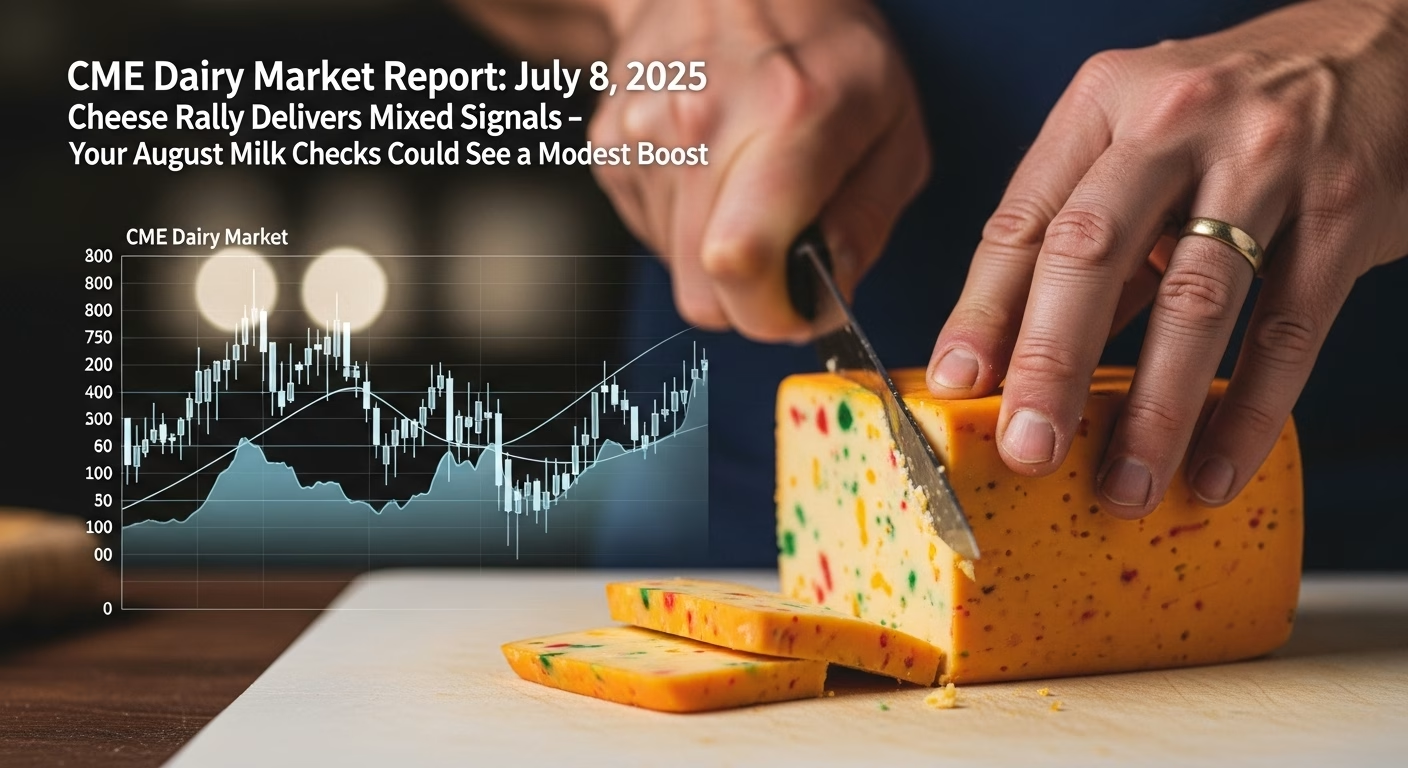
Cheese prices jumped today while butter slipped, creating a tale of two markets that’ll impact your milk checks differently depending on your cooperative’s pricing formula. The 1.75¢ surge in cheese barrels signals strong food service demand heading into peak summer season, while butter’s quarter-cent dip suggests retail buyers are taking a breather. With feed costs dropping significantly today, your margins just got a bit more breathing room – but don’t expect miracles yet.
Today’s Price Action & Real Farm Impact
| Product | Price | Today’s Move | Month Trend | Real Impact on Your Farm |
| Cheese Blocks | $1.6925/lb | +0.75¢ | -2.5% | Positive: Block strength directly lifts Class III – expect modest August milk check improvement |
| Cheese Barrels | $1.7275/lb | +1.75¢ | -1.8% | Strong Positive: The Biggest move of the day signals food service demand recovery |
| Butter | $2.6175/lb | -0.25¢ | +3.2% | Slight Negative: Minor dip but still up 3.2% monthly – Class IV holding steady |
| NDM Grade A | $1.2675/lb | +0.50¢ | +1.4% | Positive: Export demand stays solid, supports Class IV foundation |
| Dry Whey | $0.6050/lb | -0.25¢ | -0.6% | Neutral: Minimal impact on overall milk pricing |
Market Commentary
Today’s cheese strength wasn’t just random – nine actual trades on blocks show real buyers stepping up, not just paper shuffling. That 1.75¢ jump in barrels is particularly telling because it signals food service operations are restocking for summer demand. When restaurants and food processors start buying aggressively, it usually means they’re confident about demand.
Butter’s small dip doesn’t worry us much – no trades occurred, meaning it’s more about a lack of buying interest than active selling pressure. At $2.6175/lb, butter’s still sitting pretty after a strong monthly run.
The NDM strength at $1.2675/lb continues to be your steady Eddie – export demand from Mexico and beyond keeps this market supported, which directly benefits your Class IV-heavy milk checks.
Trading Floor Intelligence & Market Mechanics
Today’s Trading Activity
- Cheese Blocks: 9 trades with three bids, one offer – Strong buyer interest
- Cheese Barrels: 1 trade with three bids, two offers – Tight supply meeting demand
- Butter: 0 trades, two bids, three offers – Sellers outnumber buyers
- NDM: 1 trade, one bid, zero offers – Clean market with no overhead supply
What This Means for Price Direction
The bid-to-offer ratios tell the story: cheese has more buyers than sellers, while butter has more sellers than buyers. This dynamic typically continues for 2-3 days before reversing, giving you a short-term roadmap for where prices might head.
Support and Resistance Levels:
- Cheese blocks: Strong support at $1.65, resistance at $1.75
- Cheese barrels: Support at $1.70, next resistance at $1.80
- Butter: Support at $2.55, resistance at $2.70
Feed Costs & Your Bottom Line
Here’s the good news buried in today’s numbers – feed costs dropped significantly:
Current Feed Costs
- Corn (September): $3.9875/bu (-5¢ today)
- Corn (December): $4.15/bu (-6¢ today)
- Soybean Meal (December): $284.40/ton (-$2.00 today)
Milk-to-Feed Ratio Improvement
Using today’s Class III equivalent of around $17.20/cwt and current feed costs, your milk-to-feed ratio improved from 2.85 to 2.95 – not huge, but heading in the right direction. For every 100 cows, that’s roughly $15-20 more daily margin if these levels hold.
Regional Feed Cost Reality
- Wisconsin/Minnesota: Corn basis remains tight, but the new crop looks promising
- California: Higher transportation costs offset some of today’s futures gains
- Texas: Drought conditions keep hay prices elevated despite grain relief
Production & Supply Reality Check
Current Production Trends
Milk production is following its typical seasonal decline after the spring flush, down roughly 1.5% from peak April levels. Cow numbers remain steady at 9.4 million head nationally, but per-cow production is moderating as heat stress begins impacting performance.
Weather Impact Assessment
- Midwest: Favorable conditions support both milk production and crop development
- Southwest: Persistent drought affecting 15% of the dairy herd, forcing higher feed costs
- Northeast: Adequate moisture supports pasture conditions
Herd Dynamics
Culling rates remain at seasonal norms around 35% annually. Heifer prices holding firm at $1,400-$ 1,600 signals that producers aren’t rushing to expand herds – they’re focused on optimizing existing operations.
What’s Really Driving These Prices
Domestic Demand Breakdown
Retail cheese sales continue outperforming expectations, up 3.2% year-over-year through June. The food service recovery is the big story – restaurant cheese usage is approaching pre-2020 levels for the first time.
Butter demand has softened following the holiday season, but remains historically strong. Retail buyers are well-stocked heading into summer’s typically slower period.
Export Market Deep Dive
Mexico remains the top market for U.S. cheese exports, accounting for 75% of U.S. cheese exports and showing no signs of slowing. Recent trade data shows:
- Cheese exports to Mexico: +8.5% year-over-year
- NDM shipments: +12% year-over-year
- Zero tariff disruptions anticipated
Southeast Asia is emerging as the growth market for NDM, with the Philippines and Thailand expected to increase purchases by 25% this year.
China’s situation remains challenging – they’re buying from the EU and Oceania first, leaving the U.S. as a swing supplier.
Supply Chain Status
Processing capacity is running at 85% utilization, which is healthy but not at maximum. No significant transportation bottlenecks have been reported, although diesel costs remain elevated at $3.85 per gallon nationally.
Forward-Looking Analysis & Official Forecasts
Futures Market Guidance
- July Class III: $17.24/cwt (down 4¢ today)
- July Class IV: $18.99/cwt (unchanged)
- August Class III: $17.45/cwt
- August Class IV: $19.25/cwt
The $1.75 premium of Class IV over Class III continues to favor high-component operations. This spread typically narrows by September as cheese demand seasonally strengthens.
USDA Projections Integration
Latest USDA forecasts project:
- 2025 milk production: +0.8% growth
- Class III average: $17.50-18.50/cwt
- Class IV average: $18.75-19.75/cwt
- Export growth: +6% for cheese, +3% for NDM
Risk Factors to Watch
- Summer weather – drought expansion could spike feed costs
- Trade policy – any disruption in the Mexico relationship disruption would be devastating
- Labor availability – processing plants struggling with staffing
Market Positioning Data
The Commitment of Traders report shows that large speculators are holding near-neutral positions in Class III futures, suggesting limited upside pressure from financial buyers. Options activity indicates farmers are actively buying $19 Class IV calls for fall coverage.
Regional Market Spotlight: Upper Midwest
Wisconsin and Minnesota producers are entering the sweet spot of summer dairying – cows are comfortable, pastures are good, and local cheese plants are running strong schedules.
Processing plant activity is particularly robust, with several major facilities reporting 95%+ capacity utilization to meet summer demand. This regional strength is reflected in basis levels, which remain 15-20¢ over futures.
Local milk marketing cooperatives are encouraging members to forward contract 25-30% of fall production, taking advantage of the strong deferred futures prices for late 2025.
What Farmers Should Do Now
Immediate Actions
- Review your Class III vs Class IV exposure – if you’re heavy Class III, consider component strategies
- Lock in December corn at $4.15/bu – downside protection worth the premium
- Forward contract 20-25% of September-October milk futures are offering good opportunities
Risk Management Priorities
- Dairy Revenue Protection (DRP): Consider coverage for Q4 2025 at current premium levels
- Feed hedging: December corn and soybean meal positions make sense
- Component optimization: Work with your nutritionist on fat/protein strategies
Cash Flow Planning
August milk checks are expected to see a modest improvement from today’s cheese strength. Class IV-heavy checks remain your most reliable source of income. Plan for $17.50-18.00 Class III and $19.00-19.50 Class IV through fall.
Industry Intelligence
Regulatory Updates
Federal Milk Marketing Order reform discussions continue, with a focus on making allowances and component pricing. Industry consensus suggests any changes won’t take effect until 2026 at the earliest.
Processing Plant Activity
- Saputo announced the expansion of its Wisconsin cheese capacity
- Dairy Farmers of America reported strong Q2 processing margins
- Schreiber Foods is increasing food service production schedules
Cooperative Announcements
Associated Milk Producers raised member base prices 15¢/cwt for August deliveries, citing strong demand fundamentals.
Today in Context
Today’s cheese rally helps offset the weakness seen in July, but we’re still tracking below the levels reached in late June. The weekly block average of $1.6888 remains below last week’s $1.7006, showing the market is still working through resistance.
Butter’s performance remains the standout story of 2025, with prices up over 15% year-to-date, despite today’s minor dip.
Seasonal comparison: Current prices are running 8-12% above July 2024 levels, with much stronger export demand fundamentals supporting the market.
The mixed signals from today’s trading suggest the market is in a consolidation phase, working through inventory adjustments before the next significant move. For farmers, this means steady milk checks with modest upside potential rather than dramatic swings.
Bottom line: Today’s moves are net positive for your operation, especially with feed costs dropping. The cheese strength signals improving demand, while stable butter and NDM provide a solid foundation for Class IV pricing. Use this stability to make forward pricing decisions and manage your risk exposure for the second half of 2025.
Complete references and supporting documentation are available upon request by contacting the editorial team at editor@thebullvine.com.
Learn More:
- April 2025 Production Data Exposes the Strategic Milk Allocation Revolution Reshaping Global Dairy – Reveals practical strategies for implementing component optimization that delivers $120-180 more per cow annually, with actionable roadmaps for transitioning from volume-focused to component-reward systems.
- Global Dairy Market Trends 2025: European Decline, US Expansion Reshaping Industry Landscape – Demonstrates how to capitalize on global production shifts and EU supply constraints to strengthen your competitive positioning in export markets and domestic pricing strategies.
- 5 Technologies That Will Make or Break Your Dairy Farm in 2025 – Explores cutting-edge innovations like smart calf sensors reducing mortality 40% and robotic milkers boosting yields 20%, showing how tech adoption creates measurable ROI within 7 months.
 Join the Revolution!
 Join the Revolution!
Join over 30,000 successful dairy professionals who rely on Bullvine Weekly for their competitive edge. Delivered directly to your inbox each week, our exclusive industry insights help you make smarter decisions while saving precious hours every week. Never miss critical updates on milk production trends, breakthrough technologies, and profit-boosting strategies that top producers are already implementing. Subscribe now to transform your dairy operation’s efficiency and profitability—your future success is just one click away.




