Archive for cheese prices surge

CME Daily Dairy Market Report: April 1, 2025 – Cheese Prices Surge Amid Active Trading; Class III Futures Remain Above USDA Q2 Forecast

Cheese prices hit 2-day surge as block-barrel spread inverts! Class III futures defy USDA forecasts. Global dairy shifts ahead—key insights inside.

EXECUTIVE SUMMARY: The April 1 CME dairy market saw cheese prices surge (+2.25¢ blocks, +3.50¢ barrels) amid tightening Midwest milk supplies and robust trading activity, while butter held steady. Class III milk futures (.66/cwt) continue to trade above USDA’s Q2 forecast (.50), signaling market optimism despite rising feed costs. Key drivers include New Zealand’s drought-driven production constraints, recovering Chinese import demand, and a rare block-barrel price inversion suggesting barrel supply tightness. Analysts recommend producers lock in Q2 contracts and monitor export trends, as global dynamics and feed prices pose risks to margins.

KEY TAKEAWAYS:

  • Cheese Rally: Blocks/barrels gained for 2nd day, with barrels briefly overtaking blocks—a rare inversion signaling tight supplies.
  • Futures Divergence: Class III futures ($18.66) outpace USDA’s Q2 forecast ($18.50), reflecting bullish sentiment.
  • Global Pressures: New Zealand droughts and Chinese demand shifts may impact U.S. export opportunities.
  • Feed Cost Risk: Corn (+5.25¢) and soybeans (+19¢) gains threaten dairy margins unless milk prices rise further.
  • Actionable Insight: Secure cheese inventories and forward contracts now to hedge against Q2 volatility.

Today’s dairy market at the Chicago Mercantile Exchange (CME) saw notable strength in cheese prices, with both blocks and barrels posting significant gains amid robust trading activity. Class III milk futures continued to trade above the USDA’s Q2 forecast of .50/cwt, reflecting market optimism about near-term demand and tighter milk supplies. This updated report incorporates enhanced visual analysis and refined recommendations to provide a clearer understanding of market dynamics.

Key Price Changes & Market Trends

Today’s CME cash dairy product prices showed mixed performance across key commodities:

ProductClosing PriceChange from YesterdayTradesBidsOffers
Cheddar Blocks$1.6575/lb+2.25¢2470
Cheddar Barrels$1.6600/lb+3.50¢730
Butter$2.3400/lbUnchanged000
NDM Grade A$1.1725/lb+1.00¢131
Dry Whey$0.4950/lb-0.50¢231

Cheddar blocks rose by 2.25 cents, while barrels surged by an impressive 3.50 cents, narrowing the block-barrel spread to just -0.25 cents—a rare inversion that signals tight supply conditions for barrel cheese or strong demand from processed cheese manufacturers. This marks the second consecutive day of gains for both products, driven by tightening milk supplies in the Midwest and steady domestic demand from retail and foodservice sectors.

Butter prices remained unchanged at $2.3400/lb amid quiet trading activity, suggesting that current price levels are sufficient to balance supply and demand. Nonfat dry milk (NDM) gained one cent to close at $1.1725/lb, continuing its gradual recovery as export interest strengthens in Southeast Asia. Dry whey weakened slightly, losing half a cent to close at $0.4950/lb, reflecting softer export demand in key markets such as China.

Volume and Trading Activity

Trading activity was particularly robust in the cheese markets today:

  • Cheddar Blocks: With 24 trades completed and seven unfilled bids, blocks saw significant interest from buyers seeking to secure product ahead of the spring demand season.
  • Cheddar Barrels: Seven trades were executed with three additional bids left unfilled, indicating strong buyer interest despite the narrowing block-barrel spread.
  • Butter: No trades were recorded today, reflecting a balanced market with ample inventories.
  • NDM & Dry Whey: These products saw limited activity with one and two trades respectively, consistent with their typical trading patterns.

The narrowing spread between blocks and barrels is noteworthy as it reflects atypical market conditions that may signal further price adjustments in the coming days.

Global Context

International dairy markets continue to exert influence on U.S. pricing trends:

  • New Zealand Production: Persistent drought conditions in New Zealand have constrained milk output, limiting their export availability and providing indirect support for U.S. NDM prices.
  • European Union Trends: Seasonal increases in EU milk production are beginning to place downward pressure on global butter prices, potentially impacting U.S. export competitiveness.
  • Chinese Import Demand: After several months of subdued activity, Chinese import demand has shown signs of recovery, particularly for skim milk powder (SMP) and whole milk powder (WMP). This could indirectly support U.S. NDM prices if the trend continues.

U.S. cheese remains competitively priced against European offerings despite a stronger dollar, bolstering export opportunities to Latin America and Southeast Asia.

Forecasts and Analysis

CME Class III Futures vs USDA Q2 Forecast

The USDA projects Class III milk prices to average $18.50/cwt for Q2 2025—a figure that remains below current CME futures levels. As shown in Figure 1 below, March Class III futures have consistently traded above this forecast throughout the past month:

CME dairy market report, cheese prices surge, Class III milk futures, USDA dairy forecast, global dairy exports

The chart demonstrates that futures prices have hovered between $18.60 and $18.75/cwt for most of March, reflecting stronger market sentiment than USDA’s conservative projection. This divergence may be attributed to expectations of tighter milk supplies or stronger-than-anticipated domestic cheese demand.

Feed Costs

Feed markets showed upward momentum today:

  • Corn futures rose by 5.25 cents to close at $4.61/bushel.
  • Soybean futures gained nearly 19 cents to close at $10.33/bushel.
  • Soybean meal held steady at $291/ton.

These higher feed costs could pressure dairy margins in Q2 unless milk prices rise sufficiently to offset input cost increases.

Market Sentiment

Market sentiment remains cautiously optimistic as we enter Q2:

  • A dairy broker observed: “The active trading we’re seeing in blocks and barrels suggests buyers are concerned about securing product ahead of the spring demand season.”
  • Another analyst noted: “The inversion of the block-barrel spread is unusual but reflects tight supply conditions for barrels.”

Overall, participants appear confident in near-term cheese price strength but remain wary of rising feed costs impacting producer margins.

Closing Summary & Recommendations

Today’s dairy markets exhibited strength in cheese prices amid active trading, while other products showed mixed performance:

  1. Producers should consider forward contracting milk sales for Q2 at current price levels to mitigate margin risks from rising feed costs.
  2. Exporters should monitor Chinese import trends closely through mid-April as renewed buying interest could support NDM prices further.
  3. Processors may want to secure cheese inventories now before potential further price increases driven by seasonal demand.

In summary, while cheese markets remain well-supported heading into spring, stakeholders should remain vigilant about evolving global dynamics and input cost pressures that could influence market conditions in the coming weeks.

READ MORE:

Join the Revolution!

Join over 30,000 successful dairy professionals who rely on Bullvine Daily for their competitive edge. Delivered directly to your inbox each week, our exclusive industry insights help you make smarter decisions while saving precious hours every week. Never miss critical updates on milk production trends, breakthrough technologies, and profit-boosting strategies that top producers are already implementing. Subscribe now to transform your dairy operation’s efficiency and profitability—your future success is just one click away.

NewsSubscribe
First
Last
Consent

CME Dairy Market Update for February 10, 2025: Cheese Prices Climb, Market Trends and Farmer Insights

CME dairy market sees mixed movements: cheese prices surge while NDM dips. USDA revises 2025 milk production forecast downward, but projects higher all-milk price. Exports remain strong. Weather impacts production. New FMMO pricing formulas coming in June. Stay tuned for full analysis and strategies.

Summary:

The CME dairy market on February 10, 2025, showed mixed results with cheese prices rising significantly while butter held steady and NDM slightly declined. Cheddar blocks and barrels saw notable gains, closing at $1.9025/lb and $1.8150/lb respectively. The USDA revised its 2025 milk production forecast downward to 227.2 billion pounds but projected a higher all-milk price of $23.05 per hundredweight. U.S. dairy exports remain strong, reaching $8.2 billion in 2024. The report highlights challenges for dairy farmers, including cost management, production efficiency, and market volatility, while offering strategies to address these issues. Looking ahead, the implementation of new Federal Milk Marketing Order pricing formulas in June 2025 may impact milk prices, and farmers are advised to stay informed and adjust strategies accordingly.

Key Takeaways:

  • Cheese prices are strengthening, with cheddar blocks up 4.25 cents to $1.9025/lb and barrels up 3.50 cents to $1.8150/lb, potentially signaling improved market conditions.
  • The USDA projects a higher all-milk price of $23.05 per hundredweight for 2025, despite lowering the milk production forecast.
  • U.S. dairy exports remain strong, reaching $8.2 billion in 2024, with new opportunities in Central America due to trade agreements.
CME dairy market, cheese prices surge, USDA milk production forecast, dairy exports strong, Federal Milk Marketing Order changes

Today, the Chicago Mercantile Exchange (CME) dairy market experienced mixed movements, with notable gains in cheese prices and a slight decline in nonfat dry milk. 

Daily CME Cash Dairy Product Prices ($/lb.)


FinalChange ¢/lb.TradesBidsOffers
Butter2.3800NC001
Cheddar Block1.9025+4.25631
Cheddar Barrel1.8150+3.50431
NDM Grade A1.3250-0.50003
Dry Whey0.5875NC023

Cash Market Overview 

  • Butter held steady at $2.3800/lb, with no trades and minimal activity.
  • Cheddar blocks saw significant upward movement, closing at $1.9025/lb, up 4.25 cents, with six trades executed.
  • Cheddar barrels also strengthened, rising 3.50 cents to $1.8150/lb with four trades.
  • Nonfat dry milk (NDM) Grade A dipped slightly, down 0.50 cents to $1.3250/lb.
  • Dry whey remained unchanged at $0.5875/lb.

Weekly CME Cash Dairy Product Prices ($/lb.)


MonTueWedThurFriCurrent Avg.Prior Week Avg.Weekly Volume
Butter2.38002.38002.41000
Cheddar Block1.90251.90251.86856
Cheddar Barrel1.81501.81501.79704
NDM Grade A1.32501.32501.33800
Dry Whey0.58750.58750.60550

Weekly Price Trends 

Compared to last week’s averages, butter and dry whey are trending lower, while both cheddar varieties show strength. The current week’s averages (based on Monday’s prices) are: 

  • Butter: $2.3800/lb (down from $2.4100/lb)
  • Cheddar blocks: $1.9025/lb (up from $1.8685/lb)
  • Cheddar barrels: $1.8150/lb (up from $1.7970/lb)
  • NDM Grade A: $1.3250/lb (down from $1.3380/lb)
  • Dry whey: $0.5875/lb (down from $0.6055/lb)

CME Futures Settlement Prices


MonTueWedThurFri
Class III (FEB) $/CWT20.210.000.000.000.00
Class IV (FEB) $/CWT.19.460.000.000.000.00
Cheese (FEB) $/LB.1.8770.000.000.000.00
Blocks (FEB) $/LB.1.9030.000.000.000.00
Dry Whey (FEB) $/LB.0.630.000.000.000.00
NDM (FEB) $/LB.1.30230.000.000.000.00
Butter (FEB) $/LB.2.4590.000.000.000.00
Corn (MAR) $/BU.4.91750.000.000.000.00
Corn (DEC) $/BU.4.70750.000.000.000.00
Soybeans (MAR) $/BU.10.49250.000.000.000.00
Soybeans (NOV) $/BU.10.56750.000.000.000.00
Soybean Meal (MAR) $/TON300.200.000.000.000.00
Soybean Meal (DEC) $/TON321.600.000.000.000.00
Live Cattle (APR) $/CWT.198.2250.000.000.000.0

Futures Market 

In the futures market, Class III milk for February settled at $20.21/cwt, while Class IV settled at $19.46/cwt. Cheese futures for February closed at $1.877/lb, with blocks specifically at $1.903/lb. 

Analysis for U.S. Dairy Farmers 

Production and Pricing Outlook 

The USDA has revised its 2025 milk production forecast downward to 227.2 billion pounds, a decrease of 0.8 billion from earlier estimates. This reduction is due to lower milk-per-cow yields and adjustments in dairy cow inventories. Despite this, the all-milk price is projected to rise to $23.05 per hundredweight, up 50 cents from previous forecasts. 

Market Dynamics 

The cheese market shows signs of strength, with blocks and barrels posting significant gains. This upward movement could be attributed to increased demand or tightening supplies. While stable today, the butter market is trending lower than last week, possibly indicating a shift in the supply-demand balance. 

Weather Impact 

Weather conditions play a crucial role in both milk production and feed costs. Recent favorable weather has supported milk supply growth and led to more affordable feed costs. However, climate change poses long-term risks, potentially lowering milk yields through heat stress. Farmers should monitor weather forecasts closely and consider implementing heat mitigation strategies. 

Export Opportunities 

U.S. dairy exports reached $8.2 billion in 2024, marking the second-highest total export value ever. Mexico and Canada remain the top two global trading partners, representing over 40% of U.S. dairy exports. The full implementation of the CAFTA-DR trade deal has opened up new opportunities in Central America, with U.S. dairy exports surging to $441 million in 2025. 

Challenges and Strategies 

  1. Cost Management: Optimize your daily feed margin with rising feed costs and other expenses—total milk pay minus deductions and feed costs. Consider investing in herd management and feed quality to increase net income per stall.
  2. Production Efficiency: Maximize your quota with as few cows as possible to save on the cost of keeping additional animals. Utilize additional production days if available, as 20-25% of farms finish month after month with a non-deferrable quota.
  3. Technology Integration: Invest in automated milking systems and IoT technology for real-time herd health and behavior monitoring to boost productivity and streamline operations.
  4. Market Volatility: Prepare for price fluctuations by using future contracts to secure prices and avoid market surprises.
  5. Equipment Costs: Carefully analyze each equipment purchase, considering not just the purchase price but also fuel, maintenance, and repair costs. Consider renting equipment or hiring custom work when it is more cost-effective.

Looking Ahead 

As we move into 2025, market participants will watch for any shifts in production patterns, export demand, and consumer preferences. The recent strengthening of cheese prices could signal improving market conditions for dairy producers, but the mixed performance across other products suggests a complex market environment. 

Implementing new Federal Milk Marketing Order (FMMO) pricing formulas beginning in June 2025 may impact milk prices. Stay informed about these changes and adjust your strategies accordingly.

By focusing on efficiency, cost management, and strategic market positioning, U.S. dairy farmers can navigate the challenges and opportunities presented by the current market conditions and position themselves for success in the evolving dairy landscape. 

Learn more:

Join the Revolution!

Bullvine Daily is your essential e-zine for staying ahead in the dairy industry. With over 30,000 subscribers, we bring you the week’s top news, helping you manage tasks efficiently. Stay informed about milk production, tech adoption, and more, so you can concentrate on your dairy operations. 

NewsSubscribe
First
Last
Consent

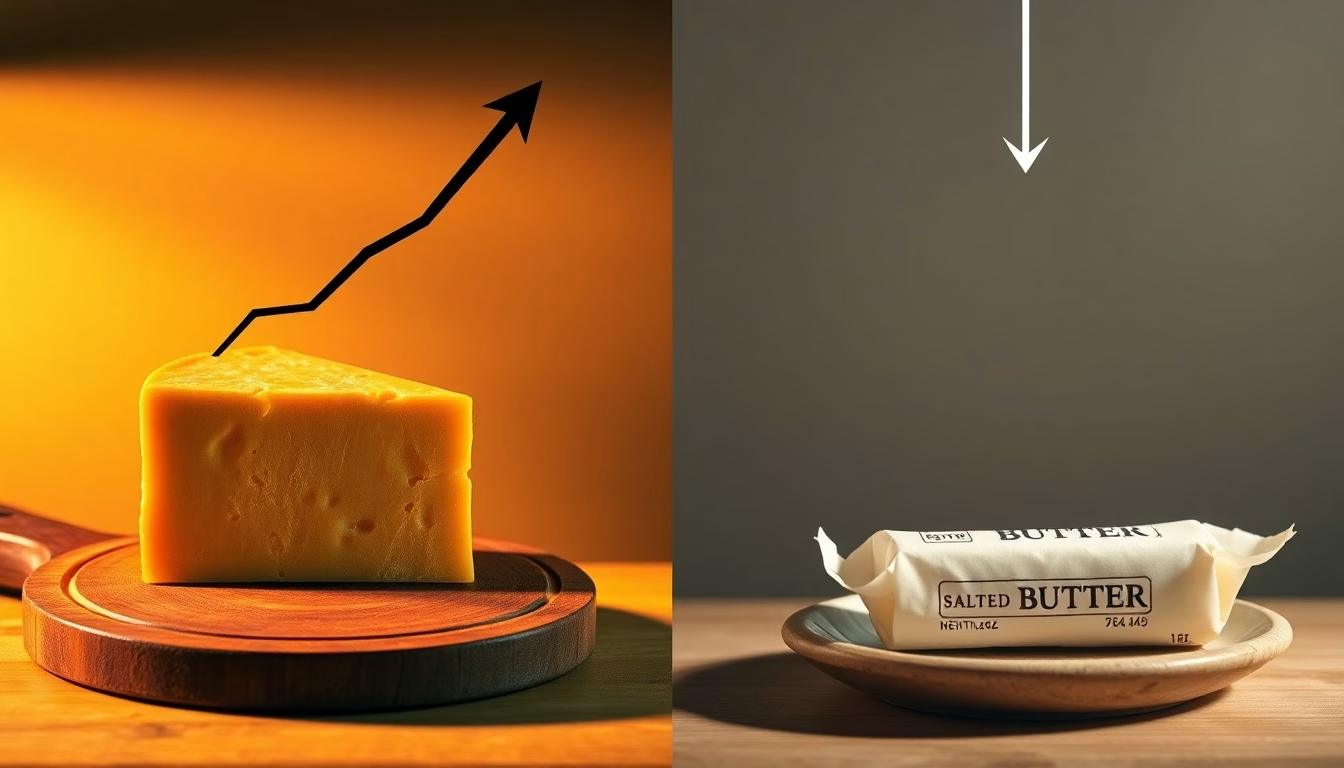
US Dairy Market Shifts: Cheese Prices Surge 15% While Butter Hits 18-Month Low

Dairy farmers face a market of extremes as 2025 kicks off. Cheese prices soar while butter plummets, trade wars loom, and feed costs squeeze margins. From regional variations to tech innovations, navigate the complexities of today’s dairy landscape. Discover strategies to thrive in this volatile market.

Summary:

Adaptability and strategic planning will be key to success as the dairy industry navigates these turbulent waters. The contrasting trends in cheese and butter markets, regional production variations, and looming trade uncertainties present challenges and opportunities. Farmers who stay informed, embrace technological innovations, and remain flexible in their approach stand the best chance of thriving. Whether optimizing production for high-demand products, exploring new export markets, or implementing cost-effective feed management strategies, the path forward requires a blend of traditional wisdom and modern innovation.  As we move further into 2025, the dairy landscape will continue to evolve. Those who can swiftly adjust their strategies, leverage data-driven insights, and capitalize on emerging trends will be best positioned to weather the storms and reap the rewards of this dynamic industry. What steps will you take to ensure your dairy operation survives and thrives in the coming years?

Key Takeaways:

  • Cheese prices surge due to high demand, especially from Asia, while butter experiences a significant price drop due to oversupply.
  • Dairy farmers must adapt strategies based on regional production trends and potential trade disputes affecting export markets.
  • Rising feed costs pressure profit margins, pushing farmers toward efficient feed management and cost-effective alternatives.
  • Adopting technology and sustainable practices can enhance efficiency and optimize operations amid market volatility.
  • Farmers should focus on maximizing opportunities in cheese production and explore alternative uses for cream to manage butter oversupply.
  • Trade tensions may impact international markets, urging diversification of export destinations to mitigate risks.
dairy market trends, cheese prices surge, butter oversupply, feed cost management, trade war impacts

As January 2025 ends, U.S. dairy farmers encounter significant market differences. Cheese prices have surged an unexpected 15% this month, while butter values have plummeted to an 18-month low, reshaping strategies across the industry. 

Surge in Cheese Prices Driven by High Demand in the Market 

CME cheese prices surged from $1.80 to $2.07 per pound in three weeks. Demand has outstripped availability despite industry expectations of oversupply due to new production capacity. 

Despite industry expectations of oversupply, the market responds positively to increased demand. We’re seeing a 20% increase in export inquiries, particularly from Asia, which drives this unexpected surge.”

Dairy farmers can benefit from the current strength in the cheese market. Are these changes sustainable, and what steps should farmers take? 

Butter Market Faces Oversupply Challenges 

ProductCurrent PriceChange from Last YearStock Level Change
Cheese$2.07/lb+15%-6.0% yoy
Butter$2.45/lb-22%+11.4% yoy

In stark contrast to cheese, the butter market is drowning in surplus. On Thursday, CME spot butter hit $2.45 per pound, marking an 18-month low and a 22% drop from last year’s prices. December stocks were up 11.4% year-over-year, exceeding expectations by 15 million pounds.

The surplus of inexpensive cream is influencing the pessimistic outlook on butter prices. Cream prices are at $1.20 per pound of butterfat, down 30% from last year. To address the oversupply, farmers should be cautious in butter production and consider alternative uses for cream.

Regional Variations Paint a Complex Picture 

The December U.S. milk production report reveals significant regional differences: 

RegionProduction Change (YoY)
California-6.8%
Wisconsin+2.1%
Idaho+3.5%
Texas+4.2%
New York-1.2%

This divergence could have notable impacts on local market dynamics and pricing. Tom Brown, a dairy industry consultant, advises, “Farmers need to tailor their strategies based on their specific region. What works in California might not be applicable in Wisconsin or Texas. For instance, California farmers might consider shifting more milk to cheese production given the current market trends.” 

Trade War Concerns Loom Large 

The dairy industry faces potential disruption from looming trade disputes. From February 1, the U.S. plans to add tariffs of up to 25% on dairy imports from China, Canada, and Mexico. Canada and Mexico have indicated they may retaliate against U.S. dairy products.

While previous trade disputes in 2018 had limited impact, the uncertainty could affect export markets and prices. Farmers relying heavily on exports to countries facing potential tariffs should explore diversifying their markets. South America and Southeast Asia could offer promising alternatives.

“It is an ongoing battle to ensure Canada upholds its trade commitments on dairy,” stated Kimberly Crewther, Executive Director of DCANZ.

Feed Costs Squeeze Margins Across Regions 

Feed TypePrice Increase (Last Quarter)
Corn+8%
Soybean Meal+12%
Hay+5%
Silage+3%

Higher-than-expected feed costs in all regions are impacting profit margins. Corn prices have risen 8% and soybean meal 12% since last quarter, squeezing farm profitability.

Farmers need to focus on efficient feed management and explore cost-effective alternatives. To address high feed costs, you can increase the use of homegrown forages or explore alternative feeds to reduce dependence on costly commodities.

Jennifer Hayes, Chair of the Canadian Dairy Commission, commented on the slight decrease in farmgate milk prices: “Although a continued inflationary environment, producer efficiencies, and productivity gains have contributed to help balance on-farm costs this year, resulting in a decrease in the cost of production.”

Embracing Technology and Sustainability for Future Success 

As market volatility increases, some farmers turn to technology and sustainable practices to maintain profitability. Precision dairy farming tools, such as automated milking systems and data-driven feed management, are gaining traction. 

Looking Ahead: Strategies for Dairy Farmers 

Given the complex market conditions, dairy farmers are encouraged to consider the following strategies to navigate the challenges ahead: 

  1. Optimize cheese production to capitalize on the currently strong cheese prices in the market
  2. Exercise caution in managing butter production and explore innovative uses for surplus cream to mitigate the oversupply issue
  3. Implement efficient feed cost management, considering alternative feed sources
  4. Develop region-specific strategies based on local production trends
  5. Prepare for potential trade war impacts by diversifying export markets
  6. Focus on margin optimization through technology adoption and sustainable practices
  7. Monitor both domestic and international markets closely, particularly EU and New Zealand trends

Nate Donnay, Director of Dairy Market Insight at StoneX, explained the recent cheese market trends: “In a single month, the CME spot cheese market dropped around 20%, with Class III futures dropping around 15%”.

As the dairy landscape evolves, staying informed and adaptable will be key to navigating challenges and seizing opportunities. As the future unfolds, those swiftly adapting their strategies will be best positioned to succeed.  

Learn more:

Join the Revolution!

Bullvine Daily is your essential e-zine for staying ahead in the dairy industry. With over 30,000 subscribers, we bring you the week’s top news, helping you manage tasks efficiently. Stay informed about milk production, tech adoption, and more, so you can concentrate on your dairy operations. 

NewsSubscribe
First
Last
Consent

CME Dairy Market January 30th, 2025: Cheese Rises, Butter Falls in Mixed Trading

Dairy market shakeup: Cheese prices surge while butter slumps in latest CME report. What does this mean for your farm? Get the full scoop on the mixed market trends impacting dairy farmers nationwide.

Summary:

The latest CME dairy market report reveals a divergent trend in dairy product prices, presenting a complex landscape for dairy farmers. Cheddar block prices rose to $1.9350 per pound, showing a 0.50 cent increase, while butter prices continued their downward trajectory, falling by 1 cent to $2.4500 per pound. This mixed market scenario is further complicated by a significant 3-cent drop in dry whey prices to $0.6600 per pound, potentially impacting the overall value of milk used in cheese production. The contrasting weekly averages – with cheese blocks rising from $1.8019 to $1.9063 and butter declining from $2.5250 to $2.4850 – highlight the diverging fortunes within the dairy sector. As the industry braces for potential tariff changes on February 1st, dairy farmers face the challenge of navigating these market dynamics, emphasizing the need for strategic diversification and adaptability in their operations. 

Key Takeaways:

  • Cheddar block cheese prices show a positive trend, allowing producers to capitalize on market strength.
  • Dropping butter and whey prices create challenges, pressuring profit margins for dairy operations.
  • Active trading in cheese and NDM indicates ongoing market interest, while butter and dry whey see less activity.
  • Dairy farmers face a complex market requiring strategic adjustments and monitoring of potential policy changes.
  • Efficiency and adaptability remain crucial as the industry navigates mixed trading signals and potential tariff impacts.
dairy market trends, cheese prices surge, butter prices decline, CME report analysis, dairy farmers strategies

On January 30, 2025, the dairy market presented a mixed picture, with notable shifts across various product categories. This report analyzes the dairy market’s price movements and supply-demand dynamics and how they could affect dairy farmers. 

Daily CME Cash Dairy Product Prices ($/lb.)

FinalChange ¢/lb.TradesBidsOffers
Butter2.4500-1.00215
Cheddar Block1.9350+0.50500
Cheddar Barrel1.8650NC400
NDM Grade A1.3450NC721
Dry Whey0.6600-3.00116

Butter Market 

Butter prices declined to $2.4500 per pound, down 1 cent from the previous day. This marks the fourth consecutive day of price decline, reducing the weekly average from $2.5250 to $2.4850 compared to the last week. The decrease in butter prices may reduce profit margins for dairy farmers, particularly those who depend heavily on cream sales. 

Cheese Market 

The cheese sector demonstrated strength as cheddar block prices rose by 0.50 cents to $1.9350 per pound, while cheddar barrel prices held steady at $1.8650. The weekly average for blocks increased to $1.9063 from $1.8019 the previous week, signaling a strengthening in the cheese market. This positive movement in cheese prices could relieve dairy farmers, especially those specializing in milk production for cheese manufacturing, by potentially increasing their profitability. 

Dry Whey and Nonfat Dry Milk (NDM) 

Dry whey prices fell by 3 cents to $0.6600 per pound. This decrease could influence the overall value of milk utilized in cheese production, potentially reducing dairy farmers’ revenues. NDM Grade A prices stayed constant at $1.3450, indicating stability in this market segment. 

Weekly CME Cash Dairy Product Prices ($/lb.)

MonTueWedThurFriCurrent Avg.Prior Week Avg.Weekly Volume
Butter2.53002.50002.46002.45002.48502.525019
Cheddar Block1.87001.89001.93001.93501.90631.801917
Cheddar Barrel1.84001.86501.86501.86501.85881.825013
NDM Grade A1.34751.34751.34501.34501.34631.35009
Dry Whey0.69750.69750.69000.66000.68630.70882

Market Activity and Trends 

Trading activity was notably high in the cheese market, with five trades for blocks and four for barrels. This level of activity suggests active price discovery and market engagement. The contrasting trends in different dairy products highlight the complexity of the current market, presenting both challenges and opportunities for dairy farmers. 

Implications for Dairy Farmers 

  • Diversification is crucial in mitigating risks associated with price volatility in specific categories, highlighting the need to broaden product offerings to adapt to mixed market conditions.
  • Regarding production focus, farmers should consider shifting towards products demonstrating strength, such as cheese, while exercising caution to avoid overexposure to categories experiencing price pressures, like butter.
  • Effective cost management is essential to sustain profitability in fluctuating product prices, underscoring the significance of managing costs efficiently.
  • Monitoring the market is crucial for making informed decisions. It requires close observation of market trends and upcoming events, including potential tariff adjustments.

Future Outlook 

The dairy market continues to exhibit volatility, characterized by diverging trends across various dairy products. The approaching February 1st date, which traders monitor for potential tariff changes, may increase market volatility and affect dairy export opportunities. Dairy farmers should remain vigilant and adaptable in this dynamic market environment. 

The Bottom Line

In conclusion, while the butter market faces challenges, the positive movement in cheese prices offers a counterbalance. Dairy farmers are advised to stay informed, flexible, and strategic to navigate these complex market conditions effectively. 

Learn more:

Join the Revolution!

Bullvine Daily is your essential e-zine for staying ahead in the dairy industry. With over 30,000 subscribers, we bring you the week’s top news, helping you manage tasks efficiently. Stay informed about milk production, tech adoption, and more, so you can concentrate on your dairy operations. 

NewsSubscribe
First
Last
Consent

Cheese Surges, Butter Stays Firm: CME Dairy Market Analysis for January 27th 2025

Dairy markets saw a surge in cheese prices on January 27, 2025, with cheddar blocks leading the charge. Butter held steady at an intense level, while other products remained unchanged. What does this mean for milk prices? Read on for our complete CME dairy market analysis.

Summary:

On January 27, 2025, the CME dairy market saw cheese prices go up and butter prices stay the same, suggesting milk prices might soon rise for farmers. Cheddar blocks increased by 3.75 cents to $1.8700 per pound, and cheddar barrels increased by 2.00 cents to $1.8400 per pound. Butter stayed at $2.5300 per pound. This shows a strong cheese market that could boost Class III milk prices. Meanwhile, non-fat dry milk and dry whey prices didn’t change, showing little activity in those areas. To manage market changes, dairy farmers should monitor their production, export markets, and costs. 

Key Takeaways:

  • Cheddar block prices increased by 3.75 cents to $1.8700 per pound
  • Butter held steady at $2.5300 per pound
  • Cheese market strength could positively impact Class III milk prices
  • Weekly comparisons show significant gains in the cheese sector
CME dairy market, cheese prices surge, cheddar blocks increase, milk prices rise, dairy farmers profitability

On January 27, 2025, cheese prices increased while butter prices remained stable in the Chicago Mercantile Exchange (CME) dairy market. These price changes in cheese and butter will likely increase milk prices for dairy farmers. Cheddar block and cheddar barrel prices rose, whereas butter maintained a stable price at a relatively high level. These market trends will produce higher milk prices for dairy farmers shortly. 

Daily CME Cash Dairy Product Prices ($/lb.)

FinalChange ¢/lb.TradesBidsOffers
Butter2.5300NC531
Cheddar Block1.8700+3.75920
Cheddar Barrel1.8400+2.00421
NDM Grade A1.3475NC001
Dry Whey0.6975NC002

Cheese Market Shows Strength 

Remarkably, the cheese market stole the spotlight as the top performer of the day, 

  • Cheddar blocks surged by 3.75 cents to reach $1.8700 per pound, with nine trades recorded.
  • Cheddar barrels increased by 2.00 cents, settling at $1.8400 per pound, with four trades.

The increase in cheese prices bodes well for Class III milk prices, which are significantly affected by the market’s performance. The increased spread of 3 cents between blocks and barrels indicates a growing preference for higher-quality cheeses, reflecting a robust demand in the market. 

Butter Market Remains Stable 

Butter prices held firm at $2.5300 per pound, with five trades executed. Despite remaining unchanged from the previous session, the consistent butter price level continues to underpin the dairy industry. Stable butter prices benefit producers with higher butterfat components in their milk. 

Other Dairy Products 

The prices of non-fat dry milk (NDM) Grade A and dry whey remained unchanged at $1.3475 and $0.6975 per pound, respectively. However, neither product saw any trades during the session, indicating limited market activity in these sectors. 

Weekly Comparison and Market Analysis 

When comparing the current prices to the prior week’s averages, some interesting trends emerge: 

ProductCurrent PricePrior Week Avg.Change
Butter$2.5300$2.5250+$0.0050
Cheddar Block$1.8700$1.8019+$0.0681
Cheddar Barrel$1.8400$1.8250+$0.0150
NDM Grade A$1.3475$1.3500-$0.0025
Dry Whey$0.6975$0.7088-$0.0113

The notable rise in cheddar block prices in the past week is significant, possibly suggesting increased demand or limited supply in the cheese market. 

Implications for Dairy Farmers 

A more substantial cheese market and stable butter prices will likely positively impact milk prices for dairy producers. Nevertheless, analyzing these daily market shifts in the context of long-term trends and other industry factors is crucial. 

Key points for dairy farmers to monitor include: 

  1. Milk production levels and how they might impact supply-demand balance
  2. Export market conditions, which can significantly influence domestic prices
  3. Feed costs and other input expenses that affect overall profitability

The Bottom Line

As 2025 unfolds, the evolving market dynamics are set to influence the dairy industry profoundly. Farmers must keep up with market reports and adapt their strategies to enhance profitability in this evolving landscape.  Stay updated on daily market movements and evaluate their impact on your operations. Think about employing risk management practices to protect against price fluctuations. Consider seeking guidance from financial advisors or joining dairy cooperatives to develop customized strategies to help you navigate this ever-changing market’s complexities. 

Learn more:

Join the Revolution!

Bullvine Daily is your essential e-zine for staying ahead in the dairy industry. With over 30,000 subscribers, we bring you the week’s top news, helping you manage tasks efficiently. Stay informed about milk production, tech adoption, and more, so you can concentrate on your dairy operations. 

NewsSubscribe
First
Last
Consent
Send this to a friend