Archive for breeding philosophy

The Royal’s Empty Chair: Where Six Dreams Meet One Legacy

Six operations. Three generations. One empty chair. The 2025 Royal Winter Fair just became about more than banners.

A ringside moment from the 2014 Royal: Paul Ekstein and Ari Ekstein. For decades, this was their post—sharing the focus, the details, and the passion that built Quality Holsteins. This November, Ari carries forward the 70-year legacy his father began.

Standing in the Quality Holsteins barn earlier this week, watching Ari Ekstein prepare for the 2025 Royal Winter Fair, I felt the weight of what wasn’t there. For over 70 years, Paul Ekstein attended The Royal Winter Fair. This November will be the first without him.

Ari doesn’t talk about it directly. But you can see it in how he runs his hand over the leather lead that’s been in the family for decades, the same one his father used. Paul passed away earlier this year at 91—that unbreakable soul who escaped Nazi-occupied Czechoslovakia as a boy and built one of Canada’s most respected breeding programs from absolutely nothing. Now it’s Ari carrying forward that vision, maintaining the 95% homebred genetics, those 200 Excellent cows they’ve bred together over the years. (Read more: From Czechoslovakia to Quality Holsteins: Paul Ekstein’s Unbreakable Legacy)

“He taught me that attention to every minor detail can lead to major success,” Ari mentioned quietly as he adjusted a show box that’s seen five decades of Royals.

One of the ‘fading prints’ from a 70-year legacy: Paul Ekstein (second from right) stands with fellow industry legends (L-R) Peter Heffering, Connie Heffering, and Bert Stewart, presenting the 1963 Royal Sale of Stars high-seller, Greenview Citation Nettie. It’s images like this, capturing decades of Royal triumphs, that his son Ari now carries forward.

What happened next changed my perspective on this entire show. Ari was sorting through old photographs for the collage we’re creating—decades of Royal Winter Fairs captured in fading prints and yellowed edges. Paul with young champions that would go on to become foundation cows. Moments of triumph caught mid-celebration. Quiet conversations between classes. Each image tells part of a story that spans 70 years. The kind of legacy you can’t download or buy. Just earn, year after year, Royal after Royal.

The Dreams That Drive Them Forward

Knonaudale Jasmine EX-96 dazzles at the Royal Winter Fair, showcasing her exceptional type and presence as one of Kingsway Holsteins’ most iconic cows.
Kingsway’s iconic Knonaudale Jasmine (EX-96) on the Royal’s ring. Jasmine represents the world-class type and decades of work the McMillans have poured into chasing the one “empty space” on their wall—the Grand Champion banner.

Ethan, Morgon and Gord McMillan from Kingsway Holsteins are preparing for The Royal next week, carrying their own weight of expectation. In their barn, photos spanning four decades of Royal Winter Fairs cover the walls. Champions from years past. Near-misses that still sting. And somewhere, that one empty space—reserved for a Grand Champion banner that hasn’t come home yet.

Gord has been chasing this dream for longer than Ethan and Morgon’s been alive. The weight of that—inheriting someone else’s dream while building your own—stays with you.

What’s remarkable about their ranking as Canada’s number two breeder of all time for Excellent cows is their surprise when they learned about it. They had no idea. Kingsway markets a lot of heifers and cows every year—animals scoring excellent in other herds, adding to a total they never tracked. That kind of humility, that focus on the work rather than the recognition, tells you everything about who they are. (Read more: The Heart of Excellence: Getting to Know the Family Behind Kingsway Holsteins)

Their foundation cow, Kingsway Sanchez Arangatang, died earlier this year at nearly 15 after producing 18 Excellent daughters. Her genetics now thrive in robotic dairies in Saskatchewan, grazing operations in the UK, and show herds across North America. Her influence keeps spreading, even after she’s gone.

A moment that defined a legacy – Ethan McMillan with Kingsway Sanchez Arangatang at the 2014 Royal Winter Fair. This remarkable cow would produce 18 Excellent daughters, her genetics now thriving in robotic dairies in Saskatchewan, grazing operations in the UK, and show herds across North America. Though Arangatang passed this year, her granddaughters will enter the ring next Thursday, carrying forward a bloodline that changed Kingsway Holsteins forever.

As Arangatang’s granddaughters are prepped for next Thursday’s heifer show, there’s something profound happening. Both Kingsway and Quality are entering The Royal, carrying forward the work of those who can’t be there to see it. That changes everything about what winning means.

The Ferme Jacobs Legacy

The moment that proved their philosophy: Jacobs Windbrook Aimo gets the slap for Grand Champion at the 2018 Royal Winter Fair. This win, part of an unprecedented homebred Grand and Reserve sweep, was a thundering validation of the Jacobs family’s “cow families first” breeding wisdom.

Nobody expected what happened at the 2018 Royal Winter Fair.

Ferme Jacobs didn’t just win—they swept both Grand Champion with Jacobs Windbrook Aimo and Reserve Grand Champion with Jacobs Lauthority Loana. Both homebred, both extrodinary in there own ways. The first time any Canadian breeder had swept Grand and Reserve with homebred animals since 1969—a historic achievement that complements their record 11 Premier Breeder banners.(Read more: Ferme Jacobs – “Dreams without goals are just….dreams”)

Jacobs Windbrook Aimo: Grand Champion
Jacobs Lauthority Loana: Reserve Grand
Both homebred. NOT sisters. Two different cow families.
First time since 1969.

The moment that changed everything wasn’t the winning, though. It was what happened after. In an industry increasingly obsessed with genomic testing and data analytics, here was old-school proof that traditional breeding wisdom—cow families first, genomics last—still mattered. The Jacobs family refuses to use any bull that’s minus for milk. They never flush cows during show season, believing it compromises the natural bloom judges reward.

Teaching the next generation matters to them. Not just about cattle, but about character. How to win with grace. How to lose with dignity. How to keep going when neither happens.

Their preparations reveal something extraordinary—three generations working together, each with specific roles, nobody needing to be told what to do. This is knowledge passed hand to hand, season to season. The kind you feel in your bones after enough cold mornings and late nights.

Passion as a Business Model

Passion personified: Simon Lalande (left) with his sons and Dann Brady, celebrating Supreme Champion Blondin RD Unstopabull Maple Red at the 2022 Royal. For Ferme Blondin, the show ring isn’t just competition—it’s the engine that drives a thriving global business, proving that passion can be the ultimate competitive advantage.

Simon Lalande walks differently than other breeders. There’s an energy, an urgency that makes sense when you understand Ferme Blondin’s reality.

For Simon, the show ring isn’t just competition—it’s the engine that drives his entire operation. With cattle and embryo sales forming the core of his business model, every Royal appearance creates ripples that reach buyers worldwide. His Premier Exhibitor titles at major shows didn’t come from having the deepest pockets. They came from understanding that passion, properly channeled, becomes its own competitive advantage. (Read more: FERME BLONDIN “Passion with a Purpose Builds Success”)

“Success is built on three things,” Simon explained. “Passion, hard work, and perseverance. But passion comes first. Without that, the other two don’t matter.”

That same marriage of passion and business acumen defines Pierre Boulet, who has achieved something extraordinary—more EX-97 cows than anyone in the industry. EX-97 represents near perfection, and he’s done it repeatedly. Like Simon, Pierre has built his operation around cattle sales, understanding that the show ring creates market demand. That’s not luck. That’s a lifetime of recognizing excellence early and systematically developing it. (Read more: FERME PIERRE BOULET: First Comes Love Then Comes Genetics)

Pierre Boulet, who has achieved more EX-97 cows than anyone, at the halter of Loyalyn Goldwyn June, the 2015 Royal Grand Champion.

Both men have turned their eye for exceptional cattle into thriving businesses where passion and profit reinforce each other. These aren’t just breeding operations. They’re places where dreams take physical form, where excellence becomes tangible in the arch of a topline, the depth of a rib, the walk of a champion.

The Scale of Dreams

The numbers from Westcoast Holsteins sound impossible at first: operations spanning multiple farms across provinces, thousands of milking cows, thousands more young stock.

Excellence could easily get lost in those numbers. Instead, they’ve created systems that identify individual brilliance within an industrial scale. Their elite show prospects live in group housing specifically designed to maintain competitive appetites. It takes a team of dozens, each trained to spot that one-in-a-thousand spark that separates good from great. Even with thousands of animals, they understand that champions need individual attention.

Proof that the Westcoast Holsteins system works: Jacobs Gold Liann, their 2016 Royal Grand Champion. In an operation with thousands of cows, it takes a dedicated team to spot that “one-in-a-thousand spark” and develop it into a champion. This is systematic excellence at a scale that shouldn’t be possible.

Their past Royal successes prove the model works. What’s remarkable is imagining the logistics—the moment someone in that vast operation noticed one special heifer, pulled her out, and invested months of preparation. That is systematic excellence at a scale that shouldn’t be possible, yet somehow is.

The Moments That Define Everything

Right now, these operations are deep in final preparation. What started eight to twelve weeks ago with strategic feeding programs has evolved into something approaching devotion. As anyone who has aspired to success at The Royal, you know its a 24 hour a day, 365 days a year task.

Earlier this week, a young woman spent 45 minutes working on a single heifer’s topline. Not because anyone told her to, but because she could still see room for improvement. Her grandmother stood nearby, occasionally offering suggestions drawn from decades of fitting cattle. Three generations of knowledge concentrated in one moment of preparation.

At Quality Holsteins, this preparation carries extraordinary weight. These are the same routines Paul perfected over 70 years. Now Ari executes them with matching precision. “Dad always said superior care allows cows with great genetics to look amazing day in and day out,” Ari mentioned while checking water buckets for the third time.

Paul Ekstein in the ring at the Royal—a single moment representing over 70 years of “showing up.” This is the legacy Ari’s tribute poster will honor: the boy who fled Czechoslovakia, built excellence from nothing, and inspired generations with his relentless dedication.

But preparation goes beyond the physical. These families have spent months building trust with their animals. Loading them on practice trailer rides. Inviting visitors to desensitize them to crowds. Teaching them that the chaos of the show ring is just another day with people who care about them.

Last year at The Royal, a young handler sat quietly in the straw beside her heifer, just being present. No agenda. No training. Just companionship. She reminded me of the kids who’ll be competing in the TD 4-H Classic starting Monday, where the next generation learns these same lessons. Having competed in that event myself for over a decade, when it was the Scotiabank Hays Classic, I know firsthand what those quiet moments of connection mean. That’s the preparation you don’t see in the ring—the relationship that makes an animal trust you enough to show at their best when everything matters most.

When Different Roads Lead Home

What’s amazing is that, after covering dairy breeding for years, these six operations couldn’t be more different in approach yet consistently produce champions.

Ferme Jacobs prioritizes cow families over genomics. Kingsway favors proven sires whose names stay in the marketplace long enough to build real pedigrees. Quality, under Ari’s careful hand, pursues uncompromising type while maintaining production—honoring Paul’s vision while adapting to current realities. Simon Lalande and Pierre Boulet have built their businesses on show ring excellence and cattle sales. Westcoast leverages massive scale to accelerate genetic progress.

Next Thursday’s heifer show and next Friday’s cow classes won’t care about philosophy. Judge Joel Lepage and his associate JP Proulx will evaluate what’s in front of them—structural soundness, mammary quality, dairy strength, that hard-to-define presence that separates good from great. Yet somehow, all these different approaches converge on the same fundamental truth: excellence is excellence, regardless of how you achieve it.

Standing in these barns, what’s clear is that they’re all optimizing for permanence. Building something that lasts. Whether through cow families or genomics, passion or scale, they’re creating genetics that will influence the breed long after the banners are forgotten.

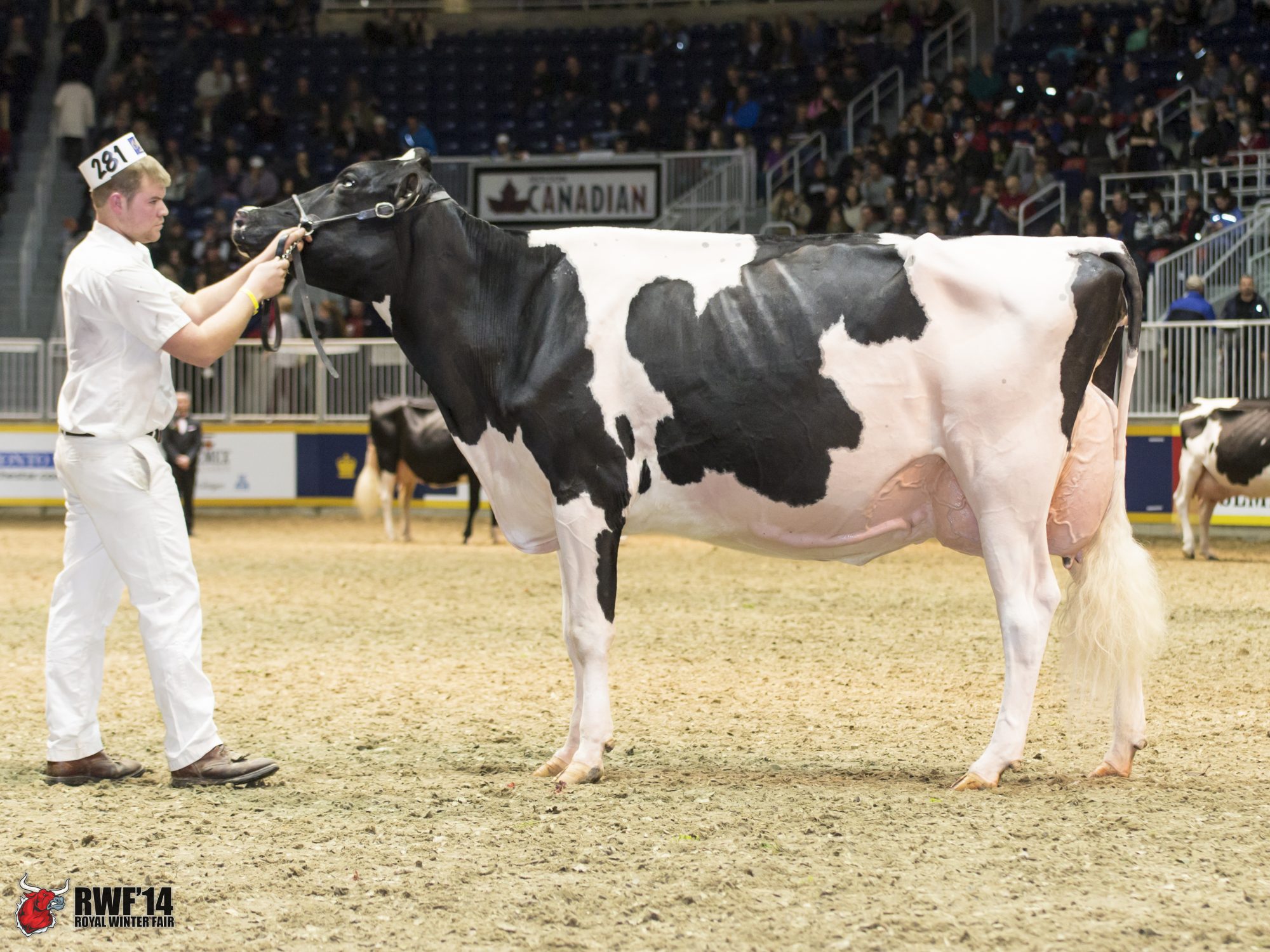
The moment a champion is made: 2013 Grand Champion Robrook Goldwyn Cameron gets the winning slap. This cow, co-owned by Budjon Farms, is a perfect example of the elite US operations that cross the border to compete. This is the “shared dedication to excellence” that brings two nations’ worth of dreams into one ring.

The competition intensifies with elite US operations crossing the border. Budjon, Triple-T, Currie, Ackley, Milksource, and Butlerview, among others, bring their own decades of excellence to the ring. These American powerhouses remind everyone that excellence knows no borders—and that next Thursday and Friday, Judge Joel Lepage and JP Proulx will evaluate cattle from two nations’ worth of dreams. Yet somehow, with Paul’s empty chair and these families’ intertwined stories, this year feels less about international rivalry and more about shared dedication to excellence. (Read more: Making Dreams Come True: The Journey of Tom & Kelli Cull)

The Ripples That Reach Worldwide

Last year, Canada exported $201.2 million in dairy genetic material to over 70 countries. Behind every shipment is a story like these—families who’ve sacrificed, persevered, refused to compromise even when easier paths beckoned.

When Kingsway genetics influence herds across the United Kingdom, when Arangatang’s daughters thrive in places she never saw, that’s an impact transcending individual achievement. These aren’t just genetics being exported—they’re decades of decisions, generations of selection, countless moments when someone chose the harder path because it was the right one.

Kingsway Solomon Gorgeous, the 2017 Royal Junior Champion. This is a perfect example of the “ripples that reach worldwide”—a champion representing the very genetics born from Kingsway’s decades of decisions, which are now exported to influence herds across the globe.

This year feels different, though. With Paul Ekstein’s passing, we’re witnessing a transition. The giants who built the foundation are passing the torch. What matters now is how brightly that torch continues to burn.

The Lesson for Every Farm

This Breeder’s Herd victory represents everything Paul Ekstein taught us: Excellence isn’t inherited, it’s earned—Royal after Royal, generation after generation. Paul started with nothing after fleeing Nazi-occupied Czechoslovakia. Seventy years later, this is what refusing to quit looks like. Thursday, Ari walks these same bloodlines into the ring, proving that true legacies aren’t about resources—they’re about showing up when it’s hard, especially when your heart is breaking.

Standing in the packed stands at The Royal next week—or reading about it afterward—you might wonder what these elite operations mean for your own farm.

These aren’t stories about unlimited resources. Kingsway started with a grade herd. Quality began when Paul Ekstein arrived in Canada with nothing except determination. Simon Lalande and Pierre Boulet built their operations on passion and an eye for excellence, not deep pockets. They share something more valuable than money: the conviction that excellence is possible.

The transformative lesson here is that excellence takes decades, not years. Paul Ekstein attended The Royal for over 70 years. Ari worked alongside him for twenty years before taking the lead. There’s no app for that. No shortcut. No genomic test that replaces time and dedication.

Whether you trust data or intuition, whether you’re breeding for your own herd or building a business around genetics, what matters is consistency. Showing up. Keeping going when progress feels invisible. In an age where technology promises quick fixes, these operations remind us that some things can’t be rushed.

The Quality Holsteins exhibit at a Royal decades ago. This is the very ‘lesson for every farm’ put into practice: excellence is built on consistency. The professionalism of this display is the same “attention to every minor detail” that Paul taught Ari—the ‘showing up’ that takes decades to build a legacy.

The Moment Everything Converges

Next Thursday’s the heifer show. Next Friday’s cow classes. Minutes in the ring that represent decades of decisions.

For Ari Ekstein, it’s his first Royal without his father—but with Paul’s spirit in every animal they present. He’s created a poster tribute to his father that will be displayed at the show, a visual reminder of the legacy being carried forward. For Gord McMillan, it might finally bring the Grand Champion banner that completes Kingsway’s journey. For Simon Lalande and Pierre Boulet, it’s another chance to prove that passion drives profit.

What gives me chills is knowing that young breeders walking past that tribute will see Paul’s story captured there. A boy who fled Czechoslovakia. Who built excellence from nothing. Who showed up for over 70 straight years, always willing to share what he’d learned. Somewhere in those barn aisles, a young person will decide: this is what I want to do with my life.

That’s how legacies work. Not through genetics alone, but through inspiration passed person to person, generation to generation.

The Victory That’s Already Won

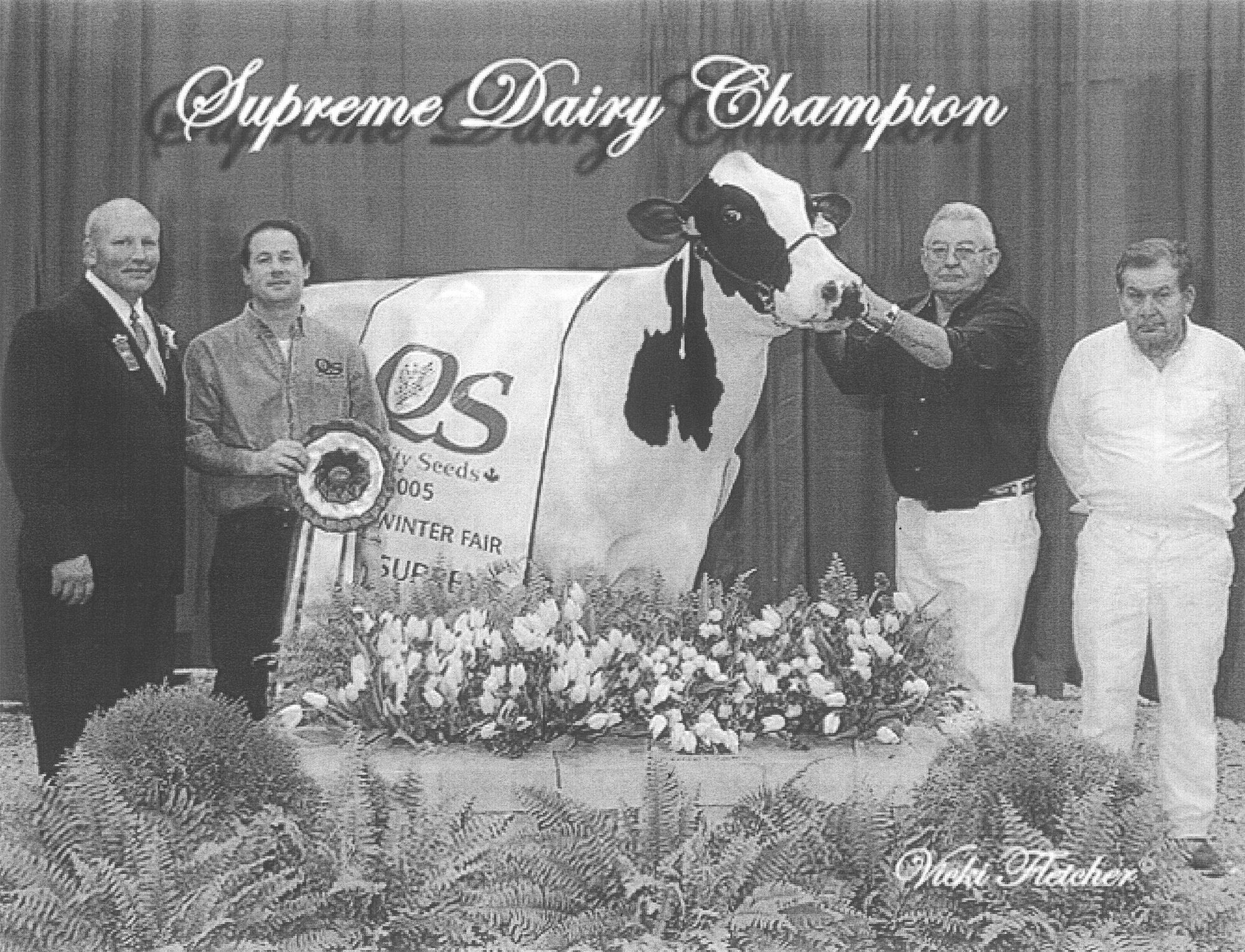
Paul and Ari Ekstein with their 2005 Supreme Champion, Quality BC Frantisco. This photo is the very definition of “The Victory That’s Already Won.” It’s a moment that validates decades of pre-dawn decisions and proves that legacies don’t die with their founders—they are simply carried forward by the next generation.

When Joel Lepage points to Grand Champions next Friday, when people pause at Ari’s tribute poster to remember Paul, when these six operations walk their cattle into the ring, those gestures will represent more than one day’s achievement. They’ll validate decades of decisions made before dawn, sacrifices nobody saw, and the courage to keep pursuing excellence even when your heart is breaking.

But here’s what covering The Royal all these years has taught me: every one of these operations has already won. They’ve proven that legacies don’t die with their founders. They’ve shown that passion can build sustainable businesses. They’ve demonstrated that in an industry of increasing scale and technology, there’s still room for operations driven by conviction and love.

Next Thursday and Friday at The Royal Winter Fair, we won’t just watch cattle being judged. We’ll witness what happens when dreams collide with reality, when preparation meets opportunity, when the next generation carries forward what the previous generation built.

The banners will be awarded. Champions will be crowned. But this year, with Paul’s spirit present in his absence, with multiple generations showing together, with dreams both fulfilled and still pursued, The Royal means something more.

It’s proof that some things can’t be stopped. Not by loss. Not by markets. Not by time itself.

Just farmers, their families, their cattle, and dreams that refuse to die.

That’s already victory enough.

KEY TAKEAWAYS: 

  • The empty chair that fills the barn: After 70 consecutive Royals, Paul Ekstein’s absence makes his legacy more present than ever—proving that true excellence transcends loss
  • Six operations, zero excuses: From Kingsway’s grade herd beginnings to Westcoast’s thousands of cows, these operations prove that excellence isn’t about resources—it’s about refusing to quit
  • Decades beat data every time: While others chase genomic shortcuts, operations like Ferme Jacobs (cow families first) and Quality (95% homebred) prove that time and consistency create lasting genetics
  • Dreams outlive dreamers: With foundation cows like Arangatang gone but granddaughters competing, The 2025 Royal shows how excellence passes through generations—in cattle and families alike
  • Your farm’s lesson: Whether you’re breeding for your herd or building a business, what matters isn’t your starting point but your staying power—excellence takes showing up, not showing off

EXECUTIVE SUMMARY: 

Paul Ekstein attended The Royal Winter Fair for 70 consecutive years—this November, his empty chair transforms the show from competition into a testament. As his son Ari prepares Quality Holsteins’ cattle with routines his father perfected, five other elite operations bring their own dreams and losses to the ring: Kingsway pursuing their first Grand Champion after four decades, Ferme Jacobs proving cow families still trump genomics, Lalande and Boulet showing passion drives profit, and Westcoast achieving excellence at industrial scale. What unites these diverse operations isn’t philosophy but persistence—Kingsway started with grades, Quality with nothing —and both built dynasties by showing up decade after decade. This year carries extra weight as foundation animals like Kingsway’s Arangatang have passed, but their granddaughters compete, while US operations like Budjon and Triple-T remind everyone excellence knows no borders. When Judge Joel Lepage and JP Proulx evaluate cattle next Thursday and Friday, they’ll judge more than conformation—they’ll validate lifetimes of pre-dawn decisions by families who chose the harder path. The 2025 Royal proves that legacies don’t die with their founders but live on through genetics, families, and dreams that refuse to quit.

Join the Revolution!

Join over 30,000 successful dairy professionals who rely on Bullvine Weekly for their competitive edge. Delivered directly to your inbox each week, our exclusive industry insights help you make smarter decisions while saving precious hours every week. Never miss critical updates on milk production trends, breakthrough technologies, and profit-boosting strategies that top producers are already implementing. Subscribe now to transform your dairy operation’s efficiency and profitability—your future success is just one click away.
NewsSubscribe
First
Last
Consent

From a $50 Calf to Dairy Royalty: The Peace & Plenty Legacy That Built a Holstein Empire

$50 teen gamble built 181 Excellents & million-dollar genetics—while experts said it couldn’t be done

You know how it is at World Dairy Expo—you’re grabbing coffee between the barns, and someone mentions the Schwartzbecks. Maybe it’s their latest All-American, or that crazy classification average they’re running. But here’s the thing most folks don’t realize: this isn’t your typical “big operation” story.

The Schwartzbecks of Peace & Plenty aren’t just another name on the Holstein circuit. Sure, you might spot their cattle taking purple at the Eastern Fall National or catch their prefix when Chris Hill’s calling All-Americans. But what you don’t immediately grasp is how deeply their roots run—in soil, family, and the kind of persistence that turns dreams into dynasties.

Let’s be honest: it feels like we’ve heard every major dairy success story. The flashy sales, the million-dollar cows, the glossy magazine spreads. But sit down with the folks from Union Bridge, Maryland, and they’ll take you somewhere different. They want to talk about family dinners after sixteen-hour days, about a teenager with fifty bucks burning a hole in his pocket, and about the kind of work that doesn’t make headlines but builds legacies.

Joe Schwartzbeck’s journey starts in 1952 with that fifty-dollar Jersey calf—probably the best investment in dairy history.

When Jerseys Led to Holsteins (And Everything Changed)

Picture this: Gaithersburg, Maryland, early 1950s. Joe, a teenager, stands in his father’s small barn in Montgomery County before dawn, his breath visible in the cold air, his hands working steadily on seven or eight Jersey cows. The rhythmic swish-swish of milk hitting the bucket, the sweet smell of fresh hay, the cream separator humming while he feeds skim to a few hogs out back.

“Dad only farmed part-time,” Joe tells me over the phone, that matter-of-fact tone dairy folks know well. “But I had bigger ideas.”

After high school and military service, Joe married Nona, borrowed $6,500—serious money back then—and built a 20-cow stall barn. But here’s where the story gets interesting: he was working for a neighbor who paid him not in cash, but in Holstein heifers.

First time those black-and-white girls hit their stride? Game over. “Holsteins were giving far more milk than the Jerseys,” Joe recalls with typical understatement. What he’s not saying is that moment—watching those production records climb—fundamentally shifted everything.

The Auction That Built an Empire

December 1968. Cold enough to freeze your breath, ground hard under your boots. Joe and Nona are sitting in a Carroll County auction barn, surrounded by the usual mix of farmers, dreamers, and tire-kickers. The auctioneer’s chant echoes off metal walls, and when the gavel falls on a 295-acre spread, they’ve just committed $125,100 to their future.

“Those first few months were something,” Joe admits. Picture the logistics: living in Montgomery County, driving to Union Bridge every day, renovating barns, fixing the fence, getting ready for the move. Nona tracked expenses on a yellow legal pad while young Gus and Shane learned to dodge construction equipment and flying sawdust.

When they finally moved those 45 Holsteins into the 49-cow tie-stall, Joe’s first milk check hit around $2,500 per month. Not impressive by today’s standards, but it represented potential. More importantly, it represented ownership.

The expansion came methodically—no flashy gambles or debt-fueled rushes. In 1974, Joe built a double-4 Herringbone that served them for 26 years. Anyone who’s milked knows that’s the heartbeat of your operation: the steady chunk-chunk of the vacuum pumps, the familiar routine of prep, attach, strip, dip. That parlor saw them through decades of 4 a.m. starts and midnight emergencies.

By 2000, they’d upgraded to a double-8, supporting growth from 120 cows to 240 today. Their rolling herd average? 24,000 pounds with 4.0% fat and 3.1% protein—numbers that pay bills and win ribbons. Those butterfat numbers, especially—4.0% is the kind of consistency cheese plants dream about.

Enter “Jubie”—The Cow That Rewrote History

A moment of triumph on the colored shavings. Hadley Faye Ross raises her arm in victory with Peace&Plenty Tat Jubie41-ET, the Intermediate Champion at the 2024 International Junior Holstein Show.

Every great breeding program has that one foundation animal. For Peace & Plenty, it’s Peace & Plenty Atwood Jubilant—”Jubie” to everyone who matters.

Here’s where genetics, gambling, and pure intuition intersect. Austin and Davis Schwartzbeck (Joe’s grandsons who share the mating decisions today) still get excited talking about those early flushes: “Seven OKalibers from the first flush, six Docs and six Goldchips from the second. She just kept delivering.”

Picture embryo transfer day—that mix of science and hope, waiting to see if the flush worked. Then watching those offspring grow, develop, start producing… and realizing you’ve hit genetic gold. “Her offspring never disappointed,” Austin explains, and you can hear the amazement still fresh in his voice.

But here’s what separates good breeders from great ones: the Schwartzbecks didn’t just multiply genetics, they curated them. Generation after generation, choosing which daughters to flush next, building depth through the Jubie line.

The proof? 2023: all seven Peace & Plenty All-Americans came from Jubilant bloodlines. Every single one. Then 2024 rolled around—lightning struck twice. Seven more All-American nominations, including both Senior and Junior Best Three. All tracing back to that one remarkable cow.

Peace & Plenty Doc Jubie 16, a direct descendant of the renowned “Jubie” line, exemplifies the type and production excellence that has driven the farm’s multi-generational success and All-American recognition.

When Numbers Tell Stories (Not Just Statistics)

Now, I could throw Holstein classification data at you all day. But let me paint the scene instead: classification morning at Peace & Plenty. The classifier’s truck rolls up the drive, cattle cleaned and ready, as the family tries to look casual while their hearts race. Then scores start coming back: 90… 91… 92…

When you learn that Peace & Plenty has bred 181 Excellent Holstein cows, that might not hit you immediately. But consider this: Excellent status (90-97 points) represents the top 5% of all classified cattle. They haven’t just hit this mark occasionally—they’ve systematically produced it. Two cows at 95 points (approaching perfection), 10 at 94, 14 at 93, 25 at 92, 36 at 91, and 95 cows achieving that coveted 90-point threshold.

I can picture Austin checking his phone when those results came through, maybe calling across the barn to Davis: “Hey, you’re gonna want to hear this…”

Beyond individual classifications, they’ve produced six Merit dams and four Gold Medal dams. Those aren’t just numbers on paper—they’re proof of a breeding philosophy that actually works in the real world.

Three Generations, One Vision (And Somehow It Actually Works)

Walk into Peace & Plenty any morning, and you’ll witness something increasingly rare: genuine multi-generational collaboration that works. No drama, no stepping on toes—just family working toward shared goals.

Joe, now 82—and he’ll gladly remind you of that fact with a grin—still handles fieldwork with five-plus decades of accumulated wisdom. You’ll find him at dawn checking corn stands, evaluating crop conditions with eyes that’ve seen every weather pattern Maryland can deliver. “Pop won’t sugarcoat it,” Austin laughs. “He holds high expectations, but he makes sure the crop side runs to the highest standards.”

Nona manages books with eagle-eye precision—anyone who’s balanced a dairy operation knows that’s no small task. Their son, Gus, works full-time alongside his wife, Lisa, bringing an essential second-generation perspective to their daily decisions.

However, it’s the third generation that is steering the future. Davis serves as herdsman—the guy who spots trouble before it becomes problems, who knows every cow’s personality, who can walk through the barn and tell you stories about each animal. Austin handles the technical work of breeding the cows, although mating decisions are a shared responsibility between the brothers—that collaborative approach is evident in their consistent success.

The commitment runs deeper. Austin’s wife, Lauren, and sister, Aubrey, play pivotal roles in the show program. Anyone who’s prepped cattle knows what this involves: daily grooming, teaching animals to set up properly, and the patience required when a heifer decides she’s not interested in standing square.

“Whether it’s running daily operations, rinsing heifers in the evening, cooking meals for shows, or making sure kids are cared for,” the family notes, “every piece matters.”

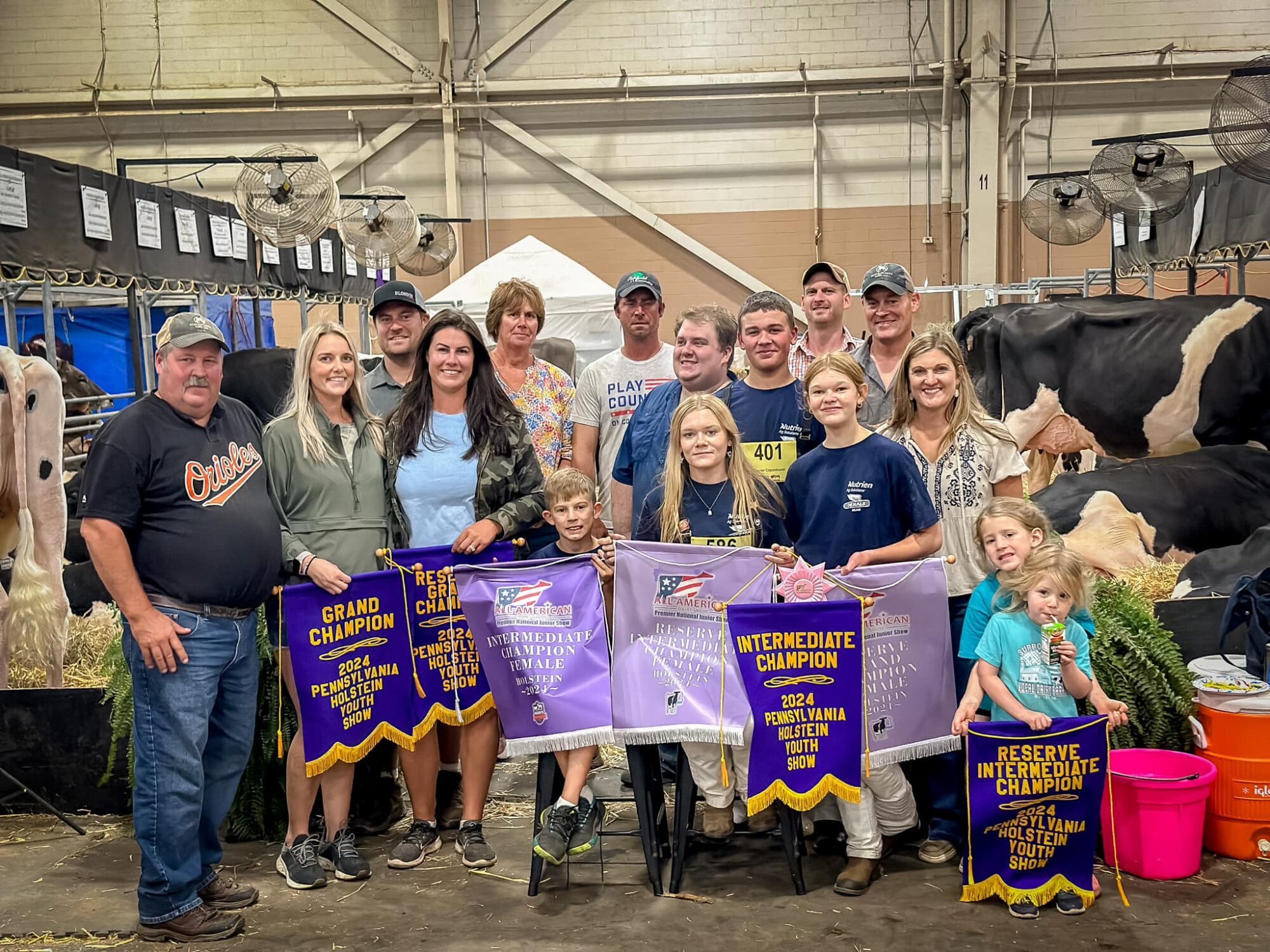
Generations of Schwartzbecks, alongside their dedicated team, celebrate success at the 2024 Pennsylvania Holstein State Show. From fieldwork to show ring prep, every family member and team contribution is vital to Peace & Plenty’s achievements.

Picture the end of a long day: swing sets occupied with the next generation, dinner conversations flowing between generations, decisions somehow getting made that work for everyone. The communication isn’t always easy—” can be one of the most challenging pieces,” they admit—but the benefits are transformative.

Show Ring Stories (The Ones That Give You Chills)

Austin still lights up talking about 2011: “I had Peace & Plenty Asteroid Fishy take Junior Champion at the Junior Holstein Show at World Dairy Expo. That feeling when they call your number on the colored shavings… you never forget it.”

That victory helped establish Peace & Plenty as a force beyond Maryland’s borders. But what really gets the family excited now is watching the fourth generation step into those same rings.

“Chandler Storey—that’s Aubrey’s daughter—just turned nine,” Austin tells me with obvious pride. “She’s headed to World Dairy Expo this year to show her Jersey winter calf that was just named Junior Champion at All-American in Harrisburg. Last year, her brother Madden got his first chance to exhibit at Expo, too.”

You can hear it in his voice—that mix of pride and nostalgia. “Exciting for the kids to experience the thrill of showing on colored shavings for the first time at such a young age. Safe to say they’re hooked for life.”

Chandler Storey continues the family’s legacy, exhibiting SV VIP Henna to Junior Champion at the 2024 Pennsylvania State Junior Jersey Show.

That’s four generations now, all connected by those moments in the ring, by early mornings prepping cattle, by the lessons that come from winning and losing with grace.

Austin still gets animated talking about other victories: “Six All-American nominations—hearing our farm prefix called that many times as Chris Hill announced them at Nashville… it put everything in perspective. Not just our success, but watching animals we’d sold succeed for their new owners.”

Imagine that moment: standing in a packed sale barn, your farm name echoing again and again, realizing your breeding program isn’t just working—it’s helping others succeed. That’s validation you can’t buy.

Their achievements read like a Holstein Hall of Fame: Reserve and Grand Champion at the Eastern Fall National, Grand Champion at the Southern Spring National, and the historic first-ever Junior Supreme Champion at the Premier National Juniors in Harrisburg. Each title represents countless hours of preparation, careful selection, and attention to detail that separates good from great.

The Philosophy That Pays Bills (And Wins Ribbons)

Their breeding approach boils down to something beautifully practical: “High type with positive milk production. A cow that can represent your prefix, but also produce milk to pay the bills.”

That’s their “no pansy cows” philosophy in action—breeding for aggressive, strong animals with genuine presence. Walk through their barns and you see it immediately. These aren’t delicate creatures needing babying. These are cattle with attitude, with the kind of dairy strength that catches your eye from across the barn.

“Longevity, milk production, and the ability to push to the feedbunk,” they explain when evaluating cattle. “A cow that’s hungry is a cow that milks.” At shows, they focus on “dairy strength and mammary system strength. A good cow will be seen year after year.”

Their genetic selection sounds almost casual: “Talking with other show herds, seeing what’s winning, taking gambles on bulls. Some work, some don’t.” But don’t be fooled—this is sophisticated decision-making. Austin and Davis are combining network intelligence with calculated risk-taking, backed by decades of family experience in reading pedigrees and phenotypes.

Million-Dollar Validation (The Kind That Matters)

April 2025 brought one of those moments that crystallize decades of work. The Springtime Jubilee Sale, co-hosted with Ducketts and Borderview, grossed over $1 million, averaging $8,635 on 117 lots.

But here’s what numbers can’t capture: the energy in that sale barn. Anticipation thick as morning fog, buyers studying catalogs with intensity usually reserved for championship games. When Peace & Plenty Honour Jub360 VG-89 sold for $27,000 to Pine Tree Genetics of Ohio, you could feel validation rippling through the crowd.

A testament to focused breeding: Peace & Plenty Honour Jub360 embodies the genetic depth and quality that has been cultivated through the Jubie family for generations, contributing to their recent sale.

“When we hosted our sale, it was an honor to feel trusted enough to hold such caliber,” the family reflects. In the dairy industry, where reputation is everything, that trust represents the ultimate endorsement.

International participation alongside domestic buyers highlighted a crucial point: Peace & Plenty genetics have global appeal. These bloodlines are influencing Holstein improvement from coast to coast and beyond.

Beyond Cattle: Stewardship That Counts

Excellence in breeding might earn industry recognition, but excellence in stewardship earns something more valuable: respect. Peace & Plenty earned the 2006 Carroll County Soil Conservation District Cooperator of the Year Award and recognition for conservation achievements through the Double Pipe Creek Rural Clean Water Project.

You see their commitment in practical details: “All young stock pens are picked twice daily and bedded as needed. Calf barn power-washed and sanitized after each group.” This isn’t showboating—it’s systematic care that becomes second nature when you genuinely care.

Their community connections run deeper than those of most operations. “If there’s one thing about Carroll County, it’s that one call leads to an army of support,” they explain. “Whether it’s weddings at the farm, our cow sale, a barn fire, or help during crop season—an army shows up.”

That’s rural America at its finest. They’re even featured on Maola milk bottles shipped down the East Coast, creating direct consumer connections that most farms only dream about.

The Crown Jewel Recognition

When the Klussendorf Association announced Peace & Plenty as the 2025 McKown Master Breeder Award recipients, the family’s reaction revealed everything about their character.

“Unexpected… something that makes you look back at past winners and realize how humbling this acknowledgment is,” they responded. “It made us stop and value the hard work everyone’s put in.”

The McKown Master Breeder Award represents the dairy industry’s highest breeding honor, recognizing operations that demonstrate ability, character, endeavor, and sportsmanship. Previous winners represent distinguished dairy excellence from across North America.

“Some roles are larger than others, but nothing’s worse than building a puzzle without all the pieces,” they reflected. “There are lots of pieces that come together at Peace and Plenty.”

Think about that. In an industry often celebrating individual achievement, here’s a family understanding that success is collective. Every person matters. Every contribution counts.

Looking Forward (What 2025 Really Means)

As Davis puts it: “Polled and A2A2″—emphasizing continued investment in “diversified genetics to create resilient herds.”

This forward-thinking approach tells you something important. They’re not resting on achievements. They’re already thinking about genetic trends that’ll matter five, ten years down the road. Polled genetics is gaining traction industry-wide—no dehorning, easier management, and consumer-friendly. A2A2 milk protein is opening new market opportunities.

They’re embracing IVF technology “to put us on the map,” injecting liquid manure to improve crop yields, building new calf facilities for enhanced air quality, and facilitating animal transitions. Always adapting, always improving.

And now with Chandler and Madden already showing on colored shavings at World Dairy Expo—the fourth generation isn’t just watching anymore. They’re participating, learning, and building their own memories in those same rings where their parents and grandparents made a name for themselves.

The fourth generation of Peace & Plenty walks a path paved by their family’s legacy, ready to embrace new challenges and continue the tradition of excellence.

What This Really Means for All of Us

Here’s the thing about Peace & Plenty’s story that resonates in 2025: it proves that family operations can not only survive but also set industry standards. With input costs skyrocketing, labor challenges everywhere, and consumers demanding greater transparency, their approach offers hope.

They demonstrate that genetic improvement doesn’t require sacrificing animal welfare, that show ring success and commercial viability can coexist, and that true excellence gets measured not just in awards, but in the kind of legacy that inspires others.

“Don’t cut corners. Have pride in what you do and find your passion,” they advise young farmers. Simple words carrying decades of wisdom from an 82-year-old who started with a teenage dream in Montgomery County.

As Nona puts it perfectly: “Nothing gives me more joy than watching the great-grandchildren play in the yard.”

The Peace & Plenty story started with a teenager’s fifty-dollar gamble on a Jersey calf in Gaithersburg, Maryland. Seventy-three years later, it has become proof that with enough dedication, vision, and genuine love for what you do, the most unlikely dreams can become a generational reality.

In 2025, when dairy faces challenges we couldn’t have imagined even five years ago, stories like this remind us that the fundamentals still matter. Family still matters. Excellence still matters. And with the right combination of grit, genetics, and good people working together—whether they’re 82 or 9 years old—the best is yet to come.

That’s not just inspiration—it’s a roadmap for anyone serious about building something that lasts.

Key Takeaways:

  • Build depth, not breadth: 181 Excellents from ONE cow family proves focused breeding beats scattered genetics
  • Start at any scale: $50 teen investment → $1M sale 73 years later (compound annual growth beats quick flips)
  • Share breeding decisions: Austin and Davis’s collaboration produces 24,000 lbs @ 4.0% fat—ego kills consistency
  • Master fundamentals before technology: Peace & Plenty added IVF after perfecting selection—tools amplify skill, not replace it

Executive Summary

An 82-year-old’s $50 Jersey calf just shattered the dairy industry’s biggest myth: you need genomics to build champions. Peace & Plenty Farm bred 181 Excellents from ONE foundation female—no genomic testing, no million-dollar purchases, just observation and patience—earning the 2025 McKown Master Breeder Award. Their 240-cow operation (24,000 lbs, 4.0% fat) grossed $1 million at their 2025 sale by focusing on one cow family for 73 years while others chased trends. Three generations prove family farms can dominate: Joe handles crops, grandsons Austin and Davis share breeding decisions, and nobody’s ego disrupts the system. This exclusive reveals their contrarian “hungry cows milk” philosophy, why they added IVF only after mastering fundamentals, and the exact blueprint that turns small investments into dynasties.

Learn More:

Join the Revolution!

Join over 30,000 successful dairy professionals who rely on Bullvine Weekly for their competitive edge. Delivered directly to your inbox each week, our exclusive industry insights help you make smarter decisions while saving precious hours every week. Never miss critical updates on milk production trends, breakthrough technologies, and profit-boosting strategies that top producers are already implementing. Subscribe now to transform your dairy operation’s efficiency and profitability—your future success is just one click away.
NewsSubscribe
First
Last
Consent

From Family Farm to Industry Leader: The Journey of Larson Acres, 2024 World Dairy Expo Dairy Producers of the Year

Discover the inspiring journey of Larson Acres, World Dairy Expo’s 2024 Dairy Producers of the Year. How do they efficiently manage 2,500 cows and 5,000 acres?

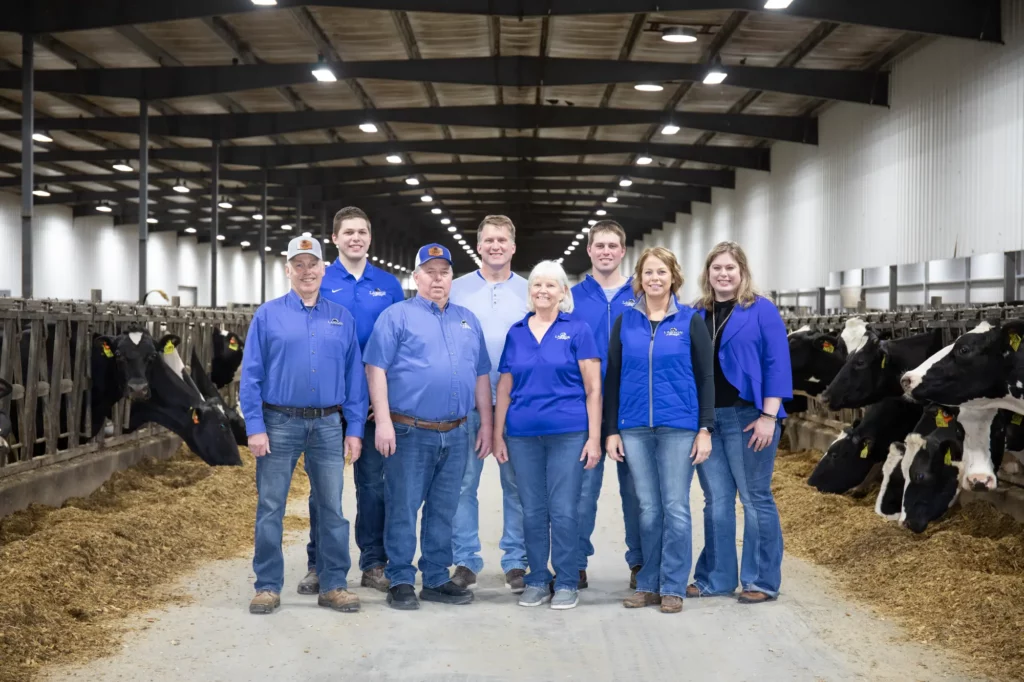
Managing a 2,500-cow herd and 5,000 acres, Larson Acres has earned the  2024 World Dairy Expo Dairy Producers of the Year title. Meet Ed and Barb Larson, daughter Sandy, brother Mike, and Jim, Trustee from Evansville, Wisconsin, who set new standards in the dairy industry. Their story spans from modest beginnings to becoming a leading dairy operation, as shared in a recent World Dairy Expo’s Podcast – The Dairy Show The Larson Acres Team. Discover their breeding and genetics excellence, community integration, and innovative employee management—a must-read for dairy farmers aiming to thrive in today’s evolving landscape. Larson Acres showcases how tradition, innovation, and community drive success in dairy farming.
The Evolution from Humble Beginnings to Dairy Pioneers 

However, this journey was not without its challenges. The farm faced economic downturns, changing market conditions, and the need to adapt to new technologies and regulations. Yet, the Larsons persevered, using these challenges as opportunities for growth and innovation. Their story is a testament to the resilience and adaptability required in the dairy industry. 

The official starting point for Larson Acres, as incorporated in 1971, marked a significant leap in its transformation. However, Ed Larson’s father established the home farm in 1957, milking about 65 cows in a modest 57-stanchion barn and managing around 500 acres. This foundational setup was only the beginning of a series of pivotal developments. 

One of the first significant expansions occurred in 1985, with the construction of a 155-stall tie-stall barn, a move intended to enhance cow care and streamline operations. This laid the groundwork for the farm’s first transition to a more modern setup. By 1998, the Larson family expanded by introducing their first milking parlor and free-stall barn, scaling their operations from 600 to 1,200 cows. 

The 2010s were transformative years for Larson Acres, demonstrating their ambitious vision and commitment to growth. By 2010, the farm doubled its herd to approximately 2,500 milking cows, and the crop production expanded to 5,500 acres. The Larsons steadily integrated advanced techniques and technology throughout these expansions to enhance productivity and cow welfare

Community involvement has been a key pillar of Larson Acres’ success. The farm actively participates in local events, hosts educational tours, and supports community initiatives. This not only fosters a positive relationship with the community but also helps in promoting the dairy industry and sustainable farming practices. Larson Acres’ success is not just a result of their hard work and dedication, but also the support and collaboration of the community.

The Pillars Behind Larson Acres’ Triumph

The Larson family has been pivotal in steering Larson Acres towards its current success, with each member bringing unique skills and dedication. 

Ed and Barb Larson: As the founders, Ed and Barb Larson have been the cornerstone of Larson Acres. Ed’s strategic vision and relentless work ethic, coupled with Barb’s significant contributions, have been instrumental in expanding from a modest beginning to a large-scale operation. Their foresight and planning are a source of inspiration for those in the industry. 

Sandy Larson: The eldest child, Sandy, has climbed the ranks to become the CEO of Larson Acres. Her deep love for cows and meticulous attention to herd health and management have been central to the farm’s high-performance levels. Sandy’s successful implementation of structured employee engagement programs not only maintains a meager turnover rate and high employee morale but also underscores the Larsons’ dedication to their team’s well-being. 

Jamie Larson: Jamie, the middle child, has been integral in the technical and mechanical aspects of the farm operations. As the former shop manager, his expertise ensured the smooth functioning of the farm’s machinery and infrastructure. Although he has taken a step back from daily operations, his contributions have impacted the farm’s efficiency and maintenance practices. 

Mark Larson: The youngest, Mark, although not as involved in day-to-day operations, has maintained a close connection with the farm. His architectural skills, honed outside the farm, have influenced various structural and developmental projects at Larson Acres. Mark’s pride in the family heritage brings external visibility to the farm, as he frequently hosts tours and showcases the farm’s operations to visitors. 

Mike Larson: As the Dairy Manager, Mike focuses on the genetic and nutritional aspects of the operation. His work on the genetics and embryo programs has elevated the quality of the herd, leading to successful cattle exports internationally. Mike’s expertise in milk and feed pricing risk management further ensures the financial stability and growth of Larson Acres. 

Jim Trustum: Serving as the Herd Manager, Jim is the linchpin in the daily management of the cows. His hands-on approach and innovative cow comfort and health strategies have significantly contributed to the herd’s high-performance metrics. His use of modern management tools like Dairy Comp and Cal Manager showcases the farm’s forward-thinking approach to maintaining elite herd health standards. 

Together, these individuals form a cohesive team that epitomizes the strength of family-run businesses. Their combined efforts and diverse skill sets have propelled Larson Acres to be a leading name in the dairy industry.

Mike Larson: The Visionary Behind Larson Acres’ Genetic Excellence 

Diving into the intricate realm of genetics and breeding, Mike Larson is a pivotal figure at Larson Acres. His deep-seated passion for understanding and improving herd genetics has driven the farm’s breeding initiatives to new heights. Mike’s role encompasses the meticulous management of the genetics and embryo program and the critical task of managing milk and feed pricing risk. This multifaceted responsibility ensures not just the health and productivity of the cows but also the farm’s economic resilience. 

Mike’s expertise is most evident in the farm’s sophisticated breeding philosophy. Emphasizing balanced, deep-bodied animals with robust wellness traits, he selects genetic traits that promise longevity and health, steering away from a purely production-focused approach. This philosophy aligns with sustainable farming practices and underscores a commitment to animal welfare, ensuring cows reach their full potential in both productivity and well-being. 

The markets for Larson Acres’ genetics extend far beyond domestic boundaries. The farm’s genetic materials and embryos are highly sought after, with a significant foothold in China and a notable presence in Japan and Germany. This international demand speaks volumes about the quality and reputation of their breeding stock. Furthermore, by participating in renowned national sales and offering some of their best animals and IVF sessions, Larson Acres showcases their willingness to share their top-tier genetics with the global farming community. 

A cornerstone of Mike’s genetic program is the on-farm IVF lab, established around three years ago. This lab, a testament to the farm’s forward-thinking approach, facilitates the weekly production of embryos, ensuring consistency and quality. The partnership with Sunshine Genetics enhances this setup, allowing neighboring dairy farmers to lease the facility. This collaborative effort bolsters the local farming community and cements Larson Acres as a hub of genetic excellence. 

Therefore, Mike’s role is about more than just managing genetic programs and risk strategies. It is about envisioning and steering the future of dairy farming, where genetics, technology, and sustainability converge to create a blueprint for success. Through his efforts, Larson Acres continues to lead in breeding innovations, setting benchmarks in the dairy industry worldwide.

Jim Trustum: The Custodian of Cow Welfare and Productivity at Larson Acres 

Jim Trustum, as herd manager at Larson Acres, pivotally oversees the day-to-day decisions related to cow welfare and productivity. The farm boasts two separate milking barns: a conventional, naturally ventilated barn housing 1,300 cows and a cross-ventilated facility accommodating roughly 1,200 cows. Trustum’s responsibilities include ensuring that these facilities operate efficiently and effectively, contributing to the farm’s high level of productivity. 

Innovations in cow comfort are a cornerstone of Larson Acres’ approach to herd management. Using recycled sand for bedding provides a comfortable and sanitary environment for the cows. At the same time, the cross-ventilated barn helps maintain a consistent and favorable climate throughout the year. The rubber flooring installation has recently enhanced hoof health, a testament to the farm’s proactive stance on animal welfare. 

Technology is crucial to the farm’s success, with indispensable tools like Dairy Comp and Cal Manager. Dairy Comp assists in maintaining detailed records and making informed management decisions. At the same time, Cal Manager, with its heat and health alerts, allows for early intervention in potential health issues, ensuring the cows receive timely care. 

Larson Acres’ herd statistics reflect their commitment to quality and excellence. The farm consistently achieves an average of 112 pounds of energy-corrected milk per cow daily, with a combined fat and protein percentage exceeding 7.5%. Additionally, their somatic cell count remains impressively low, at approximately 70,000, underscoring the herd’s overall health and high performance. This level of achievement is a collective effort, reliant on a dedicated team and meticulous management practices.

A Legacy of Community Engagement and Support 

Larson Acres’ genuine commitment to community engagement is evident through their extensive involvement in the local fabric of Evansville and Rock County. Recognizing the importance of nurturing their home base, the farm has consistently made meaningful contributions to various community projects and events. Whether it’s funding for the Creekside community center, supporting the Evansville library’s expansion, or aiding in creating a new park on former farmland, Larson Acres ensures their legacy extends beyond dairy farming. 

Beyond financial contributions, the Larson family actively participates in local events and dairy promotion activities. They are staunch supporters of the Rock County fair, assisting young 4-H members preparing to showcase their cattle. Their commitment to dairy education is further manifested in hosting numerous farm tours, providing the public with insights into modern dairy farming practices and the essential role of agriculture in their lives. 

Their community engagement doesn’t stop at large-scale projects; it permeates everyday interactions within the local area. From sponsoring small contests like guessing the number of seeds in a pumpkin to organizing educational opportunities for residents, Larson Acres goes the extra mile to foster a sense of belonging and mutual support. This unwavering dedication to their community underscores the farm’s philosophy: quality, pride, and family are the pillars of their farming success and commitment to Evansville and Rock County.

Sandy Larson: Architect of Employee Well-Being and Operational Excellence at Larson Acres

At Larson Acres, Sandy Larson has demonstrated exceptional leadership and ingenuity in managing employee relations. With an authoritative yet compassionate approach, she has cultivated a work environment with high morale and remarkably low turnover, achieving a turnover rate of less than 1%. Sandy attributes this success to robust employee engagement activities, ample growth opportunities, and meticulously defined roles and Standard Operating Procedures (SOPs). 

Engagement is central to Sandy’s HR strategy. She ensures regular employee interaction, organizing monthly activities such as luncheons, educational opportunities, and fun contests, like guessing the number of seeds in a pumpkin during Halloween. These activities foster community and belonging among the staff, making them feel valued and appreciated. 

Furthermore, Sandy prioritizes growth opportunities for her employees. Many team members have advanced to management positions under her guidance, showcasing the farm’s commitment to professional development. This culture of internal promotion not only boosts morale but also encourages long-term loyalty and dedication, as employees see a clear path for their career progression within the farm. 

Equally important are the clear role definitions and SOPs that Sandy has helped establish. Each position at Larson Acres comes with a detailed set of procedures and expectations, ensuring that employees are well-equipped to perform their duties effectively. Regular check-ins at one month and six months help to reinforce these standards, ensuring that new hires are well-integrated and confident in their roles. 

This structured approach to onboarding and role clarity is complemented by frequent communication and monthly meetings, where staff can discuss ongoing projects and share insights. Sandy has created a resilient and responsive organizational structure that consistently delivers high performance and employee satisfaction by empowering middle managers with the tools and authority to lead their respective teams.

Ed Larson’s Dedication to Preserving Dairy Heritage Through His Milk Bottle Collection

Ed Larson’s passion for historical preservation finds a tangible expression in his extensive milk bottle collection, meticulously curated and showcased within Larson Acres’ museum. Housing approximately 1600 Wisconsin milk bottles, this collection is a testament to the region’s rich dairy heritage. Each bottle, organized alphabetically by Creamery, encapsulates a piece of the local dairies’ history, offering visitors a nostalgic journey through time. 

The museum goes beyond milk bottles to include an array of farmer-related artifacts, soda fountain shop memorabilia, and antique agricultural equipment. Noteworthy is a diminutive stanchion from Black Earth, an evocative reminder of the craftsmanship and businesses that once defined the dairy industry. These relics, painstakingly gathered from auctions and online sources, serve as educational touchstones illuminating past dairy practices and technologies. 

Significant events, such as the Evansville Historical Society’s recent fundraiser on the museum premises, underscore the community’s recognition of this heritage site. These gatherings highlight the extensive collection and foster a communal appreciation for dairy farming’s legacy. Ed’s guided tours, often featuring interactive discussions about the museum’s artifacts, engage visitors and enrich their understanding of the historical dairy landscape. 

Preserving this history is crucial for future generations, ensuring they can appreciate the evolution of dairy farming and the intertwined local businesses. The museum serves as an educational platform, inspiring young farmers and community members to value their roots while innovating for the future. Through this blend of nostalgia and education, Larson Acres’ museum makes a compelling case for the importance of historical preservation in fostering community identity and continuity.

The Larson Acres Team: Blending Tradition with Progressive Vision for a Promising Future 

The Larson Acres team, deeply rooted in tradition yet progressive in their approach, is setting the stage for a promising future, charting a course that involves the next generation. The farm’s leadership, exemplified by Ed, Barb, Sandy, Mike, and Jim, is committed to passing on the legacy to the younger Larsons while ensuring the operation remains at the cutting edge of dairy farming. 

Sandy Larson articulates the farm’s long-term vision well. “We are setting up for the next generation,” she says, highlighting the involvement of her children Brooke, Dane, and Luke in various farm operations. With her passion for animal care, Brooke is gaining valuable experience off-farm and is expected to return, contributing to calf rearing and herd management. Dane has already embedded himself in the farm’s daily operations, working with crops and maintenance. He is integral to expanding infrastructure like commodity sheds and drying setups. Luke, a recent graduate from UW-Platteville, is honing his risk management and financial strategy skills at EverAg, positioning himself to bring these valuable insights back to Larson Acres potentially. 

The farm’s goals are to sustain growth and innovation. This includes adopting new technologies to enhance productivity and cow welfare, such as advanced genetics and feeding programs spearheaded by Mike Larson. Additionally, they are focusing on implementing modern management tools and infrastructure improvements, from rubber flooring to advanced lighting systems in cow barns. These efforts aim to achieve higher efficiency, better animal health, and superior milk production metrics. 

Larson Acres’ aspirations extend beyond farm efficiency. Community engagement and employee well-being remain paramount. With an incredibly low employee turnover and a structure fostering personal growth and job satisfaction, Sandy continues to drive initiatives that keep the workforce motivated and committed. This family-run farm understands its future success hinges on technological and operational advancements and nurturing a vibrant, skilled, and dedicated team. 

As they prepare for continued success, the Larsons remain committed to their core values of quality, pride, and family. These principles guide their decisions and inspire the younger generation to take on more significant roles, ensuring the farm remains a leader in the dairy industry. The meticulous planning and focused goals manifest their unwavering dedication to honoring their heritage and embracing the future. The result is a robust, forward-thinking operation poised to uphold its legacy while scaling new heights in dairy excellence.

The Bottom Line

The Larson Acres team, led by Ed and Barb Larson, Mike Larson, Sandy Larson, and Jim Trustee, has earned the title of World Dairy Expo’s 2024 Dairy Producers of the Year. Managing 2,500 milking cows and 5,000 acres, their success stems from innovative breeding programs and community involvement. Mike focuses on genetics, featuring the Ferrari and Miss America cow families, while Jim ensures cow welfare. Sandy maintains a stellar workplace with minimal turnover. Beyond the farm, they support Evansville’s community and participate in dairy promotions. Embracing advanced tech and honoring heritage, Ed’s milk bottle collection is a tribute to their legacy. Visit Larson Acres or see them at the World Dairy Expo to witness their dedication and innovation in modern dairy farming.

To learn more, check out World Dairy Expo’s Podcast – The Dairy Show The Larson Acres Team.

Key Takeaways:

  • Strategic Growth: From humble beginnings in 1971, Larson Acres expanded to manage a 2,500-cow milking herd and 5,000 acres, showcasing strategic and measured growth.
  • Family Involvement: The farm thrives on robust family involvement, with each member contributing uniquely to its success, from genetics to operations and beyond.
  • Innovative Genetics Program: Mike Larson’s focus on balanced, health-oriented animals has led to successful breeding programs and a prominent presence in international markets.
  • Cow Comfort and Health: Commitment to cow welfare is evident through advanced facilities and practices, such as recycled sand bedding, cross-ventilated barns, and rubber flooring.
  • Employee Engagement: Sandy Larson has fostered a positive work environment with employee engagement activities, resulting in a turnover rate of less than 1% and a waiting list for employment.
  • Community Support: The Larsons actively contribute to their local community, supporting various initiatives and fostering a strong public presence.
  • Historic Preservation: Ed Larson’s extensive collection of Wisconsin milk bottles and dairy artifacts offers a nostalgic glimpse into the industry’s past.


Summary:

Larson Acres, a dairy farm in Evansville, Wisconsin, has been named the 2024 World Dairy Expo Dairy Producers of the Year. The Larson family, including Ed and Barb Larson, daughter Sandy, brother Mike, and Jim Trustee, have played a significant role in the farm’s growth and success. The farm began in 1971 with 65 cows in a small barn, managing 500 acres. Over time, the family expanded their operations, introducing their first milking parlor and free-stall barn in 1985. By 2010, the farm had doubled its herd to 2,500 milking cows and crop production to 5,500 acres. The Larsons integrated advanced techniques and technology to enhance productivity and cow welfare. Community involvement is a key pillar of Larson Acres’ success, with the farm actively participating in local events, hosting educational tours, and supporting community initiatives. The farm’s breeding philosophy emphasizes balanced, deep-bodied animals with robust wellness traits, aligning with sustainable farming practices. Jim Trustum, the herd manager, oversees cow welfare and productivity decisions. Technology, such as Dairy Comp and Cal Manager, aids in managing records and decision-making.

Learn more:

Send this to a friend