Archive for Management – Page 56

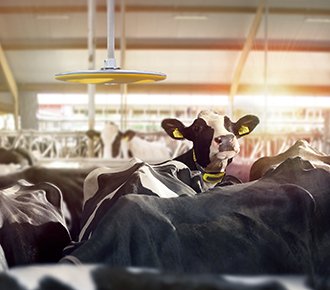
Rockbridge dairy farm goes robotic

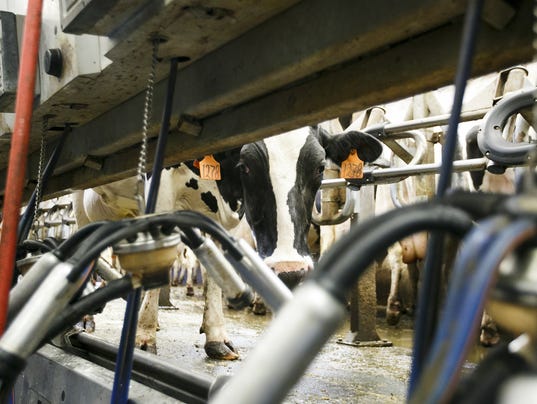
Sometimes it looks like Wall-E has gone into the dairy business.

An automatic milker – the Astronaut – that lets the cows choose when they’re milked.

“Some people say they’re kind of like an athlete,” says Jennifer Leech of Ingleside Dairy Farm. “You have special diet for them, try to make sure they’re always comfortable, and make sure they have regular visits with the veterinarian.”

And reduces the people time required.

“We don’t have to worry about milking the cow,” Leech says. “We just have to clean up after them basically and check on them.”

The cows have radio tags that not only open the gate, but keep track of everything from amounts and quality of milk to how they ruminate – there’s a tiny mic in there listening to the chewing.

“It’s open 24 hours a day,”Leech explains, “And it’ll get read, her collar will get read and determine whether she needs to be milked or not.”

The cold hasn’t been much of a problem — there is still some work to be done — aside from the risk of water from the steam cleaners freezing, and the cows seems to like setting their own schedule. Some even seem to like it too much.

“We had one one time that went through 30 some times, just going through, making circles,” says Leech. “It didn’t milk her 30 times. It milked her maybe four times that day, but she tried 30.”


Source: WDBJ7

Warm up cold weather calf management skills

Calf management impacts a heifer’s survival and future success in the milking herd. Calves’ nutrition and health needs become increasingly important as the temperature drops. Follow these management tips to help set a successful foundation for your future herd.

Maintain energy requirements with proper nutrition.

Make sure calves’ calorie intake keeps pace with energy requirements. Ensure calves receive adequate nutrition with the following tips:

  • Feed calves enough colostrum within two hours of birth, followed by another feeding eight hours later, to help provide them with the necessary level of protective antibodies to achieve successful immunoglobulin transfer.
    • Colostrum intake should amount to 10% of a calf’s body weight.
    • Holstein newborns require about four quarts per feeding.
  • Provide enough calories and protein based on weight, size and climate.
    • Feed a balanced starter in addition to either milk replacer or pasteurized whole milk.
    • Ensure milk replacer is mixed properly and that milk is fed at the same time for each feeding to help achieve a consistent diet.
  • Increase milk feeding from two meals per day to three during cold weather.
  • Encourage starter intake by offering small amounts of fresh starter each day beginning at two to three days of life.
  • Offer fresh water after each feeding to drive starter intake.
  • Take regular weight and height measurements to make sure calves are hitting growth benchmarks.

Monitor calves for respiratory disease.

Cold temperatures can put extra stress on calves’ immune systems. Bovine respiratory disease (BRD) is one of the leading causes of dairy calf mortality.1 This means it is important to make the following a priority:

  • Vaccinate with INFORCE™ 3 respiratory vaccine at birth to help calves build strong immunity against respiratory disease-causing pathogens.
  • Provide draft-free ventilation that allows for fresh air exchange.
  • Watch for BRD symptoms by performing daily health assessments using the Calf Health Scoring Criteria developed by Dr. Sheila McGuirk and the University of Wisconsin-Madison School of Veterinary Medicine. Monitor calves daily for droopy ears, nasal discharge and eye drainage.

Keep calves warm.

In addition to ensuring adequate nutrition and monitoring calf health, keep calves warm and comfortable.

  • Dry off newborns with a clean towel or a calf warmer before moving them outdoors.
  • Provide fresh, warm water after every milk feeding.
  • Maintain clean, dry bedding daily that is deep enough for calves to nest into.
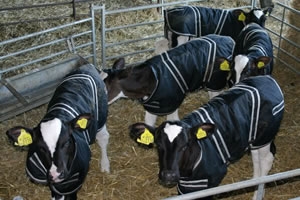
  • Dress calves with calf blankets and coats. And don’t forget their ears!

Consult with your veterinarian and nutritionist for additional opportunities to help keep calves healthy in cold weather.

Source: Zoetis

Keeping Pre-weaned Dairy Calves Healthy and Growing in Cold Weather

The most critical and most expensive period of calf growth in raising dairy calves is the pre-weaning period. During this period calves are highly susceptible to cold stress with a lower critical temperature of 50°F for newborn calves and 32°F for older calves. Cold stress can result in calves turning to stored body fat to generate body heat, essentially losing weight. In addition, calves experiencing cold stress will have compromised immune systems making them more susceptible to disease.

Three main areas to focus on for winter calf care include:

  1. Overall nutrition and feeding requirements.
  2. Management.
  3. Calf environment.

Nutrition and Feeding

  • Feed more milk or milk replacer daily if using individual bottle or pail feedings in one of three ways: 1) add a feeding or a third meal, 2) increase the volume fed by 1/3 or 3) increase the total solids fed. Producers should work with a nutritionist to make sure they are not exceeding 15% total solids in the milk replacer.
  • Traditional calf milk replacer should contain a minimum of (air dry basis) 20% protein, (22 to 24% protein if it contains non-milk proteins such as soy protein or fish meal) and at least 15% fat. Fat sources in milk replacers such as milk fat, tallow, choice white grease or lard are preferred over vegetable oils, which are poorly utilized by calves. Replacers containing 15 to 20% fat are preferred, especially for calves housed in colder environments. Milk replacers containing all milk products generally are better than those containing vegetable proteins, vegetable oil, or fish proteins. If milk replacers containing non-milk protein sources are going to be fed, it is recommended not to start before 3 weeks of age. After the third week, calves should be able to better digest formulations with non-milk protein sources. Calves also can be fed mastitis/antibiotic milk if it appears wholesome and if it is not from a cow with staphylococcal and/or coliform mastitis. If calves are going to be fed discard milk, pasteurization of the milk is recommended. Milk should be fed at a minimum of 101.5°F or body temperature.
  • If you are following an accelerated program you will be using a milk replacer with an increased protein content (26-28%) and a decreased fat content (15-20%).
  • Addition of a commercial fat supplement to increase the energy content in your milk or milk replacer may be utilized, however, it is recommended to use products that are made to mix specifically with liquids.
  • Studies now recommend that small breed calves consume 1.3 lbs. of Dry Matter (DM) with 0.3 lbs. of fat and large breed calves consume 2.0 lbs. of DM and 0.5 lbs. of fat per day in addition to calf starter and fresh water.
  • Offer fresh clean water daily and during extremely cold weather it may be necessary to do so several times a day due to freezing conditions. It should be warmed to body temperature prior to feeding during cold periods. Consumption should be at the rate of 1 gallon/day for the first month and 2/gallons per day for the second month prior to weaning.
  • In addition, to milk or milk replacer, give calves free access to a calf starter grain mixture a few days after birth. Calf starter should contain a minimum of 18% protein and be palatable to encourage the calf to begin eating at an early age. Additionally, there are now calf starters on the market with 22% protein content available for accelerated growth. Overfeeding total protein in the diet may lead to scouring or loose stools. Physical form of the starter is also important; coarse and/or pelleted are better than finely ground starters. By two weeks of age the calf should be eating approximately one-half pound of starter. Top quality hay should also be offered starting around weaning time. The Calves are typically weaned between 6 to 8 weeks of age but they should not be weaned unless they are consuming a minimum of 2.0 lbs. of calf starter and drinking water for at least three consecutive days.
  • Utilization of electrolytes may be necessary if calves become dehydrated when ill.

Management

Calf management takes dedication and extra time, especially during cold weather. Extra labor or time will be needed for increased feedings, additional bedding, and cleaning. Calf coats requires extra time for utilization and laundering, during cold weather to help provide extra protection. Weaning calves during extreme cold conditions provides added stress to the animal and consideration should be given to delaying weaning until temperatures are less extreme.

Environment

Whether you are using individual pens, hutches, or group housing for calves there are some key principles to remember regarding young calf housing.

  • Newborn calves have limited body fat reserves and a minimal hair coat.  When moving newborn calves first make sure they are dry. Keep them warm by either transporting them in a trailer or covered device with clean bedding.  If a wheel barrow or open bucket is used for transport putting a clean calf blanket on will with clean bedding underneath will help maintain body heat.
  • Deep, dry bedding is essential. Straw is preferred, especially during the colder winter months as it allows calves to nestle down into the straw to maintain body heat better. Make sure the bedding is dry by kneeling or placing your knees on the straw for 20 seconds, if they become wet you either need to change the bedding or add more.
  • Adequate ventilation that provides fresh clean air, while keeping humidity down, without allowing for drafts is essential for calf barns. Draft prevention is key to keeping calves from catching respiratory diseases.
  • Calf blankets may be utilized during cold weather to help provide extra protection, however it is critical to clean the blankets between each use to minimize disease spread.
  • Sanitation of bottles and equipment is key to minimize diseases being spread between calves.

In summary, taking the time to properly manage dairy calves during cold weather is critical to keeping young calves healthy and growing at adequate levels.

References:

Alberta Milk Strengthens Program for New Dairy Farmers

Alberta Milk’s New Entrant Assistant Program (NEAP) will be accepting applications starting January 1, 2018. The program’s goal is to help alleviate the costs associated with starting a dairy farm in Alberta. It works by offering a quota loan at no cost to the successful applicants. The 2018 program has been improved to make it more sustainable for current and future participants. Alberta Milk will be accepting applications until March 31, 2018.

About the Program

  • The program works by providing 2kg of loaned quota at no cost for every 1kg bought (previously 1:1), up to a maximum of 25 kg/day. The 25kg loan translates to enough quota to milk about 18-25 additional cows.
  • The quota loan gradually expires beginning in the 11th year (previously seven years) at a rate of 10 per cent per year and is reduced to zero at the end of year 19.
  • While using the program, new entrants can expand up to 100 kg/day of total quota holdings, or about 71-100 cows (previously maximum 70 kg/day).
  • The process to qualify for the program consists of submitting a two-year financial business plan, a 10-year implementation plan, a risk mitigation plan, and a signed conditional approval letter from the applicant’s financial institution agreeing to finance their operation.
  • The program started in 2011 and has welcomed 17 new dairy farms into the province and is reviewed annually.
  • Up to three qualified applications will be accepted in 2018.
  • You do not need to join this program to become a dairy farmer in Alberta.

“As we look forward, having programs that support new entrants assures the sustainability of our industry,” says Chairman Tom Kootstra. “We have made adjustments to the program to improve the opportunity for new dairy farmers to succeed.”

Further details about the program can be found at albertamilk.com or call Jonathan at 1-877-361-1231.


Source: Alberta Milk

Less chewing the cud, more greening the fuel

Plant biomass contains considerable calorific value but most of it makes up robust cell walls, an unappetising evolutionary advantage that helped grasses to survive foragers and prosper for more than 60 million years.

The trouble is that this robustness still makes them less digestible in the rumen of cows and sheep and difficult to process in bioenergy refineries for ethanol fuel.

But now a multinational team of researchers, from the UK, Brazil and the US, has pinpointed a gene involved in the stiffening of cell walls whose suppression increased the release of sugars by up to 60%. Their findings are reported today in New Phytologist.

“The impact is potentially global as every country uses grass crops to feed animals and several biofuel plants around the world use this feedstock,” says Rowan Mitchell, a plant biologist at Rothamsted Research and the team’s co-leader.

“In Brazil alone, the potential markets for this technology were valued last year at R$1300M ($400M) for biofuels and R$61M for forage cattle,” says Hugo Molinari, Principal Investigator of the Laboratory of Genetics and Biotechnology at Embrapa Agroenergy, part of the Brazilian Agricultural Research Corporation (Embrapa) and the team’s other co-leader.

Billions of tonnes of biomass from grass crops are produced every year, notes Mitchell, and a key trait is its digestibility, which determines how economic it is to produce biofuels and how nutritious it is for animals. Increased cell wall stiffening, or feruloylation, reduces digestibility.

“We identified grass-specific genes as candidates for controlling cell wall feruloylation 10 years ago, but it has proved very difficult to demonstrate this role although many labs have tried,” says Mitchell. “We now provide the first strong evidence for one of these genes.”

In the team’s genetically modified plants, a transgene suppresses the endogenous gene responsible for feruloylation to around 20% of its normal activity. In this way, the biomass produced is less feruloylated than it would otherwise be in an unmodified plant.

“The suppression has no obvious effect on the plant’s biomass production or on the appearance of the transgenic plants with lower feruloylation,” notes Mitchell. “Scientifically, we now want to find out how the gene mediates feruloylation. In that way, we can see if we can make the process even more efficient.”

The findings are undoubtedly a boon in Brazil, where a burgeoning bioenergy industry produces ethanol from the non-food leftovers of other grass crops, such as maize stover and sugarcane residues, and from sugar cane grown as a dedicated energy crop. Increased efficiency of bioethanol production will help it to replace fossil fuel and reduce greenhouse gas emissions.

“Economically and environmentally, our livestock industry will benefit from more efficient foraging and our biofuels industry will benefit from biomass that needs fewer artificial enzymes to break it down during the hydrolysis process,” notes Molinari.

For John Ralph, co-author and field pioneer, the discovery has been hard won and is long overdue. “Various research groups ‘had the feruloylation protein/gene imminently’, and that was some 20 years ago,” notes the Professor of Biochemistry at the University of Wisconsin-Madison and at the US Department of Energy’s Great Lakes Bioenergy Research Center.

“Our group has been interested, since the early 1990s, in ferulate cross-linking in plant cell walls and developed the NMR methods that were useful in the characterisation here,” notes Ralph. “This has been a tough one to discover.”

Source: Phys.Org

Compost bedded pack barns offer cow comfort and higher milk production

Southwestern Missouri dairy farmers find that cows housed in compost bedded pack barns are healthy, happy and produce more milk, says University of Missouri Extension dairy specialist Ted Probert.

Study points to incentives for more dairy processing

Researchers say additional dairy processing could yield returns for state, producers, investors

An investment in additional dairy processing capacity in Pennsylvania could generate $34.7 million annually in combined revenue generation and cost savings, according to an “Analysis of Economic Incentives for Additional Dairy Processing Capacity in Pennsylvania” study released by Drs. Chuck Nicholson, Mark Stephenson and Andrew Novakovic. The study was commissioned by the Pennsylvania Department of Agriculture and the Center for Dairy Excellence as part of a comprehensive look at competitiveness and growth opportunities within Pennsylvania’s dairy industry.

“Substantial incentives appear to exist for additional processing capacity to locate in Pennsylvania,” said the three authors of the study. “Based on our findings, an investment in two cheese plants — one in the State College area and one in the Reading area — may result in the largest reduction in supply chain costs, offering the strongest incentives for the new processing capacity.”

Based on dairy product demands and 2016 milk production capacity, Nicholson, Stephenson and Novakovic found that investing in two plants processing volumes of 4 million pounds of milk per day and producing non-American types of cheese (Italian and specialty cheeses) would result in the largest reduction in supply chain costs. These plants would reduce hauling costs for Pennsylvania dairy producers by an estimated $5.9 million per year, based on the study findings.

“Pennsylvania is one of the few major dairy states that are net exporters of raw milk,” Stephenson said at a recent Dairy Listening Session where he discussed the study findings. “Having additional dairy processing in the state would markedly increase the marginal value of milk produced in Pennsylvania now being shipped out-of-state. That would generate economic benefits for the state, while enhance the marginal value of milk for Pennsylvania dairy producers by about $28.8 million annually, according to our findings.”

An investment in dairy processing would also reduce hauling costs for Pennsylvania dairy producers, with the Reading and State College plant scenarios proposed in the study reducing hauling costs by an estimated $5.9 million per year. The combined estimated returns generated by the increased marginal milk value and reduced hauling costs would supported a plant investment of about $433 million per year, according to the study.

The dairy processing analysis study is the first released from a series of information resulting from the Pennsylvania Dairy Industry Study being conducted by Nicholson, Stephenson and Novakovic. The Pennsylvania Department of Agriculture and Center for Dairy Excellence have commissioned the three researchers to provide insight on opportunities and inhibitors to growing and strengthening Pennsylvania’s dairy sector, which serves as the largest segment of Pennsylvania’s agriculture industry, generating about $6 billion in annual economic returns.

The authors of the study are Dr. Nicholson, former Clinical Associate Professor of Supply Chain Management, Penn State University and now an adjunct associate professor at Cornell University; Dr. Stephenson, Director of Dairy Policy Analysis at the University of Wisconsin Madison; and Dr. Novakovic, E.V. Baker Professor of Agricultural Economics at Cornell University.


Source: — Center for Dairy Excellence

3 dairy management trends to watch in 2018

The impending flip of the calendar page to a new year has many folks thinking of what lies ahead. That’s a fitting task, since the dairy industry is rapidly changing, and it’s imperative that you stay ahead of the trends or risk falling behind.

“To keep your herd and your business healthy, there are three key health and nutrition trends that you should monitor and plan for in 2018,” says Dr. Elliot Block, ARM & HAMMER™ Senior Research Fellow & Director of Technology. “These areas represent very real opportunities for you to positively affect your farm and the health of your herd in the coming New Year—and beyond.”

Defend against Clostridia

Clostridia bacteria are everywhere!

“Clostridia species have been identified in more than 99 percent of fecal samples and 73 percent of TMR samples,” notes Dr. Block. The bacteria live in the soil and continually make their way into feedstuffs, causing various challenges to your animal’s health and productivity.

That means cows constantly ingest low-level counts of clostridia as a result of this widespread, underlying presence, increasing your cattle’s vulnerability to high-stress events. Even low levels of clostridia per pound of feed add up quickly because of the large amount of feed cows consume each day. Problems arise as bacterial loads increase and stresses create a tipping point for disease and performance deficiencies.

From the fecal and TMR samples, more than 69,000 clostridia isolates, or strains, have been harvested.

About half of these clostridia isolates (53.9 percent) make up a well-known toxigenic species, Clostridium perfringens, which has a negative impact on gut health and can lead to digestive issues such as hemorrhagic bowel syndrome (HBS).

The other portion (46.1 percent) are mostly made up of Clostridia that produce metabolic end products that have a negative impact on rumen efficiency.

Pesky bacteria

“By targeting each of these groups we are able to identify which combination of Targeted Microbial Solutions™ in our CERTILLUS™ portfolio—which features proprietary Bacillus strains—would best inhibit the growth of these organisms on-farm,” Block explains.

The resulting decrease in harmful clostridia enhances cow health by increasing feed efficiency and reducing digestive upsets, off-feed events, inconsistent feed intakes, and more severe outcomes such as HBS. Additionally, harnessing Bacillus over the long-term results in changes to the microbial diversity that makes up the Microbial Terroir™ of your farm.

Defeat mycotoxins

Do you have a mycotoxin problem in every load of feed? Mycotoxins occur more commonly than most people imagine, and the majority of samples contain two or more species. Surveys of the 2017 crop indicate that globally, 94 percent of all samples contained at least one mycotoxin, and 75 percent of all samples contained two or more mycotoxins. In North America, deoxynivalenol (DON) and fumonisin (FUM) were the most prevalent mycotoxins in feed samples, detected in 78 percent and 60 percent of samples respectively.1

Research shows that Refined Functional Carbohydrates™ (RFCs™) found in CELMANAX™ can positively counteract the effects of mycotoxins, rendering them harmless as they pass through the intestinal tract. RFCs act as an insurance policy against the clinical and subclinical consequences of mycotoxins. Keep in mind that low levels of mycotoxins may not result in clinical issues, but become more insidious and lead to subclinical problems.

“Why are you monitoring for the presence of mycotoxins, when you already know they are in your feed ingredients?” Block asks. “Investing in a cost-effective insurance program to reduce mycotoxin effects is a much more efficient and valuable solution. RFCs offer a unique solution by counteracting several mycotoxins while enhancing animal performance. They don’t take up ‘extra’ space in the ration like some binders and offer dairies an excellent protection program.”

Drive rations harder

Make your ration work harder. Times may be tight, but that means it’s no time to accept the status quo from your nutrition program. Feed ingredients in rations must be as effective as possible—especially when it comes to fatty acids. Just as not all protein sources are the same, it is important to remember that not all fatty acid supplements are the same.

Fatty acid supplementation in general has been shown to increase milk yield, milk fat yield and the efficiency of milk production, but significant variation has been reported in production performance for different fatty acid types, and, indeed, for the same supplement across different diets and studies.“Researchers note that all fatty acids are not created equal when it comes to effectiveness in a diet,” cautions Block. “In fact, there are distinct differences among fatty acid digestion, metabolism and impacts on milk production.”

The key is to know what fatty acids are present in the supplement, particularly the fatty acids’ chain length and degree of unsaturation. The digestibility of the fatty acid supplement, as well as its potential interaction with other dietary factors, is important in determining the value of the supplement.

For instance, only MEGALAC’s® C18:1 increases energy corrected milk (ECM) while maintaining body condition. However, studies show that products with higher levels of C18:0 may increase dry matter intake (DMI) but have no effect on yields of milk or milk components. Products that contain C16:0 increase ECM and did not affect DMI in both fresh and peak periods.

You owe it to your bottom line—and your cows—to push your ration to work as hard as you do.

Source: Wisconsin State Farmer

Dairy Cow Slaughter Increases As Farmers Focus On Profitability

USDA Report Shows Slight Increase In Slaughter Numbers In 2017

The number of dairy cows sent to slaughter in the United States was slightly higher in 2017, according to the latest report from the U.S. Department of Agriculture. From January to November last year, about 4 percent more dairy cows were slaughtered than in 2016.

Farmers decide to cull a cow, or send it to slaughter, when it’s no longer profitable to continue milking. After several years of low milk prices, many farmers in Wisconsin say they’re evaluating their herds.

“Farmers are starting to feel the pinch a little bit and trying to make ends meet,” said Katy Schultz, a dairy producer near Fox Lake. “Sometimes culling those tail-end cows that you thought maybe you could hold over for a while might mean the difference between making a payment that month and not.”

But Mark Stephenson, director of dairy policy analysis at the University of Wisconsin-Madison, said the up-tick in slaughter numbers doesn’t mean herds are growing smaller.

“If we see cow slaughter numbers being up a little bit, I don’t think you can necessarily read anything into that because we’ve got plenty of animals to replace them,” Stephenson said.

Advances in breeding technology mean the number of replacement heifers continue to grow, Stephenson said. That makes it easier for farmers to swap less-productive cows.

While replacing a cow is an extra expense, Schultz said replacement heifers often have fewer health issues and better genetics for the future of the herd.

“At least on our farm, we find that we would rather have a young fresh heifer than try to hold over an OK cow,” Schultz said.

Higher slaughter numbers are likely to continue in 2018, according to dairy analyst Stephenson.

Source: wpr.org

Waste tire use on farm becoming an issue

Cornell Pro-Dairy issued this alert regarding use of waste tires on livestock farms.

New York’s Department of Environmental Conservation has set limits for on-farm storage of waste tires, even allowing for “beneficial use” of tires to hold down covers with certain restrictions. Reason — rising public health concerns about zika and other mosquito-borne diseases.

The beneficial-use determination requires tires to be either halved or have holes in them to prevent water retention. These rules will have important impacts on agricultural and other uses of waste tires.

Currently, for a farm to be in compliance with the new regulation there can only be 0.25 passenger tire equivalent per square foot of bunker silo coverage. And, all the tires would either have to be cut in half or have holes drilled in them. The deadline for implementation is May 2.

Since the regulations were released, a group of farmers, advisers, Pro-Dairy and the Northeast Dairy Producers Association have begun work to help DEC understand practical issues involved. They’re also exploring a more reasonable implementation schedule.

A most tires farmers have on bunk silos are radial-ply tires, having metal wires in the tread and side walls. Cutting in half or stamping plugs out of sidewalls of radial-ply tires can difficult to begin with, and poses health risks for farm staff doing the modification and subsequent handling.

Start thinking about how this solid waste regulation might impact your farm. Farmers are encouraged to no longer accept tires to use for bunker covers if they can’t meet the halving or holing requirement set by this regulation.

Penn State University Extension developed a tire management document with best management practices for farmers. It may be a handy resource as you begin to consider bunker tire management.

Source: New York Farm Bureau

Dairy Sense: The Major Influencer of Cash Flow Mechanics

If ten consultants were asked to name their top influencer to a positive cash flow, there would probably be ten different answers. It is human nature to draw from one’s area of expertise whether it be as a nutritionist, agronomist, economist, or another specialty. The ten responses may not be incorrect, but they may not be the most significant factor affecting the cash flow and breakeven cost.

The first place most people draw their attention to is the average milk production per cow. This is definitely not the best measure for determining a profitable herd. If a dairy has 200 stalls and is only milking 180 cows averaging 80 pounds, then those cows have to pay not only for their stall but the unoccupied 20 stalls as well. Even though this average production would be considered good, in this situation the income generated would probably not cover all the overhead expenses, especially if breakeven costs of production are between $18.00 and $20.00/cwt.

In the above scenario what would be the best approach to improve the herd’s cash flow: increase the average production per cow or fill the vacant stalls? If this herd needs 5.8 million pounds to cash flow, then adding 20 cows that average 25,000 plus pounds of milk is the better approach. If this herd tried to keep the cow numbers the same, then production would need to increase to 88 pounds on average per cow per day to achieve the same annual pounds of milk sold. Increasing production per cow by 8 pounds per day can be a difficult goal to achieve.

Now for the other parts of the equation – expenses. The first question should be why are the cow numbers low? Is this because reproduction is broken or is it due to a problem in the heifer program? These underlying problems greatly impact the profitability of an operation. Purchasing 20 cows is the “Band-Aid” solution and is not always ideal because of biosecurity issues and the initial outlay of funds to buy the cattle. It is more prudent to correct the management issues on the farm compared to purchasing potential problems.

Another management problem affecting this scenario could be inadequate feed inventory and thus the lower number of lactating cows. The bottleneck could be the cropping program where the farm is not raising enough forages. Purchasing additional forages and supplements is the “Band-Aid” for feeding the added 20 cows. This could challenge the cash flow negatively as well. The underlying problem may be inadequate forage inventory to maintain the needed 200 milking cows. Examining strategies to maximize land usage to meet the feed requirements of the herd would be the better long-term approach.

Ultimately the key to maintaining a positive cash flow and low breakeven cost per CWT is identifying strategies to sell the total pounds of milk needed. This number is going to vary depending on the farm’s unique combination of resources and limitations. Errors in projected cow numbers when making plans can change a positive cash flow to a negative much faster than focusing on the average milk per cow. While both numbers are important, focus on hitting the goal of marketing the annual total pounds of milk needed first, then fine-tune the operation by working on the milk per cow goal.

Action plan for determining the herd’s projected cow numbers

Goal – Determine the number of animals projected to calve and dry off for the upcoming 9 months.

  • Step 1: Using Dairy Comp 305 or PCDART, project the number of heifers and cows to freshen over the next 9 months.
  • Step 2: Evaluate the reproductive performance of the mature cows and heifers to ensure an adequate number of lactating cows/heifers throughout the year will be available.
  • Step 3: Examine current inventories of all forages and work with a consultant to incorporate cropping strategies to improve forage inventories for the year.
  • Step 4: Using the Penn State Excel spreadsheet or fillable pdf form, project a cash flow plan for the upcoming year using realistic cow numbers, production, and milk price.
  • Step 5: Use this information during profit team meetings with the appropriate advisors.

Economic perspective:

Monitoring must include an economic component to determine if a management strategy is working or not. For the lactating cows income over feed costs is a good way to check that feed costs are in line for the level of milk production. Starting with July 2014’s milk price, income over feed costs was calculated using average intake and production for the last six years from the Penn State dairy herd. The ration contained 63% forage consisting of corn silage, haylage, and hay. The concentrate portion included corn grain, candy meal, sugar, canola meal, roasted soybeans, Optigen, and a mineral vitamin mix. All market prices were used.

Also included are the feed costs for dry cows, springing heifers, pregnant heifers and growing heifers. The rations reflect what has been fed to these animal groups at the Penn State dairy herd. All market prices were used.

Income over feed cost using standardized rations and production data from the Penn State dairy herd.

Note: Penn State’s November milk price: $18.61/cwt; feed cost/cow: $5.38; average milk production: 83.0 lbs.

Feed cost/non-lactating animal/day.

Source: Penn State Extension

Government aid helping abandoned manure pits become safe

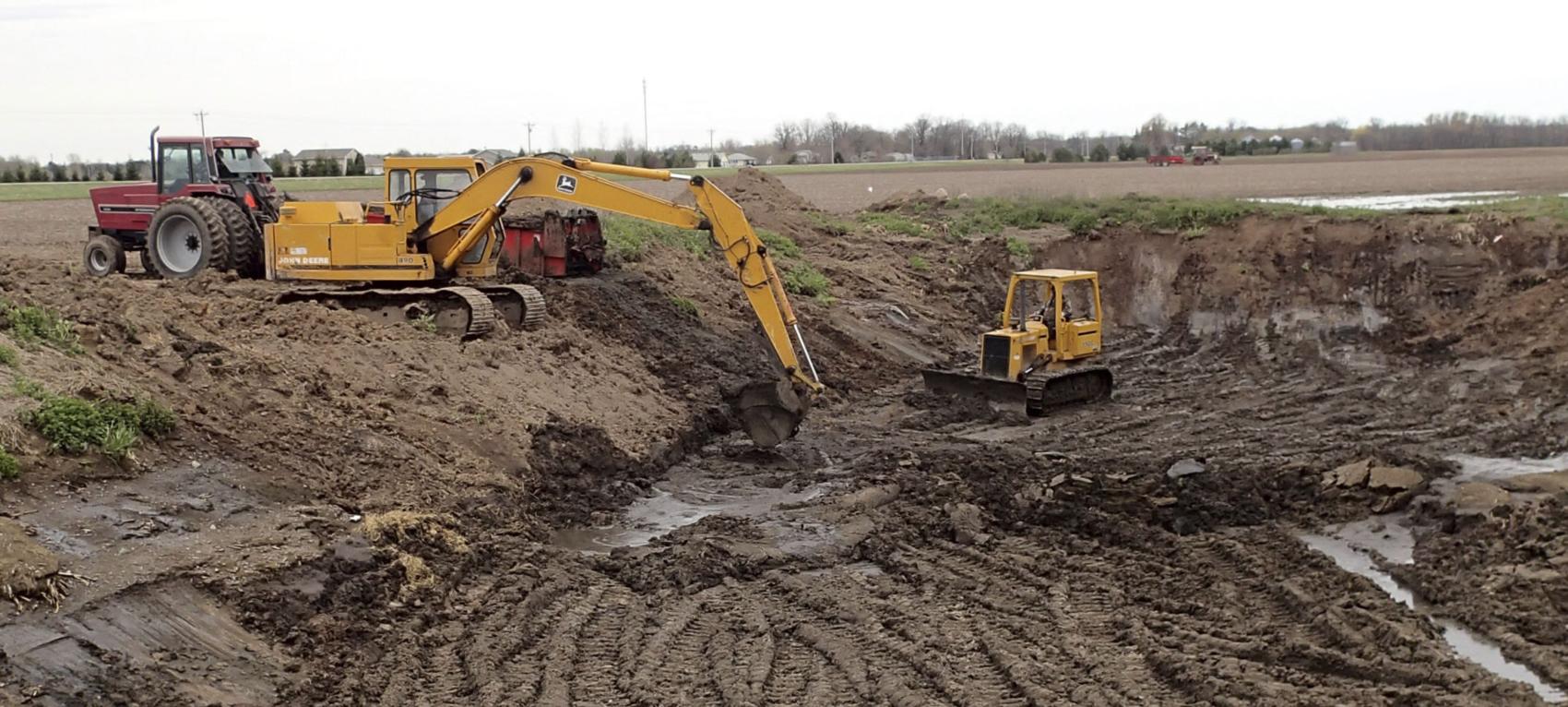
“With grandkids running around here, abandoned manure pits can be a death trap,” said Ogilvie farmer Brian Besser. Besser along with his son, Blaine, own adjoining farms south of Ogilvie. They each had an abandoned manure pit that they wanted to fill in and were considering doing it on their own and paying for it out of their own pockets. That is when they asked for help from Rick Martens, owner of Martens Manurigation pumping business.

Martens suggested that they contact the Natural Resources and Conservation Service and the Soil and Water Conservation District office staff in Mora to see if there was funding available that would cover some of the costs of cleaning and closing up their pits. One phone call, a year of planning, design and working with NRCS and SWCD staff in Kanabec County resulted in their two manure pits being filled to NRCS standards and 75 percent of the costs being paid for with federal funding.

Financial, technical and paperwork assistance is available for farmers and landowners who want to properly fill-in abandoned manure pits according to Shannon Rasinski, NRCS district conservationist for Kanabec County. Some added state funding is only available through the end of June.

This is welcome news to farmers who have quit milking cows or raising hogs in recent years and who have abandoned their liquid manure pits. NRCS funding pays flat rates based on the pit size, and it is available to farmers who follow a proper abandonment, closure and clean-up process with the help of the NRCS and SWCD staff. An additional Minnesota Department of Agriculture low interest loan currently for 10 years at three-percent interest can be applied for through the SWCD. With these two sources of funding, up to 75 percent of the costs may be covered.

The Minnesota Pollution Control Agency requires that within one year of ceasing operation, farmers must remove all manure and land apply the material at agronomic rates. The purpose of proper manure pit abandonment is to protect ground and surface water, safeguard public health from potential gases, such as hydrogen sulfide and to remove a drowning hazard according to Rasinski. Also, if a farmer wants to sell the farm in the future, the pit will have to be refilled anyway or it can be a liability to the new owner. The closure has to be permanent.

“Many pits have lived beyond their design life,” said Rasinski. “We may have the original design on file at the NRCS office. We will inspect the site, do a closure design, calculate quantities and cost estimates. This all needs to be done before any work is started.” Pit closure project applications are then put into a pool.

Each project goes through a National Environmental Protection Act assessment of its impact on impaired waters and threatened and endangered species. Livestock practice projects are given a high priority. The goal is to protect surface waters from runoff and ground waters from leaching. The closure has to comply with all federal, state and local laws, rules and regulations including national pollution discharge elimination system requirements.

Once that is completed, the excess water and solids in the pit must be removed. Then, the contaminated soil on the sides and bottom of the pit have to be removed and spread on cropland. Once the pit is cleaned, both ends of the underground pipe running from the barn to the pit and the pump must be cemented to permanently seal them to prevent any water from getting in. After that is completed and the pit is inspected to meet NRCS standards, it can be filled.

Sometimes the fill can come from soil on site like it did with Brian’s pit when he got DNR permission to use a bank of soil between his farmstead and the river. In other situations, the fill may have to be hauled in as it did for Blaine’s pit. In his case, a local construction company brought in fill at no cost from another construction site that had to have it removed. The final steps are for the sites to be covered, graded and sloped to prevent water accumulation and then seeded.

Two other area farmers who have taken advantage of the NRCS and SWCD manure pit closure programs are Paul Kent Jr., Bill and Lucas Olen who farm east of Mora. Kent had his pit filled in last year as well. He had used it for 30 years for his 80-cow dairy herd and said it was an ideal way to handle manure.

However, he does not miss hauling manure for two and one-half days, without sleep, to get it incorporated into the soil before winter arrived. He also said that another critical timing issue with manure pits is in the spring when there is a narrow window of opportunity to haul manure between the ground thawing and corn planting. He has not milked cows for five years and has pumped six to eight feet of water out of his pit each year for several years. With a 3-year old grandson around who could get into it, he decided to fill it in when he heard that his neighbors Bill and Lucas Olen had filled in their pit.

Olens had sold their cows in 2015 and filled in their pit in 2016 with the help of federal and state cost-sharing. Lucas is an experienced heavy equipment operator so he was able to do the work himself. Olen said that initially they received a 15-year loan to install the pit and they used it for 33 years. He said that the reason pits were approved for manure storage was to be able to contain the manure which is considered a hazardous waste.

Both Kent and Olen worked with NRCS and SWCD to complete the paperwork and followed what they described as fairly stiff criteria which they found was easy enough to follow. They isolated the topsoil, removed the liquids, contaminated side and bottom soils while being monitored the whole time. They were complimented by the staff on how good of a job that they did. Olen said, “It worked out really well,” Kent added, “Overall, it was a very favorable experience and federal and state funding paid for 75 percent of it. If funding is available, use it.”

Blaine Besser summed up his experience with the process when he said, “I thought it was going to take years to finish it if I paid for it out of my own pocket. We stuck with the process and we got it done with about 90 percent of the cost paid for. It actually turned out really nice.” His father Brian added, “It was pretty simple. It was just a matter of meeting with NRCS a few times.”

Bessers now plant row crops over both of their old pit sites. “It’s now a nice landscaped slope that the kids slide on in the winter. It changed an unsightly weed and brush covered site and made it nice looking. It was worthwhile to work with NRCS and SWCD,” he concluded.

Farmers with questions on a manure pit that is no longer used are encouraged to stop by the Kanabec County NRCS and SWCD office at 2008 Mahogany St., Mora. It is located on the east side of Mora between the East Central Livestock Auction and the East Central Veterinarian Clinic. NRCS and SWCD are voluntary based and not regulatory organizations. Farmers have to request help from them. The USDA is an equal opportunity provider and employer.

Source: Kanabec County Times

Safety when tagging calves and other winter tasks

Even the quietest cows can be anxious and aggressive after calving with attacks from freshly calved cows one of the greatest risks on livestock farms. Calving is one of, if not, the most stressful periods on dairy and suckler farms.

It is also one of the highest risk tasks, with a cow’s behaviour potentially changing from quiet to aggressive without any warning.

This is not surprising given that a cow’s natural instinct is to protect her young and this includes any changes to normal management such as tagging calves.

While the practice itself is relatively straightforward, it has the potential to be far from straightforward if the recommended procedures are not followed.

Restrain the cow
Firstly, a calf should never be tagged until the cow is moved into a separate area or restrained in a head gate, no matter how quiet you think the cow is.

A calf bellowing after tagging can be enough to startle the cow.

A facility should also be available if required to restrain the calf to prevent injury when trying to hold calves.

BVD tag
Tagging calves as soon as possible after birth will also help while it is also advisable to get a quick response from the Bovine Viral Diarrhoea tissue tag.

Tag application
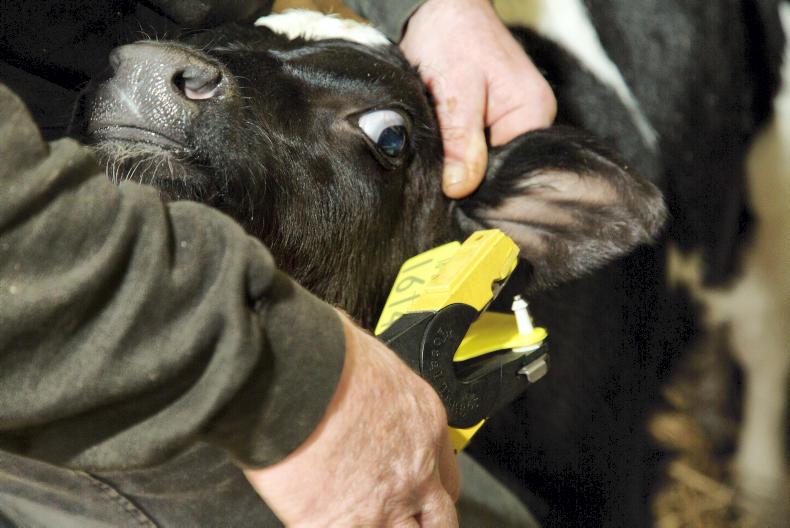
On applying the tag, the advice is similar irrespective of tag type. The tag should be applied in a clean environment. Once the calf is restrained, apply the tag approximately midway in height of the calf’s ear (between the cartilage) and about midway to two-thirds in from the tip of the ear. The female or button part of the tag should always be placed on the inner side of the ear.

Registration
Calves must be tagged with a tag in each ear within 20 days of birth or before they leave the holding, if this occurs before day 20. Birth registration must take place within seven days of tagging and at the latest before calves reach 27 days of age.

Registration can take place via the identically numbered paper application form, Agfood.ie or other approved online software programs or through the ICBF registration booklet. Following this, record births in your herd register or, if you are using an online herdbook, this will suffice.

Expanding numbers
The dairy industry is experiencing rapid expansion, both in existing herds and new entrants.

On many farms, expansion of facilities is focusing first on additional space for cows or upgrading of the parlour and dairy. There has also been a renewed focus in recent years on tightening the calving period to a short window that will capitalise on spring grass growth.

This is satisfying the aim of targeting low-cost production but a downside is increased pressure on labour and facilities during the calving season.

This is particularly the case in herds that have significantly expanded cow numbers but have yet to tailor calving and calf rearing facilities.

Such situations are putting farm workers under additional pressure which in turn can increase the risk of accidents taking place.

Assess and make changes now

It is important to assess existing facilities well in advance of the calving season and question if there are any alterations to existing sheds or changes that can be made to facilitate a smoother calving season.

It is also worth noting that there is greater disease pressure in expanding herds which also tallies for calves. Reviewing your health programme is also time well spent at this time of year as an outbreak of disease is the last thing that any farmer needs in an already busy calving season. Simple tasks such as installing a water heater with greater capacity or having overflow pens on hand can reap big rewards.

Care when castrating
The practice of leaving male calves entire has become much more common in recent years with weanling producers acknowledging that it will attract both prospective bull finishers as well as grass-based steer finishers.

With a lot of business carried out in autumn weanling sales and animals now settled indoors, castration will be on the agenda for farmers operating a steer system.

It is important to note that in Ireland, use of anaesthesia is required by law for surgical/burdizzo castration of cattle over six months of age. Rubber ring castration (or use of other devices restricting the flow of blood to the scrotum) without use of anaesthetic can only be performed in calves less than seven days of age.

Furthermore, where anaesthetic is required for castration, the procedure must be performed by a veterinary practitioner.

For those in a suckler-to-steer beef system, the banding method of castration at a younger age may be beneficial from a management and safety viewpoint.

However, many farmers who sell weanlings or steers tend to avoid this method of castration, as there is a perception that the visual appearance (ie lack of scrotum) may affect buyer demand.

Burdizzo
Castration with a burdizzo is the preferred method for young calves or weanlings, with surgical castration more suitable for stronger or aged bulls.

When using the burdizzo method, each cord should be crushed twice for 10 seconds each time, taking care that this takes place one below the other.

Animals should receive clostridial disease vaccination ahead of castration to reduce the risk of tetanus while hygiene post-castration is especially important where surgical castration is being carried out. Where castrating housed weanlings, allowing them access to straw bedding will help in reducing discomfort.

With regards the procedure itself, it is important to ensure facilities are capable of restraining animals sufficiently while good help is particularly important when restraining animals to limit the risk of kicking and injury to the operator.

Source: Irish Farmers Journal

New organic dairy farmers face market challenges

Joanne Lidback and her husband own a small dairy farm with about 60 cows in Westmore. “Back then we didn’t realize it was as bad as it was,” Lidback said.

After taking over the family business, Lidback wanted to make sure the farm was viable for the future. “How are we going to build our farm and our business and hopefully prepare it for the next generation?” she said.

The Lidbacks thought getting into the organic milk market was the way forward, and not only because of the profits. They can make twice as much as conventional dairy farmers. After speaking with consultants from the organic milk industry, the family thought the transition wouldn’t be too difficult. They already follow most of the requirements. “Then we got the call in the fall of 2016 that we wouldn’t be needed,” Lidback said.

“The organic milk market, nationally and internationally, is flooded,” said Stephanie Walsh, an organic certifier with the Northeast Organic Farming Association of Vermont. She says the organic milk market is so flooded farmers are seeing decreases in the amount they are getting paid. “Milk buyers are doing a little supply control.”

There are four organic milk buyers in the state, Stonyfield, DanoneWave, Organic Valley, and Upstate Niagra. These companies sign organic dairy farms to contracts, so the farmer is guaranteed to make a profit after investing in the transition. “The process of getting their dairy animals, their cows, into organic production is a 12-month long process,” Walsh said. “It’s very difficult for a producer who is wishing to transition to organic, for any reason, to do so without a contract because it’s a very expensive process.”

Lidback says one of the reasons it’s so expensive to go organic is the price of feed. She says around six months ago a ton of conventional feed was around $300, whereas a ton of certified organic grain was $600 or more. And it’s not just feed, there are higher costs to keep the cows healthy as antibiotics can’t be used. Organic dairy cows are required to get 30-percent of their feed from pasture, which mean no pesticides are allowed to be used anywhere on the farm. Adding to the expense — they are paid conventional milk prices during the 12-month transition process, even though they are farming organically.

“A lot of farmers have to take out loans to get them through this 12-month period,” Walsh said.

So what’s next for Lidback? She says she will continue to sell her milk as conventional, even though she’s gone mostly organic. “It’s lean times for sure,” she said.

When the organic market opens up again, Lidback says she will be ready. And once the family lands a contract, they’ll take the final steps to get the organic certification. “Supply and demand goes up and down over the years. Even though no milk buyers now, we’re hoping that goes back up again,” she said.

Source: wcax.com

Dairy herd health and biosecurity

Sophie Mahendran stresses the importance of protecting cattle from disease entry and spread, and outlines methods of prevention.

Over the past few decades, a dairy practitioner’s skill set has had to evolve from pure individual animal medic to cattle health advisor, focusing on prevention and elimination of disease in the entire herd.

This evolution is now widely embraced, with much-improved teaching at university level and excellent resources available via CPD courses and accreditation schemes. However, practical application and provision of advice to farmers is often not simple due to the complicated nature of many dairy enterprises.

Developing a successful herd health plan hinges on understanding the on-farm disease status and a risk analysis to highlight potential infection sources. A key component is biosecurity – measures and activities designed to protect a farm from the entry and spread of pests and diseases. Farm biosecurity is the owner’s responsibility, and that of each person visiting or working on the farm, including vets.

Though difficult to make a farm totally biosecure, risks can be managed and reduced by addressing other disease control points.Many European countries have adopted the practice of a farm providing its own protective clothing for visiting vets, therefore reducing the chance of introducing infectious diseases from improperly disinfected clothing and equipment. However, this has yet to happen in the UK, so vets must be vigilant about their hygiene and appropriate disinfectant use between farms.

Farmer action-based biosecurity
As well as focusing on the animals, farmers must consider measures around the rest of the farm. Field boundaries can be an important place for close contact between animals from different farms, which can spread infectious disease (Figure 1). Ideally, farmers should avoid simultaneous grazing of neighbouring paddocks, but this is not always possible. Instead, double fencing with a three metre gap can be used, along with avoidance of shared water sources, including streams and rivers.

If possible, neighbouring farmers should be encouraged to share their herd health status details with each other.

Farmers working together to develop a local disease prevention strategy gives more chance of maintaining sustainably low disease levels in geographical areas. Farm visitors are another potential source of infection spread.

Farmers should:

  • keep a record of visitors
  • try to make them park away from livestock (this is especially important for deadstock collectors or livestock hauliers)
  • ask them to wear clean protective clothing and the farmer should provide suitable disinfection points, such as a boot dip

Farmers should also avoid sharing machinery or spreading livestock manure from other farms on to pastures as this can be a source of infectious material.

Disinfection is a way of reducing the number of viable microbes on surfaces. Many disinfectants can be used, with available products generally containing one or more microbiocides and chemicals.

One commonly used product is an iodophor disinfectant containing iodine that is bactericidal, fungicidal and virucidal. This includes Defra approval for use against foot-and-mouth disease, swine vesicular disease and TB.

Whatever the disinfectant, include the concentration used, contact time required for action and the effect of organic matter contamination on the product effectiveness.

Disease spread by poor biosecurity
A vast number of infectious diseases can spread to farms due to poor biosecurity. The main ones include Johne’s disease, infectious bovine rhinotracheitis (IBR), leptospirosis, bovine viral diarrhoea, bTB, digital dermatitis, Salmonella, ringworm, endoparasites and ectoparasites. Some key points that can affect disease spread are mentioned in Panel 1.

Panel 1. Factors that can affect disease spread

Infectious bovine rhinotracheitis

  • Caused by bovine herpesvirus 1.
  • Once a cow is infected, the virus is harboured in the trigeminal nerve and the animal remains a carrier for life. Shedding can re-occur following periods of stress.

Leptospirosis

  • Bacteria can remain in the kidneys for an extended period post-infection, leading to a long period of shedding in the urine.
  • Can be spread by co-grazing with sheep.

Bovine viral diarrhoea virus

  • Persistently infected (PI) animals continually shed the virus for the duration of their lives.
  • Vaccination does not work on PI animals and their presence reduces vaccination effectiveness in the rest of the herd due to continued high exposure levels to the virus.

bTB

  • Caused by Mycobacterium bovis.
  • Bacteria shed in bodily secretions – especially respiratory secretions of cattle.
  • The main wildlife reservoir is badgers – it is important to deter badgers from coming into contact with cattle or their feed:
  • close off access to feed stores
  • put cattle feed in raised troughs in fields
  • fence off badger latrine areas

Keeping a closed herd is the most secure way of maintaining biosecurity and herd health status. However, if farmers buy in animals or borrow bulls, they should buy from a closed herd of known health and accreditation status.

If possible, they should avoid purchase from livestock markets. Bought-in animals must be quarantined for three weeks, which allows for incubating disease monitoring. Quarantined animals should be at least three metres away from other livestock (to avoid nose-to-nose contact), with separate feed and water.

Biocontainment via vaccination
Biocontainment is disease-spread management in a herd. The most commonly used method of biocontainment is vaccination.

Many diseases are endemic in the UK, with vaccination offering a suitable method for disease control once a disease is identified in a herd, and to protect a naive herd if biosecurity risks are high. However, vaccination does not prevent disease – it just reduces clinical signs and shedding.

Commonly used vaccines in the UK are for IBR, BVD, leptospirosis, Salmonella and respiratory pathogens. Deciding vaccination is needed is often an easy decision, but deciding which vaccine, and how best to complete initial and booster doses, can be a logistical challenge.

Vaccination regimes for breeding heifers must be done prior to the start of their first breeding period, with yearly boosters for the whole herd then generally used. Combining herd vaccination timing with other handling events, such as the second day of TB testing, can reduce the extra time and resources needed to vaccinate large groups, as well as the stress of an additional handling event on cattle.

Other factors that can affect vaccine efficacy are to check the vaccine is administered via the correct route and dose. Storage before use is important, as most vaccines require cold chain compliance, which can be difficult in the summer without cool bags and ice blocks.

Other things to check are that vaccine equipment is clean and calibrated, and farmers don’t over-order vaccine amounts, as storage and use after expiry dates can reduce efficacy.

Accreditation schemes
Accreditation schemes – such as Cattle Health Certification Standards, BVDFree England and Scottish EVD Eradication – can offer guidelines for farmers to help ensure herds become free from disease and be a financial incentive due to accredited stock having increased value.

Farmers subscribing to a scheme provides more “motivation” for applying biosecurity on farm – especially to maintain practices long term.

Reasons for poor biosecurity
Most of the aforementioned control points have been standard veterinary recommendations for years, but uptake and compliance is still patchy across the industry. In a survey across practising cattle vets, 52% of respondents indicated the reason they thought clients did not practise good biosecurity was due to a lack of knowledge and understanding. It can be challenging to find time to have these discussions with clients, with many only spending time talking to their vet during routine fertility visits – often while multitasking.

As the vet role evolves, it is imperative to try spending constructive time discussing important topics with farmers in a more formal setting, such as around the kitchen table. This can help focus discussions and ensure farmers are properly informed about topics such as biosecurity. Running practice farmer talks can also help, but the key to success will be ensuring farmers understand why biosecurity is important, and following up with farm-specific recommendations you can monitor.


Source: Vet Times

How to spot fake: Social Security Cards

With many dairy farmers employing workers from all over it’s important to ensure that they have the proper paperwork to be legaly employed. When you hire a new employee, you have two responsibilities. Make sure the employee fills out a W-2 and a form I-9, and then verify, to the best of your knowledge, the identification cards they show you are real. That’s it. You don’t need to be a private investigator, you just need to verify they appear to be real.

Follow the steps below to spot a fake Social Security card.

 
Social Security Cards - Step 1, picture 1 Social Security Cards - Step 1, picture 2
1
The first thing is to know the numbers. 987-65-4320 to 987-65-4329 are only used in advertisements and never on a real Social Security card. Below are more numbers that are not valid:

002-28-1852
078-05-1120
128-03-6045
165-16-7999
165-20-7999
189-09-2294
212-09-9999
468-28-8779
042-10-3580
095-07-3645
135-01-6629
165-18-7999
165-22-7999
212-09-7694
306-30-2348
549-24-1889
062-36-0749
141-18-6941
165-24-7999
308-12-5070 

 
Social Security Cards - Step 2, picture 1  
2
Next, know the number sequence. The current format is a 9 digit number, broken up into 3 sections.
(1) The first set (123-xx-xxxx) called the area number
(2) The second set (xxx-45-xxxx) called the group number
(3) The third set (xxx-xx-6789) called the serial number

The SERIAL numbers are a straight numerical sequence from
0001 – 9999. (0000 is never used)

INVALID Social Security numbers:
· Any of the three fields contain all zeros
· AREA number “666” never has and never will be used
· AREA numbers 650-699
· AREA numbers 729 to 999 except for 764 and 765
· AREA number 550, GROUP 19 (i.e. 550-19-0001)
· AREA number 586, GROUPS 19,29,59 and 79-99
 
Social Security Cards - Step 3, picture 1  
3
Next, look closely at the printed numbers and name (preferably with a magnifying glass). The numbers and letters should not have any smudges and should all be in alignment. 

Calf milk quality highly variable

Land O’Lakes study confirms even pasteurized waste milk suffers from quality issues.

Sure, you pasteurize waste milk before feeding it to dairy calves. But a new national study involving 618 dairy herds shows that much post-pasteurized waste milk suffers from low fat, low protein and high bacterial levels — and variable quality, at best.

The study included batch and high temperature short time pasteurizers plus ultraviolet milk treatment. Milk samples at each farm were collected for seven consecutive days to determine total solids, protein, butterfat, somatic cell count, antibiotic presence and bacterial count.

“Many farms have a readily available supply of waste milk and want to feed it to their calves,” says Tom Earleywine, director of nutritional services at Land O’Lakes Animal Milk Products. “But even if you pasteurize waste milk, it may not provide consistent nutrition for calves.” (Disclaimer: LOL Animal Milk Products markets milk replacer.)

Wide nutrient variability
Milk solids, protein and fat percentages can change day to day and even from feeding to feeding, Earleywine says, when milk is mixed from cows in different lactation stages and health statuses. Total solids in pasteurized waste milk can vary as much as 6.58% on individual farms, with protein variations of 7.9% and fat variations of 17.3%. To put it another way:

• Total solids ranged from 18.1% down to 7.67%, with a mean average of 12.8%.

• Protein ranged from 4.96% to 2.13%, with a mean of 3.41%.

• Fat ranged from 9.47% down to only 1.55%, with a mean of 3.92%.

41% failed bacterial count

Pasteurizing waste milk is essential to reducing bacteria, Earleywine says. But this study discovered that 41% of pasteurizers failed to kill the necessary amount of bacteria when tested immediately after pasteurizing. It was even higher on samples tested after the last calf was fed.

Bacteria counts post-pasteurization were categorized as failed (greater than 100,000 colony-forming units of total bacteria per milliliter); poor (20,001 to 100,000 CFU per ml.); and good (less than 20,000 CFU per ml.). Here’s how they stacked up:

• More than 27% of farms failed; 14% rated poor; 58% scored good.

• In terms of last calf fed, 36% failed; 18% rated poor; 46% scored good.

• More than 37% of high temperature short time pasteurizers had bacterial levels greater than 20,000 CFU.

• More than 37% of batch pasteurizers exceeded 20,000 CFU.

• Nearly 47% of UV treatments exceeded that bacterial count.

Antibiotic concerns
Feeding antibiotics to calves may be a necessity. But rising concern about antibiotics in waste milk also has given some dairy producers pause when deciding whether to feed pasteurized waste milk, Earleywine claims.

Some 56.8% of milk samples in this study contained traces of antibiotics. Many factors impact antibiotic resistance in calves. But, Earleywine says, research confirms an increase in antibiotic resistance in calves fed waste milk compared to calves fed milk replacer.

Your bottom line is…
It’s important to handle waste milk using the same methods recommended for saleable milk, Earleywine says. That includes cooling milk to no higher than 40 degrees F within an hour of milking.

Pasteurizers must also be properly cleaned after each use. It’s also critical to properly sanitize any feeding equipment, such as bottles and buckets.


Source: American Agriculturist

Dairy Sense: Know Your Herd’s Feed Costs?

In today’s challenging dairy industry producers and consultants are looking for the ever-elusive silver bullet that will make a farm profitable. Conversations usually center around the newest research related to forages and nutrition that will promote higher levels of milk production. Then there are the costs. With reports of commodity prices coming down, and the encouragement that feed costs will be lower, what does that really mean?

For almost two years the Extension Dairy Business Management Team has been working intensively with twenty-four very well managed dairy operations to evaluate their whole farm system. One of the goals is examining crop and feed metrics to determine any association with the farms’ profitability status. A FINPACK analysis was completed on all farms for 2016 and their breakeven cost of production was determined. There were two sampling periods (2016/2017) when the corn silage and TMR were analyzed and the ration fed and milk weights were recorded. The farms’ breakeven cost of production/cwt from 2016 was used for comparison with the milk price received at the two sampling periods. This was used as a barometer to determine a positive or negative cash flow.

In the first sampling period (December 2016 – April 2017) there were ten farms with a negative cash flow ranging from -$0.16 to -$3.40/cwt. Total feed costs including home raised and purchased for all animal groups as a percentage of milk income averaged 58 percent. The range went from 44 to 75 percent. The fourteen farms showing a positive cash surplus (+$0.09 to +$3.22/cwt) had average feed costs as a percentage of milk income at 53 percent (range 45 to 66 percent). The energy-corrected milk averaged 83 pounds for the positive cash flow herds versus 78 pounds for the herds with a negative cash flow.

During the second sampling period (April – September 2017) milk prices had dropped and now there were fourteen farms with a negative cash flow ranging from -$0.14 to -$6.21/cwt. The positive cash flow farms ranged from +$0.26 to +$2.50/cwt. Similar to the first sampling period, the same trend showed up in milk production and feed costs, with the positive farms showing higher energy-corrected milk (82 vs. 79 pounds) and lower feed costs as a percent of milk sales (51% vs. 58%).

Focusing on the lactating cow rations, herds in both the positive and negative cash flow categories on average fed the same corn silage dry matter pounds (19-20 pounds) coupled with similar amounts of hay-crop and/or small grain forage. The pounds of fiber, digestible fiber, starch and digestible starch coming from the corn silage were very similar between the positive and negative cash flow groups. The majority of herds fed an energy and protein ingredient separate from the grain mixture with many feeding either high moisture or dry cereal grains and at least one protein ingredient separate from the grain mix. The $65,000 question begging to be asked: “Is there a single metric that equates to profitability and milk production?” Unfortunately the answer is no, and the rest of the story is probably not going to be very palatable.

The data supports our business management team’s observations over many years. High quality corn silage defined as having high fiber digestibility and/or starch digestibility and fed at high amounts (>20 pounds dry matter) does not guarantee high milk production or profitable herds. In fact, our observations show the highest performing herds with a positive cash flow are sometimes feeding the lowest quality corn silage using fiber digestibility as the metric. The key point that many people want to overlook is good management is needed on cropping, feeding, AND financials. The positive cash flow farms are doing a good job on the home-raised feeds including quantity produced. Purchased feed costs are kept in line for ALL animal groups. Our data show that many different approaches are effective at producing high levels of milk production and keeping feed costs in line. Monitoring feed costs is important, but the big picture gives producers the most bang for their buck, not nickel and diming unit costs associated with commodities and other inputs. Having adequate forage inventory to feed a consistent diet can be just as important as achieving the highest possible nutrient analysis. The formula for profitable herds: know the breakeven cost of production – monitor income over feed costs monthly – make decisions using these numbers.

Action plan for determining the herd’s feed costs

Goal – Determine the costs to produce home-raised feeds and the amount of purchased feed going to all animal groups.

  • Step 1: List crop type, acres and tonnage for the current year.
  • Step 2: Compile the list of recently purchased commodities, complete feeds, forages, grains for lactating and dry cows and calves and heifers.
  • Step 3: From the current chart of accounts, list appropriate costs for each crop including seed, chemical, fertilizer, custom hire and land rent.
  • Step 4: Compile the overhead expenses for the operation.
  • Step 5: Using the Penn State Excel spreadsheet or fillable pdf form, complete the ration and crop section.
  • Step 6: Complete the annual cash flow to determine the operation’s breakeven income over feed cost/cow and margin/cwt.
  • Step 7: Use this information during profit team meetings with the appropriate advisors.

Economic perspective:

Monitoring must include an economic component to determine if a management strategy is working or not. For the lactating cows income over feed costs is a good way to check that feed costs are in line for the level of milk production. Starting with July 2014’s milk price, income over feed costs was calculated using average intake and production for the last six years from the Penn State dairy herd. The ration contained 63% forage consisting of corn silage, haylage, and hay. The concentrate portion included corn grain, candy meal, sugar, canola meal, roasted soybeans, Optigen, and a mineral vitamin mix. All market prices were used.

Also included are the feed costs for dry cows, springing heifers, pregnant heifers and growing heifers. The rations reflect what has been fed to these animal groups at the Penn State dairy herd. All market prices were used.

Income over feed cost using standardized rations and production data from the Penn State dairy herd.

Note: Penn State’s October milk price: $18.31/cwt; feed cost/cow: $5.36; average milk production: 81.0 lbs.

Feed cost/non-lactating animal/day.

Source: Penn State Extension

Farmer develops early warning infection system

A Canadian goat producer designed the scanning system to help detect abnormalities in udders to allow early treatment

Missed udder infections and subsequent missed treatments are costing global dairy farmers a massive $10 billion a year.

It is, however, the smaller family dairy farms that are being hit the hardest with the financial burden as udder infection detection rates in these situations can be low.

A Canadian company hopes to address the issue with a new detection system.

EIO Diagnostics has developed a new system that scans udders in the parlour, either via a mounted scanner in robotic milking systems or a hand-held device and relays the images to a screen where infections can be identified easier.

EIO claim its solution detects these infections sooner and cheaper, than any other approach on the market.

EIO uses a technique known as multispectral imaging, which detects udder abnormalities as they form.

Animals that are affected by harmful pathogens, even at somatic cell count (SCC) levels generally considered sub-clinical, can then be identified by farmers.

Being able to identify a Staphylococcus aureus infection, even when a standard SCC test is showing levels below 200,000 SCC, gives farmers an effective tool for in-creasing herd health and minimizing production losses.

The hand-held device, which is about the size and shape of a small tablet, can assess health of an udder in less than one second.

Used in bigger automated milking parlours, the mounted device identifies and monitors cows as they enter the milking stall or robot. It integrates with DeLaval VMS or Lely Astronaut robotic milkers and can also be integrated with automated feeders, leveraging existing animal identification systems.

The brains behind the detection system is Cory Spencer, who started EIO in the barns of his Happy Goat Cheese Company in British Columbia’s Cowichan Valley.

Spencer, a software developer and goat cheese maker, had experienced a mastitis problem with one of his 100 goats.

Along with neighbour Damir Wallener, a solution was brought to life this spring and summer.

Wallener, the chief executive officer of EIO, said they are receiving a lot of interest.

“From the intense interest we are receiving from actual dairy farmers, the answer has to be no, there are no similar systems on the market.

“There are automated SCC and electroconductivity devices available, but they share the problem of trying to identify udder infections by measuring something indirectly related to the actual infections.

“No other product also works with dry cows or pre-calving animals that don’t regularly pass through the milking parlour,” he said.

The EIO Diagnostics system is being tested in several commercial dairy barns on Vancouver Island, using goats and cows. The company is also preparing for its first large scale deployments, one in New Zealand and one in Wisconsin.

EIO say it prices the system on a service model rather than individual hardware sales and each system will differ on the number of scanners required.

“EIO manages all the hardware, software, updates and maintenance, for a fixed price, with no surprises. For goat dairies, the pricing is $3 per month, per goat. For cows, it is $5 per month, per cow. From the farm’s perspective, by reducing per-animal lab tests, or saving just one bulk tank from being dumped, the service pays for itself very quickly.”

Once the device visualises an udder, it takes a number of measurements from various parts of the spectrum. These are run through a complex mathematical model, generating a pass or fail signal.

“This takes less than a second,” said Wallener. “The measurements are also pushed to EIO’s software cloud, where they are combined with all the other imaging done at all the other barns.

“Over time, improved models are pushed back down to the devices, allowing every farm to learn from what is happening on every other farm.

“The system can send emails, text messages, and it can use messaging apps like Slack or update a cloud-based dashboard. Basically, any internet-dependent communication channel is either supported, or easy for us to add.”

During the next few months, EIO is working with a university dairy science program and hopes to publish results showing how well its detection matches up with actual pathogen tests, said Wallener.


Source: The Western Producer

New research on the estrous cycle in cows

A study of the UW dairy herd looked at 141 lactating Holstein cows. (Courtesy of UW-Extension)

MADISON — Zoey Rugel: New research on the estrous cycle in cows. Today, we’re visiting with Paul Fricke, Extension specialist in dairy cattle reproduction, Department of Dairy Science, University of Wisconsin-Madison/Extension, in the College of Agricultural and Life Sciences, and I’m Zoey Rugel. So, Paul, tell us about some current research you have going on.

Paul Fricke: One of the most recent projects that we’ve worked on had to do with looking at when cows return to estrus after you inseminate them. A lot of people in the industry have bought these heat detection systems, and, so, what they’ll often notice is that non-pregnant cows don’t all come into estrus at 18 to 24 days—it’s more like 18 to 32 days. So, we have a lot of cows with these extended inner estrus periods and that kind of peaked our interest as to what was going on during this time period.

Click here to listen to the podcast.

Zoey Rugel: Tell us about the study. How was it conducted?Paul Fricke: Yeah. So, what we did is we worked in our UW herd here, which is right on campus, sitting up at Arlington. We took 141 lactating Holstein cows, we set them up for a timed insemination. Then what my graduate students were doing is that 3 times a week they would ultrasound the ovaries to see what the CL looked like. They would take blood samples to look at progesterone. So, we could really define what was happening with the corpus luteum during this time and what was going to happen as far as when the CL regressed.

Zoey Rugel: What did you end up finding?

Paul Fricke: 57 of those 141 cows were pregnant, and pregnant cows are really kind of boring when you look at them, because progesterone comes up, the embryo signals the maternal system that the cow is pregnant, and they just maintain that CL. What was really interesting was the non-pregnant cows. There were 80 cows that were diagnosed open on day 32 and only about half of those cows, 55 % of them, read the textbook. They would’ve regressed their CL and come back into heat about that 18 to 24 day time period, but there were 23.7% of those animals that had an extended luteal phase, and what was most interesting was that there was about 21.3% of the cows that never regressed their CL during this time period, but did not have a CL when we did the pregnancy check on day 32. So, those cows would never have shown an estrus during that time period.

Zoey Rugel: So, what’s the bottom line?

Paul Fricke: So, the primary reason that this happened—the other aspect of this experiment—is we pulled blood samples from those cows on day 25 and day 32, and we can measure a pregnancy-associated glycoprotein. This is a protein that is secreted by the pregnancy, and over half of the cows that failed to regress their CL had the presence of this pregnancy-associated glycoprotein, indicating that they were pregnant long enough to keep them out of estrus, but then they subsequently lost their pregnancy. So, it’s just another way to look at this really early pregnancy loss that would’ve gone unnoticed if you just do a pregnancy check, but, in fact, a lot of these cows are getting pregnant and having these extended luteal phases and it really changes the dynamics of when these cows are coming into heat.Zoey Rugel: We’ve been visiting today with Paul Fricke, Extension specialist in dairy cattle reproduction, Department of Dairy Science, University of Wisconsin-Madison/Extension, in the College of Agricultural and Life Sciences, and I’m Zoey Rugel.

How to evaluate your dairy herd’s potential

Feed to maximize milk components

The success of an operation depends on dairymen making correct decisions on an animal-by-animal basis.

“The challenge is to find the cow of interest that needs something special,” said Dave Barbano, professor in the Department of Food Science at Cornell University. “Then you need to make a decision and take the correct action.”

Milk production is the sum of the performance of all individual cows, Barbano said during a Hoard’s Dairyman webinar.

“We need to condense the data down to information that helps farmers make decisions and not be buried in a sea of numbers,” he said.

Over the last couple of months, Barbano said, a cow of interest study was completed that included 170 farms from across the U.S. Both bulk tank and individual cow samples were evaluated at several locations.

“We are getting a much better understanding of how to use milk fatty acid data for whole-herd management and milking group diagnostics,” Barbano said.

“We need high-frequency data, and we need to develop hardware and software to integrate this milk testing approach into the milking system on a continuous basis from every cow,” he stressed.

“The first thing that came to light when we started researching five years ago was a fairly strong correlation of the de novo fatty acids with the bulk tank fat test,” he said. “That seemed to tell us something about how well the cows were digesting forages.”

Management Tools

The researchers use an infrared milk analysis machine.

“It creates statistical models to extract information out of the fingerprint of the milk to measure fatty acids,” Barbano said. “It is a direct measurement of milk, there are no chemicals involved, the milk goes through the machine and we get answers.”

For the study in 2014, the researchers selected 10 low de novo and 10 high de novo herds of both Holstein and Jersey farms. To evaluate the farms, they took feed samples, farm management information, the amount of milk produced per cow and what they were doing to make this happen.

In 2015, the study was repeated with 40 Holstein farms that were either high or low de novo.

“The high de novo Holstein farms had nearly 4 percent fat compared to the low farms at 3.6 percent fat, and for the Jersey farms, the high de novo farms were nine-tenths of a percent higher in fat and half a percent higher in protein, which is huge in terms of cheese yield,” Barbano said. “And the high de novo herds produced more milk per cow.”

As a result, there was a gross income difference of $30,000 for the higher components of a 100-cow herd, he said.

The following year, for only the Holstein herds, the higher de novo herds had two-tenths of a percent higher fat and one-tenth higher protein.

“There was quite a difference in the milk price, so the higher de novo herds had nearly $15,000 difference in gross income,” Barbano said.

“Understanding how to influence components and get them up while not losing milk volume is really something to push better profitability on farms,” he said.


Source: AgriNews

Registered Holstein® Breeders Recognized with Progressive Genetics Herd Award

Holstein Association USA is excited to honor herds with the 2017 Progressive Genetics HerdSM award. This award is given annually to the Registered Holstein® herds excelling in type, milk production and genetic merit in their herds.

 
The Progressive Genetics Herd (PGH) recognition was first given in 1991. ThePGH award honors herds with high genetic value, based on average TPI® levels, which lead toward continued breed progress.

To qualify for the PGH award, herds must participate in the TriStarSM production records program at the Premier or Deluxe levels, and participate in the Holstein type classification program. Herds must have at least 20 cows of 87% RHA or higher.

All eligible herds are automatically evaluated annually and the PGH recognition is awarded to the 500 herds with the highest average TPI for females in the herd, both young and mature.

The TPI average range for the top 500 herds in 2017 was 1957 to 2450. The highest average TPI herd in this year’s PGH honoree group was David, Patrick & Frank Paul Bauer of Sandy-Valley Holsteins in Wisconsin, with an average TPI of 2450.

Thirty-one herds received the award for the first time this year: Alfalawn Farm, Wis.; Matthew P. Berning, Ill.; Big De Farms LP, Calif.; Andrew & Sarah Birch, Vt.; Mark Carviou, Wis.; Double W Dairy, Colo.; Double-Take Dairy LLC, Wis.; El-Vi Farms LLC, N.Y.; Ferncrest Farm, Pa.; Mrs. J. B. Fiscalini & Son, Calif.; Donald Fisher Farms, Inc., Ohio; GenoSource, Iowa; Kylie Konyn, Calif.; Lochmead Farms, Ore.; Jeremy D. Martin, Pa.; James Mast, Pa.; Bird City McCarty Family Farms LLC, Kan.; Rexford McCarty Family Farms LLC, Kan.; Scott City McCarty Family Farms LLC, Kan.; Jeffrey J Orr, Pa.; Osborne Family Farm LLC, N.Y.; Roaring Creek Farm, Pa.; Brent D. Robinson & Brent Moyer, Mich.; Patrick Slattery, Wis.; United Vision Dairy LLC, Wis.; University of Wisconsin, Wis.; VDS-Farms, LLC, Mich.; Russ Warmka, Wis.; Darrell Gene Wright, N.C.; W-R-L Daniels Farm LLC, Mich.; and Cleason N Zimmerman, Ohio.

Twenty-three herds have received PGH honors all 27 years the award has been given: Floyd & Lloyd Baumann & Fred Lang, Wis.; Bomaz, Inc., Wis.; R. Paul Buhr, Jr., Wis.; De Su Holsteins LLC, Iowa; End Road Farm, Mich.; Brian & Wendy Fust, Wis.; Steven G. Holte, Wis.; Jaloda Farms, Ohio; Randy W. Kortus, Wash.; Roger & David Latuch, Pa.; Lirr Farm, Wis.; Nordic-Haven Holsteins, Iowa; Gaylon, Gary & Steve Obert, Ill.; Mark P. Paul, Wis.; Regancrest Holsteins, LLC, Iowa; Darrell Richard, Ind.; Alfred & Mark Schmitt, Minn.; Scott Seward, Wis.; Stelling Farms, Inc., Minn.; Veazland Farms, Maine; Walhowdon Farm, Inc., N.H.; Wardin Bros., Mich.; and Welcome Stock Farm, LLC, N.Y.

View the complete list of 2017 Progressive Genetics Herd Award honorees at www.holsteinusa.com/awards/herds.html.

Holstein Association USA, Inc., www.holsteinusa.com, provides products and services to dairy producers to enhance genetics and improve profitability–ranging from registry processing to identification programs to consulting services.

The Association, headquartered in Brattleboro, Vt., maintains the records for Registered Holsteins® and represents approximately 30,000 members throughout the United States.

Avoid giving your baby calves gut aches

I visit literarily hundreds of dairy farms across Canada each year. On most, pre-weaned dairy calves are raised away from the main lactation barn or older replacement heifer facilities. Whether these baby calves are housed in hutches, group pens or brand-new calf barns, when I find a group of calves that are sick and not growing, a lot of their poor performance can be traced back to poor nutrition causing indigestion.

I see a lot of commonality in these unfortunate situations. They often fall into four main categories of gut aches, namely: nutritional scours, abomasum bloat, rumen acidosis and hay belly. In order to take corrective action, I recommend a return to a simple calf feed and management program.

A large part of this problem stem from feeding pre-weaned calves as if they were mature dairy cows.

A newborn baby dairy calf starts off with a small, undeveloped rumen without an established microbe population (it gets this from its surrounding environment later on). It must rely upon a few selected enzymes released by its own abomasum and small intestine in order to break down simple-type essential nutrients, which are only found in milk such as casein and other milk proteins, lactose sugar, and saturated fats.

By four weeks of age, the calf’s abomasum and small intestine become a little more developed. Now, the calf’s rumen has a variety of new digestive enzymes as well as a limited type of microorganisms, which together can convert simple starches/sugars from grain-based calf starters into volatile fatty acids (VFA) which are absorbed across the rumen wall.

It is these absorbed VFAs, particularly butyric and propionic acids, which stimulate the absorptive tissue lining of the young calf’s rumen to become very active — rumen papillae elongate and the rumen walls thicken. The whole rumen grows, and the small calf is on its way to become a true ruminant.

The results of unsound programs

Rather than promote steady ruminal development in six- to eight-week-old dairy calves; many askew and unsound pre-weaned calf-feeding programs do just the opposite and cause the following digestive upsets:

1. Milk and milk replacer scours: It is frequently seen as bright yellow, cream-coloured or nearly white liquid; all signs that a recently consumed milk or milk replacer meal was poorly digested. Not only does poor milk digestion lead to poor absorption of essential nutrients that the calf requires to live and grow, but unabsorbed nutrients left in the calves’ gut tend to draw retained water from the calf’s tissues, which amplifies scouring and life-threatening dehydration.

For example, I often see milk replacer scours in calves when producers mix milk replacers at a rich 150 grams of powder per litre of solution, rather than 130 grams per litre of solution, which is the natural dry matter content of whole cow’s milk.

2. Baby calf rumen acidosis: It has been proven that pre-weaned dairy calves can get acidosis eating too much grain-based calf starter, much like a milking cow that eats too much grain. For example, the University of Tennessee (1998) fed a conventional calf starter pellet formulated with corn and other common feed ingredients to a group of milk-fed calves from one week to 12 weeks of age. As a result, these researchers found that SARA (sub-clinical rumen acidosis; depicted when pH in a cow’s rumen falls below 5.8) was reported in experimental calves at two weeks of age.

Similarly, some producers have told me that when they feed more than 3 lbs. of texturized calf starter or on a free-choice basis found that many calves seem to go off feed after a couple of days of vigorous eating of calf starter — a possible sign of acidosis.

3. Abomasum bloat: This is caused by the rapid proliferation of clostridium perfringens that produces a severe buildup of excess gas in the abomasum of pre-weaned calves. From the outside, there is severe distension on the right side of the calf, while similar ruminal bloat is distension on its left side.

Unfortunately, abomasum bloat seems to occur suddenly, and the calf often perishes before any treatment can be administered. Some research suggests that feeding higher concentrations of milk replacer than 130 grams per litre of mixed solution that supply a high level of lactose sugar to the bacterium, which may lead to a high incidence of abomasum bloat.

4. Hay belly: Many good studies prove that feeding straw or other low-quality forage for its “scratch factor” is a myth. Virginia Tech (2010) showed that two- to four-month-old calves fed a textured grower diet had similar growth to calves that were fed texturized feed plus added wheat straw. The wheat straw group did weigh 21 lbs. heavier at the end of the test, but it was attributed to 21 lbs. of gut fill and water. Similarly, I find that many calves fed in this manner suffer from semi-impaction and/or bloat — literarily walking balloons on sticks for legs.

Recommendations

To avoid each of these four gut ache or indigestion problems, I strongly recommend following a simply nutritious calf-feeding program.

Make sure colostrum is fed to newborn calves and afterwards provide whole milk or a milk replacer at 2.5-4.0 litres per calf per feeding (twice a day) at approximately the same times (a.m./p.m.) each day. Subsequently, start to feed a high-quality grain-based calf starter to calves at two to three weeks of age. Avoid feeding any forage until after weaning. Finally, assure that clean water is provided in addition to all whole milk or milk replacer feedings.

Source: Grain News

Vets warn that alternative medicine is putting animals at risk

Animals are dying from preventable diseases because some vets are using “unscientific” homeopathic treatments, experts have warned.

The Royal College of Veterinary Surgeons (RCVS) said that vets were harming pets and livestock by placing faith in “unproven claims” rather than traditional methods.

More than 3,000 vets have signed a petition expressing concerns about the use of homeopathic treatments.

Chris Tufnell, RCVS senior vice-president, highlighted the popularity of a homeopathic remedy called nosodes where sugar-coated pills made from diseased matter from a sick animal are used instead of vaccinations.

“I have seen dogs die from completely preventable conditions such as parvovirus, which is extremely unpleasant and preventable,” said Mr Tufnell. “It’s entirely unnecessary.” He added that pets had been left in “unacceptable” pain because their owners used homeopathic medicines rather than painkillers.

Homeopathic treatments have been advocated by the Prince of Wales and others although clinical trials have shown that they offer no benefit beyond the placebo effect, where a patient’s belief that a treatment will work may alleviate some symptoms. There is little evidence that the placebo effect works in animals.

This month, the RCVS agreed a policy statement which concluded that there was no “recognised body of evidence” for homeopathy. “Furthermore, it is not based on sound scientific principles,” it said. The statement continued: “To protect animal welfare, we regard such treatments as being complementary rather than an alternative to treatments for which there is a recognised evidence base or which are based in sound scientific principles.

“It is vital to protect the welfare of animals committed to the care of the veterinary profession and the public’s confidence that any treatments not underpinned by sound scientific principles do not delay or replace those that do.”

The statement has been supported by the British Veterinary Association which said that “complementary and alternative treatments not based on sound scientific principles or evidence could have detrimental consequences for animal health and welfare”.

However, the British Association of Homeopathic Veterinary Surgeons said that it was “deeply disturbed” by the RCVS policy and described it as a “biased and ill-judged viewpoint”. A spokesman said that pet owners used complementary and alternative medicines when conventional treatments did not work or when they produced unwanted side-effects.

The Prince of Wales claimed last year that he treated cows and sheep on the farm at his Gloucestershire estate with homeopathic remedies “as part of a programme to reduce the use of antibiotics”.

The RCVS statement follows a petition calling on the organisation to ban veterinary surgeons from prescribing homeopathic treatments, which attracted more than 3,300 signatures.

The petition, set up by Danny Chambers, an equine vet in Devon, warned that allowing the use of such therapies could lead to “unnecessary suffering or death” because of the danger of them being used instead of orthodox treatment. “It would be devastating for a dairy farm that went out of business because homeopathic treatments failed to control an outbreak of mastitis [mammary gland infection],” he wrote.


Source: The Times

Despite Concerns Dairy Farmers are Signing up for MPP

Since it’s introduction, The Dairy Margin Protection Program has received a great deal of criticism, but an FSA director says farmers are still signing up for it.

Sandy Chalmers who is with the Wisconsin Farm Service Agency says, “We are seeing people come in to sign up, and they’re signing up across the board on the coverage levels, so even though there was considerable concern expressed over the years about the program, people are still signing up, and maybe not at the levels they had in the past.”

Chalmers explains that producers can get out of the program if they wish.  “If they want to opt-out of MPP Dairy, just do nothing.  You don’t have to call your county office.  You don’t have to stop in.  You don’t have to do anything.”

Chalmers says producers can opt out of MPP, LGM Dairy or both if they choose to.  Producers that want MPP coverage must sign up by Friday, December 15th.


Baby Calf Care During Cold Weather

December temperatures have been unusually warm, but we can expect to soon be reminded of the realities of Cache Valley winters. Energy requirements for animals increase as air temperatures decrease, and in Cache Valley, January is often the coldest month of the year. As such, livestock and dairy producers must pay close attention to the needs o f their animals. Adequate housing and proper nutrition are the major considerations for all animals, but this is especially true for baby calves. Knowing how valuable calves are, successful producers will give careful attention to every detail.
 
Profitable livestock producers focus on the five essential C’s of Colostrum, Cleanliness, Comfort, Calories and Consistency. Books have been written on each of these topics. The five C’s become increasingly important when the weather turns ugly.
 
In order to receive adequate immunity, baby Holstein calves should consume at least one gallon of colostrum within 4 to 6 hours of birth. Smaller Jersey calves will need much less. Calves that do not receive enough antibodies at birth are at increased risk for sickness or death throughout the entire growing period. The most important step in any calf health program is successful colostrum management.
 
Cleanliness of feeding utensils and housing is another priority for successful calf raisers.  Simply rinsing and storing the utensils is never good enough. After rinsing, all equipment should be washed with the use of water at least 120 degrees Fahrenheit. It is also recommended to include a detergent and a disinfectant in order to do a good job of cleaning nipples, buckets, balling guns and stomach tubes. Many successful calf feeders have an automatic dishwasher at the barn for washing nipples and bottles. Acid sanitizers may be needed from time to time to remove any remaining milk solids on the containers. After washing, always rinse with cold water.
 
Baby dairy calves should be housed in comfortable individual pens or hutches, and in an environment that is dry, well-drained, properly ventilated and free of drafts. Always keep the calves comfortable with adequate dry bedding. Straw and/or wood shavings make excellent bedding. An adequate bedding nest can reduce the incidence of respiratory diseases. Calves that are well -bedded are able to use energy to maintain their immune systems instead of expending fat reserves to regulate body heat. More liberal bedding of calf hutches can reduce heat loss and is a source of insulation for the calf. The use of calf blankets also reduces body heat loss and helps increase the internal temperature of baby calves during cold snaps. Face calf hutches to the south to get maximum benefit from sunlight.
 
Extra milk or milk replacer, in addition to a quality calf starter, also helps calves deal with cold weather. One school of thought is to provide extra calories by feeding milk replacer that is higher in fat content. Fat, however, must be digested and providing more fat means that the calf has to expend energy to digest a diet they may not be accustomed to. Research has shown that feeding milk replacer three times per day will help stabilize the pH in the rumen of the calf for better feed efficiency. Providing water to calves also helps maintain hydration and encourages increased consumption of calf starter. In winter months, it is recommended that warm water be offered soon after calves drink their milk and before they lie down. Water not consumed will need to be discarded before it freezes.
 
Consistency is another priority for improving the health and growth of baby dairy calves. Newborn calves are indeed babies, and babies respond well to a routine schedule of feeding and care. Being creatures of habit, calves always respond best when fed at the same time and with the same routine. Any variation in the feeding schedule will have a negative effect on the well-being of baby calves.
 
An optimal dry cow feeding program is another critical element to calf survival and development, especially during cold winter months. The body condition and nutritional level of dry cows has direct impact on the survivability of newborn calves. Calves born to well-fed dry cows are stronger, more aggressive and carry additional reserves of body fat. The quality of colostrum produced by well managed dry cows is usually better too.
 
I have noted that successful dairy producers frequently have excess heifer calves or springer heifers to sell while marginal producers often need to buy replacement heifers. Giving watchful attention to successfully raising baby calves is a focus that always pays big dividends.
Source: Utah State Extension

Diminishing personal injury on dairy farms

When training dairy employees about proper livestock handling practices, it is important to remind them that if animals are not handled properly, they can cause injuries to employees, explained Tracey Erickson, South Dakota State University extension dairy field specialist.

“Within the dairy industry there is a high percentage of contact time between animals and human beings on a daily basis, and like in other high-risk jobs, employees need to be aware of their surroundings at all times and implement safety practices and procedures,” Erickson said.

So, what type of injuries can happen when working on a dairy? Erickson said typical animal-related dairy injuries are the result of being stepped on, kicked, fallen on, crushed by cows, mauled by dairy bulls or gored by animals that have not been dehorned.

Safety reminders

Flight zone: Because dairy cattle have binocular vision, meaning they are able to see all the way around themselves, except for a small blind spot at the nose and rear of the animal, it is important to know how to approach an animal, Erickson said. Approach the animal from the side, while using verbal cues such as speaking softly, that will minimize spooking an animal.

Understand how to use the “flight zone” in a proper manner to help facilitate moving an animal in a desired direction. The flight zone is often referred to as an animal’s “personal space.”

Noise sensitivity: Cattle are very sensitive to noise and a higher frequency of noises than humans. Yelling causes stress to animals and can make them more difficult to handle, Erickson said. Staying quiet and calm will help minimize these reactions. Additionally, unexpected loud noises such as banging gates, loud exhaust from air cylinders, etc., may startle animals.

One way to help condition cattle is to keep a radio playing in the background at a low level in the barn to help reduce the reaction to strange, sudden noises. This can be a very effective tool when training cattle for show and being in fair situations.

Isolation: Cattle are herd animals, so isolation may cause an animal to be nervous, stressed or agitated. When working with an animal, having another companion animal near will help keep the animal being treated calmer.

Past experiences: Cattle do remember painful or frightening experiences. So, if an area of the barn brings up unpleasant memories for a cow, such as pokes, slipping or rough handling, they may become unwilling to cooperate when they return to that same area.

Warning signs: Good livestock handlers should be able to watch for warning signs of an agitated animal. Cattle will react with a raised head or pinned ears, raised tails, raised hair on the back, exposed teeth, excessive bawling, pawing the ground and snorting.

Proper livestock handling reminders

Appropriate livestock handling behaviors include:

1. Use slow and deliberate behavior.

2. Avoid loud noises or quick movements.

3. Do not prod an animal when it has no place to go.

4. Gently touching animals will have a more favorable response than shoving or bumping them.

5. We need to respect animals and not fear them.

6. Intact male animals, especially dairy bulls, should be considered potentially dangerous at all times, and proper equipment and facilities should be made available to assure the safety of handlers.

7. Breeding animals tend to become highly protective of their young, especially when giving birth.

8. Animals will defend their territory, and this should be kept in mind at all times, given the size, mass, strength and speed of an animal.

9. Cows will typically kick forward and out to the side and also have the tendency to kick toward the side where they have pain from inflammation or injuries. Thus, if a cow has a single quarter with mastitis, approach her from the opposite side of the non-affected udder when examining her, or utilize proper restraint to avoid being hurt.

Source: Feedstuffs

How Wisconsin’s dairy industry has come to rely on immigrant labor

The increasingly important role that immigrant workers play in Wisconsin’s dairy industry is relatively new. On average, dairy farmers started hiring immigrant labor around the year 2000. However, Latino immigrants have worked on the upper midwest’s vegetable farms seasonally since at least the 1930s, and the region’s meatpacking and food processing industries have relied on immigrant workers throughout the 20th century.

Many Wisconsin dairy farms now hire employees versus family labor alone. Wisconsin dairy farmers have increased herd size to pursue a strategy of increased production to make ends meet or increase farm income. Tighter farm budgets may also compel members of farm families to seek off-farm work for a secure income base and/or health insurance. Additionally, farm families (like U.S. families in general) are declining in size, spouses and farm children increasingly seek off-farm careers and the average age of Wisconsin dairy farmers is increasing. These trends further lead to the need for hired employees.

Farmers interviewed in UW surveys reported difficulties finding U.S.-born workers willing to fill dairy farm jobs. Farmers said young people in rural Wisconsin have little desire to work on dairy farms, and that it is hard to find U.S.-born people willing to work long hours, night shifts and weekends.

“So as our last two children entered high school, and I realized that soon I would have no family labor to rely on, we moved our farm to all hired labor. I have not been able to hire an American citizen since 1997. I have tried! The way I see it, if we didn’t have Hispanics to rely on for a workforce, I don’t believe I could continue farming,” said one Wisconsin dairy farmer.

Farmers insist that this demographic shift in the dairy labor force is not an effort to undercut the local wage rate, but instead to find ‘reliable’, hard-working, year-round employees willing to work the demanding hours and do the necessary tasks.

In the words of another Wisconsin dairy farmer, “It’s not about Hispanics. It’s about who wants to do the job. We don’t get a lot of applications from people who want to do the job. There are lots of myths out there… in our area you hear from some people that these people [Hispanics] are taking jobs away. But the fact of the matter is that there is nobody here who will work for those wages. The folks in ag cannot afford to pay those wages.”

There is no doubt that in recent years, residents have fled rural counties in Wisconsin, and many of them are young people. Between 2000 and 2010, Wisconsin’s population grew by six percent, but more than a quarter of Wisconsin’s 72 counties lost population. Most of the losses in Wisconsin were in rural areas where the main industry is agriculture. Jackson County lost seven percent of its population during that time frame.

Immigrant workers and their families bring their skills and ambitions into Wisconsin, breathing new life into the state’s rural communities. Hired workers, regardless of origin, boost the strength of the state’s dairy industry and also enable dairy farmers to take vacations and have some time off during the day to attend their children’s sporting events or other community activities.

Although immigrant employees are a crucial component of the economic viability of dairy farms, the employer-employee relationship is fraught with legal and economic vulnerabilities.

Some immigrant farm workers lack legal authorization to work and live in the U.S., which exposes both employers and employees to increased risk, threatening agricultural investment. Wisconsin’s growing reliance on immigrant labor presents challenges, yet can also serve as a call to develop programs and policies that will both improve conditions for immigrant employees and families, as well as to maintain a dependable farm labor force.

For the benefit of the families who farm and Wisconsin’s dairy industry, a secure dairy farm labor force is necessary. This means we must honor immigrants as human beings: members of the communities in which they live and to which they contribute; possessing dreams and ambitions; and deserving a full array of human rights and freedoms.


Source: La Crosse Tribune

Dealing with Peritonitis in Cows

Peritonitis refers to the inflammation or infection around the peritoneum which is the inside lining of the abdomen. Any infection involving the abdomen receives the nondescript description of peritonitis. This could be an infection around the intestines, stomachs, liver or uterus in cows and heifers. What is most important here is there are many causes of peritonitis and if your veterinarian can diagnose it and determine the cause it may in some cases prevent future infections. Some cases aren’t really preventable but at least you can be comforted in the thought there was nothing you could have done.

Common signs of peritonitis are increased temperature, depression and grunting from a painful abdomen. Your veterinarian may take blood for a blood count and fibrinogen levels, which are an indication of inflammatory material collecting in the abdomen. The abdomen is painful on palpation and a veterinary test is the grunt test with a withers pinch.

The disease entity talked about most by producers is hardware disease, which is a form of peritonitis. This is caused by something sharp, mainly metal, penetrating though the reticulum (first stomach) causing leakage of contents and infection. This may even involve infection around the heart.

If more cases are noted treatment can be started earlier and your veterinarian may in certain circumstances advise putting magnets in the cattle. The magnets stay in the reticulum for the life of the animal and any iron metal compound sticks to the magnet to keep it from penetrating the first stomach.

Magnets have come down in price over the years and the good ones are very strong. Intense feeder operations, including dairies, where lots of equipment is used and silage fed has metal getting into the feed and hardware disease can be a recurring problem. If caught early anti-inflammatory drugs and antibiotics, which get into the abdomen, are what your veterinarian may prescribe.

A good many causes of acute diffuse peritonitis result in a fairly sudden death (over one to two days) and that is why autopsies on these cows may give you very usable information.

These deaths can be posted under the BSE testing program in many of the cases as long as they are greater than 30 months of age and meet the other criteria.

A post mortem is absolutely critical to help determine the exact cause of the peritonitis. Sometimes the history may give it away such as a hard calving or head back or a breech birth that was corrected and all these problems may lead to a torn uterus if one is not careful. Then the placenta and uterine contents leak into the abdomen and peritonitis is the result.

In major infections the whole abdomen may be infected and it may actually be very difficult for the attending veterinarian to determine the initiating cause of the infection. Cattle have an amazing ability to wall off the infection minimizing its spread, which is why they can take the most of any species when it comes to abdominal infection.

This is why C-sections can be performed in barns with surprisingly good results as long as some degree of hygiene is performed.

Peritonitis can be caused by such other things as rupturing of abscesses on the liver or the vagina of a heifer from a traumatic breeding by a large aggressive bull.

Grain overload can lead to peritonitis especially around the rumen.

The rectum may rupture at calving or another phenomena called the scissor effect when the cow’s small intestines get trapped between the pelvis and uterus. This happens more with a backward calving. As the calf is expelled the pressure on the intestines creates a cut from the cow’s pelvis. Ingesta spills out internally and the cow usually dies within 24-36 hours. These can happen from a pull or even when a cow calves naturally. Post mortems in these cases identify the cause, and while it generally can’t be prevented the PM rules out other causes of sudden death in cows such as blackleg or grass tetany, which could be prevented.

Two times in my long veterinary career I have had the rectum rip clear through from palpating. This would have caused this same death but in one instance I had the heifer emergency slaughtered and in the other instance I was able to suture the tear back up. This is why in tough calvings or when malpresentations are corrected we check the uterus after to make sure there are no tears. If you discover them have your veterinarian out, as they may be able to suture them up and save the cow.

When treating cows for milk fever and other metabolic disorders certain products are approved for intraperitoneal use but many are not, so be careful. If giving products this way, make sure the needle is new and is given into a clean area. There once was a rumen injector for administering a deworming product directly into the rumen and it was very soon pulled from the market because of the peritonitis it was causing. This could be an infectious process or a chemical peritonitis from the sensitive internal organs having a reaction to the product. Regardless, in either case you have a very sick animal. We must be careful and at first do no harm, so think twice about injecting anything into the abdomen unless advised by your veterinarian.

The newest trend in pregnancy testing is using an ultrasound with an introducer. Your veterinarian must use lots of lubricant on this tool and introduce it carefully if the cows have dry manure. I have heard of two instances where the colon has been perforated by an introducer resulting in a dead cow. Unlike when I did it manually the veterinarian had no idea this had happened. After handling, processing or preg checking it is good to get any sudden deaths posted so any injury or perforations during processing can be recorded and steps hopefully taken to prevent it from happening again in the future.

Peritonitis in young calves can result from perforated abomasal ulcers, blocked intestines, navel infections gone internal, so always keep these conditions in mind when dealing with sick calves. Many methods are used to prevent navel infections and surgery may be done on the other two problems if they are caught early enough.

Work with your veterinarian by posting unexplained deaths as the incidence of many of these causes can be reduced and you may even find a disease you never expected.

A diagnosis of peritonitis on post mortem would be very hard for trained veterinarians to miss but the key is what really caused it in the first place.

Source: Canadian Cattleman

‘It was absolutely horrific’ – heartbroken farmer loses 50 cows to botulism

A dairy farmer who lost 50 cows to botulism within a matter of days has urged others to vaccinate against the toxin.

James Stephenson likened the scenes in his shed to that of a ‘horror film’, with cows quickly being paralysed, as the disease, which attacks the nervous system, took hold.

Mr Stephenson, from Clitheroe, Lancashire, first saw signs of the disease on a routine lunchtime check of the herd, predominantly Holstein-Friesians, and found one cow dead in the passageway.

He said: “Another cow was floppy and weak. I rang the vet who came to do a post-mortem and in that time another two had fallen.

“In just a few minutes, the floppy cow had died. It continued like that and, by Monday, 38 were dead.

“I do not think anything can prepare you for it – it was absolutely horrific.

“Our cows are like pets to us and to see them in such a state is heartbreaking.”

Some cows were injected with an anti-inflammatory and penicillin, but Mr Stephenson said it seemed to accelerate the disease.

He added: “We tried to care for the cows by feeding them charcoal and even burnt toast to try to attempt to absorb the toxin, but with no success.”

Other cows which showed advanced signs were euthanised, with only one cow in the affected high yielding herd, a Montbeliarde cross, remaining unscathed.

Dry cows and the low yielders, which were housed about 15ft away at the other side of the shed were not affected.

Tests on feed have all come back negative, but Mr Stephenson said it was likely silage fed to cows had been contaminated with dead game or poultry birds, which are prolific carriers of the bacterium clostridium botulinum, which causes botulism.

In total, Mr Stephenson, who farms in partnership with his father Jim, lost 47 high yielding milkers and three bulling heifers out of the 80-strong herd. He is now working with his vet to source a vaccine for his remaining cattle.

Mr Stephenson said: “Speaking to a lot of our friends and colleagues, this is extremely rare, but it could happen to anyone and awareness is vital. My advice would be to vaccinate. I will be vaccinating all my cattle from now on.”


Source: Farmers Guardian

Preparing your Calf barn for winter

It always seems like winter sneaks up before we are ready for it every year. The fans are still hanging in the barn doors when they need shut, and the calf jackets are stuck in the back of the barn, impossible to reach.

So when do we need to start preparing our calf barn for winter? The thermoneutral zone for calves is 50-68 F, meaning when temperatures in their environment are below the lower critical temperature of 50 F, they need extra energy to stay warm.

This can be a challenge since 50 F at night often has highs of 70 F during the day.

Usually, calves deep bedded with straw manage this variation by nesting with their legs covered at least to the middle of the back leg when lying down. The next step is adding calf jackets to help keep calves warm.

Studies show that calf jackets improve gain by 0.22 pounds per day compared to those without jackets. Adding jackets when it is warm out may cause the calves to sweat under the jacket and get chills at night.

Regulating temperature
If you have a calf born prematurely, putting the jacket on at night and off during the day is extra work but may help calves who cannot regulate temperature very well. Calf jacket material should be breathable with a water-resistant shell.

It is recommended that producers start using jackets once pen temperature averages less than 50 F for newborn calves up to three weeks old. Once calves are over 3 weeks of age, they are comfortable until average pen temperatures are below 40 F.

The lower critical temperature continues to decrease as the calf’s rumen develops, creating heat to keep them warm. One important management step with calf jackets is to keep the jackets dry, which means calves should be dry before putting jackets on.

If the calf is still damp, you will need to change jackets after a few hours. In order to put jackets on dry calves, you should have clean towels to dry the calves.

Drying the calf
One thing that works very well when calving barn temperatures fall below freezing, or even 40 F, is to have towels in a cabinet in the calving pen to help the cow dry the calf quickly.

When calves are first born and they start shivering, they are burning precious energy. For each degree drop in temperature below the lower critical temperature, a calf needs a one percent increase in energy to meet maintenance requirements.

There are many different calf-feeding programs. With all programs to continue growth, more milk solids have to be fed without solids concentration exceeding 16 percent. The most common way to increase energy intake is to feed either more per feeding or add a third feeding.

While eight hours apart is ideal for three feedings, the most important part is to make timing consistent. Feed the same amount at each feeding, even if that means adding a lunch feeding between your normal feeding times.

Another beneficial practice is to provide warm water at 63-82 F to calves within 30 minutes of finishing their milk. Water intake improves starter intake by 31 percent.

However, it lowers their rumen temperature requiring energy to warm the water and even more energy to maintain weight and allow for growth.

Fresh air
Close attention needs to be paid to winter ventilation. Keeping barns or hutches warm is not really the goal. Keeping air fresh to minimize disease while not allowing a draft on the calves is the goal.

There are many ways to do this. With hutches, it usually means having either permanent winter wind breaks or temporary wind breaks, like straw bales. Winter winds seem to change and bring cold nasty weather out of every direction, even the south.

In calf barns, pens are a microenvironment affected by ventilation and pen design. Studies have found that solid sides slow disease spread but are only beneficial if the front, back, and top of the pens are open, otherwise, they create a high disease microenvironment.

When disease and ventilation is challenging your calves, a properly designed positive pressure tube providing ventilation at a rate of 15 cubic feet/calf/minute can improve calf health without creating a chill.


Source: Farm & Dairy

Feeding productive dairy cows is balancing act

The ingredients dairy farmers feed their cows impact overall cow health so much that Dr. John Goeser believes that universities should merge veterinary science with nutritional science. Goeser, an adjunct assistant professor in the UW-Madison Dairy Science Department, is also the nutrition director at Rock River Lab, Inc.

He joined several other speakers last week at two sessions on dairy nutrition sponsored by the Professional Dairy Producers of Wisconsin (PDPW.)

In his position at the commercial feed testing laboratory he sees what’s happening on dairy farms and how it’s affecting cows. In 2016 many farmers were experiencing listeria and salmonella in their cows.

He related the story of one Wisconsin dairy farm that switched from their 2015 to their 2016 high moisture shell corn and saw their cows drop precipitously in production, from a normal high of 90-plus pounds per cow per day. It was enough to get the farm’s attention – the cows dropped 100,000 pounds of milk production in a month. When they looked for a reason, they found that the corn was high in wild yeast and mold. The problem was diagnosed by testing the total mixed ration (TMR.)

They tackled the problem by adding commercial yeast products and mold inhibitors to the feed, which added a cost of 10 cents per cow per day and the cows came back to about 86 pounds per cow per day, he said.

Though the industry outlook for milk prices isn’t good into the coming year, Goeser told the farmers and nutritionists in attendance at the Arlington Agricultural Research Farm that feeding the cows carefully and monitoring things like mold, yeast and aflatoxins in their feed can show results on the bottom line. It can mean the difference between finding or losing several pounds of milk production per cow and a positive versus a negative margin.

Feed gets “dirty” he noted, at harvest, and during fermentation and at feed out. He showed data from his lab on the amount of “ash” or dirt that is in feed. In 2010, samples averaged 8-8 ½ percent and today it is 10-11 percent and the trend has been up every year. That’s important because pathogens like yeast, mold, mycotoxins and bacteria live in the soil. The more soil in the feed means there are more of those hitchhikers along to wreak havoc on the feed – and eventually the cow.

Bearing that out, he showed a chart of samples tested for fungal loads at his lab; both yeast and mold in feeds and TMR samples are on an upward trend since 2014. He speculated that reduction in tillage may play a role in this trend.

Goeser said that yeast fed in commercial products are designed to be good for cows but wild yeast generally have a negative effect on rumen metabolism and should be prevented from taking over the feeds. He notes that we have a lot to learn about fermentation but we do know that we need to get the air out and drop the pH to get the feeds acidified as soon as possible. Molds and fungi are born in the field and in silage if there is aerobic instability.

Some bad actors in the feed – aflatoxins, mycotoxins — are produced when plants are stressed. “Once present they will be there,” he said. “Fermentation won’t knock them back.” Research is suggesting that these various toxins affect different organ systems in the cow. Some suppress the immune system or reproduction. Some target the liver and kidney. “Very rarely do we have only one toxin present.”

The levels of these toxins found in feed depend on the growing season. Goeser showed a chart with large numbers of samples, dating from 2011-2016 and last year’s corn was double the (1 ppm) threshold in large numbers of samples. The chart is black with data points above the threshold for 2016.

Toxins down this year
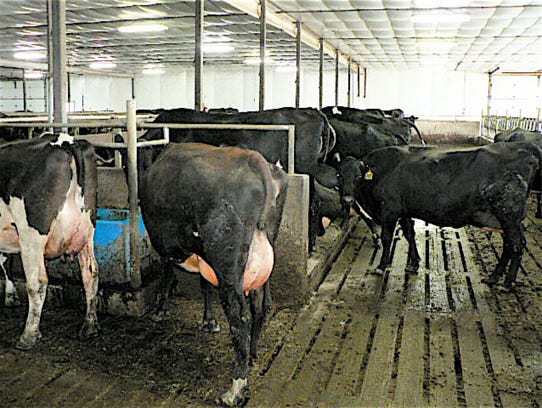
However, Goeser noted that toxins in this year’s corn are down significantly. “It looks like cleaner feed.” Balancing that is the fact that many of the samples the lab has tested are very dry – he called them “dry moisture corn” – and they are not going to ensile or ferment.

“October was dry and warm and 16-percent-moisture corn just isn’t going to ferment,” he said. Corn that gets harvested at 24-25 percent moisture may still ferment but if it’s less than 23 percent, he said it won’t “soften up” and he advised grinding it up as small as possible.

He encouraged farmers to keep an eye on bacterial contamination in their feed as well, which comes mostly from manure. “Don’t put manure on your growing crops. After the alfalfa comes off you may have a day or two to put manure on it but if that alfalfa starts to grow back and then you apply manure, you’re inoculating all those plants.”

Challenges for dairy managers also come when feeding the stored forages and corn. When silage is re-exposed to air, yeast will reproduce by feeding on sugars and carbohydrates and then start to eat lactic acid. When that happens the pH goes up and when it reaches a certain level, bacteria start to grow.

Perfect storm

Dairy cows can ward off certain bacterial challenges if they are not stressed by other factors, he said, like overcrowding or poor cattle handling methods, but if they are also enduring environmental stress they can experience a “perfect storm.”

Goeser further noted that some research is showing that bacteria can “sense” the stress hormones given off by a cow when she’s got problems and this allows them to take advantage of her.

He gets questions all the time about what additives are best to add to dairy rations. Some are useful for binding toxics, boosting the immune system of out-competing pathogens. His advice is to always “test before throwing 10-15 cents per cow per day into a ration. It takes a comprehensive approach.”

The most critical time is harvest and the decision-maker should be on the packing tractor, at the silo or on the bagger, he said, so they can make key decisions about the crop. If it’s too wet there will be ineffective fermentation; if it’s too dry there will be too much air in the feed. “You need to watch the crop coming in and make key decisions,” he advised. Another piece of advice at harvest is to use a research-proven inoculant.

Not your Daddy’s fiber

Dr. David Combs, a professor of dairy science at the UW-Madison, talked with the group about new technologies and innovations in forages that have improved feeding programs for livestock. On the plant side, brown mid-rib (BMR) was a natural mutation in corn that led to improved digestibility of fiber. Alfalfas have been developed with reduced lignin – some by natural breeding and some with genetic modification – and those have led to improved NDF (neutral detergent fiber) digestibility.

Even grasses have been improved for use in high-producing dairy cows, he said, and some of them have higher digestible fiber than alfalfa or corn silage.

The improved fiber digestibility of BMR corn, Combs said, has been shown to increase milk production by 2-3 pounds per cow per day. The reason some of these newer forages can do that is that “every mouthful the cow takes is effectively utilized or she can eat more,” he said.

However, while crops have been improved genetically, that only accounts for about a third of the fiber digestibility in the eventual feed. Two thirds is due to environmental conditions like moisture, growing temperatures and sun intensity. “California dairy producers like the high elevation alfalfa crops because of the growing conditions there,” he noted.

There have also been advances in laboratory testing and analysis of feeds including one that tests for indigestible fiber – uNDF-240 – and one that simulates the cow’s digestive tract to predict total digestibility. That test is called the total tract NDF digestibility or TTNDFD.

Values vary widely

The reason such tests are important Combs said is that fiber digestibility varies widely in forages. “There’s a huge difference and a lot of energy can be left on the table,” he said. Alfalfa hay and silage can vary from 25-70 percent of NDF; corn silage varies from 25-80 percent and grass hay and silage varies from 15-80 percent. “Two units increase in dietary TTNDFD can potentially increase milk yield by a pound.”

Combs noted, and some farmers in attendance confirmed, that garden chippers are being used in the field just before harvest to determine the fiber digestibility of the crop so the farmer can use that information to determine how to use that feed and which group of animals to feed it to.

In corn silage, 25-30 percent of the energy comes from the fiber portion of the feed. In addition, milk fat will increase in cows as fiber digestibility is improved. As margins continue to be tight on the dairy farm, Combs added that corn grain can be pulled out of the ration “if you have more digestible forages.”

Source: Wisconsin State Farmer

Fine tune herd care with new milk analysis

There is a new concept afoot that offers dairy farmers a valuable key to more efficient milk production and herd health.

Milk fatty acid levels, captured by mid-infrared milk analysis tools, were explained by milk quality specialist Dr. Dave Barbano, Cornell University, during the November Hoard’s Dairyman webinar.

Dairy farmers need analytical results that help them manage feed efficiency, animal health and welfare, and environmental impact in order to improve economic performance and sustainability, Barbano said.

“Ultimately, the success of farm management depends on correct decisions down to the animal-by-animal basis,” he pointed out. “The challenge, particularly in large farm management, is to find the cow of interest that needs something special right now, make a decision and take action.”

Milk production is the sum of the performance of all the individual cows, but generating reams of data can be more overwhelming than helpful.

“We really need to condense it down to the information that helps us make decisions, and not be buried in the sea of numbers,” Barbano said.

Analysis and interpretation

The new testing and data, both at the herd and individual cow level, focuses on milk fatty acid composition and the relation to seasonality of fat and protein.

“These new metrics kind of give us a new window into understanding what’s going on in the interaction between cows, health, feeding, management and so on, that I don’t think we see just looking at the fat and protein content,” Barbano said.

When testing first began five years ago at the St. Albens Co-op, the first thing that came to light was a fairly strong correlation of de novo fatty acids with bulk tank fat tests

Field studies of farms with low de novo (LDN) and high de novo (HDN) fatty acids gathered feed samples, management information and, most importantly, production per cow.

The researchers were surprised to find the high de novo herds of Holsteins/Jerseys actually produced more milk per cow. They also had higher fat and higher true protein.

“In the Northeast in 2014 when we did the study, given the fat and protein price, the difference between the HDN and LDN herds at 25 kg milk/100 cows/year would result in a gross income difference of $8,544 for fat and $15,695 for protein,” Barbano shared.

The study was repeated in 2015 on Holstein-only herds. While there was no difference in production, the HDN herds, again, measured higher levels of fat and protein. At the time, prices for protein had dropped, but the differences between the HDN and LDN herds at 30 kg of milk resulted in a gross income difference of $9,125 for fat and $6,935 for protein for 100 cows/year.

“So understanding how to influence these components and get them up without losing milk volume really is something in terms of trying to push better profitability on farms,” Barbano said.

Impacting de novo

The data showed less feed bunk space per cow (

“This showed up very clearly in both years, in both studies,” Barbano noted.

Higher stall stocking density in pens (>1.1 cows per stall) was also related to lower de novo fatty acids and lower fat and protein test.

The form of the ration and fiber is also important, with higher peNDF as a % of DM for the high de novo fatty acid farms (26.8 vs 21.4%).

High levels of de novo fatty acids in the milk indicates that the rumen fermentation is working very well and high levels of acetate, propionate and butyrate are being produced in the rumen, Barbano explained.

Excellent fermentation of forage produces a larger microbial biomass in the rumen and provides more essential amino acids in support of milk protein synthesis.

“De novo fatty acid measurement in milk is an excellent tool to evaluate the effectiveness of rumen fermentation and forage digestion,” he pointed out.

The relationship between variation in milk fatty acid composition and bulk tank milk fat and protein content for Holstein herds has been upheld by data collected from 167 Holstein farms across the nation.

Instruments capable of testing bulk tank milk for de novo are in use at several cooperatives, including St. Albans and AgriMark, who are providing their farmers with daily results.

Looking ahead

Researchers and farmers are getting a much better understanding of how to use milk fatty acid data for whole herd or milking group diagnostics, Barbano said.

The next step is to develop hardware and software to integrate this milk testing approach into the milking system so farmers can get data on a continuous basis from every cow.

Barbano envisions a inline sensor that will shoot off a “fingerprint” of the milk from each cow, and farmers would get back a list of cow numbers or groups and what needs to be done.

Barbano’s presentation, hosted by Steve Larson, Hoard’s Dairyman, and Mike Hutjens, University of Illinois, was sponsored by Quality Liquid Feeds (QLF). It has been archived online by “Hoard’s Dairyman” and is available for free viewing at hoards.com.

Source: Wisconsin State Farmer

Robot dairy replaces subjectivity with data

In the statistically driven world of modern agriculture, robotic milking machines are challenging the notion of what is supposed to be a correct cow.

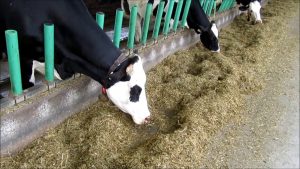
Fifth generation dairy farmers Wayne and Paul Clarke, Dobies Bight improved their operation two years ago with the installation of four robotic milkers run off solar power.

Their daily routine changed overnight. It didn’t take their 350 three-way cross cows long to figure out the new way of doing things and it seems they won’t go back to their old regimented life.

“They’re calmer now when I walk through them,” says Paul. “But if I try to push them into a robot or fetch them from a paddock early, no way.”

The most remarkable discovery  – as a result of data collection every time a cow goes to the bails –  has been that their worst cow is all of a sudden the best.

“She’s a four-way cross, actually,” Paul explains: Jersey over Illawarra/Friesian and back to Illawarra.

“We were just about ready to sell her and now we realise she’s our most profitable cow producing 9000 litres per lactation.

 “Under the robot regime she is just more relaxed, feeding when she wants and how much she wants.

“In the past, when we herd recorded, we came up with a snapshot once a month. Now we know exactly how many litres per day for each cow. It is a lot more accurate. Data collected has identified cows capable of producing more milk from pasture with less reliance on grain. With the cross bred cows outperforming the purebred at the moment. The preference being Friesian over Jersey/Red breeds, with Brown Swiss seemingly too docile.”

David Widdicimbe, marketing agent for the Swedish Delaval robot, said old herd hierarchies were relaxed under a robot regime, with once bullied cows able to hang back and go to the bales when they want.

In the bales the robot washes and blow dries each teat several times before applying individual cups, fitted with a weights and measures ‘approved’ scanning tool that measures flow. The technology also presents the farmer with reports, through Windows-based software, on each teat regarding cell-count and salinity, which is an indicator of early mastitis.

“We can’t compare this technology with the old way,” says Paul. “Before we were in the dairy with the cows and we checked them every time they milked. Now we’re not there so we have to rely on the robot.”

When each separate tests had been milked and measured, cows are free to go; but not just anywhere. Pneumatically powered gates open or shut after identifying each animal by their livestock identification ear tag. Early lactating cows travel around the system generally better, with shorter milking permission times [greater access to the dairy] as the lactation progresses ,milking permission is lengthen allowing late lactation cows longer grazing intervals.

The flexibility afforded by the robot allows cows to milk anytime of day or night.


Source: The Land

Dairy challenge: Keep production costs below $17.50

Markets continue to move sideways with little prospect for forecast price improvement. None of the factors that are well known give much optimism for price improvement

Penn State University’s November Dairy Outlook showed little optimism for 2018 milk prices. Markets continue to move sideways with little prospect for forecast price improvement, according to Rob Goodling, Extension coordinator for the outlook.

If 2018 price forecasts are realized, the majority of Pennsylvania dairy producers will need to have a cost of production below $17.50 per hundredweight to cash flow. That’ll pose a significant challenge to many dairies.

Milk price projections for 2018, based on Class III and Class IV futures for January through August, range from a $15.35 low to a $16.14 high for Class III; $14.11 to $15.40 for Class IV; and $16.63 to $17.41 for Pennsylvania’s mailbox price.

Components only game in town
Shipping more components remains the best way to improve income. Over the last 17 years, Federal Order 1 butterfat tests have increased an average of 0.14%; protein tests have risen 0.11%. That’s according to a recent Northeast Market Administrator’s bulletin.

But those averages don’t reflect the increases achieved on many well-managed farms. During many dairy advisory team meetings, the conversation focuses on the forage quality and management needed to achieve an average of 6 pounds of components produced daily from each cow in the herd.

Blame the cyber economy?
The majority of Pennsylvania dairy farms are concentrated in the south-central and southeast counties. A recent study commissioned by the Center for Dairy Excellence found that the industry continues to grow and concentrate there. That same area has a tremendous transportation network, which has been a benefit in moving milk to market — note the words “has been”.

Over the past 10 years, this transportation network has attracted a large number of warehouses, or logistics centers, to the area. Proponents of logistics centers forecast that there’s no end to the amount of these structures needed.

These logistic centers are located along this transportation grid for the same reason that the extensive food processing industry in located there — half of the U.S. population can be reached within a 12-hour drive.

Some contend the biggest impact of these logistics centers to dairy is the farmland taken out of production to build these centers. But these logistic centers affect the dairy industry in a much less obvious way.

Anecdotal information indicates that average laborers may earn a wage of $14.50 an hour. As a result, dairy farms within a reasonable commute of any of these centers find they’re faced with a minimum wage floor set by local competition for laborers. If dairies aren’t willing to match the wage rates, it becomes increasingly difficult to recruit and retain employees.

Many Pennsylvania dairies already have a cost structure too high to compete successfully with dairies in other parts of our nation, mainly due to feed costs. Higher labor costs won’t be helpful.

Download the full Penn State Extension Dairy Outlook with price projection tables and graphs.

To explore feed costs and estimated income over feed costs at varying production levels by zip code, check out the DairyCents or DairyCents Pro apps.

Source: Penn State University

Drones check cows’ stress

DRONE  researchers have grounded the technology they use to collect data from the air to help solve production problems in dairies.

University of Melbourne agriculture and food researcher Sigfredo Fuentes says infra-red thermal cameras have been used in a stationary capacity in projects looking at stress in milking herds.

“We can install sensors on the cows to detect heat rate and breathing patterns but they are invasive and never stay in position,” he said.

“So we are trying to do the same thing using the drones but stationary — when the cows come to the robotic milker (at our Dookie campus) we can obtain all the biometrics then.”

Dr Fuentes said it was possible to detect body temperature and heart rates from measurements obtained by filming changes to nostrils and eyes with the technology.

“Changes in the luminosity of the eye section of the cow are really imperceptible to the human eye but we have algorithms to analyse those changes related to the rushing in and out of blood to the face,” he said.

“We are concentrating on pupil dilation in the cow and the white part of the eye to analyse stress.

“We can then try to develop models to predict different parameters.

“In milking, for example, we could predict volume of milk, protein content, fat content and any other interesting ­target.”


Source: The Weekly Times

Preventing personal injuries on a dairy farm

An alarming statistic, the Bureau of Labor Statistics (BLS) (2012) reported that “Agriculture, forestry, fishing and hunting was one of only two private industries to experience an increase in the rate of injuries and illnesses in 2011 compared to 2010.” The BLS specifically pointed out that the increase was driven in both crop and animal production (primarily dairy cattle and milk production) industries.

There is a high percentage of contact time between animals and human beings in the dairy industry on a daily basis. How do these injuries occur? Many victims of animal injuries result from being stepped on, kicked, fallen on, crushed by cows or mauled by bulls and gored by animals that have not been dehorned.

When training workers about proper livestock handling practices it is important to remind them that dairy animals have panoramic vision, which means that they are able to see all the way around themselves except for a small blind spot at the nose and rear of the animal. 

Knowing how to approach an animal from the side while using verbal cues in a non-threatening manner will minimize spooking the animal. The “flight zone” is often referred to as an animal’s “personal space”. In essence entering the flight zone will cause the animal to move away from you. For example a wild animal will have a large flight zone up to as much as 160 feet in diameter whereas most tame dairy cows will have a very minimal flight zone and can often be difficult to move. Understanding and using the “flight zone” in the proper manner can help facilitate the moving of an animal in a desired direction. Learning the flight zone penetration area will take some practice within each species (See Figure  1.).

Cattle are more sensitive to noise than humans, particularly those at higher frequencies. Yelling and hollering causes stress to animals and can make them more difficult to handle. Staying quiet and calm will help minimize these reactions. Additionally, unexpected loud noises such as banging gates, loud exhaust from air cylinders, starting an engine, etc. may startle animals. One way to help condition cattle is to utilize a radio played at moderate volume in the barn at all times to help reduce the reaction to unfamiliar, sudden noises.

One needs to remember that cattle are herd animals and isolation may cause them to be nervous, stressed or agitated.  So when working with an animal, having a companion animal near will help keep the one being treated calmer.

Cattle do remember painful or frightening experiences. If an area of the barn brings-up unpleasant memories for cows such as pokes, slipping or rough handling, they may become unwilling to cooperate and react accordingly.

Good livestock handlers should be able to watch for warning signs of an agitated animal. They will show such signs as raised head or bulls may have lowered heads if they are going to charge,pinned ears, raised tails, raised hair on back, bared teeth, excessive bawling, pawing the ground, and snorting.

Appropriate livestock handling behavior include:

  1. Slow and deliberate actions. 
  2. No loud noises or quick movements. 
  3. Do not prod an animal when it has no place to go.
  4. Gently touching animals has a more favorable response than shoving or bumping them. 
  5. We need to respect animals, however not fear them. 
  6. Intact male animals, especially dairy bulls should be considered potentially dangerous at all times and proper equipment and facilities should be made available to assure safety of handlers. 
  7. Animals tend to become highly protective of their young especially during parturition. 
  8. Animals will defend their territory which should be kept in mind at all times, given their size, mass, strength, and speed.
  9. Cows will typically kick forward and out to the side and will also have the tendency to kick toward the side where they have pain from inflammation or injuries. Young stock may kick straight back also. Thus, if a cow has a single quarter with mastitis you may want to approach her from the opposite side of the affected udder when examining her or utilize proper restraint to avoid being hurt.

Personal hygiene is extremely important as humans can contract diseases from livestock (Zoonosis.) Diseases such as leptospirosis, Staphylococcus aureus, rabies, and ringworm are fairly common whereas anthrax and bovine tuberculosis are rare but still exist. Using personal protective equipment such as splash guards, eye wash stations, gloves, and wash stations along with good hygiene by livestock handlers will minimize contagion. Dead animals should be disposed of in a timely and proper manner to minimize spread or potential exposure to disease.

Lastly, using appropriate livestock handling equipment is a must. Equipment such as man gates in pens, working/squeeze chutes, treatment pens, halters, head-gates, anti-kicking devices, hip lifters or cattle lifters should be available and in proper working order.  Facility design is also important including gate placement, pen size, spacing between railings or boards and lighting.

Figure 1. Flight Zone, Temple Grandin

Source: iGrow

The importance of proper Calf managment

Calf management starts before the animal is born.

The pregnant dam should be provided with proper nutrition to ensure that the calf is born strong and healthy.

Immediately after calving, ensure that the calf is breathing by wiping off mucus from its nostrils.

Alternatively, you can rub some straws on the calf’s nostrils to stimulate sneezing or hold the calf’s hind limbs and swing it to remove mucus from the nostrils and provide a clear air way.  

The calf’s navel is then tied, cut and disinfected with 2 per cent iodine to prevent infection that may lead to navel ill.

Calf feeding is aimed at providing the required nutrients and encouraging rumen development.

During the first 12 hours after birth, it is extremely important that the calf ingests colostrum, which is rich in nutrients and antibodies.

This is because 24 hours after birth, the animal may not be able to absorb the antibodies.  

Colostrum feeding may continue for 4-5 days. During this period, the calf’s rumen is not fully developed and milk ingested goes directly from the esophagus into the abomasums through the esophageal groove.  

This groove allows only liquid feeds to pass through but not solids, so at this age, the calf should be fed on the dam’s milk or Intromilk milk replacer.

Intromilk replacer can be fed through buckets or nipple bottles which need to be placed at a higher level where the calf has to stretch their necks to drink.

How to feed a calf. Intromilk replacer can be fed through buckets or nipple bottles which need to be placed at a higher level where the calf has to stretch their necks to drink.

The calf may consume up to 2 litres of milk or more per day and should be fed twice daily.

Calves overfed with milk may develop scours, a major cause of early mortalities.

In the event that there’s scouring, the calf should be treated with Limoxin ws, a water soluble powder.

Milk replacer is a quality feed that is meant to meet the growth and development requirements of a young calf.

A good milk replacer is equivalent to successful calf rearing.

This is because high quality milk replacer ensures that the calf’s growth and performance is higher than that of the cow’s natural milk.

FRESH DRINKING WATER THROUGHOUT

Intromilk is economical and is free from diseases that may be transferred from the dam to the calf.

Intromilk helps in faster rumen development, allowing the calf to start digesting grass earlier hence earlier maturity.

A calf should consume Intromilk equivalent to 10 per cent of its body weight. Some 125g of Intromilk calf milk replacer is added per 1 liter of warm water, mixed and fed immediately.

The calf may be weaned at 12 weeks of age. Weaning is the transition from milk to solid feed. At this age the rumen is usually beginning to develop.

Weaning should be done gradually by feeding calves good quality fodder/hay and concentrates. 

The concentrates can be in form of calf pellets, which stimulate rumen function through establishment of microbial population and stimulation of growth of rumen papillae.

It’s important for every animal to consume minerals in their diet. Calves should be fed on mineral blocks adlibitum.

Intromin mineral block is rich in vitamins and essential minerals which provide the calf with all it needs for strong bones.

Calves should be allowed fresh drinking water throughout. Do not give water immediately before the calf drinks milk so that they can ingest sufficient amount of milk.

Calves should be dehorned within the first month of birth as it is less painful and stressful for the animal.

Ear tags may be applied immediately after birth for proper identification and recordkeeping.

Extra mammary teats may be removed when the calf is still young as it is less stressful. These are surgically excised and Limoxin aerosol spray applied to prevent infection.

Bull calves not meant for breeding may be castrated at birth or between 3- 6 months of age as they heal faster and it is less stressful.

Vaccination can be done to prevent diseases like blackleg, Anthrax, FMD, Lumpy Skin and CBPP etc.

Source: Daily Nation

Sorting Profits: Cows are Picky Eaters

Dairy cows selectively consume their rations, generally sorting longer particles in favor of finer particles. Feed sorting decreases fiber intake while increasing the consumption of grains and co-products. It also creates instances where cows eat different rations throughout the day.

Are Your Cows Sorting?
In 2010, researchers from University of Minnesota evaluated ration change over time in 50 Minnesota freestall barns. At each farm, samples were collected from rations fed to high-producing cows. One sample was collected immediately after the TMR was delivered, three additional samples were collected every two to three hours after feed delivery, and the last sample was taken from the accumulated weigh-backs.

Researchers evaluated particle size in the TMR samples using a threesieve Penn State Particle Separator. On average, the researchers found a noticeable change in the percentage of material retained in the top screen from the initial TMR to the weigh-backs showing cows were selecting against long particle size. In addition, fiber content—percent of neutral detergent fiber (NDF)— of the TMR increased throughout the day.

Similar results were obtained in a Canadian survey including 22 freestall herds. On average, the refused ration was higher in the percentage of long particles recovered in the top screen (19.8% versus 33.1%) and physically effective NDF (17% versus 24.5% dry matter) than the average offered ration.

Effects of Sorting on Milk Components
Feed sorting causes fluctuations in rumen fermentation patterns, and can result in reduced ruminal pH and episodes of subclinical ruminal acidosis. A recent study showed the association between sorting behavior and milk production. The researchers evaluated feeding behavior in 28 lactating Holstein cows individually housed in a tiestall barn at the University of Guelph.

Cows sorted against long particles and in favor of short and fine particles. On average, intake of the longest particles was 78%. Milk production of the group was 90.6 lb. per day with 3.81% and 3.30% protein. The authors found negative associations between feed sorting and milk composition. For every 10% increase in sorting against long particles:

  • Milk fat content decreased by 0.10 percentage units
  • Milk protein content dropped 0.04 percentage units

Because the average sorting against long particles in the group was 22%, milk fat was reduced by 0.22 percentage units or 0.2 lb. per cow per day due to sorting. Similarly, milk protein was reduced by 0.09 percentage units or 0.08 lb. per cow per day. Using values from September FMMO Advanced Component prices (fat $3.03 per pound and protein $1.54 per pound), the economic impact of sorting in this research herd was 72¢ per cow per day or $263 per year.

In conclusion, feed sorting is a common behavior of dairy cows that could produce health issues and economic losses in the herd.


Source: Animal Science with Extension

Farmer’s mobile milking shed breaks the dairy model

From a paddock in North Canterbury, dairy farmer Glen Herud is breaking the mould.

He doesn’t own land. He doesn’t have a permanent milking shed or effluent system. Calves stay with their mothers for up to 15 weeks. In almost every respect, the Happy Cow Milk Company flies in the face of New Zealand’s biggest primary industry.

“I suppose we’re different in quite a few ways really,” the 39-year-old said, seemingly unaware of the disruption his model could have.

Glen Herud owns Happy Cow Milk Company. They milk cows in a mobile milking unit in the paddock, and calves stay with ...

JOSEPH JOHNSON/STUFF

Glen Herud owns Happy Cow Milk Company. They milk cows in a mobile milking unit in the paddock, and calves stay with their mothers until they are naturally weaned.

Herud  milks his 60-cow herd once a day from a mobile milking unit parked in leased land. Rather than make his cows walk from the paddock to the shed, he brings the shed to the paddock.

READ MORE:
Lyttelton Coffee Company milk supplier speaks out on trim milk debate
Milk from the farm wins new favour

On some dairy farms, Herud said, herds can walk up to 4 kilometres multiple times a day on the way to and from the milking shed.

Herud started the company in 2014, originally called Nature Matters Milk Company. He now supplies about 30 cafes in ...

JOSEPH JOHNSON/STUFF

Herud started the company in 2014, originally called Nature Matters Milk Company. He now supplies about 30 cafes in Christchurch and Rangiora.

He designed and built the mobile shed himself, the only one of its kind in the country.

“We’re the first to do it, so we had to get it through Ministry for Primary Industries and all the food safety authority people as well.”

The cow shed is moved to a different part of the paddock every day, the herd continually feeding from a different section of grass. The incentive of new grass means cows voluntarily file into the mobile milker, patiently waiting as Herud attaches soft rubber cups to their teats.

Herud designed and built the mobile milker himself. It is the only one of its kind in New Zealand.

JOSEPH JOHNSON/STUFF

Herud designed and built the mobile milker himself. It is the only one of its kind in New Zealand.

After 15 minutes, the cows move into fresh pasture and Herud washes down the trailer before inviting the next group in.

By constantly moving the milking operation, Herud also solved the effluent issue most dairy farms face. 

“Most cow sheds have a holding yard where most of the effluent is collected, and then that has to get spread out on the paddocks.

“By moving the shed every day, the cows will stand in one spot one day, then the next day stand somewhere else, so they are spreading the effluent naturally around the paddock.”

But how does this make the cows happier than other dairy cows?

“We leave the calves with their mothers [for up to 15 weeks], so we are really putting the emphasis on animal welfare and sustainability.

Herud says he thinks New Zealand needs to define itself as doing the "moral thing" when it comes to dairy, focusing on ...

JOSEPH JOHNSON/STUFF

Herud says he thinks New Zealand needs to define itself as doing the “moral thing” when it comes to dairy, focusing on being “more natural and having higher levels of animal welfare”.

“When the calf is ready to be weaned, we remove them from their mums then.”

The happiness seems to translate into flavour too, with baristas across the city endorsing Happy Cow milk as creamier and better to steam.

Herud went into business in 2014 with seven cows, originally named Nature Matters Milk Company. He now supplies about 30 cafes in Christchurch and Rangiora, as well as stocking shelves at Raeward Fresh stores. He hopes to expand into more supermarkets in the near future.

The mobile milking unit can milk 15 cows at once. Herud moves the trailer to where the cows are, making for happier cows ...

JOSEPH JOHNSON/STUFF

The mobile milking unit can milk 15 cows at once. Herud moves the trailer to where the cows are, making for happier cows and tastier milk.

Herud’s small-scale farm is unique. Of the almost 12,000 herds across the country, fewer than 200 have less than 100 cows. There are currently about 4.8 million cows in New Zealand, according to the latest statistics from DairyNZ.

Threats to the global dominance of Kiwi dairy should be pushing the industry towards doing “the moral thing”, Herud said.

“I mean to be honest most dairy farms do take care of their animals [but] I think New Zealand really needs to become known for being pasture based, being much more natural and having higher levels of animal welfare.”

Source: Stuff

Send this to a friend