Minnesota Gov. Tim Walz says dairy barns collapsing due to heavy snowfall are threatening the state’s economy.
Walz and Sen. Tina Smith met with dairy farmers near Altura in southeastern Minnesota on Saturday. Dozens of barn roofs have collapsed in Minnesota because of heavy snow, with farms in the southeastern part of the state especially hard hit.
Walz calls dairy farms “the bedrock of the economy and their communities.”
Smith says the damage to barns and herds is following low prices for dairy products. She calls it “a double whammy.”
The Post Bulletin report s a bill in the Legislature would help get loans and insurance payments to affected farmers as soon as possible.
But farmer Rob Kreidermacher says he’s not sure how much money his family can afford to borrow.
World Dairy Expo is pleased to announce the recipients of the 2019 Expo Recognition Awards to be formally presented during the 53rd annual event, October 1-5 in Madison, Wisconsin. The honorees were nominated and selected by their peers for their contributions and excellence in the dairy industry and their community.
With esteem, we announce the 2019 honorees:
Dairy Woman of the Year Janina Siemers, Siemers Holsteins, Newton, Wis.
Dairyman of the Year Steve Maddox, Maddox Dairy, Burrel, Calif.
Industry Person of the Year Dr. Randy Shaver, University of Wisconsin-Madison, Department of Dairy Science, Madison, Wis.
International Person of the Year Dr. Julio A. Brache Arzeno, Rica Group, Santo Domingo, DN, Dominican Republic
These individuals will be recognized at World Dairy Expo’s Dinner with the Stars, October 2, 2019 in the Exhibition Hall at the Alliant Energy Center. Banquet tickets will be available online at worlddairyexpo.com beginning July 1. All Expo attendees and stakeholders are invited to attend the WDE Welcome Reception hosted prior to the banquet and featuring complimentary hors d’oeuvres.
The dairy leader announced on International Women’s Day its decision to forego asking new hires for salary history.
On March 8, a day dedicated to celebrating the social, economic, cultural and political achievements of women around the world, DeLaval took new steps on its journey to create a diverse and inclusive workplace. The dairy solutions provider, which employs more than 600 people in North America, will no longer ask new hires about their salary history for any of its positions in the region.
“By eliminating salary data from our hiring process, we are breaking down invisible walls built decades ago,” said Martha Trott, DeLaval Vice President Human Resources in the Americas region. “As a leading agricultural company, we have a responsibility to help propel our industry forward, to lead by example and make progress in important areas like gender parity.”
The talent pipeline in the U.S. shows a rising percentage of women entering agricultural degree programs, some of which point to more than 50% female attendees.“We have a talented group of women at DeLaval and look forward to welcoming more gender equality and inclusiveness.”
In 2016, DeLaval introduced Women in Blue, an initiative to attract, develop and retain strong female talent. The program championed ongoing skill building, mentorship and cultural training opportunities for the company’s employees. DeLaval is also a sustaining-level sponsor of the Dairy Girl Network, a professional development network for women in dairy. Additionally, the company enhanced parental leave benefits for new mothers and fathers in 2017.
Learn more about International Women’s Day, and consider growing your career at DeLaval.
Al Overland is not saying you should refer to almond milk as nut juice. He’s also not saying you shouldn’t.
“I’ve heard it called that,” said Overland, a dairy farmer near Sturgeon Lake, Minn. “They can call it juice or beverage, or whatever they wish, but we just don’t want them to call it milk.”
Dairy farmers, who are struggling with widespread industry consolidation, low prices and declining demand, are becoming even more fed up with all the non-dairy products in the grocery store labeled as milk.
The number of different types of “milk” available to consumers has ballooned in recent years. First it was soy, then almond milk, coconut milk and rice milk. Now, there’s oat milk and pea milk.
The Food and Drug Administration is mulling whether to update its rules for how to label plant-based foods, and has been lobbied hard by both dairy and plant-based producers. A four-month public comment period closed at the end of January, and 8,624 comments were submitted.
Dairy groups say the FDA has allowed an “anything goes mentality in the marketplace.” Plant-based groups say the objections are much ado about nothing, and would disrupt the marketplace.
“This entire exercise is a solution in search of a problem,” said Michele Simon, executive director of Plant Based Food Association. “At a time when resources are scarce, our federal government should not be concerned with how ‘almond milk’ is labeled. Aren’t there higher priorities, such as the safety of our food supply, for FDA to worry about?”
According to the federal “standards of identity” regulations, milk is “the lacteal secretion, practically free from colostrum, obtained by the complete milking of one or more healthy cows.”
Lucas Sjostrom, executive director of Minnesota Milk, said the federal regulations should be enforced. And the dairy industry, he added, if fine with lacteal secretions from other types of animals being labeled as milk.
“We have no problem with goats,” Sjostrom said.
Plant-based products that resemble dairy foods do not have standards of identity, and therefore are nonstandardized foods.
The debate is a throwback in some ways to one that played out from the late 19th century up to World War II over the proliferation of margarine in the U.S. In those days, dairy farmers prodded politicians to imposes taxes and fees on the competitor to butter.
Overland, the farmer near Sturgeon Lake, remembers that his father, also a dairy farmer, used to bemoan the fact that margarine was colored yellow to make it seem more like butter. Today, he views the labeling of plant-based beverages as “milk” in the same way.
But, he said, plant-based drinks are not nutritionally equivalent to milk, and yet they have benefited from decades of milk promotion by farmers who raise and milk cows, and are now struggling to stay in business.
“Dairy farmers have spent a lot of money over the years promoting milk, and promoting it as the nutritional product that it is, and they are taking advantage of all of this investment,” Overland said.
Plant-based milk alternatives remain a small portion of the beverage market, but they’re growing and sales of dairy products are declining. In the 12 months that ended in July 2018, sales of traditional milk products dropped by 4 percent, while sales of milk alternatives rose by 8 percent.
By far the most popular plant-based milk alternative in the U.S. is almond milk, which is made by soaking almonds in water, grinding them up with more water, and then straining out the pulp of the nuts, leaving a white, frothy beverage.
“The marketplace disruption being pushed by the dairy lobby would hinder innovation, create untenable costs for our members, and ultimately be found unconstitutional, making the entire effort a waste of everybody’s time and resources,” Simon, the director of the Plant Based Food Association, said in a statement. “We encourage the FDA to abide by free market principles and not restrict labeling to unfairly favor the dairy industry.”
Simon could not be reached for an interview, and a spokeswoman for the Almond Alliance, a trade association, declined to comment.
A spokeswoman from the FDA said the agency has not set a date for a decision on labeling rules “but will carefully consider the comments before determining next steps.”
The brand new Wisconsin 4-H license plate is now available for your car, truck or motor home. This specialty plate is now available through the Wisconsin Department of Motor Vehicles and bears the message “4-H Empowering Youth”. The sale of each license plate will include a monetary contribution to the Wisconsin 4-H Foundation.
“This is a great way for our 4-H families, alumni and supporters to show their 4-H pride,” says Brenda Scheider, Executive Director for the Wisconsin 4-H Foundation. “Half of the proceeds from every plate sale will go back to the county in which the plate was purchased. The other half will be used for state and regional 4-H programs.”
Vehicles that qualify for the 4-H license plate include:
Automobiles
Motor homes (annual registration only)
Motor trucks: 4,500, 6,000 or 8,000 pounds gross weight including dual purpose farm and dual purpose motor home; and/or 12,000 pounds gross weight farm truck
Persons requesting Wisconsin 4-H license plates will pay:
The regular registration fee for the vehicle if the current plates expire within three months or the vehicles has no plates.
$15 issuance fee or an annual $15 personalized plate fee, if requested.
$25 annual donation. The donation may be deductible.
4-H license plates may be personalized by paying a $15 personalized plate fee each year in addition to the $25 donation and regular annual registration fee. With each annual license plate renewal, 4-H supporters will pay the regular registration fee for non-personalized 4-H license plates and the $25 donation.
Maryland & Virginia Young Cooperators Catch a Glimpse at the Future
At a time when dairymen are thinking 1, 3, 5 and 10-years ahead, Dr. Jack Britt challenged Young Cooperators (YCs) attending Maryland & Virginia Milk Producers Cooperative’s annual YC Conference to fast forward 50 years, and to consider what dairy farming in 2069 may look like. “If we [the dairy industry] can capitalize on the opportunity, I think the dairy outlook is pretty good,” he told attendees.
Dr. Jack Britt is a teacher, scientist, executive and entrepreneur. He served as a faculty member and leader at Michigan State University, North Carolina State University and The University of Tennessee System. Dr Britt leads a team of 9 expert forecasters from around the world that has been studying what dairy farming on a global basis may look like in 50 years. The team started this effort in August of 2015 and has continued to modify their projections on a regular basis.
Starting with the consumer, Dr. Britt shared that where people are going to be consuming dairy is of importance. In 2069, Dr. Britt’s data shows 93% of the population growth and consumer demand for dairy will be in Asia and Africa. “Nigeria will have a larger population than the U.S. in 50 years, and that’s an opportunity to grow dairy,” Dr. Britt shared.
“The majority of our [U.S.] customers will be offshore,” said Dr. Britt. “Developed countries like the U.S. and the European Union will not have as much growth.”
How does the U.S. dairy industry evolve to feed a growing population overseas? Dr. Britt foresees farms of the future being larger operations located in closer proximity to one another. This would allow for farms to collaboratively buy in bulk, everything from general supplies and equipment, to sharing resources such as a methane digester, a payroll team, or even centralized feed centers.
Cows and herd sizes will continue to increase. The cow of the future will be a smaller, more robust animal with an even smaller environmental footprint than cows of today. Dr. Britt’s expert forecasters suggest there will be a demand for gene editing to move genes within and among breeds, to create the right cow for the right habitat and geography.
Among his key takeaways, Dr. Britt encouraged the YCs to give some thought to five key tips he has gleaned from a successful dairy farmer entrepreneur:
Do you have a 5 and 10 year plan?
Do you know your strengths and weaknesses, both personally and operationally?
Know your costs, and how they compare to the “competition?
Read, Read, Read and then Read some more.
Share. Share your practices, ideas, successes, failures, enterprises, futures.
In closing, Dr. Britt’s challenged Maryland & Virginia’s YCs to consider “what’s your vision?” And how are you going to mobilize to achieve your vision?
Afterwards YCs surrounded Dr. Britt’s table for follow-up conversations and questions. YC Stephen Bray from Penhook, Virginia said, “I’ve been coming to this conference for almost 15 years and Dr. Britt’s presentation has to be one of the most interesting and thought-provoking ones I’ve heard.”
Net farm income, a broad measure of profits, is forecast to increase $6.3 billion (10.0 percent) from 2018 levels to $69.4 billion in 2019. This follows a $12.0-billion (16.0 percent) decline forecast for 2018. In inflation-adjusted 2019 dollars, net farm income is forecast to increase $5.2 billion (8.1 percent) from 2018 after the forecast decrease of $13.9 billion (17.8 percent) in 2018. If realized, inflation-adjusted net farm income in 2019 would be 49.0 percent below its highest level of $136.1 billion in 2013 and below its historical average across 2000-17 ($90.0 billion).
Net cash farm income is forecast to increase $4.3 billion (4.7 percent) to $95.7 billion. Inflation-adjusted net cash farm income is forecast to increase $2.7 billion (2.9 percent) from 2018, which nonetheless would be the second lowest real-dollar level since 2009. Net cash farm income encompasses cash receipts from farming as well as farm-related income, including government payments, minus cash expenses. Net farm income is the more comprehensive measure of the two, in that it incorporates noncash items, including changes in inventories, economic depreciation, and gross imputed rental income of operator dwellings.
Cash receipts for all commodities are forecast to increase $8.6 billion (2.3 percent) to $381.5 billion in 2019 in nominal terms. Total animal/animal product receipts are expected to increase $4.6 billion (2.6 percent) following expected increases in milk and cattle/calf receipts. Total crop receipts are expected to increase $4.0 billion (2.0 percent) from 2018 forecast levels following expected increases in corn and fruit/nuts receipts. Direct government farm payments are forecast to decrease $2.3 billion (16.8 percent) to $11.5 billion in 2019, with most of the decrease due to lower anticipated payments for Agriculture Risk Coverage, Price Loss Coverage and miscellaneous programs (which include Market Facilitation Program payments to assist farmers in response to trade disruptions).
Total production expenses (including operator dwelling expenses) are forecast to be largely unchanged from 2018 forecast levels, at $372.0 billion in 2019, with increases in spending on hired labor, feed, and interest mostly offset by dropping energy prices. When adjusted for inflation, total production expenses are forecast to decrease $4.2 billion (1.1 percent).
Farm business average net cash farm income is forecast to increase $6,400 (9.3 percent) to $75,000 in 2019. Although this is the first increase since 2014, it is also the third lowest average income recorded since the series began in 2010. Every resource region of the country is forecast to see farm business average net cash farm income increase by 5 percent or more. All categories of farm businesses except wheat and hog farm businesses are expected to see average net farm income rise in 2019.
Farm sector equity is forecast up by $28.8 billion (1.1 percent) in nominal terms to $2.65 trillion in 2019. Farm assets are forecast to increase by $44.6 billion (1.5 percent) to $3.1 trillion in 2019, reflecting an anticipated 1.8-percent rise in farm sector real estate value. When adjusted for inflation, farm sector equity and assets are forecast to decline $16.3 billion (0.6 percent) and $7.6 billion (0.2 percent), respectively. Farm debt in nominal terms is forecast to increase by $15.8 billion (3.9 percent) to $426.7 billion, led by an expected 5.1-percent rise in real estate debt. The farm sector debt-to-asset ratio is expected to rise from 13.55 percent in 2018 to 13.86 percent in 2019. Working capital, which measures the amount of cash that would be available to fund operating expenses after paying off debt due within 12 months, is forecast to decline almost 25 percent from 2018.
Median Income of Farm Operator Households Expected To Increase in 2019
Median farm household income is forecast to reach $78,987 in 2019. In nominal terms, that income level represents an increase of 3.6 percent from its 2018 level; in inflation-adjusted terms, it is a 1.9-percent increase. The total median income of U.S. farm households increased steadily over 2010-14, reaching an estimated $81,637 in 2014 in nominal terms. Median farm household income then fell 6 percent in 2015, remained flat through 2018, and is forecast to rise in 2019.
Farm households typically receive income from both farm and off-farm sources. Median farm income earned by farm households is forecast at -$1,553 in 2018 in nominal terms and is forecast to increase slightly to -$1,449 in 2019. In recent years, slightly more than half of farm households have had negative farm income and therefore rely on off-farm income to support their well-being. Median off-farm income is forecast to increase 2.6 percent from $69,366 in 2018 to $71,162 in 2019. (Because farm and off-farm income are not distributed identically for every farm, median total income will generally not equal the sum of median off-farm and median farm income.)
Gov. Tony Evers is proposing the state spend $30 million toward a planned $90 million expansion of the Alliant Energy Center’s exposition hall in Madison.
Evers announced the funding proposal Wednesday surrounded by Madison-area leaders. The Alliant Center hosts a variety of events, including the Dane County Fair, the World Dairy Expo and numerous trade and agricultural shows.
Evers says the Alliant project will convert the hall from being a regional exposition center to a full-service convention center. A mix of public and private funding is being sought to pay for the remainder of the project, which is expected to take years to complete.
Evers is including the state funding in his capital budget proposal. Evers says he will announce other building projects later this week.
A heating lamp used to keep cow calves warm was determined to be the cause of a fire that destroyed a dairy barn in Westfield on Monday afternoon, according to the State Fire Marshal’s Office.
Jennifer Meith with the State Fire Marshal’s Office told Western Mass News a heat lamp at Pomeroy Farm on Russellville Road fell and ignited from nearby combustibles like bedding or hay.
Meith said four young cow calves also perished in the fire that caused an estimated $350,000 in damage.
When Westfield firefighters arrived to the barn around 4 p.m. on Monday, they knew they were in for a challenge due to the lack of fire hydrants.
“We were on scene for about four hours,” said Westfield Deputy Fire Chief Patrick Kane.
“That one was a little tough due to the lack of hydrants in the area so we did have to do a shuttle operation,” Kane explained.
While firefighters tried to save as much as the barn as they could, it was deemed a total loss.
“It’s just another issue we have to contend with and kind of pre-plan for, and our guys did an excellent job last night,” Kane noted.
Members of the Westfield Fire Department, the Westfield Police Department, and the State Fire Marshal’s Office investigated the fire.
Clarifide® Plus for Jerseys helps producers predict disease risk, including milk fever,and estimate profit potential
Zoetis announced the launch of Clarifide® Plus for Jerseys, the first commercially available, U.S.-based genomic test created exclusively for the Jersey breed. Clarifide Plus for Jerseys includes genomic predictions that provide direct indication of the genetic risk factors for seven of the most common and costly adult cow diseases — including milk fever — and three calf wellness traits.
“Clarifide Plus for Jerseys gives producers the opportunity to build healthier and more productive herds. It allows producers to select cattle for traits like mastitis, lameness, milk fever and scours, which are all very important to the Jersey breed,” said David Erf, geneticist, Zoetis Dairy Technical Services. “The ability to test Jerseys early in life can inform selection decisions and make a big difference in expected lifetime profit potential for dairy operations.”
Genomic predictions for milk fever and other common Jersey wellness traits
To help producers reduce the risk for costly health events, Clarifide Plus for Jerseys provides reliable assessments for seven health challenges in cows and three health challenges in calves.
Zoetis developed the Wellness Trait Index®, Calf Wellness Index™ and Dairy Wellness Profit Index® to provide the most comprehensive animal ranking selections available commercially. These selection indexes are critical components of all genetic selection strategies. They provide a path for producers to select for genetic improvement across a host of traits.
Dairy Wellness Profit Index: This proprietary, multitrait selection index includes production, reproduction, functional type, longevity, calving and Zoetis cow and calf wellness traits and polled* results to make more profitable animal rankings and decisions.
Wellness Trait Index: This index estimates differences in expected lifetime profit associated with the risk of diseases in cows (mastitis, lameness, metritis, retained placenta, displaced abomasum, ketosis and milk fever) in addition to adding the economic value for the polled gene.
Calf Wellness Index: This index estimates the difference in expected lifetime profit associated with the risk of calfhood diseases and early death losses.
This combined information gives producers the most comprehensive trait prediction package. This package enables the use of genetic selection to work in tandem with good management practices to help reach herd health and profitability goals.
Clarifide Plus for Jerseys builds on the proven success of Clarifide Plus for Holsteins. It comes with industry-leading support and expertise to help producers integrate test results with other Zoetis management solutions to achieve desired outcomes.
In the span of a year, it is estimated that Bluestone Elementary School will use 39,000 milk cartons.
But that is changing. The school has installed milk dispensers in the cafeteria, allowing students to fill up their own reusable cups with as little or as much chocolate or regular milk as they want.
Bluestone Elementary School already has a strong focus on sustainability, so when Principal Anne Lintner approached Andrea Early, executive director of school nutrition, about adding milk dispensers this year, it seemed like the perfect fit.
There are a number of benefits to the new dispensers, Early said. The milk itself is colder and tastes better; it encourages mindfulness by allowing students to take what they’re actually going to drink; and of course, there are no cardboard cartons piling up in the trash can.
Waste reduction is the major goal of the milk dispensers, Early said. Harrisonburg City Public Schools measured milk waste for one week in January and found that, on average, students took 220 cartons of milk at lunch each day.
This amounts to nearly 39,000 cartons each school year ending up in the trash, as they are not recyclable in the area. As far as liquid milk waste, students consumed about 70 percent of all milk cartons and wasted 30 percent, equating to approximately four gallons of milk waste each day.
Other school districts across the country that have implemented milk dispensers report benefits of decreased container and packaging waste, as well as increased milk consumption related to students preferring the taste and chilled temperature of the milk from the dispensers.
“It’s always about the students and doing what’s best for them,” Early said. “If this encourages them to drink more milk, that’s great.”
Bluestone is one of the first schools in Virginia to move away from milk cartons.
Students were trained on how to use the dispenser. There have been some spills, but students got the hang of it pretty quickly, Early said.
The dispensers cost $3,000 for the two. The savings on milk isn’t much, about a cent per 8-ounce serving, but with a tight budget every little bit helps, Early said.
Students are enjoying the new milk delivery system.
“It’s better than the old milk flavor,” said fourth-grader Declan Young.
‘In Canada, too, we are colloquially referring to non-dairy milks, cheeses, and so forth in everyday language, the media, and even supermarket advertising. Labels should reflect our language. And indeed, given that the purpose of the regulations is purportedly to avoid confusion, labels must reflect our language, lest they be misleading.’
This week, Vancouver-based vegan cheesemaker Karen McAthy of Blue Heron Creamery made the news when she was told by the Canadian Food Inspection Agency to stop using the word “cheese” to describe her plant-based cheeses, cultured in the traditional cheesemaking fashion from ingredients like almonds, coconuts, and cashews.
Canadian regulations define milk as being lacteal secretions from animals’ mammary glands, while cheese, cream, sour cream, butter, and ice cream, are defined as being made from this milk.
The regulations were drafted four decades ago, before the explosion of the plant-based food sector, and even before Canadians were thoughtful enough to consider the dietary patterns of those from other cultures in our food policy. Soy milk, for example, has been popular for nearly 700 hundreds years throughout Asia, where most adult humans are lactose intolerant.
Canadian consumers may think we’re buying soy milk, but look closer: it’s typically labelled soy beverage. This may not be an overly confusing label for plant-based milks, which come in similar packaging and are in the same supermarket fridge as cow milk.
But when it comes to cheeses and other dairy products, which cover a wide variety of products in a wide variety of packaging, it’s not so easy to discern what a product is without the terms that are familiar to us. For example, is “cultured cashew spread” meant to be used like cream cheese, sour cream, butter, or something else?
The stated purpose of Canada’s food labelling rules is to prevent consumers from being deceived or misled. But plant-based dairy companies are not trying to mislead consumers. On the contrary: these days, the dairy-free nature of products is a marketing advantage, and the primary reason for many companies’ and products’ existence. They’re deliberately making it clear that their dairy-free products do not contain lacteal secretions from animals’ mammary glands.
In the United States, regulations permit food companies to use regulated terms — like cheese and milk— with qualifiers, such as “dairy-free,” “plant-based,” “cashew,” or “soy.” Far from being confusing, these labels offer details to consumers in language they are already using. The American regulatory regime recognizes that the name of a food can be established by common usage —in other words, if we’re all calling it soy milk, it should be labelled soy milk.
In Canada, too, we are colloquially referring to non-dairy milks, cheeses, and so forth in everyday language, the media, and even supermarket advertising. Labels should reflect our language. And indeed, given that the purpose of the regulations is purportedly to avoid confusion, labels must reflect our language, lest they be misleading. This puts food producers in a tough spot: both labelling a product what consumers call it and using a euphemism could potentially violate the regulations.
“Milk” and derivative terms are not the intellectual property of the dairy industry, and Canadian regulators should not be effectively enforcing a non-existent trademark for them. The role of our food labelling regulator is to ensure that companies can clearly communicate with consumers through labels—not to further the private commercial interests of one sector over another.
Ultimately, the Canadian Food Inspection Agency’s regulations may not even be constitutional. Canadians enjoy a right to free expression, barring a pressing and substantial government objective. In other words, if we want to culture cashew milk instead of cow milk and sell it as cashew cheese, the government has to have a really good reason not to let us.
Consumers are increasingly switching to dairy-free products out of concerns for the animals, the environment, or our own health — or simply because of taste preference. This is not a fad, but a new normal. Regulations that can only conceive of milk as being the lacteal secretions from animals’ mammary glands are badly out of date, creating unnecessary barriers for entrepreneurs and consumers in the 21st century.
Until then, enjoy your jars of peanut butter and cans of coconut milk while you can — according to Canadian food labelling regulations, those labels may actually be illegal.
The Cambridge farmer who copped a record fine for dirty dairying says he was forced to choose between paying off bank loans when the dairy payout plunged or upgrading his effluent system.
Craig Pollock said financial pressure after extending his farm meant he chose to pay off the debt and was punished and targeted by the Waikato Regional Council for that decision.
“It would have been up and running this time last year but we had to pay the bank back on some debt repayments.”
But the regional council says he’s a repeat offender who was unprepared.
Pollock is a director of Pollock Farms on Victoria Road, along with sons Robert and Andrew, and was convicted of eight charges under the RMA for illegal effluent discharges and fined $131,840.
The fine was the largest total fine imposed on a Waikato farm since the Resource Management Act became law in 1991 and comes after Pollock faced previous convictions over effluent in 1993 and 2001.
Craig Pollock claimed plans for the new effluent system to meet his council regulations were all ready to go when the financial landscape changed.
“And on the eve of announcing them to the bank and could they lend us some money, they blind sided us and said…all of you dairy farmers have got to pay back some debt.
“We had $350,000 that was going to go into here,” he said pointing to the farm.
“Instead we had to give it back. We couldn’t do both.”
While he admits the farm’s effluent storage was inadequate, he claims none of the effluent had entered any nearby waterways.
Pollock said their financial troubles occurred when the payout fell soon after they expanded their business by buying land across the road. The fall in payout along with the purchase meant the farm business became highly indebted.
The Council took the farmers to court following a series of inspections where they found over-irrigation of effluent, posing a risk of contaminating groundwater
Similar breaches had been found by the council in 2016 and 2017. Formal warnings and infringement notices had been issued and an abatement notice had been served in September 2016 before this week’s court appearance.
The convictions, fines and enforcement order were imposed by Judge Melanie Harland in the Hamilton District Court on March 5 followed guilty pleas by the company and Craig Pollock.
Council investigations manager Patrick Lynch said the farm had posed an ongoing environmental risk for years.
“There has been woefully inadequate infrastructure on this farm since Pollock first appeared before the courts in the 1990s. Quite simply, he has ignored all of the actions taken by the council to date, as well as all of the messaging from his own industry to improve.”
Lynch said there was no expansion of dairy effluent infrastructure when herd numbers increased from 380-700 cows.
The farm had only one day worth of effluent storage when it should have been up to 100 times larger than that.
“With virtually no storage, this means there will have been regular and frequent unlawful discharges of dairy effluent into the environment for years,” he said.
“It is rare for a farm company to to come up with a third prosecution. In that respect, it’s very bad,” Lynch said.
A day after the verdict, the father and sons were back on the land clearing trees from a paddock behind the dairy shed, which is to be the site of the farm’s new effluent pond. Robert said it would hold three million litres, be concrete-based and would give them over 90 days of storage.
It will be ready on June 1 for the 2019-20 season but the court had imposed an enforcement order ensuring it would be installed.
The farm is a Fonterra supplier. In a statement the dairy co-operative said the case was not representative of the vast majority of farmers who have appropriate effluent management systems in place.
“The farm is in the final stages of upgrading the effluent system and we have indicated to them that if this work is not completed before the 2019/2020 season, we will cease collection.”
Companies listed on the Australian Securities Exchange are only required to disclose trading in their own stock by directors. Across the ditch, the New Zealand Stock Exchange demands greater rigour and all key management personnel – whether members of the board or not – must report their share transactions.
Which is how we know that insider selling continues at Trans-Tasman juggernaut, A2 Milk Company.
On February 28 (a week after the February 21 trade), A2’s Asia Pacific chief Peter Nathan netted NZ$8.9 million ($8.5 million) selling 600,000 ordinary shares at $14.75 a pop. The shares listed at 56¢ not even four years ago. In. The. Money.
Also from February 21, chief marketing officer Susan Massasso offloaded 400,000 shares in four trades for total proceeds of NZ$5.9 million. On February 25, chief operations officer Shareef Khan sold all 34,283 A2 shares in his name (he retains another 200,000 jointly with his wife) and came away with NZ$501,328.
Also on February 21, A2’s recently departed UK and Europe boss John Wotherspoon sold 160,000 ordinary shares worth for a total consideration of NZ$2.3 million.
This mob isn’t waiting for Christmas in July. But it begs the question, if a good chunk of its executive management is selling, and selling big, why on earth should retail or professional investors be buying?
For 81 years the Holstein Journal has reported on Holstein meetings, shows, auction sales, herd dispersals and events that made Holstein breed history. Our columns also carried feature profiles on the leading Canadian breeders from coast-to-coast and their herds over the past eight decades.
In the media business advertising is our lifeline. In recent years there has been a steady decline in breeding stock sales and embryo sales at both the farm gate and through public auction sales. This trend has had a major impact on the erosion in breeder advertising in the Holstein Journal.
At the same time, we are competing with the internet and social media brands such as Facebook, Twitter, Instagram, Snapchat and others to communicate activities in the breed and to promote breeding stock and embryos for sale.
We are now crossing the line where the operating expenses are exceeding revenues. This dilemma leaves us with no alternative but to cease publishing the Holstein Journal.
We wish to thank the many loyal breeders and friends who supported the Holstein Journal with their subscriptions and their advertising over many years.
In the meantime, we will continue to maintain our website and conduct the annual All-Canadian contest. Check our website throughout the summer and fall for news, rules and entry forms for the 2019 All-Canadian Holstein and All-Canadian Red & White contests, www.holsteinjournal.com
Some Minnesota dairy farmers are being forced to dump their milk after heavy snowfall obstructed roads and damaged farms.
The Twin Cities saw the snowiest February on record with 39 inches of snow, and more than 27 inches fell in St. Cloud, Minnesota Public Radio reported. The buildup of snowfall in the Upper Midwest last month is causing some farm structures to buckle, adding to the problems dairies already face after years of low milk prices.
“There are tons and tons of dairies around the state that had to dump milk in recent days,” said Lucas Sjostrom, executive director of the Minnesota Milk Producers Association. “I know it’s in the hundreds. It may be over 1,000 dairies.”
Accumulated snow is preventing many tanker trucks from getting down rural roads to pick up milk, Sjostrom said.
Snow has also caved in the roofs of at least 20 dairy barns in Minnesota, in some cases killing and injuring cattle, he said.
Sjostrom said that an issue such as a roof caving could keep cows away from feed or from being milked, which can disrupt their schedule and lead to illness.
A roof recently collapsed at a barn on a fifth-generation Olmsted County farm, causing the family to sell their herd, he said.
Farms aren’t the only structures getting hard hit by the unrelenting winter weather.
A middle school in Byron cancelled classes on Friday after district officials reported that roof was “visibly sagging” from heavy snow. A post office in Claremont also closed this week due to accumulated snow causing structural problems, according to the U.S. Postal Service.
An Iowa farm and its managers have been given probation in a water pollution case.
Federal prosecutors for Iowa said in a news release Thursday that Etcher Family Farms, near New London in southeastern Iowa, has agreed to five years of organizational probation and a $50,000 fine. Farm owner Scott Allen Etcher was sentenced Tuesday to five years of probation. Farm manager, 29-year-old Benjamin Allen McFarland, was sentenced to two years of probation.
Etcher and McFarland pleaded guilty in October to violating the Clean Water Act. Officials say that in July 2015 at the Etcher Family Farms facility, McFarland discharged agricultural waste that went directly into an unnamed tributary to Big Creek. Officials say the discharge was committed under the direct supervision of Etcher.
The city’s fire department confirmed that five calves perished during a Monday afternoon blaze that destroyed a large barn at Pomeroy Dairy Farm, 491 Russellville Road.
The emergency call to dispatch came in at about 4 p.m.
The farm owners were doing their best to evacuate cattle from the barn when firefighters arrived on scene; the barn was destroyed.
As of 9 p.m. Monday, firefighters were still on scene to prevent any possible flareups.
During Monday’s Westfield Fire Commission meeting, chief Patrick Egloff said: “It’s up on Russellville Road, and we have very little water supply. . . in that section, there really isn’t a water supply.” Personnel and tanker trucks from surrounding municipalities helped put out the fire.
In addition to Westfield, departments from Montgomery, Southampton, Westhampton and Southwick responded. The West Springfield and Holyoke fire departments provided backup coverage at the Westfield station.
An effluent sump overflowing on the farm. Photo credit: Supplied
On-going environmental breaches on a Waikato farm have seen a fine of over $130,000 handed down in the Hamilton District Court.
A Cambridge farming company and one of its directors have each been convicted of eight charges under the Resource Management Act (RMA), and been fined a total of $131,840.
The fine is the largest imposed for illegal dairy effluent discharges into the environment in the Waikato region since the RMA came into force in 1991.
The company, Pollock Farms (2011) Limited, operates a dairy farm on Victoria Road near Cambridge. One of its directors, Dawson Craig Pollock, has been the subject of prosecution for similar breaches of the RMA in 1993 and 2001.
In addition to the fine, the court has imposed an Enforcement Order on the company to ensure appropriate effluent management infrastructure is installed.
The convictions, fines and enforcement order were imposed by Judge Melanie Harland in the Hamilton District Court on Monday, March 4, following guilty pleas by the company and director.
The case was taken by Waikato Regional Council following a series of inspections where over-irrigation of effluent was evident.
Effluent from an underpass to an adjoining property was also being pumped directly to land in large volumes. Both practices pose a real risk of effluent contaminating groundwater.
Similar breaches had been found by the council during the course of 2016 and 2017. Formal warnings and infringement notices had been issued for those breaches and an abatement notice had been served on the farming company in September 2016 to cease the illegal practices.
“This farmer is undermining all of the positive work being done by the wider farming industry and community to improve our environment,” said council investigations manager, Patrick Lynch.
“This farm has posed an ongoing risk to the environment for years,” he said.
“There has been woefully inadequate infrastructure on this farm since Mr Pollock first appeared before the courts in the 1990s. Quite simply, he has ignored all of the actions taken by the council to date, as well as all of the messaging from his own industry to improve.”
He said it had taken numerous enforcement actions, including three prosecutions and finally a court order, for the farm to ultimately get to a good place.
“This is a very significant fine. It is a clear message to those poor performers in the dairy industry that they need to change their behaviour, as the courts, the public and even their own industry has lost patience with them.”
Beth Ford, who took over as CEO of Land O’Lakes Inc. last summer, faces a particularly tough task: Build sales at a dairy cooperative when the dairy industry is facing challenges ranging from plant-based milk alternatives to trade fights that have hurt exports.
But The Wall Street Journal reports that so far, Land O’Lakes and Ford have risen to the challenge. Earnings slipped in the first three fiscal quarters of 2018, but revenue was up and was on pace to outperform 2017.
In an interview, Ford talks about how the company is continuing to innovate on what are pretty basic food items. The company launched a squeezable butter last year aimed at parents — who can give their kids butter without worrying that the whole stick will end up on the floor — and people who “don’t like touching their butter,” she said. Development of that product took several years.
The company, which also makes commercial ingredients like the cheese powder for Cheetos, has also worked on cutting sodium content for its business customers. “Staying with the same product portfolio is not going to bring you to the next step on the journey,” she said.
Foregoing meat and meat products is not the environmental panacea many would have us believe. Associated Press/Carrie Antlfinger
As the scale and impacts of climate change become increasingly alarming, meat is a popular target for action. Advocates urge the public to eat less meat to save the environment. Some activists have called for taxing meat to reduce consumption of it.
A key claim underlying these arguments holds that globally, meat production generates more greenhouse gases than the entire transportation sector. However, this claim is demonstrably wrong, as I will show. And its persistence has led to false assumptions about the linkage between meat and climate change.
My research focuses on ways in which animal agriculture affects air quality and climate change. In my view, there are many reasons for either choosing animal protein or opting for a vegetarian selection.
However, foregoing meat and meat products is not the environmental panacea many would have us believe. And if taken to an extreme, it also could have harmful nutritional consequences.
Setting the record straight on meat and greenhouse gases
A healthy portion of meat’s bad rap centers on the assertion that livestock is the largest source of greenhouse gases worldwide. For example, a 2009 analysis published by the Washington, DC-based Worldwatch Institute asserted that 51% of global GHG emissions come from rearing and processing livestock.
According to the US Environmental Protection Agency, the largest sources of US GHG emissions in 2016 were electricity production (28% of total emissions), transportation (28%) and industry (22%). All of agriculture accounted for a total of 9%. All of animal agriculture contributes less than half of this amount, representing 3.9% of total US greenhouse gas emissions.
That’s very different from claiming livestock represents as much or more than transportation.
The agency drew a startling conclusion: Livestock was doing more to harm the climate than all modes of transportation combined
This latter claim was wrong, and has since been corrected by Henning Steinfeld, the report’s senior author. The problem was that FAO analysts used a comprehensive life-cycle assessment to study the climate impact of livestock, but a different method when they analyzed transportation.
For livestock, they considered every factor associated with producing meat. This included emissions from fertilizer production, converting land from forests to pastures, growing feed, and direct emissions from animals (belching and manure) from birth to death.
However, when they looked at transportation’s carbon footprint, they ignored impacts on the climate from manufacturing vehicle materials and parts, assembling vehicles and maintaining roads, bridges, and airports.
Instead, they only considered the exhaust emitted by finished cars, trucks, trains, and planes. As a result, the FAO’s comparison of greenhouse gas emissions from livestock to those from transportation was greatly distorted.
I pointed out this flaw during a speech to fellow scientists in San Francisco on March 22, 2010, which led to a flood of media coverage. To its credit, the FAO immediately owned up to its error. Unfortunately, the agency’s initial claim that livestock was responsible for the lion’s share of world greenhouse gas emissions had already received wide coverage.
However, as Steinfeld has pointed out, direct emissions from transportation versus livestock can be compared and amount to 14 versus 5%, respectively.
Giving up meat won’t save the climate
Many people continue to think avoiding meat as infrequently as once a week will make a significant difference to the climate. But according to one recent study, even if Americans eliminated all animal protein from their diets, they would reduce US greenhouse gas emissions by only 2.6%.
According to our research at the University of California, Davis, if the practice of Meatless Monday were to be adopted by all Americans, we’d see a reduction of only 0.5%.
Moreover, technological, genetic, and management changes that have taken place in US agriculture over the past 70 years have made livestock production more efficient and less greenhouse gas-intensive. According to the FAO’s statistical database, total direct greenhouse gas emissions from US livestock have declined 11.3% since 1961, while production of livestock meat has more than doubled.
In 2015, average annual per capita meat consumption in developed countries was 92 kilograms, compared to 24 kilograms in the Middle East and North Africa and 18 kilograms in Southeast Asia.
Still, given projected population growth in the developing world, there will certainly be an opportunity for countries such as the United States to bring their sustainable livestock rearing practices to the table.
The value of animal agriculture
Removing animals from US agriculture would lower national greenhouse gas emissions to a small degree, but it would also make it harder to meet nutritional requirements.
Many critics of animal agriculture are quick to point out that if farmers raised only plants, they could produce more pounds of food and more calories per person. But humans also need many essential micro- and macronutrients for good health.
It’s hard to make a compelling argument that the United States has a calorie deficit, given its high national rates of adult and child obesity. Moreover, not all plant parts are edible or desirable. Raising livestock is a way to add nutritional and economic value to plant agriculture.
As one example, the energy in plants that livestock consume is most often contained in cellulose, which is indigestible for humans and many other mammals. But cows, sheep and other ruminant animals can break cellulose down and release the solar energy contained in this vast resource.
According to the FAO, as much as 70% of all agricultural land globally is range land that can only be utilized as grazing land for ruminant livestock.
The world population is currently projected to reach 9.8 billion people by 2050. Feeding this many people will raise immense challenges. Meat is more nutrient-dense per serving than vegetarian options, and ruminant animals largely thrive on feed that is not suitable for humans.
Climate change demands urgent attention, and the livestock industry has a large overall environmental footprint that affects air, water, and land. These, combined with a rapidly rising world population, give us plenty of compelling reasons to continue to work for greater efficiencies in animal agriculture.
I believe the place to start is with science-based facts.
The nation’s farmers are struggling to pay back loans after years of low crop prices and a backlash from foreign buyers over President Donald Trump’s tariffs, with a key government program showing the highest default rate in at least nine years.
Many agricultural loans come due around Jan. 1, in part to give producers enough time to sell crops and livestock and to give them more flexibility in timing interest payments for tax filing purposes.
“It is beginning to become a serious situation nationwide at least in the grain crops — those that produce corn, soybeans, wheat,” said Allen Featherstone, head of the Department of Agricultural Economics at Kansas State University.
While the federal government shutdown delayed reporting, January figures show an overall rise in delinquencies for those producers with direct loans from the Agriculture Department’s Farm Service Agency.
Nationwide, 19.4 percent of FSA direct loans were delinquent in January, compared to 16.5 percent for the same month a year ago, said David Schemm, executive director of the Farm Service Agency in Kansas. During the past nine years, the agency’s January delinquency rate hit a high of 18.8 percent in 2011 and fell to a low of 16.1 percent when crop prices were significantly better in 2015.
While those FSA direct loan delinquencies are high, the agency is a lender of last resort for riskier agricultural borrowers who don’t qualify for commercial loans. Its delinquency rates typically drop in subsequent months as more farmers pay off overdue notes and refinance debt.
With today’s low crop prices, it takes high yields to mitigate some of the losses and even a normal harvest or a crop failure could devastate a farm’s bottom line. The high delinquency rates are caused by back-to-back years of low prices, with those producers who are in more financial trouble being ones who also had low yields, Featherstone said.
The situation now is not as bad as the farm credit crisis of the 1980s — a time of high interest rates and falling land prices that was marked by widespread farm foreclosures. At the height of that crisis in 1987, U.S. farmers filed 5,788 Chapter 12 bankruptcies. There were 498 in 2018.
Some fears are also surfacing in reports such as one this month from the Federal Reserve Bank of Minneapolis, which said the outlook is pessimistic for the start of this year with respondents predicting a further decline in farm income. About 36 percent of farm lenders who responded said they had a lower rate of loan repayment from a year earlier.
Tom Giessel said he borrowed some operating money from his local bank last year and paid it off. Giessel, who raises wheat and corn on some 2,500 acres in western Kansas, said the only thing that kept the farm economy afloat in his area was that people had pretty good fall crop yields. Giessel, 66, said he had once gotten to the point where he didn’t have to borrow his working capital and had a relatively new set of equipment, but he has had to borrow money for the last three years just to put in a crop.
“A lot of people are in denial about what is going on, but reality is going to set in or has set in already,” Giessel said.
The February survey of rural bankers in parts of 10 Plains and Western states showed that nearly two-thirds of banks in the region raised loan collateral requirements on fears of a weakening farm income. The Rural Mainstreet survey showed nearly one-third of banks reported they rejected more farm loan applications for that reason.
Grain prices are down because farmers around the world have had above-average production for several years. But some nations’ economies are not doing as well, decreasing demand for those crops, Featherstone said. Grain prices peaked in 2012 and prices have roughly fallen 36 percent since then for soybeans, 50 percent for corn and 48 percent for wheat.
When Trump imposed tariffs, China retaliated by stopping soybean purchases, closing the biggest U.S. market. While trade negotiations with China continue, many farmers fear it will take years for markets to recover — as it did when President Jimmy Carter imposed a grain embargo on the then-Soviet Union in 1980.
“The tariffs Trump is messing around with are not helpful at all — I don’t think anybody knows the true effect,” said Steve Morris, who farms near Hugoton in southwest Kansas.
Morris, who has been cutting back acreage in an effort to avoid borrowing money, said drought conditions last year in his area devastated his wheat yields. Trump has offered farmers subsidies to compensate for the tariffs but they are based on harvested bushels. Morris, 73, received a subsidy payment last year for his wheat crop of only $268.
Many farmers are now scrambling to borrow money as spring planting nears.
Matt Ubel, a 36-year-old Kansas farmer who bought out his parents’ farm in December 2016, said they have not been delinquent on their FSA loans, but acknowledged the payment was “a challenge to make last year.”
“We have had trouble for several years getting operating loans,” he said. “This year doesn’t look any better.”
A key factor in whether farmers receive loans is the value of their land.
Farmland values in parts of the Midwest and Plains regions largely held steady at the end of last year, according to the Federal Reserve Bank of Kansas City. But slightly higher interest rates and an uptick in the pace of farmland sales in states with higher concentrations of crop production could drive those land values down, it said.
“The big key in terms of whether or not we enter a financial crisis would be what would happen to land values,” Featherstone said. “So far land values have gradually declined, so that has kind of prevented us from maybe entering a situation like we did in the 1980s.”
An advocacy group for dairy farmers decided to pull one of its new ads after a number of people complained it misled the public, according to letters sent to complainants from the advertising standards body.
The print ad in question is part of the Dairy Farmers of Canada’s “Honest. Canadian. Dairy.” campaign, which was developed by DDB Canada and launched at the end of January with a planned run until March, according to DDB’s website.
The ad pictures a man standing in front of a pasture with the words “There are zero growth hormones in milk produced in Canada. Like, none,” emblazoned on the sky above his head.
A picture of the ad circulated on social media and angered some animal rights activists, including Torontonian Jenny McQueen, a vegan for more than 25 years who volunteers for several animal rights groups.
An animal rights group suggested people submit complaints to Ad Standards to say that milk contains a natural growth hormone, she said.
The Dairy Farmers of Canada “have been informed of the claims made by the lobby group and the information is incomplete and inaccurate,” wrote Lucie Boileau, director of communications for the farmers, in an email. She did not immediately respond to follow-up questions seeking to clarify her response.
McQueen sent her complaint to Ad Standards, a national, not-for-profit advertising self-regulatory body, on Feb. 2.
She was upset that the advocacy group appeared to be trying to mislead the public, and had concerns over the impact hormones may have on human health. More broadly, she said she dislikes the way the animal protein industry treats animals.
McQueen and many other complainants received a response Tuesday to inform them that Ad Standards contacted the advertiser for additional information.
“We were informed by the advertiser that, upon receipt of your complaint, the ad has been permanently withdrawn,” reads the letter signed by Yamina Bennacer, manager of standards at the organization.
Ad Standards will close its file on the matter as a result of this corrective action.
“I was very pleased that they had seen that a company is using language that is not true,” said McQueen.
The national ad campaign is intended to better inform millennials about Canadian dairy and clear up any misconceptions they may have, according to DDB’s website, with “an honest, candid approach to share truths about Canadian dairy products and the industry.”
It shares facts like the average Canadian dairy farm has 89 cows and the corresponding video ad includes a man sharing the names of those 89 cows.
Another print ad includes the text, “Real milk comes from real cows. Anything else is nuts,” highlighting a growing war of words between dairy farmers and alternative milk producers, such as soy or nut milks.
a2 Milk has been unfazed by the deepening trade stoush between China and the US, China’s crackdown on the multibillion dollar e-commerce sector, and the dairy crisis engulfing Australia, reporting record half-year profits.
A burgeoning US and China market, coupled with fresh milk sales growth in Australia helped propel the company to a record net profit in the six months to December 31 to $NZ153 million ($147 million), up 55 per cent.
Shares jumped 8.4 per cent, or $1.04, in early trading to $13.37, and closed up 9 per cent to a record $13.46. The net profit was 11.7 per cent better than Morgan analysts’ estimates.
Company revenue grew by 41 per cent to $NZ613 million while earnings before interest, tax, depreciation and amortisation (EBITDA) was up 53 per cent to $NZ218 million.
Revenue in the second half is expected to grow broadly in line with the first half, but chief executive Jayne Hrdlicka has given a softer EBITDA and net profit outlook driven by an increased spend on marketing campaigns and employee expenses.
“In the last six months we’ve spent considerable time deepening our understanding of consumers in China,” Ms Hrdlicka said.
“We know brand awareness in China still has scope for growth and that our consumers – once they’ve tried our products – are typically some of the most loyal and committed in the category.
“As a consequence, marketing investment in second half of FY19 will be approximately double the first half, with the majority of that going to brand building activities in China.”
a2 said its total sales in the Australia-New Zealand market jumped 37 per cent to $NZ418 million, in China and Asia sales grew by 33 per cent to $NZ117 million, and in the UK and USA 30 per cent to $NZ23 million.
Ms Hrdlicka said the company was not expecting revenue in China to dip at all in the face of new e-commerce laws that were introduced to the country last month.
The new legislation requires e-commerce platforms to protect consumers’ personal information, their rights and interests, and will force daigous to register as import retailers and pay tax.
“We’re actually really pleased with the new e-commerce laws,” Ms Hrdlicka said.
“We think they bring important protection to consumers and they’re very consistent with laws for other markets around the world … it lifts confidence in consumer about the channel.”
Despite recent analyst reports suggesting China may amend the rules and requirements for overseas sellers of infant formula, Ms Hrdlicka said a2 was ready to weather any changes noting that it was unlikely to happen for several years.
She said the company was already working behind the scenes on changes to its infant formula.
“When formula changes come into play, which we don’t expect to come in for a few years, there would be a very strong lead time for companies to transition to the new formulation requirements … and regulators are very conscious of the fact that you don’t want to disrupt the market for one of the most vulnerable sections of the population.”
a2 has also partnered with major milk processor Fonterra to build milk pools in Victoria and New Zealand, in the face of a national milk pool at risk of falling to a two-decade low on the back of high feed and water costs.
Ms Hrdlicka remained tight-lipped on the company’s inventory across the world, particularly in the UK and US as the two countries grapple with an increasingly shaky trade environment.
A2 will not pay a dividend.
“We’re a growth company and we’ve got a lot of potential in the business. So the outlook for us is continued reinvestment into the future, reinvestment into our brand,” she said.
Minnesota’s long, snowy and windy winter is taking a toll on dairy barns in the state.
At least 19 barns, most in the central, southeast and south central parts of the state, have collapsed due to the combination of snow and high wind, said Lucas Sjostrom, executive director of the Minnesota Milk Producers Association.
“There gets to be wet, heavy snow and high winds and, depending on the angle of the building (to the wind), there’s one weak point and the building collapses,” he said.
There’s no estimate how many animals have been lost. Typically, “a small percentage” of cows in a barn is killed when it collapses, he said.
Daily routine is very important to dairy cows and immediate stress from the collapse, combined with subsequent change in routine, could lead to more losses later, he said.
That makes prompt and effective response by the dairy operations even more important, he said.
Some of the 19 dairy operations have insurance, including loss of income insurance, that will cover all or part of the loss. “But every situation is different,” Sjostrom said.
Both the U.S. Department of Agriculture and the Minnesota Department of Agriculture offer programs that potentially could help dairy producers with a collapsed barn. Sjostrom recommended that producers who have lost a barn contact the state ag department or USDA’s Farm Service Agency.
U.S. dairy farmers already are struggling with poor milk prices. Sjostrom said the barn collapses are “adding insult to injury” to that.
Asked if the collapsed barns will cause any any of the dairy producers to go out of business, Sjostrom said, “It’s possible.”
Other dairy producers in the state are doing what they can to help operators who have lost buildings, he said.
Minnesota is a major dairy state. It has 3,470 farms and 460,000 cattle, and ranks sixth nationally in the number of dairy cows and eighth in milk production, according to information from the state ag department.
This appears to the worst winter for dairy barn collapses in Minnesota in at least eight or nine years, Sjostrom said.
What’s most unusual this winter is that the collapsed barns are across a fairly wide swath of the state, rather than being concentrated in a limited geographic area, he said.
Of the 19, several are traditional dairy barns, which include hay lofts. Most of the rest are smaller buildings with flat or nearly flat roofs, he said.
Some livestock operators shovel snow from the roofs of a building if its shape allows. But doing so can be risky, since the additional weight of the shoveler increases the possibility of the roof collapsing, which, in turn, threatens the shoveler’s safety, Sjostrom said.
Gem State Dairy Products says its plant on Washington Street South with create more than 100 milk processing jobs when it opens in 2020.
The company made its formal announcement on Monday, several weeks after it received approval from the City Council to rezone its property for heavy manufacturing. The new 200,000 square-foot facility will be one of the largest aseptic milk processing plants in the country, it said.
“The highly efficient plant will leverage the latest technologies to produce a variety of milk products for its customers,” the company said in a statement.
Construction will begin this summer. Gem State Dairy Products LLC anticipates milk processing to begin in the summer of 2020.
“Idaho is known globally for its high quality and readily available milk supply,” Rick Naerebout, CEO of Idaho Dairymen’s Association, said in a statement. “Gem State will be a welcome addition to the existing milk-processing landscape in Idaho.”
Idaho has more than 20 dairy processing plants, ranking third in the nation in milk production. That state’s roughly 592,000 milk cows produce more than 40 million gallons of milk per day.
“The dairy industry in Idaho can best be described as innovative and forward-thinking,” Dairy West CEO Karianne Fallow said in a statement, congratulating Gem State Dairy on its announcement. “This new facility exhibits those qualities and is poised to serve the emerging needs of domestic and global customers.”
Only 3 percent of Idaho’s milk supply stays in its fluid form. The rest is made into ingredients and products such as whey protein powders, cheese, butter and yogurt. Dairy accounts for more than one-third of Idaho’s agriculture receipts.
Twin Falls Mayor Shawn Barigar said the city was excited to welcome the processing facility to the community as it adds value to the dairy sector and “provides great jobs to support individuals and families in Twin Falls.”
“This vertically integrated bottling facility will be one of the newest and largest aseptic processing facilities in the country,” Gem State Dairy Products spokesman Tom Mikesell said in a statement. “The state-of-the-art facility will utilize the most current technology available to the market. That will allow Gem State to provide its customers with high-quality and lower-cost alternatives for milk and dairy-based beverages.”
Alternatives to dairy-based milk are popping up everywhere these days, which is clearly not good news for dairy farmers. They’ve been suffering from declining sales since 2014, plus an oversupply of milk continues to drive down prices. Recent export tariffs have created additional grief, resulting in more dairy farms closing down each year.
Dive Brief:
The dairy industry, already dealing with a milk oversupply, falling prices and competition from plant-based beverages, is facing yet another challenge in the form of synthetic milk alternatives, according to CNBC.
Perfect Day Foods has developed an animal-free milk alternative, which is made in a lab from genetically modified yeast. Using biotechnology, the California-based company uses microflora to ferment sugar and create dairy protein, which it described as lactose-free, cholesterol-free and vegan — and also tasting more like dairy milk than plant-based beverages.
According to Perfect Day, its production process is cleaner and saves resources compared to traditional animal-based agriculture. CEO Ryan Pandya wrote in a LinkedIn post his company plans to sell its lab-created dairy protein to other companies to make foods and beverages rather than manufacturing its own products.
The popularity of plant-based alternatives is also causing trouble for the dairy industry, as beverages made from soy, rice, almonds, oats and nuts appeal to consumers wanting more flavor and less cholesterol and fat in their diets. According to Mintel, U.S. non-dairy milk sales jumped 61% during the past five years, while dairy milk sales fell 15% from 2012 to 2017.
The situation would be grim without the debut of synthetic milk alternatives, so once Perfect Day’s ingredients and others start showing up in the marketplace, it could mean an even more serious and lasting blow to dairy milk sales.
Still, traditional dairy isn’t giving up without a fight. The industry has been waging battle on numerous fronts. It’s legally challenging the term “milk” when used by plant-based beverages and claiming that almond milk is nothing but “nut water” since there’s no cow involved. Whether it wins that argument will depend on whether the Food and Drug Administration decides to restrict use of the term “milk” on product labeling to animal-based products only.
Meanwhile, some dairy producers are more worried about synthetic alternatives because they may look and taste more like cow’s milk than other non-dairy beverage products already out there. Mike Eby, a dairy farmer and chairman of the National Dairy Producers Organization, told CNBC he had to sell his 60-cow herd in 2017 due to dropping prices and competition from corporate agriculture.
“If [processors] are successful in considering Perfect Day as milk, they [could] use Perfect Day to make ice cream or yogurt or cheese,” he told the network. “And the worst part about it would be that it wouldn’t be labeled as such. No one would know the difference and they would actually claim there is no scientific difference.”
Labeling changes might not make any difference to consumers at the retail end, plus it’s difficult to imagine products made with lab-made dairy proteins from Perfect Day or another company being called anything other than “milk.” However, this seems to be a new world where previous practices may no longer apply — particularly when new products never previously developed or imagined are hitting store shelves and dairy cases.
In some ways, the milk situation reflects the debate going on between the cattle industry and biotechnology firms regarding lab-grown meat. The U.S. Cattlemen’s Association has asked the U.S. Department of Agriculture to restrict the definitions of “beef” and “meat” to products made “from cattle born, raised and harvested in the traditional manner.” The National Cattlemen’s Beef Association is focused on making sure consumers aren’t exposed to “fake meat and misleading labels on products that do not contain real beef.”
The respective arguments aren’t really parallel, however, since synthetic milk alternatives don’t contain ingredients sourced from animals. Lab-grown meat production requires cells taken from live animals.
Millions in investment — and potential sales — are riding on how these policy debates play out. Perfect Day recently announced it received $34.75 million in new funding, making a total of $74.7 million to date. Lab-grown meat firms have also been drawing significant funds from major investors and big food companies.
One other aspect could prove particularly influential with consumers. High-tech protein startups have some significant sustainability factors on their side. They use less water and land, have fewer or no animal welfare concerns and can exercise more control over production and food safety issues. The dairy and cattle industries might find this difficult to counter.
Dairy industry faces losses of $9.5-20 billion if EU restrictions on geographical indications for food names proliferate.
The U.S. dairy industry — and the U.S. economy — could be hit with anywhere from $9.5 billion to $20-billion in revenue losses if the European Union is successful in expanding restrictions on the use of generic cheese terms like parmesan, asiago, feta and others, according to a new study conducted by Informa Agribusiness Consulting, commissioned by the Consortium for Common Food Names (CCFN) and the U.S. Dairy Export Council (USDEC).
The study, which provides timely information in light of U.S.-EU trade negotiations, examined the potential impact the EU’s aggressive geographical indications (GI) agenda would have if imposed on a broad variety of U.S. cheeses and markets.
Seizing the common names that U.S. marketers have used for generations would confuse and alienate both domestic and international consumers, leading to a dramatic drop in demand for U.S. cheese. If the EU’s GI initiatives were to be enforced on U.S. cheeses, the study — conducted by Informa Agribusiness Consulting — predicts that the dairy industry could see a dramatic drop in demand for U.S. cheeses, with prices falling 14% and resulting revenue losses of between $9.5 billion and $20.2 billion, depending on consumers’ willingness to pay for recognizable cheese names.
Consumption of U.S.-produced cheeses could drop 306-814 million lb. in the first three years. At the same time, EU cheese exports could see a surge of 13%, thereby exacerbating the existing $1.4 billion U.S.-EU dairy trade deficit. The impact of GI restrictions would also have grave effects on the broader dairy industry via plummeting milk prices and shifting demand, as well as on the broader U.S. economy. The Informa study reveals that between 108,000 and 223,000 jobs could be at risk, while gross domestic product (GDP) could fall $12-25 billion over three years.
“The threat is serious and mounting; the EU is very clear in its intentions and the scope of its GI restrictions continues to expand,” CCFN executive director Jaime Castaneda said. “Already, we have seen European groups attempt to seize usage of specific names in the U.S. market, including parmigiano, asiago, romano and gruyere, and in key export markets around the world, the EU is abusing GI policies to dismantle competition and erect barriers to trade. Only collaborative actions between the U.S. government and impacted industries will stop the EU’s increasingly aggressive efforts and ensure that other countries hold the line against the EU.”
In testimony this week to the Office of the U.S. Trade Representative, Castaneda urged the Administration to be as strong and persistent in protecting market access opportunities for U.S. agriculture on this issue as the EU has been in fighting to impose GI-related market restrictions.
“This study sends a clear warning to U.S. negotiators to stand firm and not to give into the EU’s sweeping demands on GI protections that overstep the bounds of fair trade,” Castaneda said.
In addition to assessing the impact of banning the use of terms currently targeted by the EU, the study also looked at the impact if subsequent GI status is approved for popular cheeses like provolone and mozzarella. The EU has not provided clear assurances that use of these additional terms will not be restricted in future, and its GIs continue to proliferate. The study found that damage would continue to mount in this scenario, reaching a cumulative $71.8 billion in lost farm revenue over 10 years.
The delayed impacts of GI status for cheeses like provolone and mozzarella would be more severe than the initial impacts due to the market sizes for these cheeses, the study noted. Results from models on GI impacts show that total U.S. milk equivalent consumption would fall to between 56 billion and 136 billion lb. (2.7-6.7%).
The average farm price in the long-run scenario ranges from 90 cents to $2.03/cwt. lower than in the baseline case. Farm-gate margins would remain significantly below breakeven levels for seven of the 10 years modeled in this study, forcing greater liquidation of the U.S. dairy herd. The loss in herd size would range from 460,000 to 740,000 head due to the implications of GI restrictions on common cheese terms in the U.S.
“The European Union has repeatedly targeted the U.S. dairy industry by undermining our ability to freely use generic cheese names in foreign markets,” USDEC chairman and chief executive officer Tom Vilsack said. “The United States must make it abundantly clear that attempts to restrict common names in our domestic market will be met with swift and forceful opposition.”
The impact of GI restrictions would not be limited to the U.S. cheese industry; there also would be grave effects on both the milk industry, through plummeting prices and shifting demand, and the broader U.S. economy.
“Failing to confront the European Union’s aggression will have a serious impact on the United States’ ability to continue to expand exports, negating the important progress dairy has made towards securing ‘The Next 5 Percent,’” Vilsack added.
The Next 5 Percent is an industry initiative to increase U.S. dairy export volume from approximately 15% of the U.S. milk supply to 20% through a coordinated effort between USDEC and dairy suppliers that builds upon existing markets and cultivates new ones.
The owners of a Madison-based milking equipment firm say a former executive deleted important company files from his computer after he was fired and tried to turn other employees against them when he didn’t receive a bonus for several years.
Former BouMatic president and CEO Michael A. Mills retaliated against the company’s owners because he wasn’t given a pay bonus from 2016 through 2018, a lawsuit filed Wednesday in U.S. District Court in Madison alleges.
Mills also deleted BuoMatic documents stored on his company-issued computer after he was fired earlier this month, the lawsuit claims.
Reached Wednesday evening at his home in Houston, Mills declined to address the allegations or circumstances surrounding his firing, saying he wasn’t aware of the lawsuit.
“I don’t know anything about it,” he said. “I don’t know what they’ve filed.”
The lawsuit lists Mills’ Colorado residence.
Mills worked for BouMatic and one of its holding companies, Madison One Holdings, since 2004 as general counsel, according to the lawsuit. He also served as president of the two companies from 2014 until earlier this month, and was CEO of BouMatic during the same time.
He also was the personal attorney for owner John P. Kotts, who bought BouMatic in 2002, from 2004 until Feb. 5.
BouMatic makes milking equipment and other products for dairy businesses.
The lawsuit alleges:
Mills was paid a bonus in 2015, but soured on BouMatic’s owners — especially Kotts — after not getting a bonus the following years. Mills didn’t have an agreement or plan with the company that required a bonus payment.
In retaliation, Mills attempted to undermine the company’s owners by disparaging Kotts and trying to convince other key managers to quit working for BouMatic.
After he was fired, Mills tried to persuade other managers to leave the company.
He also destroyed BouMatic information stored on his company-issued computer to “harm” the company and hide “prior misconduct.”
It’s unclear what information the files contained, but Mills had access to “valuable, confidential business information” on intellectual property, customers and finances, the lawsuit states.
BouMatic has spent more than $5,000 for computer experts to restore lost information and on attorney fees, according to the lawsuit, in which the owners and holding companies associated with BouMatic seek unspecified damages.
The lawsuit also maintains Mills should have stopped acting as Kotts’ personal attorney because he had a conflict of interest when he started scheming against him.
BouMatic was founded in 1939 in California as Bou-Matic Milkers, according to its website. The company moved to Wisconsin in 1961 when it was bought by Madison-based Dairy Equipment Co.
Its headquarters are on Madison’s Southeast Side at 2001 S. Stoughton Road.
Consumers have been shelling out premiums for organic dairy products from grass-fed cows. But for the most part, there wasn’t a way to tell whether those cows had eaten a few blades of grass or an exclusive grass diet.
Now, Organic Valley and Maple Hill have come up with a third-party certification standard for grass-fed products, one of the fastest-growing categories in dairy. To obtain the seal, cows must have a 100 percent grass diet with zero grains, and have plenty of pasture for grazing. There’s also a full supply chain verification. Only certified organic farms can participate.
Consumers are increasingly interested in transparency with regards to food — they want to know where their food comes from and how animals are raised. However, claims on food labels don’t always help, and the lack of a standard for grass-fed organic dairy in particular led to misleading labels. The new program is a check on other companies who are doing “greenwashing,” said Melissa Hughes, chief mission officer and general counsel at Organic Valley.
“If you’re going to put this on your label, it’s going to mean something tough,” Hughes said. “Honestly, consumers are confused about all the different labels out there.”
Grass-milk products are relatively new on grocery store shelves. Organic Valley started doing work with grass milk about five years ago, Hughes said. Consumers can expect to see the certified grass-fed organic seal in stores in 2019. The program currently has more than 320 farms, 15 dairy processors, 15 certifiers for an expected 48 different dairy products.
Shot from a video released by Surge exposing mistreatment of diary cattle at a UK dairy farm. Photograph: Surge Activism
The RSPCA is investigating a British farm, after undercover footage which appears to show dairy cows and calves being force fed, punched and beaten was released by an animal rights group.
The footage, taken on a farm in Buckinghamshire, appears to show workers beating and swearing at dairy cows. Later in the footage, workers appear to drag young calves across the floor, and at one point appear to be force-feeding a young calf, as well as beating it. At one point a cow appears to be attempting to tend to a still-born calf.
The footage was obtained over July and August of last year by Animal Rights group Surge. It has been released on their website.
The farm in question has been named by the activist group as C J and G R Carnell dairy farm. The Guardian spoke to the farm, but they said they would not be able to comment as they had not at that time seen the footage. Subsequent attempts to contact them have not been successful.
Ed Winters, co-director of Surge, said: “The footage seen here shows not only a flagrant violation of the safety of these animals, but points to the wider systemic issues found throughout the whole dairy industry.”
He goes on to say that the footage also shows the reality of “the separation of new-born calves from their mothers.”
The investigation follows a number of stories in the last year about cruelty on farms. In November 2018 two men pleaded guilty to charges of animal cruelty on a farm in Lincolnshire.
The footage has been passed to the RSPCA so that it can consider prosecuting those involved.
Sara Howlett, the RSPCA national media manager said: “This footage is distressing and we are looking in to it. We urge anyone with concerns about animal welfare to contact us on 0300 1234 999 as soon as possible so we or the relevant authority can act on the information and alleviate any potential suffering.”
The government’s Health and Safety Executive guidelines (HSE) state that when it comes to handling livestock, workers should “never use sticks and prods to strike an animal,” adding that “this may breach welfare legislation as well as agitating the animal”.
“The language and the body language of these workers with the animals is really not what you want to see,” said vet Paul Roger, chair of the UK-based Animal Welfare Science, Ethics and Law Veterinary Association. “That level of force is not acceptable. These are not the sort of standards you usually encounter in the dairy industry.”
One man was transported to a local hospital for observation after a barn fire Sunday night at W10284 Highway I, southwest of Reeseville.
Reeseville Assistant Fire Chief Ben Zechzer said in a press release that the Reeseville Fire Department was dispatched at 6:18 p.m. for a report of smoke and flames visible with animals, machinery and hay in the building.
Upon arrival, smoke was coming from the north side of a large dairy barn, Zechzer said in the release. Fire was found in an addition to the barn that housed a skidloader. The first crew in make a quick knockdown and additional crews helped with extensive overhaul to ensure the fire had not spread to the hayloft.
Fire crews remained on the scene for about two hours. Damage was contained to the addition and 30 hay bales in the loft area. No animals were injured.
“No fire personnel were injured, which is great considering the fire scene was a sheet of ice,” Zechzer said.
Reeseville was assisted by departments from Lowell Fire, Clyman, Hustisford, Watertown, Waterloo, Columbus and Marshall. Also assisting at the scene were Lifestar EMS, Dodge County Sheriff’s Office, Dodge County Emergency Response Team and Dodge County Highway Department.
One Trempealeau County farming family is dealing with a devastating blow – a barn caved in on their milking cows late Saturday night.
“It was raining, snowing for a bit but raining real hard, and I guess it fell down. With all the cattle in here,” says Jason Johnson, one of the three owners of the farm. “It just kinda blows your mind a little bit. There ain’t nothing left of it!”
It happened after a long weekend of rain and snow, and a lot of accumulation from February’s record setting conditions.
“My brother was over here some place but we didn’t know where. It was really snowing a lot and very dark because all the lights had been wrecked, and [I was] very concerned for the cattle because there was 200 in this barn”
The collapse killed six cows instantly and left another with life threatening injuries. None of them survived.
“Their heads were sticking up there through the tin and her neck was all cut up.”
Leaving the Johnson family stuck in a tight spot.
“I’m just struggling so bad and then this happens and… Oof.”
When times are already tough.
“I was pretty emotional. I was in tears when I was on the phone with 911 because I was like look at that there in the dark, you know? What do you do with the cows? And we’re so close to not making a living anyways, and this is gonna cost money. The dairy industry has been terrible.”
Damage done after heavy snow collapsed part of the roof of a barn at Oak Ridge Dairy in Galesville. Photo from Dani Smith
But Oak Ridge Dairies roots run deep. They’re not losing hope just yet.
“My great grandpa originally farmed here in the early 50’s he bought it and then my dad and now it’s myself and my brother and my dad. I was hoping these guys could take over. Hopefully, this isn’t the end. There’ll be better days.”
Jason says the barn that collapsed was his favorite on the whole farm. He hopes to have it rebuilt in one month. Unfortunately, he estimates the damage could cost him about $300,000.
The partially collapsed barn where cows wait to be hauled away by neighbors and fellow farmers at North Creek Dairy, which is owned by the Hoffman family, Tuesday, Feb. 26, 2019, near Chatfield after the roof of their barn partially collapsed because of heavy snow.
The record-breaking snowfall totals have not only been a huge problem for drivers but for dairy farmers as well.
Throughout the state, at least 16 dairy barns have collapsed due to the weight of the snow. Lucas Sjostrom is the Executive Director of the Minnesota Milk Producers Association. He says his family went through a similar situation several years back.
In 2011 this actually happened to my home farm. Back then we had ample insurance and we were lucky, so six months later things were as good as normal. However, getting back to those six months you’re dealing with injuries, construction and other things that are unexpected for the year.
Sjostrom says each situation is different, but insurance and other programs should help farmers dealing with any milk production losses. He says while it’s a stressful time for farmers their organization is doing what they can to help.It’s hard to be in touch with the farmer right now, we’re mostly trying to be in touch with a second party right now. I know at least one place had an inoperable situation in southeast Minnesota and had to uproot the cows and move them to a different facility.
Sjostrom says it could be a few months before farmers get operations back to normal, which will affect milk production across the state.
He adds if everyone could buy another gallon of milk at the grocery store that would help with the loss of production.
Of the farms impacted, roughly 12 are in the southern part of the state, while the rest are in the middle of the state, including a farm in Little Falls.
Officials say the more than 1,800 dairy cows that died in a blizzard in southern Washington state earlier this month were a nearly $4 million loss, not including the lost milk production.
Gov. Jay Inslee has made $100,000 available in emergency funding to assist Yakima Valley farmers. He released this statement:
“The storm hit Washington state hard, particularly in the heart of our state’s dairy industry. Through quick regulatory assistance and emergency funding, we are making every effort to help farmers with their response to this tragic event. It is encouraging how quickly this team of farmers, regulators and the local community were able to assess the situation and reach solutions that met everyone’s needs. Their rapid response and cooperative spirit help avert further impacts of this devastating situation.”
Farm Service Agency program specialist Gerri Richter tells the Capital Press that seven dairy farms have given notices of loss to the agency’s office in Yakima, and more are expected to report soon.
The dairy producers must give notice within 30 days to prepare to apply for the agency’s Livestock Indemnity Program, which pays out at 75 percent of market value.
Steve George, an issues manager for the state dairy federation, says up to 15 farms near Sunnyside lost cows, with one dairy reported to have lost about 600 cows in the Feb. 9 storm.
The Borst Family Dairy farm is feeling the impact of February’s blizzard. The milk trucks couldn’t trudge their way through the snowy roads out to the Borst Farm.
While their bulk tank holds dozens of gallons of milk, it wasn’t enough to keep up with the cows milking routines and not be emptied by the milk truck.
The family was forced to empty milk down the drain in order to keep up with the cows schedules, which Lindsey Borst tells KIMT is crucial to their health and well-being. “Cows that even miss one milking get really uncomfortable and they become really susceptible to mastitis which is an infection in the utter and it can really effect our milk quality.”
On top of keeping up with the milk, their barn is starting to sag from the amount of snow piling on top, and they’re not the only ones seeing this issue. “With the amount of snow that we’ve had this winter, we’ve seen 15 plus barns either go partially or all the way down.” said Borst.
They say despite all of the troubles, it’s all worth the work to keep their cows happy, and healthy through the bitter winter.
Wisconsin is losing dairy farms at an unprecedented rate, with 700 closing just last year, or two daily—a dismal situation that could figure into the 2020 presidential election.
America’s Dairyland may have helped give President Donald Trump an edge in the 2016 election, but the state’s declining dairy sector could shift votes away from him, particularly since his tariff wars have hit the dairy industry hard.
A precipitous decline in milk sales and prices is at the root of dairy farm troubles. Milk prices are about to hit their lowest mark in the last 50 years, the Milwaukee Journal Sentinel reports.
However, the assistance isn’t nearly enough for farmers to stay afloat. A 55-cow farm, for instance, might receive a one-time payment of $725, while losing anywhere from $36,000 to $48,000.
The state has 8,000 dairy herds, a 40% decline in the last decade.
“We are looking at a short-term washout of 20% of Wisconsin dairy farm milk income on a monthly basis. That’s how dangerous this mess is,” Pete Hardin, who publishes a dairy industry magazine in Brooklyn, Wisconsin, told the Milwaukee Journal Sentinel.
Smaller dairy farms are struggling the most, and economic hardship is contributing to a surge in depression, suicide, and suicidal thoughts among farmers, according to the Wisconsin State Journal.
Calls to the Wisconsin Farm Center, a service that helps distressed farmers, were up last year, including a 33% increase in November and December. “There’s a major increase in their stress level,” Angie Sullivan, supervisor of the farm center, and part of the state Department of Agriculture, Trade and Consumer Protection told the Journal.
Amazon, the largest e-commerce marketplace and cloud computing platform in the world, is expanding their selection of fresh dairy products for online sales. TJI Research reports AmazonFresh is adding private label dairy and beverage offerings under their Happy Belly brand, including milk, half-and-half, and lactose-free milk. AmazonFresh is the company’s grocery delivery service in metro communities including Chicago, New York, and Seattle.
The farm and processing facility has been constructed to facilitate tourism as well. (Supplied: Peter Bennetts, building by Bosske Architecture)
A West Australian dairy has taken an innovative step towards transparency in the industry with a plan to open up its new multi-million-dollar dairy and processing facility to the public.
The ‘see-for-yourself’ design at Bannister Downs in Northcliffe does not just include farm tours like some other Australian dairies have recently implemented.
The 5,000-square-metre, two-storey facility in the state’s south-west has been constructed to include a viewing room which looks out over its new robotic rotational dairy and also a cafe where you can try the product, in what are believed to be firsts for an Australian dairy.
“Public expectation of the food industry is changing and as a result the discussion around dairy has really changed,” said Dairy Australia communications strategy manager Glenys Zucco.
The move is a reaction to the rise of the socially-conscious consumer, which has seen the dairy industry — along with many others in the agricultural sector — under increasing pressure.
While many farms already have tours of school groups on their farm, Dairy Australia is pushing for even more transparency around farming practices.
Ms Zucco said the aim was to debunk myths about the industry, address concerns from consumers and allow them to make up their own minds on whether or not they supported it.
Ms Zucco said implementing tourism into the business was a good step toward that.
“It’s such a proactive initiative, it really taps into that growing need for transparency and information,” she said.
Sue Daubney, the dairy’s managing director (pictured with husband Matt) says, “we’re just a damn hard working family business”. ABC Rural: Tyne Logan
‘It helps people understand farming better’
After two years of construction, the ‘creamery’, as it has been dubbed, was completed late last year and is expected to be opened to the public by Easter 2019.
Managing director of Bannister Downs Sue Daubney said it was about allowing the consumer to see the innovation at the farm and showing the practices for the broader industry.
“I think it helps people understand farming better because what we do, really, is no different to what 96 per cent of farms are doing,” she said.
“Not all farms are set up to invite visitors though because there are all sorts of ramifications for safety and insurances and there’s a big cost associated with that.
The facility also includes a robotic rotational dairy — one of only four in Australia — something that is known to attract a lot of visitors.
Tourism no saviour for struggling dairy industry
Dairy cows wait in the yards to be milked. ABC Rural: Tyne Logan
The popularity of their site is yet to be seen, but Mrs Daubney said she doubted the branch into tourism would be raking in much profit.
“I think it’s going to be at a cost,” she said.
“It’s definitely not a driver in a business model — it’s more about transparency, sharing with people the positives of our industry and the excitement in agriculture and the technology.”
Mrs Daubney said it was also about giving the consumer confidence in the brand.
“Once people come down and see the product getting made, they get a connection to it,” she said.
Could other dairies follow suit?
In a tough financial climate for dairy, however, it might be difficult for others to follow suit to the same degree.
WAFarmers dairy section president Michael Partridge said the innovation shown by the Daubneys was one to be commended.
But he said the cost and the time associated with having regular public tours was not viable for many farms.
“It’s got to be economically viable to go down that path and with what Bannister Downs have, with their new factory and robot milking, it’s certainly something which people want to have a look at,” he said.
Mr Partridge said, despite some public perception that they were not transparent, the dairy industry had made a lot of effort in showing the public exactly what they did on the farm.
“For the people who say we work in secrecy and have transparency, it blows it up them a bit,” he said.
“The Aussie Farms map that was published the other day has our farm on it but we have tours on our farm, we’ve had four different TV shows show the production system on our farm and then to be accused of secrecy, lack of transparency and that kind of behaviour is insulting.”
Dairy milk has competition. Alternative “milks” made from plants like soya or almonds are increasingly popular. These alternatives are often vegan-friendly and can be suitable for people who are allergic to milk, or intolerant of it. The runner-up in the 2018 series of The Apprentice (UK) ran a flavoured nut milk business.
But the rise of alternative milks is just the latest twist in the saga of humanity’s relationship with animal milk. This relationship dates back thousands of years, and it has had a lot of ups and downs.
When you think about it, milk is a weird thing to drink. It’s a liquid made by a cow or other animal to feed its young; we have to squirt it out of the cow’s udders to obtain it.
Set against the 300,000-year history of our species, drinking milk is quite a new habit. Before about 10,000 years ago or so, hardly anybody drank milk, and then only on rare occasions. The first people to drink milk regularly were early farmers and pastoralists in western Europe – some of the first humans to live with domesticated animals, including cows. Today, drinking milk is common practice in northern Europe, North America, and a patchwork of other places.
Baby food
There is a biological reason why drinking animal milk is odd.
Milk contains a type of sugar called lactose, which is distinct from the sugars found in fruit and other sweet foods. When we are babies, our bodies make a special enzyme called lactase that allows us to digest the lactose in our mother’s milk. But after we are weaned in early childhood, for many people this stops. Without lactase, we cannot properly digest the lactose in milk. As a result, if an adult drinks a lot of milk they may experience flatulence, painful cramps and even diarrhoea. (It’s worth noting that in other mammals, there aren’t any lactase-persistent adults – adult cows don’t have active lactase, and neither do cats or dogs, for example).
So the first Europeans who drank milk probably farted a lot as a result. But then evolution kicked in: some people began to keep their lactase enzymes active into adulthood. This “lactase persistence” allowed them to drink milk without side effects. It is the result of mutations in a section of DNA that controls the activity of the lactase gene.
“The first time that we see the lactase persistence allele in Europe arising is around 5,000 years BP [before present] in southern Europe, and then it starts to kick in in central Europe around 3,000 years ago,” says assistant professor Laure Ségurel at the Museum of Humankind in Paris, who co-authored a 2017 review of the science of lactase persistence.
The lactase persistence trait was favoured by evolution and today it is extremely common in some populations. In northern Europe, more than 90% of people are lactase persistent. The same is true in a few populations in Africa and the Middle East.
But there are also many populations where lactase persistence is much rarer: many Africans do not have the trait and it is uncommon in Asia and South America.
It is hard to make sense of this pattern because we don’t know precisely why drinking milk, and therefore lactase persistence, was a good thing, says Ségurel: “Why was it so strongly advantageous in itself?”
The obvious answer is that drinking milk gave people a new source of nutrients, reducing the risk of starvation. But on closer inspection this doesn’t hold up.
“There’s a lot of different sources of food, so it’s surprising that one source of food is so important, so different from other sorts of food,” says Ségurel.
People who are lactase-non-persistent can still eat a certain amount of lactose without ill effects, so drinking a small amount of milk is fine. There is also the option of processing milk into butter, yoghurt, cream or cheese – all of which reduce the amount of lactose. Hard cheeses like cheddar have less than 10% as much lactose as milk, and butter is similarly low. (Read more about parmigiano, a cheese with so little lactose it can be eaten by the lactose-intolerant). “Heavy cream and butter have the lowest lactose,” says Ségurel.
Accordingly, people seem to have invented cheese rather quickly. In September 2018, archaeologists reporting finding fragments of pottery in what is now Croatia. They carried fatty acids, suggesting that the pottery had been used to separate curds from whey: a crucial step in making cheese. If that is correct (and the interpretation has been questioned), people were making cheese in southern Europe 7,200 years ago. Similar evidence from slightly more recent times, but still more than 6,000 years ago, has been found elsewhere in Europe. This is well before lactase persistence became common in Europeans.
That said, there is clearly a pattern behind which populations evolved high levels of lactase persistence and which didn’t, says genetics professor Dallas Swallow of University College London. Those with the trait are pastoralists: people who raise livestock. Hunter-gatherers, who do not keep animals, did not acquire the mutations. Neither did “forest gardeners” who cultivated plants, but not livestock.
It makes sense that people who did not have access to animal milk were not under great evolutionary pressure to adapt to drinking it.
The question is, why did some pastoralist people acquire the trait and not others?
Ségurel points to east Asian herding peoples, such as those in Mongolia, who have some of the lowest rates of lactase persistence even though they rely heavily on milk from their animals for food. The mutations were common in nearby populations in Europe and western Asia, so it would have been possible for them to spread into these east Asian groups, but they didn’t. “That’s the big puzzle,” says Ségurel.
Dairy benefits
Drinking milk might have other advantages besides its nutritional value
She speculates that drinking milk might have other advantages besides its nutritional value. People who keep livestock are exposed to their diseases, which can include anthrax and cryptosporidiosis. It may be that drinking cow’s milk provides antibodies against some of these infections. Indeed, milk’s protective effect is thought to be one of the benefits of breastfeeding children.
But some of the mysterious absences of lactase-persistence could be down to sheer chance: whether anyone in a group of pastoralists happened to get the right mutation. Until fairly recently there were a lot fewer people on Earth and local populations were smaller, so some groups would miss out by plain bad luck.
“I think the most coherent part of the picture is that there’s a correlation with the way of life, with pastoralism,” says Swallow. “But you have to have the mutation first.” Only then could natural selection go to work.
In the case of Mongolian herders, Swallow points out that they typically drink fermented milk, which again has a lower lactose content. Arguably, the ease with which milk can be processed to be more edible makes the rise of lactase persistence even more puzzling. “Because we were so good at adapting culturally to processing and fermenting the milk, I’m struggling with why we ever adapted genetically,” says Swallow’s PhD student Catherine Walker.
There may have been several factors promoting lactase persistence, not just one. Swallow suspects that the key may have been milk’s nutritional benefits, such as that it is rich in fat, protein, sugar and micronutrients like calcium and vitamin D.
It is also a source of clean water. Depending on where your community lived, you may have evolved to tolerate it for one reason over another.
It’s unclear whether lactase persistence is still being actively favoured by evolution, and thus whether it will become more widespread, says Swallow. In 2018 she co-authored a study of a group of pastoralists in the Coquimbo region of Chile, who acquired the lactase-persistence mutation when their ancestors interbred with newly-arrived Europeans 500 years ago. The trait is now spreading through the population: it is being favoured by evolution, as it was in northern Europeans 5,000 years ago.
But this is a special case because the Coquimbo people are heavily reliant on milk. Globally, the picture is very different. “I would think it’s stabilised myself, except in countries where they have milk dependence and there is a shortage [of other food],” says Swallow. “In the West, where we have such good diets, the selective pressures are not really likely to be there.”
Dairy decline?
If anything, the news over the last few years offers the opposite impression: that people are abandoning milk. In November 2018, the Guardian published a story headlined “How we fell out of love with milk”, describing the meteoric rise of the companies selling oat and nut milks, and suggesting that traditional milk is facing a major battle.
Still, this masks some more localised trends. A 2010 study of food consumption found that in the US milk consumption has fallen over the last few decades – although it was replaced with fizzy drinks, not almond milk. This fall was balanced by growing demand in developing countries, especially in Asia – something the IFCN has also noted. Meanwhile, a 2015 study of people’s drinking habits in 187 countries found that milk drinking was more common in older people, which does suggest that it is less popular with the young – although this says nothing about young people’s consumption of milk products like yoghurt.
Still, it seems unlikely that alternative milks will make much of a dent in the world’s growing appetite for milk, at least over the next decade.
Walker adds that alternative milks are “not a like-for-like substitution” for animal milk. In particular, many don’t have the same micronutrients. She says they are most useful for vegans and for people allergic to milk – the latter being a reaction to milk protein, and nothing to do with lactose.
It’s particularly striking that so much of the growth in milk demand is in Asia, where most people are non-lactase-persistent. Whatever advantages the people there see in milk, they outweigh the potential digestive issues or the need to process the milk.
In fact, the United Nations Food and Agriculture Organisation has pushed for people in developing countries to keep more non-traditional dairy animals, such as llamas, so that they can obtain the benefits of milk even if cow’s milk is unavailable or too expensive.
What’s more, a major study published in January described a “planetary health diet” that is designed to both maximise health and minimise our impact on the environment. While it entails drastically cutting down on red meat and other animal products, it nevertheless includes the equivalent of one glass of milk a day.
Milk, it seems, is not down and out. If anything it’s still on the up – even if our bodies have mostly stopped evolving in response to it.
To provide the best experiences, we use technologies like cookies to store and/or access device information. Consenting to these technologies will allow us to process data such as browsing behavior or unique IDs on this site. Not consenting or withdrawing consent, may adversely affect certain features and functions.
Functional
Always active
The technical storage or access is strictly necessary for the legitimate purpose of enabling the use of a specific service explicitly requested by the subscriber or user, or for the sole purpose of carrying out the transmission of a communication over an electronic communications network.
Preferences
The technical storage or access is necessary for the legitimate purpose of storing preferences that are not requested by the subscriber or user.
Statistics
The technical storage or access that is used exclusively for statistical purposes.The technical storage or access that is used exclusively for anonymous statistical purposes. Without a subpoena, voluntary compliance on the part of your Internet Service Provider, or additional records from a third party, information stored or retrieved for this purpose alone cannot usually be used to identify you.
Marketing
The technical storage or access is required to create user profiles to send advertising, or to track the user on a website or across several websites for similar marketing purposes.
To provide the best experiences, we and our partners use technologies like cookies to store and/or access device information. Consenting to these technologies will allow us and our partners to process personal data such as browsing behavior or unique IDs on this site and show (non-) personalized ads. Not consenting or withdrawing consent, may adversely affect certain features and functions.
Click below to consent to the above or make granular choices. Your choices will be applied to this site only. You can change your settings at any time, including withdrawing your consent, by using the toggles on the Cookie Policy, or by clicking on the manage consent button at the bottom of the screen.
Functional
Always active
The technical storage or access is strictly necessary for the legitimate purpose of enabling the use of a specific service explicitly requested by the subscriber or user, or for the sole purpose of carrying out the transmission of a communication over an electronic communications network.
Preferences
The technical storage or access is necessary for the legitimate purpose of storing preferences that are not requested by the subscriber or user.
Statistics
The technical storage or access that is used exclusively for statistical purposes.The technical storage or access that is used exclusively for anonymous statistical purposes. Without a subpoena, voluntary compliance on the part of your Internet Service Provider, or additional records from a third party, information stored or retrieved for this purpose alone cannot usually be used to identify you.
Marketing
The technical storage or access is required to create user profiles to send advertising, or to track the user on a website or across several websites for similar marketing purposes.







 Minnesota Gov. Tim Walz says dairy barns collapsing due to heavy snowfall are threatening the state’s economy.
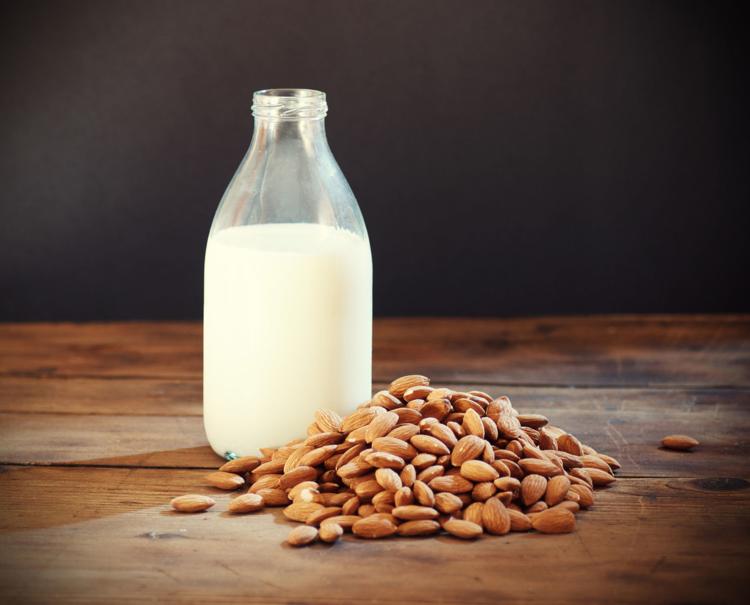 Al Overland is not saying you should refer to almond milk as nut juice. He’s also not saying you shouldn’t.
 At a time when dairymen are thinking 1, 3, 5 and 10-years ahead, Dr. Jack Britt challenged Young Cooperators (YCs) attending Maryland & Virginia Milk Producers Cooperative’s annual YC Conference to fast forward 50 years, and to consider what dairy farming in 2069 may look like. “If we [the dairy industry] can capitalize on the opportunity, I think the dairy outlook is pretty good,” he told attendees.

 A heating lamp used to keep cow calves warm was determined to be the cause of a fire that destroyed a dairy barn in Westfield on Monday afternoon, according to the State Fire Marshal’s Office.
 In the span of a year, it is estimated that Bluestone Elementary School will use 39,000 milk cartons.
 This week, Vancouver-based vegan cheesemaker Karen McAthy of Blue Heron Creamery made the news when she was told by the Canadian Food Inspection Agency to stop using the word “cheese” to describe her plant-based cheeses, cultured in the traditional cheesemaking fashion from ingredients like almonds, coconuts, and cashews.
 The Cambridge farmer who copped a record fine for dirty dairying says he was forced to choose between paying off bank loans when the dairy payout plunged or upgrading his effluent system.
 Companies listed on the Australian Securities Exchange are only required to disclose trading in their own stock by directors. Across the ditch, the New Zealand Stock Exchange demands greater rigour and all key management personnel – whether members of the board or not – must report their share transactions.
 For 81 years the Holstein Journal has reported on Holstein meetings, shows, auction sales, herd dispersals and events that made Holstein breed history. Our columns also carried feature profiles on the leading Canadian breeders from coast-to-coast and their herds over the past eight decades.
 Some Minnesota dairy farmers are being forced to dump their milk after heavy snowfall obstructed roads and damaged farms.
 The city’s fire department confirmed that five calves perished during a Monday afternoon blaze that destroyed a large barn at Pomeroy Dairy Farm, 491 Russellville Road.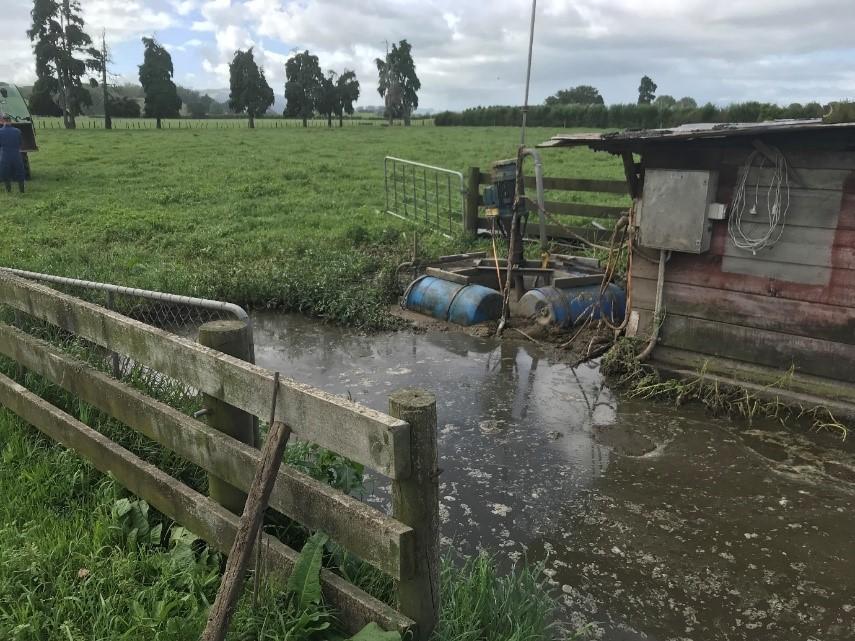
 Beth Ford, who took over as CEO of Land O’Lakes Inc. last summer, faces a particularly tough task: Build sales at a dairy cooperative when the dairy industry is facing challenges ranging from plant-based milk alternatives to trade fights that have hurt exports.
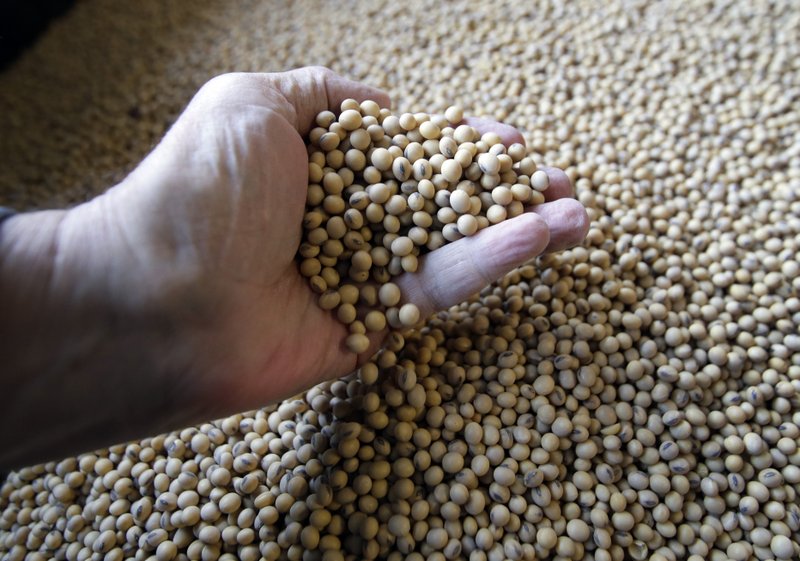 The nation’s farmers are struggling to pay back loans after years of low crop prices and a backlash from foreign buyers over President Donald Trump’s tariffs, with a key government program showing the highest default rate in at least nine years.
 An advocacy group for dairy farmers decided to pull one of its new ads after a number of people complained it misled the public, according to letters sent to complainants from the advertising standards body.
 a2 Milk has been unfazed by the deepening trade stoush between China and the US, China’s crackdown on the multibillion dollar e-commerce sector, and the dairy crisis engulfing Australia, reporting record half-year profits.
 Minnesota’s long, snowy and windy winter is taking a toll on dairy barns in the state.
 Gem State Dairy Products says its plant on Washington Street South with create more than 100 milk processing jobs when it opens in 2020.
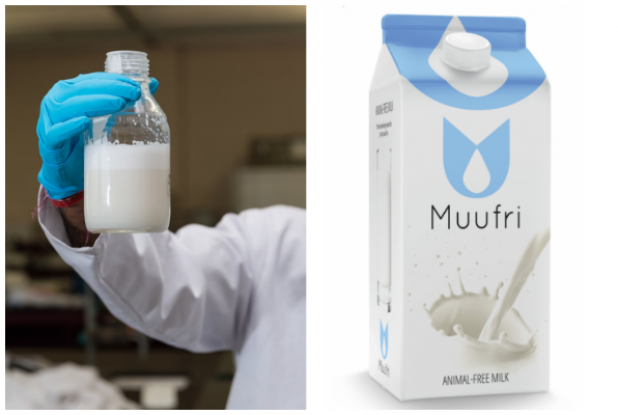 Alternatives to dairy-based milk are popping up everywhere these days, which is clearly not good news for dairy farmers. They’ve been suffering from declining sales since 2014, plus
  The U.S. dairy industry — and the U.S. economy — could be hit with anywhere from $9.5 billion to $20-billion in revenue losses if the European Union is successful in expanding restrictions on the use of generic cheese terms like parmesan, asiago, feta and others, according to a new study conducted by Informa Agribusiness Consulting, commissioned by the Consortium for Common Food Names (CCFN) and the U.S. Dairy Export Council (USDEC).
 The owners of a Madison-based milking equipment firm say a former executive deleted important company files from his computer after he was fired and tried to turn other employees against them when he didn’t receive a bonus for several years.
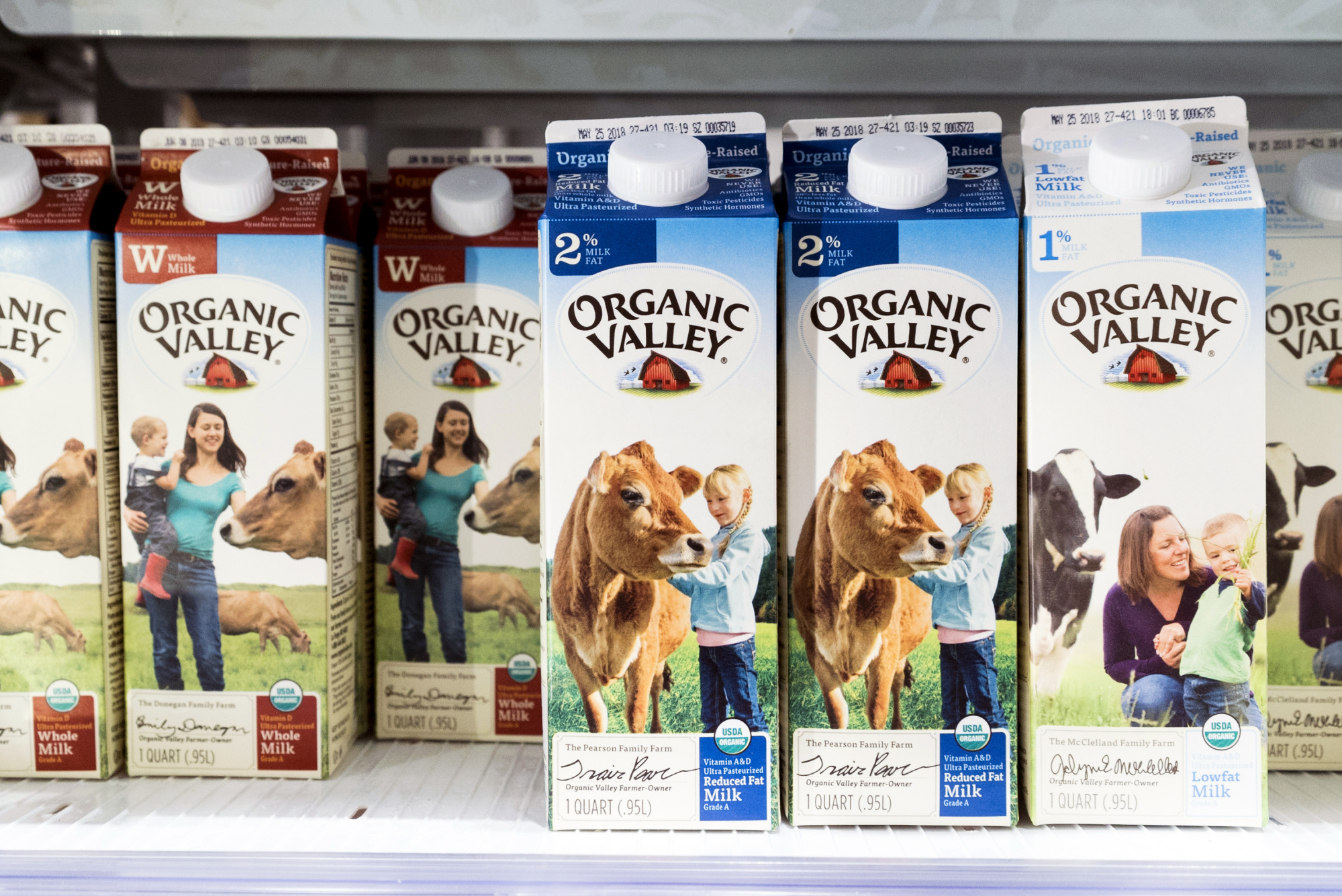 Consumers have been shelling out premiums for organic dairy products from grass-fed cows. But for the most part, there wasn’t a way to tell whether those cows had eaten a few blades of grass or an exclusive grass diet.
 One man was transported to a local hospital for observation after a barn fire Sunday night at W10284 Highway I, southwest of Reeseville.


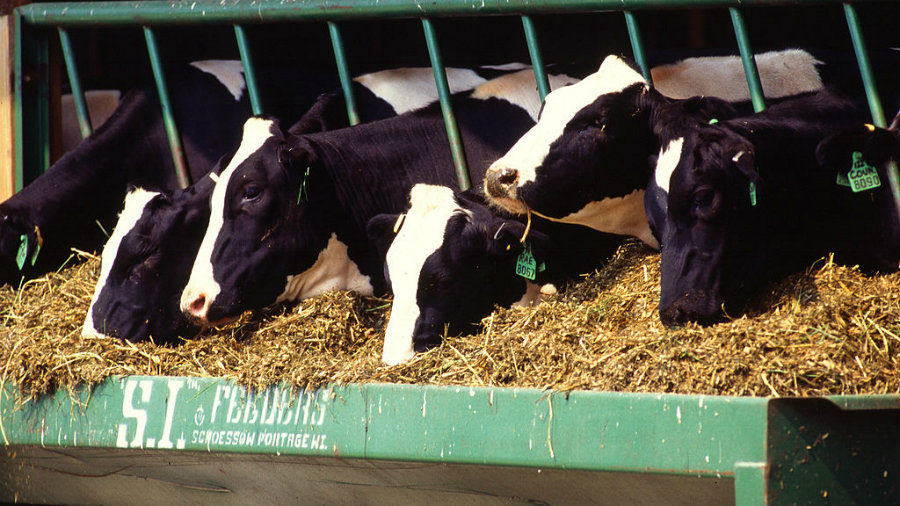 Officials say the more than 1,800 dairy cows that died in a blizzard in southern Washington state earlier this month were a nearly $4 million loss, not including the lost milk production.
 While their bulk tank holds dozens of gallons of milk, it wasn’t enough to keep up with the cows milking routines and not be emptied by the milk truck.
 Wisconsin is losing dairy farms at an unprecedented rate, with 700 closing just last year, or two daily—a dismal situation that could figure into the 2020 presidential election.
 Amazon, the largest e-commerce marketplace and cloud computing platform in the world, is expanding their selection of fresh dairy products for online sales. TJI Research reports AmazonFresh is adding private label dairy and beverage offerings under their Happy Belly brand, including milk, half-and-half, and lactose-free milk. AmazonFresh is the company’s grocery delivery service in metro communities including Chicago, New York, and Seattle.


 Dairy milk has competition. Alternative “milks” made from plants like soya or almonds are increasingly popular. These alternatives are often vegan-friendly and can be suitable for people who are allergic to milk, or intolerant of it. The runner-up in the 2018 series of The Apprentice (UK) ran



