Archive for News – Page 40

2022 Holstein USA Delegate Election Underway

Holstein Association USA’s 2022 delegate election process is currently underway. Each year, members have the opportunity to nominate members from their state to serve as voting delegates at the following year’s Holstein Association USA Annual Meeting, held in conjunction with the National Holstein Convention. The 2022 Annual Meeting will be held in Sioux Falls, South Dakota, June 30 – July 1.

Important Deadlines
Here are the important deadlines to take into account:

July 30 – Nominating petitions mailed to members
September 24 – Nominating petitions must be received by Holstein Association USA
October 8 – Deadline for nominees to withdraw names from the ballot
October 29 – Ballots mailed to members
December 31 – Ballots must be received by Holstein Association USA
February 1, 2022 – 2022 delegate election finalized

Typically, members become ineligible to serve as a delegate after serving as a delegate at three consecutive Annual Meetings. With the cancellation of the 2020 Annual Meeting, that requirement was waived for the 2021 delegate election. With the clock re-set, all members are eligible to be nominated as a delegate for 2022.

With questions about Holstein Association USA’s delegate process, contact Jodi Hoynoski at 800.952.5200, ext. 4261 or by email.


Climate change reducing farm profits by 23% in Australia

The Australian Bureau of Agricultural and Resource Economics and Sciences’ (ABARES) latest Insights report examines the effects of recent and possible future changes in climate on the profitability of Australian farms.

ABARES Executive Director Dr Jared Greenville said the report provided a detailed picture of the adaptation challenge facing the agricultural sector.

“Seasonal conditions over the last 20 years have been pretty rough for Australian farmers,” Dr Greenville said. “Lower average rainfall and higher average temperatures have had a negative impact on farm productivity and profit.

“These conditions have reduced farm profits by an average of 23 per cent, or $29,000 per farm per year, relative to conditions between 1950 to 2000. The good news is that farmers have made some remarkable progress in adapting to these hotter and drier conditions.

“After accounting for the impact of climate, productivity growth of around 28 per cent in broadacre farming has been achieved since 1989, and the cropping sector has seen a huge gain of 68 per cent. New technologies and practices mean that farmers are able to grow crops under lower rainfall conditions than they could in the past.”

ABARES Climate Change report

© ABARES Climate Change Insights Report

ABARES’ latest study considers a range of climate scenarios for 2050 and simulates the potential effects on Australian farmers given current technology and prices. The results help to indicate which regions and sectors may be under more pressure to adapt to future climate change.

Results suggest that Western Australian cropping farmers may face more pressure than those in eastern Australia; that in-land or ‘marginal’ farming regions could be more exposed to climate impacts, and that livestock farms may face more pressure under severe climate scenarios due to higher temperatures.

Average farm profits are between 2 per cent and 50 per cent lower under these future scenarios compared with the historical climate.

“At present, there’s still a lot of variation in projected outcomes, due largely to uncertainty over future rainfall levels.” Dr Greenville said.

“Climate projections suggest that nationally farmers could experience reductions in average winter season rainfall from as little as 3 per cent to as much as 30 per cent by 2050 relative to pre-2000 levels.

“This uncertainty over future rainfall is itself an important constraint on farmer adaptation.

“While farmers have made significant progress to date, further adaptation will be required to maintain our competitiveness, particularly if other nations are not impacted to the same extent.

“Investments being made now in research, development, climate data and information will all be crucial in preparing the sector for the future.”

The Insights report can be found at on the ABARES website.

Source: thedairysite.com

Richard M. Green, Sr., Obituary

Richard M. Green, Sr., 83, of Middletown, DE, died peacefully at home on Saturday, July 31, after a long battle with Parkinson’s Disease. He was a devoted husband, father, grandfather, teacher, coach and farmer.

A lifelong resident of the Middletown area Richard was born in Philadelphia, PA on April 13, 1938. He married his high school sweetheart, Marlene Meyer, in January 1961. Richard graduated from the University of Delaware, where he majored in Agriculture, earned 9 varsity letters in cross country, indoor and outdoor track, and was a member of Kappa Alpha fraternity.

Richard returned to Middletown High School alma mater to work for 32 years, serving as a librarian, science teacher, agriculture teacher, co-op coordinator, athletic director and coach of numerous sports including track, cross country, and baseball. As head baseball coach for 19 years, he remains the winningest coach in school history. Richard was a 9-time Blue Hen Conference Coach of the Year and 1986 Delaware State Coach of the Year. His teams won 12 conference titles and players included 4 who went on to be drafted professionally.

After his teaching career Richard remained active in baseball, serving as Assistant Coach alongside his son, John, at Howard High School of Technology, Salem Community College and St. Georges Technical High School. He was the first Delaware coach to be named both head and assistant coach of the year and was inducted into the Delaware Baseball Hall of Fame in 2002 and the Delaware Association of Athletic Directors Hall of Fame in 2015.

In addition to coaching, Richard was a life-long dairy farmer and in retirement became one of the most prestigious breeders of Red and White Holstein cattle in the world, winning numerous Premier Exhibitor and Breeder banners at the World Dairy Expo. He exhibited four Grand Champions of the Red and White Show at World Dairy Expo with four different cows. Richard twice had the Reserve Grand Champion, several Junior Champions, and 56 class winners that he bred or owned. Even today the “Greelea” farm prefix is in the pedigree of many of the breed’s top individuals across the world.

Richard is survived by his wife of 60 years, Marlene of Middletown, DE; four children, Richard Jr. of Geneva, Switzerland, Victor (Tracy) of Middletown, Julie (Brian) of McLean, VA and John (Meg) of Middletown; and 9 grandchildren.

A visitation for family and friends will be held from 5 pm until 8 pm on Tuesday, August 3, 2021, at Spicer-Mullikin Funeral Home, 275 E. Main Street, Middletown, DE. A Mass of Christian Burial will be offered at 10 am on Wednesday, August 4, 2021, at St. Joseph Parish, 371 E. Main Street, Middletown, DE 19709. Face coverings will be required for all those in attendance not immunized with the COVID-19 vaccine per the Governor of Delaware. Interment will be held privately.

In lieu of flowers, donations may be made in Richard’s name to The Parkinson’s Foundation, by clicking here or to Compassionate Care Hospice, by clicking here.

Promising vaccine development to control Johne’s Disease

Johne’s disease is a chronic enteritis associated with ruminants caused by the intracellular pathogen Mycobacterium avium subsp. paratuberculosis (MAP).

MAP is a highly prevalent and costly disease worldwide in large and small ruminant species, such as cattle, sheep, and goats. In the US, it is estimated that over 90% of dairy herds are infected with MAP, writes Dr. Gustavo M. Schuenemann and Dr. Jeffrey D. Workman, Department of Veterinary Preventive Medicine, Ohio State University Extension.

The clinical signs are characterized by chronic diarrhea with body weight loss in the later stages of infection. It has been shown that the subclinical stages of MAP were associated with decreased milk yield and higher risk for other common production diseases due to body weight loss and debilitating immune response.

Infected animals with MAP are difficult to identify and segregate from the herd or flock due to:

  1. long incubation period (it could take years),
  2. the absence of clinical signs until advanced stages, and
  3. the lack of reliable diagnostic methods

Newborn animals are infected at the time of parturition by ingesting MAP via colostrum and milk as well as environmental exposure to MAP in manure from infected cows. Identification of MAP in feces is performed by culture or PCR, or sometimes by serum ELISA to identify antibodies against MAP. Although these testing methods are rapid and cost-effective, the efficacy of MAP detection is almost entirely dependent on the immune status of the host.

Vaccination is recognized as an effective method to prevent infections in livestock. There are a few commercially available vaccines for Johne’s disease worldwide (e.g., Gudair, Silirium); however, in the US, Mycopar® was the only USDA-licensed vaccine available for use (discontinued in the US in 2019). Its use was restricted to cattle, and only under the supervision of a licensed veterinarian. The increasing prevalence of MAP requires new efficacious vaccines as an essential management tool to control MAP.

A recent study assessed the effectiveness of pooled MAP recombinant proteins as a potential vaccine. Two separate studies were carried out: 1) In the first study, vaccinated two-week old calves were immunized with a total of 400 µg protein cocktail per dose and 2) the second study compared doses of 400 µg versus 800 µg of protein cocktail using another set of two-week old calves. Calves were vaccinated twice 14 days apart starting at two weeks of age, then vaccinated and nonvaccinated control calves were inoculated orally three times with live MAP isolated from infected cows.

At the end of 12 months study period, the authors showed that vaccinated animals had significantly reduced tissue colonization with MAP compared to control animals. Calves immunized with the higher dose had improved protection with reduced MAP burden. Furthermore, there was a negligible level of cross-reactivity between M. avium and M. bovis antigens, suggesting that infection could be differentiated from vaccinated animals when using serology assays.

The authors concluded that vaccination of calves with the pooled four recombinant MAP proteins was efficacious in reducing tissue colonization and fecal shedding. Although experimentally, this novel vaccine has the potential to prevent or reduce the spread of Johne’s disease in cattle.

This study was conducted at the USDA-ARS, National Animal Disease Center located in Ames, IA. Please find below the reference for additional details:

Stabel, J.R., and J.P. Bannantine. 2021. Reduced tissue colonization of Mycobacterium avium subsp. paratuberculosis in neonatal calves vaccinated with a cocktail of recombinant proteins. Vaccine 39:3131–3140.

Source: thedairysite.com

West Berkshire farm is Vermont’s 2021 Dairy Farm of the Year

A West Berkshire farm has been named Vermont’s 2021 Dairy Farm of the Year, a spokesperson with the University of Vermont confirmed Sunday.

Winners Ed McGarry, Diane Cotellessa and their son, Brian, operate a 115-head Holstein operation known as McGarry Dairy, which helps provide products for famous cheesemaker Cabot.

“The McGarrys are a great example of a family that works together and works well,” said Marty Waterman, a dairy focus consultant who nominated the farm. “They do all the milking and chores themselves and hire custom crews for spreading manure, mowing, chopping hay, planting and harvesting corn.”

Once nominated for the award, a winning farm is selected by a team of judges consisting of past award winners who tour farms, considering a number of items including production records and herd performance. The University of Vermont Extension, Vermont Dairy Industry Association and New England Green Pastures Program are responsible for presenting the award.

Neither Ed McGarry nor Diane Cotellessagrew up on a dairy farm, however, both studied agriculture in college and met in the mid-1980s while working for UVM Extension. By 1998, they owned their own farm together.

The McGarry family will travel to West Springfield, Massachusetts, to give a presentation on their operation and be honored alongside five other New England state winners in the fall.

Other Vermont finalists included Corse Farm Dairy in Whitingham, Knoxland Farms in both Brandford and Wells River, and R & N Thibault Farm in Colchester.

Source: MYNBC5

Tackling ticks through DNA

A new study indicates that eradication of the cattle tick in Australia is theoretically feasible.

Globally, the annual economic loss from cattle ticks is estimated to be US$22-$30 billion.

A new University of New England (UNE)-initiated study has established the feasibility of breeding tick resistance into all cattle, even Bos taurus breeds.

The ability to breed for tick resistance, used with other measures, suggests that eradication of cattle tick in Australia may be feasible.

The study interpreted genomic data drawn from multiple breeds across several nations, a world-first that greatly expands the practicality of genomic approaches to modifying cattle traits.

A ground-breaking multi-nation study has shown that breeding strong tick resistance into all cattle breeds is feasible, indicating that cattle tick may be much more effectively managed, or even eradicated.

Dr Heather Burrow, a University of New England (UNE) professorial research fellow, initiated the project that found there is proof-of-concept for using the cattle genome to tackle a pest that costs the Australian cattle industry more than $175 million a year.

Researchers from Brazil, Australia, South Africa and Scotland contributed to a multi-nation, multi-breed analysis – a first of its kind – which concluded that genomic breeding values can be estimated across a wide range of unrelated cattle breeds and used to improve tick resistance.

The approach to the world-first study was proposed by Professor Ben Hayes of the University of Queensland, a co-inventor of the genomic selection methodology and a key researcher on the tick project. He had successfully used the approach for across-country evaluations of feed efficiency in dairy cattle.

The tick resistance project has lowered two substantial hurdles for the cattle industries: managing cattle tick, and drawing practical conclusions from multi-breed, multi-nation genomic data.

“For many decades there was a lot of science directed at finding a solution to cattle ticks, but by the mid-1990s it just all looked to be too hard and expensive,” said Dr Burrow, a former chief of the Beef Cooperative Research Centre.

“This study indicates that for a relatively small amount of money, we can use genomic technologies to develop a real solution to cattle ticks.’

Globally, 80 per cent of the world’s cattle are at risk of tick-borne diseases. The economic loss from cattle ticks worldwide is estimated to be US$22-30 billion per annum.

In Australia, and globally, the range of cattle ticks is expanding as the planet warms. As a result, the range is shrinking for cattle breeds with low tick resistance — which includes all the Bos taurus breeds that underpin Australia’s high-value beef export markets.

The study that has excited Dr Burrow was led by Brazilian researcher Dr Fernando Cardoso of the Embrapa Pecuária Sul (Brazilian Agricultural Corporation) at Bagé, and involved a large cast of scientists from the Roslin Institute in Scotland, UNISA and ARC in South Africa, the University of Queensland, CSIRO, and Dr Burrow herself.

To arrive at the conclusion that universal tick resistance was possible through genomic breeding tools, the study achieved a world-first multinational genomic assessment of multiple unlinked cattle populations.

Until now, Dr Burrow explained, genetic assessment has relied on having cattle populations that were genetically linked and carried records documenting those linkages.

The Cardoso study instead used a mathematical process that allowed relatively cheap low-density chips to represent the whole cattle genome. With the full genome to work with, scientists didn’t need the usual genetic linkages to make their assessment.

Thousands of cattle from seven breeds — from Angus and Braford in Brazil to Tropical Composites in Australia and Nguni in South Africa — were tested for their responses to ticks and the results pooled and analysed.

The researchers reported that there is strong evidence of the heritability of tick resistance across all breeds, an important foundation on which future tick resistance can be built.

Not unexpectedly, the heritability of tick resistance is strongest among Bos indicus breeds like Brahman and Braford, but the fact that heritability exists in Bos taurus breeds indicates room for improvement among cattle now highly vulnerable to ticks.

Dr Burrow believes the next stage is to identify more practical, cost-effective measurements of cattle tick resistance through a short-term study of different methods identified by a recent comprehensive review of the scientific literature. More cost-effective methods of measuring tick resistance will greatly enhance the likelihood of tick resistance being included in genetic improvement programs globally.

If this becomes feasible, then Dr Burrow believes that not only can cattle be made much less vulnerable to cattle ticks, but that the tick might even be eradicated in Australia.

“If we could eradicate brucellosis and tuberculosis, I can’t see why we couldn’t eradicate cattle tick,” she said.

“The simplest way would be through breeding, but we could take advantage of vaccines and quarantine lines. Australia has a unique ability to take on that sort of ambition because we do not have wildlife that harbour ticks – as is the case in most other countries – which would give our beef and dairy industries a unique advantage.

Source: thedairysite.com

‘Liquidation of cows.’ How the drought creates chaos on California ranches, dairy farms

‘We had to make hard decisions.’ Why California drought has this dairy farm culling cows

Dairy farmer Jennifer Beretta talks on July 15, 2021, about the impact of the drought on her family’s dairy farm in Santa Rosa. She’s had to cull some of her herd as its become more expensive to feed the cows because of water restrictions.

Dairy farmer Jennifer Beretta talks on July 15, 2021, about the impact of the drought on her family’s dairy farm in Santa Rosa. She’s had to cull some of her herd as its become more expensive to feed the cows because of water restrictions. By Renée C. Byer

Santa Rosa

Jennifer Beretta has been working as a dairy farmer since she was 6 and knows some of her family’s 700 cows by name. One of her favorites, a Jersey named Harmony, has won top prizes at the Sonoma County Fair.

“I raised them from when they were babies,” said Beretta, 33. “I watched them grow up to be milk cows. You get attached to them. They have personalities.”

But business is business, and right now business is bad. California’s devastating drought has dried up most of the Beretta Family Dairy’s pastures, driven up the cost of feed and made milking cows unprofitable. The Beretta family has sold off more than 40 of its cows this year, and could sell more before too long.

“If you can’t afford to feed them, you don’t want to go into debt,” Beretta said. “It’s frightening. … You just try to prepare for the worst.”

All over California agriculture, water sources are being reduced to a trickle. Fields have been idled and even some fruit and nut orchards are being dismantled because of shortages. Based on what happened during the last drought, the financial losses to agriculture will be enormous.

In short, California’s $50 billion-a-year farm economy is turning nightmarish. And nobody’s losing more sleep than the state’s dairy farmers and beef-cattle producers, who are scrambling for feed to keep their animals alive.

“It’s pretty much statewide,” said Tony Toso, a Mariposa County beef rancher and president of the California Cattlemen’s Association. “My goodness, there’s pastures out there that just look like moonscape.”

Raising cows for milk or meat is a $10 billion-a-year business in California — bigger than wine grapes, bigger than almonds, bigger than anything else in the agricultural sector. But the drought has quickly turned the economics of dairy and beef upside down. Faced with steep increases in the cost of feed — assuming they can find it — beef and dairy farmers are watching their profits disappear.

The result is, many are selling off animals at a pace rarely seen.

“We are absolutely seeing a liquidation of cows, particularly from the West,” said Don Close, who analyzes the beef market for agricultural lender Rabobank.

So far the drought isn’t raising consumer prices, but that’s likely to change. In the meantime, ranchers and dairy producers are getting squeezed financially by higher costs — and are left with dwindling options.

“You’re going to have to cull your cattle,” said Tracy Schohr, a rancher and livestock advisor for UC Cooperative Extension in Quincy. “You’re going to have to make decisions about which cattle to sell.” Her ranch sold 15 animals earlier this year.

A few ranchers are selling them all, including Greg Kuck, a beef producer in Montague, Siskiyou County, who recently agreed to unload his entire herd — numbering hundreds of animals — and retire.

“The water here just got so depleted,” said Kuck, 67. “It’s been pretty hard on everybody, watching their ranches dry up.”

Dairy cows munch on hay and grain inside the barn at Beretta Family Organic Dairy in Santa Rosa on July 15. Because of the drought, the farm has stopped irrigating most of its pastures raising the cost of feeding its cows. It has sold more than 40 cows this year. Renée C. Byer rbyer@sacbee.com

Will consumers pay more because of drought?

Consumers have been paying more for beef in the past few months, although the drought isn’t the reason why. Close said prices are being driven by bottlenecks in the packinghouse industry.

After being forced to reduce slaughter operations last year because of COVID-19 outbreaks in their workforce, big meatpackers are now struggling to ramp up because of the nationwide labor shortages that have plagued the economy, Close said. Average retail beef prices nationwide have risen nearly 13% since January, according to his analysis of U.S. Department of Agriculture data.

Where does the drought come in? Ironically, it could bring prices down in the short run. As ranchers and dairy producers cull their herds, more and more animals will get turned into hamburger meat, glutting the market.

But over the long haul, the situation will reverse itself because of the shrinkage in herd sizes. There will be fewer products in the coming months and years.

“Culling cows now lowers the price for hamburger now and it means steaks will be more expensive two years from now because there are fewer calves,” said Daniel Sumner, an agricultural economist at UC Davis.

Consumer prices for dairy products have held reasonably steady. The nationwide average for a gallon of milk was at $2.75 in mid-July, the same as a year ago, according to the USDA. A 16-ounce tub of sour cream has actually gotten cheaper — $1.77 compared to $1.85 last year.

As it happens, there are plenty of dairy products — and dairy cows — even if feed prices are hurting farmers’ pocketbooks.

“This is one of the largest herd sizes since 1994,” said Ken Gott, president of Clover Sonoma, the big organic dairy processor based in Petaluma. “There’s not a shortage of milk.”

However, Gott said conditions should change before too long as farmers’ woes pile up and herds shrink.

“I would anticipate there would eventually be upward pricing pressures,” he said.

The impact could be fairly long-lasting. Anja Radabaugh of Western United Dairies, a trade organization based in Turlock, said the culling of herds is a process that can’t be reversed overnight.

“Once the herds are reduced you’re talking a couple of years before they get back up again,” she said.

Radabaugh added that some of the dairy cows — the ones not being turned into hamburgers — are being sold to out-of-state producers with better feed supplies, she said. That translates into permanent reductions in dairy production in California — a humbling development for a state that overtook Wisconsin in 1993for the title of the leading American dairy state.

“It’s a sad day for California when people are buying Texas dairy products,” Radabaugh said. “As dairy sizes shrink, that’s where the herds are going — Texas, Utah. We call it leakage.”

California farmers get pinched by costs

Dairy farmers in California get $7 billion a year for their cheese, yogurt and other products (Only about 11% of their products are sold to consumers as fluid milk). California’s beef ranchers do about $3 billion a year in sales, according to the Department of Food and Agriculture.

As big as they are, however, California livestock producers can’t drive prices, according to UC Davis’ Sumner.

In some commodities, such as almonds and raspberries, California farmers dominate U.S. production. But California produces just 18% of the nation’s dairy goods and less than 5% of its beef.

That means that even though their costs are soaring, that doesn’t translate into immediate increases in the prices they’re paid for their commodities, Sumner said.

“That’s bad news for the cowboys,” he said. “They’re really not going to make it up on price.”

Jim Rickert, who raises 2,800 beef cattle near Macdoel in Siskiyou County, has watched conditions steadily worsen this year — rising production costs without any relief on the price he gets for his animals. The drought wiped out much of the grass on his pastures; the Tennant Fire burned up a large field.

“That was 250 acres, just gone,” said Rickert, who co-owns Prather Ranch with his wife Mary. “At one point I thought we were going to lose buildings.”

The future doesn’t look much better — Rickert is afraid he’s going to have to seriously cull his herd if next winter is as dry as last winter.

“We’ll have to make some serious decisions about how many cattle we’re going to keep and how many we’re going to have to sell,” he said. “I’m going to run out of forage and I’m going to run out of bank account.”

In the Esparto area of Yolo County, cattle rancher Scott Stone is making the same grim calculations.

“I don’t have any feed,” said Stone, a partner in Yolo Land & Cattle Co. “I’m anticipating a 30 to 40% reduction in my cow herd.

“I’ll be loading them on the truck and they won’t be coming home.”

A California dairy farm copes with drought

The Berettas have been raising dairy cows in Northern California since the late 1940s, when Jennifer’s great-grandfather Joe set up shop. The family operates two separate dairy farms, one in Marin and one in Sonoma. Jennifer has worked in the business in Sonoma since she was old enough to “push the tractor pedals,” she said.

Worlds away from Sonoma County’s elegant wine country, the Beretta Family Dairy is a collection of nondescript barns and other buildings on a rural road southwest of Santa Rosa, surrounded by around 500 acres of pasture. Beretta sells exclusively to Clover Sonoma; the farm’s annual sales are something north of $1 million.

Dairy farmer Jennifer Beretta drives past her pastures, normally green but shriveled in the drought, on July 15 in Santa Rosa. The conditions have driven up the cost of feed and made milking cows unprofitable. Renée C. Byer rbyer@sacbee.com

The dairy sits maybe 10 miles from the Russian River, one of the most troubled waterways in California. The watershed was the first region of California to be officially declared in drought by Gov. Gavin Newsom, back in April.

Long before Newsom stepped in, the Berettas knew they were in trouble. Water supplies were cut 30% last year and another 30% this year. A flood-control channel that carries water to the Russian River is “dry for the first time in my lifetime,” Beretta said, and most of the pastures have completely dried up. The one parcel that’s still being watered — it’s all of 30 acres — is almost as much brown as it is green.

Because their farm is certified organic, the loss of pastureland creates complications. Beretta said the farm had to receive a special variance from the U.S. Department of Agriculture to reduce the number of days the cows spent grazing on grass, according to Jennifer Beretta.

Losing pasture is also extremely costly. Beretta said her farm is bringing in truckloads of hay at least three times a month from Oregon and Nevada. The price is $345 a ton, up from $285 a year ago.

Meanwhile, the price farmers get from the big creameries such as Clover Sonoma has held steady. Farmers sell their milk in 100-pound increments (a gallon of milk weighs 8.6 pounds), and the current price is around $30 to $33 for every hundred pounds.

Beretta said farmers need to be paid a higher price.

“As all these (production costs) start to rise, we’re hoping the creameries can give us a little bump,” Beretta said, “because right now we’re barely at break even.”

Source: sacbee.com

What dairy farming is doing to NZ’s water

The problem

Dairy is New Zealand’s biggest export earner, but the industry producing liquid gold for the economy is frequently accused of polluting our fresh water.

Ninety-five percent of New Zealand’s dairy is exported, but the country still has to deal with 100 percent of the cows’ urine and feces, as well as the excess chemicals from fertiliser for their feed leaching into waterways.

And there’s international recognition that New Zealand’s farming has impacted the environment.

A 2017 environmental performance review from the OECD says: “New Zealand’s growth model is approaching its environmental limits. Greenhouse gas emissions are increasing. Pollution of freshwater is spreading over a wider area. And the country’s biodiversity is under threat.”

What’s the damage?

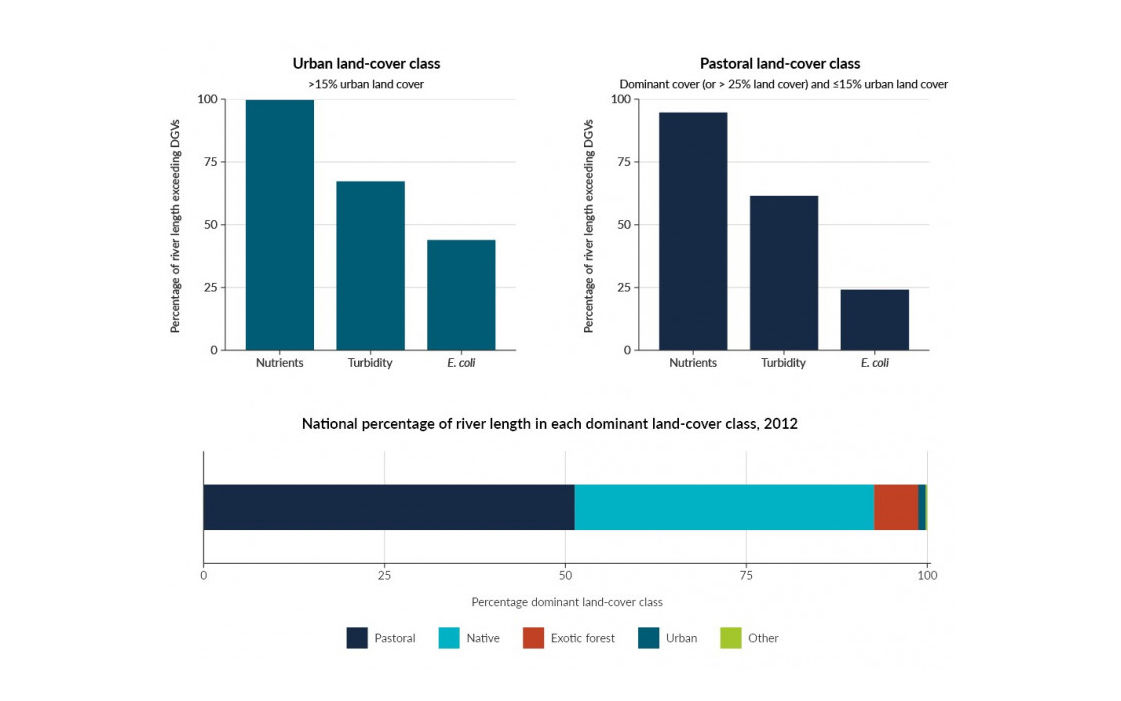
The most recent environmental reporting estimated, between 2013 and 2017, 95 percent of river length in pastoral land had nutrient or turbidity levels above default guideline values (DVGs). These values are based on what water quality would be like in the absence of human influence.

In pastoral land 75 percent of river length has a D or E rating for swimming due to E. coli counts.

Water quality in towns and cities is worse, however urban rivers only account for one percent of the length of New Zealand’s rivers. The biggest proportion of our rivers – around 50 percent – are in pastoral land.

No caption

Photo: Supplied / Minstry for the Environment

How did we get here?

Victoria University of Wellington’s Dr Mike Joy has long highlighted the degraded state of New Zealand’s waterways. Part of the damage the ecologist sees is caused by what he describes as an increasing reliance on farming inputs.

As the number of cows have increased, so has the amount of fertiliser, irrigation and supplementary food. Since 1990, the amount of nitrogen applied to land has increased 629 percent from 62,000 to 452,000 tonnes.

“We’ve industrialised. Just in 40 years, we’ve gone from virtually no inputs to very high levels of inputs, and we’ve more than doubled the stocking rates of dairy. We’ve way more than doubled the amount of nitrate and pollution that’s lost from the systems.”

How does dairy cause the damage?

Farming ‘inputs’ all have different impacts and some are easier to mitigate than others.

More cows means more hooves walking through waterways and stirring up sediment. Fencing, stock crossings and culverts can help mitigate this and DairyNZ says farmers have worked hard to rectify issues. Riparian planting has also been carried out to reduce the amount of nutrients, such as nitrogen, entering water.

Even though dairy cattle numbers are reducing from the 6.7 million high in 2014, there’s still more cows than there used to be, and more cows means more nitrogen-rich urine.

In Canterbury, the problem is exacerbated by the type of soil.

“They’re very gravelly, sort of loose soils that that water flows through really, really quickly. What’s happening is the urine, highly nutrient laden, almost totally nitrogen, urine going through those soils and appearing in the aquifers,” Joy says.

Nitrogen also appears in fertiliser used to promote grass growth.

What’s the beef with nitrogen?

Cattle urine and fertiliser both contain nitrogen. It makes grass grow, but if there’s more nitrogen than the grass can use, it leaches into groundwater. If it makes its way into rivers it promotes the growth of plants in the water and contributes to algal blooms, reduced oxygen levels and reduced light.

Too much nitrogen in water is bad for fish. Three-quarters of New Zealand’s fish species are at risk of extinction, which Joy says is “higher than I can find for any country in the world”.

It can also be bad for humans.

In drinking water, high levels can cause the rare but fatal blue baby syndrome. New Zealand’s drinking water quality rules are set at a level to avoid this, however recent research has shown an association between much lower levels of nitrate in drinking water and bowel cancer.

What is the 1mg/L thing everyone is talking about?

There are two conversations going on at once, both calling for the central government to set nitrogen limits at 1mg/L, or under 1mg/L

One conversation is related to drinking water.

The level of nitrate-nitrogen allowed in drinking water is currently 11.3mg/L, a level set to avoid the risk of blue baby syndrome and in line with advice from the World Health Organisation.

Public health experts have called for the maximum allowable volume of nitrogen in drinking water to be lowered to 1mg/L as a precautionary response to emerging research associating bowel cancer, preterm births, and low birth weights with levels above 1mg/L.

The second conversation is about the amount of dissolved inorganic nitrogen (DIN) allowed in rivers and fresh waterways. Other countries, including China and parts of the United States and Europe, have a limit of 1 mg/L.

When the government put together a package of rules around freshwater in 2020 a limit on DIN was discussed but – controversially – not implemented.

Twelve scientists, including Joy, wanted the limit to be set at 1mg/L but five scientists of the 19-strong Science and Technical Advisory Group consulting on the fresh water package weren’t convinced a bottom line would lead to an improvement in ecosystem health.

The government did strengthen the nitrate toxicity measure from 80 percent to 95 percent. This means the quality of water can only kill 5 percent of macroinvertebrates – creatures without backbones, which can be seen without a microscope – living in it.

It was a measure suggested by DairyNZ, who pushed for 90 percent, and promoted by the Ministry for Primary Industriesinstead of a DIN, but not everyone was happy with this, especially environmental groups.

When the government announced the new rules, it committed to a review of the DIN bottom line in September this year.

That review is now underway. The Ministry for the Environment told RNZ it’s currently preparing advice for the government on whether the science behind a bottom line of 1mg/L DIN has become clearer and establishing the environmental benefit and economic impact of the bottom line.

What does the industry say about dissolved inorganic nitrogen bottom line?

DairyNZ is still against a DIN. “We oppose the DIN limit due to a lack of science demonstrating it will deliver the ecosystem health outcomes targeted. Instead, we advocated for strengthening of the nitrate toxicity standards,” a spokesperson says.

Dropping to 1mg/L would have “massive impacts, significantly constraining production in many agricultural catchments over a rule which would not deliver better ecosystem health.”

Fonterra says it supports a bottom-line but there are caveats: “We do not support using nitrogen and phosphorous limits alone as a measure of a waterway’s health – measures should represent the full, biological ecosystem such as presence of macroinvertebrates and fish, and be tailored to each region.”

Fonterra hasn’t analysed what the economic impact of a DIN bottom line of 1mg/L would be.

Federated Farmers says its view is that “rather than imposing further standards and limits at this time, such as a 1mg/L rule, it is better to give the agricultural sector time to implement the plethora of new rules and regulations first.”

In areas of the country which are intensively farmed, a spokesperson for Federated Farmers says a bottom line of 1mg/L would “have a substantial and perhaps devastating impact on farming and entire New Zealand economy.”

What do the people who want a lower DIN say?

Recently there have been calls for the limit to be set to under one.

Joy co-authored a paper showing the 1mg/L limit is generous. “It should have been even less than that.” The paper suggests 0.6mg/L.

Environmental groups are also calling for the limit to be set at “under one”. In a joint statement Greenpeace, Choose Clean Water, Forest & Bird and the Environmental Defense Society said the science is clear and the government should slash the limit.

Forest & Bird’s Freshwater Advocate Annabeth Cohen said: “We urge the Government to accept the scientific consensus that ecosystem health isn’t possible if nitrate pollution in waterways exceeds 1 mg/L.

“This is a conservative standard of freshwater quality, despite what the agri-industry would have New Zealand believe. We need to stay under one, just to ensure the river can support life.”

Source: rnz.co.nz

2021 China Dairy Top 20 Summit Held in Hefei

The 2021 China Dairy Top 20 (D20) Summit was held in Hefei, Anhui Province on July 18, 2021. Vice Minister Ma Youxiang attended the summit and delivered the keynote speech.

Taking “Focusing on Domestic Circulation, Promoting Dual Circulation, and Advancing High-quality Development of the Dairy Industry” as the theme, the summit focused on the innovation and development and upgrading of the dairy industrial chain.

The 2021 Quality Report on the China Dairy Industry and the D20 standards for raw milk were released at the summit, according to a news release from the Chinese Ministry of Agriculture.

The summit emphasized that, with the overriding goal of securing supply and safety and promoting dual circulation, supply-side structural reform is vital for lifting Chinese dairy industry to a new height during the 14th Five-year Plan period. The D20 summit called for measures to be taken as below:

  • strengthening the development of a high-quality milk supply base by genetic improvement of dairy cows and supply of high-quality fodder and hay;
  • enhancing comprehensive and broad supervision along the entire chain to further improve the quality and safety of dairy products;
  • supporting companies to increase the proportion of milk supplied from their own bases, and encouraging dairy farming-related recreation and sightseeing and other value-added services; and
  • further optimizing dairy supply structure by accelerating the development of cheese and other dried dairy products adapted to the taste of Chinese consumers, and improving compatibility between the supply and demand of dairy products, and intensifying international cooperation and exchanges in diary industry.

In 2020, China’s dairy industry production was 35.3 million tons, up 7.0% year on year. The milk production registered 34.4 million tons with a 7.5% year-on-year increase. All large-scale dairy farms have automated milking system in place and account for 67% of dairy farms.

Source: thedairysite.com

Dairy experts talk about industry ‘roller coaster’ at summit meeting

The last 10 years have been a roller coaster for the dairy industry, Dianne Shoemaker, specialist in dairy production economics for Ohio State University Extension, told the crowd at a summit meeting before the Dairy Twilight Tour, in Rittman, Ohio, July 20.

Last year was no exception. Supply chain challenges and processing demand forced some farmers to dump milk early in the pandemic. And with milk production on the rise, exports have been the key to making sure that every year doesn’t look like 2020, Shoemaker said.

Challenges related to markets, environmental stewardship and policy continue to push the industry to adapt. The good news is, for farmers who manage their businesses well, there are still plenty of ways to be successful in dairy, she said.

Markets

In 10 years, Ohio has lost more than 1,000 dairy farms. The number of cows, however, has not gone down, since many of them moved to other farms as consolidation in the industry continued. Milk prices are the main driver for that trend, Shoemaker said.

“I’m not going to tell you what the milk price is going to be, because I learned long ago, you don’t try to anticipate what the milk price is going to be,” she said. And in the dairy industry, the responses for high prices and low prices are the same: milk more cows. So, even with less farms, milk production is going up.

“We have too many cows, and we have too much milk,” Shoemaker said. “And until that gets resolved, there is no magic fix for what the milk price is.”

There are few people who really understand the current milk pricing system. The current system was designed in the 1930s, mainly for local markets. Now, that market is international, and the system doesn’t fit today’s needs.

But it’s not easy to change. Farmers will need to be unified enough to agree on a federal order, Shoemaker said. She’s hoping this period of tough times for the industry can be a catalyst for meaningful change.

Sales

That’s why exports have been so essential for the dairy markets. Scott Higgins, chief executive officer of both the Ohio Dairy Producers Association and the American Dairy Association Mideast, said exports for dairy in 2020 were up 10% over 2019. Overall, 17.8% of dairy sales went to international markets. The check-off program’s goal is to up that to 20%.

“We’re trying to keep pace with your capacity to produce,” he said.

Dairy consumption is also up by about 7 pounds per capita, Higgins said. Working with schools and brands to keep and increase dairy on menus has been one factor in that. Restaurant sales went down 44% in 2020, but retail sales went up 57%, due to the pandemic’s impact.

Even with export markets and increases in dairy consumption, to stay in business over the next 10 years, farmers will probably need to be in the top third of dairy farms, Shoemaker said. Risk management and knowing a farm’s total cost of production are important parts of that.

Water quality

Markets aren’t the only current concern for dairy farmers. There’s also increasing consumer demand and concern for environmental stewardship, not just on dairy farms, but in all of agriculture.

At the summit meeting, Ohio Department of Agriculture Director Dorothy Pelanda gave an update about H2Ohio, the state’s water quality initiative. The program recently got another injection of nearly $52 million per year over the next two years from the state’s budget.

The department rolled out its program in 14 counties in the Western Lake Erie Basin in 2020, enrolling more than a million acres in its first year, and recently expanded to another 10 counties.

It’s still fairly early in the program, and scientists have noted it may take some time to see results. The department has a three to five year commitment to work with the farmers in the original 14 counties.

“We need to give farmers more time. We need to give the program more time,” Pelanda said.

Environmental stewardship

Gathering data to compare the dairy industry impacts on the environment and animal health to alternative milks and foods, and talking about the work farmers do to keep their environments healthy, is important for making the case that dairy is a good option, Higgins said.

“As the dairy industry, we’re very private,” he said. But consumers want to know more details about how their food is being produced. So the check-off is working on ways to gather data while protecting individual farmers’ information.

Communicating that data is also important. Higgins said millennials and Generation Z now hold a larger part of buying power in the U.S. The check-off has focused more heavily on outlets like social media than on traditional media, like television, to help reach younger people.

Taxes

Federal tax proposals have been a major policy topic for ag groups, especially a proposal to eliminate stepped-up basis. That means heirs to property and assets would have to pay taxes on increases in value on what they inherit.

The proposal exempts heirs who are actively farming, said Barry Ward, director of OSU Extension’s Income Tax School Program, but details of how the exemption would work aren’t clear yet.

“There’s probably going to be a lot of shenanigans going on to make an heir suddenly a farming heir, rather than a non-farming heir,” Ward said.

The proposal has drawn attention and pushback from many farming organizations. But Ward isn’t convinced that the proposal will pass. It’s part of the American Families Plan, which lawmakers are currently considering. Democratic lawmakers could pass legislation through reconciliation, but there are still moderates on both sides of the aisle, so he doesn’t think that’s likely.

“This is a pretty big change,” he said. “I think that there’s going to be enough that aren’t willing to make this giant leap in terms of changes to our tax code. Time will tell.”

Source: farmanddairy.com

Klussendorf, McKown Scholarships Winners Announced

The Klussendorf Association is pleased to announce winners of the 2021 Klussendorf and McKown scholarships. The $1,500 scholarships will be awarded to seven individuals at the Dairy Shrine Awards Banquet held September 30 in conjunction with World Dairy Expo.

To be eligible, students must be in their first, second or third year of study at a 2 or 4-year college or university in the U.S. or Canada majoring in a field that will allow them to develop the skills needed to pursue a career in the dairy industry. Winners demonstrate an affinity for leadership, participation in extracurricular activities and a special interest and ability in showing dairy cattle in their best natural form.

Klussendorf Scholarship

The Klussendorf Scholarship is representative of the late, legendary showman and dairy cattle fitter Arthur B. Klussendorf. The association honors those who most nearly exemplify his character and ethics.

Three students will each receive $1,500 scholarships. Abby Foss from Cambridge, Minnesota Is a freshman at the University of Minnesota. Abby raises Brown Swiss heifers on her family farm and leases them out to 4-H members who would like to experience showing a heifer. Over her 4-H career she mentored 15 kids from four different counties through her leasing program.

Another Klussendorf scholarship winner is Gracelyn Krahn from Albany, Oregon, a freshman at Linn-Benton Community College.  Throughout high school Gracelyn was heavily involved in her family’s dairy herd and on-farm processing operation. She helps with daily management of the herd, in addition to coordinating all activities of their show herd including marketing, managing IVF processes and organizing sale consignments.

A third Klussendorf scholarship winner is Mackenzie Ullmer from Seymour, Wisconsin. Mackenzie is a sophomore at the University of Wisconsin-Green Bay. Mackenzie takes an active role in her family’s operation, Ullmstar Dairy, where they milk 80 registered Holsteins and Ayrshires. Through her activities in and out of the show ring, Mackenzie was the first to be recognized as Outstanding Junior by the Wisconsin Ayrshire Breeders’ Association.

McKown Scholarship

Friends and family of the late Robert “Whitey” McKown established the McKown scholarship to honor the 1992 Honorary Klussendorf recipient and long-time Holstein enthusiast. Four students will receive $1,500 scholarships in 2021.

One of those recipients is Caitlyn Cox from Carthage, Indiana, a second-year student at Purdue University. In addition to showing at local, state and national shows, Caitlyn has been a leader in the Indiana Junior Holstein Association, in her local 4-H and FFA chapters and on the Purdue campus as well.

Hayley Fernandes from Tulare, California is another McKown Scholarship recipient, a junior at Cal Poly. Hayley is active showing animals from her family’s herd of Holsteins and Jerseys, and has participated in dairy cattle and dairy products judging contests. She takes active leadership roles as well, serving as president and vice president of the California Junior Holstein Association and on the National Holstein Association Junior Advisory Committee.

A third recipient of the McKown Scholarship is Carly Strauss from Lake Mills, Wisconsin who is a sophomore at Iowa State University. She credits the work she has done on her family’s fifth-generation dairy farm with fueling her passion to pursue a career in veterinary medicine. Carly has also been active showing animals at state and national shows, including mentoring young would-be exhibitors.

Also receiving a McKown Scholarship is Bryce Windecker from Schuyler, New York. A junior at Cornell University, Bryce is actively involved in his family’s 100-cow registered Holstein organic dairy. Prior to attending Cornell, Bryce was active on the judging team at SUNY-Cobleskill where he was top individual among post-secondary school participants. In addition to judging awards, he highlights a junior all-American nomination for his bred-and-owned five year old cow.

For more information about the students being recognized by National Dairy Shrine, or to obtain tickets for the Awards Banquet, contact the NDS office at info@dairyshrine.org. Additional information on National Dairy Shrine membership and its many activities is available at www.dairyshrine.org. Dairy enthusiasts are encouraged to become part of this respected dairy organization whose mission since 1949 has been to inspire future dairy leaders, honor current and past dairy leaders, and preserve the history of the dairy industry.

Things to keep in mind as a big talk begins

National Milk Producers Federation

Even though dairy farming is an every-day, 24-hour profession, it isn’t often that a specific day or a specific event makes much of a difference in how it’s done.

But this week is a little different. The United Nations is holding its preliminary round of official meetings in a Food Systems Summit that’s examining the very nature of farming itself and could lead to policy changes around the world in the name of producing healthy food more sustainably and responsibly. Unsurprisingly, anti-animal-agriculture activists out in full force, making claims about dairy and its environmental impact in an attempt to monopolize headlines and win hearts and minds, even though their claims don’t hold up to closer scrutiny.

That’s unfortunate, because U.S. dairy plays an essential role in advancing sustainable food systems, and that’s’ what the world needs to know. U.S. dairy farmers use 30 percent less water, 21 percent less land and have a 19 percent smaller carbon footprint, per gallon of milk, in 2017 versus 2007. That leadership in global sustainability is becoming only more crucial as the industry continues working to reduce its environmental impact even more, from its Net Zero Initiative to become carbon-neutral (or better) by 2050 (or earlier) to everyday, on-farm stewardship.

Providing adequate nutrition to the world is too important to let a distorted debate mislead consumers about the value of U.S. dairy products. So, in the spirit of an intelligent global discussion, a few things to keep in mind as the UN begins its Summit.

  • Global diets need foods produced at the highest level of nutritional and environmental standards. U.S. dairy, along with the nation’s entire agriculture sector and food supply chain, has significantly reduced its environmental impact in recent decades while reducing waste and increasing production. And dairy’s taken an extra step, through its FARM Program, to ensure that science-based stewardship informs on-farm principles for exceptional care of animals and the planet. A nutritious diet demands a diversity of food products; a sustainable diet is one where every type of agriculture plays a positive role.
  • Technological advances play an essential role in feeding the world more sustainably. Just like in medicine, food systems perform best when they include science, innovation, and technology. Modern farming and food-production practices advance sustainable food systems while efficiently meeting nutritional needs. From methane digesters to improved feed mixes, dairy is a leader in technological adoption for good.
  • There is no “one-size-fits-all” food system. Historical, cultural and personal considerations; diverse production and manufacturing systems; differing levels of economic and industrial development. They all mean that there is no one diet, one approach to farming, or one set of public policies that universally apply to global food production or consumption. U.S. dairy itself reflects this diversity, with large, small, conventional, organic and other types all co-existing – often in the form of cooperatives that themselves hold great promise as a model for agricultural development worldwide.
  • Rules matter in food systems as trade builds healthy diets. International trade improves food security and food safety worldwide. It increases the accessibility, availability, and affordability of food. But the food system needs rules that promote those goals to work best. U.S. dairy supports and promotes rules-based trade, whether it be fair and accountable trade agreements or common-sense approaches to naming cheese.

We hope the UN finds these thoughts helpful, and we stand ready to support science-based, practical ideas from the UN that work for farmers and consumers while making the food system better. Food systems are too important to fall prey to misinformation, and a global discussion should be robust and sincere. The dairy community is looking forward to being part of the Big Talk – and to continue its contribution to global solutions.

Idaho Dairy Producer Testifies Before Congress on USMCA Enforcement Importance

National Milk Producers Federation (NMPF) Executive Committee member Allan Huttema said USMCA enforcement is essential for the agreement to reach its potential for U.S. dairy farmers in testimony today at a U.S. Senate Finance Committee hearing on the impact of the U.S.-Mexico-Canada Agreement (USMCA) on U.S. dairy. Huttema operates an 800-cow dairy in Parma, Idaho and serves as chair of the Darigold and Northwest Dairy Association boards, both of which are NMPF and U.S. Dairy Export Council (USDEC) members.

“I thank Chairman Wyden and Ranking Member Crapo, my own senator, for extending me the opportunity to discuss the impact the USMCA has had on my farm and the thousands of other dairy farms throughout the country,” said Huttema. “Enforcement of trade agreements like USMCA is important to ensure we retain the ability to supply high-quality cheeses, milk powders and a variety of other dairy products to customers around the world.”

“NMPF and the dairy producers it represents are grateful to the Senate Finance Committee for inviting Allan to discuss the benefits that the USMCA has brought U.S. dairy producers and cooperatives,” said Jim Mulhern, President and CEO of NMPF. “But as Huttema said so well, adequate enforcement is necessary to ensure American dairy producers are provided the access promised in the agreement. We are grateful to the Senate Finance Committee members for their advocacy in support of the recently initiated dispute settlement proceedings over Canada’s dairy tariff rate quotas (TRQs) – a critical step in enforcement of this agreement.”

The $6.5 billion worth of U.S. dairy products exported each year underpins the economic health of dairy producers, processors, and manufacturers across the United States. American dairy exports create more than 85,000 direct jobs and have a nearly $12 billion economic impact. Whether it is Canada’s TRQ administration or Mexico’s array of new regulations intended to limit imports, NMPF and USDEC have urged the U.S. government to ensure the USMCA is fully enforced. Enforcement secures the access extended to U.S. dairy producers in the USMCA and sends a strong message to other U.S. trading partners that attempts to subvert trade obligations will not be tolerated.

“The U.S. Dairy Export Council appreciates the Senate Finance Committee and its members for hearing Allan’s testimony and answers regarding the importance of the USMCA and new trade opportunities to the U.S. dairy industry,” said Krysta Harden, President and CEO of USDEC. “USDEC agrees with Allan regarding the need to pursue greater market access opportunities for high-quality American dairy products that our international consumers demand. USMCA was an important step forward, but it’s not enough. We need new trade agreements to expand on Congress’ hard work in passing USMCA. The EU is filling the vacuum that American trade policy is leaving – an issue that Congress needs to address with additional market opportunities for U.S. exports. We appreciate Allan sharing his insight and concerns with the agreement’s implementation and its impact on dairy farmers, processors and manufacturers throughout the United States.”

Source: nmpf.org


Lactalis Australia in court for alleged Dairy Code breaches

The ACCC has instituted Federal Court proceedings against Lactalis Australia Pty Ltd (Lactalis) for alleged breaches of the Dairy Code of Conduct (the Code). This is the first time the ACCC has commenced proceedings for alleged breaches of the Code.

Lactalis is one of Australia’s largest dairy processors and purchases milk from over 400 dairy farmers across all Australian states. The company produces a wide range of dairy products across a number of brands including Pauls, Oak, Vaalia and Ice Break.

The ACCC alleges Lactalis breached a number of provisions of the Code, and, in doing so, weakened the bargaining power of farmers who supply milk to them. 

All of the allegations against Lactalis relate to milk supply agreements offered to dairy farmers in 2020; more recent agreements published on Lactalis’ website on 1 June 2021 are not the subject of the ACCC’s allegations.

“One of the key aims of the Dairy Code is to improve the clarity and transparency of trading arrangements between dairy farmers and the companies that buy their milk,” ACCC Deputy Chair Mick Keogh said.

The allegations made by the ACCC include that Lactalis failed to make its milk supply agreements publically available on its website by the deadline of 2.00pm on 1 June 2020 as required by the Code, and instead required farmers to sign up to a mailing list to receive a copy of the agreements. This had the effect of reducing the transparency of the terms and conditions in Lactalis’ milk supply agreements during a critical and limited timeframe in which farmers had to weigh their supply options.

“Farmers need to have access to timely information when making decisions about which processor to supply milk to,” Mr Keogh said. 

The ACCC also alleges Lactalis failed to publish genuine non-exclusive milk supply agreements, which is a key requirement under the Code as it gives farmers more flexibility in choosing who to supply to. Instead, Lactalis required farmers to supply a minimum of 90 per cent of their monthly production volume, which the ACCC alleges would prohibit most farmers from supplying milk to another processor.

It is also alleged that Lactalis failed to comply with the Code’s “single document” requirement by failing to provide farmers with all three documents that made up Lactalis’ milk supply agreement. In a majority of cases, only one of the three documents was provided to farmers at the time the agreement was executed.

“It is very important that farmers have access to a complete record of the milk supply agreement they have signed up to. This safeguards against any subsequent changes to the agreement, and allows both parties to understand their rights and obligations,” Mr Keogh said.

In addition, Lactalis published and entered into milk supply agreements with farmers that permitted it to terminate the agreement when, in the opinion of Lactalis, the farmer had engaged in “public denigration” of processors, key customers or other stakeholders. The ACCC alleges this clause would allow Lactalis to terminate agreements in circumstances where there was not a material breach, when the Code requires that for processors to unilaterally terminate agreements, the circumstances must involve a material breach by the farmer.

“We are continuing to assess agreements published on 1 June this year for compliance with the Code,” Mr Keogh said.

“The ACCC reminds dairy processors that failure to comply with the Dairy Code may result in enforcement action by the ACCC and attract penalties.”

The ACCC is seeking orders including penalties, declarations, injunctions, a corrective advertising order and costs.

Background

The Dairy Code (the Competition and Consumer (Industry Codes—Dairy) Regulations 2019) came into effect on 1 January 2020. It is a mandatory industry code regulating the conduct of farmers and milk processors in their dealings with one another.

Under the Dairy Code, a processor must, on or before 2.00pm on 1 June each year, publish on its website one or more standard form milk supply agreements; and, for each standard form milk supply agreement, a statement setting out the circumstances in which the processor would enter into the agreement.

For every exclusive milk supply agreement a processor publishes, a processor must also offer a non-exclusive supply option to farmers.

The Dairy Code requires processors to only purchase milk under a milk supply agreement. All agreements must comply with the Code by meeting a number of key requirements, including:

  • specifying a minimum price paid for the milk;
  • consisting of a single document;
  • specifying quality and quantity requirements, including testing procedures; and
  • specifying the circumstances in which parties may unilaterally terminate the milk supply agreement – for processors to unilaterally terminate, the circumstances outlined must involve a ‘material breach’ by the farmer.

The publication obligations of the Dairy Code apply to all processors with an annual aggregated turnover of $10 million or more in the previous financial year.

The attached document below contains the ACCC’s initiating court document in relation to this matter. We will not be uploading further documents in the event this initial document is subsequently amended.

ACCC v Lactalis_Concise Statement ( PDF 2.14 MB )

August 1 is Deadline for Junior Show Transfers

Attention all Junior members and parents! A reminder that Sunday, August 1 is the deadline to have your Registered Jerseys transferred to be eligible to show at the All American Junior Jersey Show.

Here are the steps a junior (under 20 years of age) needs to take in order to show a Jersey at all shows. Can an animal be leased or does the animal need to be transferred into the junior’s ownership?

The answer is simple: File a transfer of ownership so that the junior is listed as a Recorded Owner on the registration certificate.

Ownership rules vary from state to state. Some do allow leasing. Others allow animals to be registered in the farm name, but require that paperwork be completed and filed certifying that an animal is the junior’s 4-H or FFA project.

What about the All American Junior Jersey Show, the biggest junior Jersey show of the year?

The ownership policy is as follows:

  • Animals are eligible when recorded by the American Jersey Cattle Association in the Herd Register or with Generation Count 4 or greater, or by Jersey Canada with registry status of 93.75% and greater.
  • The exhibitor must be listed as Recorded Owner on the registration certificate, either (1) as the sole owner or (2) by his/her name in joint ownership. If the joint ownership includes more than one person meeting the eligibility requirements of Rule 1 (above), one of them must be declared as the exhibitor during check-in.
  • Animals must be registered and/or transferred to meet one of the above ownership requirements on or before August 1, 2021. The recording date is the postmark date and will be considered the date of registration and/or transfer.

To read more about the implementation of Generation Count for national shows, please visit the USJersey website for more information.

So, submit the transfer of ownership as soon as you figure out which animals are going to be the projects this year. That one step will save you the effort of researching the exhibitor ownership requirements for all the shows you are considering.

A final note: Exhibitors at the All American Junior Jersey Show are also required to be members (junior or lifetime) of the American Jersey Cattle Association. Applications for membership are available online at USJersey.

For more information contact the Director of Communications at info@usjersey.com.

Bill Gates invests in alt-dairy start-up in $75 million funding round

The tech entrepreneur’s venture company invested in Nobell Foods – which has created casein (a protein found in cow’s milk) from a plant source in order to make vegan cheese with the same realistic ‘stretch, melt and mouthfeel’ of dairy cheese.

Billionaire Bill Gates has led a $75 million funding Series B round in the alt-dairy startup Nobell Foods through Breakthrough Energy, the VC founded by Gates and backed by Jack Ma, Jeff Bezos, and George Soros. 

The funding round also attracted investment from Hollywood star Robert Downey Jr’s Footprint Coalition, Asian private equity giant Hillhouse Capital and Andreessen Horowitz, among others. 

Moreover, Matt Bellamy, the lead vocalist for British rock band Muse, has also invested in Nobell.

The food technology brand formerly known as Alpine Roads is founded by Lebanese entrepreneur Magi Richani.

The latest round brings Nobell’s total funding up to $100 million.

 Nobell Foods

While the vegan cheese market is thriving, existing options lack the stretchiness- a characteristic attributed to casein, the dairy protein in conventional cheese products.

This gap led the San Francisco-based start-up to work on creating casein from a plant source in order to make vegan cheese with the same realistic ‘stretch, melt and mouthfeel’ of dairy cheese.

“Milk is made up of water, fat, sugar and protein and to create that delicious mouthfeel, texture and everything we love about it, we need those specific proteins that only cows produce,” Richani said.

“We found a way to turn plants into small factories for making casein, so you don’t have to rely on animals anymore.”

Nobell used genetic engineering to modify soybeans so that they produce casein. Since the crop is relatively plentiful, it’s easy to grow them to produce plant-based casein.

The soy-derived casein is also cost-effective and therefore easier to make these plant-based cheese products get to price parity with dairy cheese.

Nobell plans to use the new funding to scale production and expand its team and farming partnerships. Moreover, it aims to launch its first dairy-free mozzarella and cheddar products in the US by the end of 2022 or in early 2023.

“They make up 60% of the cheese consumed in the US. To have the biggest impact, we know we must go after the largest market opportunities,” the company said in a statement.

Bill Gates

Gates has invested in multiple plant-based brands in the past, such as Beyond Meat, fungi-based technology startup Nature’s Fynd, and cultured-meat company Memphis Meats.

 It is part of his efforts to fight climate change.

According to the tech entrepreneur turned philanthropist, animal agriculture is at the forefront of the climate crisis and transitioning to ‘synthetic’ beef can help to reduce food-induced carbon emissions.  

While Gates has been sceptical about the commercial viability of lab-grown meat, he said Beyond Meat and rival Impossible Foods have a ‘quality road map and a cost road map, that makes them totally competitive.’

He added that if consumers buy more plant-based, it would also help ‘drive down’ its premium price.

Source: totallyveganbuzz.com

Dairy Defined: Things to Keep in Mind as a Big Talk Begins

Even though dairy farming is an every-day, 24-hour profession, it isn’t often that a specific day or a specific event makes much of a difference in how it’s done.

But this week is a little different. The United Nations is holding its preliminary round of official meetings in a Food Systems Summit that’s examining the very nature of farming itself and could lead to policy changes around the world in the name of producing healthy food more sustainably and responsibly. Unsurprisingly, anti-animal-agriculture activists out in full force, making claims about dairy and its environmental impact in an attempt to monopolize headlines and win hearts and minds, even though their claims don’t hold up to closer scrutiny.

That’s unfortunate, because U.S. dairy plays an essential role in advancing sustainable food systems, and that’s’ what the world needs to know. U.S. dairy farmers use 30 percent less water, 21 percent less land and have a 19 percent smaller carbon footprint, per gallon of milk, in 2017 versus 2007. That leadership in global sustainability is becoming only more crucial as the industry continues working to reduce its environmental impact even more, from its Net Zero Initiative to become carbon-neutral (or better) by 2050 (or earlier) to everyday, on-farm stewardship.

Providing adequate nutrition to the world is too important to let a distorted debate mislead consumers about the value of U.S. dairy products. So, in the spirit of an intelligent global discussion, a few things to keep in mind as the UN begins its Summit.

·     Global diets need foods produced at the highest level of nutritional and environmental standards. U.S. dairy, along with the nation’s entire agriculture sector and food supply chain, has significantly reduced its environmental impact in recent decades while reducing waste and increasing production. And dairy’s taken an extra step, through its FARM Program, to ensure that science-based stewardship informs on-farm principles for exceptional care of animals and the planet. A nutritious diet demands a diversity of food products; a sustainable diet is one where every type of agriculture plays a positive role.

·     Technological advances play an essential role in feeding the world more sustainably. Just like in medicine, food systems perform best when they include science, innovation, and technology. Modern farming and food-production practices advance sustainable food systems while efficiently meeting nutritional needs. From methane digesters to improved feed mixes, dairy is a leader in technological adoption for good.

·     There is no “one-size-fits-all” food system. Historical, cultural and personal considerations; diverse production and manufacturing systems; differing levels of economic and industrial development. They all mean that there is no one diet, one approach to farming, or one set of public policies that universally apply to global food production or consumption. U.S. dairy itself reflects this diversity, with large, small, conventional, organic and other types all co-existing – often in the form of cooperatives that themselves hold great promise as a model for agricultural development worldwide.

·     Rules matter in food systems as trade builds healthy diets. International trade improves food security and food safety worldwide. It increases the accessibility, availability, and affordability of food. But the food system needs rules that promote those goals to work best. U.S. dairy supports and promotes rules-based trade, whether it be fair and accountable trade agreements or common-sense approaches to naming cheese.

We hope the UN finds these thoughts helpful, and we stand ready to support science-based, practical ideas from the UN that work for farmers and consumers while making the food system better. Food systems are too important to fall prey to misinformation, and a global discussion should be robust and sincere. The dairy community is looking forward to being part of the Big Talk – and to continue its contribution to global solutions.

Source: oklahomafarmreport.com

Wisconsin man’s poetry defines raw emotion of dairy farming

The words are about soil, tools and cows.

There is talk of family and friends, chores at dawn, walks along a creek.

Daniel Smith’s poetry also tells the stories of the physical and emotional pain of farming, a profession, lifestyle and calling he gave up in 2008. Only the pages of his new book, “Ancestral,” go beyond his own personal experiences of financial strife, a wrecked shoulder and grown children who have chosen other paths. Smith sold off his dairy herd, moved off land owned for decades by his family and began anew.

The 99 pages published in hard cover by Waters Edge Press in Sheboygan includes collections of hardships gathered over three years when he worked as a farm financial counselor for the state Department of Agriculture, Trade & Consumer Protection. Smith traveled the state, sitting at kitchen tables, standing in barns, leaning on fences listening, empathizing and offering advice drawn from his past, the Wisconsin State Journal reported.

Some operations could be saved. A few farmers only needed an ear for reassurance they were on the right track. Most, however, were doomed with overwhelming debt, their equity having gradually vanished. Depression was prolific. Suicides were on the rise.

When Smith began farming full time in 1978, Wisconsin had 47,700 dairy farms. Today, there are about 6,000, and the number continues to decline while milk production rises with the growth of farms with thousands of cows and milking assembly lines that never pause.

“This is the story of the Wisconsin dairy industry,” Smith said. “There’s a story of pain and decision-making and process that every one of those 41,000 dairy farms we’ve lost since 1978 went through. I’m trying (with poetry) to reach both the farming and the non-farming audience. This is a social, economic and cultural impact that Wisconsin needs to deal with. Because the result has not been felt in the grocery store. Losing those 41,000 family dairy farms had a tremendous impact on local schools, school boards, the town board, the co-op board. There’s just fewer people in those areas.”

Smith will begin ramping up his promotion of the book later this summer and into the fall. One event will be a 3 p.m. reading and signing Aug. 22 at Arcadia Books in downtown Spring Green. The events will allow Smith to better contextualize his writings, answer questions and likely hear more stories of farms lost, lives changed.

“Just today I felt myself fall out of love with this land,” Smith wrote in his poem “Dry Dirt,” 80 pages into his book. “How many times can a man kick dirt, swear it has never been so dry. Now I drop decades of tending crops and cattle into a heap out back, pull the year shut like one would an old door on an empty barn.”

One of eight children, all of whom went on to get college degrees, Smith grew up on a family dairy farm just north of Freeport, Illinois. He graduated in 1978 from UW-Madison, where he met his wife, Cheryl, who grew up in a suburb of Cleveland. They returned to the farm, where Dan farmed, Cheryl taught kindergarten and first grade, and they raised three boys who as men all graduated from UW-Madison but veered away from agriculture. Ryan is a facial reconstruction surgeon in Chicago, Levi an attorney in Minnesota, and Austin, the oldest, teaches writing and poetry at Stanford University.

After college, Daniel Smith farmed with his father for 20 years, and after his dad retired farmed on his own for about 10 years. Smith, now 67, never missed a milking from 1999 to 2007, something he regrets. When Smith fell through the rotted floor of a hay wagon and injured his shoulder, he realized something had to change.

“Sometimes it takes a slap in the face,” Smith said. “We didn’t go anywhere. It was pretty stupid.”

That’s when Smith made the difficult decision to sell his 150-head herd, auction off equipment and sell the farm. In 2008, he and Cheryl moved to a 22-acre farm southeast of Arena and just west of Blue Mounds Creek. Their property along Knight Hollow Road includes a home built in 1992 out of logs from Canada and filled with memories from their days in northern Illinois. Across the road sits Smith’s 1951 Farmall tractor and a collection of tools, some of which hang in a former chicken coop turned tool shed. Others, including a 60-pound anvil, are in the lower level of a small barn, its use for farm animals and hay and grain storage long past like so many others around the state.

“I’ve hauled my father’s anvil due north up out of the black Illinois farm ground he and I worked, decades our home,” Smith wrote in “Anvil,” the second poem in the book. “Set down sixty pounds onto the floor of this old barn, new only to me. All around, our bewildered tools hang in the strange light of the cracked windowpane … At my feet, my father’s anvil, his striking song of steel on steel still hammering home.”

Above the barn’s lower level is where Smith has a writing desk in a remodeled area with views of pasture and a hay field. There’s space on the desk’s surface for his laptop but also an old corn machete and a hunk of iron with slots — now used as a bookend — which was designed to decouple chains back on the Illinois farm. Smith began writing in high school and while in college had a poem, “Ode,” about his father, published in 1977 in the Ocooch Mountain News, a now-defunct monthly newspaper out of La Farge. Twenty years later that same poem was part of Smith’s first book, “Home Land.”

The Smiths, who share their home with their dog, Jax, a rescued mix of black Lab and shar-pei, call the Driftless Area home now. The family farm in Illinois was sold to a doctor, who for a while raised goats and used some of the buildings for boat and camper storage. Some of the silos have been removed and housing projects have been eating away at land once tilled or used as pasture. The 1851 farmhouse he grew up in with his seven siblings is relatively quiet.

“It bothers me a lot,” Smith said. “The economic, social and cultural impacts of farming are very complex. I think going through all of that and having experienced the emotional turbulence of that really helped me write about it and writing helped me deal with it.”

With time on his hands after the move north, Smith began volunteering with DATCAP as a counselor, meeting with farmers, and in short time was hired full time. He took a job in 2011 to become CEO of Midwestern BioAg in Blue Mounds and guide it through a succession plan but returned to DATCAP in 2013 to serve as administrator of the Division of Agricultural Development. Since 2018, Smith has been president and CEO of the Cooperative Network, directing daily operations of a trade association that represents 250 cooperatives in 12 business sectors in Wisconsin and Minnesota.

The turmoil of farming remains with Smith, but he says he feels and looks younger than when he stopped milking, plowing and harvesting 13 years ago. Near his home, there are barns unused, the village of Dover is a ghost town, an old one-room schoolhouse has been vacant for years at highways K and 14, while in Arena the elementary school has been shuttered, all casualties of the changing small-farm economy that continues to dwindle while struggling to evolve.

“That stress really gets to people over a long period of time. It wore my dad out just trying to keep the farm going and he had the next generation coming on,” Smith said. “So what I’ve really tried to do with ‘Ancestral’ is talk about the history and the heritage of the family farm and show both the good and the bad.”

Source: westport-news.com

Organic dairy farms resilient in the face of COVID-19 crisis

A team of researchers from the Agroecology, Innovations, Territories (AGIR) unit working on farm resilience at the INRAE Occitanie-Toulouse center looked at the impacts of the COVID-19 pandemic on French organic dairy cattle farms and supply chains.

Their study, published February 2021 in the journal Agricultural Systems, analyzes the features of farms and commodity chains that promoted their resilience to the crisis.

Resilient agroecological farms

The recent COVID-19 pandemic has highlighted the need to transform our agricultural and food systems towards greater autonomy and resilience. Infectious diseases caused by bacteria, viruses, parasites or fungi are more frequent and difficult to predict for farmers and actors in the sector. To protect against these emerging risks, many scientists suggest that agricultural and food systems should be oriented towards agroecological models.

A team of researchers from the INRAE Occitanie-Toulouse center has studied the resilience of French organic dairy cattle farms and supply chains during the COVID-19 pandemic, which were very little affected by the crisis.

Why were these organic dairy farms resilient?

By combining online surveys of farmers, semi-structured interviews with stakeholders in the sectors and examination of data from InterBIOccitanie and the Centre National Interprofessionnel de l’Economie Laitière (CNIEL), the research team identified several features responsible for the resilience of these farms and supply chains.

Family scale & feed autonomy

Of the 86 farms that responded to the survey, 38 farmers reported no impact from the crisis and 43 others experienced minor impacts on aspects such as their income. Very few were affected by problems with the availability of workers.

Most (70%) of the organic dairy farms in the study were family farms (average of two full-time workers equivalent according to the sector survey) that rely on internal human resources and manage less than 100 ha and 100 cows. They are integrated into local actor networks (associations, farmers’ groups, cooperatives, etc.).

The vast majority of these farms were self-sufficient for livestock feed and relied mainly on grassland (38% of the farms in the online survey did not grow any maize for silage at all, while for 59% of these farms, maize represented less than 5% of the agricultural area used). Thus, no farmer reported shortages in the supply of feed or other inputs nor related impacts on the technical functioning of the farm and its productivity.

Resilience was promoted by several factors, including farm autonomy and self-regulation by the collective of workers, which is fostered by connectivity between actors and their local interdependencies.

Reorganization of supply chains

By demonstrating agility and flexibility to reorganize quickly and at lower cost, supply chains continued to produce sufficient quantities of dairy products to meet consumer demand. They reduced the range of products produced, concentrating on the basic products that are most in demand: milk, cream, butter and plain yogurt. Faced with the lack of drivers to collect milk, some dairies even hired retired drivers to ensure the continuity of the collection.

These results show that the choice of agroecological models such as organic agriculture, here for dairy production, is relevant to ensure the resilience of agricultural and food systems to shocks such as the COVID-19 pandemic. By adapting to the impacts of the crisis, farmers and supply chain actors continued to produce responsibly, in accordance with organic standards, and provided consumers with sufficient dairy products, without degrading their income and working conditions.

Carried out at the end of the first lockdown period, this preliminary work should be continued in order to understand the impacts of the COVID-19 pandemic over the longer term

Source: thedairysite.com

Sun Shines on Cumbria for the Premier Herd Open Day

A record number of people descended on Berry Holme Farm for the Premier Herd Open Day on Thursday 22nd July. The event, hosted by Holstein UK, gave members and Holstein enthusiasts the opportunity to view the award winning Berryholme herd which was crowned the winner of the Premier Herd Competition in 2019.

The Wright family have been farming at Berry Holme Farm since 1919 and registered their first Friesian in 1965. David, who manages the farm, joined the team full time in the early 2000’s and is now the fourth-generation to farm at Berryholme. The 140-cow milking herd (plus followers) is nationally recognised for exceptional breeding, confirmation, production and their extremely high standard of health and welfare. Currently averages are 10,850kg at 4.31% butterfat and 3.28% protein with a calving interval of 398 days. They began classifying in 2001 and the herd now boasts 86% of their herd as VG/EX animals with 45 EX and 72 VG.

Having won the Premier Herd award in their Centenary year, the family were delighted to welcome guests for the Open Day near Kendal, supported by many of Berryholme’s suppliers who sponsored the event. Visitors were greeted by panoramic views, glorious sunshine and a warm welcome from David, his wife Naomi and his father Francis.

Holstein UK President John Jamieson and Head of Breed Development Meurig James also welcomed everyone, commenting on the outstanding quality of the herd and how hard David and his team had worked to make the event come together. John said, “When you turn into the driveway, you think you’ve landed in God’s country and if we ever wondered what Holstein cows would look like in heaven then what we see today at Berryholme is the perfect example.” During David’s speech, he paid tribute to Francis and his right-hand-man Thomas Atkinson who have worked so hard over a lifetime to make the herd what it is today.

The highly anticipated Best of Berryholme Sale took place during the afternoon and received competition from across the UK and Ireland with bidders both ringside and online. The sale was conducted by Harrison and Hetherington with Lead Auctioneer Glyn Lucas commenting: “It was fantastic to see a huge crowd of over 1,000 Holstein breeders and enthusiasts come together to celebrate the day with the Wright family. Thirty-five animals had been carefully selected with all the most prolific breeding lines represented in an impressive catalogue.  The trade topped at 27,000gns for a close to perfect yearling heifer from the Flo cow family, milking cows topped at 10,000gns for a young three-year-old cow. The sale averaged almost £6000 with 40% of the females selling for £5000 or more.

Sue Cope, CEO of Holstein UK, commented: “On behalf of Holstein UK, I would like to thank David and his team for hosting such a fantastic event. The quality of the cows was outstanding and it was a pleasure to attend such a fantastic Open Day in the most picturesque of locations. It was a wonderful day of celebration for the Holstein breed and I would like to congratulate the Wright family who have really proven what the combination of great genetics and milk production can look like. My thanks must also go to the sponsors who helped to make the day possible as their support is invaluable and greatly appreciated.” 

Markets and Management Practices Set as Topics for Expo Seminars

Returning September 28 through October 2 for its 54th event, World Dairy Expo® is once again bringing those who are Instrumental to the Industry to Madison, Wisconsin to speak on topics centered around technology, management practices, finances and niche markets during this year’s Expo Seminars. These seminars will be presented daily in the Mendota 2 meeting room of the Exhibition Hall.

Most Expo Seminars are approved for one continuing education credit for members of the American Registry of Professional Animal Scientists (ARPAS). Continuing education credits for members of the American Association of State Veterinary Boards – RACE Program are still pending.

Sponsors of the 2021 Expo Seminars include Micro Technologies, National Milk Producers Federation, Quality Liquid Feeds, Inc., The National Dairy FARM Program and VAS.

The following is the schedule of 2021 Expo Seminars:

Tuesday, September 28 at 1:00 p.m.
Spreadsheets, Apps and Software for your Dairy
Dr. Larry Tranel, Jennifer Bentley and Fred Hall, Extension Dairy Field Specialists, Iowa State University Extension and Outreach – Dairy Team
Sponsored by: VAS
Continuing Education Credits: ARPAS (1)

Wednesday, September 29 at 11:00 a.m.
How We Are Evaluating Farm Loans – Panel
Panelists: Sam Miller, BMO Harris Bank; Roger Murray, Farm Credit East; and Matthew Wilson, Rabo AgriFinance
Moderator: Millaine Wells, WFRV-TV, Green Bay, Wis.
Sponsored by: Micro Technologies

Wednesday, September 29 at 1:00 p.m.
Dairy Cow Productivity: More Important to the Profitability of Your Dairy Operation Than You Think
Peter Vitaliano, Ph.D., National Milk Producers Federation
Sponsored by: National Milk Producers Federation
Continuing Education Credits: ARPAS (1)

Thursday, September 30 at 11:00 a.m.
The Changing Landscape of Milk Marketers and Processors
Corey Geiger, Managing Editor, Hoard’s Dairyman
Sponsored by: Micro Technologies
Continuing Education Credits: ARPAS (1)

Thursday, September 30 at 1:00 p.m.
Practical Employee Management Strategies
Dr. Robert Hagevoort, Associate Professor and Extension Dairy Specialist, New Mexico State University
Sponsored by: The National Dairy FARM Program

Friday, October 1 at 11:00 a.m.
The Future of Beef on Dairy, Heifer Inventory Management
Dr. Larry Corah, Emeritus Professor, Kansas State University; Supply Chain Consultant, Select Sires, Inc.
Sponsored by: Quality Liquid Feeds, Inc.
Continuing Education Credits: ARPAS (1)

Friday, October 1 at 1:00 p.m.
Value-Added Products and Niche Marketing – Panel
Panelists: Chris Casiello, Arethusa Farm Dairy; Garry Hansen, Lady Lane Farm; Alise Sjostrom, Redhead Creamery
Moderator: Kaitlyn Riley, Wisconsin Beef Council

Saturday, October 2 at 11:00 a.m.
What Would the Food Supply Look Like Without Animal Agriculture?
Dr. Mary Beth Hall, Research Scientist, U.S. Dairy Forage Research Center, USDA-Agricultural Research Service
Continuing Education Credits: ARPAS (1)

Serving as the meeting place of the global dairy industry, World Dairy Expo brings together the latest in dairy innovation and the best cattle in North America. Crowds of 60,000 people, from nearly 100 countries, will return to Madison, Wis. for the 54th event, September 28 – October 2, 2021, when the world’s largest dairy-focused trade show, dairy and forage seminars, a world-class dairy cattle show and more will be on display. Download the World Dairy Expo mobile event app, visit World Dairy Expo or follow WDE on FacebookTwitterLinkedInSpotifyInstagram or YouTube for more information. 

New Zealand farmer fined for removing cows’ tails

Hundreds of cows on a Waikato dairy farm had their tails removed.

A Waikato farmer who removed hundreds of tails from his dairy cows has been fined.

Peter Anthony William Muller was fined $21,739 including veterinarian expenses and costs for docking the tails of dairy cows.

Of 592 cows inspected, the Ministry of Primary Industries found 534 cows had parts of their tails (from above the last two to three vertebrae) removed.

The 65-year-old Waitomo dairy farmer was sentenced in the Te Kūiti District Court on one charge under the Animal Welfare Act, following a prosecution taken by MPI.

MPI national manager of animal welfare and National Animal Identification and Tracing compliance Gray Harrison said Muller deliberately ill-treated the cows by systematically docking their tails, causing unnecessary and unreasonable pain.

“In NZ, docking is prohibited as the tail is a very important and sensitive part of the cow’s body. It’s used to control flies, but it is also used in social signalling and interactions.”

The prosecution relates to an inspection of Muller’s farm on December 15, 2020. Animal welfare inspectors were assisted by a veterinarian.

It was later established the tails of 64 of the cows had been docked in late July, early August 2020 after Muller was informed by a veterinarian one month earlier that the docking of cow tails was now fully prohibited and had been since October 1, 2018.

“Where we have clear evidence of offending of this nature, we will take prosecution action,” Harrison said.

MPI encourages anyone with information about potential animal welfare offending to use its hotline number 0800 00 83 33.

Source: stuff.co.nz

Jersey Youth Academy Concludes with 31 Graduates

Thirty-one Jersey youth from 15 states completed a weeklong journey discovering careers and advancing their knowledge within the Jersey and dairy industries July 11-16, 2021, in Ohio.

During the week, Class VII was introduced to representatives of key support agencies and allied industry. Corey Geiger, editor of Hoard’s Dairyman, challenged the group to “Make a Difference.” Charlie Garrison of The Garrison Group talked about his dairy roots and how he chose to be a lobbyist in Washington D.C. on behalf of the agricultural industry. The group visited five diverse Jersey dairies and learned about robotic milking systems, on-farm processing, strategies for genotyping, agri-tourism, and hands on workshops for Linear Type Appraisal and JerseyTags.

Select Sires, Inc., also hosted the youth and enlightened them with the many career opportunities available in the A.I. industry. The class closed out the visit with a bull parade featuring four Jersey bulls in the active lineup. A highlight was a class photo with River Valley CeCe Chrome-ET, the Jersey sire with the highest number of semen units sold in the organization’s history.

The group also visited Pearl Valley Cheese, where they heard from owners Chuck and Sally Ellis about the cheese making business.

A first for the program was international presentations by Jersey breeders from Australia, Canada, Costa Rica, Jersey Isle and South Africa through videos that showcased geography, philosophies, the Jersey cow and other demographics.

“Everything this week was incredibly valuable to me,” added Gabby Rockwell, Scenery Hill, Pa. “The diversity of what we experienced was great. From visiting Albrights Jerseys LLC and seeing nine robots working, to Woodruffs and Young’s Jersey Dairy, where they milk smaller numbers of cows – it showed me that everyone does things differently but is very successful in what they do.”

“This program has helped me become more open-minded about my career choices and is going to make me reconsider some options as I move forward to the college level,” states Madelynn Hoffman, Manheim, Pa.

“My biggest takeaway this week was learning more about the impact of genetics and nutrition to the milking herd to impact milk values more quickly,” stated Jack Zina, Hadley, Mass. “Taking that back home to our farm and milk bottling program will help continue to produce the highest quality milk.”

“The opportunities and connections we were given this week were outstanding,” said Jacqueline Mudd, Berne, Ind. “An absolutely amazing experience.”


Jersey Youth Academy, first held in 2009, has graduated 223 Jersey youth through seven classes. It is held every two years and provides a unique educational experience to motivate youth of high school and college age to prepare for and succeed in their adult careers in some aspect of the dairy industry, but specifically working with Jersey cattle and/or Jersey products. All program costs, including round-trip transportation for participants, are paid by the Academy.

The eighth class will be held in July 2023. Applications will be available September 1, 2022, and must be received in the AJCA office by December 1, 2022. A maximum of 36 qualified youth will be selected.


Participants in the seventh Jersey Youth Academy were:

California:  Kylie Konyn, Escondido; Aspen Silva, Modesto; Hartley Silva, Modesto.

Illinois:  Addison Raber, Gridley.

Indiana:  Jacqueline Mudd, Berne.

Maryland:  Morgan Osborn-Wotthlie, Union Bridge.

Massachusetts:  Evan Cooper, New Braintree; Barry Nadon, West Brookfield, Katelyn Poitras, Brimfield; Jack Zina, Hadley.

Michigan:  Miriam Cook, Pewamo.

Minnesota:  Summer Schepper, Princeton.

New York:  Elizabeth Hyman, Adams; Grace Stroud, Caneadea.

Ohio:  Rachel Anderson, New Philadelphia; Von Herron, Salem; Emily Rook, Fredericktown.

Oklahoma:  Ali Bowman, Glencoe.

Oregon:  Mia Berry, Sherwood; Jessica Hewitt, Molalla; Gracie Krahn, Albany; Tyler Seals, Tillamook.

Pennsylvania: Nicole Arrowsmith, Peach Bottom; Laura Caruso, Acme; Madelynn Hoffman, Manheim; Gabriella Rockwell, Scenery Hill.

Tennessee:  Alison Graves, Talbott.

Vermont:  Keenan Thygesen, Tunbridge.

Wisconsin:  Sophie Larson, Reedsburg; Maleah Sickinger, River Falls; Emma Vos, Maribel.

The Jersey Youth Academy is a 501(c)(3) educational foundation administered by the American Jersey Cattle Association. Contributors represent a broad spectrum of Jersey breeder and dairy industry support.

For more information contact the Director of Development at info@usjersey.com.

Dairy Forage Seminars Selected for WDE 2021

Presented during World Dairy Expo® by industry experts, Dairy Forage Seminars are centered around cutting-edge research and information regarding topics such as forage quality, harvest and storage. The experts selected to present in 2021, from the U.S. Dairy Forage Research Center, University of Wisconsin and other research centers, will also be available throughout the week in the new World Forage Analysis Superbowl space, now located in the Trade Center at World Dairy Expo.

The following schedule of 2021 Dairy Forage Seminars will be presented on the Dairy Forage Seminar Stage at the south end of the new Trade Center:

Wednesday, September 29, 10:00 a.m.

Keeping the Rumen Healthy: A New Approach to Working with Fiber in Rations

Mary Beth Hall, Ph.D., U.S. Dairy Forage Research Center, Madison, Wis.

Wednesday, September 29, 1:30 p.m.

Forage Production and Quality at Sand Creek Dairy

Luke and Ethan Haywood, Sand Creek Dairy, Hastings, Mich.

Thursday, September 30, 10:00 a.m.

Considerations for Using Warm-Season Annuals as Part of Your Forage System

John K. Bernard, Ph.D., P.A.S., Dipl. ACAN, University of Georgia, Tifton, Ga.

Thursday, September 30, 1:30 p.m.

LEAF (Leaves Enhance Alfalfa Forage) Testing Provides Opportunities for Improving Alfalfa Quality

David C. Weakly, Ph.D., Forage Genetics, West Salem, Wis.

Friday, October 1, 10:00 a.m.

Forage Storage: Life After Harvest

Michelle Chang-Der Bedrosian, Ph.D., Vita Plus, Madison, Wis.

Friday, October 1, 1:30 p.m.

How Do Handheld NIRS Instruments Measure Up?

Matthew Digman, Ph.D., University of Wisconsin-Madison, Madison, Wis.

Saturday, October 2, 10:00 a.m.

Further Considerations for Making Baled Silages

Wayne K. Coblentz, U.S. Dairy Forage Research Center, Marshfield, Wis.

The World Forage Analysis Superbowl is organized in partnership between Dairyland Laboratories, Inc., Hay & Forage Grower, US Dairy Forage Research Center, University of Wisconsin and World Dairy Expo. To learn more about the Dairy Forage Seminar series or the World Forage Analysis Superbowl competition, visit foragesuperbowl.com.

Why are NZ dairy farmers protesting?


Last week’s Howl of a Protest inspired Balclutha dairy stock agent Shelley Krieger to write the following post on Facebook, explaining why rural people took to the streets.

In case anyone was confused as to why the farmers were protesting on Friday, I thought I would just put something here so people have an idea of why.

Firstly SNAs (Significant Natural Areas).

These are areas of people’s farm land or lifestyle blocks that the Government is getting the councils to survey.

This is native blocks of land that have wild flora and wild animals that pass through it.

Once parts of land are classified as an SNA you lose your rights to that land, can not farm it or build on it. You have to fence it off at your own cost and still pay the rates on it but you can no longer use it.

In some instances it is 80-90 per cent of people’s land. One farmer near Inangahua is about to lose 80 per cent of his 600 hectare farm (1482 acres, of which he will lose the ability to farm or sell 1185 acres).

Start your day in the know

Get the latest headlines straight to your inbox.

So you could see how that could be upsetting.

Next is the clean water accord.

We as farmers are all for cleaning up the waterways and huge work has been done. The building of sediment traps to stop dirt eroding into rivers, fencing, riparian plantings (planting flaxes and trees along the waterways), effluent management, reducing nitrogen and fertiliser use, and trying to do more regenerative farming.

I know that the perception from the media is that we are doing nothing and I’m sure there are a few die-hard older farmers that are not prepared to change, but the younger ones coming in are fully aware of their obligations to the environment.

And believe it or not, farmers are the first ones to ring MPI if they see an animal welfare issue or the council if they see bad practices happening.

In the “Good Old Days” dairy sheds were actually built alongside rivers so they could pump the cow poop into the rivers, because they didn’t know what the outcome would be – same as the meat works, they used to let all their waste go into the rivers too!

Times have changed and we are making changes. The thing is, its not as easy to make some of the changes that everyone wants straight away.

We ourselves have been using compost instead of fertiliser, are using natural grass stimulant instead of Urea and are spraying fish fertiliser on to the paddocks to stimulate growth to try to move away from synthetic fertilisers, and put our cow effluent on with pods that put it on lightly.

It’s hit and miss. Some of the things work well and some don’t.

Grass and crops take the nutrients out the soil so we must replace it, you can not just deplete the soil of all its nutrients otherwise it won’t grow anything.

I know of three other farmers that went organic and all three sold-up because they weren’t making any money. The costs involved in being organic made the farms uneconomical.

We also have another farm close to us that has been trialing regenerative farming. He is a generational farmer with very little debt and he is having to sell the farm off 100 acres at a time because he’s not making enough money to pay the staff.

So you can see it is a balancing act.

When we borrow to buy the farm and the animals, the bank only lends to us under the proviso that we do a certain amount of production to be able to cover the mortgage repayments.

If we fall behind in production then the bank starts to put pressure on for payment which is an added pressure on top of the public pressure, the media pressure and the environmental pressure.

To top that off the Government has also said that we have to have our winter crops in the ground by October 1 or we will be fined.

In the South Island it is impossible to get the crops in by then, it’s still winter and it is either raining or snowing, and the ground is too wet to get a tractor into the paddocks to get the seed in the ground.

There is also new legislation coming in that says we have to pay to get resource consent every year to plant our crop paddocks if they are on more than a 10 degree slope, and that pugging of the paddocks must only be to a certain depth or we will be fined.

We have to produce a farm map to council with a detailed plan of which paddocks will be cropped and how each one will be fed. No farming costs can be passed on to the consumer!

Every time you go to the supermarket and are outraged at the prices, so are we! Dairy farmers only get about 12 cents out of that block of butter.

Next time when you drive past a farm instead of thinking “those lucky buggers”, think instead of how big their mortgage is.

If a tradie has to buy something for the job at your house and the price has gone up on that item then he/she can add that extra cost on to the job. Farmers can not.

We get given the price the Global Dairy Auction or the meatworks set for us. Any extra costs we have lumped on us have to get taken out of our living costs and some of us now can not afford to employ as many people.

We are also extremely concerned about the Government introducing legislation that we have to slaughter up to 15 per cent of the farmed animals that we have in New Zealand.

That is millions of beautiful cows and sheep so New Zealand can reduce their carbon emissions.

For us who have a small herd and have generations of cow families this will be devastating for us to kill our beautiful cows, not only that but it puts us in a terrible position with the bank.

I’m not saying there won’t be some issues out there but everyone is trying their best and the rules keep changing so some farmers are actually confused about what they are supposed to be doing and need help to get it right.

Unfortunately a lot of the people they are training up as inspectors who have degrees in environmental things have never actually been on a farm before and don’t know what they are doing and have very little knowledge on how to actually help the farmers other than fine them.

Another thing that doesn’t affect us but I know it does for a lot of other farmers and growers is the Government not allowing immigrant workers in or out through the border.

It has been devastating for most fruit growers not having anyone to pick their fruit. The thing with seasonal work is that the workers are only needed at certain times of the year, so Kiwis don’t want to do it, but someone has to do it.

We went through the central South Island last week and the fruit lying on the ground is heartbreaking.

Also the immigrants who are here on work visas can’t go home and see their families and come back, so some are leaving for good. This is wrong.

Another bit of legislation that is in the wings is the Three Waters scheme which everyone should be worried about.

They are spending $4.5 million at the moment promoting on TV but most people probably go and make a cuppa while it is on during the ad break.

In this proposal the Government wants to take over all the council water infrastructure for a pittance payment so they can get control of the water.

Once they have control of the water they can do whatever they want and may start charging us all for it, and by that I mean every time you turn on the tap you will be charged for every litre.

At the moment you pay for the water to get to your place, and pay to have it leave but you don’t actually pay for the water, so this is going to be another cost for everyone even though the water falls from the sky and is therefore free.

The ute tax was just an add-on.

It was new legislation that came out after the protest had already been organised. It doesn’t affect us because we can’t afford a new ute, but I can see where everyone is coming from, that you shouldn’t be penalised when there is no alternative to purchase.

It should have been a tax on all vehicles if they were really that serious about everyone getting EVs.

– Originally from Titirangi, Shelley Krieger is now a dairy stock agent in Balclutha. She runs a small dairy farm with her husband, where they milk 170 Samen cows.

Amendment Allows Year-Round H-2A Visas for Workers

The House Appropriations Committee last week approved an amendment to the Fiscal Year 2022 Homeland Security funding bill that would allow the H-2A temporary agriculture guestworker program to be accessed year-round for the FY2022 year.

The amendment, by Reps. Henry Cuellar (D-Texas) and Dan Newhouse (R-Wash.), was adopted by voice vote. “Our farmers and ranchers are in desperate need of a legal and reliable workforce,” said Rep. Newhouse.

“Unfortunately, the H-2A program does not work for all of agriculture. As farming methods have become less seasonal or able to produce multiple harvests, the H-2A program must be updated to meet the needs of the agriculture industry,” he added.

According to the National Pork Producers Council,the amendment comes as ag groups aggressively engage lawmakers regarding the severe labor shortage in the ag industry.

Holstein Association USA and Western Kentucky University Announce Formation of WKU SmartHolstein Lab

Holstein Association USA, in partnership with Western Kentucky University (WKU) and the Kentucky Agricultural Development Fund, is thrilled to announce the formation of the WKU SmartHolstein Lab. The lab, located at the WKU Agriculture Research and Education Center, is designed to be a research, development, and demonstration center for the dairy industry.

“We’re delighted to be able to work with Western Kentucky University on the WKU SmartHolstein Lab partnership. This creative initiative gives us the opportunity to work with new dairy technology and data and assess how it can be of value to Association members and the dairy community at large,” states Holstein Association USA Chief Executive Officer John M. Meyer.

The mission of the WKU SmartHolstein Lab is to lead Holstein and dairy advancements through research, development, and outreach in technologies, analytics, and genetics. This endeavor will also provide students with unique experiential learning opportunities.

“The WKU SmartHolstein Lab is a remarkable collaboration with Holstein Association USA, the Kentucky Agricultural Development Fund, and a number of dairy industry partners. This collaboration will provide unique opportunities that will directly benefit our students, dairy producers, and the dairy industry in general,” says Dr. Fred DeGraves, Chair, Western Kentucky University Department of Agriculture & Food Science. “We are excited with the synergism this collaboration offers and look forward to the wide array of opportunities in teaching, research, and outreach that this project will generate. We would like to thank Holstein Association USA, the Kentucky Agricultural Development Board, the Kentucky Dairy Development Council, our dairy industry collaborators, and dairy producers from across the Commonwealth of Kentucky for their support of this project.”

The WKU dairy farm is set up to milk 50 cows and raise associated replacement heifers. The long-term goal is to develop a 100% A2, polled herd of cows in the top 20% of the breed for TPI with additional emphasis on health, reproduction, and fitness traits.

To increase the genetic potential of the herd at the WKU SmartHolstein Lab, Holstein Association USA members are invited to donate Registered Holstein® animals or embryos through the Send a Holstein to College program. If you do not currently own Holsteins but would like to contribute to the Send a Holstein to College effort, we will help you identify a breeder or an auction where you can buy a Holstein to donate. To nominate an animal for the program or learn more, visit www.smartholstein.com.  Nomination forms are due December 1, 2021.

The SmartHolstein Lab has been established as an easy-to-access demonstration and development farm to explore new technologies designed to collect novel phenotypic traits including wearable or indwelling sensors and milk-based biomarkers. A major emphasis will be placed on practical use of data for on-farm decision making. This herd will also be a nucleus herd for genetic selection strategies and collection of novel phenotypic information.

“I want to congratulate Western Kentucky University and Holstein Association USA on this incredible ag tech partnership,” said Kentucky’s Commissioner of Agriculture Dr. Ryan Quarles. “As Chair of the Kentucky Agricultural Development Board, I speak for all our board members when I say we all believe strongly in the importance of cutting-edge research to the future of the agriculture industry. Projects such as the WKU SmartHolstein Lab will help us innovate our way to the next generation of Kentucky agriculture. The Kentucky Agricultural Development Board is proud to support this initiative.”

Collaborations and partnerships from established and startup dairy technology and data providers are welcomed and essential for the success of this project. Many industry partners have already donated technologies to this endeavor. The WKU SmartHolstein Lab is a place where partners can come to explore new opportunities with an experienced team of dairy analytics leaders. Industry partnerships may come in the form of donation of expertise, technologies, or graduate student stipends.  Mutually beneficial collaborations with other university faculty members, international visitors and scientists, and non-profits are also welcome. Please contact us at wkudairy@smartholstein.com  with questions or expressions of interest.

You can learn more about the WKU SmartHolstein Lab or by following SmartHolstein on Facebook or Instagram.

Holstein Association USA, Inc., provides programs, products and services to dairy producers to enhance genetics and improve profitability — including animal identification and ear tags, genomic testing, mating programs, dairy records processing, classification, communication, consulting services, and Holstein semen.

The Association, headquartered in Brattleboro, VT., represents approximately 25,000 members throughout the United States. To learn more about Registered Holsteins® and the other exciting programs offered by the Holstein Association, visit www.holsteinusa.com, and follow us on InstagramFacebook, and Twitter.

Farmers protesting on tractors take to the streets of New Zealand


Farmers in New Zealand drove their tractors to the city on 16 July in a protest demanding the government loosen its environmental policies and climate change regulations which they say are hurting their businesses.

Reuters reports that the nationwide demonstrations, called “Howl Of A Protest”, saw protesters flood busy motorways with tractors, pickup trucks known locally as “utes” and other farm vehicles, causing traffic jams in major cities.

Protesters have asked the government to loosen new regulations on managing waterways, and ease some COVID-19 border controls to allow more seasonal overseas workers into the country as the industry faces acute labour shortages.

They are also demanding the scrapping of what has been dubbed the “Ute tax” – a new government package subsidising cleaner electric cars while increasing fees on large petrol and diesel vehicles widely used by farmers and tradespeople.

“Farmers have got a lot of work to do and driving up the motorway in such mass is really representative of the gravity of what the farmers are feeling about these unworkable and unreasonable, and undemocratic regulations that they have just been forced upon us,” Scotty Bright, one of the organisers of the event in Auckland, told state broadcaster 1NEWS.

“It’s just not workable, it’s really hurting farmers and it going to probably kill farming as we know it,” he said.

Some protesters held placards reading “No farmer, no food” and “don’t bite the hand that feeds you”.

Agriculture, fishing and forestry directly contribute about 7% of New Zealand’s $140 billion economy and are a top export earner. But the sector has been criticised by environmentalists for degrading rivers and streams, many of which are now unsuitable for swimming, and for its carbon emissions.

Prime Minister Jacinda Ardern, in response to the protests, said the government was committed to tackle issues such as climate change and clean water.

“We cannot stand still. If we want to make sure that on the world stage our exports continue to fetch a high price and are highly valued, we have to make progress on the challenges New Zealand and the world is facing,” she told reporters.

“We’re committed to doing that alongside our farmers.”

($1 = 1.4249 New Zealand dollars)

Read more about this story here.

Source: Reuters

Farm animals ‘panic’ and run into Westport (NZ) flood waters, hundreds dead

Hundreds of cattle have been swept away and killed in flooding on the West Coast
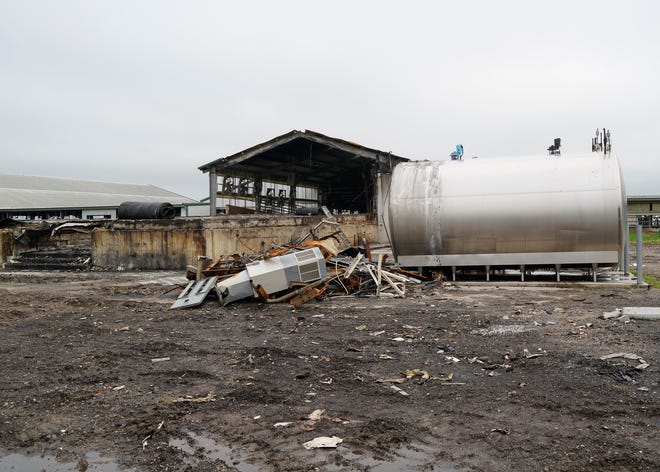
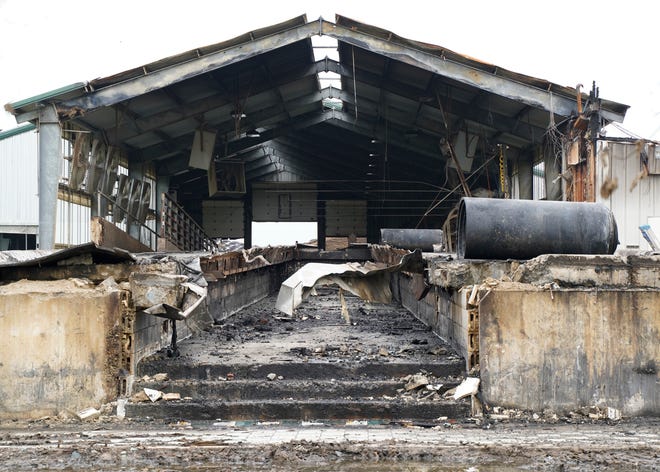
As the region deals with swelling rivers that have flooded homes, Federated Farmers are not yet making a public statement out of respect for those in the Westport township.

But Stuff understands up to 1400 cattle, many of them pregnant, have been killed on a dairy farm left 70 per cent under water in the Buller Gorge. There were many reports of dead animals being washed downstream to beaches near Westport.

The farmer was too devastated about the loss of his cattle to talk when contacted by Stuff.

West Coast Tasman MP and Agriculture Minister Damien O’Connor told media at least one farm had lost up to 700 animals, possibly more, in what was an “extraordinary” weather.

The animals had been moved to historically safe places, but the river came up much higher than expected, causing them to “panic” and run into the water.

O’Connor said his brother’s farm near Westport had been affected and would face some “challenges”.

“Quite a few of the farms here, like the people in houses, will have a challenging time ahead.”

The situation had been classified as a medium-scale adverse event, unlocking $200,000 for flood-affected farmers across the West Coast and Marlborough.

O’Connor said the extra funding would be used to help farmers recover, and included wellbeing support, specialist technical advice and other flood assistance.

“Support is available for farmers who are short of livestock feed, or who have had baleage and fodder crops damaged by floodwaters.”

He denied there were problems with the area’s infrastructure, saying it was not known how much water could fall in the hills.

“The infrastructure is OK … the Buller River is normally a big river, this is historically high levels that have never been seen before.”

The impact of the flooding was similar to what happened in Canterbury in late May. Ensuring farmers had enough feed would be a priority, he said.

“This weather event has put further pressure on farmers who’re entering one of their busiest times of the year – calving and lambing – and we’re committed to helping them get through.

“Based on the advice I have received from Ministry for Primary Industries (MPI) staff, the scale of impact is beyond the communities’ ability to cope.”

MPI would work with industry groups like DairyNZ, Beef + Lamb New Zealand, Federated Farmers and NZ Winegrowers, he said.


Rural support trustee Dianne Milne was unaware of any stock losses in the Grey district, but Buller was “pretty hard hit”. It was the time of year when farmers were trying to conserve feed, but that would now be under water.

Rural support was offering assistance, but their work would likely ramp up most in the recovery stage over the coming weeks, she said.

Buller mayor Jamie Cleine had also heard of stock losses on local farms, including one that lost 700 out of 800 cows, and another reporting up to 200 missing.

“This time of year it is highly likely many are pregnant.”

Source: stuff.co.nz

Hoffland Dairy owner rebuilding after fire in milking barn killed about 30 cows

It was just earlier this month that the milking house at Luke Vanderhoff’s Hoffland Dairy at 9510 Haley Road in Dover Township, a couple miles southeast of Clayton, burned leaving close to 30 cows dead, but he already has his sights set on rebuilding.

“We’re going to try to piece things back together as quick as we can,” Vanderhoff said. “We want it to be yesterday, but needless to say the lead times on equipment — it’s made-to-order, specialized equipment — so it’s going to be pretty long lead times. So we’re kind of bracing for six to nine months to get rebuilt.”

There were about 1,750 cows on the property July 5 when the double-parlor milking house caught fire including some that were pregnant, but they were all moved to other farms.

Fire tore through the milking barn at Hoffland Dairy July 5, killing 30 cows. Dairy owner Luke Vanderhoff is working on rebuilding.

“Fortunately, there aren’t too many animals in that parlor; just what’s being milked at that very moment. So all the other barns were far enough away that there weren’t any issues there. So it was just that group that had happened to be being milked at the time,” Vanderhoff said. “We’re spread across 14 dairies right now ranging from Freemont, Indiana, to Mount Pleasant, Michigan, and everywhere in between.”

The milking house holds about 40 cows during the milking process. The fire started at an old connector, Vanderhoff said.

“There was a 480-volt disconnect for an old generator that we no longer have that just by the connections, it just failed, and it melted and blew a hole in the back of the box and shot straight up the wall,” Vanderhoff said. “So we lost 24 (cows) initially and there were a few that we were able to get out, but they were too injured, and they had to be euthanized and that was another four animals.”

As the fire was being put out by the Clayton Fire Department assisted by crews from the Hudson, Morenci and Addison fire departments as well as from Madison, Adrian, Raisin and Cambridge townships, semitrucks and trailers lined up on the road leading to the farm to transfer the animals to safety.

“The day that everything happened we had a ton of help, and if it weren’t for everybody showing up with trailers as they did, it would have been that much worse ordeal … The road was full of people to get loaded and sent in whichever direction they were told,” Vanderhoff said. “Everything was moved out by 3 a.m.”

The initial dispatch was around 1 p.m.

For now, Vanderhoff has his hands full, but he is optimistic about the future.

“We are just obviously dealing with insurance phone calls and visits about how we are going to move forward and whether we’re going to be able to rebuild in the same spot or what the plan is to get our cows home as soon as we can,” Vanderhoff said. “There are three or four main equipment dealerships that deal in dairy equipment, and we’re just kind of contacting all of them to see what kind of lead times they have.”

Vanderhoff said he is grateful for all the support during the ordeal.

“The outpouring of support was great,” Vanderhoff said. “It meant a lot, even when things were looking grim.”

Source: lenconnect.com

National Jersey Leadership Named at Annual Meetings

Officers and directors of the USJersey organizations were elected during the Annual Meetings of the American Jersey Cattle Association (AJCA) and National All-Jersey Inc. (NAJ) held on June 25 and 26, 2021 in Bettendorf, Iowa.

Jonathan Merriam, Hickman, Calif., was re-elected to a fourth one-year term as President of the American Jersey Cattle Association on June 25. The third generation of his family to breed and own Registered Jerseys, Merriam is the genetics specialist at Ahlem Farms Partnership, Hilmar, Calif., having previously worked in A.I. sire procurement, extension and education. He has served on the boards of the California Jersey Cattle Association and Jerseyland Sires and was co-chair of the 2016 National Heifer Sale. He was General Chair of The All American Jersey Shows & Sales in 2019, and served as chair of The All American Sale Committee in 2017.

Jason Johnson, Northwood, N.H., was elected to his first three-year term as AJCA Director from the First District, succeeding Tom Sawyer, Walpole, N.H.. A fourth generation dairy farmer, he earned a dairy management degree from the University of New Hampshire. Jason is currently a farmer relationship manager with Stonyfield Organic. He is responsible for direct supply milk procurement, animal welfare, milk quality and sustainability programs for the northeast milk supply. He and his wife, Heather, and children, Regan, Ryleigh, and Asher raise and breed their Johnsonacres Jerseys at their home in Northwood. He is currently serving as vice president of the New England Jersey Breeders Association.

Joe Vanderfeltz, Lawton, Pa., was elected to his first term as Director from the Third District, succeeding Mark Gardner of Dayton, Pa. Vanderfeltz and his wife, Melinda, and sons, Kyle and Corey, milk 220 Jersey and 180 Holstein cows at VanFel-JM Dairy. VanFel Jerseys is enrolled on REAP and a contract advertiser with the Jersey Journal. The herd has a 2020 actual herd average of 17,703 lbs. milk, 854 lbs. fat and 697 lbs. protein on 160 lactations. In 2019, the herd ranked among the top 10 of the nation for milk, fat, and protein in herd sized of 80-149 lactations. The family farms about 700 acres of corn and alfalfa as well, growing most of the forages for the herd. The couple was awarded the AJCA Young Breeder Award in 2003.

Bradley Taylor, Booneville, Miss., was elected as AJCA Director from the Fifth District. He owns and operates Taylor Jersey Farm Inc. with his wife, Carla; sons, Lee, Carl and Holden; and parents, Royal and Marthell. The 120-cow Registered Jersey herd is enrolled on REAP, the comprehensive service package of registration, Equity milk marketing support, type appraisal and performance programs offered by the AJCA and NAJ. Taylor is a member of the All American Sale Committee and was appointed to the AJCA Type Advisory Committee in 2017. He has served on the Southeast Area Council of DFA for eight years and served as secretary. He is the Vice President of Mississippi Jersey Cattle Club. Bradley also serves on the Dairy Research Advisory Council for Mississippi State University.

Ralph Frerichs, LaGrange, Texas, was elected to a three-year term as AJCA Director from the Ninth District, succeeding John Boer, Dalhart, Texas. Ralph previously served on the AJCA Board of Directors from 2009-2015. During that time he served as vice president from 2013-2015 and chaired the Development Committee earning him an ex-officio seat on the National All-Jersey Inc. board. He and his wife, Faith, brother, Robert and son, Neal, operate Frerichs Dairy Inc. The herd is home to 190 Registered Jersey cows, the Jersey Barnyard tourist attraction and Texas Jersey Cheese Company, producing all-natural Jersey cheese by hand.

Chairs of standing committees for 2021-22 are Bradley Taylor, Booneville, Miss., Finance; Joel Albright, Willard, Ohio, Breed Improvement; Garry Hansen, Mulino, Ore., Development; Karen Bohnert, East Moline, Ill., Information Technology and Identification. Albright will also serve as vice president for the coming year.

National All-Jersey Inc.

Following his re-election to the board to represent District #3 of National All-Jersey Inc. (NAJ) on June 26, John Kokoski, Hadley, Mass., was elected to continue as president by the Board of Directors. Kokoski has been a member of the NAJ Board since 2007. He heads up the family-operated Mapleline Farm LLC. The enterprise includes a 135-cow Registered Jersey herd enrolled on REAP and a dairy plant that processes and distributes a full line of Jersey milk products to grocery retailers, restaurants and university food service. Kokoski is a past director of the Massachusetts Cooperative Milk Producers Federation and has served more than 25 years on the New England Dairy Promotion Board.

Rogelio “Roger” Herrera, Hilmar, Calif., was re-elected to a second term as Director from District #2. Herrera manages Ahlem Farms Vista and Ahlem Farms Jerseys in Hilmar, Calif. He and his wife of 20 years, Teresa, have three daughters, Shea, Camille and Ella, who help in the operation of the dairies as well. He and his family moved to the family farm, Ahlem Farms Jerseys, in Hilmar in 2009. He joined the partnership of Ahlem Farms Vista and Ahlem Farms Jerseys, which are expansions of the foundation farm, with herd owners Bill and Carolyn Ahlem and his brother, Sabino, a year later.

Appointed to the NAJ Board of Directors as an at-large director by AJCA President Jonathan Merriam, was Sam Bok, Defiance, Ohio. Bok will succeed retiring director Calvin Graber, Parker, S.D. Bok and wife, Julie, and children Wendy and Andy, own and operate Boks Jersey Farm, a 450-cow herd enrolled in AJCA’s REAP program. He is a delegate to the Board of COBA/Select Sires and represents his county for the Farm Service Agency. He served on the board for Defiance Landmark Inc. for nine years. Bok served on the AJCA Board of Directors from 2013-2019.

James Huffard, Crockett, Va., was re-elected as NAJ vice president and will serve as Finance Chair for the board.

The American Jersey Cattle Association, organized in 1868, compiles and maintains animal identification and performance data on Jersey cattle and provides services that support genetic improvement and greater profitability. Since 1957, National All-Jersey Inc. has provided services that increase the value of and demand for Jersey milk and milk products and Registered Jersey™ cattle and genetics. For more information on AJCA and NAJ services for dairy business owners, visit the website at www.USJersey.com or connect at facebook.com/USJersey.

National Dairy Shrine Announces Scholarship Winners

National Dairy Shrine (NDS) is excited to announce the recipients of its NDS student scholarships and recognition awards for 2021. A total of 39 scholarships totaling $44,500 will be presented to students at this year’s NDS Awards Banquet on Thursday, September 30th in Madison, Wisconsin.

Kildee Scholarship

Receiving the $3000 H.H. Kildee Scholarship for Graduate School studies in a dairy related field is Sarah Thomas of Pittsboro, North Carolina. Sarah was a Dairy Science major at Virginia Tech with three additional minors in Strategic Communications, Agricultural Economics and Animal & Poultry Science. This fall, she will be pursuing a Master’s degree in Agricultural Communications from The Ohio State University. The Kildee Scholarship is named in honor of H.H. Kildee, Dean Emeritus at Iowa State University.

Senior Student Recognition Scholarships

The NDS Senior Student Recognition Scholarship rewards graduating four-year university/college seniors planning a dairy industry or production agriculture career who have demonstrated outstanding leadership, activity participation, academic ability and a sincere interest in the dairy industry. Each university can nominate up to two students for this award annually. The highest honoree receives a $2000 scholarship, the second $1500, and other honorees receive $1000 awards.

Receiving this year’s top scholarship of $2000 is Cynthia Hamlett from Aurora, Iowa, who majored in both Agriculture & Society and Dairy Science at Iowa State University. The second award of $1500 goes to Sydney Jewell of Spencer, New York, who majored in Animal Science at The Pennsylvania State University. Six students will be presented with a $1000 award. They are: Cady McGehee of Elkhart Lake, Wisconsin, a Dairy Science major at Virginia Tech; Katherine Gathje of Richmond, Minnesota, an Agricultural Communication and Marketing major at the University of Minnesota; Eva Doornink of Baldwin, Wisconsin, a University of Minnesota student who majored in Agricultural Communication and Marketing; Brock Irwin of Belvidere, Illinois, who majored in Dairy Science at the University of Wisconsin-River Falls; and Kathryn Bosley from Malone, New York, who earned a Bachelor of Science degree in Animal Science at the State University of New York College of Agriculture & Technology at Cobleskill.

Merton Sowerby Junior Merit Scholarships

The Merton Sowerby Scholarships are awarded to junior level undergraduate students at a four-year college/university who are planning a career in the dairy industry. These scholarships are given in honor of Merton Sowerby, a NDS Pioneer and former Klussendorf winner from Michigan.

Nicholas Seitzer of Saint Peter, Minnesota, has won this year’s top Sowerby scholarship of $1500. Nicholas is majoring in both Animal Science and Agricultural Food and Business Management at the University of Minnesota. Six other students have been awarded $1000 Sowerby scholarships. They are: Matthias Annexstad of Saint Peter, Minnesota, an Animal Science major at the University of Minnesota; Hayley Fernandes from Tulare, California, a Dairy Science major at California Polytechnic State University; Gaelan Combs of Verona, Wisconsin, a University of Wisconsin-Madison student majoring in Dairy Science; Leif Annexstad from Saint Peter, Minnesota, an Animal Science and Agricultural and Food Business Management double-major at the University of Minnesota; Donald Opp of Eighty Four, Pennsylvania, an Animal Science major at The Pennsylvania State University; and Sarah Lehner of Delaware, Ohio, who is double majoring in Animal Sciences and Agribusiness and Applied Economics at The Ohio State University.

Mike Lancaster Sophomore Merit Scholarships

The Mike Lancaster Scholarships are given to undergraduate sophomore students at a four-year college/university to encourage and support their pursuit of a dairy industry career. This scholarship is named in honor of former NDS Distinguished Dairy Cattle Breeder and Klussendorf winner, Mike Lancaster of Washington.

The top Lancaster Scholarship of $1500 is being awarded to Mikara Anderson from Three Springs Pennsylvania, an Animal Science major at The Pennsylvania State University. Five $1000 Lancaster scholarships are being presented this year and these are going to:; Kendra Waldenberger of Spring Grove, Minnesota, who is majoring in both Animal Science and Agricultural Communication and Marketing at the University of Minnesota; Brenna Connelly of Byron, Minnesota, another Animal Science and Agricultural Communication and Marketing major at the University of Minnesota; Miriam Cook from Pewamo, Michigan, a Purdue University student majoring in Agriculture Economics; Anton Schilter of Chehalis, Washington, an Animal Science major at the University of Minnesota; and George Sebright of East Berlin, Pennsylvania, who is majoring in Dairy Science at Virginia Tech.

NDS / DMI Education & Communication Scholarships

The Education and Communication Scholarships, sponsored by NDS and Dairy Management Inc. (DMI), were established to help sophomore and junior level students in a four-year college/university to pursue education or communication careers in the dairy or food related industries. These awards are open to students majoring in Marketing, Food Science, Nutrition (Human), Public Relations, Education, Social Media and Communications.

Ashley Hagenow of Poynette, Wisconsin, is the top recipient of the $1500 Education and Communication Scholarship from NDS and DMI. Ashley is pursuing a major in Agricultural Communication and Marketing at the University of Minnesota. Five more undergraduates are being rewarded with $1000 scholarships. They are: Jessica Schmitt of Fort Atkinson, Iowa, a Dairy Science, International Agriculture, and Agricultural Communications major at Iowa State University; Amelia Hayden from Sharon, Wisconsin, an Agricultural Education student at the University of Minnesota; Brianna McBride of Severance, Colorado, a double major in Dairy Science and Food Science at Iowa State University with her third year spent on a student exchange at California Polytechnic State University; Bailie Shultz of Seattle, Washington, an Agricultural Sciences major at Oregon State University; and Mikayla Peper of Osceola, Wisconsin, a University of Minnesota student majoring in Agricultural Communication and Marketing.

NDS / DMI Milk Marketing & Dairy Products Scholarships

Funded by NDS and Dairy Management Inc. (DMI), the Milk Marketing and Dairy Products Scholarships were created to encourage sophomore and junior level students in a four-year college/university to pursue careers in the marketing of milk or dairy products, dairy product development, quality control, nutrition or related roles in the dairy and food industries.

Bobby Marchy of Ceres, California, receives the top Milk Marketing and Dairy Products Scholarship of $1500. Bobby is a student at Oklahoma State University where he is majoring in Agricultural Communications. Three more undergraduates are being recognized with $1000 scholarships: Isabelle Lindahl of Lindstrom, Minnesota, who is majoring in both Animal Science and Agricultural and Food Business Management at the University of Minnesota; Christine Putman from Weyers Cave, Virginia, a Dairy Science major at Virginia Tech; and Mary Holtz of Maquoketa, Iowa, an Iowa State University student majoring in Animal Science.

Maurice Core Scholarships

The Maurice Core Scholarships are given to freshmen level college/university students majoring in dairy/animal science or an industry related field. The funds for this award were donated by the friends of Maurice Core, a longtime Executive Secretary of the American Jersey Cattle Association and former NDS Secretary/Executive Director.

Four $1000 Core Scholarships are being awarded this year. Those recipients are: Caroline Arrowsmith of Peach Bottom, Pennsylvania, an Animal Science major at The Pennsylvania State University; Elise Bleck from Glenbeulah, Wisconsin, who is majoring in Dairy Science at the University of Wisconsin-Madison; Awna Hirsch of Eaton, Colorado, a University of Minnesota student majoring in Animal Science; and Benjamin Styer of Menomonie, Wisconsin, an Animal Science major attending the University of Minnesota.

Marshall McCullough Communications Scholarships

The Marshall McCullough Communications Scholarships are given in memory of Marshall McCullough, a respected nutrition researcher, educator and journalist from Georgia. They are awarded to a freshman student at a four-year college/university who is majoring in agricultural journalism or communications.

Two $1000 McCullough scholarships are being awarded in 2021. The two recipients are: Kelsey Biel of Harmony, Minnesota, an Agricultural Education and Animal Science major at the University of Minnesota; and Margaret Molitor of St. Cloud, Minnesota, who is majoring in Agriculture Communications and Dairy Production at South Dakota State University.

Iager Scholarships

The $1000 Iager Scholarships, established from funds donated by the Charles Iager Family, Fulton, Maryland, are given to second-year students in a two-year agricultural school majoring in dairy/animal science. The award is based on the recipient’s academic standing, leadership, interest in the dairy industry and future plans.

This year’s Iager Scholarship recipients are: Payton Erbsen of Lanark, Illinois, an Animal Science major at Kaskaskia College; and Gracelyn Krahn of Albany, Oregon, a Linn-Benton Community College student majoring in Animal Sciences.

The National Dairy Shrine Awards Banquet and Reception will be held in Madison, Wisconsin, in conjunction with World Dairy Expo, on Thursday, September 30th at 4:30 p.m. For more information about the students being recognized by National Dairy Shrine, or to obtain tickets for the Awards Banquet, contact the NDS office at info@dairyshrine.org. Additional information on National Dairy Shrine membership and its many activities is available at www.dairyshrine.org. Dairy enthusiasts are encouraged to become part of this respected dairy organization whose mission since 1949 has been to inspire future dairy leaders, honor current and past dairy leaders, and preserve the history of the dairy industry.

Top Dairy Industry News Stories from July 10th to 16th 2021

Top News Stories:

50,000 Arizona Dairy Cows will be used to Create Renewable Energy

Two dairy farms in Arizona soon will be producing more than milk.

Renewable energy company Avolta has begun construction on a renewable gas project in Buckeye that will turn the tons of manure produced daily from the more than 25,000 Holstein dairy cows at Buttermilk farms into biogas.

The manure will be sealed underground and “digested” until methane can be created and extracted. The gas is processed and pumped into a nearby Southwest Gas pipeline, providing the farms with an additional revenue stream and keeping the methane gas out of the atmosphere.

“Avolta is pleased to expand into Arizona with the new RNG upgrading facility at Butterfield Dairy,” said Gov Siegel, co-founder of Avolta. “The Butterfield RNG Facility will positively impact the environment while simultaneously providing benefits to the de Jong family farming operation.”

The operation, which the company and the local farm owners ceremonially opened June 29, is the first of two renewable natural gas (RNG) projects planned in the area. The second site Avolta plans to open is in partnership with the Milky Way Dairy Farm west of Maricopa. Once completed, the sites will generate more than 675,000 MMBtu of RNG annually and be sold in the form of renewable transportation fuel, the company said in a news release.

While the project is expansive, covering more than two football fields, the output represents a small portion of Arizona’s total consumption. According to the U.S. Energy Information Administration, the state used more than 482 thousand million cubic feet units of natural gas in 2019.

“Since our family began farming in 1620, we have continuously improved our operations and processes to remain competitive and be a good steward of the land. Most recently we designed Butterfield Dairy to be carbon neutral through managing our water to support crops and capture carbon dioxide,” said Tommy de Jong Sr., who owns Butterfield.

While most commonly used on landfills, agricultural RNG operations are becoming more common. As of March, the U.S. Environmental Protection Agency said 52 manure-based anaerobic digestion systems produce RNG in the U.S., with 44 more under construction. While several are under construction in Arizona, none have yet to begin producing RNG.

Source: The Center Sqaure

Dairy Farmers of Canada Contributing to a Greener Future for Canadians by Supporting Tree Canada’s National Greening Program

Dairy Farmers of Canada (DFC) is excited to announce a $100,000 investment in Tree Canada’s National Greening Program (NGP), which will support the planting of 25,000 trees in various locations throughout Canada. The NGP is supported in part by the federal government’s Two Billion Trees Program. Today’s announcement, made in conjunction with DFC’s Annual General Meeting, represents a major step towards that goal.

Canadian dairy farmers are dedicated to preserving our natural resources for future generations and taking concrete steps to fight climate change. Trees play an important role in diversifying and restoring native vegetation, stabilizing soil, creating habitat and corridors for wildlife, and promoting carbon sequestration and clean air for all.

Thanks to advances in agricultural technology and the sector’s ongoing commitment to continuous improvement, producing one litre of milk in Canada emits less than half the greenhouse gas emissions than the global average. Our carbon footprint decreased by 23% from 1990 to 2016 alone, according to data from Environment and Climate Change Canada.

Still, the dairy sector is constantly striving to identify new innovations and efficiencies. This fall, our sector will again take its stewardship of the environment to the next level, when the environment module of the proAction® program is fully phased in. Under proAction, dairy farmers demonstrate stewardship of their animals and the environment, and produce high-quality milk under some of the world’s most stringent standards and practices.

Through investments in research, the adoption of new practices and creative partnerships such as this one, the dairy sector will continue to find innovative ways to support a greener future for all Canadians.

Quotes:
Pierre Lampron, President, Dairy Farmers of Canada

“Over the years, dairy farmers have made great strides in cutting emissions, land use and water use associated with milk production. We are thrilled to support Tree Canada’s National Greening Program, which will contribute to our collective future.”

Danielle St-Aubin, Chief Executive Officer OR Léo Duguay, Chair of the Board, Tree Canada

“Tree Canada is grateful to work with and receive the generous support of Dairy Famers of Canada. We applaud their commitment to sustainable practices and for planting trees as a way to preserve our country’s green spaces and mitigate the effects of climate change. We look forward to working closely together to make a positive impact across the country.”

Hon. Seamus O’Regan Jr., Minister of Natural Resources

“Planting two billion trees is more than a plan for climate action. It’s a plan for creating thousands of good, green jobs. We’re rolling out tree-planting projects right across the country, like this one with Dairy Farmers of Canada. Planting trees gets us to net-zero.”

ABOUT DAIRY FARMERS OF CANADA
Dairy Farmers of Canada (DFC) is the national policy, lobbying and promotional organization representing Canadian dairy producers. DFC strives to create stable conditions for the dairy sector in our country. It also seeks to maintain policies that promote the sustainability of Canadian dairy production and promote dairy products and their health benefits.

Researchers look to boost performance of dairy cows by greater understanding of heat stress in temperate climates

As a result of the work of Dr  Chamberlain, UK farmers will not only be able to avoid productivity losses, but they will also be able to avoid serious animal welfare issues that arise as a result of heat stress, said Cesar Bratz, technical manager, Trouw Nutrition.   

Dr Tom Chamberlain, veterinarian and owner of Chalcombe Consultancy in the UK, says heat stress can also affect cattle in temperate climate zones such as Europe.

The researcher said that a common way to quantify the risk of heat stress is the Temperature Humidity Index (THI), an index that combines environmental temperature and humidity, but it has serious limitations. Firstly, threshold values are often based on studies working with cows that are acclimatized to high environmental temperatures and humidity and, secondly, the THI values are only applicable to housed cattle, he reported.

In grazing situations, said Dr Chamberlain, it is preferable to work with the Dairy Heat Load Index (DHLI, Lee, 2017), which is based upon recordings of humidity and temperature. Placed where cattle are grazing, the DHLI provides an accurate measurement of the actual conditions that cows experience, he added.

“With the help of Trouw Nutrition and Lallemand Animal Nutrition, we now have real-time data for THI and DHLI available from seven farms in the South-West of England,” ​said the veterinarian.

Lallemand has been collaborating with Dr Chamberlain’s consultancy on the heat stress research, with this publication reporting on that alliance back in May.

“We wanted to pilot this specific project in the UK due to the fact there is limited data on the thresholds for cows in the UK and Ireland; there is only data from cows in significantly hotter countries,”​ a spokesperson for Lallemand told us back then.

In the pilot, monitors were given to dairy farms, with the data generated being streamed live so that farmers can see the current level of heat stress risk, rather than basing management decisions on the prior year’s data.

Temperature and humidity are being recorded inside and outside the shed and translated into updated graphs reflecting changing conditions and challenges, helping indoor and grazing herds.

A summary of the stress results to date have been published​ by Lallemand.

Animal based metrics 

The Chalcombe consultancy led research project also aims to provide farmers with a better tool to assess heat stress in their herds.

Both THI and DHLI are environment-based as opposed to animal-based assessments. As such, they indicate to what extent animals are at risk, but do not measure the effect of heat stress in animals, said Dr Chamberlain. So the team will look to also develop a metric based on animal measurements.

“Previous research has developed animal-based metrics but these have been too invasive or expensive for commercial use. Our intention is to develop a metric that is simple to apply on commercial dairy farms.”

How a dairy cow has found instant fame at Cannes Film Festival

In a striking departure from norm, a cow is under the spotlight in a 93-minute observational documentary in the Premiere line-up of the 74th Cannes Film Festival.
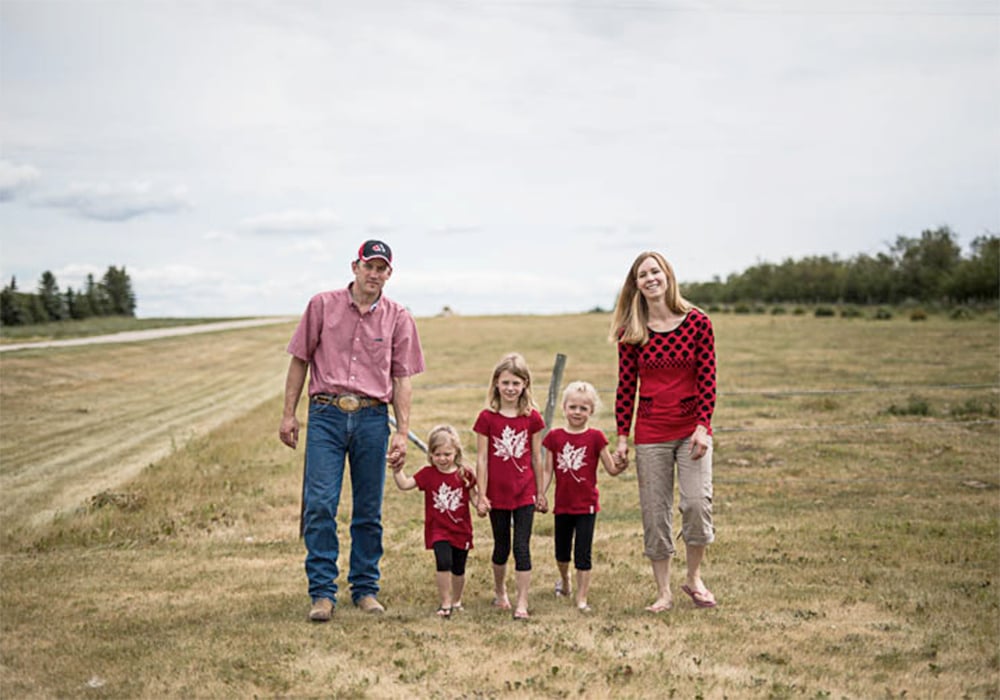
Titled ‘Cow’, the film, which views the world through the eyes of its bovine protagonist, is directed by Oscar-winning English filmmaker Andrea Arnold. The film was in the making for seven years. The editing, according to the filmmaker, was a three-year start-and-stop process because she kept working on other projects.

The British auteur is a three-time winner of the Cannes Jury Prize. The films that earned her the prizes are ‘Red Road’ (2006), ‘Fish Tank’ (2009) and ‘American Honey’ (2016). Her Academy Award win was for the 2005 short film ‘Wasp’.

‘Cow’ is Arnold’s first-ever non-fiction film. It focuses on a single cow on a farm and follows its life cycle, watching it in a detached yet empathetic manner as it does its primary job – producing milk and calves- when she is not out to pasture. About the essence of the documentary, Arnold says, “This is the story of a reality, that of a dairy cow, and a tribute to the immense service she renders us. When I look at Luma, our cow, I see the whole world through her.”

Addressing the media after the premiere of ‘Cow’, the director who has helmed several episodes of the Amazon Prime series ‘Transparent’ and the entire second season of the HBO show ‘Big Little Lies’, said, “We usually see cows as a herd. I wanted to see a cow as an individual.” 

When the idea first took shape, she had to write a pitch for the film. “It is a hard film to explain. (The writing of the introduction) took me back to my relationship with nature as a child. That is where it started. I grew up on an estate surrounded by wilderness and I used to roam around a lot.”

‘Cow’, she said, is an attempt to dispel the romanticised notion of nature that the world has. “I wondered what is the reality,” Arnold added. “It is a reaction to the disconnection from reality that we are all facing now.”

“We are sort of frightened of reality. I wanted to get in there and see what it is actually like,” she said. “The idea is to get people to engage with a non-human consciousness.”

Explaining why she chose to hold the film back for a Cannes premiere, she said: “I love it here. It is a fantastic place to have your film screened for the first time. And it is great moving from lockdowns to this. I am so happy to be inside a cinema hall again.”

Source: wionews.com

Outstanding young farmers named in Saskatchewan

Dairy farmers from Balgonie, Sask., have been named the winners of Saskatchewan’s Outstanding Young Farmer program for this year.



Michael and Jessica Lovich operate Lovholm Holsteins with their three daughters Reata, Renelle and Raelyn, aged 11, 10 and six.

The Loviches moved from Alberta in 2015, the same year they bred the supreme champion cow at the World Dairy Expo.

They milk 70 cows and in 2019 were in the top 20 classified herds of their size in Canada. The following year they were in the top 10 for master breeder status in Holstein Canada.

The family hosts farm tours and is helping agricultural students with their internships. Through the University of Laval an agronomy student from Quebec is at the farm and in August they expect a student from Denmark.

Jessica said they believe educating people about dairy specifically and agriculture in general is part of their job.

“We’re all kind of in this game together,” she said.

The other nominee this year was Stuart Chutter, who operates a regenerative cattle operation near Killaly.

The Loviches will compete at the national competition in Saskatoon in December.

The Saskatchewan OYF committee is also gearing up for a national alumni event in November 2022.

Source: Western Producer

Cattle immune cells could help treat disease

Study defines cells in cattle, in a development that could help tackle infection in cows and people.

Immune cells newly identified in cattle could help investigate and treat livestock and human diseases, a study involving scientists from the Roslin Institute suggests.

A type of immune cell found in cattle – called mucosal-associated invariant T (MAIT) – is very similar to the equivalent cells in humans, where they are known to tackle bacterial and viral infections and play a role in wound healing and vaccine response, scientists have found.

Cattle MAIT cells are stimulated by similar biological signals to their human counterparts and play a role in fighting bacterial infections, the study has shown.

Data and tools used in this research will facilitate immunisation and infection studies in cattle, which can be used as models for human infections spread from animals, such as tuberculosis.

Immune response

Scientists used molecules that bind to receptors on MAIT cells to identify and characterise MAIT cells in cattle for the first time.

In cattle, MAIT cells were mainly located in mucosal tissues, which cover internal organs and cavities, as well as in the lymph nodes, which help to fight infection, scientists observed.

The number of MAIT cells found in milk was raised in cows that had mastitis or were infected with the bacteria that cause bovine tuberculosis. This indicates that these cells are involved in the immune response to these two major bacterial infections in cattle.

The study, published in Frontiers in Immunology, was a collaboration between the Roslin Institute, The Pirbright Institute, the Universities of Oxford, Ultrech and Queensland, the University of Melbourne’s Doherty Institute, and the Animal and Plant Health Agency.

The work was funded by the Biotechnology and Biological Sciences Research Council, part of UK Research and Innovation, the Department for Environment, Food and Rural Affairs, and the Australian Research Council.

This is the first time that the function and physical characteristics of MAIT cells in cattle have been characterised. Our results were part of an international collaboration and show that these cells play a role in protecting cattle against bacterial infections.

Dr Timothy ConnelleyRoslin Institute

The identification and characterisation of these cells in cattle is a significant first step. Further investigation of MAIT cells in cattle may provide avenues for treating infections in both cattle and humans.

Dr Matthew EdmansThe Pirbright Institute and University of Oxford


Vermont Officials Assessing The Future Of Dairy Industry

A task force has been formed to discuss ways Vermont can revitalize its dairy industry.  Its latest virtual meeting took testimony from milk purchasers in the state.

In 2020 the Vermont Legislature passed a bill requiring the Department of Financial Regulation to submit an evaluation of the long term sustainability of dairy farming in the state.  The department was required to submit recommendations to the state for revising dairy pricing and any market regulations that could improve the viability of dairy farming.  In response to those recommendations the Legislature then formed the Task Force, which is charged with developing the legislation to implement the recommendations.  The panel has been taking testimony from different sectors of the industry.  The most recent meeting focused on milk purchasers.  Task force chair Robert Starr, a North Troy Democratic state Senator, said the price to farmers is a key problem. 

“We’re trying to revitalize it so everybody can make a living and none have to leave us,” Starr said. “I mean we only got 500 and a few farms left.”

Task Force member state Representative John O’Brien, a Tunbridge Democrat, asked Ben & Jerry’s Sourcing Manager Cheryl Pinto about differences in dairy pricing they see in other countries.

“And I just wondered how farms outside of this country, the dairy farms, are doing?” O’Brien asked. “Do they seem more stable? Are they ahead of us in some areas? Are they behind us? I’d just love to hear more about that.”

“Currently we’re working with more farmers in Vermont than necessarily the dairy that comes into our ice cream because they’ve expanded the programming here, if that makes sense,” Pinto responded. “But in Europe we’re working with Dutch farmers, German farmers, British farmers and now Belgian farmers as well. Just in general the Dutch farmers are smaller farms. They do much more grazing. They get so much support from the state. The regulations are very different. And so there’s a lot more financial resources and support for the farmers there.”

Agri-Mark Vice President Catherine DeRonde tried to explain to task force members that the federal milk order pricing system Is based on what raw milk is worth. 

“No one buys raw milk right?” DeRonde said. “So we have this disconnect between the supplier and the consumer. So to try to fill that gap what the Federal Order Pricing tries to do is say okay well consumers don’t buy raw milk. What do they buy and let’s use those market prices to back into what the value of raw milk is and what we should pay our farmers. Through a series of frankly tedious equations relates those commodity prices and what components of milk are in those commodity prices back to raw milk essentially. You know that’s how we pay our farmers.”

At the same time the legislative task force is looking to revitalize the dairy industry, the Vermont Agency of Agriculture is holding forums on behalf of the Governor’s Commission on the Future of Vermont Agriculture. A recent conversation focused on young farmers and their visions for agriculture’s future. Ashlyn Bristle, who owns Rebop Farm in Brattleboro, says financial and regulatory support for farmers is crucial. 

“I want to see a support of regulatory pathways for young farmers,” Bristle said. “I think that’s part of what drew me here. I think it’s a part of the success of my story. I want to see lots of thoughts about what of kinds of people we want to see on farms. The same applies for racial justice for getting more BIPOC people onto lands and farming here. There have to be those pathways that allow people that don’t have access to capital or large amounts of capital to move onto lands in our state.”

Source: wamc.org

Send this to a friend