If you saw a post on social media regarding events the Alliant Energy Center as it pertains to COVID-19 protocols, you may not have seen World Dairy Expo’s update on their announcement. The original news post from Channel3000.com said visitors to the Alliant Energy Center needed proof of vaccination or a negative covid test for ticketed events. To clear up the confusion, World Dairy Expo followed up with their statement:
“Today’s announcement is related to vaccination requirements solely for ticketed, seated events in the Coliseum, which World Dairy Expo is not classified as. Expo remains in open dialog with public health officials to identify the best plan for safely hosting our event this fall and will share the details when they are available.
Our event policies will be guided by and aligned with the recommendations and/or requirements of the CDC and Public Health Madison & Dane County. For the most up-to-date information from Public Health Madison & Dane County, please visit their website at https://publichealthmdc.com/coronavirus. For the most up-to-date information from the Centers for Disease Control and Prevention, please visit their website at https://www.cdc.gov/coronavirus/2019-nCoV/index.html.”
After revisiting its genomic offering, Holstein Canada signed a new agreement with Zoetis to give producers a simple, fast and competitive solution. Holstein Canada is steadfast in its commitment to provide its members with a modern genomic testing option that will enable them to spearhead their female strategy.
The release of a first-class Medium Density panel will provide accurate and improved genomic evaluations combined with milk proteins, recessives and other value-added data. Breeders can also expect to see improvements in the way they submit their samples, and in the way they receive and use their results as part of their genetic strategy.
Holstein Canada wants its members to reach their goals faster by giving them many advantages. “Our offer stands out because we are an unbiased supplier. We offer a complete, secure service and all the data generated by Holstein Canada belongs to our members.” declares Vincent Landry, Chief Executive Officer.
Chris Bartels: New Hire at Holstein Canada
The program was developed by various members of the association, including Chris Bartels, Holstein Canada’s new Genomics Services Manager. Chris grew up on a dairy farm in the Niagara region. He graduated from the University of Guelph with a Bachelor of Science in Agriculture degree and has subsequently held various positions in the AI industry in both solutions and sales roles. He is known for his comprehensive approach to genetic planning for the benefit of the producer helping them to achieve their specific goals.
About Holstein Canada
With 9,200 members, Holstein Canada is responsible for maintaining the Holstein Herdbook under the Federal Animal Pedigree Act of Agriculture and Agri-Food Canada (AAFC). The Association provides many services to its members to help them evaluate, select and improve their herds through genetic improvement programs. For more information, visit our website or follow us on Facebook, Instagram and Twitter.
About Zoetis
Zoetis is a global animal health company. Building on 65 years of experience, they deliver quality medicines, vaccines and products, complemented by biodevices, genetics tests and precision breeding. They are continually developing new genomic evaluation technologies to improve animal health and the profitability of dairy farms. Zoetis has demonstrated its commitment to Canadian breeders through its contribution to Compass.
New legislation to combat the spread of foreign animal diseases entering the United States was introduced by Sens. Chuck Grassley, R-Iowa, and Tina Smith, D-Minn. The Healthy Dog Importation Act would expand USDA’s Animal and Plant Health Inspection Services program by providing additional tools to monitor and safeguard the health of dogs being imported into the country.
If passed into law, USDA and other federal agencies would receive the necessary resources to responsibly screen the large number of dogs entering the U.S. each year. It would also require every imported dog to have a certificate of veterinary inspection from a licensed veterinarian confirming the dog is of good health and not a risk to spread diseases that could endanger animal and public health. The proposed legislation would create an electronic database containing documentation and import permits to help streamline federal oversight between the Animal and Plant Health Inspection Service, CDC, and Customs and Border Patrol.
Recently, Reps. Kurt Schrader, D-Ore., and Dusty Johnson, R-S.D., co-chairs of the Veterinary Medicine Caucus, reintroduced it in the House of Representatives.
“Maintaining animal health is critical to our nation’s overall public health goals. It’s important that we work to stop the spread of diseases that can hurt both animals and humans,” Grassley says. “This commonsense proposal will expand an already existing program to ensure that all dogs entering the country are healthy and not at risk of spreading dangerous diseases.”
“COVID-19 is a devastating example of why the Healthy Dog Importation Act is so important. The pandemic showed us that human and animal health are inextricably linked, and that we must take proactive steps to prevent future health emergencies,” Smith says. “Mitigating the spread of foreign diseases in dogs will help keep domestic and wild animals healthy. It could also help prevent illnesses and disease outbreaks in people.”
In addition to expanding the USDA-APHIS program, the Healthy Dog Importation Act would require every imported dog to have a certificate of veterinary inspection from a licensed veterinarian. The health certificate must certify that the dog has received all required vaccinations and demonstrated negative test results. This legislation would also create an online database containing documentation and import permits to ensure dogs entering the U.S. are being properly screened. This will also allow further cooperation and communication between APHIS, the CDC and U.S. Customs and Border Protection.
CDC estimates that up to 1.245 million dogs are imported into the U.S. each year. For the estimated 113,000 imported from countries that are at a high-risk for rabies transmission, CDC requires a rabies vaccination certificate, but no other health documentation or identification. For the 950,000 dogs imported from rabies-free, low-risk or moderate risk countries, CDC requires no documentation or vaccination. Recently, the CDC implemented a temporary suspension of dogs imported from countries that are considered high-risk for rabies – highlighting the need to strengthen dog importation requirements in all U.S. ports of entry.
“The evidence for the need to permanently improve dog importation standards is overwhelming,” says Dr. José Arce, American Veterinary Medical Association president. “The recent CDC notice has emphasized the necessity to ensure dogs entering the country are in good health and not a risk to spread dangerous diseases. In order to protect public health, we must enact legislation that equips the federal government with the necessary resources to properly screen these dogs. The AVMA is dedicated to working with lawmakers and stakeholders to ensure this bill crosses the finish line.”
COVID pandemic revealed vulnerabilities
The ongoing fight to combat the COVID-19 pandemic has increased public health officials concern regarding zoonotic diseases, which can be spread between animals and humans. The CDC reports that 60% of all infectious diseases and 3 out of 4 emerging diseases such as coronaviruses can be spread from animals to humans. USDA-APHIS has separate regulatory authority over dogs imported for resale. However, USDA’s import requirements apply to only half of a percent of all imported dogs.
“The COVID-19 pandemic has shown us the disruption that zoonotic diseases can cause to society’s ability to fully function. The Healthy Dog Importation Act would neutralize the threat of unhealthy dogs entering the country and give federal agencies the tools necessary to implement a robust inspection system within all U.S. ports of entry for dogs. Now is the time to improve our dog importation regulations to help prevent the next public health crisis,” says Dr. Randy L. Wheeler, Iowa Veterinary Medical Association’s executive director.
“We are extremely grateful for the leadership of Senators Grassley and Smith, whose prescient and common-sense actions today can protect U.S. public and animal health and avoid a preventable tragedy in the future,” adds Sheila Goffe, vice president, government relations for the American Kennel Club. “No responsible person wants to bring an unhealthy and contagious dog into the country. By requiring all canine imports — from show dogs to rescue pets — to have a valid and verifiable health certification, the Healthy Dog Importation Act brings U.S. standards into line with most other countries and demonstrates U.S. commitment to responsible care and healthy environments for dogs — and those who love them.”
“The pandemic shows the need to better protect the U.S. from highly contagious pathogens and zoonotic diseases,” says Patti Strand, founder and president of National Animal Interest Alliance. “For years, public health agencies have documented cases where imported dogs have brought in rabies, new strains of canine influenza, leptospirosis, screwworm, and other diseases and pests that threaten animal and human health. While we applaud the Centers for Disease Control for taking steps to reduce the risk of rabid canines entering the US from high-risk rabies countries, we are also concerned about the 90% of dog imports that remain unchecked. The Healthy Dog Importation Act is necessary to ensure that all dogs brought in from overseas are healthy and disease-free before entering the United States.”
New USDA safety measures
On Friday, USDA’s Animal and Plant Health Inspection Service announced a federal order establishing additional requirements for dogs imported into the United States for resale from ASF-positive countries.
Starting August 16, 2021, importers of dogs into the United States for resale from a region in which ASF exists or is reasonably believed to exist, must submit written documentation verifying completion of the following requirements:
The dog(s) and their shipping crate/container must be free of dirt, wood shavings, hay, straw, or any other organic/natural bedding material.
All bedding that accompanies the dog(s) during transit must be properly disposed of at the U.S. post-entry point(s) of concentration.
Each dog must have an ISO-compliant microchip implanted, and the individual microchip number must be verified immediately before each animal is bathed.
Each dog must be bathed at the U.S. post-entry point(s) of concentration within 2 calendar days of arrival in the United States. Bathing must be documented in the Veterinary Services Dog Import Record.
Ensuring ASF and other foreign animal diseases don’t enter the country is one of NPPC top priorities. Earlier this year, NPPC sounded the alarm on the potential for imported rescue dogs to serve as disease carriers from their bedding, crates or coats, becoming a lead issue during its spring Legislative Action Conference. “Each year, several thousand dogs enter the country for resale or adoption. If even one of these animals carried ASF into the country, it could put the U.S. swine herd and other livestock in jeopardy and have disastrous consequences for our nation’s agriculture sector,” says NPPC Chief Veterinarian Dr. Liz Wagstrom. “We thank USDA for implementing these additional safety measures to prevent the spread of ASF to the United States,” she added.
Deforestation in Brazil’s Amazon rainforest fell 10% in July from a year earlier, after four straight monthly increases, but destruction remains far higher than before President Jair Bolsonaro took office.
Reuters reports that cleared forest in the month of July totaled 1,498 square km (578 square miles), nearly twice the size of New York City, according to government space research agency INPE.
From January to July, deforestation in the Amazon was up 7.8% from a year ago to 5,108 square kilometers, INPE data showed.
Last year, deforestation hit a 12-year high under far-right President Bolsonaro, who has weakened environmental enforcement and called for mining and commercial farming in protected areas of the rainforest.
In June, Bolsonaro again dispatched the military to protect the forest, repeating an intermittent strategy that has failed to reduce destruction to levels seen before he took office in 2019.
Bolsonaro’s office did not immediately respond to a request for comment on the latest deforestation data.
The latest INPE figures cap the period for Brazil’s official annual deforestation records, measured from August 2020 to July 2021 to minimize interference from cloud cover.
For the 12 months through July, the preliminary data shows a 4.6% decrease in deforestation.
Scientists say a decrease in the preliminary numbers generally means there will be a decrease in the final, more accurate measure known as PRODES.
Vice President Hamilton Mourao, who leads the government’s Amazon policy, said last week that the figures are now headed in the right direction.
“The cycle ended on 31 July … I think it will be in the range of 4% to 5%, a very small reduction, very inadequate, but it’s on track,” Mourao told reporters.
But researchers say the destruction is still far higher than before Bolsonaro took office and a single-digit decrease does little to change the vast environmental impact.
The Amazon is considered a vital bulwark against climate change and its destruction is the top source of Brazil’s greenhouse gas emissions.
“It’s too early to celebrate the reduction in the deforestation rate this year,” said Ane Alencar, the science director of the Amazon Environmental Research Institute (IPAM).
“It will be quite difficult for the government to change its image with a reduction that small.”
Alencar said the annual PRODES figure will likely be above 10,000 square km for the third straight year. Before Bolsonaro, that level of destruction was last seen in 2008.
She said that Amazon destruction may have plateaued at this high level in part because of uncertainty over whether Bolsonaro will be re-elected and continue his rhetoric signaling to illegal loggers and cattle ranchers that they will not be punished.
Bolsonaro has slid in opinion polls and is currently seen losing to former left-wing President Luiz Inácio Lula da Silva in the 2022 election, although neither has declared their candidacies.
“It’s a moment where these people that are deforesting the Amazon, in the middle of nowhere, they are just waiting to see what is going to happen,” Alencar said.
Scientists in Idaho are finding that wildfire smoke dampens milk production and coincides with increased risk of disease and even death in dairy cows.
Six of Zach Rose’s cows at Rogue Creamery in southern Oregon came down with pneumonia shortly after a bad fire season in 2018, and he thinks the smoke was to blame. “You can see a lot of respiratory issues if they inhale a lot of smoke,” said Rose, the organic dairy’s manager. “We try to keep them indoors obviously as much as possible in those times of really smoky conditions.”
Researchers and farmers are trying to figure out just how harmful wildfire smoke is to dairy cows’ health, and to their own bottom lines. “I bet it does affect milk production,” Rose said. “I’m sure that it certainly can‘t be helpful for it.” This summer, as the Western U.S. battles poor air quality and confronts a hotter, drier future of wildfires exacerbated by climate change, scientists from the University of Idaho are studying dairy cows in the Pacific Northwest to find out more.
Cows are grazing surrounded by thick smoke from wildfires near Oregon City, Oregon September 12, 2020.
Robyn Beck/AFP via Getty Images
Fine particles from wildfire smoke penetrate deep into human lungs, aggravating chronic heart and lung disease and even causing premature death. But smoke’s effects on livestock aren’t well understood, though animals with cardiovascular or respiratory disease are particularly sensitive.
“Humans have the option to move inside and use filtered air,” said Pedram Rezamand, a professor studying animal and veterinary science at the University of Idaho. But dairy cows — though they might spend a portion of their time inside “parlors” being milked — are mostly outdoors, either in a pasture or under open sheds. “We thought, if it’s impacting humans, there’s a good chance it’s impacting animal production and health,” Rezamand said.
Rezamand’s colleague, Amy Skibiel, who studies lactation physiology at the University of Idaho, is spearheading a project to investigate the links between wildfire smoke exposure and cattle health. The research team first collected five years of data on cow disease and deaths from two farms in Idaho and Washington, then looked for patterns that lined up with archived weather and air-quality data. They also recorded physiological measurements, like rectal temperatures and body weight, along with milk production stats, from 25 cows at the campus dairy farm over a three-month period that included a major weeklong smoke event.
Preliminary results show higher incidence of disease — especially mastitis, an udder infection — and increased risk of mortality among calves when wildfires elevated the level of fine particulate matter, or PM 2.5, in the air. Researchers also found changes in immune cells and signs of inflammation. “This raises more questions,” said Skibiel. The connection between inhaling wildfire smoke and irritated udders is intriguing, Skibiel said: “It’s certainly worth following up on.”
“If it’s impacting humans, there’s a good chance it’s impacting animal production and health.”
The researchers also documented a significant dip in milk production, averaging three pounds of milk, or just over a third of a gallon, per cow, per day. (Farmers measure milk in pounds rather than gallons.) “That’s a huge number for a small farm like us,” Rose said. Dairy cows in the U.S. produced an average of 65 pounds of milk per animal per day in 2020, and Western dairy farms produce 40% of the nation’s milk, with California and Idaho producing the first- and third-largest amount of milk of any state, respectively. Nationwide, the dairy industry generates $231 billion, according to industry group International Dairy Foods Association.
But it’s not just wildfires that have dairy farmers concerned; hotter temperatures also reduce milk production. “We’re more worried about heat than smoke at this point,” said Marilyn Hedstrom, who has milked cows with her husband Bill in Montana’s Flathead Valley for 45 years. “We haven’t really noticed particularly a change of behavior or anything with ’em.” The University of Idaho scientists wanted to make sure their initial findings accounted for the impact of heat, too. Though temperatures were high both before and after the wildfires choked the sky, the changes they documented coincided with the smoke. Now, the research team is seeking additional funding to collaborate with a veterinarian at the University of Idaho to further separate the impacts of heat and smoke by conducting tests in climate-controlled rooms.
Darleen Sichley, the co-owner of a dairy farm in Silverton, Oregon, is eager to learn more about the results. Last September, as the Beachie Creek Fire raged within three miles of the Abiqua Acres, Mann’s Guernsey Dairy, Sichley wished she had more information on the risk that smoke poses to her cows. “I was looking for answers, and nobody really had anything,” she said. “You definitely do think in the back of your mind, what is this doing to their lungs?” Three weeks of heavy smoke prompted her to wear an N95 mask while working outdoors. That wasn’t an option for her cows, however. Instead, they got an extra dose of a preventative mineral supplement used during times of stress.
The long game of dairy cattle breeding – a public forum on genetic diversity in dairy cattle – will be held during World Dairy Expo on the afternoon of September 30th at the Sheraton Hotel. With many breeders frustrated over rising levels of inbreeding, this forum aims to bring protection of genetic diversity to the forefront of our breeding programs. Perspectives of breeders and industry personnel will be shared during panels that allow public questions and discussion. Speakers will address implications of inbreeding and potential mechanisms to address genetic diversity. We hope to see you at World Dairy Expo!
Sheraton Hotel, Madison, WI, September 30th, 2021
12:30 – 12:35 Introduction: why are we here. Les Hansen (University of Minnesota)
12:35 – 1:25 Assessing US dairy breed diversity and implications for dairy breeding. Chad Dechow (Penn State University)
1:25 – 2:05 Looking for solutions: current and potential tools. Rebecca Cockrum (Virginia Tech)
2:05 – 2:20 Coffee Break
2:20 – 3:00 Protecting genetic diversity in the Norwegian Red Breed. Gary Rogers (Geno)
3:00 – 3:30 Genetic diversity perspectives of genetic companies and breed associations. Moderated by Chuck Sattler (Select Sires)
Although dairy farmers and related businesses were hopeful the U.S.-Mexico-Canada Agreement (USMCA) would resolve dairy trade issues between the U.S. and Canada, the year-old pact doesn’t appear to have done so yet.
In the latest in a long string of allegations, representatives of the U.S. dairy sector claim Canada is circumventing USMCA milk protein export provisions.
Under USMCA, Canada agreed to do away with its Classes 6 and 7 dairy pricing programs. But a new class, Class 4a, has effectively replaced them and continues to violate the principle, if not the law, of USMCA agreements, according to Shawna Morris, National Milk Producers Federation (NMPF) senior vice president of trade.
“Class 7 was a huge problem, so USMCA had a bunch of different elements that were designed to tackle it from a few directions. But…they created a new class to move those products,” Morris said in an interview with Adams on Agriculture. “A key part of USMCA was putting in place export discipline, so you effectively capped how much milk protein Canada could unload on the global market at lower prices. There really seems to be exports of additional products that are trying to evade those export disciplines.”
Multiple U.S. dairy representatives have publicly agreed Class 4a is similar to products previously found under Classes 6 and 7.
In testimony before the U.S. Senate Committee on Finance on the implementation of USMCA, Idaho dairy farmer and chair of the Darigold and Northwest Dairy Association boards Allan Huttema said the benefits of USMCA only flow to farmers and ranchers if Canada and Mexico properly enforce the agreement.
“While the U.S. Trade Representative’s (USTR) recent initiation of USMCA dispute settlement proceedings over Canada’s allocation of dairy tariff-rate quotas (TRQs) is a welcome step, additional monitoring and enforcement efforts must also focus on Canada’s implementation of its commitments on Class 7 pricing and export surcharges on Canada’s dairy protein exports,” Huttema said.
Although USMCA’s results “may not be everything the U.S. dairy industry sought,” he said they’re a vast improvement over the 1993 North American Free Trade Agreement.
“If Canada and Mexico implement USMCA in keeping with the expectations established during negotiations, it will strengthen exports of high-quality U.S. dairy products and secure real benefits for our industry,” he said. “However, these benefits will only be fully realized if our trading partners adhere faithfully not just to the letter of their commitments under USMCA, but to their spirit, as well.”
He urged Congress to work with the USTR and U.S. Department of Agriculture to monitor Canada’s implementation of USMCA dairy provisions, saying Canada’s exports of Class 4a are increasing in a manner that seems designed to sidestep USMCA disciplines.
The Canadian ministry of agriculture, Agriculture and Agri-Food Canada (AAFC), responded its dairy price system does comply with USMCA legal requirements.
“Canada takes all of its international trade obligations very seriously, including its dairy obligations in the USMCA. The federal government, provincial governments and the Canadian dairy industry have worked to ensure that milk Classes 6 and 7 were eliminated and that products required to be priced based on U.S. reference prices are priced as such,” an AAFC spokesperson said in a statement to Agri-Pulse. “Canada understands that this issue is important to stakeholders in the U.S. dairy industry, and we are confident that our practices align with our international trade obligations.”
Australian Reds chairman and Numbaa NSW dairy farmer, Sam Graham, said the recent breeding development was a great “starting point” to develop a full genomic reference set for the breed.
“Aussie Red farmers have been collecting tail hair samples for six to seven years, even longer, and continually herd recording, now we are seeing the results and it’s very exciting for the breed,” he said.
“It will motivate people to keep going because we are seeing the results for the hard work.”
Sam said the addition of genomics would also help advance his breed, having seen the impact on genetic gain in Holsteins and Jerseys.
“The other breeds have been able to use genomics to select their best heifers and bulls for use in their herds,” he said. “Those breeders have been shortening the generation gap, using the latest young genetics and now, thanks to genomic ABVs, we now have the ability to do that with Australian bulls.”
Although the red dairy breed genomic ABV dataset isn’t complete, Sam said it would weed-out the “stinkers” when it came to bull selection, by making it easier to identify the better sires.
“We will have more confidence using young bulls knowing that the lower performers aren’t going to be in the mix,” he said.
South Gippsland Aussie Red breeder, Nerrena farmer, Paul Cocksedge, has already considered breeding his lowest heifers to beef to diversify his income and ensure his replacements are progeny from only elite animals.
“Genomic data means I will be able to make more informed decisions, be able to select better quality bulls and it also means I will be selecting the better-quality heifers,” he said.
“I will be more certain that I’m making the correct decisions.”
For Cohuna, Victoria Aussie Red breeder Greg Goulding the addition of genomic ABVs will improve his herd and help to objectively prove the value of the breed.
“Genomics will definitely give our herd a big boost, we’ll be able to genomically test heifers, off-load that bottom end group and use the top end to breed replacements for quicker genetic gain,” he said.
Canada increases AgriRecovery funding to $500 million to support farmers facing extreme weather.
The Minister of Agriculture and Agri-Food, Marie-Claude Bibeau, announced that the Government of Canada has increased total AgriRecovery funding to up to $500 million to address extraordinary costs faced by producers due to drought and wildfires. This includes initial funding of $100 million announced on 6 August 2021.
“Our Government is doing everything it can to support farm families so they can get through these challenges today, and be better positioned for a sustainable future,” Minister Bibeau said. “Today’s commitment of up to half a billion dollars shows we stand ready to contribute our share toward AgriRecovery programs with the provinces. We are united in our goal of ensuring that farmers are fully supported through this crisis.”
Given the extraordinary circumstances that farmers in Western Canada and parts of Ontario are facing, this increased funding ensures the federal government is ready to contribute to eligible provincial AgriRecovery costs on the 60-40 cost-shared basis outlined under the Canadian Agricultural Partnership.
The Government of Canada and the governments of British Columbia, Alberta, Saskatchewan, Manitoba and Ontario continue to work with the utmost urgency to complete joint assessments of the disaster and launch support programs. This will include direct assistance to affected livestock and agricultural producers, and help them with added costs of obtaining livestock feed, transportation and water.
Producers can also apply for interim payments under AgriStability to help them cope with immediate financial challenges. The Government of Canada and the governments of British Columbia, Alberta, Saskatchewan, Manitoba and Ontario have agreed to increase the 2021 AgriStability interim benefit payment percentage from 50% to 75%, so producers can access a greater portion of their benefit early to meet their urgent needs. British Columbia and Manitoba have also opened up late participation in AgriStability to farmers who did not register in 2021 so they can benefit from this important income support.
In addition to this support, the Government of Canada announced designations for Livestock Tax Deferral for prescribed drought regions in British Columbia, Alberta, Saskatchewan, Manitoba and Ontario. This will allow beef producers who are forced to sell a significant amount of their breeding herd due to drought conditions to offset the resulting revenues with the costs to replace the herd.
The dairy cows in Sark must be of the Guernsey breed by law
Herrick said New Zealand needed to offer a resident solution.
Australia is providing financial incentives to lure New Zealand immigrant dairy workers across the Tasman.
Southland Federated Farmers sharemilker chairman Jason Herrick said the incentives amounted to thousands of dollars, including relocation costs and bonuses for staying in jobs at least eight weeks.
And they will be re-united with family currently still overseas.
Herrick said immigrant workers on his farm were telling him almost daily of workers leaving New Zealand – although he acknowledged that had slowed a bit with Covid-19 issues.
«They’re offering them four year working-to-residency straight off the cuff, and also allowing their families to come and join them straight away on Australian soils. So hell of a lucrative incentive for them to go because a lot of them are trying to reunite with the families that they haven’t seen for two, to two and a half years,» he said.
A heartbroken family are ‘devastated’ after three-year-old Ianto Jenkins was killed riding his bike on the family farm. Pictured: Little Ianto Jenkins with his father Guto Sior Jenkins
A grieving father has received online abuse from an animal rights fanatic after he accidentally killed his young son by hitting him with his truck on the family farm.
Devastated Guto Jenkins, 31, was already reeling after hitting little Ianto Jenkins, aged just three, when he received the cruel online message.
The online troll wrote: ‘If you hadn’t had such an evil industry perhaps your son would still be here!’
Mr Jenkins runs a dairy farm in the rural village of Efailwen near Clynderwen, Pembrokeshire, which was the scene of the tragic accident last Tuesday evening (August 3).
Police were called but the boy, who was riding his bike at the time of the crash, died at the scene.
The hateful message, sent to his father following news of the incident, added: ‘You run a dairy farm! One of the cruelest industries out there!
‘Millions of cows dying not just for their meat but for their milk too (which we don’t need).’
A heartbroken family are ‘devastated’ after three-year-old Ianto Jenkins was killed riding his bike on the family farm. Pictured: Little Ianto Jenkins with his father Guto Sior Jenkins
The heartless missive came from an account under the name Simon Wilson, and was revealed by Conservative Welsh Assembly member Sam Kurtz, who was left ‘angered beyond belief’ by the online abuse.
Mr Kurtz, who represents Carmarthen West and South Pembrokeshire, said the death of Ianto had ‘hurt this close knit community deeply’, describing it as a ‘tragic event in West Wales.’
He said: ‘Yet some find sending the following message acceptable? This has angered me beyond belief.
‘My thoughts, and all those of this community in West Wales, are with the family during this incredibly difficult time.’
Fellow Member of the Welsh Senedd Rhys ab Owen said the abuse was ‘despicable’ and ‘difficult to understand’.
Ianto’s mother Chloe has told how the boy loved going out in the fields with his father at the family dairy farm.
She said: ‘Ianto was my blue-eyed boy, he was inspiration to life, he was a kind little boy who was always smiling and laughing.
‘He loved being out on the farm and going on the tractor with his daddy.
‘Ianto and I had a very strong bond, he was “Mummy’s little boy” and was always by my side everywhere we went, now that’s been taken from me.
‘No parent should lose a child and I would like people to respect our wishes, giving us space at this very difficult, heartbreaking time.’
His father runs the dairy farm – and was described as devastated at the tragedy on Tuesday night.
The community has rallied around the family of Ianto Jenkins after he was killed by a vehicle
Mr Jenkins’ mother Meinir, 61, said: ‘No one is to blame. Ianto was playing on his new bike in the back yard and my son just didn’t know he was there.
‘It is just heartbreaking. Poor Guto, I don’t know how he’s going to live with this. He is completely devastated.’
Mr Jenkins runs a topsoil business from the 270-acre farm – and uses large pick up trucks to shift the earth.
Meinir added: ‘He (Ianto) too wanted to be a farmer when he grew up, no doubt about that.’
An investigation has been launched and the Health and Safety Executive informed but no-one else was injured.
The boy’s family is being supported by specialist officers and an inquest is set to be opened in due course by Pembrokershire Coroner Paul Bennett.
The family farm has been run by Guto’s parents for decades.
A police spokesperson said: ‘Dyfed-Powys Police was alerted to a collision involving a vehicle and a child at a private property in the Clynderwen area at approximately 7pm on Tuesday, August 3.
‘Sadly, a three-year-old boy died at the scene.
‘An investigation into the circumstances surrounding the incident is ongoing and the family is being supported by specialist officers.
‘The Health and Safety Executive and HM Coroner have been informed. Nobody else was injured.’
Minister and county councillor Huw George previously said the community is pulling together after the tragic death.
He said: ‘One point of this community is that it’s strong, it’s close.
‘People will be there and sense when help is needed and if people ask for help, they will get it, because how do you begin to explain and begin to say something which means anything at a time like this.’
Farmer and shop owner Carwyn James said everyone in the close-knit community was deeply affected by the news.
He said: ‘People will fail to imagine the pain this poor family are going through at the moment.
‘It’s an amazing place to raise children on a farm, but with it there are dangers. It’s just so terribly sad.’
Dairy fat residue was discovered on pottery at the site
Dairy farming could have been happening in Wales as early as 3,100BC, according to new research.
Shards of decorated pottery taken from the Trellyffaint Neolithic monument near Newport, Pembrokeshire, were found to contain dairy fat residue.
The residue could only originate from milk-based substances such as butter, cheese, or more probably yoghurt.
George Nash, of the Welsh Rock Art Organisation, said it was the earliest proof of dairy farming in Wales.
Project leader Dr Nash said Julie Dunne of the University of Bristol had detected the dairy fat residues from the inner surfaces of the pottery, as well as dating them with 94.5% accuracy to 3,100BC.
“It’s incredibly rare to find any archaeological remains such as bone and pottery in this part of Wales because of the soil’s acidity,” he said.
“So, we can’t say for certain that this is the earliest example of dairy farming, but it is the earliest that anyone has been able to prove, using new revolutionary direct dating methods.
“The discovery of this pottery is important because it is right on the cusp of when a new Neolithic ideology was taking hold.”
Early farmers
Dr Nash, who teaches at the University of Coimbra in Portugal, termed the period a “Neolithic package” that included animal husbandry, pottery making, food procurement and different ways of burying and venerating the dead.
It gradually replaced the hunting, fishing and gathering way of life which had typified the previous era.
Interest in Trellyffaint began when former University of Bristol archaeology graduates Les Dodds and Phil Dell conducted several geophysical surveys on and around the Neolithic stone chambers.
They discovered two concentric henges along with other buried objects.
The henges – two circular earthen banks – are roughly contemporary with Stonehenge, dating from the mid to latter part of the Neolithic period, between 3,000BC and 2,000BC.
However, Dr Nash said it is important to view the period as a continuum of social and ritual development rather than a single event.
“As the population grew throughout this period, communities had to diversify the way in which they sourced their food,” he explained.
“Initially, farming was a far riskier economy than hunting, fishing and gathering, as if you had one outbreak of disease – one crop failure – then you were prone to starvation and instability.
“It is probable that throughout the Neolithic period in western Britain, both natural resources and farming played equal roles in providing communities with the resources they needed.
“The pottery recovered from this excavation probably reveals something about the veneration of the earth and what it could provide, hence the offering of dairy products within a ritualised landscape”.
The survey discovered the main chamber was largely in a good state of preservation.
However, at some point in the recent past, the enormous capstone covering the chamber had slipped off its supporting upright stones.
Up to 75 engraved cupmarks – gouged circular indentations – and several intersecting lines were recorded on top of this stone.
New religious ideology
The cupmarks, which feature on only a handful of Neolithic burial-ritual monuments in Wales, suggest the stone formed part of a new religious ideology where rock art represented the night sky and constellations.
Maybe a few hundred years later, the community using Trellyffaint made the decision to yet again change their worldview, which resulted in the construction of the two concentric henges a few yards north of the monument.
For this new set of monuments, offering dairy products rather than looking towards the night sky became the new way of veneration.
The artefacts discovered will be presented to the National Museum of Wales in Cardiff for safekeeping, while the team’s research is due for publication in several international scientific journals.
Happy Cow Milk founder Glen Herud previously ran a crowdfunding campaign to its “milk factory in a box” prototype.
Dairy company Happy Cow Milk has finished its equity crowdfunding on Pledgeme, hitting its minimum target and raising $566,355 from 647 investors.
The company founded by farmer Glen Herud raised $400,000 in its first crowdfunding round in 2019, with those funds used to build its “milk factory in a box” prototype.
Herud says the company is selling a software and hardware package farmers can use to process milk to relevant standards and sell it to local customers.
Farmers put the milk into a set of tanks which act as a processing hub that pasteurises the milk. From there, they deliver the tanks to community milk retailers, which could be cafés, schools or people doing home delivery.
The milk is packaging-free, as customers bring their own bottles and the tanks are monitored digitally so the temperature and quantity can be tracked in real-time.
All payments are processed through the Happy Cow app, with the farmer, retailer and Happy Cow each receiving a cut of each litre sold, instantly.
The company sold shares for $3 each. It plans to use the cash to launch a pilot farm, develop its software and hardware and produce more tanks and hubs so it can scale-up in 2022.
It’s budgeting to have 37 farmers using its system and selling 1000 litres a day in the 2025 financial year. It estimates farmers would make about $100,000 annual profit on 1000 litres.
It still needs approval from the Ministry for Primary Industries.
Pascale’s All Natural Ice Cream has been making small-batch ice cream in Ottawa for 13 years, but owner Pascale Berthiaume says the provincial Milk Act has left her business stuck in “dairy purgatory”.
Pascale Berthiaume began making ice cream while working at a restaurant on Wellington. (Instagram)
Pascale’s All Natural Ice Cream has been making small-batch ice cream in Ottawa for 13 years, but owner Pascale Berthiaume says the provincial Milk Act has left her business stuck in “dairy purgatory”.
Berthiaume says her kitchen almost closed down this year after running afoul of Ontario’s Milk Act.
Although her kitchen was regularly inspected by Ottawa Public Health, she says she unknowingly violated provincial rules.
“I am an honest, small ice cream business and I do want to follow the rules. But they just are very onerous and it was really hard for me to navigate through all this.”
Ontario’s dairy regulations
According to the Act, ice cream makers aren’t allowed to sell wholesale to other businesses without a dairy plant licence.
“I needed to retrofit my existing commercial kitchen to be in accordance with the Milk Act, and I was just not very familiar with those rules and regulations,” Berthiaume said.
Making and selling ice cream directly to consumers does not require a dairy plant licence.
Berthiaume says food safety is important, but she doesn’t understand why the rules allow her to sell directly to customers and not wholesale.
Ajoa Mintah (right) opened Four All Ice Cream in 2017. (Submitted by Ajoa Mintah)
Rules may disadvantage small businesses
The Milk Act is regulated by the Ontario Ministry of Agriculture, Foods and Rural Affairs (OMAFRA).
“Distribution of milk products to persons other than directly to consumers creates additional risks by making traceability of products more difficult should a food safety issue occur,” the ministry said in a statement.
Ajoa Mintah owns Four All Ice Cream in the Waterloo area. She says despite consulting both city health inspectors and the province to ensure her business was in accordance with all the rules, she almost found herself in the same situation as Berthiaume.
Mintah says she didn’t know she wasn’t following the Act until she saw a competitor get shut down for not having a dairy plant licence.
“My wish is that OMAFRA made that information a lot more accessible and [used] plainer language,” Mintah said.
“I also wish OMAFRA had a piece where they’re educating the municipalities…I wish the municipalities knew what they could and could not approve.”
Amy Proulx is a professor at Niagara College who specializes in culinary innovation and food technology. (Submitted by Amy Proulx)
Amy Proulx, a Niagara College professor who specializes in culinary innovation and food technology, says these rules weren’t made with small-scale ice cream makers in mind.
She says part of the problem is small businesses don’t have the tools to lobby for their interests the way big businesses do.
Proulx says she would like to see food safety measures managed differently to allow businesses like Berthiaume’s to succeed.
“Is she providing appropriate traceability? So, for example, putting date marks on her ice cream tubs so if there was a problem or consumer complaints that she would be able to do a proper investigation.”
In the meantime, Berthiaume is still selling ice cream to the public at weekend events.
While her business is scaled down, she says she has learned from the experience and is working on a plan to return to wholesaling.
“Hopefully I’ll just be stronger and smarter and to be able to, you know, continue doing what I love.”
Three brothers died after passing out inside a manure pit at a farm in western Ohio, officials told local outlets.
At the time of the Tuesday afternoon accident, the brothers — Gary, Todd and Brad Wuebker — were performing maintenance on a pump inside the storage pit, the Mercer County Outlook reported.
Manure pits are known to produce a wide range of toxic gases.
St. Henry firefighters received a call for help around 12:30 p.m., the paper reported, and when they arrived at the livestock operation, all three men were unconscious in the pit.
First responders used ropes and ladders to pull the men out, WLIO reported.
Two were transported to an area hospital and one was taken to a hospital in Fort Wayne, WCSM reported. Despite life-saving efforts, all three brothers died.
Farmers, particularly livestock farmers, often store large amounts of manure in concrete pits for later use as fertilizer; and these gaseous, rotting stockpiles of animal waste can become death traps, according to the National Ag Safety Database. Decomposition can result in lethal levels of gases including methane, ammonia, hydrogen sulfide, carbons dioxide and monoxide, and more.
What is a methane digester?
A methane digester system breaks down manure to create renewable energy and fertilizer.By Alyssa Hodenfield
“Since the increased use of manure pits by … livestock producers, there have been several instances where a farmer, family member, or employee has asphyxiated or succumbed to toxic gases from the pit. Cases have been reported where several individuals have died while attempting to rescue a coworker or family member from a pit,” the NASD said.
Deaths in manure pits happen most frequently in the summer months, but they’re potentially dangerous year round.
“Regardless of the season, it is always best to presume that the pit contains hazardous gases or lacks oxygen,” according to the NASD. “Producers need to take protective measures to protect themselves and others working in or around the pit.”
Life on a small dairy farm was tough enough. And that was before the barn blew down.
Bad storms in January and February at first damaged and then collapsed most of Paul and Bonnie Bettencourt’s barn. The destruction left only the sturdier wooden section Paul built with his own hands.
None of the Bettencourts’ animals were hurt in the collapse. One of their horses left Bonnie black and blue when he slipped on ice, slammed his knee into hers and pushed her into a door.
The bruises have healed, but the Bettencourts’ family farm is still recovering. Number one on the list is replacing the barn. It needs to be up before the weather changes in October or November, Paul said.
At the urging of friends, the couple set up a fundraiser via GoFundMe. They need $82,000 for a new, tin barn. So far they’ve raised $15,516, mostly from fellow farmers who understand the slim margins and never-ending work their calling demands.
“We cannot afford to rebuild the barn on our own,” Bonnie wrote on their GoFundMe page. “We didn’t have insurance as no one will cover farms any more. We’ve had nothing but hardship and tragedy going on. We need help. Our cows will freeze this winter without proper shelter. Please help out this little farm if you can.”
Paul would like to be able to mill his own wood and build the barn himself, as he did with the section that’s still standing. His right knee won’t allow it. He can’t climb ladders and his limited mobility means he can’t get out of the way if there’s trouble.
“He’s bone on bone,” said Bonnie, noting that he’s aiming to get a knee replacement operation.
‘The farmers are hurting’
Bettencourt Farm dates to 1891 and is, by the Bettencourts’ account, the oldest dairy in Rehoboth that’s still operating. The town used to be home to 125 dairy farms. Now there are four, Paul said. They eke out a living selling raw milk, fresh eggs, beef and poultry.
Even by the standards of small farms, the Bettencourts’ operation is tiny. They sit on 80 acres of land, about 20 of it good for farming. To put that into perspective, Paul says a good farm is generally at least 200 to 300 acres.
Last year’s drought caused half the corn crop to fail. That put the Bettencourts under further pressure, since they rely on that corn to feed the cows. Now they must buy feed instead.
“What comes in from the milk goes back out in feed,” Bonnie said. “We do it because we love it, not because we make any money. We do not make any money.”
The Bettencourts had to get rid of 30 heifers because there was no room for them with the roof gone. It takes about an hour to milk their 30 remaining cows.
“The farmers are hurting, everybody is,” said Paul.
Years ago, Paul tried pipefitting. He says he’d have made a lot more money if he’d stayed in that line of work.
The Bettencourts are grudging members of Dairy Farmers of America, a farmer-owned co-op that holds great power in the nation’s milk market. In Bonnie’s telling, larger producers aren’t penalized if they flood the market with more milk than they’re supposed to, given quotas that are assigned each farm.
“The big guys can go way over and it drops our price,” Bonnie said. “It buries us.”
Leslie Blanchette, department chair for Animal Science at Bristol County Agricultural High School in Dighton, confirmed that small, local dairy farms face serious challenges.
“It’s getting more and more difficult for smaller dairy farms to be successful in southeastern Massachusetts due to development of farm land, volatile milk prices and larger corporations’ impact on the industry,” Blanchette said via email.
‘We’re gonna keep it a farm’
Times are tough at the Bettencourt place, but all around it you see testaments to second (and third) chances.
The Bettencourts rescued their two former racehorses, Poppaz and Desi, from a “kill pen” in New Jersey.
The Bettencourts’ own marriage is another example. The couple met on FarmersOnly.com, a dating site that brought them together after their former spouses both died.
The road ahead won’t be easy, but the Bettencourts are evolving a plan. A key element is re-starting cheese production. That effort is led by Emily Bettencourt, one of Paul’s eight children. The Bettencourts had a retail sales connection for their cheeses lined up before COVID hit. Paul said they haven’t heard any more from the buyer, so they assume he went under.
Emily plans to produce several types of gouda, including smoked and garlic varieties. She is also considering making Gruyère, “American Brick” and cheddar.
Sheep might be a part of Bettencourt Farm’s future. Paul says one thing is certain:
“We’re still going to milk cows,” said Paul. “We’re gonna keep it a farm. We don’t want to sell it.”
Want to help?
The Bettencourts are raising $82,000 for a new barn to protect their milk cows this winter. You can donate by visiting https://www.gofundme.com/ and searching for “Bettencourt cows.” Here’s a direct link.
Two new genetic indexes to help farmers breed more environmentally friendly cows will be launched in August by AHDB Dairy.
The first, EnviroCow, reflects the important role genetics and breeding play in improving the environmental efficiency of milk production.
Incorporating cow lifespan, milk production, fertility and the new Feed Advantage index, EnviroCow is one of the first genetic indexes in the world to focus solely on breeding cows for their environmental credentials.
Marco Winters, Head Of Animal Genetics for AHDB said: “The environmental focus of EnviroCow reflects the important role cattle breeding can play in helping the farming industry reach its goal of net zero greenhouse gas (GHG) emissions.”
EnviroCow will be expressed on a scale of about -3 to +3, where the highest positive figures are achieved by bulls which transmit the best environmental credentials to their daughters. These will be cows which are predicted to create the least GHG emissions in their lifetimes for each kilogram of solids-corrected milk they produce.
Feed Advantage, incorporated in EnviroCow, helps dairy producers identify bulls with the greatest tendency to transmit good feed conversion on to their daughters. It is expressed as a Predicted Transmitting Ability (PTA) in kilograms of dry matter intake saved during each lactation.
The index’s launch represents the culmination of over 30 years of research and data collection from the award-winning Langhill herd in Dumfries. Undertaken by Scotland’s Rural College (SRUC), the studies have measured the Langhill cows’ dry matter intake throughout their entire lives.
“Calculations take account of the feed an animal is expected to eat given her solids-corrected milk production and the feed she needs for her maintenance,” says Mr Winters.
“This is compared with her actual feed consumption to identify animals which are efficient converters.”
Adjustments are made for the size of the animal, as a smaller cow requires less feed than a larger cow giving the same level of milk production.
The most efficient cows consume as much as 400kg less in one lactation compared with the least efficient cows, meaning that for the same level of production there is substantial scope for cutting feed use.
“EnviroCow and Feed Advantage will help farmers have a positive impact on the use of the world’s finite resources and the carbon footprint of UK dairy farming,” he says. “Now they can move this up a gear with genetic indexes designed specifically to improve their dairy cow’s carbon emission credentials.”
Using cattle grazing to create firebreaks on landscapes invaded by cheatgrass has successfully contained three rangeland wildfires in four years in the Great Basin—the latest being the Welch wildfire near Elko, Nevada, on 18 July.
US Department of Agriculture Agricultural Research Service (ARS) researchers are conducting a large study evaluating the technique, called targeted cattle grazing, for creating fuel breaks to help contain wildfire while not causing grazing-related damage to rangeland health.
Targeted grazing uses cattle in the early spring to eat extensive strips of highly flammable cheatgrass down to 2- to 3-inch stubble in strategic places. This reduces the fuel load that can otherwise turn small rangeland fires into megafires in a matter of hours.
“These fuel breaks are intended to slow a fire’s rate of spread, make it less intense, and provide time and space for firefighters to arrive and more safely attack and contain the fire,” explained ARS rangeland scientist Pat Clark with the Northwest Watershed Research Center in Boise, Idaho, who directs the project. “That’s just what appears to have happened for the Welch fire.”
Before it reached the targeted grazing fuel break, the Welch fire “generally had 2- to 4-foot high flames and was spreading at a rate of about 20 chains/hr [1 chain=66 feet],” according to the fire report. After burning into the fuel break, flames dropped to less than 2 feet high and the fire’s spread slowed to less than 5 chains/hr, which allowed time for resources to arrive and engage the fire. If the fuel break had not been there and windier conditions had occurred, this wildfire could have escaped and burned several thousand to tens of thousands of acres within the South Tuscarora Range, the report said.
The ARS study is evaluating targeted grazing at nine sites throughout the northern Great Basin in Idaho, Oregon and Nevada. Although the cheatgrass-dominated landscapes at all these sites are at high risk of fire, the Nevada fuel breaks have actually been directly tested by wildfires.
Near Beowawe, Nevada, in August 2020, a cattle-grazed fire break helped limit a range fire to just 54 acres compared to fires that more commonly race across thousands of acres of the Great Basin each summer. In July 2018, the same targeted grazing fuel break held the Boulder Creek fire to just 1,029 acres and kept the fire out of sage-grouse habitat just downwind.
Clark’s research is tracking how much fuel is reduced by targeted grazing in the spring when the cheatgrass is most palatable to cattle, whether these fuel reductions can be maintained through the start of the wildfire season, typically July 1 in the Great Basin, and what effects targeted grazing might have on environmental health such as changes in plant diversity.
Cheatgrass (Bromus tectorum) is an invasive cool weather annual grass that originated in Europe, southwestern Asia and northern Africa, which came to this country in the late 1800s, probably in shipments of European wheat. Today, it dominates more than 100 million acres of the Great Basin in the western U.S.
Germinating each fall and winter, cheatgrass grows furiously in spring and dies in early summer, leaving the range carpeted in golden dry tinder, easily sparked into flames. The Great Basin typically has the nation’s highest wildfire risk and most years rangeland fires outpace forest fires in acreage destroyed.
Greenpeace’s Russel Norman is warning New Zealand will need to “pull back” on its love affair with dairy farming if it wants to keep in line with the global warming targets.
Your playlist will load after this ad
Greenpeace’s Russel Norman told Breakfast the number of dairy cows in the country needs to be “pulled back” Source: Breakfast
An intergovernmental panel on climate change is set to release its first report since 2013, analysing the impact rising greenhouse gas levels are having on the environment.
The report is poised to focus on methane and its contribution to climate change, with 80 times more warming power over two decades than carbon dioxide.
From now until 2030, global warming has the capacity to exceed 1.5C unless prompt action is taken but Greenpeace’s Russel Norman says it’s not too late.
“We’re at 1.2C right now, so we’re starting to push the boundary of what is safe for humans to be on the planet,” he told Breakfast.
“The fires, the floods, the heatwaves, that’s just act one, scene one.”
However Norman said with methane making up nearly 44 per cent of New Zealand’s emissions – much emitted by dairy cows – it’s going to take drastic Government action to cut methane emissions.
“We used to have 40,000 dairy cows in Southland, now have 600,0000,” Norman says.
“We’ve overdone the dairy thing, we overshot it; there’s no question about that so we need to pull the dairy numbers back.”
Ayrshire Cattle Society of Great Britain & Ireland wish to inform its breeders and members that there has been a Genetic recessive discovered in the International Ayrshire population. The recessive has been identified as Arthrogryposis Multiplex (AM), or commonly referred to as Curly Calf Syndrome.
The original source of this genetic defect in the Ayrshire population is Peterslund (AYSWEM91213), who was born in 1997.
The Society will be working over the coming weeks with other relevant bodies to identify the carriers in the UK herd book and advice breeders and members the best way forward. When more data becomes available, we will of course notify everyone as soon as possible. We will be providing a list of all bulls that have been tested as soon as we can and sorting a testing program for UK breeders
that are affected.
If you have any questions, please contact our Breed Manager Alan Timbrell.
Provided by Steve Bailey President of the Ayrshire Cattle Society of Great Britain & Ireland
World Dairy Expo® is proud to offer opportunities for youth interested in the dairy industry to develop their professional skills and network throughout the annual event in Madison, Wisconsin. Career Connections is the newest tool from Expo to connect students and young professionals with job and internship opportunities in the dairy industry.
“Career Connections gives youth and young adults a chance to take their job or internship search to the next level,” says Cassi Miller, WDE Youth & International Specialist. “World Dairy Expo provides the perfect time and place to connect job and internship seekers with hiring companies and farms as the global dairy industry meets at Expo.”
Career Connections is a free resource and event for all involved – from students and young professionals to dairy farms and companies. With support from National Dairy Shrine, Career Connections includes an onsite networking event that will be held at World Dairy Expo on Friday, October 1 at 9:30 a.m. in Mendota 4 of the Exhibition Hall in addition to an online presence on Expo’s website.
Companies who participate in Expo and dairy farms from around the world who are looking for “dairy people” can participate in this hiring and networking event by applying at https://worlddairyexpo.com/pages/Career-Connections.php. Job and internship seekers who want to take advantage of this new feature of Expo can also utilize the same website to view a current list of openings and register for the on-site event.
Serving as the meeting place of the global dairy industry, World Dairy Expo brings together the latest in dairy innovation and the best cattle in North America. Crowds of 60,000 people, from nearly 100 countries, will return to Madison, Wis. for the 54th event, September 28 – October 2, 2021, when the world’s largest dairy-focused trade show, dairy and forage seminars, a world-class dairy cattle show and more will be on display. Download the World Dairy Expo mobile event app, visit worlddairyexpo.com or follow WDE on Facebook, Twitter, LinkedIn, Spotify, Instagram or YouTube for more information.
Sara Marie Schmitt, age 28 passed away on Friday, August 6, 2021 at Methodist Hospital in Rochester.
Sara was born on July 3, 1993, in St. Croix Falls, Wisconsin, to Steven and Lisa Sontag and was raised on her family’s farm in Shafer, Minnesota. This is where she developed a love for agriculture and dairy cattle in particular. Sara attended South Dakota State University and received a degree in Dairy Science in 2015.
On June 29, 2019, Sara married Michael Schmitt in Rice, Minnesota before moving to Rochester, Minnesota in 2020. Sara and Michael met on the 2009 National 4-H Dairy Conference trip but spent the better part of a decade simply as friends before pursuing a relationship in 2016. They shared a love of God, cows and travel that shaped the life they built together.
Sara was known for her caring spirit and love for others. She valued personal conversations and genuinely listened to learn more about everyone she met. She was a giver and was always looking for ways to help others. In her free time, Sara baked pies and tasty desserts, tended to flowers and the garden, and walked with her Corgi puppy, Rip. She enjoyed exploring new places, visiting state and national parks, hiking, kayaking and biking.
Sara is survived by her husband, Michael, parents, Steven and Lisa, siblings, Jill (Josh) Bednar and Mark Sontag, grandparents, Richard and Shirley Sontag and Milton Bahnemann, father and mother-in-law, Mark and Natalie Schmitt, brothers and sisters-in-law, Jonathon, Libby, Katie and Austin Schmitt, and nieces and nephews. Sara is preceded in death by her brother, Robert Sontag, and grandmother, Mary Ann Bahnemann.
Everyone at The Bullvine would like to send our deepest condolences and thoughts to our friend Katie Schmitt and her family on the loss of Sara. To send flowers to the family or plant a tree in memory of Sara M. Schmitt please visit the Tribute Store.
Extending to 317 acres in total, Cavandarragh Farm, located at Castlederg, Co Tyrone,is being offered for sale as a whole or in up to eight lots.
The impressive farm has come to the market with Savills and Pollock Estate Agents.
The key feature of the farm is the land, which includes about 298 acres of ploughable ground. The farm was a winner of the Northern Ireland Silage Growing competition for four years in succession and has grown potatoes, maize, fodder beet, winter wheat and spring barley. It lies within a contiguous block and can be easily accessed from a number of public roads and an extensive network of internal farm roads and cow tracks.
The current owners have made substantial investment and improvements to the land in recent years, in particular to the internal road network, fencing, drainage, water supply and reseeding. Regarded as an “early” farm, the dairy herd is typically turned out to grass at the beginning of March until mid-November.
The extensive farm buildings are also a notable aspect of the farm.
With winter accommodation for about 750 head of cattle and about 370 cubicles, the farm buildings include ample underground slurry storage and winter fodder storage, plus a 40:40 rapid-exit parlour.
The farm includes a beautiful farmhouse of modern construction which is laid out in generous and elegant proportions and occupies an elevated position in the heart of the farm with far-reaching views.
A site with planning permission and a derelict house provide opportunities to create additional residential accommodation.
Three biomass boilers have been installed at the farm and planning permission to construct an anaerobic digester was previously granted but has since lapsed.
The Entitlements to the Basic Payment Scheme are owned and are included in the sale.
James Butler, Head of Country Agency at Savills (028 9026 7820) comments: “Cavandarragh Farm offers the extremely rare opportunity to purchase a dairy farm in excess of 300 acres which lies in a contiguous block. Given the range of assets at the farm and the capacity to run a large-scale dairy enterprise, I anticipate interest to come from farmers and agri-businesses based both locally and further afield.
According to Keith Pollock of Pollock Estate Agency (028 8224 5440) offering the land for sale in lots, ranging in size from 20 acre to 183 acres, will present local farmers with a variety of options to acquire additional land, while there are also opportunities for residential buyers to purchase a small-holding.
Masterpiece Genetics, LLC is pleased to announce that Kaila Stoltzfus has joined the organization as Sales and Marketing Director. Kaila is a recent 2021 graduate of Penn State University with a Bachelor’s degree in Animal Science. While at Penn State, she was vice-president of the Dairy Science Club and served in several roles for the Nittany Lion Fall Classic Sale. She resides in East Earl, Pennsylvania at her family’s renowned Warwick Manor Farm Guernsey herd where she will continue to handle the show program that consistently produces All-Americans each year.
Masterpiece Genetics, LLC was formed in 2020 to market Guernsey semen from bulls with exceptional type and deep pedigrees from proven cow families. Masterpieces’ principal owner Ed Crossland states “As the demand for Guernseys continues to increase, our business is growing rapidly worldwide and we could not be more pleased to have Kaila come on board with her extensive knowledge of Guernseys, and look forward to having her energy and marketing skills at Masterpiece.”
Bel Brands USA is pleased to announce a new program in partnership with Dairy Farmers of America (DFA) – a national dairy cooperative of farm families – to implement and measure sustainable cooling practices designed to reduce greenhouse gas (GHG) emissions by cutting on-farm energy usage.
Crop production and animal health are critical to the health of the people and the planet, and the changing climate can have impacts on both. Addressing these impacts requires investment in farm animal innovation to reduce the environmental footprint of each step of the production process.
Bel and DFA, who joined forces to help improve on-farm practices, have identified an opportunity to reduce the carbon footprint on dairy farms by integrating more energy efficient and economically viable milk cooling systems in line with the Net Zero Initiative (NZI), an industry-wide effort led by the Innovation Center for U.S. Dairy.
Throughout the 12-month pilot program, Bel and DFA will support the adoption of energy-efficient and cost-effective on-farm milk cooling methods, including natural well water cooling methods, by a dairy farm in Iowa that supplies milk to Bel Brands; with Bel co-financing the cooling mechanism. As a secondary benefit, the warm well water used to cool the milk will be fed to the cows at their preferred temperature.
The farm will work with DFA’s sustainability team to capture data on the energy and economic savings of the innovative sustainable milk cooling practices compared to the high-energy flash chillers, with the goal of replicating these practices on other U.S. dairy farms in the future, if proven successful.
“At Bel Brands, we are actively working to promote sustainable farming, including responsible dairy production – and have for over 15 years – to help drive a more sustainable and regenerative agriculture industry,” stated Bill Graham, CEO, Bel Brands USA.
The findings of the program will ultimately help inform future best practices for dairy farm sustainability throughout the supply chain, specifically management and mitigation practices to help address the seasonal spike in energy use without compromising cow care.
Jean Michel Dos Remedios, Sourcing & Supplier Develompent Senior Director, Bel Brands USA added, “we are committed to nourishing communities while reducing the impact our products and processes have on the environment. Our partnership with Dairy Farmers of America exemplifies that commitment and gives us an opportunity to partner with dairy farmers to make the industry more sustainable.”
“For our farm families, animal care and environment stewardship are a way of life,” stated David Darr, senior vice president and chief strategy and sustainability officer, Dairy Farmers of America. “We are proud to be part of a program that is aligned with those values and helps further support our commitment to reduce our carbon footprint.”
About Bel Brands USA: Bel Brands USA Inc., a subsidiary of Bel Group. Headquartered in Paris, Bel wants to promote healthier, responsible and accessible food for all consumers worldwide. Bel is a major player in the healthy snack market. Bel produces more than thirty local and international brands that are sold in more than 130 countries around the globe. In addition to The Laughing Cow®, other USA favorites include Boursin®, Babybel® and popular cheese spreads marketing under Kaukauna®, Merkts® and Price*s® labels. Bel Brands delivers fun snacks to over 400 million consumers globally. www.belbrandsusa.com
About Dairy Farmers of America: Dairy Farmers of America is a national, farmer-owned dairy cooperative focusing on quality, innovation and the future of family dairies. While supporting and serving more than 13,000 family farm-owners, DFA manufactures a variety of dairy products, including fluid milk, cheese, butter, ice cream, dairy ingredients and more that connect our Cooperative’s family farms to family tables with regional brands such as Alta Dena, Meadow Gold, Friendly’s Ice Cream, Borden® Cheese, Plugra® Butter and Kemps® to name a few. On a global scale, we work with some of the world’s largest food companies to develop ingredients their customers are craving, while staying committed to social responsibility and ethical farming. For more information, please visit dfamilk.com.
Dairy Farmers of Wisconsin and Discover Dairy open enrollment for the 2021-22 Wisconsin “Adopt a Cow” program. The free program enables a classroom to adopt a 1,500-pound dairy cow and receive photos and stories that will make her ‘come alive’ for students.
Dairy calves, like Dorito, will share their farm story and the story of their first year of life with Wisconsin students through Dairy Farmers of Wisconsin’s 2021-22 Adopt a Cow Program. Program registration is August 1 – September 15 at www.DiscoverDairy.com/adopt.
Each classroom that enrolls in the Adopt a Cow program is paired with a calf from a Wisconsin dairy farm. The program offers virtual chats and farm tours; teachers and students receive photos, video updates and activity sheets throughout the school year that allow them to watch their calf grow. Through hands-on activities and free curriculum, students gain a deeper understanding of the dairy industry and where their food comes from. Several lessons follow common CORE standards in Math, Reading and Science.
“We drive past farms every day, but many students haven’t ever stepped foot in the barn,” says Kaila Fitzl, a 4th grade teacher at Loyal Elementary School in Clark County. Fitzl and her students participated in the first year of the Adopt a Cow program. “It fits perfectly into 4th grade social studies because we learn all about Wisconsin, so this is a way to dig deeper into the whole dairy industry that we already learn about.”
In its inaugural year, 1,600 classrooms and 28,000 students across the state participated in the program.
“It’s been wonderful to see educators and students get a first-hand look at how dairy farms work, engage with the calves and learn how milk is produced on a farm before it reaches their table and schools,” said Karen Doster, the Director of Youth and School Programs at Dairy Farmers of Wisconsin.
Wisconsin dairy farmers taking part in this year’s program include:
To enroll in the 2021-22 Adopt a Cow program, educators should visit www.DiscoverDairy.com/adopt before the September 15, 2021 deadline.
About Discover Dairy: Discover Dairy is an educational series managed by the Center for Dairy Excellence Foundation of Pennsylvania in partnership with American Dairy Association Northeast, Midwest Dairy, The Dairy Alliance, Dairy Farmers of Wisconsin, New England Dairy, Dairy Farmers of Washington, American Dairy Association Mideast, Dairy Council of Florida, and United Dairy Industry of Michigan.
About Dairy Farmers of Wisconsin: Funded by Wisconsin dairy farmers, Dairy Farmers of Wisconsin is a non-profit organization that focuses on marketing and promoting Wisconsin’s world-class dairy products. For more information, visit our website at wisconsindairy.org.
Incentives and staff poaching are becoming rife in the agricultural sector as farmers are desperate go get workers on the land for the peak lambing and calving seasons.
The Australian government is offering up to $2000 relocation assistance to Kiwi’s and those with valid work visas to move across the ditch and work on farms in regional areas. In Victoria, this payment rises with a $2430 bonus for eight weeks of work.
Southland Federated Farmers sharemilker chairman Jason Herrick said these incentives coupled with quicker pathways to family reunification were causing immigrant farmworkers to depart for either Australia or Canada.
“You can’t blame Australia for grabbing the opportunity as soon as the travel bubble opened, our workers can leave work and start [over there] three or four days later.”
He had heard of two Southland immigrant dairy workers in the past week leaving for Canada or Australia, and said the number was rising by the week.
“I’m hearing them all the time. New ones, all the time.”
Waikaka contract milker Leonie Falconer said she and her husband had been advertising a general farm assistant job since April and had only just been able to secure a worker.
She also recruited her sister, who usually works as a vet technician, to have adequate staffing through the peak busy calving season.
There had been multiple times since April where they had begun setting up for new workers, only to have them not show up, refuse drug tests or not have adequate licences for farm work, she said.
The shortage meant her husband and their one existing worker were having to work longer hours without breaks, only getting the bare necessities completed as they simply did not have time for a lot of regular maintenance.
It was impossible to put a number on how many additional hours they were currently working, she said.
“I know with my husband his days off are not days off, he still has to go out and work.”
An additional issue for them was the poaching of workers between farms forcing wages higher, she said.
“Staff are asking for more and more money, and that’s a huge thing, especially for someone like a contract milker or share milker to have to carry, and that’s impacted us this year.”
Herrick said this staff poaching was occurring across the agricultural sector.
“Everybody is poaching one another’s staff. It’s becoming very vile out there.”
The latest Federated Farm Confidence Survey, released on Monday, showed that nearly half of the 1422 farmers surveyed in July had found it hard to recruit skilled and motivational staff, a 13-point increase on the 35 per cent of farmers who cited workforce shortages in January.
A survey conducted by Dairy NZ and Federated Farmers earlier in the year had shown 49 per cent of dairy farmer respondents were currently short-staffed, of that close to 25 per cent had not been able to fill vacancies for more than six months.
DairyNZ general manager of responsible dairy Jenny Cameron said she was aware of Southland farm owners who had moved back to dairy sheds and calving rosters, teenagers coming home to fill in roles, and part-time rosters and alternative milking schedules being created around school hours in the hopes of finding people to fill rolls.
She was concerned about the stress of labour shortages on farmers piling up with new environmental regulations.
A ‘View from the cow shed’ survey conducted by DairyNZ had shown that mental stress amongst farmers was very high and had increased since this time last year.
“It’s all great that they [the government] gave the class exception, but if you can’t get MIQ spots until six months away then it doesn’t help with the immediate issues.”
Herrick did not believe New Zealand could offer the same incentives Australia was advertising given this wait on MIQ spots was preventing workers from even entering the country.
He thought the government needed to be working harder to listen to farming representatives around immigration.
“I think if we can bring the likes of the Lion King cast and the Wiggles and all of those people in, and I’m talking hundreds if not thousands of sports people as well, then why can we not be getting these borders open for workers?”
Herrick said that because Kiwi’s didn’t want to work so far south, Southland was experiencing the brunt of the loss of immigrant workers.
He predicted 2000 of the estimated 4000 farming workers needed nationwide were in Southland alone, but the reality could be a lot worse than the figures suggest.
“We’re gauging our numbers on what’s being advertised, but then when you talk to people who have been advertising three to six months, they’ve just given up on advertising any more. They’ve just given up. So the true nature isn’t known.”
A new genetic abnormality has recently been identified in the Canadian Ayrshire population. The formal name of this genetic defect is Arthrogryposis Multiplex (AM), but it is commonly known as Curly Calf Syndrome. Calves with this genetic defect are born deformed with stiffness in multiple joints and/or joints that are curved or hooked. This condition is lethal since it results in calves that are either stillborn or die shortly after birth. Due to their genetic makeup, affected calves are unable to produce an essential protein required for normal fetal development. Without this protein, the joints of affected calves cannot develop properly and therefore result in the “curly calf” shape as they grow within the uterus.
Where did it come from?
In terms of genetic transmission, Curly Calf Syndrome is a recessive characteristic. This means that animals that carry one copy of the causal gene, referred to as the AM gene, do not show any negative signs. However, 25% of pregnancies resulting from mating a carrier sire to a carrier dam will produce an affected calf. While this genetic abnormality is known to exist in some other beef cattle breeds, the presence of carriers in the Canadian Ayrshire breed only started in 2004. It has taken several years for this undesirable gene to spread through the population to a point that carrier sires and cows are now being mated together. This resulted from the importation of semen of an elite progeny proven Swedish Red sire, named Peterslund (AYSWEM91213), who was born in 1997. Now, in retrospect, it appears that Peterslund is the source animal of the gene deletion that has led to the Curly Calf Syndrome in the Canadian Ayrshire breed.
Following the discovery of the AM gene in the Swedish Red population a laboratory in Denmark developed a genetic testing service to separate “Carrier” animals, identified as AMC, versus those that are “Free” of this genetic defect, identified as AMF. Through this service, as the main provider of Ayrshire semen in Canada, Semex proceeded to get several sires in its current active lineup tested. These initial AM test results have been shared with Lactanet for the development of tools and services to help Canadian Ayrshire breeders manage this genetic recessive defect in their herds. On an ongoing basis, more A.I. sires and females linked to the Peterslund bloodlines will be tested to identify those that are AMC (Carrier) versus AMF (Free).
Preventative Tools Are Now Available
One of the key tools developed by Lactanet is the calculation of an AM Carrier Probability for all Ayrshire animals in the database. In addition to the genetic test results of AMC or AMF, displayed under each animal’s name on the Lactanet website, the AM Carrier Probability value will be provided on each animal’s Pedigree page. As for other genetic recessive traits and haplotypes that exist in each breed, the Lactanet website queries and filters will also include results for the Curly Calf Syndrome starting with the August 2021 genetic evaluation release. Canadian Ayrshire breeders also have free access to the Compass software, which is an excellent tool for knowing the AM Carrier Probability for all females in their herd and for managing lists of Ayrshire sires that may be Carriers.
AM Carrier Frequency in Canadian Ayrshires
Based on all genetic test results currently available, Figure 1 shows the trend over time in the estimated percentage of Canadian-born Ayrshire heifers that are AM carriers. For heifers born from 2004 to 2012, the AM carrier frequency was less than 5%. From 2012 to 2020, the frequency of AM carriers in the Canadian Ayrshire female population increased at an average rate of 2.2% per year, reaching the 20% level for heifers born in 2019. For sake of comparison, Figure 1 also shows the trend in the estimated frequency of the two Ayrshire haplotypes affecting fertility (AH1 and AH2), both of which remain important with 15% to 25% of Ayrshire heifers born each year being carriers.
Since the Curly Calf Syndrome is relatively new to the Canadian Ayrshire breed, Lactanet conducted an analysis of the estimated AM Carrier Probability within the Ayrshire herds enrolled on Lactanet’s milk recording services (Figure 2). While some herds have a very low frequency of the AM gene, 42.7% of the herds have an estimated AM Carrier frequency between 15% and 19%. In the most extreme cases, nearly 5% of Canadian Ayrshire herds have an estimated frequency suggesting that at least one-quarter of their herd inventory are AM Carriers. Within the Compass software, Ayrshire breeders will be able to see this important statistic for their own herd and can access the calculated AM Carrier Probability for each female in the herd. It is recommended that females with a carrier probability higher than 12.5% be mated exclusively to sires known to be AMF or have an AM Carrier Probability displayed as 1%. The Advanced Group Query tool available in the Genetics section of the Lactanet website also allows users to filter sires and cows based on three categories for their AM carrier status. This includes listing animals that are either (a) known to be Free of the AM gene, identified as AMF or with a Carrier Probability of 1%, (b) known to be a Carrier of the AM gene, identified as AMC or with a Carrier Probability of 99%, or (c) having a Carrier Probability between 1% and 99% based on available pedigree data.
Building a Stronger Future
Genetic abnormalities exist in all dairy cattle breeds. Identifying the presence of Curly Calf Syndrome in the Canadian Ayrshire breed does not come as positive news. That said, knowing that it exists and having a way to identify carrier animals, or those most likely to be a carrier, are the first steps to controlling its negative impact. At the time of making mating decisions, it is important for Ayrshire breeders to know if the female is a possible AM Carrier and then avoid using a sire that is also a carrier. With this strategy, you can eliminate the likelihood of producing affected calves and therefore control the negative impact of Curly Calf Syndrome in your herd and the Canadian Ayrshire breed.
Authors: Brian Van Doormaal, Chief Services Officer
Caeli Richardson, KTT Genetics Expert
It used to be a cheeky way of saying “C’mon, get over it.” Somebody might complain that you took the last donut, or that you stepped on their toe. And you’d reply, “So, sue me!”
Not anymore. Across farm country, the phrase now is deadly earnest. Farming is no longer the isolated, rural occupation it once was, and as a result, farmers are facing more potential risk from litigation than ever, and from more directions too.
In particular, more and more people with zero farm or rural background are living in close proximity to farms, which means farmers and farm practices are under increasing scrutiny from people who may not necessarily understand or accept them.
“First of all, farming is more complicated, and second, the litigation risk is closer to home than what a lot of people think,” says Robert Scriven, a partner at Oldfield, Greaves, D’Agostino & Scriven in Waterloo, Ont.
“The countryside is changing,” Scriven says. “You now have strangers beside each other with different views on topics such as drainage, farming practices, spraying, cutting trees, fence lines, and the like. So, although litigation is often thought of as this remote concept, involving remote actors such as conservation authorities or banks, it’s increasingly closer to home.”
And there’s more bad news too.
With so many non-farm and non-country people moving to rural communities, it’s also pushing the scale and complexity of the litigation, says John Goudy a partner with Scott Petrie LLP in London, Ont.
More non-farmers in the countryside, Goudy says, “exposes farms to litigation brought on by people who have less tolerance for various activities that may have been taking place over a long time with no complaints, which are suddenly a source of complaints.”
A changing regulatory environment
Regulations and laws are changing too, often in ways that are hard to keep up with as regulators, politicians and even farm organizations sometimes bow to pressure groups or set standards with, for instance, the goal of keeping Canadian farm commodities competitive in the marketplace.
“The larger and more technologically advanced the farm operation becomes, the more it can be exposed to litigation and increases in regulation,” Goudy says. “The more industrial a farm operation becomes, the less it’s treated as a farm and the more it’s treated as just another industry.”
Goudy says he sees such factors driving an increase in both litigation and regulatory action affecting farmers, who have to recognize that now, more than ever, they are at risk from both.
“The larger and more technologically advanced the operation becomes,” warns lawyer John Goudy, “the more it can be exposed.”photo: Courtesy John Goudy
Workers know their rights
Farm employees, whether they are temporary, part-time or full-time and whether they are family or non-family are subject to rules and employment standards, and farm owners must ensure they know and understand what is expected of them as employers. Otherwise, they risk another source of litigation that is more prevalent than in the past.
There have been a number of cases successfully brought by migrant workers against farm employers in Canada and the United States, and recently, a temporary seasonal worker who contracted COVID-19 filed a legal challenge with the Ontario Ministry of Labour against an Ontario farm employer for compensation, claiming to have been fired and threatened with deportation because of speaking out about lack of measures taken by the employer to prevent workers becoming infected.
It’s a good example of how quickly things can change in today’s world, and why the safety and health of workers needs to be a priority for every farm.
“The rules with respect to labourers or employees have been changing over the years,” says Colin Simmons, barrister and solicitor with Counsel West Law in Calgary. “There are certainly sources of information out there, and it would behoove farmers to take a look at the type of regulations that are changing. If they have a lawyer that they can consult with, that’s probably a good source for them to go to and find out if they’re doing things properly or what changes they could make to ensure that they are.”
Families cause headaches too
Even families can cause litigation headaches for farmers, especially with higher land prices pushing up not just the value of their farms but also the expectations of farming and non-farming offspring, siblings and relatives when it comes time to transfer that wealth from one generation to the next.
Simmons sees more estate disputes cross his desk. “With a generation of baby boomers getting out of farming, there is a massive transfer of wealth occurring or going to occur, and that has led to a significant amount of litigation over the farming situation,” Simmons says. “Farming is unique in that you have a business, in a lot of cases, that the family owns, and while one or two children in the family want to farm, and need most of the assets to farm with, there are other non-farming children in the family who sometimes aren’t happy with the fact that their brother or sister is receiving more than they are. That certainly has been a problem in the past, and nowadays, with land values spiking, it’s just becoming more prevalent.”
“Without a doubt,” Scriven agrees. “If you are the older generation, get an estate plan done and revise it frequently, and ensure there is clear communication because if a son or daughter think that they’re taking over based on a conversation 20 years ago, and the parents are thinking something different, that’s a recipe for conflict.”
In today’s world, transition is rarely as black and white as simply selling the farm, he adds. “Often farms are incorporated, so there has to be a shareholder agreement, and it’s often a 10- or 15-year plan just because of the amount of money and the sophistication around it,” he says.
Scriven’s advice is to start the process as soon as possible, because he believes it’s an evolution rather than a transition.
“If it’s something that’s going to happen, you might as well work on it over a period of time because things will change,” he says. “Look at the last 18 months in terms of COVID, crop prices, land prices, equipment prices.
“And,” he adds, “I’m not convinced the world is a safer place now than it was two years ago, so there’s still fundamental political and economic stability issues.”
It’s always a good idea to start planning the farm transition to the next generation as early as possible, but for those farmers or families who have been hesitant to begin that process, it can become an impediment to actually getting started.
“A problem that some operations face is the fact that they haven’t started to plan already,” Goudy says. But, he cautions, “Not having looked towards transition shouldn’t be a reason to continue to procrastinate. Just because you haven’t already done it and you feel that you are behind, farmers and farm operations shouldn’t let that be a reason not to start now.”
There are regional drivers
Alberta’s oil industry is a warning flag. Litigation is on the rise, Simmons says. “A lot of oil companies are trying to reduce the annual rent that is paid on surface leases, and that is certainly leading to a lot of litigation, and you’re going to see that more in Alberta, of course, because we have a lot more of it than anywhere else,” he says. “Because oil and gas prices were low, some oil companies went or are going into receivership, and others just don’t want to focus right now on trying to clean up a lot of these wells that are old and causing some environmental concerns, so that type of litigation is becoming more prevalent.”
To try and avoid these kinds of litigation risks, Simmons suggests that when farmers or other landowners enter into these arrangements, they need to have properly structured, written agreements in place to ensure both parties know what is expected of them and can be held to account in the event of a dispute.
Unfortunately, many of the current arrangements date back several decades, so there are going to be a lot of challenges in the future.
“A lot of the disputes are arising with existing well sites and the environmental issues with respect to a lot of these sites is becoming a big issue,” Simmons says. “A lot of these wells were drilled back in the ’50s, ’60s and ’70s when they didn’t really do as good a job as they do today. If these well sites are leaking oil, and you end up with problems, there’s not much you can do to be proactive; you’re just going to have to deal with it when it arises. You may be able to approach your oil company to see if they’ll do something, but the law is such that in Alberta, there’s nothing requiring an oil company to reclaim a well site and that’s been a problem for a long time.”
It’s likely that there will be more and more agriculture-related litigation in the future, which means farmers need to make sure they stay informed and try to understand the risks that they can face. “If you’re running a farm, you’re running a business, and there are certainly rules and regulations, especially when it comes to the environment, food safety and things like that, that become tighter and tighter,” Simmons says. “You’re going to have to be more aware of that on the farm than you have been in the past.”
Keep out of court
It may be human nature to wait until we have a problem before seeking a solution, but when it comes to your litigation risk, that isn’t an argument that’s going to score you any points. Or save the farm.
With farm operations and farmers ending up in court more often, for myriad reasons, recognizing and being proactive about the potential for litigation is becoming another routine but vital aspect of risk management for today’s farm business.
“Nobody ever comes by my office just to tell me that things are good. They’ll typically come in when they have a problem already,” says Colin Simmons, a barrister and solicitor with Counsel West Law in Calgary. “But I do have, for instance in estate planning situations, people who come in every year or so to take a look at what they’ve done and see if there’s any changes required, and that’s a good approach.”
Relationships matter, adds Robert Scriven, a partner at Oldfield, Greaves, D’Agostino & Scriven in Waterloo, Ont. Farmers already know they need to have solid links to their accountant and to business advisors, he says. “Same with a lawyer; a lawyer that knows your operation and the family dynamic is important. A lot of my practice now is farmers calling me up and saying, what do you think of this? A lot of [litigation issues] are avoidable if you take a minute to think about it, and get some consults.”
Plus, says Scriven, “Paper wins litigations, so keep agreements, photographs, records and notes.”
It is important for farmers to seek out the right professionals and be educated. In effect, if you want a management role, you have to be able to perform it.
“Where successful farmers are separated from other farmers is their management skill and being able to identify what needs management, what needs their time and what they need to outsource or get professional help on,”Scriven says.
Get more formal
With more money at stake today, and with the complexity of farm operations, it also pays to have written agreements in place, whether it’s a transition plan, an employment contract, a rental or purchase agreement, or any other transaction that could be open to different interpretations without documentation.
“Where there’s a lack of documentation, that gives rise to litigation rather than avoids it,” says John Goudy a partner with Scott Petrie LLP in London, Ont. “A fair bit of litigation and disputes can be avoided through better documentation of agreements … at least if you have the bare bones of the agreement in writing there’s something that both parties can look to and rely upon.”
Also, make it a management principle that knowledge is power. Know what regulations you need to keep up with and stay abreast with them. Yes, it takes time. Monitor government notices, read updates from farm organizations, subscribe to ag publications, and invest time in keeping yourself in the loop.
The United States of Canada?
Is Canada heading down the same road as the United States? While researching this story, Country Guide looked into ongoing examples of farm litigation involving Canadian farms. Rather than focus on specific examples in this introductory article, we thought it best to stick to the overall trends.
One conclusion was glaring, though. If Canada is seeing a rise in farm litigation, it’s nothing compared to the tidal wave south of the border.
Are we heading that way too? Simmons doubts it.
“One of the issues in the U.S. is that they heavily use jury trials and they award unbelievable damages,” he says. “Here it’s not as prevalent; you don’t see a lot of civil cases, you’re not going to see juries. For the most part, you’re going to have just a judge who’s making the decision and isn’t likely to award $2 billion because somebody let the cattle out onto the road or something similar. There are places in the U.S. where essentially people can take their case from anywhere and juries, who essentially do this for a living, come out with unbelievable awards and the whole economy is centred around that. We don’t have that in Canada, and I don’t think you’re going to ever see the amount of litigation that you see down there.”
The process has begun for the Holstein Association USA’s 2022 delegate election. Each year, members have the opportunity to nominate members from their state to serve as voting delegates at the following year’s Holstein Association Annual Meeting, held in conjunction with the group’s national convention. The 2022 gathering will be held in Sioux Falls, South Dakota from June 30 through July 1.
Typically, members become ineligible to serve as a delegate after serving as a delegate at three consecutive annual meetings.
Nominating petitions must be received by Holstein Association by September 24. October 29 is when the ballots will be mailed to members.
The election is expected to be finalized by early February 2022.
The fundraising total continues to grow, following the annual garden party hosted by Dairy Cares of Wisconsin.
The group was formed in 2011 with a mission in mind, to help the community.
They have raised more than $1.5 million on behalf of Children’s Wisconsin, so far.
While the party is over, the giving can continue.
• Text DAIRY to 76278 or visit dairy.givesmart.com
• Select the “Donate” option on the homepage or within the menu
• Select or enter your donation/payment amount
• Complete your user profile when the system prompts
Greenhouse gases released by New Zealand’s dairy industry have hit an all-time high, according to the latest data.
Data from Stats NZ, just released for the years 2007-2019, showed dairy emissions rose 3.18% in 2019, to a total of 17,719 kilotonnes of carbon dioxide equivalent that year. That rise helped drive an overall increase across the agricultural sector, which released almost 42,000 kilotonnes that year.
Agriculture made up more than half of the total industry and household emissions measured by Stats NZ, with most of that split between dairy, sheep and beef farming. Theincrease continued a longer-term rise in emissions from New Zealand agriculture, where emissions were up 5.5% in the past decade.
The emissions created by the digestive systems of New Zealand’s 6.3m cows are among New Zealand’s biggest environmental problems. Agriculture is one of the country’s biggest producers of the greenhouse gases that cause global heating and the climate crisis.
Greenpeace spokesperson Steve Abel said it was “no surprise that when you let corporations and industries regulate themselves, they basically maintain the status quo of their pollution profile”.
“You have to step in and regulate and legislate to lower greenhouse gas emissions,” he said.
The president of Federated Farmers, Andrew Hoggard, said: “Food isn’t a nice-to-have, it’s a must-have, and New Zealand farmers are amongst the best in the world at producing food in a very low footprint.”
“For New Zealand to go off on some virtue signalling crusade to shut down its agricultural sector, just to say ‘Hey, we’ve reduced a heap of emissions’ hasn’t solved anything,” he added.
The sector is hopeful that new scientific developments, such as methane inhibitors, breeding, and using different forms of feed would continue to reduce methane emissions, Hoggard said.
In 2019, New Zealand passed multipartisan climate legislation setting a net zero by 2050 target for CO2 emissions, and set up the Climate Change Commission to map out a pathway there. The government is legally bound to formulate a policy response to the commission’s report, which was released in June – but has not outlined what those policy steps will be. The commission’s report found that some of the work to reduce methane emissions could be done through improved farm practices and breeding animals that produced less gas – but it would also require a drop in the number of total herd numbers by 10%-15%.
Hoggard also said methane emissions were down from 2006 – although data shows methane emissions spiked particularly high that year. Methane emissions since 2008 have been trending mostly up.
Abel said Thursday’s data release should be considered a conservative estimate, because it did not include emissions from transport, coal used to dehydrate milk powder, or the emissions of palm kernel imported for food.
“All of the promises of the dairy industry that it will self regulate and take charge of the problem are clearly not working, and that is borne out by the actual emissions data,” Abel said.
“We need farming, but farming needs to stop being this industrial polluter – it needs to move to making the land healthy, keeping our rivers healthy, keeping our fresh water healthy and not driving extreme weather events through climate change.”
Commencing September 1, 2021, reporting traceability events to DairyTrace the national traceability database, will become mandatory as part of Dairy Farmers of Canada’s proAction® program. As the responsible administrator of DairyTrace, Lactanet Canada will assist dairy producers and other affiliates that are part of the dairy cattle traceability chain with all of their traceability needs.
As a dairy producer that resides outside of Quebec, you must activate your DairyTrace account to begin reporting traceability events. Dairy farmers in Quebec will continue to report livestock traceability events to SimpliTRACE.
Reporting Events Is Easy
The DairyTrace portal is a convenient on-line platform used for reporting dairy cattle traceability events and much more. Reporting can also be done via the DairyTrace mobile app, telephone, mail, or directly from specific on-farm software.
Validation and the proAction® Report
To prepare dairy producers for their proAction® validation, DairyTrace has developed the proAction® report for easy proof of conformance. The report generates the right information that must be presented to the validator at their time of validation.
How to Access the Report
To access the proAction® report, follow the steps outlined below. If you cannot log-in to your DairyTrace account due to problematic internet access or otherwise, you must contact DairyTrace Customer Service in advance and they can send the report ahead of your validation.
Step 1: Sign into your DairyTrace account (https://portal.dairytrace.ca/). Step 2: From the welcome page, select DairyTrace proAction® Report. Step 3: Generate a report:
The Reference date will generate as of the current date.
To open your report, click Print and a PDF will be generated.
Save onto your desktop and/or print.
Explore the Report
The DairyTrace proAction® report includes all traceability events reported under your account within the past year, from the reference date. This information provides the proAction® validator with a list of traceability events between the reporting date and the event date.
If you notice you are missing certain animals on your proAction Report, the Inventory Report, found under the Account tab, can be used to view which animals are linked to your account based on your premises identification numbers. This can help determine if a traceability event was missed and/or needs to be reported on the animal. Keep in mind if an animal has not had a traceability event occur in the last twelve months (i.e. no tag activation, no movement from premises, etc.) then the animal will not appear on your proAction report, as you did not have to report traceability events on it. This is normal! For further assistance, contact DairyTrace Customer Service at 1-866-558-7223 or info@dairytrace.ca.
In addition to supporting proAction® requirements, the DairyTrace portal is a valuable tool for managing herd inventory, including animal births, move-in’s/imports, move-out’s/exports, disposals, and tag orders/replacements. Click here for more information on proAction®.
Questions? Visit the DairyTrace library to find tools and resources to better navigate through your DairyTrace account, troubleshoot, report events, watch quick video tutorials, and so much more.
While the wider dairy industry has given The a2 Milk Co a pretty lukewarm reception, said US CEO Blake Waltrip, retailers are very enthusiastic about the brand, which is one of the key drivers of growth in the fluid category along with other functional or premium brands such as Fairlife and Maple Hill.
“I firmly believe this [A2 dairy] is going to be a very significant segment of the dairy category in the coming years. It’s going to be a very large category and there will be room for a number of players. We’re in over 22,000 doors at this point, at every major retailer, and really the pitch to retailers is that we’re growing the category, we’re bringing premium margins,” Waltrip told FoodNavigator-USA.
“Our loyalty is strong enough that if a consumer can’t find a2 Milk [which posted a 22.3% increase in net revenues to $34.2m in the 6 months to Dec 2020 and an $11.6m loss], they’ll come back and wait to buy their a2 Milk if it’s out of stock, they won’t just buy something else, and there’s not a lot of brands that can say that.”
He added: “During COVID, we saw all tides rise, even conventional milk grew as people were at home more, kids weren’t at school and so on, but now we’re seeing the return of pre pandemic trends and conventional milk is declining again, whereas we’re still growing in the double digits.
“It’s amazing if you think about it, because five years ago, hardly anyone [in the US] had even heard of it.”
Clinical evidence: Four human clinical trials conducted in China, Europe and the US on a2 Milk have been published in peer-reviewed journals over the past few years, with the most recent study (2020) led by Dennis Savaiano at Purdue University, an expert in lactose intolerance.
While the study was funded by The a2 Milk Co, said US CEO Blake Waltrip, “Once we fund a study, we have to step back and stay at arm’s length.”
The a2 Milk Company – which is based in New Zealand but made a big push into the US market in 2015 – has developed a genetic test to identify cows that only produce A2 beta casein protein (most milk contains A1 and A2), so their milk can be segregated and marketed as a more ‘tummy-friendly’ option.
Around 30% of cows produce just A1, and 30% just A2, with the rest producing both. However, as milk from all of these cows goes into the same pool, ‘regular’ milk typically contains A1 and A2, explained Waltrip, who claimed that A1 may be responsible for digestive discomfort experienced by milk drinkers that cannot be attributed to lactose intolerance or milk allergy (both of which can be determined via diagnostic tests).
Four human clinical trials on A2 milk have been published in peer-reviewed journals over the past four years that lend credence to Waltrip’s claims that many consumers who believe they can’t tolerate lactose (milk sugar) should really be blaming their digestive discomfort on the A1 beta casein protein in milk.
While The National Dairy Council still argues that the evidence for A2 is still preliminary, and The a2 Milk Co brand’s reception in the dairy industry has been “lukewarm at best,” said Waltrip, consumers don’t need to read peer-reviewed journals to determine whether A2 milk works for them: “All they have to do is try it and see how they feel. We’re not asking them to make a leap of faith.”
Brand is bringing in new and lapsed consumers to the dairy milk aisle
That said, what has become clear as the a2 brand has continued to grow in the US, he said, is that consumers aren’t just buying it for digestive reasons.
“We’ve done some research that shows us that a2 Milk is bringing incrementality to the category, it’s bringing new and lapsed users back to milk. But one of the more interesting things we’ve seen is that consumers are seeing the brand as a better milk.
“So when we first started out [in the US], we focused on testimonials from consumers that had real life experience and talked about the fact that people hadn’t considered milk for a very long time often because it bothered their stomach and here was an opportunity for a product that was easier on digestion, so our tagline was ‘love milk again,’ kind of, come back to milk.
“But during the pandemic we moved into a tagline which is a little bit different, which was ‘Rethink your milk,’ because we saw an opportunity to drive trial and reach consumers that didn’t know about us, and this was really effective.”
Picture credit: The a2 Milk Company
According to the a2 Milk Company: “A2 beta –casein protein is recognized as being the original beta-casein protein in cows. That is, originally all domesticated cows produced milk containing only the A2 protein.
“However, owing to a natural genetic mutation, another milk protein – A1 beta-casein protein – appeared in Europe and spread throughout global herds via modern farming practices. Research has shown that A1 and A2 proteins digest differently. Growing scientific evidence supports that the different protein fragments produced have an impact on aspects of digestive function and support the unique benefits of a2 Milk.”
Cows that naturally produce milk rich in A2 beta casein are identified using a non-invasive DNA test which analyzes a sample hair from the tail. These cows are then separated to form A2 herds and their milk is segregated in the supply chain.
‘We’ve continued to increase our distribution throughout the pandemic’
He added: “We’ve continued to increase our distribution throughout the pandemic, but we also see opportunities to build out our proposition in our core channels, so it’s about getting more SKUs [into existing accounts].
“So we just launched a half and half product, which is exceeding our expectations for acceptances in terms of distribution, and we have a pretty robust innovation portfolio, so you should expect to see new products from us within the next six months.”
Blake Waltrip: ‘We’ve continued to increase our distribution throughout the pandemic…’ Picture credit: The a2 Milk Company
He did not provide details, but said: “You’ll probably see is both some milk adjacency categories as well as some categories that are not adjacent to fluid milk at all.”
Private label competition
The fact that major retailers (Costco and Ahold) have both launched private label A2 milk products validates the category, argued Waltrip, who said their entry had not had a major impact on The a2 Milk Co.
“That is something we always expected; we knew there would ultimately be competitors whether private label or local regional players, but we see this as the very beginning of our progress story, and the ability to extend this benefit structure to multiple categories is very exciting.”
As for pricing, he said, The a2 Milk company had “temporarily lowered price to an accessible premium price point, and we saw the kinds of lifts we expected from doing that. As we go forward, we will bring ourselves back to our original pricing on milk. There is going to be pressure in the dairy industry overall for price increases, anyway given the shipping costs we’re seeing today.”
The company recently introduced a half and half product to the US market. Picture credit: The a2 Milk CompanySource: foodnavigator-usa.com
The top three winners in each age division will be awarded cash prizes
Holstein Association USA is pleased to offer the second Virtual Interview Contest for Junior Holstein members. This program is designed to prepare youth for real world opportunities, giving them the chance to sharpen their resume writing and interview skills. The top three winners in each age division will be awarded cash prizes.
“Making a good first impression is more important than ever in the virtual world we live in today. This second-year contest will help youth members earn honors, scholarships, and career opportunities by enhancing their resume and interview skills,” says Kelli Dunklee, Holstein Association USA Youth Specialist.
“The contest was amazing and was one of my first true interviews,” said 2020 Virtual Interview Contest participant Jenna Larson of Florida. “The judges asked very thorough and realistic questions, which provoked a lot of thought towards my answers. I received good critiques that were very applicable and useful. I feel as though this contest has better prepared me for interviews in the future and is amongst the more realistic competitions that can be hosted virtually.”
The Virtual Interview Contest is open to youth ages 12 to 21 as of January 1, 2021. Individuals must be a Junior member of Holstein Association USA to be eligible.
Youth will be split into three categories based on age. Individuals in the junior division (ages 12 to 14 as of January 1) will apply for a mock scenario award trip to World Dairy Expo. In the intermediate division (ages 15 to 17) youth will be applying for a mock educational scholarship. Finally, youth in the senior division (ages 18 to 21) will be applying for their first job in their desired career path after completing a post-secondary education.
All applicants will be judged on their combined cover letter and resume score. Up to 15 applicants from each age division will be selected for a virtual interview with a panel of three judges. Every individual who participates will be given written feedback on their cover letter and resume and those that reach the interview phase will receive written feedback on their interview, too.
Cash prizes of $250 for first place, $100 for second place, and $50 for third place will be awarded in the junior and intermediate divisions. In the senior division, youth will be given cash prizes of $500 for first place, $250 for second place, and $100 for third place.
“This contest was a great opportunity to practice making the most of the virtual interview environment. The meaningful feedback I received helped me hone my professional skills before beginning my search for a post-graduation position,” says Sarah Lehner of Ohio, who received first place in the senior division in 2020.
Entries are currently being accepted and interested youth should send a cover letter and resume corresponding to their appropriate age division to kdunklee@holstein.com by September 1, 2021. Youth who make it to the virtual interview round will be notified in September with interviews to follow in October.
Created to be a space for companies to showcase their innovative products, services or research at World Dairy Expo®, the Knowledge Nook returns this fall with new opportunities to learn. These educational sessions benefit both attendees and companies, alike, as they provide a chance for company experts, researchers and producers to share detailed information with Expo attendees about new items on the market since the last WDE. Sessions are presented daily in the Knowledge Nook, located in the atrium of the Exhibition Hall.
The following is the current list of 2021 Knowledge Nook Sessions and their sponsors. Download World Dairy Expo’s free mobile event app or visit worlddairyexpo.com for an up-to-date schedule and more information about these sessions.
TUESDAY, SEPTEMBER 28
9:30 a.m.
Improving Passive Transfer in Calves – Presented in Spanish
Jorge Botero, MV, Wet Calf Health and Nutrition Consultant, Dairy Tech, Inc.
Presented by: Dairy Tech, Inc.
11:30 a.m.
Improving Passive Transfer in Calves
Jorge Botero, MV, Wet Calf Health and Nutrition Consultant, Dairy Tech, Inc.
Presented by: Dairy Tech, Inc.
12:30 p.m.
Driving Sustainability for Dairy Farms: Manure Management
Trond Lund, Head of Business Development, N2 Applied AS
Presented by: ProStar Energy Solutions
1:30 p.m.
Cow-Side Mastitis Management
Julia Somerdin, CEO and Cofounder, Labby Inc.
Presented by: Labby Inc.
2:30 p.m.
Mineral Nutrition is Instrumental to the Dairy Industry’s Success
Angela R. Boyer, Ph.D., Mineral Nutrition Technical Manager, Phibro Animal Health Corp.
Presented by: Phibro Animal Health Corp.
WEDNESDAY, SEPTEMBER 29
9:30 a.m.
How Computer Vision Technology Transforms Productivity and Herd Welfare on the Farm
Tyler Bramble, Ph.D., Growth Lead Manager, Cainthus
Presented by: Cainthus
10:30 a.m.
Do You Have Clean Feed?
John Goeser, Ph.D., Rock River Laboratory, Inc., and Renato Schmidt, Ph.D., Technical Services – Forage Expert, Lallemand Animal Nutrition
Presented by: Lallemand Animal Nutrition
11:30 a.m.
Rumen Protected Glucose for Dairy Cows
David Casper, Ph.D., PAS, DPL ACAS, Technical Service Manager, Soy Best
Presented by: Soy Best
12:30 p.m.
Developing a Calf Program for Your Farm
Bob James, Ph.D., Professor Emeritus, Virginia Tech University and Kimberley Morrill, Ph.D., Technical Services Manager, Chr. Hansen
Presented by: Chr. Hansen
1:30 p.m.
New Technologies for Producing Highly Digestible Forages for Feeding Dairy Cattle
David Casper, Ph.D., Dairy Nutritionist and Research Consultant
Presented by: Ralco
2:30 p.m.
High Moisture Corn Feeding System For Any Robotic Milking Farm
Bradley Biehl, Farmer & President, AMS Galaxy USA
Presented by: AMS Galaxy USA
THURSDAY, SEPTEMBER 30
9:30 a.m.
Animal-Centered Environment: Smart Barn Technology at Your Fingertips
Mark Doornink, Vice President of Product Management, VES-Artex
Presented by: VES-Artex
10:30 a.m.
Optimizing Rumen Function with Native Rumen Microorganisms
Lisa Marotz, Ph.D., Microbiome Scientist, Native Microbials
Presented by: Native Microbials
11:30 a.m.
New Technologies for Producing Highly Digestible Forages for Feeding Dairy Cattle
David Casper, Ph.D., Dairy Nutritionist and Research Consultant
Presented by: Ralco
12:30 p.m.
Rumen Protected Glucose for Dairy Cows
David Casper, Ph.D., PAS, DPL ACAS, Technical Service Manager, Soy Best
Presented by: Soy Best
1:30 p.m.
Developing a Calf Program for Your Farm
Bob James, Ph.D., Professor Emeritus, Virginia Tech University, and Kimberley Morrill, Ph.D., Technical Services Manager, Chr. Hansen
Presented by: Chr. Hansen
2:30 p.m.
High Moisture Corn Feeding System For Any Robotic Milking Farm
Bradley Biehl, Farmer & President, AMS Galaxy USA
Presented by: AMS Galaxy USA
FRIDAY, OCTOBER 1
9:30 a.m.
The Buddy System
Laura Raatz, Calf and Youngstock Manager, Wagner Farms
Presented by: Agri-Plastics Mfg.
10:30 a.m.
Animal-Centered Environment: Smart Barn Technology at Your Fingertips
Mark Doornink, Vice President of Product Management, VES-Artex
Presented by: VES-Artex
11:30 a.m.
Predict Herd Risks When Needed Most: The Transition Period
Ray Nebel, Ph.D., Research and Technical Consultant, and Marcus Hollmann, Nutritionist
Presented by: CowManager
12:30 p.m.
Rumen Protected Glucose for Dairy Cows
David Casper, Ph.D., PAS, DPL ACAS, Technical Service Manager, Soy Best
Presented by: Soy Best
1:30 p.m.
Make Longevity Her Legacy
Chuck Sattler, Vice President of Genetic Programs, Select Sires, Inc., and Jeff Ziegler, Vice President of Dairy Cattle Breeding, Select Sires, Inc.
Presented by: Select Sires, Inc.
2:30 p.m.
Sand Bedding and Anaerobic Digestion
Andrew Wedel, P.E., Director of International Business – Agricultural
Presented by: McLanahan Corporation
SATURDAY, OCTOBER 2
9:30 a.m.
Mineral Nutrition is Instrumental to the Dairy Industry’s Success
Angela R. Boyer, Ph.D., Mineral Nutrition Technical Manager, Phibro Animal Health Corp.
Presented by: Phibro Animal Health Corp.
Serving as the meeting place of the global dairy industry, World Dairy Expo brings together the latest in dairy innovation and the best cattle in North America. Crowds of 60,000 people, from nearly 100 countries, will return to Madison, Wis. for the 54th event, September 28 – October 2, 2021, when the world’s largest dairy-focused trade show, dairy and forage seminars, a world-class dairy cattle show and more will be on display. Download the World Dairy Expo mobile event app, visit worlddairyexpo.com or follow WDE on Facebook, Twitter, LinkedIn, Spotify, Instagram or YouTube for more information.
The Fonterra Shareholders’ Fund was created in 2012 to both manage redemption risk for the co-operative and be a vehicle that gave outside investors some exposure to the dairy sector.
Fonterra’s foray into listing might end up costing its shareholders close to $500 million, but the Fonterra Shareholders’ Fund may well slip off the books with little or no fanfare.
“The unit trust has been marginalised since day one in some respects. The experience has been quite poor for unitholders all the way through,” senior Harbour Asset Management research analyst Oyvinn Rimer says.
He doesn’t think there are many investors in the fund left to care.
“We own a very small number in our passive fund, which is an index-tracking fund that has to own them, but in an active sense, we don’t,” he says.
“In hindsight, it probably should have been wound up shortly after listing.”
The fund was created in 2012 to both manage redemption risk for the co-operative and be a vehicle that gave outside investors some exposure to the dairy sector.
The rewards haven’t been great.
The units were first sold at $5.50 in 2012, when Fonterra raised $525 million from their sale, and last traded at $3.73. The fund is currently trading but Fonterra put a temporary freeze when it announced the proposal. The units have fallen from $4.56 just before the proposal was announced.
Since its launch, it has paid roughly 30 cents a year in dividends, including two lean years where Fonterra’s debt repayments were the priority.
In May, Fonterra’s board kicked off consultation on a new proposed capital structure that would see the fund capped or killed as it looks to protect itself from flat or declining milk supply and to ensure farmer ownership.
Fonterra recently unveiled some possible changes but there was no further clarity on the future of the fund.
“We still have not made a decision or landed in terms of the future of the fund,” chairperson Peter McBride told reporters at a briefing. The future of the cooperative “is the priority at the moment,” he said.
However, Rimer says any buyback – which would have to be approved by at least 75% of unitholders entitled to vote – may not be stellar.
The current market capitalisation of the fund is $401.6m.
Fonterra has argued keeping the fund operating as is could potentially cost billions as it may be forced into repeatedly buying back shares if certain levels are breached.
“It doesn’t sound like there is any willingness to pay a premium to unitholders to close it down,” Rimer said.
While there’s no final decision , he says “the writing is on the wall”.
NZ Shareholders’ Association chief executive Oliver Mander says the association hasn’t yet formed a view on the proposal given that the proposal itself hasn’t been finalised.
However, he says there had always been an inherent conflict of interest between the unitholders and the supplier shareholders, he said.
Jarden’s head of research Arie Dekker says “it was very clear at inception that there would be limitations associated with investing in an FSF unit – particularly there was no voting interest in Fonterra’s governance while the fund was also set up with a number of protections around controlling the fund size”.
Data from the annual reports show Fonterra spent about $1.7 million on directors’ fees for the fund’s manager in the nine years to June 30, 2020. It also paid the fund’s running costs.
The FSF Management Company, the manager of the Fonterra Shareholders’ Fund, hasn’t responded aggressively to the idea that the fund might be wound up.
It says its capital review subcommittee, which comprises its independent directors, will continue to discuss the capital structure proposals in confidence with Fonterra and with advisers.
It also reiterated “it is not able to provide unitholders with any assurance about the price or liquidity of trading in the fund as these are matters the manager does not control or influence.”
Mander says removing the fund will limit investment options in the dairy sector.
Fonterra argued that the milk supply issue is now a bigger risk and investors can turn to the bonds for exposure.
However, Mander says bonds are “a totally different investment profile and not what investors are looking for”.
Elle Purrier St. Pierre, a Vermont dairy farmer and farmer-owner of Premier Select Sires, holds the American women’s indoor mile record (4:16.85, set February 8, 2020 at the Millrose Games) and the American indoor two-mile record (9:10.28, set February 13, 2021 at the New Balance Indoor Grand Prix).
Her many accolades continue to build after she recently earned a place on Team USA, winning the 1500m run in the 2020 Tokyo Olympic Team Trials with a meet record time of 3:58.03. At the time of this article, she has advanced to the Olympic semifinals, slated for Wednesday, Aug. 4 at 6 a.m. eastern time following a third place finish in her first round heat.
This article originally appeared in the Spring 2021 edition of the Premier Pioneer from Premier Select Sires, Inc., available here. It has been updated with recent achievements.
Elle grew up on Sunset Hill Farm in Montgomery, Vermont and now lives on Pleasant Valley Farms in Richford, Vermont with her husband, Jamie. Due to the pandemic, Elle has completed much of her training at home this year, which has allowed her to spend time on both Sunset Hill and Pleasant Valley dairy farms. Although training is her priority right now, Elle says she helps on both farms whenever she can, which is just about every day.
“It’s been really nice. I’ve been able to spend so much time on the farm compared to other years,” said Elle. “When I’m away, I miss home and the cows and working on the farm with my dad and my husband. It’s been a huge silver lining in the pandemic.”
Elle says that her background in dairy farming has provided her with many life lessons that have shaped her as an athlete.
“Growing up on a farm, I have a better understanding of hard work and what it takes to set goals and accomplish them. You can only control so much, and there are so many factors going into how you can perform. You just try your best, wake up every day, and work hard.”
Elle said that in both dairy farming and running, most of the time hard work pays off but sometimes it doesn’t. She has learned to press on towards her goals regardless of challenges, and says that she’s a “much stronger athlete from being so active on the farm as a kid.”
“Running and farming are related in ways you wouldn’t expect as well,” said Elle. “Cows are like athletes in the sense that making milk is their sport. From growing up on a farm I learned how to care for cows so that they would perform their best (make a lot of milk) and now a large part of my job is taking care of myself—sleep, nutrition, having good health—so that I can perform better.”
Combined with her degree in nutrition from the University of New Hampshire, Elle uses her running career as a platform for promoting the dairy industry, especially through social media, which has gained notable press in recent weeks for her “agvocate” role.
She aims to help close the growing gap between producers and consumers.
“It’s a huge opportunity to let the people who follow me know the basics of what happens on the farm. Dairy can get a bad rap and it’s fun for me to share my experiences to show that side of it,” said Elle. “Also, dairy products are extremely useful for my training. People can use these products to help their performance just like I do.”
Elle said that it is not rare to find her fueling up with chocolate or strawberry milk whether she’s at home or away training in Arizona.
Elle has several connections to the Premier Select Sires cooperative, as her sister Jinny (Purrier) Rainville formerly served as a Reproductive Services Specialist. Premier Area Sales Manager (ASM) Bill Gaston helps Sunset Hill Farm and Pleasant Valley Farms with their genetic and reproductive needs.
Please join us in cheering for Elle! We wish her all the best as she pursues her goals and represents our industry!
Bottom photo of Elle and her brother Ryland at Sunset Hill Farm in Montgomery, VT.
To provide the best experiences, we use technologies like cookies to store and/or access device information. Consenting to these technologies will allow us to process data such as browsing behavior or unique IDs on this site. Not consenting or withdrawing consent, may adversely affect certain features and functions.
Functional
Always active
The technical storage or access is strictly necessary for the legitimate purpose of enabling the use of a specific service explicitly requested by the subscriber or user, or for the sole purpose of carrying out the transmission of a communication over an electronic communications network.
Preferences
The technical storage or access is necessary for the legitimate purpose of storing preferences that are not requested by the subscriber or user.
Statistics
The technical storage or access that is used exclusively for statistical purposes.The technical storage or access that is used exclusively for anonymous statistical purposes. Without a subpoena, voluntary compliance on the part of your Internet Service Provider, or additional records from a third party, information stored or retrieved for this purpose alone cannot usually be used to identify you.
Marketing
The technical storage or access is required to create user profiles to send advertising, or to track the user on a website or across several websites for similar marketing purposes.
To provide the best experiences, we and our partners use technologies like cookies to store and/or access device information. Consenting to these technologies will allow us and our partners to process personal data such as browsing behavior or unique IDs on this site and show (non-) personalized ads. Not consenting or withdrawing consent, may adversely affect certain features and functions.
Click below to consent to the above or make granular choices. Your choices will be applied to this site only. You can change your settings at any time, including withdrawing your consent, by using the toggles on the Cookie Policy, or by clicking on the manage consent button at the bottom of the screen.
Functional
Always active
The technical storage or access is strictly necessary for the legitimate purpose of enabling the use of a specific service explicitly requested by the subscriber or user, or for the sole purpose of carrying out the transmission of a communication over an electronic communications network.
Preferences
The technical storage or access is necessary for the legitimate purpose of storing preferences that are not requested by the subscriber or user.
Statistics
The technical storage or access that is used exclusively for statistical purposes.The technical storage or access that is used exclusively for anonymous statistical purposes. Without a subpoena, voluntary compliance on the part of your Internet Service Provider, or additional records from a third party, information stored or retrieved for this purpose alone cannot usually be used to identify you.
Marketing
The technical storage or access is required to create user profiles to send advertising, or to track the user on a website or across several websites for similar marketing purposes.








 New legislation to combat the spread of foreign animal diseases entering the United States was introduced by Sens. Chuck Grassley, R-Iowa, and Tina Smith, D-Minn. The


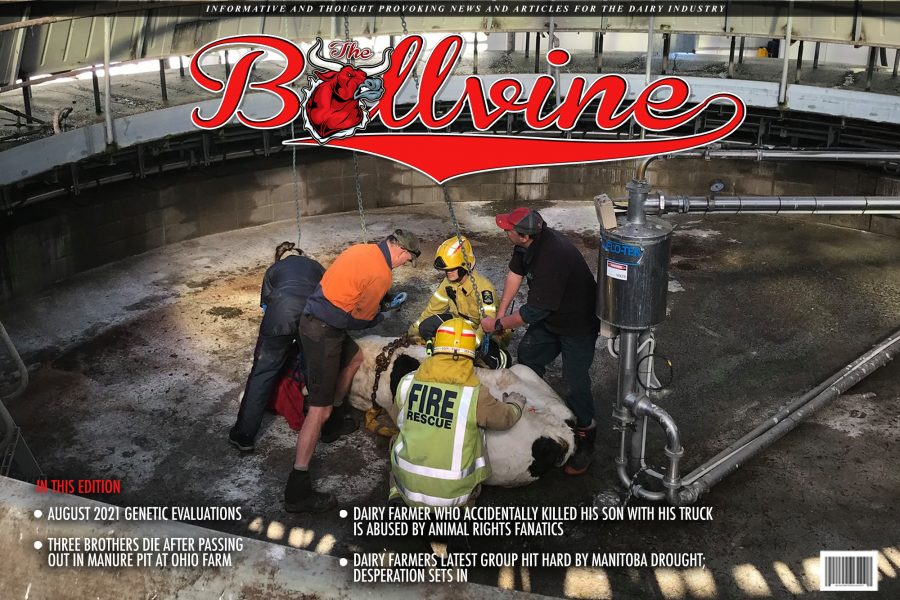




.jpg)


 Sara Marie Schmitt, age 28 passed away on Friday, August 6, 2021 at Methodist Hospital in Rochester.

 Masterpiece Genetics, LLC is pleased to announce that Kaila Stoltzfus has joined the organization as Sales and Marketing Director. Kaila is a recent 2021 graduate of Penn State University with a Bachelor’s degree in Animal Science. While at Penn State, she was vice-president of the Dairy Science Club and served in several roles for the Nittany Lion Fall Classic Sale. She resides in East Earl, Pennsylvania at her family’s renowned Warwick Manor Farm Guernsey herd where she will continue to handle the show program that consistently produces All-Americans each year.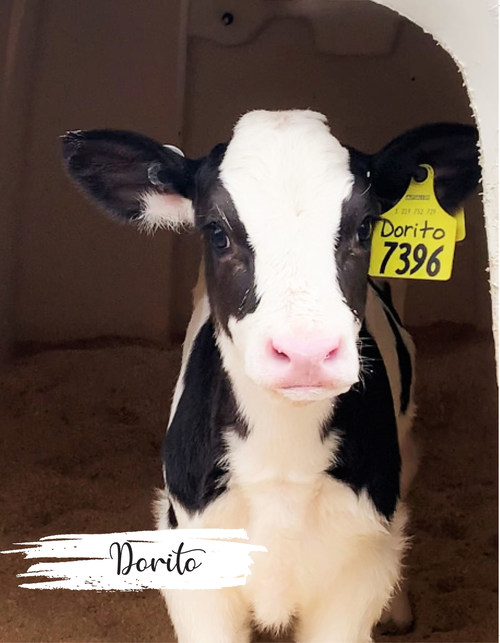


 Elle Purrier St. Pierre, a Vermont dairy farmer and farmer-owner of Premier Select Sires,