
Archive for News – Page 33

Pollution Suit Against Large Dairy Farm Goes to Trial in Addison County

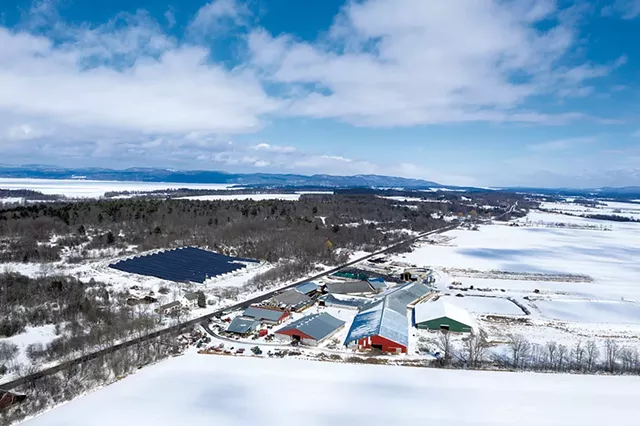
Last week, a pair of Panton landowners sought to prove in a closely-watched civil trial in Addison County Superior Court that Vorsteveld Farm, a large dairy operation that farms roughly 2,400 acres and milks 1,400 cows, is polluting their property and Lake Champlain.

The plaintiffs, Dennis and Vicki Hopper, whose primary residence is in Houston, Texas, spend five months a year at their lakefront home on Arnold Bay Road, downhill from the cornfields where brothers Hans, Gerard and Rudy Vorsteveld grow some of the feed for their herd. The Hoppers allege that the Vorstevelds’ crop and manure management practices have increased the flow of runoff onto their land and rendered their shoreline, on Arnold Bay in Lake Champlain, unsuitable for recreation.

In 2017, the Vorstevelds installed a tile drainage system in the cornfields. The network of corrugated pipes, buried several feet below the surface, collects water from the soil and conveys it to two culverts on Arnold Bay Road, across from the Hopper property. The water flows beneath the road and into streams on the Hoppers’ land before emptying into Arnold Bay.

The Hoppers, represented by Rob Woolmington and Merrill Bent of the Manchester firm Woolmington, Campbell, Bent & Stasny, allege that since the Vorstevelds installed the tile drainage system and removed trees and shrubbery along the perimeter of the fields, the volume of water flowing through their property has increased substantially, eroding their stream beds and contaminating their pond. According to the Hoppers’ complaint, tests of their pond water indicated “high concentrations of nitrate, phosphorus, total suspended solids and other pollutants,” along with elevated levels of e-coli.

As a result of the increased volume of sediment-filled runoff, the Hoppers claim, cyanobacteria blooms have become more frequent in Arnold Bay, and algae has proliferated along their shoreline. The Hoppers also contend that the intensity of the flow has impeded the farming activities of their daughter, Annie, who leases a portion of their 140-acre parcel for the sheep farm she runs with her husband, Sean Willerford.

The Hoppers, who have previously filed complaints against the Vorstevelds with the Agency of National Resources, seek a court order to compel the Vorstevelds to restore water flows to pre-2017 levels.

The Vorstevelds have denied allegations that their farming practices have damaged the Hopper property. The Vorstevelds’ attorney, Jim Foley of the Middlebury firm Lynch & Foley, said in an interview that he believes the Hoppers are asking the court to supersede the authority of the state agencies charged with regulating farms, which would open, as he put it, “a Pandora’s box.”

“You open that box, and you can start expecting well-to-do people living next door to farms in Vermont to start filing suit with rapid fire to shut them down and curtail their activities,” Foley said.

Rob Woolmington, the Hoppers’ attorney, rejects what he called “the public relations narrative” that the case represents a referendum on dairy farming in Vermont. “Nobody is attacking the Vorstevelds’ right to farm,” he told Seven Days. “The issue is, what are they going to do to stop the pollution that they’re causing to Lake Champlain and to neighboring property?”

John Roberts, executive director of the Champlain Valley Farmer Coalition, of which the Vorstevelds are members, said that dairy farmers fear that a judgment against the farm could deal a decisive blow to an already precarious way of life. The economic pressures of the commodity market, he said, favor big farms over small ones.

“It is possibly a shock to somebody who thinks of agriculture as the farmer with a stalk of straw in his mouth, leaning on his gate and muttering about the weather,” Roberts said. “Now, these farms have become 24 hour-a-day operations, because that’s what the economy has driven them to, what food policy has driven them to. They’re doing what they have to do in order to survive.”

The trial, presided over by Judge Mary Teachout, was originally expected to last three days, concluding on Friday. It is now slated to resume in early January.

Source: sevendaysvt.com

Donald P. McNeil Obituary

It is with great remorse we share the passing of Donald McNeil.  Everyone at Bullvine would like to send their deepest condolences to the family and friends of Donald.

Donald P. McNeil, 69, of Star Road, passed away, December 18, 2021.

He was born in Plattsburgh on August 4, 1952, son of Glenn and Evelyn (Frennier) McNeil.  Don graduated from the Ellenburg Central School and later from Clinton Community College where he received his degree in Accounting.

Don married Sherry Magoon on August 21, 1982.  They worked side by side operating Don-Sher Farm, the family business, where they happily welcomed their three children and three grandchildren.

Don was a member of the Ayrshire Breeders Association, the NY Holstein Association, and served on the Resolutions Committee for Agri-Mark for many years.

Everyone who had the pleasure to know Don, knew how much he loved his family and his cows.  He loved to go to sales, catch up with lifelong friends that shared his love of the Ayrshire and Holstein breeds, comparing notes on all the good cows and, more often than not, purchasing one, even though his loving wife said “No”.

Over the last 40 years, “fair week” was always a huge part of his life.  The entire family worked hard all year long to be able to go on their “vacation” and show off their animals.  He enjoyed seeing old friends and scoping out the competition.  As the years went by, Papa and Mimi always loved to be ringside to watch their kids and grandkids show and especially to watch their passion grow.

Don loved to play cards, enjoyed a hot roll out of the oven, watching westerns and watching any sporting event, but what he enjoyed most was to watch his daughters’ playing basketball with their teams over the years.

Survivors include his loving wife of over 39 years, Sherry (Magoon) McNeil; his children, Glenn E. McNeil, Jenna (Mike) Legault, and Danielle McNeil (Eric Brior);  grandchildren, Logan Russel, Grayson Legault and Alli Brior;  siblings, Richard “Porky” (Helen) McNeil, Dave (Linda) McNeil, Jim (Diana) McNeil, Pat (Joann) McNeil, and Jeff (Peggy) McNeil;  and several nieces and nephews.

Donald was predeceased by his parents.

From all of us, we won’t say “Whatever”, but “Talk to your later!”

A Celebration of Donald’s Life will be held on Thursday, December 23rd from 2:00 to 5:00 p.m. in the Brookside Barn at Peck’s in Altona.

Donations in Don’s memory may be made to the family to establish a trust account for his grandchildren who were the light in his life.

Online condolences may be made to the family by visiting www.rabideaufuneralhome.com.

Arrangements have been entrusted into the care of the Rabideau Funeral Home, 5614 Route 11, Ellenburg, NY.

Barn destroyed by fire at Town of Pound dairy farm


Some animals died in a fire at a dairy farm in Pound Sunday night.

At about 7:55 p.m., Pound Volunteer Fire Department and Brazeau Fire were called to a barn fire.

The barn was destroyed and some animals died, but the dairy saved most of the herd, according to Pound Volunteer Fire Department.

Sixty volunteer firefighters responded to the scene. They used about 297,000 gallons of water.

The scene was cleared Monday at about 1:45 a.m.

Pound Fire thanked Grover-Porterfield, Town Of Lake, Crivitz, Coleman, Stephenson, Middle Inlet, and Wausaukee fire and Crivitz and Coleman Rescue for their help.

“We are lucky to have some great neighbors and friends,” reads a post on the Pound Fire Facebook page.


Sunday night Pound & Brazeau fire was paged for a barn fire at 7:55 p.m which took 60 volunteers, 11 water tenders, 4…

Posted by Pound Volunteer Fire Department on Monday, December 20, 2021

Source: WBAY

Wisconsin dairy operation sells for more than $11.4 million in series of Schrader auctions

Liquidating a dairy operation today calls for close attention to logistics and a sound understanding of land, livestock and machinery. Schrader Real Estate and Auction Company faced such a challenge recently in the multi-part auction of Bollant Farms, in Grant County, Wisconsin.

The operation required the sale of 211 acres, 3,375 head of cattle, and equipment used in the operation.

“Steve and Delores Bollant are well respected in the industry and had managed the business well, so that made a big difference,” said R.D. Schrader, president of the auction company.

The result was a total sale price of more than $11.4 million. The sale of assets was conducted in multiple parts, beginning with the November 17 auction of land, facilities and cattle for $6,839,200. That auction, which also included a milking parlor, heifer barns and employee housing, attracted 28 registered bidders from Iowa, Wisconsin, Illinois, Florida, Indianaand Texas. The buyer of the milking parlor had the first right to enter a lease for an additional 1,500 acres, ensuring compliance with Department of National Resources manure runoff regulations.

A separate agreement for sale of silage and haylage brought another $2,285,000. Finally, the auction of equipment on December 15 brought another $2,300,000. That resulted in a total of $11,424,200.

“To make things go more smoothly, we allowed a month to get the livestock off the land before we auctioned the equipment and personal property,” said Schrader agent Darrell Crapp.

Those seeking additional information may visit www.schraderauction.com or call 800-451-2709.

Schrader Real Estate and Auction Company, based in Columbia City, Indiana, is a leading auctioneer of agricultural land and equipment throughout the United States. The company is a five-time USA Today/National Auctioneers Association Auction of the Year winner.

For more information:
Carl Carter, 205-910-1952

SOURCE Schrader Real Estate and Auction Company

Nominations Open for Holstein Association USA Annual Awards

Holstein Association USA is seeking nominations for the 2022 Distinguished Young Holstein Breeder, Elite Breeder, and Distinguished Leadership awards. 

The Distinguished Young Holstein Breeder Award recognizes significant accomplishments of young Registered Holstein® breeders ages 21 to 40. Submissions can be made for individuals, a couple, or business partners. The winning applicant will receive travel and lodging expenses to National Holstein Convention (for up to two people), complimentary tickets to the Convention banquet, and a $2,000 cash award. 

The Elite Breeder Award honors a living Holstein Association USA member, family, partnership, or corporation who has bred outstanding animals and thereby made a notable contribution to the advancement of U.S. Registered Holsteins.

The Distinguished Leadership Award is given to an individual who has provided outstanding and unselfish leadership that has contributed to the improvement of Holstein Association USA and/or the dairy industry.

Applications for the Elite Breeder and Distinguished Leadership awards are considered for three years after submittal.

Download award applications on the Holstein Association USA website, www.holsteinusa.com/awards/individuals. Nomination applications must be postmarked by January 31, 2022. Honorees will receive their recognition during the 2021 National Holstein Convention, June 27 through July 1, 2022, in Sioux Falls, South Dakota. 

Additionally, a scholarship is available to students interested in agriculture who plan to pursue their master’s degree in business administration. The Robert H. Rumler MBA Scholarship awards $3,000 to a qualified individual pursuing their MBA at an accredited university. Applications for this scholarship must be received by April 15, 2022.

The previous award winners since 2007 are recognized below. Congratulations again to these well-deserving recipients. 

Previous Distinguished Young Holstein Breeder Award Winners

2021 – Mackenzie, Andy, Tyler, and Kelly Reynolds, NY

2020 – Kurt and Sarah Loehr, WI

2019 – Sheri Regan-Danhof, IA

2018 – David Harvatine, NY

2017 – Craig Carncross, WI

2016 – Joe Loehr, WI

2015 – Joel Mills, PA

2014 – Greg Anderson, ID

2013 – Chad & Amt Ryan, WI

2012 – Jonathan & Alicia Lamb, NY

2011 – Brad Groves, MO

2010 – Timothy Baker, MI

2009 – Jan & Jeff King, NY

2008 – Mark & Angie Ulness, WI

2007 – Bruce & Brenda Long, WI

Previous Distinguished Leadership Award Winners

2021 – Dave Fischer, IL

2020 – Patricia Gifford, NY

2019 – George A. Miller, OH

2018 – William C. Nichol, PA

2017 – Jerry Strandlund, WA

2016 – Dick Witter, PA

2015 – M. Duane Green, MI

2014 – Marlowe Nelson, WI

2013 – Horace Backus, NY

2012 – Dr. Robert E. Walton, WI

2011 – Charles E. Iager, MD

2010 – Ida B. Ruby, OR

2009 – Dennis C. Wolff, PA

2008 – Richard T. Coyne, NY

2007 – William T. McKarns, OH

Previous Elite Breeder Award Winners

2021 – Emerald Acres, WI

2020 –  James and Nina Burdette, PA

2019 – David Bachmann Sr., WI

2018 – Tom and Gin Kestel, WI

2017 – Olmar Farms, MN

2016 – Harvue Farms – David Hardesty, VA

2015 – Conant Acres, ME

2014 – Robthom Holsteins, MO

2013 – Robert Miller, IL

2012 – Regancrest, IA

2011 – Frank Raymond Ruby, OR

2010 – Doug Maddox, CA

2009 – Robert J. Schauf, WI

2008 – Max “Kip” Herzog, CA

2007 – Marvin Nunes, CA

Previous Robert H. Rumler MBA Scholarship Recipients 

2021 – Trent Dado, WI

2018 – Tera Baker, MI

2017 – Kelly Driver, NY

2014 – Susie Chelesvig, IA

2010 – John Tauzel, NY

2008 – Kasey Osborn, NY

2007 – Nikolaus Sutter, WI 

Holstein Association USA, Inc., provides programs, products and services to dairy producers to enhance genetics and improve profitability — including animal identification and ear tags, genomic testing, mating programs, dairy records processing, classification, communication, consulting services, and Holstein semen.

The Association, headquartered in Brattleboro, VT., represents approximately 25,000 members throughout the United States. To learn more about Registered Holsteins® and the other exciting programs offered by the Holstein Association, visit www.holsteinusa.com, and follow us on InstagramFacebook, and Twitter.

Outstanding Young Members Announced by Wisconsin Holstein Association

Twenty-four youth from the Wisconsin Junior Holstein Association will be honored during the annual Junior Holstein Convention later this month in Appleton.

The 12 & Under Recognition and Young Distinguished Junior Member (YDJM) award recipients will be recognized on evening of Dec. 29 of convention.

12 & Under Recognition Winners
Royce Booth, 10, is the son of Chris and Courtney Booth who own Booth-Haven Holsteins of Plymouth. This year, Royce earned District 10 Junior Champion and Sheboygan County Fair Reserve Junior Champion and Reserve Supreme Champion Showman with two homebred heifers.

12 & Under Recognition Winners, top row from left, Royce Booth, Justin Brandel, Evan Brey, Kayla Buttles. Second row from left, Makenna Gilbertson, Madison Harbaugh, Vivian Lichty, Miles Rickert. Bottom row from left, Cameron Ryan, Braelyn Sarbacker, Madison Sarbacker and Payton Sarbacker. ©Wisconsin Holstein Association

Justin Brandel, 11, is the son of Matthew & Tracy Brandel. His family partners in Straussdale Holsteins LLC, where they milk 175 Registered Holsteins located in Lake Mills. Justin helps with various farm chores including working with show calves.

Evan Brey, 10, is the son of Tony and Moriah Brey of Sturgeon Bay. The family resides at Brey Cycle Farm LLC, a 700-cow Registered Holstein farm. He enjoys working with his animals, reading Holstein bull proofs, and learning Holstein facts.

Kayla Buttles, 11, is the daughter of Andy and Lynn Buttles. She and her sister Christina live on Stone-Front Farm, where she loves to spend time with her family and learn about all aspects of the farm.

Makenna Gilbertson, 11, is the daughter of Erik and Brenda Gilbertson, Hollandale. On the farm at Gildale Holsteins, Makenna helps with calf chores, record keeping and loves pedigrees. She participates in dairy bowl, dairy judging and has exhibited at national, state, district and county levels.

Madison Harbaugh, 10, is the daughter of Lynn and Sara Harbaugh of Marion. She is actively involved with Bella-View Holsteins, a registered heifer operation., and works with about 10 show heifers daily, and with her family, exhibits at county, district, state and national shows.

Vivian Lichty is the daughter of Steve and Dori Lichty. She and her family milk Registered Holsteins and Jerseys outside of Beaver Dam. In addition to showing at district, state, and national shows, Vivian enjoys dairy bowl, dairy judging, the Holstein public speaking contest, and reading a good book.

Miles Rickert, 12, is the son of Andrew and Shannon Rickert, Van Dyne. He is actively involved in his family’s 1,020 cow Registered Holstein farm and is a member of the Fond du Lac Junior Holstein Association, enjoys dairy bowl and showing his fall calf.

Cameron Ryan, 12, is the son of Chad and Amy Ryan of Fond du Lac and is very involved in his grandparents’ dairy farm, Ryan-Vu Holsteins where he assists with feeding heifers, caring for his show heifers, milking cows and other aspects of the day-to-day chores.

Braelyn Sarbacker, 10, is the daughter of Joe and Sarah Sarbacker of Verona. Braelyn grew up on Fischerdale Holsteins with her parents and sisters, Payton and Reagan. Braelyn enjoys showing Holsteins and spending time with her family at the shows.

Madison Sarbacker is the daughter of Nick and Jessica Sarbacker and helps her family operate Heritage Holsteins and Agnew Farms near Whitewater, where they grow corn and soybeans in addition to developing a small herd of Registered Holsteins.

Payton Sarbacker, 12, is the daughter of Joe and Sarah Sarbacker of Verona. Payton enjoys showing Holsteins and spending time with her family at the district and state show, county fair, and at World Dairy Expo. She also enjoys dairy judging and participating at the Junior Holstein Convention.

Young Distinguished Jr Member winners
Katie Brandel, 12, is the daughter of Matthew & Tracy Brandel. Katie enjoys working with her show cattle and helping out on the family farm Straussdale Holsteins near Lake Mills where they milk 175 Registered Holsteins.

Young Distinguished Junior Member winners. Top row from left, Katie Brandel, Alison Gartman, Cathryn Gunst, Christopher Gunset. Middle row from left, Elizabeth Gunst, Logan Harbaugh, Ellie Larson, Laney Neuser. Bottom row from left, Ella Raatz, Dylan Ryan, Paige Sweatt and Madison Wiese. ©Wisconsin Holstein Association.

Alison Gartman, 13, is the daughter of Luke and Liz Gartman of Sheboygan. Most of Alison’s Holstein show animals are homebred on Phil-Mar farms. She has shown at county, district and state levels in her Holstein career and is hoping to show at World Dairy Expo next year.

Cathryn Gunst, 15, is the daughter of Willis and Carla Gunst, Pine River.  As a member of the Waupaca-Waushara Junior Holstein Association, she is on the dairy bowl team, does dairy jeopardy and participates in the other contests as well. She’s been a big part of planning this year’s convention.

Christopher Gunst, 15, is the son of Willis and Carla Gunst, Pine River. On the farm, Christopher helps with taking care of his heifers and helps make hay. He has been busy helping plan this year’s convention. In addition, he shows his cattle at the local county fair, district show and state show.

Elizabeth Gunst, 16, is the daughter of Dennis and Nikki Gunst near Hartford. She is the sixth generation to reside at her family’s farm, Ladinodale Holsteins and shares a passion for farming, helping in all aspects of cropping 300 acres of farmland and custom raising heifers.

Logan Harbaugh, 14, is the son of Lynn & Sara Harbaugh of Marion. At Bella-View Holsteins, Logan performs a variety of jobs working with 10-15 show heifers daily, and exhibits at county, district, state and national shows throughout the year. He was the high junior individual in the State 4-H Dairy Judging Contest.

Ellie Larson, 15, is the daughter of Jamie and Amy Larson, and part of the sixth generation of Larsons farming in Rock County. She is a member of the Rock County Junior Holstein Breeders, and Wisconsin Junior Holstein Association, through which she has participated in a long list of projects and activities.

Laney Neuser, 12, is the daughter of Jim and Sarah Neuser of Cato. Laney shows dairy cattle at county, district, and state levels. She competes in dairy bowl and dairy jeopardy for Manitowoc County Junior Holstein Association. Laney enjoys owning, showing and training her Holsteins and Jerseys.

Ella Raatz, is the daughter of Al and Teri Raatz of Colby and is a member of the Clark County Junior Holstein Association. She found a way to be active in the Junior Holstein Association by partnering with local dairy farmers and showing Registered Holsteins during the summer.

Dylan Ryan, 13, is the son of Chad and Amy Ryan of Fond du Lac, and is very active on his grandparents’ dairy farm, Ryan-Vu Holsteins. He enjoys showing his cattle at the local, district, state and national levels. Dylan likes competing in dairy bowl, dairy jeopardy and dairy judging.

Paige Sweatt, 16, is the daughter of Paul and Jenny Sweatt and resides on the family’s home farm in Dane. She is a member of the Junior Holstein Association, the Lodi Challengers 4-H Club, and Lodi FFA, where she holds officer positions and is actively involved.

Madison Wiese, 14, is the daughter of Dan and Angela Wiese. She has been a member of the Wisconsin Junior Holstein Association for four years. Along with Junior Holsteins, Madison is her 4-H club’s president, and is an active FFA member.

Source: Wisconsin Holstein Association

Agritechnica 2022 cancelled

Worsening pandemic situation and tightening regulations cited as cause for cancellation
The world’s largest trade event for agricultural machinery has been cancelled for 2022. Event organiser German Agricultural Society (DLG) said the conditions for hosting the exhibition could no longer be met, as cases are rapidly rising worldwide and related restrictions on travel presented challenges for those who were intent on attending the in-person trade event.

The health and safety of visitors, exhibitors, partners, members and staff is the top priority in this situation, said the press release.

“With regret, we have observed that, following the deteriorating pandemic situation in recent weeks and the resulting current official regulations, a justified exceptional situation has arisen, under which the trouble-free execution of Agritechnica is no longer possible,” said Reinhard Grandke, Chief Executive Officer, DLG.

“We deeply regret the cancellation,” he added. “Many of our exhibitors, partners, visitors and members, as well as the entire DLG team, have already invested in extensive preparations. Our focus is now on preparing Agritechnica 2023 as well as the other national and international DLG events and trade fairs that are scheduled for next year.”

The next Agritechnica trade fair will take place from 12 to 18 November 2023 in Hanover, Germany.


Pen-side Test for Bovine Respiratory Disease Could Save Industry Millions

Sous-vide cooking inspired an idea that took promising technology out of the lab and into the barn. Researchers at Purdue University successfully developed an on-site bovine respiratory disease test that provides results within an hour.

Josiah Davidson, a graduate in Mohit Verma’s Lab, shows the color change in a new pen-side respiratory disease test. ©Purdue University Photo/Tom Campbell.

The team of researchers has been steadily advancing the point-of-care technology to address the disease, which is the most common and costly disease affecting cattle in the world.

“We wanted to see if the technology is tough enough for the farm and how messy we could get,” said Mohit Verma, assistant professor of agricultural and biological engineering, who led the research. “We weren’t overly cautious with cleanliness because we want the test to be easy to use. Respiratory disease can quickly spread from animal to animal, and it can be devastating. Quick diagnosis leads to the proper treatment and reduces unnecessary use of antibiotics.”

The team also added an easy-to-read color change from red to yellow to indicate the test results, he said. A paper detailing the work was published in the journal Veterinary Research.

“We’ve been working to improve our test to get it out of the lab and into the hands of farmers and veterinarians, and it worked very well in the field,” Verma said. “One key to achieving this advancement was using a sous-vide water bath to maintain the temperature needed for it to work, around 149 degrees Fahrenheit. My brother was doing sous-vide cooking and the idea just clicked. It is something easy to bring to a farm, fill with water and allow the test to be run.”

Bovine respiratory disease, or BRD, is responsible for half of all cattle deaths from disease in North America and costs the beef industry $900 million annually, he said. Several strains of bacteria and viruses can cause the disease, which makes it difficult to effectively treat.

“Some of the bacteria that cause BRD have become resistant to certain antibiotics,” Verma said. “Unfortunately, because the standard test can take several days to provide a result, the farmers need to treat the cattle before they know the pathogen responsible. This can lead to use of an ineffective antibiotic or overuse of antibiotics.”

The technology created by Verma’s team can identify three strains of bacteria among the top four that cause BRD: Pasteurella multocida, Mannheimia haemolytica, and Histophilus somni.

A nasal swab collects the needed sample, and the swab is put into a small vial with corresponding primers and reagents developed by the team that serve as biosensors for the bacteria. The vial and its contents, which is called an assay, are heated in the water bath to enable the chemical reactions. If the bacteria for which the test is designed is present, the assay changes color.

The technology tests for DNA from the bacteria and uses a method of nucleic acid amplification called loop-mediated isothermal amplification, or LAMP. When the bacterial DNA is present, LAMP amplifies it. As the level of nucleic acid increases, it changes the pH of the assay, which triggers the color change.

The advantage of LAMP over other methods is that it does not require extraction and processing of the samples, which can be lengthy and expensive, and it produces results in under an hour, Verma said. Its results matched those from a polymerase chain reaction, or PCR, test 60%-100% of the time.

Ana Pascual-Garrigos worked on the project as an undergraduate student in biochemistry and is first author of the paper.

“It was exciting to be working toward a product that could greatly impact the cattle industry,” said Pascual-Garrigos, who is now pursuing her Ph.D. at the University of Cambridge. “This research shows it is possible to have more point-of-care solutions around the globe.”

Verma and his team advanced the technology to this stage through a $1 million USDA-NIFA grant. In a parallel project, Verma is using the same technology for a saliva-based test for COVID-19. The BRD technology is part of his startup company Krishi Inc. The startup received $100,000 from the Purdue Ag-Celerator fund earlier this year.

The next step in their pursuit of putting the technology into the hands of veterinarians and farmers is to develop paper test strips. These strips could include multiple assays, such that one strip could identify the presence of several different pathogens. They also plan to apply the same approach to tests for other infectious diseases in cows and pigs, and to investigate the potential for detecting food contamination.

“This platform is very versatile,” Verma said. “We just need to change the matrix we are using – develop new primers and assays – for different pathogens. We are working to apply our technology to address other health issues, and we believe it has potential for quick detection of new viruses to help prevent global pandemics.”

Source: Purdue University Agriculture News

Pandemic funds available for North Carolina swine, dairy producers

The North Carolina (N.C.) Department of Agriculture and Consumer Services has opened the application period for the first phase of its North Carolina Swine and Dairy Assistance program. The $30 million in federal COVID funds appropriated by the N.C. General Assembly will offer assistance for eligible swine and dairy producers for losses incurred from termination of contracts or ceased milk production due to the pandemic.

“A significant number of swine farms have lost contracts and dairies have been forced out of business due to the pandemic. It has been a rough time for many farmers,” says Agriculture Commissioner Steve Troxler. “The application process will take place in two phases. Phase 1, which determines program eligibility, is underway now. Eligible applicants will receive a one-time assistance payment of $31,500 in Phase 1. This first phase is meant to provide funds quickly to farmers so bills can be paid. If you are a farmer and this program applies to you then get your application in as soon as possible.”

Phase 2 will focus on infrastructure modifications to barns, hog houses and/or lagoons. More details on Phase 2 will be released in early February.

The grant application and required forms can be downloaded from the North Carolina Department of Agriculture and Consumer Services website.  The deadline to apply is June 30, 2023, but funds are limited so farmers are encouraged to go ahead and apply.

For questions about the program in general, call 866-747-9823. Applicants may also reach out to their local cooperative Extension, Farm Service Agency or N.C. Farm Bureau offices for application support.

Source: nationalhogfarmer.com

Western Australia prison wins big Holstein accolade

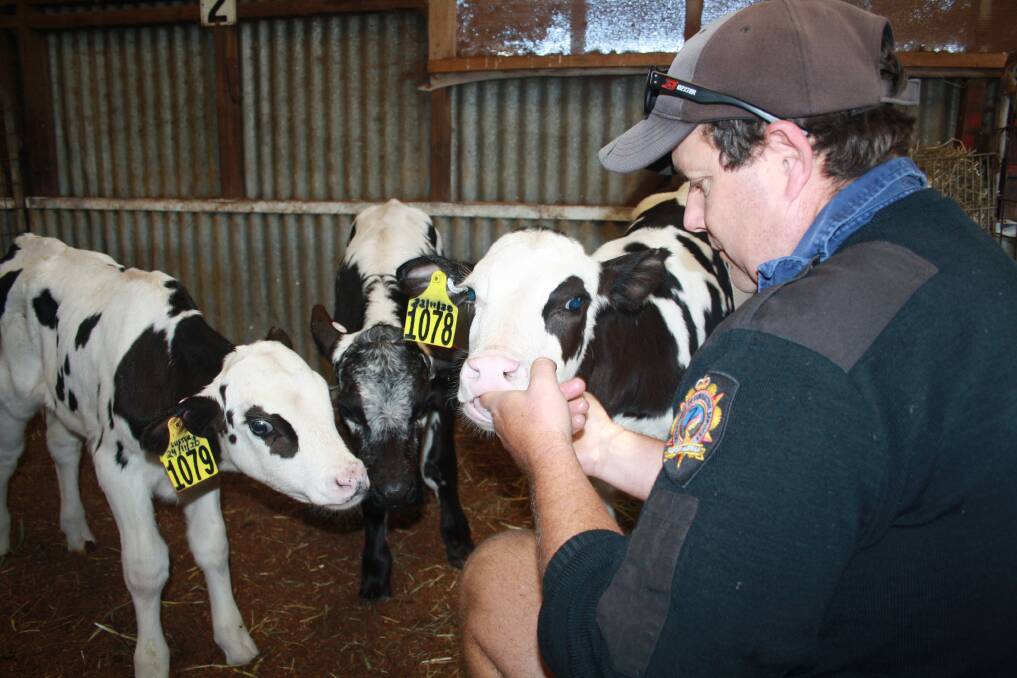
The prison farm’s dairy enterprise, including its breeding program using selected poll bull semen, is overseen by experienced dairy farmer Wayne, pictured with weaner calves. The dairy enterprise produces, pasteurises and packages fresh milk daily for the State’s 17 custodial institutions.

A PARTICULARLY high and secure fence runs beside the cow judged this year’s best Western Australian two-year-old Holstein.

The high security fencing is not there to protect the cow, rather to keep her carers in.

Karnet Mirand 978 is queen of the well-bred and highly productive Karnet Prison Farm dairy herd.

She was recently judged the State winner of the 20th annual Semex-Holstein Australia Onfarm Competition, the largest dairy livestock judging contest in the southern hemisphere which attracts more than 2500 entries nationally.

Karnet Mirand 978 beat 45 entries from 22 farms in the WA section of the competition, which made a return after being cancelled last year due to COVID-19.

It was open to all cows registered or eligible for registration in the Holstein Australia herdbook or appendix and entrants were assessed onfarm, without grooming, on inherent structural correctness using a linear score sheet.

Karnet Prison Farm superintendent Ray Edge said to win the Semex-Holstein Australia Onfarm Competition ahead of the best breeders in the State was a “huge honour” for the prison farm

“Many people would be surprised to know the farm has been running a world-class AI (artificial insemination) program for 10 years, led by our dairy officer Wayne (his surname is not used for security reasons but he is an experienced dairy farmer),” Mr Edge said.

“The quality of the calves, after generations of artificial breeding, is getting better and better.

“There are more than 430 dairy cows on the farm and this years’ calves have been the best.

“Wayne has a strong background in genetics and pays close attention to what’s happening in the field of AI across the world, sourcing highly prized semen from the United States, Canada, Europe and Australia.”

When Karnet Mirand 978 was born, her American-bred, Australian-born, sire Coomboona Zipit Mirand, was the top type polled bull in the world and the prison farm was one of the first two dairies globally to use him.

The competition win capped off a very successful year for the prison farm’s dairy enterprise which produced a record volume of about 2.1 million litres of milk, with average milking rates jumping 10 per cent – a tangible benefit of herd improvement through the AI breeding program.

Karnet Prison Farm's Karnet Mirand 978 beat 45 entries from 22 dairy farms for the title of Western Australia's best two-year-old Holstein cow in the Semex-Holstein Australia Onfarm Competition.

Karnet Prison Farm’s Karnet Mirand 978 beat 45 entries from 22 dairy farms for the title of Western Australia’s best two-year-old Holstein cow in the Semex-Holstein Australia Onfarm Competition.

As a minimum-security facility for male offenders which runs a variety of training programs to facilitate their return to the community after release, Karnet Prison Farm is set on 405 hectares near Serpentine.

It supplies packaged fresh milk daily for the 17 custodial facilities around the State.

Any excess milk is sold to a Byford cheesemaker.

Prisoners who have been risk assessed and approved to work outside of the main fence are employed in dairy, meat, poultry and horticultural production on the farm.

The farm’s primary produce is valued at about $11 million a year – helping offset the cost of the prison system to the taxpayer – from about 375 arable hectares, with about 40ha irrigated over summer.

Apart from helping grow and manage pasture and conserved feed, approved prisoners milk the herd twice a day in a 12-a-side swing-over herringbone dairy set up with automatic cup removers.

The Justice Department is trialling DeLaval’s Evanza milking clusters – they feature rapid-change cartridges rather than traditional rubber liners and are claimed to shorten milking time and improve udder health – in the prison farm’s dairy with very good results so far.

Prisoners are also involved in calf rearing and herd management and pasteurising and packaging the milk.

A new flow pasteuriser was installed in 2018 and can process more than 1070 litres an hour – it heats the milk to more than 75 degrees and chills it instantly to below five degrees.

Currently being installed, a new soft pack machine capable of packaging 3500 litres per hour will supplement two machines which package about 600L/h – the dairy enterprise packages about 31,000L of milk a week.

Prisoners involved are taught food safety programs and HACCP (hazard analysis and critical control points), along with how to maintain quality control from packaging through to transport.

Prisoners who show an interest in the dairy enterprise can study for a Certificate ll in Rural Operations, longer-term prisoners can study for a Certificate III in Rural Operations.

A Justice Department spokesperson said at least 15 former prisoners have been able to gain employment at WA dairies after release from Karnet Prison Farm.

Other former prisoners have also found employment in other agricultural industries, including poultry and egg production and broadacre farming operations, the spokesperson said.

Source: farmweekly.com.au

Netherlands announces €25bn plan to radically reduce livestock numbers

The Dutch government has unveiled a €25bn (£21bn) plan to radically reduce the number of livestock in the country as it struggles to contain an overload of animal manure.

A deal to buy out farmers to try to reduce levels of nitrogen pollution in the country had been mooted for some time, and was finally confirmed after the agreement of a new coalition government in the Netherlands earlier this week.

But the plan, the first of its kind in the world, faces a huge backlash from farmers who have staged big street protests in recent years over the prospect of tough regulation and farmer buyouts. They fear permanent damage to food production in the country if too many farmers are forced to quit.

“We don’t want the system to collapse,” said Utrecht dairy farmer Marije Klever, from the Dutch young farmers’ union. She said farmers would oppose any nonvoluntary measures.

“I am a land owner, so a critical question is whether the government are allowed to push farmers out of the land. It can’t be The Hague telling farmers they must go, you need an agreement.”

While being lauded internationally as the “tiny country that feeds the world” and the continent’s biggest meat exporter, the Netherlands has been struggling at home with a pollution crisis caused by an excess of farm animals.

“We can’t be the tiny country that feeds the world if we shit ourselves,” said MP Tjeerd de Groot, from the Democrats 66 party, which is part of the coalition government in the Netherlands.

The country has the highest density of livestock in Europe – more than four times that of the UK or France – with more than 100 million cattle, chickens and pigs in total.

The animals produce manure which, when mixed with urine, releases ammonia, a nitrogen compound. If it gets into lakes and streams via farm runoff, excessive nitrogen can damage sensitive natural habitats.

The highest Dutch administrative court found in 2019 that the government was breaking EU law by not doing enough to reduce excess nitrogen in vulnerable natural areas, due to farming and industrial activities.

The 13-year multibillion-euro plan, published today, includes paying some Dutch livestock farmers to relocate or exit the industry, and helping others transition to more extensive (as opposed to intensive) methods of farming, with fewer animals and a bigger area of land.

It will start as a voluntary programme, with compensation offered to livestock farmers asked to leave. “In the end, it might be necessary to stop negotiating as a last resort, but the basis is voluntary,” said de Groot.

Jaring Brunia
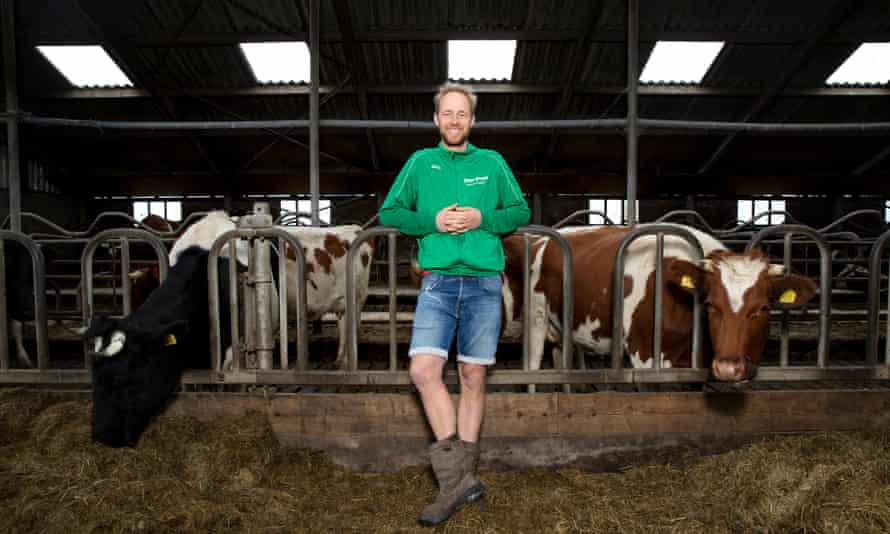
Jaring Brunia, a dairy farmer in northern Netherlands, expects to be able to continue unaffected as he runs a smaller dairy herd with a large area of land for grazing and disposing of manure. Photograph: Judith Jockel/The Guardian

The end result is expected to be close to a one-third reduction in the numbers of pigs, cows and chickens in the country.

“We don’t have to feed the world, but we could show how to do it in a more sustainable way,” said organic dairy farmer Jaring Brunia, from Friesland in the north of the country.

But farming groups said they would only accept voluntary measures and want time to reduce emissions through technological innovations.

“Cars were very polluting but they had a chance to make cars less polluting with innovation. That is what we want,” said MP Caroline van der Plas, founder of the Dutch farmers party BoerBurgerBeweging (BBB).

Erik Stegink
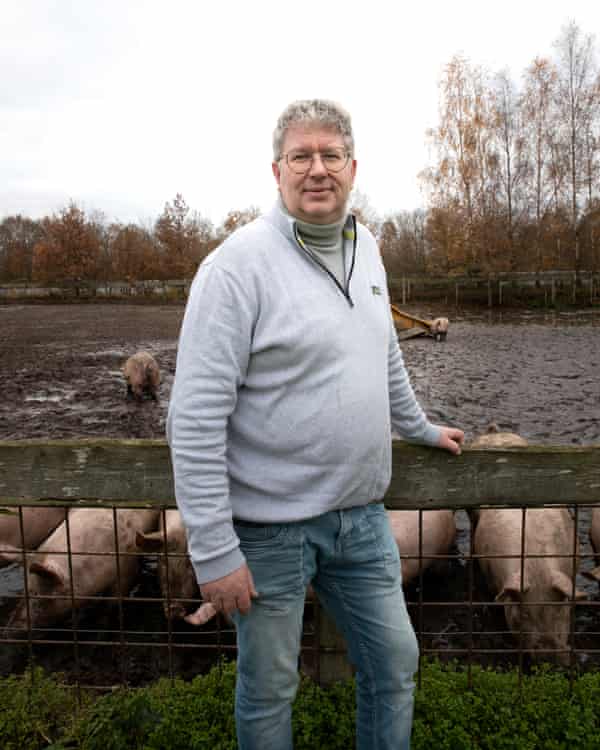
Erik Stegink runs outdoor and indoor pig farms in Bathmen, eastern Netherlands, and wants farmers to be allowed time to develop technological innovation to reduce pollution. Photograph: Judith Jockel/The Guardian

Support for her party in rural communities has soared since it was founded two years ago, as farmers told the Guardian they felt sidelined by politicians.

“For my son, where can he find a living and know what will be allowed in 10 years? We are known as the best farmers in the world for our innovation, but if you push us all away we will have less innovative power. We need some positivity,” said Erik Stegink, a pig farmer in Bathmen, in the east of the country.

“The problem does not go away when I go away, it goes to another country,” added dairy farmer Geertjan Kloosterboer, who said farmers were ready to protest on the streets again against the measures.

Some farmers appeared more resigned to the changes, saying there was no future for intensive farming in the densely populated Netherlands. “We farm in the back yards of the city and everything is watched,” said dairy farmer Heleen Lansink-Marissen, from Haaksbergen in eastern Netherlands.

“We can’t fight for the past. We need a plan for the future and how to make money through biodiversity, carbon offsetting and a little bit less milk,” she added.

De Groot, who has previously called for a halving of livestock numbers in the Netherlands, said the government had dithered for too long on dealing with the nitrogen crisis.

“The message now is that this needs to be fixed, no matter what,” he said. “We have to move away from the low-cost model of food production. This industry is causing damage to the farmers’ business model and the environment. It’s time to restore nature, climate and air, and in some areas that may mean there is no more place for intensive farmers there.”

Brunia said many farmers wanted to change, but were locked into intensive systems with a lot of animals and debts to pay. He urged the government to spend money on helping all farmers transition, rather than for just a few to quit.

“We are used to pumping around a lot of money, milk and poo, but what is good for economics is not good for the Earth,” said Brunia.

The Netherlands is not the only country in Europe facing a crisis over livestock emissions, with observers suggestingDenmark, Belgium and Germany may soon have to consider similar action.

The UK is reportedly on track to miss its own 2020 ammonia emissions reductions target by 20% and is likely to face legal challenges from environmental health campaigners.

“We have been very good at feeding the world,” said Derk Boswijk, a Christian Democrats party MP and spokesperson for agriculture. “We can be proud. But it didn’t work out for us, so we have to change. I hope other countries will learn from what we have done wrong.”

Source: theguardian.com

Holstein Association USA Provides National Judges Lists for 2022

Holstein Association USA is pleased to provide a list of certified judges that can be a resource for shows of all sizes around the country looking for a judge. Names and phone numbers are provided for everyone on the list, and those highlighted in blue have provided additional information including a photo, biography, and more about their judging experiences. Click on any highlighted name to link to additional information.

The list has two tiers — National and Qualified. All National Holstein Shows will be required to select their judges from the National list. Associate judges for National Shows must be selected from either the National or Qualified list. Nationally-sanctioned Junior Holstein Shows must select their judge from either the National or Qualified list.

The list also included judges that are approved by Holstein Association USA to serve as judges at nationally-sanctioned Junior Holstein Shows. All nationally-sanctioned Junior Holstein Shows must select their judge from either the National Judges List or the Holstein Association USA Qualified Judges List.

Holstein Association USA encourages state and regional Holstein show management to utilize the National Judges List and Qualified Judges List when selecting judges for their shows. With questions about the judges lists, please contact Jodi Hoynoski at 800.952.5200, ext. 4261 or via email.

Visit the list of judges on the Holstein Association USA website. 

Dozens of cows electrocuted at Michigan dairy farm

Fierce winds scoured Michigan on Thursday, knocking out power for more than 150,000 people, ripping a roof off a school and contributing to the electrocution of dozens of cows at a dairy farm.

Tim Butler was emotional as he described how his workers escaped after a power pole landed on the milking barn in Newaygo County.

“The parlor was full of dead cows. … It’s a miracle they got out,” Butler told WOOD.

Wind gusts exceeded 60 mph in western and northern Michigan. The roof at Edgewood Elementary School in Muskegon County was ripped off, though no students were present at the time.

Consumers Energy reported power outages across its western and northern service territory. The Ottawa County government complex in West Olive, which includes the sheriff’s office, county clerk and a court, lost electricity.

Traverse City canceled school for the day. Shelters were being set up in several communities.

Butler said at least 70 cows died at his farm. Dozens survived, but their injuries were being evaluated.

“A lot of them are hurt bad,” Butler said.

Upper Peninsula Power Co. said some customers would not have electricity through the night. High schools in the U.P. canceled some basketball games as rain turned to blowing snow. WLUC lost power for hours before it was restored.

Source: fox5ny.com

Müller targets carbon reduction from milk suppliers

The company expects milk suppliers to reduce emissions by 30%

Müller UK is targeting a 30% reduction in emissions from supplying farms by 2030. The company has identified three key changes that will help farmers reduce their environmental footprint. They are encouraging the replacement or reduction of soya feed in cattle diets, the use of more natural fertiliser, and increased reliance on genetics in farm management systems.

“We know that shoppers are thinking much more carefully about the choices they make, how and where it was made, the health benefits, the value it represents and how it is packaged,” said Jon Jenkins, chief executive officer at Müller Milk & Ingredients.

“With 96% of adults in Britain buying milk, the end-to-end process, from farm to fridge, impacts a lot of lives, and we recognise our responsibility to do the right thing throughout the supply chain,” he added.

Source: thedairysite.com

EU big meat and dairy under fire

EU big meat and dairy under fire

Agriculture and trade nonprofit warns of ‘greenwashing’

European Central Bank President Christine Lagarde (left) greets European Commission President Ursula von der Leyen with an elbow bump during a roundtable meeting at an EU summit in Brussels on Friday. European Union leaders have reached a deal to cut the bloc's greenhouse gas emissions by at least 55 percent by the end of the decade compared with 1990 levels, ahead of a UN Climate Ambition Summit on Saturday. Photo: AP
European Central Bank President Christine Lagarde (left) greets European Commission President Ursula von der Leyen with an elbow bump during a roundtable meeting at an EU summit in Brussels on Friday. European Union leaders have reached a deal to cut the bloc’s greenhouse gas emissions by at least 55 percent by the end of the decade compared with 1990 levels, ahead of a UN Climate Ambition Summit on Saturday. Photo: AP

Greenhouse gas emissions from Europe’s biggest meat and dairy firms continue to increase, according to a new report Monday, which found many firms are polluting “with impunity.”

The nonprofit Institute for Agriculture and Trade Policy (IATP) said many major companies had no climate plans or targets and even among those that do it raised concerns about “greenwashing,” calling on governments to step up regulation.

The study looked at 35 of the largest beef, pork, poultry and dairy companies headquartered in the EU, the UK and Switzerland, examining their possible climate plans and emissions from their supply chains, in particular livestock, a major emitter of greenhouse gases. 

According to the analysis, these companies were responsible for 7 percent of EU emissions in 2018, while the emissions of the top 20 exceed those of the Netherlands.  

“The climate footprint of Europe’s big meat and dairy companies rival the fossil fuel giants yet they continue to operate with impunity,” said IATP European Director Shefali Sharma.  

“The handful of companies that have climate plans rely on accounting tricks, greenwash, and dubious offsets to distract from the fundamental changes needed to cut emissions, while off-loading many of the costs and risks onto farmers in their supply chains.”

Seven out of the 10 companies that the report tracked over time saw their climate footprint grow between 2016 and 2018. 

The emissions of Irish beef producer ABP surged 45 percent and Germany’s Tonnies, which supplies Aldi, 30 percent.

In dairy, French firms Danone and Lactalis saw their emissions climb 15 percent and 30 percent respectively from 2015 to 2017, said the research. 

Of the 20 companies analyzed, only four report emissions from their entire supply chain, IATP said, even though livestock production accounts for the lion’s share of emissions.

The IATP was particularly critical of companies it said were looking to reduce the emissions per kilogram of meat or liter of milk – meaning their overall carbon footprint can grow if they expand production.  

Source: globaltimes.cn

Organic dairy farmers in Maine, Northeast offered new assistance in wake of contract cancellations

The international food conglomerate that announced it was severing ties with northeastern dairy farms in August is now offering a transition plan that includes the option of extending dairy contracts for six additional months and additional financial support for affected farmers.

But four months after they initially received word that Horizon Organic and Danone North America would not extend contracts beyond August 2022 with organic dairy farmers in Maine, Vermont and New York, those farmers still don’t have a clear vision of what lies ahead. There are 14 Maine organic dairy farms affected, most located in the central and midcoast regions.

Joseph Roseberry is one of them.

Roseberry, who was among the early adopters of organic practices at his Richmond farm, said Wednesday that he does not have a lot of options.

“There’s not much change,” he said. “We’re still going at it.”

In October, the New Hampshire-based Stonyfield Organic announced it would invite a number of the affected farms into its direct supply program in the near future while acknowledging that it is a challenging time for the organic dairy market to absorb more producers.

The problem, Roseberry said, is that markets for the additional milk they would be taking on have to be developed.

The offer by Danone North America falls short of what Gov. Janet Mills and state officials had asked for in the wake of the August announcement.

“This is a modest but welcome development in a still very difficult situation for the families of our impacted dairy farms who are worried about their future,” Mills said in statement released Wednesday.

“While I appreciate the extended support of our hardworking dairy farmers,” Mills said, “I know there are still many challenges ahead as a result of Danone’s decision not to renew its contracts.”

Aside from the contract woes, Roseberry said his problem is finding help. He’s 76 years old and starting to slow down, and his brother, age 70, has Parkinson’s disease, which makes working difficult.

“There’s no one else to do the work, so we’re wondering just how much longer we’ll keep doing this,” he said.

Joe Roseberry collects the mail Wednesday at his Richmond farmhouse, surrounded by 300 acres of pasture. He said he is uncertain what the future holds for his organic dairy farm in Richmond after his milk buyer, Danone North America, dropped him and 13 other organic farmers in Maine. Andy Molloy/Kennebec Journal

They’re looking for someone who would be willing to work into the farm and take it over, but with the market the way it is now, it’s not very promising.

The Roseberrys were in the first group of farmers in the late 1990s to convert to organic practices, which were close to what he had learned growing up on his parents’ farm in Massachusetts. What attracted them was the chance to make a decent living and the lifestyle of organic farming.

“We were never interested in getting big or bigger,” he said. “This gave us an opportunity to make a better living with the decent pay price.”

Conventional milk is shipped at the farmers’ expense to processors in Maine, but organic milk is shipped at the buyers’ expense to processors. Because no organic processors currently exist in Maine, it is shipped out of state.

In the case of the Horizon Organic contracts, Maine’s organic milk is shipped either to Buffalo, New York, or a plant in Virginia. With the proliferation of organic dairy operations closer to existing processing plants, operators like Horizon Organic can cut some expenses by securing contracts with nearby farms.

Despite the years Roseberry has spent developing and improving his herd, its value is dropping because of the milk supply. The cows aren’t as valuable as they would have been a decade ago, he said.

Joe Roseberry said Wednesday he is uncertain what the future holds for his organic dairy farm in Richmond after his milk buyer, Danone North America, recently dropped him and 13 other organic operations in Maine. Danone North America has proposed a “transition plan” for the displaced organic dairies that Gov. Janet Mills describes as “a modest but welcome development.” Andy Molloy/Kennebec Journal

His most valuable asset is the 300-acre farm that sits in the north end of Richmond not far from Interstate 295. There’s plenty of interest in developing his farm into house lots, but he’s not interested in that. Instead, he is talking to the Maine Farmland Trust about preserving the farm and coming up with different means of supporting the farm.

“There’s a lot more said than done,” he said.

Danone North America’s four-point plan, announced Monday, was detailed in a letter to state officials and dairy farmers. The plan would:

• provide the affected farmers the option to extend their current contract by six additional months, concluding at the end of February 2023

• provide a “transition payment” to the affected farmers for their milk during the last six months of their agreement

• provide access to farm financial consultants specializing in providing support for the agriculture community at no cost to the farmers

• offer to work with stakeholders, including state and federal government agencies, to explore investment solutions such as a co-op to address the hauling and transportation challenges or low- to zero-interest loans

In the letter, Chris Adamo, vice president for Government Relations, Policy & Partnerships for Danone North America, said the plan was designed to ease the impact of the transition.

The plan is “motivated by a genuine desire to create a greater window of opportunity for the farms, industry and governments to address the systemic challenges facing organic dairy in the Northeast,” Adamo wrote.

The Mills administration had asked in September that Danone North America commit to premium payments to farmers in the final year of their contracts as well as for the most recent contracts where premiums may not have been paid; donate money to the Northeast Dairy Innovation Center to support transition and business planning and investment; and make a substantial contribution to the company in Maine that will fundraise to set up in-state organic dairy processing.

In October, the Maine Organic Farmers and Gardeners Association, along with eight other organizations representing organic farmers and consumers across the Northeast, also sought a series of concessions on behalf of the organic dairy farmers affected. They asked for extensions on contract termination dates, severance packages or contract retirement package bonuses to compensate farmers for the investments they made that helped to build the Horizon Organic brand.

But they also wanted Danone North America to acknowledge its obligations as a certified B corporation, a designation that requires companies to meet social sustainability and environmental performance standards.

Roseberry said he would be willing to talk to the farm financial consultants offered by Danone North America and others.

“I’d want to talk to some people to go over different ideas and see how possible they are,” he said. “It would be nice to find someone who wants to work into this farm, but finding that person is pretty difficult at this point.”

Source: centralmaine.com

South Korean dairy giant apologises for controversial advert depicting women as cows


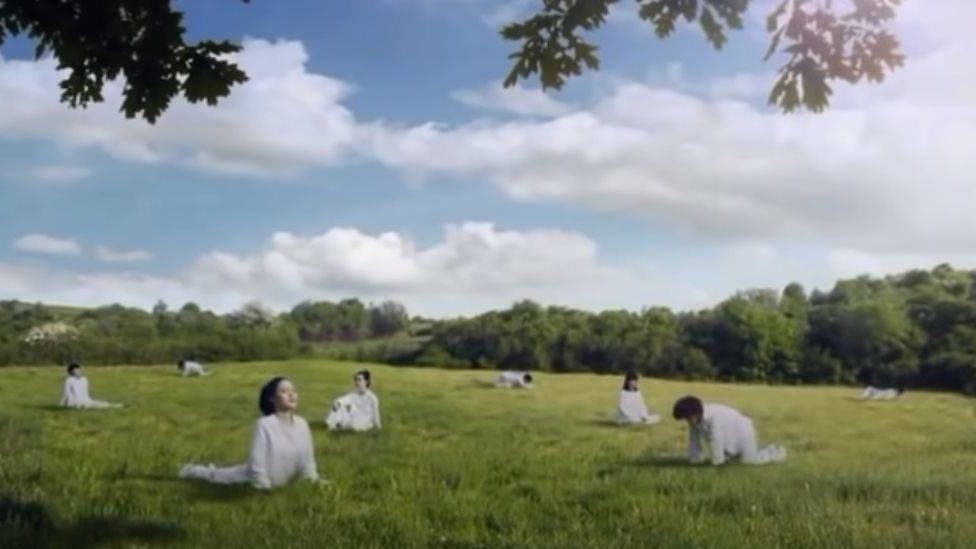
Seoul Milk deleted the video it recently posted on YouTube after it became controversialImage source, Seoul Milk
Image caption,A screenshot from Seoul Milk’s controversial advert

South Korea’s biggest dairy brand has been forced to apologise over an advert depicting women as cows.

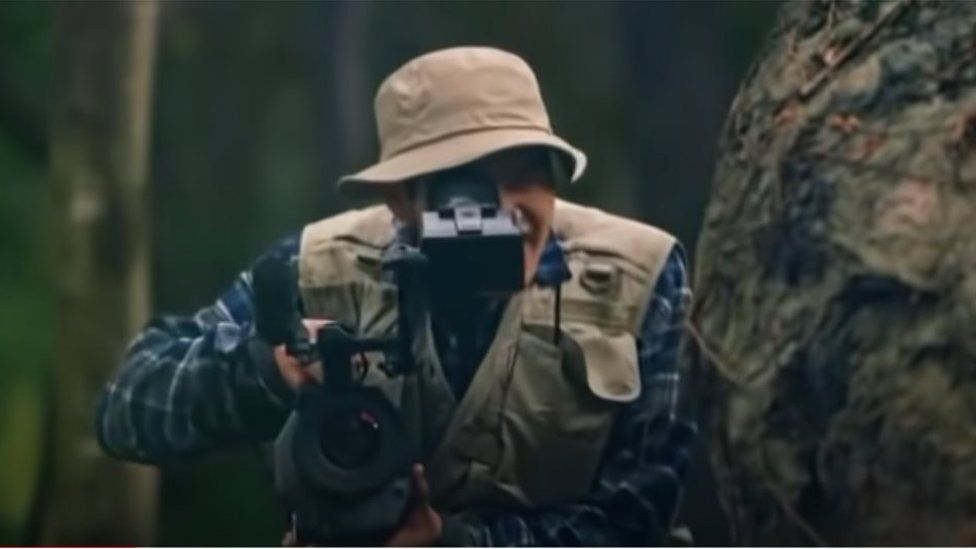
The video by Seoul Milk shows a man secretly filming a group of women in a field, who later turn into cows.

After facing a public backlash, the company removed the promo from YouTube, but it has since gone viral after being re-uploaded by internet users.

Some also compared the man’s behaviour to “molka”, the illegal practice of secretly filming people.

“We sincerely apologise to everyone who felt uncomfortable with the milk commercial released on 29th last month,” Seoul Milk’s parent company Seoul Dairy Cooperative said in an apology posted online.

“We are accepting this matter seriously and will conduct an internal review, and take extra care to prevent similar incidents from occurring in the future. We bow our heads in apology,” it added.

The clip starts with a man with a camera wandering through the countryside.

“We finally managed to capture them on camera in a place of pristine cleanliness,” a male voice-over says.

This is then followed by the man, hidden in bushes, filming a group of women drinking from a stream and doing yoga.

When the man accidentally steps on a twig it startles the women who suddenly turn into cows.

The advert ends with the words “Clean water, organic feed, 100% pure Seoul Milk. Organic milk from an organic ranch in the pleasant nature of Cheongyang.”

 
Figure caption,Warning: Third party content may contain adverts

The advert has sparked a national debate over sexism and gender sensitivity issues but the criticism was not confined to women being depicted as cows.

Some also voiced concerns about the man surreptitiously filming the group of women, with spy cam crimes in South Korea having risen over the past few years.

Molka, which literally translates to “secret camera”, has become a particular problem for women in South Korea.

A scene from an advertisement for Seoul Milk. The 52-second video begins as a male explorer with a camera wanders through the mountains.Image source, Seoul Milk
Image caption,A screenshot from Seoul Milk’s controversial advert

This isn’t the first time Seoul Milk has made headlines for the wrong reasons.

In 2003, the company staged a performance in which nude models sprayed yoghurt at each other.

The head of Seoul Milk’s marketing department and the models that took part in the event were fined for obscenity.

Source: bbc.com

CoBank’s 2022 Outlook: Lean supplies, strong demand bolster prices despite export unknowns

Incredibly strong US consumer demand for meat products negated fears this year that a higher feed cost environment would limit processor margins, writes Brian Earnest, livestock analyst with CoBank.

The story for 2022 is consumer-level meat inflation. The Bureau of Labor and Statistics’ CPI for all meats, poultry, fish, and eggs hit an all-time high in October, up 12% YoY. As restaurant menus and grocery prices adjust, consumer-level meat inflation is likely to continue well into the new year.

While higher retail prices could limit consumption growth, tighter cattle supplies, ongoing broiler breeder issues, and sow herd reductions should support favorable processor margins through at least the first half of 2022. The supply outlook implies that per capita U.S. meat consumption likely peaked at 225 pounds annually in 2020 and will edge lower through at least 2023.

The early 2021 tailwind of record profitability for beef packers would typically bring significant slaughter capacity expansion, but this is not the case. Low farm-level cattle prices from 2019 through mid-2021, combined with the extreme drought in the Western U.S., have set the stage for lower feeder cattle supplies for at least the next 2-3 years. Expect the major packers and smaller independents to fiercely battle for fed cattle supplies, which in turn, will raise cattle prices and moderate packer margins.

Wage rates and overall labor costs are expected to remain firmly higher in 2022 as the industry seeks solutions to reduced labor availability. Automation capital expenditures at the plant level will continue in earnest despite the rapidly rising costs of machinery and equipment. Most processors view this as a necessary cost of doing business moving forward. The U.S. broiler sector, which has been highly successful in expanding capacity in recent years, is probably best suited to benefit from expanding automation.

The U.S. pork sector faces a challenge in managing hog production and product supplies to accommodate the upcoming implementation of California’s ballot measure, Prop 12. It mandates that pork sold in the state must be raised under compliant sow housing standards. Estimates suggest that only about 4% of sow operations were compliant through mid-2021, but California currently consumes 14% of all U.S. pork production. With the industry having exhausted most of its legal options, it appears that Prop 12 will indeed become law, with the full impact expected in the second quarter of 2022. Expect much higher pork prices in California, at least until the appropriate supply chains are developed.

U.S. meat exports have been growing steadily since 2016, but as the Phase One trade agreement with China sunsets in 2021, it is unclear if the U.S. will remain a primary source for China’s protein needs. China has rapidly rebuilt its domestic hog supplies after the African Swine Fever outbreak of 2018-19, and domestic hog and pork prices have dropped sharply in recent months, corresponding with notable declines in pork and poultry shipments. Although beef exports have been robust during the second half of 2021, the collective U.S. protein opportunity in China may have already peaked. Ongoing port delays and container shortages are likely partially to blame, but those will persist throughout 2022. Mexico will remain a top destination for pork and poultry exports in 2022, but it is unlikely that it would be able to absorb the entire deficit from reduced opportunities in China.

To read CoBank’s full report, click here.

Nine calves killed in barn fire at Richlands Dairy Farm

A 20-stall barn housing baby cows in Dinwiddie County was decimated by a fire tonight.

Fire crews from Blackstone and Dinwiddie responded to the Richlands Dairy Farm around 8:25 p.m. Firefighters used 5,000 gallons of water including some water from a nearby pond to put out the fire.

The family who owns the barn tells 8News that there were nine calves that were killed in the fire.

According to Blackstone Fire, the fire was contained to one barn. They do not know the cause of the fire yet.

Source: wric.com

Lactanet Opens Doors to Shared Space with Alberta Milk

Lactanet and Alberta Milk are pleased to celebrate the opening of the Lactanet central milk testing lab located in the Alberta Milk building. This transition will enhance collaboration and add greater value to the dairy industry through a mutual dedication to serving Alberta dairy farmers.

“We are thrilled to have the Lactanet team now processing milk quality samples in their new space,” says Freda Molenkamp-Oudman, general manager of Alberta Milk. “Having Lactanet in close proximity to the Alberta Milk office will support enhanced communication and also offer enhanced flexibility in the services that the lab may be able to provide in the future.”

In addition to providing milk quality, payment, and DHI analysis services, the new lab is also equipped to provide calibration and reference sample services for the dairy processing industry.

“This is a state of the art, ISO accredited facility” says Lactanet CEO Neil Petreny ​says. “We’re excited to be part of the long-term success of the dairy industry.”

“Milk quality is a top priority for the Alberta Milk Board, so this relationship is one that makes sense for Alberta,” says Alberta Milk Chair Stuart Boeve. “I look forward to exploring the growth of this relationship and identifying how we can both better serve our producers.”

The lab will continue to be a completely independent, fully certified facility. The workspace is located at 1303 91 St SW in Edmonton, Alberta.


Jerry Rappaport Obituary

Jerry Rappaport passed away on December 6 at the age of 94. The following article is from the Nantucket Current.
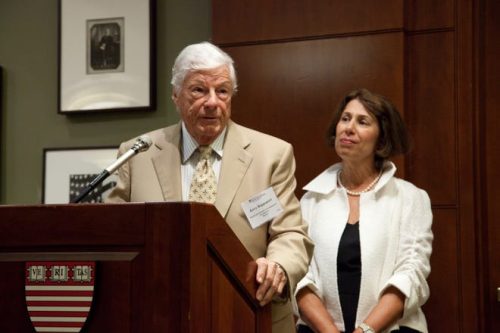
The city of Boston lost one of its most devoted stewards in the early hours of December 6, 2021 when Jerome “Jerry” Lyle Rappaport passed away peacefully at the age of 94 in the loving company of his wife of 41 years, Phyllis. A Harvard-educated lawyer, pioneer developer and visionary philanthropist, Rappaport was a longtime Nantucket homeowner who transformed prestigious institutions, historic political reforms and entire city blocks in Greater Boston that still bear his fingerprints.

Committed to a myriad of philanthropic causes, he and his wife Phyllis championed breakthrough medical research, enriched academic and cultural arts institutions, and empowered generations of emerging leaders. The father of ten children, grandfather of sixteen, and great grandfather of thirteen, Rappaport achieved a lot during his nine decades of life while remaining ever committed to his family.
Born in the Bronx on August 17, 1927, Rappaport was the proud son of Romanian Jewish immigrants who had carved out their own piece of the American Dream by opening a successful retail store where young Jerry learned the meaning of hard work. Despite being a child of soaring intellect, Rappaport was a troublemaker in elementary school until a teacher discovered that he simply needed his energy channeled into more challenging subject matter. She turned him on to studying Latin America and by the fourth grade he was the foremost expert on the topic in the Bronx public school system. By the sixth grade, after his father moved the family to Manhattan, Rappaport actually delivered lectures on Latin America to the rest of the student body at the behest of his teachers. Outside of the classroom, the eleven-year-old competed in Kid Wizards, a New York City-wide radio show where he dominated questions on science, history and geography.

Rappaport proceeded to hopscotch through high school, skipping grades until the age of sixteen when he was accepted into an experimental joint program at Harvard College that allowed him to pursue his undergrad studies and law degree concurrently beginning in 1944. Despite being one of the youngest students at Harvard Law, Rappaport created the Harvard Law School Forum to host prominent speakers who would expose law students to real-world issues. The Harvard Law School Forum was broadcasted statewide over the radio and became the longest running law school speaker series in the country, featuring figures such as John F. Kennedy, Fidel Castro and Martin Luther King Jr. over the years.

Graduating Harvard Law at the age of twenty-one, Rappaport was enlisted by Boston mayoral hopeful John Hynes to help run his campaign against James Michael Curley, the hugely controversial four-term mayor whom Hynes had briefly replaced while he was serving a jail sentence for mail fraud. Rappaport succeeded in galvanizing the youth vote behind Hynes and helped secure his triumphant victory. After the election, Rappaport became one of Hynes’ chief assistants in the mayor’s office and was appointed to a three-man committee tasked with reorganizing and restructuring city government. Central to that mission was the creation of a planning department that developed a master plan of the city.

Working outside of the mayor’s office, Rappaport turned to the army of young people he organized behind Hynes to form the New Boston Committee, a broad-based citizens organization that represented all twenty-two wards in Greater Boston. The New Boston Committee became a mighty political force that helped elect five out of the nine city council members and four out of the five school committee seats in 1951. At just twenty-four years old, Rappaport had effectively altered the face of city government. This did not go unnoticed. A year after John F. Kennedy was awarded the prize, Rappaport was named Massachusetts’ Most Outstanding Young Leader.

After three years, Rappaport left city government and started his own law firm that literally brought Boston to new heights by achieving the first height variations in the city, giving rise to new fifteen-story towers in historic neighborhoods like the Back Bay. Yet, his most history-making development came with Boston’s West End. Over the course of decades, he and his partners completed arguably the most ambitious development project in Massachusetts history known as Charles River Park, which revitalized the city by luring thousands of people and jobs back from the suburbs.

Beyond Charles River Park, Rappaport’s most far-reaching achievements came in the forms of philanthropy. With the help of his wife Phyllis, whom he wed in 1980, Rappaport began his philanthropic endeavors by establishing a modest $100,000 grant at Harvard Medical School to support graduates pursuing Alzheimer’s research. Inspired by his mother who perished at the hands of the disease, the grant became the seed of a multi-decade campaign now rooted in the Cure Alzheimer’s Fund, which Phyllis and Jerry co-founded with two other families. Cure Alzheimer’s Fund has awarded more than $130 million in research grants since 2004.

In the early 1980s, Rappaport endowed Harvard’s Kennedy School of Government to set up a fellowship designed for elected city and state officials from the city of Boston to attend a master’s program. The Rappaport Boston Urban Fellowship reflected Rappaport’s longtime mission of connecting academics with politicians, believing that both parties had much to learn from one another. With such notable participants as Massachusetts Congressman Stephen Lynch and Sheriff Peter Koutoujian, the fellowship has been in existence for thirty-five years and has improved the relationship between Harvard and the city governments of Boston and Cambridge.

In 1997, he and Phyllis established the Phyllis and Jerome Lyle Rappaport Foundation, which was designed to promote emerging leaders in public policy, science and the arts. Through the Rappaport Institute at the Kennedy School of Government and the Rappaport Center for Law and Public Policy at Boston College Law School, they’ve supported more than 550 public policy fellows who have gone on to make tremendous impacts while holding prestigious positions in government. The most noteworthy example of late is the newly elected Boston Mayor Michelle Wu who is a Rappaport Center Law and Public Policy Fellow alumna.

The Rappaports’ partnerships with Massachusetts General Hospital, McLean Hospital and Brigham and Women’s Hospital have empowered more than seventy research fellows in addressing some of the most confounding afflictions to mental health. Last summer, McLean Hospital announced the Phyllis and Jerome Lyle Rappaport Center of Excellence in Basic Neuroscience Research, which represented a doubling down on their decades-long support of emerging researchers who are seeking cures for schizophrenia, bipolar disorder, depression and other mental illnesses.

In 2000, the Rappaports established one of the country’s most significant contemporary art prizes. Encouraged by his daughter Jill Glist, Rappaport partnered with the deCordova Sculpture and Park Museum in their hometown of Lincoln, Massachusetts to create the Rappaport Prize, which bestows transformative awards on contemporary artists who are connected with New England. In 2010, the Rappaport Foundation funded the prize into perpetuity. Most recently, the Rappaports have expanded their impact in the cultural arts by providing grants to the country’s most promising young composers.

Rappaport pursued his personal passions with the same vigor as his professional ones. As a gentleman farmer, he spent four decades breeding award-winning dairy cows, including a prized Holstein named Mist that sold at auction for a record-setting $1.3 million. An avid golfer, he played the game till the very end of his life, and forever savored the memory of winning the Nor’easter Golf Tournament on the challenging fairways of Nantucket Golf Club alongside his son Jerry Jr. at the age of 88. Above all, Rappaport cherished the four decades he spent with his wife Phyllis, traveling around the world, supporting each other’s ambitions, and spending time with their children, grandchildren, and great-grandchildren in their homes in Stuart, Florida, Lincoln, and Nantucket.

Accompanying Phyllis, Jerry Rappaport is survived by their children Martha Meyers and husband William Meyers; Amy Arambula and husband Juan Arambula; Margaret Joy Weaver; Jim Rappaport and wife Cecelia Rappaport; Jerry Rappaport, Jr. and wife Lori Rappaport; Nancy Rappaport and husband Colin Flavin; Elizabeth Jackson Rappaport; Sara Scott Rappaport; Jill Rapaport Glist and husband Adam Glist; Jonathan Rapaport and wife Sarah Rapaport; and Andrew Sears.


Source: New England States Holstein Association

Derbyshire Farmer Presented with Holstein UK Lifetime Achievement Award

The Holstein UK Lifetime Achievement Award is presented by the Holstein UK Board of Trustees to recognise at least twenty years of dedication and service to the Holstein and/or British Friesian breeds. Awarded annually, the award is the ultimate accolade for an individual who has unassumingly provided outstanding service to the breed and made a remarkable contribution to the Society.

The Trustees are delighted to present the 2021 Lifetime Achievement to Bill Nadin of Sterndale Holsteins, based in Derbyshire. Having left school at 15 to work on his uncle’s dairy farm at Earlsterndale, Bill quickly acquired a passion for dairy cows and after a short period, he took on the farm tenancy. In 1969, Bill purchased his first pedigree cow for 39gns before grading his herd up to pedigree.

Bill has always been rewarded and respected for his attention to detail in animal husbandry, grassland management and the breeding of Holstein cows. In 1985, Bill was awarded the prestigious Dairy Farmer of the Year Award, coming out on top from over 100 entrants from across the UK and Ireland. Having won the regional round of the Premier Herd Competition in 2013, Bill went on to take the title of National Premier Herd Champion, recognising his herd for achieving the very best breeding status.

Bill has spent many years developing the Sterndale herd and made frequent trips to Canada and the United States to source new cow families, along with investing heavily in UK genetics. Over the years, Bill has had a number of reduction sales and in 2003, he achieved the highest price ever paid at auction for a cow in milk with Field of Dreams Formation Erle selling for 76,000gns. Bill always takes great satisfaction in seeing and hearing how these animals have developed in their new homes and he takes great delight at seeing animals that he’s bred doing well in the showring. One of the most notable animals owned by his partner Yasmin Bradbury was Peak Goldwyn Rhapsody EX97. Over her lifetime, the Goldwyn daughter produced 133,000kg milk and won eight national titles.

Having been an active member of Derbyshire Holstein Club for many years, Bill and Yasmin have always been willing to assist the Club with stock judging and herd visits, as well as encouraging and supporting the Club’s young breeders over the years. Through the triumph of the Sterndale calves, the Club have received great success at both local and national events, along with numerous All Britain nominations.

Despite a decline in health in recent years, Bill’s passion for the Holstein breed has never faded and at the National Holstein Show in 2018, Bill was recognised, along with Yasmin, by the Holstein UK Show & Sale Committee for making a significant difference to others through constant support and encouragement, resulting in him being presented with the highly acclaimed Howard Sneesby Award. In the same year, Bill was also awarded a Holstein UK Master Breeder Award for Sterndale’s impressive standard in both classification and production.

Michael Smale, Chairman of Holstein UK concludes; “It brings me great joy to congratulate Bill Nadin on this wonderful achievement. He spent many years building one of the UK’s most renowned herds and over his lifetime, he has contributed greatly to the Society and the Holstein breed. His passion, knowledge and dedication of the breed is outstanding and I look forward to the award being presented at the Holstein UK AGM in July 2022.”

Belarus to ban some Western food imports starting 1 January

The move is in retaliation to imposed sanctions

The Belarusian government said on Tuesday it would ban some food imports from Western countries starting next year to retaliate against the sanctions imposed against it, reported Reuters.

The ban, which will come into force on 1 January and last six months, covers beef, pork, some vegetables, dairy, fruit and nuts from the European Union, the United States, Canada, Britain, Norway and some other countries, the government said.

Belarus imported food products worth $530 million in the first 10 months of 2021, the Minsk government said. It did not specify what portion of these imports would be banned but said that it could expand the list of banned food imports in the event of additional Western sanctions.

The United States and its allies, including the EU, last week imposed sanctions against dozens of individuals and entities in Belarus to escalate punitive action against President Alexander Lukashenko and his government.

The European Union has accused Belarus of flying in thousands of migrants from the Middle East and pushing them to cross into the bloc in retaliation for EU sanctions imposed over Lukashenko’s crushing of protests against his disputed re-election last year. Belarus has denied the accusations. 

Source: Reuters

Dairy Farmers of America And Its Regional Dairy Brands Taking Action To Ensure Families In Need Have Milk

Starting this month, 17 regional dairy brands owned by Dairy Farmers of America (DFA) will help fill a real need at food pantries across the country with the donation of more than 2 million shelf-stable “Giving Cow™” milks.

Milk is one of the most requested yet least donated items at food banks. This is largely because the regional food pantries and shelters, which are served by food banks, often lack the necessary refrigeration to store fresh milk. In fact, according to Feeding America®, people who get assistance from food pantries typically receive the equivalent of less than one gallon of milk per person a year.

Giving Cow Milk Offers a Shelf-Stable Solution for Food Pantries
The single-serve, 8-ounce “Giving Cow” packs of ultra-high temperature (UHT) pasteurized milk have a shelf life of up to 12 months. Typically, fresh milk has a shelf life of approximately 20 days after processing. The Giving Cow milk packages are specifically designed for food pantries and kids backpack programs to fight hunger and will not be sold in stores.

“When we learned that millions of kids are missing out on nutrient-rich milk, which is a childhood essential, we knew that we had to try and be a part of the solution,” says Sharon Springborn, senior director of brand marketing at DFA Dairy Brands. “The Giving Cow packs provide valuable nutrition and are shelf-stable, so they don’t require cold storage, which we know can sometimes be limited at smaller food pantries and shelters.”

The DFA regional brands participating in The Giving Cow program include: Alta Dena® Dairy, Cass-Clay® Creamery, Country Fresh® Dairy, Garelick Farms®, Guida’s Dairy, Jilbert™ Dairy, Kemps®, Lehigh Valley Dairy Farms®, Mayfield Dairy Farms®, Meadow Gold® Dairy, Oak Farms® Dairy, PET® Dairy, Purity™ Dairy, Reiter™ Dairy, Swiss Premium™ Dairy, T.G. Lee® Dairy and Tuscan® Dairy Farms.

An Ongoing Commitment to Keep Pantries Stocked with Milk
Earlier this year, to help families struggling with hunger, DFA, along with its farm family-owners, donated 21 refrigerators to local food pantries across its seven regional Areas throughout the United States and the equivalent of more than 225,000 servings of milk.

To get more details about how The Giving Cow program is giving back in local communities, go to thegivingcow.com and click on one of the brand logos to go directly to the brand page, where you can sign up to receive updates on donations.

About Dairy Farmers of America 
Dairy Farmers of America (DFA) is a national, farmer-owned dairy cooperative focusing on quality, innovation and the future of family dairies. While supporting and serving more than 12,500 family farm-owners, DFA manufactures a variety of dairy products, including fluid milk, cheese, butter, ice cream, dairy ingredients and more that connect our Cooperative’s family farms to family tables with regional brands such as Alta Dena® Dairy, Meadow Gold® Dairy, Friendly®’s, Borden® Cheese, Plugrá® Premium Butter and Kemps® to name a few. On a global scale, we work with some of the world’s largest food companies to develop ingredients their customers are craving, while staying committed to social responsibility and ethical farming. For more information, please visit dfamilk.com.

SOURCE Dairy Farmers of America

French farms grow in size – census

Average size rose from 55 to 69 hectares

French farms have grown in size on average over the past decade, France’s farm ministry said Friday. They are, however, still far smaller than agricultural businesses in major rivals such as Canada and the United States, reported Reuters. 

According to a French agricultural census showed that the average size of French farms rose from 55 hectares in 2010 to 69 hectares in 2020 as land from about 100,000 farms that have closed was folded into rival businesses. The census is conducted once every 10 years. 

Debate has mounted in recent years over the pros and cons of industrial-scale farming in the European Union’s largest agricultural producer, particularly regarding animal welfare and the impact on the environment of ever-bigger cattle farms.

“The size is human scale and very, very, very far from what some people want to make us believe about a galloping industrialisation of our agriculture,” France’s Agriculture Minister Julien Denormandie told reporters at a presentation of the census results.

The census showed there were now 390,000 farms in France, down from 490,000 in 2010, but the overall amount of farmland remained constant at 26.7 million hectares, equivalent to half the country’s mainland territory.

The minister said French farms were now on a par in size with Germany but North American farms were still far bigger.

Canadian farms were 332 hectares on average in 2016, or five times the size of French farms, while the average size of US farms was 178 hectares as of 2017, the French ministry said.

Source: Reuters

Industry warns of problems facing B.C. dairy industry after heat wave, flooding

At the time, his property was dry and Baars said people driving by laughed at his pre-emptive measure.

That laughter soon turned into requests for help, with Baars saying he was fielding up to 100 calls an hour from farmers trying to save their livestock as water levels rose.

All but one of his cows survived the eventual flooding.

However, Baars said other farmers were already facing a tough future as many had little feed for their animals due to B.C.’s record-breaking heat waves in the summer.

That, combined with the flooding and inflation, has reduced profit margins, Baars said.

“Hay prices are high everywhere,” he said. “I kept thinking it was a bit of a bubble but between inflation, increased fertilizer and fuel prices and a lack of supply, there’s going to be a serious feed shortage.”

Baars said many in the dairy industry have a lot of debt and this past year has been tough on farmers.

“I could definitely see some people saying, ‘You know what, I’m equity rich and cash poor and this is a good time to get out of this racket,’” he said.

Agriculture Minister Lana Popham has said 628,000 chickens, 420 dairy cattle and roughly 12,000 hogs died in the Sumas Prairie after historic flooding left some properties two and a half metres under water.

More than 6,000 dairy cows were transported from affected farms to others safe from flooding.

Sarah Sache, vice-chair of the BC Dairy Association, said Baars’ concern is one her group is monitoring.

“It’s going to be a turning point for some farms if they continue in the industry,” she said.

It will likely depend on what stage of their career farmers are in to determine whether they continue, Sache said. 

Finding appropriate feed for livestock will also have a large impact on farmers’ livelihoods, she said.

She noted that farmers on the Sumas Prairie had low stores of feed and many of their supplies were damaged in the flooding.

“Sourcing feed of the quality those farmers would’ve provided and finding sources of that will be hard,” she said. “The feed issue is going to be a big challenge across the industry.”

Later Friday, B.C.’s agriculture minister and her federal counterpart are touring a poultry farm that was flooded and were expected to address recovery and rebuilding efforts.

Source: energeticcity.ca

BC milk processing company provides financial support for dairy farmers flood relief

Vitalus Nutrition Inc., an Abbotsford based company that processes raw milk into specialized dairy ingredients, has donated $100,000 to the BC Dairy Association Flood Relief Fund.

The money will go directly to help Fraser Valley dairy farmers rebuild after devastating floods damaged their properties, equipment and homes with significant loss of livestock.

Vitalus is also dedicating the annual fundraising efforts by its 104 employees during the Month of Giving to dairy farmers flood relief and matching employee contributions dollar for dollar. As well, the company is supporting employees who are volunteering their time to assist in the rebuilding effort.

“We have strong roots in the community and some of our own employees have been directly impacted by the catastrophic flooding and evacuations,” says Vitalus president and CEO Philip Vanderpol. “We want to support the dairy farmers who are our valued suppliers.”

Vanderpol says he was shocked and saddened when he toured the flooded Sumas Prairie region and visited farms. “It’s hard to imagine until you see the devastation. We are in business together. They rely on us to take their milk, we rely on them to provide a good quality product and we need to give them all our support now,” he says.

Vitalus has received numerous inquiries from its suppliers and customers wanting to help and they have been redirected to the BC Dairy Flood Relief Fund https://bcdairy.ca/bcfloodrecovery/ which has raised hundreds of thousands of dollars desperately needed for the cleanup and rebuilding effort.

“Everyone has come together to help in this extreme time of need. We hope our donations inspire our industry partners, vendors and customers to give as much as possible to support our dairy farmers as they work together to get back on their feet,” Philip Vanderpol says.

Source: financialpost.com

Connecterra and Lely Announce Strategic Partnership

Following the completion of a successful pilot, the two companies will deepen their collaboration and commercial relationship

Today Dutch-based startup, Connecterra, a world leader in using artificial intelligence to deliver insights to farmers, and Lely, the global leading supplier of robotics and management systems for dairy farming, announced the start of a robust co-development and commercial partnership. The announcement follows a pilot with Lely’s Digital Farming Group. The pilot program was designed to test an integration between Lely Horizon and Connecterra’s artificial intelligence platform, Ida.  

The successful effort has resulted in commitments to several strategic initiatives. As a first step in the agreement, Lely will now license Ida Enterprise for use in their farm management system Lely Horizon. 

“We believe that digitization of dairy farming is key and needs to be handled with care. Integrating with partners like Connecterra to develop a strong platform helps farmers to bring out the value in their data. The experience in the pilot with Connecterra’s people and technology left a strong impression on the team and involved customers. We are excited to expand our efforts with Connecterra,” said Freddie Ruijs, Head of Digital Farming at Lely

In addition to the internal rollout, Lely and Connecterra will begin a multi-year, co-development initiative. Teams from both companies will expand from the pilot learnings, with a shared goal of further enhancing the farmer and advisor experience.

“Connecterra’s mission is to empower farmers and advisors to improve productivity using Ida’s artificial intelligence. Our continued collaboration with partners like Lely will accelerate our mission and most importantly, deliver real results to real people,” said Nynke Slegten, Director of Product at Connecterra.  

Successful co-development efforts could lead to a joint launch of new features, as well as opportunities for more Lely customers to give permission to incorporate their data and access Ida’s platform.

“The industry is poised to rapidly evolve, and we are trailblazing across multiple dimensions with this partnership. Together we have incredible potential to bring cutting-edge, transformative insights to thousands of farmers around the world,” said Yasir Khokhar, CEO of Connecterra.  

Connecterra is on a mission to empower farmers to increase their productivity while reducing the impact of farming on the planet. The solution is Ida, the intelligent dairy assistant. Ida’s platform uses artificial intelligence to enable farmers, their advisors and other stakeholders to make better decisions that lead to a more efficient, productive and ultimately, sustainable dairy industry. The Amsterdam-based company has teams in New Zealand and the United States, a product presence in 18 countries and partnerships with industry leaders around the globe. 

 Lely, founded in 1948, directs all its efforts towards creating a sustainable, profitable and enjoyable future in farming. Circling the cow, the company develops premium robotics and data systems that increase animal welfare, flexibility and the production on the dairy farm.

For more than 25 years, Lely has been leading in the sale and service of automated milking systems to successive generations of dairy farmers across the globe. Every day, Lely inspires her employees to offer customers innovative solutions and be a reliable partner for long-term advice and support. With her Head office in The Netherlands and a worldwide network of dedicated Lely Center locations for tailor-made sales and support, the Lely Group is active in more than 45 countries and employs around 1.600 people. More information: www.lely.com

First sniffers measuring methane on dairy farms in the Netherlands

The first sniffer has been installed on a dairy farm in the Netherlands this week. It was a great moment for researcher Yvette de Haas. This farm is one of the 100 farms on which methane and CO2 concentrations will be recorded over the next two years.

“After a long period of preparation, we have finally started collecting data that will form the basis for developing a new breeding value for methane.”

In this research, which forms part of the public-private partnership (PPP) Climate Smart Cattle Breeding, researchers from Wageningen Livestock Research are working with CRV and FrieslandCampina to lower enteric methane emissions through breeding.

“We are all facing the major challenge of drastically having to reduce methane emissions,” Yvette de Haas says.

A range of measures has already been developed for this, mostly focussed on the relationship between nutrition and methane.

“Less is known about the relationship between breeding and methane,” De Haas points out. “And yet this could be a very interesting strategy,” she adds.

Previous research based on measurements at 15 farms has shown that there is an important genetic component to this.

“Our first analysis is showing heritability for methane emissions of around 20 percent,” De Haas notes. “This certainly offers potential for the future for reducing methane emissions via selective breeding.”

Measuring on 100 farms

Over the coming months we will be installing sniffers on 100 farms. To gain a good overall picture, it is important to obtain information from a large number of individual animals. By taking measurements at 100 farms we will obtain information on more than 10,000 cows. The pedigree and DNA of these Holstein cows are known via the genotypes. All measurements take place in the milking robot, which enables information to be collected on each cow individually during milking.

“In practice, this means that with three milkings per day, 365 days per year, we will obtain around 1,000 measurements per cow per year. We don’t take measurements from cows in her dry period,” De Haas adds. “Because we will be taking measurements over a long period of time on each farm, we will not only obtain very large amounts of data, but we will also get a picture of the differences caused by factors such as weather conditions or changes in rations over the seasons.”

For now, all the data is being collected on the participating farms and uploaded directly to a central cloud. De Haas: “We are currently working on developing an app. Participants will then be able to visualise their own measurements on the app and also share information with us. For example, they could report that they have started feeding a different ration or that they have put the cows out to pasture. This is valuable additional information for our research.”

Breeding value for methane

In the short term the research will mainly focus on collecting the right information. The next step will then be the analysis.

“I am glad that we have finally started now. We are bound to encounter the odd bump along the way to begin with, of course. But ultimately we expect to have enough data in two years’ time to be able to produce a reliable breeding value for methane,” De Haas concludes.

Source: thedairysite.com

USDA Opens 2022 Signup for Dairy Margin Coverage, Expands Program for Supplemental Production

As part of the Biden-Harris Administration’s ongoing efforts to support dairy farmers and rural communities, today the U.S. Department of Agriculture (USDA) opened signup for the Dairy Margin Coverage (DMC) program and expanded the program to allow dairy producers to better protect their operations by enrolling supplemental production. This signup period – which runs from Dec. 13, 2021 to Feb. 18, 2022 – enables producers to get coverage through this important safety-net program for another year as well as get additional assistance through the new Supplemental DMC.

Supplemental DMC will provide $580 million to better help small- and mid-sized dairy operations that have increased production over the years but were not able to enroll the additional production. Now, they will be able to retroactively receive payments for that supplemental production. Additionally, USDA’s Farm Service Agency (FSA) updated how feed costs are calculated, which will make the program more reflective of actual dairy producer expenses.

“Dairy Margin Coverage is a critical safety-net for producers, and catastrophic coverage is free. These DMC updates build on other efforts of the Biden-Harris Administration to improve DMC and other key USDA dairy programs,” Under Secretary for Farm Production and Conservation Robert Bonnie said. “We encourage dairy producers to make use of the support provided by enrolling in supplemental coverage and enroll in DMC for the 2022 program year.”

Supplemental DMC Enrollment

Eligible dairy operations with less than 5 million pounds of established production history may enroll supplemental pounds based upon a formula using 2019 actual milk marketings, which will result in additional payments. Producers will be required to provide FSA with their 2019 Milk Marketing Statement.

Supplemental DMC coverage is applicable to calendar years 2021, 2022 and 2023. Participating dairy operations with supplemental production may receive retroactive supplemental payments for 2021 in addition to payments based on their established production history.

Supplemental DMC will require a revision to a producer’s 2021 DMC contract and must occur before enrollment in DMC for the 2022 program year. Producers will be able to revise 2021 DMC contracts and then apply for 2022 DMC by contacting their local USDA Service Center.

DMC 2022 Enrollment

After making any revisions to 2021 DMC contracts for Supplemental DMC, producers can sign up for 2022 coverage. DMC provides eligible dairy producers with risk management coverage that pays producers when the difference between the price of milk and the cost of feed falls below a certain level. So far in 2021, DMC payments have triggered for January through October for more than $1.0 billion.

For DMC enrollment, producers must certify with FSA that the operation is commercially marketing milk, sign all required forms and pay the $100 administrative fee. The fee is waived for farmers who are considered limited resource, beginning, socially disadvantaged, or a military veteran. To determine the appropriate level of DMC coverage for a specific dairy operation, producers can use the online dairy decision tool.

Updates to Feed Costs

USDA is also changing the DMC feed cost formula to better reflect the actual cost dairy farmers pay for high-quality alfalfa hay. FSA will calculate payments using 100% premium alfalfa hay rather than 50%. The amended feed cost formula will make DMC payments more reflective of actual dairy producer expenses.

Additional Dairy Assistance

Today’s announcement is part of a broader package to help the dairy industry respond to the pandemic and other challenges. USDA is also amending Dairy Indemnity Payment Program (DIPP) regulations to add provisions for the indemnification of cows that are likely to be not marketable for longer durations, as a result, for example, of per- and polyfluoroalkyl substances. FSA also worked closely with USDA’s Natural Resources Conservation Service to target assistance through the Environmental Quality Incentives Program ) and other conservation programs to help producers safely dispose of and address resource concerns created by affected cows. Other recent dairy announcements include $350 million through the Pandemic Market Volatility Assistance Program and $400 million for the Dairy Donation Program.

Additional details on these changes to DMC and DIPP can be found in a rule that will be published soon in the Federal Register. This rule also included information on the new Oriental Fruit Fly Program as well as changes to FSA conservation programs. To view a copy of the rule, you may view the Dairy Margin Coverage rule (PDF, 537 KB).

More Information

To learn more or to participate in DMC or DIPP, producers should contact their local USDA Service Center. Service Center staff continue to work with agricultural producers via phone, email and other digital tools. Because of the pandemic, some USDA Service Centers are open to limited visitors. Producers should contact their Service Center to set up an in-person or phone appointment. Additionally, more information related to USDA’s response and relief for producers can be found at farmers.gov/coronavirus.

USDA touches the lives of all Americans each day in so many positive ways. In the Biden-Harris Administration, USDA is transforming America’s food system with a greater focus on more resilient local and regional food production, fairer markets for all producers, ensuring access to healthy and nutritious food in all communities, building new markets and streams of income for farmers and producers using climate smart food and forestry practices, making historic investments in infrastructure and clean energy capabilities in rural America, and committing to equity across the Department by removing systemic barriers and building a workforce more representative of America. To learn more, visit www.usda.gov.

Search Underway for World Dairy Expo’s Next General Manager

The World Dairy Expo® Board of Directors has begun the search for a new general manager after Scott Bentley announced he will be retiring after eight years of dedicated service to the organization.

“We are grateful for Scott’s commitment and leadership to World Dairy Expo and wish him the very best as he begins his retirement. At the same time, we are eager to hire a new general manager and continue planning for the 55th World Dairy Expo and beyond,” shared Bill Hageman, World Dairy Expo Board President.

Recruitment efforts are focused on hiring a passionate and highly motivated general manager to lead a professional, dedicated team and successfully produce the globe’s largest dairy event. World Dairy Expo showcases over 2,000 dairy cattle and features 700 participating companies in one of the 30 largest trade shows in the United States.

World Dairy Expo is a dynamic organization operating with an annual multi-million-dollar budget, ten staff members and support from hundreds of passionate volunteers, dedicated stakeholders, and engaged committee and Board members. The week-long event attracts 60,000 attendees and generates an approximate $25 million in direct spending for Madison, Wisconsin, and its surrounding communities.

During Bentley’s time as general manager, World Dairy Expo celebrated great successes including impressive growth to Expo’s Trade Show, Dairy Cattle Show and educational programming. Year after year, Expo continues to flourish, while having also withstood its first-ever show cancellation in 2020 due to the global pandemic.

Qualified individuals with excellent management and communication skills, and a passion for the future of the dairy industry are directed to World Dairy Expo’s website, worlddairyexpo.com, for the complete job description and all pertinent application details. Questions about the job position should be directed to WDE Board President Bill Hageman at (608) 279-0272. ­

Serving as the meeting place of the global dairy industry, World Dairy Expo brings together the latest in dairy innovation and the best cattle in North America. The dairy industry will return to Madison, Wisconsin for the 55th event, October 2 – 7, 2022, when the world’s largest dairy-focused trade show, dairy and forage seminars, a world-class dairy cattle show and more will be on display. Download the World Dairy Expo mobile event app, visit worlddairyexpo.com or follow WDE on Facebook, Twitter, Instagram, LinkedIn or YouTube for more information.

Dairy cattle on B.C. farm suffering from pneumonia after being stuck in floodwater


Their dairy cattle all survived the flooding on Sumas Prairie.

But now, there’s a new problem for some of the animals on the Doppenberg farm: Pneumonia.

“Some animals, especially the younger calves are having issue with pneumonia because they were in water a couple hours,” said dairy farmer James Doppenberg.

On Tuesday, a vet was at their farm, checking on the cattle.

“Its stressful, especially for the younger ones if they’ve been flooded and they’ve been standing in water for any amount of time. They’re more affected by things,” explained veterinarian John Dick.

When the first flooding hit the farm a couple weeks ago, the cold water came up fast.

“I would say it was up to (the calves’) necks,” said Laurie Doppenberg, who works with her husband and son James on the farm.

At one point, the Doppenbergs, desperate to get their calves somewhere safe, moved them into the basement of their home.

Then the house started flooding. They scrambled to get the calves to higher ground.

But some animals have since fallen sick with pneumonia. The vet said despite what they’ve been through, the animals are faring well.

For the Doppenbergs and others in the area, flooding has been a constant focus over the last two weeks.

There are many flooded and damaged roads on Sumas Prairie. Fields remain swallowed up by flood waters.

“I’m trying to be positive and hopeful because I sure do not want to move those animals again,” Laurie said. Thousands of animals were rescued from Sumas Prairie after the first flooding a couple weeks ago. Some farmers have since been able to move their herds back.

While farmers focus on what’s ahead, the community rallies behind them.

Gateway Community Church in Abbotsford has turned a space in their church into a donation centre.

“It is amazing. We are getting people phoning constantly about ‘What do you need? Where can we donate? How can we help?’” explained Milt Walker, who is in charge of food distribution at the church.

He said donations have come from throughout the Lower Mainland.

“We’ve probably had two or three tonnes of food come in” Walker said.

He said all the food being donated is being distributed. Volunteers are also delivering meals to those who need them.

With the water rising again in some parts of Abbotsford, the offers of support from the community are bringing hope to those who need it most.

Source: bc.ctvnews.ca

Flooding in Washington Brings Death and Devastation to Dairies


Cattle bellowed in fear, chest-deep in icy waters. An electronic grain-distribution system that feeds tens of thousands of farm animals across Washington State sat wet and useless. In the town of Lynden, the Lagerwey farm had turned into an island, shrinking by the minute against the ferocious rise of the Nooksack River.

The cattle weren’t the only ones scrambling to escape: About a third of the employees on the hardest-hit part of Doug Visser’s dairy operation in nearby Sumas saw their homes ruined or destroyed. The workers, at least, lived. Dozens of cattle across the valley perished.

Any disaster is a mixture of small things and large ones. But the floods of recent weeks in northwest Washington state, with rivers overflowing their banks after a month of record-setting rainfall, came at a deeply vulnerable moment, when the economics of the Covid era had already driven up costs, strained labor supplies and severed supply chains for everything from animal food to fuel to equipment and parts.

An environmental crisis collided with the worsening economic challenges, each disaster making the other worse.

“We were already kind of stumbling going into it,” said Scott McKnight, the owner of Conway Feed, a century-old feed farm company about an hour north of Seattle. “Production lines were behind. We were kind of maxed out on the hours we run. People were maxed out.”

Washington is the nation’s 10th-largest milk-producing state, with dairy products generating $1.2 billion a year. The kind of powerful atmospheric river storms that hit during October and November, scientists say, are becoming more intense as climate change delivers a greater share of precipitation as rain instead of snow.

Jordan Baumgardner, who runs 260 milk cows outside of Mount Vernon, said the sound of the flood still haunts him. He had gone to bed thinking that the animals were safe, penned in at the highest point on the farm, even as the Skagit River, which usually flows placidly by within sight of the farm, was reaching its crest that late November day.

But the cows, driven by instinct or panic, had done the absolute wrong thing during the night — they broke through the fence and headed downslope toward the milking shed, a place they had come to associate with shelter and food. The water was about five feet deep when Mr. Baumgardner and his brother got there around 5 a.m. The cows were packed in together, panicked and bellowing in the frigid water. He watched some give up, roll over and go down into the water to drown.

“The cows were just screaming at me. It was, it was just total chaos. And there was nothing to deaden the sound,” said Mr. Baumgardner, 31, a soft-spoken, second-generation herd manager.

On a recent morning, he stood in the muddy shed, hands thrust deeply into the pockets of his coveralls and fighting back tears. He described how he and his brother had pushed and screamed back, trying to get the animals to move out of the shed and up to higher ground before being forced to retreat to save themselves. Forty-four of his animals did not make it out.

Jason Hoekstra, the chief executive at EPL Feed, just south of the Canadian border in Sumas, said the scope of the disaster became clear to him during the night after the first river crest when the electronic system his plant depends on to measure out the precise feed formulas for each customer — unique to nearly every farm — went down. Three feet of water had surged into the electrical room.

EPL is one of the largest feed suppliers in the state, feeding animals on more than three-fourths of the farms west of the Cascade Range; the disaster was suddenly a threat to feed supplies as far as Chehalis, 200 miles south.

“The scary thing for me was really that we couldn’t get feed to the livestock. We’ve suddenly got a hundred thousand dairy cows up and down the Cascades that are suffering,” he said.

The electronics supplier he works with had none of the components needed to repair the system. Finally, one of his employees, working through the night, found a company in California that had exactly 10 of the components in stock. The plant needed all of them.

“I don’t care what it costs, get them on a plane,’’ Mr. Hoekstra said he told his staff.

Shuttled to a Seattle-bound Southwest Airlines flight, the parts arrived at 10 p.m. on the Friday before Thanksgiving, handed off by a delivery driver who had made it through the checkerboard of closed and flooded roads.

Economists and industry experts said the cost of the floods is hard to figure because it is still rising, even as the floodwaters recede, and the economic stresses have multiplied in several directions.

“It’s not just one factor, right?” said Lee Schulz, an associate professor of economics at Iowa State University. “We’re seeing feed prices 30 percent higher, we’re seeing certainly wages and labor costs are much higher. Fuel is much higher. You can really go across the board.”

Washington’s interim state veterinarian, Amber Itle, whose office is part of the State Department of Agriculture, grew up on a dairy farm. She said the trend toward consolidation and labor-saving technologies — smaller farms swallowed up by larger operations, greater dependency on robotics — has created majority potential choke points when one piece of a tightly wound system goes down.

“There’s a lot of benefits to consolidating and being big and being efficient and using technology, but there’s also weaknesses for food security,” Dr. Itle said.

But no one who has hitched their fortune and future to a herd of dairy cows has ever expected it to be an uneventful proposition.

“I think the guys that are in it now, they’re pretty much not doing it to make money,” said Mr. Visser, the farmer in Sumas. “They’re doing it because they love it.”

Mr. Lagerwey, whose family sold part of the farm to fund his father’s retirement from farming — dozens of homes now rising where the cows once trod — said the dairy operation represents tradition, more than anything else. “I pay the bills, and I have a little bit left over sometimes,” he said with a laugh.

Mr. McKnight at Conway Feed said his company, less affected by the floods than EPL, agreed to pick up some of EPL’s customers during the crisis to hold that company over, bridging the gap until repairs could be made, but his shop can’t really produce more than it does now.

The disruptions to feed supplies continue. Conway Feed has picked up some of EPL’s customers, but the smaller company cannot really continue to fill the orders on a long-term basis. And getting EPL’s operations back up and running has proved more complicated than the electronics shipment that arrived by air from California.

Truck drivers who normally could deliver a wheat product to the company from Canada in 90 minutes now must spend nine hours threading their way along the still-flooded roads. How long it will take to get parts to repair trucks and equipment damaged by the flood is anybody’s guess.

That’s on top of the supply chain problems that already were plaguing the industry, even before the latest flooding.

“Three or four years ago, I could get a bid on something and we could order parts and they’d be here in four to six weeks. Now if you can find somebody that gets you what you need, it might take four months,” Mr. Hoekstra said.

Animal illnesses from stress, food shortages or from hours standing in ice-cold water are likely to emerge in the coming weeks or months, Dr. Itle said. The stresses are not over, she warned farmers in a recent advisory — not for their animals, and not for them.

“Animal caretakers will often put aside their own essential needs (food, water and sleep) to care for their animals during an emergency,” she wrote. “You won’t be able to care for animals if you don’t take care of yourself first.”

Source: nytimes.com

Wisconsin dairy sector pleased by bill boost

The bill was unanimously approved by both houses of the legislature earlier this fall, following more than a year of compelling advocacy from WCMA members and extensive bipartisan collaboration.

Governor Evers first proposed the creation of a dairy exporting program in a 2020 special session call and included funding for an agricultural exports program in his 2021 budget proposal. Following Senator Ballweg and Representative Kurtz’s introduction of AB 314, both houses of the Wisconsin Legislature, as well as the powerful Joint Finance Committee, unanimously approved the bill.

Act 92 supports a new five-year initiative led by the Wisconsin Department of Agriculture, Trade and Consumer Protection (DATCP) to boost the export of dairy, meat, and other agricultural products by 25%. The bill specifies that $2.5m, or half the total funds appropriated, will be used to increase the export sales of milk, cheese, yogurt, whey, and other dairy products.

Dairy groups including the Wisconsin Cheese Makers Association (WCMA) and the Dairy Business Association (DBA) both applauded the move.

“This investment is a smart, necessary boost that will benefit not only our dairy industry, but the state’s entire economy,”​ said WCMA executive director John Umhoefer.

“We’re grateful for the leadership of Governor Evers, Wisconsin State Senator Joan Ballweg, and Wisconsin State Representative Tony Kurtz working in united purpose to make this legislation a reality.”

Among the coalition of groups and individuals directly involved in the bill’s passage were several WCMA members, including Chr. Hansen, Nasonville Dairy, Nelson-Jameson, and Specialty Cheese Company.

“As an experienced exporter, Chr. Hansen has seen first hand the critical role exports play in the growth and stability of our business. This investment will help ensure a stronger dairy industry in the future, in Wisconsin and the United States,”​ said Mike Neu, senior director of business development – cheese insights for the Milwaukee-based ingredient supplier.

“Exporting is an essential component to growing our business in the future. If we’re to keep pace with the productivity of our farmers and stabilize our industry, we must find new buyers abroad. This state support will help us build those connections,”​ added Kim Heiman, president of Nasonville Dairy.

“The Wisconsin Initiative on Agricultural Exports will help to support growth in Wisconsin’s dairy processing industry, providing greater opportunity throughout the supply chain and in our rural communities,”​ said Mat Bartkowiak, director of strategic partnerships for Nelson-Jameson, Inc., a supplier to the dairy and food industries.

“Thanks to this funding, cheesemakers will have access to more tools and assistance to help them navigate the challenging logistics of exporting. As they find success in new markets, we’ll see both short- and long-term benefits for dairy processors and farmers alike,”​ said Paul Scharfman, CEO of Specialty Cheese Company.

“The strength of Wisconsin’s dairy economy rests in large part on the opportunities we have to sell more of our high-quality products around the globe,”​ DBA president Amy Penterman, said.

“This investment will help us not only remain competitive in the global marketplace but be a leader. We congratulate the Legislature, governor and agency leaders for this accomplishment. It’s so encouraging to see the widespread energy and commitment. There were a lot of moving parts that needed to be aligned.

“DBA and our members pushed hard for the program, and we are confident this will be a win for farmers, processors and our rural communities.”

DATCP and WEDC will submit a specific plan for the program by December 31 to the Joint Finance Committee, with implementation expected early next year. At least 15% of the funds must be used for grants.

Wisconsin exported $3.37bn worth of agricultural and food products to 145 countries in 2020, according to DATCP.

Source: dairyreporter.com

Days of dollar milk are long gone as Australian supermarkets increase cheap milk prices further

The cost of cheap supermarket milk has now hit $1.30 per litre after Woolworths, Coles, and Aldi all lifted prices in the last week.

Key points:

  • Coles and Aldi join Woolworths in lifting price of its branded milk by 10 cents per litre
  • Norco CEO Michael Hampson says it is a decision for Coles whether the increase is passed on to the processor
  • Dairy advocacy body eastAUSmilk says supermarkets have an obligation to ensure part of price rise flows down the value chain

That means an extra 10 cents a litre consumers will now be forking out for homebrand two-litre and three-litre bottles.

It is the first increase by the retailers in more than two years after all three last increased prices by 10 cents in July 2019after ending dollar milk earlier that year in March.

The dairy industry has always rallied against cheap milk, which they argue has devalued its product since it was first introduced in 2011.

While consumers may happily pay the extra 10 cents to support struggling dairy farmers, there is no guarantee that they will get any of it.

Dairy cooperative Norco supplies Coles 60 million litres of milk, of the 226 million its farmers produce a year, for Coles branded milk.

Norco CEO Michael Hampson said the decision was entirely up to Coles whether it passes on any of the extra 10 cents.

“We’re certainly having a number of conversations with Coles in terms of where the 10 cents goes at the moment. We don’t have any indication that that’s going to form its way back to the farmgate milk price,” he said.

“There have been notifications previously that have come out recently from retailers saying that they’re adjusting their price based on previous price pressures, and that’s probably where we’d see that one landing.

He said in terms of pricing in the marketplace for farmgate, there had been flurry of activity at the start of the milk season, as everyone announced their prices on June 1 and adjusted those through June and July. 

“Certainly those items, I dare say, they have already made their way into the supply chain.”

Coles says it absorbed costs

Coles, which reported a $1.01 billion profit for 2020-21, will not confirm whether it will pass any of the 10-cent increase onto Norco and its suppliers.

“We have seen farmgate costs increase over the past two years, and Coles has previously absorbed these costs without impacting the retail price of Coles Brand milk,” a spokesperson said.

“We believe that Coles Brand milk still represents great value for customers.”

‘Obligation’ to pass on price rise

Dairy lobby group eastAUSmilk said supermarkets needed to ensure suppliers are given a fair share of any increase.

Shaughn Morgan, CEO of policy and advocacy, said supermarkets had a social licence and a responsibility at a corporate level to do so.

“I acknowledge that the increase in the price reflects the need to be reactive to issues around such a food staple,” he said.

“But if that price is to go up, then supermarkets do have an obligation to ensure that part of that increase should flow down the value chain to the processor who can then discuss further increases in the farmgate price with their supplier.”

Mr Morgan urged the retailers to consider passing on the 10 cents to the farmers who supply the commodity.

“If it’s just going to be maintained in consolidated revenue and for the benefit shareholder, of that particular supermarket chain, then it’s not going to be of any benefit to those who are more deeply affected by these price increases in input costs,” he said.

Aldi says price review is ongoing

While Aldi has confirmed it has lifted prices of its Farmdale Fresh Milk range, it has not confirmed if it would pass the 10 cents on.

“We remain focused on reviewing pricing for the whole dairy category on an ongoing basis,” a spokesperson said

“Ultimately, we always want to deliver the best value for our customers while maintaining fair pricing with our supplier partners.”

Source: abc.net.au

Top Dairy Industry News Stories from November 28th to December 3rd 2021


Top News Stories:

US wastes more than a third of its food

The nation is falling far short of its 2015 goal to half waste by 2030

According to a report from the US Environmental Protection Agency (EPA), more than one-third of food produced in the United States is thrown out.

Food waste represents billions of dollars in lost value and poses a climate threat because much of the waste is placed in landfills where it generates the greenhouse gas methane, reported Reuters.

“As the United States strives to meet the Paris Agreement targets to limit the increase in global temperature to 1.5 degrees above pre-industrial levels, changes to the food system are essential,” the EPA said in its report, published Dec. 1.

“Even if fossil fuel emissions were halted, current trends in the food system would prevent the achievement of this goal.”

Researchers estimate U.S. food loss to be in the range of 73 to 152 million metric tons per year, representing enough calories to feed more than 150 million people annually, or all the food insecure people in America nearly four times over.

In 2015, the U.S. Department of Agriculture and the EPA announced a joint goal to halve food waste by 2030 from a 2010 baseline, in part through partnership with the private sector and community organizations, but the nation has not yet made significant progress,” the report said.

The initiative has included working groups and conference presentations, but offered no specific mandates for the private sector.

In 2010, 31% of the food supply was wasted.

The federal government has so far underinvested in the issue, said Shannon Kenny, senior advisor on food loss and waste at EPA’s Office of Research and Development and a lead author on the report. “We’ve been operating on a shoestring.”

The government strategy to reduce food waste would likely rely on public awareness campaigns. Kenny said she hoped new investments under the infrastructure plan or Build Back Better Act could help.

Source: Reuters

Winona County (MN) rejects dairy farm expansion

Winona County officials have nixed a major mega-dairy expansion to nearly four times the county’s animal limit.

The five-member Winona County Board of Adjustment in southeastern Minnesota voted 2-2 Thursday on whether to deny the variance request, a tie vote that constitutes a denial. The chair of the board had recused himself because he had spoken out against the project prior to joining the board.

The vote is a major blow for Daley Farms of Lewiston. The family dairy operation in Winona County has fought for years to expand amid industry consolidation with fewer, larger farms. The dispute has wound through courts and embodies deep tensions in farm country over the growth of large-scale farming, with opponents saying the practices are too harmful to rural communities and the environment.

Ben Daley, who spoke at Thursday’s meeting, could not immediately be reached for comment. He told the board that dairy farmers compete in a global commodity market and that the variance would allow the milking operation “to continue for another generation.”

The Daleys had asked for a variance to expand to 5,968 animal units —about 3,901 dairy cows and 525 heifers — a total significantly higher than the county’s limit of 1,500 animal units per feedlot.

Matthew Berger, a lawyer for the family, told the board the cap on herd size has hurt the county’s farm economy.The cap was enacted in 1998. The number of dairy farms in the county has dropped from 378 in 1997 to 160 in 2017, he said.

He also said the Minnesota Pollution Control Agency determined that the Daley Farms expansion would not have the potential for significant environmental effects.

Citizens concerned about the size of the dairy and its effects on the environment and the health of the surrounding rural community were not allowed to speak at the meeting.

Concern over large feedlots has run particularly high in southeastern Minnesota because of the area’s karst topography. The unusually porous rock makes it easy for animal manure applied to fields for fertilizer to contaminate groundwater and wells with nitrate, which can be toxic and even deadly for infants, and the region suffers from generally higher nitrate levels.

The county is among several in Minnesota that cap animal units on feedlots, but most of the limits tend to be about 2,000 to 3,000 animal units.

Board Member Elizabeth Heublein said during the meeting that she voted to deny the Daley Farms request mainly due to water quality concerns. The local aquifers and many local drinking water wells are already contaminated with nitrate, she said, and she could not justify granting an exception that would add to the load. People need to think harder about what the bottom line means, she said.

“We always think about what it’s going to cost or what it’s going to make,” she said. “It’s time that we reflect on that and move in a direction where the bottom line is not one but three:our community, our ecology and our economics.”

Heublein and the other board member who voted against the variance, Kelsey Fitzgerald,both indicated during the meeting that they support the Land Stewardship Project. The Minnesota nonprofit advocates for sustainable land use and has an office in Lewiston. Fitzgerald said she is a member.

Paul Reuvers, an attorney representing Winona County in the litigation with the Daley family, said he was not surprised the request for a variance failed.

“They are asking for almost a quadrupling of the animal unit cap in the county,” Reuvers said.”They’re essentially trying to rewrite the ordinance.”

Reuvers said he expects the Daleys to appeal and that the matter will be back in Winona County District Court because there is already an open court file.

Tim Ahrens, who runs a printing business near Altura in Winona County, helped organize a recent petition drive to show support for the county’s existing feedlot limit. They collected more than 165 signatures. The denial was the right decision, he said, but the tie surprised him because the animal unit cap is “pretty clear law.”

“I wish it could be some closure and we could bring forward some collaboration on a food system that works for everybody,” he said.

It’s the second time the Daleys’ variance application has failed.

The Board of Adjustment also rejected the request in 2019, and the Daley family sued Winona County. The family accused the board of bias because some of the members were affiliated with the Land Stewardship Project.

A District Court judge agreed the board’s decision showed bias. The family then sought a Court of Appeals decision to direct the variance be granted, but that court said the Daleys’ request had to go back to the Board of Adjustment for reconsideration.The board’s makeup has changed since 2019.

Ahrens said he hopes Thursday’s second denial bring some closure.

“I hope it’s closure, we’ll see,” he said.

Source: startribune.com

Junior Jersey All American Winners Announced By American Jersey Cattle Association For 2021

Twenty-three Jersey youth between the ages of nine (9) and 20 from nine states have been recognized by the American Jersey Cattle Association as the owners of the Junior All American winners for 2021. 

The winners in each class division are: 

Milking Yearling  

Unique Victorious Lovely, Mason Pires, Modesto, Calif.,  Junior All American winner 

Underground Lollipop Laralei-ET, Camryn Crothers, Pitcher N.Y.,  Reserve Junior All American winner 

Junior Two-Year-Old Cow  

Cowbell Casino Dorsay, Chase Rozler, Canton, N.Y.,  Junior All American winner 

Maple Lawn Ladd Lazone, Lane Schweigert, Tremont, Ill.,  Reserve Junior All American winner 

Senior Two-Year-Old Cow 

Cowbell Shoes Cleopatra, Chase Rozler, Canton, N.Y.,  Junior All American winner 

McGuires Hired Gun Kimberly, Dixie Hensley, Daleville, Ind.,  Reserve Junior All American winner 

Junior Three-Year-Old Cow 

Ho-Crawf Andreas Joplin, Sophie Leach, Linwood, Kan.,  Junior All American winner 

Arethusa Colton Cadbury-ETS, Grace Sauder, Tremont, Ill.,  Reserve Junior All American 

Senior Three-Year-Old Cow 

Meadowridge Triple Crown Fae, Alleah Anderson, Cumberland, Wis.,  Junior All American winner 

SVHeaths Tequila Chloe-ET, Kamryn Kasbergen, Tulare, Calif.,  Reserve Junior All American winner 

Four-Year-Old Cow 

Stoney Point Colton Edele, Lauren Starr, Tulare, Calif.,  Junior All American winner 

Meadowridge Vitality Strawberry, Alleah Anderson, Cumberland, Wis.,  Reserve Junior All American winner

Five-Year-Old Cow 

WF Valentino Lokie, Reagan Jackson, Clear Brook, Va.,  Junior All American winner 

Page-Crest Satin JuJu {5}, Sophie Leach, Linwood, Kan.,  Reserve Junior All American winner 

Aged Cow 

Green Diamond Comerica Valarie-ET, David Rider, Tillamook, Ore.,  Junior All American winner 

Jemi Velocity Moonshine, Evan Westerfield, Ulster, Pa.,  Reserve Junior All American winner 

Spring Heifer Calf  

DKG Gentry Heidi, Lane Greiwe, Sidney, Ohio,  Junior All American winner 

Bolle-Acres Fireman Passion, Lane Bollenbacher, Argos, Ind.,  Reserve Junior All American winner 

Winter Heifer Calf 

Dashs Delusion, Elizabeth Gunst, Wis.,  Junior All American winner 

DKG Gentry Secret, Garrett Hageman, Sidney, Ohio,  Reserve Junior All American winner 

Fall Heifer Calf  

Schulte Bros Colton Fergalicious-ET, Cole Kruse, Dyersville, Iowa,  Junior All American winner  

DKG Justice Suzanne, Blake Greiwe, Sidney, Ohio,  Reserve Junior All American winner 

Summer Junior Yearling 

Mead-Manor Fizz Popsicle, Megan Moede, Algoma, Wis.,  Junior All American winner 

RBR-FRM Fizz I-Fancy, Addison Raber, Gridley Ill.,  Reserve Junior All American winner 

Spring Yearling Heifer 

Bolle-Acres Gentry Fashion, Blaine Warburton, New Albany, Pa.,  Junior All American winner 

Meadowridge Vitality Star, Alleah Anderson, Cumberland, Wis.,  Reserve Junior All American winner 

Winter Yearling Heifer 

HC-Rader Gentry Saba, Shelby Rader, Conneaut Lake, Pa.,  Junior All American winner 

Roc-N-Roll Shameless-ET, Robert Nagel, Panama, N.Y.,  Reserve Junior All American winner 

Results from The 69th All American Junior Jersey Show are posted on the USJersey website at http://bit.do/AAJuniorJerseyShow21, with complete show coverage published in the January, 2022 issue of the  Jersey Journal

The All American Junior Jersey Show is an annual production of the American Jersey Cattle Association. For information on sponsorship opportunities or to make a contribution to the Maurice E. Core Jersey Youth Fund in support of Jersey junior exhibitors, contact the AJCA Communications Department at 614/322-4451.

GEA Advances DairyRobot R9500 With New Features

Thousands of dairy farmers worldwide milk their herds using GEA robots. These farmers depend on GEA’s reliable systems to harvest high-quality milk, maximize production and collect individual cow data to manage their herds. With GEA’s push for continual excellence, the intelligently designed DairyRobot R9500 just got smarter.
 
Image
“Milking robots are an easy way to get time back in your day, and we’re excited to help push farm efficiency even further with new features on the DairyRobot R9500,” says Stuart Marshall, GEA AMS business development manager. “Features include easier serviceability, less required service and quicker diagnostics – all designed to increase uptime and give you time back to focus on other tasks. Plus, new software minimizes box times so you can milk more cows per box or achieve more milkings per day.”
 
New DairyRobot R9500 features include:
 
Enhanced In-Liner Everything
 
One of the DairyRobot R9500’s key features is the In-Liner Everything process, which completes all milking procedures in one attachment – cleaning, stimulation, fore-stripping, milking and post-dipping. It is the most hygienically sound and animal-friendly way to milk a cow. Cleanliness and attention to milk quality continue after the teat cups are removed between cow milkings. After each milking, the inside and outside of the teat cups undergo a backflush and rinse, and the attachment camera is cleaned, benefiting cow health, milk quality and robot performance.
 
Now, the In-Liner Everything process is further refined with the largest, most extensive update since the introduction of GEA robots. New software logarithms further optimize post-milking cleaning procedures by allowing some functions to occur simultaneously, shaving seconds off the process. This reduces box time – when one cow leaves the box, the next cow can begin milking sooner. Time savings means the robot spends a higher percentage of its time milking cows, while protecting high-quality milk production.
 
“Each day in North America alone, over 100,000 cow milkings use GEA’s In-Liner Everything milking technology – it is proven to be safe, reliable and effective,” says Marshall. “It simply matches the best in milking procedures with flat out speed – speed of attachment, speed of milking and speed of cleaning to prepare the box for the next milking.”
 
Faster serviceability
 
Time is money – whether you, an employee or a dealership technician perform robot maintenance tasks. GEA robots use a unique removable service module. The service drawer can be removed and replaced with a fully serviced spare unit to minimize downtime.
 
“With our latest update, we’ve made the service drawer more ergonomic and accessible to key components,” says Marshall. “The drawer features a new larger design, along with color-coded hoses matching up to each individual quarter throughout the service module for faster, more intuitive maintenance.”
 
Many wear components now feature an extended service life after extensive testing. Longer service life will help to reduce annual service costs, while still maximizing performance and reliability.
 
Efficient cow management
 
Manual access to the robot is critical – whether you’re training heifers, milking a fresh cow or examining a cow needing attention. The DairyRobot R9500 features an operator pit with rear access to the udder, just like in a parlor for a safe environment to dry treat cows or manually attach teat cups.
 
The new software includes a separation mode, allowing you to milk a series of special-needs cows, whose milk must be separated from the tank, without an intermediate box cleaning between each cow.
 
“Series milking of special-needs cows means you can accomplish daily milking chores faster, get the box back open to normal cow flow and move on to other tasks,” says Marshall. “By reducing the need for cleaning between cows, it significantly reduces water, detergent and energy consumption.”
 
More sustainable function
 
Since its inception, the GEA robot has been accompanied by a streamlined power supply unit, making it possible to operate it economically and sustainably. One supply unit can now support up to four milking robots, optimizing water and power consumption compared to other robots on the market.
 
“A single supply unit per four robots also provides you with total service parts savings and lower cost of ownership for multi-box installations,” says Marshall.
 
Staying up with technology
 
GEA robot technology is incredibly modular. The same robotic stall module used in a box-robot facility is used on the deck of a robotic rotary.
 
“Technology moves fast – and because of GEA’s modularity, you can evolve with the latest technology,” says Marshall. “You can add options like sophisticated somatic cell count sensing, pulsation monitoring and other new developments, even after installation – that’s great peace of mind for the future.”
 
GEA’s DairyRobot R9500 design principles focus on delivering the best efficiency and profitability.
 
“With smart engineering, we’re making a more sustainable robot,” says Marshall. “The DairyRobot R9500 uses less energy and minimizes the need for consumables while milking more cows – making it a reliable investment for your farm.”
 
For more information on the GEA DairyRobot R9500 contact your local GEA robotic milking dealer and visit: https://bit.ly/GEADairyRobot
GEA is one of the world’s largest systems suppliers for the food, beverage and pharmaceutical sectors. The international industrial technology group specializes in machinery and facilities as well as advanced process technology, components and comprehensive services. With more than 18,000 employees, the group generated revenue of more than EUR 4.6 billion in fiscal year 2020. A major focus is on continuously enhancing the sustainability and efficiency of customers’ production processes. GEA facilities, processes and components help achieve significant reductions in carbon emissions, plastic use and food waste in production worldwide. In this way, GEA makes a decisive contribution toward a sustainable future, fully in line with its corporate philosophy of “engineering for a better world.” GEA is listed in the German MDAX and the STOXX® Europe 600 Index, and is also among the companies comprising the DAX 50 ESG and MSCI Global Sustainability Indices. Further information is available at gea.com.
 
Send this to a friend