This new generation is unlike any other. Gen Z is curious about their food, where it comes from, how it affects their health and the environment, and how it aligns with their values. Gen Z has distinct values, behaviours, fears, and priorities, and their purchasing power is growing.
This generation, born between 1997 and 2012, is truly poised to change the face of food.
So, how do we reach out to the Gen Z consumer? The important thing is to meet them where they are.
“Engaging Gen Z: The Consumer, The Farmer / Rancher, and The Workforce,” a new report from The Center for Food Integrity (CFI), takes a comprehensive look at Gen Z and provides strategic guidance on how to engage to earn trust.
Knowing the Gen Z consumer allows you to tailor your approach to connect with them.
Provide What They Want
A CFI Gen Z IlluminateTM Digital Cultural Insights report tells us a lot about this young consumer segment, including five eating habits trends that can help food companies inform product and marketing strategy. IlluminateTM uses digital ethnography to analyse millions of online interactions in real time, revealing demographics, values, attitudes, fears, behaviours, information sources, brand preferences, and more.
According to the study, brands that can meet needs in these niches have a better chance of appealing to Gen Z.
1. Intelligent Indulgences. They believe that by prioritising vitamin-rich ingredients and practising portion control, they can make their snacks and desserts fit into a healthier lifestyle.
2. Developing a Better Relationship with Food: They believe intuitive and mindful eating will help them develop a healthier, stress-free relationship with food.
3. Balanced Nutrition: They believe that rather than restricting their diet, they can optimise nutrition by developing a habit of eating a wide variety of foods, particularly plant-based foods.
4. Clean Eating: They believe that eating for long-term health entails avoiding processed ingredients and foods high in sugar, salt, and unhealthy fats in favour of more simple, whole foods.
5. Sustainable Eating Habits: They believe that they should do everything possible to reduce their carbon footprint, such as limiting meat consumption and purchasing local ingredients.
Highlight Resonant Technology
Technology enables the food industry as a whole to produce better, more sustainable food. However, without trust, the necessary innovation may not be accepted.
Gen Z values and champions technology, having grown up with it and seeing it as a means of addressing some of the world’s most pressing issues.
Communicate with Generation Z about food production technology and upcoming innovations that will provide the taste, quality, health, and sustainability attributes that they value.
CFI research on why consumers accept or reject food technology demonstrates how to engage to earn trust. When communicating about food technology, such as gene editing, primary messages should include key trust drivers such as food safety, sustainability, the naturalness of the technology, and making information easily accessible and understandable.
Provide resources such as independent research (particularly on food safety) and third-party verification whenever possible, and make information on which food products contain gene-edited or other technology easily accessible.
Get Involved
It comes as no surprise. This consumer segment values social media.
According to a Harris poll conducted in the United States on behalf of Sprout Social, 66% of Gen Z consider social media to be an important part of their lives. According to Statista, YouTube has 79% of the market, followed by TikTok and Instagram with 59%, Snapchat with 48%, Facebook with 43%, and Twitter with 34%.
Utilize social media in novel ways, such as:
Lead with engaging and trending content that encourages two-way interaction while remaining authentic and transparent.
Collaborate with Gen Z influencers to create content that promotes how specific foods align with Gen Z’s lifestyle and health goals.
Use video as much as possible – and not just short videos; research shows that longer-form videos, particularly vlogs of interest and how-to videos, are appealing to Gen Z as well.
Offer experiential engagement opportunities, such as CFI’s Best Food Facts TASTE Tour in Texas (highlighted in the guide), to give Gen Z a behind-the-scenes look at how food is grown, raised, and produced, as well as an opportunity to share with their online audiences.
Engage trustworthy, authentic spokespeople who are relatable, have integrity, and share Gen Z values. Credentialed individuals who fit the bill are even more influential, as Gen Z values objectivity from third parties.
Cause-Driven
Concentrate on a cause. Based on ethics and values, Gen Zs are more likely to choose one brand over another. Do you have a set of principles that you follow and amplify as a company? What causes do you believe in? Because Generation Z is curious, make sure your message is clear.
The segment is particularly interested in sustainability, and they are concerned about climate change. One-third say climate change has a significant impact on their daily food and beverage habits, and 75% believe the world has reached a tipping point.
There’s a lot more to discover. Investigate the guide, a one-stop shop for understanding a powerful generation on the rise. Please contact us if you have any questions. We’re here to assist you.
Also, please let us know if you’d like Engage Gen Z training for your organisation, as well as a presentation or Gen Z consumer panel at your next event. We’d be happy to discuss hosting an influencer tour as well, which would help amplify the good news about what’s happening in food and agriculture today to Gen Z peer audiences.
Some lawmakers want the Food and Drug Administration (FDA) to stop allowing oat, soy, and other nondairy, plant-based products to be labelled with dairy labels like milk and cheese.
What You Should Know
The FDA’s draught guidance, “Labeling of Plant-based Milk Alternatives and Voluntary Nutrient Statements: Guidance for Industry,” allows plant-based dairy alternative products to include dairy-related labels such as “milk” and “cheese.”
The FDA also recommends that alternative manufacturers include a voluntary nutrient statement that compares the product to dairy products.
Following a survey of potential restrictions, the agency discovered that consumers knew the difference between the products and believed that similar branding did not cause confusion.
Unsatisfied with the decision, Sen. Tammy Baldwin, D-Wis., reintroduced the DAIRY PRIDE Act, which would restrict the use of dairy terms.
Sen. Tammy Baldwin, D-Wisconsin, is outraged by the FDA’s refusal to end “mislabeling” of milk alternatives.
“It’s so clear that these plant-based alternatives are attempting to capitalise on dairy’s good name by implying that they are nutritionally equivalent,” Baldwin said. “And I don’t think that should be allowed, especially given how hard dairy farmers have to work to meet standards that have been part of the Food and Drug Administration regulatory structure for decades.”
According to the FDA, consumers understand the differences between the products, so similar branding should not cause confusion.
Baldwin reintroduced the Dairy Pride Act last month, requiring the FDA to crack down on non-dairy products with the words “milk” or “cheese” in their names.
“The Dairy Pride Act has widespread bipartisan support.” This session, we’re working on a farm bill. “And I’m hopeful that we can either pass the Dairy Pride Act as a standalone bill or incorporate it into our work on the farm bill, which will take a broad look at some of the challenges that agriculture is facing today,” Baldwin said.
The bill is co-sponsored in the House by Rep. Derrick Van Orden, R-Wisconsin.
“Milk comes from a mammal — it’s that simple,” Van Orden explained. “The nutritional value of whole milk for child development and as an essential component of a healthy diet for life cannot be overstated.”
“Our dairy farmers work extremely hard to produce high-quality products, and consumers have a right to know what they are buying and consuming.” “The Dairy Pride Act will serve both of these functions admirably,” he added.
The bill did not pass in the previous Congress, but Baldwin believes it has a chance this time.
“While plant-based products are allowed to co-opt the label for their own benefit, Wisconsin dairy farmers produce the best, most nutritious milk on the market,” Kevin Krentz, president of the Wisconsin Farm Bureau Federation, said in a statement.
Every five years, Congress and the White House agree on a farm bill to support the agriculture industry and federal nutrition programmes. The current bill will expire this year.
The FDA made a concession to the dairy industry in its draught guidance, asking manufacturers of soy, almond, and oat milk to provide additional labelling highlighting the nutritional differences between their drinks and traditional dairy from cows.
According to the US Department of Agriculture, Americans are drinking less milk these days. Still, if you’ve recently enjoyed a pint of ice cream or a post-workout glass of chocolate milk, you can thank a dairy farmer.
If you live in South Florida, that farmer is probably a member of the Rucks family.
Milking R dairy farm and ice cream shop is owned by Sutton and Kris Rucks in Okeechobee. The couple runs the business with the help of their two adult children and a staff of about a dozen people.
Sutton’s grandparents bought the farmland in 1956, and a lot has changed since then. But much remains the same, including the 12-hour workdays and never-ending troubleshooting to ensure the health of their 1,500 milking cows.
Sutton and Kris discuss how dairy farming has evolved over time, the challenges of being a dairy farmer in a world full of milk alternatives, and the reasons for Florida’s dwindling number of dairy farmers. They also discuss the role of women in the dairy industry and the importance of teaching children where their food comes from.
Dairy farmers in the San Joaquin Valley are working hard to recover from the effects of extensive flooding. Storms from last week have left large swaths of Tulare County under water. Evacuation orders have been issued in a number of communities, including Alpaugh, Allensworth, Porterville, and Cutler. Anja Raudabaugh, CEO of Western United Dairies, stated that evacuating livestock from flooded areas has been a difficult task.
“Not everyone in California is aware of the situational crisis unfolding in Tulare, which is now spreading into Kings County,” Raudabaugh said. “Our members have been submerged. We’ve had to relocate nearly 100,000 cows in emergency evacuation situations since last Wednesday.”
According to Raudabaugh, moving the cows has been a “herculean” task. Members of the industry have largely banded together to provide assistance in transporting animals to other locations. Dairy farmers who have not been impacted by flooding are assisting by housing animals wherever possible. According to Raudabaugh, some older dairies that have closed are now being used as “literal lifeboats” for evacuated cows. The next step is to get the cows back on a milking schedule. “We’re working with CDFA and the state veterinarian to get those milking parlours up and running as soon as possible after inspections.” “It’s not an easy task, and it’s not ideal,” Raudabaugh explained.
Farmers who produce milk
Dairy farmers who are forced to relocate their cows may face additional problems later in the season. The abundance of floodwaters has largely destroyed the area’s feed crops.
“We’ve probably lost the entire year’s wheat crop in the south valley, which is terrible because we were coming off some pretty short feed years due to the drought.” Then there was the loss of a lot of bagged silage and replacement hay,” Raudabaugh explained. “So, finding enough feed while these cows are relocated has been a huge challenge.”
For more than a century, the dairy industry has collected herd data from producers, informing breeding and genetics research. Credit: ACES College
The dairy industry in the United States has a comprehensive data collection programme that collects herd production information from farmers across the country. The programme provides critical input for cattle breeding and genetics, and its collaborative structure benefits both producers and scientists. A new University of Illinois study delves into the program’s century-long history, emphasising its relevance for modern agriculture and digital data collection.
“The National Cooperative Dairy Herd Improvement Program (NCDHIP) is an interesting case study because it demonstrates how to translate data collection benefits for all dairy producers. Its model can be used to inspire other agricultural sectors “says Jared Hutchins, assistant professor in the Department of Agricultural and Consumer Economics, which is part of the University of Iowa’s College of Agricultural, Consumer, and Environmental Sciences. Hutchins is the study’s lead author, and it was published in Applied Economic Perspectives and Policy.
The data collection programme began in response to a new innovation in the dairy industry. The Babcock test, developed in 1890, provided a method for measuring the butterfat content of milk.
“Previously, it was common for dairy farmers to dilute their milk in order to be paid more. Farmers were now paid based on butterfat rather than milk weight. The Babcock test caused a paradigm shift in dairy, incentivizing producers to learn about and fund research on this new metric “Hutchins asserts.
With the collection of herd production data, it became possible to determine which bulls sired the highest-producing cows, information that could previously only be obtained by aggregating farm results. USDA scientists began publishing bull evaluation lists, which dairy farmers could use to make breeding decisions.
The introduction of artificial insemination in the 1930s, and later the ability to freeze and ship semen over long distances, increased the number of offspring that each bull could produce dramatically. These new technologies have significantly increased the amount of data available for breeding and genetics research, making it even more beneficial to producers.
Through local Dairy Herd Improvement Associations, the NCDHIP facilitates nationwide data collection (DHIAs). Helmer Rabild, a Danish immigrant who worked for the Michigan Department of Agriculture, founded the first DHIA in 1905. He modelled the cooperative structure after milk testing cooperatives in his home country of Denmark. Rabild was quickly hired by the USDA to establish DHIAs across the country, and the number of participating farmers grew rapidly.
Despite the proliferation of large farms in recent years, the programme remains popular among producers. According to Hutchins, three key factors contribute to the NCDHIP’s success.
“First, there are private benefits for producers, which motivates them to participate in this system and contribute data to the platform. There is power in scaling up, gathering data from a diverse set of farmers, and creating value for the entire sector. Farmers, on the other hand, receive immediate benefits such as a benchmarking report “He observes.
Another critical aspect is data interoperability, which means that the programme uses universal data standards that allow data from different platforms to work together.
Finally, the cooperative data governance model gives producers control over the use and processing of their data. The NCDHIP is a partnership between cooperatives, farmers, and the USDA.
“We frequently see a misalignment of interests between data producers and those who hold and use the data. With its cooperative structure, the NCDHIP has solved this problem in a very clever way “Hutchins asserts.
Other agricultural sectors may have one or two of these characteristics, but according to Hutchins, dairy is unique in having all three, which is critical for the system to function properly.
“With so many novel ways to measure data, we are currently in the midst of a digital revolution in agriculture. The question is what we do with the data, how we control and manage it, and how we distribute the benefits. We wanted to demonstrate that the dairy industry could leverage their data revolution in a way that benefited all dairy farmers “Hutchins comes to a close.
World Dairy Expo® is delighted to announce the recipients of the 2023 Expo Recognition Awards. Nominated and selected by their peers, these individuals have made remarkable contributions to the dairy industry and their communities. Honorees will be formally honored during the Recognition Awards Banquet at World Dairy Expo on Wednesday, October 4, 2023. Banquet tickets will be available at www.worlddairyexpo.com beginning on July 1.
The 2023 Expo Recognition Award honorees are as follows:
Dairy Producer of the Year
Randy Kortus, Lynden, Wash., Mainstream Holsteins, Jerseys and Ayrshires
Randy Kortus, Lynden, Wash., has built a dynasty of elite cattle genetics with his family’s herd, focusing on solid production cows while encompassing multiple breeds. Kortus and his family’s commitment to detailed and consistent herd management has provided each cow the opportunity to express her genetic potential, and it shows, as Kortus has developed 22 Dam of Merit cows, 41 Gold Medal Dam cows, and 13 cows achieving individual lifetime productions over 300,000 pounds of milk. He has also developed prominent sires in the Holstein and Jersey breeds, such as Mainstream Manifold and Mainstream Iatola Sparky. Beyond impacting the dairy industry through elite genetics, Kortus has committed over 25 years of service and leadership to Holstein Association USA and Select Sires, providing consultant services for herd owners and presenting seminars on a variety of dairy industry topics. Kortus has traveled to 27 countries on over 50 different trips, serving as a welcomed ambassador for the US dairy industry.
Industry Person of the Year
Tom Morris, Amery, Wis., Deronda Farm, Tom Morris Ltd., Cattle CONNECTION
A successful Registered Holstein breeder, educator, auctioneer/sale manager, publisher and industry leader, Tom Morris’ pedigree is as storied as any sale topper he’s sold. Morris and his wife Sandy, owners of Deronda Farm, developed more than 200 Excellent cows and held three complete dispersals during the 1980s, each boasting the highest average in the USA for the year. Owners and operators of Tom Morris Ltd., the couple has managed over 500 dispersals and consignment sales, including the World Classic at World Dairy Expo. Always an innovator, Morris helped launch the first 9-month Dairy Herdsman Technical College Program in the country, serving as an instructor for ten years. As owner/publisher of the Cattle CONNECTION, he connected buyers and sellers with the monthly dairy publication for 32 years. Morris is also a valued industry leader, currently serving as World Dairy Expo’s Dairy Cattle Exhibitor Committee chair and as Vice President of the Executive Committee.
International Person of the Year
Bonnie Cooper, North York, Ontario, Canada, Holstein Journal
Bonnie Cooper of North York, Ontario, Canada, is a well-known, highly respected and trail-blazing journalist who has dedicated her distinguished career of over 45 years to chronicling Canada’s dairy cattle industry as Editor of Holstein Journal. Throughout her time at Holstein Journal, Cooper devoted her way with words to telling meaningful stories about industry challenges and successes, genetic advancements, cow families and shows and sales. Cooper also managed the distinguished All-Canadian contest. Although Holstein Journal ceased publication in March 2019, Cooper continues her passion for writing about the dairy industry as a freelance journalist for a variety of publications, both in Canada and around the world. Most notably, she wrote “Holstein Milestones at the Royal” in honor of the Royal Agricultural Winter Fair’s 100th anniversary for Holstein Canada’s Info Holstein publication last fall. Cooper also continues to write and distribute throughout Canada a free, monthly Holstein Coming Events column called “Bonnie’s Holstein Dairy Events Listing”.
Serving as the meeting place of the global dairy industry, World Dairy Expo brings together the latest in dairy innovation and the best cattle in North America. The global dairy industry will return to Madison, Wis. for the 56th event, October 1-6, 2023, when the world’s largest dairy-focused trade show, dairy and forage seminars, a world-class dairy cattle show and more will be on display. Download the World Dairy Expo mobile event app, visit worlddairyexpo.com or follow WDE on Facebook, Twitter, LinkedIn, Spotify, Instagram or YouTube for more information.
A billion-dollar industry is being harmed by aggressive water. And the agriculture commissioner’s office is gathering data from farmers to determine how damaging this storm has been to business. Farmers in Tulare County have had a difficult week.
Mike Frings, a farmer, provided us with video. It demonstrates how destructive water is. He owns property east of Highway 99. Fortunately, he stated that he has not experienced any flooding. However, other farmers in his vicinity have felt the effects of the atmospheric river storm. According to Frings, the loss is in the millions.
The dairy farmers, he said, scrambled to get their cattle out of the area. Since yesterday, the water level has dropped. Frings, on the other hand, is still concerned.
“My main concern is for the breaks upriver. If it breaks upstream, further north, it’ll reach me “Frings stated.
Farmers, he said, took matters into their own hands by erecting a three-foot wall to prevent water from overflowing into adjacent land.
“It was a collaborative effort. I mean, every single neighbour. Everyone arrived with loaders, dump trucks, and concrete to dump “Frings stated.
Meanwhile, the Tulare County Agricultural Commissioner is collaborating with the Sheriff’s Office to assess storm damage.
“We spoke with the sheriff yesterday to let him know that we’re starting that effort of gathering data and estimating potential loss,” Greer said.
According to Assistant Agricultural Commissioner Christopher Greer, the heavy rain will reduce pollination. That is just one of the flood’s ripple effects; it will take time to understand all of the long-term consequences. With all of this extra water flowing through the county, there is a silver lining.
“Hopefully, it will bring infrastructure to light. We desperately need water storage in the valley “Greer stated.
He stated that understanding will aid in the production of crops for the rest of the world.
According to Greer, the agricultural industry is resilient. Despite the significant losses, he says it’s been wonderful to see dairy farmers helping each other during this difficult time.
“Do you see some almonds in the distance over there? This is in 3 to 4 feet of water. I found pistachios that have been submerged in 2 to 3 feet of water since Friday.” Brandon Dykstra said, pointing to his fields.
Farmers in California are attempting to protect their crops and livestock from the severe weather that has flooded much of the state.
Dairy farmers are now concerned about getting milk, butter, cheese, and ice cream to market.
“Right now, where we are is essentially a levee protecting our facility, where all of our animals are housed.” Johnny Dykstra pointed to the rising water on the other side of the levee that keeps his herd dry.
California is the country’s leading producer of dairy products.
For weeks, farmland used for grazing has been submerged.
More than 60% of the feed for the cows has been destroyed. Many farmers are already dealing with falling milk prices and high feed costs.
Snow in northern California is delaying work at some milk processing plants, according to the USDA’s weekly dairy market report.
Flooding is interfering with delivery.
“If we see too much of a financial burden, where dairy families have to, you know, close down their operations, you know, in that sense, you could see more, more milk going away.” Johnny Dykstra stated.
Plant-based dairy alternatives made from nuts, seeds, plants, and algae would be prohibited from being used as dairy terms on milk, yoghurt, or cheese products under bipartisan legislation introduced in both the Senate and the House. It will be decided by Congress later this year.
Sens. Tammy Baldwin, D-Wis., Susan Collins, R-Maine, Peter Welch, D-Vt., and Jim Risch, R-Idaho introduced the Defending Against Imitations and Replacement of Yogurt, Milk, and Cheese to Promote Regular Intake of Dairy Everyday Act, also known as the Dairy Pride Act of 2023, on Feb. 28 in the Senate. Reps. John Joyce, R-Pa., Ann Kuster, D-NH, Mike Simpson, R-Idaho, Joe Courtney, D-Conn., Derrick Van Orden, R-Wis., and Angie Craig, D-Minn. introduced the same legislation in the House on March 8.
The legislation was prompted by the Food and Drug Administration’s publication of draught guidance on the naming of plant-based foods marketed and sold as milk substitutes. According to the FDA, a plant-based milk alternative may be labelled as “milk, beverage, or drink.”
The FDA would be required to issue draught guidance for nationwide enforcement of mislabeled imitation dairy products within 90 days, final guidance within 180 days, and report to Congress two years after enactment to hold the agency accountable for its enforcement obligations under the Dairy Pride Act. The FDA is taking public comments on its draught guidance until April 24.
Many dairy industry representatives, including Jim Mulhern, president and CEO of the National Milk Producers Federation, support the legislation. “Dairy Pride is needed more than ever,” Mulhern says, “now that FDA has offered guidance on the labelling of plant-based beverages that, while taking steps in the right direction, ultimately doesn’t remedy the problem it seeks to solve — which is the proven confusion among consumers created when plant-based beverages steal dairy terms to make their products appear healthier than they really are. The FDA has acknowledged the problem of nutritional ambiguity but has not provided a comprehensive solution.
“Dairy Pride solves the problem by requiring the FDA to enforce its own identity standards, which state that’milk’ is a term reserved for animal products and that plant-based drinks or beverages should not be permitted to use dairy terms in their labelling.”
Guidance that contradicts itself
Mulhern is echoed by Jeff Lyon, general manager of FarmFirst Dairy Cooperative in Madison. “It is extremely frustrating that the FDA’s recently released draught dairy guidance contradicts their own regulation and definitions, allowing non-dairy products to use dairy names,” he says.
“For years, FarmFirst has been engaged on the issue to require FDA to enforce milk standards of identity, which prohibit using dairy terms on non-dairy products. “We applaud Sen. Baldwin for her tireless efforts to hold the FDA accountable, including her direct communication with the FDA and the reintroduction of the Dairy Pride Act,” Lyon adds.
According to Kevin Krentz, president of the Wisconsin Farm Bureau Federation, the FDA cannot pick and choose which regulations to enforce and which to ignore. In this case, federal regulations are clear, but the FDA chose to issue guidance that contradicted its own definitions, harming Wisconsin farmers.
“If federal agencies are going to disregard their own regulations, Congress must act to force compliance and protect farmers,” says Krentz. “The Wisconsin Farm Bureau fully supports Sen. Tammy Baldwin’s introduction of the Dairy Pride Act, which would require the FDA to adhere to their own definitions.”
According to Darin Von Ruden, president of Wisconsin Farmers Union, misleading labelling has run rampant in the American food industry, confusing consumers and putting dairy farmers at a disadvantage. “It’s past time to clear up the confusion surrounding food labels by acknowledging that’milk’ comes from mammals, and items masquerading as such are frequently not nutritionally interchangeable.”
Plant-based dairy alternatives made from nuts, seeds, plants, and algae would be prohibited from being used as dairy terms on milk, yoghurt, or cheese products under bipartisan legislation introduced in both the Senate and the House. It will be decided by Congress later this year.
Novus International, Inc., is showing commitment to its dairy customers in the Northeast and upper Midwest United States with its latest hire.
The newest member of the dairy assessment team, Kelsey Hefter, will serve as technical ruminant specialist for the company’s C.O.W.S.® program. In this role, Hefter will conduct on-farm assessments of cow behavior, farm design and management practices; analyze the findings, and work with the customer to increase profitability by improving cow comfort and optimizing performance.
This isn’t Hefter’s first time with the company. In 2021 she had a 9-month-long internship with the C.O.W.S.® program under its director, Dr. Karen Luchterhand. Hefter said experience attracted her to the position.
“Between various internships at Cargill and Novus, along with my research experience at The William H. Miner Agricultural Research Institute in New York, I have a very solid understanding of dairy nutrition and animal behavior,” Hefter said. “I am thrilled to bring my knowledge of cow comfort and animal behavior to my new role with the Novus C.O.W.S.® program.”
Hefter grew up in the animal agriculture industry and got involved in the dairy sector through 4-H when she was in primary school. She has a degree in dairy science from the University of Wisconsin – River Falls.
“We’re so glad to have Kelsey back at Novus, this time as a colleague,” said Executive Sales Manager Danielle Penney. “Her previous experience with us and everything she’s learned since her internship made her an ideal candidate and a great fit for our team.”
C.O.W.S. stands for Cow Comfort, Oxidative Balance, Well-Being, and Sustainability. Novus created the program in conjunction with the University of British Columbia over a decade ago. Since its inception the team has conducted over 1,600 assessments, representing 20% of the dairy herd in the U.S. The service is offered to Novus dairy customers in the U.S., Canada, and Mexico.
Novus International is a U.S.-based intelligent nutrition company providing solutions for the global animal agriculture industry. Novus’s portfolio includes bis-chelated organic trace minerals, enzymes, organic acids, essential oils, liquid and dry methionine, as well as a network of experts around the world to provide guidance on management best practices. For more information about the company or the C.O.W.S.® program, visit www.novusint.com.
Holstein Canada is pleased to announce that Aaron Eaton will be the Associate Judge of the National Black and White Holstein Show in 2023. The Associate Judge is selected by Adam Liddle, Official Judge of the National Black and White Holstein Show, and approved by Holstein Canada.
The Associate Judge is a trusted confidante to the Official Judge and will aid him during the National Black and White Show. For any animal where Adam Liddle feels he cannot fairly place said animal, the responsibility will be designated to the Associate Judge.
About Aaron Eaton (Tully, New York)
Aaron, along with his wife Caitlin and daughters Avery (8) and Evelyn (6), own and operate Eaton Holsteins where their primary focus is developing cattle, marketing, showing, and genetic sales. Prior to being home full-time, Aaron had the opportunity to work with many well-known Show herds around the world and worked as a dairy cattle fitter for 12 years.
Over the past 20 years, Aaron has been fortunate to have much success in the Show Ring. Eaton Holsteins has garnered more than 100 All-American or All-Canadian Champions with a total of eleven (11) heifers being named Junior or Reserve Junior Champion at either the World Dairy Expo or the Royal Winter Fair. Eaton Holsteins is also home to several high-classifying cows.
About Holstein Canada
Holstein Canada has 9,200 members and is responsible for the maintenance of the Holstein Herd Book under the Federal Animal Pedigree Act of Agriculture and Agri-Food Canada (AAFC). The Association offers many services to its members to help them evaluate, select and improve their herds through genetic improvement programs.For more information, visit our Website or follow us on Facebook, Instagram and Twitter.
Hugh Kennedy, who farms in East Carngillan, Ayrshire, was named the 2023 recipient of the John Dennison Lifetime Achievement Award at the 11th Borderway Dairy Expo.
Hugh Kennedy, who has been a passionate advocate for the Holstein breed his entire working life, received this highly regarded award on Saturday, March 11th, at the UK Borderway Dairy Expo. The award was created in 2013 in memory of well-known dairy farmer John Dennison, with the goal of recognising a dairy cattle breeder who is deemed an exemplary role model and high achiever in the dairy industry.
Hugh Kennedy, a well-known and highly respected dairy breeder, has been a leading Holstein breeder since he began farming at East Carngillan near Tarbolton 54 years ago. Hugh has grown his Stair and Stairend herds at East and West Cargillan into a leading dairy and breeding operation, with bloodlines that have won prizes and accolades throughout the UK, Europe, and the United States.
Glyn Lucas, Harrison & Hetherington’s Senior Pedigree Dairy Auctioneer, said in announcing this year’s winner, “When this award was established, its aim was to recognise high achieving individuals within the dairy industry who are admired and respected by their peers, and Hugh certainly has all of these attributes.”
“As mentioned in his nomination, Hugh’s passion, knowledge and sheer joy in his cows, whether showing, judging, watching judging, attending sales or at home milking was an inspiration to everyone who came into contact with him. So, on behalf of the Dennison family and everyone here at Borderway Dairy Expo today, I’d like to congratulate him on this well-deserved honour.”
Hugh, who was born in 1943, moved to East Carngillan, Tarbolton, with his family when he was four years old. He was always interested in farming and left school at the age of 15 with no academic qualifications but everything he would need to be successful in a life dedicated to dairying – a strong work ethic, drive, ambition, and, most importantly, an eye for good cattle.
After inheriting Ayrshires from his father David, he made the decision to convert to the British Friesian breed, becoming one of the first in the area in the late 1960s. He travelled to breed sales and dispersals across the country, purchasing pedigree stock that helped to establish the Stair herd in the early 1970s and lead to great success in production, showing, and herd competitions.
Hugh moved into the Holstein breed proper in 1991, after both of his sons chose to go into dairy and after purchasing the neighbouring West Carngillan farm in 1986. He travelled all over Holland and Germany buying in-calf heifers as the quickest and most cost-effective way to build a Holstein herd large enough to split into the Stair and Stairend herds by 1993.
He has supported many shows and competed in West of Scotland Herd comps and the Scottish Club Herd comp numerous times, winning a slew of awards including individual, progeny, and the coveted team prize.
At the age of 79, and following the tragic death of his son Jim a few years ago, he made the difficult decision to disperse the entire Stair Herd on December 7, 2022, at H&H Carlisle. This demonstrated his years of breeding and love for the breed, which was one of his greatest lifetime achievements.
“This is unbelievable, I am absolutely speechless,” Hugh said upon receiving this prestigious award. Cows were my life, and John Dennison was one of my heroes and one of the nicest gentlemen you could ever meet. “I am truly humbled to receive this honour.”
But when you’re throwing a cow pat, you need to get the wind under it, to give it the lift it needs, says Tangaroa Walker, about the technique competitors used at the weekend to throw a cow pat in the New Zealand Rural Games.
Walker is MC-ed the Bill Tapley Memorial Cow Pat Throw at the games in Palmerston North.
He planned to come back to the competition this year as an underdog after getting third place last year with a distance of 36.3m, but at the last minute decided MC-ing the event was a better choice.
“I have really been throwing shit since I was six. We used to walk around and throw rocks at street signs, and later in life would walk back from the watering hole to do the same. When there weren’t any rocks we used cow dung or horse manure,” Walker said.
A cow pat could be hard or soft, depending on how fresh you got it, he said.
Warwick Smith/Stuff
Ethan Compton, 10, releases a cow pat.
Walker said he wanted to promote the event to show what fun things can be done in rural towns, especially in a time when farmers had it tough.
This year’s winner was Ashley McGrechan, with a 27m throw.
Last year’s distances were much better. Riki Paewai managed to hurl a cow patty 42.22m and take first place, with second going to Luke Wainui a 40.12m throw.
Spokesperson for the games Daniel O’Regan said Federated Farmers collected cow pats from Manawatu dairy farmers.
The event drew a couple of hundred competitors, depending on weather, he said.
“Events like the Cowpat Throw help put a smile on your face and we could all do with a bit of that,” he said
David Unwin/Stuff
Tangaroa Walker racing to stack hay bales at the Rural Games in Palmerston North in 2021.
The event is now held in Palmerston North but started eight years ago in Queenstown.
This year competitors could also shovel coal, speed fence, do a bit of gumboot throwing or take part in sheepdog trials and timbersports.
Sources vary on the record but Google puts it somewhere between 80m and 90m
Guinness sent the lads a letter on how to break the record and a Queenstown tourism operator, the late Bill Tapley, of Cattledrome, an Arthurs Point cattle and sheep tourist attraction, decided to get his hands dirty.
Warwick Smith/Stuff
Cow pats were collected from local farms.
Tapley was confident heavy frosts would do the trick, preparing the fresh pooey pats for throwing, but was quoted in a local newspaper saying, if all else failed, he intended to deep freeze a few.
Tapley was now honoured even though his record attempt failed.
“People couldn’t believe it – locals would come out in their lunch break, mould a big hunk of cow dung in their hands then throw it, and wash their hands in a bucket and go eat a sandwich,” a local musician Peter Doyle said.
On Saturday March. 11th, Holstein UK announced the winners of the 2022 All Britain Awards which saw an outstanding entry of 166 cattle following a comeback of many shows after the pandemic.
The annual dinner following UK Dairy Expo was held once again to celebrate the awards and announce the highly anticipated finalists. Fifteen classes were judged based on the quality of animals exhibited across show rings throughout recognised shows in the UK in 2022. The awards bring together animals that have been shown throughout the UK, providing the opportunity to compete head-to-head.
The top six animals from each class were shortlisted in the first round of judging before being submitted to the National Judging Panel. This year’s preliminary judges were Iwan Morgan (Erie), John Garnett (Milnthorpe) and Stephen Garth (Bowlandview).
Commenting on the preliminary judging, Iwan Morgan said, “It was a privilege to judge this year’s All Britain Awards. To see all of the best cows from across the UK together just highlights the quality of the cows we have.”
John Garnett added “to oversee the All Britain nominations was a real pleasure. The final six in all categories shows the quality of cattle and excellence of husbandry we have across the UK. The record entries this year was nicely split between all countries and of course it’s nice to see all the shows back up and running again after the pandemic.”
Stephen Garth added “we saw tremendous quality throughout. The type of cattle winning are the type we need for the British dairy industry. They are balanced dairy cows with great udders and functional type. Congratulations to all of the nominees and winners.”
Final placements were determined by the Holstein UK National Judging Panel, who allocated their placings individually, with the Champion, Reserve and Honourable Mention titles awarded to the animals with the most votes.
Michael Smale, Holstein UK Chairman, commented; “My congratulations go out to all the winners of the All Britain Awards for 2022. Our breeders continue to show exceptional passion and dedication for raising and displaying such a superb display of cattle, as they have in previous years. Being able to see animals excel in productivity and performance continues to strengthen the breed in a positive way.”
Officials said a number of animals were killed when the roof of a barn at a dairy farm in Dracut collapsed during Tuesday’s powerful nor’easter.
According to the Dracut Fire Department, firefighters responding to a report of a partial roof collapse at Shaw Farm on New Boston Road discovered a barn that had crumbled to the ground under the weight of heavy, wet snow.
The collapse killed several cows. There have been no reported injuries.
“Today was one of life’s unexpected challenges. Fortunately, no employees were injured. “Unfortunately, we lost a few of our animals,” Shaw Farm said in a statement. “We are grateful to everyone who helped us this afternoon, including our staff, family, fellow farmers, neighbours, friends, and the Dracut Police and Fire Departments.”
This Is What Happens If You Eat Oatmeal Every Day, According to a Top Doctor
The farm also confirmed that their beloved donkey, Bailey, survived and is fine.
Despite the collapse, the farm’s store and ice cream stand will be open as usual on Wednesday.
Since 1908, the family farm has been bottling milk and packaging ice cream.
Roof collapses are a major concern in many towns and cities after the winter storm dumped more than two feet of snow.
Some of price pressures on farmers were related to the Ukraine war, but others began well before last year’s Russian attack, says the Natural Resources Institute Finland (Luke).
Dairy farmer Jani Sääskilahti in Ranua, Finnish Lapland (file photo). Image: Katja SalmelaProduction of meat, milk and eggs dropped in Finland last year, according to the Natural Resources Institute Finland (Luke). Pork production decreased by about three percent compared to the previous year, while output of beef, milk and eggs were all down by about two percent. Poultry was the only category of meat where production remained steady compared to 2021, the news agency STT reported on Sunday.
The decrease in production was primarily due to higher energy, feed and fertiliser prices, which led to profitability problems and forced some farms to close, according to Csaba Jansik, a Senior Scientist at Luke. Some of the problems were related to knock-on effects of the Russian attack attack on Ukraine.
However the biggest increase in producer prices was for wheat, whose prices spiked in late 2021 – well before the war, partly due to a poor harvest in 2021, when Finland experienced its hottest, driest summer in over 80 years.
About 170 million kilograms of pork, 147 million kilograms of poultry and 84 million kilograms of beef were produced last year. Some 2.2 billion litres of milk and 76 million kilograms of eggs were produced.
The rise in farmers’ production costs was naturally reflected in consumer prices. Compared to 2021, the average price tag for cereals rose by 60 to 70 percent last year, with eggs up by 28 percent, milk by 25 percent and beef by 20 percent.
Prices began to spike during hot summer of 2021
The era of sharp price rises dates back to mid-2021, when the price of fertilisers rose sharply. By the end of last year, fertiliser prices had doubled compared to 2020. The costs of energy and feed also began to climb during the summer of 2021. That was more than half a year before Russia’s full-scale invasion of Ukraine, which has traditionally been one of Europe’s richest grain-producing regions. The rapid increase in input costs peaked a few months after the late February attack.
Retail chains have been renegotiating the prices of milk and meat products since last summer. The future price and sufficiency of electricity was also uncertain last autumn, which may have influenced some farmers’ decisions to call it quits, said Jansik.
The volume of food sales at grocery stores decreased by five percent last year, while the value of sales increased by five percent compared to the previous year. Jansik said that besides buying less food, consumers also became more careful about avoiding waste.
Plant-based substitutes gaining market share from cow’s milk
Last year, beef consumption in Finland slumped by seven percent, but there was little change in consumption of pork and poultry.
The decrease in meat consumption does not mean that households replaced it with plant-based protein products. According to Luke, the average person in Finland still consumed 77 kilos of meat (weight including bones) last year, while consumption of plant-based meat substitutes only totalled about one kilo per person.
There has been a change in regard to plant-based milk substitutes, though, although their sales still remain modest compared to cow’s milk.
“Regarding plant-based drinks used instead of milk, consumption has steadily increased over the past decade from 1.3 litres to 6.6 litres per person annually,” said Jansik. Consumption of cow’s milk, meanwhile, has dropped from 145 to 107 litres per person annually during the same period.
The number of dairy farms decreased by about eight percent in Finland last year, with about 400 farms shutting down. At the end of last year, there were just over 4,500 dairy farms, half as many as a decade ago.
According to Jansik, the number of Finnish dairy farms has been halving every decade for half a century.
“At the same time, the size of the farms has continuously increased, so overall production has remained at approximately the same level,” he noted. The export market for dairy products has been in turmoil since 2014, when exports to Russia stopped due to sanctions after its annexation of Crimea.
Lisa Behnke, New Glarus, Wis., joins World Dairy Expo as Communications Manager.
World Dairy Expo® is pleased to announce Lisa Behnke, New Glarus, Wis., as their Communications Manager. Behnke began her duties on February 27, 2023. In this role, Behnke will coordinate strategic marketing and manage internal and external communications for the world’s premier dairy event.
Behnke holds a bachelor’s degree from the University of Wisconsin-Madison, where she majored in dairy science with a specialization in agricultural journalism. During her career, she has held marketing and communications positions with the Wisconsin Department of Agriculture, Trade and Consumer Protection, Wisconsin Milk Marketing Board, The Cattle Connection, Ag Source Cooperative Services and World Dairy Expo. Most recently, she served as the Marketing Director for Indiana-based Egg Innovations.
“I’m excited to step back into this position after 12 years, states Behnke. “To be certain, the dairy industry has undergone many changes in the last decade and, at the same time, so have our modes of communication. I welcome the opportunity to be part of the team that identifies and executes the steps needed to ensure World Dairy Expo has not just a viable but a vibrant future.”
World Dairy Expo General Manager, Laura Herschleb, notes, “Lisa’s 40+ year history with WDE, both as a volunteer and staff member, coupled with a lifetime of communications experience will allow her to hit the ground running. We’re thrilled to have her rejoin our team.”
Serving as the meeting place of the global dairy industry, World Dairy Expo brings together the latest in dairy innovation and the best cattle in North America. The global dairy industry will return to Madison, Wis. for the 56th event, October 1-6, 2023, when the world’s largest dairy-focused trade show, dairy and forage seminars, a world-class dairy cattle show and more will be on display. Download the World Dairy Expo mobile event app, visit worlddairyexpo.com or follow WDE on Facebook, Twitter, LinkedIn, Spotify, Instagram or YouTube for more information.
After tribal leaders objected to the project, a large Minnesota corporation is reportedly abandoning a large proposed dairy operation near the White Earth Reservation.
Riverview LLP is headquartered in Morris, Minnesota, and has dairy or beef farming operations in five states.
In October, the company applied for state permits for a dairy operation with more than 20,000 animals near the White Earth Reservation.
One of the reasons White Earth imposed a moratorium on feedlot operations within reservation boundaries was the proposed project.
What does this imply? Individual donations fund the news, analysis, and community discussion found here. Make a gift of any size today to support this public resource.
Tribal officials were concerned that millions of gallons of manure from the project would be spread on reservation land, threatening surface and ground water on the reservation and nearby land covered by an 1855 treaty granting tribal members the right to harvest natural resources.
Cows line up to be milked.
While tribal officials develop and enact additional regulations, the White Earth moratorium on new or expanded large feedlot operations will remain in effect.
MPR News 2016 | Dan Gunderson
Riverview did not respond to a request for comment, but said in an email to tribal officials this week that it would withdraw the project’s permit applications.
“At Riverview, we strive to be good neighbours at all times. “We have heard your concerns and have decided not to proceed with this project,” a company official wrote in an email.
A Minnesota Pollution Control Agency official confirmed Riverview withdrew the project’s permit application.
‘Sends a powerful message’
“I think it sends a strong message to agribusiness and the state of Minnesota,” White Earth environmental attorney Jamie Konopacky said. “White Earth is a sovereign nation; it has jurisdiction and authority over its land and resources, and the band intends to take all necessary actions to protect those resources.”
“Time and again, the State of Minnesota and large agribusinesses have ignored or disrespected our Tribe’s sovereignty and our land and water resources,” said White Earth Tribal Chairman Michael Fairbanks in a statement.
“The White Earth people’s land and water resources are not for sale, and the Band intends to move forward by strengthening its laws to protect people and the environment,” Fairbanks said.
According to Konopacky, the White Earth moratorium on new or expanded large feedlot operations will remain in place while tribal officials develop and enact additional regulations.
“This is a significant victory for the White Earth Band, tribal members, and the sacred resources of the White Earth Reservation and the 1855 Treaty Territory.”
The six top candidates for the 76th Alice in Dairyland have been announced by the Wisconsin Department of Agriculture, Trade, and Consumer Protection (DATCP). Ashley Hagenow, Shannon Lamb, Lydia Luebke, Jackie Rosenbush, Charitee Seebecker, and Jodie Weyland are the candidates.
The candidates had to complete an application and a preliminary interview before being chosen. The six top candidates will spend the next few weeks preparing for the three-day Alice in Dairyland Finals, which will take place in Walworth County on May 11-13, 2023. Agribusiness tours, media interviews, an impromptu question and answer session, individual interviews, and candidate presentations are all part of the three-day process. The 76th Alice in Dairyland will be announced live during the programme on May 13, 2023, at the conclusion of the finals. On July 5, 2023, the 76th Alice in Dairyland will take office.
The six candidates will go through a rigorous interview process over the next two months to demonstrate the communications and public relations skills required to be Alice in Dairyland. Although only one of the top candidates will be chosen as the next Alice in Dairyland, the personal growth that all of the candidates will experience as a result of the process will last far into their future careers.
“While the goal of this process is to identify the 76th Alice in Dairyland, the journey these six women will take over the next two months will benefit them all,” said Taylor Schaefer, 75th Alice in Dairyland. “One of these finalists will continue the tradition of travelling the state to educate audiences from both urban and rural backgrounds on the importance of Wisconsin agriculture.”
Biographies of Candidates
Ashley Hagenow, Poynette, is a senior at the University of Minnesota, where she will graduate in May with a degree in agricultural communication and marketing, as well as minors in animal science and agricultural and food business management. She was very involved in 4-H and FFA when she was younger. Hagenow was a member of Agriculture Future of America, the National Agri-Marketing Association, the Gopher Dairy Club, and the University of Minnesota dairy challenge and dairy judging teams while in college. Throughout college, Hagenow held internships with CHS, Curious Plot marketing agency, CLUTCH marketing agency, Progressive Dairy, and World Dairy Expo.
Shannon Lamb, Dane, grew up on her family’s diversified production farm and was active in FFA and 4-H, allowing her to show livestock throughout Wisconsin. Lamb earned a Bachelor of Science in Soil and Crop Science, Environmental Horticulture, and Animal Science with a minor in Biology from the University of Wisconsin-Platteville and is now pursuing a Master of Science in Biological Engineering at the University of Missouri. She was the Lodi Agricultural Fairest of the Fair in 2021 and the Wisconsin Honey Queen in 2022. Lamb stays busy on the family farm by feeding the calves every night.
Lydia Luebke, Kiel, grew up on her parents’ and grandparents’ 150-cow dairy farm, Kissinger’s Family Farms LLC, where she gained an appreciation for the dairy industry through her memories and experiences. Luebke received her Associate’s degree in Dairy Science with a minor in Agricultural Business from the University of Wisconsin-Green Bay, Sheboygan Campus in 2019, and her Bachelor’s degree in Dairy Science with a minor in Agricultural Business from the University of Wisconsin-River Falls in 2021. She is currently employed as a microbiology specialist at Sargento Foods, Inc. She enjoys landscaping, gardening, painting, and helping on the family farm in her spare time.
Sarona Jackie Rosenbush, along with her sister and parents, started her own flock of sheep in 2012. Her flock has grown to 100 purebred sheep today. Rosenbush is a University of Wisconsin-River Falls student pursuing a Bachelor of Science degree in Agricultural Education and will graduate with honours this May. Rosenbush has been active in 4-H and FFA, and will serve as a Wisconsin FFA State Officer in 2020-2021. Rosenbush recently served as the 2022 Wisconsin Fairest of the Fairs, touring the state to promote the opportunities fairs provide and to connect consumers with producers through agricultural education.
Charitee Seebecker, Mauston, grew up on a dairy farm owned by her family. After leaving the farm, she turned to 4-H and FFA to rekindle her interest in agriculture. Seebecker studied at the University of Wisconsin-Platteville and is now a farm broadcaster for the Mid-West Farm Report. Serving as the official ambassador for Wisconsin’s farmers and processors would be Seebecker’s dream come true. Seebecker has looked up to Alice in Dairyland since she was a child, and she wants to be a role model for others by making learning about Wisconsin’s diverse agriculture industry enjoyable.
Jodie Weyland grew up on her family’s dairy farm in Neenah with her parents and three older siblings. Weyland was active in FFA and other activities that allowed her to share her farm story. Weyland decided to pursue her agricultural interests further by enrolling in agronomy classes at Fox Valley Technical College. Tilth Agronomy Group LLC currently employs her as an associate consultant. Weyland spends her free time working on her sister’s dairy farm when she is not scouting fields. In her spare time, she enjoys playing the trumpet, line dancing, coordinating two local youth leadership programmes, and serving as a county fair ambassador.
Lactalis is a multinational dairy company based in Laval, Mayenne, France that was founded over 80 years ago by the Besnier family.
In 2021, the company will be the world’s largest dairy producer and the second largest food company in France, trailing only Danone.
The group includes brands such as Puleva, Sorrento, Société, Bridel, Président, Rachel’s Organic, and Valmont.
Lactalis became the world’s leading dairy group after the purchase of Parmalat in 2011 and the movement of assets from other dairy companies, employing more than 75,000 people in 70 countries worldwide, with a presence in America, with plants in Brazil, Mexico, Venezuela, Colombia, Ecuador, Paraguay, and Uruguay, but no longer in Argentina.
Lactalis sold the La Mucca cheese company in Argentina last year, leaving it with a simple operation to import premium cheeses.
The truth is that even the offices where they had remained in Buenos Aires to continue importing President, Parmalat, and others were closed on February 28th.
Lactalis is a multinational dairy company based in Laval, Mayenne, France that was founded over 80 years ago by the Besnier family.
In 2021, the company will be the world’s largest dairy producer and the second largest food company in France, trailing only Danone.
The group includes brands such as Puleva, Sorrento, Société, Bridel, Président, Rachel’s Organic, and Valmont.
Lactalis became the world’s leading dairy group after the purchase of Parmalat in 2011 and the movement of assets from other dairy companies, employing more than 75,000 people in 70 countries worldwide, with a presence in America, with plants in Brazil, Mexico, Venezuela, Colombia, Ecuador, Paraguay, and Uruguay, but no longer in Argentina.
Lactalis sold the La Mucca cheese company in Argentina last year, leaving it with a simple operation to import premium cheeses.
In a world where only 5% of sports media coverage goes to women, Milk (yes, real dairy milk!) is redirecting the spotlight to women with the launch of 26.2. A powerful, experiential initiative, 26.2 is not only a commitment to sponsor this year’s female marathon runners but an effort to generate awareness for the many gender inequalities in sport. As part of the campaign, Milk is launching the Every Women Sponsored Fund in a continued partnership with Girls on the Run International, an organization dedicated to empowering young girls through physical activity – a dedication to hero female athletes of every generation.
After sponsoring women runners at the 2022 Marathon in NYC, this year Milk aims to extend support even further, sponsoring every woman running any marathon who signs up for Team Milk. From first time marathon runners to ultra marathoners, Milk’s 26.2 program will spotlight female runners’ journeys, provide female-centric training resources, nutritional, mental and physical advice from first in class sports experts, and include a sponsorship tour, providing on-site support for any women running marathons in Denver, Chicago and New York Marathons. Milk aims to create a running community for women, powered by women.
For every woman that signs up for Team Milk, Milk will also pledge a donation in support of our Every Woman Sponsored fund with the goal of raising up to $1,000,000 USD to-date in an effort to help Girls on the Run enhance their suite of curricula by further addressing the root causes of physical, social, and emotional health inequities. When you sign up for Team Milk, your run supports her run.
While 26.2 is a start, inequality affects every sport and Milk aims to be a larger catalyst for change. Milk has always been a champion of female athletes, but this year the industry is making an even bigger commitment. Beginning on International Women’s Day, @GonnaNeedMilk is also pledging to only feature women across 100% of its campaigns and content for the year.
“For far too long female athletes have been overlooked and under supported. Our hope is that 26.2 is a reminder that Milk is not only a powerful performance beverage for ALL athletes but an ally when it comes to equality in sport,” says MilkPEP CEO Yin Woon Rani. “We recognize that equality doesn’t happen overnight but without bold change, progress cannot happen. Our 26.2 program works to shine a light on incredible women runners who are proving to future generations that their dreams matter while also serving as a kick off to our larger dedication to feature women in 100% of our campaigns. While we may not be able to bridge the gap alone, we are devoted to doing our part.”
“At Girls on the Run, we are committed to inspiring girls to unlock their limitless potential. In a world where nearly only 5% of sports coverage is dedicated to women, it is time for change – it is time to prove to the next generation that their dreams matter,” adds Liz Wian, Vice President of Partnerships and Development at Girls on the Run International. “We are thrilled to be partnering with Milk as they launch the Every Woman Sponsored fund to help address the root of gender inequality in sport. In addition to providing an affordable and delicious performance beverage with 13 essential nutrients that active girls need at a crucial growth period, Milk is inspiring girls everywhere to be what they can see, and that is priceless.
26.2 is an equalizer – while the numeric marathon distance is the same for every runner – no matter the gender, when it comes to sponsorships, support, and visibility, women start much further behind. Every woman who devotes the time, strength, pain and training to get across the finish line deserves to be celebrated. This is why Milk is sponsoring every woman… because every woman is a champion. Milk will be there for everything from the training, to the run to the recovery because when it comes to 26.2… You’re Gonna Need Milk.
The call to 911 came in a little after 11 p.m. A man said a small boy on his dairy farm had severe head injuries. He said he thought the boy had been trampled by a cow.
Ann Ingolia, a deputy for the Dane County Sheriff’s Office, was in the middle of her shift when she heard the dispatch on this warm summer night in 2019. She turned on her siren and headed over, down winding roads and rolling hills, past the farms and fields that mark the landscape of this part of south-central Wisconsin.
Lights from an ambulance and other emergency vehicles flickered over the property. When she arrived, Ingolia could see paramedics attending to a boy on the ground near the milking parlor. His head was split open.
José Rodríguez and his son Jefferson in a photo taken soon after their arrival in Wisconsin. (Courtesy of José María Rodríguez Uriarte)
“He was literally trying to dig a hole in the ground and bury himself.”
Ann Ignolia, deputy for the Dane County Sheriff’s Office
Ingolia approached the owners of the farm. Daniel and Kay Breunig pointed out a slender man wearing jeans covered in manure and blood who was walking in circles near a windmill — the boy’s father. Daniel Breunig said workers had told him that the child had been injured. But Breunig didn’t know more because he couldn’t speak Spanish and his three workers on duty that night, including the boy’s father, didn’t speak English.
Ingolia wasn’t fluent in Spanish, but she considered herself proficient enough to do her job. She walked up to the boy’s father, José María Rodríguez Uriarte, and tried to talk with him.
Rodríguez was screaming for his son, Jefferson, 8. He sat on the grass and rocked back and forth. “He was literally trying to dig a hole in the ground and bury himself,” Ingolia later said. At one point, she said, Rodríguez’s “demeanor went from frantic to catatonic to back to hysterical to back to catatonic to the point where I was afraid that if a milk tanker drove by, he would run out in front of it.”
In her report, she noted that it was difficult to extract information. Rodríguez told her that he “had not seen exactly what had happened.” He took her to an area near some corrals on the property and pointed to a skid steer, a 6,700-pound machine used on the farm to scrape up manure. Ingolia tried to ask about how the boy was injured and, eventually, this is what she understood: Rodríguez had been driving the skid steer, didn’t see the boy behind him and ran him over when he put the machine in reverse.
Ingolia’s interview with Rodríguez, as halting and incoherent as it was, became the foundation of the official account of the night of July 26, 2019 — Rodríguez accidentally killed his son.
That account would be repeated by other agencies, publicized by local media outlets and remembered by farmers in the area and residents who speak only English.
It is an account that torments Rodríguez because, he said, it isn’t true.
He and the other workers who were at the farm that night, along with the friends who arrived in the hours after the boy died to console an inconsolable father, know another version of what happened. To this day, theirs is the only version that many in this community of Nicaraguans and other immigrant dairy workers have heard.
What happened to Jefferson and his father is a story of an accumulation of failures: a broken immigration system that makes it difficult for people to come here even as entire industries depend on their labor, small farms that largely go unexamined by safety inspectors, and a law enforcement system that’s ill equipped to serve people who don’t speak English.
The night Jefferson died, two people in addition to Rodríguez were working on the farm. One worker told Ingolia she didn’t see what happened.
It was the other worker’s first day. Video from patrol car cameras show him standing off to the side while Daniel Breunig and then a deputy and then paramedics took turns pumping the lifeless boy’s chest. He remained there after a white sheet was draped over the body.
At some point that night, another deputy identified him as a farmhand who “did not speak very good English.” That deputy handed him a notepad, and the man wrote his name.
Nobody interviewed him, though his account could have changed the course of everything that was to come.
D&K Dairy (Melissa Sanchez/ProPublica)
D&K Dairy sits on about 300 acres in the rural town of Dane, about a half hour north of Madison, the state capital. Daniel and Kay Breunig both grew up on farms, and in 1991, a couple of years after they married, they bought their own.
They lived on the property with their two adult sons in a large white farmhouse with an American flag out front. Like many farming families, they worked there, too, though they left jobs such as milking cows and cleaning stalls to their employees.
At any given time, the farm had about six immigrant workers who alternated shifts to meet the needs of an operation that milked hundreds of cows three times a day. Those who could speak some English also took on some of the farm’s day-to-day management, such as hiring and scheduling.
“I would have to say I left all of that up to the lead fellow after he was trained to oversee all the rest of the employees,” Daniel Breunig said in a deposition tied to an ongoing lawsuit over Jefferson’s death. “Just because of the language barrier.”
Workers appreciated the Breunigs’ hands-off approach, unlike some more overbearing farmers they’d previously worked for. But workers complained of cow manure and cat feces in places that were supposed to be kept clean. So many cats roamed the property that it was known to Spanish-speaking residents as “El Rancho de los Gatos,” the Cat Farm.
State officials who inspected the milking parlor in the months before Jefferson’s death noted manure on the walls and cows with dirty flanks and udders, signs that the milk was at risk of becoming contaminated. D&K’s violations of sanitary standards put it in the bottom 20% of dairy farms in the state, according to the Wisconsin Department of Agriculture, Trade and Consumer Protection.
D&K Dairy also had a reputation for frequent turnover, which meant it was often hiring.
Over the decades, Wisconsin’s small farms have struggled to compete with larger, more efficient operations and to stay afloat amid fluctuating milk prices. When the Breunigs bought their farm, there were more than 32,000 dairy producers in the state. By the time Jefferson and his father arrived in 2019, about 7,900 remained. Today, some 6,100 dairy farms are left.
Farms got bigger to survive, adding more cows, more automation and more workers.
But the work is dangerous and dirty and it pays poorly. Few Americans are willing to do it. And so farm operators across the country have been turning to immigrants to scrape the manure off barn floors, herd the heavy animals from corrals to milking parlors, and attach cows’ teats to machines that pump the milk that fills gallon jugs in supermarket refrigerators.
It is an open secret in the dairy industry that many workers lack authorization to work in the U.S. They get jobs using fake papers that employers, knowingly or not, accept. “The less I know the better,” one farmer in Dane County told ProPublica.
Over the years, the workforce at Wisconsin dairies has shifted; where it was once mainly immigrants from Mexico, it now includes asylum-seekers and other immigrants from Central America. Around Dane County, many are Nicaraguan.
Until recently, Nicaraguans had migrated to the U.S. in much lower numbers than people from neighboring countries. But in 2019, as their government slid into authoritarianism and the economy faltered, thousands of people fled. More Nicaraguans were intercepted at the border that fiscal year than at any other time in the previous decade.
For some, the Breunigs’ farm was a first stop.
The story of father and son
Rodríguez grew up in poverty, one of 16 children of farmworkers who moved from one rural community to another to work other people’s land. Eventually his parents bought a few acres of their own where they planted beans, corn and rice, and raised a few cows. He said he stopped going to school after the first grade.
He wanted something better for his sons, Jefferson, the oldest, and Yefari, who was four years younger.
For several years, Rodríguez traveled back and forth from Nicaragua to Costa Rica for work, a common migration pattern among Nicaraguans. While he was away working, his sons grew up with their mother, María Sayra Vargas, in Murra, a remote community in a coffee-growing region of Nicaragua’s Nueva Segovia state.
But Rodríguez said he was finding it harder to get a job in Costa Rica. In late 2018, he started reaching out to friends who had migrated north to ask about their experiences working in Wisconsin.
Rodríguez had been hearing from other Nicaraguans that adults traveling with children were more likely to get into the U.S. after making an asylum claim at the border.
Jefferson often recorded himself singing and speaking about his deep Christian faith, including in this video taken in a loft space above the milking parlor. (Courtesy of José María Rodríguez Uriarte)
But he and Vargas weren’t sure whether he should take Jefferson. Vargas feared something might happen to their son on the long, sometimes dangerous trek through Central America and Mexico. Rodríguez worried about how he would care for his son while working. But a friend eased his worries, explaining that while she worked, her children went to school.
Jefferson was eager to go to the U.S. A skinny, dark-haired boy, he liked to play with toy cars with his brother and exhausted his mother by running down the hallway in their small home. He was a second grader with a deep, personal sense of faith and a closeness to God that surprised even his parents. “He spoke about creation, sin, things I had never taught him,” Vargas said. “He asked so many questions I didn’t even know the answers to, or have the words to explain.”
Jefferson told his father he wanted to learn English so that, one day, he could share the word of God with the children he met in the U.S.
In late February 2019, they left Murra. Rodríguez was 29; his son, 8. There were times on the journey when they went without food or water. “It breaks your soul to know a child is going through that,” Rodríguez said. “Jefferson was braver than me. He would always tell me, ‘We will get there. We will get there.’”
A little over two weeks after leaving Nicaragua, Rodríguez said, they entered the U.S. late one night by crossing the Rio Grande in Texas, a few miles from a port of entry. He said they walked for about two hours before reaching a road, where a Border Patrol agent eventually picked them up. They spent several days in detention, he said, but were able to make an asylum claim and get released with a date to go to court, a common immigration path at the time. Soon they were heading to Wisconsin.
While his immigration case was making its way through court, Rodríguez couldn’t get a work permit. He got the job at D&K Dairy the way so many dairy workers do: using fake papers he’d purchased that showed somebody else’s name and Social Security number.
He earned $9.50 an hour and was paid by check with taxes withheld. Some days he worked six hours; others, 12. Agricultural work is excluded from many of America’s labor protections, so he didn’t receive overtime pay when he worked more than 40 hours a week. In a typical two-week period, Rodríguez and his coworkers clocked 150 hours, according to interviews and records.
The job came with free housing, a major draw for new immigrants desperate to pay down debts to smugglers who’d helped them cross the border. Rodríguez owed more than $10,000 to the man who loaned him money to get to the U.S.-Mexico border. For undocumented immigrants, who are barred from obtaining driver’s licenses in Wisconsin, there’s another benefit to living where they work: they can avoid getting behind the wheel and risking run-ins with law enforcement officers on traffic duty.
Rodríguez and Jefferson moved into one of two bedrooms in an apartment above the milking parlor, the barn where cows were milked day and night. The floors vibrated from the motor that powered the loud machinery, while the smell of manure penetrated the apartment they shared with two other workers. Rodríguez and his son shared the top bunk in one of the rooms.
“It was not a place for children.”
A D&K Dairy worker
The dairy farm in Dane County, Wisconsin, where an 8-year-old Nicaraguan boy died in 2019. (Jesus J. Montero for ProPublica)
“It was not a place for children,” said a worker who slept in the bottom bunk and grew fond of his young roommate.
No data exists on how many children live on the dairy farms where their parents work. But stories are plentiful: A worker on a small farm about an hour from D&K Dairy set up a crib in an unheated parlor so she could watch her infant as she milked cows because she could not afford child care. An interpreter in the area knows of several parents who leave their children alone in farm housing while they work overnight shifts. And with some regularity, records show, law enforcement officials encounter the children of workers when they respond to incidents at dairy farms across the state.
In a court deposition, Daniel Breunig pushed back against the notion that Rodríguez and his son lived above the parlor, saying workers only stayed there between shifts or when the weather was bad. “I wouldn’t say lived,” he said. “I would say — I mean, the property that they’re speaking of is built as a break room and a rest area.”
The Breunigs had a two-bedroom unit for their workers in another house a short walk down the road. But there wasn’t enough room for everybody, so the supervisors assigned some workers to live above the milking parlor, several former workers said. More than a half-dozen former workers and visitors to the farm said Rodríguez, his son and other workers lived there.
Breunig told deputies on the night of the accident that he didn’t know the dead boy’s name or age. He later said he’d told Rodríguez that his son could only be outside during the day, under adult supervision.
Jefferson never attended school in Wisconsin, though there were about five weeks left on the local school district calendar when they arrived. Rodríguez said he couldn’t get a day off or find someone who spoke English to help him enroll his son, but he planned to do it in the fall. He asked around about child care, he said, but couldn’t afford it.
Rodríguez knows some people think he was a negligent father. He said he had two competing responsibilities: working and taking care of his son. He couldn’t always do both at the same time.
Jefferson was often alone in the rooms above the parlor. There was no TV there, just a handful of toys: a small bus, a cow, a plastic water gun he’d use to shoot at the cats. His father gave him an old cellphone that had no service but could catch personal hot spots from other workers’ phones. Jefferson used it to call his mom and brother on WhatsApp, although their cellphone service in Murra was limited. He made videos of himself set in the wood-framed loft space, singing hymns he made up about creation, sin and Jesus Christ.
When he got bored, Jefferson would pull on a pair of oversized black rubber boots and wander downstairs to play with the cats and talk with the adults while they worked.
Farms and child safety
Dane County (Sebastián Hidalgo for ProPublica)
More than 100 children are killed each year on all kinds of farms, according to national estimates. They fall off their parents’ laps while riding on tractors, get crushed by the heavy metal buckets of skid steers, suffocate in grain silos. Thousands more are injured.
No national system tracks all farm injuries and deaths, but researchers with the federally funded National Children’s Center for Rural and Agricultural Health and Safety maintain a database of these incidents using information gathered primarily from news reports and obituaries. The week of Jefferson’s death, at least three other children were killed on farms across the country, including a 14-month-old girl who was run over by a horse-drawn wagon about an hour north of the Breunigs’ farm.
People who study farm safety discourage the use of the word “accident” because it “implies it’s an act of God. That it was random, a freak thing,” said Barbara Lee, a senior research scientist at the National Children’s Center. “If you ask anybody who understands this, you have an 8-year-old in a dangerous worksite: It’s something terrible waiting to happen.”
The federal Occupational Safety and Health Administration is responsible for investigating workplace safety. OSHA has few safety standards for agricultural work sites, and small farms get significant exemptions. Still, all employers are required to maintain workplaces that are free of hazards that can cause injury or death.
The night Jefferson died, an investigator from the medical examiner’s office called OSHA because the boy “was at work with his father when the accident occurred,” according to her report. But because Jefferson was not a worker, the investigator was told, OSHA likely would not investigate.
It didn’t. In a statement, an agency spokesperson said OSHA’s jurisdiction is limited to incidents that affect workers. “A fatality involving a non-employee, regardless of age, would not generally result in an OSHA investigation unless such workplaces also have employees where hazardous conditions, such as those that may have been a factor to the non-employee’s death also exist,” she said.
The notoriously understaffed and underfunded agency has, in recent years, attempted to inspect fewer than a dozen Wisconsin dairy farms each year. The year Jefferson died, six of the nine inspections that OSHA initiated ultimately did not take place because the farms were too small to fall under the agency’s jurisdiction; three of those six involved fatalities.
As a result, it’s usually up to local law enforcement and, sometimes, child welfare agencies to investigate deaths of and injuries to children on farms. Records show that Dane County’s child protective services division, which is charged with investigating the deaths of children due to suspected maltreatment, was notified the night of Jefferson’s death.
It does not appear the agency opened an investigation. Jefferson’s death is not listed in a state registry of deaths and other serious incidents investigated for possible abuse or neglect. Rodríguez said nobody from child protective services spoke with him. The agency denied a request for records regarding its response, citing state laws that protect juvenile records.
Lee, the researcher, said child welfare and law enforcement agencies are rarely trained in farm safety. That makes it difficult for investigators to recognize whether those deaths or injuries could have been prevented.
“Who was legally responsible for the child at the time of the injury or death? In that case it was the father,” Lee said. “But was the employer turning a blind eye to the fact that the child was spending time at night in the dark in a work environment?”
In the hours after
Dane county at night. (Sebastián Hidalgo for ProPublica)
In the hours after Jefferson died, the farm filled with deputies and other officials who used flashlights to inspect the darkened property. About a half-dozen of Rodríguez’s friends and acquaintances came, too.
Deputies took photographs of Rodríguez standing against a white door, his face red and puffy from crying, his mouth twisted into a grimace. They escorted him to the rooms above the parlor so he could change out of his blood-smeared shirt, pants and boots.
As the night progressed, Rodríguez tried to make sense of the investigation that was unfolding in a language he didn’t understand. He said he didn’t know then, and he wouldn’t know for several days, that authorities believed he had killed his son.
Deputies and other officials seemed to treat Rodríguez gently, records and interviews show. Several officials said Jefferson’s death was one of the saddest incidents they had ever responded to.
Rodríguez said he remembered talking briefly with Ingolia and telling her that he didn’t see what happened. He said he understood what she said in Spanish but did not think she understood everything he said. At one point, Ingolia asked for his phone number but didn’t seem to catch it; it wasn’t until one of his friends repeated the numbers in English, Rodríguez said, that she wrote them down.
At another point, Ingolia asked Rodríguez when he and Jefferson had immigrated to the U.S., as well as about the boy’s mother. She wrote in her report that the boy’s mother had returned to Nicaragua three months earlier. It wasn’t until a native Spanish speaker talked to Rodríguez the following afternoon that authorities learned Jefferson’s mother had never been in the U.S.
Rodríguez said he has no recollection of being asked by Ingolia or anyone else if he was driving the skid steer. He wonders if it was because he was so clearly devastated that they didn’t want to cause him more pain.
But “if they had asked me how I did it,” Rodríguez said, “then in that very moment I could tell them that it wasn’t me.”
“Your son has been killed in the United States.”
The woman who broke the news to Jefferson’s mother
That night, he asked a friend to send word back home. He wanted to tell Vargas himself that their son was dead, but knew she had no cell service where they lived.
About 5 a.m. in Murra, Vargas awoke to loud banging on her door. A woman she knew had come to deliver the news: “Your son has been killed in the United States.”
Vargas said she was in disbelief, convinced it was a cruel prank. Then her younger brother arrived. He walked toward her then stood there for a few moments, unable to speak. That’s when she knew.
She cried and screamed, then fainted.
Communicating in crisis
Ingolia learned Spanish in school, taking classes starting in the fifth grade in her native Louisiana and continuing through her freshman year at the University of Wisconsin, Madison. After graduating in 1991, with a degree in history and secondary education, Ingolia used her Spanish intermittently at work, first as a correctional officer and then, after joining the sheriff’s office in 2003, as a deputy.
Although much of her job consists of traffic stops, Ingolia has interpreted for colleagues and officers at other agencies. She was commended in 2014 for her role in helping detectives investigate a stabbing involving Spanish-speaking workers at another dairy farm.
Ingolia considers herself proficient in Spanish, though she acknowledged she struggles with legal and medical terminology. “Asking someone what happened here, basic type of questions, information gathering questions,” she said in a deposition, “I have no issues.”
Deputy Ann Ingolia (Dane County Sheriff’s Office)
“You can never unsee what you saw.”
Ann Ignolia, deputy for the Dane County Sheriff’s Office
The Dane County Sheriff’s Office does not test the language skills of employees; they self-report their proficiency. The office has no written policies on what officers should do when they encounter people who speak a language other than English or when to bring in an interpreter, said Elise Schaffer, a spokesperson for the department.
But in general, Schaffer said, patrol deputies are supposed to put out a call to ask if any of their colleagues speak that language and, if none are available, ask for help from other agencies in the county. According to agency records, on the night Jefferson died, Ingolia was the only Dane deputy on the scene who self-reported speaking Spanish at any level.
Law enforcement agencies that receive federal funding, like the Dane County Sheriff’s Office, are required by the Civil Rights Act to ensure that their services are accessible to people who speak limited English.
In 2021, the Department of Justice settled a civil rights investigation into a Pennsylvania police department over a complaint from a Spanish-speaking resident who spoke limited English and had to rely on his young son and a co-worker to communicate with the police. Under the settlement, police agreed to assess the language skills of its bilingual officers and train staff on when to use interpreters, among other measures.
In Wisconsin, what happens in practice can vary wildly from department to department and officer to officer. Law enforcement officials routinely acknowledge language barriers when they respond to incidents on dairy farms, ProPublica found. Sometimes they call interpreters or seek the help of bilingual colleagues. Just as often, records show, deputies rely on Google Translate, workers’ supervisors, co-workers and even children to interpret for them. Sometimes they fail to even do this.
In Madison, the Dane County seat and the state’s second-largest city, department policy calls for police officers to request bilingual officers when they need interpretation or translation. If one isn’t available, officers can consider a bilingual civilian employee. As a last resort, they can turn to a certified interpreter who works over the phone.
Zulma Franco, a police detective in Madison who immigrated from Colombia as a child and whose first language is Spanish, said there is a difference between speaking enough of another language to “muddle your way” through a traffic stop and having the skills to respond to a complex, emotionally charged or high-stakes situation.
Even in the Madison Police Department, which takes pride in its Latino outreach group, Amigos en Azul, there is no way to measure officers’ proficiency in another language. As in Dane County, the city relies on officers to self-report their ability.
In contrast, the state’s court system has guidelines to ensure access and provides qualified interpreters for people who need them.
But even for experienced interpreters, a number of factors — including the speaker’s country of origin, dialect and education level — can hinder understanding. When a police officer is involved, communication can be even more challenging, especially in a crisis. The results can be life-changing: a victim’s inability to make clear what has happened to them, a suspect’s difficulty in explaining their side of the story.
The real story
As part of a broader investigation into conditions for immigrant workers on dairy farms across the Midwest, ProPublica began looking into Jefferson’s death last summer. We heard repeatedly from Nicaraguan community members that law enforcement got the story wrong. Rodríguez has consistently said, in Spanish, to friends, acquaintances and even complete strangers, that another worker accidentally ran his son over that night. That worker has also openly spoken about what happened, though the sheriff’s office never interviewed him.
In January, we found that worker.
A cow barn at D&K Dairy on the night of Jefferson’s death. (Dane County Sheriff’s Office)
ProPublica is identifying him by his last name, Blandón, a common surname in Nicaragua. He agreed to explain what happened on the condition we not use his full name, identify his hometown or say where he is today. A soft-spoken man, he said he doesn’t want to be publicly named because he hasn’t told his family about the incident and worries about scaring his elderly parents. As an undocumented immigrant, he is also aware of the ever-present possibility of deportation.
There is no criminal investigation into Jefferson’s death.
Blandón grew up in a part of Nicaragua that, like Murra, has seen an exodus of residents seeking opportunities in the U.S.
Unlike Rodríguez, he went to a private Catholic school and attended college. He studied civil engineering and got a job in that field after graduation. But he decided to immigrate to the U.S. because his family struggled to get ahead in Nicaragua, and he wanted to better support his parents financially.
Blandón was 27 when he entered the U.S. in the late spring of 2019 and moved to Wisconsin, where he had relatives who worked on dairy farms. He found a job on another farm that paid $8.50 an hour to milk and corral about 500 cows, duties he shared with just one other worker each shift. He said he was shown how to operate a skid steer on that farm but was still learning to use it when he quit after about a month because of the exhausting working conditions.
He then got the job at D&K Dairy. He said he was hired as a “corralero,” tasked with corralling cows in and out of the milking parlor, feeding them, and using a skid steer to clear the ground of manure. He said it was a different type of machine than the one he’d been learning to use at the other farm.
Blandón said he met Rodríguez and his son earlier on the day of the incident, during a 12 p.m. to 6 p.m. shift, in the rooms above the milking parlor. He remembered noticing that Jefferson was a chatty and active boy, but said their interaction was brief.
He said he sympathized with Rodríguez for having his son on the farm. He knows many immigrant parents have no choice but to have their children with them at work.
During that first shift, another worker showed him how to use the skid steer and perform his other corralling duties. Before he knew it, Blandón said, he was expected to return two hours later to do the job on his own. It all felt rushed, he said. “Farms need workers and they’re not going to have you practice before getting to work,” he said. “Everything is risky.”
At 8 p.m., Blandón — who said he had been assigned to live in the house down the road — returned to the farm alone for the overnight shift.
Rodríguez was in the milking parlor, along with another employee, Sandra Rosales Torres, according to Rodríguez and Blandón. Rosales declined to speak on the record with ProPublica, but, speaking through an interpreter in a deposition, she also said Rodríguez was in the milking parlor.
Blandón said it was very dark in parts of the corrals. In her deposition, Rosales said Blandón didn’t have a cellphone and asked to borrow hers to use as a flashlight. She said he told her the lights on the skid steer didn’t work.
At some point, Jefferson came down from the loft and into the milking parlor. He was wearing a blue T-shirt, swim trunks printed with an American flag design and a necklace made from a red shoelace tied around a rock he’d found on the farm. Jefferson chatted briefly with his father, asking for a towel to dry his hands, Rodríguez said. Then he wandered outside.
Blandón said he doesn’t know exactly when Jefferson appeared, but he remembers spotting the child while clearing the corrals. “I didn’t expect to see the boy in a work area,” he said.
It was difficult for Blandón to hear what was happening around him; the skid steer was loud and he was enclosed in its cabin. Blandón said he was focused on getting to the next corral quickly to clean it so that he could then move the cows on time. He began moving the skid steer in reverse to turn it toward the corral.
It all happened within seconds: The skid steer’s movement felt strange, like the ground became uneven beneath him, he said. Suddenly he saw the boy’s body in front of the machine.
“Accidenté a su niño.”
Blandón
In horror, Blandón ran to the parlor where Rodríguez and Rosales were milking the cows. “Accidenté a su niño,” he remembers shouting to Rodríguez. I accidentally hit your son.
Rodríguez followed Blandón outside and saw Jefferson on the ground near the skid steer. Rodríguez said he attempted to do CPR. His mouth filled with blood and what seemed like a piece of a tooth. He felt his son suck in a breath before his tiny body went limp. Rodríguez carried him back toward the milking parlor.
Meanwhile, Rosales hurried across the driveway to the Breunigs’ house. She let out a “terrifying scream,” Breunig would later recall. She said she used some of the few words she knew in English: “José’s baby.”
Breunig said he looked out and saw Rodríguez near the parlor, holding Jefferson. He ran over and called 911. A deputy from neighboring Columbia County arrived less than 10 minutes later. His headlights shone over Breunig, who knelt on the ground as he pumped Jefferson’s chest with his hands.
The boy’s head was scalped and a piece of his skull was detached. His eyes and lips were swollen. Jefferson’s boots and a red baseball cap had fallen off near the skid steer.
As paramedics and Dane County sheriff’s deputies arrived, Blandón stood nearby.
“He was saying things to me like, ‘Sandra, Sandy, I’m going to end up in jail, I’m going to die in jail, never go back to Nicaragua,’” Rosales said in the deposition. “He was very scared. … He was just waiting for a policeman to call him, but they never spoke to him.”
Another deputy identified Blandón and Rosales by asking them to write their names in his notepad. In his report, he noted that he “was not able to communicate with them, as I do not speak Spanish.”
Blandón nervously wrote his first name, middle initial, and last name in the notepad. Then he waited to be questioned.
About an hour later, he said, Breunig asked him to get back to work. The cows needed to be milked.
Three years past
Dane County (Sebastián Hidalgo for ProPublica)
More than three years after Jefferson’s death, Ingolia said her memory of what happened is clear. “You can never unsee what you saw,” she told us in an interview. “You can never unsmell what you smelled. And I can never unhear José screaming and trying to dig a hole in the ground.”
She said it took her a half hour to get Rodríguez to stop screaming. Finally, she said, she asked him to show her where it happened. He took her to an area near some corrals on a hilly part of the property and pointed to an orange-and-white Bobcat skid steer.
Ingolia said she didn’t know the word for skid steer in Spanish. So she tried to ask whether he hit his son with the machine.
These are the words she said she used: “¿Golpe su hijo con la máquina?”
A reporter told her what those words actually mean: Hit your son with the machine.
The word “hit” in this construction is a noun, as in a “blow” or a “hit,” and not a conjugated verb that would indicate a subject.
The sentence in Spanish has no subject. It’s not clear if she’s asking if Rodríguez hit his son, or if it was somebody else, or if it was the machine itself that hit his son.
“I did the best I could for José and Jefferson the night of the incident,” Ingolia said, “and I can’t really account for what anyone else did or didn’t do.”
Does she think it’s possible that she got it wrong?
“It’s possible that I did not get the question laid out so José understood exactly what I was asking,” she said. “When I asked, ‘Did you hit the child with the machine?’ I pointed at him and the machine. I thought I made it clear I was asking, ‘Did you do this?’”
News of Jefferson’s death spread in Spanish on Facebook and WhatsApp. Latino groceries, bakeries and restaurants in the area put up donation boxes to raise money to send his body home.
The wrong story
People who had never met Jefferson showed up to his viewing at a funeral home in Madison. They were moved by Rodríguez’s quiet sadness. “He told me he felt an enormous frustration that he had brought his son here only to die,” said María Teresa Villarreal, who got to know Rodríguez after Jefferson’s death.
“He told me he felt an enormous frustration that he had brought his son here only to die.”
María Teresa Villarreal
The gravesite and memorial to Jefferson in Murra, Nicaragua. (Courtesy of María Sayra Vargas)
The Breunigs attended the viewing, as did Timothy Blanke, the detective on the case. He gave Rodríguez the red shoelace necklace his son had been wearing when he died.
A few days later, Villarreal saw a news article in English based on the sheriff’s office’s account of what happened. By that point, an autopsy had ruled Jefferson’s death an accident. Nobody would be charged criminally.
But Rodríguez was blamed.
Villarreal said she called Rodríguez and told him, but he had already seen it. He told her it made him feel even worse than he already did.
Rodríguez found Blanke’s card and gave Villarreal his phone number to try to set the record straight. Unlike Rodríguez, Villarreal spoke English. She said she called Blanke. “I told him, ‘Your report says José caused the accident, and it wasn’t José,’” she said. “He asked who did it. I told him it was the other guy who was there.”
In an email, Blanke called Jefferson’s death “one of the most emotionally difficult investigations of my career.” He recalled getting a call about the case and handing it off to another detective. According to a sheriff’s report, that detective tried following up with the caller in early September but never heard back. Villarreal said she was never contacted by anybody from the sheriff’s office.
The detective also talked to a bilingual county official about setting up a meeting with Rodríguez, but that meeting never happened, according to the report. It does not appear that anybody contacted Rodríguez directly.
Seeking justice
The skid steer Blandón was operating the night of Jefferson’s death. (Dane County Sheriff’s Office)
A year after their son’s death, in August 2020, Rodríguez and Vargas filed a wrongful death lawsuit in Dane County against D&K Dairy, its insurer, and the skid steer driver, first identified as “John Doe.” The sheriff’s office is not a defendant in the lawsuit.
The case is scheduled to go to trial in June.
Rodríguez said he wants to clear his name. He also wants the Breunigs to take responsibility for what happened; he doesn’t think a new employee should have been driving a skid steer alone at night just hours after learning how the machine worked.
One of the key facts in dispute in the lawsuit is who was driving the skid steer. Rodríguez’s attorneys have questioned whether Ingolia knew Spanish well enough to understand him. In 2021, Blandón gave a statement to a private investigator working for Rodríguez’s lawyers acknowledging that he was driving, but the statement was pre-printed with the wrong name and wasn’t properly notarized. A judge struck it from the court record. Since then, lawyers from both sides have been unable to locate Blandón, who has been dismissed as a defendant in the lawsuit.
Rodríguez’s attorneys declined to comment on this story.
Attorneys for the farm and the insurance company, Rural Mutual Insurance Company, have pointed to the sheriff’s department’s report as proof Rodríguez was driving.
“Had these systems been functioning, it is more likely than not that this accident would not have happened.”
The engineer hired to inspect the skid steer that killed Jefferson
Meanwhile, an engineer hired by Rodríguez’s attorneys to inspect the skid steer two and half months after Jefferson died said the machine’s horn, back-up alarm and rear lights didn’t work. “Each of these systems by themselves is designed to make the skid loader more visible, or get the attention of persons near the machine,” the engineer wrote in an August 2022 report. “Had these systems been functioning, it is more likely than not that this accident would not have happened.”
Attorneys for the farm and the insurance company have said in court filings that Daniel Breunig inspected the machine twice a week, on average. In a deposition, Breunig said that, as a new employee, Blandón would have been assigned to the milking parlor that night, while Rodríguez was supposed to corral the cows and drive the skid steer.
Breunig said he had trained Rodríguez on the skid steer months earlier and that, “generally every shift he worked, he was the one pushing the cows to the milking facility and cleaning up their stalls with the Bobcat.”
Rodríguez and three other workers told ProPublica that Rodríguez’s job had always been in the parlor.
The insurance company’s lawyers have said Rodríguez has a financial incentive to claim somebody else was driving. In court filings, they said he “would be unable to recover any damages arising out of [Jefferson’s] death if Jose was driving the Bobcat. If someone else was driving the Bobcat, however, Jose could recover damages.” An attorney for the insurance company declined to comment for this story, citing the lawsuit.
In court, the farm’s lawyer has repeatedly cast doubt on Rodríguez’s credibility, in part because he used an alias to get the job, even as the Breunigs’ business depended on undocumented workers who used aliases to get hired. In his deposition, Daniel Breunig said he did not know the citizenship status of Rodríguez and his son.
Through an attorney, the Breunigs declined to comment about the accident and the operation of the farm.
In his deposition, Daniel Breunig described Jefferson’s death as “an awful tragedy.” He said that, as a father, he, too, felt Rodríguez’s pain. He said he was not aware there was another account of what happened until he heard from Rodríguez’s attorneys.
The farm ceased operations in April 2022; it’s unclear what prompted the closure, though records show that the farm had been struggling to meet state sanitary standards for years.
No change
A child watches out the window of Abarrotes Yuremi, a small grocery store in Waunakee, Wisc., that is frequented by Nicaraguan dairy workers and other immigrants. (Sebastián Hidalgo for ProPublica)
Jefferson’s death did not attract any additional attention from authorities.
In response to ProPublica’s findings, the sheriff’s office issued a brief statement.
“Our hearts go out to the Rodríguez family on the loss of their young son,” wrote Schaffer, the sheriff’s department spokesperson.
She said investigators would welcome any new information from any witnesses or parties who wanted to come forward. “Our goal is always to conduct a thorough and factual investigation.”
In an interview, Ingolia said she was unaware there was anybody else on the farm that night that she should have talked to.
“José never said, ‘Did you talk to [Blandón]?’” she said. “Never brought up anybody else’s name.”
At one point that night, Ingolia asked Rodríguez for consent to do a blood draw to test for drugs or alcohol in his system. She said she began the question by stating that he was “the driver of the machine that killed Jefferson.” Rodríguez gave his consent, though he later said he thought the purpose of the blood draw was to prove his paternity. “I suspect that by the time I asked José about the blood test he was so inside his own head,” she said. “I don’t know if he wasn’t listening or it wasn’t sinking in.”
On an accident scene that size, she said, it would have been up to a supervisor or a detective to decide who needed to be interviewed or re-interviewed. Not her.
Ingolia said none of her native Spanish-speaking colleagues were working the night Jefferson died. She mentioned a phone-based interpretation service available to deputies, but she said it’s not always reliable in rural areas with few cellphone towers.
She knows some agencies test employees’ language skills — and pay an incentive to those who are or become fluent. The sheriff’s office doesn’t do that, she said. She isn’t sure if testing would have been helpful.
Ingolia said the case is “one of the ones that sticks with you. At the end of the day, there is a small child that is dead for no good reason. It’s a very complex situation and, you know, I’m sure José was trying to do the best he could for his family.”
Even if authorities had gotten it right, though, and spoken with Blandón the night Jefferson died, it’s unclear whether much would have changed. More than likely, Jefferson’s death would still have been ruled an accident. OSHA wouldn’t have examined conditions on the farm. Immigrant parents would continue to live and work on dairy farms with their children.
The bigger picture
A few days after Jefferson’s death, Blandón said, he met with Rodríguez at the farm and apologized. He said he told him he was so sorry. “That I never …” Blandón paused. “That it wasn’t intentional. It was an unexpected accident. It wasn’t something I meant to do, but it was something that just happened.”
Rodríguez said he knows that what happened wasn’t intentional. He doesn’t want to see Blandón, another immigrant like him, punished. “It’s not something that just goes away. I know he didn’t do it on purpose, but …” he trailed off. “It is difficult.”
Blandón continued working at D&K Dairy for about two weeks after Jefferson died, until he found a job on another dairy farm. He wanted to get away from the horrors of that night.
For some time afterward, he said, any loud noise or sudden movement would startle him and make him want to cry. He said he talked with a psychologist, a pastor and a priest to try to process what had happened.
About a year ago, Blandón left Wisconsin. He now lives in a small city in another state and works in a different industry. He said he doesn’t want to return to work on a dairy farm but he knows that he might have to one day if he has no other option.
Rodríguez never went back to work at D&K Dairy. He works on another dairy farm nearby.
When he looks back, he said, he’s still baffled by the investigation. It’s not just that law enforcement incorrectly concluded he was driving the skid steer, he said, but that they missed the bigger picture.
“Shouldn’t they have taken a closer look at what was happening on that farm, after seeing what a disaster that place was? Shouldn’t they have paid more attention?” he asked. “Don’t the police have to do that?”
If he was still alive, Jefferson would now be 12. Rodríguez said he thinks about him daily and wonders what he would be like today. He imagines that, by now, his son would have accomplished his goal of learning English in school.
He remembers how Jefferson would tell him to work hard and save up enough money so they could return home quickly. He talked about hugging his little brother again.
Lately, Rodríguez has been thinking about going back to Nicaragua. He wants to be with the only son he has left.
Lewis Russell Jones, 79, of Westerville, went Home to be with the Lord early Sunday morning, February 26, 2023, following an extended illness.
He was born April 5, 1943 in Greenfield, Ohio, son of the late Reuben Russell and Jenevee (Keels) Jones. On November 11, 1995, he married his beloved wife, Carol Dianna (Harris) Jones, who survives.
Also surviving are his children, Catherine (Michael) Madison, Lewis R. (Renata “Renya” Krempl) Jones, Jr., and Trevor (Jennifer Booz) Jones; grandchildren, David Madison and Jennifer Madison; siblings, Inez Simmons, Eunice (John) Lowe, and Raymond (Diane) Jones; a sister-in-law, Yvonne Jones; as well as numerous nieces, nephews, extended family members, and close friends. In addition to his parents, he was preceded in death by his son, Nathan Jones, and his brother, Marvin Jones.
Lewis was a graduate of The Ohio State University, where he received his Bachelor’s of Science in 1965. He went on to work as the Buyer and Section Chief at Western Electric Company in Columbus, Ohio. He then became the Operations Manager for the Pillsbury Company’s Grain Division for Cincinnati and Minneapolis. Following that position, he worked as the Auditor for the Federal Milk Market Administrator in Cleveland and Columbus. In 1996, he was hired by the Ohio Department of Agriculture (O.D.A.) to work as the Chief of the Division of Weights and Measures. He was then promoted to the Chief of the Division of Dairy in 1999 and held this position until June 2010, when he was promoted as the Deputy Director of O.D.A. He retired in January 2011 but agreed to a short-term contract at the Executive Secretary of the American Guernsey Association.
Lewis and his wife Carol were active members of the Trinity Baptist Church in Columbus. He received numerous awards associated with his work including being named as a distinguished alumnus of The Ohio State University Alpha Zeta Fraternity in 2005. He was the recipient of the OSU Dairy Science Hall of Service Award in 2011, and served as President and Vice President of the National Association of Dairy Regulatory Officials. He was a delegate and member of the Executive Board of the National Conference on Interstate Milk Shipments, and a member of the Ohio Farm Bureau Federation, a member of the Ohio Agricultural Council, and the National Dairy Shrine. In 2019, he was inducted into the Ohio Agriculture Hall of Fame.
A funeral service will be held at 1:00pm on Friday, March 3, 2023 at the Old Zion Baptist Church, 536 Mill Street, Chillicothe, with Pastor Victor M. Davis officiating, and Rev. Gerard Green, Eulogist. Burial will follow in Forest Cemetery, Circleville. Friends may join the family for visitation on Thursday, March 2, 2023 from 5:00pm-8:00pm at the Haller Funeral Home and one hour prior to the service Friday at the church.
In lieu of flowers, memorial contributions can be made to the Trinity Baptist Church Building Fund, 461 St. Clair Ave., Columbus, OH 43203.
Corey Geiger, former WHA and Holstein USA President and editor of Hoard’s Dairyman, received the Marlowe Nelson Distinguished Service Award. Geiger served on the WHA Board of Directors for nine years, alongside 27 other members. He was secretary for three years, vice president for two years, and president for two years.
He served on the finance, communications, and scholarship committees while on the board and continued to serve on these committees for several years after leaving the board for a total of 36 years. Geiger had the foresight to establish the board of directors nominating committee and was the driving force behind the Midwest Holsteins publication.
On a national level, he was elected as an at-large director at the National Holstein Convention in Minnesota in 2010, where he served for six years. He served on six committees while on the national board, several of which he chaired for several years. Geiger was then re-elected to the national board in 2017 as vice president and then president. All of this was done while serving as co-chair of the 2019 National Holstein Convention in Wisconsin, in addition to his day-to-day duties as Editor of Hoard’s Dairyman.
In his spare time, he also coordinates the National Intercollegiate Judging Contest at World Dairy Expo, serves as Holstein representative to the World Dairy Expo Board of Directors, and serves on the Council for Dairy Cattle Breeding.
Corey was recently honoured with the Wisconsin Holstein Convention’s Distinguished Service Award in Wisconsin Rapids.
Nick Kress and Amanda Knoener of Kress-Hill Dairy in Newton were named the 2022 Distinguished Young Holstein Breeder. The farm began in 2010 when they purchased 150 grade cows from neighbouring farms. Over the next few years, they purchased Registered Holsteins from various sales and began the process of transitioning their herd to registered cows.
Nick Kress and Amanda Knoener of Kress-Hill Dairy were recently recognised and presented the 2022 Distinguished Young Breeder award at the Wisconsin Holstein Convention.
They bought Siemers Destry Sunny-Red-ET from the Siemers Showcase Sale at the Great Northern Sales Arena in 2012. This bred heifer would forever alter Kress-Hill Dairy. Sunny served as the cornerstone of their red and white breeding programme. She quickly produced many local, state, and national level winners over the years, as well as the #1 Red & White PTAT cow, Ms Kress-Hill Saphire-Red-ET.
Saphire was named Junior Champion of the open and junior Red & White shows at World Dairy Expo in 2019. She went on to become the Junior Show’s Supreme Junior Champion. Kress-Hill has been able to market their animals at numerous sales and sell countless embryos due to their showring success.
The Kress-Hill prefix has won numerous junior champions, group classes, and class winners in recent years. They were also named Premier Exhibitor and Breeder at the 2022 International Red & White Show after receiving numerous All-American and Junior All-American nominations.
They have made changes to the dairy since 2010 in order to improve the overall herd. They bought the facilities and 200 acres of land in 2013. They immediately began to make changes, such as using sand bedding in the freestalls for cow comfort and updating parlour technology to have individual cow reports.
Nick and Amanda have two children, Owen and Kendyll, who work on the farm alongside them. They also have a few hired employees who assist at both the shows and on the farm. Their herd is now approximately 75% registered, and they strive to continue improving their herd.
The Holstein Horizon was established in 2022 to recognise those in the industry who are still involved in breeding outstanding Holsteins but may not be, or are no longer, milking cows.
This year’s honorees were Nick and Jessica Sarbacker of Heritage Holsteins in Whitewater. Both grew up on their families’ farms, Nick at Fischerdale Holsteins and Jessica at Agnew Farms. Heritage Holsteins was founded twelve years ago and quickly became a household name in the dairy show world.
The WHA Horizon award was given to Nick and Jessica Sarbacker.
Their first purchase was KY-Blue Gw Debbie-ET EX-94, who became the matriarch of their herd and is still alive and well at 14 years old. Nick and Jessica have bred and/or owned 18 Excellent and 34 VG cows over the years, and have exhibited numerous All-Wisconsin and Reserve All-Wisconsin winners, as well as two Junior Champions at the Wisconsin Championship Show. They also enjoy assisting others to excel in the show ring, selling their best, and assisting friends to achieve lifelong goals.
Nick and Jessica excel at cattle marketing. Nick is an accomplished photographer and graphic designer, and together they founded Cattleclub.com, which allows breeders to sell embryos and live cattle online.
The couple has also served as mentors to local youth and has both led efforts to organise the District 6 Show. Jessica is the current President of the Rock County Holstein Breeders, and Nick volunteered to host the first Rock County Holstein online fundraiser on CattleClub.com, raising over $4,000 for the organisation. Nick has also served as a delegate for Wisconsin at the National Holstein Convention.
Nick and Jessica now live on Jessica’s family farm outside of Whitewater, where they have 35 cattle. Jessica is the Vice President of the Crop Insurance Department at Lake Ridge Bank. Nick helps Jessica’s father run Agnew Farms, where they own and manage 1000 acres of cash crops. Their two daughters, Madison and Melanie, are just getting started with Registered Holsteins, and the future looks bright for this young family.
Nick and Jessica were recently recognised and awarded the Holstein Horizon award at the 2023 Wisconsin Holstein Convention in Wisconsin Rapids.
According to data from the International Dairy Foods Association (IDFA), the U.S. dairy industry helps generate 3.3 million jobs, more GDP than the auto industry, and billions of dollars in federal, state and local taxes. None of it would be possible if not for the American dairy farmer.
Interestingly, dairy farms have been under considerable pressure for many years. The work they do is often mischaracterized as inefficient, inhumane and environmentally adverse, none of which is true.
The number of U.S. dairy farms has also continued to dwindle. In fact, U.S. dairy farm attrition has been averaging roughly 8-12% per year, according to Fernando Cuccioli, Executive Vice President for the Americas Cluster at AEM member company DeLaval.
“When I started in the milking equipment business in 1986, the number of dairy farms was approximately 150,000,” added Steve Pretz, President of AEM member company BouMatic. “Now there are only around 30,000 businesses milking cows today.”
But that hasn’t resulted in a loss of production, nor has it led to a rise in unsustainable farming practices. Pretz said he believes this is the biggest untold story in all of agriculture.
“Back in 1986, average production per cow per year was around 11,500 lbs.,” Pretz said. “Now, the average is closer to 23,000. Over that same period, the population of cows being milked has declined from 14 million to 9 million. But despite that, yield has nearly doubled. So, in order to produce a pound of milk, carbon footprint has been reduced by more than 70% over the course of my 36-year career. I’m not sure any other segment of agriculture can come anywhere close to that, here or anywhere else in the world.”
AEM’s new report, “Environmental Benefits of Modern Dairy, Hay, and Forage Production Technologies,” highlights several statistics that help quantify the positive impact of modern dairy practices in the U.S. and Canada. For instance, milk yield increased 350% from 1960 to 2020 in North America. During that same timeframe, yield increased just 150% throughout the rest of the world.
Much of the improvements seen in North America has taken place in more recent years. From 2007 through 2021:
-Yield per cow has increased 19%
-Feed usage is down 15%
-Land use is down 26%
-GHG emissions are down 17%
-Water use is down 10%
“It’s really unbelievable,” Cuccioli said. “Year after year, the U.S. dairy industry seems to get even better. We’re gaining 1-3% productivity every year. And it’s not one single thing that allows for that kind of improvement. The secret is that it happens through a very holistic approach coming from years of multigenerational experience.”
“In order to produce a pound of milk, carbon footprint has been reduced by more than 70% over the course of my 36-year career. I’m not sure any other segment of agriculture can come anywhere close to that, here or anywhere else in the world.” — BouMatic’s Steve Pretz
MULTIGENERATIONAL, FREE-MARKET INGENUITY
Each generation of dairy farmers has continued to take what they’ve learned, apply new tools and concepts, and continue advancing the industry. Yes, technological advancements like sensors, automation, robotics and data play a big role in that. But other factors play a role, too, including genetics, farm management practices, animal care, vaccines and feed additives.
“When you put all of those things together and keep making them better, that’s where you can really make a difference,” Cuccioli said.
That holistic approach has been making a difference in North America, a continent that produces roughly 15% of the world’s milk with just 4% of the cows. That is only possible because North American dairy cows produce four times as much milk as the global average.
Pretz said certain European markets have also seen meaningful gains in dairy production, though he wouldn’t compare them to what the U.S. and Canada have achieved. New Zealand has also become a strong influencer in milk production. However, New Zealand’s dairy cow population is largely grass-fed, which limits how much milk a given cow can produce.
“Here in the U.S., higher-density feed intake, genetic gain and high-intensity agriculture have been the secret,” Pretz said. “A lot of that has been free-market pressure. There have never been supply chain management or milk production quotas over a sustained period of time. Capitalistic forces have been driving the improvements, almost by accident. Commercialization has made all of this possible.”
The question now is: What are the possibilities over the next several decades?
THE ECONOMIC OPPORTUNITY FOR U.S. DAIRY
Domestic demand for U.S. dairy products is expected to remain strong for years to come. As liquid milk consumption dips, other products like cheese, ice cream and yogurt will continue to fill the gap.
“The dairy industry needs to be creative and cater to the evolving tastes of today’s consumer,” said Cuccioli. “Effective packaging, marketing and education will also help.”
The U.S. dairy industry’s biggest opportunity could be on the export side. As Pretz pointed out, the U.S. has become a reliable exporter of dairy products, including milk, for the first time in history.
“Anybody who has been in this industry a long time will tell you that U.S. dairies have been opportunistic exporters,” Pretz said. “When we have a bunch in storage, we become eager to sell it at a low price on the market. That has changed. The U.S. now has the most modern milk powder plants on the planet. The U.S. now exports the highest-quality milk powder products on a very consistent basis.”
Cuccioli has also been encouraged by the emerging economic opportunity in exports. He said exports have been hovering in the 15% range. That’s a big jump from less than 6% just 15 years ago. Going forward, Cuccioli wouldn’t be surprised to see dairy exports shoot past 20%.
“North America, and also Latin America to some extent, have a great opportunity,” Cuccioli said. “We have the resources—the land, water, feed and knowledge. That’s not the case in other places around the world. For example, Europe is going through significant change from a sustainability standpoint. Europe doesn’t have the space for dairy farming like North America does. We do have sustainability pressures here in the U.S. But we’re responding by using new technologies to keep up. That’s why I believe we will really become an export machine and gain even more share of the global dairy market in coming years.”
In the longer-term, perhaps 60 years from now when the population could begin to decline, the U.S. dairy industry will be well-positioned to capitalize on shifting market dynamics. As population declines, average income climbs and more people begin demanding safer, higher-quality food products—something the U.S. and North America are well-respected for. “For the U.S. dairy industry in particular, this is the opportunity of a generation moving forward,” Pretz said.
In the nearer term, it’s about helping feed a population that continues to grow. Pretz said he is a big believer in the idea that high-quality, low-cost food is for everyone. This is where the U.S. approach differs from many other parts of the world.
“In Canada, for instance, they have supply management which works for them,” Pretz explained. “They also have one of the three highest milk prices to the farmer in the world. But that does nothing for the person in Cambodia or somewhere in Africa who is trying to feed their family on what might be $2,000 in annual income. The availability of high-quality animal protein that’s safe and affordable is my personal passion. This is where the U.S. has the opportunity to outshine everybody. Good old-fashioned market forces will continue to drive the constant push for better, cheaper and faster, every single day.”
“We do have sustainability pressures here in the U.S. But we’re responding by using new technologies to keep up. That’s why I believe we will really become an export machine and gain even more share of the global dairy market in coming years.” — DeLaval’s Fernando Cuccioli
As yet another generation of U.S. dairy farmers begins to assume their leadership positions in the years ahead, Cuccioli is confident that the impressive momentum generated over the past 15 years will continue. Through further genetic improvements and a more widespread adoption of technology, some equally impressive gains could be realized over the next eight years:
-Milk yield could increase another 11%, 3% due to technology alone
-Feed use could be reduced by another 19%, 6% due to technology alone
-Land use could be reduced by another 9%, 4% due to technology alone
-GHG emissions could be reduced by another 19%, 8% due to technology alone
-Water use could be reduced by another 4%, 3% due to technology alone
“The U.S. is considered the benchmark around the world when it comes to productivity and sustainability,” Cuccioli noted. “I can’t help but think that as more of the industry adopts these new technologies, the benefits will only multiply greater and greater. New technologies will not only help attract and retain the future generation of dairy farmers, but will also allow the industry to be even more productive than it already is today.”
That is why North American milk is poised to remain a model of sustainability for the world.
The Association of Equipment Manufacturers (AEM), The National Milk Producers Federation and Dairy Farmers of America, issued a study quantifying the benefits of modern dairy technologies and how they have positively impacted consumers, dairy farmers and cows over the past 15 years.
The study was unveiled at World Dairy Expo in Madison, Wisconsin late last year.
We’ve all been in this situation: you go to pour milk into your coffee or cereal, only to realise the expiration date has passed. But, rather than automatically pouring it down the drain, you may wonder, “How long is milk good after it has passed its expiration date? And how can I tell if the milk is spoiled?” So your next breakfast isn’t ruined, we’ll break down everything you need to know about cow’s milk, from expiration dates to signs of spoiled milk.
What Do Dates on Milk Indicate?
First, it’s critical to understand what the numbers on the milk bottle actually mean. With the exception of infant formula, you may be surprised to learn that the USDA’s Food Safety and Inspection Service doesn’t even require dating on products. As a result, milk expiration dates vary by manufacturer, and the numbers you’re seeing may not be an expiration date at all, even if they appear to be.
Best if Used By/Before indicates when a product’s flavour or quality will be at its peak.
Stores use Sell-By to manage their inventory.
The Use-By date suggests the last day to use the product for maximum quality.
When should a product be frozen in order to maintain peak quality?
While it is best if used by/before or after,
Although the by date indicates a product’s best quality before it begins to deteriorate, that doesn’t mean you should throw out your milk the day after that date if there are no signs of spoilage (more on that below).
a milk jug collage in front of a question mark background
So, how long is milk good after it has passed its expiration date?
There are no official recommendations, but the following is a good starting point:
3 days after the expiration date, open milk
Unopened milk can be kept for up to 7 days after the expiration date.
Milk may still be edible after these dates, so always check for signs of spoilage before consuming. Also, keep in mind that these timelines apply to pasteurised milk, which is what you’ll find at the supermarket. Unpasteurized milk, also known as raw milk, is milk that has not been pasteurised. As a result, raw milk has a shorter shelf life and is more likely to cause foodborne illness.
How to Tell If Your Milk Is Stale
While it is safe to consume milk past its expiration date, you should look for signs of potential spoilage before doing so. Here’s how to tell if your milk is spoiled:
Check the smell first: spoiled milk has a sour, unpleasant odour that is often detectable on the first whiff. If you can’t smell milk, there are other ways to tell if it’s spoiled.
Examine the colour next: The colour of pasteurised milk is white. If the milk spoils, mould can grow and range in colour from black to blue.
Next, consider the consistency: When milk has gone bad, its consistency can change from creamy, smooth to chunky or lumpy. This visual cue indicates that the milk is starting to curdle and is no longer safe to drink.
Finally, try it: If your milk shows no other signs of spoilage and you’re still unsure whether it’s safe to drink, take a small sip. The milk should taste fresh, and if it has any sourness or acidic flavours, toss it.
How to Make Milk Last Longer Properly Store Milk
One simple way to keep your gallon of milk from spoiling is to store it properly. While it may appear to be convenient, milk should never be stored in the refrigerator door. This is because opening the door exposes the contents to warmer temperatures. To prevent bacterial growth, milk must be kept at consistently cold temperatures. Instead, store milk in the back of the refrigerator, where the temperatures are the coldest.
Freeze the Milk
Freezing milk is another way to extend its shelf life. Learn how to freeze milk, which is an easy way to avoid food waste when you know you won’t be able to finish it before it spoils. We recommend pre-portioning it so that you only thaw what you need when the time comes.
In conclusion
Milk can usually be consumed after its expiration date, which is usually three days for opened milk and seven days for unopened milk. It’s best to check for signs of spoilage before eating. Check the smell, colour, consistency, and taste of the milk to see if it is spoiled. To ensure that your milk stays fresh, keep it on the back shelf of your refrigerator.
CentralStar Cooperative, serving dairy and beef producers in the upper Midwest, is accepting scholarship applications until June 1, 2023. The cooperative is offering seven, $1,000 scholarships, this year, and those interested can find the application at www.mycentralstar.com/scholarship.
Scholarships are available for two types of students. Applicants must be presently enrolled in a four-year college or a one- or two-year technical college or short-course program in an agricultural-related field. Applicants can also be a high-school senior admitted into one of the aforementioned programs. The applicant or their parent(s) must be a stockowner of CentralStar Cooperative. Read the application for additional detail.
CentralStar’s goal of enhancing producer profitability through integrated services is fulfilled by incorporating an array of products and services critical to dairy-and-beef-farm prosperity. CentralStar’s product and service offerings include Accelerated Genetics, GenerVations and Select Sires genetics; extensive artificial-insemination (A.I.) technician service; genetic, reproduction, and dairy-records consultation; DHI services; diagnostic testing; herd-management products; research and development; and more. CentralStar’s administration and warehouse facilities are located in Lansing, Mich., and Waupun, Wis., with laboratories in Grand Ledge, Mich., and Kaukauna, Wis. The cooperative serves dairy and beef producers throughout Wisconsin, Michigan, and Indiana, with additional DHI territory in various surrounding states. For more information, visit CentralStar Cooperative Inc. at www.mycentralstar.com.
The Dairy Shrine is again looking for applications for its annual scholarship program. Applications are accepted from March 1 until the deadline of April 15. Official scholarship application award forms are available on the Dairy Shrine website, www.dairyshrine.org/youth.
The National Dairy Shrine Student Recognition Program recognizes and rewards graduating seniors planning a career in the dairy industry. There will be a $2,000 cash award given to the top selection, a $1,500 award for second place, and three to seven $1000 cash awards depending on the number and quality of applicants.
National Dairy Shrine/Dairy Management, Inc. (DMI) Milk Marketing-Dairy Products Scholarships are available to encourage students to pursue careers in the marketing or development of dairy products. The highest selection receives a $1500 scholarship while the other selectees receive $1000 scholarships. Up to five scholarships are awarded annually.
National Dairy Shrine/Dairy Management, Inc. (DMI) Education & Communication Scholarships are available to encourage students to pursue careers in the education or communication of the value of dairy products and the dairy industry. The highest selection receives a $1500 scholarship while the other selectees receive $1000 scholarships. Up to five scholarships are awarded annually.
Kildee Scholarships are offered for Post Graduate study. Qualified applicants may include the top 25 All-American contestants in one of the past three National Intercollegiate Dairy Cattle Judging Contests plus members of the First and Second Place teams in the North American Intercollegiate Dairy Challenge National contest. These students are eligible to apply for up to two $3000 graduate school scholarships.
NDS Merton Sowerby Junior Merit Scholarship recognizes and rewards current college juniors planning a career in the dairy industry. There will be a $1,500 cash award given to the top selection and two to five more $1000 cash awards depending on the number and quality of applicants.
NDS Mike Lancaster Sophomore Merit Scholarship recognizes and rewards current college sophomores planning a career in the dairy industry. There will be a $1,500 cash award given to the top selection and two to five more $1000 cash awards depending on the number and quality of applicants.
Depending on number and quality of applicants there will be two to four Maurice CoreFreshman Scholarshipsawarded in the amount of $1,000 to a freshman college student attending a four year agricultural college. This scholarship is sponsored from a fund created in honor of Maurice E. Core long-time industry leader and past Executive Director of National Dairy Shrine.
Up to two NDS Marshall McCullough scholarships of $1000 are awarded annually to college freshmen attending a four-year college or university and majoring in: Dairy/Animal Science with a Communications emphasis or Agriculture Journalism with a Dairy/Animal Science emphasis. This scholarship fund was created by Dr Marshall McCullough of Athens, Georgia.
Up to two NDS Iager Dairy Scholarships will be awarded in the amount of $1,000 to second year college students enrolled in a two-year agricultural college. This scholarship is sponsored by a fund created by Mr. and Mrs. Charles Iager of Fulton, Maryland.
There are three Klussendorf scholarships given in the amount of $1,500 to students in their first, second, or third year at a two or four year college or university. Applicants need to major in Dairy or Animal Science with intentions to enter the dairy cattle industry. These scholarships are funded by the Klussendorf Association.
There are four McKown scholarships given in the amount of $1,500 to students in their first, second, or third year at a two or four year college or university. Applicants need to major in Dairy or Animal Science with intentions to enter the dairy cattle industry. These scholarships are funded by the Klussendorf/McKown Fund.
If you would like to apply for any of these scholarships, please visit the Dairy Shrine website at www.dairyshrine.org/youth to download the applications. If you have any questions, please contact the Dairy Shrine office at info@dairyshrine.org. Recipients of these awards will be announced this summer, with the presentation of scholarships to be made at the annual Dairy Shrine awards banquet in Madison, Wisconsin on Monday, October 2, 2023.
The cheese, called Europa, was made at Arethusa Farm in Bantam. It went against over 2,200 other cheese entries from dairy farmers and cheese makers across the nation at the Green Bay, Wis. competition held on Feb. 21 – Feb. 23. After two days of competing, Europa was announced as the top cheese of the year.
Arethusa’s cheesemaker Matt Benham leads a tour inside one of the dairy’s cheese caves, a chilled room where the prize-winning blue cheese ripens before it’s ready to be sold.Emily M. Olson / Hearst Connecticut Media
According to the Arethusa website, the Europa Gouda is aged six to 12 months and is the farm’s take on the classic Dutch cheese. The cheese has “wispy” notes of butterscotch and toasted nuts and melts well on things like burgers and soups.
One of the judges told the Green Bay Press Gazette the Europa Gouda “just brought it. It tasted amazing this week.”
The cheese scored a 98.739 out of 100, a score not even two tenths higher than the first runner-up from Appleton, Wis. The contest, which has been around since 1981, is hosted by the Wisconsin Cheese Makers Association every two years.
Arethusa’s prizewinning blue cheese in the window of Arethusa Farm Dairy in New Haven in 2018.
Sheryl Shaker
Arethusa Farm has been a dairy farm and Connecticut establishment since 1869 when the Webster Family acquired farmland in the Litchfield hills and used it to make and deliver dairy products to local residents. In 1999, the farm was purchased by George Malkemus and Anthony Yurgaitis, president and vice president of Manolo Blahnik shoe company, who agreed to keep the name of the farm Arethusa after taking over ownership. Malkemus passed away in 2021 after a battle with a long illness.
Since then, Arethusa Farm has expanded its offerings and the farm. In addition to this year’s Gouda win, the farm has won numerous awards at other national and international cheese competitions. Arethusa has also gained popularity for its ice cream made fresh daily with milk from the Litchfield farm.
The team at Arethusa also has several other businesses such as its cheese store in New Haven, Arethusa Farm Dairy and Cafe in West Hartford, Arethusa al tavolo restaurant and Arethusa a mano cafe.
RS Maryrose (s. Arino-Red) has been crowned Grand and Intermediate Champion of the 49th Schau der Besten in Verden, Germany. Fux Tohuwabohu (s. Godewind) won the class and Senior Champion title, and she is followed by BWH Annika, an 11-year-old Atwood daughter. She finished first in her class with production cows and went on to win Reserve Senior Champion. Honorable Mention Senior Champion was LOH TJ Alessja EX-95-DE. Nosbisch Holsteins, J. Lohmöller, T. Melbaum, and M. Blaise own this exceptional cow. She is a Luck-E Redburst Aphrodite-Red VG-87-NL 3yr Armani daughter. SH Ariel was the class winner with 2nd calvers. She is a lovely Crushabull daughter by HC Archrival Arianne VG-89-NL EX-MS 4yr (MAX). Franz-Bernd Meyer purchases her as an embryo from Schouten Holsteins. Rosalie was the show’s two-year-old champion. She is a stunning Mirand PP *RC daughter belonging to Henrik Wille of Germany.
Rector has been appointed as the Southern Plains Area Representative.
Benny J. Rector has joined the USJersey organisations as a part-time Southern Plains Area Representative, effective February 27, 2023.
His responsibilities as an American Jersey Cattle Association area representative will include acting as a cattle marketing agent through Jersey Marketing Service, marketing AJCA-NAJ programmes and services to potential customers, and promoting the Jersey breed and Jersey milk to dairy producers and other dairy industry support organisations. Arkansas, Colorado, Kansas, Missouri, and Oklahoma make up his territory.
Many people in the Jersey community recognise Benny. Benny Rector owned and operated Rector Jersey Farm in Mountain Grove, Missouri, for nearly 20 years after studying dairy science at the University of Missouri-Columbia. His career path has allowed him to become acquainted with the management programmes and services of USJersey as they aided him in roles as dairy and marketing managers for prominent Jersey herds since dispersing the Rector Jersey Farm herd.
He has worked as a dairy manager for several Jersey farms across the country, including Brentwood Farms in Orland, Calif., D&E Jerseys in Hilmar, Calif., Full Circle Dairy in Dalhart, Texas, and Epic Dairy in Hartley, Texas, where he was in charge of daily herd management, employee supervision, and record keeping. He has also worked as a marketing director for Avi-Lanche Jerseys in Dalhart, Texas, as a consultant for Mills Jerseys in Fallon, Nevada, as an animal control officer for the City of Dalhart, and as a district sales representative for Accelerated Genetics.
Benny is a member of the National Dairy Shrine and a former president of the California Jersey Breeders Association. He is also a former director of the American Jersey Cattle Association. He and his wife Janice live in Rogersville, Missouri. Contact Benny at 614.313.5818 or brector@usjersey.com.
Mr. Gioiello and Mr. Krahn Join the USJersey Communications Team today!
Jolena Gioiello of Columbus, Ohio, and Gracie Krahn of Madison, Wisconsin, will join the team on February 27, 2023. Both positions will be responsible for the USJersey organisations’ digital media platforms.
Jolena graduated from Ohio State University in August 2022 with a bachelor’s degree in communications. She worked as a marketing assistant for InnTown Homes and Apartments, where she was responsible for the company’s social media marketing. She worked as an account associate for PRactice while attending Ohio State. Her primary focus was on client public relations and reaching out to media outlets to generate publicity for the clients. She has also interned with L.A. Style Magazine, where she created content for the publication’s Instagram account.
Gracie Krahn is a junior studying Life Sciences Communications and Political Science at the University of Wisconsin-Madison. Krahn was the 2019 National Jersey Queen. She is a Jersey Youth Academy alumna and a former National Jersey Youth Achievement Contest second place winner. Gracie has extensive experience with the Jersey breed and social media strategies as the National Jersey Queen and the Oregon Dairy Princess Ambassador. She is currently working for the Wisconsin Cheese Makers Association as an events assistant intern. She holds an American FFA Degree and has won numerous FFA public speaking contests. In Albany, Oregon, she and her family own Royal Riverside Farm.
Can the liquid extracted from almonds, soybeans, or rolled oats be called “milk”?
In a draught guidance issued this week, the Food and Drug Administration said yes.
For years, the dairy industry and members of Congress from dairy states such as Idaho have argued that the word “milk” on food labels should only be used for animal milk.
They have asked the FDA to “crack down” on companies that label their increasingly popular plant-based alternatives as “milk.”
In 2018, the agency launched an investigation into how it should approach labelling. Over 13,000 comments were received, and focus groups were held.
“The big question is, ‘Are consumers aware of what they’re buying?'” said Jason Winfree, an agricultural economics professor at the University of Idaho.
The FDA stated in its announcement that consumers are aware that almond milk does not come from cows. In fact, this is sometimes why they seek out plant-based alternatives.
Nonetheless, dairy producers have expressed concern that those products are insufficient substitutes for milk because they lack the same nutritional value.
“The use of those terms by dairy imitators is confusing and potentially harmful to consumers, and it needs to stop,” Rep. Mike Simpson (R-Idaho) said in a statement last year when he sent a letter to the FDA.
According to the FDA’s report, consumers are sometimes confused when comparing the nutritional values of dairy and plant-based milk, so it is recommending that almond and oak milk brands, for example, voluntarily include extra labels describing how their nutrient composition differs.
According to Winfree, the motivation for seeking label changes on other products could be primarily competitive.
“If they can persuade people that milk from plant-based foods isn’t as good or as healthy, that will increase demand for cow milk producers,” he says.
Senator Jim Risch of Idaho said in a statement that the FDA’s guidance could harm dairy farmers.
Even so, only about 3% of milk from Idaho cows is sold in jugs at the supermarket; the rest is used to make cheese or other products.
For the next two months, the FDA will accept public comments on the draught guidance.
Verlo Jon DeWall, 81, of Shannon IL, passed away peacefully on February 22, 2023 at Swedish American Heart Hospital in Rockford. Born June 22, 1941, to John and Elva DeWall, Verlo was raised in the Forreston area, graduating from Forreston High School in 1959. He was passionate about playing various sports, especially basketball. Following high school, he served proudly in the U.S. Army Reserve, earning the rank of Staff Sergeant.
On February 27, 1965, Verlo married the love of his life and high school sweetheart, Ardath. The two established Shannondoah Holsteins and dedicated their lives to raising and showing registered Ayrshires and Holsteins. Verlo was a lifelong member of Holstein USA and various other dairy organizations and enjoyed serving as a judge at many local and state shows. For nearly 40 years, he served on the World Dairy Expo Board of Directors as well as the Dairy Cattle Show Committee. Verlo and his family also hosted foreign trainees over the years, sharing his passion for, and knowledge of, Midwestern dairy farming practices.
Verlo was a man of deep faith and worshiped at Prairie Dell Presbyterian Church, serving proudly in various roles within the church until his passing. Verlo had a great appreciation for a good joke and never missed an opportunity to make others laugh. He lived his life with a steadfast commitment to his family and his friends. He will be deeply missed by all who knew him.
Verlo leaves to cherish his memory his loving wife of 58 years, Ardath, their devoted sons Steve (Mary) DeWall, and Jeff (Lori) DeWall, beloved grandchildren Alyssa DeWall, Seth (fiancé Amanda Zahm) Posey, Brooklyn and Bryce DeWall, siblings Donald (Marian) DeWall, Eldon (Elsie) DeWall, Leola Juergens, and Anita (Robert) DeVries, brother-in-law Alan (Sherry) Flack, and numerous nieces and nephews. Verlo was preceded in death by his parents, parents-in-law Leonard and Lois Flack, brother-in-law, Kenneth Juergens, and sister-in-law, Charlene Krum.
Verlo’s family would like to thank the staff at Swedish American Heart Hospital for their care and compassion, as well as family friend Paula Plote-Krause for her support and thoughtful advice over the years.
Visitation will be held at Burke-Tubbs Funeral Home, 504 N. Walnut Ave, Freeport on Monday, February 27, 2023, 2 – 7 pm. Funeral service will be held at Forreston Grove Church, 7246 N. Freeport Rd, Forreston on Tuesday, February 28 at 10:30am, with Ken Renkes officiating. A memorial fund has been established. Please sign Verlo’s guest book and share a memory at burketubbs.com. Friends may contact Burke-Tubbs Funeral Homes, Freeport, for additional information.
The dairy farmer whose struggles were revealed in Clarkson’s Farm season two has stated that the crowdfund set up for her has ‘overwhelmed’ her.
In case you missed it, Beccie Poole set up a GoFundMe page after being appalled by the current situation facing British farmers, as were many other viewers.
Emma, you see, is one of many people whose livelihoods are being destroyed by an unlikely villain: badgers.
The topic was brought up in the much-anticipated return of Jeremy Clarkson’s Amazon Prime show, which is set on his Diddly Squat Farm in the Cotswolds.
The fourth episode of the second season, titled ‘Badgering,’ focuses on how tuberculosis-carrying badgers spread the disease among the country’s cow population.
The woodland species has been legally protected since the 1980s to prevent badger-baiting, despite the fact that the former Top Gear presenter described them as “evil, vicious b******s” who are causing farmers to commit suicide.
Emma has managed to stay afloat by selling milk and shakes to Clarkson’s farm shop, but it hasn’t been easy for her after losing half of her cattle to tuberculosis.
The most recent season of Clarkson’s show demonstrates the effect badgers have on cattle. Amazon Prime is to blame.
The most recent season of Clarkson’s show demonstrates the effect badgers have on cattle. Amazon Prime is to blame.
“I was appalled by the current situation facing British farmers after watching Clarkson’s Farm season two,” she wrote.
“How can our farmers work all hours for little or no pay in one of the world’s richest countries?
“I was moved by Emma’s story, a dairy farmer whose cattle died of tuberculosis. Please donate if you are able, and let us show our appreciation for the work they do.”
However, this figure has since risen to £8,520 – and it continues to rise.
Poole commented on the response to LADbible: “I’ve spoken with Pete, Emma’s husband, and they, like me, are overwhelmed by the outpouring of love.
“Because Emma accepted the benefactor invitation, they should be able to track progress and withdraw funds.”
“Really feel for all of those whose livelihoods are being jeopardised by diseased wildlife,” said another.
“From Alberta, Canada, sending love, support, and best wishes for the future,” one wrote, while another added, “Even Australians respect the UK farmers.”
A third was added: “We sincerely hope you surpass the $10,000 mark. Best wishes from Ireland.”
And it’s not just the British who are rooting for them; far from it.
“From Alberta, Canada, sending love, support, and best wishes for the future,” one wrote, while another added, “Even Australians respect the UK farmers.”
A third was added: “We sincerely hope you exceed the £10,000. Best wishes from Ireland.”
If you can contribute and help to reach that target, you can do so on this link.
During its annual National Sales Meeting, Zoetis and Folds of Honor celebrated a successful first year with a $218,000 donation from Zoetis based upon fourth quarter 2022 sales of select Zoetis products. This brings the total donation from Zoetis to $705,000 for Folds of Honor based on sales of select Zoetis products in 2022.
Based in Owasso, Oklahoma, Folds of Honor provides academic scholarships to the spouses and children of men and women who have fallen or been disabled while serving in the U.S. armed forces or as first responders. Jared Shriver, senior vice president of U.S. Cattle and Pork at Zoetis, presented a check to Folds of Honor at the 2023 Zoetis National Cattle Sales Meeting.
“With our 2022 contribution, Zoetis helped support 141 scholarships for the spouses and children of the heroes that protect our communities and our freedoms,” said Jared Shriver, senior vice president of U.S. Cattle and Pork at Zoetis. “We are grateful for our beef and dairy customers who inspire us to help support the educational pursuits of these military and first responder family members.”
Shriver said that supporting scholarships for students that are pursuing agricultural and animal production studies, like Kaycee Moyer at Oklahoma State University and Yzabella Ahart at Texas Tech University, is important to the company. “These young women’s parents served their country with integrity and dedication,” said Shriver. “Supporting an organization that helps students like Kaycee and Yzabella accomplish their educational goals is a privilege.”
“We are grateful to Zoetis for an impactful first year that has truly made a difference in the lives of so many military and first responder families,” said Ben Leslie, Chief Impact Officer for Folds of Honor. “Zoetis understands the importance of an education and did something about it. We’re excited to begin our second year together.”
Zoetis is committed to supporting the legacy of leaders in agriculture and communities across the United States. Because of this, Zoetis will continue its Folds of Honor collaboration for a second year. Throughout 2023, Zoetis will donate a portion of sales of select cattle products to Folds of Honor. Qualifying products are Draxxin® (tulathromycin injection) Injectable Solution, Draxxin® KP (tulathromycin and ketoprofen injection) Injectable Solution, Excede® (ceftiofur crystalline free acid) Sterile Suspension and Excenel® RTU EZ (ceftiofur hydrochloride) Sterile Suspension.
Last month, Ornua Foods & Others, the owners of the Kerrygold butter brand, filed a lawsuit against Westland Milk Products, the owners of the Westgold butter brand.
The Irish company claimed that the Westgold branding violated its trade mark and packaging, and it sought an injunction to prevent Westgold butter from being sold in the United States in its current packaging.
Westland Milk chief executive Richard Wyeth says the company is pleased “that the court has confirmed our right to continue with our planned sales plans for Westgold butter in the US”.
“We believe that this will resolve the issue as we pursue our product sales objectives while competing fairly in local and global markets.”
Kerrygold claimed “wilful trademark infringement” in legal documents filed in a US district court in northern California.
The lawsuit sought to prevent Westland from advertising, marketing, distributing, or selling butter products bearing a trademark and trade dress “confusingly similar to Ornua’s federally registered Kerrygold trademarks and trade dress,” according to the preliminary statement.
According to Westland Milk, Westgold’s distinctive packaging is linked to its rich heritage on New Zealand’s West Coast, and the taste of its traditionally churned, grass-fed butter is quickly gaining recognition around the world.
To provide the best experiences, we use technologies like cookies to store and/or access device information. Consenting to these technologies will allow us to process data such as browsing behavior or unique IDs on this site. Not consenting or withdrawing consent, may adversely affect certain features and functions.
Functional
Always active
The technical storage or access is strictly necessary for the legitimate purpose of enabling the use of a specific service explicitly requested by the subscriber or user, or for the sole purpose of carrying out the transmission of a communication over an electronic communications network.
Preferences
The technical storage or access is necessary for the legitimate purpose of storing preferences that are not requested by the subscriber or user.
Statistics
The technical storage or access that is used exclusively for statistical purposes.The technical storage or access that is used exclusively for anonymous statistical purposes. Without a subpoena, voluntary compliance on the part of your Internet Service Provider, or additional records from a third party, information stored or retrieved for this purpose alone cannot usually be used to identify you.
Marketing
The technical storage or access is required to create user profiles to send advertising, or to track the user on a website or across several websites for similar marketing purposes.
To provide the best experiences, we and our partners use technologies like cookies to store and/or access device information. Consenting to these technologies will allow us and our partners to process personal data such as browsing behavior or unique IDs on this site and show (non-) personalized ads. Not consenting or withdrawing consent, may adversely affect certain features and functions.
Click below to consent to the above or make granular choices. Your choices will be applied to this site only. You can change your settings at any time, including withdrawing your consent, by using the toggles on the Cookie Policy, or by clicking on the manage consent button at the bottom of the screen.
Functional
Always active
The technical storage or access is strictly necessary for the legitimate purpose of enabling the use of a specific service explicitly requested by the subscriber or user, or for the sole purpose of carrying out the transmission of a communication over an electronic communications network.
Preferences
The technical storage or access is necessary for the legitimate purpose of storing preferences that are not requested by the subscriber or user.
Statistics
The technical storage or access that is used exclusively for statistical purposes.The technical storage or access that is used exclusively for anonymous statistical purposes. Without a subpoena, voluntary compliance on the part of your Internet Service Provider, or additional records from a third party, information stored or retrieved for this purpose alone cannot usually be used to identify you.
Marketing
The technical storage or access is required to create user profiles to send advertising, or to track the user on a website or across several websites for similar marketing purposes.









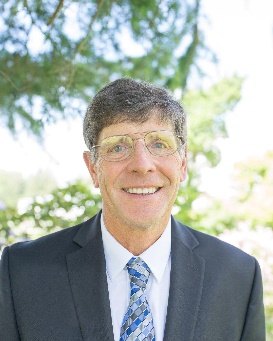 Randy Kortus, Lynden, Wash., Mainstream Holsteins, Jerseys and Ayrshires
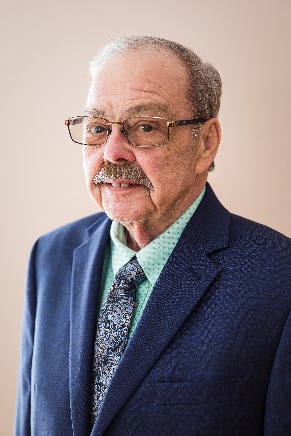 Industry Person of the Year
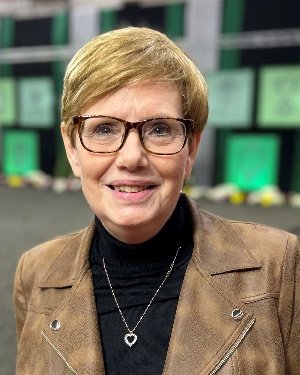 International Person of the Year


 On Saturday March. 11th, Holstein UK announced the winners of the 2022 All Britain Awards which saw an outstanding entry of 166 cattle following a comeback of many shows after the pandemic.
 Officials said a number of animals were killed when the roof of a barn at a dairy farm in Dracut collapsed during Tuesday’s powerful nor’easter.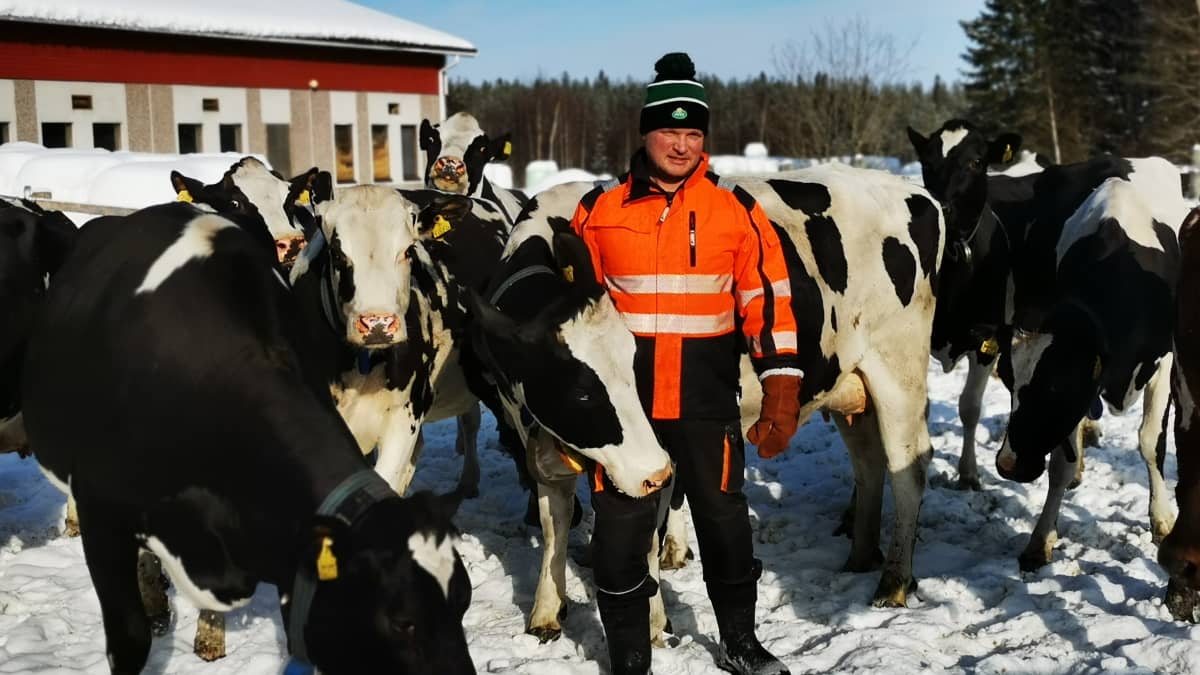


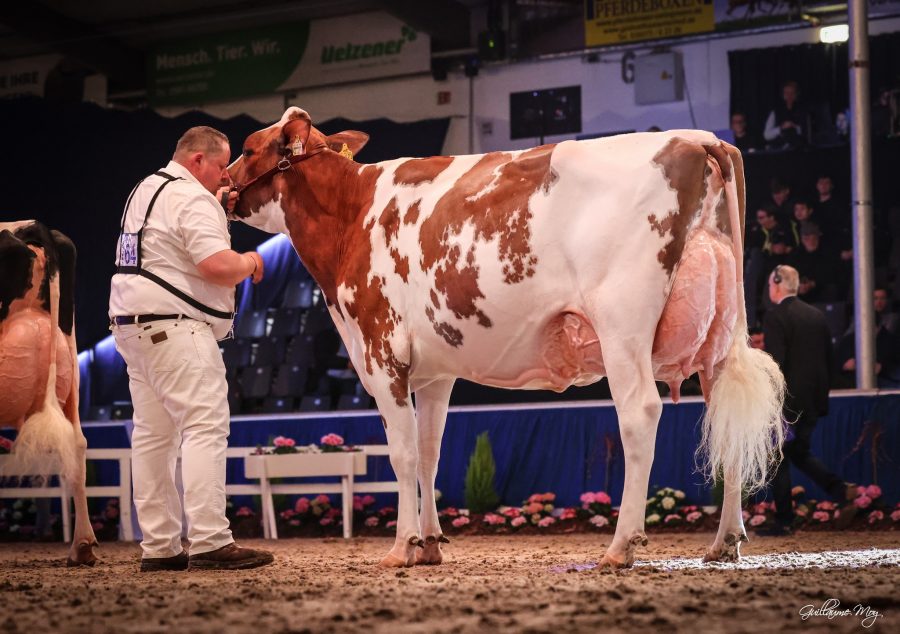
 Congratulations to the 2022 Alberta Breeder of the Year,



