Coomboona Dairy has been acquired by Australian Fresh Milk Holdings (AFMH), making the company the largest dairy producer in the country.
As part of the acquisition, processor Freedom Foods contributed $4.6 million in equity funding in return for a 10 per cent stake in the dairy, near Undera in Northern Victoria
Freedom Foods said the purchase would expand production in a renowned dairy farming region.
“Providing the opportunity to leverage its integrated approach to deliver sustainable production of high quality milk, supporting a range of value-added product opportunities,” the company said.
AFMH currently operates a fully integrated dairy farming operation, Moxey Farms, located in the Lachlan Valley, 340 km west of Sydney.
With the acquisition of the Coomboona Dairy operation, current AFMH operations are forecast to produce more than 150 million litres in 2019.
AFMH is a strategic partnership owned by the Moxey and Perich families and other shareholders including Freedom Foods Group, which has a 10 per cent equity shareholding in AFMH.
Freedom Foods is now utilising a growing proportion of the dairy milk output from both Moxey Farms and Coomboona Dairy for its Australia’s Own Kid’s Milk and other dairy product formats.
Progress is continuing on Freedom Foods’ nutritional and UHT investments in Shepparton with processing at both facilities expected to commence this month.
A major British dairy company is poised to become the property of one of Canada’s biggest dairy processors in a $1.7 billion all-cash deal.
Saputo Inc. announced Friday it has an agreement in place with Dairy Crest Group — the maker of Cathedral City cheese and Country Life butter among other major U.K. dairy brands — to buy up all its shares for £6.20 (C$10.63) each.
For Saputo, which markets its products in about 40 countries, the acquisition would be its first in the U.K. — and in Europe, for that matter — offering the Canadian company a platform for growth into those markets.
Dairy Crest’s board plans to unanimously recommend to shareholders that they vote in favour of the deal, Saputo said, noting it already has “irrevocable undertakings” from Dairy Crest’s shareholding board members for their votes.
Subject to shareholder and court approval and the usual closing conditions, Saputo said it expects to close the deal in the second calendar quarter of this year.
Based at Esher, southwest of London, Dairy Crest dates back to 1933 and the depression-era formation of Britain’s Milk Marketing Board, which spun off its milk processing business into a separate division under the Dairy Crest name in 1980.
The Dairy Crest division became a separate publicly traded company in 1996 and sold off its dairies business in 2015 to focus on making branded foods and value-added ingredients.
For its part, Saputo said this deal will allow it to “expand its international presence and enter the U.K. market by acquiring and investing in a well-established and successful industry player with a solid asset base and an experienced management team.”
“Dairy Crest is an attractive platform for Saputo and fits well within our growth strategy,” CEO Lino Saputo Jr. said in a Dairy Crest release.
“We believe that under Saputo ownership, Dairy Crest will be able to accelerate its long-term growth and business development potential and provide benefits to Dairy Crest’s employees and stakeholders.”
Dairy Crest chairman Stephen Alexander, in the same release, said the deal “should enable Dairy Crest to benefit from Saputo’s global expertise and strong financial position to fulfil and accelerate its growth ambitions.”
In its recent third-quarter update, Dairy Crest noted “significant uncertainty” around Britain’s impending “Brexit” from the European Union, adding that “the impact of a potentially disorderly exit is hard to predict.”
The British company noted its supply chain and customer base are primarily in the U.K., but added “we are taking steps to reduce our exposure, including accelerating the purchase of ingredients and packaging materials.”
Montreal-based, publicly-traded Saputo ranks among the world’s top 10 dairy processors and is the world’s largest cheesemaker. It’s also the top fluid milk and cream processor in Canada, Australia’s biggest dairy processor and Argentina’s second largest, and one of the top three cheese producers in the U.S.
Saputo, whose brands include Dairyland, Armstrong, Milk2Go/Lait’s Go and Neilson, among others, has been expanding largely through acquisitions in recent years.
Its most recently completed deals include U.S. cheesemaker F+A Dairy Products in November, Ontario cheese and yogurt maker Shepherd Gourmet in June and Australian dairy co-operative Murray Goulburn in April.
Some who rely on irrigation to survive are selling up, while others cut herds and take big financial hits
When the dairy farmer Shane Hickey calculated his hourly rate of pay at just $2.46 last year it prompted a wave of outrage and sympathy. Consumers vowed to change their purchasing habits to support small, independently processed milk instead of the $1-a-litre offerings in the major supermarkets.
But among other farmers, the conversation was very different. “I got quite a few phone calls from farmers asking me how I made $2.46,” Hickey said.
“They were quizzing me … One guy was losing $500 a day, $15,000 a month. Another guy just up the road, they’re losing $10,000 a month.”
The Australian dairy industry was already in crisis when drought struck key production regions in Victoria and New South Wales in 2018. Now farmers like Hickey say they are barely hanging on.
He has reduced the number of cattle on his 200-acre property at Kyogle in the northern rivers region of New South Wales from its peak carrying capacity of 150 to 85.
It’s a situation repeated across the country. You can’t run a dairy farm without water — it takes 1,000 litres of water to make one litre of milk — and there is little to be had.
This is the latest in a string of setbacks that have faced the Australian dairy industry in the past decade. The number of dairy farms in Australia has fallen from 7,511 in 2010 to just 5,669.
Most of those problems can be traced back to 2014, when a combination of the lifting of quotas for European milk producers and sanctions against one of their biggest markets, Russia, over the downing of MH17 created an oversupply that led to a downturn in the global milk solids price.
Milk solids are the dried powder of fats and proteins that remain once all the water has been evaporated. Milk is usually about 12% solids, and milk prices are based on milk solids.
In Australia, Coles and Woolworths took advantage of that oversupply to bargain down the wholesale price of milk for their own-brand products, which they had begun selling for $1 a litre in 2011.
In April 2016 the major processors Murray Goulburn and Fonterra stepped down their milk supply contracts mid-season after overestimating the global market that saw the companies facing shortfalls of up to $200m. The price offered to farmers was reduced by about $0.80 a kilogram of milk solids for Murray Goulburn and $0.60 for Fonterra and the cut was applied retrospectively, meaning that for the last two months of the contract, payments to farmers were cut by almost two-thirds. The sudden drop in cashflow drove some farms out of business..
Decades of industry advice to Australian farmers was to invest more and produce more when bills were mounting in the hope that greater efficiencies would improve the bottom line. At the same time, farmers were urged to reduce debt to reduce their exposure.
When the drought is on, they can do neither.
“Chasing that efficiency that we all got told was how we were supposed to make our money, because we weren’t going to get more money for our milk, has actually increased our cost base and added more risk into our business,” dairy farmer Phil Ryan said.
A report by the Australian Competition Consumer Commission last year blamed the farm-gate price on “power asymmetries” between supermarkets and processors, and processors and consumers, but said it “did not obtain any evidence that supermarket pricing, including $1 per litre milk, has a direct impact on farm-gate prices”.
This is because farmers are paid the same milk price whether it ends up in $1 milk or not, with prices set by processors such as Murray Goulburn.
On Monday Woolworths announced that it was increasing the retail price of its own-brand milk by 10c a litre on two- and three-litre bottles, with the increase to be passed on to the farmer. About 450 farmers are expected to receive a price increase, which will work out at less than 10c per litre produced.
The agriculture minister, David Littleproud, had been pushing the idea of a temporary levy for drought-affected farmers since September and welcomed the news, calling on Coles and the German supermarket chain Aldi to follow suit.
But the government response many farmers remember is that of the prime minister, Scott Morrison, who said: “I want to ensure we can ensure the sustainability and viability of our dairy sector, but not doing that at a cost to mums and dads pouring milk on their cornflakes.”
Ryan runs a 200-cow operation near Bega on the NSW south coast, supplying Bega Cheese. He is now just above 50c a litre at the farm gate, roughly the same as it is costing him to produce. He says it’s not fair to put the burden of reducing the cost of living on farmers who cannot pay their own bills.
Ten cents a litre or 20 cents a litre isn’t going to break most household budgets, he said. “If [Morrison] genuinely doesn’t think that Australian families can afford that then there’s a much bigger problem than the dairy industry. It’s an issue for raising minimum wages.”
Ryan worked in IT in Sydney until 2007 and is preparing to take a second job to support his operation if the drought does not break in the next 12 months. The mental health toll is high. Half of the farmers Ryan knows admit to dealing with depression and anxiety. Many more bottle it up.
“Six out of 65 farms locally have sold in the last 12 months,” he said. “I was speaking with another local farmer just the other day, we are both saying we don’t know whether we will survive … we have got four-month-old bills that we can’t pay.”
Rabobank’s senior dairy analyst, Michael Harvey, says the milk price in Australia is likely to increase next financial year in response to a shortage on global milk markets, which will provide “some comfort” to drought-affected farmers.
The global commodities price is expected to settle at $6 a kilo of milk solids over the medium term.
“You need to plan your business and structure your business for that being an average milk price going forward and if you can make money at that then you have got a sustainable future,” Harvey said.
There is growing demand for dairy products, particularly in China, but the market favours those with the lowest cost of production. Some high-value products, such as baby formula, which is bought by the boxful from Australian retail shelves and shipped directly to China through informal channels, require additional ingredients that cannot be sourced in Australia even if the domestic milk production increases.
Australian farmers are able to be globally competitive if they can rely on rain-fed pasture growth rather than grain or hay feeding. Those conditions, once considered normal, are becoming less frequent due to climate change.
Farms that rely on irrigation, such as those near the Murray River in northern Victoria, are less viable, and many have already been listed for sale.
Labor’s agriculture spokesman, Joel Fitzgibbon, has said he will ask the ACCC to investigate introducing a floor price for milk to ensure farmers can cover their costs. Littleproud says the idea is unworkable without a quota system, which would undo the deregulation of the dairy industry after two decades.
The chief executive of the advocacy group Australian Dairy Farmers, David Inall, met Fitzgibbon to discuss the proposal this week. He said farmers are increasingly worried that farm-gate prices don’t cover production costs and encouraged them to “work with Dairy Australia on strategies to keep their cost of production low while also capitalising on export and other opportunities”.
Some Australian farmers advocate the return to a highly regulated quota system, like the Canadian model. The Canadian academic Bruce Muirhead describes the current Australian system as “completely unsustainable” and based on neoliberal agricultural philosophies about the uncapped power of investment and technology to achieve greater efficiencies
Or, as Hickey puts it: “Farmers were fed a big load of shit.”
“They were told to get bigger, get economies of scale, buy all this equipment that’s really expensive to maintain … get all these expensive commodities in to make your cows produce more milk.
“Now the commodities have disappeared, hay is through the roof, all your soy bean meals are nonexistent, so all these farmers that have listened to the experts are screwed.”
A DAIRY farmer’s online campaign urging Coles and Aldi to abandon their cheap milk prices is gathering speed.
Fifth-generation dairy farmer from Kingaroy, Damien Tessmann, started the campaign to get Coles and Aldi to end $1-per-litre milk prices “through the power of social media”.
After Woolworths ended its $1 milk prices last week, there has been a strong call for the other big supermarkets to follow suit.
Kingaroy dairy farmer, Damien Tessmann, has started an online campaign urging Coles and Aldi to end $1-per-litre milk. Picture: contributed
Mr Tessman started the Facebook group C’mon Coles, where he shared a video calling for other dairy farmers to share their stories, and urged consumers to boycott Coles and Aldi.
Across all media platforms, the video has been viewed hundreds of thousands of times.
“I think it’s one of these things where it’s important to be grassroots and farmer driven,” Mr Tessmann said.
“I want to do something to communicate with consumers and to make sure they vote with their wallets.
“It really is that David-and-Goliath battle.
“It’s (the response) really been overwhelming and it’s really about keeping that pressure on. I think people really do want to help farmers, I don’t buy into that city/country divide.”
The Likes on the C’mon Coles Facebook page have been growing organically, according to Mr Tessmann.
“It’s started off here in Kingaroy and I often look at (Facebook) notifications of where people are coming from. There was one this morning from Western Australia.
“It’s really great that we’ve got this far from just a farmer posting a video.”
Mr Tessmann and a group of other dairy farmers took a cow and stood outside Aldi in Kenmore, talking to consumers.
Damien Tessmann, Susan McDonald, Craig Brook, and Brad Teese with Dianne the jersey cow outside Aldi in Kenmore. Picture: contributed
“All demographics had positive things to say about the dairy industry and our cause,” he said.
“It really warms my heart that consumers in metropolitan Australia want to help us out.”
Mr Tessmann has been in the dairy industry all his life.
“It’s something that consumes you,” he said.
“When you’re on the land in a particular industry, you become really passionate about it.
“Dairy farmers are renowned for being on the shy side, so it’s great to see farmers getting passionate and involved and that’s what’s keeping me going.”
The C’mon Coles Facebook page has received 1600 Likes so far.
Kilcoy dairy farmer, Ashley Harrison, has also gotten behind the campaign and shared a video on the page.
But Mr Tessmann said other diary farmers had been hesitant.
“There has been some reluctance from Norco suppliers,” he said.
“It’s horrible that they think there will be a backlash from Coles if they openly jump on this campaign.
“That’s been the feedback from half a dozen farmers.
“I think that’s really sad about the state of the dairy industry.”
Mr Tessman said the next step in the campaign was to keep the momentum going.
“It’s about keeping that pressure on, but it all comes down to consumers. They’re our biggest weapon in this battle.
“It’s been a deafening silence from Coles. We’ve been tagging them in all our posts.
“Woolworths responded and said ‘thank you for your support and we understand how important the dairy industry is’.
“Coles can’t even return a tweet to say ‘this is what we’re doing’.”
Feed a cow, milk a cow, sell the milk. It all seems so easy.
Today the average person is 2 or 3 generations removed from the farm. The average person drives by a farm, watches a commercial on television, or hears a comment from someone “that knows” and it all seems so easy.
Ask a dairyman how easy it is. Usually, he won’t say much. He might agree with you half-heartedly because he thinks most people are only interested in cute little fluffy calves, big-eyed cows and a Farmall tractor.
He won’t tell you that milking a cow 365 days a year includes Christmas, your birthday, and Super Bowl Sunday. He won’t tell you that milking a cow 365 days also means milking 365 nights and if he hires people to milk the cows it means scheduling, managing, and all the things that come with having employees.
Feeding cows is an everyday job. Cows have to be fed whether it’s 110 degrees outside or minus 10. Someone has to feed them even if the feed wagon is broke down, the tractor won’t start, or the wind blows the feed away as quick as it can be put down.
Maybe he’ll tell about milk prices, break-even points, or feed costs but he won’t dwell on it. Why bother? He can do very little about the prices he’s given other than try to make the most quality milk he can and feed the most efficient feed ration. Dairies are called “price –takers”. They don’t decide what price they will pay or what they will get paid. They are at the mercy of national and international markets and politics. Dairymen are long-term optimistic people. They have to be. They think bad times will always give way to good times and the good times will last longer than they ever have before.
Dairymen won’t tell you about the times things don’t go right. He won’t relive the morning the first thing he saw was the fresh cow from the night before lying dead in the corral, or the tank of milk he had to dump because someone milked a cow with antibiotics into it, or the cold morning none of the equipment started. He won’t tell you how many times his heart has been in his throat, how many bottles of Tums he goes through in a week, or how many sleepless nights he’s had.
Then, there are those people, the advocates. The people that want to fix agriculture but they don’t seem to understand agriculture or the importance of it. They have taken it upon themselves to make the world a better place by regulating, restricting, and inspecting farms so dairymen won’t do things they never have and never would. To a typical dairyman it’s just more expenses and someone looking over his shoulder.
With all that, why would anyone stay in the dairy business?
The dairyman won’t talk about that either. That’s because it’s hard to explain in words.
There is just something about dairying when things go right. There is something about seeing cows file into a barn, be milked and walk out when it is done right. There is something about newborn calves that never gets old. There is something about seeing every cow lined up at the manger eating as the sun comes up in the morning. There is just something about working with an animal, partnering with nature, as best as you can. Sometimes it all works out. That is when it is all worthwhile and almost easy.
– John W. Wright of Wright, Inc. Dairy in Wendell, Idaho
Woolworths has announced it will stop selling $1 per litre milk for good, in a move described as a “game changer” by the dairy industry.
The supermarket chain will start charging consumers $1.10 per litre from tomorrow, with the extra money going directly to farmers.
Woolworths Group chief executive Brad Banducci said the corporation believed in the long-term sustainability of the dairy industry.
“In our consultation with industry bodies… we’ve heard the outlook will continue to be extremely tough for dairy farmers,” he said.
“This is affecting milk production and farm viability, which is devastating for farmers and the regional communities in which they live.”
The decision follows an east coast trial of drought relief milk sales, which saw 50 per cent of consumers willing to pay more to help farmers.
Mr Banducci acknowledged the 10 cent increase was less than inflation, but would not rule out a further price rise in the future.
“There’s a fine line between lifting the price and supporting our dairy farmers and also focusing on affordability for our customers, so this felt like the right first, safe step.”
Australian Dairy Farmers Association CEO David Inall called the supermarket’s move a “game changer”.
“It is reassuring that Woolworths has committed to deliver the full 10 cent increase back to those farmers who supplied the milk.”
Dubbo dairy farmer Erika Chesworth said Woolworth’s decision puts dairy farmers over a psychological hurdle.
“We’re hopeful that this is the beginning of us being returned to being completely valued by Australian society,” she said.
“Of course we’d love it to be $2 a litre, but today we’re just really happy that we’re on the path to returning where we belong in society.”
The NSW Farmers Association said it was a big win for dairy farmers, who had been fighting against discount milk since 2011.
It said other retailers should follow Woolworths’ example.
While the U.S. economy is strong right now with steady growth, low unemployment, and little inflation, the farm economy is struggling.
The U.S. has lost 30% of its dairy farmers over the last decade. Sadly, more farmers are having to sell due to expensive loans or not making enough money. In fact, one farm family from Iowa sold their entire herd at auction Friday, because they believe there’s not enough money in milk production.
One of the Erhardt family’s cattle up for sale in Lanesboro
The Erhardt family sold about 250 Holsteins at the Lanesboro Auction Barn. Because this was such an emotional moment, they did not feel comfortable speaking with KTTC about the difficult decision they had to make on-camera.
However, KTTC did meet with Tom Hoscheit, a dairy farmer from Caledonia, about this major life decision. While he doesn’t know the Erhardt family, he knows others who have to make a similar sacrifice.
Tom Hoscheit has been a dairy farmer in Caledonia for 43 years
“It’s hard. It’s like a death in the family. You’re watching your livelihood, which you’ve spent years building up, just to watch it go through a sale. That’s very difficult. The guys that have gone through it expressed it to me like a death in the family,” he said.
Even though he only sold a few cattle from his herd on Friday, Hoscheit still faces difficult times, making 40% less income now than what he did four years ago.
President Trump signed the farm bill into law last December, which is providing $867 million in aid to U.S. farmers. However, some say the bill didn’t go far enough.
USDA recently released the December milk production numbers seeing a rise of 0.9% totaling 17.1 billion pounds. Production per cow averaged 1,966 pounds, up 23 pounds from same time last year. The number of cows totaled 8.72 million head, 21,000 less than December of 2017 and down 2,000 from November. You can read the full milk production report here.
Chuck and Sue Spaulding have partnered with their daughter and her husband to run S & S Dairy. Mark Hoffman/Milwaukee Journal Sentinel
There was a time when the soft glow of barn lights dotted Wisconsin’s rural landscape like stars in a constellation, connecting families who labored into the night milking cows, feeding calves and finishing chores.
Hundreds of those barns are dark now, the cows gone, the hum of milking machines silenced.
“All of our neighbors are done,” said Sue Spaulding, a dairy farmer near Shell Lake, in Washburn County.
She and her husband, Chuck, soldier on, milking about 60 cows on their 300-acre farm that Chuck bought when he was only 17.
Seven years ago, the Spauldings borrowed heavily to modernize their barn and position things for the future.
“It looked good on paper,” Sue said.
But in late 2014, farm milk prices started to plummet. The downturn, fueled by overproduction and failing export markets, has lasted more than four years and has wiped out dairy farms from Maine to California.
The price farmers receive for their milk has fallen nearly 40 percent.
“This downward cycle has been brutal,” said Kevin Schoessow, a University of Wisconsin-Extension agent in Washburn County.
Wisconsin lost almost 700 dairy farms in 2018, an unprecedented rate of nearly two a day. Most were small operations unable to survive farm milk prices that, adjusted for inflation, were among the lowest in a half-century.
As of Feb. 1, Wisconsin had 8,046 dairy herds, down 40 percent from 10 years earlier, according to state Department of Agriculture data.
Remaining dairy farmers have burned through their farm equity and credit to remain in business. Often, at least one family member works an off-farm job to put groceries on the table or pay for health insurance. Some work double shifts, farming during the day then heading to a local factory for the night. It’s exhausting, but it keeps families in agriculture and preserves a cherished way of life.
Much of Wisconsin’s $88 billion farm economy hangs in the balance. Hundreds of towns across the state depend on the money that dairy farmers spend at equipment dealerships, feed mills, hardware stores, cafes and scores of other businesses.
Each dollar of net farm income results in an additional 60 cents of economic activity, according to University of Wisconsin research.
This spring, though, farmers face crucial decisions. Some are running out of feed for their cattle. Do they seek operating loans to plant crops for livestock rations? Or do they quit and cut their losses that can add up to thousands of dollars a month?
Often the fate of their livelihood isn’t in their hands.
“Banks are wary of taking on more risk,” said Michael Slattery, an economist for Wisconsin Farmers Union, a trade group based in Chippewa Falls.
Nearly every dollar the Spauldings have earned from their milk the last few years has gone toward their debts and farm insurance, leaving them with little income except for Chuck’s Social Security check and selling some livestock and hay.
Their milk checks, after deductions are taken out, come imprinted: “Void.”
A check from the dairy cooperative is voided because the bank has first dibs on money from the milk sold by S & S Dairy, Sue and Chuck Spaulding’s farm in Shell Lake.
Mark Hoffman / Milwaukee Journal Sentinel
“It’s been such a struggle just to keep things going,” Sue said. “We have managed, but now it is getting hard to pay even our basic everyday bills. I don’t know how much longer we can do this.”
As Sue spoke, she faced a $900 electric bill due in only four days. The barn needs repairs and there’s farm equipment that should have been replaced long ago.
“We are running out of resources,” she said. “It’s hard to sit here and watch things fall apart.”
How Wisconsin became ‘America’s Dairyland’
Wisconsin didn’t start out as a dairy state.
In the mid-1800s, one-sixth of the wheat grown in the United States came from Wisconsin. White settlers from the East Coast didn’t need much initial investment and found the crop easy to manage.
But varying yields, rising competition from neighboring states and an insect infestation forced wheat farmers to consider alternatives. Dairy farming emerged in the latter half of the century as a better fit for the state’s terrain and climate.
By the turn of the 20th century, 90 percent of Wisconsin farms had dairy cows, and by World War I the state led the nation in butter and cheese production. It held the milk production title until 1993 when that recognition went to California.
Wisconsin, though, remains No. 1 in terms of connecting dairy with its cultural identity.
For nearly 80 years, “America’s Dairyland” has been imprinted on the state’s license plates. And for the last four decades, foam Cheesehead wedges have been a staple at sporting events and in tourist shops. Dairy contributes more to Wisconsin’s economy than citrus does to Florida or potatoes to Idaho, and more than a quarter of the nation’s cheese comes out of the state.
For all the pride Wisconsin takes in its heritage, some national consumer trends have been headed in a different direction. Sales of milk as a beverage have fallen steadily since the 1970s, with fewer parents encouraging their children to drink milk than ever before. Soy milk and almond milk — which dairy farmers point out aren’t real milk — and scores of sports drinks have flooded the beverage market.
Follow four Wisconsin farms
Amid years of sagging milk prices, Wisconsin dairy farms face a grim future. Meet the operators of four farms across the state we are following this year.
And although consumption of cheese, yogurt and butter have all increased, they’ve not always kept pace with runaway production. Today, for instance, U.S. commercial and government cheese stockpiles are at about 1 billion pounds — the highest level in a century.
At the same time, foreign markets for American dairy products have shrunk in response to tariffs that President Donald Trump placed on foreign steel and aluminum. Cheese shipments to China have fallen almost 65 percent, according to industry figures, and exports to Mexico are down more than 10 percent.
Mexico and Canada have targeted rural America as a way to punish Trump, and the economic harm could be felt for years to come, said Laurie Fischer, CEO of the American Dairy Coalition.
“This should have changed in November when Trump declared success with his newly rechristened U.S.-Canada-Mexico Trade Agreement replacing NAFTA,” Fischer said.
“In retrospect, it was a disingenuous statement: The administration has not lifted steel and aluminum tariffs on Mexican and Canadian products, and in response, those countries are refusing to (ratify) the pact or lift retaliatory tariffs, impacting dairy products and other items.”
Wisconsin farmers are getting about $10 million in payments from Trump’s farm bailout program announced late last year. It was designed to help producers of milk, pork, soybeans, corn and other commodities who have seen prices tumble in trade battles.
A 55-cow dairy farm would receive a one-time payment of $725 from the bailout but stood to lose between $36,000 and $48,000 in income last year from low milk prices, according to the Wisconsin Farmers Union. A 290-cow dairy would get $4,905 but would lose several hundred thousand dollars.
Further, dairy farmers have only been getting about 25 percent of the average retail price for cheese, the lowest portion since 2012, according to Fischer.
“There’s no magic bullet on the horizon,” she said. “A shakeout will continue in the dairy sector until markets stabilize and supply and demand realign. Until then, dairy professionals at all levels are working on a day-by-day, if not hour-by-hour, basis to keep their operations afloat.”
Farmers hurt from being too productive
The prices farmers receive for their unprocessed, unpasteurized milk are largely determined by the forces of supply and demand, and government programs.
Minimum prices are set by the U.S. Department of Agriculture using complicated formulas based on the wholesale market value of various dairy products such as cheese, butter and whey.
Many farmers see themselves as pawns in an agricultural system stacked against them. Faced with few options to control the price for what they produce, they ramp up production and hope markets don’t buckle under the strain.
Most dairy farmers don’t even know what they’ll be paid for their milk until 30 days after it’s hauled off the farm.
“Every time we see the price go up a little it makes us very hopeful. And then when it drops … everybody goes back to feeling pretty awful,” Fischer said.
In 2012, Wisconsin Gov. Scott Walker announced an incentive program to produce, as a state, 30 billion pounds of milk a year by 2020 — a 15 percent increase. The state offered farmers grants for business planning, facility engineering and animal nutrition. The program, “Grow Wisconsin Dairy 30×20,” required them to put up their own money as well.
Despite record production every year since 2002, Walker urged farmers to step it up even more. “The reality,” he said, “is the growth is not fast enough for the opportunities that are here before us.”
Dairy farmers not only met the challenge, they reached 30 billion pounds in 2016 — four years ahead of schedule.
By then, however, the market had turned and many dairy farmers were having trouble breaking even on their new investments.
Some felt duped by the agribusiness system.
“The more surplus farmers produce, the lower the price of agricultural commodities for food processors,” said Kara O’Connor, government relations director for the Wisconsin Farmers Union.
“All of the most powerful players in the industry, except the farmer, benefit from overproduction.”
The amount farmers are paid for their milk varies monthly based on the USDA price, individual contracts, quality and other factors. Some farmers say they’ve been getting around $15 for every hundred pounds of milk they produce, roughly 12 gallons. Their costs: $20 or higher.
These are like prices from 40 years ago, said Dennis Rosen, who recently quit milking cows at his St. Croix County farm.
Back then, there were 39 dairy farms within 20 miles of Rosen’s home. Of those farms, only three are left.
“We used to live in a very vibrant area of family agriculture,” he said.
With collapsed prices of milk, grain and other commodities, many farmers have lost money for months at a time. At some point, the losses become unsustainable.
“Just ask any of the 36 dairy farmers who are no longer farming in my neck of the woods today,” Rosen said.
Some farmers have flushed milk down the barn drain because they couldn’t find a processing plant to take it.
That happened in January at Laura Binder’s 70-cow dairy farm near Marshfield.
“We no longer have a dairy plant to ship to, so we are dumping our milk,” Laura said. “What a waste of money.”
Farm auctions have become an all too common occurrence in her area.
“Honestly, I don’t think it’s going to get any better,” she said. “I just think it’s going to keep going down until all that’s left are mega-size farms. There won’t be any place for little farms.”
Some farmers have shot calves because the newborn animals had no market value and were considered too expensive to raise for beef.
In December, an Iowa farmer posted Facebook photos of calves he’d killed, trying to make a point of how desperate things were. Shortly afterward his milk cooperative, Prairie Farms, dropped him as a member, according to Steven Potter, the farmer’s brother in Preston, Iowa.
“I don’t know what he was thinking,” Potter said.
More Wisconsin farmers are calling Farm Aid crisis line
The stress farmers have endured in trying to keep everything together has been overwhelming, especially on farms passed down for generations. Nobody wants to be the one to close the gates.
“It feels like you’ve failed,” said Schoessow, the UW-Extension agent.
Joe Schroeder answers the crisis line for Farm Aid, a group launched during the farm crisis of the mid-1980s and known for its annual concerts organized by Willie Nelson, John Mellencamp, Neil Young and Dave Matthews.
Schroeder has talked with farmers in the darkest periods of their lives. He’s kept some from committing suicide; he’s convinced others to get guns out of their house to avoid rash decisions.
These days, from his base in Cambridge, Mass., he’s getting more calls from Wisconsin dairy farmers whose lives have gone off the rails.
“They’re often the farmers who have the fewest options, the toughest ones to help,” Schroeder said.
Jeff Ditzenberger has been in their shoes. One summer night he walked into an abandoned house near his farm in Green County, lit a fire, and waited to die.
Following months of mental health issues, and unable to get help from a rural health system lacking resources, he planned his own death that August evening in 1992.
“Take the worst day, the worst feeling you’ve ever had … multiply that by a hundred. Add 10. Then you kind of get it,” he said.
Jeff Ditzenberger has become a lifeline for other farmers who’ve contemplated suicide.
Mark Hoffman/Milwaukee Journal Sentinel
The flames crept up the walls, and the house filled with smoke.
“You get a sense of morbid peace,” he said, “because it’s like you won’t be a burden or a disappointment to anybody anymore.”
At the last moment he changed his mind and hurried out of the burning building.
“Thankfully, I failed miserably” at suicide, he said.
He’s since started a mental health support group for men, and he’s spoken with many farmers struggling with stress, depression and thoughts of ending their lives.
“I have caught more of my friends in the middle of their suicide plots than I care to mention,” Ditzenberger said. “Suicide doesn’t give a sh– what your occupation is. It’s just wicked.”
Agency looks for ways to help farmers
The Wisconsin Farm Center, part of the state Department of Agriculture, Trade and Consumer Protection, has been getting about 200 calls a month on its toll-free crisis line.
The Farm Center offers farmers a wide range of free services including mediation with creditors. It also offers vouchers that farmers and their families can use to get counseling.
The staff has decades of experience in agriculture.
“They understand what people are going through, and they’re really good listeners,” said Farm Center Director Kathy Schmitt.
The agency looks for ways to keep farms in business or find an exit strategy.
“We will come right to your kitchen table, or if you want to meet at a McDonald’s we will do that too. It’s whatever you feel comfortable with,” Schmitt said. “Some creditors will accept reduced amounts. And even if we can’t come to an agreement, being able to talk it through with them is good for the relationship.”
Federal court data shows that western Wisconsin had the highest number of Chapter 12 farm bankruptcies in the nation in 2017. And that’s only a glimpse into the dairy crisis since Chapter 12 is a relatively rare tool used in farm closures.
It allows farmers to “cram down” secured debt such as land mortgages to a more affordable level.
“But one of the big problems is that it cannot be used by farmers whose debt exceeds $4,153,150. That sounds like a big number, but in the dairy farming world where equipment, machinery, feed and operating expenses are very high, it is not,” said Elizabeth Rich, an attorney from Plymouth and president of the Farm-to-Consumer Legal Defense Fund Foundation.
“Fifth- and sixth-generation dairy farmers are losing their farms; many are killing themselves. We can and must do better,” she said.
First stress, then stroke
The Spauldings were one of those families who turned to the Wisconsin Farm Center in January.
The question was whether time was too short, and the problems too severe.
In October 2017, Chuck had a stroke.
He was out raking hay, then put the tractor away and headed into the house for a glass of water. His hands were numb that day, but he figured it was from the vibrations of steering the tractor.
Then he dropped the glass. He was on the kitchen floor trying to clean up the mess, “talking mumbo jumbo,” as Sue recalls.
She called her son-in-law to come over right away.
“We drove so fast to the hospital we had the cops chasing us,” Sue said.
Chuck was flown to Eau Claire for treatment. The stroke left him paralyzed. He couldn’t talk, and for a while he couldn’t remember his wife’s name.
Then, back home for a day, he had a brain hemorrhage.
Another emergency medical flight, this time to a hospital in Marshfield.
Now, after about a year of physical therapy, he’s able to work on the farm again but not like before. His right side is weak; he can manage driving a tractor but not a car.
Still, “he is a true miracle,” Sue said.
Chuck remains hopeful that milk prices will turn around, Sue said, like they did after previous slumps that lasted a year or two. But this one is much worse in that it’s dragged on for such a long time.
“It’s almost like there’s hope, but then there isn’t,” Sue said.
Adding another layer of stress, the Spauldings briefly lost their milk buyer — a blow that could have spelled the end of their dairy operation.
She and Chuck sought a loan from their local bank to keep the farm afloat until money starts coming in from the new milk buyer.
“I am scared. If we lose the farm, we lose our home, too,” Sue said. “We just remain in survival mode.”
Sue Spaulding is shown with a 3-week-old calf, Hope, which had some health issues. It died a few days later.
Mark Hoffman / Milwaukee Journal Sentinel
Dairy farms are too productive
Though dairy farms of every size are struggling, some remain profitable if their operating costs are low enough to handle fallen milk prices or they have enough income from other sources.
Very large dairy farms, which can have anywhere from 1,000 to 8,000 cows or more, benefit from economies of scale — meaning they can negotiate lower prices for necessities such as animal feed and are better financed to weather a downturn.
“The big dairies almost seem to be in perennial expansion mode,” said Hans Breitenmoser Jr., who has a 430-cow farm in Lincoln County.
“There are farms pumping out a ferocious amount of milk, whereas a generation ago if farms fell by the wayside, production also went down,” he said.
The current slump, now in its fifth year, has lasted long enough that farmers are questioning whether it’s become the new normal in dairy.
“I will be perfectly honest, I am scared about that,” Breitenmoser said.
Dairy farms are so productive these days, partly from improved cow genetics, they can quickly flood markets.
“We are very good at what we do,” Breitenmoser said.
Further, farmers who have invested heavily in their milking operation can’t afford to just turn off the spigot. Instead, as profit margins shrink, they try to squeeze out ever-higher amounts of milk to cover their costs — even if it adds to the overall surplus.
Some farmers say the U.S. needs a milk supply management system, like Canada has, that imposes production quotas and protects farmers’ income.
Critics of Canada’s system say it has resulted in trade barriers to U.S. dairy products.
“But whether the answer is a system similar to Canada’s supply management program or something completely different, we can’t just sit back and continue down the same current path without trying to find something that actually works for farmers,” Brad Rach, dairy director for the National Farmers Organization, wrote in a blog.
Too little, too late?
Even quitting can be challenging.
Twenty years ago, a farmer could hold a farm closure auction and other farmers in the area would come and buy almost everything. There aren’t as many buyers now, said Jim Goodman, a former organic dairy farmer from Wonewoc and president of the group Family Farm Defenders.
Banks have applied more pressure, and not just in Wisconsin.
“Three young farmers in foreclosure that I know of and herds being liquidated,” a country lawyer in New York state said in a recent email to Goodman.
“Young, unseasoned people in shell shock. Feed companies suing farmers for past-due feed bills. … There is a crying need for emergency help right now to get through the winter or there is going to be another round of sell-offs.”
Last fall, Goodman called it quits after more than 40 years of milking cows on his third-generation family farm. He sold off his 45-cow herd, whose lineage could be traced back more than a century.
“If there was light at the end of the tunnel, and you could say things would be looking up by the summer, that would be one thing. But nobody has an idea that’s going to happen,” he said.
One positive note in the recent farm bill passed by Congress and signed into law by Trump is an improved income insurance plan — partially funded by the government and from premiums paid by farmers — to help when the gap between milk prices and cattle feed prices widens to a certain point.
Still, it’s no substitute for a strong marketplace.
“The farmers I know would rather receive fair prices for their products at the farm gate than having to live with the stress of volatile markets and the unknowns of whether emergency relief and insurance will kick in,” said O’Connor with the Wisconsin Farmers Union.
Even if milk prices improve this year, it could be too little, too late, for many farmers who have “simply run out of financial and emotional strength to continue,” said Peter Hardin, publisher of The Milkweed, a dairy industry publication in Brooklyn, Wisconsin.
“You can tell people that things are going to get better, but until they see it in their milk checks they won’t — and shouldn’t — believe it,” Hardin said. “The only comparable example now is the Great Depression.”
Spaulding family runs S & S Dairy in Shell Lake
Sue and Chuck Spaulding have partnered with their daughter and her husband to run the farm, S & S Dairy, in Shell Lake.
Mark Hoffman, Milwaukee Journal Sentinel
Trying to hang on
The Spauldings say they’ll hang on for as long as they possibly can.
“Chuck has worked his whole life for this place,” Sue said, and he wants to give it another year before deciding whether to sell the cows.
They raised seven children on the farm, through a blended family from previous marriages, and they’ve been through some lean years.
“But we were always able to put food on the table, have clothes for the kids, and live a good life,” Sue said. “Now, I’m glad we don’t have little kids.”
The Spauldings’ youngest daughter and son-in-law, Christy and Jeremy Spexet, also rely on the farm for their livelihood. They live in a mobile home nearby and put in long hours to keep the milking operation going.
“We are lucky to have them,” Sue said.
But Chuck and Sue cannot afford to pay them much. In a nod to both desperation and technology, Sue started a GoFundMe campaign to get some help from the public. Other farmers have done the same.
“We set a $30,000 goal for our campaign because we didn’t want to scare people away,” Sue said. “But we probably owe about a quarter of a million dollars.”
“I feel bad for reaching out because I know there are a lot of other people worse off. But at this point even a $10 donation feels like $100,” she said.
She and Chuck would like the farm to be their legacy, a place for their family to carry on traditions. A lot of other farmers wanted that too, but it wasn’t meant to be.
“It’s heartbreaking,” Sue said.
Chuck Spaulding moves his 1964 John Deere tractor into a shed while doing chores on their farm in Shell Lake.
Mark Hoffman/Milwaukee Journal Sentinel
Anger at a broken system
Danielle Endvick, from Chippewa County, said her dream of becoming a dairy farmer died when her father’s farm shut down.
“From the time I was a young girl, trailing dad out to the barn to feed calves, I remember boldly declaring my plans for my future: ‘I’m going to be a farmer, too,’” she said.
“My world revolved around our dairy farm. I woke early to help dad with morning chores and headed straight back to the barn when the school bus dropped me off after school. Some of my best memories were those chore times spent with dad, ambling along beneath the whitewashed barn beams.”
She also remembers the farm slipping away from her father as, month after month, the milk checks kept getting smaller.
“Another price drop … Dad had become a regular at our small-town bank. He was a sound farm manager and worked full time at the local feed mill for the insurance and extra paycheck. But with milk prices on an ever dipping-and-diving roller coaster, our chances of digging out looked slim,” she said.
A few years after she left the farm, her father sold the herd. As she saw dairy farms falling apart in the current crisis, she wrote a remembrance of that time not long ago.
“I remember the dreary day spent following the cattle broker as he walked through the barn, eyeing up the cows I’d raised from calves, as he turned over in his mind which would bring the prettiest penny. And I remember all too well that emotional last milking, where dad and I again found ourselves gathered around the bulk tank, this time with my infant son, Blake, who slept peacefully in a corner of the milk house.”
“When the cattle trailer backed up beside the milk house, our big Brown Swiss, Brownie, was among the first to load. I paused to scratch her head one last time before nudging her across the gutter and out the door. One by one the cows filed out, closing a chapter on the farm.”
Later, Endvick relived the pain as she watched her uncle’s cows head out the door of his barn one last time.
“Two farms erased from Wisconsin’s dairy industry,” she said. “Two among thousands lost these past few years.”
In 2015, Endvick realized her dream of having her own farm, now named Runamuck Ranch, where she and her husband, Jesse, raise beef cattle, goats and chickens.
But they’re not milking cows.
“Some days I’m thankful for the foresight dad had. A lifetime in the dairy industry told him that we were on a runaway train that was only headed for heartache,” Endvick said.
“Other days I’m angry that I didn’t try to fight it out and do what I love, no matter how hard the struggle. But … as I see fear stirring in my friends who are dairy farming, I’m angry at a system that has been broken for so many years.”
The supermarket giant Woolworths this week broke ranks and announced it was going to stop selling A$1 per litre milk. It will now charge A$1.10, or A$2.20 for two litres.
Chief executive Brad Banducci made it clear that there was more to the decision than straightforward economics:
We’ve heard the outlook will continue to be extremely tough for dairy farmers… This is affecting milk production and farm viability, which is devastating for farmers and the regional communities in which they live.
The milk market does not just consist of dairy farmers, supermarkets and customers. There are also the processors – companies such as the ASX-listed Murray Goulburn, Parmalat, Lion and Fonterra – that stand between farmers and supermarkets. Then there is the international market for dairy products like butter, cheese and milk powder.
The biggest determinant of farm gate prices in Australia is not what the major supermarkets do, but world dairy prices.
Add to that the roughly 35% that goes into locally consumed butter, cheese and milk powder that is subject to competition from imports. You can quickly see the prices of nearly three-quarters of the milk produced in Australia are set globally.
Dairy Australia has a higher estimate. Because even fresh milk is subject to foreign competition, it believes 90% of the annual movement in farm-gate prices comes from changes in international prices.
Those changes are beyond the effective control of Australian farmers and regulators.
Many of them are the result of changes in the exchange rate.
International prices are generally set in US dollars. That means a rising Australian dollar can cut the return to Australian farmers, while a falling Australian dollar can enhance it.
Farmers have been angry at Coles and Woolworths for squeezing prices. Protest rally in Melbourne, 2016.Mal Fairclough/AAP
Processors get the cream
It is tempting to think an increase in retail prices, like the Woolworths 10 cents, would help farmers. But it normally wouldn’t, much.
Someone between the cow and the customer would get the 10 cents, but not necessarily the farmer.
did not obtain any evidence that supermarket pricing, including $1 per litre milk, has a direct impact on farm-gate prices
Further, farmers’ lack of bargaining power means they are unlikely to benefit from an increase in the retail (or wholesale) prices of private label milk or other dairy products
Even if processors were to receive higher wholesale prices from sales to supermarkets, this does not mean the processors will pay farmers any more than they have to.
This time it will be different. Woolworths says “every cent of the increase will end up with Australian dairy farmers”. The processors have guaranteed it.
Normally there would be no guarantee that an increase in the wholesale price would flow through to farmers. The processors could pocket it, and the inefficient ones could use it to stay in business, to the long-term detriment of customers.
Consumers are at one end of the line…
Banducci said Woolworths was “acutely aware of the budgetary pressures facing many of our customers and have not taken this decision lightly”.
He is right to recognise it will hurt customers.
It won’t, mind you, hurt customers who buy branded milk like a2 – whose marketing success under chief executive Jayne Hrdlicka has pushed the value of the company to A$10 billion, making it bigger than Lendlease, Medibank Private, the AMP and Coca-Cola Amatil. Not bad for a company that didn’t exist at the turn of the century.
Instead it will hurt customers who can afford it the least. For a typical family of four with average milk consumption, the extra 10 cents a litre works out at about A$40 a year.
…and farmers at the other
Dairy farming is difficult, and much of Australia is less than ideally suited to it. Farmers have to contend with volatile prices, drought and isolation.
They are the least powerful players in the “value chain” that runs from cows to customers via importers, processors and supermarkets.
Neither government intervention nor higher retail prices can do much to help them.
Fonterra Australia is offering big dairy suppliers in its northern region about $6.75 a kg of milk solids, just days after it announced a final 2018-19 price for most suppliers of $6.05 a kg.
Secret contracts are being pitched to dairy farmers producing at least one million litres of milk annually, but suppliers must commit to deliver at least 83,000 litres every month through to June next year.
Labelled “North Fresh”, the confidential contracts are being pitched to stop an exodus of its big suppliers moving to competitors Parmalat and Australian Consolidated Milk, which are paying dairy farmers much higher prices than Fonterra’s 2018-19 average farmgate price of $6.05/kg MS.
Fonterra is offering the big payment hike to its larger northern region suppliers to stop them defecting to other dairy companies but is also trying to woo former suppliers to return.
Contracts must be signed by the end of this month, and would be backpaid to July last year.
The contracts bind the suppliers to Fonterra for a contracted minimum monthly amount of milk until the end of next season at the $6.75 a kg price.
It is not clear what price Fonterra will pay for milk exceeding the contracted monthly minimum but the United Dairyfarmers of Victoria has been told it is $5.70/kg MS.
Fonterra would not clarify what price excess milk would be paid at.
Some farmers will receive backpay of about $50,000 a year upon signing up this month.
Over a full year, it will add at least $75,000 to contracting farmers’ pockets.
The Weekly Times understands Fonterra is also offering the higher payment to suppliers who fall short of the one-million-litre minimum production requirement, but is encouraging them to buy more dairy cows and get them in calf by April to qualify for this year’s backpay offer.
One Fonterra supplier, who did not wish to be named, said that was encouraging desperate farmers to “make crass decisions” in order to pay their bills.
“It is dangling a pot of gold in front of them but locking people into debt,” the farmer said.
“It is unconscionable conduct.”
HAVE YOUR SAY: Is Fonterra’s payment system fair? Comment below.
The North Fresh offer comes as Fonterra cut the final farmgate price to most of its suppliers from $6.20/kg MS at the start of the season to $6.10/kg MS in October and $6.05/kg last week.
In a letter to suppliers on February 11 announcing its final season price would be $6.05/kg, Fonterra Australia managing director Rene Dedoncker said “to ensure we have a sustainable business, our milk price needs to reflect what can be earned in the market”.
UDV vice-president John Keely said the Fonterra offer created a two-tier system, similar to that which operated in Queensland and northern NSW, which was not popular among those states’ dairy farmers.
“This is not good for the industry,” Mr Keely said.
“There is no incentive to produce milk above the contracted minimum.
“It all seems very reactionary to them losing milk (to other dairy processors in northern Victoria).
“They have lost a lot of milk, especially to Parmalat.”
The Fonterra supplier said it was “unfair” to offer the extra payments to its farmers in one part of the state and not in others, particularly after announcing its final payment for the season.
“They dropped the closing price from $6.10/kg MS to $6.05/kg,” the supplier said.
“We will not get another step-up for the rest of the season, no matter what the GDT (Global Dairy Trade) does.
“All the money will go towards supporting those big farmers (who sign North Fresh contracts).
“We should have all stepped up to $6.30/kg MS.
“They have kind of written off the little guys.”
Mr Keely said Fonterra wanted a flat milk supply to fill its factories.
“But the best way to do that is to pay a higher price across the board,” he said.
Any claim arising from the information contained on the eDairy News website will be submitted to the jurisdiction of the Ordinary Courts of the First Judicial District of the Province of Córdoba, Argentine Republic, with a seat in the City of Córdoba, to the exclusion of any another jurisdiction, including the Federal.
Latest Data Shows Wisconsin Dairy Farmers Paid Higher Trucking Costs In 2018
Increased trucking costs for Wisconsin dairy farmers is the latest symptom of an oversupply of milk.
The Upper Midwest Federal Milk Marketing Order recently released a report on milk hauling charges paid by farmers in 2018.
The report found the average charge per hundredweight, or 100 pounds of milk, in Wisconsin was $0.24, a 40 percent increase from 2017.
Corey Freije is an agricultural economist who compiles the report for the Upper Midwest Order. He said hauling charges typically increase by 1 or 2 cents every year, so last year’s 7 cent jump is unusual.
“That is partially a result of an increase in the diesel fuel costs,” Freije said. “But it also seems to be an indication that the dairy farmers, with the supply that’s out there, have kind of lost their market power.”
With plenty of milk to go around, Freije said dairy processors don’t have to subsidize the cost of hauling milk as a way to attract farmers.
“The handler, particularly a co-op, would subsidize that hauling (charge),” Freije said. “I’ve heard over time that the handlers and some of the co-ops want to reflect more fully the cost of the hauling to those deductions for dairy farmers.”
Mark Stephenson is director of dairy policy analysis at the University of Wisconsin-Madison. He said the 7 cent jump in the average hauling charges likely had a big impact on farms, especially given the continued low price for milk.
“You can’t influence price very much,” Stephenson said. “What you really can do is make sure that you’re a low-cost producer and so farmers, dairy farmers, corn growers, spend a lot of time trying to be sure that they are shaving costs. And for them, costs get down to pennies per hundredweight.”
As consolidation continues within the dairy industry, Stephenson said farmers will likely have to take on more production costs like trucking to stay competitive.
The U.S. Department of Agriculture issued its latest World Agricultural Supply and Demand Estimates report on Feb. 8. The report was not issued in January due to the government shutdown. The 2018 milk production estimate was lowered based on available data through December. The 2019 forecast was reduced on lower expected first-half dairy cow numbers and continued slow growth in milk per cow.
Cash cheese prices continued to strengthen in the Valentine’s Day week as traders anticipated the Feb. 19 Global Dairy Trade auction and the shortened President’s Day holiday week. The week will include Milk Production reports for December and January and December Cold Storage data.
Cheddar blocks climbed to $1.5925 per pound Feb. 13, the highest CME price since mid-October 2018, but closed Feb. 15 at $1.58, up 5.25 cents on the week and 4 cents above a year ago. Barrels finished at $1.4350, up 6.25 cents on the week, the highest since Sept. 13, 2018, but 4.5 cents below a year ago when they jumped 12 cents, and are at an unsustainable 14.5 cents below blocks. Sales for the week included six cars of block and 20 of barrel.
The West received its own version of arctic weather last week, with cold and snow causing more than the usual challenges. More than 1,800 dairy cows died in the Yakima Valley of eastern Washington, according to the Yakima Valley Dairy Farmers Association, where low temperatures and high winds took a huge toll.
The Feb. 12 Daily Dairy Report points out that “the increase in U.S. cheese prices has been augmented by the dollar, which continues to gain ground against the Euro, New Zealand dollar and Mexican peso. The strong dollar makes U.S. cheese more expensive when the price is converted to importers’ currency. Tariffs put U.S. cheese at a further disadvantage in Mexico and China,” according to the DDR.
Winter weather remains the topic of discussion among Midwest cheesemakers, according to Dairy Market News. Cheese production remains slower as plant managers work on inventories and weather-related production stoppages have slowed or stopped production in some cases. Contacts suggest cold weather and snow in the upper Midwest were affecting both milk and cheese deliveries.
Western cheesemakers stated that new business deals are harder to come by and demand for American-style blocks and barrels is slow: “Buyer interest seemingly ebbs and flows as the market price for cheese rises and falls. Cheese is moving steadily through regular contracts, but contacts say there does not seem to be anything right now that will give a boost to sales.”
As to the strength in cheese prices, some contacts suggest that fourth-quarter consumption was better than expected and the industry is seeing a bit of a refill from the winter holidays and Super Bowl. Others say marketers are getting prepared for upcoming export tenders, while others believe more cheese is moving into aging programs. They agree that inventories are long and “demand does not seem to be at levels hoped for.”
Some say the absence of market production and stock number reports due to the government shutdown made it difficult to get a picture of supply and demand. Manufacturers say cheese output is running mostly seven days per week, but winter storms slowed cheese output in some regions due to challenges transporting milk and the need to refill the pipeline following the storms.
Interestingly, California cheese output is likely starting to slow, according to the Daily Dairy Report’s Sarina Sharp. Writing in the Feb. 8 Milk Producers Council newsletter, Sharp says “cheese processors in the nation’s largest dairy state are now paying more for milk using the Federal Milk Marketing Order formula than they would have under the previous rules.
“Dairy Market News reports many manufacturers are running full schedules at their cheese facilities, but some contacts suggest a few processors are starting to ease back on cheese production and diverting milk intakes toward Class IV uses. That’s excellent news for California dairy producers, in particular, and for dairy product prices, in general,” according to Sharp.
“The shift in the product mix will mean a greater share of California dairy producers’ milk checks is based on the much higher Class IV price. Incrementally lower cheese output will slowly lift cheese prices relative to where they would have been had California stuck with its previous milk pricing formulas. Of course, the reverse is true for milk powder pricing,” Sharp concludes.
Cash butter saw its Feb. 15 price at $2.25 per pound, down 4.5 cents on the week but still 15 cents above a year ago. Twenty-four cars exchanged hands on the week. Grade A nonfat dry milk saw the week’s closing at 98.75 cents per pound, down three-quarters cent but 28.25 cents above a year ago. Thirty cars exchanged hands on the week, 23 on Feb. 14 alone, the highest single-day total since April 25, 2018.
Dry whey closed Feb. 15 at 35.25 cents per pound, down 1.25 cents, with 42 cars finding new homes on the week, a single-day record 15 on Feb. 13.
Plummeted dry whey shipments to China have pulled whey prices lower. FCStone reports that African swine fever has reduced soy meal demand in China and some estimates say meal feeding is off 20 percent. African swine fever has also been detected in Japan.
FCStone warns: “This issue will get worse before it gets better. How much damage will be done to China’s 700 million-plus hog herd and how long will it take it to recover is still unknown. Some analysts think it could take six to seven years for China’s hog herd to fully recover.”
The Dairy and Food Market Analyst says dry whey shipments to China have fallen 20 million pounds, or 40 percent. Total exports of whey products have decreased 18 percent and exports of milk powder were down 13 percent.
The Trump administration released its proposal to update the Waters of the U.S. Rule water quality regulation on Valentine’s Day. There will be a 60-day public comment period on how the Environment Protection Agency and the Army Corps of Engineers will regulate waterways under the Clean Water Act.
Bob Gray, editor of the Northeast Dairy Farmers Cooperative’s newsletter, reported that the update would “replace the rule that was promulgated in 2015, which proved to be confusing and vague in its provisions for compliance by the agriculture community.” EPA will also hold a public hearing on the new rule.
Agriculture Minister David Littleproud has taken aim at Coles and Aldi, telling shoppers to boycott the chains until they stop selling cut-price milk.
The federal agriculture minister has savaged Coles and Aldi for keeping their cut-price milk lines and has urged customers to boycott them.
David Littleproud has accused Coles of “pretending” to be a decent corporate citizen, and Aldi of “hiding under the stairs”, after they failed to follow Woolworths and stop selling milk at $1 a litre.
Dairy farmers struggling with drought need an end to Australia’s “$1 milk disaster”, he said, a price war that began eight years ago and has been blamed for sending some farmers to the wall.
“Publicity stunts like (Coles) asking shoppers to donate at the counter to help struggling farmers are just a smokescreen to hide the fact they pay bugger all for milk,” Mr Littleproud said.
“The farmers wouldn’t need donations from the public if Coles and Aldi paid fair prices. The big German needs to come out from hiding under the stairs and face the Australian public.”
On Tuesday, Coles said it would not axe it’s $1-a-litre Coles-branded milk, citing cost of living pressures on customers.
It said it would look for other ways to help farmers, including collecting customer donations it would match dollar for dollar from next week.
It also pointed out it had committed $16 million over the past six months to support diary farmers, and promised to continue liaising with the industry and the Australian Competition and Consumer Commission (ACCC) on future initiatives.
But the minister said Coles had been saying that since August.
“So now it’s time to put up or shut up. Act like a decent corporate citizen instead of just pretending to,” he said.
On Tuesday, Aldi said low prices were a core promise to its customers and gave no indication that its pricing policy would change.
It said it sourced its milk from processors, not farmers, and it expected processors to pay primary producers a sustainable price.
“Aldi can best support the long-term sustainability of the dairy industry by accepting price increases from milk processors that reflect difficult market conditions, thereby facilitating its milk processors to pay sustainable prices to dairy farmers,” managing director Oliver Bongardt said.
Mr Littleproud said Australians should send a message with their wallets, and switch their business away form Coles and Aldi.
Woolworths stopped selling its home-brand milk at $1 a litre on Tuesday, upping the price by 10 cents with the extra money to go back to farmers.
The February Dairy Data Dashboard is now available.
Want more dairy data?
Go here and scroll down page, past the dashboard, to dig deep into our interactive charts.
Get an email alert when the latest Dairy Data Dashboard publishes mid-month by subscribing to the U.S. Dairy Exporter blog here.
Delve into USDEC’s frequently updated interactive charts showing market and trade data here.
The U.S. Dairy Export Council fosters collaborative industry partnerships with processors, trading companies and others to enhance global demand for U.S. dairy products and ingredients. USDEC is primarily supported by Dairy Management Inc. through the dairy farmer checkoff.
The milk which contains no A1 beta-casein, a cause of digestive problems for some, hits stores soon
A Sicamous dairy farmer may have tapped into a way for people who have trouble digesting dairy to enjoy milk.
Nic Dewitt says for some people whose stomachs have been upset by dairy in the past, the A2 milk his cows produce at Dari Delite Farm could be the answer.
“We actually read an article about a company doing it in Australia, and it’s the fastest-growing fluid milk product in the world,” Dewitt said
“The big thing that caught our attention was they claim 50 per cent of people that are diagnosed lactose intolerant are actually sensitive to the protein in the milk.”
The protein in question is beta-casein, which occurs in a form called A1 and in the A2 form, which gives the variety of milk its name. Sensitivity to the A1 form of beta-casein carries many of the same symptoms as lactose intolerance.
Dewitt said dairy cows naturally fall into one of three groups: those whose milk contains only A1 beta-casein, those whose milk contains only A2 or those whose milk contains both.
He said he took tissue samples from his cows and had them analyzed for genetic markers that indicate what type of beta-casein each cow’s milk will contain and from there built a herd of entirely A2 producers.
The first test case for Dewitt’s A2 milk was his wife Lindy.
“She was never diagnosed lactose intolerant but what happened was about a year ago she wasn’t able to digest it properly. She started getting symptoms like stomach irritation,” Dewitt said.
Lindy’s doctor suggested cutting dairy out her diet so she did until she had the opportunity to try the A2 milk. Dewitt said his wife had none of the symptoms she had been suffering from after trying the A2 milk.
“As soon as she tried it I knew it would work for other people,” Dewitt said
Dewitt said about 10 people with sensitivity to most milk have tried his, and nine of the 10 had no symptoms.
The A2 milk still contains lactose so it will not help those who are actually intolerant to it, but Dewitt thinks there are a lot of people out there who will be able to enjoy A2 dairy in their diets who haven’t been able to before.
Dewitt said he is aware of other farmers testing their herds for the cows’ beta-casein types but to the best of his knowledge, he is the first in Canada to be processing A2-only milk.
The milk from Dewitt’s cows will be processed and sold by D Dutchmen Dairy in Sicamous. Dewitt said customers will be able to request the A2 milk at any store which carries D Dutchmen products and both Salmon Arm Askews locations as well as D Dutchmen’s on-site store, which will be stocking it as soon as it is ready for the market on Feb. 20.
Starting today, Fonterra is signing up farms to supply milk for The a2 Milk Company in the 2019/2020 season.
Mike Cronin, Fonterra Managing Director of Co-operative Affairs, says “Signing up New Zealand farms to significantly increase supply of high quality milk to The a2 Milk Company is a positive step forward. It clearly shows the strength of our strategic relationship, and our shared commitment to fast-track market growth and enable farmers to create additional value from their milk.”
The Co-op’s initial milk pool will be based in the Waikato around its Hautapu site and will support the production of ingredients. It is anticipated around 100 farms will be needed for next season.
Jayne Hrdlicka, The a2 Milk Company Managing Director and CEO, says “The a2 Milk Company is pleased to be making progress on our relationship with Fonterra. These farms will help support new growth areas for our company across existing and new markets. This is the next step in what we believe will be a fruitful long-term relationship with tremendous potential.”
The location of the milk pool was determined by several factors. Most importantly, the site needed the ability to manufacture the specific product in demand, produce relatively small batches and adapt easily to any product demand changes.
“While other regions were thoroughly considered, ultimately the decision must be demand-led. The ability to efficiently manufacture a range of products to meet that demand was the over-riding factor in choosing a site. As demand and product lines grow, we’ll look to expand the milk pool to enable more farmers to participate,” said Mr Cronin.
Most of the value from the relationship with The a2 Milk Company will be returned to all Co-op farmers through the dividend. Participating farms will also receive a premium for their milk.
Today’s development follows the national launch of the a2 Milk™ brand by Anchor from late September 2018.
Fonterra has strongly rebutted claims made by Synalit on its decision-making. Photo: rnz
In a strongly-worded comment, the listed dairy company Synlait accused Fonterra of “unilateral and arbitrary” decisions that “manipulate” the price of milk paid to the farmers who produce it.
Fonterra strongly rebutted this claim, saying it was overseen by the Commerce Commission, unlike Synlait.
This debate arose after the Dairy Industry Restructuring Act (DIRA) review began.
This review looked at two-decade-old rules governing many aspects of the dairy industry.
The rules were originally set up to stop Fonterra from exploiting its market dominance.
In a submission on the reform process, Fonterra said there was now plenty of competition, so many of those rules could be relaxed.
But Synlait’s submission accused Fonterra of often paying more to farmers than market conditions for milk said it should.
It funded this higher price by sacrificing the value of its own shares.
“The system enables Fonterra to make unilateral and arbitrary choices about the allocations of earnings between milk price and capital,” Synlait said.
“There is a lack of transparency, effective oversight and accountability in the way Fonterra sets the milk price.”
Synlait said these problems tilted the playing field in favour of Fonterra, at a cost to independent dairy companies, and hampered the goal of having a fully contestable milk market.
To fix this, Fonterra should be required to give detailed explanations every time it changed its prices, and have them overseen by an independent panel.
But Fonterra has rejected the allegations against it, turning the accusation back on Synlait.
Its chairman John Monaghan said it was in the interest of “non co-op competitors” to pay farmers as little as possible for their milk, in some cases, using “complex and obscure pricing structures”.
Mr Monaghan said his company provided plenty of documentation of its decisons – it was required to maintain and publish a Milk Price Manual, which described how the base milk price was calculated.
This manual was in turn overseen by the Commerce Commission.
In addition, rules requiring milk price transparency should be imposed on all processors, not just Fonterra, so “farmers can compare apples with apples and be paid an honest milk price.”
In a related development, New Zealand’s second largest milk firm, Open Country Dairy, has filed legal action against the Commerce Commission’s oversight of Fonterra’s milk price calculation for 2017-18.
In earlier submissions to the reform process, Fonterra said there were many other problems with the existing regime.
One of these was a requirement for the company to buy milk from any farmer who wanted to sell it – a rule known as the Open Entry provision.
That meant Fonterra had to invest in expensive infrastructure for bulk storage of milk that it did not always want, sometimes produced by farmers whose environmental standards fell short.
Forest and Bird argued the obligation to buy milk allowed the dairy industry to intensify beyond natural business limits, and also put a huge burden on the environment.
It noted Fonterra’s own statement that it would prefer not to see dairy expansion in the Mackenzie Basin, but if the farms were there, they had to be traded with.
Forest and Bird said the Mackenzie Basin’s ecosystem and others should be protected.
Fonterra Shareholders Council produced submissions, which echoed many of those from Fonterra management.
It also wanted an end to Open Entry and for all milk processors to be subject to the same scrutiny that Fonterra is.
Open Country Dairy is seeking a judicial review of the way Fonterra Cooperative Group set its milk price in the 2018 season, despite the Commerce Commission giving the price-setting process a pass mark.
The commission noted the judicial review on its website, saying Open Country Dairy brought proceedings against certain conclusions in its 2018 report.
In that report, the regulator was satisfied that Fonterra’s calculation was largely in line with the efficiency and contestability elements required by law governing the dairy sector. However, it was also of the view that Fonterra’s asset beta – used in calculating the cost of capital for a milk processor – was too low, meaning the dairy giant ended up paying its farmers a higher price for their milk than warranted under the law.
Open Country’s submissions on the report were that the beta was too low and that Fonterra’s sales outside the Global Dairy Trade platform were too opaque.
The country’s second-biggest milk processor also told the commission that independent processors were limited to investing in areas where they can earn a viable return, and that Fonterra’s dominance meant that there wasn’t a contestable market.
The regulator disagreed with that submission in the report, saying it didn’t consider that Fonterra can use its market position to lower farmgate prices below competitive levels or restrict independent processors from accessing raw milk.
Those questions are among those up for review, with the Ministry for Primary Industries analysing 188 submissions on proposals to change the Dairy Industry Restructuring Act, which enabled the formation of Fonterra.
In its submission, Fonterra noted Open Country’s and Synlait Milk’s concerns over the way the base milk price is set. Fonterra said the status quo is working and is transparent.
Fonterra acknowledged Open Country’s judicial review in its submission, saying the claims were on issues the smaller processor had already raised during the review.
“We consider that OCD’s claims have little merit and are joining the proceedings to defend the decisions of the commission that are being challenged,” Fonterra said in its submission. “OCD’s ability to do this is another element of the checks and transparency in the regime.”
The dairy processing sector plays an important role in Canada’s economy, producing good, high-quality and nutritious products for Canadians across the country. In 2018, the sector employed over 23,000 Canadians and accounted for over $14 billion in manufactured shipments of milk and dairy products. The Government of Canada knows the importance of ensuring the sector remains productive and competitive, and able to respond to new opportunities.
While visiting the Smucker’s Foods of Canada Corp. factory in Sherbrooke, Minister of International Development Marie-Claude Bibeau, on behalf of the Minister of Agriculture and Agri-Food Lawrence MacAulay, today announced an investment of up to $1.8 million under the Dairy Processing Investment Fund. The funding will allow Smucker’s Foods to invest in upgrades to equipment which will enable them to introduce production of heavy cream, and process new formats of evaporated and condensed-sweetened milk.
This funding is part of a broader $11.7 million investment by Smucker’s Foods to expand the plant, and introduce new, high-performance equipment and production systems.
The Missouri Dairy Hall of Honors inducted six members Feb. 1 at an awards ceremony at the University of Missouri Animal Science Research Center in Columbia.
Joe Horner, MU Extension dairy economist and executive secretary of the foundation, announced this year’s honorees:
• Kate Geppert, Kingdom City, received the Dairy Leadership Award. She is managing editor of Mid-States Holstein News. She is a leader in the Holstein Association on the state and national levels. She was dairy superintendent of the Missouri State Fair for 13 years and served on the Missouri State Milk Board. The former president of MU’s Ag Alumni board of directors, she also served on the board of Agricultural Leaders of Tomorrow.
• Former Missouri state representative and current Newton County Presiding Commissioner Bill Reibolt of Neosho received the Dairy Leadership Award. He sponsored the Missouri Dairy Revitalization Act, which helped dairy producers offset the cost of federal premiums and encourages young people to be part of the dairy industry through scholarships. A veteran and longtime Newton County farmer, Reibolt was named Friend of the Missouri Dairy by the Missouri Dairy Association.
• Stil Dreamn Dairy owners Brett and Jessica Dixon of Conway received the Distinguished Dairy Cattle Breeder Award. Their pasture-based dairy has earned recognition for low somatic cell count and has set high standards in fat and protein. They emphasize herd genetics and have received numerous awards from Ayrshire and Guernsey associations.
• A 30-year employee of Dairy Farmers of America, Ray Silvey of Parkville received the Dairy Hall of Honors Meritorious Service Award. He was vice president of human resources and labor relations at Prairie Farms before his 2018 retirement. He was recognized for his work to promote the dairy industry, ensure open markets and increase milk sales.
• The late David Stanke received posthumous recognition as a Pioneer Dairy Leader for his work as an educator and a pioneer in embryo transplant science and dairy genetics. He receives credit for introducing embryo transplant to the Missouri dairy industry. Stanke served on the faculty at Missouri State University.
• The late Alton Ling received the Pioneer Dairy Leader Award for his work to improve dairy cattle breeding. One of his bulls from the Robthom Farm in Springfield earned millionaire unit sales status. Ling was active in the Dairy Herd Improvement Association at the state and national levels.
The ongoing drought and rising feed prices have been the tipping point that forced Victor Harbor, South Australia, dairyfarmers Stephen Treloar and Colin Dohnt to sell their dairy herd.
“It’s been building for a long time – milk prices and lack of equity, but the drought has tipped us over the edge,” Mr Treloar said.
The duo share farm, alongside wives Helen Treloar and Glenda Dohnt, milking about 440 Holstein cows.
This week they shot to national prominence after a Facebook live video of Mr Treloar’s daughter, third-generation dairyfarmer and journalist Casey Treloar, speaking about the forces behind their decision to sell their cows went viral.
Mr Treloar said in the past two years, grain costs have risen about 50 per cent to $460 a tonne, lucerne hay was up about one-third, and cereal hay has almost doubled from $180/t to $350/t.
He estimates production of hay and silage in their district was down 25pc this year.
Longer term, Mr Treloar said electricity prices had doubled in the past five years, leading to a “tight margin” in their operation.
“Until we get rain we need to feed the cattle and that’s a big cost,” Mr Dohnt said.
They have already reduced the numbers of Holstein cows milked, culling heavily, but Mr Treloar said even cull cow prices were down on a few years ago.
The main support to their business has been selling dairy heifers into China, but they say that with the whole industry in such disarray, this market was feeling pressure also.
“We’ve been very close a couple of times to pulling the pin but we pushed on, hoping things would get better,” Mr Dohnt said.
Mr Treloar said things had been steadily getting worse for about the past decade.
“We’d find a glimmer of hope and run with it, but we’ve run out of options,” Mr Treloar said.
This week Mr Treloar will move into a new job, managing a neighbouring dairy farm, while Mr Dohnt will take on the main responsibility of winding up the operation – they estimate it could take about six months.
The lease on one farm finishes this month, and they will need to find a new home for their autumn-calvers by then.
Mr Treloar estimates, across the year, they will receive about 41 cents a litre from their processor, while it costs about 50c/L to produce the milk.
He said the prices being paid did not reflect the value of their milk, with the bulk of their milk sold into the domestic market in Adelaide or used to make value-added products, such as cheese.
“Why aren’t we getting paid comparative to what they’re getting?” he said.
“In Queensland, they pay a lot higher price than we get here.”
Mr Treloar said they prices they received needed to reflect that the cost of production had risen.
“When grain prices go up, the bread price lifts but we cop the high price and have nowhere to pass it on,” he said.
“The industry could wear the drought and grain prices if the milk price had been solidly profitable in the good years, but it’s been marginal in the best years.
“I’ve talked to the very best farmers around here and they’re questioning the direction they’re taking.
“Some are diversifying into sheep and beef.”
Mr Treloar said the issues in the dairy industry could be traced back to deregulation at the turn of the century, with farmers guaranteed a price linked to the cost of production.
“It’s been a race to the bottom since then, with processors using the $1 a litre milk as an excuse not to pay us more,” he said.
Mr Dohnt said there was an imbalance in the retail world when bottled water cost more than milk.
The two have long shared a love of genetics and breeding dairy cows.
“Stephen’s and my passion for our cows has probably drawn us on longer than we should have,” Mr Dohnt said.
“If we’d been in it for the money, we would have pulled the pin a long time ago.”
Last year Mr Dohnt’s cow Mooway Destry Carmel was sashed interbreed senior champion cow at the Royal Adelaide Show, after winning back-to-back senior champion ribbons in the Holstein section.
They are both concerned about what might happen with their herd – if there will even be a market given the broader issues in the dairy industry.
“When you’ve put 40 years into something, you don’t want to see it just go away,” Mr Treloar said.
Ms Treloar has grown up with dairy cattle her whole life and said she had been considering filming a video like this but had held back.
But as she went out to get the cows “probably for the last time”, she decided to try and get the message out.
She said the response to the video has been unexpected.
It has had more than 1 million since Sunday and attracted attention in media outlets.
“I saw the opportunity to speak up when other people might not have the chance,” she said.
“The crux is getting the message out there and helping people understand we may not be in a drought area but we have been severely affected by drought,” she said.
Ms Treloar said the problem was not solely linked to supermarkets selling milk for $1/L, but that was a contributing problem.
“It has devalued our product at the domestic level,” she said.
“Processors have lost some power in what they expect supermarkets to pay.”
Mr Treloar said it had been heartening to see the support received.
“It might only be words but it means something when people ask if there is anything they can do,” he said.
Mexico imports nearly a quarter of the U.S. dairy industry’s exports annually. It’s a critical $1.4 billion marketplace. And it’s one that President Trump continues to risk damaging permanently — and unnecessarily.
Locked in a trade war since May, Mexican leaders are setting aside American business connections that took decades to build as our neighbors to the south find new sources of cheese, butter and other products.
This should have changed in November when Trump declared success with his newly rechristened U.S.-Canada-Mexico Trade Agreement replacing NAFTA. In retrospect, it was a disingenuous statement: The administration has not lifted steel and aluminum tariffs on Mexican and Canadian products, and — in response — those countries are refusing to sign the pact or lift retaliatory tariffs, impacting dairy products and other items.
“If you’re using the tariffs as leverage, if you get an agreement with countries that have come to the table because of that, if you don’t relieve them of tariffs, you’re going to marginalize that as an effective leverage point for other negotiations,” U.S. Sen. Ron Johnson, a Wisconsin Republican, told reporters at a recent press conference.
“The longer this trade war goes on … the greater and more permanent the damage will be,” added Johnson, whose home state saw the dairy-fueled economy lose $139 million through October of last year.
A Pyrrhic victory is defined as one that inflicts such a devastating toll on the victor that it is tantamount to defeat. That’s an apt description of the precipice President Trump stands on today.
His surprise electoral path to victory in 2016 ran straight through the American “Farm Belt,” fueled by Midwest states where agriculture still figures prominently in the day-to-day lives of their citizens. Those same farmers — whether they deal in dairy, livestock, dairy or crops — have generally remained supportive of the president’s efforts to secure more favorable trade deals from nations historically benefiting from lopsided agreements.
However, having won concessions from Mexico and Canada, Trump now risks squandering those hard-fought gains — wiping out thousands of agriculture-related jobs in the process, ignoring one of his core constituencies and, in the most ironic twist of all, irreparably undermining his 2020 re-election ambitions.
A Pyrrhic victory, indeed.
“The president’s trade policies have sent U.S. agricultural exports plunging, exacerbating already difficult economic conditions facing farmers,” Politico’s Ryan McCrimmon recently reported. “Average farm income has fallen to near 15-year lows under Trump, and in some areas of the country, farm bankruptcies are soaring.”
This has been particularly notable in places, such as Wisconsin, where the dairy sector has shrunk by about 1,200 operations — or about 13 percent — from 2016 to October 2018.
Unfortunately, it could get worse. A lot worse: A new report from a national research firm, Washington, D.C.-based Trade Partnership Worldwide, estimates that if higher tariffs remain intact — including those currently in place against China — the country risks 2.2 million lost jobs in the next three years.
President Trump has displayed a willingness to play hardball in order to secure concessions. He is to be commended for his desire to level the playing field in North America and, potentially, beyond. Nonetheless, he has reached a point of rapidly diminishing returns and everyday unnecessary tariffs remain in place, more and more of the very people he claims to be fighting for — American dairymen and farmers — are being pushed into bankruptcy.
President Trump sells himself as a champion for agriculture. However, a good general knows when the day is won and when to remove his troops from harm’s way. If Trump can’t learn the same lesson, he may find few farmers willing — or able — to stand behind him.
About The American Dairy Coalition:
The American Dairy Coalition (ADC) is a farmer-led national lobbying organization of modern dairy farmers. We focus on federal dairy policy.
More dairy farmers quit the industry at the start of this year than at any time since March 2007, according to the latest Food Standards Association (FSA) figures.
In total, there were 106 fewer producers registered in England and Wales at the start of February compared with the previous month.
Registrations are administered by the FSA for dairy hygiene inspection purposes, providing the best guide to overall producer numbers.
In the four months since November 2018, 222 dairy farmers, equating to 2.4% of the industry, have quit the sector.
That figure compares with just 79 producers leaving the industry in the 12 months ending October 2018.
The monthly drop was so dramatic, AHDB Dairy said it was working with the FSA to see if something was distorting the statistics.
An AHDB Dairy spokesperson said the number of dairy farmers in the UK was likely correct, but the increased departure numbers could have been enhanced by producers quitting in previous years without telling the FSA.
The recent introduction of new data protection rules could be a factor if the FSA had “cleaned” its database, effectively catching up with these outgoers,” said the spokesperson.
An NFU spokesperson said the figures, despite needing verification, highlighted a worrying long-term trend and only further highlighted the need for greater transparency in the market.
‘It was like someone died’ – dairy leaver Mike Gorton
Former dairy farmer Mike Gorton said quitting dairy is still the hardest decision he has ever had to make, but three years on he knows it was the right one.
The Cheshire-based producer milked 70 cows until the downturn of 2015, when he was receiving just 15p/litre for his milk with processor First Milk.
“I wasn’t in good mental health. I had had enough. I told myself if things did not pick up by Christmas I would get out.”
Mr Gorton managed to sell his whole dairy operation to a neighbour on a supermarket-aligned contract, meaning that overnight the same milk doubled in value to 30p/litre.
Leaving was like experiencing a death in the family, said Mr Gorton. “You never get over it, but you learn to live with it.
“Father did not speak to me for a number of months, but I think we are OK now,” he added half in jest.
“I think I have been proven right. The dairy cycles are getting bigger and the upturns are getting shorter – there is not enough time for producers to reinvest in their businesses.”
Mr Gorton advised other producers in a similar position not to allow themselves to enter a downward debt spiral and to leave while they can.
“The longer you leave it, the harder it is to get out,” said Mr Gorton.
Incredible statistics
“In the past four months, 3% of the industry has gone, which is absolutely incredible,” said Mike Houghton, partner at farm business consultant Andersons.
“Whether that trend line carries on or not it is very hard to see.
“Last month suggests a lot of people in the north of England went and in the far West, so it’s people starting to exit from the strong dairy areas, as well as eastern counties and places where cows are a rare breed these days.”
“Whatever happens, we have had over 200 producers gone in the past four months – it has not happened like that before,” added Mr Houghton.
“I thought supply would begin to fall away, but that is not the case at the moment.”
Rising liabilities
By sector, dairy farming has among the highest levels of farm debt in England, according to 2019 Defra 2017-18 farm business performance figures.
These show 38% of the country’s dairy farms had liabilities of more than £400,000. This compares with just 15% for the cereals sector, 23% for pigs and poultry and just 5% for for both less-favoured area (LFA) and lowland grazing livestock.
Almost half of all leavers in the February figures were in the north of England, with 49 quitting in total.
The far west and north-west of England respectively saw 24 and 22 producers quit.
Wales had an even spread of leavers across most counties, losing 10 producers in total in February, 0.6% of the nation’s total amount.
Falling producer numbers have not greatly influenced the national dairy herd size.
The latest AHDB Dairy figures for December 2017 shows milking cow numbers actually increased by 0.7% to 1.904 million milking animals compared with the same month a year earlier.
Despite the declining dairy numbers, Mark Suthern, the head of agriculture at Barclays bank, said its portfolios in the traditional dairy regions were holding fast.
“Our experience is of those who have invested in their business and in infrastructure and are committed to milk production in the long term,” said Mr Suthern.
“We have seen a small number of enquiries in recent months from those in other sectors like beef and sheep or arable looking to enter dairy production, which is a sign of farmers looking for new opportunities and that the management of the industry is changing,” he added.
All too hard: Farmers Scott and Bernice Lumsden with Bernice’s father, John Smith, on their Latchfield farm. Picture: Andy Rogers
High water prices are forcing a new wave of northern Victorian and Riverina dairy farmers to cut back their herds and losses or face leaving the industry.
Murray Dairy reports the annual loss of dairy farmers has hit about 11-12 per cent, as allocation water prices skyrocket from $100 a megalitre 12 months ago to $500/ML today.
The industry had already been weakened by the impact of the April 2016 milk price clawback, but Murray Dairy chief executive Jenny Wilson said farmers were now battling to source water.
“Farmers across the Murray Dairy (GMID) region own (on average) about 60 per cent of the water they use (as entitlement),” Ms Wilson said.
It means dairy farmers must enter the high-priced allocation (temporary) water market to meet 40 per cent of their needs.
Leitchville dairy farmer John Smith said a lot of people had to get out of dairying or cut back.
“I don’t think we’ll see the dairy industry at the level it has been,” Mr Smith said. “Not with a third of our water being taken up by the government, while others play games on the stock market with our water.”
Mr Smith has just closed down one of his dairy farms and sold its 300 milkers, after the resident sharefarmer said he wanted to cut his losses.
“The sharefarmer said they were only going to lose money, because the water I supplied ran out and we had to go back into the temporary market.
“So, they said to me ‘we don’t want to go into more debt’ and they wanted to get out while they could still get something.”
Mr Smith said he would run some beef cattle on the property, plant cereal crops and irrigate “opportunistically”, if and when water prices became affordable.
Even on the main dairy farm, which Mr Smith’s daughter Bernice Lumsden and son-in-law Scott sharefarm, the herd has been cut back from 800 to 600 cows.
“We have to farm differently, because we’re not going to sit there and cop this shit year after year,” he said.
United Dairyfarmers of Victoria councillor John Keely said it was obvious $500/ML was unaffordable.
But he said dairy farmers faced enormous risks if they didn’t irrigate this autumn.
“I’ve got about 400ML left, which I’m not going to sell,” Mr Keely said. “I’m going to keep milking.”
Scott Holcomb, Greene, N.Y., has been named Northeast/Mid-Atlantic Area Representative for the American Jersey Cattle Association and National All-Jersey Inc. effective January 28, 2019.
Holcomb will provide on-farm service to the states of Delaware, Maryland, New Jersey, New York, Pennsylvania and West Virginia. He first began his career with the USJersey team in February 2015 as a part-time Type Traits Appraiser. During this time, he became familiar utilizing the association’s software and performance programs while building relationships with AJCA customers nationwide. Scott will continue serving members as an appraiser in conjunction with his new responsibilities as an area representative.
Prior to his employment with USJersey, Holcomb gained additional industry experience working as a field technician for Lancaster DHIA where he dealt with customer relations and a variety of different breed associations. In 2010, he interned at Lavon Farm in Texas. There he not only managed the large 700-head Jersey and Guernsey herd, but also marketed the farm’s own line of artisan value-added dairy products, Lucky Layla.
Holcomb currently works as an assistant herdsman on his family’s dairy, Holcomb’s Guernsey Farm where he helps manage a 120-head herd. He is a 2011 graduate of Morrisville State College and holds an Associate of Applied Science degree in dairy science. He also attended the New York State Junior Dairy Leader Program offered through Cornell University.
“Scott’s prior background with the Association and dairy industry are advantageous for the position he now fills,” said Neal Smith, Executive Secretary and CEO. “We are excited to have him join our field staff full-time and continue to build strong relationships with our customers while helping them make the most of their Registered Jersey herds.”
The American Jersey Cattle Association, organized in 1868, compiles and maintains animal identification and performance data on Jersey cattle and provides services that support genetic improvement and greater profitability through increasing the value of and demand for Registered Jersey™ cattle and genetics.
For more information on the association’s complete line of services for dairy business owners, visit the website at www.USJersey.com or connect at facebook.com/USJersey.
As the dairy industry continues to put more focus on the welfare of their cattle, progress is being made to ensure cows are fit to be transported when they are culled from the dairy herd. Lily Edwards-Callaway, who is an assistant professor with the Colorado State University Department of Animal Sciences, talked to producers about the welfare of their dairy cattle and safely transporting them during a presentation at the Colorado Farm Show held in Greeley.
Fitness for transport issues are becoming more important as the country becomes more concerned with animal welfare issues, Edwards-Callaway said. “What does fitness for transport mean, what does it look like, and who does it matter to? Dairy cows have a dual-purpose career. It is essential that we consider what is best for them in regards to milk and meat,” she said.
Nearly a third of cows are culled annually from U.S. dairy herds, and most are culled due to health and productivity issues. “More than 75 percent of the cows deviated clinically from the normal condition,” Edwards-Callaway said, referring to a recent study. In this study, 31 percent were lame, 20 percent had mastitis, and 22 percent had wounds, but all of them were considered fit for transport. Edwards-Callaway asks, “When a cow leaves the farm, do we know what her journey will be like?”
HOW LONG
Nearly 92 percent of dairy operations have sold some cows through a nearby livestock market, and 37 percent have sold cull dairy cows directly to packing plants. Edwards-Callaway refers to a National Beef Quality Audit completed in 2016 that looked at 154 loads of cull cattle. That report showed, on average, dairy and beef cows were in transit for 6.7 hours, but a few were in transit for more than 24 hours.
Edwards-Callaway reminds producers that once they bring cull cows to the livestock market, they have no idea how far she will be transported once she is purchased. “Road transport can be stressful with multiple handling events, mixing with other animals, handling by various people, no milking and changes in ownership,” she said. During their journey, these cows will have times where they don’t have access to feed or water, and the journey to their destination may be long.
Recommended Stories For You
Because of the stress, Edwards-Callaway believes producers need to be more pro-active in their culling techniques, considering if the animal is actually fit for transport. The condition of the animal and the distance it is expected to travel should be considered, and it may not hurt to have the herd veterinarian play an active role in that decision, according to some research consultation conducted in Canada that Edwards-Callaway shared. The study also stated that producers should train their personnel to become more involved in recognizing and handling animals that need to be culled, she said.
Many times, dairy cows are culled for clinical conditions or weaknesses that aren’t normal or the same as beef cull cows. “Dairy cows have a higher risk of becoming non-ambulatory during a long haul,” she said. “They also have a higher risk of dying, and a higher incidence of becoming dark cutters.”
Edwards-Callaway shared some research showing that dairy cows spend more than 50 percent of their time lying down, and if they are deprived of that time, they will lie down even longer. During transport, animals may be denied the ability to lie down for long periods of time. However, Edwards-Callaway reminds producers this is not unique to the dairy industry.
BRUISED CARCASS
“What are the financial disincentives for sending unfit dairy cattle to market?” she asked. Producers may profit on the sales price, if the cow makes the trip. There may also be savings associated with euthanasia and carcass removal. Livestock auction markets may worry about losing a consignor’s future business, if they don’t accept their cull cows. “They may just go down the road to the next market where they will take them,” she said.
Processors need to consider how much margin they can make from processing a lean cow, death loss transporting that cow, and the possibility the animal may not pass regulatory inspection. Other considerations are scrutiny by in-plant inspection, alignment with retail and customer expectations, and quality defects, she said.
The 2016 BQA report also showed 64 percent of carcasses from cull bulls and cows were bruised. Edwards-Callaway tells producers that cows and bulls typically show more bruising than fat steers, which may be attributed to the semi trailer being too short for taller dairy cattle. Referring to the report, Edwards-Callaway said looking at the relationship between body condition and bruising, cull cows with a lower body condition score had more bruising. “Only 3 percent of the animals experience a traumatic event at unloading. Nearly 71.4 percent of these bruises were dark red or purple, which means they are not very old bruises,” she said.
Edwards-Callaway shared a statement by her protegee, Gary Smith, who served on the faculty at CSU and Texas A&M. “It all boils down to timely marketing and management. When a cow’s productivity goes downhill, get her to market. When you know her teeth are gone, get her to market. When she’s a little bit lame, get her to market.” The key, Edwards-Callaway said, is in not waiting too long.
Being in an industry filled with so much passion is an aspect of dairying which Dairy Women’s Network chief executive Jules Benton loves after nine months in the job.
“Obviously it’s not without its challenges but I always say ‘if there is a problem what’s the solution?’ ” she told Dairy News.
“With every challenge we say ‘okay, what are we going to do for our members around this?’
“We are always thinking what does it mean for our members — how can we help them?”
The focus is making sure they are delivering on that. “And keeping that engagement and having some fun. It is a serious industry but making sure we have some fun, and think about wellness and well-being.”
Benton is a newcomer to the industry, having come to the helm of the 10,000 strong network after a recent position as general manager for Wolters Kluwer CCH New Zealand, a research and workflow solutions company. Prior to that she spent ten years consulting to businesses to develop leadership capability, streamline processes and promote professional development and education.
“One thing I have realised about the dairy industry is ‘boy, they are passionate’. They do get a little bit down but they bounce back… when organisations such as our partners DairyNZ… are supporting them.”
It was “fantastic” to see DairyNZ chief executive Dr Tim Mackle’s recent NZ Herald article which she read as telling farmers “we have your back”.
“There is a lot of negative media on farmers. So if industries and businesses come out and support farmers, if you have support and encouragement around you, it lets you focus on why you went farming. That is because of your love of land, animals and people.”
It’s a tough industry, she says, “but, my God, farmers are tough”.
“Mycoplasma bovis has taken a real toll financially and mentally on many of our members; we need to make sure we support them.
“Having events and having the network say ‘we hear from you, we support you’… DairyNZ and our other partners are absolutely committed to that.”
Benton says the focus is on people. “And because we are part of the Dairy Tomorrow strategy everything we do anchors DWN back to that; it’s really important.
“We are part of ‘commitment five’ which is building great workplaces for NZ’s most talented workforce…. So it’s challenging to get team members out there.
“It’s no secret there is a labour shortage, certainly in the dairy sector, so we want to have great employers and employees and bring learning and education to all parties.
“DWN is a good vehicle for getting information out. We have close to 10,000 members and they love coming to our events; it gets them off-farm.
“Our events and knowledge sharing workshops are all practical, just-in-time learning; we work with our partners on what is happening in industry, what farmers need to know, what is coming up… a bit of thought leadership as well, stretching the imagination and bringing those learnings to them. We want them to have fun learning but we want to get important messages out at key times.”
They will start payroll workshops this month in partnership with payroll provider PaySauce. They will also run workshops on accommodation for employees and their usual calving workshops with partner Seales Winslow.
“We try to get in as much learning as possible before members head off to calving. Then we replan the programme so that during calving we are getting the next modules ready to roll out at the end of October through to early December.”
DWN supports all six of the commitments in the Dairy Tomorrow strategy but she says ‘number five’ (talented workforce) and ‘number six’ (growing vibrant and prosperous communities) have special focus for them.
“We love the people one; it fits well with what we are as an organisation and where we see ourselves in connecting people. We are enjoying being part of that wider strategy.”
Network invests in members
Keeping members healthy is important to Dairy Womens Network, which led to this year’s conference theme of ‘Invest in You’, on May 1-2 at the Christchurch Town Hall.
Changing trends will be one theme of the event.
“But also having time to take a breath and spend two days with like-minded people and sharing and connecting,” says Dairy Womens Network chair Jules Benton.
“We always listen to members but this year we have asked ‘what do you want at the conference?’ With member feedback we believe we have delivered a two day event that will hit their hot spots.
“It’s about food, nutrition, healthy thinking, innovation, animal welfare, family trusts. How many of our members have family trusts that are pretty scary and they don’t get the right advice? What do family trusts mean and how do you make sure they are administered properly?
“We will have Vicki Ammundsen, a leading trust lawyer in New Zealand, is excited about spending time with our members; it won’t be technical talk, but down-to-earth advice and knowledge sharing.
“We have a fabulous new speaker no one will have heard of in New Zealand — Sue Stockdale, from UK — on goal setting. She is a coach and mentor looking at relocating to NZ.”
Stockdale was the first UK woman to ski to the North Pole.
“She will take members through her journey; we are shaking it up a bit,” says Benton.
“The gala event will be the dinner with the Fonterra Dairy Woman of the Year award — glitz and glamour and connection. Feedback from members is they want to get off-farm and connect and have a good time.
“It’s red carpet and having a lot of fun. We are hosting it in the newly refurbished town hall in Christchurch which is beautiful.
“Some people may not have been to Christchurch post-earthquake; some may not have been there at all. It shows when tough times happen there is light at the end of the tunnel and Christchurch is representative of us and there was a strong connection to host the conference there.”
Dairy farmers have former Fonterra chairman John Wilson to thank for the milk price they enjoy today, says Sir Henry van der Heyden.
In a eulogy at Wilson’s funeral in Hamilton early this month, van der Heyden told of Wilson’s relentless push for a fair and transparent milk price.
“His relentless questioning and his ability to process and retain vast amounts of information means we have a tremendous legacy from him in the milk price,” he said.
“John is the godfather of the milk price… the milk price is all dairy farmers really worry about; it represents security. We should light a candle to John every season.”
Wilson succeeded van der Heyden as chairman in 2012.
Illness had forced Wilson to step down as chairman last July and he died at his Te Awamutu home on January 28. At least 1000 people attended his funeral.
Van der Heyden, who has stayed out of dairy industry affairs since retiring from Fonterra’s board, said he was “more than a little humbled” to be asked to speak at the funeral.
He said Wilson had the ability to “rise to the top the way cream does”.
“All by itself and what put him there was his ability to bring farmers along with him. He had enormous ability to absorb, interpret and use information intelligently and persuasively.
“He would turn information into visionary concepts that farmers could believe in.
“He connected with them in their language and on their terms and they chose him as a director and ultimately as chairman.”
Van der Heyden took exception to a newspaper columnist having recently called Wilson his pupil.
“He got this totally wrong; John was always his own man and plenty of people can vouch for that.”
Van der Heyden explained Wilson’s work on the milk price before and after Fonterra was formed.Before Fonterra the New Zealand Dairy Board handled all dairy exports and the co-ops managed the domestic market.
The NZDB paid farmers for their milk using a basic formula of revenue minus costs; co-ops added a margin depending on how good they were in the local market.
Van der Heyden said farmers could see how the co-ops made their money but they could never see what drove the revenue line in the Dairy Board.
“This was a multi-million-dollar business but we could never get a handle on their costs: it was all a matter of faith and it drove John mad. He believed to his core that farmers should be able to see the numbers — warts and all — and know they were absolutely right.
“So, when we introduced Trading Among Farmers, John was like a terrier in getting the milk price right and, above all, truly independent.
“He knew it had to stand up to scrutiny from all corners – politicians, competitors, regulators and especially farmers. There could be no possibility of money moving around to benefit investors over farmers or vice versa.
“Today we have a model based on revenue less costs which is fully transparent [in both respects] and independently reviewed by the Commerce Commission. So, for example, farmers today know the milk price has benefitted by 40c/kgMS as a result of efficiencies and savings. They also know the days of lagging behind European dairy farmers are long gone.That price parity is one of John’s legacies.”
Effluent run-off from dairies is thought to be a significant contributor to algal blooms in regional waterways — something that can be toxic to fish and cause a smelly sludge in build-up in waterways.
To mitigate the risk, effluent systems are designed at dairies to reduce run-off.
But there are concerns the effluent management systems in WA are not up to scratch.
The State Government has been offering grants of up to $60,000 for farmers to upgrade their systems to “best practice” through the Regional Estuaries Initiative and the Revitalising Geographe Waterways project.
But in the two and a half years they have been running, just two people have completed upgrades.
Cash-poor industry prohibiting upgrades
The issue of effluent run-off is not lost on dairy farmers, with many admitting upgrades are needed.
Scott River dairy farmer and Nuffield Scholar Ross Woodhouse has recently spent $160,000 on upgrades of his own.
But he said due to the current state of the industry there was no way he could afford the best practice upgrades that the State Government was supporting.
“You’re getting $60,000 for a $300,000-$400,000 capital spend and farmers just don’t have the capital to commit to the project,” he said.
“I think everyone is conscious of the issue and farmers are doing a lot — fencing waterways, planting trees and distributing fertiliser in responsible ways — but that sort of capital cost is [unaffordable].”
Costs for upgrades vary depending on the size of the farm and the condition of the current system.
What can be done to encourage upgrades?
Mr Woodhouse said a rethink of the incentive program was needed.
He suggested a slurry system, like the one he has implemented at his property, which sprays the effluent onto dry areas of land to avoid run-off as a more affordable alternative.
High hopes for incentive projects
According to the Department of Water and Environmental Regulation, the systems they design are based on the dairy industry’s code of practice in WA.
Despite the low uptake so far, the State Government believes the programs will still meet its target of 30 farms by 2020.
Kath Lynch from the Department of Water and Environmental Regulation is heavily involved in both projects and said there were a further 29 people that had put up their hand to be involved in the project.
While these are only expressions of interest, and did not guarantee upgrades will go through, she said she was confident the projects would be a success.
“I think it’s an amazingly good uptake, to be honest,” Dr Lynch said.
Dr Lynch said the code of practice on effluent systems was always open to change with further research, but the State Government could not support effluent systems that were not considered best practice.
“Our commitment to the taxpayer who is funding the incentive [the code of practice] is the minimum standard that we will go to,” she said.
The power of poo
In the interim, residents of the Shire of Augusta-Margaret River have another solution brewing — turn the poo into power.
Dairy farmers and the Lower Blackwood Land Conservation District Committee have teamed up with Augusta-Margaret River Clean Community Energy to explore the possibility of building a biodigestor at Scott River.
A biodigestor can turn organic matter into energy and also produces a smell-free manure.
While it is early days, and the business case is still being worked on, deputy chair Ian Williams said it was looking promising.
“The base case is to sell the power into the grid, but the more attractive option is that it’s used behind the meter so that the farmers can use the energy that’s there,” he said.
A biodigestor was recently built at a dairy in west Victoria, and a year on was still looking to be a success.
Mr Williams said it was currently about seeing if those methods could be applied to a region with a different land layout and different diet.
“It’s looking promising, we’ve got a reasonable story to tell. It’s up there for people to look at and kick it around and at this point they haven’t kicked it over.”
The dairy processing sector plays an important role in Canada’s economy, producing good, high-quality and nutritious products for Canadians across the country. In 2018, the sector employed over 23,000 Canadians and accounted for over $14 billion in manufactured shipments of milk and dairy products. The Government of Canada knows the importance of ensuring the sector remains productive and competitive, and able to respond to new opportunities.
While visiting the Smucker’s Foods of Canada Corp. factory in Sherbrooke, Minister of International Development Marie-Claude Bibeau, on behalf of the Minister of Agriculture and Agri-Food Lawrence MacAulay, today announced an investment of up to $1.8 million under the Dairy Processing Investment Fund. The funding will allow Smucker’s Foods to invest in upgrades to equipment which will enable them to introduce production of heavy cream, and process new formats of evaporated and condensed-sweetened milk.
This funding is part of a broader $11.7 million investment by Smucker’s Foods to expand the plant, and introduce new, high-performance equipment and production systems.
Quotes
“The Government of Canada is proud to contribute to the modernization and competitiveness of the dairy processing industry, helping it grow and prosper. We are committed to ensuring our world-class dairy processors stay on the cutting edge and continue to meet growing consumer demand for high-quality products while creating well-paying jobs for Canadians.” – Minister of Agriculture and Agri-Food, Lawrence MacAulay
“With this investment in Sherbrooke, the company who already supplies Canada with Eagle Brand and Carnation products will expand its offering and, with that, increase demand for Canadian milk by almost 4 million tons. This is good news for our dairy farmers!” – Minister of International Development, Marie-Claude Bibeau
“We are excited to announce this significant investment in our facility, which will help ensure the sustainability of our operations and expand our capabilities. This investment, funded in part by contributions from the Ministry of Agriculture, will support updates to our equipment which will enable our ability to produce new products and increase our demand for domestic milk.” – Dominique Mathieu, Sherbrooke Plant Manager
Quick Facts
Smucker’s Foods of Canada Corp. is a dairy manufacturer specializing in the manufacture of evaporated and sweetened-condensed milks. The company’s Sherbrooke plant employs 35 people.
To date, 19 dairy processors have been approved for funding valued at over $21.4 million under the $100 millionDairy Processing Investment Fund, for a wide array of projects in cheese, milk drying, yogurt, cream and butter projects.
Canada’s dairy sector is also supported by the associated Dairy Farm Investment Program. To date, over 1900 projects have been approved for funding support valued at over $128 million, including over 870 projects and over $49 million in Quebec, in a wide array of projects from small investments in cow comfort equipment to large ones for automated milking systems.
Sardinian dairy farmers presented an ultimatum on Monday that if no solution is found to the crisis of falling prices for milk, the farmers will block polling stations across the island for the upcoming regional elections on February 24.
Meanwhile, consumer group Codacons said it would file a complaint calling for a probe into whether there is reason to believe market rigging is taking place in the milk industry.
Sardinian dairy farmers have been staging protests, which have included road blocks and the deliberate dumping of milk, against the fact that they are paid about 60 cents per litre of milk and they are demanding 70 cents net, as well as better protection for the DOP protected denomination of origin on milk and better control over imports.
Agriculture Minister Gian Marco Centinaio said he would be in Sardinia on Monday with Premier Giuseppe Conte to “reason together with the Sardinian farmers”.
“I am in complete agreement with them,” Centinaio said.
“The consortium isn’t doing its job to protect Sardinian farmers,” he said.
Shepherds from the Italian island of Sardinia are spilling their milk to protest the recent fall in prices.
Videos showing farmers throwing their milk away went viral, while #iostoconnando, the name of the shepherd who initiated the movement on Wednesday, became a trending hashtag on Twitter and Instagram.
The footage was shared with a common motto: “I’d rather dump it than sell it for next to nothing”.
One of the videos featured 23-year old farmer Francesco Pintore (see the video player, above) patiently awaiting the arrival of a dairy truck, only to spill the milk.
“There is no milk for you, you’ve been going around in circles pointlessly, just like me. I do this for my mom [sic], my brothers and the good soul of my father, ” the young farmer said.
Current sheep milk prices have dropped to €0.60 per litre compared to €0.85 last year. The slide is linked to a fall in the price of the popular Pecorino Romano cheese, which absorbs about half of the Sardinian sheep milk production.
Farmers are demanding that prices be raised to €0.70 per litre at least.
Milk distributors have refused to make concessions so far but negotiations are on-going, according to local paper Unione Sarda.
On Wednesday, another video showed a lorry driver forced to stop and spill his milk on the road.
In recession-hit Italy, this method of protest has sparked criticism.
Gianluigi Crobu, a spokesman for the movement, has asked his fellow shepherds not to waste the milk but to find other ways of distributing it to the community instead.
Exceptional cow Diana and Ewald Bestmann are happy about the congratulations of RSH
By the end of January there was a very special reason to celebrate in Schleswig-Holstein.
Preval daughter Diana owned by Ewald Bestmann from Grönwohld reached the magical lifetime production of 200,000 kg milk. Only one cow in Germany was able to do so before her. Diana’s pedigree includes some of the best German bulls with Preval x Bonatus xPatrick x Mohr. All of them stand for robustness and longevity. This can also be seen clearly in Diana. She was born in September 2001 and is currently in her 13th lactation. She already gave her owner eight cow calves that, for their part, have the first daughters in milk and, therefore, the herd of Bestmann includes 15 female progeny out of Diana.
Diana has a lactation average of 13,607 kg and she had her highest production in her 11th lactation with impressive 14,689 kg milk with 3.59 % fat and 3.31 % protein. Her last bull calf (s. Starjuwel) was born in May 2018.
Even one of her grandchildren, the six calver Jurus daughter Maja, already reached 100,000 kg.
We congratulate on such an efficient, exceptional cow that also has sufficient breeding power to pass this onto her progeny. Therefore, we wish lots of success with genetics made in Germany in future!
The U.S. dairy industry today endorsed bipartisan, bicameral legislation to reform a powerful White House trade tool to ensure it is used as intended by Congress to respond to genuine national security threats. Rolling back current retaliatory tariffs and keeping others from forming in the future is the dairy industry’s top trade priority. America currently sends 16 percent of its dairy production overseas, and industry officials see a lot of room for expansion in the future.
The Trade Security Reform Act, sponsored by Reps. Ron Kind (D-WI) and Jackie Walorski (R-IN), and Sens. Rob Portman (R-OH) and Doug Jones (D-AL), aims to change the process by which the Administration imposes Section 232 tariffs. The Portman-Jones and Kind-Walorski bills tighten Section 232 rules to ensure it is only used for true national security purposes while taking into consideration a number of economic and security concerns. To do so, the legislation instructs the Department of Defense to investigate possible threats, and, when a legitimate threat is identified, asks the Department of Commerce to develop recommendations to respond. It also enhances the role Congress plays in the Section 232 process.
Section 232 was created by Congress to combat trade issues that pose a national security threat. In recent years, this process has been used to levy duties on imports of steel and aluminum from Mexico and other countries. In response, Mexico imposed retaliatory tariffs on a range of U.S. goods, including cheese. Those retaliatory tariffs have been a heavy weight on U.S. cheese exports to our largest export market. An economic study released by Informa Agribusiness Consulting estimates lost dairy exports of $1.1 billion over five years unless those tariffs are dropped. To date, the U.S. government has refused to remove the steel and aluminum tariffs and as such, Mexico has maintained its retaliatory tariffs.
“Dairy prices have steadily fallen since Mexico imposed its tariffs, harming farmers,” said Jim Mulhern, president and CEO of the National Milk Producers Federation. “Exports to our most important market are being threatened, hurting dairy businesses and the thousands of Americans they employ.”
“Agriculture is being hurt by retaliatory tariffs; the bill’s sponsors should be applauded for finding a common-sense process to a complex issue,” said Tom Vilsack, chairman and CEO of the U.S. Dairy Export Council. “It protects one of the president’s tools to combat threats to our national security while allowing for the full consideration of true safety and economic factors at play.”
It’s no secret that the fluid milk category has been struggling at retail for quite some time. However, sales of flavored milk and whole milk actually made some impressive gains in the not-too-distant past.
But the party appears to be over for those two subcategories — at least for now. Both flavored milk and whole milk lost ground in terms of dollar sales during the 52 weeks ending Dec. 2, 2018, according to data from Chicago-based market research firm IRI.
Part of the blame can be placed on the ever-growing popularity of dairy-alternative beverages. Nondairy milk sales grew a whopping 61% between 2012 and 2017, global market research firm Mintel noted.
The shift away from traditional dairy products such as cow’s milk toward plant-based alternatives is tied to increased concerns on the part of consumers related to health and animal welfare, the Packaged Facts division of Rockville, Md.-based MarketResearch.com noted in its 2017 report titled “Dairy and Dairy Alternative Beverage Trends in the U.S., 4th Edition.”
Flavored milk lost steam
The refrigerated flavored milk/eggnog/buttermilk subcategory saw dollar sales fall 1.5% (to $1.5 billion) during the 52-week timeframe; unit sales also declined by 1.5% (to 679.4 million). But several brands among the top 10 did post positive results.
Leading the pack here was the Hispanic Lala brand (Lala U.S. Inc.). The brand’s dollar sales rose 20.6%, while its unit sales increased 19.7%. Close behind was Hood (HP Hood LLC), which saw 15.5% and 10.4% gains in dollar and unit sales, respectively. Ultra-filtered, high-protein milk brand Fairlife (Fairlife LLC) also fared well. It saw a 9.7% gain in dollar sales and a 5.0% improvement in unit sales.
The biggest loser among the top 10 was TruMoo (Dean Foods). The brand’s dollar sales fell 8.4%; its unit sales declined by 7.5%.
Whole milk sales were flat
Although unit sales within the refrigerated whole milk subcategory actually jumped 1.7% (to 1.7 billion), dollar sales tumbled 0.9% (to $4.8 billion).
But Fairlife bucked the trend, posting impressive 52.1% and 45.0% dollar and unit sales gains, respectively. Hood Lactaid also had a strong performance among the top 10: Dollar sales were up 11.7%, and unit sales were up 9.7%.
But most of the remaining top 10 brands struggled. Posting the most significant declines were Hood, with dollar sales dropping 5.9% and unit sales falling 2.9%, and Prairie Farms (Prairie Farms Dairy), with dollar sales dropping 3.8% and unit sales falling 0.9%.
Reduced-fat milk posts steep decline
The most significant declines, however, took place in the skim/low-fat milk subcategory. The segment has been struggling since Americans started making a return to higher-fat products.
Only one top-10 brand — Fairlife — posted positive results for the 52 weeks in IRI’s reporting period. The brand saw dollar sales rise 34.8% and unit sales climb 28.7%.
Faring the worst among the top 10 brands was Hood. The brand’s dollar sales declined 12.6%, and its unit sales fell 11.5%. Hiland (Hiland Dairy Foods Co.) also realized double-digit declines. The brand’s dollar sales plummeted 11.1%, and its unit sales took an 8.8% dive. Close behind were DairyPure and Prairie Farms. Dollar sales for both brands took a 9.7% nosedive; DairyPure’s unit sales fell 7.9%, and Prairie Farms’ plunged 7.3%.
Ted Jacoby III is the president and CEO of T.C. Jacoby & Company. Prior to joining the firm in 1996, Jacoby worked in dairy plants specializing in fluid milk and cheese processing. He became manager of the company’s trading group in 2010 and moved into the role of president and CEO in December 2015. He holds a food science degree from Cornell University and an MBA from Washington University in St. Louis.
The wait is (kind of) over. Trade authorities in the U.S., Mexico and Canada have agreed to a trilateral free trade agreement that replaces NAFTA.
The finer points of automotive manufacturing earned most of the headlines during the protracted negotiation period, but dairy trade was another key sticking point. Here, we hope to offer some details and context to provide a clearer picture of how things will look once the deal is effective.
Or, more like if. The deal first must survive legislative review in three separate national capitals. As we discuss later, when it comes to lawmakers and politics, nothing is a done deal until it’s a done deal.
Opening Canadian markets
USMCA increases the duty-free volume of a wide range of American products allowed in Canada. According to data released by the U.S. Department of Agriculture, access is granted to:
50,000 metric tons (MT) of additional fluid milk.
12,500 MT of additional cheese.
10,500 MT of additional cream.
7,500 MT of additional skim milk powder.
4,500 MT of additional butter and cream powder.
1,380 MT of additional concentrated and condensed milk.
4,135 MT of additional yogurt and buttermilk.
520 MT of additional powdered buttermilk.
2,760 MT of additional products of natural milk constituents.
690 MT of additional ice cream and ice cream mixes.
690 MT of additional other dairy.
4,134 MT of additional whey (by year 10, the over-quota tariff on whey will be eliminated).
Tariffs on margarine are eliminated after five years.
Credit: Ted Jacoby III
The agreement creates a six-year ramp up to reach the levels listed above; smaller increases then kick in each year afterward for 13 years.
The Canadian dairy lobby isn’t happy about this. Stakeholders have lobbed stinging critiques at the government with phrases like “death by a thousand cuts,” comparing the terms of the agreement to a slow bleed.
An Ontario dairy farmer minced no words in an interviewwith the Canadian Broadcasting Corporation. “We’re a sixth-generation dairy farm, and we’re probably not going to survive this, so I guess it just sucks to be us,” she said.
It’s grim language, and it’s about what you’d expect to hear from an industry newly bound by freer markets after decades of protectionism.
But just because the agreement allows U.S. producers to sell (marginally) more product in Canada, it doesn’t mean Canadian buyers must buy it. And even if U.S. producers supply Canadian buyers at the full volume allowed under USMCA, it still only amounts to something like one extra truckload of milk a day.
The thorniest issue with the U.S. and Canada’s dairy trade relationship was the creation of new Canadian milk classes for ultrafiltered milk. Prior to the introduction of the classes, plants in southern Canada relied on milk collected from Wisconsin, Michigan, New York and other northern states.
The new formulas priced Canadian milk below the world market price. Canadian processors logically switched to buying cheaper domestic product. The result was a sudden loss of business for dairy farmers in regions of the U.S. already plagued by an oversupply of milk.
The elimination of Canada’s Class 6 and Class 7 theoretically means the playing field is once again evened. We’ll see if that happens in practice. The new trade deal doesn’t account for the possibility that Canada may attempt to restrict its markets in some other way.
Get food news like this in your inbox daily. Subscribe to Food Dive:
Preserving our relationship with Mexico
As it pertains to dairy trade between the U.S. and Mexico, USMCA and the NAFTA it replaces are functionally identical. That’s a good thing, for the most part, because U.S. dairy exports to Mexico are worth $1.2 billion annually. It’s by far the most lucrative dairy trading relationship we have.
Canada, our second most valuable dairy trading partner, accounts for a little over half that value.
Even though duty-free dairy trade between Mexico and the U.S. is enshrined in the new trade deal, the U.S. needs to end its tariffs on steel and aluminum before Mexico agrees to end its retaliation so that the normal dairy trading relationship can resume.
It’s unclear if the language of the steel and aluminum tariffs permits the U.S. to selectively enforce them, or if rolling them back on Mexico can only occur if they’re rolled back for everyone else, too.
What happens next?
Since all heads of state have signed the agreement, it’s up to the national legislatures. According to this ratification timeline, it’s not likely that lawmakers in Mexico or Canada will upend the deal. That’s because Mexican law appears not to allowits Congressto change the text of the agreement — they just get to review it before taking an up-or-down vote. In Canada, Parliament will debate and vote on the deal, but those votes appear not to be legally binding. That power is left up to Prime Minister Trudeau and his Cabinet.
Things are a lot trickier in the U.S.
Starting Dec. 1, Congress had 105 days to identify changes in federal law that must be made to accommodate the provisions of the USMCA, then write an implementation bill. Because both the Senate and House will write their own versions of the bill, each chamber would then have 45 days to reconcile the two versions. An agreed-uponbill will then be sent to President Trump.
The problem is the implementation bill that emerges from the process may not be as much to Trump’s liking since it will be the result of a compromise between a newly-split Congress. Democrats assumed control of the House of Representatives Jan. 3.
The worst-case scenario is that Congress won’t agree and the USMCA will not go into effect at all. If that happens, we fall back on NAFTA, which has no expiration date.
In this series, Dr. Greg Miller, Ph.D., FACN, answers questions received from the health and wellness community.
Question: What’s the difference between cow’s milk yogurt and plant-based alternatives?
Answer: The dairy case is brimming with so many varieties, flavors and types of yogurt, it can be hard to decide which ones to choose. Newer plant-based yogurt-like products are hitting store shelves, including ones made from almonds, coconuts, cashews, soy and hemp, adding to the confusion.
Here are some things to keep in mind:
Though cow’s milk yogurt and plant-based alternatives sit side-by-side in the dairy case, nutritionally they may not be the same. That’s because plant-based alternatives do not have a standard of identity like cow’s milk yogurt does.
Cow’s milk yogurt is naturally rich in certain nutrients, while plant-based alternatives are often fortified with these nutrients. For example, cow’s milk yogurt contains about 8 grams of protein per serving. Many plant-based alternatives contain 1 gram of protein per serving. Therefore, you will need to read food labels carefully, remembering that nutrient content may vary between brands.
The Dietary Guidelines for Americans recommend three servings of dairy foods per day as part of a healthy eating pattern, and plant-based yogurt alternatives made from many plant-based sources do not count towards a serving of dairy.
Cow’s milk yogurt with the voluntary “live and active cultures” seal indicates the presence of probiotic cultures (Lactobacillus bulgaricus and Streptococcus thermophilus). While cultures may also be used in plant-based alternatives, these vary by brand and may or may not be considered a probiotic.
People with an allergy to cow’s milk protein, vegans or others who choose not to eat dairy foods might choose plant-based alternatives fortified with at least as much calcium as a similar size of cow’s milk yogurt to support bone health. For example, 6 ounces of fat-free plain cow’s milk yogurt contains about 338 mg of calcium.
Healthy eating styles, which include low-fat and fat-free dairy foods, are linked to reduced risk of certain chronic diseases, such as cardiovascular disease and Type 2 diabetes in adults. Dairy consumption is also linked to improved bone health, especially in children and adolescents. Eating cow’s milk yogurt has been recognized by nutrition experts as a characteristic of a healthy diet and lifestyle.
Overall, it’s important to keep in mind that no single food will make or break a diet. It is your overall eating pattern that matters for good health and well-being.
Slowly but surely, global markets are moving into better balance.
For the last three years, the dairy market conversation has been dominated by global milk supply growth and European intervention stocks of milk powder. These twin factors put us in a buyers’ market and kept a lid on global prices. But we start this year under different circumstances, as we explain in USDEC’s latest issue of Global Dairy Market Outlook, a publication that assesses the state of global dairy trade, loaded with data and analysis.
For the first time since the fourth quarter of 2016, most major suppliers won’t have much excess to export. And for the first time since early 2016, traders are operating in an environment without the overhang of intervention stocks.
As the world’s largest exporter, EU milk production always has an outsized impact. Weather has depressed production in Germany and France (-2.1 percent in October-November) and phosphate regulations have done the same in the Netherlands (-5.7 percent in September-December). Gains in Ireland and Poland haven’t been enough to compensate. EU-28 deliveries were down about 0.5 percent in the last five months of 2018. We look for output down 1.0 percent to 1.5 percent in the first quarter of the year and expect to see little to no growth for the full year.
The United States, Australia, Argentina and Uruguay also are seeing contraction in milk production growth.
Meanwhile, the European Commission unloaded 247,857 tons of SMP out of intervention in the last four months, a third of that in a single mid-January tender. Holdings are down to just 3,651 tons and the cupboard should be empty after this week’s tender.
Headwinds
As a result of this shift, commodity prices improved in December and early January. The rally is certainly welcome, but there are still headwinds that could limit further price gains during the first half of the year.
New Zealand is enjoying a record milk production season in 2018/19.
Pipeline holdings were rebuilt when prices were lower, which allows buyers to be less aggressive as prices improve.
SMP from intervention hasn’t all been consumed yet; it’s merely been moved further along the supply chain.
The North Hemisphere spring flush will start to build in the coming weeks.
When we get past the flush we could see further tightening, particularly if global demand remains good. Improved demand from China, Southeast Asia, North Africa and Mexico helped clear global supply in the latter part of 2018.
To provide the best experiences, we use technologies like cookies to store and/or access device information. Consenting to these technologies will allow us to process data such as browsing behavior or unique IDs on this site. Not consenting or withdrawing consent, may adversely affect certain features and functions.
Functional
Always active
The technical storage or access is strictly necessary for the legitimate purpose of enabling the use of a specific service explicitly requested by the subscriber or user, or for the sole purpose of carrying out the transmission of a communication over an electronic communications network.
Preferences
The technical storage or access is necessary for the legitimate purpose of storing preferences that are not requested by the subscriber or user.
Statistics
The technical storage or access that is used exclusively for statistical purposes.The technical storage or access that is used exclusively for anonymous statistical purposes. Without a subpoena, voluntary compliance on the part of your Internet Service Provider, or additional records from a third party, information stored or retrieved for this purpose alone cannot usually be used to identify you.
Marketing
The technical storage or access is required to create user profiles to send advertising, or to track the user on a website or across several websites for similar marketing purposes.
To provide the best experiences, we and our partners use technologies like cookies to store and/or access device information. Consenting to these technologies will allow us and our partners to process personal data such as browsing behavior or unique IDs on this site and show (non-) personalized ads. Not consenting or withdrawing consent, may adversely affect certain features and functions.
Click below to consent to the above or make granular choices. Your choices will be applied to this site only. You can change your settings at any time, including withdrawing your consent, by using the toggles on the Cookie Policy, or by clicking on the manage consent button at the bottom of the screen.
Functional
Always active
The technical storage or access is strictly necessary for the legitimate purpose of enabling the use of a specific service explicitly requested by the subscriber or user, or for the sole purpose of carrying out the transmission of a communication over an electronic communications network.
Preferences
The technical storage or access is necessary for the legitimate purpose of storing preferences that are not requested by the subscriber or user.
Statistics
The technical storage or access that is used exclusively for statistical purposes.The technical storage or access that is used exclusively for anonymous statistical purposes. Without a subpoena, voluntary compliance on the part of your Internet Service Provider, or additional records from a third party, information stored or retrieved for this purpose alone cannot usually be used to identify you.
Marketing
The technical storage or access is required to create user profiles to send advertising, or to track the user on a website or across several websites for similar marketing purposes.







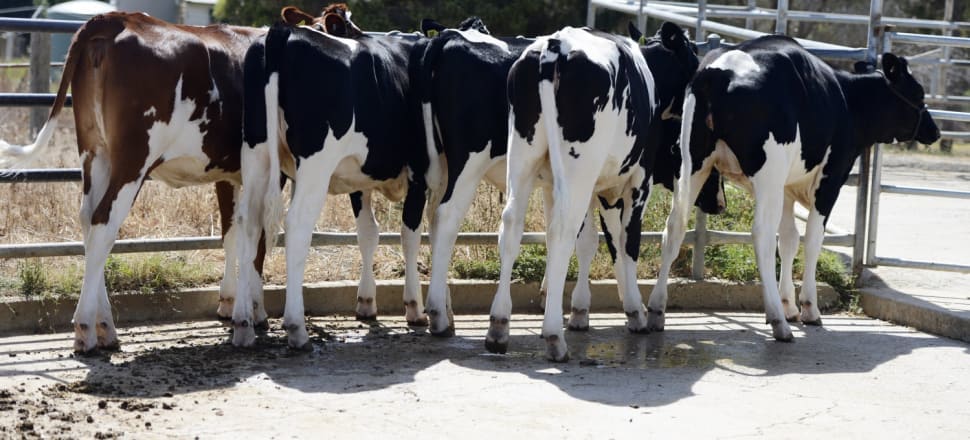 Coomboona Dairy has been acquired by Australian Fresh Milk Holdings (AFMH), making the company the largest dairy producer in the country.
 Quebec firm to pay $1.7 billion for Dairy Crest
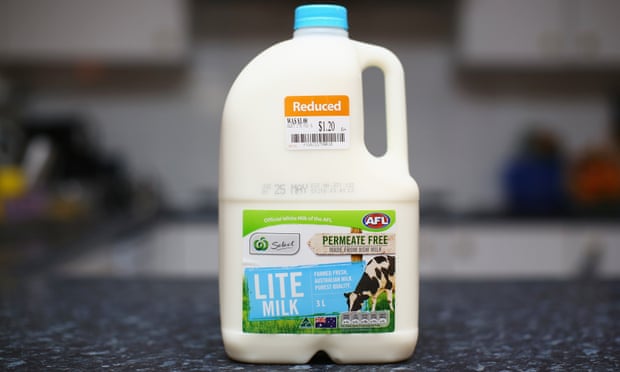 When the dairy farmer Shane Hickey calculated his hourly rate of pay at just $2.46 last year it prompted a wave of outrage and sympathy. Consumers vowed to change their purchasing habits to support small, independently processed milk instead of the $1-a-litre offerings in the major supermarkets.
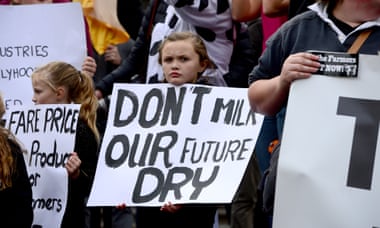 “Chasing that efficiency that we all got told was how we were supposed to make our money, because we weren’t going to get more money for our milk, has actually increased our cost base and added more risk into our business,” dairy farmer Phil Ryan said.

 Feed a cow, milk a cow, sell the milk. It all seems so easy.
 Woolworths has announced it will stop selling $1 per litre milk for good, in a move described as a “game changer” by the dairy industry.

 USDA recently released the December milk production numbers seeing a rise of 0.9% totaling 17.1 billion pounds. Production per cow averaged 1,966 pounds, up 23 pounds from same time last year. The number of cows totaled 8.72 million head, 21,000 less than December of 2017 and down 2,000 from November. You can read the full milk production report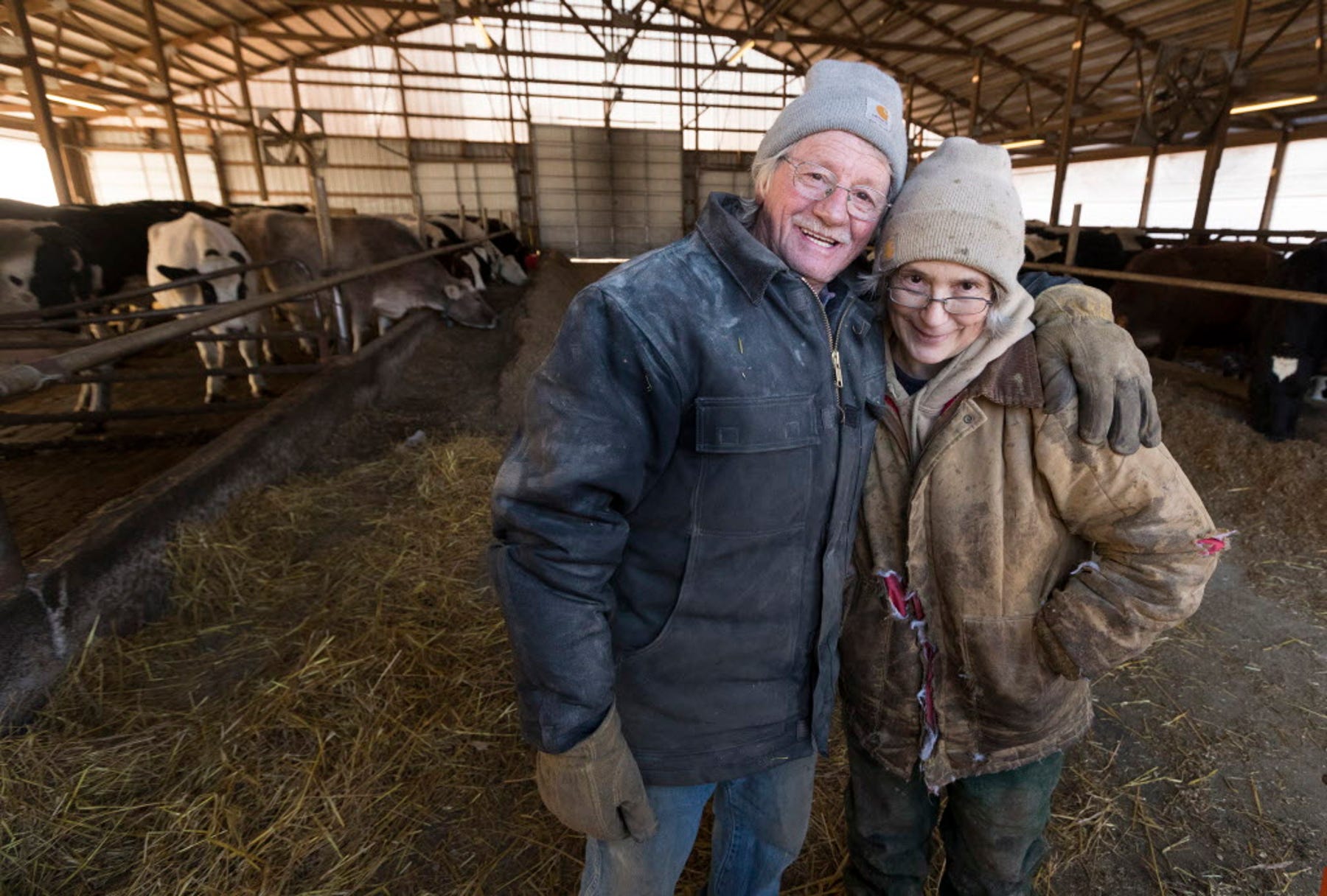

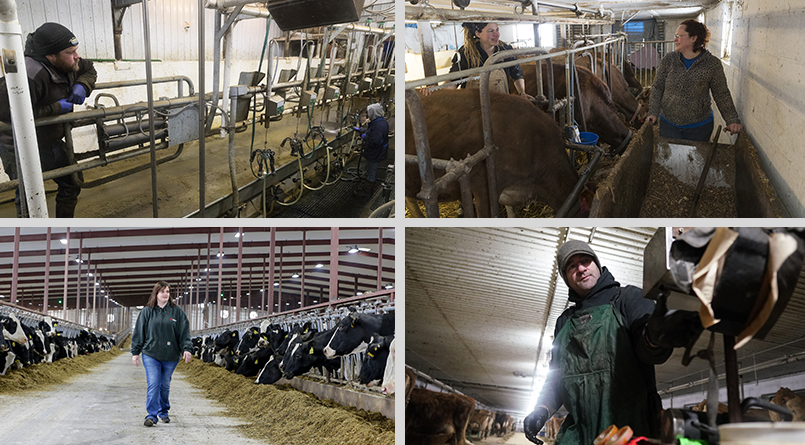
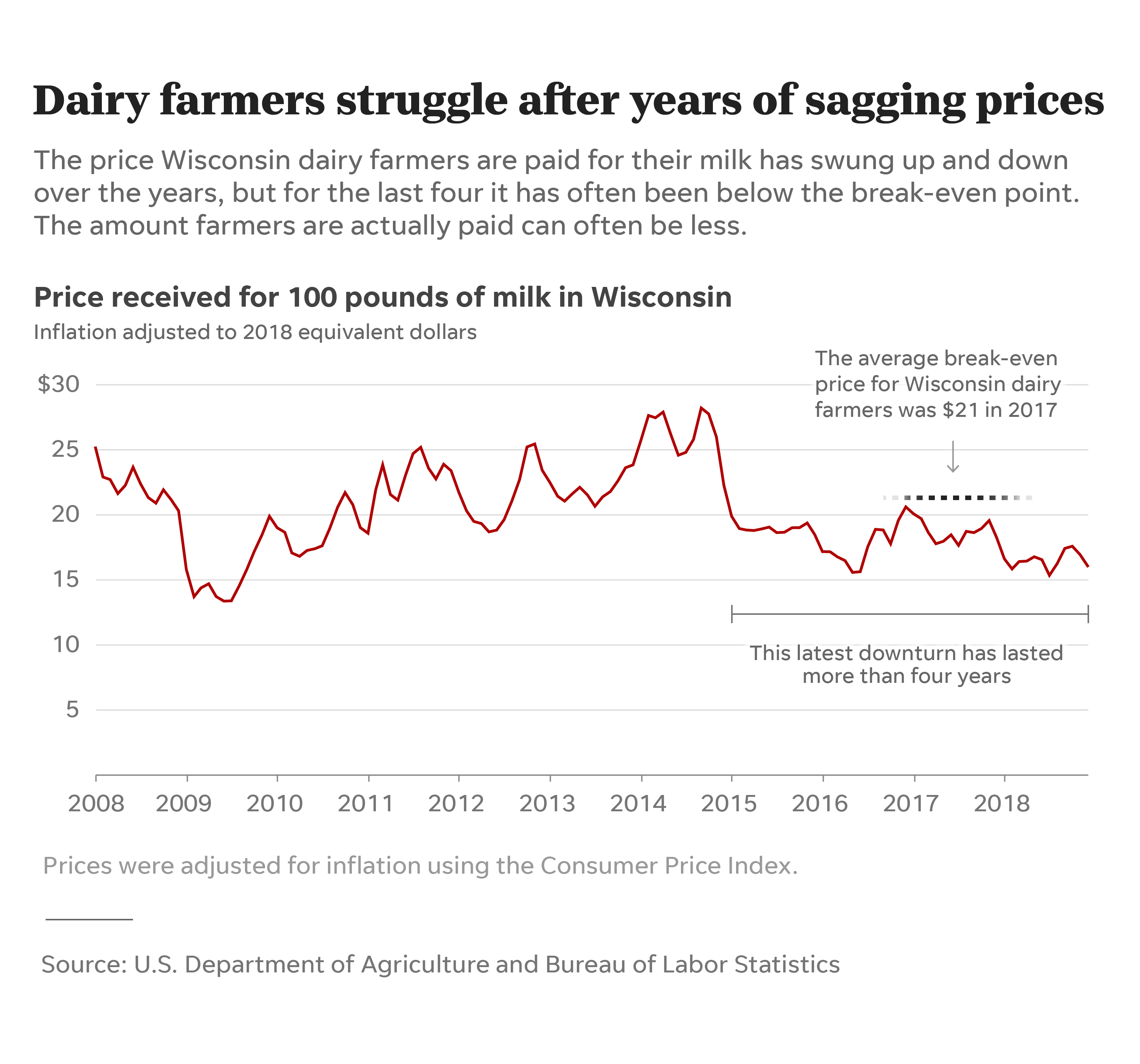


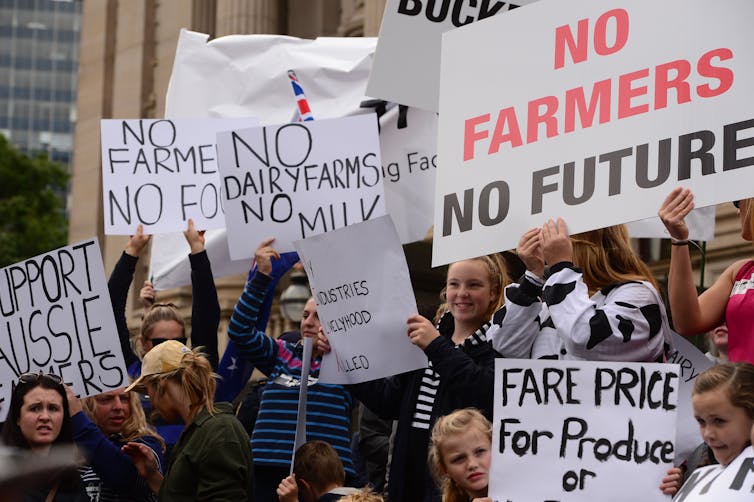
 Fonterra Australia is offering big dairy suppliers in its northern region about $6.75 a kg of milk solids, just days after it announced a final 2018-19 price for most suppliers of $6.05 a kg.
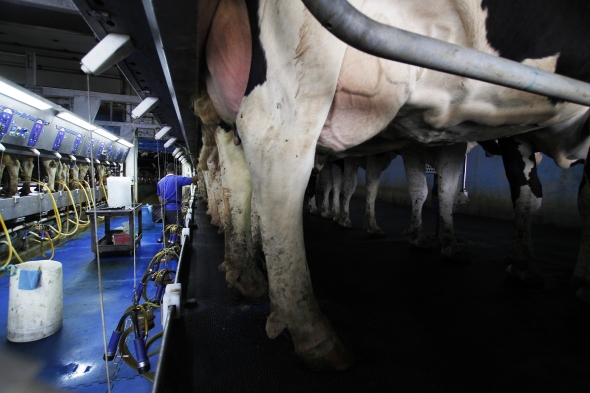 Increased trucking costs for Wisconsin dairy farmers is the latest symptom of an oversupply of milk.
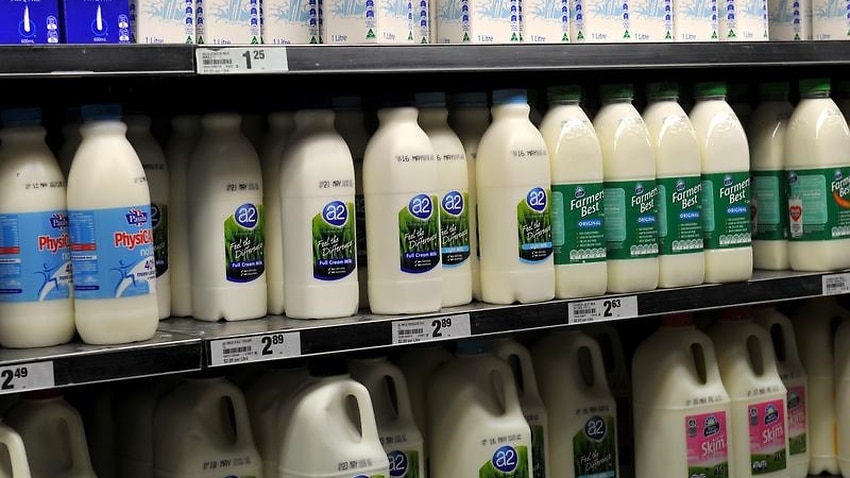 The federal agriculture minister has savaged Coles and Aldi for keeping their cut-price milk lines and has urged customers to boycott them.
-1.png?width=2093&name=Dashboard%20February2%20(2)-1.png)
 A Sicamous dairy farmer may have tapped into a way for people who have trouble digesting dairy to enjoy milk.
/arc-anglerfish-syd-prod-nzme.s3.amazonaws.com/public/NDCC7MMOORGPTF4QZOYEQ75K24.jpg) Open Country Dairy is seeking a judicial review of the way Fonterra Cooperative Group set its milk price in the 2018 season, despite the Commerce Commission giving the price-setting process a pass mark.
Open Country Dairy is seeking a judicial review of the way Fonterra Cooperative Group set its milk price in the 2018 season, despite the Commerce Commission giving the price-setting process a pass mark. The ongoing drought and rising feed prices have been the tipping point that forced Victor Harbor, South Australia, dairyfarmers Stephen Treloar and Colin Dohnt to sell their dairy herd.
 More dairy farmers quit the industry at the start of this year than at any time since March 2007, according to the latest Food Standards Association (FSA) figures.
 Former dairy farmer Mike Gorton said quitting dairy is still the hardest decision he has ever had to make, but three years on he knows it was the right one.
 Scott Holcomb, Greene, N.Y., has been named Northeast/Mid-Atlantic Area Representative for the American Jersey Cattle Association and National All-Jersey Inc. effective January 28, 2019.
 As the dairy industry continues to put more focus on the welfare of their cattle, progress is being made to ensure cows are fit to be transported when they are culled from the dairy herd. Lily Edwards-Callaway, who is an assistant professor with the Colorado State University Department of Animal Sciences, talked to producers about the welfare of their dairy cattle and safely transporting them during a presentation at the Colorado Farm Show held in Greeley.
 Being in an industry filled with so much passion is an aspect of dairying which Dairy Women’s Network chief executive Jules Benton loves after nine months in the job.
 Dairy farmers have former Fonterra chairman John Wilson to thank for the milk price they enjoy today, says Sir Henry van der Heyden.
 A month after
 It’s no secret that the fluid milk category has been struggling at retail for quite some time. However, sales of flavored milk and whole milk actually made some impressive gains in the not-too-distant past.
 The number of farmers exiting dairy exploded from its already accelerated rate last month as the sector continues its long-term contraction.
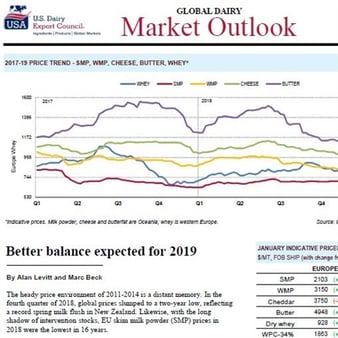
.png?width=554&name=GDMO%20chart2%20(2).png)




