Archive for Dairy Industry – Page 65

Storm over secret Fonterra Australia milk deal

THE fallout from Fonterra Australia’s secret milk contracts with northern Victoria suppliers has exploded, with a farmer representative being forced to take personal leave and another quitting the company’s forum group.

On top of that, a complaint has been made to the Australian Consumer and Competition Commission about the equity of the milk contracts.

The Weekly Times understands northern Victoria dairy farmer Simone Ross was told by Bonlac Supply Company chairman John Dalton to take personal leave for at least two months, after she questioned the secrecy of the North Fresh milk contracts.

Forum members were told in a telephone conference call on January 11 about the contracts offering dairy farmers in northern Victoria an average farmgate milk price of $6.71 a kilogram of milk solids, as long as they met minimum supply commitments every month.

The contracts have angered Fonterra suppliers in the northern region unable to meet the minimum requirements and those in other regions who were left to accept the base farmgate milk price of $6.05/kg MS.

Tasmanian forum member Leigh Schuuring, who resigned from the forum last week over the handling of the contracts, said the farmer representatives were told not to talk to anyone about North Fresh.

Fonterra has disputed the contracts were secret.

Mr Dalton said he would not describe them as secret.

“It wasn’t widely advertised,” he said. “But you might say that is splitting hairs.”

The Weekly Times understands Ms Ross questioned why Fonterra was not more open about the North Fresh contracts until after they were made public in The Weekly Times on February 20.

Contacted by The Weekly Times, Ms Ross said she could not talk about the North Fresh contracts because she was instructed to take personal leave.

“But there are a lot of farmers angry about it,” she said.

“I have questioned at the way the package was delivered.”

Mr Schuuring said he believed that was why Ms Ross was told to take personal leave.

He said BSC was suggesting she had mental health issues but he was sure she did not.

“They don’t like the questions she was asking,” he said.

“This was an easy way to quieten her down.”

Mr Dalton would not be drawn on telling Ms Ross to take leave.

“I won’t discuss anyone’s personal issues in a public arena at all. Absolutely not,” he said.


Source: The Weekly Times

‘It’s their whole life’: Virginia dairy farmers on decline

The gate clanged close as Matt Nuckols went up to one of his prized Holsteins. 

“How big is she?” I asked on the other side of the gate, as Bella nudged Nuckols. 

“Probably 800 to 900 pounds,” he explained, “So you always want to be cautious of the fact that even if they think they’re playing with you that they could hurt.”

Three generations of the family have worked at Eastview Farm. The over 1,000 acres was purchased by Nuckols’ great grandparents for his grandparents in 1938.  An American flag flew outside the big white house a few hundred feet from the barn. That’s where Nuckols calls home. 

Day in and day out, two generations of the family continue to farm. Nuckols’ dad, F.C., Uncle Wayne and cousin Taylor take care of more than 250 purebred Holsteins.

The cows have been specially bred over the years for specific high-quality traits, giving the farm recognition worldwide. 

“[We’re] breeding cows based on their pedigree, their family lineage,” Nuckols said. “That made them marketable around the world. We were able sell animals to about 7 or 8 different countries.”

But times are tough at Eastview Farm. Come June, there will be only one dairy farm left in Hanover County. Usually, around that time, Nuckols takes Bella to the Richmond Children’s Museum for a National Dairy Month event. 

“That is right around the time as when we will be milking our last cows,” he said. “Just don’t know yet what we’ll be doing in June.”

While experts say milk production across the country is going up, smaller farms are struggling because consumers aren’t buying as much of it. 

Dairy is Virginia’s third largest agriculture industry, according to the most recent data from 2017. 

Data from the Virginia Department of Agriculture and Consumer Services show about 500 Grade-A milk permits were issued in as of March 8, 2019. Those permits are for the milk you drink from a container in the grocery store. That’s about 150 less than July of 2017.  

According to the Virginia Farm Bureau, 30 years ago there were more than 12,000 Grade A permits in the state. 

“We’ve seen considerable consolidation with respect to the number of dairy farms,” Tony Banks from the Virginia Farm Bureau said. “20 years ago here in Virginia we probably had 1,500 Grade A dairies. Those dairy farms were milk approximately 125,000 dairy cows.” 

While more consumers grab cheese and yogurt from the dairy aisle, fewer people are getting milk you drink. 

“When it comes to dairy farmer pay, as a dairy farmer they stand to make more money off of fluid milk sales and those declines have been significant in the past 8 or 10 years,” Banks said. 

Since 2014, Banks says the cost of the milk you drink has done down by 35 percent. 

“You hope you can put away a little money on the highs to cover the lows,” Nuckols said. “We just cannot continue to make it in this current market… As that supply has gone up demand as met many more challenges.”

It was a difficult decision for the family to stop producing come June. But the land and a few cows will stay with the family. 

“For our family, I think of our dads the most. They’ve done it for 60 years,” Nuckols said.” They’ve produced milk – you know –  our dads for the majority of that 60 years work. 14, 15 hour days. It’s their whole life.”

Nuckols hopes to keep advocating for dairy farms, to help keep other families in business. 

Source: wavy.com

Record US Dairy Exports in 2018

A record number of dairy products were exported in 2018 despite retaliatory tariffs and a global oversupply says the U.S. Dairy Export Council.

Shipments for the year were up nine per cent from 2017 and were up two percent and valued at $5.6 billion. The U.S. also reclaimed its title as the world’s largest exporter of cheese last year.  

“In the face of retaliatory tariffs, global oversupply, weak commodity markets and other challenging headwinds, exports rose to an equivalent of 15.8% of U.S. milk solids production in 2018, the highest percentage ever in a calendar year,” says Alan Levitt, USDEC vice president of communications and market analysis.

The largest increase was seen in whole milk powder shipments, up 80 per cent, and butterfat sales, up more than 60 per cent.

Shipments in December and November were down on the year mostly because of lost Chinese sales and retaliatory tariffs. The U.S. did reclaim the top cheese exporter spot in the world.

However, the enthusiasm for exports was dampened by a decline in volume sales of 21% and the value of those sales down 9% in December. In November, sales volume was down 12, and down 11% in the fourth quarter of 2018.

“Loss of sales to China—America’s third-largest single-country market—followed mid-year retaliatory tariffs, playing a role in the year-end decline,” says Levitt. Sales to China in the first half of 2018 were up 17%, but then dropped by a third in the final six months, he says. Sales to Japan also fell 10% in the second half of 2018.


Wisconsin dairy farmers discuss ongoing crisis they face

In the past year dairy farmers in Wisconsin have had to shut down 714 farms. That’s 8.2 percent, dropping the total number of dairy farms here to 8,046. That is roughly half the number of 16 years ago.

It’s the smaller, family farms, that are being forced out. While the number of dairy cows has remained the same, the average number of cows per farm has doubled. The number of larger farms, known as CAFOs — Concentrated Feeding Operations, farms with over 700 cows — has risen to 272, an increase of almost 550 percent since 2000. The average farm has 155.

I visited four dairy farmers in the Muscoda-Richland area of Wisconsin at their farms Feb. 21 with Randy Jasper, a former dairy farmer who now runs a farm equipment repair shop there, and Dean Hazlewood, another Socialist Workers Party member from Chicago. The farmers all said they’re caught between rising production costs and lower prices for their milk today.

Kenneth and Starlyn Miller, who own a dairy with 133 milking cows, invited us into their kitchen for a discussion. “We paid off our debt a few years ago. But now we have debt again,” Kenneth Miller said. “Everyone tells us that we have to produce more milk to stay in business. But the government says there’s too much milk on the market. How can there be too much milk? There are millions of people who go hungry.”

In 1933, the average Wisconsin cow produced 5,140 pounds of milk per year, according to the U.S. Department of Agriculture. By 1978, that had more than doubled to 11,735 pounds. And in 2017, it had doubled again to 23,725 pounds — soaring nearly 23 percent in just the last decade.

Is there too much milk?

The so-called glut of milk on the U.S. market — milk working people worldwide would love to get their hands on — drives down the price dairy farmers receive on the market. “I get $13.75 per hundredweight,” Kenneth Miller said. U.S. government agencies report that for the past four years the price farmers have gotten has been below $21, which was the average break-even price in 2017.

“To help make ends meet, I used to sell 12 to 15 cows for meat at $1 a pound around harvest time. Now I don’t get enough to make it worthwhile because of cow auctions, where the packing companies buy up cows sold by farmers who are shutting down,” he said. “I just sold an older cow for 20 cents a pound. If you go to the store you pay $3 a pound for ground beef!”

Farmers’ costs are up. “It costs $150 for a vet just to come to your door,” said Starlyn Miller. The price of hay has gone up since the drought of 2012.

They used to rent additional farmland to grow crops for feed and for sale. “But land rents are just too high,” Kenneth Miller said.

And dairy farmers don’t get any help from government payouts to provide relief from the effects of international tariff battles today. We asked about the impact of the tariffs on exports of farm products. “It doesn’t pay to apply for government relief for tariff losses,” he said. “We get only one penny a bushel for corn losses.” The market price for corn is $3.66 per bushel.

The Wisconsin Farmers Union reports that a 55-cow dairy farm would receive a one-time government payment of $725 from the bailout, but stood to lose between $36,000 and $48,000 in income last year from low milk prices.

“I think about selling out,” said Kenneth Miller with a smile. “There are only two reasons to keep going. First, I don’t know if I would like factory work. And second, I’m hoping for a miracle.”

“It used to be that after a couple of bad years, we’d have a good one that made up the difference, and then a few years when we could do OK. Where are the good years now?” he asked.

After our discussion, the Millers signed up for a 12-week introductory subscription to the Militant and bought a copy of In Defense of the US Working Class, by Mary-Alice Waters.

‘I love milking’

“We’re surviving, but it’s hard work,” said Steve Armbruster, who runs a 300-cow dairy with his two brothers. “It takes me six to seven hours to milk the herd,” he said. “I get up, milk them, try to get three hours of sleep, and then milk them again.”

“We watch where every dollar goes,” Armbruster said. “I can’t imagine doing anything else. I love milking.”

“There’s a lot of hidden expenses most people don’t think about,” he said. “For instance, it takes two years for a heifer to grow into a milking cow. All that time, you have to feed them, take care of their health and medical expenses, and pay for their overhead expenses.”

Steve Schmitz, who has been dairying since 1974, has a herd of 135 cows.

“Nobody in the government looks out for farmers. All they care about is how the big corporations are doing,” Schmitz told us. He has had success crossbreeding Holsteins, the traditional milking cow in Wisconsin, with Montbeliarde cattle. The milk fetches a higher price because it is higher in milk fats.

“It seems like workers and farmers are facing more and more problems surviving,” he said. Schmitz signed up for a subscription to the Militant and bought a copy of In Defense of the US Working Class for his wife, who used to be a teacher and has been following the teachers strikes that began in West Virginia a year ago.

Workers and family farmers both face exploitation by capital and the social class that wields it. Building an alliance between workers and farmers to fight that exploitation is crucial.


Source: The Militant

US Agriculture Secretary Perdue Visits Vermont, But Doesn’t Deliver Hope For Dairy

In a brief visit to Vermont Friday, U.S. Agriculture Secretary Sonny Perdue said he did not favor a supply management system that many dairy farmers hope will help support their struggling industry.

A trip to a dairy farm was not on Perdue’s schedule while in Vermont. He visited a large-scale sugaring operation in Milton and helped Gov. Phil Scott tap a maple tree in a ceremony marking the beginning of the sugaring season.

Perdue got a little maple sugaring 101 during a tour of Georgia Mountain Maples. Kevin Harrison, co-owner of the 160,000-tap operation, explained some of the basics — like how cold nights and warm days make the sap flow.

“So it does need the cooler temperatures?” Perdue asked.

“That’s right. If it were to stay warm, like 60 or 70 degrees, three days in a row, the tree will start to bud,” Harrison told him. “We’ll still get sap, but the flavor of the syrup is off.”

Georgia Mountain Maples, with its giant gleaming evaporators, high-tech reverse osmosis machine and bustling show room, is a prime example of maple’s success story in Vermont.

Some dairy farmers who showed up at the event hoped to draw the comparison for Perdue between booming maple and struggling dairy.

“Maple has been thriving in this area, because … they manage their supply, and I think that’s the key to having a proper price for your product.” — Phil Parent, Enosburg dairy farmer
Phil Parent, an Enosburg dairy farmer, said maple’s success is due in large part to a system organized by producers north of the border. The Federation of Québec Maple Syrup Producers maintains a syrup reserve which they use to control the regional supply.

Parent said Québec’s system basically helps establish the price Vermont producers get for their maple products.

“And I can’t help but see the correlation between the maple and the dairy. It’s a world of difference we’re seeing,” he said. “Maple has been thriving in this area, because of what the federation did up in Québec. They manage their supply, and I think that’s the key to having a proper price for your product — you know, to get a minimum price for what your cost of production is covered by.”

Parent said his cost of production for about the last four years is higher than the price he gets for the milk he sells. He was hoping to talk to Perdue about a supply management system he and other farmers think would help bring production in line with demand, and boost prices in the process.

“We don’t know if we’re going to be able to have the time allotted for that [meeting],” Parent said. “But I think it’s a very important issue that should be brought up here.”

Perdue did meet with some dairy farmers who showed up at Georgia Mountain Maple. But in a question and answer session with reporters, the secretary did not say what Parent and others wanted to hear.

“The dairy industry is wide and broad in the U.S., [and] I don’t really see a lot of hopes for a Canadian-type supply management system,” Perdue said. “Look when you’re under economic stress and you’re rushed, you look for any kind of help where you can find it. I certainly understand, I’m not offended by the question. I just don’t think the spirit of entrepreneurship and economic liberty in the United States really calls for a supply management system in any of our crop areas.”

“I just don’t think the spirit of entrepreneurship and economic liberty in the United States really calls for a supply management system in any of our crop areas.” — U.S. Agriculture Secretary Sonny Perdue
The Vermont Milk Commission has recommended a supply management system, and the three-member Vermont congressional delegation also has supported it.

Perdue said the U.S. Department of Agriculture will speed up the rule-making for a new dairy insurance program that should help farmers cover some of their losses. He said the program should be in place by June.

“These farmers have had it tough. … Most of your Vermont dairy farmers are smaller, and it’s been a tough go out there,” Perdue said. “But if they can just hang on, I think to the summer, literally — we don’t say this very often in the federal government — help’s on the way.”

Perdue also addressed another need of rural Vermont, and rural America: better broadband internet service. The agriculture secretary encouraged Vermont communities and internet providers to apply for a new round of USDA grants designed to boost broadband in underserved areas.


Source: VPR

52 collegiate students participate in 14th annual Western Regional Dairy Challenge

Fifty-two students from six Western U.S. universities and one Canadian college traveled to Ogden, Utah, for the 14th annual Western Dairy Challenge on February 21 – 23, 2019. The contest was hosted by Utah State University.

The Western Regional Dairy Challenge is a three-day educational competition designed to prepare students for dairy careers. Working in mixed-university teams of four or five students, participants assessed all aspects of a working dairy farm, including facilities, nutrition, financials, reproduction and animal health. Students collaborated on a 20-minute team presentation that detailed their observations and suggestions to a panel of judges. Teams were ranked based on how well their evaluations matched the judges’ evaluations of the dairy operation.

On Thursday students sharpened their farm financial skills with a workshop taught by Tony Powell, from Western Ag Credit. Next, students participated in a team building event, where they learned about behaviors of successful teamwork with a focus on listening and respect. As part of the team building exercise, they sampled local, artisan cheese from Beehive Cheese and worked together to come up with creative descriptions of the cheeses that could be used on a menu. They also kicked off the competition portion of the event where they assembled into aggregate teams (meeting their new teammates from other universities for the first time) and spent the evening diving into the host dairy’s records to assess the strengths and weaknesses that show up in the numbers.

On Friday morning, the teams headed out to the local host dairy that graciously opened their doors to the students. They spent 3 1/2 hours walking the facility, observing the cows and the management aspects of the operation. Following the on-farm assessment, the students participated in a question and answer session with the management team of the dairy. Several sponsors attending the event networked with and mentored the students throughout the weekend.

On Saturday morning, students presented their findings to a panel of judges made up of a nutritionist, a veterinarian, a financial analyst and a dairy producer who ranked them on their presentation and conclusions. Students also had the opportunity to hear the judging panel’s full critique of the dairy’s opportunities to round out this learning experience.

1st Place Teams:

  • Team 3 – Brian Head: Melissa Pochapsky (University of Alberta), Lars Schilderink (Cal Poly State University – SLO), Haley Hill (Texas A&M University), Osvaldo Gonzalez (Utah State University), Whitney Sandberg (University of Idaho)
  • Team 10 – Snowbasin: Jerod Berrett (Utah State University), Ashly Anderson (University of Idaho), Natalie Koke (Texas A&M University), Alexandra Gambonini (Cal Poly State University – SLO)
  • Team 11 – Solitude: Jessica Muxlow (University of Alberta), Caleb Zwart (California State University – Fresno), Kailey Foster (Utah State University), Elisabeth Regusci (Cal Poly State University – SLO)

2nd Place Teams:

  • Team 1 – Alta: Mackenzie Smithyman (Washington State University), Trevor Maciel (Cal Poly State University), Kendra DeCory (University of Idaho), Hannah Neer (Cal Poly State University – SLO), Austin Hansen (University of Idaho)
  • Team 8 – Park City: Mark Hooker (California State University – Fresno), Marta Pulfer (Texas A&M University), Maddsion Degenshein (University of Idaho), Mackenzie Peters (Cal Poly State University – SLO)
  • Team 12 – Sundance: William Wolf (Texas A&M University), Hank DeVries (Cal Poly State University – SLO), Juanita Echeverry-Munera (University of Alberta), Summer Call (Cal Poly State University – SLO), Morgan Hawley (Washington State University)

A committee of dairy industry representatives organized the Dairy Challenge, led by local host volunteers, Dr. Allen Young from Utah State University and Dallin Buttars, a Dairy Challenge Alumni, from Select Sires. In addition, a long list of volunteers was important to the competition’s success, as is the case for every Dairy Challenge event. To volunteer or become a sponsor for the 2020 contest, contact Molly Kelley at mollyk@dairychallenge.org or Renee Smith at rsmith@omegabalancer.com, or go to dairychallenge.org for more information. All contributions are tax deductible and contributing sponsor listings are available on the website.


2018 Sets Record Year for U.S. Dairy Exports, Reaching Nearly 16% of Milk Solids Production

Volume up 9 percent over last year, but sales to Asia lag in closing months of 2018.   

U.S. dairy exports reached a record-high volume in 2018, increasing 9 percent over the prior year despite a fourth-quarter slowdown, according to trade data released today.

Suppliers shipped 2.188 million tons of milk powders, cheese, butterfat, whey products and lactose in 2018, and total dairy exports added up to 1.993 million tons (4.394 billion lbs.) of total milk solids. The value of U.S. exports was $5.59 billion, 2 percent more than the prior year.

In the face of retaliatory tariffs, global oversupply, weak commodity markets and other challenging headwinds, exports rose to an equivalent of 15.8 percent of U.S. milk solids production in 2018, the highest percentage ever in a calendar year.

Over the previous three years, exports were equivalent to 14.2 percent of production.

2018 Exports Reach Record 15.8 Percent of Production

chart 2018 -3 (2)


U.S. export gains were led by record shipments of dry ingredients: nonfat dry milk/skim milk powder (NDM/SMP), high-protein whey products and lactose. However, performance was dimmed by a fourth-quarter slump, during which volume declined 11 percent year-over-year, after posting a 16 percent increase in the first three quarters.

In addition, the U.S. reclaimed the title of the world’s largest single-country cheese exporter.

2018 Volume Reaches Record 4.394 billion lbs.

chart 2018-2 (2)


Loss of sales to China—America’s third-largest single-country market—followed mid-year retaliatory tariffs, playing a role in the year-end decline. U.S. sales to China were up 17 percent in the first half of the year but fell 33 percent in the second half—a drop of more than 10,400 tons of product per month. Exports to Southeast Asia also faded toward year-end, sliding 18 percent in November-December, while shipments to Japan were down 10 percent throughout the second half.

Mexico and Southeast Asia remained the top two overseas destinations for U.S. dairy products in 2018, accounting for 39 percent of total export value. Canada, China and South Korea rounded out the top five markets. Among other markets, U.S. suppliers posted increased sales last year to the Middle East/North Africa (MENA) region and the Caribbean.

2018 Sets Volume Record — Despite Lagging 4th Quarter

chart 2018-1 (2)


To see more detailed, interactive charts on 2018 performance, click here.

Product highlights

U.S. exports of NDM/SMP totaled 715,491 tons in 2018, up 18 percent from the prior year, as U.S. suppliers took advantage of strong, broad-based global import demand. Sales to Mexico (up 25 percent, +70,761 tons, to 348,989 tons) reached a record high, and shipments to Southeast Asia (up 32 percent, +52,449 tons, to 216,077 tons) were the most ever as well, despite falling 25-percent short in the last two months of the year. These two markets accounted for more than three-quarters of U.S. NDM/SMP export volume. The Philippines remained the top market in Southeast Asia, and shipments to Indonesia and Vietnam increased 70 percent. In contrast, other key markets suffered losses: exports to China, Peru, Pakistan, Japan and the MENA region were just 70,561 tons in 2018, down 29 percent (-28,820 tons).

(USDEC has adjusted official U.S. Bureau of Census trade data for NDM/SMP and WMP since June 2016 to account for shipments we believe are misclassified.)

Cheese exports increased 2 percent in 2018 to 348,561 tons, making the United States the world’s largest single-country cheese exporter, a spot last held in 2013-2014. U.S. suppliers posted record sales to Central America (24,034 tons, +16 percent) and Southeast Asia (19,077 tons, +15 percent) and increased volume to South Korea (56,169 tons, +7 percent). Shipments to Mexico, the top market for U.S. cheese, were up fractionally for the year, tipping a new record high, and sales to Japan, the number-three market, were up 3 percent. However, these gains were offset by losses to Australia (-19 percent, -5,596 tons) and Canada (-35 percent, -4,075 tons).

Total whey exports were 545,890 tons, down fractionally compared with 2017 volume. Shipments of whey protein concentrate (WPC) were up 4 percent and sales of whey protein isolate (WPI) were up 20 percent. Both reached new highs. Exports of dry whey were up for the third straight year, finishing 2 percent above 2017 levels. Exports of modified whey (permeate), however, lagged prior year, dropping 13 percent.

Whey trade was impacted by China tariffs more than any other product category. Whereas China made up 45 percent of U.S. whey exports in 2017, it accounted for just 31 percent in the last six months of 2018. In the first half of the year, whey exports to China were up 3 percent. In the second half, after tariffs were put in place, exports were down 39 percent—a decline of 48,469 tons in six months. For the full year, whey exports to China were down 18 percent. Almost all the drop-off came in dry whey and modified whey (permeate).

Some of the decline was offset as U.S. suppliers diverted whey to Southeast Asia —which took record volumes in 2018—as well as Japan, South Korea and Mexico. Exports to Southeast Asia were up 28 percent (+23,744 tons), while shipments to Japan were up 26 percent (+7,011 tons), South Korea was up 41 percent (+4,658 tons) and Mexico was up 9 percent (+4,455 tons). Meanwhile, sales to Canada declined 22 percent (-9,700 tons).

Lactose exports totaled 392,166 tons in 2018, a 9-percent increase, though shipments slowed considerably in the fourth quarter. Most of the gains for the year were to China (+40 percent, +27,484 tons) and New Zealand (+27 percent, +8,673 tons).

Butterfat exports totaled 44,538 tons, up 61 percent, and the most since 2014. Gains were driven by record butterfat sales to Mexico (16,126 tons, almost all anhydrous milkfat). Butterfat shipments to Mexico were up 288 percent (+11,967 tons) from the prior year.

Exports of whole milk powder (WMP) and milk protein concentrate (MPC) also rebounded in 2018, posting their highest volumes in four years.

WMP shipments were 45,706 tons, up 80 percent from 2017 levels. The majority of the increase came from Southeast Asia (mostly Vietnam and Singapore), where sales were up more than three-fold to 19,741 tons.

MPC exports totaled 32,701 tons, up 40 percent. Sales to Mexico were the most in 10 years (11,699 tons, +37 percent, +3,138 tons); shipments to Canada more than doubled to 4,729 tons (+2,746 tons); and exports to the MENA region jumped 73 percent to 6,704 tons (+2,818 tons).

Shipments of fluid milk and cream were 115.4 million liters, up 9 percent. Most of the increase came in sales to Taiwan, which fell just short of being the number-one overseas market for U.S. fluid milk for the first time. Exports to Taiwan were nearly 37.7 million liters (+31 percent, +8.9 million liters). Suppliers also boosted sales to the Caribbean (+79 percent, +4.2 million liters). Meanwhile, exports to Mexico, still the leading market for U.S. milk/cream, were flat and shipments to Canada were down 2 percent. 

One exception to the growth trend was food preps (blends), which hit an eight-year low export volume of 62,721 tons, down 13 percent. Sales to Canada, which accounted for more than half that volume, were off 2 percent, while shipments to all other major markets were down more significantly.


Source: U.S. DEC

Colorado’s endangered dairy farms

The most purchased item at grocery stores is a gallon of milk. There is demand, yet small family dairy farms are rapidly disappearing across the country. The country-wide rate is a 20 percent drop over the last five years. That is thousands of small dairies. Larger, corporate dairies are expanding production

Colorado’s rate is lower, but still declining. In Colorado there are a couple factors helping local dairies hang tough. A recent food factory with a milk-based product opened in recent years and increased demand for milk. Colorado farmers are also in a co-op to work for the best interest of all in the tough business. “Let’s not over produce ourselves so we’re in very nice balance, said farmer and owner of Rainbow Dairy, Will McConnell, “The milk produced in Colorado meets the customer’s needs, but we’re not having to relocate milk out of our market very much.”

McConnell has been running his dairy in Florence since 1990. “We’re here 24 hours a day.” It is hard work that he enjoys. “I love my cows, so that’s why I do what I do I do.” He keeps a herd of around 500 cows. In terms of dairies, his operation is relatively small.

He sees the trend of small dairy owners deciding to call it quits. “Since 2014 the price of milk for the average dairy farmer has not covered the cost of producing the milk.” He has no plans of becoming a statistic. “Keep hoping for the carrot out on the horizon that milk prices are going to get better and we’re going to get there and replenish and recoup and be able to keep on going.”

The issue for local farmers is due to national and global economics. A quota system of milk production in Europe lifted, allowing farmers there to produce more. The result is more milk than needed in the world market. “Our trade wars, embargos and all that stuff has had an effect on the dairy industry,” said McConnell. In addition, politics out of Washington D.C. impacts prices.

To counter the hit to his dairy income, McConnell works another full-time job. “It’s a good job. I enjoy my job and I get to work with cows there too.” Managing another operation brings extra income and benefits like health insurance. “I do it so my wife and I don’t have to take any living costs out of the dairy and everything the dairy generates stays in the dairy.”

There are also factors not part of accounting ledgers. “We feed a lot of people and that’s a pride thing too,” said McConnell, “We make food for other people. That’s a nice feeling.”

Source: koaa.com

Sardinian (Italy) dairy farmers reach accord with Italy’s government

Italy’s government has come to an agreement with dairy farmers in Sardinia on the per litre price of sheep’s milk after weeks of protests over falling rates, Italian news outlets reported on Friday.
Since mid-February, farmers across the region have been blocking roads, attacking lorry drivers, and pouring milk onto highways from motorway passes in protest at the low prices, which they say provide them with less than they need to survive.

Sardinian sheep’s milk prices dropped from €0.85 per litre in 2018 to €0.60 per litre at the start of 2019 due to a reduction in the market price of Pecorino Romano cheese.

Approximately half of all Sardinian sheep’s milk is used for production of the traditionally Roman cheese.

The farmers said the milk had hit its lowest rates since the 1970s and was effectively worthless.

The price has now been set at €0.74 per litre, following a meeting that took place today attended by Giuseppe Marani, the prefect of the Sardinian province of Sassari, along with representatives of the farmers, food processing companies, and trade associations.


Source: The Local

NZ Dairy Sectors Risks Credit Squeeze

Significant changes proposed by the Reserve Bank to the amount of capital banks have to hold in reserve could put the squeeze on lending to the dairy sector.

In its latest report on the performance of the banking sector KPMG’s head of banking and finance John Kensington has sounded the alarm about the RBNZ’s proposal to make the banking sector capable of sustaining a one-in-200-year financial shock.

The proposal, which caught the sector by surprise before Christmas, requires a near doubling of the capital held in reserve by banks and came when the sector expected only minor adjustments to what banks already hold.

“When you compare New Zealand to Australia or Europe our model is tough.

“The Reserve Bank is saying we have a very good banking system but that it would be appropriate to think about what sort of shock that system can absorb and they are getting a public view of that.

“Their research seems to indicate they think one in 200 years is about right,” Kensington said.

Reserve Bank governor Adrian Orr said the capital could be raised by retaining 70% of all bank dividends for five years, the proposed transition period. 

But Kensington said that will not play well with bank shareholders who would effectively have a reduction of their returns and a dilution of their bank’s value would inevitably follow.

“Basically, your return on equity goes down so you have to make even more profit to counter that and I can’t see banks making more profit on top of what they have made being very popular with the public.”

Banks have instead indicated they would be forced to scrutinise a range of actions including raising more capital, reducing deposit rates and increasing lending rates. 

They might also review lending to sectors performing less well or unable to provide security and possibly consider rationing the credit issued to those sectors.

“And two of those sectors are construction and dairying. 

“They will look carefully at types of lending that are carrying losses or provisions for bad loans.”

The dairy sector already faces headwinds around bank lending conditions, with banks now required to seek a greater portion of principal repayments after almost a decade of interest-only payment options.

Farmers Weekly contributor Professor Keith Woodford has calculated the sector’s bank debt is $22 a kilogram of milksolids or $41.6 billion (Farmers Weekly, February 18). 

Overall sector debt is 49% of assets but 20% of farmers have greater than 70% debt on their assets.

He noted banks are no longer queuing up to finance dairy farmers and when funds are available Government policy requires funding no longer be available on an  interest-only basis.

The sector faces the pressure of aging farmers wanting to exit, a younger generation less interested in farming and a vacuum of funds now foreign buyers have been removed by changes to overseas investment.

“And looking to the future there are issues around sustainability and environmental controls that are all added costs which we do not really know how they will play out yet,” Kensington said.

While the RBNZ has emphasised it is only in a consultative stage Kensington is wary about how much the final decision might depart from the proposal.

“If you look at the last two consultation rounds on open bank resolution and outsourcing, they ended up pretty close to what they (RBNZ) were seeking.”

But the RBNZ has been at pains to encourage submissions from a wide range of parties.

A Westpac spokesman said the proposal for banks to hold more capital will have implications for its business and customers. 

“Capital buffers ensure banks have sufficient capital to get through a serious economic downturn. 

“However, too large a buffer limits banks’ ability to innovate and enhance customer outcomes and can add significant cost to us and our customers. 

“The Reserve Bank has extended the consultation period out to May 3 and we’re talking to all stakeholders to provide the most detailed feedback possible.”

Neither BNZ nor ANZ were prepared to comment. 


Source: Farmers Weekly

Australian Milk Price Clash

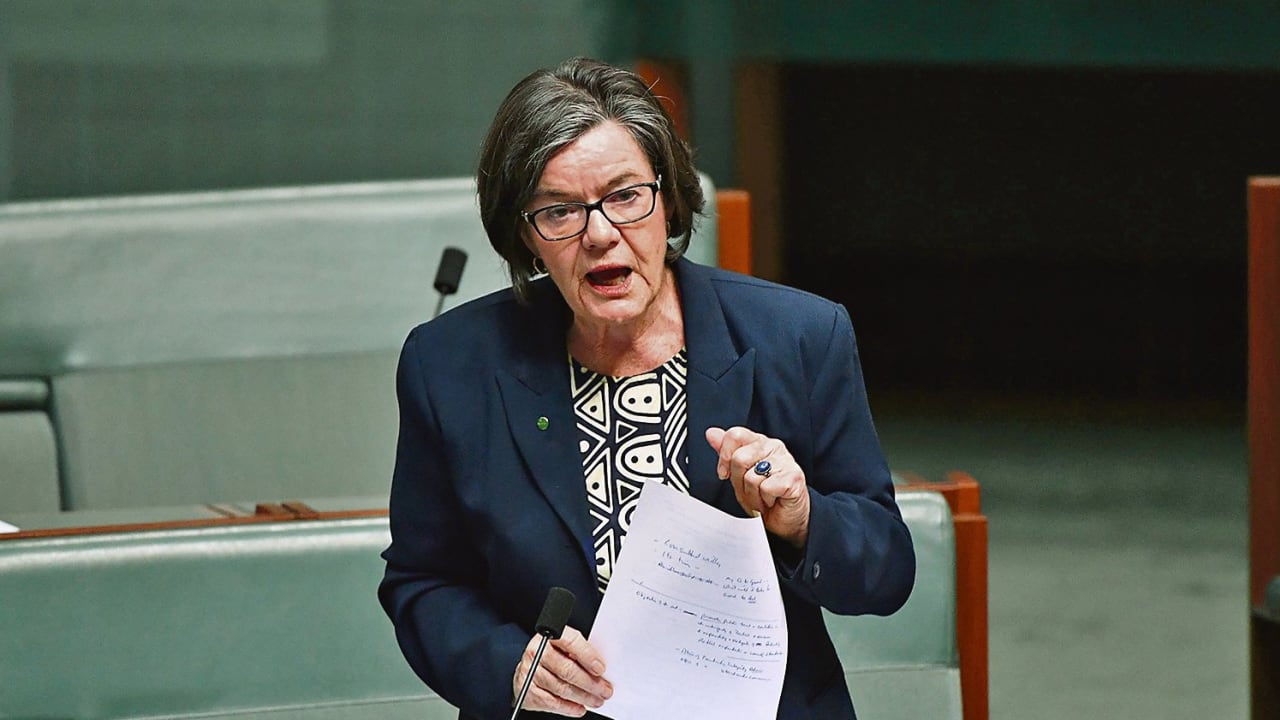
Federal Member for Indi Cathy McGowan and Labor’s candidate for the seat, Eric Kerr, have clashed over milk prices.
Last week Mr Kerr accused Ms McGowan of turning her back on struggling dairy farmers by refusing to support a motion in parliament to investigate measures to assist and support the dairy industry.

That measure was a motion put forward by Labor, which tasked the Australian Competition and Consumer Commission to investigate a proposal to set a minimum farm gate milk price.

Without the support of independents the motion failed, and Mr Kerr put the blame squarely on the woman whose seat he hopes to take at the next election.

‘‘Let’s be clear here — Labor isn’t trying to impose a solution on farmers,’’ Mr Kerr said.

‘‘This is simply asking for the consumer watchdog to have a look to see if that’s an option which would help.

‘‘For too long farmers have not been paid enough for their milk and processors are not securing the best return. The dairy industry is broken and the situation is growing worse.

‘‘Milk production is down year-on-year, farmers are culling their cows and leaving the land.

‘‘If we’re not careful, we will be importing powdered milk from overseas.

‘‘Today’s dairy motion was one most people would expect Cathy McGowan to support to help dairy farming families in crisis.’’

Ms McGowan rejected this assessment and said she did not support the motion as it would not have solved the issues currently faced by dairy farmers.

‘‘I have a decade of working with the dairy industry and I know from experience that this sort of market intervention to set minimum prices will not work,’’ Ms McGowan said.

‘‘When a floor price in the wool industry was introduced, it failed. Wool was stockpiled and woolgrowers suffered as a consequence.

‘‘Floor prices just don’t work in the agriculture sector. What does work is building resilience in the farming sector and their communities.

‘‘The Drought Future Fund was passed yesterday by the parliament with all of my amendments agreed to by the government.

‘‘This will benefit all farmers and their communities.’’


Source: Dairy News

‘Road Map’ Petition Outlines Next Steps in Dairy Labeling

National Milk Producers Federation has submitted a citizen petition to the Food and Drug Administration outlining how and why the agency should use its existing regulations to guide the use of dairy terms for plant-based products.

The petition is a roadmap for the next step the FDA should take in ending the violation of its standard of identity rules in the labeling of plant-based dairy alternatives, Alan Bjerga, NMPF senior vice president of communications, said in a conference call on the issue.

For years, drinks made from soybeans and other plant materials have been labeled “milk.”

NMPF has been vocal about the problem for decades regardless of food-consumption trends or food fads, he said.

“What’s different now is the FDA’s serious engagement on the issue,” he said.

The agency recently closed a public comment period on the matter, drawing more than 13,000 comments.

“The public interest in this issue alone, to us, illustrates further that the FDA needs to act,” he said.

There is anecdotal and survey evidence of consumer confusion over the nutritional content of dairy alternatives and concerns of adverse health effects in children as outlined by the American Academy of Pediatrics and others, he said.

The petition “is meant to both aid and encourage the FDA to find a practical solution to the dairy labeling problem, one that is grounded in current law and addresses contemporary concerns,” he said.

FDA’s call for comment provided NMPF with another chance to explain the compelling need to provide resolution to the issue, Tom Balmer, NMPF executive vice president, said.

“We believe a comprehensive fix has been available all along. But FDA’s decades-long inaction has allowed marketplace chaos to grow exponentially,” he said.

NMPF has publicly stated many times that it is not trying to keep dairy imitators out of the marketplace but insists that those food products follow the law, he said.

“We believe it’s possible to use existing regulations and with some modification produce common-sense labeling that will provide everyone with truthful, transparent and reasonable options,” he said.

For non-dairy foods using standardized dairy terms but are nutritionally inferior to the dairy foods they reference, NMPF is urging FDA to immediately enforce existing imitation labeling regulations.

An imitation food could avoid being labeled as such simply by not using any standardized dairy term. It could also avoid the imitation labeling by stating on the label that it is inferior to the referenced product, he said.

For non-dairy substitutes that are not inferior to the referenced product, NMPF is urging FDA to immediately enforce existing rules that the product be labeled as a substitute or an alternative, such as “non-dairy yogurt.”

The petition also addresses the issue of plant-based companies’ First Amendment rights in using dairy terms, citing relevant case law that supports FDA enforcement of existing regulations based on the federal government’s interest in consumer health and market-based transparency.

“It’s important to note our approach does not advocate for any so-called ban. It simply relies on proper disclosure that allows for appropriate, truthful, non-misleading messaging,” Balmer said.

Source: capitalpress.com

Dairy Australia report reveals milk production lagging

AUSTRALIA’S milk production continues to lag behind 2017-18 levels, tracking almost 5 per cent lower for the current season to December.

Dairy Australia’s latest Situation and Outlook report says national production is down 4.8 per cent, with Victoria’s year-to-date production down 6.1 per cent. Victoria produced 534.1 million litres of milk in December, down 8.8 per cent compared to the previous year.

The effects of significant seasonal difficulties were shown in particular in East Gippsland and northern Victoria.

Northern Victoria’s milk production in December fell 22.6 per cent, to 142.9 million litres.

The region’s total year-to-date production is 899.5 million litres, down 14.7 per cent.

In eastern Victoria the December milk production totalled to 200.4 million litres, a loss of 3 per cent.

The year-to-date total sits at 1123.5 million litres, falling 2.5 per cent.

Western Victoria produced 190.9 million litres of milk in December, down 1.9 per cent.

The year to date total of milk produced is 1244.1 million litres, down 2.2 per cent.

Dairy Australia senior industry analyst John Droppert said growth in markets such as China and Japan provided some comfort for the Australian dairy industry.

“It’s easy to lose sight of the positive in an environment of rising costs of production, a challenging domestic market and tough seasonal conditions,” he said.


Source: The Weekly Times

Using Geographical Indications as Barriers to Competition in Dairy

With the U.S. Trade Representative preparing to publish the Special 301 Report on intellectual property issues, the European Union’s continued utilization of geographical indications, or GIs, as barriers to competition returned to the forefront of policymakers’ minds. Under EU policy, GIs moved beyond protecting a product specific to a region or city, like Idaho potatoes or Parma ham, into products that have a long history of production in many different regions and countries. In doing so, the EU seeks to keep competitor-produced cheese out of markets by claiming sole ownership of common cheese names, like feta or parmesan. This forces non-European suppliers to change their products’ names to more descriptive, but unfamiliar terms, like “crumbled sheep cheese” or “hard grated cheese.” This strategy is not limited to the EU’s internal market; Restrictions on common food names are becoming a fixture in EU-negotiated free trade agreements, like the EU-Canada Comprehensive Economic and Trade Agreement and the EU-Japan Economic Partnership Agreement.

New Study Details Consequences of EU GIs

newly published study by Informa Agribusiness, prepared on behalf of the U.S. Dairy Export Council, quantifies the potential damage to U.S. dairy farmers and the broader industry if the EU’s system of geographical indications applied globally. Based on other instances of GI implementation within the European Union and trade agreements that included GIs, the study found that consumers would face higher prices for the same cheese imported from abroad, and U.S.-produced cheese would suffer from having to rebrand.

According to the Informa study, U.S. consumption of domestically produced cheese would immediately fall by 306 million pounds, to 814 million pounds, depending on how much more consumers are willing to pay for recognizable cheese names. This decline in consumption is magnified if other popular cheeses, like mozzarella and provolone – cheeses for which European producers previously wanted protection but are not currently considered GIs – are included. Indeed, lost consumption would extend beyond the U.S. to our largest export markets, with over $300 million of U.S. sales lost over 10 years in Mexico and South Korea alone.

Harm to U.S. Farmers

The reduced consumption would then translate to lost revenue across the dairy industry, directly impacting farmers’ milk checks. The study estimates that dairy farmers would see their average milk price fall by 97 cents per hundredweight, to $2.14 per hundredweight, pushing many farmers out of business. This combined drop in prices alongside reduced production from diminished profitability could push total farm gate revenue losses over $20 billion in just the first three years after implementing GI restrictions.

Summary

Fundamentally, introduction of European GIs would lead to higher prices for consumers, reduced consumption for U.S. cheeses, and lower prices for farmers. Thankfully, for the time being, this remains a hypothetical. Consumers can still purchase feta, asiago, gouda and parmesan made by American cheesemakers. But, as made clear in Informa’s analysis, defending the continued use of common food names is essential for dairy farmers, processors and consumers.


Source: AFBF

National DHIA awards 15 scholarships

The National Dairy Herd Information Association (DHIA) Scholarship Committee selected 15 high school seniors and college students as recipients of $1,000 scholarships. Judges evaluated applicants on scholastic achievements, leadership in school and community activities, and responses to DHI- and career-related questions. To be eligible for a National DHIA scholarship, applicants must be a family member or employee of a herd on DHI test, a family member of a DHI employee, or an employee of a DHI affiliate. The DHI affiliate for the herd or affiliate employee must be a National DHIA member.

This year’s National DHIA scholarship winners are: Todd Allen, Jefferson, Md.; Matthias Annexstad, St. Peter, Minn.; Kathryn Bosley, Malone, N.Y.; Hannah Diehl, McVeytown, Pa.; Brock Irwin, Belvidere, Ill.; Ethan Johnson, Heron Lake, Minn.; Sarah Lehner, Delaware, Ohio; Isabelle Lindahl, Lindstrom, Minn.; Kailynn Martin, Warren, Ill.; Ashley Maus, Freeport, Minn.; Jessica Mehre, Glenbeulah, Wis.; Abigail Solum, Rice Lake, Minn.; Maisie Walter, Montrose, Minn.; and Andrew Wilwerding, Freeport, Minn.

For more than a decade, National DHIA has awarded scholarships in memory of Joe Drexler, who worked for NorthStar Cooperative DHI Services. Bailey Larson, daughter of Richard and Sara, Larson, Alma Center, Wis., is this year’s recipient. NorthStar members and employees, friends and family contributed nearly $10,000 to establish this scholarship fund.

Money generated from the annual National DHIA Scholarship Auction primarily funds the organization’s scholarship program. Investments and donations also help build the fund. Plus, proceeds from “The Big Book of Moo” sales support the scholarship program. Go to: http://Moo.CartoonistBook.com to order the 160-page book. To donate to the National DHIA Scholarship Fund, contact Leslie Thoman at 608-848-6455 ext. 108 or lthoman@dhia.org.

On July 1, 2019, the 2020 National DHIA Scholarship application will be posted on the National DHIA website at: www.dhia.org/scholarship.asp. Applications are due Nov. 30, 2019.

National DHIA, a trade association for the dairy records industry, serves the best interests of its members and the dairy industry by maintaining the integrity of dairy records and advancing dairy information systems.

Farmers warn the sun is setting on Australian dairy

For ten years dairy farmers have fought for a fair go.

Since the beginning of the supermarkets milk price war and $1/litre milk in 2011, the dairy industry has faced a crisis.

Last month’s decision by Woolworths to end its $1/litre milk has drawn praise but also anger.

While farmers say it is a positive move, many also say it should never have come to this in the first place.

The change also comes too late for some.

Mount Tarampa’s Richard Peterkin is a fourth-generation dairy farmer, and despite surviving the millennium drought as well as the 2011 and 2013 floods, he said his time on the farm would soon come to an end.

“I don’t see a future in dairying,” Mr Peterkin said.

“It’s time for a career change for me. As soon as we can find a suitable buyer for our animals and our property – we’ll be exiting the industry.

We’ve been eternal optimists for so long and it’s come time where we’ve had to bite the bullet.

After farming dairy for four generations, the sun is setting on Richard Peterkin and his family's time on the land.
After farming dairy for four generations, the sun is setting on Richard Peterkin and his family’s time on the land. Dominic Elsome

He said while Woolworths’ decision was a step in the right direction, it was too little too late and would not benefit his farm revenue.

“I don’t receive one cent from Woolworths, my supplier has a contract with Coles,” he said.

Coles has resisted calls to follow Woolworths’ lead, claiming increasing the price of its home-brand milk would put pressure on consumers.

But Mr Peterkin said the retail giant was in a position to make a serious change.

“If they had some guts, they have all the cards in their hands to dictate what price they need to make profit and for us to survive also,” he said.

He also criticised Woolworths for using the 10c increase on its home brand milk as a PR stunt to make it look like they were doing something.

He warned until genuine changes were made in the dairy industry, farmers would continue to struggle.

“It’s too little – the damage was done ten years ago,” he said.

Until the farm-gate milk price reaches at least a dollar a litre, not the supermarket price, dairy farming won’t be sustainable in Australia.

The devastatingly low farm-gate prices have seen many dairy farms across the nation disappear, and Mr Peterkin said more would fold unless real change was enacted.

“Some people won’t be able to shake this, and some people won’t be able to see this through,” he said.

“We’ve lost a lot of good farmers and we’ve lost a lot of good genetics, which leaves the doors open for imports to come in.”

He said the industry would struggle in the long run unless the industry changed quickly.

“I can see no young people getting into the industry because there are so many negatives to stop them,” he said.

While it might be too late for Mr Peterkin and his family, he hoped changes would be made before the industry was lost forever.

“I hope people don’t have to go hungry before they realise how important it is,” he said.

Mt Tarampa dairy farmer Richard Peterkin said once he found a suitable buyer for his animals and property, he would be leaving the dairy industry.
Mt Tarampa dairy farmer Richard Peterkin said once he found a suitable buyer for his animals and property, he would be leaving the dairy industry. Dominic Elsome

Farmers sceptical of milk price floor proposal

THE federal opposition has pledged to investigate an plan to force processors to pay a minimum farm-gate price to dairyfarmers under a plan to save the nation’s industry.

The federal Labour party announced it believed government intervention was necessary to save the struggling sector, and would investigate introducing a price floor to farm gate prices for milk.

The daiy price floor would mean producers could not be paid less than the value of their product.

The opposition issued a statement saying it would task the Australian Competition and Consumer Commission to test the scheme efficacy.

“It is not acceptable for our farmers to be paid less than the cost of producing their milk,” the statement said.

“If a floor price is needed to end this crisis, that’s what Labor will deliver.”

However, some dairy farmers, like Mount Tarampa’s Richard Peterkin, are sceptical of the proposal.

“Its a step in the right direction but it won’t solve everybody’s problems. I don’t think that’s going to be the answer,” Mr Peterkin said.

If the price is set at a bottom and they can get it cheaper overseas – they’re not going to want to buy a local product.

He said the industry was in such dire straights in-part because of a lack of action from government.

He warned until genuine change from the government came, the industry would continue to suffer.

“If the government really wanted the regulate the milk industry, we wouldn’t be in this situation,” he said.

“If there was any foresight into providing for the future population, they would invest in agriculture and the sustainability of agriculture.”

Source: gattonstar.com.au

USDA announces January income over feed cost margin triggers first 2019 dairy safety net payment

The U.S. Department of Agriculture’s Farm Service Agency announced this week that the January 2019 income over feed cost margin was $7.99 per hundredweight, triggering the first payment for eligible dairy producers who purchase the appropriate level of coverage under the new but yet-to-be established Dairy Margin Coverage program.

DMC, which replaces the Margin Protection Program for Dairy, is a voluntary risk management program for dairy producers that was authorized by the 2018 farm bill. DMC offers protection to dairy producers when the difference between the all milk price and the average feed cost (the margin) falls below a certain dollar amount selected by the producer.

Agriculture Secretary Sonny Perdue announced last week that sign up for DMC will open by mid-June of this year. At the time of sign up, producers who elect a DMC coverage level between $8 and $9.50 would be eligible for a payment for January 2019.

For example, a dairy operation with an established production history of 3 million pounds (30,000 cwt.) that elects the $9.50 coverage level for 50 percent of its production could potentially be eligible to receive $1,887.50 for January.

Sample calculation:

$9.50 – $7.99 margin = $1.51 difference

Recommended Stories For You

$1.51 times 50 percent of production times 2,500 cwt. (30,000 cwt./12) = $1,887.50

The calculated annual premium for coverage at $9.50 on 50 percent of a 3-million-pound production history for this example would be $2,250.

Sample calculation:

3,000,000 times 50 percent = 1,500,000/100 = 15,000 cwt. times 0.150 premium fee = $2,250

Operations making a one-time election to participate in DMC through 2023 are eligible to receive a 25 percent discount on their premium for the existing margin coverage rates.

“Congress created the Dairy Margin Coverage program to provide an important financial safety net for dairy producers, helping them weather shifting milk and feed prices,” FSA Administrator Richard Fordyce said. “This program builds on the previous Margin Protection Program for Dairy, carrying forward many of the program upgrades made last year based on feedback from producers. We’re working diligently to implement the DMC program and other FSA programs authorized by the 2018 farm bill.”

Additional details about DMC and other FSA farm bill program changes can be found at farmers.gov/farmbill.

‘They say you shouldn’t cry over spilled milk. But that’s a lot of dollars’: Dairy haulers struggling this winter

As we continue to brave rough winter conditions, many people say the weather is making their jobs difficult.

HAULING MILK IN THE WINTER

Brad Brownell used to be a dairy farmer. Now, he’s a dairy hauler for Rigdon Milk Transportation in Jesup. He picks up milk at different dairy farms in the area and delivers it to AMPI Creamery in Arlington.

Brownell has lived in Iowa his entire life. But this winter weather has been very frustrating.

“Everyone knows every three days we’ve been having bad weather this winter, and it’s been challenging,” he admitted.

Dairy farmers rely on Brownell each day. He said he doesn’t want to let them down, so sometimes, he’ll brave dangerous driving conditions to get the job done.

“I’ve dairy farmed in the past, and I know we need to get that product to the creamery for the producer so he can continue his business,” he explained. “[The farmers] can’t afford another loss by dumping their product down the drain.”

Brownell turned to an old expression to describe how people in the dairy business may be feeling right now.

“They say you shouldn’t cry over spilled milk. But that’s a lot of dollars,” he said laughing.

IMPASSABLE ROADS, IMPOSSIBLE PICK-UP

This winter, storm after storm has left many rural roads impassable, making milk pick-up sometimes impossible.

“I think the snow has been the biggest challenge,” he said. “We only had ice for one day. It’s been the snow.”

Each day, Brownell hauls 50 tons of milk to the plant. Those loads are worth about $8,000 dollars.

“Roughly, each day we have about eight to 10 stops; that’s usually two loads of milk we take into the plant.”

After a big storm, Brownell said he and the farmers must work together to get the job done. He often calls them to let them know when he’s coming.

“They’ll make sure the roads are opened up for me because some of them are on gravel roads,” he said.

Brownell said the farmers have pulled him out of the snow. They’ll even clear a path for him when needed, just so he can get home safely.

LOOKING FORWARD TO SPRING

Sometimes, Brownell asks himself why he puts up with a difficult job. But at the end of the day, he said he truly likes it.

“I’ll tell you what, it is stressful but I do enjoy it. I love a challenge,” he said with a smile.

Source: kwwl.com

Dairy dream falls to pieces for Australian farmer

Sad times … In an effort to stay in the industry, Miriam Crane has sold the majority of her dairy herd and parked the core of her milkers down south. The farm she bought in 2016 now has to be sold.

Miriam Crane is desperate her dairying dream is being torn to shreds in front of her and it is breaking her heart.

A 33-year-old passionate about agriculture is vital to the industry’s long-term future, but many are simply becoming collateral damage as protracted dry conditions, soaring water prices and a milk price way below the cost of production take their toll.

The dairy farm she bought at Cohuna three years ago has to be sold, the majority of her cows have been sold and she is frantic to hang onto the nucleus of her herd, the Jersey stock she can trace back to the 1920s.

She has been able to park the Jerseys in southern Victoria for 12 months, which buys her some time, but she remains worried about her future and the future of her much-loved stock.

‘‘I bought a cheap farm with a great dairy. I had nearly 300 head including young stock and I could just see so much potential, and I was never afraid to work hard,” Ms Crane said.

But that is now gone.

The unrelenting water crisis, input costs and a milk price far from the cost of production has forced her out.

And not only did she have to sell the majority of her stock, she had to sell them for a fraction of their value.

‘‘I only got $800 for my cows and these were 10000-litre cows. Half were calved and ready to go and they were all drenched, vaccinated, dry-cowed and teat-sealed.

‘‘It was heartbreaking enough to sell them, let alone get a fraction of their value.”

This season temporary water had risen from $200/Ml to $500/Ml, hay from $200 to $500 and grain $370 to $520.

‘‘I was losing money every single day to keep the cows fed. Nothing added up and I couldn’t keep cutting my throat just to hang in there,’’ she said.

‘‘I hope the decisions I have made will allow me to get back in 12 months’ time, but I don’t ever want to own my own dairy farm again, it is just way too hard.’’

Ms Crane said it was her love and passion for cows that kept her in the industry despite its downfalls.

Down the track she is hoping to get a job or management position, which will allow her to bring her own cows, in the meantime she needs to find a job.

Ms Crane said Cohuna used to be an oasis.

‘‘It used to green, there were dairy farms everywhere, but now it is empty and abandoned and it’s heartbreaking,’’ she said.

‘‘The weed burden is shocking and it is awful to see how bad things have gotten around here.

‘‘Water is the biggest issue and it has had a tsunami effect. Our river systems are in poor health and if they don’t do something soon there will be no farmers left.”

Ms Crane believes the industry should be re-regulated.

‘‘I know farmers voted for deregulation back in 2000, but the industry is constantly changing and I don’t think we should be stuck in a decision that was made years ago.’’

Source: countrynews.com.au

Australian dairy farmers are giving up in increasing numbers due to market failure

Our dairy farmers are giving up in increasing numbers, and who can blame them?

It’s not as if they haven’t fought hard, they have.

But they’ve been engaged in a Samson and Goliath battle they cannot win. They need help and they need it now. If we don’t act we face the very real prospect our drinking milk will come from imported milk powder.

Those who sincerely think our farming families can be saved by the voluntary actions of the big retailers are mistaken. Any retail levy is bound to be temporary, will lose value over time and many farmers won’t benefit from it. The last thing we want is for consumers to boycott our supermarkets. That will only hurt the dairy farmers who supply them.

Only government can address the market failure that is driving our farmers to the wall.

The dairy industry is big and complex. It’s our third biggest agriculture sector creating up to 50,000 Australian jobs and generating $13.7 billion. It produces a wide range of products and supplies both domestic and export markets.

Any government intervention must be mindful of the sector’s diversity and trade exposure.

Labor is acutely aware of this. That’s why we will have the ACCC test, assess and shape our minimum farm gate milk price proposal.

Having said that, we expect the ACCC to tell us not why it’s all too hard but rather, how we best get the job done for farmers.

Most Australians are protected by a minimum wage and our dairy farmers should be too. A minimum farm gate price will provide that protection. They produce a staple, perishable product. Indeed, fresh drinking milk is arguably a product of necessity.

The Minimum Farm Gate Milk Price will be different in every dairy region because every region is different. Once the independent and expert body assesses the average cost of producing milk in a given region, it will declare the minimum price farmers can be paid.

Of course, the minimum price will be above production costs.

Of course farmers will continue to bargain for the highest price they can secure. But they can budget ahead knowing that their revenue will be at least the floor price. That guaranteed income should in turn deliver the certainty and confidence needed to plan and to invest in productivity-lifting innovation and infrastructure.


Source: The Advertiser

Cash cows? Emphasize animal care, not money

Dairy farming is a business. There, I said it.

Despite the storyline from groups opposed to animal agriculture that cows are exploited for the almighty dollar, there should be no shame for farmers in making money. Businesses aren’t businesses for very long if they don’t.

But, I will also say this: Dairy farming is so much more than a business. Farmers know this, of course. And, of all the unique aspects of farm life is the incredible responsibility of caring for animals. The health and comfort of those cows come first. Veterinarians, nutritionists, state-of-the-art facilities — everything centers on the animals’ well-being. The farm starts and ends with the cows.

Sometimes, though, farmers struggle to frame their conversations about cow care. In my communications role at DBA, I have heard farmers sometimes describe it this way to people unfamiliar with dairy farming: “We keep our cows happy and healthy because we rely on them for our livelihood. The happier they are, the more milk they produce, and more milk means more revenue.”

I cringe.

While the money part is accurate, it turns off the audience. What a customer with no connection to agriculture might hear is this: “We need to maximize profits, and that comes from maximizing the amount of milk each animal produces. If they help us, we’ll help them.”

The treatment of cows is an ethical issue — not a business decision — for the typical customer, who sees farm animals and companion pets through a similar lens, Stan Erwine of Dairy Management Inc. told me.

“As farmers, we need to remember we’re not talking to each other. We are talking to people who consume what we produce,” Erwine, vice president of farmer activation at DMI, said.

I’ve written before about how important it is for the dairy community to connect with non-ag folks on shared values. Proper care of animals is one of those values.

Customers want to know that dairy farmers are doing everything they can for the good of the cows because, first and foremost, it’s the humane thing to do. A nutritious diet, good medical care and healthy living conditions provide for this. It comes from respect farmers have for their animals and the goal of providing safe and wholesome milk.

Yes, making money by farming with cows is a good thing. Just make sure customers understand your greater motivations.

Source: DBA

Q&A: Dairy Crest chief executive Mark Allen on Saputo takeover

Last week, Dairy Crest shocked producers and investors alike by announcing a £975m takeover by Canadian dairy giant Saputo.

Industry commentator Chris Walkland said that the man at the helm of the UK dairy processor deserved a great deal of credit for achieving such a high value for the business. 

Farmers Weekly caught up with Dairy Crest chief executive Mark Allen to get his thoughts on the sale. 

Q. Hi Mark, this takeover is a big deal with a sizeable headline figure – what’s your take on it?

MA: We very much take this deal as a positive for everybody involved, whether that’s our shareholders, our stakeholders, our employees and the people you will be most interested in – our farmers. 

Q. What is going to change for your 330 dairy farmers?

MA: The key thing is that absolutely nothing changes overnight. Dairy Crest Direct, our producer organisation, will also remain unchanged. Saputo’s view is we have a great relationship with DCD so there is no need to change it. 

It’s not a legally binding guarantee but it is a strong verbal one. 

With this new investment we want to continue our growth strategy and we are looking to grow our business in the South West. 

For our employees, all of our factories will remain open and all of our jobs will stay. 

Q. Talking about growth, what plans does Dairy Crest have for expansion?

MA: We are looking to expand milk production. This will start with the current group and will expand into new producers if they are needed. 

Q. How do you see Saputo complementing Dairy Crest’s existing operations?

Saputo has a large existing international presence. It also has a very strong balance sheet. This means it can help us to grow Cathedral City as we look to grow our export presence in markets such as the US, China, Australasia but also European markets like Germany and Austria. 

Q. Was Brexit a worry for Saputo? It has invested a few weeks before the March Article 50 deadline.

MA: Saputo fully recognises the quality of our business and is taking a long-term view for the business, looking beyond Brexit to the next 10 to 20 years.

Q. Dairy Crest is waiting on planning approval for the Davidstow plant with the view of increasing production. Was the deal linked to this being successful?

MA: Absolutely not. The deal was not linked to planning permission being approved. 

Source: fwi.co.uk

Australian Dairy Farmer Heart-Broken at Herd Sale

Nathan McGann worked out it was going to cost him about $170000 to get his 150-cow milking herd through the next seven months to spring.

Best-case scenario he was looking at a $34000 shortfall; worst-case scenario he had no idea where the numbers would finish.

The Cohuna farmer made the business decision to sell his herd and, at the start of February, they boarded a semi and left for their new home at Maffra.

Mr McGann had spoken to his stock agent well before Christmas and had a buyer lined up but it was still an extremely stressful time and a hard decision.

‘‘It was purely economical but I am still sad and emotionally I am buggered,’’ he said.

‘‘I could no longer afford to be sentimental, I am running a business and financially it just didn’t work any more.’’

Mr McGann knew at the start of the season things were going to be tough.

He had dried his autumn calvers off early and was milking 90 spring cows to stretch the milking feed as far as he could.

‘‘I said to myself if it didn’t rain by a certain time the cows would have to go so I sold the lot. I have milked cows for 25 years and I had my favourites, but I had to sell them all and I do miss them.’’

Mr McGann still has his young stock but the way things are going, he is thinking they will probably go too.

But he still insists he is one of the lucky ones.

He can survive on off-farm income because he has another career as a nurse, but he worries about others in his community who aren’t so fortunate.

‘‘Five years ago there were 62 farms from Gunbower through to Cohuna that milked cows, now there are just 17 and more will go in the future.

‘‘In the last drought it was the 60-year-olds that got out, now it’s down to the 50-year-olds, all the young start-up farms and the 40-year-olds who are pulling the pin.

‘‘Lending has tightened up and land price is devaluing significantly. People are leaving the area which flows on to business, schools and the general community.’’

Source: countrynews.com.au

Severe Consequences for Dairy Industry if U.S. Fails to Confront EU Aggression on Common Food Names

A new study commissioned by the U.S. Dairy Export Council and the Consortium for Common Food Names forecasts severe consequences for U.S. cheese exports if the European Union (EU) is successful in further expanding restrictions on the use of generic terms such as parmesan, asiago and feta.

If the EU’s geographical indication (GI) initiatives were to be enforced on U.S. cheeses, the study conducted by Informa Agribusiness Consulting predicts the dairy industry could see a dramatic drop in demand for U.S. cheeses, with prices falling 14 percent and resulting revenue losses between $9.5 billion and $20.2 billion depending on consumers’ willingness to pay for recognizable cheese names.

“The European Union has repeatedly targeted the U.S.  dairy industry by undermining our ability to freely use generic cheese names in foreign markets,” said Tom Vilsack, chairman and CEO of the U.S. Dairy Export Council. “The United States must make it abundantly clear that attempts to restrict common names in our domestic market will be met with swift and forceful opposition.”

The impact of GI restrictions would not be limited to the U.S. cheese industry with grave effects on both the milk industry, through plummeting prices and shifting demand, and the broader U.S. economy. Informa’s study reveals potential jobs losses ranging from 108,000 up to 223,000 across the supply chain.

“Failing to confront the European Union’s aggression will have a serious impact on the United States’ ability to continue to expand exports, negating the important progress dairy has made towards securing The Next 5 percent,” Vilsack added. 

The Next 5 Percent is an industry initiative to increase U.S. dairy export volume from approximately 15 percent of the U.S. milk supply to 20 percent through a coordinated effort between USDEC and dairy suppliers that builds upon existing markets and cultivates new ones.


Source: U.S. DEC

How much longer can dairy farmers endure?

The question is simple: How much longer can the average dairy farmer endure the ongoing financial crisis that the majority of dairy farmers continue to live with?

Pennsylvania dairy farmers are being short-changed at least $550 million each year, and New York dairy farmers are facing a $650 million shortfall. It should make everyone anxious to do something to correct these criminal prices that dairy farmers face every day.

Our figures indicate that the total underpayment to all U.S. dairy farmers each year is approximately

$12 billion.

But wait, it gets much worse.

Using a multiplier of five, the total loss to our rural economy across the U.S. is approximately

$60 billion per year.

I receive calls all the time indicating how horrible the situation is on the average dairy farm.

I hear women crying; I’ve heard of suicides, and on and on it goes. I can’t believe members of Congress, other farm organizations, and even our dairy cooperatives are not receiving these kinds of calls.

We have petitioned the dairy division of the USDA to have milk hearings. These requests have been denied. We have urged Congress to have several hearings involving hundreds of dairy farmers. Unfortunately these attempts have been in vain.

Earlier in 2018, the U.S. House Agriculture Committee held a hearing in Washington, D.C. I was told all the spots were taken, and I was not allowed to testify. I drove to Washington and passed out the testimony to the members.

Dang, they did not lie. The two spots they had were taken by Dr. Dykes of IDFA, and Jim Mulhearn from National Milk Producers. Yes, there were two spots, but not one for a dairy farmer. What a sham.

Now we have thousands of petitions that we’re going to take to U.S. Secretary of Agriculture Sonny Perdue, urging him to have immediate hearings for dairy farmers and to take further action. On top of these problems, we are now receiving word that some dairy farmers shipping to a dairy co-op in the Northeast are receiving a 60-day notice to find a new market. What the devil is going to happen next?

We must ask, where are our agriculture leaders in Washington? In the Senate, where is Sen. Patrick Leahey, and where is our friend Sen. Bob Casey? And what has happened to good old Sen. Bernie Sanders? He was always going to fight for the dairy farmers. Where is Sen. Kirsten Gillibrand? I thought she was supposed to be the champion for dairy farmers. What has happened to her?

What about the chairman of the Senate’s Agriculture Committee, Sen. Pat Roberts? He promised me he would always stand up for dairy farmers.

Now we have Rep. Collin Peterson, chairman of the House agriculture committee. Pro-Ag recommended Peterson for the chairmanship. We believe that Peterson is a good man for dairy farmers, but he must divorce himself from some of the silly things that some of his members are advocating and concentrate on doing something more for the dairy farmers.

Time is running out, and with spring around the corner, and with nothing being done for dairy farmers, you may witness hundreds, maybe even thousands of dairy farmers being forced out of business.

With all these problems facing dairy farmers, it is having an adverse effect on our beef farmers.

These conditions, all these problems, will be something for our leaders to bear on their conscience.

Source: citizensvoice.com

Some dairy farmers optimistic about milk prices

Dairy farming can be a tough job and over the last few years farmers say it’s been even harder because of low milk prices, but now some are optimistic that prices will improve.

Dairy farmers work seven days a week, 365 days a year. It’s often a thankless job and over the last four years, they say it’s been especially difficult because milk prices have been low.

At the Vermont Dairy Producer Conference, the head of Dairy Farmers of America said he’s optimistic milk prices will improve. That’s good news for dairy farmers who are hopefully coming out of a long stretch of low milk prices

“There are a lot of sleepless nights,” said Stephanie Pope, who along with her husband run North Wind Acres farm in Shoreham.

They tend to about 150 cows daily on their property. However, the low milk prices have Pope wanting to be a part of the conversation surrounding regulations and policies that are imposed on dairy farmers.

“I just wish that the people making our laws would come ask us,” Pope said.

She wants them to ask about how they can support dairy farmers and she wants them to understand the policies they create have a direct impact on how dairy farmers operate.

Pope grew up on a dairy farm with her family about 15 minutes away in Bridport. She says dairy farming is in her blood, but it doesn’t come without its struggles.

“There’s not a lot of extra money, and you know as well as anybody, everything costs money,” she said.

Pope says paying for day-to-day operations like milking cows, feeding cows and cleaning the barn are part of the struggle, something all dairy farmers are struggling with.

When farmers get together, they talk about how they can save money while maintaining quality and herd health while also delivering the same level of production.

“So there are a lot of pointers on what works, and what we can do as farmers to advocate for ourselves,” Pope said.

Dairy farming is big business in Vermont. The industry directly supports 4,000 jobs in the state and indirectly supports additional 12,000 jobs.

Even with the past rough couple of years, Pope loves her job and starts the year with a fresh attitude.

“We want to stay in Vermont. We want to be here, you know. This is our home. So I’m optimistic that this year will turn around a little bit,” she said.

Pope says vendors she has worked with have been very understanding. And she and all the dairy farmers are doing the best they can during the tough times.

Source: wcax.com

The Trade War Impact on U.S. Dairy Farmers

Yahoo Finance’s Julie Hyman and Adam Shapiro join Wisconsin Dairy Farmer Chris Pollack to discuss the U.S.-China trade war impact on U.S. dairy farmers.

February snowstorms may have been the last straw for some struggling dairy farms

The Hoffman family in Chatfield, Minn., lost the barn roof, collapsed by the weight of the snow that fell in February.

It snowed and it snowed and it snowed, and while the storms raged across Olmsted County (Minnesota), the Hoffman family tended their dairy herd.

Until the barn roof caved in under the weight of all that snow.

The Hoffmans lost 13 cows in the collapse and soon it was clear that they had lost much, much more.

There was no way to repair or rebuild the barn in this weather. They would have to sell off their herd.

Dairy farming is hard work. The weather makes it harder. The economy makes it harder still.

Minnesota lost 10 percent of its dairy farms last year. Even before the storm, the state was bracing to lose just as many this year.

“Dairying is in my blood,” said Gary Hoffman, 73. Every morning of his working life, starting at age 14, he rose before 1 a.m. to feed the herd and start the day on his family’s North Creek Dairy in Chatfield.

“There’s been a cow-milk on this farm every day for 114 years,” he said.

Hoffman’s grandfather bought the farm in 1905 and until last week, there was every reason to think it would pass to Hoffman’s grandchildren one day.

But Minnesota dairy farmers have been crushed by low milk prices for more than four years. Now they’re being crushed under the weight of the snow on their barn roofs.

At least 19 dairy barns collapsed across southern and central Minnesota during the February storms, the Minnesota Milk Producers Association estimates.

“We do have a lot of decisions to make about the future, about what my two sons are going to do,” Hoffman said. “There’s got to be a profit in what we do, or else why do it?”

His sons, John and Corey, run the farm and before Tuesday, Hoffman said the family was “committed and in it for the long haul.”

A reporter for the Rochester Post-Bulletin covered the barn collapse and described the Hoffmans greeting individual cows in their herd of 450 by sight and by name.

“Hold on,” the paper said Corey Hoffman called out to one straying cow. She halted and trotted obediently back to the barn.

But Wednesday morning, after milking, they moved the herd out of the shattered barn, loaded the cows onto trailers and sent them off to auction.

It was some consolation that the cows went to a good home at another small dairy operation run by someone they know. But Gary Hoffman couldn’t bear to listen as they were auctioned off.

For the first time in a century, there were no cows to milk at North Creek Dairy.

This is more than one family’s sorrow. The farm had nine employees who have to find new work.

The Hoffmans plan to think long and hard about whether they want to get back into the dairy business.

Lucas Sjostrom, spokesman for the Minnesota Milk Producers Association, said 313 farms went out of business last year and the state is on track to lose another 10 percent this year. Thirty years ago, the state had about 12,000 licensed dairy herds. On Jan. 1 of this year, just under 2,800 were still in business.

There are no days off on a dairy. The cows don’t care if there’s a blizzard outside. They need to be fed and milked and tended. You don’t go into dairy farming unless you really, really love it, said Sarah Schmidt, who grew up on a dairy farm and now works as vice president of public relations for the AMPI dairy co-op in New Ulm.

As the blizzard shrieked across southern Minnesota, burying roads and piling 12-foot drifts around homes and barns, 90 percent of the co-op’s members were unable to deliver their milk. Since the cows still had to be milked, many farmers who ran out of storage had to simply dump the milk, and the day’s profits.

Dumping milk amounts to “literally pouring money down the drain,” Schmidt said.

In central Minnesota, Leah Kurth’s family needed snowmobiles to reach the skid loader they used to clear the way to their herd through 10-foot drifts. The barn roof is holding up, but in weather like this, “everything takes longer, the water freezes. Just moving around is tough,” said Kurth, whose family milks about 120 cows on their farm near Cosmos.

“If you can pay the bills right now, you’re doing well,” she said. “I can’t even imagine” the added financial stress of a barn collapse. “It’s probably a pretty easy tipping point.”

Families like the Hoffmans aren’t going through the hard times alone. As news of the calamity spread, neighbors rushed to the Hoffmans, Olmsted County’s 2018 farm family of the year, to offer food, beer and help.

The barn is too unstable and snow-covered to touch until the spring thaw, but the family gladly accepted the food and beer.

On Friday, as new snow began to fall, Hoffman’s son Corey headed out to push snow off the neighbors’ roofs and keep other farms safe.

Source: startribune.com

USDA Announces Relief For Dairy Farmers Is On Its Way

Secretary of Agriculture, Sonny Perdue announced Thursday at a hearing session with the Senate Agriculture Committee that a long anticipated program for dairy farmers will be available on June 17, 2019. Payments could go out in early July.

The Dairy Margin Coverage Program was part of the 2018 farm bill but was delayed by the longest government shutdown in history. Alan Bjerga with the National Milk Producers Federation said that while the program is getting a late start, struggling dairy farmers now know when help is coming and can plan accordingly.

“Even if the sign up is still several months away it’s all about managing your cash flow and your operation loans with your banker,” he said.

The Dairy Margin Coverage Program is an update to an existing program and is similar to insurance. Each year producers choose their level of coverage and receive a payment if dairy margins drop below that level. The program doesn’t guarantee a profit for producers but allows them to stay in operation when the cost of producing milk outweighs the profits.

According to the USDA, milk prices have continued to fall for the last three years.


Source: KUNC

Thanks to Decades of Government Meddling, U.S. Dairy Is Going Through a Crisis

This week Dean Foods, the nation’s largest dairy, reported steep quarterly losses. The Wall Street Journal notes the company is trying to sell its “struggling business” even as its share price sinks and the company cancels contracts with dairy farmers thanks to poor demand and a glut of dairy products.

It’s not just Dean Foods that’s listing. Dairy farmers around the country are in the same leaky boat. Many people agree that dairy farming in America has reached a crisis stage. How’d it get there?

The downturn in milk prices began after record highs in 2014. They’ve spiraled since. Milk prices are now at their lowest point in 50 years.

As Civil Eats reported last year, dairy farmers are losing money on every sale. “Many of them have been forced to shutter their operations due to a milk glut and its attendant low prices—as of this writing, $16.33 per hundredweight (in layperson’s terms, about 11.5 gallons), considerably less than the $22 it costs to produce.”

The number of dairy herds in Wisconsin has fallen by half in just 15 years. A staggering 700 dairy farms in the state closed just last year. Similarly dire data has emerged in New York, California, Ohio, and Vermont.

Overall, dairy consumption (including fluid milk, cheese, and butter) has plummeted over the past four decades. Per capita, Americans are drinking nearly 100 lbs. less fluid milk than they did in 1975. That figure is offset only slightly by increases in cheese consumption.

At face value, the crisis is the result of shrinking demand for dairy products. We’re simply seeing the market correcting itself. And market corrections are both natural and fine, if sometimes painful.

In December, retired dairy farmer Jim Goodman penned a piece in the Washington Post that described why he’d sold off his heard and left the business that had been in his family for more than 110 years. In the piece, Goodman described dairy farming as combining “hard work and possible economic suicide.”

Goodman blamed “[i]neffective government subsidies,” along with oversupply, falling prices, USDA organic regulations, and tariffs.

Goodman has a point. A closer look at the problem reveals that decades of meddling in the market by the U.S. Department of Agriculture (at the behest of Congress) is likely responsible for the scope of today’s crisis. While the USDA works really hard to make the dairy industry thrive, the agency’s actions ensure just the opposite.

Two of the USDA programs at the heart the problem are marketing orders (present in nearly every state) and checkoff programs. “USDA marketing orders set minimum dairy prices,” I note in my recent book, Biting the Hands that Feed Us, “while the checkoff program takes money from dairy farmers to promote milk and other dairy products.”

The USDA has known for decades about the problems that are created by price supports, including marketing orders. For example, a 1983 notice in the federal register discusses how USDA price supports for dairy “encourage oversupply.” Oversupply, of course, drives down the price of dairy products (unless those prices are guaranteed, in which case the supply simply mushrooms). That leads to calls for more support.

Such support includes massive government purchases of dairy products. Indeed, the USDA regularly buys up surplus dairy products that are overproduced due to the agency’s own policies. Just this month, for example, the USDA announced the agency was buying up surplus cheese “to encourage the continued domestic consumption of these products by diverting them from the normal channels of trade and commerce.”

Last year, the USDA bought $50 million worth of surplus milk and gave it to food banks. In 2016, I wrote a column focusing on U.S. government purchases of surplus dairy products, which were intended to address the same “combination of overproduction and low commodity prices” that we see today. The agency was busy buying 11 million lbs. of surplus cheese that year. That sounds impressive (impressively wasteful?) until you consider that at the time, more than 1.2 billion lbs. of surplus cheese were sitting around in U.S. warehouses.

If you’re a U.S. dairy producer today, the news is bad. But if the present is bleak for America’s dairy farmers, the future may be even worse.

CNBC reported last week on a new synthetic milk that’s “made in a lab using genetically engineered yeast programmed with DNA to produce the same proteins found in cow’s milk.” The lab-created, lactose- and cow-free milk, marketed by startup Perfect Day Foods, could be available to consumers within two years.

The one bright spot for U.S. dairy producers—cheese—could also soon sour. That’s because the European Union may tighten naming rules for various regional named cheeses, such as feta and Parmesan. According to a report in Feedstuffs, such action could serve to prohibit foreign imports of such cheeses, which could result in losses of up to $20 billion for U.S. dairy producers.

Many dairy farmers are going out of business. That will probably continue as demand shrinks and competition from nut milks, lab-made milks, and other alternatives continues to grow.

Decades of central planning have harmed America’s dairy farmers. But that needn’t continue. Congress and the USDA should end the price supports and other programs that helped produce the current crisis. Ending taxpayer support may seem counterintuitive. But it only appears that way because the bizarre and ineffective alternative—to keep using taxpayer money to encourage overproduction and, then, to buy up the resulting surplus milk and cheese—has become normalized.

Source: reason.com

Tough financial times means many Minnesota dairy producers are running out of options

While the U.S. economy is strong right now with steady growth, low unemployment, and little inflation, the farm economy is struggling.

The U.S. has lost 30% of its dairy farmers over the last decade. Sadly, more farmers are having to sell due to expensive loans or not making enough money. In fact, one farm family from Iowa sold their entire herd at auction Friday, because they believe there’s not enough money in milk production.

One of the Erhardt family’s cattle up for sale in Lanesboro

The Erhardt family sold about 250 Holsteins at the Lanesboro Auction Barn. Because this was such an emotional moment, they did not feel comfortable speaking with KTTC about the difficult decision they had to make on-camera.

However, KTTC did meet with Tom Hoscheit, a dairy farmer from Caledonia, about this major life decision. While he doesn’t know the Erhardt family, he knows others who have to make a similar sacrifice.

Tom Hoscheit has been a dairy farmer in Caledonia for 43 years

“It’s hard. It’s like a death in the family. You’re watching your livelihood, which you’ve spent years building up, just to watch it go through a sale. That’s very difficult. The guys that have gone through it expressed it to me like a death in the family,” he said.

Even though he only sold a few cattle from his herd on Friday, Hoscheit still faces difficult times, making 40% less income now than what he did four years ago.

President Trump signed the farm bill into law last December, which is providing $867 million in aid to U.S. farmers. However, some say the bill didn’t go far enough.

Source: kttc.com

Fonterra defends big pay deal to northern Victoria dairy farmers

Besieged dairy company Fonterra Australia has disputed its offer to pay northern Victoria suppliers $6.71 a kilogram of milk solids was a secret.
The Weekly Times revealed last week secret contracts we being offered to Fonterra’s large suppliers in the north of the state to stop them defecting to rival companies paying a higher price.

Fonterra also offered the contracts to former suppliers in a bid to woo them back to the company.

It came as Fonterra announced a final average farmgate milk price to most of its suppliers of $6.05 a kg MS.

In a newsletter to suppliers last week, Fonterra’s Matt Watt denied the discussions were secret, saying the company kept the Bonlac Supply Company’s board and its 15-member Forum Group of supplier representatives informed.

“I know not everyone agrees with or is happy with our offer in the north but this is a new landscape we are operating in and we need to be doing things differently so that we can pay a sustainable milk price to all farmers,” Mr Watt told suppliers.

Fonterra managing director Rene Dedoncker told The Weekly Times this week the company held discussions with the BSC board and Forum members between September and Christmas last year.

“It was very open and there was a lot of dialogue,” Mr Dedoncker said.

“We got feedback. We then went into launch mode.

“It was supported by all the BSC from the perspective of being the right thing to do to protect milk in the north.”

But a source said forum members were not made known of the contracts until January this year and they were sworn to confidentiality.

The disclosure by The Weekly Times of the contracts has rankled the United Dairyfarmers of Victoria and Fonterra suppliers not offered the lucrative contracts.

UDV board members met Mr Dedoncker at the Australian Dairy Conference in Canberra last week to discuss the issue.

UDV president Paul Mumford said he was concerned there was “so much stress in the north that dairy farmers may not take appropriate business advice” in accepting the contracts.

Mr Mumford said some dairy farmers might put themselves further in debt in order to gain “carrots dangling in front of them”.

“I also want to see every farmer being treated fairly and evenly,” he said.

Poowong dairy farmer Jim Forbes said Fonterra’s price deal for northern farmers was “unconscionable, unethical and unprincipled”.

Mr Forbes, who milks just over 100 cows, said his milk price this season was $5.65 a kg milk solids.

“That means more than a $1 differential (between his payments and those offered to northern milk producers),” he said.

Source: The Weekly Times

Dean Foods Plunges on Skepticism Buyers Will Line Up for Milk

A gallon of Dean foods Co. Dairy Pure brand Fat Free Milk. Photographer: Gaia Squ

Dean Foods Co.’s shares plunged amid skepticism that the struggling dairy giant would find a buyer.

The company said Tuesday that it’s undergoing a review and contemplating a sale, but there are “no strategic buyers who would be interested in owning a shrinking milk business,” Ken Goldman, an analyst at JPMorgan Chase & Co., said in a report Wednesday.

“If Dean Foods does happen to find a buyer (unlikely, in our view), the stock will probably be purchased at a discount to the current price,” Goldman wrote. “Dean is a levered company with a fast-deteriorating business and numerous out-of-date production facilities.”

Shares fell 16 percent to $3.81 at 9:52 a.m. in New York.

Source: bloomberg.com

USDA pressed to act quickly on dairy, conservation provisions

Advocates for dairy farmers pressed USDA officials at a farm bill listening session to move quickly to get payments to financially strapped producers, while other groups urged the department to put a priority on removing barriers to cover crops and scheduling signups for major conservation programs.

“With dairy farmers going out of business daily in the upper Midwest, it’s really critical you prioritize the signup for this program and get it up and running as soon as possible,” Steve Etka, coordinator of the Midwest Dairy Coalition, said of the farm bill’s Dairy Margin Coverage program.

The 2018 farm bill overhauled the former Margin Protection Program, renaming it DMC and raising the maximum coverage level from $8 to $9.50 per hundredweight for the first 5 million pounds of production. Producers can also get rebates for a portion of the premiums they paid for MPP.

Etka was among about 50 representatives of various organizations who provided comments to the Farm Service Agency, Risk Management Agency and Natural Resources Conservation Service on Tuesday on how the farm bill should be implemented. Major commodity groups didn’t appear at the meeting with the exception of the National Cotton Council and the National Milk Producers Federation.

The agency officials offered introductory remarks but offered few details on how the implementation process is proceeding and didn’t respond to the comments.

FSA Administrator Richard Fordyce said his agency had completed its side-by-side comparisons of the new law with the 2014 farm bill and was bringing teams of field staff to work on individual provisions.

“It’s highly critical that we understand how these policies affect producers, affect their communities,” said RMA Administrator Martin Barbre, arguing the economic health of some local communities depends on whether farmers can get adequate crop insurance.

Some speakers raised concerns about the adequacy of the workforces at FSA and NRCS to implement the programs, and Bill Northey, undersecretary for farm production and conservation, acknowledged the concern. “We are struggling to be able to get fully staffed in all of our offices,” he said. He stopped short of saying whether the staff shortage would impede farmer services or farm bill implementation.

None of the changes in the farm bill were presented as more urgent than Dairy Margin Coverage.

Paul Bleiberg of the National Milk Producers Federation urged FSA officials to consider using multiple ways to contact farmers to let them know about the DMC program. The agency should “cast as wide a net as possible,” Bleiberg said.

Producers specifically need to know as soon as possible about the rebate option, he said. Producers can get a cash refund of half of the MPP premiums they paid or they can elect to take a 75 percent credit to offset the DMC fees that they will owe.

He said the cash assistance is critical to some farmers. “There may be producers who are hanging on right now but three or four months from now they may not be able to hang on any longer,” he said.

Northey said in a recent Agri-Pulse interview that he is aware dairy producers need the DMC implemented urgently.

Here is a look at other issues raised at the listening session: 

Conservation programs – Wildlife groups urged FSA to schedule a general signup for the Conservation Reserve Program before fiscal 2019 ends Sept. 30. About 22.5 million acres are currently enrolled in CRP, 1.5 million acres below the legal cap this year, and contracts enrolling another 1.6 million acres are scheduled to expire Sept. 30. 

“We risk being as much as 3 million acres under the cap without having a FY19 signup,” said Aviva Glaser, director of agriculture policy for the National Wildlife Federation. 

Going forward, FSA should seek to keep CRP enrollment as close as possible to the limits set by the 2018 farm bill, which raises the cap to 27 million acres by 2023, said Kellis Moss, director of public policy for Ducks Unlimited. 

Erik Kamrath of the Union of Concerned Scientists said NRCS should ensure that the Conservation Stewardship Program is promoted as vigorously to farmers as the Environmental Quality Incentives Programs. EQIP subsidizes the cost of equipment and practices, while CSP provides annual payments to producers who undertake conservation practices. 

NRCS should “encourage farmers to use EQIP as a stepping stone for CSP funding,” said Kamrath.

Cover crops – Representatives of conservation groups and the National Sustainable Agriculture Coalition urged RMA officials to provide as much flexibility as possible to farmers as to when they have to terminate cover crops and still maintain crop insurance coverage. 

Lara Bryant of the Natural Resources Defense Council said her group would be providing RMA written examples of farmers who have had problems with RMA’s existing cover crop policy. She said a grower in western Iowa said that farmers there should be allowed to grow their rye cover longer.

Ferd Hoefner, senior strategic adviser to the National Sustainable Agriculture Coalition, said more broadly that no farmers should lose crop insurance if they are following practices approved by NRCS.

Minority farmers – The farm bill includes provisions intended to assist people, often African Americans in the South, who own “heirs’ property,” land handed down in a family without clear title, making it hard for them to get loans and government assistance. Under the bill, the property owners can qualify for a USDA farm number that will allow them to get crop insurance, farm loans and disaster assistance. 

The farm bill “will allow farmers to create more viability on their farms and become more economically sustainable,” said Monica Range, director of land retention and advocacy for the Federation of Southern Cooperatives.

Other speakers, including Juli Obudzinski of the National Sustainable Agriculture Coalition, urged FSA to impose stricter reporting requirements on lenders who receive USDA guarantees to show how well they are reaching underserved communities.


Source: Agri-Pulse

Minimum price for farmers is needed to save Australian dairy industry

Our dairy farmers are giving up in increasing numbers, and who can blame them?
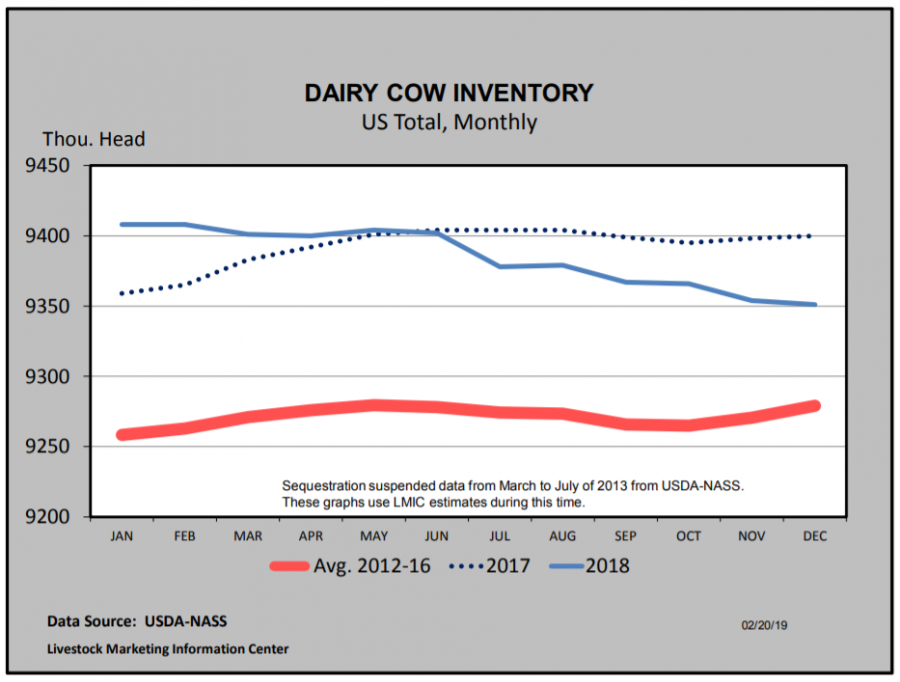
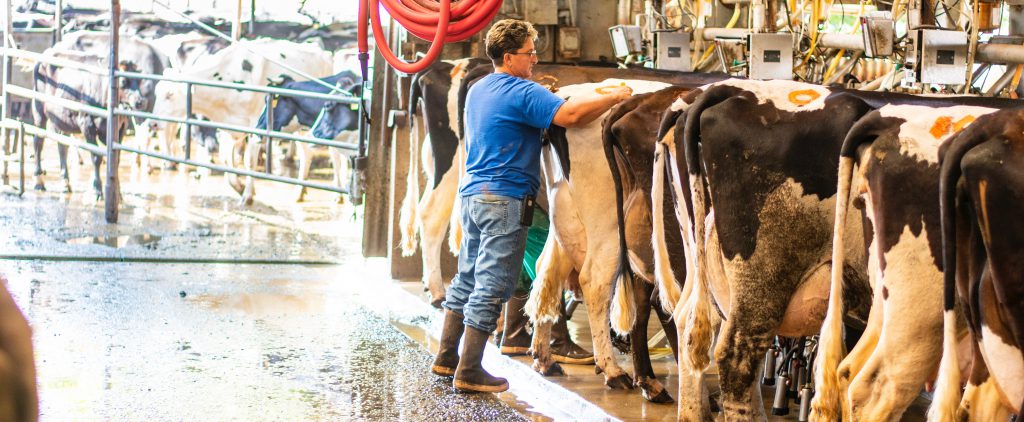
It’s not as if they haven’t fought hard. They have.

But they’ve been engaged in a Samson and Goliath battle they cannot win.

They need help and they need it now. If we don’t act we face the very real prospect our drinking milk will come from imported milk powder.

Those who sincerely think our farming families can be saved by the voluntary actions of the big retailers are mistaken.

Any retail levy is bound to be temporary, will lose value over time and many farmers won’t benefit from it.

The last thing we want is for consumers to boycott our supermarkets. That will only hurt the dairy farmers who supply them.

Only government can address the market failure that is driving our farmers to the wall.

The dairy industry is big and complex. It’s our third biggest agriculture sector, creating up to 50,000 Australian jobs and generating $13.7 billion. It produces a wide range of products and supplies both domestic and export markets.

Any government intervention must be mindful of the sector’s diversity and trade exposure.

Labor is acutely aware of this. That’s why we will have the Australian Competition and Consumer Commission test, assess and shape our minimum farm gate milk price proposal.

Having said that, we expect the ACCC to tell us not why it’s all too hard but rather, how we best get the job done for farmers.

Most Australians are protected by a minimum wage and our dairy farmers should be too.

A minimum farm gate price will provide that protection.

Dairy farers produce a staple, perishable product.

Indeed, fresh drinking milk is arguably a product of necessity.

The Minimum Farm Gate Milk Price will be different in every dairy region because every region is different.

Once the independent and expert body assesses the average cost of producing milk in a given region, it will declare the minimum price farmers can be paid.

Of course, the minimum price will be above production costs.

Of course farmers will continue to bargain for the highest price they can secure. But they can budget ahead knowing that their revenue will be at least the floor price.

That guaranteed income should in turn deliver the certainty and confidence needed to plan and to invest in productivity-lifting innovation and infrastructure.


Source: The Weekly Times


Severe Consequences for Dairy Industry if U.S. Fails to Confront EU Aggression on Common Food Names

A new study commissioned by the U.S. Dairy Export Council and the Consortium for Common Food Names forecasts severe consequences for U.S. cheese exports if the European Union (EU) is successful in further expanding restrictions on the use of generic terms such as parmesan, asiago and feta.

If the EU’s geographical indication (GI) initiatives were to be enforced on U.S. cheeses, the study conducted by Informa Agribusiness Consulting predicts the dairy industry could see a dramatic drop in demand for U.S. cheeses, with prices falling 14 percent and resulting revenue losses between $9.5 billion and $20.2 billion depending on consumers’ willingness to pay for recognizable cheese names.

“The European Union has repeatedly targeted the U.S. dairy industry by undermining our ability to freely use generic cheese names in foreign markets,” said Tom Vilsack, chairman and CEO of the U.S. Dairy Export Council. “The United States must make it abundantly clear that attempts to restrict common names in our domestic market will be met with swift and forceful opposition.”

The impact of GI restrictions would not be limited to the U.S. cheese industry with grave effects on both the milk industry, through plummeting prices and shifting demand, and the broader U.S. economy. Informa’s study reveals potential jobs losses ranging from 108,000 up to 223,000 across the supply chain.

“Failing to confront the European Union’s aggression will have a serious impact on the United States’ ability to continue to expand exports, negating the important progress dairy has made towards securing The Next 5 percent,” Vilsack added.

The Next 5 Percent is an industry initiative to increase U.S. dairy export volume from approximately 15 percent of the U.S. milk supply to 20 percent through a coordinated effort between USDEC and dairy suppliers that builds upon existing markets and cultivates new ones.

About USDEC: The U.S. Dairy Export Council (USDEC) is a non-profit, independent membership organization that represents the global trade interests of U.S. dairy producers, proprietary processors and cooperatives, ingredient suppliers and export traders. Its mission is to enhance U.S. global competitiveness and assist the U.S. industry to increase its global dairy ingredient sales and exports of U.S. dairy products. USDEC accomplishes this through programs in market development that build global demand for U.S. dairy products, resolve market access barriers and advance industry trade policy goals. USDEC is supported by staff across the United States and overseas in Mexico, South America, Asia, Middle East and Europe. See www.usdec.org.

Trends: Dairy Cow Decline Continues as 2018 Comes to a Close

The dairy cow herd declined 3,000 head from November to December, the fourth consecutive month to register reductions. The dairy cow population in December was down 49,000 head from a year earlier at 9.351 million head. Milk cow productivity in December reversed a trend in moderating output that was seen in October and November, however, as milk per cow in December was up 21 pounds from the prior December. This compares with per cow output in October and November that was only up 16 pounds per cow from year earlier performance. Milk production in December was up half a percent from December 2017. For the entire year, milk production was up 0.9% from 2017.

No state showed a sharp decline in milk cows from November to December. Pennsylvania cow numbers fell 4,000 head but New York offset some of that reduction with a 2,000 head increase. Texas continued to expand it dairy cow population with a 3,000 head increase in December. This amounts to a 27,000 cow increase from twelve months earlier, a 5% increase. Colorado was the only other state to show a similar percentage increase from a year earlier. The two states with the largest dairy cow populations, California and Wisconsin, reduced cow numbers by less than one percent over the course of 2018. The smaller dairy cow herd at the start of 2019 points to the possibility of less milk production during the first three months of 2019 than a year ago. The half percent increase in milk cow productivity during the last quarter of 2018 matched up with a half percent decline in milk cows should result in milk production during the current quarter that is similar to the first quarter of 2018. LMIC is currently forecasting an increase of 0.2%. Dairy cow slaughter has remained larger than a year ago in the first few weeks of 2019, however, suggesting that a normal seasonal increase in the dairy herd during the first three months of the year may not occur. If this is the case, milk production during the January-March quarter could be less than a year ago.

The milk demand side of the market was a disappointment for much of 2018, but fluid milk product sales during the last quarter of the year were not down as much from the year prior as in the spring and summer quarters. Fluid milk product sales, on a volume basis, were down 0.9 percent from a year earlier during the October-December quarter. This compares with declines of 3% during the spring and summer quarters. Fluid milk product sales for all of 2018 were down 2% from 2017, similar to the decline that was seen from 2016 to 2017.

Source: Livestock Marketing Information Center

US Dairies Looking North for Milk Pricing Solution

The new year hasn’t started quite so happy for U.S. dairy operators, as they enter a fifth year of significantly low prices paid for their milk.

But some in the industry say the solution to the American problem may lie to the north, and on Tuesday a few dairy operators attending the World Ag Expo here heard about Canada’s milk-pricing system from a Canadian dairy operator, Ralph Dietrich.

He was one of a group of Canadian dairy representatives invited to speak in recent weeks in California and other states about their pricing system.

“You have to have a fair [milk] price for farmers, and the key word is ‘fair,’” he told the audience during his seminar put on by the California Dairy Campaign.

And key to that in Canada has been a supply-management system in which a determination is made annually on how much Canadian milk is needed, resulting in quotas on how much milk each dairy in the country may produce.

If too much is produced, by law that excess milk can be processed into products that can be stored long term, including powdered milk., cheese and butter. But if that surplus gets too high, dairies can face fees and not getting paid for their milk, along with the possibilities of having to dump excess milk and selling cows.

This system first was developed in the mid 1960s, when Canadian dairies were facing low milk pricing issues like those U.S. have been facing for more than four years, Dietrich noted.

Over most of that that time, dairies have been paid less than what it cost them to produce their milk.

That has resulted in large numbers of dairies here shutting down or being sold, particularly here California, the nation’s primary milk-producing state.

In fact, milk and milk products were the state’s top agricultural product produced based on sales in 2017 – the latest figure available – totaling more than $6.56 billion.

A big part of the U.S. problem is too much milk is being produced here, pushing down prices, said Dietrich, noting that his country’s system – adopted nationally there in the 1980s – offers better cash flow to dairies and ensures they can make profits on their milk.

“It’s meant to give the farmers a fair rate of return.”

In addition, Dietrich said, a big part of the Canadian system involves strongly enforcing trade agreements to ensure only the amount of milk from foreign countries specified in those agreements comes into Canada.

The CDC hosted the Ag Expo to rally support among dairy producers to support the Sustainable Milk Inventory System Act, federal legislation the Turlock-based trade group representing dairy operators developed with the California Farmers Union to create a U.S. milk pricing system similar to Canada’s “as a long-term solution to the serious structural problems faced by the United States dairy industry. SMISA was designed to allow for regional cost and supply differences and to allow farmers to control those regional requirements,” states literature passed out during the meeting.

At least in California, dairy operators already succeeded in altering their milk pricing system, changing from prices set monthly by the state to one set by the federal government that took effect Nov. 1 – a move intended to slightly raise the prices dairies here get for their milk, though it still falls short of getting dairies here paid enough to break even.

CDC Vice President Mark McAfee, who spoke after Dietrich, noted there were dairy operators from Canada in the Ag Expo audience with herds of 200 or fewer cows making a profit, while here, small dairies have been hardest hit by pricing issues, leaving larger ones with thousands of head still struggling to survive.

And the problem doesn’t just affect dairies, as the losses of dairies can hurt the communities and businesses around them.

As such, McAfee said he was disturbed only 11 people showed up for the Ag

Expo meeting, four of them Canadian dairy people and a few more journalists. Organizers noted much bigger attendances at other recent meetings with Canadian dairymen in Hanford and Elk Grove and attributed the low turnout Tuesday to a seminar on improving dairy profitability occurring next door at the same time, which was much better attended.

For his part, McAfee said he had not yet spoken with a dairy operator who doesn’t support going to a pricing system similar to Canada’s, but few of them seem willing to voice those opinions to their dairy cooperatives.

“It’s really sad we don’t have more dairymen here,” he said. “If we don’t hang together, we are going to hang individually.”

But not all in the industry are supporting the CDC’s legislative effort, which would include regional quotas on U.S. milk production.

Andre Mikhalevsky, CEO of California Dairies Inc., California’s top milk processor, raised concerns that quotas on U.S. dairies could hurt the ability to meet the milk demand from foreign markets.

Instead, he suggested a system in which dairy operators regularly get market signals “so people can look at their production based on what’s going on with international prices” and adjust their production up or down accordingly, rather than having federally-imposed quotas.

He said 15-18 percent of U.S. milk products goes to foreign markets, and losses of some of those buyers would further reduce the prices dairies here are paid for their milk.

But in its literature, the CDC notes that in its proposed bill, “Milk requested for use in export by processors would be included in regional dairy supply demand.”

Organizers of Tuesday’s presentation said they hoped for a bigger audience at a second presentation by Dietrich scheduled for the next day at the Tulare County Agricultural Commissioner’s office, across the street from the International Agri Center, where the World Ag Expo was held.


Source: The Business Journal

$1 milk in the firing line in Australia

Supermarket discounted milk was in the firing line at the Australian Dairy Conference in Canberra on Thursday.


And it wasn’t farmers firing the bullets.

Chiefs from leading processors – all of which supply private-label products to supermarkets – said $1 milk and $6 cheese fundamentally undermined the value of dairy.

Saputo chairman Lino Saputo Jr, who supplies Coles with its $1 a litre milk in Victoria and NSW, said processors needed to demand the real value for dairy products when negotiating with retailers.

“I go back to the days when MG (Murray Goulburn) was running the business and they signed a contract with a large retailer for $1 milk,” he said.

“It’s hard to say this, but it doesn’t make any f*** sense.”

He applauded the move by Woolworths last week to lift its price to $1.10/l but said it still was not enough.

“$1.10 still doesn’t make sense when you can buy water at $3 a litre, when you can buy soda pop at $4 a litre or those Powerades or Gatorades at $5 a litre,” he said.

“It doesn’t make sense with all the work that’s going behind to produce milk, to process that milk to then sell it for $1 a litre.”

The processors said supermarket pricing influenced the farmgate price for milk.

Norco chairman Greg McNamara said the Australian Competition and Consumer Commission got its findings wrong in its 2018 dairy inquiry.

The ACCC’s Dairy Inquiry Final Report said it found no evidence that supermarket pricing, including $1/l milk, had a direct impact on farmgate prices.

“Importantly, we found that contracts for the supply of private label milk allow processors to pass the farmgate price paid to farmers through to the wholesale prices they charge to retailers,” the ACCC report said.

“This means that processors do not have an incentive to reduce farmgate prices as a result of the lower wholesale prices they receive for private label milk, as the farmgate prices are passed through to the supermarkets.”

But Mr McNamara said that was wrong.

“Fundamentally the pricing mechanism and how we discuss with retailers and set pricing, their outcome was, in my view, flawed,” he said.

Mr Saputo, when asked about the current contracts providing an opportunity for more money to come back to processors for farmers, said he would “love to see that”.

Bega Cheese chief executive Paul van Heerwaarden said supermarket private label products had changed farmgate prices.

There was no longer a domestic-market farmgate price and lower export-commodity-market farmgate price.

Mr van Heerwaarden said more than half of the key dairy products – milk, cheese and butter – sold in Australian supermarkets was private label.

“And without speaking too much out of school, the baseline dairy products that go into them, whether it’s butter or milk or indeed cheese are commodity prices,” he said.

“There’s not the returns in there that there used to be.”

Mr van Heerwaarden said the supermarket label products were driven by commodity prices.

“And a lot of those products are being imported today – whether it’s from New Zealand or elsewhere,” he said.

Milk in cheap cheese and butter was valued even lower than the discounted fresh milk.

“And if we think about 10 litres of milk going into a kilogram of cheese, and a block of cheese selling for 6 bucks, that’s 60 cents a litre,” Mr van Heerwaarden said.

Mr McNamara, whose company supplies Coles with $1/l milk in south-east Queensland, said the discounted product was now also having a big impact on sales to cafes and small businesses.

More operators of franchise cafes were buying discounted milk in bulk directly from the supermarkets, rather than at a higher price through the route trade.

All agreed that the processors needed to lead the discussion with retailers about the value of milk.

“I think the single biggest issue the industry faces from my perspective when we talk about what some retailers have done in a levy and asking people to put donations in tins, I think it just devalues everything we as farmers do,” Mr McNamara said.

“We do not want a generation of welfare recipients.

“We want a generation of farmers that are business-savvy, that spend the money in the right spots and we’ve just got to help retailers actually come to that conclusion.”

Mr Saputo said the company would honour its existing contracts with retailers.

“But as those contracts expire, we like to sit at the table with those retailers and renegotiate the terms and contracts that make it mutually beneficial as opposed to one-sided,” he said.

“I think in some cases some of the contracts are one-sided.”

Mr van Heerwaarden said there was a big need for processors to properly have conversations with the retailers.

“This is the value chain we should be creating,” he said.


Source: The Australian Dairyfarmer

Why are Italy’s dairy farmers dumping milk in the streets?

Protesting dairy farmers in Sardinia have been throwing milk onto motorways, blocking roads and attacking delivery trucks in an ongoing protest over milk prices, which they say are now as low as in the 1970s.

If you’re driving in Sardinia this month, you’ll need to watch out for angry farmers pouring litres of milk onto cars from motorway overpasses.

Protesting dairy farmers have been dumping out milk on roads and squares in Sardinia and disrupting delivery routes in widespread protests over milk prices over the last two weeks.

Yesterday a milk delivery truck driver was stopped and forced out of his vehicle by a gang of masked and reportedly armed protesters, who then spilled the liquid cargo all over the road.

Videos showing farmers throwing their milk into the streets have been shared on social media, with 23-year-old farmer Francesco Pintore telling media that they’d “rather dump it than sell it for next to nothing”.

The protests have now been going on for two weeks, with farmers  threatening to block ports and airports.

Protestors had also threatened to disrupt regional elections on February 24, but yesterday the poll went ahead as planned.

The protests are over the price of milk in Italy, which farmers say are now so low that they can’t make a living.

Current sheep milk prices have dropped to €0.60 per litre, compared to €0.85 last year. 

The drop is linked to a fall in the price of the popular Pecorino Romano cheese, which about half of all Sardinian sheeps’ milk is used for.

Pecorino Romano cheese. Photo: Depositphotos.

Dairy farmers are demanding that milk prices be raised to a minimum of €0.70 per litre.

The Italian government is now preparing to allocate 10 million euros to alleviating the crisis, local media reports.

There has been widespread criticism of this method of protest in crisis-hit Italy, where more than five millon people live below the poverty line.

Gianluigi Crobu, a spokesman for the protest movement, asked fellow dairy farmers not to waste the milk but to find ways of distributing it to local communities instead.

Source: thelocal.it

Send this to a friend