What a remarkable coincidence that the federal Minister of Agriculture announced a $1.75 billion payout to dairy producers just before a federal election in the province that has the most small-scale dairy farmers. You can guarantee that those cheques will arrive promptly before the upcoming election day. It will help Liberal party fortunes not only in Quebec, but in Ontario and the Maritimes. If only canola, pork and beef producers could be so lucky to have the same caring government looking after their economic hardships, but unfortunately most of them live in western Canada and they have a habit of not voting Liberal. Not to worry, the federal Minister of Agriculture has said that she will stand “shoulder to shoulder” with canola producers. One suspects that means a shoulder to cry on, not any real cash support. How comforting that is to growers as federal government ineptitude in the Huawei princess case destroys their $3 billion canola market. But then that’s politics and in Alberta we know all too well that we are not PM Trudeau’s favourite voters.
The payout announcement cited that an average 80 dairy cow producer will receive a cheque for $28,000 starting this year. Therein lies the problem, what is that sum supposed to do, just giving it to small scale dairy producers only prolongs what really needs to be done. The payout is also not directly tied to any mandatory reduction of dairy production quotas by either the producers or the dairy commission. In effect the feds are paying producers to keep on doing what they are doing regardless of the impact of trade agreements. That’s a recipe for over production which will contribute to even more financial problems for producers. Unfortunately, milk consumers will not benefit from that situation with lower prices, however taxpayers according to the feds will be stuck making payouts for the next 8 years, it bogles the mind.
What is needed is a marketing plan to reduce milk production as the market is demanding. The payout should have gone into a fund to buy out small scale producers and their dairy quotas primarily in eastern Canada that have fewer than 100 dairy cows. The dairy industry in Canada will only become more competitive and efficient if the average dairy farm has 1,000 to 5,000 dairy cows. That is what is happening in the USA and it needs to happen in this country. Most other sectors in agriculture continue to consolidate to take advantage of technology and economies of scale, the dairy industry can do the same even under supply management. However, the problem with dairy industry supply management is that it is controlled by Quebec and to a lesser extent Ontario and the Maritimes – the homes of most small-scale producers. Western Canada is almost powerless to change that arrangement. Heck its rumoured that for many years western dairy producers paid millions into some sort of price stabilization scheme for Quebec producers. Looks like just another equalization scam that favoured that province.
What gets aggravating is that whenever the inequality of the share of national dairy quota is brought up, Quebec agriculture apologists claim that it is their traditional right to that national milk production entitlement – sounds familiar. The supply management of milk marketing has worked well for the industry and the rural economy, but it needs to be radically transformed so that the dairy industry is not trapped into a marketing model that hasn’t changed much since the 1970s. Supply management will work much better for the public and the industry if dairy production is allowed to consolidate into large-scale commercial operations in areas of the country where they are economically feasible. Paying multi-millions of taxpayer dollars to keep small-scale dairy farmers in business is unwise and only continues to question the credibility of supply management.
This column has advocated many times that Alberta is ideally positioned to establish large-scale multi-thousand dairy cow operations. The climate, geography, feed production, technical expertise and experience with very large-scale cattle production are all here particularly in southern Alberta. But all of that would be a massive threat to the established dairy production business of eastern Canada. The only way to stop the western movement of commercial dairy production has been to use supply management quota restrictions to block such an economic migration. Those restrictions can be overcome, but only through a monumental political effort by the Alberta government.
Growth in export markets has long been lauded as the measure of success in American agriculture. Last year U.S Secretary of Agriculture Sonny Perdue credited exports for being a “major driver of the rural economy, generating 20 percent of U.S. farm income and supporting more than a million U.S. jobs.”
Those statistics conceal a hidden truth that most farmers know first-hand: exports don’t actually bring better prices. In dairy, exports have reached historic highs – now topping 15 percent of the total U.S milk supply — but that growth has failed to provide farmers a livable wage.
In a recent webinar hosted by Wisconsin Farmers Union through the Dairy Together initiative, dairy economist Chuck Nicholson explained, “Price impacts of export growth tend to be limited. One of the reasons for that is the milk supply response. If we have opportunities to sell more product, typically the industry can respond fairly readily.” In other words, opening new markets generates demand in the short term, but farmers quickly ramp up supply right along with it. Any price increase is quickly neutralized.
Nicholson’s analysis shows that for every 1% increase in dairy components exported, the all-milk price increases by only 10 cents.
Despite the limited impact on milk prices, the U.S. Dairy Export Council aims for a goal of exporting 20% of the U.S milk supply, a 5% increase from 2018 levels. USDEC claims that export growth benefits everyone in the industry: farmers, consumers and everyone involved in the complex dairy supply chain. But Nicholson’s analysis suggests that may not be the case.
“The primary benefits will go to farms that are growing because they are the ones that will be supplying that additional product that goes into export markets. Other benefits will go to supply chain partners like the processors and exporting companies that are also part of facilitating trade flows of dairy products outside the U.S.”
Exports do contribute to farm income, but the profits are not distributed equally among dairy farmers or throughout the supply chain. Nicholson explains the income distribution issue this way: “The average milk price does not increase that much by increasing exports. So farms that are not growing are going to see milk revenues that look a lot like the revenues we would see if we weren’t exporting very much. The place where there is a difference is farms that are growing will see a larger demand for their milk. The benefits are not higher prices, but bigger quantities.”
That’s why many farmers feel pressured to expand their operations to stay afloat. But others cannot or do not want to manage a large dairy operation. For them, higher prices are the only way to stay in business. Since the price bottomed out in 2014, 7,339 U.S dairy farms have called it quits. If we want to save the 37,000 dairy farms that remain, as well as the rural communities they support, we need higher prices. If higher prices are the goal, then exports are not the answer. To bring real prosperity to dairy farmers and rural communities, we need a national system to balance milk supply with profitable demand. Visit the Dairy Together website to learn more about the grassroots movement to bring fair prices to family farmers.
Bobbi Wilson serves as government relations associate for Wisconsin Farmers Union, a grassroots organization that is committed to enhancing the quality of life for family farmers, rural communities and all people through educational opportunities, cooperative endeavors and civic engagement. In that role, she helps lead Dairy Together, an initiative to secure fair prices for family dairy farmers. Learn more at the website.
Wisconsin leads the nation in farm bankruptcies — fueled by a rapid rate of closures by dairy farms as milk overproduction and failing export markets strain the producers’ livelihood. (Photo: Courtesy Derrell Westphal)
Taxpayers would help farmers pay off their student loans, transfer their operations from one generation to another and create incentives to start small farms under a package of bills announced Tuesday.
The legislation is aimed at giving Wisconsin’s farming industry a boost at a time when bankruptcies are decimating its ranks — especially among dairy producers.
“We think they will help farmers transition into the future,” Rep. Dave Considine, D-Baraboo, told reporters Tuesday. “The three bills strengthen opportunities for Wisconsin farmers at every stage of their careers.”
A total of $1 million annually would go toward the new programs in five years — building up to that figure gradually.
Under one bill, $224,000 would pay for two new employees within the University of Wisconsin Center for Dairy Profitability in Madison to help farmers with financial decisions related to the transfer of their operations to a new generation or new owners.
Gene Larsen, who owns a farm near the Baraboo River in Sauk County, said the process is more difficult for farmers than in other industries because of the difficult nature of buying a farm’s expensive assets while also having enough cash to operate. Larsen said the process of transferring the farm from his father to him and now to his son has been in place for about 40 years.
“The succession planning process for farmers is extremely important,” he said. “It’s absolute necessity for the continuance of the traditional Wisconsin multigenerational family farm.”
Another bill would set aside $250,000 annually for the state agriculture agency, which would provide up to $50,000 for producers who want to start a new operation on no more than 50 acres. The grants also would be awarded to producers who want to add a new product to their existing operation or want to pay down their debt after adding a new product.
The measure could help small dairy farms that have been hit hard in recent years. Though Wisconsin’s agricultural economy has been growing in recent years, small dairy farms have declined sharply with losses in the thousands.
Beginning farmers still paying off student loans would receive up to $30,000 over five years from the state to go toward the debt under a third bill. By 2024, the state would set aside $600,000 annually for the program under the legislation.
The new legislation comes at a time when Wisconsin leads the nation in farm bankruptcies — a distinction fueled by a rapid rate of closures by dairy farms as milk overproduction and failing export markets strain the producers’ livelihood.
Considine said the package of bills — while not specifically designed for dairy producers — would have a positive effect on the downward trend. He said Wisconsin dairy farmers bucking the trend have planned their handoffs to a new generation.
“They’re only there because of successful succession planning,” he said. “The diversity we are encouraging is going to help agriculture — there are a lot of grass-fed, pasture-fed milking right now for Organic Valley and other places so there are ways we can diversify.”
The bills are sponsored by both Democrats and Republicans — giving them a shot at finding support among GOP legislative leaders and Democratic Gov. Tony Evers.
Kit Beyer, spokeswoman for Assembly Speaker Robin Vos, said Vos is reviewing the package.
Aides to Evers and Senate Majority Leader Scott Fitzgerald did not immediately have a reaction to the legislation.
Taxpayers would help farmers pay off their student loans, transfer their operations from one generation to another and create incentives to start small farms under a package of bills announced Tuesday.
The legislation is aimed at giving Wisconsin’s farming industry a boost at a time when bankruptcies are decimating its ranks — especially among dairy producers.
“We think they will help farmers transition into the future,” Rep. Dave Considine, D-Baraboo, told reporters Tuesday. “The three bills strengthen opportunities for Wisconsin farmers at every stage of their careers.”
A total of $1 million annually would go toward the new programs in five years — building up to that figure gradually.
Under one bill, $224,000 would pay for two new employees within the University of Wisconsin Center for Dairy Profitability in Madison to help farmers with financial decisions related to the transfer of their operations to a new generation or new owners.
Gene Larsen, who owns a farm near the Baraboo River in Sauk County, said the process is more difficult for farmers than in other industries because of the difficult nature of buying a farm’s expensive assets while also having enough cash to operate. Larsen said the process of transferring the farm from his father to him and now to his son has been in place for about 40 years.
“The succession planning process for farmers is extremely important,” he said. “It’s absolute necessity for the continuance of the traditional Wisconsin multigenerational family farm.”
Another bill would set aside $250,000 annually for the state agriculture agency, which would provide up to $50,000 for producers who want to start a new operation on no more than 50 acres. The grants also would be awarded to producers who want to add a new product to their existing operation or want to pay down their debt after adding a new product.
The measure could help small dairy farms that have been hit hard in recent years. Though Wisconsin’s agricultural economy has been growing in recent years, small dairy farms have declined sharply with losses in the thousands.
Beginning farmers still paying off student loans would receive up to $30,000 over five years from the state to go toward the debt under a third bill. By 2024, the state would set aside $600,000 annually for the program under the legislation.
The new legislation comes at a time when Wisconsin leads the nation in farm bankruptcies — a distinction fueled by a rapid rate of closures by dairy farms as milk overproduction and failing export markets strain the producers’ livelihood.
Considine said the package of bills — while not specifically designed for dairy producers — would have a positive effect on the downward trend. He said Wisconsin dairy farmers bucking the trend have planned their handoffs to a new generation.
“They’re only there because of successful succession planning,” he said. “The diversity we are encouraging is going to help agriculture — there are a lot of grass-fed, pasture-fed milking right now for Organic Valley and other places so there are ways we can diversify.”
The bills are sponsored by both Democrats and Republicans — giving them a shot at finding support among GOP legislative leaders and Democratic Gov. Tony Evers.
Kit Beyer, spokeswoman for Assembly Speaker Robin Vos, said Vos is reviewing the package.
Aides to Evers and Senate Majority Leader Scott Fitzgerald did not immediately have a reaction to the legislation.
Thomas Gallagher, second from right, of Dairy Management Inc., is shown at a 2014 event announcing more than $500 million in partnerships with seven major companies. (Photo: Farm Journal)
As dairy farmers throughout Wisconsin and the nation continue to struggle with declining consumption and milk prices, executives of a Chicagoland nonprofit funded by the farmers continue to get rich.
Dairy farmers are required by federal law to pay 15 cents per hundred pounds of milk sold into a checkoff program administered by the U.S. Department of Agriculture. Ten cents of the checkoff money goes to regional marketing/promotion programs, and the remaining nickel goes to national programs.
A Journal Sentinel review of financial records from Dairy Management Inc., a nonprofit based in Rosemont, Il., shows that it received about $155 million of the checkoff cash in 2017.
It uses the cash to promote dairy products through a variety of marketing efforts including advertising and partnering with the NFL, major retailers and others.
The Journal Sentinel interviewed farmers who pay the checkoff and expressed anger with the salaries paid to leadership, as dairy farmers struggle to make ends meet. Subscribers can read the full story here.
Here are five takeaways from the investigation:
Dairy Management executives are thriving as family dairy farmers struggle
In 2017, 1,600 farms shut down nationally, including 503 in Wisconsin.
In that same year, the top 10 executives at Dairy Management were paid more than $8 million in salary and benefits.
Thomas Gallagher, who has been the Dairy Management CEO since it was incorporated in 1995, was paid $899,810 in 2017.
Dairy Management’s CEO is paid more than others
Gallagher’s 2015 and 2016 pay packages were more than double the median paid to CEOs at large nonprofits in those years, according to Candid, a group that analyzes nonprofits.
Gallagher’s pay package has topped $1 million three times from 2013 to 2017, IRS records show:
2015: $1.36 million
2016: $1.011 million
2017: $899,810
Dairy farmers pay more than beef or pork producers
There are about two dozen federally mandated checkoff programs requiring farmers to pay in to help market their commodities. The programs cover all kinds of producers, ranging from Christmas tree farmers to cattle ranchers.
All told the programs collected $895 million last year, with the dairy checkoff programs bringing in about $420 million or nearly half the total.
The checkoff calculations vary from commodity to commodity, but any way you cut it, dairy farmers pay more than beef and pork producers.
At current prices, for every $100 sold:
Dairy producers pay 80 cents into the checkoff program.
Pork producers pay 40 cents.
Beef producers pay about 7 cents.
National Cattlemen’s Beef Association CEOs make less than the Dairy Management boss
Gallagher’s pay averaged $976,744 from 2010 to 2017. Meanwhile, the two CEOs at the National Cattlemen’s Beef Association were paid an average of $523,327 during the same period.
In 2017:
Cattlemen CEO Kendal Frazier was paid $507,619.
Gallagher brought in nearly $900,000.
In 2016:
Forest Roberts, Frazier’s predecessor, was paid $712,199.
Gallagher was paid $899,810.
Dairy Management has formed expensive partnerships with the NFL and others
In recent years, Dairy Management has forged partnerships with a variety of companies and entities in the hopes of increasing sales. Per-capita milk consumption in the United States has fallen, or remained flat, every year since 1985.
Among its partners is the NFL, which has received $25 million from 2013 to 2017 for a variety of efforts, including promoting physical fitness and healthy eating habits among students.
Dairy Management also paid $55 million to the world’s largest independent PR firm, Daniel J. Edelman Inc., for “agency services,” IRS records show.
Net farm income, a broad measure of profits, is forecast to increase $4.0 billion (4.8 percent) to $88.0 billion in 2019, after increasing in both 2017 and 2018. In inflation-adjusted 2019 dollars, net farm income is forecast to increase $2.5 billion (2.9 percent) from 2018. If realized, in inflation-adjusted terms, net farm income in 2019 would be 35.5 percent below its peak of $136.5 billion in 2013 and below its 2000-18 average ($90.1 billion).
Net cash farm income is forecast to increase $7.6 billion (7.3 percent) to $112.6 billion. Inflation-adjusted net cash farm income is forecast to increase $5.8 billion (5.4 percent) from 2018, which would be 4 percent above its 2000-18 average ($108.3 billion). Net cash farm income encompasses cash receipts from farming as well as farm-related income, including government payments, minus cash expenses. It does not include noncash items—including changes in inventories, economic depreciation, and gross imputed rental income of operator dwellings—reflected in the net farm income measure above.
Cash receipts for all commodities are forecast to decrease $2.4 billion (0.6 percent) to $371.1 billion (in nominal terms) in 2019. Total animal/animal product receipts are expected to increase $0.9 billion (0.5 percent) but fall 1.3 percent when adjusted for inflation. Increases in milk and hog receipts are expected to be nearly offset by declines in broiler and chicken egg receipts. Total crop receipts are expected to decrease $3.3 billion (1.7 percent) in nominal terms from 2018 levels following expected decreases in soybean receipts. Direct government farm payments are forecast to increase $5.8 billion (42.5 percent) to $19.5 billion in 2019, with most of the increase due to higher anticipated payments from the Market Facilitation Program.
Total production expenses (including operator dwelling expenses) are forecast to increase $1.5 billion (0.4 percent) to $346.1 billion (in nominal terms) in 2019. Spending on feed and hired labor is expected to increase while spending on seed, pesticides, fuels/oil, and interest are expected to decline. After adjusting for inflation, total production expenses are forecast to decrease $4.6 billion (1.3 percent).
Farm business average net cash farm income is forecast to increase $8,400 (11.4 percent) to $81,900 per farm in 2019. This would be the first annual increase after 4 consecutive years of declines. Every resource region is forecast to see farm business average net cash farm income increase by 5.6 percent or more. All categories of farm businesses except poultry are expected to see average net farm income rise in 2019.
Farm sector equity is forecast up by $46.1 billion (1.8 percent) in nominal terms to $2.67 trillion in 2019. Farm assets are forecast to increase by $59.8 billion (2.0 percent) to $3.1 trillion in 2019, reflecting an anticipated 1.9-percent rise in farm sector real estate value. When adjusted for inflation, farm sector equity and assets are forecast to be relatively unchanged from 2018. Farm debt in nominal terms is forecast to increase by $13.7 billion (3.4 percent) to $415.7 billion, led by an expected 4.6-percent rise in real estate debt. The farm sector debt-to-asset ratio is expected to rise from 13.31 percent in 2018 to 13.49 percent in 2019. Working capital, which measures the amount of cash available to fund operating expenses after paying off debt due within 12 months, is forecast to decline 18.7 percent from 2018.
Median Income of Farm Operator Households Forecast To Increase in 2019
Median farm household income is forecast to reach $74,768 in 2019, an increase of 3.7 percent in nominal terms; in inflation-adjusted terms, it is a 1.9-percent increase. The total median income of U.S. farm households increased steadily over 2010-14, reaching an estimated $81,637 in 2014 (in nominal terms). Median farm household income then fell 6.0 percent in 2015 and continued to decline slightly through 2018. The 2017 and 2018 declines occurred despite an improvement in sector incomes as a whole and sharply higher income for households with commercial farm operations. However, only 10 percent of U.S. farm households operate commercial sized farms. The median farm household is more likely to operate intermediate or small farms, categories where farm-sourced income dropped in 2018 with no appreciable increase expected in 2019.
Farm households typically receive income from both farm and off-farm sources. Median farm income earned by farm households is estimated at -$1,840 in 2018 (nominal terms) and is forecast to increase slightly to -$1,644 in 2019. In recent years, slightly more than half of farm households have had negative farm income. Many of these households rely on off-farm income—and median off-farm income is forecast to increase 2.2 percent from $65,841 in 2018 to $67,314 in 2019. (Because farm and off-farm income are not distributed identically for every farm, median total income will generally not equal the sum of median off-farm and median farm income.)
Quebec dairy farmers continue to struggle as international trade agreements have hit their bottom line hard.
The Trans-Pacific Partnership (TPP) and CETA (Comprehensive Economic and Trade Agreement) with the European Union and its member states opened more of Canada’s market to foreign import.
“It’s probably costing me around $100,000 a year,” said Hinchinbrooke, Quebec dairy farmer Jason Erskine. “I’ve invested all of my money and my future into this farm, so when the government took a portion of market share and gave it to another country, that’d be the same as you, any investments you’ve done or had, and the government saying, well, we’re just going to take some of that.”
Erskine has slowed hiring and done more with family labour to offset his losses.
With Fonterra announcing big write-downs on its asset values in China, Brazil, Venezuela and New Zealand, is it a fair question to ask what other assets elsewhere in the world might also need to be written down? Have we heard all the bad news?
The two biggest questions relate to Australia and Chile. These are Fonterra’s biggest overseas milk pools, which no longer fit clearly within the new emerging Fonterra strategy.
I recently wrote about concerns for Australia, where Fonterra has announced plans to write down assets by $70 million. In that article I expressed concern that much bigger write-downs might be needed.
Since then, my Australian network confirms that, particularly in Northern Victoria, Fonterra is indeed in big trouble, and heading towards more stranded assets. The problems are growing by the month. In July, Fonterra’s monthly Australian milk supply was 5.4 million kg milksolids (fat plus protein) whereas two years ago it was 8.3 million kg milksolids,
Fonterra is getting out-muscled for the dwindling Victoria supply of milk. It is already paying more than it can afford, and considerably more than its New Zealand farmers are getting. It is a mess.
But here, I want to focus on the Chilean operations of Fonterra. I see elements of an Australian mirror image, with Fonterra getting squeezed by poor market returns for its particular market products and dwindling milk supply from its farmers.
Although the big picture of Fonterra in Chile has great similarity to Australia, the details are different. The fundamental element in common is that Fonterra keeps getting thing wrong when it heads away from home, largely through inadequate understanding of the environment in which it is working.
The starting point for Chile is to recognise that Fonterra’s investments there go back to the NZ Dairy Board days. Fonterra inherited a majority share in Soprole, at that time Chile’s market-leading dairy company.
At the same time, Fonterra picked up a controlling share from the Dairy Board in Soprole’s little sister company Prolesur.
Whereas Soprole focuses mainly on consumer products produced and processed in the central parts of the Chilean dairy heartland, Prolesur is further south again in Los Lagos where it focuses on the commodity side of things, being mainly milk powder, butter, and more recently cheese. These are produced in high rainfall country, much of it around Osorno.
Then in 2009, Fonterra increased its stake to more than 99 percent ownership of Soprole and 86% ownership of Prolesur. And that is where ownership now stands. The purchase price indicates Fonterra’s Chilean assets were valued at around $NZ600 million in 2009.
To a large extent, Soprole and Prolesur operate as one company, with Prolesur’s profits incorporated into Soprole, and from there through to Fonterra. However, that is not the full story.
To start with, Fonterra has strongly encouraged Prolesur suppliers to focus on grass-fed systems and spring-calving as occurs in New Zealand. The Prolesur payment system has been aligned to this policy.
However, the realities of dairying in southern Chile, although having superficial resemblance to New Zealand, are not the same. Hence, Prolesur has now recognised that seasonal milking also has disadvantages, particularly when it comes to product marketing, and hence what it can afford to pay its farmers. Unfortunately, this understanding has been delayed.
It is readily apparent that Prolesur’s farmers are currently not at all happy. In the calendar year ending 31 December 2018, the Prolesur supply dropped 17.7 percent despite overall Chilean dairy production rising 1.9 percent.
It is also clear that many more of Prolesur’s farmers would leave Prolesur, and hence Fonterra, if they could. They would very much like to join Colun which is a Chilean dairy co-operative that has been smashing Soprole in the market place.
Although Colun is now Chile’s leading dairy company, it is capacity-constrained and has a waiting list of farmers. In consequence, southern farmers are having discussions as to whether they might set up their own co-operative.
Also, Prolesur’s minority owners are trying to sue Fonterra for unfair transfer-pricing of products across to Soprole, at prices that damage their economic interests. This legal challenge in itself has potential to be messy.
Prolesur recognised some years back that it needed to invest in cheese production. This has occurred in the north of Prolesur’s production region, with production capacity now at more than 2000 tonnes per month. This has exacerbated the supply problems for their milk powder production at Osorno, where they already have stranded assets.
Fonterra’s problems in Chile go well beyond Prolesur in the south. Big sister Soprole, which incorporates Prolesur within its own accounts, is also in decline.
Chilean market-share data goes back to 2002, at which stage the Soprole plus Prolesur combination was number one in terms of national milk supply. As the graph shows, from there through to around 2015, it was a case of large swings and roundabouts, but arguably with no consistent trend in market share. Since then it has been an ongoing decline.
Right through to 2018, it may have seemed to those people who rely on published profit figures that Fonterra was doing OK. There were steady dividends back to New Zealand. For many years it was a great cash cow.
However, if Fonterra’s top managers and directors had been doing some independent foot-slogging they would have known that all was not well. I have seen correspondence going back to 2014 where Chilean farmers were trying to tell both Fonterra and the New Zealand Government that things were not right.
To put it in a nutshell, the Chilean farmers were accusing Fonterra of overmilking the Chilean cash cow. It was all short-term thinking.
Soprole produces accounts for each calendar year, in Spanish, and I have been trawling through those. The latest accounts are for calendar year 2018.
The numbers show that when converted to NZ dollars, the consolidated Soprole operation for calendar 2018 made a profit of around $55 million. The year before it was about $65 million and before that over $70 million. In 2015 it was $80 million.
Soprole currently has a book value, converted to NZD, of around $940 million. Equity is valued at around $700 million. It is hard to argue that the current profits are sufficient to justify these figures. Beyond that, the trajectory is wrong. No-one would buy assets at anywhere near that price.
Soprole brands are no longer considered premium brands in Chile. Some of Fonterra’s Chilean processing assets are less than efficient. Those assets belong to a previous era. And Fonterra lacks a loyal base of suppliers.
Put all of those things together, and look into the future rather than the rear mirror, and Fonterra’s Chilean assets look very shaky. Just like elsewhere in the world, Fonterra has dug a deep hole for itself.
It would have been much easier to not dig the hole in the first place than to now find a way out. The first step forward is for Fonterra to identify the extent of the hole.
While milk remains a household item in the U.S., people are drinking less of it and not going through it as fast as they once did, Tom Bailey, Rabobank senior dairy analysts, said.
Shrinking consumption of fluid milk in developed countries and slim margins are making things tough for conventional milk processors.
While milk remains a household item in the U.S., people are drinking less of it and not going through it as fast as they once did, Tom Bailey, Rabobank senior dairy analysts, said.
Bailey outlines the issue and what processors can do to improve their bottom line in his new report “Making Milk Cool Again.”
Understanding what consumers want and value, and investing in innovation and marketing are key, he said.
For the past 10 years, demand has fallen 2% year over year in North America and 3% in Western Europe.
But there are steps companies can take to recast the image of milk in the eyes of consumers and see it flourish into the category it once was, he said.
“Some successful brands have already proven that milk can be cool,” he said. “But, if the last 10 years taught the dairy industry anything, it is that the wrong milk is being marketed incorrectly to the wrong consumers.”
The lack of innovation in production development leaves the industry with nonfat or skim milk in a translucent jug with a traditional label, he said.
“It’s not what the consumer is looking for,” he said.
Conventional skim milk is declining the fastest and is the most unfavorable from a consumer perspective, he said.
But sales of whole, organic and filtered milk are all growing, he said.
Anyone wanting to compete needs to revamp their milk — giving it higher quality, newer packaging and rebranding — and communicate effectively through modern marketing mediums, he said.
A 2018 survey by Mintel found the top reasons U.S. respondents consume milk is because it is nutritious, tasty, has vitamins and minerals, is rich in good proteins and is a good value.
Mintel also found the top reasons that would make people drink more milk are extra protein, probiotics and less sugar.
Fairlife milk meets the top three factors in driving more consumption and has 30% more calcium than conventional milk. It also offers single-serving options and ultra-pasteurization, which were two other factors noted by survey respondents.
That might be why Fairlife has grown 263% since 2015, now accounting for 3% of all U.S. fluid milk sales by value, he said.
Consumers also care about sustainability and animal welfare, and younger consumers rely heavily on social media.
Processors can differentiate their product from conventional milk and add value for higher margins or they can go the scale and efficiency route, he said.
“Eighty-five percent of Americans still have milk in their fridges, but if you want to make margins you need to premiumize or become more efficient,” he said.’
A large group of local dairy farmers who voted to merge their Vermont milk marketing and processing cooperative with a national competitor are now waiting to see if the move will pay off.
Their hope is that the bigger operation will enable Vermont farms to send more dairy products into the international markets to create greater stability for co-op members after years of depressed bulk milk prices.
Representatives of the St. Albans Cooperative Creamery’s roughly 360 member farms late last month voted to authorize a merger between the independent cooperative and Dairy Farmers of America (DFA), which represents more than 8,500 dairy farms in 48 states. The merger closed on Aug. 1.
“The number one goal with the merger was to protect the equity our members have invested in our cooperative and we’ve done that,” said Harold Howrigan Jr., who served on the St. Albans Co-op board for 10 years and oversaw the deal as St. Albans Co-op board president at the time of the transaction.
Of the St. Albans Co-op’s 307 voting members, 108 participated in the merger election. The motion passed, 99-9.
Of the 102 dairy farms the University of Vermont Extension listed in Addison County as of July, 62 were members of either DFA or St. Albans Cooperative Creamery.
The merger comes after five years of low milk prices across the Northeast. According to the most recent USDA Census for Agriculture, the number of working dairy farms in Addison County declined from 140 in 2012.
According to Howrigan, the cooperative had been seeking to partner with a larger company for some time.
“We were looking for a partner that had a larger market presence and also a presence in the export market, which is so important to dairy and all of agriculture today.”
The cooperative, which celebrated its 100th year of operation in 2019, had been a cooperative member of DFA since 2003. Through that relationship it enjoyed marketing services through the company’s Dairy Marketing Services program but maintained complete control over its St. Albans processing facilities and the marketing and sale of its milk products.
According to data from the U.S. Dairy Export Council, exports accounted for approximately 15.8 percent of the liquid milk produced domestically in 2018, a $5.59 billion value. It’s the cooperative’s hope, says Howrigan, that DFA’s robust international marketing reach will allow it to better move Vermont farmers’ milk into those export markets than the co-op could alone.
Tariffs imposed over the last two years by foreign markets in response to actions by the Trump Administration have had a big negative effect on Vermont dairy farmers, according to Howrigan.
“Here in Vermont, we’re all in a global dairy economy now. We are being hit hard with this tariff business and the last four to five years have been very tough,” he said. “When global trade is disrupted, it affects all of us very quickly. When that perishable product backs up, we feel it very quickly on the farm level.”
To safeguard against such backups, the St. Albans Cooperative Creamery invested early in infrastructure that processes cream and skim condensed milk and that dries milk into powder at its St. Albans plant. According to data from the U.S. Dairy Export Council, 67 percent of the powdered milk produced in the United States was exported in 2018, with the biggest market being Mexico.
Howrigan said that, as a small regional creamery, the St. Albans Cooperative at times struggled to accommodate all of the milk its members produced at its plant.
“If a winter storm shuts down the highway, that milk has to come home. Customers may shut down, but producers keep producing. I think we were like many of the milk plants in the Northeast in that we pretty much run at capacity,” said Howrigan, whose Sheldon dairy farm has been a member of the St. Albans Cooperative since 1973.
Expansions and efficiencies were identified to accommodate the roughly 3 million pounds of milk the co-op markets to customers across the Northeast each day, but, with milk prices consistently low, the company’s resources were not sufficient to make the needed investments to expand its market reach and to process and deliver milk more efficiently.
Howrigan and co-op leadership are hopeful that access to DFA’s 46 plants nationwide will help the organization move Vermont milk into the market more quickly, maximizing pay for farmers. “They’ve invested in fluid plants in the Northeast and elsewhere over the last six years and are constantly innovating when it comes to class I, II and III — things we didn’t have the resources to invest in,” Howrigan said.
According to Vermont Secretary of Agriculture Anson Tebbetts, DFA has already committed to investing $30 million in the cooperative’s creamery facility in St. Albans. Tebbetts says DFA leadership plans to invest another $5 million in McDermotts Trucking, the St. Albans Cooperative’s milk hauling and delivery arm.
“Under the old scenario, the cooperative could not go back to dairy farmers to ask for such an investment. I think that’s a strong indication that they are committed to Vermont. It signals to the dairy industry that they think it’s viable and relevant,” Tebbetts said this week.
Howrigan described the cooperative as in the midst of a 16-month transition period. The cooperative’s seven former board members are working with DFA to streamline cooperative programs with the new company’s policies “in a way that gets the most advantageous outcome for the farmer.”
VERMONT VOICE
DFA uses a regional governance structure to give local decision-making power to its 8,500 member farms nationwide. The former St. Albans Cooperative member farms will now be part of the Vermont district within DFA’s Northeast Council, a body of about 25 elected representatives from the Council’s 15 districts, who meet in Albany, N.Y. Currently, the seven former members of the St. Albans Cooperative Creamery board serve on the council, and two have voting power. Once the transition period is over in fall 2020, member elections will be held for those voting positions.
“Vermont will have at least three representatives on the council,” Howrigan said.
In the past, Dairy Farmers of America has faced legal scrutiny for its pricing practices. In late August 2018, DFA paid an average of $4,000 to nearly 9,000 farms across the Northeast to settle a 2009 class action lawsuit that accused the marketing group of trying to drive down milk prices, according to the Associated Press.
Howrigan said the lawsuit didn’t weigh heavily in the co-op’s decision to merge with DFA, adding, “That was a sad case there of farmers suing farmers.”
Tebbetts said farmers are fully aware of the issues of this case.
“People in public policy will continue to monitor the new situation and make sure that farmers are protected,” he said.
Former St. Albans Co-op member Jonathan Connor of Addison says he hopes DFA will continue St. Albans Cooperative Creamery’s legacy of listening to and prioritizing the needs of its small member farms.
“They were really fair to us… Unlike a lot of other cooperatives, they really seemed to work for all of the members and not just the large farms,” said Connor, who sold his 100-cow dairy herd this past February.
So far, the county has lost five farms in 2019, according to data from the University of Vermont Extension.
“As a dairy farmer, our family’s been milking cows a long time,” Howrigan said. “We have a generation behind my brothers and I and this gives us a sense of market security going forward. I think we’re fortunate to be partnering with a larger cooperative with more brands, reach and resources.”
Wisconsin continues to top the nation in family farm bankruptcies.
The American Farm Bureau Federation says that July 2018 through June 2019, Wisconsin farmers filed 45 Chapter 12 bankruptcies. Data show the total was five fewer than the previous 12-month period but still No. 1 in the nation.
In Minnesota, bankruptcy filings increased by 11, to 31.
North Dakota had nine filings, up one from the previous period. South Dakota increased by 12, to 13.
The Journal Sentinel reports that with depressed milk prices besetting Wisconsin’s thousands of dairy operations, the state has led the country in farm bankruptcies in recent years.
Ronald Wirtz, regional outreach director of the Federal Reserve Bank of Minneapolis, also has pointed to Wisconsin’s smaller average farm size as a factor.
, according to the Farm Bureau, which used U.S. Courts data to compile the report.
From July 2018 through June 2019, Wisconsin farmers filed 45 bankruptcies under Chapter 12, a section of the U.S. bankruptcy code that provides financially troubled family farmers with a streamlined path to repay all or part of their debts.
The Wisconsin total was five fewer than the previous 12-month period, according to the Farm Bureau, which used U.S. Courts data to compile the report.
Kansas, meanwhile, saw Chapter 12 filings increase by 13, to 39. In Minnesota, filings increased by 11, to 31.
With depressed milk prices besetting Wisconsin’s thousands of dairy operations, the state has led the country in farm bankruptcies in recent years. Ronald Wirtz, regional outreach director of the Federal Reserve Bank of Minneapolis, also has pointed to Wisconsin’s smaller average farm size as a factor.
Wisconsin also has lots of farms — the 11th highest total in the nation, data from the 2017 U.S. Census of Agriculture shows. Even accounting for the relatively large number of farms here, however, Wisconsin’s farm bankruptcy rate is among the highest in the country.
Last month saw another high-profile casualty in the dairy co-op sector, as New Zealand’s Westland was sold to Chinese company Yili.
This follows a turbulent few years for the dairy industry, with global prices remaining volatile and fierce competition for markets – while for those working in the UK and Ireland, there is the added uncertainty of Brexit, which threatens to disrupt operations.
Repercussions for co-ops include the pricing crisis and subsequent demutualisation of Australia’s Murray Goulburn – a major, long-standing player in the sector – and a large number of consolidations.
Last month in the US, the 300-member St Albans Cooperative Creamery, with farms in Vermont, New York and New Hampshire, merged with Dairy Farmers of America, which has 8,100 farms across the country and is based in Kansas City. It had been struggling with low milk prices for several years and saw a net loss of 20 farms from its membership, leaving it with too low a capacity to compete in the market. St Albans’s members voted 99% in favour of the move, which will bring much needed investment from DFA.
In Ireland, LacPatrick and Lakeland co-op merged, and Dairygold co-op has cited Brexit concerns as it signalled its willingness to talk with potential merger partners.
Such mergers can help co-ops pool resources and gain more leverage in the market. For instance, Latvian dairy co-operative Piena Cels has just announced plans to merge with Estonian co-op E-Piim so they can jointly invest €100m in a new dairy plant in Estonia for processing milk.
The plans – backed by EU funds, a bank loan and private investments – will allow dozens of small co-ops to improve their market position.
“It is absolutely necessary. The present situation in Latvia – 33 dairy co-operatives – in such a small territory is absurd. It is not the future,” said Piena Cels chair Raimonds Misa.
The loss – which has forced Fonterra to axe this year’s dividend – comes from a mixture of factors. The co-op hit trouble with its drive for overseas expansion, which has seen it close a business in Venezuela and suffer impairments on a Brazilian venture. It has also been impacted by domestic competition and environmental factors, with a drought hitting its Australian operations.
Drought has also affected the industry in Europe, with dairy co-op Arla handing all its profits to members hit by last year’s heatwave. This points to climate change hitting the agri sector with a double whammy, putting pressure on them to reduce greenhouse emissions on the one hand, and bringing more uncertain weather conditions on the other.
But leading lights of the co-op movement say the model remains a resilient one, well-placed to help farmers ride out uncertainties in the market.
Craig Presland, chief executive of apex body Co-operative Business New Zealand, says he has no long-term concern that either of the country’s two remaining dairy co-ops – Fonterra, which produces around 82% of the country’s milk, and Tatua Dairy, which produces around 1%, will demutualise.
He says the co-op model remains an effective mechanism for farmers to get a good price for their milk while minimising the cost of inputs. But he also cites analysis of Westland’s downfall by farming expert Keith Woodford, which says co-ops must also ensure there is enough money left over for capital expenditure, and put good governance in place so managers cannot harm the co-op’s stability in the pursuit of growth.
In his study, Mr Woodford wrote: “Quite simply, the Westland co-operative got itself into a dreadful mess with too much debt and a non-competitive milk price relative to other companies.
“The root of that problem has been steadily developing over the last 17 years. Once Westland got on the slippery path, it could not find its way back to firm ground.”
He points to poor decisions, including “the first big mistake … they stayed with a traditional capital structure of cheap shares with no capital gain. The mantra was ‘cheap-in and cheap-out’.”
And when Westland saw opportunity for growth, it did not address the issue of funding the necessary increase in processing capacity. “Westland got carried away with reliance on debt,” he writes. “It became a slippery path.”
Even in 2009, he says, “there was time to change the policy and require new production to be equity funded at say NZ$4 (£2)or thereabouts. But it did not happen … I remain puzzled as to why Westland’s external directors did not argue for increased capital contributions. Perhaps they did, but if so, they did not argue hard enough.”
This failure presents lessons for the wider dairy co-op sector. He says: “The challenge is to balance capital retentions with annual payouts appropriately, while prudently investing in capital projects such as new or upgraded plants. This will ensure volumes can be processed efficiently and into value add products, while investments must provide returns above the weighted average cost of capital.
“Placing too higher portion of earnings into annual milk payouts, and not retaining enough for future capital projects and/or investments, can only lead to increased bank borrowings which can prove to be disastrous.”
He argues that any problems that do occur point not to flaws in the co-op model but to a lack of “wise decision making, good governance and
effective leadership”.
But in Ireland, a different row is being waged over milk prices – with dairy farmers saying they have been underpaid by their co-ops.
In April, the Irish Farmers’ Association said farmers were receiving the same prices they were paid in 1995, despite “massive investments made by farmers and industry to improve milk quality and lift our product mix further up the value chain”.
Gerald Quain, chair of ICMSA’s dairy committee, said such prices were significantly lower than the European average; with feed and fodder costs on the rise, this is putting a squeeze on dairy producers.
Nestle, the world’s biggest food and beverage company, has launched a brand of infant formula that uses the A2 beta-casein protein made popular by the New Zealand and Australia-listed a2 Milk Company.
«I can confirm that we are currently launching an A2 product under the Illuma brand,» a spokeswoman for the company in Australia said in an email to the Herald.
No other details were immediately available, but the product is already understood to be available in China, marketed as Illuma «Atwo».
This Swiss company has been the largest food and beverage company in the world since 2014. Its products range from baby food, to cereals, to dairy products and to snacks.
Fortune magazine last year ranked Nestle as the world’s 64th biggest company.
The a2 Milk Co has said previously that it expected broader interest in the A1 protein-free category to emerge over time.
«It has been monitoring a number of companies operating in China and considers that new entrants should assist in building credibility and awareness for the A1 protein-free proposition, and hence build the overall category more quickly,» the spokesman said.
He said that a2 Milk, as a pioneer in the A1 protein-free category, «considers itself well positioned to benefit from overall category expansion».
The a2 Milk Co has risen through the ranks to become New Zealand’s biggest company by market capitalisation.
The company’s rapid growth has was first prompted by the enthusiastic take-up of a2 milk in the Australian fresh milk market.
It then branched into infant formula, which turned out to be equally as popular.
A2 Milk’s big break came from the so called «daigou» traders in Australia, who sent infant formula to the People’s Republic outside the conventional import/export trade channels.
The company now has 5.4 per cent of the Chinese infant formula category market share across all channels, including both online and offline, and is growing rapidly.
The company spent its early years ensuring that it has intellectual property protection around the world to register the A2 brand the science that lies beneath it.
In February, the company said it had formed of a comprehensive strategic relationship with Fonterra, encompassing a range of supply, distribution, sales and marketing arrangements in targeted markets.
The company had earlier reported a 150 per cent lift in its first-half net profit by 150 per cent to $98.5 million.
The a2 Milk Co was founded in New Zealand in 2000 by scientist Dr Corran McLachlan, with the support of business partner Howard Paterson, following the discovery that cows naturally produce different types of milk proteins.
Most cows produce the A1 and A2 versions of beta-casein protein, but about 30 per cent of the world’s herd produces just the A2 variety.
A2 Milk believes that the A2 beta-casein protein milk is better for people, particularly those who have trouble digesting milk.
Last year, a2 Milk reached an out of court with Australia’s Lion – Dairy & Drinks over a labelling dispute.
The parties mutually agreed not to proceed with their cases against each other. The terms of the settlement were confidential.
Early this month, Australia’s Freedom Foods launched an a2 protein milk.
The advertising slogan first appeared in 1993, followed two years later by creamy white mustaches on celebrities’ upper lips. For the next two decades, “Got Milk?” commercials were a staple of pop culture.
The campaign captured multiple awards, branched out with Spanish and chocolate milk versions and ultimately featured about 300 big names in entertainment, media and sports. At one point, it was recognized by nine out of 10 Americans.
So, did more people actually get milk? No.
Other than a short-lived turnaround in a few markets, such as California, overall consumption of milk as a beverage failed to rise during a single year of the national campaign, which came to a close in 2014.
In fact, it’s barely risen once since 1985, according to U.S. Department of Agriculture data.
Today, the dairy industry is undergoing seismic change, and the percentage of farms shutting down — especially small, family operations — is higher than at any time since the Great Depression.
In the first half of the year, 449 dairy farms were lost in Wisconsin alone, nearly 25% more than during the first six months of 2018 — a year that saw the loss of two farms a day.
Much of the blame has been placed on collapsed milk prices fueled by runaway production and trade wars that have soured export markets.
But another factor has been intractable: Milk isn’t as popular as it used to be.
Drink your milk, it’s good for you
A century ago, declining milk consumption would have been hard to comprehend.
By the 1920s, the days of selling milk contaminated with dangerous bacteria, diluted with water and then laced with plaster dust to restore color, were ending. Pasteurization and refrigeration made milk much safer, and parents considered it the perfect drink for fast-growing children.
For the next half-century, milk trucks traced the streets of America, bringing fresh bottles to doorsteps daily the same way paperboys delivered newspapers and mail carriers brought letters and packages. About 30% of milk sold was still delivered to homes in the 1960s, according to USDA surveys.
In 1946, the National School Lunch Act mandated that any student receiving a subsidized lunch get the equivalent of a cup of whole milk, giving the dairy industry’s core product the endorsement of the government and, not incidentally, guaranteed sales.
“When I grew up, my mom poured a glass of milk at every meal and you were expected to drink it,” said Mark Stephenson, director of dairy policy analysis at UW-Madison. “My mother would say, ‘Drink your milk because it is good for you,’ and scientists said ‘It’s good for you’ and you believed them.”
Milk’s preeminence began to wane a bit in the 1970s as the birthrate declined and nutritionists questioned the amount of fat in American diets. In 1977, the first edition of The Dietary Goals for the United States recommended lowering fat intake to reduce the incidence of coronary artery disease, diabetes, stroke and early mortality.
In 1985, the U.S. Department of Agriculture recommended low-fat dairy. Some consumers stopped buying milk entirely. Others switched to skim milk and other low-fat dairy products but found they lacked flavor and creaminess.
More on dairy’s declining popularity
Families trying to improve their diets didn’t always get the desired results. Studies found that people consumed more food because it was low-calorie, defeating the purpose. In addition, products billed as low-fat often were high in sugar. Since 1971, the earliest year full data was available, childhood obesity alone has risen more than 230%.
“While they were well-intended, the U.S. low-fat guidelines made in 1977 caused an overhaul of both the food industry and the average American’s perception of a healthy diet, eventually contributing to an overall decline in health … rather than the anticipated opposite result,” said a University of Connecticut study in 2016.
Another hit came in the 1990s when a national controversy erupted over the practice of injecting dairy cows with rBGH — recombinant bovine growth hormone. The synthetic hormone was used by farmers to increase milk production 10% to 25%. It became the highest-selling pharmaceutical in the history of the dairy industry.
The U.S. Food and Drug Administration approved rBGH as safe in 1993, and the dairy industry tried to reassure consumers that science couldn’t detect any difference in the milk from rBGH-treated cows.
But research from the University of Wisconsin-Madison found that three out of four consumers had concerns about possible long-term health effects of drinking milk from rBGH-treated cows and 94% believed it should carry a special label.
Today, rBGH has nearly disappeared from dairy farms, and fats are split into good and bad categories.
“Consumers are not averse to dairy,” said Jen Walsh, vice president of insights and strategy with the industry group Dairy Farmers of Wisconsin. “More than 90% of households have milk in the fridge right now.”
Still, a typical American today drinks about 40% less milk than in the 1970s. Even the tradition of starting the day with cereal and milk has waned.
Relentless competition
As diets changed, milk faced a tidal wave of new competitors.
Beverage companies, seeking to please a multitude of palates, flooded the market with sports drinks, energy drinks, plant-based sodas, fruit juices and designer coffees. A typical snack bar today might carry watermelon antioxidant infusion alongside mango and hibiscus herbal tea.
Just in the last half-dozen years, the average grocery store has added nearly 600 new beverage options to its coolers and shelves, according to Paul Ziemnisky, an executive vice president at Dairy Management Inc., a nonprofit funded by government-mandated payments from dairy farmers to promote milk products.
The primary nemesis has been even more elemental than milk itself: water.
“The truth is that more than half of milk’s lost volume went to bottled water — a product that didn’t hit the market until the late ’90s and has radically changed the beverage market ever since,” Walsh said.
Other competition has come from non-dairy drinks with “milk” in their name. Soy. Almond. Cashew. Coconut. Rice. Flax. Even hemp. Sales of those plant-based products grew 61% from 2012 to 2017.
“In 2007, soy was nearly our only offering in the plant-based (beverage) category,” said James J. Hyland, vice president of public affairs for Roundy’s Supermarkets Inc. “Almond milk now dominates the category in terms of selection and dollar sales, overtaking soy around 2011.”
In March, U.S. Sen. Tammy Baldwin, D-Wis., reintroduced legislation to prevent plant-based drinks from being labeled as milk. The Dairy Pride Act would require the FDA to issue guidance for nationwide enforcement of mislabeled imitation dairy products and report to Congress in two years on its progress.
“Imitation products have gotten away with using dairy’s good name for their own benefit,” Baldwin said. “Mislabeling of plant-based products as milk hurts our dairy farmers.”
Supporters of the Dairy Pride Act say some consumers mistakenly equate the nutritional value of flaxseed milk or almond milk with cow’s milk. They say crushed nuts or seeds mixed in water are no substitute for genuine milk. They also say the issue has significant public health implications because imitation dairy products lack consistent nutritional standards.
Critics of the proposed law say it’s more about propping up the dairy industry than looking out for consumers.
“Tragically, the dairy lobby is avoiding their industry’s real economic troubles of overproduction, consolidation … and a lack of innovation,” said Michele Simon, executive director of the Plant Based Foods Association, which represents more than 130 companies. “It may be easier to blame their troubles on the plant-based foods industry, but it’s a disingenuous distraction from real issues and a disservice to dairy farmers.”
The butter wars
This isn’t the first time the industry has faced a non-dairy opponent. Oleomargarine, as it was known, arrived in the United States in the 1870s and stirred up enough anxiety that farmers lobbied government officials for help. In 1886, the federal Margarine Act slapped prohibitive licenses and fees on manufacturers. Six states, including Wisconsin, went further, banning oleomargarine sales altogether.
“I want butter that has the natural aroma of life and health,” said U.S. Sen. Joseph Quarles of Wisconsin. “I decline to accept as a substitute caul fat, matured under the chill of death, blended with vegetable oils and flavored by chemical tricks.”
By 1902, more than 30 states had forced color restrictions on oleomargarine, which is white, preventing manufacturers from adding yellow to make it look more like butter. Vermont, New Hampshire and South Dakota demanded that margarine be dyed pink, just to ensure it would be unpalatable.
Nevertheless, with the butter shortages of World War II, oleomargarine continued its inexorable climb. Some Wisconsinites drove across state lines to get margarine because it was cheaper than butter and, at least to some, tasted just as good. “Oleo smugglers,” as they were called, lined up at gas stations in northern Illinois and Iowa for boxes of the forbidden product — much like bootleggers loading up moonshine.
“My earliest memories would be my father telling the neighbors that he was making a trip to Fossland, Illinois, just across the border,” said Fred Keller of Germantown. “The little penny-pincher women would want — and could afford — only three pounds of the good oleo, not the cheap stuff, and so it would go.”
The cheap stuff was oleo that came with a yellow dye packet that had to be mixed in. “It was a big, messy job,” Keller recalled. “My father wanted the mid-priced, or better, already-colored-yellow oleo.”
Eventually, all the state margarine laws were overturned. Wisconsin was the last holdout. But at least one remnant of the state’s margarine laws remains. Restaurants in Wisconsin cannot serve margarine as a substitute for butter unless it is ordered by the customer. The penalty: Up to a $500 fine and three months in jail for the first offense; up to a year in jail for subsequent offenses.
A bright spot: cheese
Amid the grim trends in milk consumption, cheese has acted as something of a safety net for dairy farmers, especially in Wisconsin. Over the past 30 years, cheese production in the state has ramped up 80%, or 1.5 billion pounds, according to Dairy Farmers of Wisconsin. Today, the state leads the U.S. in cheese production and makes more than most nations.
In 2018, Wisconsin dairy farms cranked out more than 30 billion pounds of milk (second to California) with 90% of it used to make 3.42 billion pounds of cheese. If Wisconsin were its own nation, it would rank fourth in cheese production behind the United States (including Wisconsin), Germany and France.
Wisconsin produces about 26% of the nation’s cheese and also leads in the production of specialty cheeses such as Asiago, Gouda, Gorgonzola, aged Cheddar and Limburger. At $45 billion in annual sales, Wisconsin’s dairy industry dwarfs citrus from Florida ($9 billion) and potatoes from Idaho ($6.7 billion).
While fresh milk is highly perishable and must be consumed within about a week, cheese can remain in storage for years — purposefully for aging or to wait for a better price. What’s more, it typically takes 10 pounds of milk to create a pound of cheese, a plus for dairy farmers as year after year they have increased milk production and must find markets for what they’ve produced.
In 2009, there were 65 categories in the United States Championship Cheese Contest. This year, judges spent a day in the Lambeau Field Atrium in Green Bay sniffing and tasting 2,555 products in 116 categories, the latest in a string of record-breaking years for entries and categories.
Through innovation, the most successful cheesemakers have catered to convenience as well as taste.
Paolo Sartori, co-founder of the Plymouth, Wisconsin, cheese company that bears his last name, received a U.S. patent for a cheese curd machine in 1942 and then in 1946 received a patent for a curd mixing and kneading machine.
In 1953, nearby Sargento Foods offered the first precut cheese. In 1955, it introduced vacuum packages and three years later became the first company to market shredded cheese. The innovation has continued: resealable packages, cheese blends, low-fat and low-sodium options.
In 2015, Sargento rolled out Balanced Breaks — a snack pack of cheese, nuts and fruit — in four varieties. Eventually, a sweet line was introduced, then a breakfast line. The number of choices today: 18.
Other cheesemakers have developed niche specialties.
Baker Cheese Inc., founded in 1916 and headquartered in St. Cloud, Wisconsin, could have invested in new equipment a half-century ago and tried to compete with Sargento, Kraft and others in the shredded cheese market. At the time, it was largely producing blocks of mozzarella.
At a crossroads, the company went all-in on a product that at the time was just a small part of its business. According to family lore, Francis Baker recognized a market for smaller, individual-sized pieces of cheese, so he stretched out a ball of mozzarella into a thin rope and cut it into small segments. Today, Baker produces nearly 3 million string cheese sticks daily.
Marieke Penterman, who grew up in Holland and lived for a time in Canada, began making Gouda on her Thorp, Wisconsin, family farm in 2006.
“When I started making this, I remember my neighbor saying, ‘What is Gouda?’ So, I had to explain first what Gouda was,” Penterman said. “Then the second question was ‘But Marieke, do we have enough Dutch people in this area that will eat it?’ ”
She explained to her neighbor that he didn’t have to be Dutch to like Gouda.
Penterman’s Gouda went on to win a best of class gold medal at the U.S. Championship Contest in 2007. In 2011, she was second runner-up for best in show, and two years later she won best of show. In 2019, two of her Goudas placed in the top three overall cheeses.
The Penterman farm has 400 cows and about 30% of the milk is made into Gouda. The cheesemaking operation is a separate business, but it gives the farm stability during extended periods of low milk prices.
“It helps our farm. It’s a little insurance,” Penterman said.
Too much cheese
Even with robust cheese sales, there’s too much of it stuffed in warehouses.
Last summer, the U.S. Department of Agriculture said almost 1.4 billion pounds was in refrigerated storage around the country. That’s almost the combined weight of eight U.S. Navy aircraft carriers.
By June this year, cheese in cold storage was down 7 million pounds compared to a year ago, according to USDA records. That’s the first such dip since October 2014, but it is still higher than at any point since a peak in the early 1980s.
That glut of cheese in the ’80s was brought on by overproduction of milk, which was fueled by billions of dollars in government subsidies to farmers. The government bought the excess cheese and was stuck with a massive stockpile it had no easy way to unload.
“Probably the cheapest and most practical thing to do would be to dump it in the ocean,” one USDA official told the Washington Post in 1981.
Instead, under President Ronald Reagan, the government launched a program that gave away 5-pound blocks of processed cheese to low-income people, the elderly and social service organizations.
The program lasted into the 1990s, when the amount of cheese in storage fell below 500 million pounds and the milk supply and farmers’ milk prices stabilized.
Now, the stockpiles have mushroomed again.
If nothing else, it’s been a boon to storage companies.
When Stan Dietsche started working at Oshkosh Cold Storage in 1994, the company had one 40,000-square-foot facility. The company continued to expand in Oshkosh and about five years ago built a 220,000-square-foot warehouse in Plymouth. That site has since doubled in size. Today, total storage space at the two locations has increased to nearly 20 million cubic feet. It’s almost exclusively used for cheese.
Joe Hall opened KJ Cold Storage this year in Muscoda, a small rural community in southwest Wisconsin. Hall owns a dairy transportation company and began planning the storage business four years ago. He anticipates filling the 49,000-square-foot warehouse by October, mostly with dairy products.
“It is pretty much impossible to know, from the USDA data, what amount is cheese that is in storage on purpose and what is there because you couldn’t find a buyer,” said Andrew Novakovic, an agricultural economics professor at Cornell University.
However, with most of Wisconsin’s milk turned into cheese, dairy farmers and the economy depend on it ultimately finding a home.
“There is no state for which the cheese sector is more important than Wisconsin,” Novakovic said. “That is simply a given.”
Yogurt sales help. A little.
Another bright spot — of sorts — for the industry has been yogurt sales.
In 1990, the average American consumed 3.9 pounds of yogurt. That had risen to nearly 15 pounds by 2014, before slipping to 13.7 pounds in 2017.
The drawback: It takes about 10 pounds of milk to make one pound of cheese, while it takes only a pound of milk to make a pound of yogurt, meaning dairy farmers don’t benefit as much. What’s more, experts say the yogurt segment of the market has matured.
Meet the operators of four farms across the state we’re following this year.
Darren Seifer, a food and beverage industry analyst with The NPD Group, a market research firm, said lack of innovation has been partially to blame.
“By 2010, nothing new was coming out in the yogurt segment,” he said, adding that yogurt began to lose its newfound seat at the breakfast table. “Eggs made a comeback because we’re not as concerned about fats.”
In addition, like milk, yogurt is facing plant-based competition. Danone North America, which sells Dannon yogurt, recently announced a line of oat-milk yogurt alternatives under its Silk brand which helped fuel the nation’s craving for soy milk back in the late 1970s.
Plant-based products with butter as part of their name also have gained a foothold in the marketplace.
The government should put an end to “vegan shenanigans” before federal standards of identity for dairy products become meaningless, said Tom Balmer, executive director of the American Butter Institute, a dairy industry trade group.
Can you survive the dairy crisis?
Explore the forces affecting a signature Wisconsin industry by navigating through common scenarios faced by dairy farmers.
An uncertain future
Critics of the dairy industry say it lost sight of consumer tastes and instead put too much emphasis on boosting bovine genetics to get more milk per cow.
“It’s in trouble because it has focused on cows instead of consumers,” said Hank Cardello, a senior fellow at the Hudson Institute and director of its Obesity Solutions Initiatives.
“Having been in the soft drinks business, I was there when we surpassed milk as the No. 1 beverage,” he said. “It should have been their wake-up call.”
That milestone came more than 40 years ago.
Lately, there’s been a flurry of activity with milk that is laser-focused on health benefits.
Organic Valley, a La Farge, Wisconsin-based cooperative with more than 2,000 farm members in 34 states, recently launched an “ultrafiltered” organic milk that claims to have 50% more protein, 45% more calcium and 50% less sugar than regular milk. And it’s lactose-free.
The cooperative, which had more than $1 billion in sales in 2018 but still operated at a loss, has pushed the boundary with milk, including a variety with fish oil added that aims to capitalize on omega-3 fatty acid’s association with brain health.
There’s also “A-2” milk. It’s like conventional milk but doesn’t have an “A-1” beta-casein protein, which studies have said makes milk less digestible for some people.
Flavored-milk sales have gone up, so expect flavors beyond chocolate and strawberry to hit the market in the next year or two. Think cherry cordial.
And consumers could see more non-refrigerated dairy products.
The Center for Dairy Research at UW-Madison recently received grants to work with companies developing shelf-stable milk products, such as ready-to-drink coffee with creamer or milk-based workout recovery drinks. With a longer expiration date, these products could be shipped overseas.
Cardello of the Hudson Institute said milk could yet make a comeback.
“I’ve seen enough brands reverse their course to say it’s never too late,” he said. “And milk still has a wholesomeness to it that you don’t find in most products.”
Like crop farmers who diversify what gets planted, some players in the dairy industry have hedged their bets on beverages.
In 2016, New York City’s last legacy dairy, which once delivered milk in trucks filled with blocks of ice, called it quits — only to reopen as a plant-based beverage maker. It wasn’t an easy decision for Elmhurst 1925, named after the year it was founded. But on its website, Elmhurst noted “more and more people were eating healthier, adopting plant-based alternatives.”
Dean Foods, one of the nation’s largest dairy companies, a year ago bought a majority stake in Good Karma Foods, a Boulder, Colorado, maker of flaxseed milk.
In labeling its dairy-alternative products, Good Karma uses terms such as milk and yogurt — even though Dean Foods says it’s against such claims.
Dairy Farmers of America, a national milk cooperative that is the largest supplier of farm milk in the world, now owns Stremicks Heritage Foods, a California-based maker of 8th Continent Soymilk, which is marketed as the “perfect choice on breakfast cereal or as a milk substitute.”
Kim O’Brien, spokeswoman for Dairy Farmers of America, said the Stremicks labels are being updated.
When they are, she said, 8th Continent packaging will no longer say “milk.”
Fonterra’s milk volumes in Australia continue to shrink rapidly, down nearly 29% in the first month of the new Australian season after a more than 20% fall in the season recently finished.
The news was better in New Zealand where, on much bigger volumes, the amount collected in July was up 2.2% on the same time last year (to 18.3 million kilograms of milk solids).
Fonterra said in New Zealand (where the season starts a month earlier) season to date collections as at the end of July were 32.7 million kgMS, up 4.7% on last season. This represents only around 2% of full season collections.
“These volumes are small in the context of the full season which is usual at this time of the year. The increase over July last year is also small and is due to a relatively mild July across much of the country supporting good pasture cover,” Fonterra said.
However, in its latest global dairy updatefor August, Fonterra says collections across Australia for the first month of the 2019/20 season (July) were 5.4 million kgMS, a decline of 28.9% on July last season.
The co-operative points out that this represents “a small percentage of the full year’s collection”.
Nevertheless, it continues a sharp downtrend of milk collection in Australia for Fonterra from the previous season, with the declines tending to become worse month by month.
In the last month of the previous season – June 2019 – the collected volume in Australia was down some 30% on the same month the previous year and it helped drag the overall loss of volume for the whole season down by 20.3%.
In the previous season before that (2017-18) the Australian volumes had actually risen by some 24%.
In commenting on the Australian situation, Fonterra said its milk collection share continues to decline across the Tasman, “impacted by intense competition for milk supply and the continued impact of the poor conditions on‑farm”.
“The drought in 2019 has led to an increase in cow cull rates, a significant number of farm retirements and a continuation of historically high input costs resulting in a material reduction to the Australian milk pool in FY19 versus FY18,” Fonterra said.
More recently Fonterra said it would take a one-off hit of about $70 million in its Australian ingredients businesses as that business adapted to “the new norm of continued drought, reduced domestic milk supply and aggressive competition in the Australian dairy industry”.
With other chunky write-downs being made on both overseas and New Zealand domestic operations, Fonterra’s already signalled it will be reporting a full-year loss, for the year to the end of July, of between $590 million and $675 million. There will be no dividend paid.
The result is set to be reported by Fonterra on September 12 and this will be very closely watched, very much not least by Fonterra’s farmer shareholders who have seen the price of the co-operative’s shares sink alarmingly.
The Fonterra Co-operative Group shares (which can only be owned by farmers) closed on Tuesday on an all-time (closing) low of $3.17 and were remaining around that level on Wednesday. At $3.17 the price is down 32% since the start of this year and over 50% since the start of 2018.
Any further blows from Fonterra will not make life any easier for farmers with substantial borrowings – particularly not those who may have used Fonterra shares as security.
Kraig Smith, 26, rents a 200-acre farm where he keeps 130 dairy cows, milking 65 of them.
I enjoy being around the cows, enjoy being in the fields. But, I’d say the last 12 months have been stressful.
— Dairy farmer Kraig Smith
Kraig William Smith
• Age: 26
• Home:Near Catlett
• Work:Dairy farmer, 2014-present
• Family:Parents, Kalvyn, 55, and Lisa, 51.
• Education: Virginia Tech, associate’s degree, agriculture technology, 2013; Liberty High School, 2011.
Working 14-hour days, the young Catlett dairyman barely scratches out a living.
Debt, overhead, depressed milk prices and other factors make it difficult for Kraig Smith, 26, to cover his expenses.
For starters, Mr. Smith pays $2,000 per month to rent a 200-acre farm along Bristersburg Road that includes a milking parlor, cow barn, machine shed and a modest, two-story home, which he occupies.
To bankroll the dairy in 2014, he borrowed $230,000 through the USDA Farm Service Agency’s “Beginner Farmer” program to buy about 35 cows, a corn planter, tractor and feeding equipment. Retiring the loan requires the Fauquier native to make monthly payments of $2,400 for the next 10 years.
With a herd of about 130 cows, he milks 65.
Five years ago, when Mr. Smith launched the dairy, milk sold for as much as $28 per 100 pounds, he recalled.
Today, it goes for about $17 per 100 pounds, which he called roughly “the break-even point” for him.
“When the milk prices tanked, we kind of dug ourselves in a little hole,” Mr. Smith said. “And, we need a little bit more than we’re getting now to get ourselves out of the hole.”
If prices reach $20 per 100 pounds, “we’ll be doing good,” he added.
For now, revenue from the sale of soybeans helps keep the dairy afloat, offsetting anemic milk prices, Mr. Smith said.
“That’s where most of the income comes from” to provide his cows feed, Mr. Smith said.
He declined to say how much he clears.
“It pays for me to live,” Mr. Smith said. “Right now, that’s about it. But, I’d say the last 12 months have been stressful.”
When milk prices last year plummeted to $12, he considered quitting the dairy business.
“Everybody else was,” said Mr. Smith, who estimated he has invested $500,000 to $600,000 in the operation. “I can’t blame them. I don’t blame anybody selling out, with these milk prices.”
A “combination” factors contribute to anemic milk prices, he said.
“There’s a little oversupply,” Mr. Smith explained. “Consumption of milk is down in general. There are new competitors (almond, oat and soy milk producers). And, the tariffs don’t help things.”
Transportation costs also have soared.
“Hauling our milk has doubled in the last three years,” from about 70 cents to $1.50 per 100 pounds, Mr. Smith said. “It’s been a big setback for us.”
Virginia dairy data paint a grim picture of the industry.
In 2006, the state had 782 dairies, producing 1.7 million pounds of milk, according to the Virginia Department of Agriculture and Consumer Services.
In January, Virginia had 510 dairy farms, producing 1.6 million pounds, VDACS reported. That represents about a 7.5 percent decline.
In the last eight months, the agency reported that 40 dairies have shut statewide, an average of more than one per week.
In 2006, Fauquier had about 26 dairies, according to Jimmy Messick, who milks about 230 cows at his farm near Midland. Today, the county has 16 dairies.
In 2006, county dairies produced 61,734 pounds of milk. In 2018, production totaled 40,170, tumbling 35 percent in a dozen years.
“This is not just happening in Virginia,” VDACS Communications Director Elaine Lidholm said. “It’s really a national kind of phenomenon” because of the simultaneous decline in prices and increase in production costs. “The farmers are a getting a double hit sort of at each end.”
A labor shortage also has placed additional “pressure” on some farms, Ms. Lidholm said.
“The only bright places we’re seeing are the farmers who are deciding the only way they can stay in the business is to either diversify or to add to their product,” she said. “Sometimes, they do both” to create new income streams.
Increasingly, they incorporate corn mazes, petting zoos and pumpkin patches into their farms, Ms. Lidholm said.
“That way they’re not putting everything into one bottle called dairy.”
Others, make ice cream and sell it through retail outlets, said Ms. Lidholm, citing Remington’s Moo-Thruas a model example of the practice.
“He’s sort of the one who started this trend” in Virginia, she said of Fauquier dairyman and Moo-Thru owner Ken Smith — no relation to Kraig.
Fauquier Agricultural Extension Agent Tim Mize described state of dairy farming as “very precarious.”
“It’s a very tight-margin operation,” Mr. Mize said. “Prices have been very bad, and so most farmers have been operating at a loss.”
Recent though small price increases may have improved farmers’ bottom line, he said.
But, the industry still faces significant challenges.
“It’s a lot of things,” he said. “Part of it is land availability. And, it’s not just having a place to put a (milking) parlor. You’ve got to grow crops. Pasture ground has become an issue.”
Increased traffic also poses problems because most Fauquier dairy farms “are pretty much located” in Southern Fauquier along the heavily travelled Route 28 corridor, Mr. Mize said.
“There’s a lot of pressure there that’s coming from urbanization.”
The Messick family has operated a dairy farm near Midland for 101 years.
Equipment, maintenance and labor costs can be “killers,” Mr. Messick said.
In more prosperous times, farmers could meet those obligations and still make a reasonable profit, he said.
“Back then — in 1980 — we were getting $17 (per 100 pounds of milk) and your largest tractor was $20,000 or $30,000,” Mr. Messick said. “Now your largest tractor costs $150,000, and the mechanic charges $100 an hour, not $15 an hour . . . . The numbers don’t work anymore.”
But, he believes dairy farmers can succeed if they carefully control spending.
“You’ve got to be sharp on it,” Mr. Messick said.
Mr. Smith, who has no paid labor, runs a tight ship.
His parents — Kalvyn, 55, and Lisa, 51 — and girlfriend, a Fauquier public school teacher, volunteer at the dairy farm.
“My parents are a huge help,” Mr. Smith said. “They’re here every day, and usually twice a day.”
He also makes do with two, 15-year-old pickup trucks.
“I don’t have the extra change to buy all this new equipment — not right now,” said Mr. Smith, smiling.
His family has deep agricultural roots in Fauquier. From the early 1950s to 2006, his grandfather, George Noland, operated a dairy at the 200-acre family farm along Old Dumfries Road just north of Catlett. Mr. Noland died in 2011 at age 74.
Mr. Smith’s parents keep about 30 head of beef cattle at the farm. A retired firefighter, Kalvyn Smith worked 32 years for Prince William County.
If all goes according to plan, Kraig Smith hopes to move his dairy to the family farm in about a year.
Because of his grandfather, Mr. Smith got an early taste of agriculture. And, through high school and during college breaks, he worked on other Fauquier farms. The experience made a big impression.
“It really just hit me,” he said. “I just enjoyed being around the cows every day. It’s a new challenge every day, a new challenge every crop year.”
Ultimately, Mr. Smith settled on dairy farming because, “I guess to try to follow in my grandfather’s footsteps, I reckon.”
Despite the industry’s numerous challenges, he remains optimistic.
“I do believe they’ll be a market for the milk before too long.”
Key commodity exports of butter, milk powder, logs, and meat all fell in July 2019, with butter alone down by half on a year ago, New Zealand’s statistics department Stats NZ said on Monday.
“Falls in dairy exports mainly reflected lower exports to China,” said international trade statistics manager Darren Allan in a statement.
“However, more meat was exported to China instead of traditional markets such as the United States,” Allan said.
Export values of butter halved from July 2018 levels, down 139 million NZ dollars (88.6 million U.S. dollars) in July 2019. The quantity exported also halved, Stats NZ said.
Butter exports to China were much lower compared with a year ago, down 72 percent, it said.
“The fall in July butter export values concluded the export season, which were 21 percent lower than last year,” Allan said, adding, “The lower season results were due to lower prices as well as less butter exported.”
Milk powder values followed the slide in butter, falling 11 percent. Half the fall was to China, down 38 million NZ dollars, or 16 percent, he said.
Goods exports to China rose 33 million NZ dollars to 1.4 billion NZ dollars, with the rise in lamb and beef exports helping offset falls in other commodities, statistics showed.
Kiwifruit exports rose 76 million NZ dollars, with increases to China and to the EU. The rise of kiwifruit exports to China was led by gold kiwifruit, while the EU received more green kiwifruit, Allan said.
In July 2019, the total value of goods exports fell 5.8 percent from July 2018, to 5 billion NZ dollars, Stats NZ said.
Log exports fell 19 percent, with 80 percent of logs exported in the last year going to China, it said, adding values to China fell 15 percent as prices fell, after a period of relative stability. The quantity exported to China rose 5.9 percent.
Falling exports and rising imports widened the trade deficit to 685 million NZ dollars, from 203 million NZ dollars in July 2018, statistics showed.
NORWALK, Wis. (WXOW) – A farm in Norwalk is looking to expand but some of their neighbors are saying no way.
Neighbors of Hawk High Dairy are concerned about keeping their groundwater safe. They also believe a bigger herd could increase the risk of a manure spill.
The farm currently has approximately 700 milking cows but they want to boost that by around 1,000 more.
Neighbors allege that the farm has already contaminated the groundwater and they’re concerned specifically about nitrate levels. They say that making the farm bigger is too risky for the rest of the community.
“It should not be the right of one business or family to take part in activities that will be detrimental to the rest of the people in the community. That isn’t fair,” said neighbor Robert Kufalk.
The family that runs Hawk High Dairy claims neighbors have misconceptions about how they run their farm.
They admit that in the past, manure spilled into nearby Moore Creek, but that issue involved a manure hauler that the farm hired. It was resolved with the Department of Natural Resources.
The farm’s owners say they need to expand their milking herd to keep up with larger farms. They said even if they get bigger, they will still be a family farm.
“The thing I want everyone to know, this isn’t gonna be a factory farm. There’s no investors, no nothing, this is all family owned,” Walker Rynes, a family member of Hawk High Dairy, said.
Representatives from the DNR are accepting public comments through September 3. After that, the DNR will decide whether or not to go through with the permit.
As part of the review process, the Wisconsin DNR says the data surrounding groundwater concerns will be analyzed by a state hydro-geologist. That person will make a recommendation about whether groundwater monitoring wells would be required at the farm.
The DNR says a decision is expected before the end of the year.
In the U.S., we eat roughly 3 billion pizzas this year, equating to one-third of global pizza consumption.
An essential pizza ingredient — cheese — gets its start on America’s dairy farms.
Served up in slices around the country, about 25 percent of all U.S. cheese ends up on a pizza. That’s according to Jimmy Simonte of the pizza-giant, Domino’s.
This is encouraging news to the nation’s dairy farmers — who have a shared interest in growing demand for the family-favorite meal.
Selling more pizza, means selling more dairy.
“When somebody makes the decision to buy Domino’s and feed their family with a pizza for that night, instead of burgers or fries, there’s a lot more dairy involved in that transaction,” said Simonte. “Our ability to grow beyond the traditional pizza category is pretty thrilling.”
Domino’s has a long-held reputation for pizza delivery, and Simonte says to attract new customers, they’ve been growing more into the carry-out market.
Following trends in consumer behavior, and meeting their needs is the number one priority.
“At the end of the day, we are consumers,” said Simonte. “We buy food, we feed our family, we feed our kids, and we have the right and the ability to make our decisions on how we spend our dollars, right? So we all want to be here tomorrow, we want to build companies and businesses that sustain our families, and doing that requires that we address and embrace consumers.”
Over the years, Domino’s Pizza has also embraced the dairy community.
Simonte said the franchise owners of Domino’s locations — about 800 independent business people —have more in common with dairy producers than meets the eye.
“These are traditionally family-run businesses, we work retail hours, we don’t get to take the day off when it’s the holiday, or it’s bad weather, things like that,” he said. “It’s a small, independent business owner who’s working under the umbrella of Domino’s Pizza. When we started partnering with dairy farmers, we found this brotherhood, this camaraderie.”
The Holstein cow has even made an appearance on Domino’s Pizza boxes — a popular tribute to the ultimate source of pizza’s primary ingredient: cheese.
“What I would love every dairy farmer to know is that, first and foremost, we thank them, and appreciate them,” said Simonte. “We wouldn’t be in business, we wouldn’t be able to sell a single pizza if we didn’t have cheese, right? It is not a lost fact on us. That is the biggest component of our product, and so we love, and embrace, and respect that.”
America’s dairy farmers, already struggling with falling milk consumption and low prices, are missing out on a rare demand boom thanks to Donald Trump’s trade war with China.
Dairy consumption is on the rise in China, where consumers are eating more pizza, having more wine and cheese nights and drinking more milk. While the outlook for demand in the country is “really bullish,” the U.S. is losing out to rival suppliers because of the trade dispute, said John Wilson, chief fluid marketing officer officer at Dairy Farmers of America.
U.S. dairy exports to China dropped 54% in the first half of 2019 due to tariff retaliations, according to Alan Levitt, vice president at the U.S. Dairy Export Council. Relations need to be normalized so that the U.S. can be competitive again with New Zealand and the European Union, Wilson said.
Falling exports to China are the latest blow to the American dairy industry, which has been in free fall over the last several years. Americans are drinking 40% less milk than in 1975, and prices have suffered a rout. The downturn has been a near-deadly blow to stalwarts like Dean Foods Co., the top U.S. dairy company that has seen its shares plunge more than 70% this year.
U.S. risks losing $5.4 billion in dairy export business without swift action to deliver a strong trade agreement with one of the world’s largest dairy buyers.
Japan is the largest cheese importer in the world and a significant buyer of whey, lactose and other dairy products. Forecasts suggest Japanese dairy imports will continue to grow in the years ahead due to rising consumption and constraints on the nation’s domestic dairy farming sector.
However, the United States’ ability to win a larger share of that export demand or even maintain its current level of dairy business with Japan is in jeopardy due to recent Japanese trade agreements with U.S. Dairy export competitors. Through preferential market access provisions in the EU-Japan Economic Partnership Agreement and the Comprehensive and Progressive Agreement for Trans-Pacific Partnership (CPTPP), the European Union, New Zealand and Australia have gained a significant market access advantage.
Without a strong U.S.-Japan free trade agreement, USDEC estimates competitors could win half of existing U.S. export business in Japan, with lost sales mounting to a total of $5.4 billion when the EU-Japan deal and CPTPP are fully phased in.
“There is no question that the U.S. dairy industry can compete in the Japanese market,” says John Wilson, senior vice president and chief fluid marketing officer at Dairy Farmers of America (DFA). But “to maximize opportunities there, we need a trade deal that at least puts us on a level playing field with competitors like Australia, New Zealand and the EU. We’re hopeful that a strong U.S.-Japan free trade agreement can be negotiated soon and think it’s critical for the continued growth and success of the U.S. dairy economy.”
In an effort organized by USDEC and the National Milk Producers Federation, DFA and 69 other dairy companies, farmer-owned cooperatives and associations, sent a letter to the U.S. Trade Representative and the U.S. Secretary of Agriculture asking the U.S. government to capitalize on the recent conclusion of Japanese national elections and quickly finalize a strong trade deal with Japan that secures critical market access for the U.S. dairy industry. USDEC also sent out a news release on that letter.
Large-scale dairy farms in the US house more than 1,000 cows; in 1997 they accounted for less than 20% of all US milking cows, but jumped to 55% by 2017. The trend is having a negative effect on small farms, which have struggled to innovate and differentiate their milk offerings.
Ben Laine, a dairy analyst at Rabobank’s RaboResearch, told DairyReporter there’s been a shift in the perception of the dairy production sector, and “it’s large scale operations in new areas that are driving the milk production as a whole.”
Between 2008-2018, Texas and Idaho expanded their large farms and saw the largest US growth behind traditional dairy states like California, Michigan and Wisconsin. California did see a slight decline as it struggled with water availability concerns and labor regulations through 2018.
Farms that have a herd size surpassing 5,000 are mostly concentrated in California (35), Idaho (35) and Texas (25). Wisconsin has nine and Michigan has just four. By contrast, Wisconsin has the highest concentration of farms with less than 100 cows (4,756), while California has just 52.
Bigger farms are often cut a break in cost, incentivizing growth. Rabobank’s report said that on a per hundredweight basis, large farms face 12% lower feed costs, 20% lower operating costs, and 45% lower allocated overhead than smaller operations.
“It’s definitely been very challenging for the smaller-scale farms, and I think there’s not just one single way that will solve every problem for every dairy producer,” Laine said.
Finding a premium niche
But by differentiating their options, smaller farms can maintain, even if it’s not possible for them to compete on a cost basis with the larger farms. And long term growth opportunities are still likely to mostly come from export markets.
“What’s allowing certain farms to stay on a smaller scale is some of these consumer demands for more premiumized, niche products and local foods,” Laine said.
“In some cases, some of the smaller farms are able to tap into regional markets and premiumize their product and have more of a regional, local story to tell; or tap into niche markets like organic, grass fed, and non-GMO.”
Laine said the trade tensions surrounding the US have been a ‘headache’ in terms of missed market opportunities, but theorized that “Indonesia’s getting into a little bit of a trade spat with the EU and that could potentially open opportunities for the US to take some market share there.”
“The real issue is there’s always going to be some volatility with global markets. Whether it’s tariffs or missing out on a market for cost or disease, there’s a host of factors that can really increase the volatility and the risk, and that’s just going to be part of the situation going forward as we try and expand those markets,” Laine said.
Rabobank also anticipates further challenges for dairy farm management from technology like robotics and genomics. Though they can help manage labor costs and optimize revenue streams, it will be more difficult for the smaller farms to adapt.
Lower sales to China offset increased cheese exports and record whey/lactose shipments to Southeast Asia.
Lost sales to China due to retaliatory tariffs and African swine fever, plus strong competition elsewhere from European and New Zealand suppliers, resulted in lower U.S. export volume in the first half of 2019. Shipments of milk powders, cheese, butterfat, whey products and lactose were 1.0 million tons, down 14% from last year’s record pace. Exports of these major products to China were down 54%, while sales to other markets were up 5%.
Overall value of U.S. dairy exports reached $2.95 billion in the first half, up for the third straight year. Suppliers saw notable gains in sales value to Mexico, Southeast Asia, South Korea, Canada and South America, offsetting a large decline in sales to China.
Bright spots for the first half of the year included increased cheese exports; record whey and lactose sales to Southeast Asia; and record fluid milk/cream shipments.
Cheese exports in the first half of 2019 were 193,169 tons, up 4% from a year ago, and the most since 2014. U.S. suppliers posted record volumes to South Korea (+26%), Southeast Asia (+16%) and Central America (+28%), plus increased sales to the Middle East/North Africa (MENA) region (+16%). This offset declines in shipments to Mexico (-15%) and China (-46%).
Exports of nonfat dry milk/skim milk powder (NDM/SMP) failed to match last year’s record pace. First-half volume was 327,755 tons, down 15%. Volume was lower in all major markets, including top customers Mexico (-5%) and Southeast Asia (-10%). The United States lost share to European suppliers as the EU’s sizable public intervention stocks that had hung over the market for the past four years made its way to private hands selling the product at a discounted price.
U.S. suppliers also faced competition from New Zealand exporters, who sought to clear production from a record flush in 2018/19.
(USDEC has adjusted official U.S. Bureau of Census trade data for NDM/SMP and WMP since June 2016 to account for shipments we believe are misclassified.)
Overall whey exports were 225,627 tons in the first six months of 2019, down 25%. This is the lowest figure since 2011, and attributable almost entirely to reduced demand from China. In addition to tariffs that have made U.S. whey less competitive, African swine fever has led to massive hog culling, reducing the need for feed-use dry whey and whey permeate. Total whey exports to China were down 58% in the first half, a loss of more than 12,000 tons per month.
Suppliers partially compensated with increased whey sales to Southeast Asia (+5%, to a new record volume) and Mexico (+12%).
Dry whey exports in the first half were just 81,994 tons, down 33% and the lowest since 2004. Most of the decline came from China, but suppliers also saw sales reductions from Japan (-50%) and Southeast Asia (-15%).
Exports of whey protein concentrate (WPC) have increased as the year has progressed, but total volumes still trail last year by a third. China made up virtually all the shortfall, while other markets mostly matched or exceeded last year, including record sales to Mexico (+14%).
Shipments of modified whey (permeate) were the lowest first-half volume since 2012, falling 10% below last year’s pace. Suppliers were able to offset some of the lost sales to China with record exports to New Zealand (+154%) and Southeast Asia (+60%).
Whey protein isolate (WPI) volumes were up 9% in the first half, coming in just shy of the record 2015 pace. Volumes to Southeast Asia (+38%) and South Korea (+43%) were the most ever, and sales to Canada, the EU and even China also were above year-ago levels.
Lactose exports were 186,977 tons in the first half, down 11% from last year’s record pace, but still the second most ever. Sales to China were off 33%, and volumes to Japan (-13%) and New Zealand (-9%) were down as well. However, exports to Southeast Asia (+9%) were the most ever.
Exports of fluid milk/cream were up 16%, led by record volumes to Taiwan (our largest customer, up 32%) and Mexico (+8%), plus increased sales to Canada (+46%).
Shipments of milk protein concentrate (MPC) were higher for the third straight year, up 17% year-to-date. The majority of the gains came from a nearly four-fold increase in sales to Canada.
Exports of butterfat and whole milk powder (WMP) were each down more than 30% in the first half. Strong domestic use has made less butter available for export, while suppliers lost a key WMP market in China (-94%).
Sales of food preps (blends) were down 19% in the first half, with the lowest volume in 17 years. Most U.S. sales go to Canada, where volume was down 10%.
On a total milk solids basis, U.S. exports were equivalent to 14.1% of U.S. milk solids production in the first half of 2019. Over the previous five years, exports have averaged 14.7% of production.
The Alberta farmer and vice-president of the Western Canadian Wheat Growers Association says grain commissions and grain farmer organizations have said nothing about a $1.75 billion compensation package for Canadian dairy farmers.
Vandervalk cannot comprehend the silence because grain growers in Canada desperately need help, not dairy farmers, he said.
“The commissions aren’t doing anything. They’re being dead quiet on it,” said Vandervalk, who farms near Fort Macleod, Alta.
The WCWGA issued a news release protesting taxpayer support for dairy farmers, highlighting the lack of support for Canadian grain farmers, who are struggling with low prices, non-tariff trade barriers and no access to key markets like China.
“At what point do you say this is absolutely ridiculous?” Vandervalk asked. “Why would an industry (dairy) that has guaranteed income, a guaranteed market… (need financial support)?”
The WCWGA has calculated that international market challenges for Canadian grain growers, including China (canola), India (lentils), Italy (durum) and other countries, adds up to nearly $4 billion in market losses over the last three years.
Despite that hardship, groups that represent grain farmers aren’t criticizing a massive compensation package for dairy producers, said Vandervalk, who was on the Grain Growers of Canada board for about a decade.
He has contacted his former colleagues at the GGC, and others, to understand why nothing is being said.
“The common (response) is you need to be in the room to affect change,” he said. “”This is probably one of the biggest crisis that the grain industry has seen, in a long time…. I have no idea why seasoned people in the industry are using that line (to explain their silence) and not come out with news releases.”
The Western Producer contacted the Grain Growers of Canada for comment.
A spokesperson said they were working on a response, but it wasn’t available by press time.
Many farm organizations and commodity groups remain silent about the $1.75 billion for dairy farmers, but some Canadian economists have spoken out.
Canada’s canola industry hasn’t exported canola seed to China, for months, because the Chinese government has banned imports over “pests” in canola shipments from Canada. Many believe that justification is cover. China is punishing Canada for the detention of Meng Wanzhou, a Huawei executive, who is facing extradition to the United States.
In response to the diplomatic dispute and the potential loss of $2.7 billion in canola seed sales to China, the federal government increased the limits of the Advance Payments Program. Now, producers can borrow $1 million, with up to $500,000 being interest free for canola growers. For other commodities the interest free limit is $100,000.
Al Mussell, research lead with Agri-Food Economic Systems in Ontario, said federal government support for oilseed and grain growers is different from $1.75 billion in direct aid.
“Grain farmers could be in for a long haul of low prices and a sobering trade outlook,” Mussell told the Financial Post. “They look at this and say dairy farmers got $1.75 billion and what did we get? Debt.”
Vandervalk made a similar argument.
“Why didn’t they offer supply management producers interest-free loans?” he asked.
“(Meanwhile) grain farmers can’t even sell their product…. What would be the numbers now? Twenty to 30 percent… of our markets have been shut down…. Yet, the solution to that is we’ll let you borrow more money.”
Source: Western Producer
New Zealand’s dairy farmers are known for their conservatism, not their rebelliousness. But some are calling for heads to roll at Fonterra, by far the world’s biggest dairy exporter, as it prepares to report record losses and its latest strategy reset.
“I’ve been a supplier from the beginnings of Fonterra and stuck with them through thick and thin,” said Gavin Faull, who has a 1,200-cow herd in the Taranaki region of the Pacific nation’s North Island. “But I’ve lost millions — every farmer must now be asking, why?”
Founded in 2001 as a “national champion” co-operative to represent the interests of New Zealand’s dairy farmers, Fonterra has grown into a global giant processing milk in New Zealand, Australia, China and Latin America. It supplies almost a third of global milk exports, with China generating about a fifth of the group’s NZ$20.4bn (US$13bn) in revenues in 2018.
The souring of Fonterra’s fortunes — and those of the 10,000 farmer shareholders who own it — marks a dramatic fall from grace that has called the company’s strategy and structure into question.
A fortnight ago it said it would write down the value of troubled businesses in China, Australia, Venezuela, Brazil and New Zealand by about NZ$820m. For the first time in its history it will not pay an annual dividend, as it struggles to honour covenants on a NZ$7.4bn debt mountain.
The mood darkened further a few days later when the company revealed that former chief executive officer Theo Spierings had been paid NZ$4.7m in bonuses and salary when he resigned a year ago after the scale of Fonterra’s troubles became known.
Shane Jones, New Zealand’s minister for regional development, alleged the Netherlands-born Mr Spierings had “destroyed more dairy farming wealth” than the global financial crisis”.
Damien O’Connor, agriculture minister, called on all Fonterra’s managers to take a pay cut.
Mr Faull goes further, saying the company’s directors should resign. “We’ve been hugely loyal,” he said. “But now the dairy farmer feels he’s out of control of his wealth.”
The problems at New Zealand’s biggest company by revenues have shocked farmers, about a third of whom are struggling to repay their own bank debts built up during a decade-long expansion, according to central bank data. It is also a concern for the wider economy, given that Fonterra dairy products, including milk powder and cheese, make up a quarter of New Zealand’s exports.
The writedown extended a losing run for Fonterra shares, which closed at NZ$3.43 on Friday, almost half their value of 18 months ago.
Fonterra’s precipitous fall follows a decade of soaring ambition and ill-fated investments.
Mr Spierings and John Wilson, who resigned as chairman last year because of ill health, attempted to transform Fonterra from a commodity milk processor into a producer of value-added dairy products, brands and food services. The company invested NZ$1bn in a China farm business, NZ$750m in infant formula maker Beingmate and hundreds of millions of dollars in Latin American and Australian dairy businesses, all of which have underperformed and are lossmaking.
“Fonterra began increasingly to see itself as an international dairy powerhouse,” said Keith Woodford, an agri-food systems consultant. “That perspective drove the strategy for more than 10 years but the implementation was woeful.”
Mr Woodford believes the co-operative will have to sell off assets or raise fresh money from its farmer shareholders to reduce its debt. While Fonterra sold its profitable Tip Top ice cream business for NZ$380m in May, he said finding a buyer for its lossmaking businesses would be much harder.
Fonterra said it would unveil its new strategy on September 12 along with its annual results and has flagged a big shake-up, including reforming its capital structure, shedding non-core assets and becoming more transparent. However, it will remain a co-operative.
The multibillion-dollar investment drive to take on global food giants such as Danone and Nestlé was built on shaky foundations, according to the company’s detractors, who point to deficiencies in Fonterra’s capital structure and weak governance.
Under the co-operative structure farmers who supply milk to Fonterra must buy shares in the company. Institutional and retail investors can invest in non-voting shares listed on the New Zealand and Australian stock markets, which in good times should produce a steady stream of dividends.
Critics say this creates a conflict of interest between farmer shareholders, who want Fonterra to pay the highest price possible for their milk, and institutional shareholders, who benefit from profits generated by the co-operative’s value added businesses. The complex structure makes it difficult to raise fresh capital, a factor that has led Fonterra’s reliance on debt to fuel expansion.
“The capital structure places too much risk on farmers,” said Tom Mason, a Fonterra shareholder and chief executive of a dairy business with 3,500 cows. “Fonterra does a good job of collecting and processing New Zealand milk. But it doesn’t have the management skill or capital structure to pursue ambitious investments overseas in consumer businesses.”
It is not the first time Fonterra has been tripped up overseas. In 2005 it bought a 43 per cent stake in Sanlu, a Chinese milk processor, for NZ$250m. Three years later Sanlu was at the centre of a high-profile scandal involving powder tainted with the chemical melamine, which led to the deaths of six babies and the hospitalisation of tens of thousands of others. Sanlu went bankrupt and Fonterra had to write off its investment.
Colin Armer, a farmer shareholder and former director of Fonterra who resigned in 2012, blames poor governance at the co-operative for its difficulties. “We had a loose chief executive officer who was given free rein with a board which did not hold him to account,” he said.
Mr Armer said there was a need for fundamental reform of how the company operates, noting that the current chairman, John Monaghan, was part of the old regime that steered Fonterra into trouble.
Greg Gent, chairman of Dairy Holdings, which has written down the value of its shareholding in Fonterra by NZ$24m over the past two years, said the board was “out of its depth” and the relationship between Fonterra and its auditor PwC “appears too close”.
Two of Fonterra’s directors are former PwC partners and the chairman of Fonterra Shareholder Fund, the unit trust set up to enable retail and institutional investors to buy non-voting shares, is the consultancy’s former chairman John Shewan. PwC has earned more than NZ$90m in audit fees from Fonterra since it was first appointed 2004.
Following criticism at its annual meeting this year, Fonterra recommended replacing PwC with KPMG for the 2020 financial year — a proposal to be voted on by shareholders in November.
PwC did not respond to a request for comment.
Analysts expect the new strategy pursued by the board to focus on Fonterra’s core strength: its milk processing and ingredients business in New Zealand. But the risk is that farmers would switch to a growing number of rivals.
Mr Mason stopped supplying Fonterra with milk in May and others are likely to follow suit. The co-operative’s market share has fallen from 95 per cent in 2001 to about 82 per cent last year. TDB Advisory, a Wellington-based corporate finance adviser, forecasts it will fall to 75 per cent by 2031.
“Fonterra lost sight of what its purpose was and what was important as it tried to do more glamorous things — and as it turned out didn’t do them very well,” said Mr Mason. “And all the other competing companies now have milk flowing into their factories.”
Rival with 230 staff is New Zealand’s most valuable company
Fonterra’s difficulties have proved an opportunity for a2 Milk, a New Zealand rival that last year leapfrogged Fonterra and Auckland International Airport to become the nation’s most valuable listed company.
A2 claims its products, which are free of the A1 beta-casein protein found in most other milks, have greater digestive benefits. Its infant formula is gaining popularity in China, where it has captured 6 per cent of the market.
Analysts say the NZ$11bn company, which has just 230 employees, has succeeded where the 23,000-strong Fonterra has failed: by building a leading international brand. A2 is forecasting 28 per cent earnings growth next year, as it continues to push into the US, China and other Asian markets.
Fonterra owned a 50 per cent share of the original patent for the type of milk produced by a2 but was initially sceptical over the health claims. After hostility between the two groups in their early years, including a high-profile lawsuit, they signed a strategic alliance last year, which includes milk supply, distribution and marketing.
“Well if you can’t beat them join them” said Jayne Hrdlicka, chief executive a2, when asked about the turnround in relations between the companies.
Ms Hrdlicka said she was confident Fonterra’s strategic review will not harm the two companies’ alliance.
New Zealand’s A2 Milk is shifting focus to concentrate on greater growth opportunities in the US, China and other Asian nations, and is quitting the UK market after a challenging seven years.
The dairy company made the announcement as it posted full-year 2019 results on Wednesday that missed analysts’ projections, and flagged slower-than-expected earnings growth for 2020.
A2’s forecast for earnings growth of 28.2 per cent for full-year 2020 was unchanged from the second half of 2019, and sent its shares down 15 per cent to a low of NZ$14.10. The group blamed higher investment in marketing, systems and personnel for the dimmer outlook.
Jayne Hrdlicka, chief executive, said A2 needed to invest to take advantage of growth opportunities in the US and Asia, where it is exploring opportunities in Vietnam, South Korea and Hong Kong.
“Our company has evolved considerably, and the UK opportunity is not of sufficient scale when compared to the significant growth potential in Greater China and the US,” she said.
On Wednesday, A2 reported a 46 per cent increase in earnings before interest, tax, depreciation and amortisation to NZ$413m for the year ended June 2019, as revenue jumped 41.4 per cent to NZ$1.3bn. A2’s UK revenue in the period was NZ$21.6m while UK ebitda was NZ$4.4m.
“A2’s outlook statement was quite a bit softer than most analysts were expecting, which is the crux of the market reaction,” said Oyvinn Rimer, director at Harbour Asset Management. The decision to exit the UK was not surprising, he added, as the British premium milk market was nowhere near as developed as in Australia or China.
Last year, A2 surpassed Auckland International Airport as New Zealand’s most valuable listed company. Its market capitalisation of almost NZ$12bn is also higher than that of domestic rival Fonterra, the world’s largest milk exporter.
A2 produces liquid milk, infant formula and milk powders that contain only A2 beta casein protein, which the company claims has greater digestive benefits than milk that also contains A1 protein.
The dairy company has enjoyed strong growth over the past 12 months, with sales of infant formula topping NZ$1bn for the first time. In China it generated NZ$405.7m in revenues in the 2019 year, and has 6.4 per cent of the infant formula market in tier 1 cities.
A2 is facing increased competition in China, where Swiss group Nestlé recently launched its own A2 protein formula. But analysts say the Kiwi company has built a strong brand.
Adam Fleck, analyst at Morningstar, said A2 was on track to hit 15 per cent market share in Chinese infant formula within a decade.
“We forecast solid 15 per cent annual earnings growth over the next 10 years, justifying the lofty 34.1 price/forward earnings multiple our valuation implies,” he said.
The U.S. Department of Agriculture announced today that producers of nearly 17,000 dairy operations have signed up for the Dairy Margin Coverage program since signup opened in mid-June.
DMC offers protection to dairy producers when the difference between the all-milk price and the average feed cost falls below a certain dollar amount selected by the producer.
To date, more than 60 percent of dairies with established production histories have enrolled in the program including 702 in Michigan.
Producers who sign up can make claims back to January and receive more than $219.7 million in payments. During those months the income over feed cost margin was $8.63 per hundredweight which triggers the sixth payment for eligible dairy producers who purchased the $9 and $9.50 levels of coverage.
USDA’s Farm Service Agency began issuing program payments to producers on July 11.
Producers interested in 2019 coverage must sign up before September 20.
New Zealand-based dairy company Fonterra has headhunted 11 major south-west farmers in an effort to arrest declining supply to its Cobden factory.
It’s understood that about 40 suppliers moved from the company at the end of the financial year.
Workers at the Cobden factory were told late last week that the 11 new suppliers would reverse that trend and result in no loss of milk supply.
It is not known what incentives were paid for the key suppliers to sign up with the under-siege processor.
After inquiries with the company, a Fonterra spokeswoman said she checked with the Cobden site and the supplier numbers quoted were not correct, nor were there specific supplier numbers mentioned at the meeting.
When asked to provide the correct numbers, the spokeswoman said Fonterra did not comment on specific supplier numbers or milk volumes.
However, Fonterra regional operations manager (West) Kevin Brown said milk production in Australia had been declining due to drought conditions and high input costs, leading to heightened competition for milk.
“We have had some losses, but we’ve also had new suppliers join us,” he said.
“While the Australian milk pool has decreased, our milk and butter plants at Cobden continue to produce strong volumes for our retail business, and the Cobden team is doing a good job of running the plant efficiently.”
Earlier this month the company announced an expected annual loss of between $NZ590 million to $675m ($A560m-$640m).
That followed a loss of almost $NZ200 million last year.
In its end of financial year report, Fonterra said its monthly Australian production continued to decline.
In June the company’s milk collection in Australia dropped 30 per cent this year compared to June 2018.
Fonterra’s milk collection for the 2018/19 season was down 20 per cent on last season.
The stunning drop was attributed to poor seasonal conditions, high input costs, increased cow cull rates, farm retirements and milk collection movement in a highly competitive market.
Forecasts were for milk production to continue declining between seven and nine per cent for the current season.
Australian milk production was down 13.6 per cent in May this year compared to May 2018.
But, Australian dairy exports rose 1.7% in May compared to the same time last year.
Exports to the 12 months to May were up 3.8% with infant formula, fluid and milk products and whey powder behind the Australian growth.
In May this year Fonterra announced it would close its Dennington site during November, putting 100 employees out of work.
It’s understood a lack of milk was a key factor behind the Dennington plant announcement.
At that time a source said there were only about 200 suppliers to Fonterra’s Dennington and Cobden plants, with about 40 dropping out at the end of the financial year.
The shock decision comes after it was revealed in January 2018 that the Dennington factory would undergo an $8.6 million expansion.
Fonterra took over the Dennington plant in August 2005, after Nestle Australia announced it would stop manufacturing powdered milk in Australia to focus on higher value-added products.
“It’s not been easy,” Patty Edelburg, vice president of the National Farmers Union, told Yahoo Finance. “We’ve lost a lot of farms in Wisconsin. Last year, we’ve lost close to 7,000 farms. We see the numbers haven’t stopped. The number of farm bankruptcies and the number of farm sell-outs in Wisconsin just hasn’t stopped. The bleeding hasn’t stopped yet.”
Total U.S. dairy exports have been down since trade tensions ramped up over the last year: As of June 2019, total exports were down 8.1% year-to-date compared to 2018, according to data provided to Yahoo Finance by U.S. Dairy Export Council, and exports to China dropped by over 7%.
“Since the tariffs were first imposed, U.S. dairy product exports have plummeted 43%,” a recent note from Wells Fargo Securities Economics Group stated. “With exports down so sharply, many farms have run into trouble.”
View photos
‘Wisconsin suffered the most bankruptcies’
Wells Fargo noted that “Wisconsin suffered the most bankruptcies and dairy losses from the trade war.” Farmers who spoke with Yahoo Finance were feeling the pain.
“It doesn’t take a huge percent to change the market,” Edelburg said. “If we lose 1% of our market, it could drop the milk price down a couple dollars. It doesn’t take long to see a fluctuation in price when it comes to any type of trade.”
Wayne Gajewski, a Wisconsin dairy farmer, said that “times have progressively gotten worse” over the last three to four years. To him, though, reaching a resolution with China on trade is just as important as getting the USMCA ratified.
“They’re both part of the full picture,” Gajewski said, although he noted that the USMCA is more in focus due to the “big, close trading partners” involved. “It would be nice if we can get that ratified because I think if you totally eliminate those trade barriers, it’ll benefit all three of our countries.”
View photos
Edelburg noted that they have lost some markets already in Mexico and Canada.
“As soon as the president had made the comment he was going to start putting tariffs on things going to Mexico, that was when we saw the milk price jump the worst,” Edelburg said. “We lost a lot of milk. It dropped $0.50 in no time. It’s amazing how $0.50 doesn’t sound like a lot, but $0.50 on the dollar, it could make or break cashflow for farmers.”
According to the Office of the U.S. Trade Representative, Canada and Mexico are the “first and third largest export markets for U.S. food and agricultural products, making up 28% of total food and agricultural exports in 2017.” In doing so, the exports supported more than 325,000 American jobs.
And one of the key components of the USMCA, and why it is so important to U.S. farmers, is that it gives them more access to the Canadian dairy market.
“At this point, it would be a big help if it was ratified so that the three nations could be working together where they know what the rules are,” Gajewski said. “Until it’s ratified, things can change. I think everybody has some uncertainty.”
FONTERRA Australia is offering $7.60 a kilogram of milk solids to select dairy farmers, despite most of its suppliers receiving just $6.80/kg MS.
A source told The Weekly Times the $7.60/kg MS farmgate milk price was being offered to dairy farmers supplying the company under its Vic Fresh contracts in northern and western Victoria.
But the source said Fonterra has also recently offered the price to other dairy farmers in Gippsland for immediate supply of milk.
The move comes as other processors in northern Victoria are offering as much as $7.84/kg MS in a highly competitive market.
Fonterra field staff are phoning Vic Fresh suppliers to notify them of the company’s new pricing, but telling them it would not be put in writing.
The Vic Fresh contracts include the West Fresh deal to supply milk for the fresh milk market in Western Victoria and the North Fresh contracts offered to big milk suppliers in northern Victoria and southern NSW. Under the North Fresh contacts, dairy farmers must agree to supply a minimum one million litres a year across the whole season, or 83,333 litres a month.
A Fonterra spokeswoman said the $7.60/kg price would apply in the second half of the season.
As a sweetener to stop more suppliers defecting to other milk processors, Fonterra Farm Source general manager Matt Watt last week announced the company would pay 15c a kg MS for five months around the peak spring period this year on top of the $6.80.
“ … we recognise the need to get a strong signal on the value of spring milk to our business and to ensure that we are competitive in securing our milk supply,” Mr Watt told suppliers in a newsletter.
The payment was for five months: September to January for northern and southern regions, and August to December for Western District and Gippsland suppliers.
Mr Watt said the payment did not apply to “supply that is contracted on West Fresh and Vic Fresh pricing”.
The Fonterra spokeswoman said farmers on the Vic Fresh contracts would get the 15c/kg payment for milk not contracted under the high paying deal.
Former supplier Bridget Goulding said Fonterra managing director Rene Dedoncker told dairy farmers at a meeting in Shepparton in late June there could be as many as 10 different pricing structures next year.
Dairy goat farming in Wisconsin is on the rise, according to statistics from the United States Department of Agriculture.
Clara Hedrich of LaClare Family Creamery talks about the popularity of dairy goats. (WBAY Photo)
Findings released in 2019 show Wisconsin ranks first in the nation in the number of milk goats.
Clara Hedrich and her husband have worked with goats since the late 1970’s. They started out small. Over time, their business grew into the LaClare Family Creamery in Fond du Lac County. Hedrich calls the area a mecca for dairy goat farming.
“There’s a lot of dairy goats right here in this tiny area, Calumet County, Fond Du Lac County, probably the highest concentration of dairy goat farming in the nation,” says Hedrich.
Hedrich says she’s not surprised that the industry is growing.
The U.S. Department of Agriculture says as of January, Wisconsin had 72,000 head of dairy goats. That’s up seven percent from 2018. It’s also ahead of every state in the country.
There are a number of possible factors in the increase. People are becoming more health conscious, and curious about other types of milk and cheese.
Hedrich says the dairy goat can’t compete with the dairy cow, but about 65 percent of the world’s population drinks goat milk and eats goat meat.
“Why is the consumer kind of interested in the milk? One, obviously, we have a wonderful flavor, and then two, if you think about the two milks, the goat milk is naturally homogenized, so the fat particles are a lot tinier, so they spend less time in your digestive tract,” says Hedrich.
CLICK HERE for the USDA report on Wisconsin goats.
The phone rings most mornings. Sometimes, Mary Rieckmann doesn’t bother answering.
Rieckmann, who runs a dairy farm near Fremont with her husband, John, already knows she can’t afford to pay whichever debt the call is about. A phone conversation won’t change that — and the stress isn’t helping anyone, Mary said.
“It’s not doing me any good and it’s not doing them any good either,” she said.
The phone calls aren’t the real problem, though. In a letter she wrote last month to USA TODAY NETWORK-Wisconsin, Mary described the impact on their years of low milk prices have had on their dairy farm, which has been in her husband’s family for generations.
Mary, 79, and John, 80, are hundreds of thousands of dollars in debt, but even relatively small debts — a few thousand dollars to pay for hay or repair machinery — seem almost insurmountable.
But they’ve farmed for their entire lives and can’t imagine giving up. When Mary’s father first sat her on a tractor, she was so young her feet couldn’t reach the pedals. John was born in the dining room of the home where the couple still lives.
“I never thought the day would come when our own lives would be so hard and worth so little,” Mary wrote.
The farm sits on a 110-acre piece of land about a 20-mile drive west from Appleton, where they’ve got about 40 cows they’re still milking. John bought the farm from his father, who was also named John, more than 50 years ago.
Mary and John aren’t alone in their struggle or their grief. Wisconsin has been losing an average of two to three dairy farms a day, a result of low milk prices that have forced many farmers to either stop milking cows or leave the farming completely.
And despite their trouble, Mary and John’s dairy farm is still just that — a dairy farm. The cows still need to be milked and fed. Mary wakes up at 6 a.m. every day, makes the short walk to the barn and washes the cows before they’re fed and milked.
Mary has only been working in the barn again for a few months. She had heart surgery about two years ago, which slowed her down and forced her to limit how much work she did. Her knees aren’t in good shape either, which makes the physical labor even more of a challenge.
“I’m still slow,” she said. “I can do pretty much everything, but I’ve got to take my time.”
But the money didn’t last. Instead, it was quickly used to pay the most pressing of their bills. They’ve prioritized the most important expenses: feeding their cows and making sure all of the machinery still works.
“I didn’t want to use it on anything that wasn’t absolutely necessary,” Mary said.
Two of Mary and John’s sons, Russell, 55, and Steven, 50, still work on the farm. Mary worries if they could even get jobs anywhere else if the farm weren’t an option anymore. They’ve never worked anywhere else, Mary said, and the loss of the farm would be emotional for them, too.
“When you’re around animals all your life, it’s pretty hard to change,” she said.
Mary can’t help but worry about John too.
“If we had to give up our home, John wouldn’t last long,” she said. “I know that for a fact.”
John struggled after he was forced to give up milking duties a few years ago. He had a tendency to get dizzy when he bent down, which put him at risk of falling, Mary said. But John still contributes. He drives a tractor, rakes hay and helps feed the cows.
“He has that in him,” she said. “He has to do something.”
At this point, giving up wouldn’t solve their problem. The sale of the farm almost certainly wouldn’t cover its debt and the other bills they would still have to pay, Mary said.
And, when thoughts of selling the farm cross her mind, Mary is still left with a question she struggles to answer.
“What do you do after that? This is our home,” she said.
A2 Milk’s share price dropped by 15 per cent this morning despite the alternative milk company reporting a record net profit and clocking up $1billion in revenue for the first time.
By late morning the stock was down $2.49 at $14.36 after announcing that its net profit leapt by 47 per cent to a record $287.7m for the June year.
A consensus of market expectations was for a net profit of $297m.
The alternative milk and infant formula company’s earnings before interest, tax, depreciation and amortisation (EBITDA) jumped by 46.1 per cent to $413.6m.
The earnings increase was driven by a 41.4 per cent lift in turnover to $1.31 billion.
“It’s another result where they have shown pretty strong sales and earnings growth,” Harbour Asset Management senior analyst Oyvinn Rimer said.
“Compared to other companies in Australia and New Zealand, it’s remarkable growth, but there has been a miss on what the market was expecting,” he said.
A consensus of market expectations was for a net profit of $297m.
The company’s earnings before interest, tax, depreciation and amortisation (EBITDA) jumped by 46.1 per cent to $413.6m.
The earnings increase was driven by a 41.4 per cent lift in turnover to $1.31 billion.
Its infant nutrition market share strengthened to 6.4 per cent in China.
A2 Milk said revenue from the Australian fresh milk market revenue grew by 10.7 per cent and its market share there rose to 11.2 per cent.
Group infant formula revenue came to $1.06 billion, up 46.9 per cent.
US milk revenue more than doubled and distribution expanded to 13,100 stores.
A2 Milk’s cash on hand came to $464.8m.
Chief executive and managing director Jayne Hrdlicka said the business continued to build.
“The company’s record financial and market share results for 2019 was enabled by strong revenue growth across our key product segments of liquid milk, infant nutrition and other nutritional milk products, and across each of our key regions,” she said in a statement.
“Results were underpinned by growing brand awareness, expanding product distribution and strengthening in-market execution in our two most important regions of Greater China and the US,” Hrdlicka said.
“We have focused on really getting to know our consumers and sales channels in our core markets of China and the US,” she said.
A2 Milk has invested heavily in increasing its capability and capacity.
“In effect much of our effort in 2019 was spent balancing our dual priorities of sustaining our growth momentum in the year while at the same time deepening our local consumer and market knowledge, investing to build capability and creating detailed blueprints to deliver future growth,” she said.
The results were driven by strong performance across a2 Milk’s portfolio.
“The continued growth of our infant nutrition products was a strong contributor to the results with sales totalling $1.1 billion for the year — an increase of 46.9 per cent on the prior year. This was driven by share gains in China and Australia,” Hrdlicka said.
There had been “pleasing growth” in a2 Milk’s liquid milk businesses in particular within Australia and the US — with total fresh milk growth of 22.9 per cent and revenue of $174.9m across the group.
A2 Milk’s gross margin remained strong and had improved to 54.7 per cent.
“Our balance sheet continues to strengthen, which is important as we work our way through the delivery requirements of our long-term strategy,” she said.
A2 Milk finished the year with $108.5m of inventory, up 69.2 per cent from the prior corresponding period and 49 per cent from the first half.
The Tillamook County Creamery Association, an Oregon-based farmers’ co-op, is facing accusations of misleading its customers with deceptive marketing campaigns.
The Animal Legal Defense Fund, a national animal rights organization, filed a proposed class action lawsuitagainst the mega-dairy Monday, accusing the association of tricking consumers into thinking their products are sourced from small, local dairies within Tillamook County.
In reality, the suit says more than two-thirds of the co-op’s milk comes from one massive farm in Eastern Oregon.
A Tillamook Dairy milk truck driver prepares to leave after delivering two tanker truck loads of milk to Alpenrose Dairy in Beaverton, Ore.,
Don Ryan/AP
Threemile Canyon Farms’ 25,000 dairy cow complex is the most industrialized in the country, according to defense fund attorneys. The farm boasts robotic carousels that allow for round-the-clock milking and computerized tracking of every calf. The dairy produces more than 1.4 million pounds of milk each day, according to the Threemile website.
ALDF lawyers say the farm isn’t just high-tech, but borders on inhumane. The complaint alleges cows are kept in industrial warehouses “where they stand on concrete or in their own waste” and are banned from grazing. The filing also cites federal records showing milk from the farm has often come out of infected udders.
Representatives for Threemile Canyon Farms are reviewing the lawsuit. Tillamook released a statement saying the co-op is proud of its 20-year relationship with Threemile.
“Our farmer-owners and suppliers all take good care of their animals not only because it is their livelihood, but because it is the right thing to do,” the statement reads. “The size of the farm does not dictate the quality of care.”
But ALDF attorneys say Tillamook’s advertising has intentionally obfuscated that a massive industrial farm counts itself as a co-op member.
“If you take a look at their uniform marketing campaign, you see things like cows on rolling green hills in Tillamook County in red barns, and kids helping take care of really small herds of dairy cows,” says Amanda Howell, a staff attorney at the legal defense fund, who is assisting with the suit. “That is incredibly misleading.”
Howell says the legal fund commissioned a survey of a little more than 1,000 consumers spread across Idaho, Montana, Oregon and Washington. The majority believed Tillamook purchased its dairy from small-scale family farms.
The suit accuses the dairy company of making money through misrepresentation. It cites a 2017 interview in which Tillamook’s CEO Patrick Criteser said revenues grew by 70% after the launch of their “Dairy Done Right” campaign.
Customers “purchase [Tillamook] to avoid industrialized finding, to avoid factory farms when Tillamook represents the epitome of factory farms,” says Howell.
The class action suit is filed on behalf of four plaintiffs who purchased Tillamook dairy products from supermarkets. All told legal fund attorneys they had been willing to pay extra for products from small dairies that they believed treated animals humanely. All thought Tillamook “aligned with [their] values.”
Had they known that much of their cheese, butter, ice cream, sour cream, and yogurt was sourced from a large factory farm, all said that they would either have paid less for it — or never bought it in the first place.
Howell says the defense fund is currently seeking an injunction that will force Tillamook to change its marketing style. In one month, they plan to amend the lawsuit allowing for claims for damages.
UWM’s Department of Agricultural and Applied Economics conducts this research every five years and compiles a report, The Contribution of Agriculture to the Wisconsin Economy. Its most recent data comes from 2017.
They found the Wisconsin agriculture industry generated $104.8bn in revenue that year, up from $88.3bn in 2012. It also supported 437,700 jobs, an increase of about 24,000 jobs from 2012.
Maintaining and growing rural areas
Dairy specifically was responsible for about half the agriculture revenue at $45.6bn, and 16.4% of the state’s total. Producing dairy milk supported 154,000 jobs in Wisconsin and generated $1.26bn in state and local taxes.
Professor Steven Deller, of UWM, said, “It is clear that agriculture – and particularly dairy – plays a critical role in Wisconsin’s economy. To put this in perspective, dairy’s economic impact is twice that of another key growing industry, Wisconsin tourism. It also shows dairy is Wisconsin’s signature industry and is central to our state’s identity.”
The report pointed out that dairy far outstrips other states in terms of important local goods. The $45.bn it contributes to the Wisconsin economy is greater than citrus’ $7.2bn in Florida and potatoes’ $2.7bn in Idaho.
Though the increases from 2012 can be partly attributed to inflation in the period (6.7%), agriculture industry sales increased by 15.7% and labor income was up 17.2%, indicating further growth.
Chad Vincent, CEO of the Dairy Farmers of Wisconsin, said, “This report reflects the importance of cheese and dairy in our state and is why we are America’s Dairyland. To me, the deeper importance is the impact dairy farming and processing has on maintaining and growing our rural areas.”
“The economic impact derived from agriculture in our state cannot be underestimated. Statewide dairy helps support a strong future for Wisconsin with job creation and tax revenue that goes toward better roads, new schools and a variety of other public services.”
Balancing two sides of the same coin
Some of Wisconsin’s agriculture growth is stemming from trade. According to the report, Wisconsin exported more than $2.5bn in agriculture products, including $451m worth of dairy products.
Because today’s consumers are also more health-conscious and keen on high-protein diets, Wisconsin believes that supporting the demand for its dairy products beyond its borders is key to the future of the state’s dairy industry.
According to the report, 90% of Wisconsin milk is used in cheesemaking, with the rest divided between butter, ice cream and cultured products like yogurt, cottage cheese and kefir. Wisconsin has a 48% share of the specialty cheese category in the US.
The report concluded on-farm activity was not a major contributor to the increases that Wisconsin dairy saw between 2012-2017, but is likely a reflection of weak commodity prices in 2017. Dairy processing had an overall greater impact on the economy than farm activity.
“The challenge facing Wisconsin agriculture is that on-farm activity and food processing are ‘two sides to the same coin’ and as one does better the other does better,” the report said.
“The continued weak net farm income, a pattern that Wisconsin farmers have not experienced since the farm crisis of the early 1980s, may put the food processing industry at risk.”
Genetic progress on the nation’s dairy farms has been quite remarkable. Thanks to advanced reproductive technologies, over the past 30 years. From embryo transfer to in-vitro fertilization, the ability to expedite top-performing genetics has improved production for dairy farmers worldwide. Veterinarians and friends Dan Hornickel and Chris Keim were first talking about embryo transfer and IVF in their college days in the 1970s.
“Our start was very early. There wasn’t a lot of information. I wouldn’t call us pioneers, but we were certainly among the first that were doing work in the field,” said Hornickel. “And from there it grew.
The pair worked on their animals for several years. They didn’t feel qualified to put that technology into the public, but as they became more proficient. Clients began asking for the technology. As luck would have it, Sunshine Genetics started about 1982.
Keim and Hornickel agreed freezing embryos was the biggest factor to impact their business in 30 years
“Freezing technology was a big, big breakthrough for us and other businesses in the ET industry,” Keim said. “We could go to a client’s farm and preserve the leftover embryos if he didn’t have enough recipients available. That gave the farmer a lot of flexibility.”
The advent of freezing opened up a whole world of export work for the duo. It became a large part of their business, freezing and exporting. Along with that over the years, the development of IVF techniques has added to the merchandise ability of the cattle owned by Sunshine Genetics clients.
Another significant milestone in the advancement of reproductive technologies is sorted semen, which can allow breeders to select for either male or female offspring
“It’s helped with the marketing of embryos when clients in other countries want female embryos from some of the best Holstein cows in the world, they could have a 95 percent chance of producing a heifer calf from one of these frozen embryos,” said Hornickel
Working alongside progressive dairy farmers through the years has kept Hornickel and Keim encouraged about what the future may hold
“The biggest challenge for dairying today is profitability, and obviously, the advancing genetics is all designed to add to that profitability,” Keim said. “But keeping your eyes open, keeping your operation viable and financially sound as best you can, using all the tools that you can, I think that takes a lot of pressure off of dairymen today if they can accomplish that. And that’s a big challenge right now.”
The rolling cornfields and sounds of cows chewing their cud at Freund Farm in East Canaan couldn’t be further removed in spirit from the paneled walls and political conversation at Connecticut’s Legislative Office Building in Hartford— but for dairy farmer Amanda Freund, the change of scenery was necessary.
Last week, Freund, a third-generation dairy farmer, along with five other legacy dairy farmers, made the drive to Hartford to meet with members of the state legislature’s Rural Caucus to discuss the ailing industry that has long been troubled by economic instability.
“It does not bring me pleasure to go to the State Capitol and to ask for a subsidy for us to be able to keep our business afloat,” Freund said. “It’s not how we want to run this business. We want to be able to at least cover our costs, but when the federal system doesn’t allow us to do that, we’re really looking for the state to recognize that.”
Connecticut’s dairy farmers say they have reached the limits of innovation, and attempts to diversify and employ new technology on their farms haven’t been enough to stave off the crippling effects of trade-war tariffs, low milk prices, high operating costs and dwindling state subsidies.
Joan Nichols, executive director of the Connecticut Farm Bureau, said the price that dairy farmers can fetch for their product at market often is significantly less than what it takes to produce. The federal government sets the price for milk, meaning that dairy farmers can’t shift their costs to consumers when prices are low.
While some prominent lawmakers and some farmers see hemp as the next great hope, many of the state’s dairy farmers are saying that the odds of hemp becoming their cash cow are slim.
Since the state’s pilot program began in June, the Department of Agriculture has issued 71 licenses for prospective hemp growers —giving them the opportunity to tap into the still-fledgling industry that was estimated at $800 million last year.
“We could probably make more money with hemp, but we are here for a greater cause. We believe feeding people is more important.”
Seth Bahler Co-owner, Oakridge Dairy Farm in Ellington
“Until hemp is an established industry, we’re not going to know what the funding stream is going to be. So, it’s not something that will help a five-year downturn that is happening right now,” said State Sen. Cathy Osten, D- Sprague, a member of the Rural Caucus. “I believe that hemp will help out many in the farming community. I’m not certain that it can help dairy right now.”
Many of the state’s dairy farmers share Osten’s concerns. Freund said the logistics alone eliminate hemp as a viable solution for dairy farmers.
“With respect to [hemp] being a guiding light for the dairy farms in the state, I would say it’s not likely that it is going to keep us afloat,” Freund said. “It requires resources beyond what we have, and we need to stay focused on growing the crops to feed our cows before we can consider growing additional crops.”
Seth Bahler, co-owner of Oakridge Dairy Farm in Ellington, said the dairy industry is not going to be saved by the hemp industry, and he’s not going to grow it.
Moore :: CT MirrorAmanda Freund’s father, Ben, came up with the idea to repurpose cow manure into biodegradable planters which the family now sells all over the U.S. and the U.K.
“Hemp just doesn’t fit with our strategy or our values,” Bahler said. “We don’t live off of CBD oil. We need more food grown locally. We could probably make more money with hemp, but we are here for a greater cause. We believe feeding people is more important.” CBD oil, or cannabidiol, is a non-psychoactive strain of cannabis highly valued as a treatment for a number of health issues, especially seizure disorders.
Jim Smith, a fifth-generation farmer from Franklin, said that even if the infrastructure to manufacture CBD were in place, growing hemp is labor-intensive, and expensive at $1 a seed or $4 a plant.
“I plant 1,750 acres of corn. To convert that to hemp, that would mean I’d probably have to employ like 3,000 people to keep it cultivated,” Smith said. His farm currently employs 18 full time and four part-time people.
“I really don’t think anybody did that full budget on it. I think they saw it as an opportunity and on a small-scale, there probably is an opportunity there, but it’s nothing that we can turn on overnight,” Smith said.
As the dairy industry enters its fifth year of decline, dairy farmers like Freund and her family, have found ways to create value wherever they can. The Freunds launched Cow Pots in 2007. The biodegradable planters are made out of the farm’s second most valuable commodity: manure.
Both Freund and Smith, like many dairy farmers, have joined or started collectives made up of other local farmers to diversify their revenue. Freund is a member of the Cabot Creamery Farmer Co-op and Smith and five other families started The Farmer’s Cow— an agriculture advocacy group that also sells a popular line of dairy and food products.
In addition, many of the state’s dairy farmers have installed milking robots, solar panels, and cutting-edge systems that repurpose the methane extracted from their cow’s waste.
Moore :: CT MirrorFreund, who has been working on her family’s farm since she was a teenager, said their farm has implemented everything from robotic milkers to anaerobic digesters to repurpose cow manure, in order to remain viable.
“Even when we invest in the best technology, and we optimize as many efficiency things as we can, we’re still left in a position where we’re asking the state to keep us keep us around,” Freund said.
The state’s dairy farmers have been bedeviled by years of low milk prices. Dairy prices were expected to rise last year, before the Trump administration imposed new tariffs on aluminum and steel from Mexico, China, and Canada, provoking those nations to retaliate with tariffs on U.S. goods.
Freund, whose family oversees about 500 acres of land and milks 300 cows, said most dairy farmers have invested thousands if not millions into their farms so that they can be competitive in a global market. Even though most of the state’s dairy farmers sell their product locally, the U.S. dairy industry as a whole shipped about 17 percent of its product overseas between 2015 and 2016, according to Freund. Mexico and China were the biggest importers of U.S. cheese and whey, respectively. But with exports down, a surplus of milk and other dairy products have flooded the U.S. market, driving prices down.
In 2018, the federal government rolled out a program to mitigate the market disruption caused by the trade war. The disruption was estimated to be in the millions and Connecticut farmers received $370,560, according to the Connecticut Farm Bureau.
“Not being able to export these dairy products that we had built a market for is proving to be very consequential for us and affects our bottom line,” Freund said.
Osten said the Agricultural Sustainability Account (Community Investment Act Dairy Fund), which was created to subsidize the state’s farmers during times of economic downturn, remained intact for the last two years despite historically being raided to bolster the general fund. Osten said the raids cut the payments to farmers by more than half.
Osten said although an additional $1.4 million has been secured in this year’s budget, it is not enough to sustain the dairy industry.
“In order for us to sustain dairy throughout this downturn, we’re going to have to set money aside to save 25 percent of a $4 billion-dollar agricultural industry,” she said. “We have plans to introduce legislation next year, but we have a problem between now and next year that we need to deal with.”
State Agriculture Commissioner Bryan Hurlburt said the state’s 99 remaining dairy farms still punch well above their weight economically, but there is more that the state could be doing to invest in its farmers.
“Many states looked to Connecticut,” Hurlburt said. “The Agricultural Sustainability account was the model for a number of years. Maine has just put in $14 million as a general fund allocation to support their dairy farmers. I think one of the most important things is that we continue to have these conversations… and look at what other states are doing.”
According to Hurlburt, Massachusetts will implement a study in the next year to quantify the environmental benefits of its dairy industry, and he said Connecticut may be able to do the same.
Eighty percent of the available farmland in the state is leased by dairy farmers. The land is not only a base for local food production, but contributes to open space and wildlife habitats.
Freund said she hopes both residents and lawmakers realize how integral dairy farms are to the state’s culture and well-being.
“If you really do care about the quality of your food and the effect that it has on the environment, then you should be demanding that we have farms here and that we have a local food system and that we’re protecting it,” Freund said.
James “Cricket” Jacquier, a third-generation farmer from Canaan, said he wants to continue to grow his business for the next generation.
“We didn’t get in this business to get rich or build our 401ks. We got into this business because we are passionate about farming and we know the work is important.”
Maya Moore Maya Moore is CT Mirror’s 2019 Emma Bowen Foundation Intern. She is a journalism and political science student at the University of Connecticut and has an interest in topics covering race and social justice. Moore began her undergraduate journalism career as a campus correspondent with UConn’s independent student-led paper, the Daily Campus, and has since interned for the Hartford Courant. Her work has also been published in the Willimantic Chronicle and the university’s premier publication, UConn Today. Moore is a New Britain native and currently resides in Mansfield, where she continues to write for UConn’s communications department.
Wisconsin’s agricultural economy has been growing even with a steep decline in the number of dairy farms, a new report from University of Wisconsin-Madison shows.
Altogether, farms and agriculture businesses in the state generated $104.8 billion in economic activity in 2017, according to the new data released Tuesday and published once every five years.
That’s up nearly 19% from $88.3 billion in 2012, despite the loss of several thousand dairy farms, many of them small, family-run businesses.
The dairy industry contributed $45.6 billion in economic activity in 2017 — up 6% from five years earlier. Dairy processing, which includes cheesemaking, accounted for roughly two-thirds of the amount.
Wisconsin is America’s Dairyland, but there’s more produced here than milk and cheese. The state ranks first in the nation for snap beans, cranberries and ginseng. It ranks third in the nation for potatoes.
Overall food processing, which includes dairy, vegetables, fruit, beef, pork, poultry and other products, contributed $82.7 billion to the agribusiness economy and represented the bulk of the growth over the five-year period.
Wisconsin lost more than 2,300 dairy farms during that time. But milk production climbed steadily to a record 30 billion pounds in 2016 as farms got bigger, the number of cows stayed roughly the same, and the amount of milk per cow increased.
“The cows did not go away. They were bought up by other farms,” said Steven Deller, a UW-Madison agricultural economist and author of the report.
The American dairy industry is undergoing seismic change, and farms — especially small, family operations — are shutting down at one of the fastest rates since the Great Depression. In the first half of 2019, a total of 449 dairy farms were lost in Wisconsin alone — nearly 25% more than during the same period last year.
The report “doesn’t soften the financial blow that many farms in Wisconsin are taking under continued depressed commodity prices,” said Heidi Johnson, interim director of the UW Extension Agriculture Institute.
The demise of farms is worrisome because they are the lifeblood of many rural communities and support food processors as well.
“The continued weak net farm income may put the food processing industry at risk. There is a clear balancing act between ensuring a healthy farm economy while continuing to promote growth in food processing,” Deller said.
Connecticut dairy farmers told state lawmakers Tuesday they need the state’s help to ensure the industry remains financially healthy, given the challenges of low, federally set milk prices and expensive production costs.
Appearing at an informational meeting of legislators who represent rural parts of the state, dairy farmers said the industry must be financially viable so a new a generation of farmers will want to work the long, hard hours to provide locally grown food.
“We need your help to try and come up with a solution to make it at least profitable,” said Seth Bahler, owner of Oakridge Dairy Farm in Ellington. “We need to be profitable to have a next generation.”
Bahler recalled how his family’s farm, started by his great-great grandfather in 1890, was once one of 50 along what was called the “Milkiest Mile in America,” between Vernon and Somers. Today there are just two dairy farms left.
Statewide, there are less than 100 dairy farms, about 55 to 60 fewer than a decade ago.
It’s estimated that the dairy industry, including cattle, goat and sheep milk producers, contributes more than $1 billion annually to the state’s economy. And despite the decline in farms, the number of cows has remained relatively steady at 19,000, compared to roughly 20,000 in 2009.
Experts on Tuesday cited the years of low milk prices, the recent trade war with China, and the high cost of production, including expensive equipment, among the industry’s challenges.
Ned Ellis, owner of Maple Leaf Farm in Hebron, said the industry is cyclical, with periods of low milk prices lasting about three years. But that, he said, has changed, and farmers are currently in the middle of a five-year low period.
“The highs have been shorter and the lows have been longer,” he said.
Bonnie Burr, assistant director and department head with the Cooperative Extension System at the University of Connecticut, has worked on the issue of milk prices for years. She described it as a complicated federal problem that Connecticut legislators likely can do little about.
Instead, she encouraged them to enact policies that make the industry more financially stable.
“We need to know that the state of Connecticut is working with us on policy that can help us ride that fluctuating storm of federal policy,” she said.
Farmers and their advocates repeatedly called on lawmakers to protect the Community Investment Act. Funded by a recording fee on municipal land records, the program assists dairy farmers who are financially at the mercy of fluctuating milk prices. In past years, lawmakers have raided the fund to help balance the state’s budget.
Farmers also spoke of the need for trained workers and help with making expensive equipment purchases, including robotic milking machines.
Democratic state Sen. Cathy Osten of Sprague, co-chair of the rural caucus, said she hopes to work with fellow legislators to secure additional funding to help stabilize the industry.
She suggested writing a letter to Democratic Gov. Ned Lamont, seeking additional financial support for farmers in the near-term. For the long-term, she brought up the idea of enlisting her colleagues to work for a day on a Connecticut farm to get a first-hand experience of a farmer’s challenges.
As dairy giant Fonterra forecasts another big loss, farmers say it will hit them hard.
Te Poi dairy farmer, Matthew Zonderup Photo: RNZ/ Andrew McRae
Matthew Zonderop farms near Te Poi in Waikato, and believes Fonterra needs to get back to basics.
“And the rest will follow. We have our fingers in too many pies. They have made bad investments.”
The co-operative is forecasting a loss of between $590 million and $675m for the current financial year.
Fonterra said it expected to write down the value of four significant overseas ventures in South America, China and Australia by more than $600m.
The writedowns come as it reviews its business from top to bottom and looks to cut its debt by $800m this year.
It has decided not to pay a dividend for the financial year based on the losses, in an effort to pay down more of the co-operative’s debt.
Mr Zonderop said it is now up to farmers to not be so apathetic with the Shareholders Council and with their voting rights.
“They have to turn up at meetings and start asking these hard questions.”
He said the loss of any dividend this year will be extremely hard for a lot of farmers and will hinder growth and paying down debt.
“A lot of guys are still struggling with debt particularly young farm owners who have gone out and purchased their first farm and they were buying shares when they were at six-bucks and now all of a sudden their capital investment has halved.
“The interest rate is higher than the value of the share and it is almost walk away material.”
Ohinewai dairy farmer Roger Lumsden wonders just how it got so bad.
“There are a lot of guys out there scratching their heads right now.”
Mr Lumsden said the news from Fonterra will knock the confidence out of farmers.
“Our on-farm expenses are certainly creeping up and we are trying to cover them with our milk price so it is a direction where everything is going I guess.
“People will be thinking, you know we have a lot of money tied up in shares and if we are going to lose the value on those shares, where do we go to from here.”
Mr Lumsden is concerned that with Fonterra cutting ties with a number of overseas investments, it may lose some of its influence in those markets.
“If we start to lose that it will be come fairly concerning.”
Mr Lumsden said Fonterra certainly had to do something.
“It had a bit of tidying up to do, they went through a period where they were very quick to spend money on capital overseas and some of that was shown to be a poor investment.”
He is sceptical that the company is now on the right track.
“I think that they have got themselves into a slightly deeper hole than perhaps what they are letting on.”
“The next 12 or 18-months will be very interesting for the long-term view of Fonterra,” he said.
Nestlé, Lactalis and Danone continue leading the global dairy industry, but could see some shakeups in the future, according to a new analysis from Rabobank.
A look at the world’s biggest dairy conglomerates reflects the state of the industry and what’s to come. Rabobank’s annual Global Dairy Top 20 report particularly noted how last year’s mergers and acquisitions are shaping the wider market.
Nestlé topped the list again, supported by organic growth coming from its infant nutrition business, rather than from its big milk and ice cream brands. Lactalis is a close second with Danone not far behind in third; and the gaps between the top three continue to shrink.
Fonterra moved into fourth place following its acquisition of the remaining stake of the Darnum IMF plant in Australia. FrieslandCampina moved up to fifth thanks to small investments in cheese in the Netherlands, the US, and Spain, according to Rabobank.
The Dairy Farmers of America dropped from fourth to sixth, and Yili surpassed Saputo, moving into eighth place, with sales up by 13.4% in US dollar terms.
Saskia van Battum, a dairy analyst, said, “The top three remained the same, although the gap between numbers one and two continues to narrow. For the third year in a row, there are no new entrants in the list, due to a lack of elephant deals over the past 18 months, but some reshuffling took place.”
Overall, there was an increase of 2.5% on the year, compared to 7.2% in the previous year. However, the combined turnover of the top ten grew and neared $150bn.
Rabobank cited lower commodity prices, adverse weather conditions in key export regions, a strong US dollar and currency shifts as reason for the combined turnover of the top listed companies.
Of the top 20, 19 companies were involved in more than 75 mergers, acquisitions, joint ventures, and strategic alliances or disposals. Rabobank said that 111 deals total took place in dairy in 2018, down from 127 in 2017.
As of mid-2019, there have already been 85 dairy deals, but none of the recent deals have been “a real game changer,” according to Rabobank.
“We expect to see further growth from acquisitions, with a long-awaited shift in the top three of the global ranking likely. However, slower economic growth in China and a looming (US) recession will probably hamper organic growth,” the report said.
Dairy is also battling trade tensions between the US, the EU, Mexico and China, as well as dealing with Brexit and ‘increasing environmental constraints’ around the world.
Nestlé, Lactalis, Danone, Fonterra, FrieslandCampina, DFA, Arla Foods, Yili, Saputo and Mengniu make up the top 10. Dean Foods, Unilever, DMK, Kraft Heinz, Sodiaal, Meiji, Savencia, Agropur, Schreiber Foods and Müller round out 11-20.
To provide the best experiences, we use technologies like cookies to store and/or access device information. Consenting to these technologies will allow us to process data such as browsing behavior or unique IDs on this site. Not consenting or withdrawing consent, may adversely affect certain features and functions.
Functional
Always active
The technical storage or access is strictly necessary for the legitimate purpose of enabling the use of a specific service explicitly requested by the subscriber or user, or for the sole purpose of carrying out the transmission of a communication over an electronic communications network.
Preferences
The technical storage or access is necessary for the legitimate purpose of storing preferences that are not requested by the subscriber or user.
Statistics
The technical storage or access that is used exclusively for statistical purposes.The technical storage or access that is used exclusively for anonymous statistical purposes. Without a subpoena, voluntary compliance on the part of your Internet Service Provider, or additional records from a third party, information stored or retrieved for this purpose alone cannot usually be used to identify you.
Marketing
The technical storage or access is required to create user profiles to send advertising, or to track the user on a website or across several websites for similar marketing purposes.
To provide the best experiences, we and our partners use technologies like cookies to store and/or access device information. Consenting to these technologies will allow us and our partners to process personal data such as browsing behavior or unique IDs on this site and show (non-) personalized ads. Not consenting or withdrawing consent, may adversely affect certain features and functions.
Click below to consent to the above or make granular choices. Your choices will be applied to this site only. You can change your settings at any time, including withdrawing your consent, by using the toggles on the Cookie Policy, or by clicking on the manage consent button at the bottom of the screen.
Functional
Always active
The technical storage or access is strictly necessary for the legitimate purpose of enabling the use of a specific service explicitly requested by the subscriber or user, or for the sole purpose of carrying out the transmission of a communication over an electronic communications network.
Preferences
The technical storage or access is necessary for the legitimate purpose of storing preferences that are not requested by the subscriber or user.
Statistics
The technical storage or access that is used exclusively for statistical purposes.The technical storage or access that is used exclusively for anonymous statistical purposes. Without a subpoena, voluntary compliance on the part of your Internet Service Provider, or additional records from a third party, information stored or retrieved for this purpose alone cannot usually be used to identify you.
Marketing
The technical storage or access is required to create user profiles to send advertising, or to track the user on a website or across several websites for similar marketing purposes.









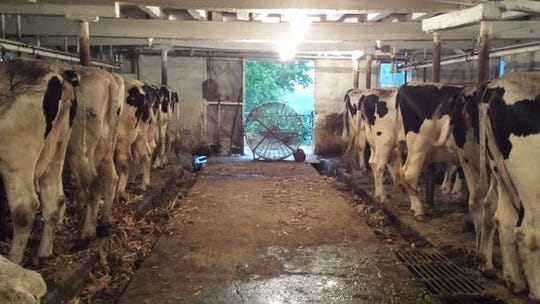



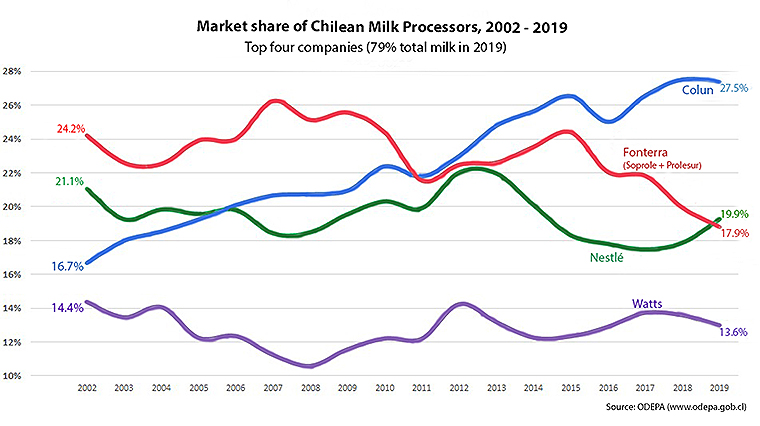

 Last month saw another high-profile casualty in the dairy co-op sector, as New Zealand’s Westland
  Nestle, the world’s biggest food and beverage company, has launched a brand of infant formula that uses the A2 beta-casein protein made popular by the New Zealand and Australia-listed a2 Milk Company.


 Fonterra’s milk volumes in Australia continue to shrink rapidly, down nearly 29% in the first month of the new Australian season after a more than 20% fall in the season recently finished.
 Kraig Smith, 26, rents a 200-acre farm where he keeps 130 dairy cows, milking 65 of them.


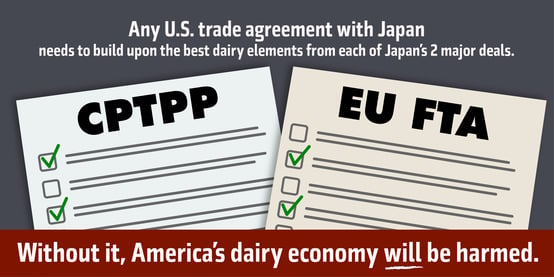
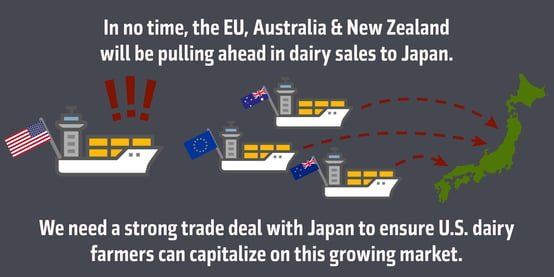
-2.png?width=733&name=Chart2%20(3)-2.png)
.png?width=745&name=Chart1%20(4).png)
-2.png?width=723&name=Chart3%20(2)-2.png)


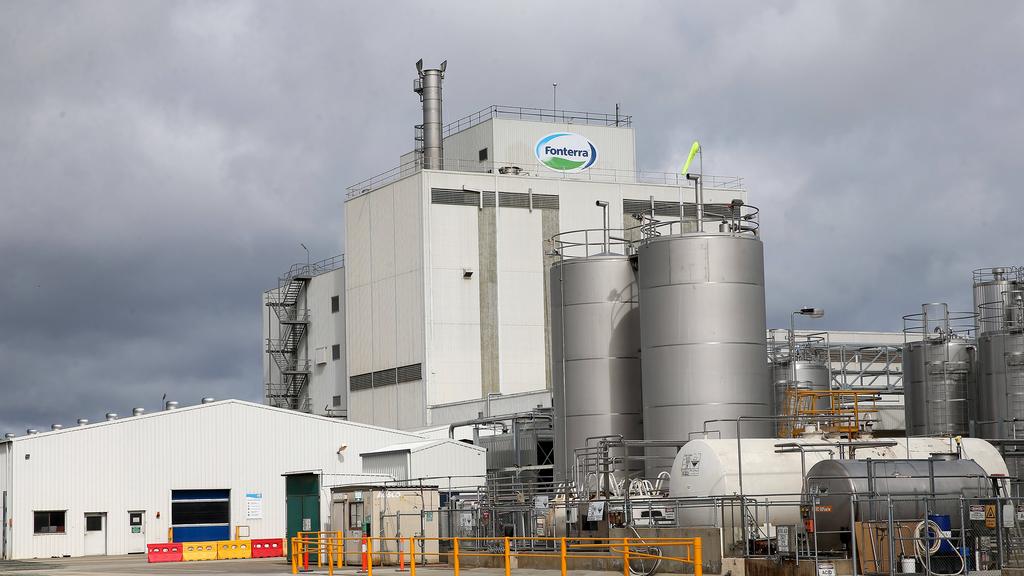 FONTERRA Australia is offering $7.60 a kilogram of milk solids to select dairy farmers, despite most of its suppliers receiving just $6.80/kg MS.


 The rolling cornfields and sounds of cows chewing their cud at Freund Farm in East Canaan couldn’t be further removed in spirit from the paneled walls and political conversation at Connecticut’s Legislative Office Building in Hartford— but for dairy farmer Amanda Freund, the change of scenery was necessary.
 Moore :: CT MirrorAmanda Freund’s father, Ben, came up with the idea to repurpose cow manure into biodegradable planters which the family now sells all over the U.S. and the U.K.
 Moore :: CT MirrorFreund, who has been working on her family’s farm since she was a teenager, said their farm has implemented everything from robotic milkers to anaerobic digesters to repurpose cow manure, in order to remain viable.
 Nestlé, Lactalis and Danone continue leading the global dairy industry, but could see some shakeups in the future, according to a new analysis from Rabobank.



