Archive for Dairy Industry – Page 42

U.S. Dairy Advances Journey to Net Zero Carbon Emissions by 2050

Signaling bold climate change action, the Innovation Center for U.S. Dairy today unveiled the Net Zero Initiative, an industry-wide effort that will help U.S. dairy farms of all sizes and geographies implement new technologies and adopt economically viable practices. The initiative is a critical component of U.S. dairy’s environmental stewardship goals, endorsed by dairy industry leaders and farmers, to achieve carbon neutrality, optimized water usage and improved water quality by 2050.

Experience the interactive Multichannel News Release here:

https://www.multivu.com/players/English/8794951-us-dairy-nestle-net-zero-carbon-emissions-by-2050/

“The U.S. dairy community has been working together to provide the world with responsibly-produced, nutritious dairy foods,” said Mike Haddad, chairman, Innovation Center for U.S. Dairy. “With the entire dairy community at the table – from farmers and cooperatives to processors, household brands and retailers – we’re leveraging U.S. dairy’s innovation, diversity and scale to drive continued environmental progress and create a more sustainable planet for future generations.”

The Innovation Center for U.S. Dairy also announced a key milestone on its journey toward carbon neutrality – an up to $10MM commitment and multi-year partnership with Nestlé to support the Net Zero Initiative and scale access to environmental practices and resources on farms across the country.

“Supporting and enabling farmers through the Net Zero Initiative has the potential to transform the dairy industry,” said Jim Wells, chief supply chain officer for Nestlé USA. “Scaling up climate-smart agricultural initiatives is key to Nestlé’s ambition to achieve net zero greenhouse gas emissions by 2050 and will help reduce the carbon footprint of many of our brands. We are excited to collaborate with U.S. dairy and our suppliers to contribute to an even more sustainable dairy supply chain.”

2050 Environmental Stewardship Goals

The Innovation Center for U.S. Dairy – a forum that convenes dairy farmers and industry stakeholders across the value chain to align on shared social responsibility priorities – built on a decades-long commitment to responsible dairy production in developing the 2050 Environmental Stewardship Goals. Leveraging a rigorous, third-party reviewed materiality assessment, the industry prioritized the most pressing areas of environmental sustainability as the foundation for its goals:

  1. Become carbon neutral or better;
  2. Optimize water use while maximizing recycling;
  3. Improve water quality by optimizing utilization of manure and nutrients.

In 2008, U.S. dairy was the first agricultural sector to commission a life cycle assessment on fluid milk, which showed that dairy accounts for 2% of total GHG emissions in the U.S.

In fact, due to innovative practices in cow health, improved feed and genetics, and modern management practices, the environmental impact of producing a gallon of milk in 2017 has shrunk significantly from 2007, requiring 30% less water, 21% less land and a 19% smaller carbon footprint1.

Bringing Net Zero to Life

The Net Zero Initiative is a collaboration of dairy organizations and represents a critical pathway on U.S. dairy’s sustainability journey. Many of the practices and technologies needed to reach the industry’s goals largely exist but require further research and development and overall greater accessibility across farms of all sizes and geographies. Through foundational science, on-farm pilots and development of new product markets, the Net Zero Initiative aims to knock down barriers and create incentives for farmers that will lead to economic viability and positive environmental impact.

“As part of a 5th-generation dairy farming family, we pride ourselves on sustaining our land, caring for our animals and preserving our business for the next generation,” said Tara Vander Dussen, a New Mexico dairy farmer. “We want to be at the table, testing new practices and accessing innovative technology to go further, faster. Because in the end, we all want the same thing – a healthy planet for our families and our children.”

Nestlé is the first of what the U.S. dairy community hopes will be many partners joining the Net Zero Initiative, contributing funding and expertise to help propel the entire industry’s progress toward a more sustainable future. With brands like Carnation®, Stouffer’s® and DiGiorno®, Nestlé brings a wealth of knowledge and industry leadership to the table, and an earnest commitment to supporting U.S. dairy farmers in environmental advancements and technology adoption.

Dairy companies and farms in every single state are already contributing to the goals in individual ways and each year a select number are recognized for their positive impact with the U.S. Dairy Sustainability Award.

The dairy community will continue to demonstrate its progress in the environment, animal care, food safety/traceability and community contributions through the U.S. Dairy Stewardship Commitment. As of October 2020, 27 dairy companies representing 70 percent of the nation’s milk production have voluntarily adopted the U.S. Dairy Stewardship Commitment and contribute to U.S. dairy’s ability to track, aggregate and report on progress.

“We know a lot more is possible – proven science and evidence from dairy’s existing best practices tells us we can get to net zero. This is not only good for dairy farmers, it’s also good for all businesses that serve dairy, the communities where we farm and the millions of people who enjoy dairy every day,” added Haddad.

For more information on U.S. dairy’s sustainability journey, please visit USDairy.com/Sustainability.

The Innovation Center for U.S. Dairy® is a forum that brings together the dairy community to address the changing needs and expectations of consumers through a framework of shared best practices and accountability. Initiated in 2008 by dairy farmers through the dairy checkoff, we collaborate on efforts that are important both to us and our valued customers – in areas like animal care, food safety, nutrition and health, the environment and community contributions. Through the Innovation Center, the U.S. dairy community demonstrates its commitment to continuous improvement from farm to table, striving to ensure a socially responsible and economically viable dairy community.

Drying Up Government Aid Set to Rock U.S. Dairy Producers

America’s dairy farmers could face another price hit this year as a slowdown in government purchases combines with reduced demand from schools.

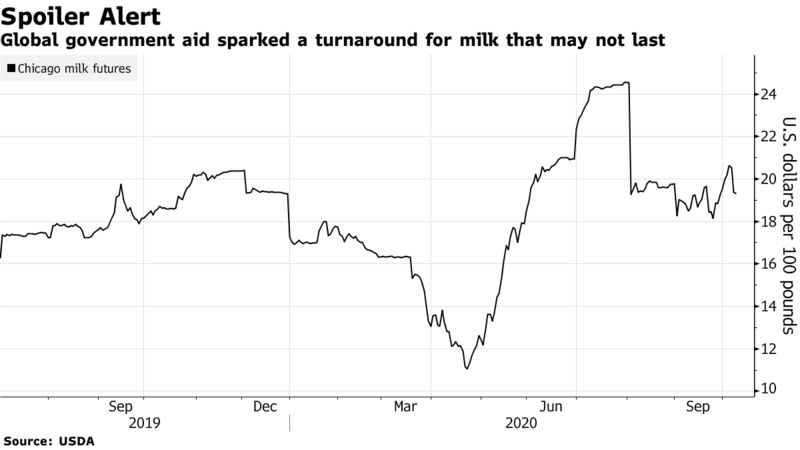
Dairy products have gotten a boost from the U.S. Department of Agriculture’s Farmers to Families Food Box program, which includes plans to buy as much as $4 billion worth of food to distribute to those in need. The government purchases have helped to send milk prices on a tear recently. But the program is slated to wind down, and concerns are rising over whether that rally will be sustainable.

Milk markets have already had a roller-coaster year. When coronavirus lockdowns went into place, dairy markets were among the hardest hit in the food world. It turns out, consumers eat a lot more cheese and butter when they’re dining out than they do at home. As restaurants shuttered, farmers were left with an overwhelming glut. Millions of pounds of milk got dumped.

But then governments stepped in and helped to rescue prices. In addition to the U.S. food program and a dairy bailout, the European Union and Australia also earmarked funds for the industry. That sent milk futures in Chicago soaring after touching a decade low in April.

Now, it looks like things could reverse again.

relates to Drying Up Government Aid Set to Rock U.S. Dairy Producers

U.S. government dairy purchases are set to dwindle by year’s end, dropping to 7.9 million pounds by December from 505.7 million pounds in September, according to StoneX Group Inc. estimates. That decline would remove a year’s worth of growth from the industry.

“The concern moving forward is as these government purchases slow — it looks like they’re going to slow dramatically after the election —commercial demand is going to be down,” said Nate Donnay, director of dairy market insight at StoneX. “Prices are going to fall again to try to slow down overall milk production and get it lined up with where real commercial demand is.”

At the same time, schools have gone virtual at least part of the time in many places. That means a lot fewer milk cartons are being gulped down in cafeterias. The same goes for fewer pieces of lunchtime pizza, grilled cheese sandwiches and other typical meals. Demand from schools typically represents about 6% of the market.

Declining fluid milk demand is the biggest impact from students not completely returning to school, which is bearish for the industry, said Alyssa Badger, director of global operations at HighGround Dairy in Chicago.

Justina Vasquez in New York

Source: bloomberg.com


‘Everything is better’: Effort grows to improve working conditions on Vermont dairy farms

Farmworker group Migrant Justice released its first biennial report documenting the progress the organization has made with its Milk with Dignity program improving conditions for migrant workers on dairy farms in Vermont and New York.

The 68-page report includes data that show improvements in labor and housing conditions under the program, as well as personal stories from farmworkers and owners.

One such story is about a farmworker named Adrian.

“I used to work on a farm outside the program, where we worked 12 hour days without breaks for food, and where ten of us lived in a trailer infested with bed bugs,” Adrian said. “Since I moved to a Milk with Dignity farm, there’s been a huge change. Everything is better: the pay, the hours, there’s enough space for all of us in the house and we aren’t cold in the winter.”

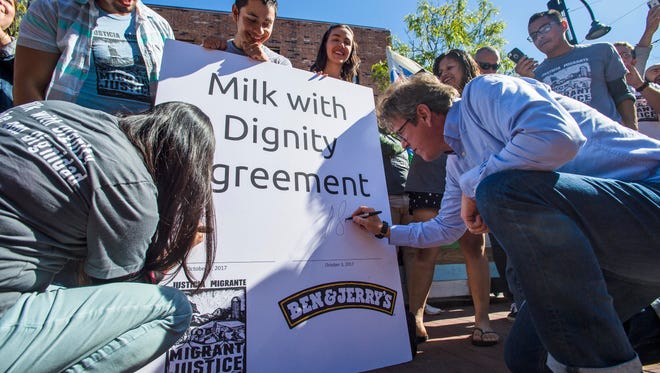
Ben & Jerry's CEO Jostein Solheim, right, signs a facsimile contract during a news conference where the ice cream maker and Migrant Justice announced an agreement in Burlington on Tuesday, October 3, 2017. The Milk with Dignity program seeks to ensure that milk provided to Ben & Jerry's is produced under fair working conditions.

Milk with Dignity was launched in 2018 by an agreement between Migrant Justice and Ben & Jerry’s to implement the program in the ice cream company’s Northeast dairy supply chain. Ben & Jerry’s committed to buy all of its milk from farms that comply with the Milk with Dignity code of conduct, created by the workers themselves.

More than 260 workers on nearly 70 farms in Vermont and New York are covered by the Milk with Dignity program, accounting for more than 20% of Vermont’s dairy industry by volume.

Source: burlingtonfreepress.com

US legislation would increase flexibility for labeling milk

The state Senate recently approved legislation that would allow milk processors more flexibility in labeling.

Senate Bill 1330 amends Title 3 (Agriculture) of the Pennsylvania Consolidated Statutes to allow milk processors to use a “best by” date instead of a “sell by” date.

Milk processors also would be allowed to request a later “best by” or “sell by” date from the Pennsylvania Department of Agriculture than the current 17-day milk code.

The change is the result of a recommendation in a recent Dairy Future Commission report.

“Other states don’t have that 17-day milk code requirement, which is an arbitrary deadline and really doesn’t reflect the freshness of the milk,” Sen. Judy Schwank (D-Berks County), who sponsored the bill, said. “Milk doesn’t necessarily spoil once you get to day 18. But consider consumers in the grocery store – they buy the carton with the latest date. This legislation will help make Pennsylvania milk the fresher choice.”

In 2018, Schwank requested a dairy industry study to determine if clarifying the milk date coding requirements would be a way to bolster the industry.

The bill moves to the House of Representatives for consideration. If it becomes law, the legislation would take effect in 30 days.

Source: pennbizreport.com

New Zealand’s Fonterra to sell China dairy farms for $368 mln to focus on home markets

New Zealand’s Fonterra FCG.NZFSF.NZ said on Monday it has agreed to sell its farms in China for a total of NZ$555 million ($367.97 million) as the dairy producer continues to focus on the domestic market and reduce debt.

The company unveiled plans last year to halt overseas expansion after being criticised by the more than 10,000 farmers who make up its cooperative for its foray into countries like China and value added consumer products that were weighing on its profits.

“For the last 18 months, we have been reviewing every part of the business to ensure our assets and investments meet the needs of the Co-op today,” Chief Executive Officer Miles Hurrell said.

“Selling the farms is in line with our decision to focus on our New Zealand farmers’ milk.”

After the sale, the company will also be able to better prioritise its efforts in the foodservice, consumer and ingredients business in China, its biggest market, it added.

China Youran Dairy Group will purchase two farming-hubs located in Ying and Yutian for NZ$513 million, while Beijing Sanyuan Venture Capital is set to acquire an 85% stake in the Hangu farm.

The dairy giant said it will use the cash proceeds from the deal to pay down debt further, which it has already managed to reduce by NZ$1 billion, as of September.
Source: reuters.com

Top milk supplier Fonterra is selling its dairy farms in China

Fonterra, the world’s biggest dairy business, is selling its farms in China as it retreats from global expansion.

The New Zealand-based company announced Monday that it is selling its Chinese farms to local rivals for 555 million New Zealand dollars ($369 million). CEO Miles Hurrell said the deals will allow Fonterra to focus on areas in which it has a competitive advantage.

“Selling the farms is in line with our decision to focus on our New Zealand farmers’ milk,” he said in a statement, adding that the proceeds would be used to pay down debt.

Fonterra started building farms in China in 2007 as a way to tap into the country’s growing fresh milk market. Chinese customers have long trusted overseas dairy brands for safety and quality — a preference that grew after a massive scandal involving tainted baby milk in 2008.

But the business has been costly to operate. Last year, Fonterra wrote down the value of the farms by $135 million.

“There have been several events over the years, highlighting a higher level of risk in operating the farms than previously anticipated,” the company said in its annual report published last September.

Hurrell said at the time that growing demand for fresh milk in China suggested that prices would likely rise in the future, but the company wasn’t sure when that would happen. As a result, Fonterra would look at “how we can best unlock the value in the farms.” He said the company was focusing on prioritizing its New Zealand milk supply and “simplifying our global portfolio.”

The sale underscores how difficult it has been for Fonterra to find success overseas. The company lost more than 600 million New Zealand dollars ($400 million) last year, largely because of trouble with its business in China, Brazil and Venezuela.

The Chinese farms aren’t the only investment in the country that has soured. Last year, Fonterra announced that it would reduce its stake in Chinese infant milk maker Beingmate, a partnership it called “disappointing.”

Source: keyt.com

U.S. dairy exports to benefit from new USDA-FDA partnership

The U.S. Department of Agriculture (USDA) and Food and Drug Administration (FDA) signed a Memorandum of Understanding (MOU) that will establish an interagency process to further support exports of U.S. dairy products. Both agencies play critical roles in facilitating foreign sales of American-made dairy products, which is recognized and appreciated by the U.S. dairy industry. This MOU will draw upon the expertise of FDA as well as USDA’s Agricultural Marketing Service (AMS) and Foreign Agricultural Service (FAS) to deepen and streamline their work together on the issues facing dairy exports to the benefit of U.S. dairy farmers and manufacturers. 

The U.S. Dairy Export Council (USDEC) and the National Milk Producers Federation (NMPF) worked with both agencies to advance this new approach to dairy export collaboration.

“This new partnership ensures that the staff at USDA and FDA are working together in the most efficient way possible to lower barriers for our farmer’s dairy exports. Increasing U.S. dairy exports will strengthen the health of our farmers and rural communities, which is more important than ever as America’s dairy industry faces new and unprecedented challenges. We appreciate all of the hard work from both agencies and stand ready to support the USDA and FDA’s commitment to open new doors for U.S. dairy exports,” said Jim Mulhern, president and CEO of NMPF.

NMPF and USDEC deeply appreciate the USDA and FDA’s dedication to drafting this new MOU to facilitate U.S. dairy exports and their ongoing collaboration with the dairy industry. Foreign competitors are making advances in international markets, making efforts to expand overseas opportunities for U.S. dairy critical to the long-term health of U.S. dairy farmers and processors.

“[The] announcement of an interagency MOU on dairy trade between USDA and FDA is the result of years of conversation and efforts between stakeholders within the U.S. dairy industry and the U.S. government to establish consistent guidance on tackling the rising number of export challenges facing our industry. This MOU will help our industry continue to grow in an increasingly competitive global environment,” said Tom Vilsack, president and CEO of USDEC.

Source: ocj.com

New Campaign Highlights Canadian Dairy Sector’s Leadership in Sustainable Dairy Farming

Dairy Farmers of Canada’s (DFC) latest marketing campaign is putting real dairy farmers in the spotlight to educate consumers on the rigorous environmental practices behind high-quality Canadian milk. In Hey Dairy Farmer – Online Classroom Edition actual Canadian dairy farmers discuss their sector’s commitment to sustainable dairy farming and preserving our natural resources for generations to come.

Through video interactions with a class of elementary school-aged kids asking honest questions about dairy, farmers showcase the innovative technologies and practices that are being used in Canada to help reduce our sector’s environmental footprint.

“Canadian dairy farmers are global leaders in sustainable agriculture, because we’ve made a pledge to lead, not follow,” said Pierre Lampron, President of Dairy Farmers of Canada. “The sector works to proactively reduce emissions and our overall environmental footprint by adopting more efficient feeding strategies, investing in new technologies, implementing new farming practices and investing in research and innovation.”

The Canadian dairy sector is among the most efficient in the world, with a carbon footprint that is less than half the global average. Dairy farming uses just 0.2% of Canada’s total land, just 0.02% of Southern Canada’s freshwater resources, and is responsible for just 1% of Canada’s total greenhouse gas emissions.

By adopting the latest best practices, between 2011 and 2016, the Canadian dairy farming industry reduced our carbon footprint by more than 7%, our water usage by 6%, and our land usage by 11% (per litre of milk production).

“When consumers buy dairy products made from Canadian milk, they are supporting an industry that is committed to protect the environment for future generations,” added Pierre Lampron. “It’s quality stewardship in every drop, and we are thrilled to be able to highlight that in this campaign.”

All the creative was directed remotely by DDB Canada and was expertly captured without any of the talent needing to leave their homes. The campaign can be seen in-stores, on TV and on digital media across Canada.

To view the campaign, click here.

ABOUT DAIRY FARMERS OF CANADA
Dairy Farmers of Canada is the national policy, lobbying and promotional organization representing Canadian dairy producers. DFC strives to create stable conditions for the dairy sector in our country. It also seeks to maintain policies that promote the sustainability of Canadian dairy production and promote dairy products and their health benefits.

DFA Announces 2020 Member of Distinction Winners

Dairy Farmers of America’s (DFA) Members of Distinction program honors members who embody the Cooperative’s core values and excel on their operations, in their communities and in the industry. Each year, one member farm from each of DFA’s seven regional Areas is honored.

The 2020 Members of Distinction are:

Central Area

Brick Family, Brickstead Dairy — Greenleaf, Wis. Established in 1848, Brickstead Dairy is dedicated to continuing its family legacy that goes back five generations. Today, they milk 1,000 cows and are passionate about clean water, land stewardship and sharing their best practices and family history with others. Through sustainable farming practices, the family is diligent about using water from the dairy as nutrients for the fields and keeping those nutrients out of their waterways. Dan and Melanie Brick are also active members of their community and know educating consumers about dairy and sustainable practices is key to securing a future for farming, which is why the family hosts several educational events on their farm throughout the year. Through hard work and community engagement, the Bricks are helping to share dairy’s sustainable story with the world.

Mideast Area

Oesch Family, Swisslane Farms — Alto, Mich. Just over 100 years old, Swisslane Farms has been an integral part of the Oesch family history. Today, senior partners Fred, Tom and Jeff Oesch, and next-generation leaders Matt and Tommy Oesch and Annie Link milk just over 2,000 Holstein cows in Alto, Mich., where the local community is an important part of their operation. Through their on-farm, non-profit organization, Dairy Discovery, the Oesch family connects their community to their values and farm-to-table story by welcoming kids to experience the farm and develop a connection to their food — from going on a hay ride and bottle feeding calves to learning about a cow’s diet and enjoying a glass of milk. The dairy’s values are the same as their ancestors were 100 years ago, with a strong focus on caring for the cows and the land, providing a quality product and innovation. To be light years ahead, Swisslane Farms became one of the first farms in the state of Michigan to install robotic milkers on a large scale.

Mountain Area

Roth Family, Si-Ellen Farms — Jerome, Idaho For the Roth family, producing high-quality milk starts with their family and carries over to their longstanding employees who have helped shape their operation. With roughly 8,000 Holstein cows, the eight Roth siblings who partner to make their three dairies a success focus on treating each cow as if she were only one, which requires trusted employees. Because of this, the Roth family understands their employees are an integral part of the family farm, and they go above and beyond to make them feel like family — from offering comprehensive benefits and hosting pizza Fridays each month to providing extensive training and comfortable break rooms. By retaining trained, loyal employees through the years, the family can be sure their family legacy continues through happy, healthy cows that produce top-quality milk.

Northeast Area

Garber Family, Rock Solid Dairy, LLC — Shippensburg, Pa. Growing up, Zane Garber always aspired to operate an efficient dairy on his own. With his family’s home farm just 20 miles away, Zane, along with his wife, Juanita, had the opportunity to purchase a dairy of their own in 2007. Since then, Zane and Juanita, with their kids Micah, Nathan, Jen and James, have built Rock Solid Dairy into a strong foundation for the future. Milking nearly 350 cows and farming more than 775 acres, Zane and his wife, Juanita, treat their cows with the utmost care, which in turn provides consistent, high-quality milk — a priority for Zane and his operation. Throughout the years, Zane has learned that milk quality is tied to every aspect of the farm — from keeping the free stalls clean and making sure the milk procedures are accurately followed to feeing the girls a balanced diet. At Rock Solid Dairy, quality is interwoven into all aspects of the farm.

Southeast Area

Crawley Family, Crawley’s Valley View Farms — Gravette, Ark. With 300 cows on 650 acres, the Crawley family is focused on breeding, efficiency and caring for their herd. As fourth-generation dairy farmers, Tim and Nikki Crawley took over the operation in 1996 that’s been in Tim’s family since 1919 with their daughters Brittany and Jessica eager to take over as the fifth generation. The family has a strong focus on caring for each individual cow and encourage their herd to graze while also keeping some cows in free stalls with fresh bedding and misters when it’s hot. The Crawley family believes it all comes full circle — by taking care of their cows and keeping them healthy, their herd will produce more and in return, their family operation can provide more dairy to their community.

Southwest Area

Schroeder Family, Lawrence Schroeder Dairy — Windthorst, Texas Butch Schroeder and his wife, Diane, built a dairy in the town they both grew up in 30 years ago. Purposely kept small, the Schroeders started with 80 cows and grew over the years, now milking 140 cows on 200 acres in Windthorst, Texas. With an emphasis on cow comfort and well-kept facilities, the Schroeders host customer visits yearly and participate in the Daisy Pasture Access Program. The family is also proud of what the dairy community has instilled in their family. By heavily involving their children in the operation, Butch and Diane’s kids, Kevin, Tyler and Kyle, developed strong work ethics and learned the importance of being active members of their community. For the Schroeders, their operation is more than a well-kept, successful dairy. It’s a support system that’s helped shape their family and instill values they can lean on for a lifetime.

Western Area

De Snayer Family, De Snayer Dairy — Lodi, Calif. In Lodi, Calif., the De Snayer family is focused on continuing a legacy that was established by Leen De Snayer who tragically passed away in a car accident in 2010. Leen was a passionate dairy farmer, focused on hard work and bringing a smile to everyone’s face. With a positive mindset and a strong family bond, the De Snayer family has worked hard to make Leen proud by taking care of their workers, their 1,600 cows and one another. With a recent remodel of their milk barn, the De Snayer family has room to expand but are currently focusing on cow comfort by grooming beds, providing ample shade and keeping a close eye on each individual cow. For the De Snayer family, Leen’s legacy of a positive and resilient mindset lives on at their dairy farm and within their operation.

USDA and FDA Sign Memorandum of Understanding to Enhance Collaboration, Efficiency on U.S. Dairy Exports

Today, the United States Department of Agriculture (USDA) and the United States Food and Drug Administration (FDA) signed a Memorandum of Understanding (MOU) outlining strengthened coordination between the FDA and the USDA’s Agricultural Marketing Service (AMS) and Foreign Agricultural Service (FAS) to facilitate the export of milk and milk products from the United States. U.S. dairy exports are valued at nearly $6 billion annually.

“The rising trend by trading partners requesting additional information and assurances from dairy exporters requires an exceptional level of coordination by government authorities to address and facilitate requests,” said Frank Yiannas, FDA Deputy Commissioner for Food Policy and Response. “This MOU reflects a concerted, modern approach to leverage our collective strengths as we move into a New Era of Smarter Food Safety.”

“Signing the MOU is an important milestone in the continued collaboration between USDA and FDA,” stated USDA Under Secretary Greg Ibach, Marketing and Regulatory Programs. “With the MOU in place, USDA and FDA have clearly defined the critical functions needed to assist the dairy industry to improve efficiency and effectiveness by focusing on the core competencies of each agency to engage on certain issues.” 

USDA Under Secretary for Trade and Foreign Agricultural Affairs Ted McKinney said, “This MOU will help USDA and FDA address the challenges faced by U.S. dairy exporters and keep them competitive in the global marketplace. I’m confident that it will help facilitate trade and help expand exports of wholesome, high-quality, U.S. dairy products.”

The FDA is the competent authority providing regulatory oversight of programs that cover U.S. dairy facilities, ensuring the safety of milk and milk products, while the USDA, through its dairy grading service, is the lead agency on issuing dairy sanitary certificates, coordinating interagency collaboration related to U.S. exports of milk and milk products, and negotiating with foreign countries on certifications to meet their importing requirements.

The FDA, an agency within the U.S. Department of Health and Human Services, protects the public health by assuring the safety, effectiveness, and security of human and veterinary drugs, vaccines and other biological products for human use, and medical devices. The agency also is responsible for the safety and security of our nation’s food supply, cosmetics, dietary supplements, products that give off electronic radiation, and for regulating tobacco products.

U.S. Dairy Exports to Benefit from New USDA-FDA Partnership

The U.S. Department of Agriculture (USDA) and Food and Drug Administration (FDA) today signed a Memorandum of Understanding (MOU) that will establish an interagency process to further support exports of U.S. dairy products. Both agencies play critical roles in facilitating foreign sales of American-made dairy products, which is recognized and appreciated by the U.S. dairy industry. This MOU will draw upon the expertise of FDA as well as USDA’s Agricultural Marketing Service (AMS) and Foreign Agricultural Service (FAS) to deepen and streamline their work together on the issues facing dairy exports to the benefit of U.S. dairy farmers and manufacturers.

The U.S. Dairy Export Council (USDEC) and the National Milk Producers Federation (NMPF) worked with both agencies to advance this new approach to dairy export collaboration. NMPF and USDEC deeply appreciate the USDA and FDA’s dedication to drafting this new MOU to facilitate U.S. dairy exports and their ongoing collaboration with the dairy industry. Foreign competitors are making advances in international markets, making efforts to expand overseas opportunities for U.S. dairy critical to the long-term health of U.S. dairy farmers and processors.

“Today’s announcement of an interagency MOU on dairy trade between USDA and FDA is the result of years of conversation and efforts between stakeholders within the U.S. dairy industry and the U.S. government to establish consistent guidance on tackling the rising number of export challenges facing our industry. This MOU will help our industry continue to grow in an increasingly competitive global environment,” said Tom Vilsack, president and CEO of USDEC.

“This new partnership ensures that the staff at USDA and FDA are working together in the most efficient way possible to lower barriers for our farmer’s dairy exports. Increasing U.S. dairy exports will strengthen the health of our farmers and rural communities, which is more important than ever as America’s dairy industry faces new and unprecedented challenges. We appreciate all of the hard work from both agencies and stand ready to support the USDA and FDA’s commitment to open new doors for U.S. dairy exports,” said Jim Mulhern, president and CEO of NMPF.

China planning self sufficiency in pork, beef and dairy produce to cut foreign dependency

China is currently rebuilding its pork industry. African swine fever decimated the country’s swineherd in 2018 and Beijing had to considerably increase imports

Bloomberg news agency reports that China, the world’s largest producer and consumer of pork in the world, has set a long-term goal to ensure that domestic supply is sufficient to meet 95% of demand.

Likewise with beef exports, the goal is to achieve 85% self-sufficiency, and for dairy produce the goal is for domestic production to cover more than 70% of consumption.

China is currently rebuilding its pork industry. The African swine fever decimated the country’s swineherd in 2018 and the country had to considerably increase imports to meet domestic demand.

As a result of the disease, millions of farmers still fatten less than 500 animals per year. The goal is that 70% of producers reach large-scale capacity by 2025, and 85% will reach it by 2030. It was recently reported that China’s pork reserves are nearing depletion, despite the data is considered a state secret.

China has very close trade links with Mercosur members, it’s the main trade partner of Argentina, Brazil and Uruguay in agriculture commodities. For Brazil, China is the main market for beef, pork, and broiler exports.

Source: en.mercopress.com

Chinese dairy investor pressed Canada to ‘mitigate the risk’ of new NAFTA

Executives of the Chinese infant formula manufacturer that’s building a new $332 million plant in Kingston, Ont. contacted Canadian officials to complain about the new NAFTA agreement within days of the agreement being reached — and for help in mitigating the harm caused by Canada’s concessions.

Youbin Leng, chairman of China Feihe Limited, is seen here at a 2019 news conference marking Feihe’s listing on the Hong Kong stock exchange. Leng requested an urgent meeting with Canadian government officials shortly after the revised NAFTA deal was reached. (Zhang Wei/China News Service/VCG/Getty Images)

Less than three weeks after talks concluded on the revised North American free trade agreement, executives from a Chinese infant formula manufacturer that had invested $332 million to build a new plant in Kingston, Ont. asked for a sudden meeting with Canadian officials.

Zhiwen Yang, the general manager of Canada Royal Milk — the Canadian subsidiary of China Feihe Limited — wrote to then-Agriculture Minister Lawrence MacAulay and the Liberal MP for Kingston and the Islands, Mark Gerretsen, describing how Canada’s concessions in the Canada-United States-Mexico Agreement (CUSMA) put his business plans in jeopardy by limiting how much cow’s milk formula it can export and dismantling the dairy ingredient pricing system.

Yang asked the federal government to “mitigate the risks to the project.” His three-page letters, dated Oct. 16, 2018, were released to CBC News under the Access to Information Act.

A few days later, Feihe International Inc. “respectfully” asked the president of the Canadian Food Inspection Agency and another senior government official to meet for 90 minutes on Oct. 29 with Yang and his boss, Feihe International chair Youbin Leng, who was travelling to Canada with his directors of research and regulatory affairs.

“The purpose of the meeting is to discuss the regulatory framework in China and explore how we can work together. The expectation is not for a decision to be made, but to begin a conversation,” said the email from Carey Bidtnes, Canada Royal Milk’s human resources manager, who was part of the team that worked on bringing this investment to Canada during her previous employment with the Kingston Economic Development Corporation. 

Bidtnes said that Canada Royal Milk was working with Health Canada and the CFIA to “resolve a challenge” with exporting its formula.

The documents reveal that the financial stakes for Feihe were higher by the fall of 2018 than they were in 2017, when CBC News reported on the potential international trade issues triggered by Feihe’s plans to export the vast majority of the infant formula it manufactures in Canada back to Chinese consumers.

As construction began, the Chinese investment was pegged at $225 million. A year later, the investment was estimated at $332 million and project proponents were predicting it would bring 277 direct full-time jobs to the region once production ramps up. A further 300 construction jobs have been created in the Kingston area and the plant is expected to generate the equivalent of over 1,000 more jobs in its eventual supply chain.

Chinese companies have a deeper relationship with China’s central government than private sector firms in North America do with their own national governments. Feihe is listed on the Hong Kong stock exchange, but its subsidiary, Canada Royal Milk, is incorporated in Canada.

The investment — the largest foreign direct investment in Ontario agriculture in the last decade — was finalized with officials from the Canadian Dairy Commission during a 2016 visit to Canada by Chinese Premier Li Keqiang.

CUSMA limits exports, changed pricing

American officials were monitoring this Chinese investment. President Donald Trump — and the powerful U.S. farm lobby — regard Canada’s supply management system as “unfair” because it blocks most American dairy from Canada’s domestic market.

In the CUSMA, Canada agreed to several concessions that harm its dairy industry — including strict limits, enforced by new export charges, on international exports of infant formula and skim milk.

CUSMA’s export limit for cow’s milk formula is lower than what Feihe originally planned to produce in Kingston, according to a presentation obtained three years ago by CBC News.

Newly released government talking points say Canadian negotiators “were in contact with a number of individuals with direct knowledge of the proposed facility’s operations,” including the Kingston Economic Development Corporation, “to ensure negotiators had a thorough understanding of the intended operation … with a view to avoiding unintended impacts.”

Kingston’s mayor, Bryan Paterson, and a team of other local officials visited China to help land the infant formula facility in Eastern Ontario. It’s the largest foreign investment in Ontario’s agriculture industry in a decade. (Office of Mayor Bryan Paterson)

It’s the same response CBC News got in 2018 when it asked whether Canada’s NAFTA renegotiation team spoke directly to Feihe about its plans before signing off.

Another concession Canada agreed to in the CUSMA talks dismantled part of its dairy pricing regime, ending lower ingredient pricing that kept processors competitive. Canada’s prices are now based on American rates.

When Feihe agreed to invest in Ontario, Canada’s lower ingredient price was part of its forecasts.

Xinhua, the Chinese news agency, reported that then-foreign affairs minister Chrystia Freeland spoke to Chinese Foreign Minister Wang Yi to brief him within days of concluding CUSMA negotiations.

But if the two ministers discussed the dairy concessions, they apparently didn’t resolve the manufacturer’s concerns because the documents show that, within days of that conversation, Feihe began its own outreach to the Canadian government.

Chinese asked Canada to limit competition

Earlier presentations of Canada Royal Milk’s business plans didn’t mention producing and exporting skim milk powder for the adult market. But this letter to MacAulay said the company would produce skim powder for export during a “ramp up” period of testing the new facility. 

Canada already has a significant surplus of skim milk powder, left over after meeting Canada’s strong demand for butter. Making baby formula at this new plant was supposed to help use up this surplus, not exacerbate it.

Feihe eventually plans to manufacture formula from both cow and goat milk at its Kingston facility, exporting most of it to China. A decade after its tainted milk scandal, some Chinese consumers still have more confidence in foreign formula. (Andy Wong/Associated Press)

The global market for skim is crowded and ultra-competitive, with American farmers hostile to any threats. Under the World Trade Organization’s Nairobi Agreement, Canada agreed to stop exporting skim milk products as of January 2021.

“The export cap is a very serious issue for the operations of the company for 2019 and 2020,” the letter from general manager Yang to then-minister MacAulay said, “and we believe it will hinder the growth of the entire industry in the future.”

In its correspondence, Feihe asked for assurances that its facility had the support of all levels of government. It also requested “reasonable quota” so it could take maximum advantage of the tariff-free exports that would be allowed under the CUSMA, including a “guarantee that the full annual export quota for infant formula would be assigned to Canada Royal Milk.”

Our team has already been contacted by U.S. dairy producers who are eager to sell their products to us.

– Zhiwen Yang, General Manager, Canada Royal Milk

Canada is allocating its export quota for skim milk powder based on processors’ past production. But for infant formula, export quota was distributed according to planned production — presumably to accommodate the new plant coming online.

“Currently, details on which entities have received an allocation for the dairy export thresholds are not public,” Jean-Sébastien Comeau, a spokesperson for Agriculture Minister Marie-Claude Bibeau, told CBC News.

In a question redacted from one document released to CBC News but repeated without redaction in another, Yang also asked the government if it would “take steps to limit the licensing of new infant formula manufacturing in Canada.”

While that appears to be anti-competitive behaviour, no other Canadian dairy processor has shown interest in making infant formula in recent years — which is why Canada pursued the Chinese investment in the first place.

Looking for compensation

On the demise of ingredient pricing, “it’s unclear how this will impact our operations in the medium to long term,” Yang’s letter to MacAulay said.

“Our team has already been contacted by U.S. dairy producers who are eager to sell their products to us,” the letter continues.

“What has the government proposed to assist dairy processors to overcome the loss of [ingredient] pricing?”

The letter sent to MP Gerretsen repeated the same demands.

Construction of the massive Canada Royal Milk facility in Kingston, Ont. was expected to create about 300 jobs. Once production begins, it expected to employ 277 people full-time jobs and create the equivalent of another 1,000 jobs in local supply chains. (Feihe International Inc.)

Although Bibeau announced funding for dairy producers harmed by trade deals with the European Union and Pacific Rim countries in the days leading up to the 2019 federal election, the industry is still waiting for the compensation it was promised when NAFTA was replaced.

It’s unclear whether Canada Royal Milk would be eligible for compensation but the Chinese investment has qualified for other federal and provincial support programs.

If Feihe believes its investment was harmed by Canada’s concessions, it could sue for damages under the 2012 Canada–China Foreign Investor Protection Agreement, which was negotiated by the previous Conservative government.

“The sued country can opt not to make public anything until an arbitration award,” Osgoode Hall law professor and investment treaty specialist Gus Van Harten said, noting this agreement is unique in this regard.

International Trade Minister Mary Ng’s spokesperson Ryan Nearing said “there has been no dispute launched against Canada under the Canada-China FIPA to date, nor notification of an intention to do so.”

Despite delays, manufacturer now ‘confident’

In an interview with CBC, MP Gerretsen said he passed on the requests he received from the company to officials at Agriculture and Agri-Food Canada. But he said the only formal encounter he’s had with Canada Royal Milk was a tour of the construction site in his riding earlier in 2018.

“A number of the issues that were in their letter I believe have been addressed,” he said.

In departmental email, one bureaucrat called Yang’s correspondence “an interesting letter indeed.”

Before federal government officials met with the Chinese, two senior officials from Prime Minister Justin Trudeau’s office, Brian Clow and Simon Beauchemin, joined an “urgent briefing” with MacAulay’s office — an “additional twist,” another bureaucrat called it.

“The Chairman is in Canada in the context of making more investment,” a senior official said. The request to meet with the president of the CFIA was “in the context of the application for export,” he said, “which may not be the full reality.”

Comeau, Bibeau’s spokesperson, tells CBC the Kingston facility now has its licence to export from the CFIA.

The Canadian Dairy Commission originally hoped an investor like Feihe could build a second facility, perhaps in Western Canada. But now, the government “is not in discussion with Canada Royal Milk about additional future investments,” Comeau said.

Earlier plans obtained by CBC News suggested Kingston facility would be exporting by now. Bidtnes told CBC News its production lines are complete and it is pleased with the results of its test batches.

“Timelines for beginning commercial production have been stretched into the fall due to the impact of COVID-19 on some regulatory processes,” she said, adding that the company remains “confident in our business plans and the support we have received from all levels of government.”

Source: cbc.ca

Milkmen expand their business during UK lockdown

New AHDB analysis shows that UK consumers turned to doorstep delivery of milk during lockdown, bolstering milk delivery businesses.

According to Kantar, traditional milkmen skimmed an additional 190,000 housebound customers from February to June as retailers struggled to stock shelves with essential dairy items such as milk, butter and cheese, with many services forced to close to new customers as demand outstripped supply.

Though numbers have fallen back slightly as restrictions have lifted, many customers have retained the service, at 671,809 in mid-August compared to 526,876 in February, a 27.5 percent rise.

The pandemic has also brought a new demographic to doorstep delivery. Traditionally, the milkman customer is older and more-affluent. However, lockdown brought in younger couples and families, which account for 46 percent of milk bought by new customers compared to pre-lockdown, where only 21 percent of milk was bought by younger customers. There is an opportunity for the industry to attract and retain new customers in these demographics by emphasising its environmental credentials, such as non-plastic packaging and the use of electric floats for distribution.

AHDB consumer insight manager Susie Stannard said: “Higher prices compared to supermarkets has always been a limiting factor for mass uptake of doorstep delivery but the pandemic means all bets are off, with consumers willing to pay more for convenience and safety.

“As restrictions tighten once more and many areas face local lockdown, there is clear potential to develop the market further for milk and other essentials.”

Click here to read the full analysis from AHDB

Dairy farmers’ inspiring stories during COVID-19

[fbvideo link=”https://www.facebook.com/LandOLakes/videos/654698798519660″ width=”900″ height=”600″ onlyvideo=”1″]

While dairy farmers are often taken for granted, they are among the heroes of the pandemic, tirelessly working to provide food for our homes, schools and restaurants during unprecedented challenges. Dairy farming is more than hard work, though. In between caring for the cows and waiting for the rain to stop (or start), there is joy, hope and plenty of smiles to go around.

Enter ‘Where Goodness Grows,’ a six-part digital video series highlighting Land O’Lakes dairy farmer-owners with a behind the scenes look at the work they do and the lives they lead, on and off the farm. Amy Brown, co-host of iHeartMedia’s award-winning country music radio show, “The Bobby Bones Show,’ is hosting the series, introducing you to the farmers, their families and sharing their inspiring stories.

Click here for more information.

Synlait Milk forecasts higher earnings despite drop in annual profit

New Zealand’s Synlait Milk reported a 9 percent drop in annual profit on 28 September, but forecasts strong underlying core earnings for 2021 based on its core infant and lactoferrin business.

Synlait, which is part-owned by a2 Milk Company did not provide any profit figure for its fiscal 2021 guidance, but said it was targeting a “slight improvement on fiscal 2020”.

Reuters reports that the diary firm also increased its milk price forecast for the 2020-2021 season to NZ$6.40 per kg of milk solids (kgMS), up from its previous estimate of NZ$6.00 kgMS.

“While it is still early in the season, and commodity prices remain volatile, this reflects growing confidence in the season ahead,” the company said in a statement.

Synalit said that while global uncertainty continues regarding the coronavirus outbreak, it does not expect any disruption to manufacturing or demand for its ingredient and lactoferrin business.

Net profit after tax for the 12 months to 31 July came in at NZ$75.2 million ($49.15 million), down from NZ$82.2 million a year ago, due to higher investment made in new facilities and acquisitions over the past two years.

The company added that it was in the process of finalising a long-term supply agreement with a new, multinational customer for packaged products which is expected to have a positive impact on its earnings from fiscal 2023.

($1 = 1.5300 New Zealand dollars).

Read more about this story here.

Source: Reuters

As large dairies absorb the milk market, small farms seek a niche

After high school, Calvin Nisly, of Partridge, Kan., wanted to wash his hands of the family dairy. He enjoyed milking cows growing up, but after high school, he did not want to be tied down to a dairy farm. Eventually, his love for cows and living off the land won out.
Calvin owns Trails West Brown Swiss Farm, one of approximately 30,000 small dairy farms with fewer than 200 cows nationwide. When his father owned the farm, he was one of a much larger industry. Nationwide, in 1987, there were just under 150,000 small dairy farms.

After high school, Calvin received his master’s degree in social work and started practicing. That was, until he met his wife, Andrea, who is originally from Switzerland. After much consideration, the couple decided a farm would be a good place to raise their children.

Since Calvin was a third-generation dairy farmer, a dairy farm was what the couple decided on. From the beginning, it was difficult, but as the years passed, running a profitable dairy farm kept getting tougher and tougher.

Changing times

Calvin said he missed out on going to many of his children’s activities, as they took place almost always during his evening milkings. In contrast, while he was growing up, the schools geared activities around a farming schedule.

“When I was a kid, a lot of kids were dairymen’s kids,” Calvin said. “That’s not the case with my kids’ friends.”

Even though the business is rough financially, the Nislys said raising dairy cows is very rewarding. Each one of the cows is like family. From Ladyship to Butter to Nestle to Bonfire, each animal has a name and a unique personality, which goes along with their name.

“I get a lot of enjoyment out of my animals,” Andrea said. “They’re good company.”

Similar to nationwide numbers, in Kansas the number of dairy farms is dwindling, with larger farms producing more of the milk. According to the USDA, milk production in the state during August 2020 totaled 338 million pounds. This is up 7% from last year. The average number of milk cows in Kansas was 169,000 head — 7,000 head more than a year ago.

According to the Kansas Department of Agriculture, approximately 80% to 85% of the milk produced in the state is produced in western Kansas on 29 large farms.

“When the virus hit, the co-op market collapsed,” Calvin said.

Although, during some of this time, while sales for milk increased, prices dropped.

Brown Swiss

Since starting his own farm, Nisly raises Brown Swiss, even though his father raised Holsteins. Their 60-count size is typical of the amount of cows dairy farmers had when Calvin was growing up. But in 2013, according to the USDA, the midpoint size on the average dairy farm was 1,300 cows.

The Brown Swiss Association, which was established in 1880, has about 50,000 registered purebreds. Most Brown Swiss reside in Wisconsin, followed by New York and Pennsylvania.

“Brown Swiss are really a good cow,” said Norm Magnussen, executive secretary for the Brown Swiss Association. “They are docile and heat tolerant.”

Brown Swiss have higher butterfat and protein content, making them an excellent breed for producing cheese.

Magnussen said the only way to make money for a small dairy farmer is to go into a niche market, by making a specialty cheese, yogurt or milk product.

Along with being a part of Central Equity Milk Cooperative out of Missouri, Nisly Dairy Farm sells raw milk, as well as eggs from their free range chickens. They are also looking into making yogurt.

“Farming used to be a way of life,” Magnussen said. “Now, (Large) Farmers have become so efficient at making money. If you haven’t figured that market out, you’re going to go out of business (unless you get into a niche market).”

Source: leavenworthtimes.com

New Zealand’s a2 Milk projects weaker revenue for end of 2020

New Zealand’s a2 Milk Company Ltd forecast lower first-half revenue on 28 September as lockdown measures in Australia’s Victoria state hurt its informal Chinese sales channel more than expected.

Reuters reports that the revised revenue figures sent a2 Milk’s shares tumbling down more than 14 percent.

Sales from the “daigou” channel, where shoppers in China buy products in bulk from stores outside the country and import them informally, account for a significant portion of the dairy firm’s infant milk formula (IMF) revenue in Australia and New Zealand.

The Auckland-based company said it already had been experiencing disruptions to its daigou network due to low Chinese tourist and international student numbers, and it now expected difficulties to continue through the first half of fiscal 2021.

The company forecast revenue between NZ$725 million ($474.95 million) and NZ$775 million for the six-months ended December 2020, compared with NZ$806.7 million reported a year ago.

Shares of a2 Milk plunged as much as 14.9 percent after the announcement, its worst daily performance since 21 August 2019.

“The extended lockdowns in Victoria combined with less tourists and less students throughout the country has meant an increase in inventory and less demand,” said Jeremy Sullivan, investment adviser at Christchurch-based advisor firm Hamilton Hindin Greene.

The company said it believed weak daigou trading to be a short-term logistics issue.

It added that demand for its IMF brand in China was still solid and expected full-year revenue between NZ$1.80 billion and NZ$1.90 billion, higher than last year’s figure of NZ$1.73 billion but still below Refinitiv estimates of NZ$2.07 billion.

“Whilst revenues are growing year on year, a trend I think will continue, this miss is material and the market is acting in kind,” Sullivan said.

Meanwhile, shares of Synlait Milk, which is partly owned by a2 Milk and also depends on daigou shoppers for its sales, were down about 6 percent.

Read more about this story here.

Subsidies are swell and all – but can we talk about fair prices?

There’s a term swirling around the countryside these days: “Trump money.” It refers to the growing pile of subsidies hitting farm country during this – maybe not so coincidentally – election year. At a campaign rally in Wisconsin last week, President Trump announced a new $13 billion federal aid package that will benefit farmers through another round of Coronavirus Food Assistance Program payments. Coupled with this spring’s $16 billion relief package overseen by the U.S. Department of Agriculture, we’re entering record-breaking territory on farm subsidies.

That’s a lot of dough.

Don’t get me wrong, these payments are deeply appreciated. Here in America’s Heartland, we’re still reeling from the impacts of a years-long dairy crisis, extreme climate events like the recent crop-devastating derecho, and depressed commodity prices from the trade wars, not to mention pandemic-related market and supply chain disruptions.

But there is also something that feels just a little bit dirty about 2020 farm subsidies tripling over past years, especially as the payouts coincide with President Trump’s efforts to lock in rural votership in key states like here in Wisconsin.

My rural – and red – corner of the Badger State is hurting. Any aid for family farmers right now is sorely needed.

But do you know what farm families need even more than these short-term payoffs? Long-term sustainability.

In the grand scheme of things, subsidy checks are a drop in the bucket – one that’s likely to dry up next year when politicians are less focused on shoring up the support of rural voters.

For decades, our nation has watched the demise of the family farm. Even billions in subsidies in recent years haven’t stemmed the loss of our dairy farms – Wisconsin lost 2,800 herds in the last five years alone. Nor do I anticipate the jump in subsidies will have much impact on truly hedging the losses our grain farmers have experienced from the past year’s trade wars. They scarcely put a dent in the losses that livestock farmers incurred as beef prices plummeted amid the pandemic — even as supermarkets scrambled to keep meat freezers full with the increased demand.

What we need here in farm country are prices for our goods that are an accurate reflection of the cost of production. We need smart – and more stable – trade policy. We need to balance supply with demand. We need a fair share of the food dollar, enforcement of antitrust regulations, and a strong look at the consolidation in agriculture that is emptying the pockets of the family farmer, even as corporations pull in record profits. And we need leaders on the local, state, and national ballot who will stand up on these issues.

This latest aid announcement follows on the heels of a USDA forecast that overall net farm income is on the rise, projected at $102.7 billion for 2020, the highest since 2014. But government aid would account for $37.2 billion of that, according to DTN Ag Policy Editor Chris Clayton. That’s roughly 36 percent of net farm income for producers.

Meanwhile, farmers are making 4.9 percent less than they were a year ago, cutting into already razor-thin margins.

In my father’s childhood, our country neighborhood was a patchwork of family farms. My grandfather’s generation was able to make a decent living, raise a large family off their farm income, and even invest in the farm operation through the years. But in the past 20 years, I’ve watched the demise of that life as the dairy crisis hit America’s Dairyland. When Dad bought our family farm in the early 1990s, there were nearly 30,000 dairy herds in the state; now that number hovers just over 7,000. We’re down to only two operating dairy farms in the neighborhood, and I worry over how long they’ll be able to hang on.

My own family benefits from farm subsidies. I understand how direly needed any help is in these times when bank accounts are lean and debt loads are high. But I also know that a few dollars in the bank today won’t fix the broken system of tomorrow. Our growing reliance on farm subsidies is creating a culture of dependency that I daresay even represents the socialism so many conservative farmers rail against. Worse, it’s a system in which not all sizes or types of farms are being treated equally. Eighty percent of aid from the Coronavirus Farm Assistance Program was allocated to three commodities: beef, dairy, and corn – with some more diversified farm businesses being overlooked entirely.

Additionally, the top 1 percent of recipients got more than 20 percent of the money, while the bottom 10 percent received just 0.26 percent. According to The Environmental Working Group, which monitors farm subsidies, the largest 1 percent of U.S. farms received an average payment of $352,432 in Coronavirus aid, while the smallest 80 percent of farms received an average payment of $4,677.

We as farmers and as voters have a decision to make about the future of our food and farms. We can continue down this path of a highly subsidized, increasingly consolidated agricultural system in which many farmers are themselves living in poverty, or we can look to – and demand our candidates do, as well – long-term solutions that address the growing monopolization, lack of fair prices, and other deep-seated structural issues that our farm families face.

Because when election season is over, I fear the stream of subsidies will disappear, but rural America will still be facing down the challenges, long after the last cent of hush money has been spent.

Danielle Endvick is a former dairy farmer’s daughter from Holcombe, Wisconsin. She now raises beef – and, occasionally, a little bit of hell – in her corner of Chippewa County. She is communications director for Wisconsin Farmers Union, a grassroots family farm organization that is committed to enhancing the quality of life for family farmers, rural communities and all people through education, legislation, and cooperation.

U.S. dairy consumption at a 60-year high

American consumers are putting away dairy products at a rate we haven’t seen in 60 years. New numbers show Americans are now consuming 653 pounds of dairy products on a per capita basis. That’s up 50 pounds since 2005 and 114 pounds more than in 1975. Cheese consumption has led the way -growing from just over 14 pounds per person back in ’75 to over 38 pounds last year.

In spite of increased dairy consumption, the number of dairy farms in the state continues to fall. At the start of September, that number was 7,026 dairies, down 266 since the beginning of this year. But those losses are slowing. Last year we lost 818 dairies, the single biggest year ever for dairy farm losses in Wisconsin. The most dairy farms ever in the state was back in 1930 when we had 167,000 family dairy farms.

Agriculture Secretary Sonny Perdue gave an update on a government farm and food programs earlier this week. Speaking first on the Farmers to Families Food Box Program, the secretary said almost 95 million boxes had been given out as of the first of this week. He also said his best guess is that the program will continue through the end of the year, but no final decision on that timeline has yet been made. Regarding the second Coronavirus Food Assistance Program the Secretary said he has made 49 more specialty crops eligible for the new program and has changed the payment procedures for many commodities. He said they are taking a sales approach to payments this time around in order to help people who can document their actual sales decreases from 2019 to 2020.

In an effort to ensure better food security, the Food and Drug Administration is proposing some new rules. The FDA proposal would require added recordkeeping beyond current regulations. It would mean companies would have to set-up and maintain better records through the supply chain to make the food trail easier to trace in case of a problem with any foods going through the system from farm to table. Among foods on the list would be leafy greens, fresh cut fruits and vegetables, some types of fish, shell eggs and nut butter.

Not all ag events have been canceled. This weekend World Beef Expo is happening at State Fair Park in West Allis. The highlight will be the Supreme Champion Drive on Saturday. Over two-dozen breeds are registered this year.

Source: wsaw.com

Dairy Farmers of Canada Welcomes the Renewed Commitment from the Federal Government

Dairy Farmers of Canada (DFC) welcomes the renewed commitment from the September 23rd speech from the Throne on compensation for dairy farmers for the import access concessions made under the last three trade agreements.

“The Speech from the Throne sent a message to dairy farmers that the government’s commitment to compensate them for the losses they incurred from Comprehensive Economic and Trade Agreement (CETA), the Comprehensive and Progressive Agreement for Trans-Pacific Partnership (CPTPP) and more recently the Canada-U.S.-Mexico Agreement (CUSMA) is still part of its deliverables,” said Pierre Lampron, President, Dairy Farmers of Canada. “When every year, you lose $450 million in domestic production being transferred to foreign dairy farmers, words aren’t enough – only when we see details will we know if a promise made is a promise kept.”

By 2024, 18% of our domestic dairy production will be outsourced to foreign dairy farmers, who will supply the milk for imported dairy products that will find their way onto Canadian supermarket shelves.

“By supporting its dairy farming families, the federal government would send a clear signal that they have heard Canadians when it comes to the issue of food security and sovereignty,” added Mr. Lampron.

The dairy sector is one of the largest agricultural sectors in Canada and is a key driver of economic activity in rural communities where it’s needed most. It supports more than 221,000 full time equivalent jobs, contributes $19.9 billion per year to Canada’s GDP and generates $3.8 billion per year in tax revenues. It is also an important source of employment for a whole array of professions, including veterinarians, machine dealers, truck drivers, mechanics, animal nutritionists, feed producers, and more.

Provided by Dairy Farmers of Canada

Buckfield farm with 50 Jerseys is Maine dairy farm of year

A Buckfield farm with 50 Jersey cows has been named the top dairy farm in Maine for 2020.

Lovell Family Farm is the winner of the Dairy Farm of the Year and Green Pastures award, the Maine Department of Agriculture, Conservation and Forestry said in a statement. The farm began shipping milk in 2007 after starting in a rented facility before moving to a farm on North Hill, the agriculture department said.

The family also harvests hay and grows corn. The agriculture department said the family has “created a farm business focused on cow comfort, quality milk, and exceptional quality forages.”

Acceligen looks to improve African dairy industry through genetics program

The breeding program will contribute to more sustainable production by using traits that will increase farmer income and improve animal health for Sub-Saharan Africa (SSA) dairy systems.

Acceligen received the $3.68m grant from the foundation to deploy a suite of traits from its discovery pipeline into commercially important dairy animals with high genetic merit for production and durability.

This will be accomplished by gene editing multiple traits in a series of donor animals in the US and Brazil. Primary traits include adaptation to tropical heat and milk yield, while traits for adaptations to local diseases and management preferences will also be added using input derived from smallholders. Complementary efforts are also in place to support regulatory review and other commercialization activities for these animals in SSA target countries.

“A critical part of this effort is to introduce multiple adaptation traits into the founder animals, so that their hybrid progeny are fully functional in tropical environments,”​ Tad Sonstegard, CEO of Acceligen and project lead, said.

Native dairy animals, although typically well adapted to local environmental conditions, have been under little or no selection for milk production.

Sonstegard added, “When we combine gene editing with top merit animals using advanced reproductive technologies from our partners Kheiron (Pilar, Argentina) and TransOva Genetics (Sioux Center, Iowa), we can make significant genetic improvement for well-adapted, high yielding dairy cows. Our goal is to get these animals into the hands of smallholder farmers.”

The current SSA dairy animals generally have a much higher ratio of greenhouse gas to animal protein output compared to breeds developed in the EU and US.

“By gene editing animals to be more sustainable and enable smallholder farmers to better provide for their families, this project exemplifies what Acceligen is really about,”​ said Sabreena Larson, director of commercial operations.

“Acceligen is driven to implement the use of gene editing in livestock to increase animal welfare and sustainability, while helping to improve the globe by reducing hunger and fighting climate change.”

Source: dairyreporter.com

The Worst is yet to come in Indian Dairy Sector

As we are going through the huge inventory of Skim Milk Powder (SMP), it alarms us to learn from the similar situation aroused in near past (2018). However, it’s observed that we haven’t learned anything form the experience of 2018.

Let’s look at the comparative analysis and root cause of both the situations of 2018 and 2020.

Situation in 2018

In mid-2018, Cooperatives (mainly GCMMF popularly known as AMUL) saddled with the stock of more than 150 thousand tonnes of Skim Milk Powder (SMP). During the same time, SMP rates in domestic market touched the rock bottom of Rs 130 per Kg due to distress sell by few players.

The situation was fuelled by many factors but the key factors are given below:

World Powder Market: It was hit by the lowest due to sluggish demand by the importing countries like China, Russia and other South East Asian countries. This led to reach the SMP price at Rs 135 per Kg internationally.

Milk Procurement by Private players: They stopped or reduced the milk procurement as they find it non-viable to convert the milk into powder and sell it domestically or in international market.

Milk Procurement by Cooperatives: They have received excess milk due to Private players’ decision and they responded lately to the flush procurement.

Election in Gujarat: Election commission had declared dates for assembly election in December 2017. Due to this, the cooperative dairies in Gujarat (having political hold) had increased/stable the milk procurement rates despite knowing what will be the consequences of this. Finally, this led to spurt in milk procurement by Gujarat cooperatives from within and outside Gujarat.

This led to the huge pile up of SMP with cooperatives (mainly GCMMF- had more than 100 thousand tonnes of SMP).

To do support in return, Government of Gujarat provided Rs 300 crore export subsidy (Rs 50 per kg) which allowed GCMMF to clear the excess stock of SMP to mainly neighbouring countries. This was the first time GCMMF took help from the State government to clear the SMP stock.

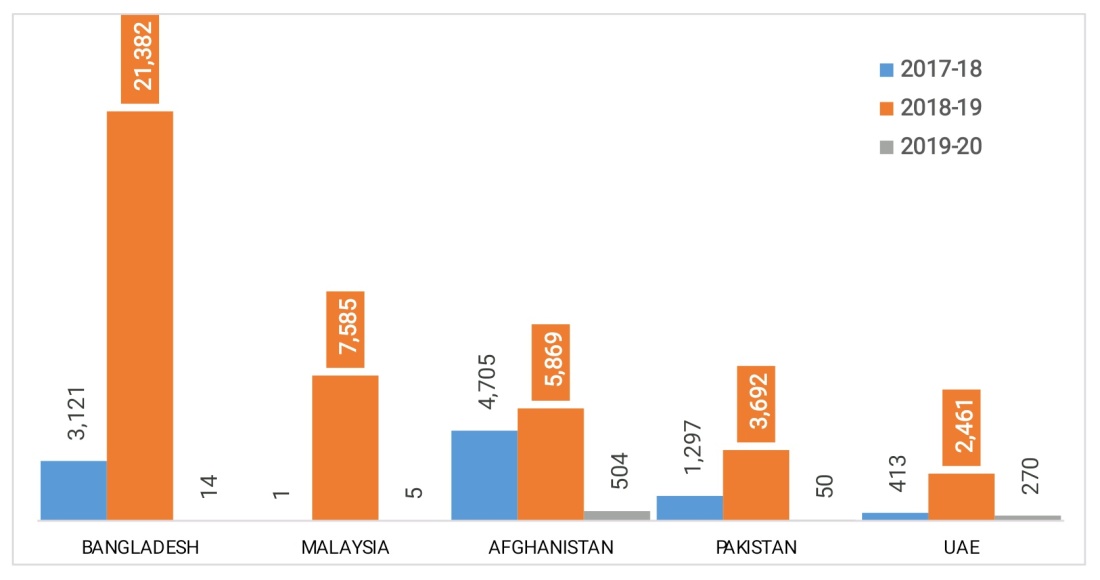
With the help of subsidy, India could able to export about 50 thousand tonnes of SMP in 2018-19. Of this 85% was exported to neighbouring countries (Bangladesh, Malaysia, Afghanistan, Pakistan and UAE).

Situation in 2020

Currently, India has burdened with more than 250 thousand tonnes of SMP, mainly cooperatives (of which Amul has more than 60%). The stock is almost twice than 2018 level. We need to remember that the situation was arose during flush months of 2018 while in 2020, it has happened during first 4 months of lean season.

The major factors are given below:

Covid-19: Due to stringent lockdown in the beginning, closure of HORECA business & Sweet shops and limited procurement by private players, the excess milk was procured by cooperatives.

Bottleneck in disposal of milk: Though the cooperatives had procured the excess milk but due to restricted movements in lockdown, the milk and milk products sale was hit hardest. The cooperative is forced to convert the excess milk procured into butter and SMP. Still the situation is improving but not reached normalcy.

Election in Gujarat cooperatives: As the election is going on in Gujarat cooperatives, the procurement price level is remain unchanged. Due to this, it may be possible that staus quo position will be maintained till Diwali (Nov-2020). This will also increase in the procurement levels in cooperatives and forced to convert surplus stock into SMP and Butter.

What’s next?

  • In a few media interviews, Mr Sodhi (MD, GCMMF) indicated the need of export subsidy so that the current stock situation can be eased. The both State and Central leaderships are yet to take any concrete steps to deal with the current stock condition.
  • After the election in different cooperatives of Gujarat will over (by Nov 2020), the procurement price will badly hit by the current inventory as Amul plays crucial role in benchmarking the prices at producer as well as consumer levels. This will have deep impact of the rural economy as dairying has been played important role in managing the day to day affairs where everyone is betting on Rural India.
  • Despite huge inventory with cooperatives, the SMP is trading at near Rs 200 per Kg locally as India is approaching big festive season in a short run. This gives us the hope that the situation may improve. Also the latest GDT auction rate of SMP (USD 2,889/MT translates into Rs 212/Kg ) shows hope for the improvement in the World Market and make India competitive. However, we have seen the decline of about 40% in the dairy export during the first quarter of financial year 2020-21.
  • The flush season is yet to start which is backed by good monsoon, sowing and abundance of fodder availability. This indicates that what we are currently facing is just a tip of iceberg.

Source: dairyoutlook.business.blog

Dairy farmers spill 200 litres of milk on road against Aavin decisions

More than 50 milk producers spilled about 200 litres of milk on the road on the Four-Road area in Dharmapuri town on Wednesday to protest certain management decisions of state-run milk co-operative Aavin.
The dairy farmers claimed that Aavin management had suddenly reduced the quantity of milk it was procuring from them. “We are not able to sell our milk to anyone as we have a large quantity of unsold stock,” said S Kumarasamy, a milk producer.

The milk cooperative in Dharmapuri usually procures 1.3 lakh litres of milk from producers across the district. Dairy farmers are mostly concentrated in Morappur, Chinnagoundampatty and Bombatty villages in the district.
When contacted by TOI, Dr K Venkatachalam, general manager of Aavin, Dharmapuri, said that the management hasn’t reduced its procurement level. “We are still procuring 1.3 lakh litres every day,” he said.

He said that private milk companies had reduced the procurement price to Rs 22 per litre, while Aavin was paying farmers Rs 32 per litre. “So the milk producers who were supplying to private companies left them and suddenly turned to Aavin,” he explained.
He said the Dharmapuri district Aavin could preserve 1.23 lakh litres of milk a day.

Source: timesofindia.indiatimes.com

Kansas dairy farm industry could be on the rebound


Kansas dairy farmers are milking recent market gains but is it too little too late?

The market isn’t where it was before the pandemic, but with the return of international trade and a new round of stimulus funds, the once struggling dairy farm industry could be on the rebound. 

“We were seeing the light at the end of the tunnel and then March hit,” said dairy farmer MeLissa Drzymalla.

“We’ve been operating in our location for hundreds of years, and you’d hate to be the generation that stopped it just due to the current environment in the economy,” said dairy farmer Aaron Pauly.

These dairy farmers were worried about their farms when prices dropped at the start of the pandemic, but now, they said the industry is starting to look up.

“Our cost of production is almost $19 per hundredweight and it was down to $11 back in April and May, so now we’re starting to see about $17, so we’re getting closer,” said Drzymalla.

There are still issues to overcome.

Drzymalla said she still isn’t meeting her cost of production because the price of milk is low.

Dairy farmer Aaron Pauly said the same and with the expectation of a two-month delay in receiving the new stimulus funding, he worries about his farm.

“It just kind of puts a band aid on it and lets you keep operating another day,” said Pauly.

Both said the federal funding will bring much needed relief.

“Without them, there would be so much more of us going out of business,” said Drzymalla.

Both said they are optimistic dairy farmers will be able to make it out of the setbacks from the pandemic eventually.

“Some of us were able to hang on because of those stimulus funds from the government so we are thankful for that,” said Drzymalla.

This stimulus money isn’t just for dairy farmers. Corn, soybean, and even livestock farmers can apply.

That application can be found here.

Source: ksn.com

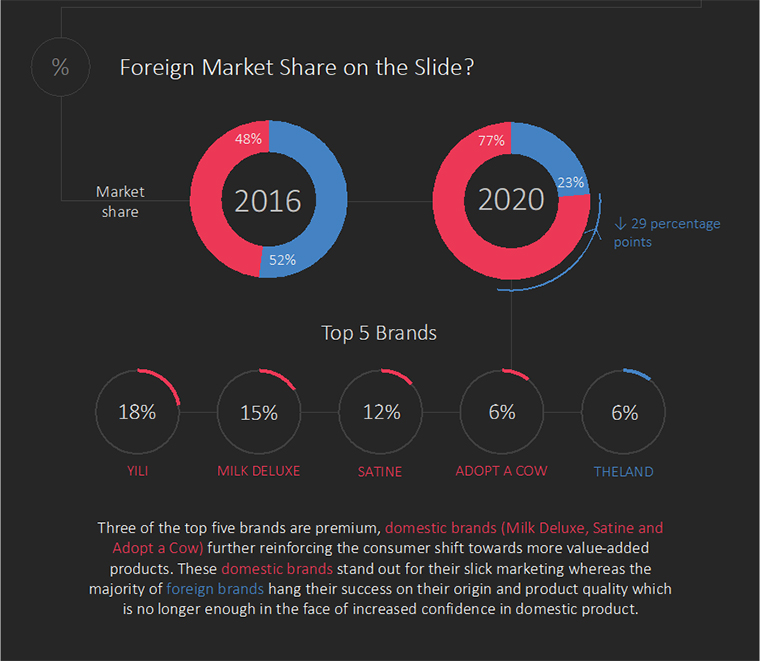
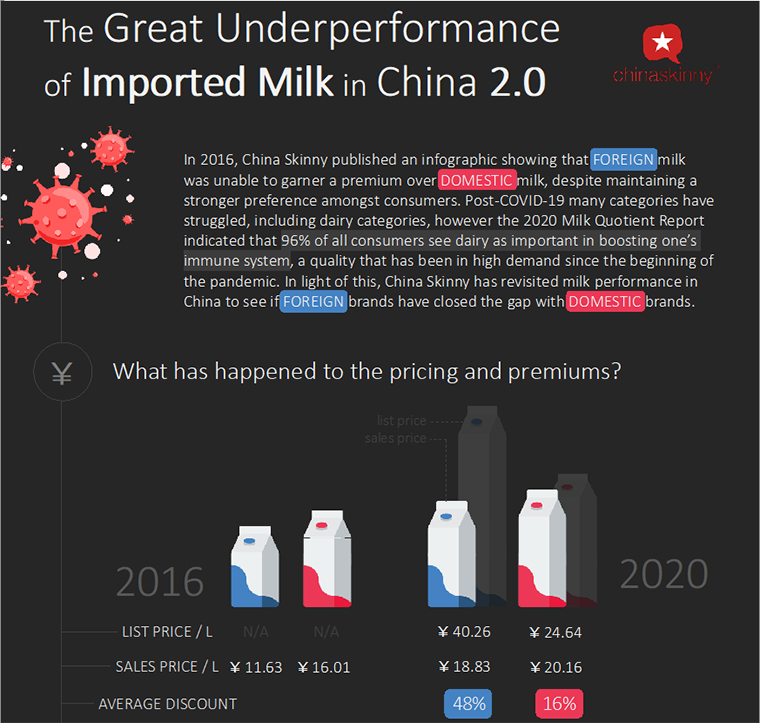
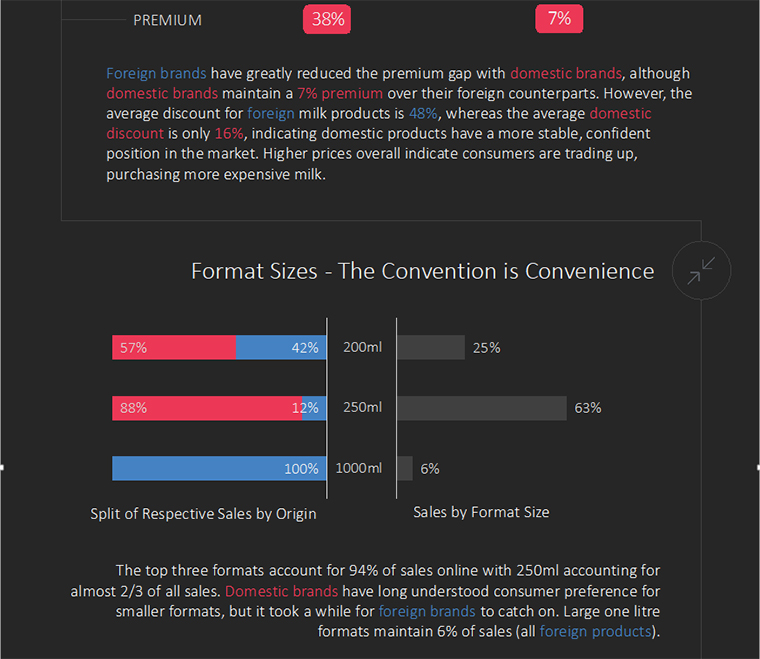
The Chinese dairy category has been one of the strongest performers since COVID-19

Marketing analytics consultants China Skinny are reporting that the dairy category has been one of the largest beneficiaries from the COVID-19 outbreak in China.

State Media and renowned doctors such as Zhang Wenhong from the infectious diseases department at Shanghai’s Huashan Hospital have endorsed drinking milk to boost immune systems and help fend off the coronavirus.

The impact of the official endorsements has been obvious, they report. While many categories have seen flat-to-negative growth since the outbreak, dairy sales growth has been strong.

China’s dairy giants Yili and Mengniu reported +23% and +19% increases in revenue respectively in the June quarter. This is a stark turnaround from the category trend, which saw drinking milk products decline -4.0% on average per year between 2015-2020, according to Euromonitor. 

In light of renewed growth in dairy, the category shows strong potential for growth. China’s annual per capita consumption is around 34 litres, just one third of New Zealand rates. Foreign brands should be well placed to take advantage of this opportunity. Although the melamine scandal happened 12 years ago, it is still raised by many of the tens of thousands of Chinese consumers who China Skinny speaks to every year, inferring a trust deficit in domestic dairy brands. This has been further fuelled by an exposé that went viral in China in July, disclosing the “Six Sins of Mengniu and Yili.”

Good marketing beating ‘natural advantages’

China Skinny has been tracking the dairy market for many years, via its Dairy Tracker. And in spite of foreign brands’ natural advantages, their analysis points to performance of foreign dairy brands getting worse in most areas, indicated by the data below.

Using Tmall data,

  • Foreign brands’ share on Tmall was 35% in December 2019 (pre-outbreak), but over the first eight months of 2020 has averaged just 23%
  • In 2016, foreign brands accounted for 52% of sales on Tmall, more than double the 23% in 2020
  • In 2020, the average price per litre for domestic brands on Tmall is surprisingly 7% higher than foreign brands. This is an improvement from 2016, when domestic brands sold at a 38% premium.

In fact, domestic brands command a premium over foreign milk brands and they have done that by focusing on smaller formats and more targeted segmenting – which typically commands a premium.

“Many foreign brands point to rising nationalism as the reason for declining brand share, whilst this has an impact, the decline can be put more down to poor strategic and tactical marketing decisions. Insight-driven brands such as Nike and Coca-Cola has managed to grow despite rising geopolitical tensions between the US and China,” says China Skinny’s Mark Tanner.

They say marketing claims for foreign brands are also less resonant, and their propensity to discount more often cheapens the brand:

  • Foreign brands are missing the popular 250ml format, contributing to just 12% of sales, whereas the format accounts for 63% of sales on Tmall
  • Foreign brands continue to pin their hopes on the 1 litre format for dairy, accounting for 100% of the top selling brands in this format, yet the format makes up just 6% of sales overall on Tmall
  • Domestic brands have been more likely to adopt timely claims such as ‘healthy’ and ‘nutritious’ which commanded a 38% and 34% premium respectively
  • The average discount on Tmall between January to August 2020 was 16% for domestic brands and 48% for foreign brands
  • Foreign brands have less control of their marketing on Tmall, with just 18% of sales going through their flagship stores versus 32% for domestic brands.

The following graphic has been supplied by China Skinny.

Source: interest.co.nz


Best ‘spring flush’ in three seasons for Australian dairy

Australian dairy is heading for its best ‘spring flush’ in three seasons, as timely rainfall in key regions ramps up the nation’s milk production, according to a newly-released sector report.

In its Q3 Global Dairy Quarterly – A delicate rebalancing, agribusiness banking specialist Rabobank forecasts national milk production to expand by 2.8 per cent in 2020/21, bringing it back above nine billion litres for the first time since the 2017/18 season.

The report says with rainfall expected to be above average across Australia’s main “dairy belts” from September through November, the sector is on track for a strong ‘spring flush’, the time of the season when milk production typically surges, peaking in October.

Rabobank senior dairy analyst Michael Harvey says this follows a turnaround in production conditions seen half way through the 2019/20 Australian dairy season, which finished at the end of June.

“While national milk production for 2019/20 finished overall marginally down on the previous year at 8.775 million litres, it was a tale of two halves for the season,” he said.

“Production was negatively impacted by poor seasonal conditions in the first half of the 2019/20 season, but timely rainfall across key regions since summer has seen the milk pool begin to recover from December last year.”

The report says this growth was led by Tasmania and eastern Victoria, while irrigated dairy farming operations in the southern Murray Darling Basin – the region which contributed to the biggest milk production declines in recent years – were now “enjoying better water market conditions”.

For the month of June 2020, Mr Harvey said, Australian milk production was already 4.1 per cent higher than the previous June (2019).

Welcome news

The ongoing recovery in milk supply will be welcome news for the Australian dairy supply chain, the report said.

“Australia’s exportable surplus will continue to recover with milk supply growth,” Mr Harvey said. “Not only will more milk in the system help alleviate some overhead cost pressures for dairy processors, it will also allow dairy exporters to explore growth opportunities.”

In other positives, the report said, Australian dairy farm operators continue to enjoy lower feed costs and elevated cull cow prices.

Rabobank’s farmgate milk price forecast remains broadly in line with the previous (Q2) report – at AUD 6.30/kgMS for the 2020/21 season.

This will see the Australian dairy sector set for a profitable season, Mr Harvey said.

New normal

Australia’s domestic dairy market continues to find a ‘new normal’, following the impacts of COVID-19, the report said.

“Retail sales of dairy products continue to grow above long-term trends, according to the latest data,” Mr Harvey said.

“That said, sales growth is moderating as ‘pantry loading’ (triggered by the coronavirus lockdowns) recedes. And out-of-home consumption of dairy – while in recovery mode – remains well below levels seen a year ago, with ongoing lockdowns in Victoria, capacity restrictions in venues and cautious consumers limiting foot traffic in major cities.”

In overseas markets, for the 2019/20 season, Australia’s dairy export volumes had finished 7.1 per cent down year-on-year, the report said.

Mr Harvey said this was not surprising, given the backdrop of tight milk supply seen in Australia, primarily due to recent years of dry weather.

Large falls were recorded in export shipments of skim milk powder (down 29 per cent) and butter (down 44 per cent) for the year.

“Exports of liquid milk and fresh cheese were the leading lights, however – both growing four per cent for the year,” he said.

Global outlook

Globally, a “delicate rebalancing of supply and demand is on the horizon”, the Rabobank report said, with milk production growth among the global ‘big seven’ dairy exporters to collide with a “recalibration” of retail, food service and export dairy demand.

Milk production growth across the major “export engines” began in Q2 2020 and is forecast to continue expanding into 2021 – a feat not matched since 2018, it said.

“Despite the disruptions COVID-19 brought to the global dairy markets, farmgate milk prices have been resilient,” the report said, and Rabobank forecasts a 1.3 per cent year-on-year increase in production across the ‘big seven’ dairy export regions – the EU, US, New Zealand, Australia, Brazil, Argentina and Uruguay – in Q4 2020. This is expected to be followed by a one per cent increase in the first half of 2021 and 0.8 per cent growth in the second half of next year.

The report said dairy commodity prices had rallied in quarter two of this year, “largely on the back of government support in the form of government purchases, inventory management and fiscal stimulus for consumers”.

“The outlook for government support is less certain in Q4 and into 2021, elevating the risk of downward price pressure,” it said.

Meanwhile, globally, sequential improvements have been observed in dairy consumption from the food service sector as more regions have come out of lockdown, while retail dairy sales (for at-home consumption) are showing early signs of slowing.

“It will take time for food service demand (for dairy) to return to pre-COVID-19 levels, even for countries that have been well ahead of the curve,” the report noted.

With milk production forecast to grow over the next 12 months – and consumption to take time to recover – Rabobank expects global dairy market fundamentals to remain weak into the second quarter of 2021, at which point the level of exportable surplus on the market is predicted to retreat in the second half of next year as domestic consumption improves.

“By mid-2021, the delicate balance in the global dairy market could tip,” Mr Harvey said, “and the market balance tighten.”

Rabobank Australia & New Zealand is a part of the global Rabobank Group, the world’s leading specialist in food and agribusiness banking. Rabobank has 120 years’ experience providing customised banking and finance solutions to businesses involved in all aspects of food and agribusiness. Rabobank is structured as a cooperative and operates in 38 countries, servicing the needs of approximately 8.4 million clients worldwide through a network of more than 1000 offices and branches. Rabobank Australia & New Zealand Group is one of Australasia’s leading agricultural lenders and a significant provider of business and corporate banking and financial services to the region’s food and agribusiness sector. The bank has 93 branches throughout Australia and New Zealand.

U.S. Milk Production Update – Sep ’20

U.S. milk production figures provided by the USDA were recently updated with values spanning through Aug ’20. Highlights from the updated report include:

  • U.S. milk production increased on a YOY basis for the 13th time in the past 14 months, finishing 1.8% above the previous year and reaching a record high seasonal level. YOY increases in production on an absolute basis were led by Texas, followed by California and Idaho.
  • The Jul ’20 U.S. milk cow herd was revised 8,000 head higher than levels previously stated while the Aug ’20 figure remained unchanged month-over-month. Milk cow herd figures finished 42,000 head above the previous year but remained 78,000 head below the 23 year high level experienced during Jan ’18.
  • U.S. milk per cow yields increased 1.4% on a YOY basis throughout Aug ’20, finishing higher for the 57th time in the past 58 months.

Additional Report Details According to the USDA, Aug ’20 U.S. milk production declined 0.7% on a daily average basis but remained 1.8% higher YOY, reaching a record high seasonal level. The month-over-month decline in production volumes was slightly smaller than the ten year average July – August seasonal decline in production of 1.0%. The smaller than normal seasonal decline in milk production volumes occurred despite previous month production volumes being revised 0.5% above levels previously stated. U.S. milk production volumes had finished higher on a YOY basis over 61 consecutive months from Jan ’14 – Jan ‘19, reaching the longest period of consecutive growth on record, prior to declining by a total of 0.3% from Aug ’19 – Aug ’19. Milk production volumes rebounded throughout more recent months, however, finishing higher over 13 of the past 14 months through Aug ’20. The 12-month rolling average milk production growth rate reached a 28 month high level throughout Aug ’20. YOY increases in production on a percentage basis were led by South Dakota (+10.8%), followed by Texas (+7.1%), Kansas (+6.6%) and Indiana (+6.6%), while production volumes finished most significantly lower YOY on a percentage basis within Vermont (-5.3%), Florida (-3.9%) and Utah (-2.1%). Wisconsin milk production remained lower on a YOY basis for the eighth time in the past ten months, finishing 0.3% below previous year levels. Overall, 16 of the 24 states milk production figures are provided for experienced YOY increases in production throughout the month. California milk production volumes increased on a YOY basis for the eighth consecutive month throughout Aug ’20, finishing up 1.8%. California accounted for 18.2% of total U.S. milk production volumes throughout the month, leading all states. Seven of the top ten largest milk producing states experienced YOY increases in production throughout Aug ’20, as milk production within the top ten milk producing states increased by a weighted average of 1.7% throughout the month. The aforementioned states accounted for nearly three quarters of the total U.S. milk production experienced during Aug ’20. Production volumes outside of the top ten largest milk producing states increased 2.3% on a YOY basis throughout the month. Aug ’20 YOY increases in milk production on an absolute basis continue to be led by Texas, followed by California and Idaho, while YOY declines in production on an absolute basis were most significant throughout Vermont. The Jul ’20 U.S. milk cow herd was revised 8,000 head higher than levels previous stated while the Aug ’20 figure remained unchanged month-over-month. The U.S. milk cow herd currently stands at 9.36 million head, finishing 42,000 head above the previous year but remaining 78,000 head below the 23 year high level experienced during Jan ’18. U.S. milk per cow yields finished 1.4% above previous year levels, finishing higher on a YOY basis for the 57th time in the past 58 months. Yields experienced throughout the Midwestern states of Wisconsin, Minnesota, Iowa and Illinois finished 1.8% higher on a YOY basis while yields experienced throughout the Western states of California, Idaho, Washington and Oregon increased 0.8% YOY. A month-over-month increase in the Indiana milk cow herd offset a MOM decline in the Georgia milk cow herd throughout Aug ’20. YOY increases in milk cow herds continued to be led by Texas, followed by Idaho and South Dakota, while Wisconsin experienced the largest YOY decline in their milk cow herds throughout the month

.

Source: Atten Babler

New Zealand Milk Production Update – Sep ’20

New Zealand milk production figures provided by Dairy Companies Association of New Zealand (DCANZ) were recently updated with values spanning through Aug ’20. Highlights from the updated report include:

  • Aug ’20 New Zealand milk production volumes reached a record high seasonal level for the fourth consecutive month, finishing up 5.3% on a YOY basis.
  • Fonterra’s ’20-’21 farmgate milk price forecast of $5.90-$6.90/kgMS was unchanged from the previous month, remaining below the six year high level experienced throughout the previous production season.
  • New Zealand cow & heifer slaughter rates increased 14.0% on a YOY basis during Jul ’20 when normalizing for slaughter days, reaching a 34 year high seasonal level.

Additional Report Details Milk Production According to Dairy Companies Association of New Zealand (DCANZ), Aug ’20 New Zealand milk production volumes finished 5.3% higher on a YOY basis, reaching a record high seasonal level for the month of August. On a milk-solids basis, production increased 4.7% YOY, also reaching a record high seasonal level. The Aug ’20 YOY increase in New Zealand milk production volumes was the fourth experienced in a row and the largest experienced throughout the past 14 months a on percentage basis. New Zealand milk production volumes have reached record high seasonal levels over each of the past four months. ’19-’20 annual milk production volumes declined 0.7% on a YOY basis however production on a milk-solids basis increased 0.3% YOY throughout the period. Drought conditions impacted the milk supply throughout the ’19-’20 production season. ‘20-’21 YTD New Zealand milk production volumes have rebounded by 4.7% on a YOY basis throughout the first quarter of the production season. Farmgate Milk Prices Fonterra finalized their ’19-’20 farmgate milk price at a value of $7.14/kgMS, reaching a six year high level. Fonterra’s ’20-’21 farmgate milk price forecast was unchanged from the previous month through Sep ’20, remaining at a range of $5.90-$6.90/kgMS. Fonterra’s ’20-’21 farmgate milk price forecast range remains historically wide as significant uncertainties remain surrounding the impact of COVID-19 on global demand. Cow & Heifer Slaughter New Zealand cow & heifer slaughter rates increased 14.0% on a YOY basis during Jul ’20 when normalizing for slaughter days, reaching a 34 year high seasonal level. The YOY increase in New Zealand cow & heifer slaughter rates was the second experienced in a row. Jul ’20 dairy cow & heifer slaughter, which has more limited historical data available, also increased on a YOY basis for the second consecutive month, finishing up 7.0%. ’19-’20 annual New Zealand cow & heifer slaughter rates rebounded 2.7% from the previous year, reaching a four year high level. ’20-’21 YTD New Zealand cow & heifer slaughter rates have increased by an additional 9.6% on a YOY basis throughout the first two months of the production season. New Zealand milk production volumes increased at a compound annual growth rate of 4.2% over the ten year period ending during the ’14-’15 record production season but have trended flat-to-lower over the four most recent production seasons as farmgate milk prices declined from the ’13-’14 record high levels and the New Zealand milk cow herd was reduced. USDA is projecting the New Zealand milk cow herd will decline slightly on a YOY basis throughout 2020 but remain above the six year low level experienced throughout 2017.

Source: Atten Babler

Quarterly Argentina Milk Production Update – Sep ’20

Argentine milk production figures provided by the Argentina Ministry of Agriculture were recently updated with values spanning through the end of the first quarter of the ’20-’21 production season. Highlights from the updated report include:

  • Argentine milk production increased on a YOY basis for the 14th consecutive month during Aug ’20, finishing up 5.0% and reaching a five year high seasonal level.
  • USDA is projecting the Argentine dairy cow herd will increase 0.8% throughout 2020, rebounding from the long-term record low levels experienced throughout 2019.
  • Argentina is the fifth largest global dairy exporter, accounting for 2.8% of combined butter, cheese, nonfat dry milk and whole milk powder exports throughout 2019. The bulk of Argentine dairy exports are in the form of whole milk powder and cheese.

Additional Report Details According to the Argentina Ministry of Agriculture, Aug ’20 Argentine milk production increased on a YOY basis for the 14th consecutive month, finishing up 5.0% and reaching a five year high seasonal level. ’19-’20 annual Argentine milk production volumes finished 3.8% higher on a YOY basis, reaching a four year high level. ’20-’21 YTD production volumes have increased by an additional 7.6% throughout the first quarter of the production season. The USDA is projecting Argentine milk production will increase by 4.3% on a YOY basis throughout the 2020 calendar year as a positive margin environment, coupled with positive weather conditions, is expected to incentivize production expansion. USDA noted inflation and currency devaluation will begin to cut into profitability as the year goes on, however, while domestic demand is expected is fall due to a contraction in GDP related to COVID-19. 2020 YTD milk production is up 8.0% on a YOY basis throughout the first two thirds of the calendar year. Recently experienced adverse conditions contributed to the Argentine dairy cow herd declining to a long-term record low level throughout 2019, finishing lower for the seventh consecutive year. USDA is projecting the Argentine dairy cow herd will rebound by 0.8% throughout 2020, however. Recent declines in the Argentine dairy cow herd resulted in a consolidation of operations along with a culling of the lowest producing cows. Argentina is the second largest milk producing country in South America, trailing only Brazil, and the fifth largest global dairy exporter, trailing only New Zealand, the EU-28, the U.S. and Australia. Of the aforementioned major dairy exporting regions, Argentina accounted for 3.6% of total combined milk production and 2.8% of combined butter, cheese, nonfat dry milk (NFDM) and whole milk powder (WMP) export volumes throughout 2019. The bulk of Argentine dairy exports are in the form of WMP and cheese. Argentina was the third largest exporter of WMP throughout 2019, trailing only New Zealand and the EU-28, accounting for 4.7% of global WMP export volumes. From a global perspective, WMP markets Aug be most affected by a continued rebound in Argentine milk production.  
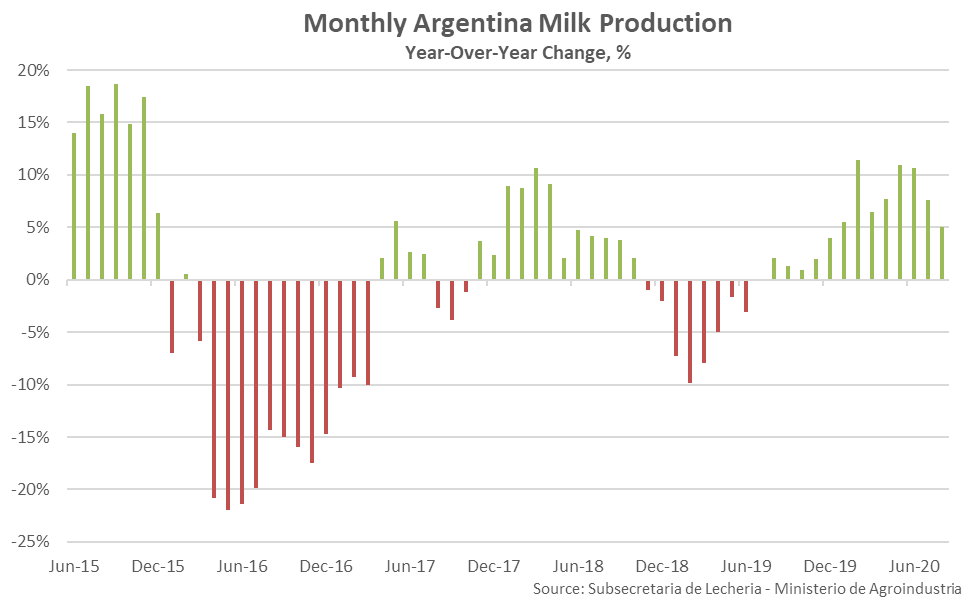
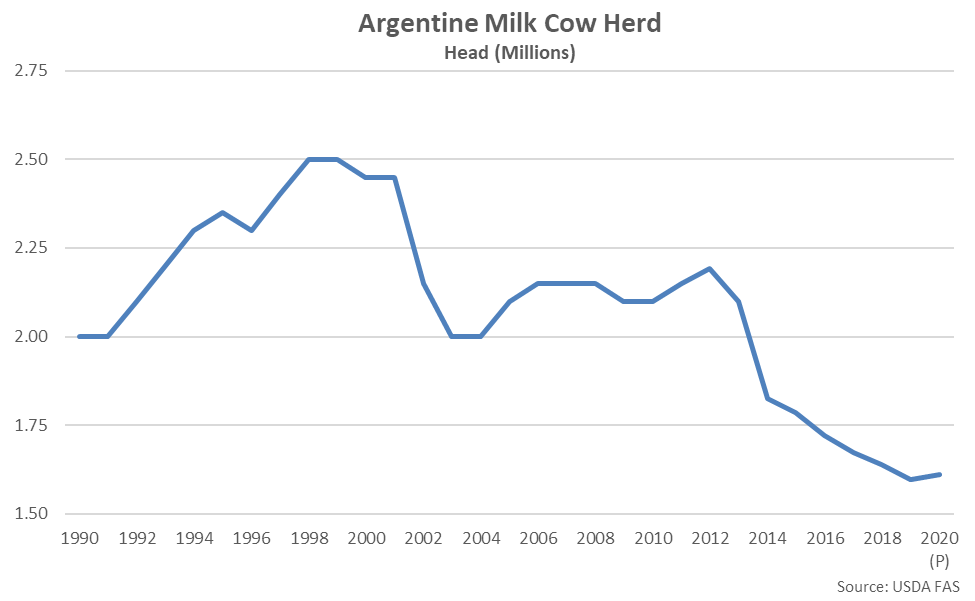
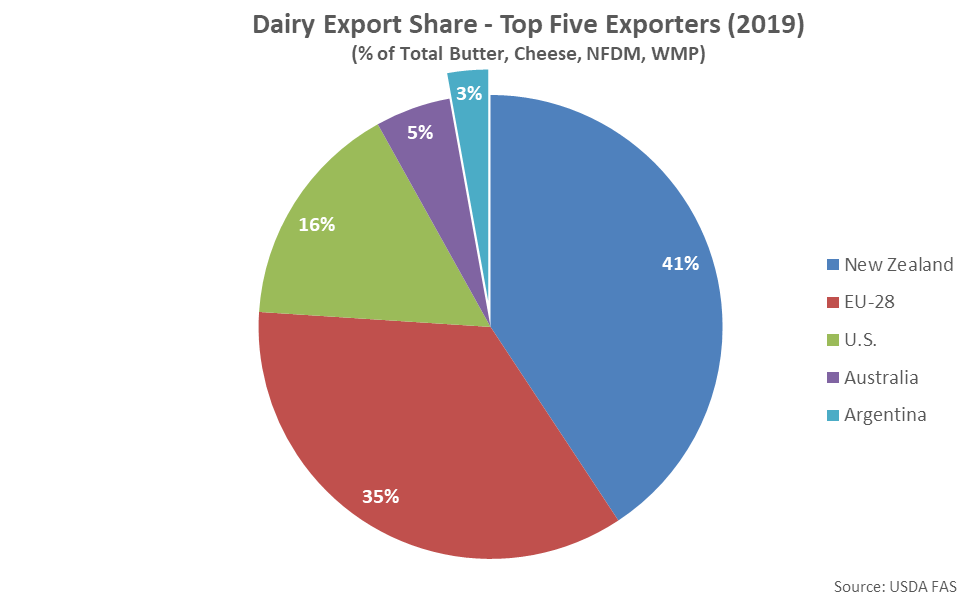
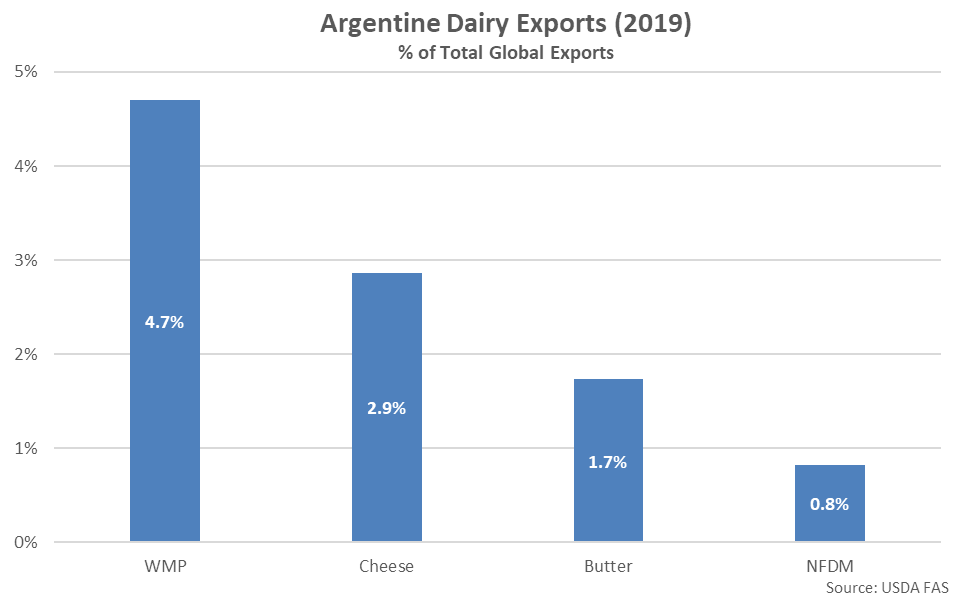
Source: Atten Babler

Wisconsin Farm Support Program distributes over $8 million in second round of funding

The numbers are in from the second round of the Wisconsin Farm Support Program, a joint program between the Wisconsin Department of Agriculture, Trade, and Consumer Protection (DATCP), and the Wisconsin Department of Revenue (DOR) under the direction of the office of Governor Tony Evers.

Designed to assist Wisconsin farmers who have faced financial challenges due to COVID-19, the program utilized $50 million of the state’s CARES Act funding to quickly provide direct support to help cover economic losses during the pandemic.

In the first round, $41.6 million was distributed to nearly 12,000 farmers in 71 of Wisconsin’s 72 counties. Columbia County saw 328 farmers receive a combined $1,148,000, while 579 farmers in Dane county received $2,026,500.

In the second round, Columbia County was given $191,845 across 75 farmers, while 130 farmers in Dane County received a combined $334,975.

Grant County has received the most funds, with 984 farmers seeing $3,171,242 in funds.

“I am proud that more than 3,300 Wisconsin farmers received a total of $8.4 million in the second round of Farm Support Program funding,” noted Governor Tony Evers. “In all, $50 million has been distributed to more than 15,000 farmers across our state. These folks have never stopped doing their part to ensure that consumers around the world have access to high-quality, nutritious food during this public health crisis. I want to thank our farmers for their critically important work, and we’re proud to support them in any way we can.”

The second round of funding was open to farmers whose gross income from farming in 2019 was between $10,000 and $5 million. “In this round, almost 60 percent of funding recipients reported a gross income from farming of less than $40,000,” said DATCP Secretary-designee Randy Romanski. “Clearly, there was a need for additional support among Wisconsin’s smaller farm operations. We are glad that this second round was able to provide that support. While this funding won’t make anyone whole, we hope it will provide some relief.”

Dairy technology: not a gadget, but vital for successful and profitable dairy farming

Owners of large dairy operations will become CIO’s (Chief Information Officers) in the near future. This is according to dairy tech expert Jeffrey Bewley. He also thinks that “technology can help farmers in many aspects on the farm and the farmers who can capitalize on the value of the data will have a competitive advantage in the future”.

Bewley, expert in dairy analytics and technology and currently working at Holstein Association USA, will delve deeper in the changing role of dairy farmers and the role of technology at the Global Dairy Tech Start-up Spotlight on October 1st.

The unique, online and FREE event includes ten short presentations of dairy tech start-ups, showcasing their technology, business model and experience with producers and how these can transform how we produce milk in the US and globally. The pitches are followed by an in-depth discussion featuring Jeffrey Bewley, Marcia Endres from the University of Minnesota-Twin Cities and Joao H.C. Costa from the University of Kentucky, who will all share their thoughts on the current technologies and how they can help farmers to stay in business.

Capitalize on the data

The ten start-ups selected by this committee each have a digital based technology for dairy and answer a specific need from producers like feed bunk management, cow behavior monitoring, cow health, milk quality and manure treatment. “And all of these technologies are needed for dairy business to stay in business and to keep on farming in a profitable and efficient way”, explains Bewley. He adds: “The so-called ‘dairy farm of the future’ will be driven by external factors and consumer demands regarding the environment, and animal welfare. But also labor is a big issue in dairy farming. All of these have a tremendous impact on how a dairy operation looks like today and will look like in the future”. According to Bewley, it is technology that can help farmers deal with all of these challenges.

It is not all about the gadget

“But to do so effectively, farmers need to capitalize more on the data and then add value to the data and use it. This means that farmers, heading large dairy operations will become CIO’s (Chief Information Officers instead) of CEO’s. Using data that is already on the farm is key. On top of that, farmers will have a competitive advantage in the future when they invest in technology. But it is not all about the gadget, the technology should be really adding value to the farmer and help with his daily decisions. Getting too excited about having a fancy new gadget on the farm can be a bit tricky. Often it is about savvy (existing) data use with the help of new technologies. I strongly believe that this is vital for success and profitability”, according to Bewley.

HEAR the full panel discussion and SEE and LEARN what the ten start-ups can mean for your dairy operation. Register now, it’s free! The Dairy Tech Start-up Spotlight will be hosted on October 1, 2020 at 1 p.m. (CST) with free event registration available now at www.dairystartupspotlight.com.

About the 10 start-ups

The event is hosted by AgriTech Capital, and funded by the start-ups themselves. The companies participating in the first-ever Global Dairy Tech Start-up Spotlight are Advanced Animal Diagnostics, Cainthus, EIO diagnostics, Fyto, Labby,Livestock Water Recycling, Milc group, PharmRobotics, SomaDetect and Zisk. All the start-ups selected propose solutions that solve a critical problem for dairy producers and as a result help them maximise efficiencies, profitability and production. This is an extraordinary opportunity for them to show their products in action!

Endorsed by World Dairy Expo

While the global dairy industry would normally be meeting in Madison, Wisconsin on October 1 for World Dairy Expo (WDE), dairy farmers and dairy professionals can now meet online and learn about the latest dairy technologies during ten short presentations from dairy tech start-ups. “The Global Dairy Tech Start-up Spotlight is in line with the spirit of World Dairy Expo, showcasing some of the newest technologies available to the dairy industry from young companies,” said Scott Bentley, World Dairy Expo General Manager. “WDE is delighted that it is taking place and is exploring the possibility of making it an in-person feature at the 2021 show.”

Fonterra posts $659m full year profit, an increase of $1.3b on the previous year

Fonterra has posted an after tax profit of $659 million for the 2020 financial year, a $1.3 billion improvement on the previous year.

The New Zealand dairy co-operative’s chief executive Miles Hurrell said it was a good year for the business with profit up, debt down and a strong milk price.

“We increased our profit after tax by more than $1b, reduced our debt by more than $1b and this has put us in a position to start paying dividends again,” Hurrell said.

It will pay a dividend of 5 cents per share, which is at the lower end of its 5 to 7 cent range.

“This year marks a return to paying dividends, a position we expect to maintain in the future, assuming normal operating conditions,” Fonterra chairman John Monaghan said.

It will pay farmers $7.19 per kilogram of milksolids for the 2019-20 season.

A final farmgate milk price of $7.14 per kilogram of milksolids meant the total payout for a fully share-backed farmer was $7.19 per kilogram of milksolids, the fourth highest for the co-operative, Monaghan said.

In July Fonterra said there was uncertainty around how the global recession and the ongoing Covid-19 pandemic would impact milk demand.

Christel Yardley/Stuff

In July Fonterra said there was uncertainty around how the global recession and the ongoing Covid-19 pandemic would impact milk demand.

The full year result is a vast improvement on the $605m loss it made in the 2019 financial year, which was largely a result of massive asset write downs. That came after Fonterra posted a $196m loss, its first ever in 2018 at which time it launched an organisational reset which included a significant debt reduction programme.

In 2020 debt reduced by 19 per cent or $1.1b compared to the previous year.

Fonterra’s unit price is trading at $4.05, up 85 cents over the past year.

Hurrell said it was a year of two halves and the flow-on effects of the Covid-19 pandemic did impact its performance in the second half, particularly in its consumer and food service businesses.

In strengthening its balance sheet the business had been able to focus on managing Covid-19, Hurrell said.

“So far, demand for dairy has proved resilient and our diverse customer base and ability to change our product mix and move products between markets has meant we can continue to drive value.”

Food was a good business to be in and Fonterra’s workers and teams had responded well to Covid-19 disruptions, he said.

“It shows a resilience in our business and the strength of the co-op to handle these types of sudden and significant changes which are now the new reality for us.”

Normalised profit before interest and tax of $1.1b was significantly up on last year’s $17m loss. The normalised profit included gains from asset sales, and impairments and costs relating to a strategic review.

Fonterra chief Miles Hurrell says, despite Covid-19 challenges, the co-operative performed will in the 2020 financial year.

Ross Giblin/Stuff

Fonterra chief Miles Hurrell says, despite Covid-19 challenges, the co-operative performed will in the 2020 financial year.

Once these were taken out, normalised profit before interest and tax, which Fonterra used to show its underlying business performance, was up from $812m to $879m, despite the financial impact of Covid-19 in many of its markets, Hurrell said.

The main drivers were strong profit in its ingredients business and strong sales and gross margins from its China food service business in the first half of the year despite Covid-19-related disruptions, Hurrell said.

Fonterra had entered 50 new cities across China, taking its total to 350.

Fonterra had also made progress in reducing its environmental footprint, Hurrell said. For example its energy intensity at its manufacturing sites reducing by 20 per cent – enough saved energy to power all New Zealand households for a year, Hurrell said.

Fonterra chairman John Monaghan says, in light of Covid-19, it is being prudent by keeping its dividend at the lower end of its range.

Chris McKeen/Stuff

Fonterra chairman John Monaghan says, in light of Covid-19, it is being prudent by keeping its dividend at the lower end of its range.

Monaghan said given uncertainty created by Covid-19 a 5 cent dividend was a prudent decision and one that balanced its goal of further reducing debt and distributing earnings.

Earnings per share for the 2020 financial year was 24 cents. Fonterra is forecasting earnings per share in a range of 20 to 35 cents per share in the 2021 financial year, he said.

“This earnings range assumes a number of factors working in our favour, including that there is no heightened disruption from Covid-19 over what we currently face, and an improved trading performance driven out of Asia and Greater China.”

Monaghan said Covid-19 meant the “demand picture remains finely balanced” from a milk price perspective.

“The best way of coping with uncertainty is to stay on strategy and focus on what is within our control – delivering for our farmers, unit holders and customers, and maintaining our financial discipline.”

Hamilton Hindin Greene broker Grant Davies said the result was in line with forecasts, albeit with a slightly lower dividend payout than expected.

A lower dividend allowed Fonterra to pay off more debt and reduce the interest burden that came with higher debt levels, he said.

He expected Fonterra to continue its debt reduction programme which, in turn, would allow the company to pay better dividends in the future.

The result showed Fonterra had a solid cashflow, which increased $733m to $1.8b, he said.

As indicated the co-op was distributing a decent payout for farmers, he said.

“That’s got to bode well for the regions.”

Fonterra chief financial officer Marc Rivers says it will continue to reduce debt by increasing profit and selling assets.

Abigail Dougherty/Stuff

Fonterra chief financial officer Marc Rivers says it will continue to reduce debt by increasing profit and selling assets.

Fonterra chief financial officer Marc Rivers said the co-op was making good progress in the sale of its China Farms business and selling down its share in Beingmate.

It was also looking to sell its joint venture with Nestle, DPA Brazil, however the disruption of Covid-19 in Brazil had slowed that down.

Fonterra assets had to ”pull their own weight” and justify their place in the co-op’s, portfolio which meant they were constantly being reviewed, he said.

“Going forward you’re always looking at the whole portfolio of businesses.”

As an essential business Fonterra had been able to continue operating throughout the pandemic and had not needed any government assistance, Rivers said.

It had no plans to increase its staff numbers any more than it needed to, he said.

“We need to remain disciplined and efficient.”

He said he sympathised with farmers who may be disappointed with the lower range dividend.

But the fact Fonterra was able to return a dividend marked “significant progress” from where it had come from, he said.

Farmers also needed to understand that Fonterra had made good progress on reducing debt but it was still not at a level that was needed.

That combined with Covid-19 pandemic risks meant it needed to be prudent in dividend payments, he said.

“We want the farmers, unit holders, everyone to see there’s a return on their capital. We have to respect that.”

Source: stuff.co.nz

Federal aid improving “safety net” for Midwestern dairy farmers

President Donald Trump trails in the polls in Wisconsin and Minnesota, but he is banking on the support of one group whose fortunes have improved somewhat in the past year: dairy farmers.
Thanks to reinforcements to the federal dairy safety net and a generous coronavirus-relief package, fewer dairy farmers are going out of business and their outlook has brightened despite the pandemic.

“People’s morale has definitely lifted,” said Shelly DePestel, one of the owners of the Lewiston Dairy in southeast Minnesota, one of the state’s largest. “I do think a lot of dairy farmers support Trump, from my limited communication.”

An irony of this new optimism in dairy is that the politician most responsible for the legislation that caused it is U.S. Rep. Collin Peterson, a Minnesota Democrat, the chairman of the House Agricultural Committee.

“Collin Peterson is a champion to dairy,” DePestel said. “It’s not about a party thing. It’s about who’s helping us, who’s looking out for us, who’s got our interests at heart.”

Peterson — who faces his own re-election bid in November against Republican Michelle Fischbach, a former lieutenant governor and Minnesota Senate president — was honored Friday in Perham, Minn., by the Minnesota Milk Producers Association with the legislator of the year award for his work on the coronavirus relief package among other things.

Those who milk cows for a living, especially on the traditional family scale of a couple hundred head or less, have been battered for the past five years. While the entire farm economy has struggled, dairy seemed to be in terminal decline.

Facing a wave of consolidation, oversupply, trade wars and shifting consumer demand, 1 in 10 dairies in Minnesota and Wisconsin closed in 2019. Minnesota lost 268 dairy farms in 2019; Wisconsin, 818.

Dairies are still going out of business in 2020, but at less than half the pace.

Trump was carried to the White House by rural voters and has sought to ally himself with farmers.

At the Republican National Convention, Grantsburg, Wis., dairy farmer Cris Peterson spoke on national television and said Trump came to office “in the middle of the great depression for dairy farmers.”

Business started “booming” again, she said, thanks to his renegotiation of trade deals.

“One person deserves the credit, and our vote,” said Peterson. “President Donald J. Trump.”

Better insurance

The biggest recent help to dairy farmers was dairy margin coverage, a program that was years in the making, said Charles Krause, who milks 250 cows near Buffalo, Minn., with his father and his son.

This new type of insurance, authorized by the 2018 Farm Bill, allows farmers to insure their margin, between the cost of feeding the cows and the price of their milk, by up to $9.50 per hundredweight of milk. Starting in 2019, dairy farmers could get better coverage for lower premiums.

“That’s probably the biggest, most supportive thing that’s happened in dairy in my lifetime, my 30 years of farming,” Krause said.

Smaller farmers benefit in particular, since the program offers the sweetest terms for up to 5 million pounds of milk.

“It’s really been big, especially if you look at the average size Minnesota farmer,” Krause said.

Peterson, who represents Minnesota’s Seventh Congressional District, “played a huge role” in getting dairy margin coverage into the farm bill, said University of Minnesota dairy economist Marin Bozic.

A second new insurance program made available in October 2018 allows farmers to buy area-based dairy revenue protection under the federal crop insurance program.

The premiums are taxpayer-subsidized, typically at 44%, and farmers can choose how much of their expected quarterly milk production to insure, and how much revenue they want to guarantee.

“The dairy safety net has been improved tremendously,” Bozic said.

Pandemic relief and trade

Trump’s campaign has criticized Joe Biden’s running mate, Kamala Harris, for voting against the new trade deal with Mexico and China, saying she put a “radical environmental agenda ahead of Wisconsin dairy and ahead of Wisconsin power.”

Renegotiation of that trade deal has not had much immediate impact, however, Bozic said.

“That’s a long-term help,” he said. “Short term, the biggest help is that it removes uncertainty.”

The payments to milk producers that are part of the coronavirus relief package — following in a trend of generous government assistance to farmers throughout Trump’s presidency — have been a big deal.

Dairy farmers have received $1.7 billion, more than corn, hog and soybean farmers.

“Generous would be an understatement when it comes to dairy,” Bozic said.

There are both electoral and geopolitical reasons for the Trump administration to support farmers so much. Wisconsin is a swing state. Support for farmers also signals to China that the U.S. will stick to its guns in the trade war.

“For whatever reason they did it, they did a tremendous job for dairy,” Bozic said.

Mike Yager, who milks 300 cows near Madison, Wis., is not as impressed. He said “middlemen” continue to benefit the most from dairy farms. He blames the complexity of federal dairy policy — “they don’t want you to understand it” — and politicians in general.

“This country has allocated $2.2 trillion for this pandemic, and agriculture’s receiving $19 billion,” Yager said. “That’s less than 1% for the most important industry in this country.”

But Yager, a self-described political independent, doesn’t blame Trump.

In fact, he’s thankful that the U.S. Department of Agriculture reversed Obama-era standards for school lunches that pushed 1% and skim milk.

“He’s the first president in years that’s spoken up for the farmers and tried to make things better for us,” Yager said.


New Zealand WMP reaches peak seasonal milk production

New Zealand WMP prices fell by 4% to NZD 4,280/MT in the four-week period ending 16th September 2020, as New Zealand nears the peak of seasonal milk production, which coupled with weaker export demand is weighing on prices.

As New Zealand reaches the height of milk production (Sept-Oct), WMP plants are actively drying resulting in a stock build. Milk production is currently high (+5% y-o-y), while buying interest from the Middle East has eased. Therefore, as New Zealand is export-focused, this has led to slightly weaker prices. Elsewhere, Chinese stockpiles have continued to grow, which could add downward pressure to New Zealand WMP prices in the coming months, especially as New Zealand’s 2019/20 milk production has peaked.

WMP is a mainstay of New Zealand dairy production, with WMP pricing being a significant factor in determining seasonal milk prices. Although dairy producers feel there is sustained export demand, a continuing concern remains whether global economic growth will ease. This may exert downward pressure on New Zealand’s key export markets – China and the Middle East. This is likely to create bearish sentiment for export demand, and subsequently for New Zealand WMP prices in the near-term.

Source: mintecglobal.com

Paving the way for a fair and thriving Scottish dairy industry

THIS WEEK marked the closure of Defra’s 12-week long consultation on contractual relationships in the UK dairy industry.
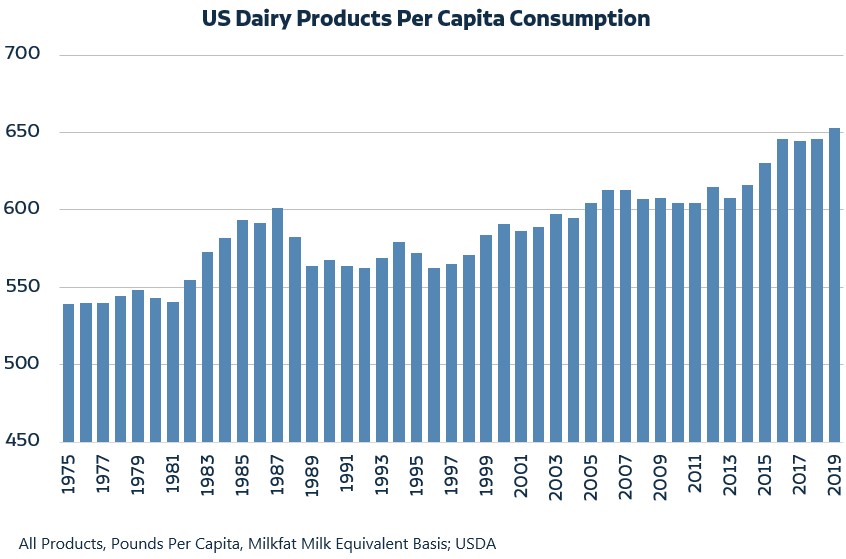
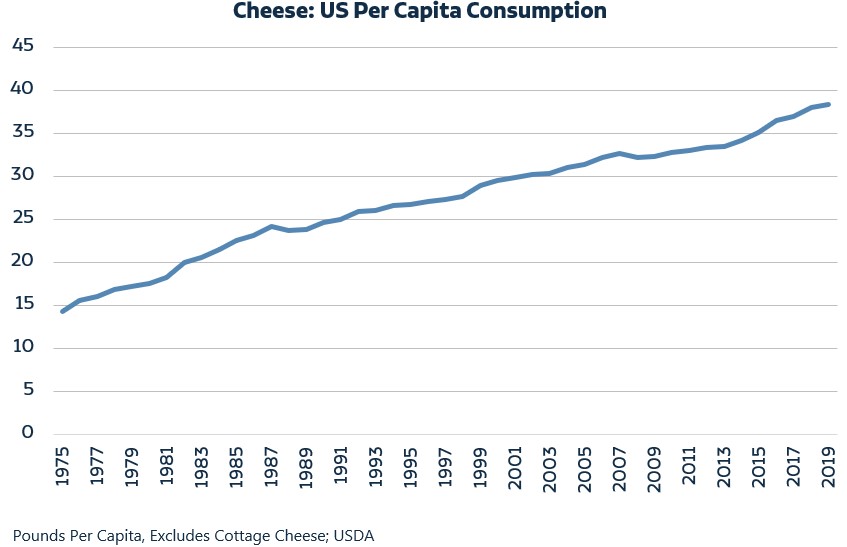
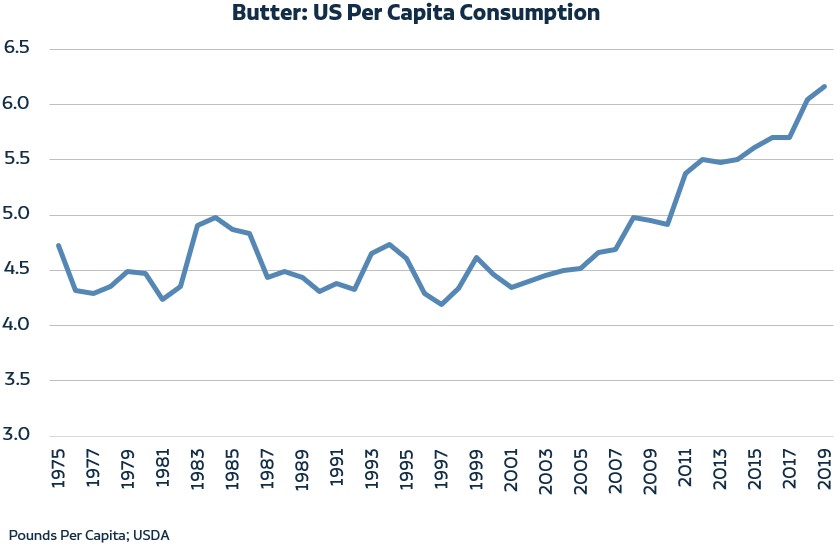
Over the past three months, the dairy industry have been urged to feed in responses to the consultation following concerns that primary producers tend to occupy positions of relative market weakness in the food supply chain.

NFU Scotland’s milk committee chair, Gary Mitchell played a huge part in encouraging the sector to take part in the process – which he referred to as a ‘once in a lifetime opportunity’:

Speaking after the closing date he took the opportunity to thanks those who responded to the Unions call: “For at least two years now, we have been actively talking to all parts of the dairy supply chain on this topic and I would like to take this opportunity to thank all the farmers and industry stakeholders that interacted with NFUS during this consultation process and, in turn, offered feedback to Defra. It was important that our voices were heard,

According to Mr Mitchell the easy part is now out of the way and the ‘hard work’ will begin when they hear the outcome from Defra.

“NFUS believes the introduction of well-considered, appropriate legislation regarding dairy contracts between dairy farmers and milk buyers is essential and this was stressed in our response to Defra,” he continued.

“This will create the foundations of a modern, thriving industry based on contracts that are agreed, not imposed, through free and equal negotiation and in good faith for the benefit of all in the supply chain.

“COVID 19 and Brexit are only two of the challenges facing us at the current time, and it is essential that all sectors in the dairy supply chain are best equipped to meet these challenges head on,” he concluded.

Source: thescottishfarmer.co.uk

U.S. Dairy Farmers Want Help To Expand Trade

Dairy Farmers want U.S. trade policy to focus on opening markets and fending off competition from the European Union and New Zealand.

U.S. dairy exports were up about 10% in the first half of 2020 compared to last year. But that’s not enough to return the sector to profitability, according to dairy farmers and producers that are participating in a series of virtual town hall meetings on trade issues.

“America’s dairy future growth is really tied to the success of global markets,” said Jim Mulhern, president and CEO of the National Milk Producers Federation.

Dairy industry leaders want the next president, regardless of whether it’s Donald Trump or Joe Biden, to promote a trade policy that seeks bilateral trade deals with countries that will keep U.S. milk and cheese competitive.

“Any market you look at, the EU or New Zealand, has better tariff advantages than we do. We need a focus from U.S. trade policy that is designed to create that level playing field,” Mulhern said.

The issue is tariffs, according to Jeff Schwager, CEO of Sartori Cheese, based in Plymouth, Wisconsin. 

“For the cheese we ship to Europe, we pay more in duty per kilogram than the Europeans pay to export their cheese to the United States. What’s fair in that?” Schwager said.

Dairy farmers do give credit to the Trump administration for the U.S.-Mexico-Canada Agreement (USMCA), which replaced the expired North American Free Trade Agreement (NAFTA). That deal is expected to increase dairy sales to Canada by more than $200 million annually. 

But the deal doesn’t go far enough for some dairy interests.

“USMCA is an improvement, but we are still at a disadvantage in Canada with the import limitation on U.S. cheese,” Schwager said. “They have a bilateral trade agreement with the EU that is more favorable for cheese than with us, their closest neighbor.”

Some congress members are siding with the dairy industry on that topic. Twenty-five senators and more than 100 representatives have sent bipartisan letters asking the Trump administration to start holding Canada and Mexico up to their parts of the deal on dairy.

Exports currently make up 15-17% of U.S. dairy production.

Source: wvik.org

American Dairy Consumption Reaches All-Time High; Cheese, Butter and Yogurt Continue to Drive Growth for Dairy Industry

Americans are turning to dairy products at a rate never seen before, according to the USDA Economic Research Service (ERS). New ERS data on annualized per capita consumption of dairy point to cheese, butter and yogurt categories driving substantial growth in per capita consumption of dairy, which reached a record high in 2019.

“Since the USDA began tracking per capita dairy consumption in the 1970s, the trend has continued upward for five straight decades, increasing 21% since 1975,” said Michael Dykes, D.V.M., president and CEO of the International Dairy Foods Association. “While Americans have always turned to dairy products as fresh, nutritious staples in their diets, they also value the versatility of dairy in new, delicious, and more accessible products. Thanks to its continued innovation and ingenuity, the dairy industry is poised to continue to grow and deliver nutritious products for Americans.”

In the past decade alone: domestic per capita consumption of cheese is up 19%; per capita butter consumption is up 24%; per capita yogurt consumption is up 7%. Ice cream per capita consumption also rebounded in 2019, increasing by a half-percent over 2018. Overall, ERS data show American dairy per capita consumption across products consistently increasing each year, with 2019 up 6% over the past five years, 10% over the past 15 years, and 16% over the past 30 years.

“The product mix in most demand by consumers is changing—we eat more dairy than we drink these days—and dairy on the whole continues to grow,” said Dykes.

The charts below illustrate the consistent growth in per capita consumption of dairy products.

Dairy products consumption per capita United States of America
American dairy per capita consumption across products consistently has been increasing each year, with 2019 up 6% over the past five years, 10% over the past 15 years, and 16% over the past 30 years.
Cheese dairy consumption per capita United States of America
Domestic per capita consumption of cheese is up 19% over the past decade.
Butter consumption per capita United States of America
American butter consumption per capita has increased 24% in just the past decade.

# # #

The International Dairy Foods Association (IDFA), Washington, D.C., represents the nation’s dairy manufacturing and marketing industry, which supports more than 3 million jobs that generate $159 billion in wages and $620 billion in overall economic impact. IDFA’s diverse membership ranges from multinational organizations to single-plant companies, from dairy companies and cooperatives to food retailers and suppliers, all on the cutting edge of innovation and sustainable business practices. Together, they represent 90 percent of the milk, cheese, ice cream, yogurt and cultured products, and dairy ingredients produced and marketed in the United States and sold throughout the world. Delicious, safe and nutritious, dairy foods offer unparalleled health and consumer benefits to people of all ages.


Dairy giant Fonterra posts huge profit after revamp

New Zealand dairy giant Fonterra posted a bumper annual profit Friday, putting the world’s largest dairy exporter back in the black after two years of heavy losses.

Fonterra announced a net profit of NZ$659 million (US$445 million) for the 12 months to July 31, rebounding from a NZ$605-million loss the previous year.

The turnaround comes after Fonterra restructured its operations to focus on core business after last year writing down more than NZ$800 million in assets, including slashing the value of investments in China.

Fonterra said shareholders would receive a final dividend of five cents a share, ending a suspension on payouts that began in 2019.

“We increased our profit after tax by more than NZ$1.0 billion, reduced our debt by more than NZ$1.0 billion and this has put us in a position to start paying dividends again,” chief executive Miles Hurrell said.

He said Fonterra experienced a strong first half to the financial year but the Covid-19 pandemic affected the second half.

“As we moved through the second half, we saw restaurants, cafes and bakeries close and intermittent spikes in supermarket sales, creating uncertainty across the global dairy market,” he said.

Chairman John Monaghan said the health crisis made providing a detailed outlook difficult as new waves of infection and the virus-induced global slowdown would affect demand in unpredictable ways.

“The best way of coping with uncertainty is to stay on strategy and focus on what is within our control –– delivering for our farmers, unit holders and customers, and maintaining our financial discipline,” he said.

“We need to stay agile and draw on our strengths across the supply chain to manage and adapt to the changing global situation.”

Source: news.yahoo.com

Send this to a friend