Archive for women in dairy

Beyond the Barn Door: Unmasking the Real Powerhouse on Your Dairy – The Farm Mom!

Dairy’s REAL powerhouse isn’t just in the barn. Farm Moms are CEOs & strategists. Uncover their true impact & why their success IS your farm’s success!

Forget the stereotypes. The woman on your dairy farm isn’t just “helping out”-she’s a linchpin, a CEO, a chief strategist, and the heart of the entire operation. From managing complex financials and herd health to raising the next generation and often holding it all together, dairy farm mothers are the unsung heroes whose true economic and operational value is criminally overlooked. It’s time to pull back the curtain and give these incredible women the spotlight they’ve earned.

They are the operational backbone, the calm in the storm, and the visionaries quietly shaping the future of dairy. Yet, their contributions often fly under the radar, lost in the shuffle of daily farm life. Let’s be bold: the success and sustainability of many dairy farms rest squarely on their shoulders. So, let’s dive deep into the multifaceted world of dairy farm mothers, exploring their challenges, celebrating their resilience, and demanding the recognition they deserve.

The Farm’s Real CEO? More Than Just a Helping Hand

Does the farm run itself, or does “Mom” just handle the house and kids? Think again. Dairy farm mothers are integral managers, decision-makers, and skilled laborers whose work is critical to a farm’s daily grind and long-term survival. They’re not just supporting players; they’re often running the show from what one farmer aptly called “command central”.

Juggling It All: Farm, Family, Finances, and Future Dairy farm mothers are the undisputed queens of multitasking. In the U.S., women make up 36.3% of all agricultural producers, managing a colossal 407 million acres and contributing $222 billion of farm sales. Dig deeper, and you’ll find that over half (51%) of all U.S. farms have at least one-woman operator involved in management.

Now, let’s zoom in on our world: dairy. While 29.9% of dairy producers are women, 54% of dairy farms report having at least one woman as a “secondary operator” involved in crucial decision-making. Why the distinction? The USDA defines a “producer” as anyone making decisions for the farm. So, these “secondary operators” are producers, plain and simple. This under-titling often means their leadership is downplayed, potentially impacting everything from industry recognition to accessing resources.

Their to-do list is staggering:

  • Calf Care Commandos: Often the first and last line of defense for the herd’s future, meticulously overseeing colostrum management, passive transfer, and early nutrition programs that set the foundation for lifetime productivity.
  • Herd Health Gurus: Administering treatments, coordinating vet care, maintaining treatment protocols, and keeping a sharp eye on transition cow health, where profit margins are won or lost.
  • Financial Wizards: Manage payroll, like Minnesota’s Rita Vander Kooi, track milk quality premiums, and navigate complex farm finances, including feed cost and milk price ratios.

All this, while seamlessly weaving in the relentless demands of family life. It’s a dual role requiring immense skill and grit.

As one observer put it, “Moms generally are ‘command central’ for the farm family… hauling meals to the field, running for parts, driving a tractor or truck, keeping books, and keeping peace between family members”. Wisconsin’s Renee Clark is in the barn every morning mixing feed for the milking herd, carefully balancing the TMR to optimize rumination and butterfat production. Rita Vander Kooi coordinates with nutritionists and reproductive specialists, manages payroll, and ensures the team is fed during the chaos of harvest. This isn’t just ticking off tasks; strategic coordination is often an “invisible” layer of management that’s as essential to the operation as a properly functioning cooling system to bulk tank milk quality.

The Gauntlet: What Dairy Moms Are REALLY Up Against

Life on a dairy farm, especially for mothers, isn’t all picturesque sunsets over rolling pastures. It’s a demanding landscape, riddled with financial landmines, mental pressure cookers, and the Herculean task of raising kids amidst the 24/7 hum of machinery and animal needs. But if there’s one thing these women have in spades, it’s resilience.

Facing Down the Hurdles: Credit Squeezes, Mental Tolls, and Childcare Conundrums Let’s get real about the trifecta of challenges:

  • Access to Credit? Good Luck: Women-only farm operations are less likely to hold loans than those run by men. While the query mentioned a specific “46% obtain loans” figure, the broader truth is that restricted credit access stifles investment in crucial tech, expansion, or even just weathering economic storms. This isn’t just an inconvenience; it’s a barrier to profitability and growth, like trying to optimize milk production while feeding a subpar ration.
  • The Mental Weight: Agriculture is tough on mental health, and farm women often bear an invisible “triple burden”: on-farm work, off-farm jobs to make ends meet, and the primary responsibility for home and kids. One farm woman described her week as a complex calculus of meal plans, work schedules, kids’ activities, appointments, and farm needs, all while juggling babysitters. This isn’t sustainable without support. Tragically, male farmers and ranchers face alarmingly high suicide rates. While specific data for female farmers can be more complex to pin down, studies consistently show they report significant stress, depression, and anxiety, sometimes even higher than their male counterparts.
  • The Childcare Tightrope: “Farming is a 24/7 job and so is being a mother,” stated Wisconsin dairy farmer Renee Clark. “Women tend to carry more of the responsibilities with kids, and so it is difficult to give up some responsibilities you would like to maintain on the farm”. The lack of affordable, flexible rural childcare often means kids are on the farm, a constant worry for safety-conscious mothers, like having to keep an eye on both a wobbly calf and a toddler simultaneously.

These aren’t isolated problems. They’re a tangled web, much like a complex mastitis case that requires addressing the immediate infection and the underlying facility issues. Can’t get a loan for that labor-saving robotic milker? That means more manual labor, stress, and fatigue, which impact mental health and the ability to manage finances or seek support. It’s a vicious cycle.

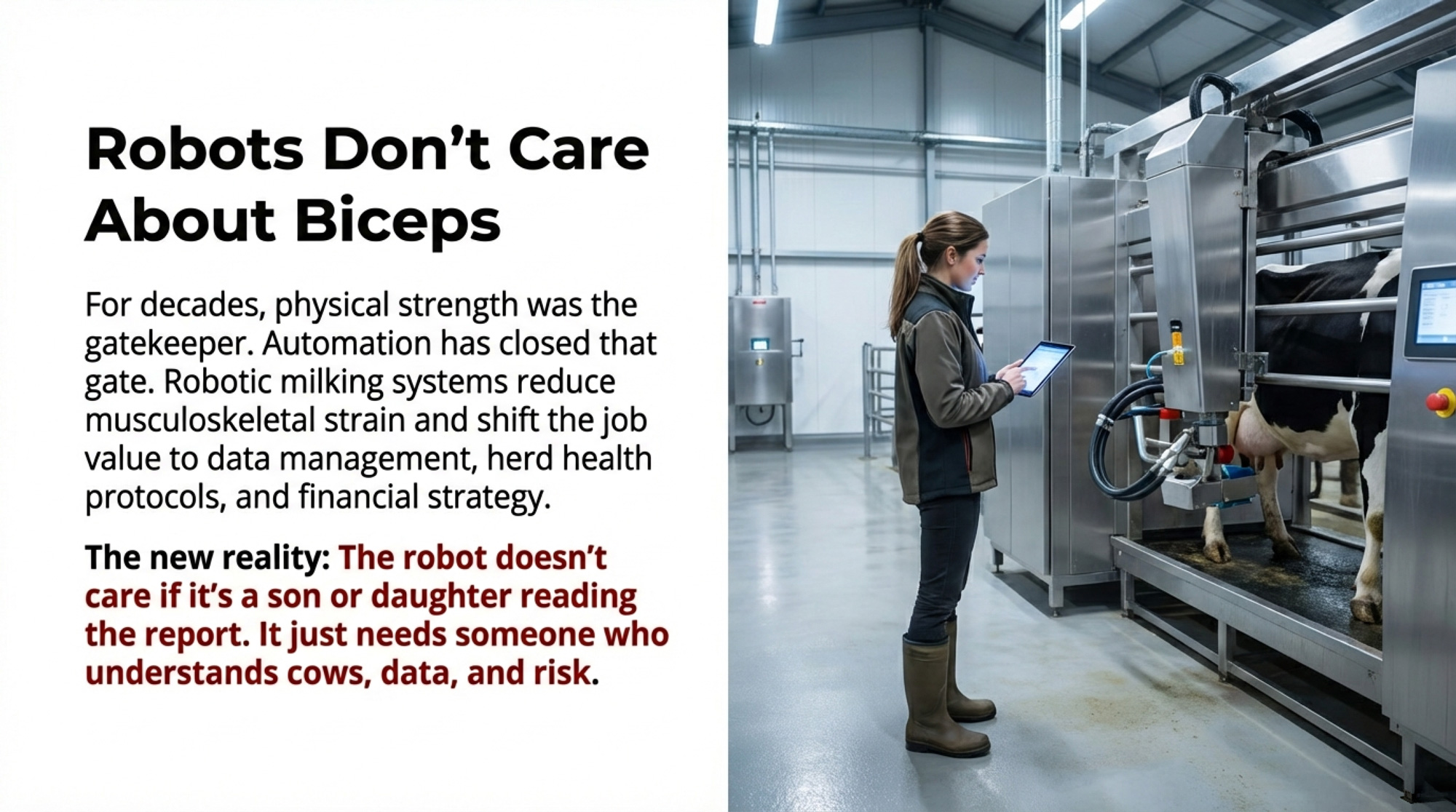
Forging Ahead: Tech, Teamwork, and Tenacity. But dairy farm mothers are fighters. They adapt, innovate, and persevere. One game-changer? Technology. For instance, automated Milking Systems (AMS) can be a godsend. They reduce labor, improve cow welfare through voluntary milking and real-time health monitoring, and critically, offer a massive boost to work-life balance by breaking the tyranny of rigid milking schedules. This isn’t just about fancy gadgets; it’s about reclaiming time and sanity. Women entrepreneurs in dairy are actively leveraging tech to streamline operations while juggling family.

But tech alone isn’t the answer. Strong family bonds and community support are vital buffers against stress. Women farmers lacking family support face significantly higher odds of depression. This is where peer groups and women-in-ag networks become lifelines, offering emotional support and shared learning.

Why This Matters for Your Operation: Think about that AMS. Yes, it’s a big investment. But what’s the ROI on your partner’s (or your own, if you’re the mom!) well-being, reduced stress, and the ability to focus on higher-level management tasks instead of being chained to the parlor? Just as we calculate the somatic cell count benefits of a new prep routine, we should calculate the value of supports that reduce stress and burnout. The irony is those who’d benefit most from these tech leaps often face the biggest hurdles in affording them due to income gaps and credit issues. This isn’t just unfair; it’s bad for business.

The Living Legacy: How Farm Moms Shape Dairy’s Future, One Generation at a Time

The impact of a dairy farm mother echoes far beyond the current lactation cycle or harvest season. These women are the primary architects of agriculture’s future, meticulously passing down skills, core values, an unshakeable work ethic, and a deep-seated love for the land.

Passing the Torch: More Than Just Know-How. Mothers on dairy farms are living libraries of agricultural wisdom. They teach calf-rearing nuances, from the critical 4-hour colostrum window to reading a scours case before clinical signs appear. They instill principles of sustainable land management, lessons learned through seasons of observation and hard work. Research shows that informal, family-based learning and maternal mentorship are incredibly powerful in shaping future farmers. Raising kids on a farm isn’t just about chores; it’s an immersive education in responsibility and respect for agriculture, with Mom often as the lead instructor.

This “maternal mentorship” instills adaptability and a holistic view of the farm as an ecosystem, often emphasizing animal welfare and stewardship, which is critical for long-term sustainability in a fast-changing world. Like selective breeding that improves production and functional traits, mothers cultivate practical skills and vital character attributes in the next generation.

Global Echoes: The Universal Power of Maternal Mentorship. This isn’t just a Western phenomenon. In Moroccan farming households, women are crucial for intergenerational knowledge transfer and building resilience. Large-scale nutrition programs in India and Nigeria succeed by engaging mothers and grandmothers to drive behavioral change and share vital information. These programs use community platforms and trusted local figures – often women themselves – fostering peer support and tailored messaging. Could we adapt this model for agricultural knowledge transfer in dairy, especially for women who often face barriers to traditional, male-dominated extension services? Imagine women-centric dairy support groups, female peer educators for calf care or milk hygiene protocols, and respected older farm women as mentors. It’s a thought worth exploring.

The Overlooked Economic Engine: Let’s Talk Numbers (and Inequity)

Dairy farm mothers aren’t just nurturing souls; they are potent economic forces. They manage substantial assets, contribute significantly to production, and are increasingly recognized for their entrepreneurial spirit. However, a persistent earnings gap and unequal resource access often mask their true economic clout.

Beyond the Farm Gate: The Hard Stats Remember those figures? 51% of U.S. farms have at least one-woman operator. Women producers manage 407 million acres and generate $222 billion in sales. Impressive, right?

But here’s the kicker: women-led farms earn, on average, a staggering 40% less than those run by men. This isn’t a fluke; multiple sources confirm this gap. From 2017 to 2020, women-only operations had an average production value of just $28,492, compared to $209,083 for men-only farms. Government payments? Women-only farms got an average of $7,687, versus $24,964 for men-only operations. While reasons like farm scale and commodity specialization play a role, the disparity is undeniable – it’s like comparing a 20,000-pound production average to a 33,000-pound one, but with no clear genetic or management explanation.

Table 1: The U.S. Dairy Farm Mother: A Statistical Snapshot

MetricStatistic
% of U.S. agricultural producers who are women36.3%
% of U.S. farms with at least one female operator51%
% of U.S. dairy producers who are women29.9%
% of U.S. dairy farms with at least one female secondary operator54%
Average farm income disparity for female operatorsEarn 40% less than their male counterparts
Average value of production (women-only vs. men-only farms)Women-only: $28,492 vs. Men-only: $209,083
Access to LoansWomen-only ops are less likely to hold loans

This 40% gap isn’t just about farm size. It’s about that tougher access to credit, which means less capital for crucial investments – whether it’s genomic testing the heifer herd, upgrading the parlor, or installing that activity monitoring system. And it’s about the unquantified economic cost of all that “invisible” labor- the caregiving, household management, and farm support tasks that divert time from direct income generation.

Cooperative Strength: Lessons from Around the Globe Globally, cooperatives are empowering women in dairy. In India, where women comprise nearly 70% of the dairy labor force, “White Revolution 2.0” aims to integrate more women into organized dairy co-ops. These co-ops provide access to credit, training in everything from mastitis prevention to feed formulation, leadership roles, and fair market access, like the famed Anand Pattern Dairy Cooperatives that link producers directly to consumers, cutting out exploitative middlemen.

The story of Aparna Rani Singha in Bangladesh is a powerful example. Joining a project that offered fair pricing via collection centers and training in good dairy practices and digital tools transformed her from a small-scale farmer to a thriving entrepreneur.

Table 2: Global Perspectives: Women in Dairy at a Glance

FeatureUnited StatesIndia (Co-op Members)Nigeria (Fulani Pastoralists)
Key RolesManagement, operations, finance, animal care, advocacyLivestock care, milking, processing, marketing via co-opsPrimarily milk processing & sales; limited herd management
Decision-Making PowerIncreasing, often a secondary operator in dairy (54%)Growing via co-opsHigh in milk sales, low in herd ownership/farm decisions
Access to ResourcesChallenges for women-only farms (credit); general training accessImproving via co-ops (credit, training, inputs)Very limited formal credit/training; reliance on tradition
Impact of Co-ops/SupportLess formalized for women; networks like IDFA Women in DairyHighly impactful: economic & social empowermentEmerging, informal community support
Key ChallengesIncome gap (40% less), work-life balance, and childcareTraditional gender barriers, market access outside co-opsExtreme gender disparity (assets, income), conflict, and climate change

These co-ops aren’t just about selling milk; they’re comprehensive socio-economic empowerment tools, offering lessons for uplifting women in agriculture everywhere, much like how a well-managed forage program simultaneously supports milk production and rumen health.

Real Stories, Real Impact: Meet the Women Rocking the Dairy World

Stats are one thing, but real stories bring the impact home. Let’s meet a few of the incredible women making waves in dairy.

  • Jennifer Breen (Orwell, Vermont, USA) – The Fifth-Gen Innovator: Jennifer stepped up to ensure her family’s fifth-generation farm, Hall and Breen Farm, LLC, continued. With a communications degree and business management savvy from an off-farm job, she partnered with her father, embracing organic production and investing in a new 130-stall freestall barn equipped with robotic milkers to boost efficiency and family life. “I felt strongly that the farm should continue as a productive family enterprise,” she says. Recently, they secured a grant to transition to goat dairy, showcasing their adaptive spirit, much like a diversified feeding strategy that balances protein sources.
  • Rita Vander Kooi (Worthington, Minnesota, USA) – The Modern Farm Mom & Advocate: Rita is integral to Ocheda Dairy, a 2,500-cow operation. Her roles span newborn calf care, coordinating with nutrition consultants and reproductive specialists, managing payroll, and feeding the crew during harvest. Beyond the farm, ‘Married and Farming’ is her social media handle, where she engages over 34,000 followers on agricultural issues. “Being together as a family is one of our greatest joys,” she says, but adds, “Being a mother will always be my greatest calling”. She exemplifies the modern dairy mom: essential to a large-scale operation, a public advocate, and fiercely family-focused.
  • Aparna Rani Singha (Jashore District, Bangladesh) – Tech-Savvy Trailblazer: Starting with one heifer, Aparna grew her dairy business, overcoming challenges of low productivity and unfair milk prices. Joining Solidaridad’s SaFaL project gave her access to training and fair-priced collection centers. Later, a USAID-funded project introduced her to digital tools: IVR for farm management info and an app to track sales and receive mobile payments. Now debt-free with five cows, a biogas plant, and a deep well, her dream is to “help her daughters become good citizens”. She’s already a local school governor, inspiring other women.

What’s the common thread? An unshakeable entrepreneurial spirit and a fantastic ability to adapt. From Breen’s tech investments to Singha’s digital adoption, the Fulani milkmaids’ sheer grit, and Vander Kooi’s business and advocacy blend, women are problem-solvers and innovators, often against formidable odds. Like a high-performing dairy cow that keeps producing despite challenges, they consistently deliver results in the face of adversity.

The Iceberg Effect: Uncovering the Mountain of “Invisible” Work

“Invisible labor” on a dairy farm, especially for mothers, is like an iceberg: what you see is just a fraction of what’s there. We’re talking about a complex orchestra of responsibilities fundamental to the farm’s success and family well-being, yet often unquantified, uncompensated, and unseen economically, much like the hidden components of milk production that happen deep in the rumen.

The “triple burden” is real: on-farm work, off-farm income generation, and the bulk of caregiving and household duties. This “invisible” third pillar includes the mental load of childcare (education, emotional support), researching herd health protocols, meal planning, managing appointments, complex family schedules, and even “keeping peace” in a family business. Farm women report immense stress and guilt from juggling these roles, constantly worried about children’s safety in a hazardous farm environment due to a lack of rural childcare.

So, how do dairy moms redefine this invisible labor?

  • Strategic Management: They’re high-level executives coordinating schedules, managing intertwined household/farm finances, and researching solutions for countless challenges – from mastitis prevention protocols to finding the right reproductive technician.
  • Emotional Labor: They maintain family cohesion in high-stress businesses, support partners through volatility, and nurture children. This is a massive, uncredited contribution – the glue that holds the operation together, like the microbiome that silently maintains rumen health.
  • Risk Management: Constant, subconscious vigilance, especially for child safety around machinery, livestock, and chemicals – constantly scanning the environment like a good herdsperson watches for subtle changes in cow behavior.
  • Human Capital Development: Raising the next generation, instilling values, work ethic, and responsibility – investing in human potential with the same care a breeder selects for genetic improvement.

This “invisibility” isn’t just a social oversight; it has real economic bite. Because it’s unpaid and unquantified, it devalues the mother’s true economic role, contributing to that 40% income gap. If you had to outsource all that childcare, bookkeeping, mediation, and catering, the farm’s bottom line would look very different. It would be like suddenly having to pay for all the services a healthy rumen provides for free.

Enough Talk, Time for Action: Systemic Shifts to TRULY Support Dairy Moms

Want to see dairy farm mothers thrive? Applause is nice, but systemic change is essential. We must dismantle structural barriers and create an environment where their contributions are recognized and rewarded.

  • Crack Open the Credit Lines: Targeted loan programs for women in ag, revised credit criteria, and tailored financial literacy training are crucial to address current disparities where women-only operations are less likely to hold loans, giving them the same access to capital that’s needed for genetic advancement or facility upgrades.
  • Mental Health Lifelines: Accessible, affordable, rurally-aware mental health services are non-negotiable to combat the “triple burden” stress – investing in human wellness with the same priority we give to herd health.
  • Childcare Solutions, Stat! Investment in rural childcare, flexible options, and potential subsidies would be game-changers for farm mothers and family well-being, as essential as reliable calf care is to herd replacement.
  • Gender-Responsive Policies: Agricultural policies must recognize women’s diverse roles. This means equitable land rights, fair access to resources and programs, and training designed for them. Plus, better data collection to capture their full contribution is vital, much like comprehensive DHI testing reveals the complete performance story.
  • Boost Leadership & Networks: Supporting women-led co-ops and networks like IDFA’s Women in Dairy enhances market presence and bargaining power and provides mentorship, creating the same kind of strong connections that build successful breeding programs.
  • Unlock Labor-Saving Tech: Grants, subsidies, or innovative financing for tech like AMS, activity monitoring systems, or automated calf feeders can transform workloads and improve work-life balance – tools that multiply human effectiveness just as genetics multiplies production potential.

What This Means for Your Operation: These aren’t just “women’s issues.” They’re farm viability issues. A supported, empowered partner or key female manager is more effective, innovative, and resilient. Policies must work together: better credit access coupled with tech support and affordable childcare creates a powerful synergy for positive change, just as combining excellent nutrition, comfortable housing, and proper milking technique optimizes production.

The Sustainability Linchpin: Why Dairy Moms are Key to a Greener, More Ethical Future

The role of dairy farm mothers isn’t just about today’s bottom line; it’s about tomorrow’s sustainable dairy industry. Their unique perspectives, often focused on long-term well-being, environmental consciousness, and intergenerational knowledge, make them vital architects of a resilient, ethical, and eco-sound dairy future.

Evidence suggests women farm operators show greater interest in sustainable farming practices. This is critical as our industry faces pressure on its environmental footprint. Their nurturing approach often extends to the land and animals, fostering a stewardship ethic that treats soil health with the same care as udder health. As primary caregivers, they’re deeply concerned with food quality and safety, aligning with consumer demands for transparency. Empowered women in agriculture are often more resilient to climatic shocks, a crucial trait for future-proofing dairy.

Why is their role paramount for sustainable dairy:

  • Guardians of Long-Term Viability: Thinking in generations, they prioritize the farm’s, families, and community’s long-term health, focusing on lifetime profit rather than just peak lactation performance.
  • Drivers of Care & Welfare Innovation: Hands-on animal care leads to practical welfare improvements – just as attentive milking techniques prevent mastitis; their nurturing approaches often enhance overall herd wellbeing.
  • Advocates for Holistic Practices: Viewing the farm as an ecosystem, they can drive adoption of environmentally sound, socially equitable, and economically viable practices, understanding that soil health, cow comfort, and economic sustainability are interconnected like rumen function, milk production, and farm profitability.
  • Connecting with Consumers: Their authentic stories and values build trust and a positive industry image in an era of conscious consumerism – bridging the gap between producer and consumer, much like the important connection between farmer and veterinarian.

Empowering dairy mothers can catalyze a paradigm shift towards a dairy sector that’s productive and more environmentally responsible, ethically grounded, and socially connected, a deeper cultural evolution in how we farm.

The Bottom Line: It’s Time to See, Value, and Elevate Dairy Farm Mothers

The story of the dairy farm mother is one of relentless dedication, astonishing skill, and quiet strength. They are our farms’ operational wizards, emotional bedrock, and forward-thinking innovators. Their colossal contributions have been undervalued for too long, if not entirely invisible.

Enough is enough. As an industry, communities, and families, we must actively celebrate these incredible women. Think about the dairy mom in your life, your co-op, your town. The one juggling dry cow protocols and homework, milk quality premiums and family dinners, DHIA records and tradition.

This isn’t just about a pat on the back. It’s a call to action.

  • Recognize Their Full Value: Challenge the notion that their work is just “helping.” Quantify it, respect it, reward it – just as we now recognize that components, not just milk volume, determine true production value.
  • Advocate for Systemic Change: Support policies and initiatives that address the credit gap, childcare crisis, and mental health needs of farm women, creating the infrastructure they need as surely as cows need proper housing.
  • Foster Leadership: Encourage and create pathways for women to take on more formal leadership roles within your operation and the wider industry – develop their potential as carefully as you develop your herd.
  • Share Their Stories: Make the invisible visible. When we highlight their successes and challenges, we inspire others and educate those outside our world, showing the human face behind the milk.

The Bullvine challenges you: Nominate your dairy heroine. Let’s amplify their voices, whether for a local award, an industry recognition, or simply a public thank you in your community. Consider women who excel in operations, embrace innovation, champion animal welfare and sustainability, mentor others, contribute to the community, and show unparalleled resilience.

When we champion these unsung heroes, we’re not just giving credit where it’s overdue. Because of the incredible women at its heart, we’re investing in the future of dairy, a more equitable, resilient, and vibrant future. Let’s ensure their stories shine as brightly as a freshly scrubbed bulk tank in the morning light.

Key Takeaways:

  • Dairy farm mothers are not just helpers but central operational managers, decision-makers, and skilled laborers whose contributions in areas like herd health, calf care, and financial planning are vital to farm success.
  • Despite their critical roles, they face significant challenges, including a 40% average income gap compared to male counterparts, limited access to credit, immense mental load (the “triple burden”), and scarce rural childcare.
  • The vast “invisible labor” performed by dairy farm mothers – strategic planning, emotional support, risk management, and raising the next generation – is economically significant yet largely unquantified and uncompensated, masking their true value.
  • Systemic changes, including improved access to credit, mental health resources, affordable childcare, gender-responsive policies, and support for technology adoption, are crucial for achieving their economic parity and amplifying their visibility.
  • Empowering dairy farm mothers is intrinsically linked to the dairy industry’s future sustainability, innovation, and intergenerational continuity, as they often champion long-term viability, holistic practices, and animal welfare.

Executive Summary:

This article dismantles the outdated image of the “farmer’s wife,” repositioning dairy farm mothers as indispensable operational and strategic leaders. It highlights their multifaceted roles managing everything from intricate herd health and calf care protocols to complex farm financials and family responsibilities, often while facing significant hurdles like limited credit access, intense mental strain from the “triple burden,” and inadequate childcare. The piece argues that their substantial “invisible labor” – encompassing strategic management, emotional support, and human capital development – is critically undervalued, contributing to a stark economic disparity despite their massive contributions. Ultimately, it calls for systemic changes to ensure their visibility and economic parity, emphasizing that empowering these women is not just equitable but essential for the innovation, intergenerational success, and sustainable future of the global dairy industry.

Learn more:

Join the Revolution!

Join over 30,000 successful dairy professionals who rely on Bullvine Weekly for their competitive edge. Delivered directly to your inbox each week, our exclusive industry insights help you make smarter decisions while saving precious hours every week. Never miss critical updates on milk production trends, breakthrough technologies, and profit-boosting strategies that top producers are already implementing. Subscribe now to transform your dairy operation’s efficiency and profitability—your future success is just one click away.

NewsSubscribe
First
Last
Consent

Women Shattering Dairy’s Glass Ceiling: Leadership, Innovation, and the Fight for Equality in 2025

Women are shattering dairy’s glass ceiling, but the industry’s gender gap persists. Discover how female leaders are reshaping the future of milk production.

As International Women’s Day 2025 approaches, a powerful transformation is reshaping the dairy landscape. This transformation challenges century-old perceptions and proves that milk isn’t the only thing flowing through modern dairy operations. Behind milking parlors and research laboratories nationwide, women are not just participating in dairy farming—they’re redefining it.

The latest statistics from the IDFA’s 2025 State of Women in the Dairy report reveal that more than half (54%) of women are actively asking for promotions compared to 47% of men, and 62% of those women successfully earn them—on par with their male counterparts. Yet these statistics only begin to tell the story of how women’s leadership, innovation, and persistence are fundamentally altering an industry that has historically overlooked their contributions.

Innovation born from necessity: Rita Maunsell, who sold her house and relocated her family to Limerick to pursue dairy farming, transformed a workplace challenge into entrepreneurial opportunity by designing a milking gown specifically for women farmers. Her creation addresses the practical needs female dairy operators face daily, exemplifying how women aren’t just adapting to the industry but actively reshaping it through purpose-built solutions that traditional male-dominated manufacturing overlooked.

The Silent Force Behind Dairy’s Success: Women’s Hidden History

The perception of dairy farming as exclusively male territory has persisted despite women’s omnipresence throughout agricultural history. Today’s reality shatters this outdated image as women step from behind-the-scenes roles into recognized leadership and innovation positions. The transformation is remarkable not because women are newly arriving in dairy but because their long-standing contributions are finally receiving acknowledgment.

This historical oversight continues despite striking evidence to the contrary. According to the IDFA’s comprehensive 2025 survey of 608 industry professionals—including 519 women and 89 men—63% of women expressed satisfaction with their opportunities for career advancement. Furthermore, half of female respondents across generations acknowledge having access to programs designed to foster career growth and retention. These statistics reveal that women aren’t merely surviving in dairy—they’re increasingly finding pathways to thrive.

The question we must confront is stark: If women increasingly take charge of their careers and succeed, why do nearly half (48%) still believe they have fewer advancement opportunities than their male counterparts? This disconnect between progress and persistent barriers reveals how deeply entrenched gender assumptions remain in agricultural sectors, including dairy.

Leadership Revolution: Female Trailblazers Reshaping Dairy’s Future

The rise of women to leadership positions represents one of the most significant disruptions to traditional dairy industry power structures in decades. The IDFA’s groundbreaking research confirms this trajectory toward leadership: more than half (54%) of women reported asking for promotions compared to 47% of men, with 62% of those women saying they received those promotions—a rate equal to men.

Becky Rasdall Vargas, Senior Vice President of Trade and Workforce Policy at IDFA, leads the Women in Dairy initiative transforming gender equality in the industry. Under her guidance, the comprehensive 2025 State of Women in Dairy report has become the industry’s most authoritative research on women’s advancement challenges and opportunities. “Women in the U.S. dairy industry are better represented than ever before,” notes Vargas, “yet despite this progress, we still see roadblocks.

Becky Rasdall Vargas, senior vice president at IDFA and leader of the Women in Dairy initiative, has been at the forefront of measuring and addressing gender equality in the industry. The survey, conducted between October 16 and November 7, 2024, provides the most comprehensive picture of women’s experiences across the dairy sector.

These leadership inroads become even more apparent when considering the broader implications for industry innovation and competitiveness. The 2025 report reveals that dairy companies are increasingly investing to support women, yet disparities continue to impact job satisfaction and retention, particularly for women in frontline roles. This gap between institutional commitments and on-the-ground experiences raises a provocative question: What transformative innovations are we missing when barriers prevent qualified women from reaching their full potential?

Tech Transformation: How Innovation is Leveling the Dairy Playing Field

Perhaps nowhere is the gender landscape shifting more dramatically than in technologically advanced dairy operations. Automation is rendering physical strength increasingly irrelevant and creating unprecedented opportunities for women producers. From robotics to automated milking systems, technology, and data are helping create a more rewarding life on the farm for today’s female dairy farmers.

What’s most revolutionary about this technological shift is it’s rendering outdated gender assumptions obsolete. When robotic milking systems, automated feeding technology, and data-driven herd management become standard, the question becomes not whether women can handle dairy farming but why their unique perspectives weren’t more central to the industry’s development.

As farms increasingly run on brainpower rather than just physical labor, women’s capabilities in problem-solving, animal health management, and operational efficiency emerge as competitive advantages. As highlighted at the IDFA annual Dairy Forum in San Antonio this January, business success requires “a group of diverse and capable people,” even in artificial intelligence and automation.

The International Dairy Foods Association has focused on six key areas impacting gender equality: treatment, compensation, mentorship and support, opportunities for advancement, factors in recruiting and retention, and discrimination policies and gender equality goals. This holistic approach recognizes that technological advancement must be paired with cultural evolution to create genuinely inclusive workplaces where all talent can thrive.

ackie Klippenstein, Senior Vice President and Chief Government and Industry Relations Officer at Dairy Farmers of America, was honored with the prestigious 2024 Dairy Girl Network Leading Impact Award. As the first female board member of the National Milk Producers Federation and chair of Newtrient, Klippenstein champions sustainability initiatives, pioneering efforts to reduce dairy’s environmental footprint while advocating for inclusivity across the industry. “She embodies the spirit of progress and dedication vital for the future of dairy farming,” notes DGN President Laura Daniels.
Jackie Klippenstein, Senior Vice President and Chief Government and Industry Relations Officer at Dairy Farmers of America, was honored with the prestigious 2024 Dairy Girl Network Leading Impact Award. As the first female board member of the National Milk Producers Federation and chair of Newtrient, Klippenstein champions sustainability initiatives, pioneering efforts to reduce dairy’s environmental footprint while advocating for inclusivity across the industry. “She embodies the spirit of progress and dedication vital for the future of dairy farming,” notes DGN President Laura Daniels.

Profit & Progress: The Business Case for Women’s Leadership

The business case for women’s leadership in dairy extends far beyond equity—it’s about profitability and sustainability in an increasingly competitive global market. While historical barriers have limited women’s advancement, new data reveals how gender diversity drives financial performance and innovation throughout the dairy supply chain.

Gender Comparison: By the Numbers

MetricWomenMen
Asked for promotions54%47%
Received promotions when asked62%62%
Believe gender negatively impacts pay55%5%
Believe they have fewer advancement opportunities48%N/A

The IDFA’s 2025 State of Women in Dairy report offers compelling evidence that women’s leadership capabilities remain underutilized despite clear benefits. The survey found that gender inequalities persist in the dairy sector. Nearly half of women (48%) believe they have fewer advancement opportunities than their male counterparts, and the gender pay gap remains a significant concern.

Fifty-five percent of women reported that gender negatively influences their compensation, compared to only 5% of men. This pay gap doesn’t just affect individual women—it represents a strategic vulnerability for an industry that cannot afford to undervalue talent in an increasingly competitive global marketplace.

These findings align with broader research from the previous year, which confirmed that women in the dairy industry report feeling overlooked, undervalued, and underpaid. Despite growing awareness, the persistence of these challenges suggests that systemic change requires more than surface-level commitments to diversity and inclusion.

Networks of Change: Programs Accelerating Women’s Success

The growth of dedicated networks supporting women in dairy has dramatically accelerated progress toward gender equality in the industry. The International Dairy Foods Association’s (IDFA) Women in Dairy network stands as a prominent example, working to improve gender equality within the U.S. dairy sector through data-based metrics and tools, C-suite engagement, and fostering networking and professional and leadership development.

Becky Rasdall Vargas, IDFA Senior Vice President of Trade and Workforce Policy, leads these efforts, including mentoring circles, professional development webinars, and networking events. This comprehensive approach recognizes that advancing women in dairy requires individual development and systemic change.

The latest findings from the 2025 report reveal both progress and persistent challenges. While 63% of women expressed satisfaction with their opportunities for career advancement, the gender pay gap remains a significant concern. Similarly, while half of female respondents acknowledge having access to professional development programs, nearly half (48%) still believe they have fewer advancement opportunities than their male counterparts.

What makes these networks truly revolutionary is their systemic approach. Rather than focusing solely on helping individual women navigate existing structures, they’re gathering data, creating benchmarks, and holding the industry accountable for measurable progress. This strategic approach transforms what could be dismissed as “women’s issues” into industry-wide imperatives for competitiveness and growth.

Persistent Roadblocks: What’s Still Holding Women Back?

Despite remarkable progress, women in dairy continue facing systemic barriers that limit both individual advancement and industry innovation. The 2025 IDFA survey reveals that gender inequalities persist in the dairy sector. Nearly half of women (48%) believe they have fewer advancement opportunities than their male counterparts, and 55% of women reported that their gender negatively influences their compensation.

The Generational & Workplace Divide

DemographicKey Findings
Gen Z & Millennial Women41% believe gender will make career advancement harder
Gen Z & Millennial WomenCite career advancement as major concern for retention
Female Frontline Workers29% have left jobs due to lack of opportunities
Female Frontline WorkersFace unique challenges in processing plants and farms

The generational divide highlighted in the 2025 report is particularly concerning, with 41% of Gen Z and Millennial women believing it will be harder to advance due to their gender. This perception threatens the industry’s ability to attract and retain the next generation of female talent.

Similarly, the report reveals that 29% of female frontline employees have left jobs due to lacking opportunities. These findings reflect persistent structural challenges rather than individual limitations.

The gender pay gap represents a significant hurdle that has shown slight improvement. The 2025 data confirms this remains a pressing issue, with 55% of women reporting that their gender negatively influences their compensation, compared to only 5% of men. This stark contrast in perception underscores how differently men and women experience the same workplace environments.

Mary Creek, 62, a third-generation dairy farmer from Hagerstown, Maryland, represents the pioneering spirit that has long existed in dairy despite limited recognition. Working 300 acres alongside her brother, Creek reflects on breaking gender norms throughout her career: “Growing up it was not common to have a woman as involved in showing cattle as I was. Our parents raised us to do what was necessary and I used to be able to keep up with just about any man with my chore accomplishments.” Her experience highlights how women’s contributions to dairy farming have often been present but historically overlooked.

Breaking New Ground: Dairy’s Female-Powered Future

As we look toward the remainder of 2025 and beyond, the implications of women’s increasing leadership in dairy will fundamentally reshape the industry’s trajectory. Having broken through initial barriers to participation and recognition, women are now positioned to drive transformative change in areas ranging from sustainability practices to consumer engagement and technological innovation.

The IDFA’s comprehensive research from 2025 provides a roadmap for continued progress. The fact that 54% of women are now actively asking for promotions compared to 47% of men, with 62% of those women successfully earning the promotion, indicates a growing confidence and assertiveness among women in the industry.

However, the persistence of the gender pay gap and the fact that nearly half (48%) of women still believe they have fewer advancement opportunities than their male counterparts indicates that significant work remains. As IDFA continues its work through the Women in Dairy initiative, its approach of using data-based metrics and tools, C-suite engagement, and fostering networking and professional and leadership development offers a promising framework for continued progress.

The findings presented at the Dairy Forum 2025 in San Antonio this January make clear that creating a “people-first culture” is essential for “a strong dairy future.” As the industry continues to navigate challenges from automation to market pressures, leveraging the entire talent pool—regardless of gender—will be crucial for maintaining competitive advantage.

Amber Craswell, a dairy farmer from Prince Edward Island, represents the new generation of women agricultural leaders reshaping Canada’s dairy landscape. Like many women across North America, she navigates the complex demands of modern dairy production while helping transform industry perceptions of who belongs in farm leadership. As automation and data-driven practices become increasingly central to successful operations, farmers like Craswell demonstrate how women’s contributions are essential to the industry’s future sustainability and innovation.

Conclusion: The Unfinished Revolution

The dairy industry is at a pivotal juncture—where women’s increasing influence, leadership, and innovation are fundamentally reshaping its trajectory. The statistics from the IDFA’s comprehensive 2025 research are unequivocal: 54% of women are actively asking for promotions compared to 47% of men, with 62% successfully earning them; yet 48% still believe they have fewer advancement opportunities than their male counterparts and a concerning 55% report that their gender negatively influences their compensation compared to only 5% of men.

These numbers tell a story of remarkable progress and persistent challenges—a reflection of an industry in transformation rather than one that has completed its journey toward gender equality. The IDFA’s 2025 State of Women in Dairy Report, based on a survey of 608 industry professionals conducted between October 16 and November 7, 2024, provides the most comprehensive picture to date of advancements made and remaining barriers.

As International Women’s Day 2025 approaches, the dairy industry would be wise to recognize that women’s advancement isn’t merely a matter of equity—it’s an economic and strategic imperative. The glass milking parlor is cracking if not yet entirely shattered. The question is no longer whether women can lead in dairy but how quickly the industry will transform to fully leverage the talent, perspective, and innovation that women have always brought to agriculture.

Key takeaways:

  • 54% of women in dairy are asking for promotions, with a 62% success rate equal to men, indicating growing assertiveness and recognition of women’s capabilities.
  • A significant gender perception gap exists, with 55% of women believing their gender negatively impacts pay, compared to only 5% of men.
  • Technological advancements create new opportunities for women in dairy, but cultural and systemic barriers hinder full equality.
  • Gen Z and Millennial women face unique challenges, with 41% believing their gender will make career advancement harder.
  • Industry initiatives like IDFA’s Women in Dairy network are crucial in driving progress, but data shows persistent inequalities require continued focus and action.

Executive Summary:

The dairy industry is experiencing a significant transformation as women take on increasingly prominent roles in leadership and innovation. The IDFA’s 2025 State of Women in Dairy report reveals progress and persistent challenges. While 54% of women actively seek promotions, with a 62% success rate matching their male counterparts, nearly half still perceive fewer advancement opportunities. The gender pay gap remains a critical issue, with 55% of women believing their gender negatively impacts compensation. Technological advancements level the playing field, but cultural barriers persist, particularly for younger women and frontline workers. Industry initiatives like IDFA’s Women in Dairy network drive change, but the data suggests that achieving true gender equality in dairy requires ongoing commitment and systemic transformation.

Learn more:

Join the Revolution!

Join over 30,000 successful dairy professionals who rely on Bullvine Daily for their competitive edge. Delivered directly to your inbox each week, our exclusive industry insights help you make smarter decisions while saving precious hours every week. Never miss critical updates on milk production trends, breakthrough technologies, and profit-boosting strategies that top producers are already implementing. Subscribe now to transform your dairy operation’s efficiency and profitability—your future success is just one click away.

NewsSubscribe
First
Last
Consent

IDFA 2025 Report: Women in Dairy See Advances Amid Ongoing Gender Challenges

IDFA’s 2025 State of Women in Dairy Report reveals both progress and persistent challenges in gender equality. While more women take initiative in their careers, concerns about pay equity and advancement opportunities for younger generations highlight the need for continued efforts to create an inclusive dairy industry.

Summary:

The International Dairy Foods Association’s 2025 State of Women in Dairy Report reveals a complex landscape of progress and persistent challenges in gender equality within the dairy industry. While women show increased initiative in seeking promotions, with 54% asking for advancements compared to 47% of men, significant disparities remain. The report highlights a concerning generational divide, with 41% of Gen Z and Millennial women believing it will be harder to advance due to their gender. Pay equity emerges as a critical issue, with 55% of women reporting their gender negatively impacts their pay, compared to only 5% of men. The dairy industry faces challenges in retaining talent, particularly among frontline workers, with 29% of female frontline employees leaving jobs due to a lack of opportunities. These findings underscore the urgent need for dairy farmers and industry leaders to implement unbiased hiring practices, conduct pay equity audits, provide mentorship opportunities, and foster a more inclusive workplace culture to ensure a strong and diverse workforce for the future of dairy farming.

Key Takeaways:

  • Women in dairy show increasing initiative, with 54% asking for promotions, indicating a positive shift towards leadership.
  • Younger women perceive significant gender-based barriers in career advancement, with 41% fearing more challenging industry progression.
  • Pay equity remains a primary concern, as 55% of women report that gender negatively affects their pay compared to only 5% of men.
  • The lack of opportunities has led 29% of female frontline workers to leave the industry.
  • Addressing mentorship, clear career pathways, and pay equity is vital for workforce retention and future succession planning.
women in dairy, gender equality, pay equity, career advancement, dairy industry challenges

The International Dairy Foods Association (IDFA) has released its second annual State of Women in Dairy Report, which offers crucial insights into gender equality within the dairy industry. Building upon the benchmarking data established in 2024, this comprehensive study analyzes women’s roles and experiences in the dairy sector. 

Table 1: Key Metrics from the 2025 State of Women in Dairy Report

MetricWomenMen
Asked for promotions54%47%
Believe gender negatively impacts pay55%5%
Gen Z/Millennial: It is harder to advance due to gender41%21% (overall)
Satisfied with advancement opportunities63%n/a

Key Findings:

  • 54% of women in dairy reported asking for promotions, which is higher than the 47% of men who did the same.
  • 41% of Gen Z and Millennial women believe advancing in the industry will be more challenging due to their gender
  • 55% of women reported their gender negatively impacts their pay, compared to only 5% of men
  • 29% of female frontline workers have left a job in dairy due to lack of opportunities and promotion
  • The report emphasizes the necessity for enhanced mentorship, career development, and pay equity initiatives.

Women Taking the Lead 

One of the most encouraging findings from the 2025 report is the increased initiative shown by women in advancing their careers. The data reveals that 54% of women reported asking for promotions, surpassing the 47% of men who did the same. This proactive approach indicates that female professionals in the dairy industry are becoming more confident and ambitious. 

“The fact that more women are taking the initiative to lead is a positive sign for our industry’s future,” said Becky Randall, senior vice president of trade and workforce policy for IDFA. “It shows that women are increasingly confident in their abilities and are actively seeking opportunities for advancement.”

Generational Divide and Pay Equity Concerns 

Despite this progress, the report uncovers concerning trends. A significant 41% of Gen Z and Millennial female respondents believed that advancing in the dairy industry would be more challenging due to their gender. This pessimistic outlook contrasts sharply with the more optimistic views of older female counterparts and male colleagues across generations. 

Furthermore, the report highlights a substantial gap in perceptions of pay equity. A troubling 55% of women reported that their gender negatively impacts their pay, a stark contrast to the mere 5% of men. This significant gap highlights the need for urgent action to address pay disparities in the industry. 

Challenges for Frontline Workers 

The report also illuminates the unique challenges faced by frontline workers. Notably, 29% of female frontline workers reported leaving their jobs in the dairy industry due to a lack of opportunities and promotions. This fact underscores the importance of establishing clear career paths and development opportunities for all employees, irrespective of their roles. 

Implications for Dairy Farmers 

These findings have significant implications for dairy farmers, particularly regarding workforce retention and succession planning. Younger women feel less optimistic about their career prospects, and a substantial portion of frontline workers leave due to a lack of opportunities, which poses a risk of losing talented individuals to other sectors. This potential brain drain could lead to a shortage of skilled workers in the future, affecting farm operations and productivity. 

“Ensuring that young women and frontline workers see clear paths for advancement within the industry is crucial for maintaining family farms and attracting new entrants to the profession,” emphasized David Ahlem, CEO and president of Hilmar Cheese Company.

Industry Culture and Succession Planning 

For dairy farmers considering long-term succession planning, this report emphasizes the importance of creating equitable opportunities for the next generation, irrespective of gender. The findings suggest that while progress has been made since the 2024 report, significant work remains to be done in creating an inclusive industry culture. As key stakeholders, dairy farmers are vital in fostering a “people-first” environment where all employees feel valued and see growth opportunities. 

Recommendations for Dairy Farmers 

To address these challenges and capitalize on positive trends, dairy farmers should consider taking the following actions: 

  • Implement unbiased hiring and promotion practices on their farms
  • Conduct regular pay equity audits and address any disparities
  • Provide mentorship opportunities for young women and frontline workers in the industry
  • Invest in professional development programs that support women’s advancement at all levels
  • Foster a “people-first” workplace culture that prioritizes open communication and inclusivity
  • Develop support and benefits targeted to populations facing more significant disparities, such as working mothers or LGBTQ+ employees

Implementing these steps can help dairy farmers create a more equitable industry that attracts and retains talented individuals from all backgrounds. This will ensure a strong and diverse workforce for the future of dairy farming. 

The Bottom Line:

The International Dairy Foods Association’s 2025 State of Women in Dairy Report reveals a complex landscape of progress and persistent challenges in gender equality within the dairy industry. While women show increased initiative in seeking promotions, with 54% asking for advancements compared to 47% of men, significant disparities remain. The report highlights a concerning generational divide, with 41% of Gen Z and Millennial women believing it will be harder to advance due to their gender. Pay equity emerges as a critical issue, with 55% of women reporting their gender negatively impacts their pay, compared to only 5% of men. The dairy industry faces challenges in retaining talent, particularly among frontline workers, with 29% of female frontline employees leaving jobs due to a lack of opportunities. These findings underscore the urgent need for dairy farmers and industry leaders to implement unbiased hiring practices, conduct pay equity audits, provide mentorship opportunities, and foster a more inclusive workplace culture to ensure a strong and diverse workforce for the future of dairy farming. 

As a dairy farmer, what steps will you take to support women’s advancement, ensure pay equity, and create a more inclusive work environment on your farm? Share your ideas and experiences in the comments below to help foster positive change across the industry.

Join the Revolution!

Bullvine Daily is your essential e-zine for staying ahead in the dairy industry. With over 30,000 subscribers, we bring you the week’s top news, helping you manage tasks efficiently. Stay informed about milk production, tech adoption, and more, so you can concentrate on your dairy operations. 

NewsSubscribe
First
Last
Consent

Trailblazing Women in Dairy: Jackie Klippenstein Awarded 2024 DGN Leading Impact Honor

How is Jackie Klippenstein reshaping the dairy industry? Uncover why she’s the 2024 DGN Leading Impact Award winner. Explore her remarkable journey.

Summary:

In a robust recognition of leadership and impact within the dairy industry, Jackie Klippenstein was awarded the prestigious Leading Impact Award by the Dairy Girl Network at their biennial national conference. Celebrated for her pivotal role in transforming the dairy farming landscape through innovation and policy advocacy, Klippenstein stands as a trailblazer for dairy professionals nationwide. As Senior Vice President at Dairy Farmers of America, she guides strategic initiatives and champions sustainability and resilience. Her journey from an environmental science graduate to an industry leader exemplifies her commitment to inclusivity and fostering global partnerships. Endorsements for her leadership resonate in the industry – “Women like Jackie are the backbone of progress in dairy farming,” remarked Laura Daniels, DGN President and Founder, highlighting the ripple effect of Klippenstein’s contributions. Her work, including her time with Senator Russ Feingold, which connected farmers with carbon reduction opportunities, underscores her role as a beacon for aspiring dairywomen. 

Key Takeaways:

  • Dairy Girl Network awarded Jackie Klippenstein the Leading Impact Award due to her significant contribution to the dairy industry.
  • Klippenstein’s influential role at Dairy Farmers of America includes a strong focus on policy development, sustainability, and strategic initiatives.
  • Her leadership extends beyond DFA, impacting national and international dairy policies through various organizational roles.
  • Klippenstein advocates for inclusivity and innovation, breaking new ground as the first female board member in significant dairy federations.
  • DGN supports the growth of women in dairy by partnering with prominent industry organizations, enhancing their professional opportunities.
  • The network emphasizes the importance of shared experiences, camaraderie, and development among women in the dairy industry.
Jackie Klippenstein, Dairy Girl Network, Leading Impact Award 2024, dairy industry leader, sustainability initiatives, policy development, women in dairy, environmental science graduate, strategic alliances, dairy advocacy.
Pictured Left to Right: Leading Impact Award Honoree Jackie Klippenstein and Leading Impact Award presenter Mary Knigge.

In an industry where each drop of milk tells tales of perseverance, the unsung heroines of agriculture—the women—are finally stepping into the limelight, with Jackie Klippenstein receiving the 2024 Dairy Girl Network Leading Impact Award. This recognition is not just a thunderous applause but a beacon of hope, highlighting the transformative power wielded by women in the dairy industry. DGN President and Founder Laura Daniels remarked, “Women in dairy are driving progress and shaping the future of our industry. The DGN awards celebrate their exceptional contributions, honoring those who inspire and lead the way for the next generation of dairy professionals.” Klippenstein’s journey from an environmental science graduate to a trailblazer at the Dairy Farmers of America epitomizes exemplary leadership and advocacy catalyzing change. Her recognition is a milestone signaling a broader shift where women’s voices are heard and sought after in crafting the narrative of dairy farming’s future. Through her work in policy development, sustainability initiatives, and strategic alliances, Klippenstein has cemented her role as an industry leader and a beacon for aspiring dairywomen nationwide.

The Catalyst of Change: Unveiling the Power of Dairy Girl Network’s Leading Impact Award 

The Dairy Girl Network (DGN) is a pivotal organization in the agricultural community. It creates a platform where dairywomen can thrive through shared experiences and collective growth. The DGN is more than just an organization; it is a family that recognizes women’s immense contributions to the dairy industry and fosters a supportive and empowering sense of community. At the heart of its initiatives is the Leading Impact Award, a prestigious accolade that celebrates individuals who have driven significant advancements within the industry. 

This award is not just a recognition but a beacon of inspiration for aspiring dairy professionals. The award underscores the potential of visionary leadership and innovation by honoring those who have carved paths of excellence. Recipients of the Leading Impact Award exemplify the values of dedication, innovation, and courage, offering a roadmap for future generations to follow. It’s a declaration that their efforts and achievements do not go unnoticed and serve as catalysts for change and prosperity within the dairy world. The Leading Impact Award celebrates past achievements and a call to action for the future, inspiring the next generation of dairy professionals to continue the legacy of excellence. 

Ultimately, acknowledging exceptional leadership and contributions, the Leading Impact Award aims to encourage and motivate future generations of dairywomen. It ensures that today’s trailblazers continue to influence tomorrow, guaranteeing a sustained growth and transformation cycle in the dairy sector. By spotlighting these remarkable achievements, the DGN celebrates the past and present and constructs a foundation upon which the dairy industry’s future can be built.

Forging Paths of Innovation and Resilience: The Journey of Jackie Klippenstein

Jackie Klippenstein’s career is a testament to dedication, innovation, and resilience in the dairy industry. Her journey traces back to the halls of the National Council of Farmer Cooperatives, where she carved out a path in shaping policy and legislative strategies as Vice President. This role honed her expertise in farm, environmental, and energy issues. It stirred her passion for advocating on behalf of the dairy sector. Her tenure with Senator Russ Feingold further solidified her understanding of dairy policy and its implications on a broader scale. 

Transitioning to Dairy Farmers of America (DFA), Klippenstein’s leadership took on new dimensions. As Senior Vice President, she orchestrates government and industry relations with a sharp focus on sustainability and strategic initiatives. She has become a pivotal figure within DFA’s structure, guiding the development of policies that align with contemporary environmental imperatives. Her endeavors to support dairy policy and sustainability efforts are not just theoretical; they manifest in actionable strategies that enhance farm resilience and connect farmers with opportunities to reduce their carbon footprint

Klippenstein’s leadership is marked by her role in enhancing DFA’s strategic objectives. Steering initiatives related to grazing transitions and on-farm energy generation, she promotes innovative practices that keep sustainability at the forefront of dairy farming operations. Her influence, shaped by years of hands-on policy crafting and legislative experience, now echoes broader environmental goals while reinforcing the dairy industry’s agricultural foundations.

Blazing Trails for Sustainable Farming and Global Advocacy: Klippenstein’s Impactful Leadership

Klippenstein has carved a formidable path in the realm of sustainability and advocacy within the dairy industry. She has spearheaded initiatives that significantly enhance farm sustainability and energy resilience. By overseeing projects supporting transitions to sustainable grazing practices and leveraging opportunities for on-farm energy generation, Klippenstein has strengthened the environmental and economic fabric of dairy farming. 

Her commitment to sustainability is further exemplified by her leadership role as chair of Newtrient. There, she diligently works to reduce the environmental footprint of U.S. dairy operations, positioning her as a pivotal figure in addressing ecological concerns at a national level. 

In addition to her environmental pursuits, Klippenstein fervently advocates for dairy cooperatives. As the first female National Milk Producers Federation board member, she has pushed for inclusivity and equitable representation, profoundly influencing the cooperative sector. Her involvement with the Global Dairy Platform underscores her commitment to representing and advancing dairy interests internationally, engaging with global stakeholders, and driving pre-competitive collaboration to secure a viable future for dairy worldwide.

The Spirit of Progress: Klippenstein’s Transformative Influence in Dairy Farming

“Jackie Klippenstein embodies the spirit of progress and dedication vital for the future of dairy farming,” says DGN President and Founder Laura Daniels. “Her leadership within Dairy Farmers of America and her commitment to sustainability and innovation are truly transformative for our industry.” 

“Jackie’s vision and initiatives have not only guided DFA towards strategic successes but also inspired countless dairywomen to engage actively in shaping the future of agriculture,” states a fellow Dairy Grazing Apprenticeship board member. 

A National Milk Producers Federation colleague said, “Her role as the first female board member set a precedent for inclusivity and representation. Jackie has been instrumental in advancing efforts to reduce dairy’s environmental footprint, making her deserving of the Leading Impact Award.”

Revitalizing Traditions and Forging Innovation: Klippenstein’s Dual Legacy in Dairy Stewardship

Klippenstein’s work is a testament to the enduring principles that have been the bedrock of agriculture for centuries: sustainability and community support. Her efforts in facilitating grazing transitions and promoting on-farm energy generation resonate with the rural ethic of harmony with the land. This approach secures economic viability and ensures environmental stewardship, echoing values held dear since immemorial. She represents a bridge between traditional pastoral values and modern agricultural innovation, reinforcing that progress need not come at the expense of the land or community welfare. 

By pioneering initiatives that connect farmers with carbon reduction opportunities, Klippenstein solidifies her role as a catalyst for sustainable advancements. Through her leadership at the Dairy Farmers of America and involvement in organizations like Newtrient, she underscores a commitment to reducing agriculture’s environmental impact—a commitment deeply rooted in the conservative principle of stewardship. 

Moreover, her advocacy for inclusivity within farming cooperatives creates a social sustainability that reinforces community bonds and fortifies the cooperative model, a traditional framework of support and resilience. Her leadership is paving the way for a future where technological advancement and sustainability are not mutually exclusive but complementary forces that strengthen the dairy industry’s economic and environmental standing. 

Thus, Klippenstein’s journey is not just shaping the future of dairy; it is revitalizing core agricultural values, proving that the pursuit of sustainability and community-oriented progress remains fundamental to the industry’s long-term success. Her impact challenges the industry to uphold these venerable values while embracing necessary innovations to safeguard agriculture’s future.

The Bottom Line

Jackie Klippenstein’s recognition as the 2024 Leading Impact Award recipient underscores her vast contributions to the dairy industry. Her work, which focuses on sustainability, policy influence, and inclusivity, highlights the transformative potential of female leadership in agriculture. As a trailblazer, she challenges traditional narratives and inspires a new generation of women in dairy. 

Reflecting on Klippenstein’s achievements invites us to consider the broader role of women in agriculture. How can we create an environment where female leaders drive industry innovation and progress? 

Supporting networks like the Dairy Girl Network is crucial. These platforms provide essential opportunities for development and community engagement. So, dive into what the Dairy Girl Network offers. Participate in discussions, attend events, or even mentor aspiring dairywomen. By engaging, you contribute to a future where the impact of women like Klippenstein becomes the standard, not the exception.

Learn more:

Join the Revolution!

Bullvine Daily is your essential e-zine for staying ahead in the dairy industry. With over 30,000 subscribers, we bring you the week’s top news, helping you manage tasks efficiently. Stay informed about milk production, tech adoption, and more, so you can concentrate on your dairy operations. 

NewsSubscribe
First
Last
Consent
Send this to a friend