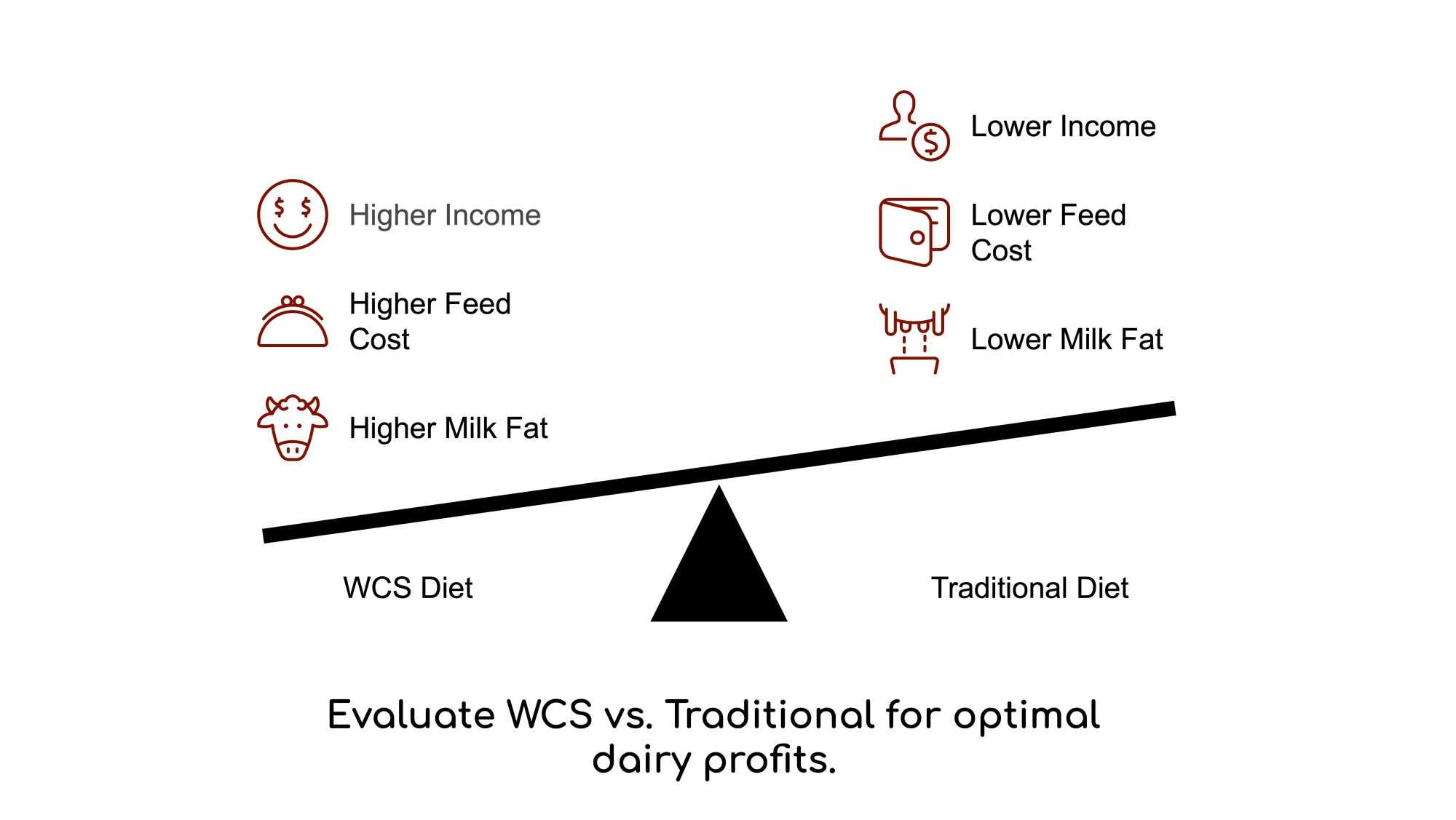
Boosting milk fat doesn’t require expensive supplements. Discover how cottonseed’s slow-release magic pumps up profits while nutritionist’s sleep.
EXECUTIVE SUMMARY: Penn State research proves whole cottonseed boosts milk fat by 0.2% and yield by 5% through its unique slow-release unsaturated fats, challenging costly bypass fats. This triple-threat ingredient delivers energy, protein, and fiber while avoiding rumen disruptions. Despite gossypol concerns, safe feeding protocols exist, and methane impacts are neutral. First-lactation cows require adjusted strategies. With component pricing driving profits, cottonseed offers a cost-effective solution-if farmers dare to rethink traditional fat supplementation.
KEY TAKEAWAYS:
- 0.2% milk fat boost = ~16 extra lbs daily for a 100-cow herd
- Slow-release fats avoid rumen issues plaguing conventional supplements
- Triple nutritional payoff: energy (20% fat), protein (23% CP), fiber (effective NDF)
- First-lactation cows need lower inclusion to prevent fat depression
- 6 lbs/day safe for mature cows-gossypol risks manageable with proper protocols

The dairy industry has been chasing component premiums for years, yet many producers still miss out on the most cost-effective fat booster hiding in plain sight. It’s time to challenge conventional thinking about fat supplementation.
The Component Game Has Changed – Are You Still Playing by Old Rules?
The economic landscape of dairy has transformed dramatically in recent years. Fluid milk consumption continues downward while the demand for butter and cheese reaches record levels. This shift has completely rewritten the profitability equation for dairy farmers worldwide. Your milk check is now driven by components, not volume, and producers who haven’t adapted their feeding strategies are leaving serious money on the table.
The math is simple: In today’s market, boosting milk fat by even a few tenths of a percentage point can transform a breakeven month into a profitable one. But while many nutritionists push expensive specialty bypass fats with hefty price tags, a more cost-effective solution might be hiding in that fuzzy little seed that’s been a staple in Southern dairy rations for decades.
A recent peer-reviewed study published in the Journal of Dairy Science (March 2025) by Penn State researchers confirmed what progressive producers have known for years: Whole cottonseed (WCS) at 15% of dietary dry matter increases milk fat percentage by 0.2 points and boosts daily milk fat yield by 5%. A 100-cow herd averaging 80 pounds of milk daily translates to an additional 16 pounds of butterfat daily – straight into your milk check.
But here’s where it gets really interesting – and where conventional feeding wisdom gets turned on.
Why Most “Experts” Get Fat Supplementation Dead Wrong
The standard nutritional playbook says high levels of unsaturated fatty acids in the rumen spell disaster for milk fat. Its why consultants push expensive “bypass” or “rumen-inert” fat products that supposedly slip through the rumen untouched.
Yet cottonseed breaks all these rules.
Despite containing primarily unsaturated fat (mostly linoleic acid), WCS consistently INCREASES milk fat rather than depressing it. How is this possible? The answer lies in nature’s time-release technology.
Unlike dumping free oils into the rumen (a surefire path to milk fat depression), cottonseed’s natural structure creates what researchers call a “slow-release mechanism.” The oil remains protected within the seed until the rumen microbes gradually break down the protective seed coat and fuzzy linters.
“Whole cottonseed slowly releases its unsaturated fat in the rumen, which is the first chamber in a cow’s four-chambered stomach where microbes break down fibrous foods,” explains Dr. Kevin Harvatine, professor of nutritional physiology at Penn State and senior author of the groundbreaking study. “Most other sources of unsaturated fatty acids that can be fed to high-producing dairy cows negatively affect the rumen. That slow release lowers the risk for biohydrogenation-induced milk fat depression, which can result in up to a 50% decrease in milk fat.”
This metered release prevents the rumen environment from being overwhelmed, avoiding those dreaded biohydrogenation pathways that create trans-10 C18:1 and other fat-depressing compounds. It’s like the difference between taking a timed-release medication versus downing the entire dose at once.
But the advantages don’t stop with fat. Why settle for a one-trick supplement when you can get three nutritional powerhouses in a single package?
The Triple-Threat Feed Your Nutritionist Should Be Talking About
Most supplements in your ration provide just one nutritional benefit – energy, protein, OR fiber. Cottonseed delivers all three:
Energy Dynamo: With approximately 20% fat content and an NEL of around 2.0 Mcal/kg, WCS rivals commercial bypass fats for energy density – but at a fraction of the cost when markets are favorable.
Protein Performer: At roughly 23% crude protein, cottonseed contributes meaningful amino acids to your cows’ diet. Unlike urea (which requires microbial conversion), cottonseed provides actual “true protein” your cows can utilize directly.
Fiber Foundation: Those fuzzy white linters aren’t just for show – they provide physically effective NDF that stimulates cud chewing and helps maintain healthy rumen function. This fiber contribution is like having built-in insurance against subacute ruminal acidosis.
| Feature | Whole Cottonseed | Commercial Bypass Fat | Tallow |
| Energy Content | ~2.0 Mcal/kg NEL | 5.0-6.0 Mcal/kg NEL | ~5.0 Mcal/kg NEL |
| Protein Contribution | ~23% Crude Protein | None | None |
| Fiber Contribution | Effective NDF from linters | None | None |
| Rumen Impact | Slow-release UFA, moderate risk | Minimal | Variable based on saturation |
| Handling Requirements | Requires flat storage, front-end loader | Easy flow, often bagged | Requires heating, special equipment |
| Cost Indicator* | $-$$ | $$$-$$$$ | $-$$ |
*Cost varies by region and market conditions; this is a relative comparison.
“Cottonseed offers good value because of its nutrient composition and can fill in nutrition gaps when other ingredients are cost-prohibitive or unavailable,” explains independent nutritionist Amber Monson, who regularly recommends WCS to her clients. “It’s high in digestible fiber, which is great for supplementing low-quality forage. It also offers a slow release of fat since the oil is trapped within the hull, making it a good source of energy that lasts.”
Have you ever calculated your spending on specialty ingredients to deliver these same nutrients separately? The math might shock you.
Finding Your Sweet Spot: When More Isn’t Always Better
Here’s where we need to challenge another industry practice: the “if some is good, more must be better” mentality that plagues dairy nutrition.
Research consistently shows that WCS responses follow a quadratic pattern – they increase to a point, then plateau or decline. The magic zone appears to be between 8% and 16% of dietary dry matter (roughly 5-6 pounds per cow daily for most Holsteins).
Why does performance eventually decline with excessive cottonseed? The answer lies in digestibility. The comprehensive Penn State study, which involved 16 multiparous cows over 21-day periods, found that WCS decreased apparent total-tract digestibility of organic matter and dry matter due to reduced NDF digestibility. As the unsaturated fatty acids begin to inhibit fiber-digesting bacteria, it’s a classic nutritional trade-off that demands precision feeding.
Think of it as fertilizer application in your fields – there’s an optimal rate that maximizes yield and ROI. Applying too little leaves potential on the table; using too much, and you waste money while potentially creating environmental problems.
The Young Cow Conundrum That No One’s Talking About
Ready for another industry blind spot? Not all cows respond to cottonseed the same way, and parity is a key factor your nutritionist might be missing.
Recent research published in the Journal of Dairy Science uncovered a fascinating parity interaction: While mature cows maintained or improved milk fat production with increasing WCS, first-lactation animals showed a decrease in milk fat percentage and yield at higher inclusion rates.
The science points to younger cows producing more trans-10 C18:1 (a potent milk fat inhibitor) when fed cottonseed. Their rumens haven’t developed the same fatty acid handling capabilities as their older herdmates.
Are you feeding all lactation groups the same TMR with cottonseed? If so, you might be shortchanging your first-lactation animals. Consider separate feeding strategies or more moderate cottonseed inclusion if your heifers and mature cows share the same ration.
Managing the Gossypol Factor: Don’t Let Fear Limit Your Options
Let’s address the elephant in the room: gossypol. Due to toxicity concerns, this naturally occurring compound in cottonseed has kept some producers from utilizing this ingredient.
The reality? For mature dairy cows with fully developed rumens, gossypol risks are easily managed with responsible feeding rates. Rumen microbes effectively bind gossypol to dietary proteins, dramatically reducing absorption. The Penn State study confirmed that blood gossypol levels remained well below toxic thresholds when feeding 15% WCS.
Practical guidelines for safe feeding:
- Mature cows: Limit to approximately 6 pounds per cow daily
- Growing heifers: Adjust based on body weight (see table below)
- Exercise additional caution during heat stress
- Consider the total gossypol load when feeding other cotton products
| Animal | Body Weight | Maximum WCS (lbs/day) |
| Mature Cow | 1500 lbs | 6.0-6.6 |
| Heifer | 500 lbs | 2.2 |
| Heifer | 700 lbs | 3.1 |
| Heifer | 900 lbs | 4.0 |
| Heifer | 1200 lbs | 5.7 |
Maximum WCS intake is calculated based on 1 gram of gossypol per 100 lbs of body weight for heifers, and it assumes typical free gossypol content in WCS.
Are you letting unfounded concerns about gossypol keep you from utilizing this cost-effective ingredient? With proper management, thousands of dairy producers successfully feed cottonseed without issues.
What About Seed Passage and Waste?
Another common concern is whether cows efficiently digest or simply pass the seeds through. The Penn State researchers examined this question by analyzing the cows’ manure. The verdict? Less than 3% of consumed seeds were recovered intact in the feces, indicating excellent utilization by mature cows.
The Methane Question: Environmental Claims vs. Reality
With increasing regulatory and consumer focus on agriculture’s carbon footprint, you’ve likely heard claims about certain feed additives reducing enteric methane emissions.
Here’s the truth: Despite the theoretical potential for unsaturated fatty acids to influence methane production, research doesn’t support WCS as a methane reducer. The Penn State study specifically measured methane emissions and found no significant difference between cows fed WCS and the control group.
This highlights a broader industry issue: too many feeding decisions are being made based on theoretical benefits rather than proven outcomes. Before buying into environmental claims about any feed ingredient, including cottonseed, demand evidence.
Implementation Blueprint: Putting Cottonseed to Work on Your Dairy
Ready to tap into cottonseed’s milk fat-boosting potential? Here’s your actionable roadmap:
- Assess your current production situation
- Review milk component levels, particularly fat percentage
- Identify if you’re leaving money on the table with suboptimal components
- Evaluate your current fat supplementation strategy and costs
- Consult with your nutritionist
- Discuss cottonseed’s potential in your specific ration
- Calculate optimal inclusion levels based on your current diet
- Determine if separate strategies are needed for different lactation groups
- Source high-quality products
- Identify reliable suppliers with consistently good products
- Consider testing for gossypol and/or aflatoxin if concerned
- Evaluate handling requirements and storage options
- Implement gradually
- Introduce cottonseed slowly over 10-14 days to allow rumen adaptation
- Start at moderate levels (8-10% of diet DM) and increase incrementally
- Ensure thorough mixing in TMR to prevent sorting
- Monitor and adjust
- Track milk components weekly, looking for the expected fat increase
- Observe feed intake, manure consistency, and rumination activity
- Be willing to fine-tune inclusion levels based on production response
Looking to the future: The cottonseed story is still evolving. Dr. Susan Jaconis, director of agricultural research for Cotton Incorporated, notes: “We’re excited to continue to invest in research to learn more about the impacts of incorporating different levels of whole cottonseed in the diets of high-producing dairy cows for nutrient digestibility and milk production.”
The Bottom Line: Are You Leaving Milk Fat Money on the Table?
Whole cottonseed isn’t a silver bullet, but the peer-reviewed research is clear: at inclusion levels between 8-16% of diet dry matter, it consistently increases milk fat percentage and yield in most herds. This response translates directly into improved milk revenue in today’s component-focused market.
“Milk fat in the U.S. had traditionally averaged approximately 3.75%, and now, after 10 years of selectively breeding dairy cattle, the average is 4.2%,” notes Dr. Harvatine. “So, that brings us to the point of trying to do two things – increase milk fat by feeding additional fat, but then also keeping up with the cows’ demand for making that additional fat. That’s what led us to experiment with different feed supplements, and one of them is whole cottonseed.”
Too many dairy producers are spending premium dollars on specialty fat supplements while overlooking this multi-functional ingredient that delivers energy, protein, and effective fiber in a single package. Others avoid cottonseed entirely due to outdated concerns about gossypol, which can be easily managed with responsible feeding practices.
Ask yourself: Is fear, tradition, or lack of information keeping you from exploring this proven option for boosting your milk fat check?
It’s time to challenge your nutritionist to evaluate whether cottonseed belongs in your feeding program. Demand a component-by-component cost breakdown comparing your current fat supplementation strategy against a properly formulated cottonseed option.
In an industry where margins are often measured in pennies per hundredweight, can you ignore a potential 5% increase in milk fat yield? The answer might just be hiding in a fuzzy little seed sitting in plain sight all along.
Learn more:
- Breaking the Rules: How Strategic Fatty Acid Feeding is Revolutionizing Fresh Cow Performance
Challenges traditional fat supplementation dogma and explores targeted fatty acid use to boost milk yield, reduce metabolic disorders, and improve transition cow health. - Boosting Milk Fat and Reducing Culling Rates with Rumen-Protected Methionine for Holstein Cows
Examines how methionine supplementation during the peripartum period enhances milk fat synthesis and herd retention, offering a complementary approach to dietary component optimization. - Boosting Milk Yield: How Adjusting Palmitic and Oleic Acid Ratios Enhances Dairy Cow Performance
Details the science behind fatty acid balancing to improve milk fat composition and production efficiency, aligning with cottonseed’s role as a strategic fat source.
 The Sunday Read Dairy Professionals Don’t Skip.
 The Sunday Read Dairy Professionals Don’t Skip.
Every week, thousands of producers, breeders, and industry insiders open Bullvine Weekly for genetics insights, market shifts, and profit strategies they won’t find anywhere else. One email. Five minutes. Smarter decisions all week.