







Bird flu in milk? Science confirms pasteurization kills H5N1—but raw dairy risks remain what every producer MUST know now.
EXECUTIVE SUMMARY: The H5N1 avian flu outbreak in U.S. dairy herds has raised urgent questions about milk safety. New FDA/USDA research confirms pasteurization eliminates the virus while raw milk products pose risks. Cornell University studies reveal H5N1 survives in aged raw milk cheese, challenging traditional safety assumptions. Federal testing programs and biosecurity protocols—including milk segregation, PPE use, and heat-treated calf feed—enable safe operations. Producers in affected states must prioritize bulk tank testing and adhere to updated guidelines to protect herds and maintain consumer confidence in dairy products.
KEY TAKEAWAYS:
- Pasteurization neutralizes H5N1—HTST methods to eliminate 99.99% of virus particles, ensuring commercial milk safety.
- Raw milk risks confirmed—H5N1 survives 60-day cheese aging, debunking “natural immunity” claims.
- Biosecurity essentials—Milk diversion, PPE, and water management prevent herd transmission.
- Test proactively—Weekly bulk tank monitoring detects outbreaks early in high-risk regions.
- Global lessons—U.S. protocols exceed EU raw milk standards during zoonotic crises.

As H5N1 continues its unprecedented spread through America’s dairy herds, definitive research confirms what separates safe milk from potential biohazards. With the USDA’s National Milk Testing Strategy fully operational and FDA studies conclusively validating pasteurization’s effectiveness, dairy farmers have clear guidance amidst this ongoing crisis. Here’s what every producer needs to know about the virus that’s reshaping milk handling protocols nationwide.
The Current State of the Outbreak

Since being first detected in Texas dairy cattle in March 2024, Highly Pathogenic Avian Influenza (HPAI) H5N1 has spread to at least 12 U.S. dairy sectors. What initially presented as a “mystery illness” affecting primarily older dairy cows in Texas, Kansas, and New Mexico has been confirmed across multiple regions.
The disease has triggered a comprehensive federal response, with both FDA and USDA implementing monitoring and control strategies to contain the spread while ensuring milk safety.
Key Outbreak Timeline:
- March 2024: First detection of H5N1 in dairy cattle in Texas and Kansas
- April 2024: Spread confirmed to multiple states, including New Mexico, Idaho, and Michigan
- July 2024: Peer-reviewed studies confirm pasteurization effectiveness against H5N1
- March 2025: Cornell University research reveals H5N1 survives in aged raw milk cheese
Milestone Research Confirms: Pasteurization Neutralizes H5N1

The FDA and USDA have conclusively demonstrated that standard pasteurization processes eliminate the H5N1 virus from milk, even when starting with extremely high viral loads. A first-of-its-kind study using commercial milk processing equipment confirmed that High-Temperature Short-Time (HTST) pasteurization—heating milk to 161°F (72°C) for 15 seconds—effectively inactivates the HPAI H5N1 virus in milk.
Dr. Nathan Anderson, Director of FDA’s Division of Food Processing Science and Technology, explained: “While testing finished product post-pasteurization is one strategy to detect potential problems in finished products, validating the effectiveness of the pasteurization parameters critically demonstrates that commercial milk processing is capable of controlling the HPAI virus.”
This groundbreaking research established that HTST pasteurization eliminates at least 12 log10 EID50 per milliliter—approximately one trillion virus particles per milliliter—providing an enormous margin of safety. A peer-reviewed study published in January 2025 confirmed that complete viral inactivation occurs at standard pasteurization temperatures.
Comprehensive Testing Validates Safety:
The FDA’s extensive retail sampling program tested 297 pasteurized dairy products, including milk, cheese, butter, and ice cream, finding no viable H5N1 virus in any samples. This comprehensive sampling included products from regions with active H5N1 outbreaks in dairy cattle, providing real-world confirmation of pasteurization effectiveness.
In August 2024, FDA testing found all 167 store-shelf dairy product samples negative for viable H5N1 virus, though 17% contained inactive viral fragments—confirming pasteurization killed the virus.
Raw Milk Risk Reality: Cornell Research Bombshell
While pasteurized milk has been repeatedly confirmed safe, research from Cornell University reveals concerning findings about raw milk products. Studies investigated whether the traditional 60-day aging process for raw milk cheese—considered a safety measure—would eliminate the H5N1 virus.
The results were definitive: H5N1 survived in non-heat-treated raw milk cheese through and beyond the 60-day aging process. This finding challenges the long-held belief that aging alone provides adequate protection against pathogens in raw milk cheese.
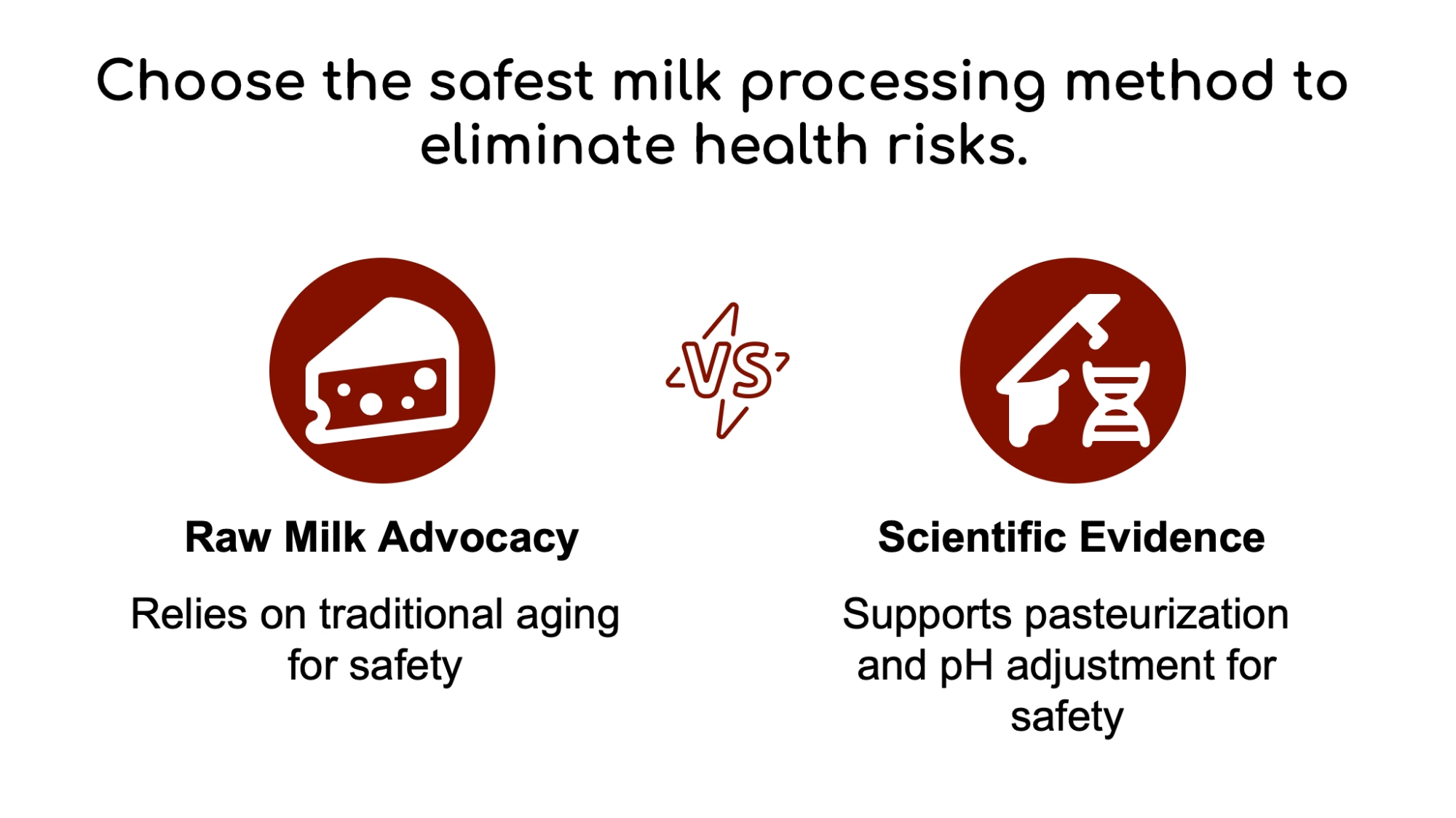
Raw Milk Advocacy vs. Scientific Evidence
Some raw milk advocates have challenged federal warnings as “fearmongering,” arguing that traditional processes and natural protective factors in raw milk are sufficient. However, the comprehensive research from Cornell University directly rebuts these claims by demonstrating H5N1 survival in raw milk products despite traditional aging processes.
The FDA maintains its longstanding position that “unpasteurized, raw milk can harbor dangerous microorganisms that can pose serious health risks to consumers,” now with specific evidence regarding H5N1.
Notably, alternative processes that can inactivate H5N1 in raw milk have been identified through research:
- Heating raw milk to 130°F (54°C) for at least 15 minutes
- Heating raw milk to 140°F (60°C) for at least 10 seconds
- Adjusting pH to 5.0 (highly acidic), which leads to rapid inactivation of H5N1
Human Health Impacts and Transmission Risk

While human cases of H5N1 related to dairy exposure remain rare, they have been confirmed. Texas health officials confirmed a human case in a person who had direct exposure to dairy cattle presumed to be infected with H5N1, with eye inflammation as the only symptom.
Public health officials emphasize that “people with close contact with affected animals suspected of having avian influenza A(H5N1) have a higher risk of infection”. The virus concentrates in the udder of infected cows and can be present in milk at high levels, creating risk for those handling raw milk from infected animals.
Calf Feeding Safety Guidelines:
For calf-feeding operations, experts recommend heat-treating milk from potentially infected herds before feeding it to calves. Standard pasteurization protocols (145°F for 30 minutes or 161°F for 15 seconds) effectively eliminate the virus in regular calf milk.
Colostrum requires different approaches, as standard pasteurization would coagulate the proteins. Heat treatment at 140°F (60°C) for 60 minutes is recommended while maintaining agitation to prevent protein damage.
The National Milk Testing Strategy: Key Farmer Protocols

The USDA’s National Milk Testing Strategy established a systematic approach to detecting and responding to H5N1 in dairy herds. The program includes:
- Collection of raw milk samples at dairy processing plants before pasteurization
- Double-masked testing through a third-party central location to protect farmer identities
- Structured sampling over six weeks, designed to minimize extra labor by integrating with routine regulatory sampling
Vermont has implemented an exemplary program in which 90% of dairy farms selling raw milk for cheese production voluntarily test their milk weekly despite not being required by federal guidelines. This proactive approach demonstrates how producers can take the initiative to protect their businesses and public health.
Practical Biosecurity Protocols for Dairy Operations

The outbreak necessitates heightened biosecurity measures for all dairy operations:
Worker Protection: Use appropriate personal protective equipment (PPE) when working with potentially infected animals, particularly during milking.
Milk Segregation: Milk from clinically ill cows should not enter the bulk tank and should be diverted or destroyed rather than entering the food supply.
Calf Feeding Safety: Heat-treat milk before feeding to calves from herds with known or suspected infections using validated temperature-time combinations.
Water Management: Clean and disinfect all livestock watering devices and isolate drinking water that might be contaminated by waterfowl, as they may be vectors for the virus.
Testing and Monitoring: Implement regular testing of bulk tank milk, particularly in affected regions, and report any suspicious symptoms to state veterinary authorities.
Isolation Protocols: Segregate clinically ill cows from the rest of the milking herd to prevent further spread within the operation.
Global Context and Comparative Regulations
While this outbreak has primarily affected U.S. dairy operations, its implications extend globally, particularly regarding regulatory approaches to raw milk products. The U.S. FDA prohibits raw milk in interstate commerce but allows states to regulate intrastate sales, resulting in 30 states permitting some form of raw milk sales.
In contrast, European regulations, particularly for the protected designation of origin cheeses like Brie and Camembert, allow raw milk to be used under specific conditions even after antibiotic treatment of cows. These regulatory differences highlight where American dairy producers face stricter standards during zoonotic outbreaks than some European counterparts.
Bottom Line: Risk Assessment and Business Continuity
The comprehensive scientific evidence confirms that:
- Pasteurized milk and dairy products remain entirely safe for consumption, with multiple studies confirming pasteurization’s effectiveness against H5N1.
- Raw milk from infected herds poses potential risks, with H5N1 surviving even through traditional aging processes in cheese production.
- Dairy operations can continue functioning safely by implementing appropriate biosecurity measures and following USDA/FDA guidance.
Agricultural authorities have expressed confidence that “unlike affected poultry, there will be no need to depopulate dairy herds. Cattle are expected to recover fully.” This assessment suggests the dairy industry can navigate this challenge with proper management while maintaining production.
The National Milk Producers Federation works closely with USDA and other stakeholders, emphasizing “the importance of practical, science-based solutions that enhance disease monitoring and prevention while ensuring business continuity for dairy farmers.”
HPAI Herd Risk Assessment: Is Your Operation Vulnerable?
Dairy producers should evaluate their operation’s vulnerability to H5N1 introduction and spread:
Geographic Exposure: Are you located in or near states with confirmed cases?
Water Source Risk: Does your operation have ponds or features that attract wild waterfowl?
Biosecurity Infrastructure: Do you have foot baths, dedicated clothing, and visitor restrictions?
Herd Health Monitoring: What is your protocol for identifying and segregating sick animals?
Testing Frequency: How often are you sampling bulk tank milk for potential pathogens?
Producer Challenge: Take Action Today
Test your bulk tank milk this week and share your proactive approach with fellow producers through industry forums. The science is precise: pasteurization works, but prevention remains the best protection.
By understanding the definitive research on H5N1 in dairy and implementing appropriate biosecurity measures, producers can protect their herds, their workers, and the continued safety of the dairy supply chain. Participating in voluntary testing programs safeguards your operation and strengthens the entire industry’s resilience against this unprecedented challenge.
Learn more:
- Bird Flu Bombshell: Dairy Cows Losing a Full Ton of Milk with No Recovery
Explore the devastating financial and production impacts of H5N1 on dairy herds. Cornell research reveals invisible infections and staggering milk losses. - Wisconsin Study Confirms Pasteurization Effectively Kills Avian Flu in Milk
Discover how simulated pasteurization processes achieved a 99.99% reduction in H5N1, reaffirming the critical role of standard protocols in ensuring milk safety. - Impact of USDA Mandated Bird Flu Testing: Insights for Dairy Farmers
Learn how the USDA’s nationwide milk testing mandate reshapes biosecurity practices and protects the U.S. dairy supply from H5N1 outbreaks.
 Join the Revolution!
 Join the Revolution!
Join over 30,000 successful dairy professionals who rely on Bullvine Daily for their competitive edge. Delivered directly to your inbox each week, our exclusive industry insights help you make smarter decisions while saving precious hours every week. Never miss critical updates on milk production trends, breakthrough technologies, and profit-boosting strategies that top producers are already implementing. Subscribe now to transform your dairy operation’s efficiency and profitability—your future success is just one click away.





