



Archive for next-generation dairy leaders

Jodie Nutsford Claims 2025 Holstein UK President’s Medal – Vet, Breeder, and Mentor Wins Industry’s Most Prestigious Young Breeder Honor

From clipping calves at Riverdane to walking parlours as a vet, Jodie Nutsford’s Medal win shows what “next generation” leadership really looks like.
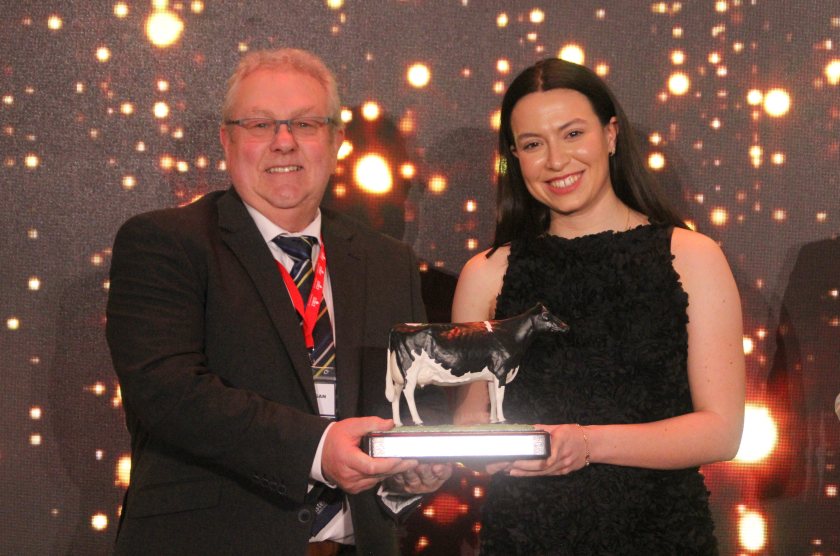
The Holstein UK community has its 2025 President’s Medal winner, and she’s bringing a powerful combination of veterinary expertise, showing success, and grassroots mentorship to one of the breed’s highest honors.

Jodie Nutsford, 25, from Western Holstein Young Breeders, claimed the coveted award at the Semex International Dairy Conference during the Burns Supper in Glasgow on January 12th. She beat out two other exceptional finalists – Samuel Blease, 27, from Lancashire HYB, and Lauren Gilbert, 27, from Northern Ireland HYB – to win the engraved medal, the Sue Cope Memorial Trophy, and an all-expenses-paid trip to the Royal Agricultural Winter Fair in Toronto courtesy of Semex UK.

Twenty Years in the Making

What makes Nutsford’s win particularly compelling is the depth of her commitment. She’s not a newcomer riding a wave of recent success – she’s been grinding in HYB since she was four years old. Growing up on her family’s Riverdane Holsteins operation in Cheshire, she’s competed at the All Breeds All Britain Calf Show for years, attended multiple Weekend Rallies, and this past year represented Holstein UK at the Young Breeders School in Belgium.

But here’s where her story gets interesting: she took that lifetime of hands-on breeding knowledge and channeled it into veterinary medicine. In 2024, she graduated as a qualified vet and joined Nantwich Farm Vets, where she now serves a large portfolio of dairy clients across Cheshire. That’s a rare combination – someone who can talk genetics and show ring strategy with breeders in the morning, then walk into the parlor and discuss mastitis protocols and reproductive efficiency in the afternoon.

What the Judges Saw

Holstein UK President Mark Logan, who judged alongside Janette Mathie (Head of CIS Field Services) and Rodger Mather (Semex UK representative), put it this way: “Dare I say that as with judging an outstanding class of dairy cows, we were looking for that overall perfect balance, and in Jodie I think we have found that.

Logan specifically highlighted Nutsford’s “knowledge of the Holstein breed,” her commitment to the industry through her veterinary work, and her support for younger HYB and YFC members as factors that made her “a very worthy winner.

The application process wasn’t a cakewalk. Each club nominated one member, who then had to submit an essay titled “Data-driven decision-making on the farm leads to greater productivity, better animal welfare, improved sustainability, and greater profitability.” The judging panel interviewed the shortlisted candidates before selecting the final three to attend the conference.

The Mentorship Factor

What really sets Nutsford apart – and what likely pushed her over the top in a field of strong candidates – is her grassroots impact on Western HYB. According to Holstein UK, she’s “generously mentored countless HYB members, helping them develop the essential skills of showmanship, stock judging, and clipping. That hands-on support has opened doors for young enthusiasts to gain confidence and experience in the show ring.

That’s the kind of contribution that extends far beyond personal achievement. She’s not just winning banners – she’s building the next generation of breeders who will compete and contribute for decades.

Still Hands-On at Home

Despite her busy veterinary schedule, Nutsford remains closely involved with the family operation at Riverdane Holsteins. She helps with the daily management of both the dairy herd and the show team. That’s the reality of many young breeders today – juggling off-farm careers while staying connected to the home operation and the passion that started it all.

Principal Sponsor Support

National HYB Coordinator Lizzie Yates emphasized the importance of Semex UK’s continued support: “It has been a fantastic opportunity for the three finalists to attend the Semex International Dairy Conference and learn from a variety of respected industry voices. It is also an excellent platform to present this prestigious award, and I would like to express my gratitude to Semex UK for being the principal sponsor of HYB and their continued support of the President’s Medal Award.

The Semex International Dairy Conference, held at Glasgow’s Radisson Blu Hotel, has become the traditional venue for announcing the President’s Medal winner, giving the award maximum visibility among industry leaders and decision-makers.

Looking Ahead

With her veterinary career developing alongside continued involvement in breeding and youth work, Nutsford is positioned to remain a familiar and influential figure within the Holstein community for years to come. The Toronto trip later this year will add an international perspective to her already extensive network and experience.

The President’s Medal has a strong track record of identifying future industry leaders. Previous winners include Jamie Pottow (2024) from South & Wiltshire HYB and Andrew Neilson (2019) from Scotland HYB. The award recognizes individuals who will shape the breed and the industry for the next generation – and based on what Nutsford has already accomplished at 25, she’s well on her way to fulfilling that promise.

Congratulations to all three finalists – reaching that stage is an outstanding achievement in itself. But this year, the medal goes to the Western Club’s farm vet, with 20 years of commitment, a growing client base, and a passion for bringing the next generation along. 

Key Takeaways

  • Jodie Nutsford, 25, wins the 2025 Holstein UK President’s Medal—farm vet, lifelong HYB member, and grassroots mentor in one package.
  • Her path from Riverdane Holsteins to Nantwich Farm Vets shows what “next generation” leadership looks like when it’s built, not borrowed.
  • Western HYB and Riverdane have created a youth model worth copying: open gates, shared calves, real mentorship.
  • The judges didn’t just reward ribbons—they rewarded balance: breed knowledge, vet expertise, and hands-on support for younger members.
  • The challenge for every club and region: invest in people who connect barns, data, and community—because that’s where the future gets built.

Join the Revolution!

Join over 30,000 successful dairy professionals who rely on Bullvine Weekly for their competitive edge. Delivered directly to your inbox each week, our exclusive industry insights help you make smarter decisions while saving precious hours every week. Never miss critical updates on milk production trends, breakthrough technologies, and profit-boosting strategies that top producers are already implementing. Subscribe now to transform your dairy operation’s efficiency and profitability—your future success is just one click away.

NewsSubscribe
First
Last
Consent

How Next-Gen Dairy Leaders are Shaping The Future

Uncover the driving forces behind Wisconsin’s next-generation dairy leaders. Explore the passion and ingenuity that fuel their contributions to an industry indispensable to the state’s economic vitality.

Summary: Next-generation dairy leaders are emerging in the agriculture sector, combining modern technologies and traditional expertise. These young professionals prioritize sustainability, good communication, and flexibility, and must possess traits such as adaptability, collaboration, and commitment to navigate the changing landscape. They use data analytics to direct decisions, simplify processes, increase output, and ensure animal welfare. They respond to shifting customer tastes by creating new dairy products like lactose-free, high-protein, and probiotic-infused varieties. They understand the importance of supporting policies, encouraging sustainable incentives, fair trade practices, and negotiating market obstacles to ensure dairy farms thrive. The dairy sector faces challenges and opportunities, including labor shortages and workforce development, and must support policies that attract fresh talent and welcome creative training initiatives. They must also be aware of market trends, diversify product lines, and build close customer interactions using open marketing strategies. The future of the dairy sector depends on their flexibility, teamwork, and dedication.

  • The author’s personal connection to dairy farming traces back to their great-grandparents’ dairy farm from the late 1800s.
  • Currently working with Dairy Farmers of Wisconsin, the author is involved in organizing June Dairy Month activities to align with industry goals.
  • June Dairy Month strengthens public trust by connecting consumers to local farmers and advancing transparency in production practices.
  • Agricultural education initiated at the middle school level promotes early industry engagement and awareness of agriculture’s economic significance.
  • The author’s experiences and internships in agribusiness have been enriched by interactions with industry experts, fueling their commitment to a career supporting dairy farmers and consumers.
  • Encouraging young leadership and fostering educational programs are crucial for addressing future challenges and sustaining the dairy industry’s economic contribution to Wisconsin.
next-generation dairy leaders, agriculture sector, modern technologies, traditional expertise, sustainability, good communication, flexibility, adaptability, collaboration, commitment, data analytics, decision-making, process simplification, increased output, animal welfare, shifting customer tastes, lactose-free, high-protein, probiotic-infused, new dairy products, supporting policies, sustainable incentives, fair trade practices, market obstacles, labor shortages, workforce development, fresh talent, creative training initiatives, market trends, diversify product lines, close customer interactions, open marketing strategies, future of the dairy sector

Next-generation dairy leaders are starting to show up in the ever-changing field of agriculture, prepared to propel the sector toward sustainability and creativity. These people guarantee the dairy business grows by combining modern technologies and innovative techniques with traditional agricultural expertise. Taking advantage of possibilities and overcoming obstacles, their impact is important.

But who are this new generation dairy leaders? Young, aspirational professionals from family farms, agribusiness industries, and agricultural colleges come from Emphasizing sustainability, good communication, and flexibility, they incorporate new technology, support laws, and inform the public on the everyday and financial value of dairy.

Come explore with us the unique traits of these leaders, the projects they spearhead, and the possibilities and problems these leaders face. Understanding their path will help you to value their important part in the direction of the dairy sector. Join us to see what motivates the next generation of dairy executives to keep pushing innovation.

Adaptability, Collaboration, and Commitment: Essential Traits for Next-Gen Dairy Leaders

Next-generation dairy executives have to possess certain traits to negotiate the changing terrain of their sector. Crucially is adaptation and adopting new technology. As Xavier Drake from Lely North America points out, adaptability and lifelong learning are very crucial. This implies not just appreciating technical developments but also actively participating in ideas that increase profitability and efficiency.

Not less crucial are teamwork and good communication abilities. Modern dairy executives have to coordinate well amongst many teams and companies. Lely North America’s Chad Huyser stresses taste, critical thinking, and clear communication as means of overcoming problems. Operations and performance may be much improved by articulating visions, working on plans, and including other points of view.

At last, the dairy leaders of today have to be really dedicated to sustainability and animal welfare. Leaders have to make sure operations are profitable and appropriate for environmentally concerned customers as more people worldwide pay attention on moral behavior. This entails maintaining high standards of animal care and using environmentally friendly technology to build industry sustainability and customer confidence.

Next-Gen Leadership in the Dairy Industry: Sustainability, Innovation, and Advocacy

With their dedication to sustainability, creativity, and advocacy, next-generation leaders are driving the pace in the ever-changing dairy industry.

These executives use data analytics to direct their decisions. From herd health to milk output, they utilize data to simplify processes, increase output, and guarantee animal welfare—all of which eventually helps to improve profitability.

Next-generation leaders responding to shifting customer tastes are creating new dairy products like lactose-free, high-protein, and probiotic-infused varieties. Keeping aware of consumer needs helps them to maintain the dairy sector competitive and relevant with superior products.

Understanding the importance of supporting policies, these leaders encourage sustainable incentives and fair trade practices. Their initiatives seek to negotiate market obstacles and tight rules so that dairy farms may flourish in a favorable environment.

The Multidimensional Landscape: Challenges and Opportunities for Next-Generation Dairy Leaders

Next-generation leaders in the dairy sector have both difficult problems and possibilities as the sector changes. Key problems exacerbated by an aging population include labor shortages and workforce development. Young leaders have to support policies that draw fresh talent and welcome creative training initiatives. The direction of dairy depends on our capacity for creativity and adaptation.

Another great difficulty is shifting market dynamics and competition. Volatile global dairy markets and changing demand threaten traditional strongholds. Essential are a strong awareness of market trends and strategic agility. Next-generation leaders have to investigate fresh export markets, diversify product lines, and build close customer interactions using open marketing strategies.

  • New export markets: Identifying and penetrating untapped markets can mitigate local pressures.
  • Diversified product lines: A broader range of dairy products can cater to changing consumer preferences.
  • Transparent marketing: Building trust through transparency can enhance consumer loyalty.

Using technology to increase profitability and efficiency presents both possibilities and problems. For dairy enterprises, precision farming equipment and data analytics have transforming power. Accepting these technology guarantees sustainability, improves animal care, and best uses resources.

Those executives from next generations who use these technologies will simplify processes and open the path for a strong and creative sector.

 The Bottom Line

The shape of the dairy sector going forward depends much on next-generation dairy leaders. Their flexibility, teamwork, and dedication help them to carry out creative ideas including sustainable ones. These leaders are not just running farms but also include cutting-edge technology, promoting inclusive education, and linking customers with agriculture.

Leaders in the dairy business should welcome these developments as they transform their sector. By means of education, internships, and community involvement, they guarantee the growth and fortitude of dairy farming. Let us preserve quality and environmental preservation while driving innovation and sustainability to fulfill world needs. Your diligence now will determine the achievements of future.

Learn More:

Join the Revolution!

Bullvine Daily is your essential e-zine for staying ahead in the dairy industry. With over 30,000 subscribers, we bring you the week’s top news, helping you manage tasks efficiently. Stay informed about milk production, tech adoption, and more, so you can concentrate on your dairy operations. 

NewsSubscribe
First
Last
Consent
Send this to a friend




