



Archive for improving feed efficiency

Data vs. Gut: What’s Really Moving the Needle in Modern Dairy

AI feeding saves $31/cow while your neighbors debate whether it works—Cornell proves 95% accuracy in detecting sick cows before you see symptoms.

EXECUTIVE SUMMARY: Listen, I’ve been watching this AI thing unfold for months, and here’s what’s actually happening… Progressive operations are generating $210 per cow annually by allowing technology to handle monitoring, while they focus on strategic decisions. We’re talking real money here—Wisconsin producers hitting 30% pregnancy rates, California farms cutting mastitis by 40% in year one. The University of Wisconsin documented $31 per cow from smarter feeding alone, and Cornell has proven 95% accuracy in catching metabolic problems before even the best cowman would notice. In New Zealand, 82% of dairies are already using this technology, while we’re at around 30% adoption. Look, I get the hesitation—40% of projects fail because farms skip the training or try to do too much too fast. But are the farms getting it right? They’re not just surviving tight margins; they’re thriving in them.

KEY TAKEAWAYS

  • Start with feeding optimization — AI-driven precision feeding delivers $31 annual savings per cow through reduced waste and better ration management. Pilot test on 10-20% of your herd this fall when feed costs matter most.
  • Early disease detection pays off big — Cornell research shows 95% accuracy in spotting metabolic disorders days before clinical symptoms appear. That’s $65 saved for every day you catch mastitis early; plus, the milk you don’t lose.
  • Heat detection accuracy jumps to 90% — University of Guelph data confirms 30% better pregnancy rates with AI monitoring versus traditional methods. With breeding costs what they are, that ROI calculation writes itself.
  • Scale matters for success — Operations with 300-1000 cows hit 80-90% implementation success rates. If you’re in that sweet spot, the infrastructure investment makes sense with the current 7.2% loan rates.
  • Budget beyond equipment costs — Plan 20-30% extra for training and integration support. The farms that skimp on staff education are the ones hitting those 40% failure rates everyone talks about.
The thing about dairy farming is, we’ve always relied on good instincts—your grandfather’s watchful eye, that feeling you get walking through the barn at dawn. However, what I’m witnessing across leading operations from Wisconsin to California is that the sharpest producers are blending those time-tested instincts with some compelling data. And, man, the results are showing up where they count most.

Take feeding, for instance. Producers are banking around $31 per cow annually just by letting AI fine-tune their feeding programs, according to recent work from the University of Wisconsin’s Dairy Brain Initiative. That’s not marketing fluff—that’s actual cash reclaimed from smarter rations and cutting waste where it hurts most.

Picture this: milk has been sitting steady near $18.85 per hundredweight this July, as reported by the USDA Agricultural Marketing Service, while corn futures hover around $4.30 per bushel on the CME Group. Every penny you can squeeze out of feed efficiency… well, it adds up faster than you’d think.

The Market’s Speaking Volumes

Here’s what catches my attention: the precision livestock farming market has officially crossed $5.59 billion worldwide, according to the “Precision Livestock Farming Market Report (2025)” by Market Research Future. That kind of momentum doesn’t happen because farmers love shiny tech toys—it happens because there’s real value being captured.

At last year’s Canadian XPO, Jack Rodenburg from the University of Guelph put it perfectly: “You can’t watch every cow all the time when you’ve got hundreds in the barn. AI systems are like having that one employee who never takes a coffee break, spotting those subtle changes we sometimes miss.”

Cornell’s study “Detection of Subclinical Diseases Using AI,” published in the Journal of Dairy Science (Vol. 108, Issue 2), backs this up—AI models are hitting 95% accuracy in detecting metabolic disorders before we’d ever spot them during morning rounds. That’s the kind of edge you can’t ignore.

The Mastitis Math Nobody Wants to Do

We’ve all been there—felt the sting of a mastitis case that slipped past us. Michigan State University Extension research drives the point home: every day you delay treatment; you pay an average of $65 extra. Early detection through AI sensors literally reclaims those expensive days.
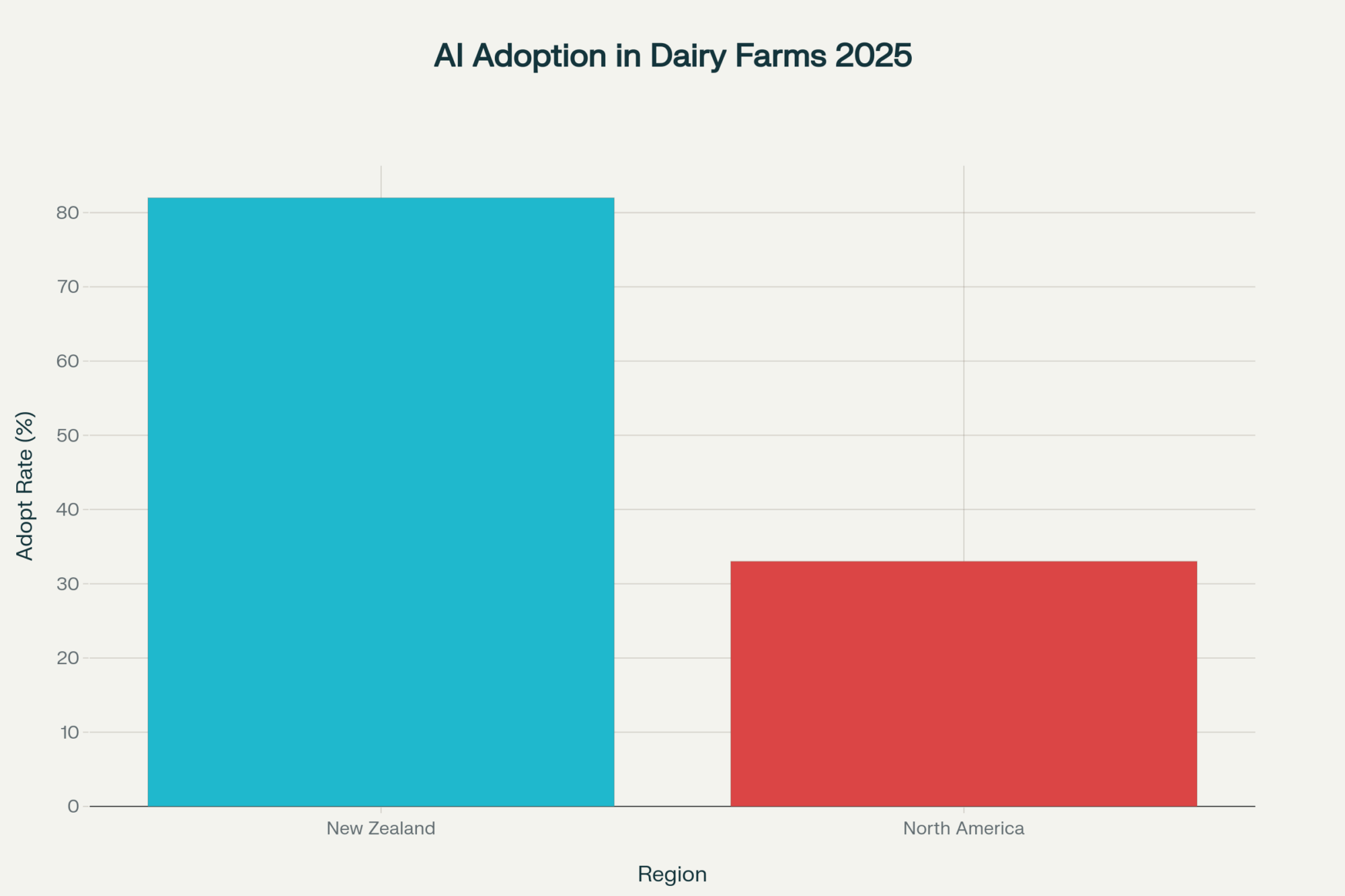
AI adoption rates across regions showing 82% adoption in New Zealand versus 33% in North America (2025)

Here’s something that keeps coming up in conversations… there’s this noticeable split in adoption rates globally. New Zealand’s way out in front, with 82% of dairies embracing AI technology, according to DairyNZ’s 2025 industry data. In contrast, here in North America, depending on your region and operation size, we’re looking at somewhere around 25-35%.

That gap represents an opportunity—and a competitive advantage being captured while others debate implementation costs.

The composite picture is compelling: operations leveraging AI report profit boosts averaging $210 per cow annually, according to IFCN’s 2025 economic analysis report. This isn’t the $31 feeding savings stacked on top of other benefits—it’s the total lift from better feeding, health monitoring, and reproductive management working together.

With operating loans currently averaging around 7.2%, as reported by the Federal Reserve Bank of St. Louis, faster payback periods are more important than they were in the past.

Feed Efficiency That Actually Moves Numbers
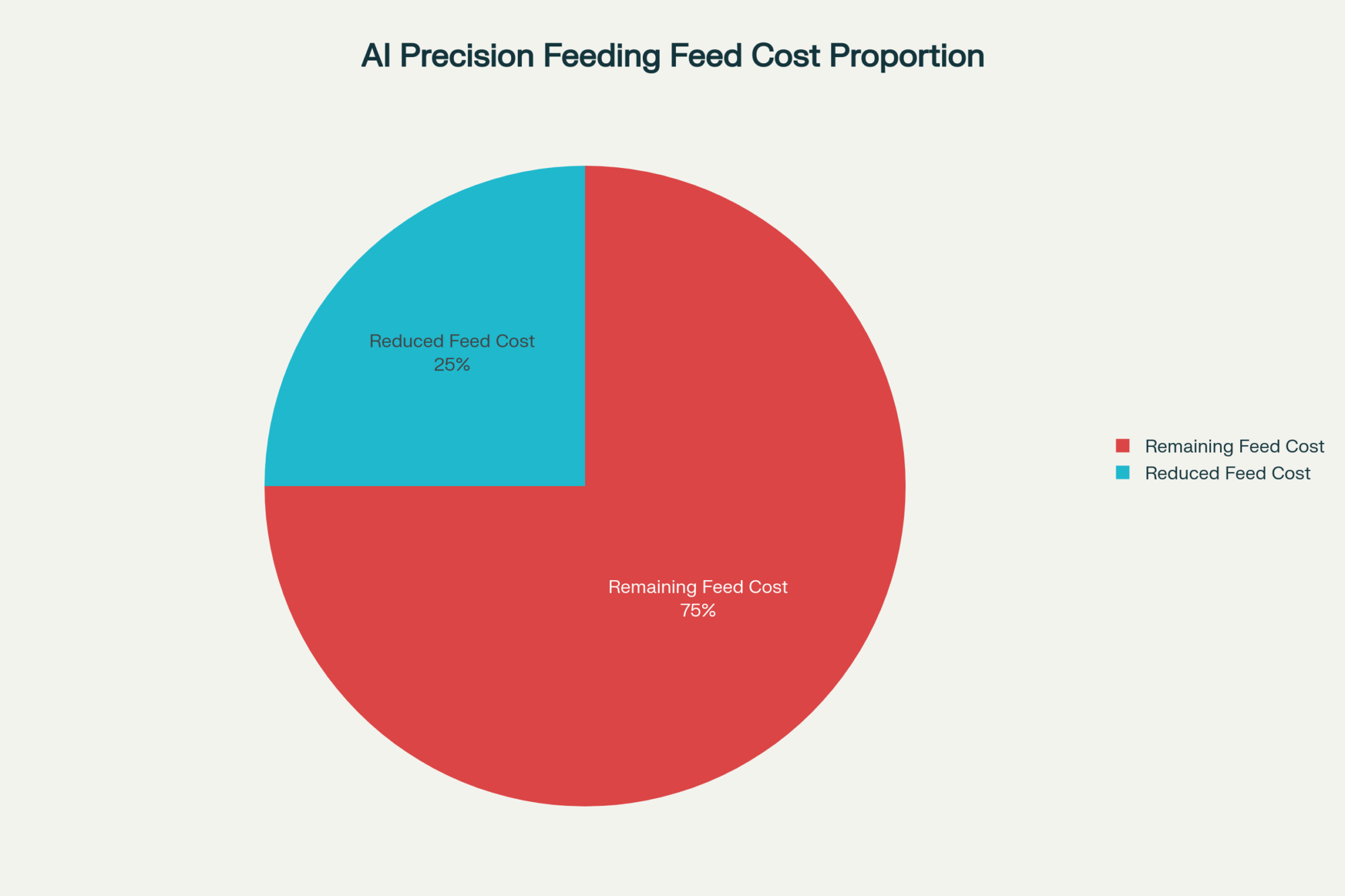
Proportion of feed cost savings through AI-driven precision feeding showing 25% reduction in feed costs

Digging deeper into the nutritional aspect, Spanish researchers at IRTA have shown that operations can reduce feed costs by approximately 25% without compromising production. When you think about corn, silage, and supplement price volatility—especially with the weather patterns we’ve been seeing—that kind of precision really matters.
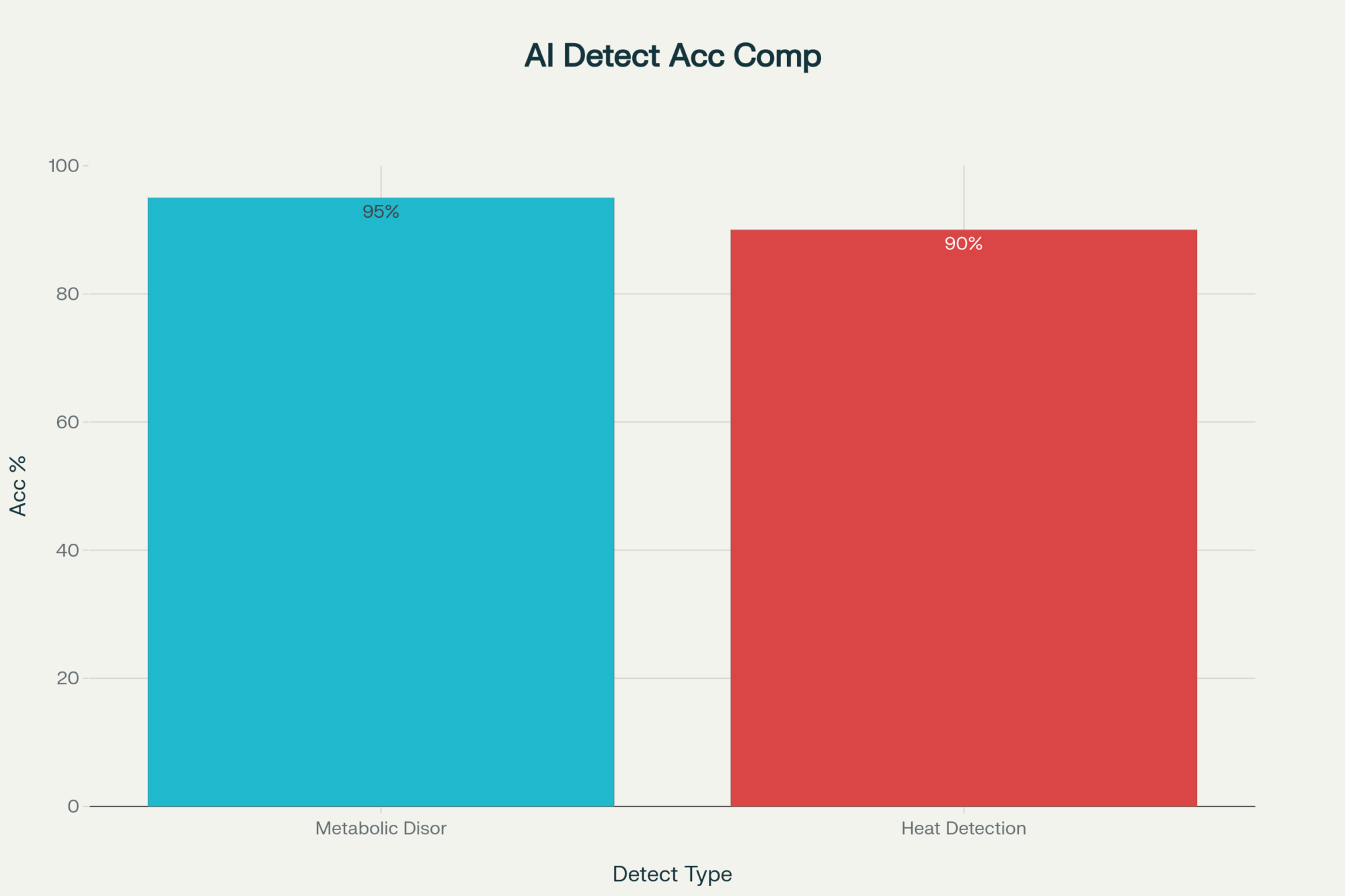
Comparison of AI detection accuracy for metabolic disorders and heat detection in dairy cows

Heat detection’s where things get really interesting. The University of Guelph’s reproductive research program reports that AI is increasing detection accuracy from around 55% to 90%, resulting in a roughly 30% improvement in pregnancy rates. Those are the kinds of numbers that change your whole breeding program.

What Real Farms Are Actually Seeing

I can’t name specific operations—farmers rightfully keep some cards close to their vest—but Wisconsin producers I’ve spoken with mention achieving 30% pregnancy rates after integrating comprehensive monitoring systems. These are sharp operators who’ve figured out how to let the data enhance their barn sense, not replace it.

Down in California’s Central Valley, dairy farmers report solid 7% production increases alongside a nearly 40% reduction in mastitis cases in their first year with AI support. Real, tangible impacts you can take to the bank.

In Europe, Austrian cooperatives using SmaXtec technology report substantial operational savings, although exact figures are kept confidential due to non-disclosure agreements.

Size Clearly Influences Success Rates

Farm size drives implementation success in ways you’d expect. Operations with 300 to 1,000 cows consistently hit 80-90% success rates with these systems, according to data from Agricultural Economics Research International—a clear reflection of scale economics and infrastructure capabilities.

Robotic milking keeps building momentum. University of Minnesota Extension research documents $30,000 to $45,000 in annual labor savings per robot—but here’s the reality check: maintenance and energy costs can tack on another $5,000 to $25,000 each year. Budget accordingly.

The latest vision technology, utilizing advances such as YOLOv9 algorithms, now achieves 90% accuracy in identifying health issues, even in the chaos of a working barn, according to presentations at the 2025 AI for Agriculture Symposium.

The Reality Check You Need to Hear

Here’s what nobody talks about enough: industry consultants at the Agricultural Economics Institute estimate that roughly 40% of AI projects fail to deliver expected returns, usually due to integration problems or a lack of ongoing support after the sale.

Even more concerning? Technology audits reveal that only about 5% of available AI tools have undergone rigorous, independent validation. That’s a red flag for doing your homework on suppliers.

Jeffrey Bewley at the University of Kentucky Extension nails the core issue: “AI amplifies what you’re already doing right, but it won’t patch up fundamental management problems.”

What Actually Works in Practice

My take? Start small and scale smart. Test AI applications on a subset of your herd first—health monitoring or reproductive management work well as pilots. Get your team appropriately trained… extension services consistently report that operations that skimp on training hit roadblocks they could’ve avoided.

Before jumping in anywhere, establish clear baselines. Track your current mastitis treatment costs, feed conversion efficiency, and reproductive performance metrics. Without baseline data, you’re flying blind on measuring real impact.

The Future That’s Already Starting

What gets me excited is watching how AI, genetics data, and nutritional management are starting to weave together. We’re moving beyond individual tools toward integrated decision-making systems that learn your operation’s unique patterns and challenges.

The bottom line? Operations that feed precisely, monitor continuously, and act early on problems are consistently outperforming traditional approaches. The competitive advantage is becoming measurable and sustainable.

If you haven’t started exploring these technologies, today might be a good day for a conversation with your county extension agent or established technology providers. Ask the hard questions about training, support, and realistic implementation timelines. What’s the one area on your farm where you think data could make the biggest difference?

Because really, the best time to plant that tree was twenty years ago. The second best time is today.

Your cows are generating data every minute, whether you use it or not. The question is whether you’ll let that information work for your operation’s future.

Complete references and supporting documentation are available upon request by contacting the editorial team at editor@thebullvine.com.

Learn More:

  • The 7 Habits of Highly Effective Robotic Milking Herds – Go beyond the purchase price with this tactical guide. It reveals the essential management protocols that top producers use to maximize milk output and herd health in an automated milking environment, turning your technology investment into a true profit center.
  • The 8 Profitability Metrics That Define Success in Today’s Dairy Industry – This strategic overview breaks down the key financial metrics that separate profitable dairies from the rest. Learn to analyze your operation’s performance beyond milk price, giving you a powerful framework to measure the true impact of your technology investments.
  • Genomics: The Crystal Ball That’s Reshaping the Dairy Industry – Look beyond operational AI and into the future of herd improvement. This piece details how genomic testing provides predictive insights to accelerate genetic gain, reduce disease risk, and build a more profitable and resilient herd for the next decade.

Join the Revolution!

Join over 30,000 successful dairy professionals who rely on Bullvine Weekly for their competitive edge. Delivered directly to your inbox each week, our exclusive industry insights help you make smarter decisions while saving precious hours every week. Never miss critical updates on milk production trends, breakthrough technologies, and profit-boosting strategies that top producers are already implementing. Subscribe now to transform your dairy operation’s efficiency and profitability—your future success is just one click away.

NewsSubscribe
First
Last
Consent

Optimizing Protein Levels in Dairy Cow Diets: Impacts on Nutrient Efficiency, Nitrogen Balance, and Greenhouse Gas Emissions

Discover how oscillating protein levels in dairy cow diets impact nutrient efficiency, nitrogen balance, and greenhouse gas emissions. Can this method reduce the environmental footprint?

Imagine the potential of a simple adjustment in dairy farming: tweaking protein levels in cow diets. This seemingly minor change could be the key to revolutionizing sustainable agriculture. By optimizing protein levels, we can enhance milk production, improve nutrient efficiency, and maintain nitrogen balance, thereby reducing the environmental impact of dairy farming. 

The protein levels in a cow’s diet play a crucial role in nutrient utilization. Striking the right balance ensures cows receive enough Protein to meet metabolic needs without excess, thereby reducing nitrogen waste in manure. This not only improves feed efficiency but also significantly cuts down on environmental pollution. The power to promote a more efficient and sustainable dairy farming system lies in our hands through well-managed protein levels. 

“Reducing dietary crude protein in cow diets is a well-established method to improve nitrogen use efficiency, yet few studies have explored if transient reductions in crude protein could minimize the environmental footprint of late-lactation cows.” 

The aim is to determine whether oscillating protein levels in diets of mid- to late-lactation Holstein cows can optimize nutrient digestibility, nitrogen balance, and greenhouse gas emissions. Can transient reductions in crude Protein achieve the same nitrogen-sparing effects as long-term reductions? This could offer a new strategy for reducing dairy farming’s environmental impact.

Introduction to Protein Optimization in Dairy Diets

Research often highlights the benefits of reducing static dietary nitrogen in cows. However, dynamic diets with transient oscillations may better optimize nutrient use and reduce environmental impacts. 

Studies on growing ruminants have shown that oscillating CP can enhance nitrogen use efficiency (NUE). Still, the results for lactating dairy cows are less clear. Research indicates that oscillating CP diets do not significantly improve NUE and may increase urinary nitrogen excretion compared to static CP diets. 

The premise behind oscillating CP is that it might align better with cows’ physiological needs, enhancing metabolic efficiency. Temporal dietary changes may support urea recycling or amino acid metabolism for milk protein synthesis. 

Mid- to late-lactation cows face challenges like changing dry matter intake (DMI), milk production, and shifting metabolic priorities. Understanding if oscillating CP could improve nutrient digestibility, nitrogen balance, and efficiency is crucial, especially with the dairy industry’s focus on sustainability and reducing greenhouse gas emissions like methane (CH4) and carbon dioxide (CO2). 

This study examines the effects of varying dietary CP levels and oscillating feeding patterns on nutrient digestibility, nitrogen balance, plasma amino acids, and greenhouse gas emissions in mid- to late-lactation dairy cows. A 2 × 2 factorial design aims to determine if oscillations can enhance NUE, reduce nitrogen excretion in manure, and mitigate greenhouse gas emissions.

Nutrient Efficiency: The Role of Protein Levels

This investigation shows that mid to late-lactation Holsteins adapt well to varying dietary crude protein (CP) levels, with minimal impact on nutrient efficiency and environmental outputs. We found new insights into nitrogen (N) utilization and greenhouse gas emissions in dairy production systems by comparing static and oscillating CP feeding patterns. 

Contrary to our expectations, the interplay between dietary CP level and feeding pattern did not significantly affect N balance or nutrient digestibility. The high protein (HP) diet increased manure N, indicating lower nitrogen use efficiency than the low protein (LP) diet. Oscillating CP diets did not enhance nutrient partitioning towards productive outputs or reduce greenhouse gas emissions. 

Practically, while oscillating dietary CP affects urea-N dynamics, peaking in plasma and urinary urea-N 46 to 52 hours after high-CP feeding, it does not significantly improve nutrient digestibility or reduce nitrogenous waste. This resilience to dietary CP fluctuations underscores the complexity of nutrient management in dairy herds, which aims to optimize milk production and minimize environmental impacts. 

Merely oscillating CP intake may not yield immediate environmental benefits. Future strategies might necessitate more refined approaches or extended adaptation periods to enhance nitrogen use efficiency. While reducing dietary CP is a crucial step towards improving nitrogen use efficiency, the effects of oscillating CP feeding patterns require further exploration to fully comprehend their impact on dairy cows’ nutrient dynamics and environmental footprint.

Nitrogen Balance in Dairy Cows: Why It Matters

As sustainable agricultural practices gain momentum, managing the nitrogen balance in dairy cow diets is crucial. Nitrogen excretion impacts nutrient losses and environmental pollution, primarily through ammonia and nitrate leaching from manure. Effective nitrogen management is essential for both economic efficiency and environmental stewardship. 

Reducing crude Protein (CP) in dairy diets has improved nitrogen use efficiency (NUE) without affecting lactation performance. By balancing dietary CP with essential nutrients like amino acids and energy, milk protein synthesis can be maintained while minimizing nitrogen waste. This is achieved through enhanced urea-N recycling to the gastrointestinal tract, reduced renal urea-N clearance, and improved postabsorptive nitrogen efficiency in tissues, including the mammary gland. 

The relationship between dietary CP and urinary urea-N (UUN) is well-documented; higher CP intake leads to increased UUN concentration and excretion, highlighting dietary CP’s critical role in nitrogen pollution. As lactation progresses, variations in dry matter intake (DMI), milk yield, and metabolic state can influence nitrogen partitioning and balance. 

Long-term CP reduction has significant nitrogen-sparing effects, but its benefits with transient CP restrictions remain unclear. Oscillating CP levels, alternating between high and low CP diets over short intervals, might offer a new approach to managing nitrogen balance. Studies in sheep and beef cattle suggest that oscillating CP diets can maintain performance and increase dietary nitrogen retention. 

Our research indicates minimal effects on productive performance in dairy cows, with varying results on NUE and nutrient digestibility from oscillating CP diets. Further exploration is needed to understand the potential of oscillating CP diets to improve nitrogen balance and reduce environmental impacts. This understanding could be the key to developing sustainable feeding strategies in the dairy industry.

Methods for Optimizing Protein Levels in Dairy Cow Diets

Optimizing protein levels in dairy cow diets is essential for enhancing health and productivity. Key methods include: 

Utilization of High-Quality Protein Sources 

High-quality protein sources like soybean, canola, and fish meal provide essential amino acids for optimal milk production and health, promoting efficient protein synthesis and reducing the cow’s metabolic burden. 

Formulating Diets Based on Protein Requirements of Different Lactation Stages 

Protein needs vary across lactation stages. Early lactation demands higher Protein for peak milk production, while late lactation can handle lower levels. Precision feeding aligns protein intake with these needs, boosting nitrogen use efficiency and reducing environmental impact. 

Monitoring Protein Levels Through Feed Analysis and Performance Indicators 

Regular feed analysis and monitoring of performance indicators such as milk yield,  protein content, and milk urea nitrogen (MUN) levels are not just recommended, but essential for maintaining optimal protein levels. These practices ensure that cows’ needs are accurately met, contributing to the overall efficiency and sustainability of dairy farming.

Comparative Analysis: Low Protein vs High Protein Diets

ParameterLow Protein (LP) DietHigh Protein (HP) Diet
Crude Protein (%)13.8%15.5%
Milk Nitrogen (N)Similar to HPSimilar to LP
Manure Nitrogen (N)LowerHigher
Nitrogen Use EfficiencyHigherLower
Nutrient DigestibilitySimilar to HPSimilar to LP
CO2 EmissionsLowerHigher with oscillation
MUN ConcentrationLowerHigher
Urinary Nitrogen ExcretionLowerHigher

The analysis focused on the impacts of low protein (LP) and high protein (HP) diets on nutrient digestibility, nitrogen balance, plasma amino acids, and greenhouse gas emissions in mid- to late-lactation dairy cows. HP diets increased manure nitrogen despite similar contributions to milk nitrogen, reducing nitrogen use efficiency compared to LP diets. This reinforces that high dietary CP stabilizes milk protein but elevates reactive nitrogen in manure, increasing environmental nitrogen burdens. 

We examined oscillating feeding patterns against static models. Oscillating high-protein (OF-HP) diets caused spikes in plasma and urinary urea-N 46 to 52 hours after the higher-CP phase. Yet, overall, nutrient digestibility, gas emissions, and nitrogen balance showed negligible differences between OF and static CP modes, indicating transient CP shifts do not significantly alter these factors beyond those determined by the overall CP level. 

Nutrient digestibility was uniform across treatments, except for heightened CO2 production in OF-HP regimens, meriting further investigation into metabolic changes from dietary oscillations. Methane (CH4) emissions were similar across LP, HP, and oscillating or static feeding patterns, highlighting the limited efficacy of dietary oscillation in reducing CH4 emissions. 

Contrary to our initial hypothesis, oscillating crude protein levels did not enhance nutrient use efficiencies or substantially reduce greenhouse gas emissions. The resilience of mid- to late-lactation cows to CP oscillations underlines the complexity of metabolic adaptations, especially with dietary CP that is below predicted requirements.

Feeding Patterns: Static vs Oscillating CP

AspectStatic CPOscillating CP
Nitrogen Use Efficiency (NUE)Lower NUEPotential for improved NUE in some studies, but inconsistent
DigestibilityConsistent nutrient digestibilitySimilar nutrient digestibility with periodic peaks
Nitrogen ExcretionSteady nitrogen excretion levelsFluctuations in urinary and plasma Urea-N
Milk Protein SynthesisStable milk protein synthesisComparable milk protein synthesis
Environmental ImpactHigher manure nitrogen, potential more reactive nitrogenSimilar gas emissions, potential for reduced reactive nitrogen in optimized conditions
Energy IntakeConsistent energy intakePossible reduction in energy intake
GI Organ MassStable GI organ massPotential increase in GI organ mass

They then explored whether oscillating dietary CP levels could offer benefits over static feeding patterns in mid- to late-lactation dairy cows, especially when cows are fed protein levels below their predicted needs. The hypothesis suggests that transient protein fluctuations enhance nitrogen metabolism and environmental outcomes. 

In the factorial design, Holstein cows were fed either a low protein (LP) diet (13.8% CP) or a high protein (HP) diet (15.5% CP). Within each protein level, cows experienced either an oscillating feeding pattern—CP fluctuated ±1.8 percentage units every two days—or a static pattern with constant CP. This setup allowed us to compare nutrient utilization and metabolic responses. 

Contrary to expectations, the interaction between CP level and feeding pattern had no significant impact on nitrogen balance, digestibility, or greenhouse gas emissions. High-protein diets slightly increased manure nitrogen, indicating less efficient nitrogen use compared to low-protein diets. Oxillating feeding patterns offered no clear advantage in improving efficiency metrics. Urea nitrogen (urea-N) in urine and plasma peaked 46 to 52 hours after the higher CP intake in the oscillating regime, showing a temporal response to dietary shifts. 

The treatment variations largely unaffected nutrient digestibility and gas emissions. However, CO2 production was slightly higher for high-protein oscillating diets. These results highlight the cows’ resilience to CP variations and align with previous studies noting minimal performance changes with oscillating protein levels. 

While oscillating CP levels are attractive for improving nutrient use and reducing nitrogen excretion, the findings did not show significant advantages over static feeding patterns. This highlights the need for further research to identify conditions where oscillating dietary CP could enhance nitrogen metabolism and environmental sustainability more effectively.

The Bottom Line

Optimizing protein levels in dairy cow diets is crucial for enhancing nitrogen (N) use efficiency and reducing dairy farming’s environmental impact. Proper protein management supports milk production while minimizing reactive N excretion, improving overall nutrient balance. 

The study found that high-protein (HP) diets increased manure N without significantly improving nitrogen efficiency, underscoring the pitfalls of over-supplementation. Conversely, lower-protein (LP) diets maintained milk production and improved N utilization, suggesting a more sustainable approach by reducing nutrient wastage. However, oscillating protein levels provided no marked advantage over static feeding patterns, indicating that consistency in protein supply might be more effective under certain conditions. 

For dairy farmers, the takeaway is clear: prioritize protein optimization in your feeding programs. Reducing dietary crude protein (CP) below predicted requirements can enhance N efficiency and lessen environmental impacts without sacrificing milk yield. Regular feed analysis and monitoring performance indicators are essential to ensure your herds receive an adequate yet environmentally friendly protein supply.

Key Takeaways:

  • Testing of crude protein (CP) levels below and near predicted requirements (low protein [LP], 13.8%; high protein [HP], 15.5%) in feeding patterns alternating ±1.8 percentage units CP every 2 days (oscillating [OF]) or remaining static.
  • Study used a 2 × 2 factorial design with 16 mid- to late-lactation Holsteins, including rumen-cannulated and noncannulated subsets.
  • Measurements included feed intake, milk production, nutrient digestibility, nitrogen balance, plasma amino acids, and greenhouse gas emissions.
  • Contrary to the hypothesis, no interaction between CP level and CP feeding pattern affecting nitrogen balance, nutrient digestibility, or gas emissions was found.
  • High protein diets resulted in similar milk nitrogen but increased manure nitrogen, reducing nitrogen use efficiency relative to low protein diets.
  • Oscillating CP diets showed similar nutrient digestibility and gas emissions across treatments, except for greater CO2 production in high protein-oscillating diets.
  • Findings suggest that mid- to late-lactation cows are resilient to oscillations in dietary CP and that oscillating CP does not significantly reduce the environmental footprint.


Summary: A study suggests that oscillating protein levels in mid- to late-lactation Holstein cows could optimize nutrient digestibility, nitrogen balance, and greenhouse gas emissions. This could be a new strategy for reducing dairy farming’s environmental impact. Protein levels are crucial for nutrient utilization, and a balanced diet ensures cows receive enough protein to meet metabolic needs without excess, reducing nitrogen waste in manure. This not only improves feed efficiency but also reduces environmental pollution. The study found that mid to late-lactation Holsteins adapt well to varying dietary crude protein levels, with minimal impact on nutrient efficiency and environmental outputs. However, the interplay between dietary crude protein level and feeding pattern did not significantly affect nitrogen balance or nutrient digestibility. Oscillating CP diets did not enhance nutrient partitioning towards productive outputs or reduce greenhouse gas emissions. Proper protein management supports milk production while minimizing reactive nitrogen excretion, improving overall nutrient balance.

Send this to a friend




