






30% of your cows’ energy comes from fermentation you’re completely ignoring. That’s $50K walking out the door.
You know what really got me thinking about this whole hindgut thing? I was sitting in on a nutrition meeting last month at a 2,500-cow operation in central Wisconsin, and the nutritionist spent two hours dissecting rumen pH data, VFA ratios, and fiber digestibility. Great stuff, don’t get me wrong. But when I asked about what’s happening in the cecum and colon… crickets.
It’s a 30% blind spot, and it’s quietly costing dairies millions.
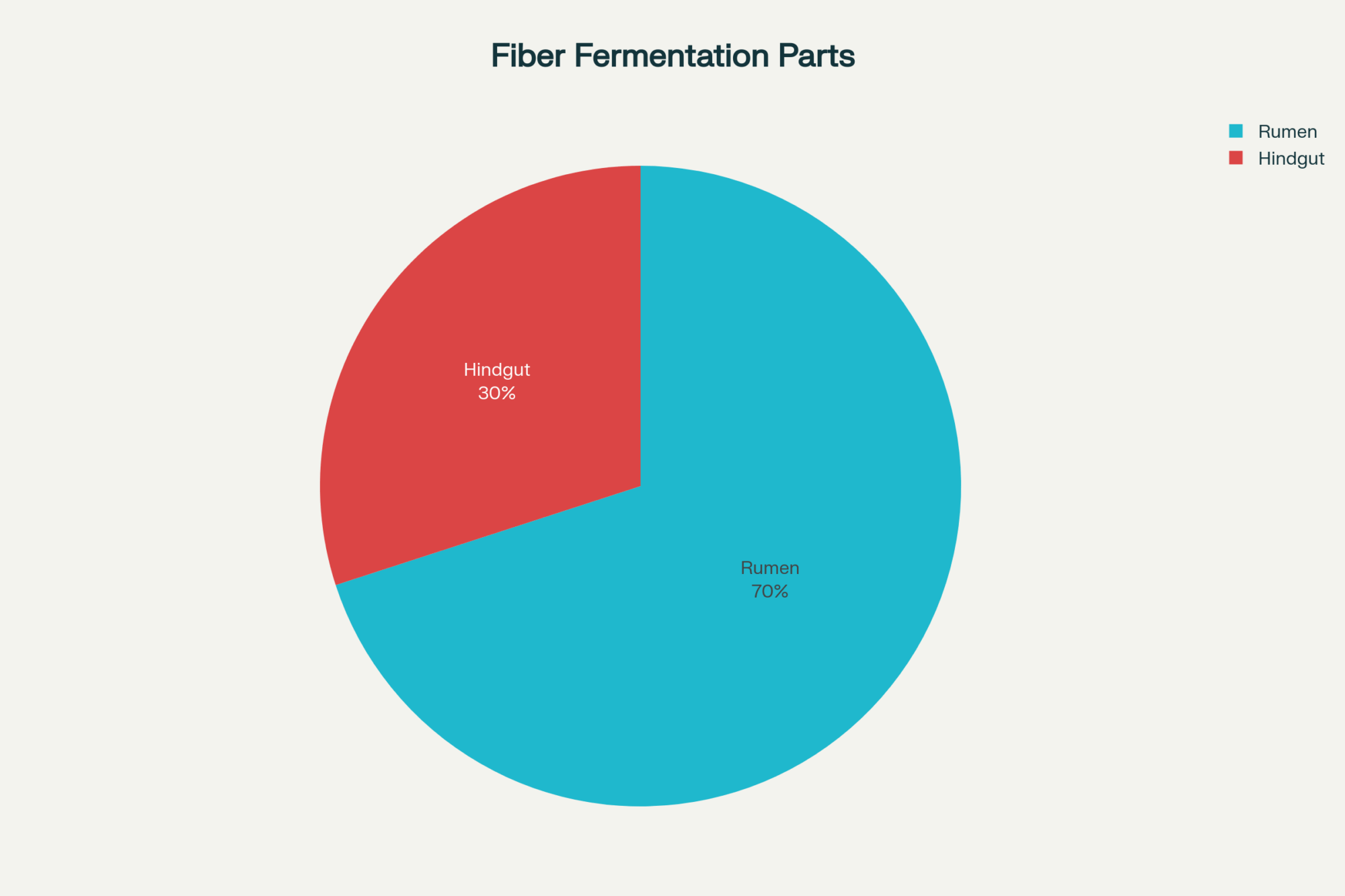
Here’s what’s really bugging me about our industry’s blind spot: roughly 30% of fiber fermentation actually occurs in the hindgut, yet we’re still managing nutrition as if it all stops at the abomasum.
That’s a lot of digestive real estate we’re basically ignoring.
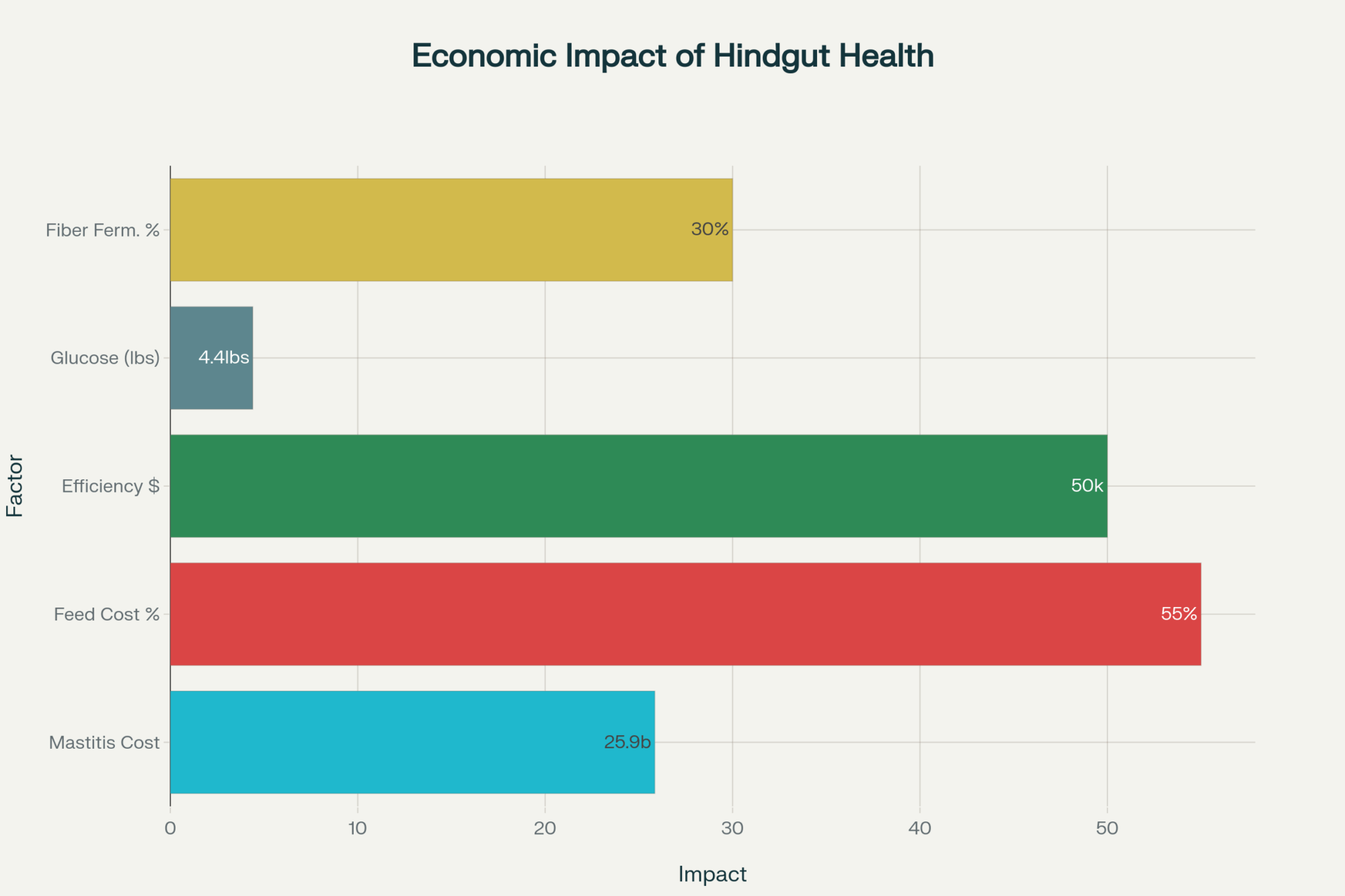
| Metric | Value | Notes |
|---|---|---|
| Current feed cost (annual) | $5,000,000 | Assumes $5 per cow per day feed cost (1000 cows) |
| Potential feed efficiency improvement | 5% | Based on recent research findings |
| Annual feed cost savings | $250,000 | Calculated as 5% of feed cost |
| Potential veterinary cost reduction | $20,000 | Conservative estimate due to reduced inflammation |
| Projected total annual savings | $270,000 | Sum of feed and vet cost savings |
What strikes me even more is the economic angle popping up in new research. A 2025 study published in Frontiers in Microbiology found that specific hindgut bacteria are directly associated with sustained milk production in long-lived, high-yielding cows. We’re talking about being able to predict production efficiency with 99% accuracy simply by examining those microbial profiles.
And here’s the kicker—while we’re worried about rumen acidosis, hindgut acidosis can trigger systemic inflammation and metabolic disruption… often without anybody realizing what’s happening.
That’s money walking out the door, and most of us don’t catch it.
The thing about high-concentrate rations…
Look, I get it. We need energy density to support milk cows weighing 80, 90, and 100 pounds or more. However, recent work is revealing what’s happening further downstream in the gut when we increase those starch levels.
Research examining postpartum dairy cows has found that nutritional diarrhea—yes, that loose manure in fresh cows—is often linked to hindgut dysbiosis, not just rumen issues. They compared cows with normal versus loose feces, finding completely different bacterial communities in the hindgut, even when the rumen microbiomes appeared similar.
What is particularly noteworthy is that cows with hindgut problems had higher levels of ammonia and lower concentrations of volatile fatty acids in their feces. That’s energy loss, plain and simple.
We’re creating metabolic traffic jams. The rumen’s doing its job, but then we’re overwhelming the small intestine and cecum with partially digested starch.
The numbers add up fast: Acute inflammatory response can eat up 4.4 pounds of glucose a day in a 1,500-pound cow. Hindgut-triggered inflammation can require up to 2 kg of glucose daily to support the immune system. That’s glucose that should be going to the tank, not the vet.
Heat stress hits the hindgut harder than we realized
This summer’s heat was a wakeup call. Southern Iowa, great cows, top-notch management—yet production losses didn’t match rumen data. THI was high, but not extreme.
Here’s what current studies found: Heat stress directly compromises intestinal barrier function, creating a leaky gut scenario. But here’s the twist – the hindgut appears to be more sensitive to this damage than the rumen.
When blood flow gets redirected for cooling, the gut’s lining (single layer) is more vulnerable than the rumen wall (several layers). This barrier breakdown allows bacterial toxins to enter the circulation, triggering systemic inflammation and depleting precious nutrients.
That Iowa farm? Once we started managing for hindgut integrity during heat stress – by targeting buffers, modifying feeding times, and using specific feed additives – their production held better, even when the THI topped 80.
The microbiome angle that changes everything
What’s happening in research on hindgut microbiomes is fascinating. A 2025 study found that certain bacteria in the hindguts of long-lived, high-producing cows could predict production efficiency with 99% accuracy.
The researchers looked at cows with five or more lactations and found that high-producing animals had distinct hindgut bacterial communities. Specifically, they had higher concentrations of butyrate-producing bacteria in the rectum and different propionate profiles compared to lower-producing herdmates.
Here’s where it gets interesting for practical application – these differences weren’t just academic. The high-producing cows showed better feed efficiency, higher milk fat and protein yields, and more stable production patterns. All linked to what’s happening in the hindgut.
Additional research has shown that when cows are fed diets designed to support hindgut fermentation (such as replacing corn with molassed sugar beet pulp), they exhibit increased bacterial diversity in their feces and improved fiber digestion. The study found that a specific bacterial group, designated as “CF231,” increased by 64% following dietary changes that supported hindgut health.
This suggests we can actually manage hindgut microbiomes through targeted nutrition – we just haven’t been paying attention to it.
From Coast to Coast: Adapting Hindgut Strategies to Your Region
| Region | Primary Challenge | Key Solution | Expected Benefit |
|---|---|---|---|
| Midwest/Corn Belt | Winter hindgut acidosis from high-starch diets | Replace corn with sugar beet pulp, monitor fecal pH >6.2 | Improved fiber digestibility, reduced energy loss |
| Western/California | Heat stress barrier breakdown | Targeted cooling, encapsulated additives | Maintained production during THI >80 |
| Northeast/Grazing | Winter TMR transition stress | Diverse plant fiber, gradual diet transitions | Stable hindgut bacteria, reduced dysbiosis |
What’s happening across regions is eye-opening, both in terms of problems and solutions. Here’s what I’m seeing and what the research backs up, side by side:
Midwest & Corn Belt
Pattern: Corn silage, winter confinement, and high-starch diets mean hindgut acidosis issues are a winter reality.
Solution: Focus on managing starch flow—replace some corn with fibrous byproducts, such as sugar beet pulp, and monitor fecal pH (target > 6.2). Adjustments during winter can support a more diverse hindgut microbiome, leading to improved fiber digestibility and reduced energy loss through ammonia.
Western/California Dairies
Pattern: Heat stress and high-energy diets set the stage for breakdown of the barrier function and leaky gut.
Solution: Cooling matters—not just for comfort, but to maintain gut barrier integrity. Use targeted buffers and encapsulated additives that release beyond the rumen (yes, these are now hitting the market), and make feeding strategies more dynamic in response to THI swings.
Northeast & Grazing Operations
Pattern: Seasonal grazing reduces the risk of dysbiosis, but winter TMR introduces different stressors.
Solution: Embrace diverse plant fiber in rations and incorporate gradual transitions into winter diets. Research indicates that a diverse fiber intake supports stable hindgut bacteria and reduces the risk of dysbiosis.
General Tips for All Regions
- Test, don’t guess. Monthly fecal pH and biomarker tests for hindgut inflammation (IgA, lactoferrin) —not just observation.
- Feed additive targeting. Use encapsulated probiotics that release in the hindgut. Look for butyrate producers and specific strains, not just a generic “probiotic.”
- Precision forage management. Effective fiber (i.e., particles long enough to stimulate cud-chewing) passing the rumen provides fuel for hindgut bacteria.
Feed additives that actually target the hindgut
While most buffers and probiotics are still built for rumen pH, several progressive products are now being designed to release in the small intestine or cecum.
Supplementing with Bacillus subtilis has been shown to increase beneficial bifidobacteria while reducing ammonia in the hindgut. The researchers found that targeted bacterial supplementation could alter hindgut bacterial communities, resulting in reduced ammonia production and increased beneficial Bifidobacterium populations.
Another study examined yeast fermentation products and found that they could reduce bacterial endotoxin concentrations in both the rumen and hindgut during acidosis challenges. The cows receiving yeast products had lower systemic inflammation markers even when challenged with grain-based acidosis protocols.
I’m starting to see some progressive farms test encapsulated additives designed to bypass the rumen. Early results are promising, but there’s still much to learn.
The economics that’ll drive adoption
Let me be honest – until there’s a clear economic incentive, most operations won’t change their approach. But the numbers are adding up.
Mastitis alone costs the global dairy industry €16-26 billion annually, and gut health is now linked to udder health through the entero-mammary axis.
If targeted hindgut management can reduce inflammatory pressure and boost immune function, the economic benefits will spill over into reduced veterinary bills, improved fertility, and enhanced milk quality.
Imagine adding 5% feed efficiency improvement across a 1,000-cow herd. That’s $40,000-60,000 in feed savings alone, plus less vet costs and higher cow longevity.
Testing and monitoring—finally getting practical
Diagnostics are catching up, too. Monthly fecal IgA and lactoferrin tests are now within reach: $20-25 a sample.
Progressive farms are layering this into routine metabolic testing. If the markers pop, rations get adjusted away from high starch and toward fiber that supports the hindgut microbes.
Implementation roadmap—start here
Based on what I’m seeing, work on farms that are ahead of this curve, here’s a realistic approach:
- Assess fecal pH and inflammation markers regularly
- Manage starch flow and particle size to stabilize hindgut pH
- Keep environmental stress minimal—invest in cooling, ventilation
- Use targeted feed additives designed to release beyond the rumen
- Monitor results continuously—none of this is set-it-and-forget-it
Where next? The research pipeline looks promising
The next decade will witness the emergence of multi-omics diagnostics, precision-targeted additives, and region-specific strategies. We’re not just hoping fermentation happens in the right place—we’re managing it, cow by cow. That’s not fantasy: the research is already at a stage where we can predict production with >90% accuracy using hindgut profiles.
And it’s not just about more sensors or tech. The real game changer is the combination of nutrition, management, and diagnostics that tie directly to early detection and higher efficiency gains.
Bottom line:
We’re not advocating for abandoning rumen focus—just completing the picture of digestive health. The dairies who pioneer whole-gut management are going to pocket the gains long before the rest catch up. That’s the next competitive edge.
KEY TAKEAWAYS
- Cut feed costs 5% with hindgut-targeted nutrition – Replace portions of corn with fibrous byproducts like sugar beet pulp, monitor fecal pH above 6.2, and watch your feed conversion improve while supporting better bacterial diversity in the lower gut.
- Get early warning on production problems for $25/cow – Monthly fecal IgA and lactoferrin testing catches hindgut inflammation weeks before you see clinical signs, letting you adjust rations proactively instead of reacting to dropped milk yields.
- Turn heat stress management into a profit center – Targeted buffers and encapsulated additives that release past the rumen are helping California dairies maintain production even when THI hits 80+, protecting both milk yield and butterfat percentages during summer stress.
- Predict your best cows before first lactation – Research shows specific hindgut bacterial profiles correlate with sustained high production across multiple lactations, giving you selection criteria that could revolutionize your replacement heifer decisions.
- Regional advantage through precision gut health – Corn Belt operations managing starch flow differently, Western dairies focusing on barrier function, Northeast farms leveraging diverse forages – the key is adapting hindgut strategies to your specific challenges and feed base.
EXECUTIVE SUMMARY
You know how we’ve been laser-focused on rumen health for decades? Well, here’s something that’ll make you rethink everything. We’re completely ignoring 30% of fiber fermentation that happens in the hindgut – and it’s costing operations serious money. Recent research out of the University of Saskatchewan shows you can predict milk production efficiency with 99% accuracy just by looking at hindgut bacterial profiles… that’s more precise than most genomic testing. The economics are staggering too – farms implementing targeted hindgut management are seeing 5% feed efficiency improvements, which translates to $40,000-60,000 savings annually on a 1,000-cow operation. With Class III hovering around $18-19/cwt, every efficiency gain matters. Global research is connecting hindgut health to everything from mastitis resistance to heat stress tolerance, and the farms getting ahead of this curve are building competitive advantages that compound daily. Here’s the thing – you can start testing this stuff tomorrow for $20-25 per sample.
About the Analysis: This analysis synthesizes emerging research from leading dairy science institutions, including the University of Saskatchewan and the University of Wisconsin-Madison, as well as findings published in peer-reviewed journals through 2025. Economic projections are based on current data and may vary with individual operation characteristics. Consult qualified nutritionists and veterinarians before applying changes.
Learn More:
- The 3 Keys to Unlocking Feed Efficiency – This article provides a practical framework for improving your feed conversion ratio. It reveals tactical methods for optimizing your TMR, allowing you to directly apply the hindgut health insights from our feature to achieve measurable gains and lower feed costs.
- Dairy Margins: Finding Profitability When Every Penny Counts – To understand the true financial impact of gut health, this piece digs into the key drivers of modern dairy profitability. It helps you strategically frame the 5% efficiency gain discussed in our feature within your operation’s broader economic picture.
- From Wearables to AI: How Tech is Redefining Dairy Herd Health – Building on our feature’s call for better diagnostics, this article explores the tools making it possible. Discover how precision sensors and AI help you proactively monitor the subtle health shifts caused by gut issues, catching problems before they hit the tank.
 The Sunday Read Dairy Professionals Don’t Skip.
 The Sunday Read Dairy Professionals Don’t Skip.
Every week, thousands of producers, breeders, and industry insiders open Bullvine Weekly for genetics insights, market shifts, and profit strategies they won’t find anywhere else. One email. Five minutes. Smarter decisions all week.




