






Seven kids hospitalized from raw milk—while your insurance premiums could spike 40% if this hits your region.
EXECUTIVE SUMMARY: Listen up, because this Florida mess affects every one of us. Raw milk isn’t just a niche problem—it’s reshaping how insurers look at ALL dairy operations, and it’s hitting closer to home than you think. We’re talking 21 people sick, seven in the hospital, and insurance companies pulling back coverage faster than a fresh cow kicks. The ripple effect? Even conventional producers are seeing policy changes and tighter inspections. Here’s what’s wild—Danish research shows pathogen issues can cost you €11,000 per affected herd annually, not counting the reputation damage. With feed costs already crushing margins in 2025, you can’t afford to ignore food safety protocols anymore. The smart money is on bulletproof HACCP plans and rock-solid documentation. Trust me on this one—get ahead of it now, because the regulatory hammer is coming down hard.
KEY TAKEAWAYS:
- Save your insurance rates: Review your HACCP documentation TODAY—operations with solid safety records are avoiding the 25-40% premium increases hitting sloppy farms post-outbreak
- Protect your buyer relationships: Proactively share your safety certifications and testing results with buyers—processors are dropping suppliers without warning when trust erodes
- Turn compliance into profit: Farms with documented microbial testing protocols are landing premium contracts while others scramble—regulatory pressure creates opportunities for the prepared
- Bulletproof your reputation: With foodborne illness scares cutting category sales 8-12%, your safety story becomes your biggest competitive advantage in 2025’s tight markets
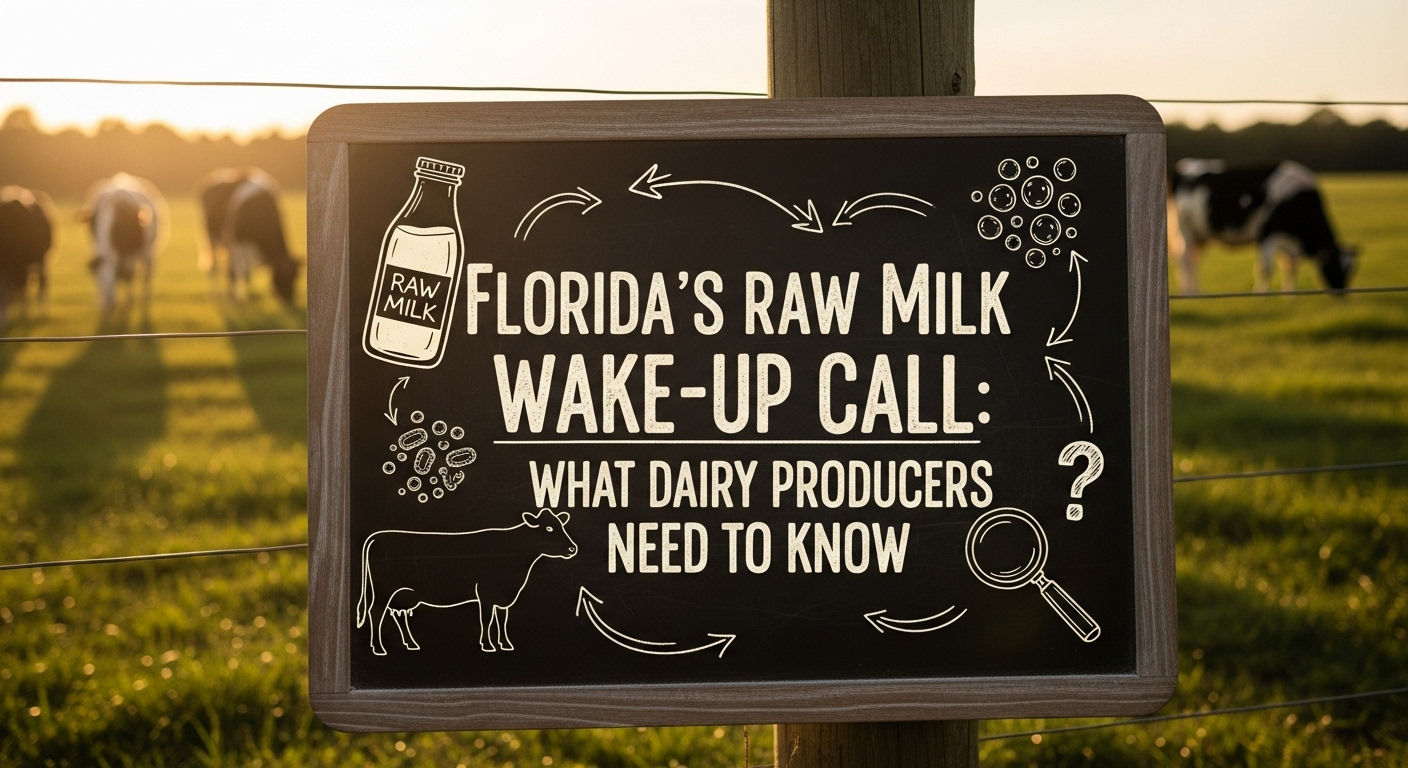
The thing about food safety in 2025? It’s anything but static. Currently, Florida’s raw milk outbreak is sparking serious concerns across dairy farms, from the Gulf Coast to Central Florida. Twenty-one people have become ill, seven of whom ended up in the hospital—including some children—and all cases are linked to a farm in Northeast/Central Florida, although the Department of Health is keeping the name confidential while investigations continue, according to the Florida Department of Health. This is a reminder that consumer trust and the sustainability of your dairy business can be fragile.
Here’s the thing, though—the political winds could shift the landscape in ways none of us fully control. Leaders with alternative views on health policies, like Robert F. Kennedy Jr., may influence how regulations evolve if they rise to key positions. It’s worth keeping tabs on how these conversations unfold.
What’s Happening on the Ground
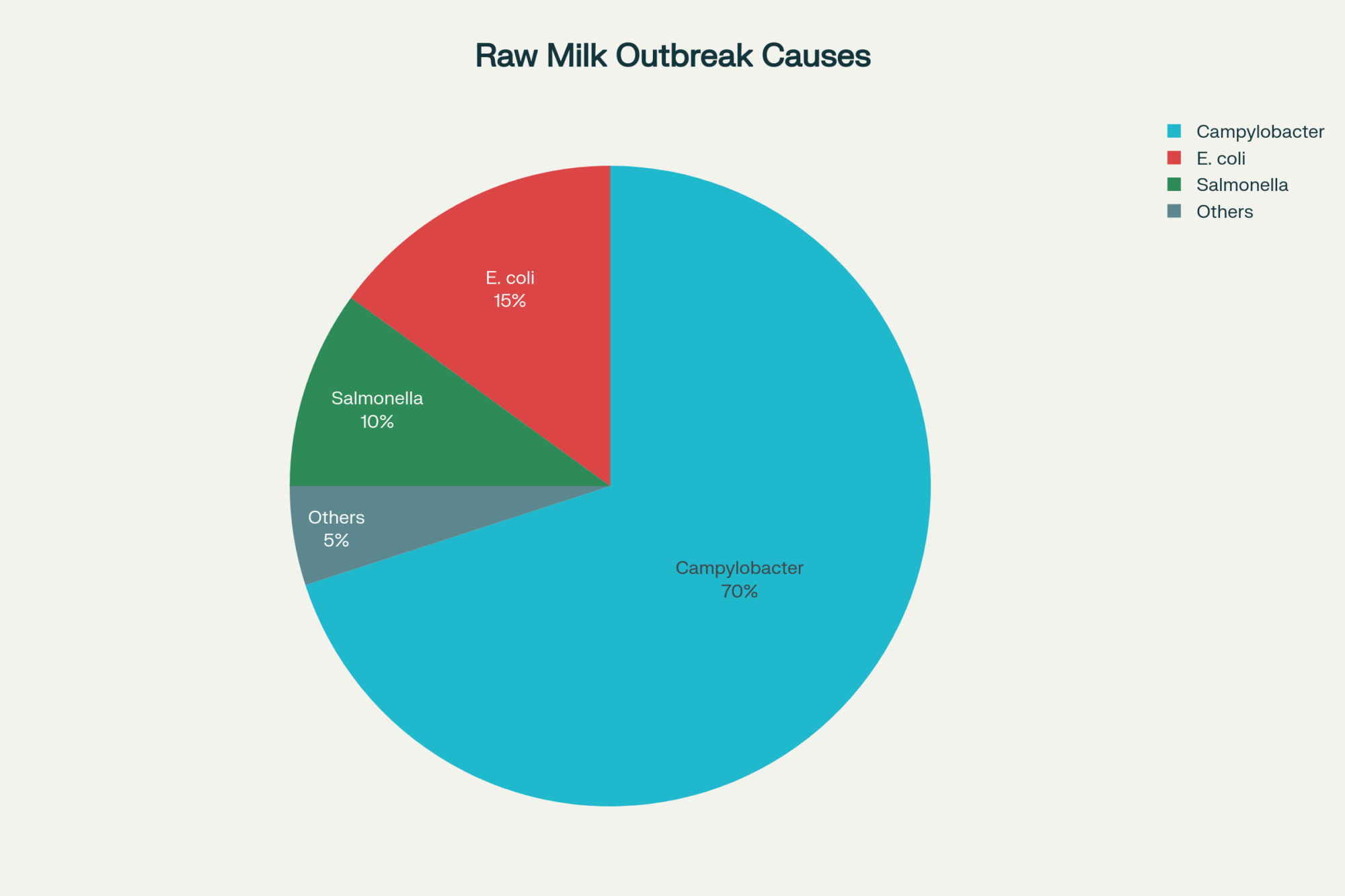
Florida’s health authorities pinpointed a serious breakdown in sanitation protocols at the farm linked to the outbreak, according to an official bulletin. The presence of Campylobacter and shiga toxin-producing E. coli here is not something you take lightly; it’s a loud wake-up call for dairy managers everywhere—from warm winter pastures in Okeechobee to the busy dairy hubs of Dade City. We’re talking not just about sloppy procedures, but about fundamental failures in managing food safety risks.
While state law forbids the sale of raw milk to humans, sales marked for pets keep a shadow market thriving; university extension estimates put its worth at several million dollars annually, according to the University of Florida Extension. And here’s a pattern producers are noticing: following outbreaks, insurers tend to pull back, making coverage for raw milk operations scarcer and more expensive.
How This Ripples Through Your Dairy
Food safety isn’t someone else’s problem—one high SCC tank can ruin an entire load, and in today’s connected world, outbreaks can shake consumer confidence region-wide. Remember the romaine lettuce E. coli crisis from 2018? Processors took a $55 million hit, retailers another $14 million, according to California Agriculture. It’s a lesson on how trust lost at any point can spread and squeeze the entire supply chain.
And it’s not just reputation. Danish researchers tracked how Salmonella infections take a toll: farms with high infection levels face over €11,000 in extra costs annually—veterinary treatments, lost milk premiums—and even low-level infection doesn’t come cheap, costing over €6,700. That’s money out of your pocket before you even think about a recall or inspection.
Getting Control Right
The CDC flags illnesses linked to raw milk as roughly eight times more frequent than those linked to pasteurized milk, according to CDC data. Big commercial processors don’t rely on luck—they layer controls, including environmental testing and supplier checks. Raw milk farms that try to compete without these controls put themselves at a significant disadvantage.
Cornell University’s food science experts remind us that pathogen control demands near-perfect hygiene and monitoring, according to Cornell University’s Food Science. No slack, no shortcuts. And that pasteurization? It’s not red tape; it’s your best bet against disaster.
Suppose you’re hearing about the supposed nutritional benefits of raw milk. In that case, the American Academy of Pediatrics has been very clear: the risks outweigh any unproven gains, especially for children and pregnant women, according to an AAP statement.
The Regulatory Crosscurrents
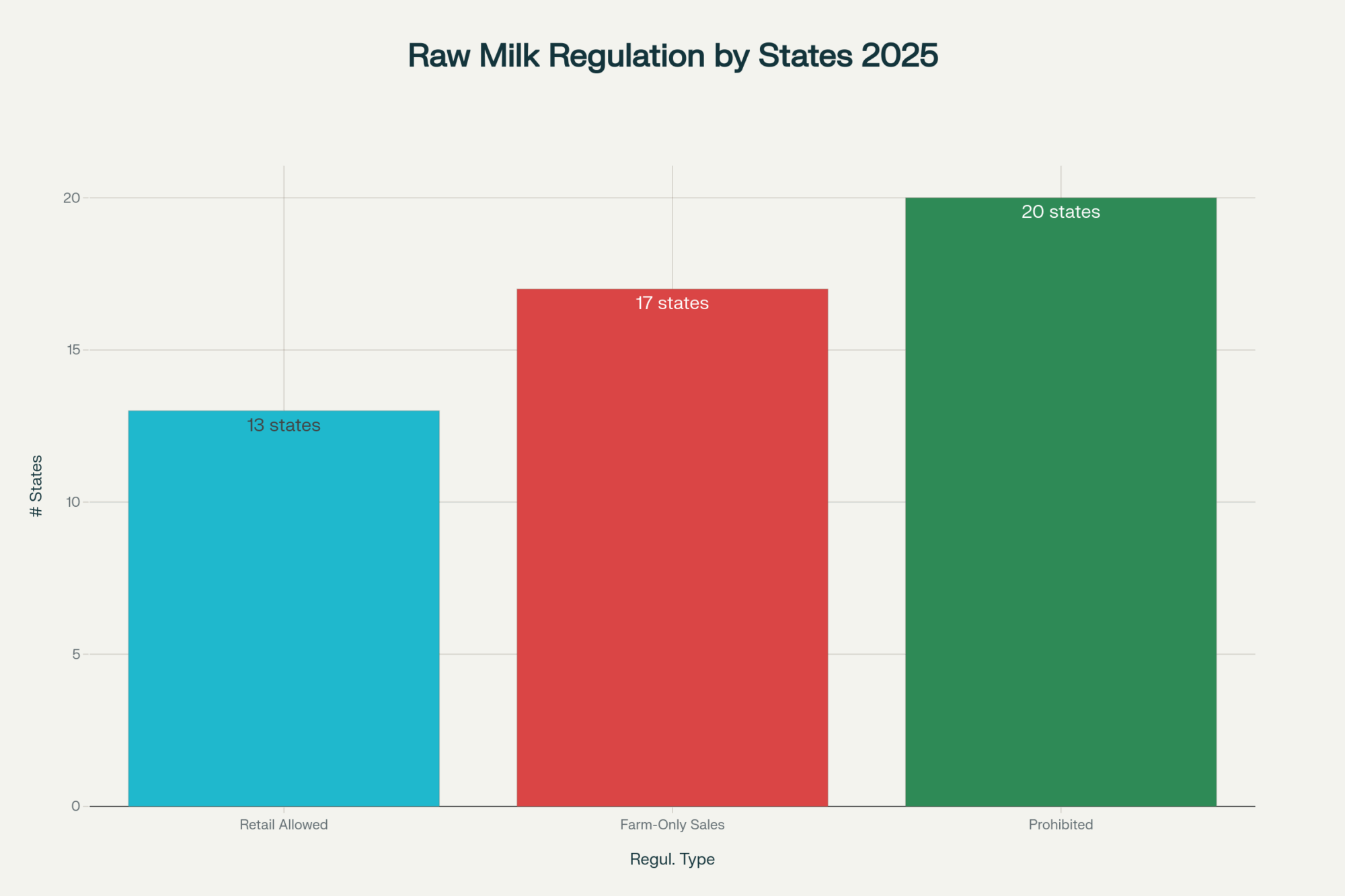
Right now, 13 states legally allow retail sales of raw milk; 17 limit sales to farm-only; and the rest ban human sales altogether, according to National Raw Milk Laws. Interstate shipment is federally banned. People like Robert F. Kennedy Jr.—who are publicly skeptical of mainstream health policy—may influence future regulation, but these shifts remain to be seen.
Organic Pastures Dairy remains a heavyweight player among raw milk producers, yet national dairy groups warn that loosening these regulations risks confusing consumers and exacerbating health risks.
What Should Producers Be Doing?
More FDA inspections are expected following the outbreak, covering both raw milk and pasteurized supply chains. Operations with disciplined HACCP and microbial testing protocols are better positioned to weather the storm.
Insurance markets also split: raw milk operations face rising premiums or no coverage; conventional producers maintain relatively stable insurance profiles.
If you haven’t yet, now’s the time to review your HACCP plan, tighten microbial testing routines, and ramp up communication with your buyers—make it clear you’re serious about safety.
What Do Consumers Think?
Recent surveys indicate that approximately three-quarters of consumers prioritize safety and consistent quality over the processing methods used. Foodborne illness scares can result in an 8-12% decline in sales, affecting producers of all sizes.
The Bottom Line
Raw milk sales won’t disappear anytime soon, but every producer in this arena must navigate regulatory pressure, financial risk, and reputational challenges. Investing in tight safety controls and thorough documentation isn’t optional.
Pasteurization remains a strong shield for the dairy industry. It’s a story you need to keep telling, because trust is everything.
This Florida outbreak underscores a fundamental truth: food safety is not optional—it’s the very backbone of any successful dairy operation. Failure here threatens not just sales, but the enduring trust that keeps the industry thriving.
Complete references and supporting documentation are available upon request by contacting the editorial team at editor@thebullvine.com.
Learn More:
- Sanitation: The Key to Mastitis Prevention – This tactical guide provides practical strategies for improving parlor and herd hygiene. It’s essential for lowering your SCC, preventing costly infections, and strengthening the foundational food safety protocols that protect your entire operation from risk.
- Dairy Farmers Must Realize They Are No Longer Selling A Product, But Rather A Story – Moving beyond farm-gate operations, this article details the strategic importance of branding. It reveals methods for building a powerful farm story that fosters consumer trust and insulates your brand from the market fallout of industry-wide safety scares.
- Precision Dairy Farming: The Future is NOW! – Explore the innovative technologies shaping modern dairy management. This piece demonstrates how to leverage automated monitoring and data analytics to enhance herd health, streamline documentation, and build a resilient, future-proof, and highly defensible operation.
 The Sunday Read Dairy Professionals Don’t Skip.
 The Sunday Read Dairy Professionals Don’t Skip.
Every week, thousands of producers, breeders, and industry insiders open Bullvine Weekly for genetics insights, market shifts, and profit strategies they won’t find anywhere else. One email. Five minutes. Smarter decisions all week.




