Archive for H5N1 avian influenza

Heat Kills Bird Flu: Are You Doing Enough to Protect Your Dairy Operation?

Raw milk hides H5N1 for 8 weeks! Cornell study proves heat kills it. Essential dairy safety insights inside.

EXECUTIVE SUMMARY: Cornell University researchers discovered that H5N1 avian influenza survives in raw milk for up to 8 weeks under refrigeration but is rapidly neutralized by heat treatments like pasteurization (63°C/145°F for 30 min) or even lower-temperature thermization (54°C/129°F for 15 min). The virus’s persistence challenges raw milk safety and renders the 60-day aging rule for cheeses ineffective, though pH control (≤5.0) inactivates it. Public health risks remain low for pasteurized products but spike with raw milk consumption, especially for farm workers and animals. The dairy industry must adopt precise heat protocols, enhanced biosecurity, and rethink raw milk cheese production. This crisis underscores the critical role of science in balancing tradition and safety.

KEY TAKEAWAYS:

  • H5N1 survives 8 weeks in refrigerated raw milk, posing risks for unpasteurized products and cross-contamination.
  • Heat kills it fast: Standard pasteurization (63°C/145°F) and sub-pasteurization (54°C/129°F for 15 min) fully inactivate the virus.
  • 60-day cheese aging fails against H5N1, but pH ≤5.0 during production eliminates the threat.
  • Raw milk consumers and farm workers face highest risk; pasteurized dairy remains safe.
  • Dairy industry must prioritize heat-treated milk handling and rethink biosecurity to curb outbreaks.
H5N1 avian influenza, raw milk safety, pasteurization effectiveness, dairy cattle biosecurity, thermal inactivation virus

Cornell University’s groundbreaking research reveals that while the H5N1 avian influenza virus can survive in refrigerated raw milk for eight weeks, even moderate heat treatments destroy it. This game-changing discovery offers dairy producers’ practical solutions beyond standard pasteurization. Are you implementing them on your farm?

When H5N1 avian influenza first jumped to dairy cattle last year, it caught our entire industry flat-footed. Most of us never imagined that the “bird flu” would become a bovine problem, much less one that specifically targets the mammary system and sheds directly into milk. Yet here we are, facing the largest outbreak of a highly pathogenic virus in domestic mammals in U.S. history, with over 1,000 affected herds across 17 states.

While government agencies scrambled to understand this unprecedented cross-species leap, Cornell University researchers rolled their sleeves and delivered the answers producers desperately needed about this virus’s behavior in milk. Their findings aren’t just reassuring- they’re revolutionary for our thoughts on on-farm milk safety.

The Harsh Reality: Your Bulk Tank Could Harbor Live Virus for Months

Let’s cut right to the chase: H5N1-positive milk sitting in your bulk tank at standard refrigeration temperatures isn’t becoming safer with time. Cornell researchers demonstrated that viable, infectious H5N1 virus can persist in raw milk for a staggering eight weeks when stored at 4°C (39.2°F). This finding emerged from careful decay studies involving milk from naturally infected cows and experimental models using spiked samples.

Think about that timeline. While most dairy pathogens we worry about are bacterial and get knocked back by refrigeration, this virus thumbs its nose at your plate cooler. Cornell’s research team found that H5N1 has a half-life of approximately 2.1 days at refrigeration temperatures, with complete viral inactivation requiring about 69 days. This persistence creates extended risk windows throughout your entire operation:

  • For your milking crew handling raw milk daily
  • For calves fed unpasteurized waste milk
  • For equipment that could cross-contaminate between milkings
  • For your on-farm store customers, if you sell raw milk products

Is your operation still treating milk safety like it’s 2019? The H5N1 era demands a complete rethinking of raw milk handling protocols, whether you’re a 3,000-cow dairy or a small family operation selling directly to consumers.

This extended viability should particularly concern operations that pool milk from multiple sources, as just one infected cow could contaminate entire batches. Remember how quickly mycoplasma spread through commingled heifer-raising facilities in the early 2000s? The same principle applies here, but with potentially greater public health implications.

The Heat Treatment Revolution: Your New Biosecurity Weapon

The good news should have every dairy farmer breathing a sigh of relief: H5N1 virus is remarkably heat-sensitive. Cornell’s research confirmed what many hoped would be true, even moderate heat treatments rapidly inactivate this pathogen.

Pasteurization: Bulletproof Protection

Let’s start with the gold standard: traditional pasteurization completely obliterates the H5N1 virus. Cornell scientists found that both standard methods deliver 100% protection:

  • Vat Pasteurization (LTLT): 63°C (145°F) for 30 minutes
  • HTST Flash Pasteurization: 72°C (162°F) for 15 seconds

But what’s truly revolutionary about Cornell’s findings is that you don’t need industrial pasteurization equipment to eliminate H5N1 from milk on your farm effectively.

Beyond Pasteurization: Game-Changing Options for Every Operation

The Cornell team’s identification of effective sub-pasteurization treatments has excited progressive producers. Their research pinpointed several accessible options that inactivate the virus entirely:

  • 60°C (140°F) for just 5 seconds achieves complete inactivation
  • 54°C (129°F) for 10-15 minutes delivers complete inactivation

Let that sink in. You don’t need an expensive HTST system to protect your operation from H5N1. Even basic on-farm equipment can achieve these parameters.

But a word of caution: Cornell researchers found that treatment at 50°C (122°F) for 10 minutes was insufficient. This narrow margin between effective and ineffective treatments means precision matters. Are your thermometers calibrated, and your heating systems monitored? Because being off by just a few degrees could mean the difference between safety and continued risk.

These findings should prompt immediate action for those feeding waste milk to calves, a common practice on many dairy operations. If you’ve been feeding raw waste milk to your replacement heifers, you’re potentially creating a reservoir for H5N1 in your youngstock. Several on-farm pasteurizers designed specifically for calf milk can easily achieve the parameters needed to inactivate the virus.

The Raw Milk Cheese Bombshell: Your 60-Day Aging Rule Is Worthless Against H5N1

For artisanal cheesemakers who’ve built their businesses around raw milk products, Cornell’s findings deliver a particularly sobering wake-up call: the federally mandated 60-day aging period for raw milk cheese does absolutely nothing to protect against the H5N1 virus.

This revelation shatters a foundational assumption underpinning raw milk cheese safety protocols for decades. For context, the 60-day aging rule (21 CFR Part 133) was established primarily to control bacterial pathogens like Listeria, E. coli, and Salmonella, which typically decline during aging as cheese pH drops, moisture decreases and competing cultures flourish. The Cornell team’s research emphatically demonstrated that the H5N1 virus doesn’t play by these rules, surviving the entire 60-day aging period in standard raw milk cheeses.

The researchers calculated specific decimal reduction times (D-values) for H5N1 in raw milk cheeses: 25.5 days for cheese at pH 6.6 and 32.2 days for cheese at pH 5.8. This means it would take approximately 76-96 days (3 D-values) to achieve even a 99.9% reduction in viral load, well beyond the standard 60-day aging requirement.

Are you still relying on that 60-day aging period to keep your artisanal cheese customers safe? If so, it’s time to rethink your approach.

Interestingly, the research did uncover a potential solution in the form of pH control. When milk was acidified to pH 5.0 before cheesemaking, Cornell scientists found the virus was rapidly inactivated. This presents both challenges and opportunities for artisan producers:

  • Some traditional cheese varieties naturally achieve this pH rapidly
  • Others maintain higher pH values throughout production and aging
  • Selecting starter cultures that quickly acidify milk could provide a critical safety intervention

For farmstead cheesemakers already monitoring pH curves during production, this represents an accessible control point within existing protocols. But are you monitoring pH with H5N1 control in mind, or just for flavor development? The difference could determine whether your aged raw milk cheese remains a premium product or becomes a public health concern.

Worker Protection: Is Your Team Really Protected?

Let’s talk about the elephant in the parlor and worker safety. With approximately 70 human cases of H5N1 reported in the U.S. since the outbreak began, including 41 individuals with confirmed occupational exposure to infected dairy cows, this isn’t just an animal health issue anymore.

Cornell and CDC research confirms that most human cases have occurred among dairy farm workers with direct animal contact. This pattern suggests key risk factors include exposure to raw milk during collection and handling, contact with aerosols generated during milking, and inadequate personal protective equipment.

Most operations upgraded their worker health protocols during COVID, but are those measures sufficient for protecting your team from a virus shed directly into milk? The concentration of human cases among milkers and other dairy personnel suggests this is not true.

When was the last time you evaluated your parlor’s ventilation system? Research suggests aerosols generated during milking could be a transmission route. While many operations installed improved ventilation systems years ago for heat abatement and cow comfort, few designed these systems with zoonotic disease prevention in mind.

Progressive operations are implementing enhanced protection measures that go well beyond standard dairy PPE:

  • N95 respirators during the milking of suspect animals
  • Face shields during high-pressure washing of milking equipment
  • Impermeable gloves with extended cuffs for milk sampling
  • Footbaths with virucidal disinfectants at transition points

Does your safety program still treat PPE as a recommendation rather than a requirement? The data suggests this approach is leaving your workforce unnecessarily exposed.

Biosecurity Reality Check: Time to Raise the Bar

Let’s get brutally honest: the biosecurity practices that many dairy operations consider “good enough” pre-H5N1 don’t cut it anymore. The FARM Program’s Everyday Biosecurity guidelines offer a solid foundation, but forward-thinking producers are going several steps further.

When did we decide that “good enough” biosecurity was actually good enough? In reality, many operations have implemented the bare minimum needed to satisfy co-op requirements rather than what’s truly required to protect their herds and businesses.

Essential upgraded practices now include:

  • Implementing true line-of-separation practices with dedicated footwear and clothing between production areas
  • Isolating newly-introduced cattle in dedicated fresh cow pens for at least 30 days
  • Establishing clean/dirty zones in milk houses with appropriate disinfection protocols
  • Installing heat treatment systems for raw milk fed to calves
  • Implementing proper post-milking sanitization of inflations and milking units between cows

Cornell researchers have established that infected milking equipment likely represents the primary route of cow-to-cow transmission, spreading the virus directly to the mammary tissue during milking. If your operation still treats liner sanitization as optional, you’re playing Russian roulette with your herd health.

H5N1 Heat Treatment Quick Guide

Cornell-Verified Thermal Inactivation Options:

Complete Viral Inactivation:

  • 60°C (140°F) for 5 seconds
  • 54°C (129°F) for 10-15 minutes
  • Standard Pasteurization (LTLT/HTST): Fully Effective

CAUTION: 50°C (122°F) for 10 minutes INSUFFICIENT

Application Points:

  • Waste milk for calf feeding
  • On-farm milk processing
  • Milk disposal protocols
  • Artisanal cheese production

Implementation Note: Ensure accurate temperature measurement and monitoring throughout treatment.

The Bottom Line: What Smart Producers Are Doing Now

The emergence of H5N1 in dairy cattle represents one of the most significant animal health challenges our industry has faced in decades. But unlike some threats that offer no clear solution, Cornell’s research provides a specific, actionable roadmap for protecting your operation:

  1. H5N1 virus shows remarkable persistence in raw milk: Cornell researchers demonstrated it survives up to 8 weeks at bulk tank temperatures, creating extended risk windows throughout milk handling operations.
  2. Cornell studies confirmed that standard pasteurization completely inactivates the virus, providing reassurance for properly heat-treated dairy products and conventional processing channels.
  3. Alternative heat treatments (54°C for 10-15 minutes or 60°C for 5 seconds) effectively inactivate H5N1, Cornell scientists verified, providing accessible options even for operations without commercial pasteurization equipment.
  4. The 60-day aging requirement for raw milk cheese is insufficient to eliminate H5N1, Cornell researchers calculated specific D-values proving this, though lower pH values (5.0) can rapidly inactivate the virus, offering potential intervention points in cheese-making procedures.
  5. Worker safety demands renewed attention, with appropriate protective equipment and protocols for those handling raw milk or working with potentially infected animals during milking and treatment.

Your Call to Action

It’s time to critically reassess your operation’s approach to milk safety and biosecurity in light of this research. Ask yourself:

  1. Have you implemented appropriate heat treatment for all raw milk on-farm, including waste milk fed to calves?
  2. Are your worker protection protocols adequate, or are they the bare minimum required by your milk buyer?
  3. If you produce raw milk products, have you validated your safety interventions against this new threat, or are you relying on outdated assumptions?
  4. Have you established relationships with your veterinarian and cooperative field representative to stay ahead of emerging information about this evolving situation?

Our industry has always been defined by its resilience and ability to adapt to new challenges. The ones who’ll weather this storm best are those who acknowledge reality and implement evidence-based solutions quickly, rather than hoping this outbreak simply blows over.

The H5N1 outbreak isn’t just another dairy health challenge: it’s a wake-up call to modernize our approach to biosecurity, worker safety, and milk handling. The good news? The science gives us clear, effective tools to manage this threat. The only question is whether you’ll use them.

Learn more:

Join the Revolution!

Join over 30,000 successful dairy professionals who rely on Bullvine Weekly for their competitive edge. Delivered directly to your inbox each week, our exclusive industry insights help you make smarter decisions while saving precious hours every week. Never miss critical updates on milk production trends, breakthrough technologies, and profit-boosting strategies that top producers are already implementing. Subscribe now to transform your dairy operation’s efficiency and profitability—your future success is just one click away.

NewsSubscribe
First
Last
Consent

Colorado Mandates Weekly Milk Testing to Combat H5N1 Outbreak in Dairy and Poultry Industries

Colorado’s new weekly milk testing mandate targets the H5N1 outbreak. Can it safeguard the state’s dairy and poultry industries? 

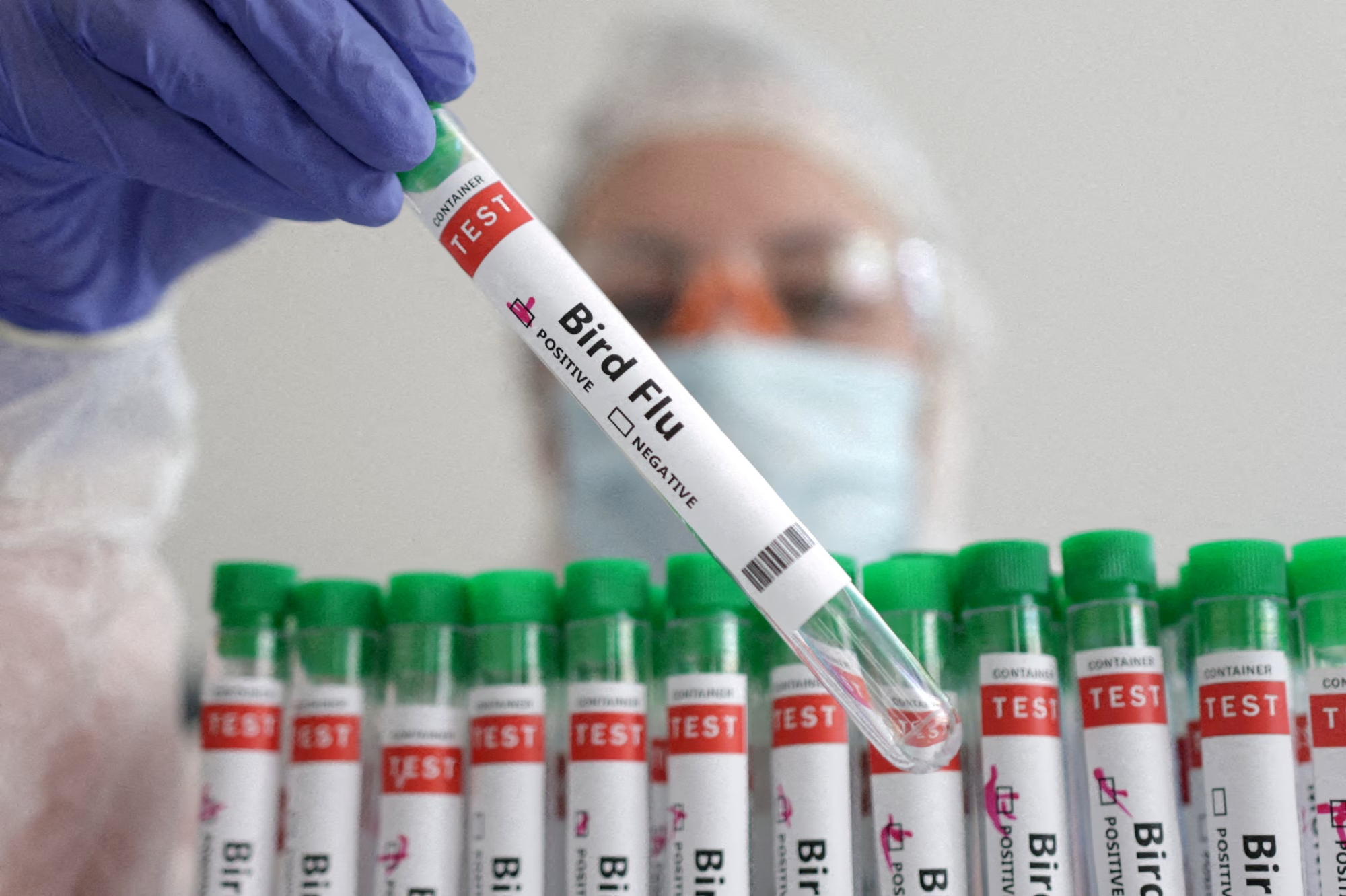
FILE PHOTO: A person holds a test tube labelled “Bird Flu”, in this picture illustration, January 14, 2023. REUTERS/Dado Ruvic/Illustration/File Photo

Consider how a quiet opponent might endanger your livelihood. That is the reality for Colorado dairy producers as the H5N1 avian influenza spreads. The effect is significant, with 47 dairy farms and over 3.2 million birds depopulated. The Colorado Department of Agriculture requires weekly milk testing for all licensed dairy herds. Certified samplers will collect the samples, and positive dairies will be quarantined. “Mandatory milk testing is our best defense,” state authorities say. Compliance with these procedures is critical for all Colorado dairy farmers. As H5N1 approaches, remaining aware and cautious is vital.

Understanding the Threat: H5N1 and Its Implications 

H5N1, often known as avian influenza or bird flu, is a highly pathogenic virus that primarily infects birds but may also infect humans and other animals. It is commonly spread by contact with sick birds, their saliva, nasal secretions, or excrement. The virus may also spread via infected surfaces or materials, such as food, drink, equipment, and clothes. The virus is a severe hazard to both animal and human health because of its high death rate and ability to cause severe disease.

In animals, especially chickens, H5N1 causes symptoms such as rapid mortality, nasal discharge, coughing, decreased egg production, and ruffled feathers. The disease’s effects may be severe, frequently involving the slaughter of whole flocks to prevent future spread. In humans, H5N1 infection may cause symptoms ranging from the common flu, such as fever, cough, sore throat, and muscular pains, to severe respiratory disorders, including pneumonia and acute respiratory distress syndrome. The fatality rate in humans is disturbingly high, with more than half of documented cases being deadly.

The current epidemic in Colorado is a stark demonstration of the virus’s lethality and the urgent need for management measures. With 47 confirmed cases on dairy farms, Colorado has the highest number of H5N1 infections in the United States. The state’s reaction, which included the depopulation of nearly 3.2 million birds and the mandatory quarantine of affected dairies, underscores the urgency of the crisis. Furthermore, documented instances of influenza A in five Colorado poultry and dairy farm workers highlight the virus’s zoonotic potential, stressing the need for strict biosecurity measures to safeguard animal and human health.

Proactive Measures: Weekly Milk Testing for Early Detection 

The state veterinarian’s executive order requires weekly milk testing to guarantee early discovery and control of the H5N1 virus. This effort requires trained samplers with rigorous training and certification requirements to collect samples from all registered dairy herds. To ensure consistency and accuracy, the sampling process must follow defined standards, such as using sterile equipment and suitable handling practices to avoid contamination. After collection, the samples are delivered to approved labs for extensive analysis using modern diagnostic instruments. The findings of these tests are then rapidly transmitted to dairy owners and state authorities, allowing urgent reaction actions, such as quarantine or depopulation, to be undertaken as needed.

The Relentless Spread: Economic and Psychological Repercussions 

The continuous spread of H5N1 has had a devastating impact on Colorado’s dairy and poultry industries. The forced depopulation of almost 3.2 million birds this month alone represents a significant economic blow, interrupting the supply chain and resulting in enormous financial losses. With 47 dairy farms verified to be infected, the state has the most crucial number of recorded cases nationwide, emphasizing the outbreak’s urgent severity inside its boundaries.

The economic cost to the industry cannot be emphasized. Dairy and poultry farmers experience an immediate loss of animals and subsequent revenue due to lower output. Although required for containment, quarantine procedures and testing methods exacerbate operations, generating a ripple effect that affects feed suppliers, transportation enterprises, and local economies that rely on these sectors. Furthermore, the psychological toll on farmers coping with the ongoing danger to their livelihoods is significant and sometimes unquantifiable.

The interconnectedness of the dairy and poultry sectors exacerbates the problem. Spillover infections highlight the critical need for stringent biosecurity measures. Detecting H5N1 in 47 dairy farms necessitates immediate action to avoid future spread and preserve the remaining intact animals. Against this context, the importance of the state’s severe testing and quarantine protocols becomes clear. These measures act as critical steps in preventing an even worse calamity, underscoring their importance in the fight against H5N1 avian influenza.

Human Health at Stake: Addressing the Alarming Risks and Necessary Precautions 

As concerning as the situation is for the animals involved, the potential effect on human health cannot be ignored. Confirming five influenzas: A situation involving poultry and dairy farm workers raises serious concerns. Although the number of human transmissions has been restricted so far, quick and thorough action is required to avert a more significant pandemic.

H5N1 poses considerable health hazards. While primarily an avian illness, the virus may infrequently infect people, resulting in severe effects. Infection is often spread by direct or intimate contact with infected birds. However, if people get infected with the virus, it may cause serious respiratory problems and, in some instances, death, as earlier studies from other places have shown.

Several safeguards have been put in place to reduce these dangers. First, stricter biosecurity standards are being implemented across dairy and poultry farms. Workers must use personal protective equipment (PPE), such as masks, gloves, and outerwear, to avoid direct contact with possibly diseased animals. Furthermore, thorough sanitary measures are in place to ensure that any equipment and clothing that comes into touch with the cattle is adequately disinfected.

Routine health tests are now required of all agricultural workers, and anybody displaying flu-like symptoms is promptly separated and investigated for medical reasons. State health agencies have also worked with local healthcare institutions to be on high alert for respiratory diseases, ensuring that possible H5N1 cases are recognized and treated quickly.

Furthermore, a continuing effort is being undertaken to educate agricultural workers about avian influenza symptoms and the necessity of early detection. The state hopes to safeguard farm labor and the larger community from spreading this powerful virus by creating a feeling of alertness and commitment to safety measures. The proactive approach of integrating obligatory testing with strict human health precautions is a complete method to combat this multifaceted danger.

Ensuring Compliance: Robust Enforcement and Penalties for Non-Adherence

This testing obligation will be strictly enforced to guarantee compliance across all licensed dairy herds. Dairies that fail to meet the weekly testing standards will risk hefty civil fines, which act as both a deterrent and a reminder of the seriousness of the problem. The sanctions are intended to be significant enough to motivate compliance while also reflecting the possible public health risk caused by non-compliance. Beyond financial consequences, dairies found in breach may face operational difficulties, such as quarantine procedures, which may significantly limit their production and distribution capacity.

The Colorado Department of Agriculture is critical in monitoring and maintaining compliance with these new testing methods via its specialized enforcement offices. These authorities perform frequent inspections, supervise the collection and analysis of milk samples, and enforce punishments against non-compliant dairy operations. Their efforts are backed by legal and administrative measures, allowing speedy action against violators. The primary purpose of these enforcement actions is preventative rather than punitive: to slow the spread of H5N1 and protect both animal and human health.

The Bottom Line

Mandatory milk tank testing is critical to preventing the spread of highly dangerous avian influenza in Colorado’s dairy and poultry industries. The state intends to protect both businesses by implementing stringent weekly testing methods, emphasizing the need for early discovery. This approach underscores the need for monitoring and cooperation among all stakeholders, including dairy farmers, poultry producers, and health authorities. Protecting public health and ensuring the resilience of these agricultural industries requires an unwavering commitment to testing protocols. The more significant effect includes a strengthened agrarian system better equipped to deal with future pandemics via preventative measures and enhanced biosafety regulations. A collaborative strategy is necessary to address the significant environmental and community well-being impact. Supporting these regulations helps shield sectors from crises and ensures a stable agricultural environment for future generations. Let us commit to our shared duty with the determination that it requires.

Key Takeaways:

  • Mandatory weekly milk tank testing for all licensed dairy herds.
  • Certified samplers will collect milk samples, with positive results leading to quarantine measures.
  • Over 3.2 million birds have been depopulated in response to the virus.
  • H5N1 confirmed in 47 Colorado dairy farms, the highest number of cases nationwide.
  • Human health risks identified, with five influenza A cases in farm workers.
  • Non-compliance with testing mandates will result in civil penalties.

Summary:

Colorado dairy producers are facing a significant threat as the H5N1 avian influenza spreads, causing over 3.2 million birds to be depopulated and 47 dairy farms to be quarantined. The state Department of Agriculture requires weekly milk testing for all licensed dairy herds, with certified samplers collecting samples and positive dairies quarantined. H5N1, also known as bird flu, poses a severe hazard to animal and human health due to its high death rate and ability to cause severe disease. The lethality of the virus and the urgent need for management measures have been highlighted in Colorado, with 47 confirmed cases on dairy farms. The interconnectedness of the dairy and poultry sectors exacerbates the problem, with spillover infections underscoring the need for stringent biosecurity measures.

Learn more:

UK and Canada Ban Chicken Litter in Cow Feed: US Senator Cory Brooker’s New ‘No Stools in Herds Troughs’ Act

Learn why the UK and Canada have prohibited the use of chicken litter in cattle feed. Could Senator Cory Brooker’s recent bill prompt the US to adopt similar measures against this hazardous practice?

Did you realize that the choices you make in what you feed your cows may influence public health? One contentious technique is feeding chicken litter to cows. That’s right: chicken litter, which contains excrement, feathers, and bedding, is sometimes used in cattle feed. But is it safe? This practice, although cost-effective, has been outlawed in the United Kingdom and Canada because of worries about avian influenza. This bird flu affects not just poultry but also other animals and people.

Why should you be concerned about this practice and the potential risks

  • Public Health Risk: Avian influenza can spread from poultry to cows and possibly humans.
  • Animal Welfare: Feeding chicken waste to cows is seen as irresponsible and cruel by many experts.
  • Industry Impact: Such practices can harm the reputation of dairy farming, affecting consumer trust and market dynamics.

Understanding these risks enables you to make more informed decisions about the future of your farm, animals, and business. Continue your education to protect public health and support ethical farming practices.

The Hidden Dangers of Chicken Litter in Cattle Feed 

Chicken litter, a mixture of chicken excrement, feathers, spilled feed, and bedding material, is used to supplement cow feed due to its low cost and high nutritional content. Despite its advantages, this practice has significant health consequences. Pathogens in chicken litter, such as avian influenza, may be passed to cattle, increasing the likelihood of disease transmission. Furthermore, this feeding practice has been connected to botulism outbreaks, which are severe and possibly deadly illnesses produced by Clostridium botulinum toxins. These concerns make the technique contentious and hazardous, emphasizing the need for more stringent laws to safeguard animal welfare and public health.

Senator Cory Brooker’s Bold Move: The No Stools in Herds’ Troughs Act 

Senator Cory Brooker has sponsored the No Stools in Herds’ Troughs Act to prevent the dangerous practice of mixing poultry litter into cow feed. The statute firmly outlaws the use of feces in animal feed, its manufacturing, and interstate trafficking. This measure is intended to safeguard animal welfare and public health from the hazards connected with this practice.

Expert Opinions: A Unified Stand Against Dangerous Feeding Practices  

The professional viewpoints on this matter are apparent. Dr. Steve Van Winden, a well-known animal health expert, cautions that eating feces might induce botulism in cattle. Dr. Brian Ferguson emphasizes the risk of transmitting H5N1 avian influenza via such techniques, describing it as a direct threat to animal and human health.

Bill Bullard, CEO of a prominent cattle advocacy organization, describes these techniques as reckless and inhumane, highlighting the need for ethical standards to protect animal welfare and food safety.

Michael Kovach, a sustainable farming advocate, agrees, pointing out that dangerous feeding methods undermine the agricultural industry’s credibility and public confidence, possibly jeopardizing long-term food security.

Feeding Animal Waste to Livestock: Beyond Immediate Health Risks 

Feeding animal excrement to cattle raises serious public health problems that extend well beyond the immediate health of the animals. When chicken droppings are given to cows, diseases such as avian influenza (H5N1) may cross-species, presenting a significant danger. These diseases may mutate in new hosts, posing new hazards to human health. Diseases like botulism become more likely, potentially affecting your meat and dairy products. By keeping livestock healthy, we safeguard the safety of our food supply and avoid dangerous epidemics that might jeopardize public health and economic stability.

The Complexity Behind Chicken Litter 

Chicken litter, often called chicken litter, combines poultry feces, feathers, spilled feed, and bedding such as sawdust or straw. It is frequently used in cow feed due to its low cost and nutritional value. However, this procedure has significant health concerns. An important issue is the development of avian influenza, a dangerous virus that infects birds and may be transmitted to cows via contaminated feed. Furthermore, chicken litter may include spores of Clostridium botulinum, the germ that causes botulism, which may severely sicken or kill cattle. Because of these hazards, researchers and lawmakers advocate for more rigid feed rules to safeguard animal and public health. Feeding animal excrement to cattle is considered unethical and harmful since it can potentially transfer illness between species.

The Bottom Line

Feeding poultry litter to cows in large-scale feedlots and dairies is a harmful practice already outlawed in the United Kingdom and Canada. Senator Cory Brooker’s No Stools in Herds’ Troughs Act, introduced in the United States, seeks to outlaw this danger. The legislation aims to eliminate feces in animal feed, resulting in a healthier and more ethical food system. Experts warn that this approach may spread illnesses like avian influenza and botulism, harming cattle and people. Passing this legislation will benefit public health and animal welfare by decreasing the spread of hazardous diseases and encouraging cleaner feeding practices. Finally, this law would promote a more responsible and sustainable agricultural industry.

Key Takeaways:

  • Chicken litter in cattle feed poses significant health risks due to potential disease transmission, particularly avian influenza.
  • The UK and Canada have already implemented bans on this practice in large-scale feedlots and dairies.
  • Senator Cory Brooker introduced the No Stools in Herds’ Troughs Act to ban the addition of excrement to animal feed in the US.
  • The proposed act would prohibit the manufacture or interstate commerce of animal feed containing excrement.
  • Feeding animal excrement to livestock is identified as a contributing factor to diseases like botulism and H5N1 in cattle.
  • Experts such as Dr. Steve Van Winden and Bill Bullard support the act, emphasizing the cruelty and irresponsibility of the practice.
  • Independent farmers and advocacy groups are aligning with scientific experts to support the ban.
  • Effective management and enforcement of waste control standards are crucial to preventing health risks associated with feeding animal waste to livestock.

Summary:

Chicken litter, a mixture of chicken excrement, feathers, spilled feed, and bedding material, is commonly used in cattle feed due to its low cost and high nutritional content. However, this practice has significant health risks, including the spread of avian influenza, which affects not only poultry but also other animals and humans. Public health risks include the potential spread of avian influenza from poultry to cows and possibly humans, as well as the impact on animal welfare and industry reputation. Feeding chicken waste to cows is seen as irresponsible and cruel by many experts, and it can harm the reputation of dairy farming, affecting consumer trust and market dynamics. Senator Cory Brooker’s No Stools in Herds’ Troughs Act aims to prevent the dangerous practice of mixing poultry litter into cow feed, outlawing the use of feces in animal feed, its manufacturing, and interstate trafficking. Experts argue that eating feces might induce botulism in cattle, transmitting H5N1 avian influenza and undermining the agricultural industry’s credibility and public confidence. Passing the No Stools in Herds’ Troughs Act would benefit public health and animal welfare by decreasing the spread of hazardous diseases and encouraging cleaner feeding practices, promoting a more responsible and sustainable agricultural industry.

Learn more:

Will USDA Compensation for H5N1 Avian Influenza Boost Dairy Herd Testing?

Will the USDA’s new compensation for H5N1 losses inspire dairy farmers to take a more proactive approach to herd testing? Will this increased vigilance lead to improved dairy herd health?

Imagine losing up to 20% of your milk production overnight. This nightmare could become a reality for many dairy farmers as the H5N1 highly pathogenic avian influenza threatens their herds. Despite the risk, many dairy farmers still hesitate to test their herds. As of July 1st, the USDA offers financial relief by compensating dairy farmers for lost milk production if their herds are infected with this devastating virus. This program is a lifeline and a beacon of hope, providing compensation covering up to 90% of losses and offering a significant financial buffer. The question remains: will this encourage producers to test more?  Will this program help increase testing?

Bird Flu’s Unexpected Impact: A Crisis for Dairy Farmers Amid H5N1 Outbreaks

Since its identification, the H5N1 highly pathogenic avian influenza (HPAI), often called bird flu, has posed significant threats to agriculture and public health. Primarily affecting poultry, this virus can also infect mammals, including humans, albeit rarely. The Centers for Disease Control and Prevention (CDC) keeps tracking and managing its spread. Forty-two dairy herds in nine states have been impacted, underscoring the urgency and challenge of this crisis in the agricultural sector.

Research and field reports suggest that dairy cows infected with H5N1 or exposed to the virus through environmental contamination can reduce milk production by as much as 10-20%. This reduction can be attributed to factors such as fever, reduced feed intake, and overall poor health of the animals.

Reluctance and Concerns: Understanding Dairy Farmers’ Hesitancy to Test for H5N1 

Dairy herd testing numbers reveal a notable hesitancy among dairy farmers to test their livestock for H5N1 Avian Influenza. Several factors contribute to this reluctance. The financial burden of testing can be significant, especially for smaller operations. Testing procedures can stress animals and temporarily decrease milk production, impacting immediate revenue. A positive result could mean quarantine or culling, causing further economic loss and operational disruptions. 

Additionally, dairy farmers must understand that early detection and mitigation are potent tools in the fight against H5N1 avian influenza. Fear of public knowledge of an infection harming their reputation and reducing market demand, despite bird flu’s non-transmissibility to humans in the context of dairy products, is a valid concern. However, this fear can be mitigated through comprehensive support and effective communication about early detection and mitigation benefits, empowering farmers to take proactive steps.

USDA’s Compensation Blueprint: Financial Relief for Dairy Farmers Amid H5N1 Outbreak

The USDA has clearly defined the compensation program to help dairy farmers impacted by H5N1 avian influenza. Eligibility is simple: herds must be confirmed as infected with H5N1, adhering to USDA diagnostic standards for consistency and accuracy. 

Farmers should apply through the Farm Service Agency (FSA), utilizing online forms from the FSA’s website or local offices. Applications must include vet reports, diagnostic test results, and detailed records of lost milk production due to the outbreak. 

After submission, program administrators will review the documentation. The program promises to cover up to 90% of milk-production losses, easing the financial burden on dairy farmers and supporting their recovery amid the H5N1 crisis.

Challenges in the Current Testing Practices for H5N1 in Dairy Herds

Current testing for H5N1 in dairy herds follows federal and state guidelines that mandate routine surveillance and prompt reporting of suspected cases. Typically, this involves regular sampling and laboratory testing of symptomatic animals, with high-risk areas requiring more frequent monitoring. 

Nonetheless, several challenges undermine these testing protocols. Financial constraints limit smaller dairy farms’ ability to perform frequent tests, and sampling many animals presents operational difficulties. A lack of rapid testing facilities in rural areas delays results, complicating timely decisions. 

Administrative delays in approvals and compensations further reduce farmers’ incentive to test. Additionally, the stigma of an HPAI outbreak can deter reporting due to fears of economic and reputational damage. These barriers create gaps in surveillance, hindering early detection and containment of H5N1 in dairy herds.

Incentivizing Vigilance: Will USDA’s Compensation Drive Higher H5N1 Testing Rates Among Dairy Herds? 

The USDA’s compensation program for dairy farmers, which will reimburse up to 90% of milk-production losses due to H5N1 infections, is expected to significantly boost testing rates among dairy herds. This financial incentive provides a compelling reason for farmers to test for H5N1, alleviating their economic concerns. 

This program offers crucial financial support. Dairy farmers often struggle with slim profit margins, and an outbreak can wreak economic havoc. The promise of substantial reimbursement eases this burden, encouraging farmers to test and report infections rather than silently endure losses or underreport issues. 

Operationally, guaranteed compensation supports proactive biosecurity and health monitoring on farms. Rigorous testing ensures early detection and containment, preventing widespread outbreaks. The USDA’s policy allows farmers to implement and maintain thorough testing protocols without fearing financial collapse, fostering sustainable herd management

Health-wise, incentivizing regular testing through financial compensation also supports public health. Detecting H5N1 early within herds reduces both animal spread and zoonotic transmission, aligning with broader public health objectives to control avian influenza and protect both animal and human populations. 

The USDA’s program is poised to be a strong catalyst for increased H5N1 testing among dairy farmers. It aims to create a more resilient and responsive agricultural sector by addressing financial, operational, and health concerns.

Expert Opinions Highlight Potential Surge in H5N1 Testing Among Dairy Farmers Due to USDA’s Compensation Initiative 

Experts highlight the significant impact of the USDA’s compensation initiative on dairy farmers’ testing behaviors. Dr. Marlene Wolfe, a veterinary epidemiologist at Emory University, states, “Financial incentivization is a potent motivator. By offering compensation for losses due to H5N1, the USDA directly addresses the economic fears that deter farmers from seeking testing.” Monica Schoch-Spana, a medical anthropologist at Johns Hopkins, adds that economic security significantly influences compliance with health measures. Dairy farmer James Rodriguez from Wisconsin notes, “The promise of up to 90% compensation for lost milk production could be a game-changer. Knowing the financial hit from an H5N1 outbreak can be mitigated makes it more likely we’ll invest in regular testing.” Similarly, Dr. Amy Maxmen from the CDC highlights that such programs encourage proactive health measures, asserting, “When farmers are confident their livelihoods are protected, they are more likely to participate in early detection efforts, crucial for controlling the virus’s spread.” This combination of expert opinions and practical experiences suggests the USDA’s compensation program will likely enhance vigilance and testing rates among dairy farmers, fostering a more resilient sector amidst the H5N1 crisis.

A Comprehensive Look at the Implications of Increased Testing and Compensation within the Dairy Industry 

The implications of increased testing and compensation within the dairy industry are multifaceted. USDA’s financial incentives likely encourage more dairy farmers to engage in H5N1 testing, promoting proactive health management. This improves herd health by swiftly identifying and isolating infected animals, curbing virus spread, and reducing livestock health impacts. 

The program covers up to 90% of milk production losses, allowing farmers to sustain operations without severe financial strain. This support is crucial for smaller dairy farms that might otherwise struggle to recover from such losses. 

Widespread testing and compensation may drive industry standardization in health practices, enhancing the quality and safety of milk products for consumers. USDA’s intervention could bolster market stability, reassuring domestic and international markets of the U.S. dairy supply chain’s reliability during health crises. 

However, this raises questions about the long-term sustainability of such compensations and potential dependency on government aid. While immediate economic relief is beneficial, a balanced approach is needed to foster resilience within the industry and encourage sustainable health practices and self-reliance. 

USDA’s compensation initiative for H5N1-affected dairy farmers is a step towards better herd health, sustained milk production, and market stability. It also underscores the need for long-term strategies to maintain these benefits and ensure the dairy industry’s robustness against future outbreaks.

The Bottom Line

The USDA’s initiative to compensate dairy farmers for H5N1-related losses could reshape disease management in the dairy industry. By offering financial relief, the program aims to ease economic distress and encourage proactive testing among dairy producers, highlighting the crucial role of monetary incentives in promoting public health vigilance. 

Throughout this analysis, we’ve examined the H5N1 outbreak’s impact on dairy farms, farmers’ hesitation to test regularly, the USDA’s financial support framework, and challenges in current testing practices. Experts agree that monetary compensation will likely boost H5N1 testing in dairy herds, indicating a move towards better biosecurity measures

The critical question is whether the USDA’s compensation program can significantly increase H5N1 testing on dairy farms. Financial incentives might reduce farmers’ reluctance, but lasting success depends on ongoing education, streamlined testing, and sustained government support. Moving forward, stakeholders in the dairy industry must stay vigilant against health threats. The USDA’s program is essential, but a continuous commitment to disease prevention and quick action is crucial. We urge dairy farmers to seize this opportunity to protect their livelihoods and strengthen the agricultural sector against zoonotic diseases.

Key Takeaways:

  • USDA’s compensation program starts on July 1st and aims to support dairy farmers affected by H5N1.
  • Dairy farmers with confirmed H5N1 infections can apply for compensation through the Farm Service Agency.
  • The program covers up to 90% of milk-production losses for farms hit by the H5N1 outbreak.
  • This initiative may increase the incentive for dairy herds to test for H5N1, potentially elevating testing rates and early detection.
  • Expert opinions suggest that financial relief programs could increase the number of dairy farms undergoing H5N1 testing.
  • Enhanced vigilance through increased testing might lead to better management of H5N1 outbreaks within the dairy sector, thereby mitigating broader economic impacts.

Summary:

The H5N1 highly pathogenic avian influenza (HPAI), also known as bird flu, poses significant threats to agriculture and public health. With 42 dairy herds in nine states affected, the Centers for Disease Control and Prevention (CDC) manages its spread. Research suggests that dairy cows infected with H5N1 or exposed to the virus through environmental contamination can reduce milk production by 10-20% due to factors such as fever, reduced feed intake, and poor animal health. However, dairy herd testing numbers reveal a notable hesitancy among dairy farmers to test their livestock for H5N1. Factors contributing to this reluctance include the financial burden of testing, which can stress animals and temporarily decrease milk production, impacting immediate revenue. The USDA has defined a compensation program to help dairy farmers affected by H5N1 avian influenza. Eligibility is simple: herds must be confirmed as infected with H5N1, adhering to USDA diagnostic standards. The USDA’s compensation program is expected to significantly boost testing rates among dairy herds, alleviate economic concerns, and support proactive biosecurity and health monitoring on farms.

Learn more:

Send this to a friend