








Is poor communication bleeding hundreds per cow from your operation? The data says yes.
EXECUTIVE SUMMARY: We’ve uncovered something that’ll change how you think about workforce management—and it’s not what you’d expect. Communication failures are silently draining thousands from dairy operations nationwide, yet most farms don’t even track these losses. Recent NMSU Extension research reveals that 33% of Southwest dairy workers primarily speak K’iché, a Mayan dialect, while 60% of all dairy employees read at fifth-grade levels or below—creating a perfect storm for costly protocol misunderstandings. Here’s what’s particularly striking: farms implementing teach-back validation methods see 20-30% reductions in operational errors and 15% improvements in worker retention, translating to measurable profit gains per cow. We’re seeing this play out differently across regions—California’s tech-savvy young workers miss biological nuances during seasonal transitions, while Wisconsin’s experienced hands resist digital interfaces that disrupt decades of muscle memory. As labor markets tighten and 2025 brings increased regulatory pressure, the farms mastering validated communication aren’t just surviving—they’re capturing competitive advantages their neighbors won’t recognize until it’s too late. The solution starts with one simple step: pick your most problematic SOP, observe what’s really happening, then implement systematic validation.
KEY TAKEAWAYS
- Teach-back training reduces operational errors by 20-30%—requires workers to demonstrate procedures instead of just nodding along, with measurable ROI appearing within 8-12 weeks (Journal of Extension, 2020)
- Address the K’iche’ communication gap immediately—nearly one-third of Southwest dairy workers speak this Mayan dialect as their primary language, not Spanish, requiring targeted multilingual training approaches (NM State Extension, 2025)
- Optimize colostrum protocols for literacy levels—delays as short as 2 hours impact passive immunity transfer, but simplified visual training tools can bridge the fifth-grade reading gap affecting 60% of workers (Journal of Dairy Science, 2023)
- Implement seasonal communication strategies—summer cooling protocols in California heat versus winter ventilation management in Wisconsin require region-specific training that acknowledges operational realities (USDA Workforce Report, 2023)
- Systematic validation improves retention by 15%—consistent communication protocols reduce costly turnover while building operational resilience in today’s tight labor market (Industry Surveys, 2023-24)
Been moving between dairy operations from California’s blazing Central Valley to Wisconsin’s frozen Driftless region lately, and there’s this pattern that keeps hitting me… communication breakdowns are the most expensive leaks you’re probably not tracking.
You might think communication’s just soft management stuff. But honestly? In the dairy barn, it’s as critical as monitoring butterfat numbers or managing your fresh cows through transition.
The Language Reality Nobody’s Measuring
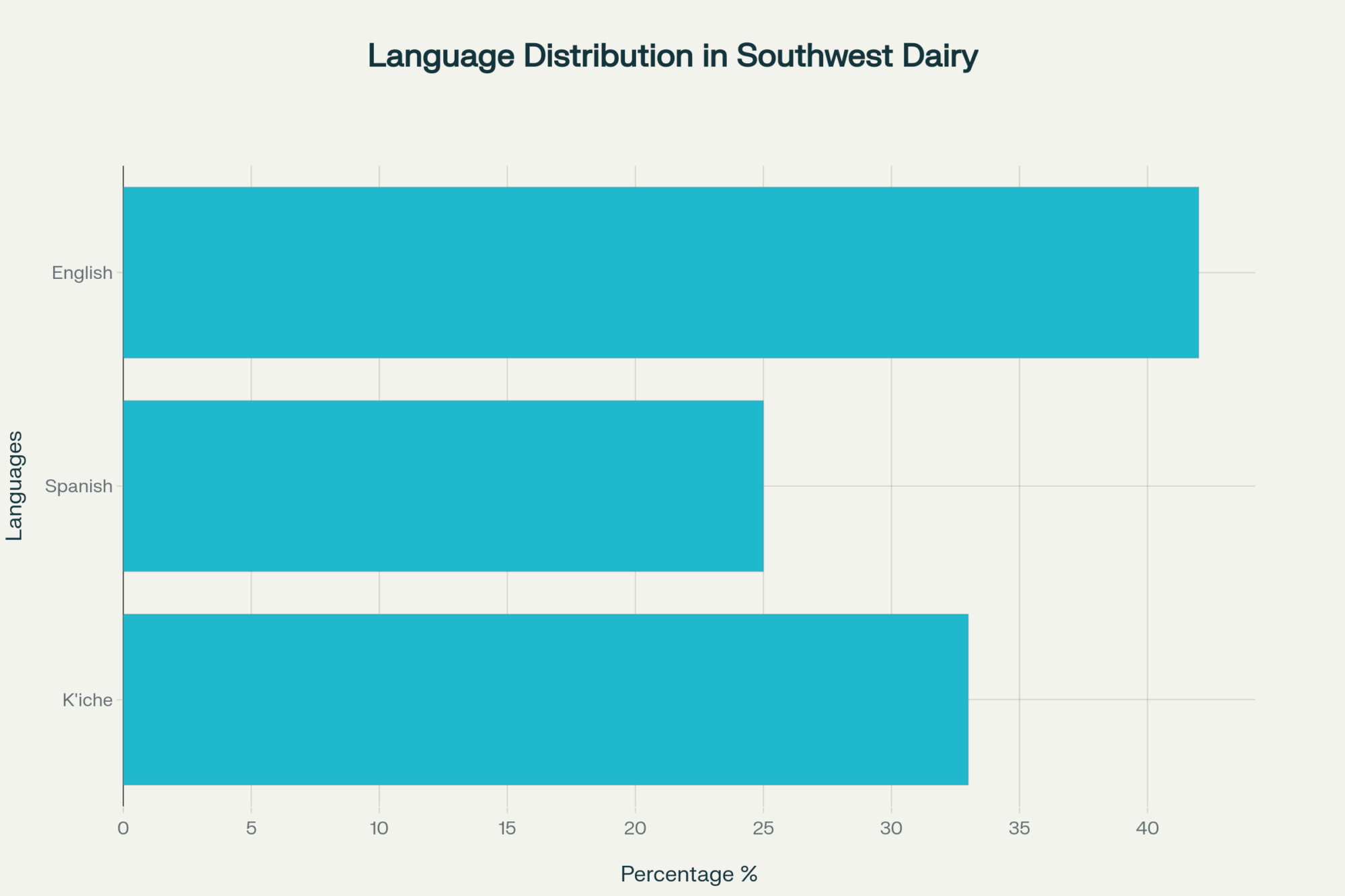
Here’s what caught my attention recently—Dr. Robert Hagevoort’s research at New Mexico State University documented that roughly one-third of Southwest dairy workers primarily speak K’iche’ as their first language, with Spanish and English trailing way behind. That’s not Spanish we’re talking about… it’s a Mayan dialect that creates a whole different complexity layer.
Picture trying to relay critical fresh cow protocols through that linguistic maze while workers are managing stressed animals in 115°F heat. The cognitive load is staggering, and we’re just not accounting for it.
What really gets me is the literacy piece. Hagevoort’s research shows that 60% of dairy employees read at fifth-grade levels or below—way below the high school comprehension typically assumed in our written procedures (New Mexico State University Extension, 2024). The gap between what we write and what actually gets understood? It’s massive.
We know from recent Journal of Dairy Science research that colostrum feeding timing is absolutely critical—delays as short as a couple of hours can significantly impact passive immunity transfer and future milk production (Journal of Animal Science, 2024).
Regional Patterns That Actually Matter
Up in Wisconsin’s traditional dairy country during those brutal February mornings, you’ve got seasoned hands who can read cattle like a book but get frustrated entirely when touchscreen technology interrupts decades of muscle memory. These folks can spot ketosis symptoms from across the barn but struggle when digital systems replace familiar routines.
Meanwhile, down in California’s megadairies, young workers adapt quickly to technology but sometimes miss fundamental dairy biology concepts that matter during seasonal transitions. When you’re adjusting TMR for different NDF levels in fall corn silage, that knowledge gap shows up in inconsistent mixing that affects fiber digestion and milk fat production.
Solutions That Are Actually Working
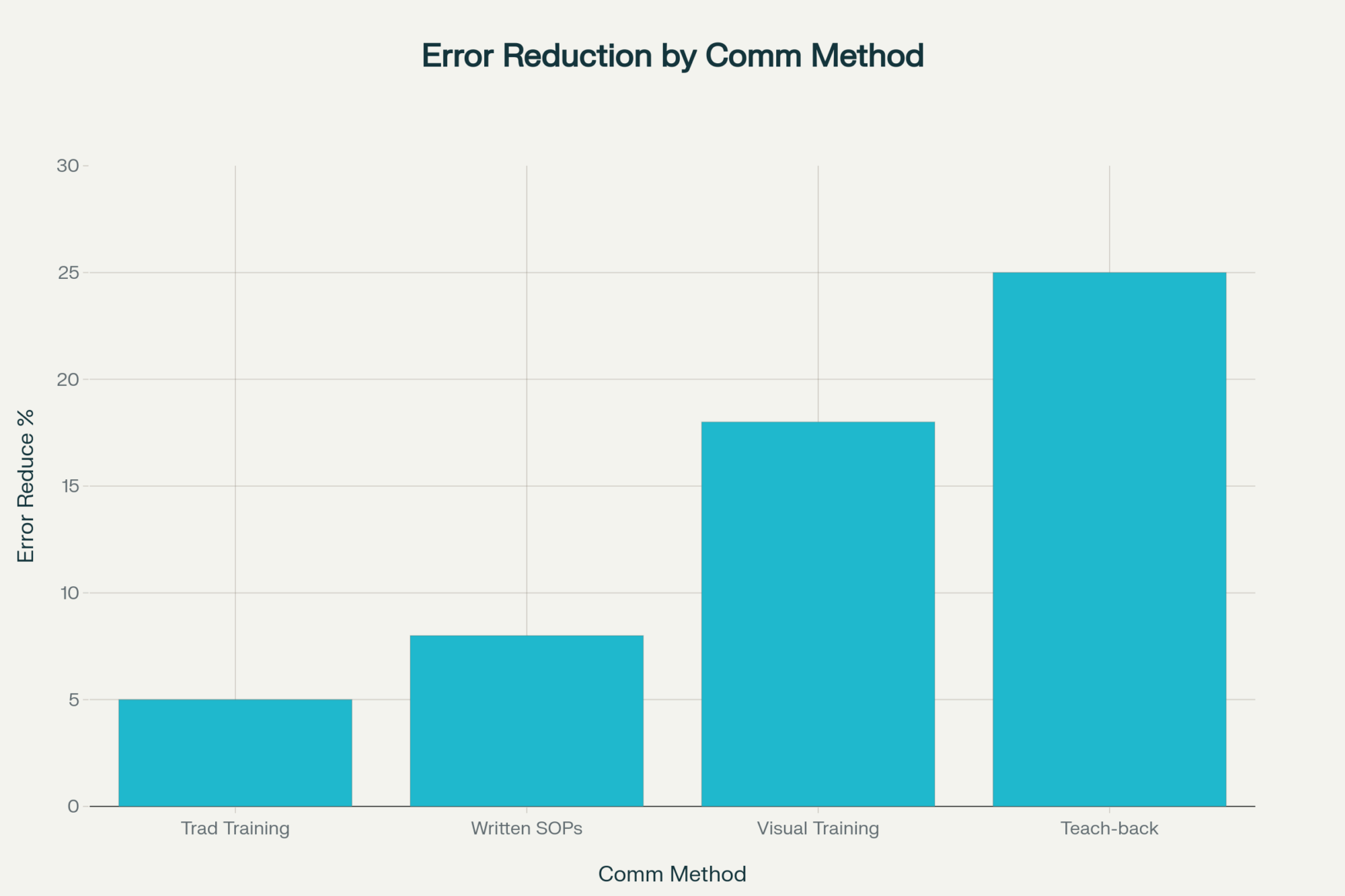
The approach showing real promise is the teach-back methodology, borrowed directly from healthcare. Instead of asking “Do you understand?” you require workers to demonstrate or explain the procedure back to you. Research documented in the Journal of Extension shows this approach significantly improves compliance when operations implement systematic validation (Journal of Extension, 2020).
But here’s the reality—initial implementation gets messy. Question volume spikes, managers feel overwhelmed, and some workers resist what feels like micromanagement. Industry observations from recent surveys suggest that persistence through this adjustment period often leads to improved outcomes, though results vary by operation size and workforce composition.
Some operations are exploring visual training approaches using smartphones and tablets, although a systematic evaluation of their effectiveness in dairy settings remains limited at this point.
Your Implementation Framework
Pick one high-stakes protocol—vaccination timing, colostrum management, whatever keeps you awake when it goes wrong. Spend a couple of weeks observing actual execution versus written procedures. Document every variation you see.
Then implement teach-back validation for that one protocol. Instead of asking “Got it?”, require workers to walk through or demonstrate the procedure. Track what happens to error rates over time.
Don’t expect an overnight transformation—change takes patience, especially when you’re dealing with multilingual teams and seasonal operational pressures. However, the data consistently shows that operations mastering clear, validated communication pull ahead, while competitors continue to absorb preventable losses.
The Bottom Line Reality
As workforce composition continues shifting and regulatory pressure increases, this isn’t soft skills training—it’s operational infrastructure that directly impacts your bottom line. The operations that figure this out systematically will capture advantages their neighbors won’t recognize until it’s too late to respond effectively.
How’s communication really working in your operation? Because the gaps might be costing more than you realize.
Complete references and supporting documentation are available upon request by contacting the editorial team at editor@thebullvine.com.
Complete references and supporting documentation are available upon request by contacting the editorial team at editor@thebullvine.com.
Learn More:
- Boost Your Dairy Farm’s Efficiency: Easy Protocol Tweaks for Big Results – Discover tactical, on-farm strategies for improving existing protocols and getting buy-in from your team. This article provides practical methods to reduce errors and improve compliance without a complete overhaul, building on the foundational concepts of validated communication.
- Critical Research Exposes Dairy Labor Crisis as Policy Uncertainty Threatens Industry Stability – Understand the staggering economic costs of high labor turnover and policy uncertainty. This strategic piece reveals how workforce instability directly impacts milk production and profitability, providing a compelling economic argument for mastering communication and retention to gain a competitive edge.
- AI and Precision Tech: What’s Actually Changing the Game for Dairy Farms in 2025? – Explore how AI, robotics, and other precision technologies offer a scalable, innovative solution to labor-related challenges. This article showcases how automation can enforce protocols consistently and deliver measurable ROI, providing a future-oriented perspective that complements the article’s focus on human-centric solutions.
 Join the Revolution!
 Join the Revolution!
Join over 30,000 successful dairy professionals who rely on Bullvine Weekly for their competitive edge. Delivered directly to your inbox each week, our exclusive industry insights help you make smarter decisions while saving precious hours every week. Never miss critical updates on milk production trends, breakthrough technologies, and profit-boosting strategies that top producers are already implementing. Subscribe now to transform your dairy operation’s efficiency and profitability—your future success is just one click away.




