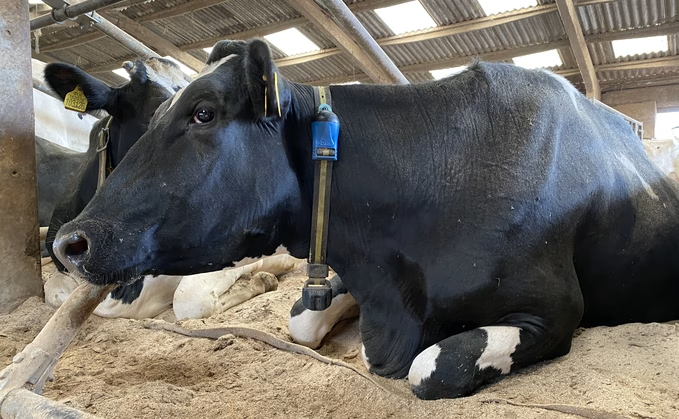


Cow breath holds metabolic secrets! Discover how exhalomics revolutionizes dairy health monitoring without needles or stress.
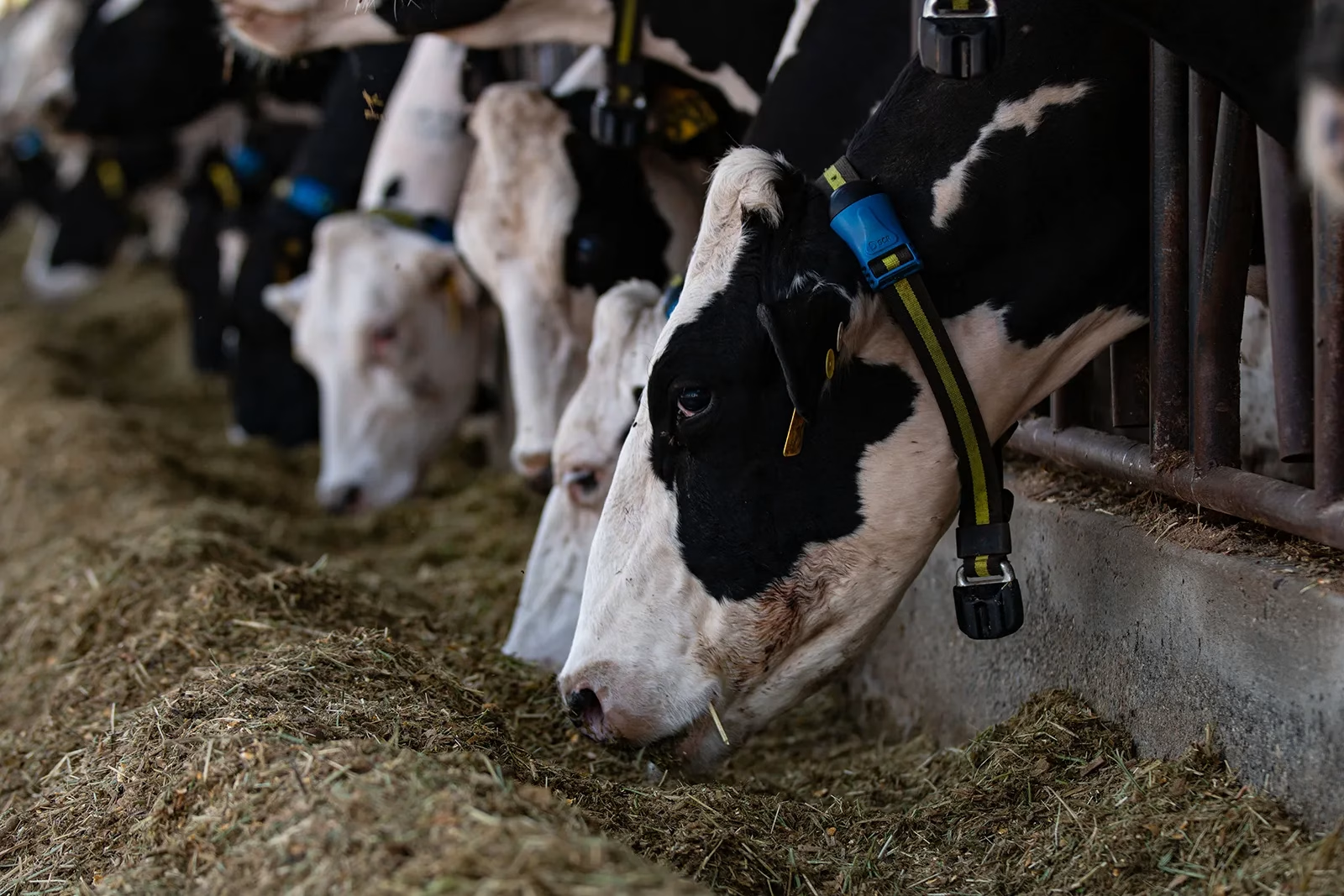
While you’re busy drawing blood, tubing rumens, and chasing fresh cows for ketone tests, your animals are literally exhaling valuable health data with every breath. The cutting-edge field of breath analysis will make your current diagnostic methods look as outdated as tie-stall barns and hand milking. The future of dairy health monitoring isn’t in needles or tubes-it’s floating in the air under your nose.
The Gold Mine You’re Missing Every Day
Let’s be honest: how many times have you smelled that sweet, fruity acetone odor on a fresh cow’s breath and already knew she was ketotic before the blood test confirmed it? That’s breath analysis in action it’s just the tip of the iceberg.
For generations, top herdsmen have unconsciously used breath to evaluate animals. That distinct smell from ketotic cows isn’t just a curious observation- it’s a scientifically validated biomarker that correlates strongly with blood BHB levels. But while you’ve been limited to your human nose, researchers like Dr. Mutian Niu at ETH Zurich have been developing technologies that make your sensory abilities look primitive by comparison.
What makes dairy cows particularly fascinating is their unique dual-source breath profile. Unlike humans or other single-stomached animals, cow breath contains compounds from both normal respiration (reflecting systemic metabolism) and belching, which brings gases directly from the rumen. It’s like getting a direct pipeline into the rumen environment and the bloodstream simultaneously- two diagnostic gold mines for the price of one breath sample.
Why Your Current Health Monitoring Methods Are Costing You Money, Time, and Cow Comfort
Are you still chasing cows around at 5 am for blood samples? Still, watching manure consistency to guess at rumen pH? Still, relying on milk components once a month to adjust rations? Let’s call it what it is-primitive.
Current approaches to monitoring dairy cow health often feel as outdated as using a rotary phone in the smartphone era. Blood sampling for ketosis detection, rumen fluid collection through cannulas or stomach tubing, and physical examinations all come with significant drawbacks that eat into your time, labor, and profitability:
- They stress your animals (affecting their welfare and potentially reducing production)
- They require skilled personnel (ever try training a new hire to properly tube a cow without drowning her?)
- They provide only periodic snapshots rather than continuous monitoring (like trying to manage your finances from a single bank statement per month)
- They face increasing regulatory scrutiny (what works in research may soon be regulated out of commercial settings)
The question isn’t whether traditional methods will be replaced but when and whether your operation will be ahead of the curve or playing catch-up.
Reading Your Cows Like an Open Book: What Each Exhale Reveals
Just as experienced herdsmen can look across the free-stall barn and spot a cow with a displaced abomasum before she even shows clinical signs, breath analysis provides a window into multiple aspects of cow physiology. The bovine breath contains numerous biomarkers that correlate with various aspects of health and metabolism.
Key Components in Cow Breath
- Major Gases: Carbon dioxide (CO₂) and methane (CH₄) are abundant in cow breath, primarily from rumen fermentation. Methane isn’t just a greenhouse gas concern-it represents a significant energy loss from your ration! That’s like watching feed nutrients float away with each belch. Are you comfortable with that level of waste in today’s tight-margin dairy business?
- Rumen Function Indicators: Exhaled volatile fatty acids, primarily acetate propionate, directly mirror VFA production within the rumen. Think of these breath compounds as real-time feed efficiency meters. Just as your milk components give you a window into the rumen function at the bulk tank, these breath compounds can give you that information at the individual cow level without waiting for the milk truck.
- Ketosis Biomarkers: That sweet, fruity smell on a fresh cow’s breath? That’s acetone-a well-established breath biomarker for ketosis. Fat mobilization during negative energy balance (common in early lactation) leads to ketone body production, with volatile acetone readily diffusing into breath. It’s like your fresh cows carry their built-in ketosis test strips in their breath. Why aren’t we using them?
- Disease Markers: Just as you might smell a putrid odor from a cow with metritis, researchers find that respiratory diseases have their breath signature. Imagine detecting pneumonia in your weaned calves before they show elevated temps or nasal discharge. How many calves could you save with a 24–48-hour head start?
- Other Compounds: A wide range of additional substances in breath are influenced by diet composition and health status. Think of it as the difference between the smell of a barn full of fresh cows versus a pen of late-lactation Jerseys on a high-forage ration.
Traditional vs. Breath-Based Methods: What You’re Missing
| Monitoring Approach | Traditional Methods | Breath Analysis |
| Ketosis Detection | Blood BHB testing: Requires restraint, causes stress, provides only point-in-time results | Acetone measurement: Non-invasive, strong correlation with blood BHB (r = 0.81), potential for continuous monitoring |
| Rumen Function | Rumenocentesis or stomach tubing: Invasive, requires veterinary skills, risk of peritonitis | eVFA breath analysis: Non-invasive, correlates with rumen VFA patterns, no injury risk |
| Methane Emissions | Respiration chambers: Expensive, artificial environment, limited animal numbers | Portable analyzers (LMD/GreenFeed): On-farm use, natural behavior, individual animal data |
| Cost | $5-15 per blood test, $25-75 per rumen sample | Initial equipment investment with minimal per-test costs |
| Stress to Animal | Moderate to high | Minimal to none |
| Sampling Frequency | Limited by labor and animal stress | Potential for daily or even continuous monitoring |
Why This Technology Will Transform Your Dairy-Whether, You’re Ready or Not
The non-invasive nature of breath analysis opens the door to more frequent, stress-free monitoring that could revolutionize several aspects of dairy management. Just as activity monitors transformed heat detection from visual observation to 24/7 monitoring, breath analysis could do the same for metabolic health.
Early Ketosis Detection-Stop It Before It Steals Your Profits
Every dairy farmer knows the cascading disaster that stems from ketosis-milk loss, displaced abomasums, metritis, reduced fertility, and increased susceptibility to other diseases. With ketosis affecting 40-60% of transition cows subclinically, early detection is worth real money.
Breath acetone has shown a strong positive correlation (r = 0.81) with blood β-hydroxybutyrate (BHB) levels, making it a viable biomarker for ketosis detection without the restraint, stress, and labor of blood sampling. Think of it as having a ketosis test that works without having to chase a cow down or wait for her to urinate.
Imagine your parlor automatically flagging transition cows developing ketosis before they even drop in milk or go off, giving you a 24–48-hour head start on treatment or ration adjustments. How much milk production could you save by catching ketosis before it crashes your fresh cows?
Non-Invasive Rumen Function Monitoring-The SARA Early Warning System
If subclinical ketosis is the silent milk-production killer in your fresh cows, then subacute ruminal acidosis (SARA) is the stealthy profit-thief in your high producers. Fiber mats disappearing from manure? Milk fat depression? Laminitis cases increasing? All potential signs of SARA show up far too late.
Here’s the uncomfortable truth about SARA diagnosis today: we’re detecting it days after the damage is done. When milk fat drops or your nutritionist pulls rumen samples from a few cannulated research cows, you’ve already lost production feed efficiency and potentially created long-term hoof health issues.
Imagine fine-tuning your TMR formulation based on real-time feedback from your cows’ actual rumen environment rather than waiting for milk components to drop or manure consistency to change. It would be like having a rumen pH check on every cow in your herd, done automatically multiple times per day, without ever having to restrain a single animal.
Are you still comfortable letting your nutritionist make diet decisions based on a single rumen sample from four cannulated university cows that don’t even eat the same TMR as your herd?
Methane Emission Tracking-When Environmental Goals Meet Economic Realities
With increasing pressure on the dairy industry to reduce its carbon footprint, methane emissions are under the microscope. But there’s a silver lining-lower methane emissions often correlate with better feed efficiency. It’s a rare win-win where environmental goals align perfectly with your bottom line.
Breath analysis provides a direct, non-invasive method for measuring individual cow methane emissions. Consider identifying which cows in your herd convert expensive TMR components into milk and which are burping your profits into the air. With feed costs representing a major portion of production expenses, a 5-10% improvement in feed efficiency by selecting lower-methane-emitting genetics could mean substantial annual savings per cow.
Are you ready to start selecting this trait before the regulations force you?
What The Skeptics Say-And Why They’ll Be Left Behind
Many producers will understandably question whether breath analysis technology is ready for commercial dairy farms. According to recent studies, dairy farmers generally rely on their previous experience and judgment when making health decisions, consulting veterinarians only for unusual cases. Most producers believe they’re already using appropriate health monitoring methods.
But here’s the reality: while your experience is valuable, early detection technology will outperform even the most seasoned herdsman for subclinical conditions with no visible symptoms.
Skeptics often raise these concerns:
“It’s too expensive” – Early technology adoption requires investment, but consider what you’re already spending on ketosis treatments, lost milk, and veterinary services. The real question is: can you afford NOT to detect these issues earlier?
“My current methods work fine.” – Do they? How many subclinical ketosis cases are you missing until they become clinical problems? Research shows that 40-60% of transition cows have subclinical ketosis, most of which goes undetected with traditional monitoring.
“It’s just another gadget” – Unlike many technologies that generate data without clear actions, breath analysis provides immediately actionable information: which specific cows need intervention before visible symptoms appear.
Getting Started with Breath Analysis: Practical Next Steps
If you’re ready to explore how breath analysis could benefit your operation, here are tangible steps to consider:
- Explore the GreenFeed system – This commercially available technology was originally designed for methane monitoring but is evolving to measure other breath compounds. It functions like a parlor grain feeder, enticing cows to visit while it samples their breath. Contact C-Lock Inc. for demonstrations and pricing.
- Connect with university extension – Several land-grant universities are conducting pilot projects with commercial farms. Contact your local extension office about upcoming trials or demonstrations in which you could participate.
- Start with targeted monitoring – If full implementation seems overwhelming, focus on high-risk groups like transition cows. Even periodic breath sampling of fresh cows could provide valuable early warning for metabolic issues.
- Join forces with neighboring farms – Consider sharing costs with nearby operations to test the technology before individual farm investment.
The Future Is Already Here’s Just Not Evenly Distributed
The most exciting potential lies in integrating breath analysis with comprehensive farm management systems. Just as activity monitors, rumination sensors, and milk component data now work together in many modern dairies, breath analysis could become another piece of the precision dairy puzzle.
By combining real-time breath data with other indicators (milk yield, activity, rumination time), sophisticated algorithms could provide a holistic assessment of each cow’s health and metabolic status. Imagine your farm management software alerting you that cow #2574 might be in heat and that she’s showing early signs of SARA, has slightly elevated ketones, and will likely develop clinical mastitis within 48 hours if left untreated.
The Bottom Line
Let’s not mince words: the days of chasing cows for blood samples and relying on subjective health assessments are numbered. Breath analysis represents one of the most promising frontiers in dairy cow health monitoring, offering a genuinely non-invasive window into metabolism and well-being. While challenges remain, research breakthroughs demonstrate that breath analysis has moved beyond theoretical potential to practical application.
Forward-thinking dairy producers should watch this technology closely. The ability to detect health issues earlier, monitor rumen function continuously, and make data-driven decisions without stressing animals could dramatically improve profitability and welfare.
As sensor technology becomes more affordable and robust, and validation studies confirm its effectiveness in commercial settings, breath analysis may soon become as fundamental to dairy management as daily bulk tank testing and cow-side ketosis testing.
The question is not whether this technology will transform dairy farming but who will be the winners and losers in the transition. Will you be an early adopter leading the industry or struggle to catch up while your competitors gain the edge?
The clock is ticking. The technology is advancing rapidly. And in an industry where margins are measured in cents per hundredweight, that early warning system could make the difference between thriving and merely surviving in tomorrow’s dairy industry.
It’s time to stop ignoring what your cows tell you with every breath.
Key Takeaways:
- Non-invasive monitoring: Breath analysis detects ketosis (via acetone) and rumen health (via VFAs) without blood draws or cannulas.
- Methane tracking: Measures individual cow emissions, linking feed efficiency to environmental impact.
- Tech-driven future: Combines lab-grade tools (GC-MS) with farm-ready sensors (e-noses) for real-time data.
- Early disease alerts: Potential to flag BRD, mastitis, and metabolic disorders before clinical signs emerge.
- Challenges: Standardization, eructation interference, and cost barriers must be addressed for widespread adoption.
Executive Summary:
Dairy cow breath analysis (exhalomics) offers a non-invasive window into metabolic health, enabling early detection of ketosis, rumen dysfunction, and methane emissions. By analyzing volatile organic compounds (VOCs) in exhaled breath, farmers can monitor rumen fermentation via volatile fatty acids (VFAs) and identify diseases like bovine respiratory disease (BRD). Technologies like mass spectrometry and electronic noses provide real-time insights, reducing reliance on invasive methods. While challenges like eructation interference and sensor costs remain, this innovation promises improved welfare, precision farming, and environmental sustainability.
Learn more:
- Embracing the Future: The Latest Innovations in Dairy Technology and Their Impact on the Industry
Explore how digital breathalyzers and other agtech breakthroughs are transforming dairy diagnostics, herd health, and day-to-day operations. - Predicting Cow Respiratory Rates Using Image Analysis and FFT
Discover how non-invasive image analysis and computer vision are enabling real-time, automated health monitoring for dairy herds. - Reducing Methane Emissions via Genetic Selection in Cattle
Learn how genetic selection, breath-based methane tracking, and milk analysis are helping producers cut emissions and boost feed efficiency.
 Join the Revolution!
 Join the Revolution!
Join over 30,000 successful dairy professionals who rely on Bullvine Weekly for their competitive edge. Delivered directly to your inbox each week, our exclusive industry insights help you make smarter decisions while saving precious hours every week. Never miss critical updates on milk production trends, breakthrough technologies, and profit-boosting strategies that top producers are already implementing. Subscribe now to transform your dairy operation’s efficiency and profitability—your future success is just one click away.