Archive for dairy workforce management

Critical Research Exposes Dairy Labor Crisis as Policy Uncertainty Threatens Industry Stability

Your dairy’s 38.8% turnover rate is costing 1.8% milk yield while robots deliver 60% labor savings—time to automate or evacuate.

EXECUTIVE SUMMARY: Stop treating your 38.8% annual labor turnover as “normal” when it’s literally killing your milk production and profitability. Research confirms that high employee turnover triggers a devastating 1.8% decrease in milk production, 1.7% increase in calf loss, and 1.6% spike in cow death rates—yet most dairies still view workforce instability as an unavoidable cost of doing business. With immigrant workers comprising 51% of the dairy workforce and producing 79% of U.S. milk, policy uncertainty threatens a potential 90% milk price spike if enforcement disrupts operations. Smart operators are responding with strategic automation: the global milking robot market expanded from $2.98 billion to $3.39 billion in 2025 alone, delivering labor time reductions from 5.2 to 2 hours daily while maintaining 24,185 pounds of milk per cow annually. While geographic winners like Kansas (+11.4% production) and Texas (+10.6%) capitalize on favorable labor economics, traditional dairy states face a competitive disadvantage from wage differentials reaching $5.14 per hour between regions. The future belongs to operations that master both workforce retention strategies and automation adoption, because waiting for Washington to solve your labor crisis isn’t a business plan, it’s a bankruptcy strategy.

KEY TAKEAWAYS

  • Labor Turnover is Production Poison: Every percentage point of turnover above optimal levels costs operations measurable losses in milk yield (1.8% decrease), calf survival (1.7% increase in losses), and cow mortality (1.6% increase)—making workforce stability a biological imperative, not just an operational preference.
  • Automation ROI Accelerating: Robotic milking systems reduce daily management time from 5.2 to 2 hours while the global market growth of 14% annually signals crisis-driven adoption—early implementers report labor cost reductions of 15-20% with breakeven periods shrinking to 5-7 years.
  • Geographic Arbitrage Opportunity: Regional production shifts reflect labor cost advantages, with Plains states (Kansas +11.4%, Texas +10.6%) crushing traditional dairy regions through strategic positioning—operations in high-wage states must achieve 24,000+ pounds per cow annually or face competitive obsolescence.
  • Policy Uncertainty Demands Self-Reliance: Trump’s undefined “temporary pass” program creates strategic paralysis when 51% immigrant workforce produces 79% of U.S. milk; profitable operations are building workforce strategies that withstand political volatility rather than banking on government solutions.
  • Component Quality Premium Capture: With a 2025 milk production forecast at 227.3 billion pounds and butterfat emphasis reaching 31.8% in breeding indexes, operations optimizing components while reducing labor dependency through automation position for maximum profitability in volatile markets.
dairy labor shortage, robotic milking systems, dairy automation, dairy farm efficiency, dairy workforce management

Let’s cut through the noise: Your dairy operation is sitting on a labor time bomb, and President Trump’s proposed “temporary pass” program just lit the fuse. A new comprehensive analysis reveals that the U.S. dairy industry faces a structural labor crisis so severe that policy disruptions could trigger a 90% spike in milk prices and force the closure of over 7,000 dairy farms. But here’s what the industry doesn’t want you to know: this isn’t just another policy debate. This is about survival.

The brutal reality? Your operation’s future depends on workers you likely can’t legally employ, and the proposed solution might make things worse, not better. With the national dairy herd reaching 9.43 million head in April 2025, up 89,000 from April 2024, and milk production in the 24 major states totaling 19.1 billion pounds in May 2025, up 1.7% year-over-year, we’re producing more milk than ever while standing on the shakiest workforce foundation in decades.

Production Metrics Under Pressure: When Record Yields Meet Labor Quicksand

Here’s the uncomfortable truth your industry associations won’t tell you: We’re celebrating record productivity while our workforce foundation crumbles beneath us. Milk production per cow averaged 24,117 pounds annually in 2023, up 29% from 2003, with production per cow forecast at 24,155 pounds for 2025. Texas led regional growth with milk production surging 10.6%, while Kansas posted an 11.4% increase and South Dakota expanded 9.2%.

But ask yourself this: What good are these record yields when you can’t find workers to harvest them?

The dependency numbers are staggering. Immigrant workers comprise 51% of the entire U.S. dairy workforce, and farms employing immigrant labor account for 79% of the nation’s milk supply. Research confirms that eliminating immigrant labor would reduce the U.S. dairy herd by 2.1 million cows and milk production by almost 50 billion pounds, resulting in a 7,000 decrease in the number of dairy farms.

What This Means for Your Operation: If you’re achieving below 24,000 pounds per cow annually, you’re doubly vulnerable. You lack both the efficiency margins to absorb wage pressures AND the workforce stability to maintain consistent output. Your survival depends on fixing at least one of these problems, fast.

The Turnover Time Bomb: Why Your Labor Costs Are Killing Your Margins

Here’s a statistic that should keep you awake at night: The average turnover rate for surveyed dairies was 38.8%. While this is lower than the national private sector average of 47.1%, it’s still devastating when considering that high employee turnover has been linked to a 1.8% decrease in milk production, a 1.7% increase in calf loss, and a 1.6% increase in cow mortality rates.

Do the math on what turnover is actually costing you. Labor contributes up to 10-15% of the cost to produce milk, making it the second largest expense on your dairy. Every percentage point of turnover costs money you probably can’t afford. Some progressive organizations have reduced turnover from 7% to less than 1% through strategic employee housing programs, demonstrating that effective workforce management delivers measurable returns.

Are you treating labor like a cost center or recognizing it as your most critical investment? Research from multiple dairies shows that stockmanship training alone can increase milk production by 810 kg (1,782 pounds) per lactation. Yet most farms still view training as an expense rather than a profit driver.

What This Means for Your Operation: Stop viewing high turnover as “normal” in dairy. Operations achieving turnover rates below 10% through strategic investments in housing, training, and workforce development are capturing significant competitive advantages while you’re bleeding money on recruitment and retraining.

Regional Production Shifts: The Great Dairy Migration Is Real

While you’ve been debating policy, smart money has been voting with its hooves. The numbers don’t lie about which regions are winning and losing this labor war.

States in the Plains and South are crushing traditional dairy regions. Kansas posted a remarkable 11.4% increase in milk production, while Texas grew 10.6% and South Dakota expanded 9.2%. In contrast, California production contracted 1.8%, and Wisconsin, often referred to as America’s Dairyland, managed only 0.1% growth.

Why is this happening? Labor economics, plain and simple. New York’s AEWR increased to $18.83 per hour, up $1.03 from 2024, while Michigan, Wisconsin, and Minnesota saw rates decline to $18.15, down 35 cents per hour. California maintains one of the highest rates at $19.97 per hour, creating massive competitive disadvantages.

The uncomfortable question nobody’s asking: If labor costs are driving production away from traditional dairy states, what happens when immigration enforcement intensifies? Are you positioned in a winning region, or are you clinging to a sinking ship?

What This Means for Your Operation: Geography is destiny in the new dairy economy. Operations in high-wage states must either achieve significantly higher productivity per worker or accelerate the adoption of automation. There’s no middle ground.

Technology Integration: Why Robots Are Your New Best Employees

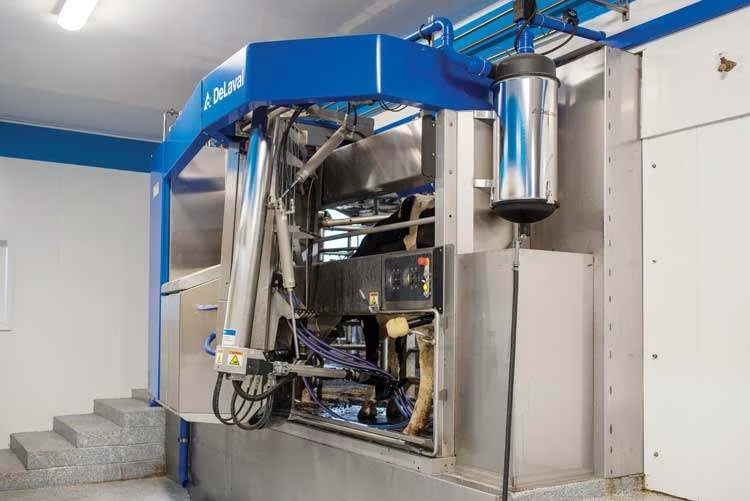
Here’s the reality check the equipment dealers won’t give you: Automation isn’t a luxury upgrade anymore, it’s a survival tool. The global milking robot market is experiencing significant growth, projected to increase from $2.98 billion in 2024 to $3.39 billion in 2025, with an annual growth rate of 14.0%.

But are you moving fast enough? Survey data reveals that two-thirds of dairies now use at least one form of feeding technology, with health monitoring collars and ear tags being the most common. Robotic milking systems adoption has been growing at about 25 percent a year and has particularly “taken off” during the past decade.

The economics are compelling: Each robotic milker can handle 60 cows and costs roughly $200,000, but what’s the cost of losing your entire workforce overnight to an ICE raid? Labor savings alone from robotic systems range from 10% to 29%, with time spent on milking management dropping from 5.2 to 2 hours per day on average.

What’s your excuse for not installing robots? Cost? Research shows that 77% of farms using robotic milking indicated labor time savings as a reason for adoption. The lowest-cost milking parlor systems equate to $0.25 to $1 per hundredweight in milking costs, compared to $2 to $3 per hundredweight with robots; however, robots deliver predictability when labor becomes unreliable.

What This Means for Your Operation: Time spent debating automation ROI is time your competitors are using to install systems. Early automation adopters are reporting significant competitive advantages, with some farms achieving breakeven in 5 to 7 years through optimized management.

Economic Impact: The $53.5 Billion Reality Check

Let’s talk numbers that matter to your bottom line. The March 2025 all-milk price averaged $22.00 per cwt, up $1.30 year-over-year. The 2025 all-milk price forecast has been revised upward to $22.75 per cwt, but these prices assume workforce stability that doesn’t exist.

Labor dependency creates massive economic vulnerability. The USDA’s 2025 forecast anticipates a 3.6% increase in agricultural labor costs, reaching a record $53.5 billion. Estimates suggest that nearly half of the agricultural workforce lacks legal authorization, making entire regions vulnerable to immigration enforcement.

The math is brutal: The average turnover rate for U.S. dairies is 38.8%, resulting in farms incurring thousands of dollars in recruitment and training costs. About 90% of dairy workers in the western U.S. are foreign-born, with about 85% of the total coming from Mexico, creating a single point of failure for most operations.

Are you prepared for labor costs that continue to rise? Labor expenses were up 7.3% compared to 2020 across all farms, with dairy ranking second highest in impact after specialty crops.

What This Means for Your Operation: Every percentage point of turnover costs money you probably can’t afford. Labor instability isn’t just an operational headache, it’s a profit killer that’s getting worse, not better.

Policy Uncertainty: Trump’s “Temporary Pass” Creates Strategic Paralysis

Here’s what President Trump’s farmworker permit proposal really means for your operation: Nothing. And everything. The proposal would allow experienced immigrant workers to remain on farms legally and pay taxes; however, critical details regarding application procedures, eligibility criteria, and the implementation timeline remain undefined.

Trump told Fox News: “We’re working on it right now. We’re going to work it so that some kind of a temporary pass,  where people pay taxes, where the farmer can have a little control as opposed to you walk in and take everybody away”. The program would target workers who have been on farms for “15 and 20 years” and who “possibly came in incorrectly”.

But here’s the problem: How do you make investment decisions when your workforce’s legal status depends on a policy that exists only in sound bites? Should you build H-2A compliant housing or invest in robotic milking systems? The uncertainty itself has become a massive cost.

Why isn’t the industry demanding concrete details? The National Milk Producers Federation has lobbied for years to improve dairy industry access to the H-2A program, which remains limited to seasonal work and excludes year-round dairy operations. This “temporary pass” could be their breakthrough, or another false promise.

What This Means for Your Operation: Stop waiting for Washington to solve your labor problems. Make decisions based on what you can control, not on political promises that may never materialize.

Expert Analysis: No Single Solution to Structural Crisis

Let’s be honest about what the experts are really saying. Labor shortages and rising costs aren’t temporary challenges; they’re the new normal. The pool of workers from traditional immigrant source countries is anticipated to shrink due to declining birth rates and improving economic opportunities in those countries.

The demographic cliff is real: The average age of foreign-born farmworkers has increased significantly (from 36 to 42 years for U.S.-born farm employees), creating a workforce that’s aging out with no replacement pipeline. Domestic labor retention remains a challenge, with historical data indicating that only 0.1% of Americans stay for full agricultural seasons.

Research confirms what you already know: Employee turnover has been linked to a 1.8% decrease in milk production, a 1.7% increase in calf loss, and a 1.6% increase in cow death rates. Your labor instability is literally killing your livestock’s profitability.

What This Means for Your Operation: High turnover isn’t just expensive, it’s deadly to animal performance. Investing in workforce stability yields biological dividends that are reflected in every milk check.

The Latest: Crisis Demands Immediate Strategic Response

Here’s what the research confirms that your industry doesn’t want to admit: No single policy solution will resolve the dairy labor crisis. Trump’s “temporary pass” proposal represents more political theater than coherent policy, creating additional uncertainty rather than providing operational relief.

The brutal facts for dairy operators:

  • Labor disruptions threaten record productivity gains achieved through genetic advancement and management improvements
  • Current wage volatility makes long-term planning nearly impossible without comprehensive risk management strategies
  • Strategic investment in both human capital and automation technology has become essential for operational survival

But here’s the opportunity hidden in the crisis: Early automation adopters are reporting significant competitive advantages, with some farms achieving breakeven in 5-7 years through optimized management. Feeding automation alone can save around 112 minutes per day on a 120-cow farm compared to traditional methods.

Are you building for the future or clinging to the past? The USDA is allocating up to $7.7 billion for climate-smart practices and conservation efforts on farms in 2025, providing accessible funding for dairy producers to invest in both workforce development and automation.

What This Means for Your Operation: The future belongs to farms that stop complaining about the labor crisis and start solving it. Develop dual-track strategies that combine competitive employment practices with accelerated technology adoption. The dairy operations dominating by 2030 won’t be those who solved the labor shortage; they’ll be the ones who made it irrelevant.

As immigration policy debates rage on, ask yourself this critical question: Is your operation building workforce strategies that can withstand political volatility while positioning for long-term competitiveness? In an increasingly automated global market, where milk production is forecasted to reach 227.3 billion pounds by 2025, productivity and efficiency determine who survives and who becomes a cautionary tale.

The choice is yours. But the clock is ticking.

Complete references and supporting documentation are available upon request by contacting the editorial team at editor@thebullvine.com.

Learn More:

Join the Revolution!

Join over 30,000 successful dairy professionals who rely on Bullvine Weekly for their competitive edge. Delivered directly to your inbox each week, our exclusive industry insights help you make smarter decisions while saving precious hours every week. Never miss critical updates on milk production trends, breakthrough technologies, and profit-boosting strategies that top producers are already implementing. Subscribe now to transform your dairy operation’s efficiency and profitability—your future success is just one click away.

NewsSubscribe
First
Last
Consent

Labor Crisis Reality Check: How Immigration Crackdowns Could Increase Milk Prices by 90% and Crash Profits

Stop believing immigration raids only target “criminals.” New data shows 51% of your milking crew could vanish overnight, increasing milk price by 90% but crashing your profits.

The numbers are brutal and undeniable: immigrant workers milk 79% of America’s dairy cows, yet Washington’s immigration theater threatens to eliminate this workforce overnight. With dairy operations already squeezed by volatile milk pricing—the 2025 all-milk price forecast at $20.90 per cwt down from $21.20 in 2024—losing half your milking crew isn’t just an operational nightmare, it’s financial suicide. While industry leaders chase component premiums in an era where butterfat levels have surged to 4.40%, the harsh reality is that without immigrant labor, there won’t be any milk to measure components in.

YearAll Milk Price/cwtClass III Price/cwtClass IV Price/cwt
202320.516.819.2
202421.217.920.5
202520.917.618.2

The dairy industry’s immigration dependency isn’t some abstract policy debate—it’s as fundamental to your operation as maintaining proper dry matter intake (DMI) or monitoring somatic cell counts (SCC). Just as you wouldn’t run your herd on half rations and expect peak lactation curves, America can’t produce 79% of its milk supply while simultaneously deporting the workers who make it happen.

But here’s the question that should keep every dairy operator awake at night: Are you prepared for what happens when political theater collides with economic reality?

The Milking Parlor Reality: When Labor Disappears Overnight

Picture this scenario that’s playing out across the dairy country: You’ve invested $2.5 million in a state-of-the-art rotary parlor capable of milking 400 cows per hour. Your genomic testing program has pushed your herd’s Total Performance Index (TPI) scores to elite levels, with genetic merit focusing on the butterfat and protein premiums that command top dollar in 2025’s component-driven market. But when ICE raids eliminate 60% of your milking crew, that million-dollar parlor becomes an expensive monument to poor workforce planning.

Recent enforcement actions illustrate this reality with devastating clarity. In Berkshire, Vermont, ICE detained eight workers at a dairy farm in what Migrant Justice called “the largest single immigration enforcement action against farmworkers in Vermont in recent history.” In Sackets Harbor, New York, ICE picked up four adults and three children at a dairy operation, part of what the agency described as “enhanced targeted operations.”

Here’s what the industry experts won’t tell you: According to research from Texas A&M University’s Center for North American Studies, dairies employing immigrant labor produce 79% of the U.S. milk supply, while immigrants make up 51% of all dairy labor. Your 500-cow operation, averaging 75 pounds per cow per day at 4.44% butterfat, represents approximately $315,000 in monthly milk revenue at current pricing. Losing 50% of your milking staff doesn’t just cut production—it catastrophically disrupts your entire operational rhythm, from maintaining proper milking intervals to executing precision feeding protocols.

Why This Matters for Your Operation: Rick Naerebout, CEO of the Idaho Dairymen’s Association, estimates that about 90% of workers on Idaho dairy farms come from other countries. The University of Wisconsin-Madison School of Workers study found that between 46-70% of immigrant dairy workers are undocumented. Most dairy operations face immediate operational collapse if enforcement proceeds at current rates.

The Component Revolution Meets Labor Reality

Here’s where the irony gets painful. American dairy has undergone a remarkable transformation over the past two decades, with butterfat content jumping from 3.70% to 4.40% and protein climbing from 3.06% to 3.40%. This component revolution has created unprecedented value, but here’s the kicker: 51% of the workers producing this liquid gold lack legal immigration status.

Economic analysis from Texas A&M University using the IMPLAN model demonstrates the mathematical precision of this crisis. Baseline nationwide economic activity attributable to dairy farming totals $48.1 billion, supporting 301,300 jobs and $19.6 billion in value added. Under a 50% reduction in immigrant labor, these values crash to $36.9 billion, 235,000 jobs, and $15.1 billion. Complete elimination drops the figures to $25.7 billion, 168,700 jobs, and $10.5 billion.

Think of it as developing the perfect Total Mixed Ration (TMR) for peak metabolizable energy (ME) levels, then discovering that your feed mixer operator might disappear tomorrow. You can optimize genetics, nutrition, and management systems all you want, but your technology investments become worthless without skilled workers to execute these precision protocols.

The Economics Are Staggering: Research projects that eliminating immigrant labor would reduce the U.S. dairy herd by 2.1 million cows, slash milk production by 48.4 billion pounds annually, and force 7,011 dairy farms out of business. The economic ripple effects include a $32.1 billion reduction in output and 208,208 lost jobs across the entire agricultural supply chain.

Challenge to Conventional Wisdom: The dairy industry has long operated under the assumption that technology can eventually replace manual labor. But here’s the uncomfortable truth that industry leaders refuse to acknowledge: even the most sophisticated operations remain fundamentally dependent on human expertise that can’t be automated away.

Technology Can’t Replace What’s Being Deported

Modern milking technology requires skilled operators who understand both complex systems and animal behavior—expertise that takes years to develop and can't be quickly replaced when immigration enforcement eliminates experienced workers overnight.
Modern milking technology requires skilled operators who understand both complex systems and animal behavior—expertise that takes years to develop and can’t be quickly replaced when immigration enforcement eliminates experienced workers overnight.

The precision agriculture revolution has transformed modern dairy operations. Automated Milking Systems (AMS), activity monitoring collars, and real-time data analytics now guide everything from heat detection to nutritional adjustments. These technologies have enabled the component gains and efficiency improvements that define competitive operations in 2025.

But the tech evangelists won’t tell you that even the most sophisticated robotic milking systems require skilled technicians for maintenance, troubleshooting, and herd health monitoring. When your AMS goes down at 3 AM during peak lactation, you need experienced workers who understand both the technology and cow behavior—not someone you hired yesterday off Craigslist.

Consider the investment math: A complete robotic milking installation costs $150,000-$275,000 per robot, plus infrastructure for power, connectivity, and facility modifications. For operations already struggling with volatile milk prices and immigration-related labor instability, these capital investments require a stable, skilled workforce to justify the ROI.

What This Means for Your Operation: Research confirms that farms implementing AMS actually maintained the same number of employees after installation, just in different roles. The assumption that automation reduces labor needs is fundamentally flawed—it changes labor requirements, often demanding higher-skilled workers who can manage complex systems.

The H-2A Band-Aid: Why It Won’t Save You

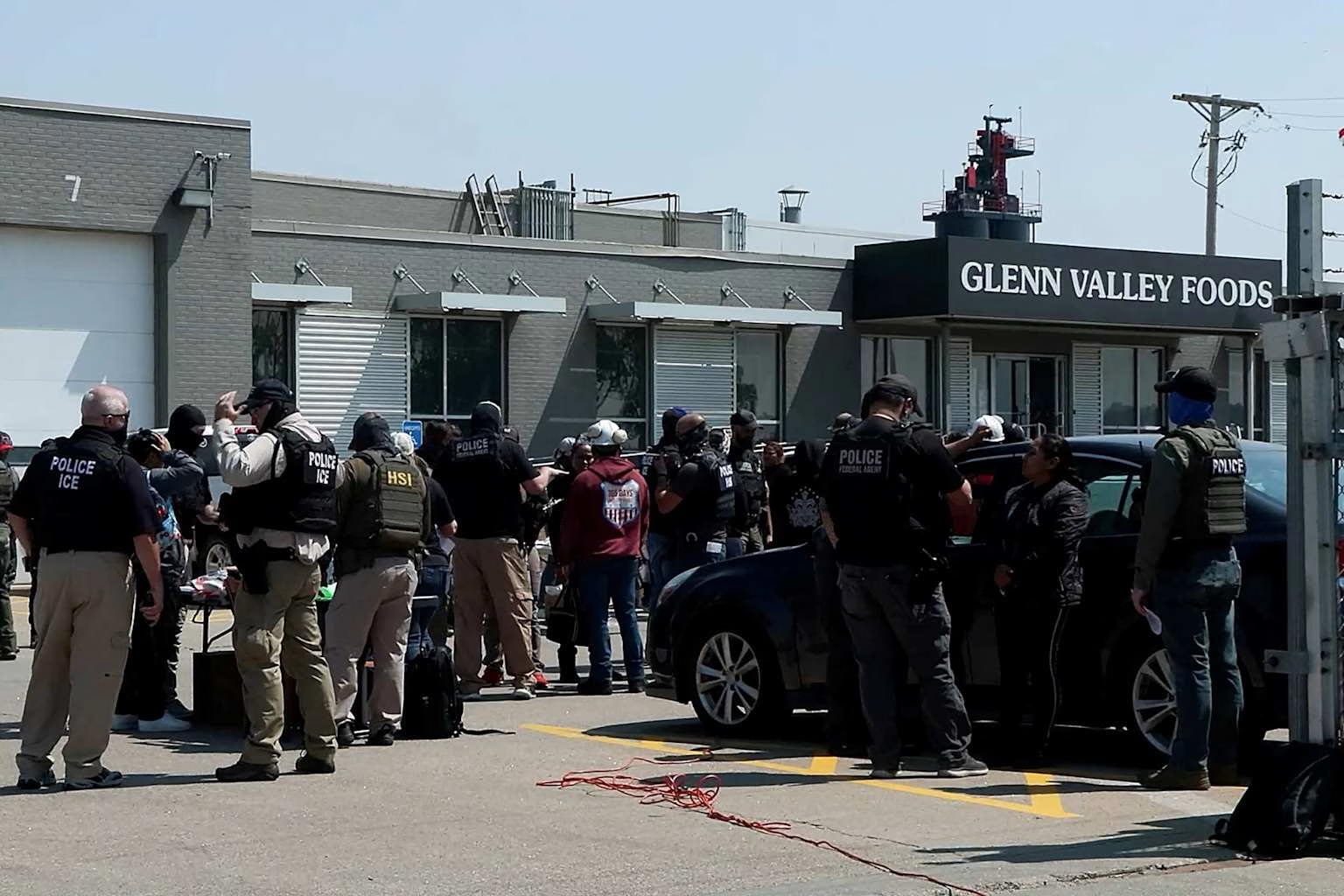
ICE enforcement at Glenn Valley Foods demonstrates the fundamental flaw in relying on government verification systems: even operations using E-Verify face devastating raids that eliminate 60% of workforce capacity overnight. When federal agents admit their own employment verification system is "broken" while raiding compliant businesses, it exposes why H-2A's bureaucratic complexity offers no real protection for dairy operations dependent on year-round labor.
ICE enforcement at Glenn Valley Foods demonstrates the fundamental flaw in relying on government verification systems: even operations using E-Verify face devastating raids that eliminate 60% of workforce capacity overnight. When federal agents admit their own employment verification system is “broken” while raiding compliant businesses, it exposes why H-2A’s bureaucratic complexity offers no real protection for dairy operations dependent on year-round labor.

Every discussion about agricultural labor eventually lands on the H-2A visa program, which has exploded from 44 visas in 1987 to over 378,000 positions approved in 2023. Industry advocates love pointing to this growth as proof the system works, but the numbers tell a different story for dairy operations.

USDA Economic Research Service data shows that the H-2A program’s focus on “temporary or seasonal” labor makes it fundamentally unsuitable for year-round dairy operations. The average duration of an H-2A certification in fiscal 2023 was 5.75 months, but cows need milking 365 days a year, twice daily, with no seasonal breaks.

Michigan State University agricultural economist Zach Rutledge estimates that domestic workers with employment taxes may cost between $15 and $25 per hour, while H-2A workers can cost almost twice as much, $25 to $30 per hour. He noted that cost may be higher when factoring in housing and other expenses.

The National Milk Producers Federation has lobbied extensively to expand H-2A access for year-round operations, noting that even sheep herding—a similar year-round animal agriculture sector—has H-2A access that dairy lacks. Despite these efforts, “dairy farms do not have access to the H-2A farmworker program” for their core operational needs.

The Bottom Line: H-2A might work for seasonal vegetable operations with high-margin crops, but it’s economically devastating for dairy farms operating on thin margins with year-round labor needs.

Industry Reality Check: Recent research shows that dairy operations require specialized skills that can’t be quickly replaced through temporary worker programs. The industry has lobbied extensively to expand H-2A access for year-round operations, but regulatory barriers persist.

Financial Reality Check: What Immigration Enforcement Really Costs

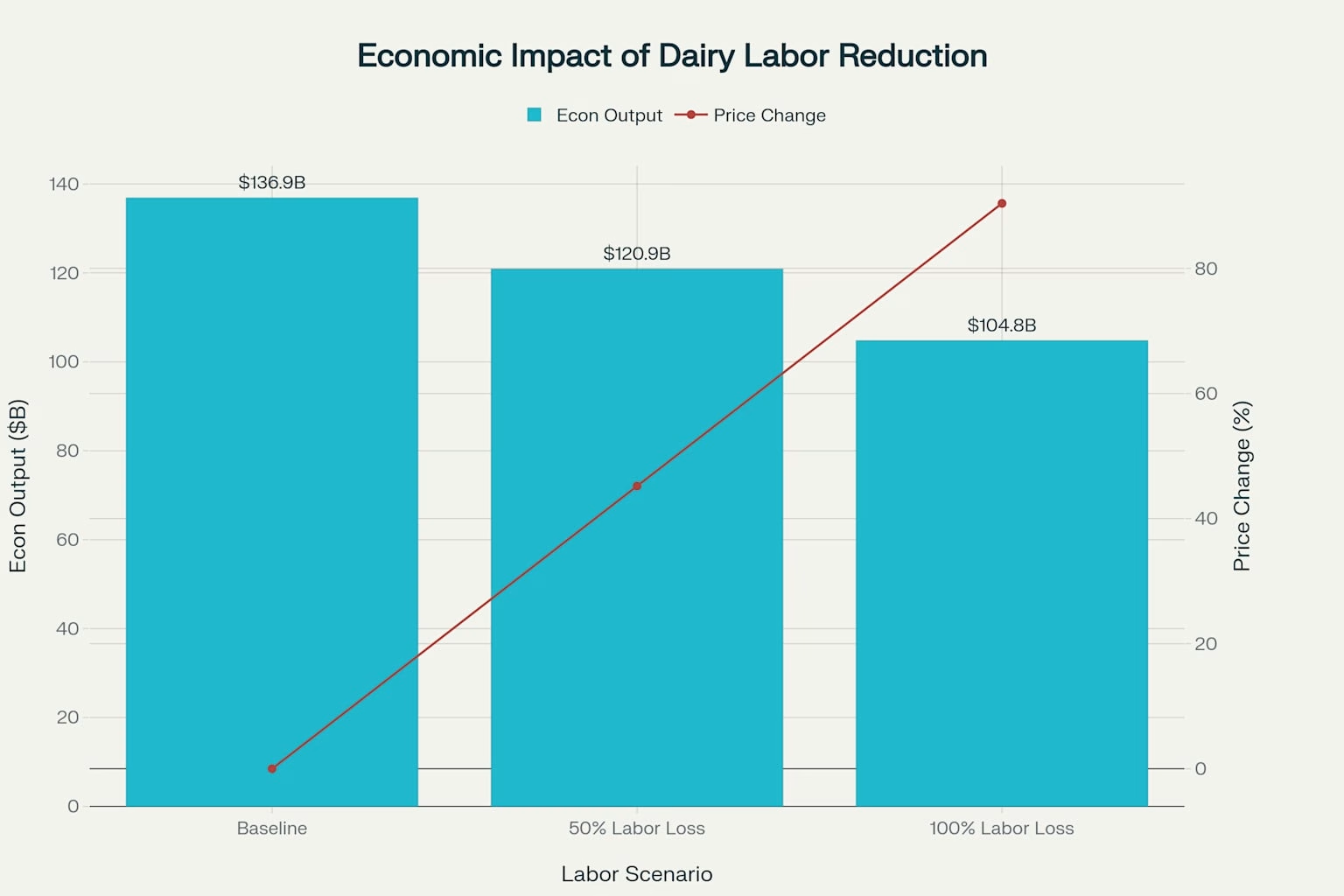
Let’s quantify what mass deportations would mean for your milk check. Economic models from Texas A&M University project that eliminating immigrant labor would reduce the dairy herd by 1.34 million head, cut milk production by 29.5 billion pounds, eliminate 4,532 farms, and increase retail milk prices by 61%. More recent projections suggest a potential 90.4% increase in retail milk prices.

For producers, the math is equally brutal, according to peer-reviewed analysis:

  • Economic Activity Reduction: From $48.1 billion to $25.7 billion (complete elimination)
  • Job Losses: 132,600 positions eliminated (both immigrant and native-born workers)
  • Value-Added Decline: From $19.6 billion to $10.5 billion
  • Farm Closures: 4,532 dairy operations forced out of business

Current Market Context: With 2025 milk pricing already under pressure—all-milk price forecast at $20.90 per cwt compared to $21.20 in 2024—dairy operations can’t absorb additional labor cost shocks. The component premiums that have driven recent profitability (butterfat up to 4.40%, protein to 3.40%) become meaningless if you can’t maintain consistent milking schedules.

Economic research indicates mass deportations could reduce U.S. GDP by 2.6% to 6.2% over the next decade, with agriculture facing $60 billion in annual losses. States with large immigrant populations—California, Texas, and Florida—would face the most severe impacts, precisely the regions driving America’s dairy production growth.

Uncomfortable Truth: Historical data from previous deportation campaigns shows they didn’t increase wages or job opportunities for U.S.-born workers—instead, such actions “lowered wages and contributed to job losses.” Removing 500,000 immigrants from the labor market could lead to 44,000 fewer jobs for U.S.-born workers.

Smart Producers Are Already Adapting

The dairy industry’s response to labor vulnerability has included significant investments in automated milking systems (AMS), with robotic installations growing rapidly across North America.

Forward-thinking dairy operations aren’t waiting for Washington to solve this crisis. They’re implementing strategies that separate survivors from casualties:

Worker Retention and Development Programs The most successful operations create comprehensive retention programs addressing workers’ long-term needs: healthcare access, housing assistance, English language training, and skills development pathways. Investing in worker stability means investing in operational resilience and protecting your genetic and management investments.

Research shows that dairy operations with stable workforces achieve 12% higher rolling herd averages and experience significantly lower turnover-related productivity losses.

I-9 Compliance and Audit Preparation Brook Duer, staff attorney at Penn State’s Center for Agricultural and Shale Law, emphasizes that dairy operations need systematic I-9 audit preparation. In an I-9 audit, “you have three business days to produce any documents,” but officers may show up unannounced with written notice of inspection. Smart operations maintain meticulous employment records and develop response protocols before enforcement arrives.

Technology Integration for Labor Efficiency Strategic technology adoption enhances worker productivity rather than replacing workers. Precision feeding systems, automated health monitoring, and data analytics platforms allow skilled workers to manage larger herds more effectively while reducing physical labor demands.

Supply Chain Diversification Smart operators reduce dependence on immigration-vulnerable suppliers by diversifying vendor networks and building relationships with multiple service providers, including feed suppliers, transportation companies, and processing facilities with demonstrated stable labor practices.

Modern dairy operations depend on skilled workers who seamlessly integrate with advanced milking technology—yet 51% of these essential employees lack legal immigration status, making worker retention programs a critical survival strategy for smart producers navigating the current labor crisis.

The International Competitive Reality

While America struggles with immigration-induced labor instability, global competitors are building structural advantages. The latest international dairy production data shows that countries with more stable labor policies have captured the expanding market share.

New Zealand: Seasonal worker programs provide a predictable labor supply for expansion and modernization, enabling consistent 2-3% annual production growth through their Recognised Seasonal Employer (RSE) scheme.

Canada: 50-year track record of managed agricultural immigration through their Seasonal Agricultural Worker Program supports long-term investment planning without the boom-bust cycles affecting U.S. operations.

European Union: Regional worker mobility policies eliminate immigration uncertainties that plague U.S. operations, supporting stable planning horizons.

These countries are positioning themselves to capture market share from U.S. producers struggling with workforce disruptions. When American dairy operations can’t maintain consistent production due to labor shortages, international suppliers fill the gap at premium prices.

Looking Forward: Policy Solutions That Actually Work

The upcoming executive order Trump promised represents political damage control, but real solutions require moving beyond enforcement-only approaches:

Modernized Guestworker Programs Reform H-2A and similar programs to accommodate year-round agricultural needs while strengthening worker protections. Remove seasonal restrictions for essential agricultural sectors like dairy and streamline applications for legitimate employers.

Earned Legalization for Current Workers Provides pathways to legal status for long-term undocumented workers that are integral to dairy operations. The National Milk Producers Federation has called for permanent legal status for current workers and their families, recognizing that mass deportation is economically catastrophic.

Balanced Enforcement Priorities Realign federal spending from the current 14:1 ratio favoring immigration enforcement over labor standards enforcement. This disparity enables worker exploitation and undermines labor standards for all workers.

Regional Labor Compacts Develop agreements allowing seasonal worker mobility across agricultural sectors and geographic areas, reducing administrative burdens while maintaining oversight and worker protections.

The Bottom Line: Adapt or Perish

Remember that 90.4% milk price increase projection? That’s not theoretical—it’s the mathematical result of eliminating the immigrant workforce that produces 79% of America’s milk supply. Every day without policy solutions moves the industry closer to that economic cliff.

The component revolution has transformed dairy economics, with operations optimizing for butterfat and protein premiums in an increasingly sophisticated market. However, all genetic progress and technological innovation would become worthless without skilled workers executing daily management protocols.

Four Critical Questions Every Dairy Operator Must Answer:

  1. Can your operation survive a 50% labor loss within 30 days? According to Texas A&M research, most can’t.
  2. Are your technology investments labor-dependent or labor-independent? The honest answer determines your vulnerability level.
  3. What’s your contingency plan if H-2A costs double overnight? Because that’s exactly what Michigan State economist Zach Rutledge projects could happen.
  4. How are you building political capital for immigration reform? Individual operators can’t solve this alone.

Implementation Timeline for Immediate Action:

Week 1-2: Contact your state dairy association to join advocacy efforts. The National Milk Producers Federation and American Farm Bureau Federation are leading initiatives but need unified producer support.

Month 1: Conduct a comprehensive I-9 audit of current documentation. Brook Duer’s Penn State guidance emphasizes that “you have three business days to produce any documents” when ICE arrives.

Month 2-3: Develop worker retention programs with housing assistance, healthcare access, and English language training. Research shows 12% higher production efficiency from stable workforces.

Month 4-6: Invest in technology that enhances rather than replaces skilled workers, following successful AMS integration models that maintain employment levels while shifting job requirements.

The smart money is now in operations preparation. This means immediate action on worker retention, technology investment, risk management, and political engagement through established farm organizations.

Your Next Step: Contact your state dairy association this week to join advocacy efforts for agricultural labor reform. The National Milk Producers Federation and American Farm Bureau Federation are leading these efforts but need unified producer support to influence policy outcomes.

This isn’t about politics—it’s about protecting your operation’s future viability in a market where component optimization and operational efficiency determine survival. The crisis is coming whether we acknowledge it or not. The question isn’t whether you’ll be affected but whether you’ll be ready when it hits your milking parlor at 4 AM tomorrow morning.

The harsh reality? While Washington plays political theater with immigration policy, your cows still need milking twice daily, your components need optimizing, and your operation needs protection. The producers who recognize this fundamental truth—and act accordingly—will be the ones still standing when the dust settles.

KEY TAKEAWAYS

  • Labor Vulnerability Reality Check: 51% of dairy workers lack legal status while producing 79% of U.S. milk supply, creating immediate operational collapse risk for any farm dependent on immigrant labor—regardless of herd size or technological sophistication.
  • Economic Catastrophe Projections: Complete immigrant labor elimination would reduce dairy herds by 2.1 million cows, slash production by 48.4 billion pounds annually, and potentially double retail milk prices—devastating both producer profitability and consumer affordability.
  • H-2A Program Failure: At $15,000+ per worker per season, H-2A costs exceed $30/hour fully loaded and excludes year-round dairy operations, making it economically devastating for farms already operating on volatile milk pricing margins.
  • Technology Integration Misconception: Even advanced AMS installations maintain the same employee count in different roles, requiring skilled technicians who understand both cow behavior and complex systems—skills that take years to develop and can’t be quickly replaced.
  • Immediate Action Requirements: Operations implementing comprehensive worker retention programs (healthcare access, housing assistance, English training) achieve 12% higher rolling herd averages while building resilience against enforcement-related disruptions that could eliminate half your workforce within 30 days.

EXECUTIVE SUMMARY

While Washington plays political theater with immigration enforcement, dairy operators face an existential threat that could slash the U.S. dairy herd by 2.1 million cows and trigger a 90.4% spike in retail milk prices. Immigrant workers milk 79% of America’s dairy cows, yet represent 51% of the total dairy workforce—making every operation vulnerable to overnight labor collapse regardless of E-Verify compliance or legal protocols. Recent enforcement actions, including raids that eliminated 60% of workforce capacity at compliant operations, expose the brutal reality: your $2.5 million parlor investment becomes worthless without skilled workers to execute precision milking protocols and maintain component optimization. Economic projections show complete labor elimination would cut national milk production by 48.4 billion pounds annually, force 7,011 dairy farms out of business, and trigger $32.1 billion in economic losses across the supply chain. The H-2A “solution” costs $15,000+ per worker per season and excludes year-round dairy operations, while existing stockpiled vaccines don’t match current viral strains. Smart producers are already implementing worker retention programs, technology integration strategies, and political advocacy—because the crisis isn’t coming, it’s here, and your survival depends on immediate action.

Learn More:

Join the Revolution!

Join over 30,000 successful dairy professionals who rely on Bullvine Weekly for their competitive edge. Delivered directly to your inbox each week, our exclusive industry insights help you make smarter decisions while saving precious hours every week. Never miss critical updates on milk production trends, breakthrough technologies, and profit-boosting strategies that top producers are already implementing. Subscribe now to transform your dairy operation’s efficiency and profitability—your future success is just one click away.
NewsSubscribe
First
Last
Consent

Immigration Enforcement Collides with Milk Production: New Mexico Raid Exposes Critical Dairy Vulnerability

Stop pretending immigration raids don’t affect your milk check. New data shows 64% workforce loss = zero production. Your operation is next.

EXECUTIVE SUMMARY: The dairy industry’s immigration crisis isn’t coming—it’s here, and it’s devastating operations across America with surgical precision. Federal agents swept through a New Mexico dairy facility, arresting 11 workers and forcing the termination of 24 others, effectively shuttering milk production when the operation lost 64% of its workforce in a single day. Research reveals immigrant workers comprise 51% of the U.S. dairy workforce and produce 79% of America’s milk supply, yet current H-2A visa programs remain fundamentally incompatible with year-round dairy operations. Economic projections show catastrophic consequences: losing half the immigrant workforce could spike milk prices by 45.2%, while complete loss could trigger a 90.4% price increase—turning your $4 gallon into $7.60 overnight. Meanwhile, existing E-Verify systems are acknowledged as “broken” by federal agents, creating an impossible compliance trap for producers who face severe penalties despite good-faith efforts. The choice facing every dairy operator is stark: acknowledge this workforce dependency and develop contingency plans, or continue pretending federal enforcement won’t disrupt your operation. It’s time to stop burying your head in regulatory sand and start building workforce resilience before the next raid hits your region.

KEY TAKEAWAYS

  • Workforce Vulnerability Assessment: Conduct immediate audit of your labor dependencies—operations losing 35+ workers overnight face complete production shutdown, with 79% of U.S. milk supply relying on immigrant labor that could disappear with zero warning.
  • Economic Impact Calculation: Factor potential 45.2% to 90.4% milk price increases into your risk management planning—while higher prices might seem beneficial, the production capacity loss and operational chaos will devastate cash flow before prices adjust.
  • Legal Compliance Strategy: Document everything meticulously through E-Verify despite federal agents admitting the system is “broken”—create redundant verification systems and establish relationships with local law enforcement to understand their immigration enforcement policies.
  • Contingency Planning Implementation: Develop cross-training programs for critical milking operations, establish emergency labor-sharing agreements with neighboring farms, and invest in automation for processes that can’t afford interruption—the days of assuming workforce stability are over.
  • Policy Engagement Priority: Support comprehensive immigration reform through industry associations—the Farm Workforce Modernization Act continues stalling in the Senate while your workforce remains in legal limbo, making political engagement essential for long-term operational security.
dairy labor shortage, immigration enforcement dairy, milk production disruption, dairy workforce management, farm labor costs

Federal agents swept through a New Mexico dairy operation on June 4th, arresting 11 workers and forcing the termination of 24 others—effectively shuttering milk production at a facility that lost 64% of its workforce in a single day. The Lovington raid isn’t just another enforcement action; it’s a stark preview of what happens when immigration policy meets the reality of who actually milks America’s cows.

When 35 Workers Disappear, So Does Your Milk Supply

Let’s cut straight to the chase: Outlook Dairy Farms in Lovington went from operating normally to crisis mode in one morning. Masked Homeland Security Investigations agents armed with rifles didn’t just arrest workers—they dismantled an entire operation that depends on precise timing and experienced hands.

Here’s what really happens when you lose 35 out of 55 workers overnight. Owner Isaak Bos had to pull in family members, office staff, and even high school kids on summer break just to keep his cattle alive. “It’s detrimental for our cattle,” Bos explained, describing how his remaining crew was “pushing it to the limit.”

But here’s the kicker that should terrify every dairy producer: this wasn’t random enforcement. The raid followed an employment audit conducted months earlier, proving federal agents are systematically targeting agricultural operations with surgical precision.

The Numbers That Should Keep You Awake at Night

Think the Lovington situation is an isolated incident? Think again. Research by the National Milk Producers Federation shows immigrant workers comprise 51% of the entire U.S. dairy workforce and produce 79% of America’s milk supply. Read that again—nearly 80% of the milk flowing through your local grocery store comes from farms dependent on immigrant labor.

What happens when that workforce disappears? The economic projections are nothing short of catastrophic:

  • Eliminating immigrant labor would reduce the U.S. dairy herd by 2.1 million cows
  • Milk production would drop by almost 50 billion pounds annually
  • The number of dairy farms would shrink by 7,000
  • Milk prices would spike by 90.4%

Your $4 gallon of milk becomes $7.60 overnight. For an industry already operating on razor-thin margins, these aren’t just statistics—they’re operational death sentences.

Global Reality Check: How Other Dairy Nations Handle This

While America grapples with immigration enforcement disrupting its food supply, let’s examine how major dairy competitors approach agricultural labor challenges.

New Zealand operates a robust seasonal worker scheme that provides legal pathways for Pacific Island workers, ensuring dairy operations maintain stable workforces without enforcement disruptions. Their Recognised Seasonal Employer (RSE) scheme has operated successfully since 2007, providing predictable labor for both seasonal and year-round agricultural needs.

The Netherlands leverages EU freedom of movement, allowing Polish and Romanian workers to fill dairy positions legally while investing heavily in automation to reduce labor dependency. Dutch dairy operations have achieved some of the world’s highest per-cow productivity through this combined approach.

Canada utilizes the Temporary Foreign Worker Program for agricultural operations, including dairy, providing multi-year work permits that offer stability for both workers and employers. Canadian dairy farms report significantly less labor disruption compared to U.S. operations.

The contrast is stark: while other major dairy nations create legal pathways for essential workers, America criminalizes the workforce producing most of its milk.

Why E-Verify Isn’t Saving Anyone

Here’s where the system becomes truly broken. Bos stated his arrested workers had provided “false paperwork”—the same story we hear nationwide. Gary Rohwer, who owns Glenn Valley Foods in Nebraska, meticulously used the government’s E-Verify system. Result? His plant still got raided, and 70 workers were arrested.

The real gut punch? Federal agents involved in that Nebraska raid openly admitted E-Verify is “broken” and “flawed.”

So, let’s get this straight: You’re legally required to verify employment eligibility using systems that federal enforcement admits don’t work, yet you face severe penalties when those systems fail.

What This Means for Your Operation Today

If you’re running a dairy operation right now, here’s your reality check: McKinsey survey data shows 64% of dairy company CEOs cite labor shortages among their top three concerns. Without comprehensive immigration reform, you’re not just facing higher labor costs but staring at potential operational collapse.

Current visa programs like H-2A remain seasonal and unavailable to the dairy industry. They’re designed for crop work, not the year-round, 24/7 demands of milking cows. This fundamental mismatch forces dairy farms to rely on undocumented workers because legal pathways simply don’t exist for your operational needs.

Immediate Action Steps for Dairy Operators

Document Everything Meticulously: Use E-Verify despite its acknowledged flaws and maintain impeccable records. Create backup documentation systems and ensure all I-9 forms are current and complete.

Build Relationships with Local Law Enforcement: Understand what they will and won’t do regarding immigration enforcement. Lea County Sheriff Corey Helton publicly stated that local law enforcement doesn’t enforce federal immigration law and will “never ask you your immigration status.”

Develop Workforce Contingency Plans: Cross-train existing employees across multiple tasks. Establish relationships with neighboring operations for emergency labor sharing. Consider investing in automation for critical processes that can’t afford interruption.

Stay Informed on Policy Changes: The Farm Workforce Modernization Act has passed the House twice with bipartisan support but continues to stall in the Senate. Immigration reform could happen quickly when economic pressure becomes unbearable.

The Political Reality No One Wants to Discuss

The Trump administration has set a target of 3,000 daily arrests for immigration violations, with agriculture explicitly considered “ripe for aggressive actions given a high volume of undocumented workers.” Recent operations include raids on California produce farms and Nebraska meatpacking plants—this is a coordinated national strategy, not random enforcement.

Despite this aggressive stance, even President Trump has acknowledged his policies are “taking very good, long time workers away” from farmers, with those jobs being “almost impossible to replace”. He’s suggested considering “carve-outs” for these workers, but that’s cold comfort when your cows need milking today.

The Economic Tsunami Coming to Your Grocery Store

The ripple effects extend far beyond individual farms. Research shows that in some states, foreign-born workers constitute 90% of the meat processing and dairy workforces. When enforcement actions target these concentrated populations, entire regional food systems collapse.

Historical precedents are sobering. The 2008 raid on Agriprocessors Inc. in Postville, Iowa, led to the arrest of nearly 400 workers, crippling the local economy. Businesses closed, foreclosures surged, and the town experienced substantial population loss, leading the City Council to declare Postville a “humanitarian and economic disaster area.”

Where Technology Can’t Save You

Some suggest automation as the solution, but reality tells a different story. While robotic milking technology continues advancing, it’s not a magic bullet that can instantly replace skilled workers who understand animal behavior and can adapt to changing conditions.

The fundamental limitation: Dairy operations require experienced workers who can identify health issues, handle birthing complications, and manage the countless variables that arise with living animals. No robot can replace the intuitive knowledge of a skilled dairy worker who recognizes when a cow is off her feed or showing early signs of illness.

The Bottom Line for Dairy’s Future

The Lovington raid isn’t just one farm’s struggle—it’s a preview of American agriculture’s future under current policies. We’ve built a food system that depends on immigrant labor while criminalizing their presence. That’s not sustainable economics; it’s systematic dysfunction.

The choice facing every dairy producer is simple: Who’s going to milk your cows, and what will it cost when there’s nobody left?

Until policymakers acknowledge that immigration enforcement and food security are inextricably linked, American dairy producers will continue paying the price—literally—for this policy dysfunction. The choice isn’t whether we need immigrant workers in dairy; it’s whether we’ll create legal pathways for them before our industry collapses under the weight of enforcement priorities that ignore economic reality.

Smart operators are already preparing for this new reality. The question is: will you be ready when the next raid hits your region?

Learn More:

Join the Revolution!

Join over 30,000 successful dairy professionals who rely on Bullvine Weekly for their competitive edge. Delivered directly to your inbox each week, our exclusive industry insights help you make smarter decisions while saving precious hours every week. Never miss critical updates on milk production trends, breakthrough technologies, and profit-boosting strategies that top producers are already implementing. Subscribe now to transform your dairy operation’s efficiency and profitability—your future success is just one click away.
NewsSubscribe
First
Last
Consent
Send this to a friend