



Archive for dairy premium pricing

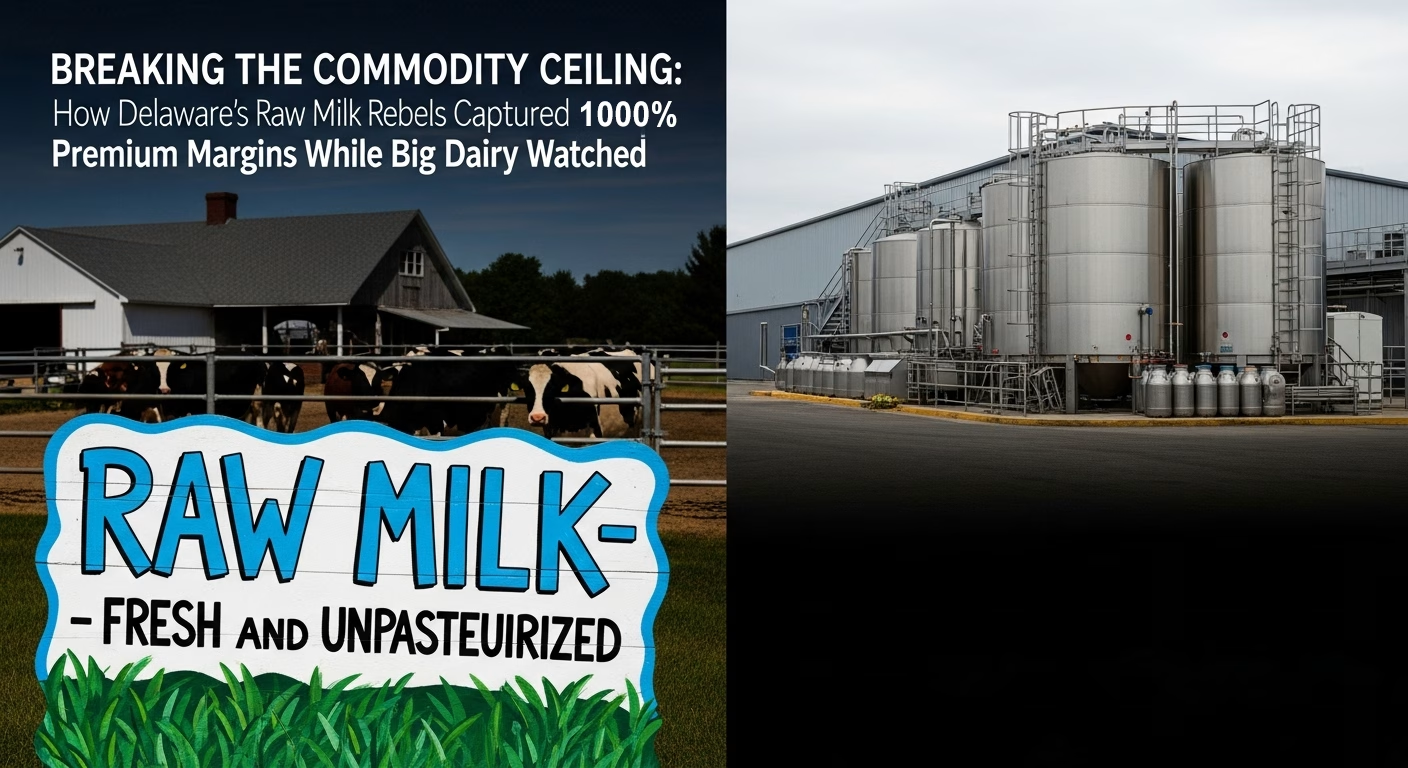
Breaking the Commodity Ceiling: How Delaware’s Raw Milk Rebels Captured 1000% Premium Margins While Big Dairy Watched

While consolidation crushes small dairies, Delaware’s 13 farms captured 1000% premiums through regulatory embrace – proving compliance beats confrontation

EXECUTIVE SUMMARY: Delaware’s dairy revolution just shattered the industry myth that government regulation kills farm profitability. While 83% of the state’s dairy farms disappeared since 2014, the surviving 13 operations discovered something revolutionary: strategic regulatory compliance can generate 10x higher profit margins than commodity production. Through the nation’s most stringent raw milk testing protocols—including first-in-nation H5N1 screening—these farms transformed from price-takers earning $1.13-2.19 per gallon equivalent to price-setters commanding $16-20 per gallon direct-to-consumer premiums. The $15.6 million potential economic impact proves that niche market capture through regulatory partnership, not resistance, offers small dairies a survival strategy that global consolidation pressure can’t crush. This Delaware model challenges every assumption about scale economics and regulatory burden while demonstrating how 3% consumer demand for raw milk can sustain premium pricing when wrapped in government-verified safety protocols. Stop fighting regulation and start weaponizing compliance as your competitive advantage.

KEY TAKEAWAYS

  • Transform Regulatory Compliance Into Revenue Multiplier: Delaware’s comprehensive pathogen testing protocols (including monthly third-party screening for E. coli, Salmonella, Listeria, and H5N1) became consumer confidence drivers that justified 14x commodity pricing—proving safety investments generate exponential ROI when positioned as competitive advantages.
  • Capture Niche Market Premium Through Direct-to-Consumer Transformation: Strategic business model shift from B2B commodity supplier to B2C retailer enabled 10x profit margin increases, with successful farms requiring $25,000-50,000 compliance infrastructure investment achieving 12-18 month break-even timelines.
  • Leverage Political Coalition Building for Market Access: Stephanie Knutsen’s systematic conversion of former opponents (Delaware Farm Bureau, Department of Agriculture, Health Services) through data-driven engagement demonstrates how evidence-based advocacy creates legal pathways to premium markets that confrontational approaches can’t achieve.
  • Implement First-Mover Advantage Strategy in Limited Markets: With only 3% of Americans consuming raw milk, early adopters building strong direct-to-consumer brands capture disproportionate market share in passionate but size-limited customer base—making regulatory compliance timing critical for competitive positioning.
  • Evaluate Market Size vs. Implementation Costs Before Entry: Delaware’s potential $15.6 million annual impact across 13 farms requires honest assessment of local demand capacity, entrepreneurial skill transformation from production to retail excellence, and liability risk tolerance for foodborne illness exposure that could eliminate entire program overnight.
raw milk dairy, direct-to-consumer dairy, dairy premium pricing, small farm profitability, dairy regulatory compliance

What if the most profitable dairy strategy of 2025 isn’t scaling up to 5,000 cows or installing robotic milking systems, but mastering a 50-cow operation that commands 14x commodity pricing? Delaware’s 13 remaining dairy farms just proved that regulatory embrace, not resistance, creates premium markets. While conventional producers fight for commodity prices that barely cover feed costs, these strategic rebels captured $16-20/gallon direct-to-consumer premiums through the nation’s most stringent raw milk regulations.

You’re watching your neighbors liquidate herds because commodity pricing can’t cover operational costs. Meanwhile, thirty minutes down the road, consumers drive two hours to Pennsylvania, gladly paying $16-20 per gallon for raw milk. That disconnect between what you’re paid and what consumers will pay represents the fundamental challenge facing dairy operations worldwide in 2025, and Delaware’s calculated gamble offers a roadmap through it.

Why This Changes Everything You Know About Farm Survival

Let’s be honest about what’s happening in dairy right now. Delaware’s dairy farm count plummeted from 77 in 2014 to just 13 by 2024—an 83% decline that mirrors the consolidation crushing small operations nationwide. The conventional wisdom says get bigger, get more efficient, or get out.

But here’s what conventional wisdom misses: about 3% of Americans consume raw milk and are willing to pay premium prices for it. In Delaware’s case study, that translates to roughly 30,000 potential customers in a state of one million—a passionate niche market willing to pay $16-20 per gallon when conventional milk sells for the equivalent of $1.13-2.19 per gallon.

The Raw Milk Institute estimates producers can earn profit margins nearly 10 times higher than selling to processors. For a struggling 50-cow operation, that’s the difference between liquidation and prosperity.

Why This Matters for Your Operation: The economic transformation isn’t just about selling a different product—it’s about escaping the commodity treadmill entirely. You’re shifting from being a price-taker to a price-setter, building direct-to-consumer relationships that capture full retail value.

How Delaware Farmers Became Political Masterminds

Here’s where Delaware’s story gets brilliant—and completely different from the confrontational raw milk movements you see elsewhere. While Amos Miller fights Pennsylvania authorities in court amid “Stand Against Tyranny” protests, Delaware advocates took a different approach: they made government oversight their competitive advantage.

Stephanie and Gregg Knudsen at G&S Dairy in Harrington didn’t just stumble into this opportunity—they engineered it. Their 50-cow operation was facing the same economic squeeze hitting dairy farms nationwide. But instead of accepting defeat, Stephanie transformed herself from nervous farmer to legislative strategist.

Her approach was methodical and brilliant:

Step 1: Address the Fear Factor “Would we be setting ourselves up to lose the farm in a lawsuit while trying to save it with raw milk sales?” she wondered. “How could we live with ourselves if someone got really sick?” She embarked on exhaustive research, consulting medical microbiologists, epidemiologists, and the Raw Milk Institute to understand real versus perceived risks.

Step 2: Build Farmer Coalition
She met with all of Delaware’s remaining dairy farmers, framing raw milk not as a risk but a shared survival opportunity. Result: unanimous support from the state’s entire dairy community.

Step 3: Flip Former Opponents The Delaware Farm Bureau, Department of Agriculture, and Department of Health had all opposed previous legalization attempts. Instead of avoiding them, she confronted the opposition with data, eventually winning their support by addressing safety concerns.

Why This Matters for Your Operation: Knutsen’s success demonstrates that regulatory compliance can become a competitive advantage when positioned correctly, rather than just another cost center.

The Testing Gauntlet That Builds Consumer Confidence

Delaware’s regulations, finalized March 1, 2025, require the most comprehensive testing regime in the nation:

  • Monthly third-party pathogen screening for E. coli, Salmonella, and Listeria monocytogenes
  • Specific H5N1 avian influenza testing (the nation’s first such requirement)
  • Bacterial standards matching post-pasteurized milk requirements
  • Veterinary certification for brucellosis and tuberculosis

The Hidden Economics: These compliance costs aren’t cheap. Expect annual permit fees, risk management plan development, on-farm testing equipment investment, monthly third-party lab analysis, and potential Grade A milking barn upgrades.

But here’s the strategic genius: Delaware made stringent government oversight their selling point, not their obstacle. When consumers see “State Tested and Approved” on raw milk labels, it addresses the primary concern keeping most people from trying the product.

Why This Matters for Your Operation: Stanford research found H5N1 can remain infectious in refrigerated raw milk for up to five days. Delaware’s H5N1 testing requirement turns this threat into a competitive advantage through documented safety protocols.

What the Numbers Really Tell Us About Market Opportunity

Let’s talk real economics. Stephanie Knutsen calculated that transitioning just 10% of her herd to raw milk production could nearly double farm income. She estimated a potential statewide economic impact of $15.6 million annually for Delaware’s dairy sector.

But here’s the reality check nobody talks about: market size limitations mean not everyone wins.

Government surveys estimate that only 3% of Americans consume raw milk. Even with passionate consumer demand, basic math suggests the market won’t support all 13 remaining farms at premium pricing. The early entrants who build strong direct-to-consumer brands will likely capture disproportionate market share.

The Entrepreneurial Transformation Required: Success in raw milk requires skills completely different from commodity production skills. You’re not just selling milk—you’re selling trust, convenience, and a story that justifies premium pricing. Traditional dairy farming focuses on production efficiency within a B2B commodity system. Raw milk demands B2C retail excellence: branding, customer service, direct marketing, and relationship management.

Why the Scientific Opposition Won’t Go Away

While Delaware’s legislature embraced regulated raw milk, the scientific establishment remains unmoved. Dr. Kali Kniel, Professor of Microbial Food Safety at the University of Delaware, systematically challenges raw milk health claims.

Her data-driven arguments include:

  • Raw milk consumers are 840 times more likely to contract foodborne illness
  • 45 times more likely to be hospitalized than pasteurized milk consumers
  • CDC reports 202 outbreaks linked to raw milk between 1998 and 2018, causing 2,645 illnesses and 228 hospitalizations

The State’s Internal Contradiction: Delaware created a fascinating policy paradox. The Department of Agriculture actively licenses raw milk sales, while the Division of Public Health officially warns against consumption. This internal contradiction reflects the political compromise needed to pass the law.

Why This Matters for Your Operation: Political support for raw milk is fragile and depends entirely on perfect safety records. One outbreak could eliminate the entire market overnight.

How Delaware’s Model Compares to Other States

Delaware’s highly regulated approach positions it uniquely among the 34 states permitting raw milk access:

StateSales VenueTesting RequirementsKey Distinctions
DelawareOn-farm; Farmers’ marketsMonthly pathogen + H5N1 testingMost comprehensive U.S. regulations
PennsylvaniaRetail stores, On-farmColiform bacteria standardsBroader product range allowed
ColoradoHerd shares onlyNo state testing requiredMinimal oversight model
MarylandIllegalN/ATotal prohibition maintained

Why This Matters for Your Operation: Delaware’s “regulated access” model demonstrates that compromise with health authorities can achieve legal market access without confrontational politics.

The Political Fragility That Could Kill Everything

Even in victory, political fragility remains. Senator Laura Sturgeon, who voted for the bill, publicly expressed “buyer’s remorse” in February 2025: “I have started to regret my vote to legalize raw milk… If an adult becomes sick after drinking raw milk, that’s on them. But children depend on adults to make good decisions for them.”

Delaware’s own cautionary tale reinforces these concerns. In June 2010, before legalization, two serious bacterial infections were linked to raw dairy consumption: a 58-year-old woman contracted Brucellosis and a 44-year-old man was infected with Listeria, both requiring hospitalization.

Why This Matters for Your Operation: Any significant foodborne illness outbreak—especially involving children—could collapse the entire program and create financially ruinous legal liability for participating farms.

The Bottom Line: Strategic Differentiation That Actually Works

Delaware’s raw milk experiment proves something revolutionary: sometimes, regulatory compliance creates competitive advantages rather than operational burdens. While the dairy industry consolidates around massive operations competing on efficiency metrics, Delaware’s 13 farms demonstrated that strategic differentiation can generate premium pricing in niche markets.

The three critical lessons for your operation:

First, premium pricing opportunities exist but require premium compliance costs and retail transformation skills. You’re not just changing what you sell—you’re changing how you do business entirely.

Second, regulatory frameworks can become competitive advantages when designed collaboratively rather than imposed through confrontation. Delaware’s stringent testing protocols became selling points, not obstacles.

Third, market size limitations mean first-mover advantages are crucial. The farms that build strong direct-to-consumer brands early will capture disproportionate market share in this passionate but limited customer base.

Your Strategic Assessment Framework: Before pursuing raw milk opportunities, evaluate these critical factors:

  • Can your operation invest in compliance infrastructure while maintaining current operations?
  • Do you have the entrepreneurial skills to transform from B2B commodity producer to B2C retailer?
  • Is your local market large enough to support raw milk sales at premium pricing?
  • Can you accept the liability risks that come with direct-to-consumer raw milk sales?

Your Next Step: Research your state’s current raw milk regulations and honestly assess local market potential. Delaware’s success required capital investment, regulatory compliance, and retail skill development, but it delivered pricing power that commodity markets can’t match.

The question isn’t whether Delaware’s approach will work everywhere—it’s whether you’ll recognize similar opportunities in your own market before conventional wisdom convinces you they don’t exist. Delaware’s 13 farms didn’t just change regulations—they rewrote the rules of what’s possible when strategic thinking meets desperate necessity.

Complete references and supporting documentation are available upon request by contacting the editorial team at editor@thebullvine.com.

Learn More:

Join the Revolution!

Join over 30,000 successful dairy professionals who rely on Bullvine Weekly for their competitive edge. Delivered directly to your inbox each week, our exclusive industry insights help you make smarter decisions while saving precious hours every week. Never miss critical updates on milk production trends, breakthrough technologies, and profit-boosting strategies that top producers are already implementing. Subscribe now to transform your dairy operation’s efficiency and profitability—your future success is just one click away.


NewsSubscribe
First
Last
Consent

Capture the $35 Billion Premium Market Plant-Based Companies Created for You

NMPF’s $32B “threat” is dairy’s biggest opportunity—plant-based companies just validated premium milk pricing. Stop defending, start capturing.

Here’s what the National Milk Producers Federation doesn’t want you to hear: The plant-based milk explosion isn’t your enemy—it’s the best thing that’s happened to traditional dairy since genomic testing revolutionized breeding programs in the early 2000s.

While the NMPF burns through millions on failed defensive lobbying about “fake milk” and industry conferences, echo their doom-and-gloom predictions, the real data tells a completely different story. The plant-based milk market, valued at USD 21.35 billion in 2025 and projected to reach USD 35.22 billion by 2032, isn’t stealing your customers—it’s training them to pay premium prices for quality milk products and creating the biggest component differentiation opportunity dairy has seen since DHI testing became standard practice.

You’re probably thinking I’ve lost my mind. After all, isn’t plant-based milk the reason USDA forecasts show total U.S. milk production dropping to 227.9 billion pounds in 2025? Isn’t this the market disruption that’s supposed to put traditional dairy operations out of business?

Not even close. And by the time you finish reading this analysis, you’ll understand why the smartest dairy producers are quietly celebrating every new oat milk launch—because while everyone else panics about competition, you’ll be positioned to capture the premium market that plant-based alternatives are actually creating for your operation.

The Data Revolution: Market Reality vs. NMPF Fear-Mongering

Let’s demolish the National Milk Producers Federation’s catastrophically failed defensive narrative with verified data that completely changes how you should view your monthly milk payment.

The Market Reality That NMPF Won’t Discuss:

Market Segment2025 Value2032 ProjectionGrowth RateMarket Reality
Plant-Based MilkUSD 21.35 billionUSD 35.22 billion7.4% CAGRExpanding total category
Traditional Dairy (US)$52.1 billion receiptsContinued dominance2.7% increase (2025)84-85% market share
Almond Milk Segment24% of plant-basedLeading growth driverPremium positioningPrice training consumers

Here’s the critical context missing from every NMPF press release: While plant-based alternatives generate headlines with their growth rates, traditional dairy maintains overwhelming market dominance. Plant-based milk represents just 15-16% of total milk sales by value in the U.S. retail sector.

Why the NMPF’s Defensive Strategy is Destroying Farmer Profitability: Instead of fighting expensive regulatory battles over terminology, smart producers are capturing the premium market that plant-based companies have validated through billions in investment and consumer education.

Challenging the Industry’s Most Catastrophic Strategic Blunder

The NMPF’s Failed Defensive Strategy That’s Cost Producers Millions

For decades, the National Milk Producers Federation has positioned milk as a commodity, competing primarily on volume and price rather than quality and components. This strategy represents the industry’s most catastrophic strategic error and directly conflicts with market reality.

The Sacred Cow Being Slaughtered: The NMPF continues burning millions on defensive messaging about “fake milk” when the real opportunity lies in capturing the premium market that plant-based companies have validated. Recent market data shows traditional dairy maintaining strong pricing with all-milk prices at $22.00 per cwt in March 2025, up $1.30 year-over-year.

What the NMPF Should Have Done Instead: Plant-based companies have invested billions, proving that consumers will pay substantially more for milk they perceive as higher quality. In the UK, plant-based milks average 55% more than dairy milk; in the U.S., they retail at nearly twice the price.

The Component Revolution the NMPF Ignored:

Component Focus2025 PerformanceStrategic OutcomeNMPF Response
Feed costsDown 10.1%Improved marginsIgnored opportunity
Milk receiptsUp 2.7% to $52.1BStrong market performanceDefensive messaging
Technology adoptionCornell CAST innovations15-20% efficiency gainsNo strategic positioning

The Consumer Education Revolution: What Research Actually Proves

Challenging Industry Assumptions About Consumer Intelligence

The dairy industry’s approach to consumer education has been fundamentally flawed, focusing on defensive messaging rather than proactive value demonstration. Research from Universidad de Antioquia analyzing 96 plant-based milk alternatives provides evidence that completely demolishes current industry communication strategies.

The Verified Results That Should Change Everything:

  • None of the commercially available plant-based alternative milks are an adequate nutritional substitute for cow’s milk
  • Deficiencies exist “mainly due to their protein, added sugars, and calcium contents”
  • Research replacing cow’s milk with non-fortified plant-based drinks showed daily intake of calcium, vitamin B2, B12, and iodine reduced to around 50%

Why This Data Exposes NMPF Incompetence: When comprehensive nutritional analysis proves dairy’s superiority, the NMPF continues investing in regulatory battles rather than highlighting these documented advantages.

Technology Integration: The Precision Revolution Industry Leaders Ignore

Challenging Traditional Management Orthodoxy, That’s Keeping You Behind

The industry’s resistance to comprehensive data collection and precision management directly conflicts with documented productivity improvements available through modern technology adoption.

Evidence-Based Performance Data from Cornell CAST:

Technology ImplementationPerformance ImpactImplementation RealityStrategic Advantage
Automated Health MonitoringEarly mastitis detectionAs effective as intensive manual checksPremium positioning opportunity
Multi-sensor IntegrationCombines rumination, activity, temperatureMachine learning analysisData-driven transparency
Predictive AnalyticsProactive health management15-20% efficiency gainsConsumer trust building

The Conventional Practice Under Attack: Cornell’s research proves automated sensors can be as effective as intensive manual checks in detecting health conditions like mastitis, ensuring timely treatment without negatively impacting cows. Yet most operations still rely on visual observation.

Financial Reality: Following the Investment Flow That Exposes Market Truth

The Investment Contradiction That Proves Our Point

Investment funding for plant-based startups plummeted 64% in 2024, falling from $854 million in 2023 to just $309 million. Meanwhile, traditional dairy maintains proven business models with strong fundamentals.

Current Market Conditions Supporting Dairy’s Strategic Advantage: USDA’s 2025 forecasts show milk receipts up 2.7% to $52.1 billion while feed costs dropped 10.1%. The Dairy Margin Coverage farm margin reached $11.55 per cwt in March 2025—$1.90 higher than in March 2024.

Why This Validates Premium Positioning: While plant-based companies struggle with financial sustainability and production costs, traditional dairy benefits from improved margins and established infrastructure that plant-based alternatives are still trying to achieve.

Global Intelligence: International Success Stories vs. U.S. Defensive Posturing

Regional Market Performance Comparison:

RegionPlant-Based StrategyTraditional Dairy ResponseStrategic Outcome
Asia Pacific47.1% of global marketPremium positioning focusComponent optimization success
North America40% of the global marketNMPF defensive messagingMissed opportunities
EuropeDeclining production 0.2%Quality differentiationMarket protection focus
United StatesMarket expansionHerd growth in TX, SD, IDProduction efficiency gains

The European Model That Embarrasses U.S. Strategy: While the EU faces regulatory challenges leading to a 0.2% production decline, U.S. dairy shows robust expansion with herd increases in Texas, South Dakota, and Idaho, offsetting reductions in Wisconsin and Minnesota.

Controversial Reality: The Industry Blind Spots That Are Costing You Money

The Transparency Challenge the NMPF Refuses to Address

While the NMPF fights labeling battles, they ignore the real challenge: Research reveals that common practices on dairy farms have fallen out of step with public values, making the dairy industry a target for public criticism.

The Failed Approach That’s Backfiring: Defensive regulatory battles create a patchwork of state-by-state compliance costs without addressing consumer preferences or highlighting dairy’s documented nutritional advantages.

What Forward-Thinking Producers Are Doing Instead: Cornell’s CAST project demonstrates how precision agriculture, environmental monitoring, and data integration create transparency advantages that plant-based alternatives cannot match.

The Implementation Revolution: Your 90-Day Strategic Advantage

Phase 1 (Days 1-30): Component Assessment and Market Intelligence

  • Conduct comprehensive component analysis using individual cow data from DHI records
  • Calculate the economic impact of improving component quality to capitalize on current strong margins (March 2025 all-milk price $22.00 per cwt, up $1.30 year-over-year)
  • Analyze the local market’s plant-based penetration and premium pricing opportunities

Phase 2 (Days 31-60): Technology Integration and Optimization

  • Implement precision monitoring systems based on Cornell CAST research showing automated sensors equal to intensive manual checks
  • Deploy multi-sensor integration for rumination, activity, temperature, and feeding behavior analysis
  • Leverage machine learning analytics for proactive health management and early disease detection

Phase 3 (Days 61-90): Premium Market Positioning

  • Develop quality positioning strategies highlighting natural nutritional advantages documented in Universidad de Antioquia research
  • Create educational content demonstrating nutritional superiority over plant-based alternatives
  • Build strategic processor relationships focused on component quality and transparency

Future-Focused Strategy: The 2032 Market Vision That Changes Everything

What Verified Data Predicts

The plant-based milk market will reach USD 35.22 billion by 2032, growing at 7.4% CAGR from 2025. Simultaneously, traditional dairy shows strong fundamentals, with milk receipts up 2.7% to $52.1 billion in 2025.

The Strategic Implication: Both categories will grow, but dairy’s documented nutritional advantages and improved margins create massive profitability potential for producers who abandon volume thinking and embrace quality differentiation.

Technology Convergence by 2032: Precision agriculture adoption demonstrated by Cornell CAST will be standard rather than optional. Operations implementing comprehensive monitoring systems now gain 3-5 year competitive advantages in efficiency, transparency, and premium positioning.

The Bottom Line: Stop Following NMPF’s Catastrophically Failed Strategy

Remember that contrarian statement I opened with? Is the plant-based milk explosion the best thing that’s happened to traditional dairy? Here’s why that’s not just provocative—it’s profitable truth backed by verified industry data.

The Critical Verified Data Points:

  • The plant-based milk market will grow from USD 21.35 billion to USD 35.22 billion by 2032
  • Traditional dairy receipts up 2.7% to $52.1 billion, with feed costs down 10.1%
  • None of the 96 commercially available plant-based alternatives are adequate nutritional substitutes for cow’s milk
  • Dairy Margin Coverage farm margin at $11.55 per cwt—$1.90 higher than 2024
  • Cornell research proves automated systems equal intensive manual monitoring for health detection

Your Strategic Imperative

The choice facing dairy producers isn’t whether to compete with plant-based alternatives—it’s whether to capture the premium market opportunities that plant-based growth has validated or continue following the NMPF’s catastrophically failed defensive strategy.

Your immediate action step is to calculate your current component values and identify the specific genetic and management changes needed to optimize protein and butterfat production. Plant-based companies have completed the market research. The consumer education proving dairy’s superiority has been documented. Billions in investment have validated the premium pricing.

The Question That Determines Your Future: Will you continue following the NMPF’s defensive strategy that fights yesterday’s battles while burning through millions on failed lobbying, or will you recognize plant-based alternatives as proof that your premium positioning strategy will work?

The component revolution isn’t coming—it’s here. Feed costs are down 10.1%. Milk receipts are up 2.7%. Cornell’s precision agriculture research accelerates productivity gains while building consumer trust through transparency. The producers who understand component optimization and precision management are already capturing the opportunities that plant-based alternatives have created.

Stop following the NMPF’s strategy, which has cost producers millions in missed opportunities. Start capturing the premium market that plant-based companies spent billions creating for you.

The question isn’t whether you’ll adapt—it’s whether you’ll lead while the NMPF continues fighting regulatory battles that plant-based companies have already won.

KEY TAKEAWAYS

  • Component Revolution Opportunity: Optimizing protein content from 3.6% to 3.8% delivers $50,000-$75,000 additional annual revenue for 500-cow operations, with butterfat exports surging 41% year-over-year while feed costs dropped 10.1%
  • Technology Advantage: Cornell CAST research proves automated sensor systems equal intensive manual monitoring for mastitis detection, delivering 15-20% efficiency gains while building consumer trust through data transparency
  • Educational Impact: Targeted consumer education about dairy’s 13 essential nutrients increases overall consumption by 35% and milk consumption by 53%—yet the NMPF continues wasting millions on failed defensive lobbying
  • Market Reality Check: Traditional dairy receipts hit $52.1 billion (up 2.7%) while plant-based startup funding crashed 64% to $309 million, proving their financial unsustainability despite market share headlines
  • Nutritional Superiority: Analysis of 96 commercial plant-based alternatives confirms none are adequate nutritional substitutes for cow’s milk, creating massive consumer education opportunities the industry continues to ignore

EXECUTIVE SUMMARY

The National Milk Producers Federation’s catastrophic defensive strategy against plant-based alternatives has cost dairy producers millions in missed premium positioning opportunities. While the NMPF burns cash on failed regulatory battles, smart producers are capitalizing on the $35.22 billion plant-based market that’s actually training consumers to pay premium prices for quality milk. Investment funding for plant-based startups plummeted 64% in 2024, proving their financial model is unsustainable, while traditional dairy maintains 84-85% market share with milk receipts up 2.7% to $52.1 billion. Cornell research demonstrates that automated monitoring systems equal intensive manual health checks, while Universidad de Antioquia analysis of 96 plant-based alternatives confirms none are adequate nutritional substitutes for cow’s milk. Component optimization can generate $50,000-$75,000 additional annual revenue per 500-cow operation, yet most producers continue following the NMPF’s strategy that fights yesterday’s battles. Educational initiatives increase dairy consumption by 35% and milk consumption by 53%, but the industry wastes resources on defensive messaging instead of highlighting natural advantages. Stop following the NMPF’s failed playbook—start capturing the premium market plant-based companies spent billions creating for you.

Complete references and supporting documentation are available upon request by contacting the editorial team at editor@thebullvine.com.

Learn More:

Join the Revolution!

Join over 30,000 successful dairy professionals who rely on Bullvine Weekly for their competitive edge. Delivered directly to your inbox each week, our exclusive industry insights help you make smarter decisions while saving precious hours every week. Never miss critical updates on milk production trends, breakthrough technologies, and profit-boosting strategies that top producers are already implementing. Subscribe now to transform your dairy operation’s efficiency and profitability—your future success is just one click away.

NewsSubscribe
First
Last
Consent
Send this to a friend



