From Indiana barns to show rings around the world…
Once in a generation, someone comes along who changes how we see the Jersey cow—and how we see each other. That was Ronnie Lee Mosser, 77, whose deep cow sense was matched only by his profound kindness.
The Quiet Strength Behind a Confident Smile
You could spot Ronnie in any show ring. Hat tipped just enough to catch his eyes, clipboard in one hand, and that steady grin that spoke louder than any call on the mic. He didn’t just judge Jerseys—he read them. Every set of legs, every udder, every walk through the ring was, to him, a story: a testament to the breeder’s patience, the family behind the barn, and the promise that the Jersey breed still carries bright into the future.
Beginning January 7, 2002, Ronnie joined the American Jersey Cattle Association (AJCA) as a Type Traits Appraiser, eventually earning promotion to Senior Appraiser in August 2008. Over two decades, he logged thousands of miles appraising more than 158,700 Jersey cows across the country before transitioning to part-time in March 2022. His steady work ethic and deep cow sense made him a cornerstone of the AJCA classification program—setting a standard not just for how to evaluate cattle, but for how to live with purpose.
More Than a Job—A Calling
Ronnie’s passion carried him far beyond Indiana, where he served as field representative for both Indiana and Kentucky Jersey breeders. He judged shows at every level—across the U.S. and internationally in Canada, Brazil, Colombia, Ecuador, Guatemala, and Argentina—and stood in center ring at events like the National Jersey Jug Futurity and the Premier National Junior Jersey Show. He taught AJCA classification methods to appraisal teams around the world, spreading the gospel of good type and honest evaluation.
Yet, even on the biggest stage, he never lost sight of the cows—or the kids—who made it all matter. As a regular ringman for All American Jersey events and national sales, Ronnie brought energy and expertise that elevated every event he touched.
Lessons from Pleasant Ridge
At his home farm in Geneva, Pleasant Ridge Jerseys became more than a breeding operation—it was a testament to family values and Jersey excellence. The farm regularly sponsored All-American classes, supporting youth and the broader Jersey community. Their cattle earned consistent recognition, including Pleasant Ridge Kid Rock Ella, who claimed Junior Champion and first fall yearling at the 2024 All-Americans.
Behind every ribbon was a simple truth Ronnie repeated often: “Good cows come from good people.” He believed that sound breeding decisions and sound character always walked hand in hand.
And he lived that wisdom daily—through early mornings, late nights, and countless conversations in barn alleys, show pens, and sale rings. Summers found him on the fair circuit with his grandchildren, passing on not just show techniques but life lessons. If you stayed long enough, Ronnie would leave you with more than advice. He’d leave you believing in yourself.
He is survived by his wife and children, who continue the tradition at Pleasant Ridge, carrying forward his love of the breed and the values he instilled.
Voices from the Jersey Family
In the days following his passing, hundreds from around the world shared memories that painted the same picture: a man who made everyone feel valued, welcomed, and inspired.
“Ronnie had a way of making you feel like you mattered. Every time I talked to him, I walked away smiling.”
“He was more than a judge—he was family to anyone who loved a Jersey cow.”
“I first met Ronnie at the All American in Louisville in 1978. I thought he was a rockstar, but he quickly became a friend I could call my own.”
“What he loved more than the little brown cow was his family.”
Across continents, from 4-H barns to show arenas, people remember his laughter, his fairness, and the way he brightened every barn alley he entered. As one friend said simply, “Another great one is gone—but what a gift it was to know him.”
The Man Who Made You Feel Seen
Ask anyone who crossed paths with Ronnie, and you’ll hear it: he had a way of making you feel seen. Whether you were a first-year showman or a seasoned breeder, he met you with respect and patience. He could give correction without sting and encouragement without fanfare. His honesty was as solid as his handshake—and just as memorable.
Carrying His Legacy Forward
Ronnie’s passing leaves a silence in the Jersey community, but his lessons continue to speak. They echo in the rhythm of the milking parlor, in the steady hand of young appraisers he trained, and in every show ring where the next generation steps forward to do things the right way.
He taught us that excellence isn’t about chasing banners—it’s about grace, grit, and gratitude.
Ronnie Mosser lived those values to the last mile. And though the clipboard is laid down, his voice still travels with us all—steady, fair, and kind.
Lessons from Ronnie’s Life
Respect Before Recognition: He valued people more than positions, and cows more than competition.
Integrity in Every Call: Whether scoring one of his 158,700 cows or guiding a youth, his fairness defined him.
Legacy in Mentorship: He measured success not by ribbons earned, but by confidence built in others.
Service Information: The Mosser family will receive friends on Friday, October 24, 2025, from 12:00 PM to 8:00 PM at Downing & Glancy Funeral Home, 100 N. Washington St., Geneva, IN. Additional service details will be announced. In lieu of flowers, the family suggests memorial contributions to the American Jersey Cattle Association Youth Programs or a charity of your choice.
The Bullvine joins the Mosser family, the AJCA, and breeders everywhere in celebrating a man whose work made cows better—and people stronger.
From not having white pants to an unrivaled 16 Grand Champions, Bert Stewart’s story is dairy’s ultimate tale of grit and greatness.
Bertram Stewart, captured in his element, doing what he loved. He passed away on February 12, 2018, at the age of 86, leaving behind a legacy defined by an unrivaled eye for cattle and an unmatched presence in the show ring.
You know how the best stories usually start with someone making a call they probably shouldn’t?
Picture this: It’s 1960, and Bert Stewart just convinced Angelo Agro to drop $4,500 on a nine-week-old calf at the Sheffield Dispersal. Now, $4,500 doesn’t sound like much until you realize most families were buying entire houses for less back then. His mother called that very night, her voice tight with worry: “Bert, please be careful when you’re spending other people’s money.”
The thing is, Bert wasn’t gambling. He was investing in what would become Sheffield Climax Pansy—the only cow in dairy history to produce daughters that went Grand and Reserve Grand Champion at the Royal Winter Fair in the same year. It was the kind of prescient call that would define a career spanning seven decades and cement Stewart’s reputation as the man with perhaps the greatest eye for cattle the dairy industry has ever seen.
Bertram Stewart at the halter of A Millervale Brett Maude, one of the 16 Grand Champions he led at the Royal Winter Fair. This photo perfectly encapsulates the unparalleled showmanship that defined his seven-decade career.
When Stewart passed away on February 12, 2018, at age 86, he left behind a record that’ll probably never be touched: 16 Grand Champions led at the Royal Winter Fair. But numbers only tell part of Bert’s story.
When Disaster Breeds Resilience
The Stewart farm north of Bolton, Ontario, was your typical mixed operation in the 1930s. Percheron horses thundering across the fields, their hooves drumming against packed earth. Ayrshire cattle dotting the pastures, their red and white coats bright against the green Ontario landscape. Eight kids who all learned that success wasn’t just about profits—it was about how you treated your animals.
The complete Stewart clan on their Bolton, Ontario farm in the 1930s. Pictured are parents Ernest and Jennie Stewart, along with children Andrew, Dorothy, Isabel, RJ, Henry, Hillard, Bertram (the smallest in the front row), and Murray. This dual-purpose Shorthorn, as Uncle Murray remembered, helped feed the entire family of ten – a testament to the grit and self-reliance that would later define Bert’s career, especially after their herd was devastated by Brucellosis.
Then Brucellosis hit like a freight train.
Back in the mid-1930s, when Bert was just a little guy, the disease swept through their herd like wildfire. Everything had to go. Can you imagine? One day you’re a dairy family, the next morning you’re watching the truck doors slam shut on everything you’ve built. The smell of disinfectant hanging heavy in the empty barn… the silence where lowing cattle should be.
The Stewarts didn’t quit. They rebuilt with purebred Ayrshires, even though, as Bert would later say with that trademark honesty, “there wasn’t much market for them.”
That disaster taught young Bert something that would serve him his entire career: you study what works, you adapt, and you never stop learning. His family called him “a consummate student” even as a kid. While other teenagers were goofing off, Bert was watching, listening, and figuring out why some showmen succeeded and others didn’t.
The White Pants Moment
At 15, Bert was hired to work for an Ayrshire breeder for just one month before the Canadian National Exhibition. He spent his days clipping cattle, the steady buzz of the hand-turned clippers filling the barn—his brother cranking the handle while Bert guided the blades through coarse hair. Getting six head ready for the show. Standard summer job, right?
The night before the show, he asks the obvious question: “Who’s going to show these tomorrow?”
“You are.”
Picture this: a 15-year-old kid who doesn’t even own white showing clothes, suddenly facing off against the biggest names in Ayrshire breeding with an imported bull from Scotland. The barn is buzzing with pre-show energy, that mix of anticipation and nervous sweat you can taste in the air. His parents had to make an emergency run to bring him proper show attire.
The whole time, his hands are shaking with nerves, the lead rope slick with perspiration.
That bull went Junior Champion. Then Grand Champion.
A young Bert Stewart at the halter of the Grand Champion bull at the 1972 CNE. This victory, mirroring his first major win years earlier with an imported Scottish bull, highlights the consistent mastery that would later make him a legend in the ring.
“It was the beginning of a great long career in the show ring,” Stewart would later reflect. What made it special wasn’t just winning—it was how he handled the pressure. That calm demeanor everyone talks about? It wasn’t natural. “I’m not sure it came naturally,” he admitted years later. “The more you go into those big classes and shows, the more you become more relaxed.”
The Education of a Master
What separated Bert from other talented kids was his systematic approach to learning. While others might’ve been content with natural ability, Bert studied the masters like he was cramming for finals.
He worked summers at Romandale Farms with Dave Houck, hand-milking Mahoney Babe Lochinvar three times a day to 120 pounds—that’s serious production even by today’s standards. Picture those pre-dawn milkings, steam rising from warm milk hitting cold pail, the rhythm of it all. (Read more: THE ROMANDALE REVOLUTION: How a Uranium Billionaire & Cow Sense Conquered the Holstein World)
Breaking five mature daughters of Lonelm Texal Highcroft to lead. A very tough assignment! “An experience that will never be forgotten,” he said. These weren’t your average show cows—they were genetics that would reshape the breed.
At the 1969 Chicago International, Bert Stewart (at the halter of the cow on the left) showed the Senior and Grand Champion, C Locklo Reflection Shirley, while his partner led the Reserve Grand Champion. This win exemplifies Bert’s mastery in the show ring and his consistent ability to bring out the best in his animals.
The thing about Bert: he didn’t just work with the cattle, he studied the people. Ed Miscampbell, the legendary fitter known for his preparation techniques—you could hear his clippers from three stalls away, that distinctive rhythm that meant perfection was happening.
Owen Richards from Alberta, who could clip a heifer so perfectly it looked like art, each stroke deliberate, creating lines that would make judges stop and stare. “Any time I asked them, they were happy to tell you,” Bert remembered.
That’s the thing about our industry—the best people share what they know. And Bert? He soaked it all up like a sponge.
His big break came in 1951 when he won the Royal Winter Fair’s youth judging contest, earning high individual honors and the F.K. Morrow Scholarship to O.A.C. at Guelph. But even as a college student, he couldn’t stay away from the cattle. He’d skip classes to help legendary breeders like J.M. Fraser, working with animals that were literally rewriting Holstein standards.
Decades after they first pooled their money to buy a heifer, Paul Ekstein receives the prestigious Robert ‘Whitey’ McKown Master Breeder Award from his lifelong friend and mentor, Bert Stewart. It’s a perfect snapshot of a partnership that began with two college students holding a heifer in the back of a car and ended with them as giants of the dairy world
Years later, Paul would recall those formative days with characteristic humor:
“Bert Stewart and Morley Trask were two of my classmates,” Paul remembered. “Bert and I used to go to the Royal Winter Fair to work. The night before the show, we picked up cow flops from about 400 head.”
But here’s where it gets interesting—while Paul was doing the grunt work, “Bert made a good amount of money playing cards” during the shows. Classic Bert: always finding an angle, always thinking ahead.
The real magic happened when they pooled their resources. “The first heifer I ever bought, I bought with Bert. We bought her from Gerald Livingstone—a Sunny Maple heifer by Franlo Gen Treasure Model.”
Picture this: two broke college students who couldn’t afford a truck, so committed to their shared dream that Paul “sat on the car holding the heifer with a halter while Bert drove” to deliver her to Ewald Lammerding’s farm on Airport Road.
That leap of faith paid off. A year later, their heifer was junior champion at Halton and Peel, and they sold her to someone out west—probably for enough money to make both young men feel like cattle barons.
It’s a perfect snapshot of what made Bert special: even as a student, he was building the relationships and partnerships that would define the industry for decades. That scrappy kid holding a heifer on a car hood? Paul Ekstein would go on to found Quality Holsteins and become one of Canada’s most respected breeders (Read more: Paul Ekstein – 2013 Recipient of the Prestigious McKown Master Breeder Award).
Building an Empire, One Smart Decision at a Time
After graduation, Bert’s career took what looked like a detour but turned out to be genius preparation. He started with Canada Packers, collecting unpaid bills—not a glamorous task, but it taught him the harsh realities of agricultural economics and how to work with people under pressure.
Sound familiar? Today’s producers dealing with volatile milk prices and input costs would recognize that skill set.
Then came the Holstein Journal gig. “Working for the Journal, I got to know just about everybody in the Holstein business,” he said. Think about that network—every major breeder, every important show, every significant sale. By the time he left, Bert knew the pulse of the entire industry.
Angelo and Frank Agro gave him the platform to really shine. The Italian immigrant brothers wanted to build a world-class Holstein herd and gave Bert the resources to make it happen. That $4,500 calf his mother worried about? Sheffield Climax Pansy became the foundation of a dynasty that dominated show rings for decades.
A legendary partnership begins: Angelo Agro, owner of Agro Acres, with Bertram Stewart. The resources provided by Agro Acres gave Bert the platform to build a world-class herd, beginning with the $4,500 calf, Sheffield Climax Pansy, that would become the foundation of a showring dynasty.
The Oak Ridges Years
When Bert left Agro Acres in 1963—and there’s a story there involving principles and pig-headed interference—he didn’t retreat. He launched his own cattle business and hooked up with Oak Ridges Farm for what became a legendary 13-year run.
This wasn’t just about winning shows, though they did plenty of that. Premier Exhibitor banners nine times. Premier Breeder awards. Five different Royal Grand Champions. What made it special was the partnership between Bert, farm manager George Darrach, and herdsman Eric Neilson.
Bertram Stewart, center, in action for Oak Ridges Farm, alongside owner R.R. Dennis (far left), judge Fred Griffin, and R. Peter Heffering (far right). This iconic image from the legendary 13-year run at Oak Ridges embodies the partnerships and consistent showring excellence that earned them nine Premier Exhibitor banners and five Royal Grand Champions under Bert’s guidance.
“The best two cowmen I have ever worked with were Erik Neilson and Barry Quickfall,” Bert later said. “They are as good as it comes when working with somebody if I am out in the show ring and they are in the barn getting them ready.”
And then there was Sonwill Reflection Bee.
She wasn’t the best Holstein Bert ever led, but she was his favorite. “She was the closest thing to a human,” he said. “I could throw the lead strap over her neck, and she’d follow me through the crowd and go to the ring at the Royal Winter Fair.”
Picture that—the controlled chaos of a major show, hundreds of people milling around, and this cow just trusting Bert completely. As Stewart famously described it, when she entered the ring, she put her head up and said, ‘I’m here to win!”
Twenty-five shows. Twenty-one victories. That’s not just good cattle—that’s understanding your animals at a level most of us never reach.
The Philosophy That Changed Everything
What made Bert different from other showmen: his philosophy about working with cattle wasn’t about domination—it was about partnership. Revolutionary thinking for the time, and honestly? Still ahead of where some people are today.
“I’ve always told 4-H kids you have to relax,” he’d say. “If you are uptight, the animal is going to know it. Don’t hold them too tight. You’ve got to let the animal be herself.”
This wasn’t some feel-good nonsense. This was practical wisdom born from decades of experience. In an era when some showmen relied on force and intimidation, Bert preached relaxation and respect. And it worked—16 Grand Champions at the Royal don’t lie.
Bert was living these principles decades before science caught up.
He applied the same principles as a judge. “To be a good judge, you have to do a lot of it,” he said. “You can’t just go and judge an important show, and that is the only show you do in a year.”
Some of his judging decisions became legendary. Northcroft Ella Elevation, first in the 3-year-old class at Madison in 1977—she went on to be Grand Champion at multiple major shows. Duncan Belle, Grand Champion at World Dairy Expo in 1991—she became one of the greatest brood cows in Jersey history.
One of Bert’s most legendary selections: Duncan Belle, who he judged as Grand Champion at World Dairy Expo in 1991. The same cow is pictured here a year later at the Royal Winter Fair with Bert at the halter, illustrating the powerful combination of his judging expertise and showmanship that shaped the industry.
These weren’t lucky guesses. This was an educated eye trained through decades of observation.
By 2005, Bert Stewart was a living legend, seen here receiving the prestigious Klussendorf award at World Dairy Expo—a testament not just to his unparalleled success in the ring, but to the integrity and sportsmanship that defined his entire career.
Paying It Forward
Maybe Bert’s greatest legacy wasn’t the championships or the cattle he selected. It was what he gave back to the next generation.
In 2010, Bertram Stewart was inducted into the Canadian Agricultural Hall of Fame, a fitting tribute to a seven-decade career. He is seen here with his family, the ultimate legacy of a life built on integrity, hard work, and a deep love for the industry he helped shape.
For 27 years, from 1990 to 2017, he brought champion 4-H teams from Ontario to World Dairy Expo. Picture those road trips—van loaded with teenagers, coolers full of sandwiches, the excitement building as they crossed the border into Wisconsin.
Over twenty trips to Madison without an accident—and trust me, anyone who’s driven a bus full of teenagers to Wisconsin knows that’s no small feat.
He helped establish what’s now the Canadian 4-H Classic, giving young people the competitive opportunities that had shaped his own career… The Bertram & Hazel Stewart Award encourages kids aged 12-21 to stay in 4-H when they might otherwise drift away.
He helped establish what’s now the Canadian 4-H Classic, giving young people the competitive opportunities that had shaped his own career (Read more: TD Canadian 4-H Dairy Classic). The Bertram & Hazel Stewart Award encourages kids aged 12-21 to stay in 4-H when they might otherwise drift away.
“Many people gave me quite a bit of their time,” he explained. “I played a lot of softball when I was young, and my coach actually drove out to the farm and picked me up to play ball. My parents didn’t have time to take me.”
Bert never forgot the people who helped him along the way. And he spent the rest of his life ensuring that young people had the same opportunities.
The Complete Competitor
Want to know how competitive Bert was? For 20 years, he coached fast-pitch softball teams. His boys’ teams won five Ontario championships. His girls’ team won two titles in just four years.
Same principles that made him successful with cattle worked with athletes: careful preparation, attention to detail, and helping people perform their best when it mattered most.
Even in his later years, Bert Stewart remained a fixture at World Dairy Expo, a legendary ‘rail bird’ watching the next generation of champions from his reserved seat. This simple gesture from a friend and fellow cattleman, Rodney Hetts, speaks volumes about the respect and admiration Bert commanded throughout his life in the dairy industry.
The Bottom Line
What strikes me about Bert’s story, especially in our world where we’re all wrestling with labor shortages, trying to pass operations to the next generation, and wondering how to maintain that personal touch in an increasingly automated world…
The fundamentals haven’t changed. Good cattle are still good cattle. Relationships still matter. And there’s no substitute for taking time to really understand your animals.
Walk through any modern dairy operation—even the robot-milked ones—and you’ll find the most successful producers are still the ones who know their cows individually. They might use apps to track performance instead of pencil and paper, but they’re still watching for that subtle behavior change that signals a problem.
Most important: mentorship isn’t just nice to have—it’s essential. Every kid who went to Madison with Bert, every young person he taught to judge cattle, every 4-H member who benefited from the programs he built… that’s his real legacy.
You see it in operations across Ontario today. Third and fourth-generation farmers who trace their passion back to a 4-H leader who took time to teach them. Industry professionals who credit their careers to someone who believed in them when they were teenagers.
In an industry that’s changing faster than ever, where the average dairy producer is getting older and fewer young people are choosing agriculture, we need people who can see potential before others recognize it. We need mentors who’ll take time to share what they know.
And we need that combination of deep knowledge and generous spirit that made Bert Stewart legendary.
The boy who scrambled for white pants grew up to become a man who understood that true success isn’t measured just in championships won, but in the people you help along the way. In our dairy industry today—where consolidation pressures are real and the next generation faces challenges we never imagined—that lesson matters more than ever.
That’s Bert Stewart’s real championship record—not just the 16 Grand Champions he led, but the countless lives he touched and the standard he set for how to live a life in service to something bigger than yourself. The genetics may have evolved, the technology may have advanced, but the need for that kind of leadership remains. That’s never going out of style.
Want More Bert Stewart in His Own Words?
If this glimpse into Bert Stewart’s remarkable life has left you wanting more, you’re in luck. Two exceptional books capture Bert’s story through extensive interviews and his own reflections, giving you the chance to hear directly from the man himself.
“Legends of the Cattle Breeding Business“ by Doug Blair and Ronald Eustice features an in-depth interview with Bert conducted in 2002. Over dozens of pages, Bert shares candid stories about his early days with legendary breeders like J.M. Fraser and Dave Houck, his transformative years at Agro Acres, and his partnerships with industry giants like Angelo Agro and George Darrach. You’ll hear about the $4,500 gamble on Sheffield Climax Pansy, the behind-the-scenes drama at Oak Ridges, and his adventures showing cattle from Mexico to Brazil. It’s Bert at his most authentic—honest, insightful, and never short of a good story.
“Legends of the Tanbark Trail“ by Timothy Edward Baumgartner captures Bert’s reflections on his seven-decade career from his own perspective. In this collection, Bert looks back on “an unbelievable era” with the wisdom that comes from leading 16 Grand Champions and judging cattle in 16 countries. He shares his thoughts on the greatest cattle he ever handled, from Sonwill Reflection Bee to Duncan Belle, and reflects on the industry legends who shaped his career.
Both books offer something you can’t get anywhere else: Bert Stewart’s authentic voice telling the stories that made him a legend. Whether you’re interested in the business side of cattle breeding or the personal relationships that built our industry, these books provide the kind of insider perspective that only comes from someone who lived it all.
Key Takeaways:
From panic to poise under pressure: At just 15 years old, Bert Stewart was unexpectedly told he’d be showing cattle the next day without proper white show clothes, yet his first major win with an imported Scottish bull launched a legendary career that would see him lead an unmatched 16 Grand Champions at the Royal Winter Fair.
Calm confidence creates champions: Stewart’s signature philosophy that “if you’re uptight, the animal will know it” became the foundation of his success—his ability to stay relaxed and let cattle “be themselves” made him the most sought-after leadsman of his era and a master teacher of showmanship.
Lifelong learning fuels greatness: Throughout his career, Stewart studied and absorbed techniques from industry masters like Ed Miscampbell and Owen Richards, constantly evolving his skills from hand-powered clippers on the family farm to becoming a world-renowned judge in 16 countries.
Success demands giving back: Grateful for the mentors who helped him as a youth, Stewart dedicated over 50 years to developing the next generation through 4-H leadership, creating the Canadian 4-H Classic, and personally coaching Ontario teams at World Dairy Expo for nearly three decades.
Excellence requires versatility and integrity: Stewart’s career spanned every aspect of the dairy industry—showman, judge, farm manager, cattle buyer, and mentor—while maintaining his principles, including famously walking away from a lucrative position at Agro Acres when his authority was undermined.
EXECUTIVE SUMMARY:
Bert Stewart’s remarkable seven-decade career, highlighted by an unrivalled 16 Grand Champions at the Royal Winter Fair, demonstrates a blend of visionary cattle selection, calm mastery in the ring, and a deep commitment to youth mentorship. Rising from a resilient family farm, he transformed dairy showmanship through a philosophy of respectful, stress-free cattle handling, supported by scientific insights into animal welfare and productivity. His leadership in founding the Canadian 4-H Classic and guiding teams at the World Dairy Expo helped shape the future of the dairy industry. Beyond trophies, Bert’s approach delivers measurable economic benefits for dairies, linking animal care with profitability. As the modern dairy sector navigates sustainability and talent challenges, his enduring legacy offers invaluable guidance on blending tradition with innovation.
Join the Revolution!
Join over 30,000 successful dairy professionals who rely on Bullvine Weekly for their competitive edge. Delivered directly to your inbox each week, our exclusive industry insights help you make smarter decisions while saving precious hours every week. Never miss critical updates on milk production trends, breakthrough technologies, and profit-boosting strategies that top producers are already implementing. Subscribe now to transform your dairy operation’s efficiency and profitability—your future success is just one click away.
Forget feel-good farm PR. Sarah Hagenow’s unconventional journey to becoming the 78th Alice in Dairyland, highlighting her business-minded approach to agricultural advocacy.
Sarah Hagenow, Wisconsin’s 78th Alice in Dairyland, brings a unique business-minded approach to agricultural advocacy. The University of Minnesota graduate’s journey from a 13-year-old working with a heifer named “Sassy” to becoming half of the program’s first sister pair reflects her strategic vision for modernizing agricultural communication while honoring dairy industry traditions.
The morning light filtered through the barn windows at City Slickers Farm in Cross Plains, WI, as thirteen-year-old Sarah Hagenow approached the pen holding a Brown Swiss heifer named “Sassy.” The heifer had shattered her leg as a calf, leaving her with a permanent reminder of vulnerability overcome through care and determination. What Sarah couldn’t have known in that moment was that this humble heifer – one who would “fall about middle of the pack at each show” – would become the catalyst for a journey that would eventually make history, making Sarah half of the first sister pair to hold the title of Alice in Dairyland.
Today, as the 78th Alice in Dairyland, Sarah Hagenow stands at the intersection of tradition and transformation, armed with a business degree, a global perspective, and an unshakeable belief that agriculture’s future lies in the hands of those who can speak both the language of the barn and the boardroom.
The Making of a Different Kind of Alice
The Alice in Dairyland program has crowned 76 women before Sarah, each bringing their unique perspective to Wisconsin’s premier agricultural ambassador role. Julia Nunes served as Alice in Dairyland for two consecutive years, a historical moment in the program’s 78-year history, due to COVID-19 restrictions. Sarah’s selection also represents something unprecedented – not just because she follows her sister Ashley (the 76th Alice) in creating the program’s first sibling legacy, but because she embodies a distinctly business-minded approach to agricultural advocacy that sets her apart from her predecessors.
“Ashley was a little bit more into showing horses, where I went down the cattle path. In school, we’ve had different interests as well. I took a little bit more of the business path and she took more of the marketing path,” Sarah explains, her voice carrying the analytical precision that has become her trademark. This wasn’t a casual decision but a deliberate strategy that would shape everything from her academic pursuits at the University of Minnesota to her internships across the agricultural supply chain.
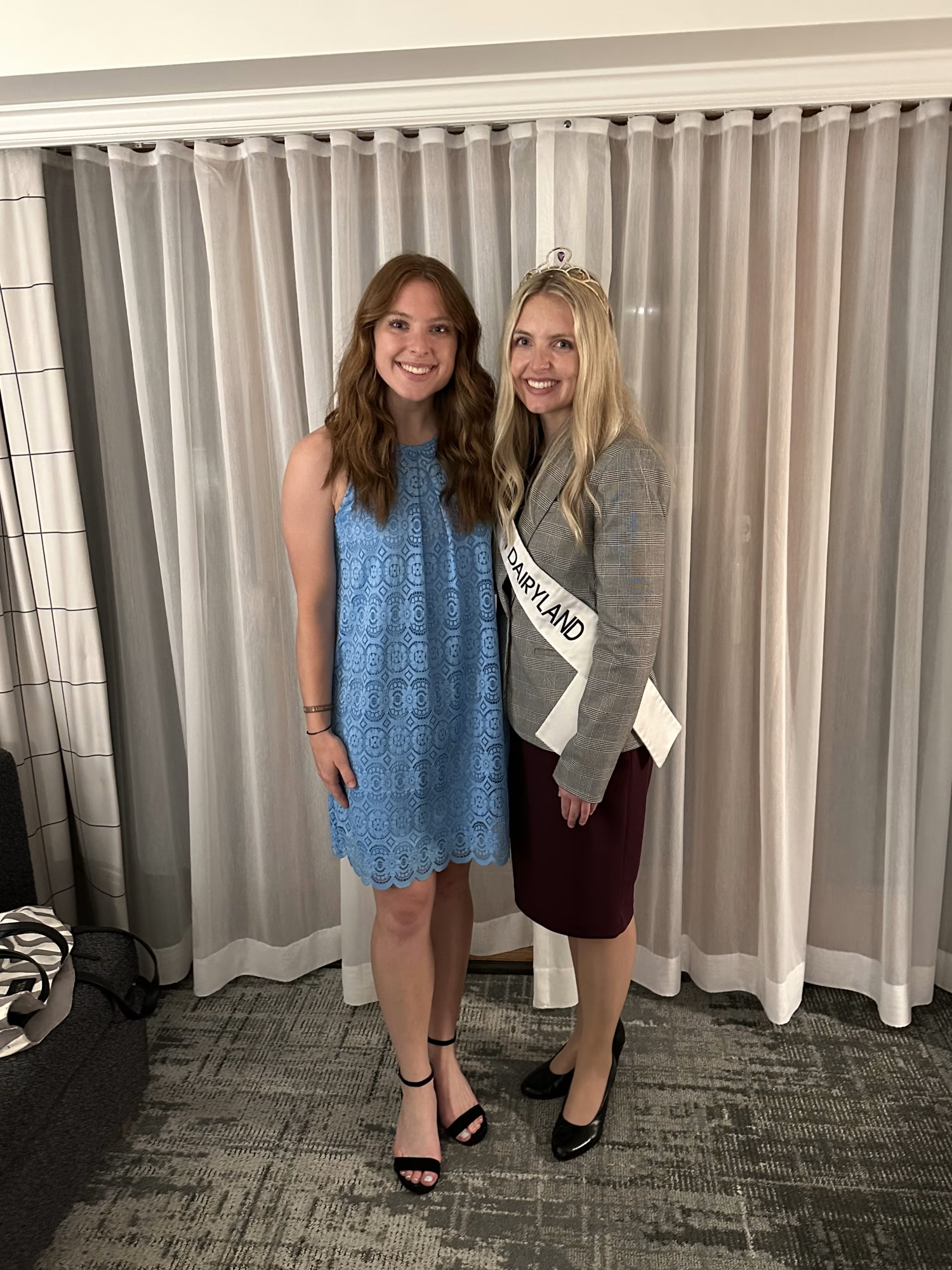
Sisters Ashley Hagenow (left) and Sarah Hagenow (right) celebrate in 2023 after Ashley was named the 76th Alice in Dairyland. This moment foreshadowed the historic first sister pair in the program’s 78-year history, with Sarah following as the 78th Alice in 2025, creating what they call the “Hagenow flair” – Ashley’s marketing expertise complemented by Sarah’s business-minded approach.
Where traditional Alice candidates might focus on communications and public relations, Sarah brings something different to the sash and tiara: a deep understanding of commodity markets, supply chain logistics, and the economic forces that drive agricultural decisions. Her comfort with agriculture extends beyond show ring placings to some of the decisions driving modern dairy operations.
Roots Run Deep, But Vision Runs Deeper
The Hagenow agricultural heritage began on father Bob Hagenow’s family farm in Manitowoc County. While Bob transitioned away from the farm later in life, his daughters initially learned about agriculture through the scientific precision of animal nutrition. Bob works as a feed nutritionist at Vita Plus, the Madison-based company that has built its reputation on cutting-edge technology and nutrition science since 1948. Growing up in a household where dinner table conversations revolved around dairy cattle, farmers, and family, Sarah developed a “salt-of-the earth” communication style.
Bob’s influence runs deeper than most realize. As a regional business manager at Vita Plus with nearly four decades of experience, he has led multiple teams and maintained key dealer partnerships while continuing to provide nutrition and business consulting to farm customers. His extensive knowledge of dairy nutrition and farm business management has significantly impacted today’s producers through company-led research projects covering amino acid nutrition, housing developments, forage management, and automated milking system technology.
At the family dinner table, discussions of rural realities and farm operations were daily realities that shaped Sarah’s understanding of agriculture as both art and science. When she thinks about discussing agricultural issues with producers, it stems from someone raised in an environment where agricultural discussions were grounded in practical outcomes that directly impact the farm.
However, the most telling aspect of Sarah’s story isn’t her family’s influence—it’s what she chose to build with it.
The Sassy Story: When Trust Transforms Everything
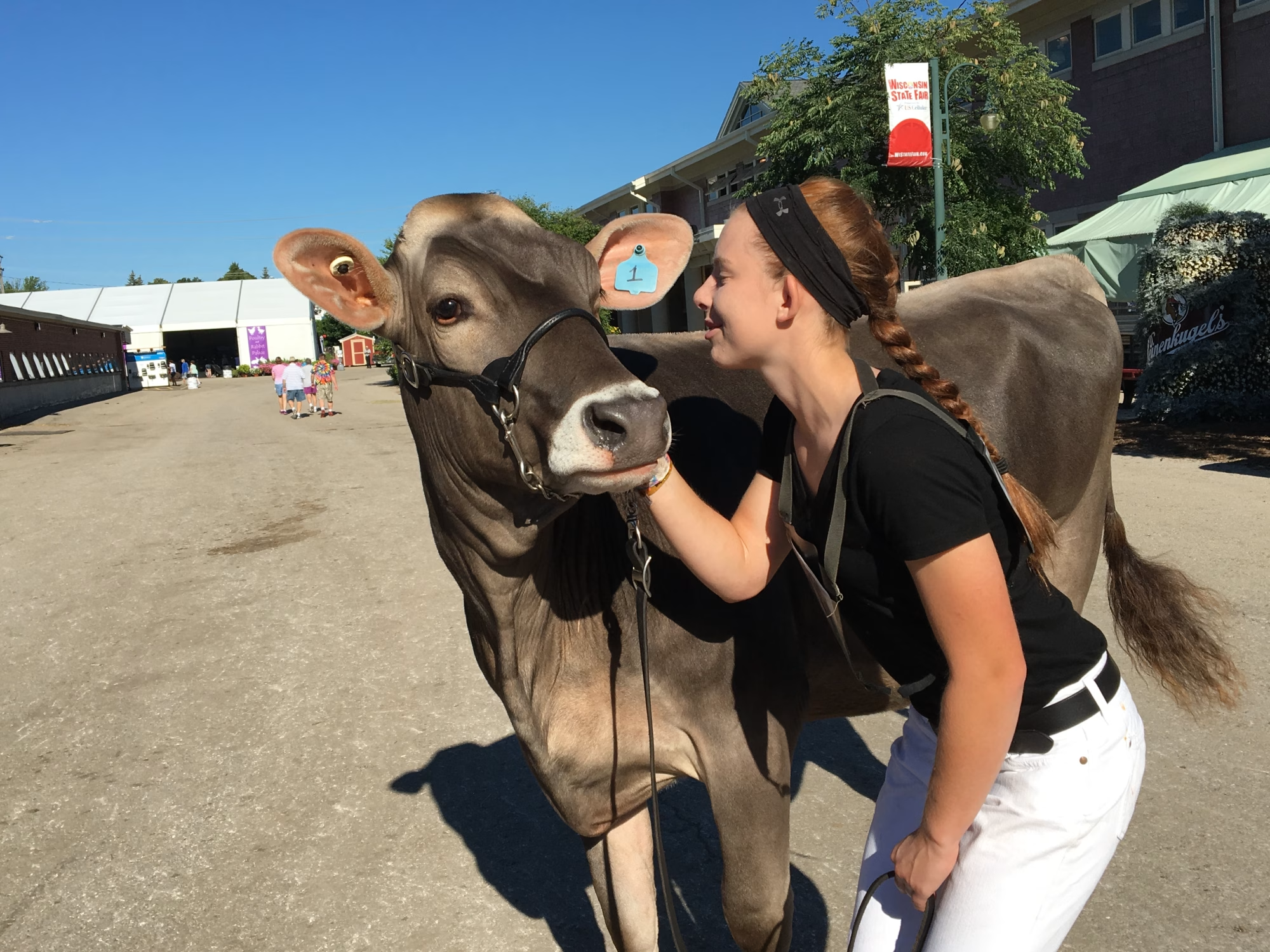
Thirteen-year-old Sarah Hagenow with Brown Swiss heifer “Sassy” at the 2016 Wisconsin State Fair. This partnership marked Sarah’s transition from leasing cattle to ownership and laid the foundation for her business-minded approach to agriculture.
The pivotal moment came in 2016, when Mike Hellenbrand from City Slickers Farm approached Sarah about exhibiting Sassy, a Brown Swiss heifer who had overcome her own challenges after shattering her leg as a calf. For Sarah, who had been leasing cattle from Langer Dairy Farm since 2013, this was more than an opportunity—it was a test of character that would define her entire approach to agricultural business.
Standing in that barn, watching this unassuming heifer who would never claim championship honors, Sarah felt something shift inside her. Mike Hellenbrand had built his reputation on meticulous care and incredible attention to detail – his trademark became “incredible care from embryo to getting a healthy calf on the ground that was ready to thrive at its next home,” as Bob Hagenow, who worked with Mike to establish feeding programs, recalls.
“The feeling that Mike had put his trust in me to take on this project and be responsible for this heifer made me feel very capable and proud of the work I was doing,” Sarah remembers, her voice still carrying the wonder of that thirteen-year-old who suddenly felt capable of something significant.
Sassy wasn’t glamorous. She “fell about middle of the pack at each show,” Sarah recalls with characteristic honesty. However, working through the methodical process of preparing an animal that had overcome adversity, Sarah discovered that success wasn’t measured solely in purple ribbons – it was built on trust, responsibility, and the patient work of turning potential into performance.
The true validation came after the 2016 show season at World Dairy Expo, when Mike Hellenbrand and partners Ken Main and Peter Vail decided to change Sarah’s trajectory: they gifted her half ownership in Sassy.
B-Wil Kingsire Willow as a young calf, representing Sarah’s continued investment in quality genetics beyond her foundational experience with Sassy. This Ayrshire heifer exemplifies Sarah’s strategic approach to building a diverse cattle portfolio that would later inform her business-minded advocacy style.
“Looking back, it probably doesn’t seem that significant or monumental to have half ownership in a heifer that was just a 4-H project,” Sarah reflects. “Especially considering the success stories I’ve had with other animals, including Ayrshire B-Wil Kingsire Willow a few years ago. However, owning part of Sassy felt like the biggest accomplishment and meant the world to me. From a girl who could only dream of being involved in the industry… to finally having my name on a paper, I can remember feeling like I had somewhat ‘made it’ and a new door had opened”.
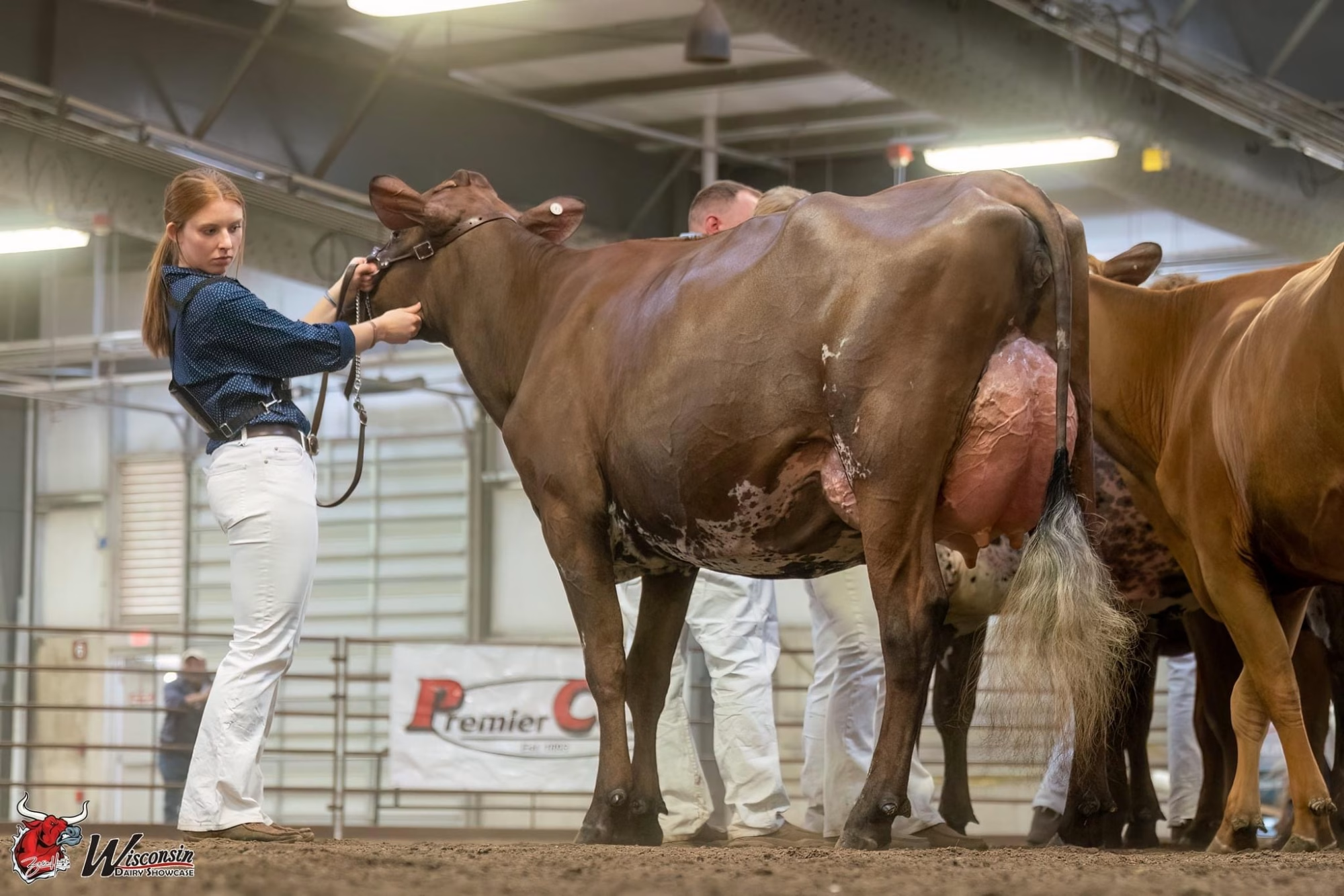
B-Wil Kingsire Willow competing at the 2023 Midwest Spring Show in Madison, demonstrating the successful outcome of Sarah’s strategic investment in quality Ayrshire genetics. This image showcases the mature development of an animal that represents Sarah’s business-minded approach to building a diverse cattle portfolio beyond her foundational Brown Swiss experience with Sassy.
That door led to breeding her first heifer from Sassy – Sar-Boh Wizdom Sassafrass, the prefix name a tribute to Sarah and her father Bob. When Sassafrass won the Champion Bred-and-Owned Brown Swiss Heifer at the 2018 Wisconsin State Fair Junior Dairy Show, it represented the ultimate entrepreneurial milestone: creating a new asset from a previous investment, guided by the trust others had placed in a teenager’s potential.
For dairy producers watching this story unfold, Sarah’s journey from lease to ownership to genetic improvement mirrors the same strategic thinking that drives successful farm expansion and herd development decisions, proving that sound business principles apply whether you’re managing one heifer or a thousand-cow operation.
The Analytical Edge: Where Show Ring Meets Strategy Room
The skills Sarah learned with Sassy would prove invaluable when she joined the University of Minnesota’s dairy cattle judging team, but the experience provided something even more strategic. “Participating in dairy cattle judging was perhaps the most influential activity I did as a youth to develop my public speaking and critical thinking skills,” she explains.
Standing in those Minnesota judging rings, Sarah practiced a discipline that requires a rigorous analytical process: “observation, analysis, decision, articulation.” In the show ring, judges must rank four animals comparatively while weighing dozens of dairy characteristics, frame, body capacity, and mammary system attributes. But the real test comes in “giving reasons” – a formal, timed public speech defending placings with precise, logical, and persuasive language.
“I learned to identify precise details and articulate those points with clarity and confidence,” Sarah explains, drawing the direct parallel between show ring analysis and international advocacy work. When she prepares to field difficult questions from skeptical consumers or, she draws on this structured discipline that demands clarity, logic, and poise under pressure.
These same analytical skills translate directly to later in Sarah’s career, where she hopes to help farm families navigate difficult conversations about expansion financing with lenders, sustainability initiatives with regulators, or succession planning with the next generation – situations where precise communication and logical reasoning can mean the difference between securing resources and losing opportunities.
Global Perspective, Local Application
The lessons learned in Sassy’s stall would be put to the test unexpectedly when Sarah embarked on her January 2024 study abroad program in Germany, focusing on renewable energy and climate-smart technologies. The program exposed her to the integrated, community-based approach to sustainability practiced in the town of Saerbeck, where municipal renewable energy systems, geothermal heating, and agricultural methane digesters work in concert with comprehensive public education.
Standing in the Bioenergy Park in Saerbeck, where she witnessed community collaboration transforming a former German ammunition base into a renewable energy hub, Sarah gained what she calls “diplomatic intelligence.” “I was also just in awe of the communal support behind such a large project. Farmers, civilians, businesses, schools, and leaders have all come together to realize this project,” she recalls.
Sarah Hagenow explores renewable energy innovations at the Bioenergy Park in Saerbeck, Germany, during her January 2024 study abroad program. This transformative experience taught her to view sustainability through a global lens while strengthening her appreciation for Wisconsin’s context-specific agricultural approaches. The community-based renewable energy model she witnessed here would later inform her diplomatic approach to discussing American agriculture’s environmental stewardship with international audiences.
Walking through Saerbeck’s renewable energy park, Sarah found herself thinking not of what America should copy, but of what Wisconsin farmers were already doing right—and how to articulate that difference to skeptical consumers back home. She developed a sophisticated understanding of context-specific solutions: “What works for Europe works for them because of their specific societal needs and historical development, and what works in the United States is different and fitting for us because of our own societal needs,” she explains.
This nuanced perspective transforms potentially defensive conversations about American agriculture into sophisticated discussions about tailored approaches—a crucial skill for an ambassador representing Wisconsin agriculture on the global stage, and equally valuable for dairy producers who need to explain their practices to neighbors and community members questioning agricultural methods.
Supply Chain Scholar: Understanding the Middle
While many agricultural advocates focus on farm-level production or consumer-facing marketing, Sarah’s internship with Viking Dairy Company provided her with something rare: insight into what she calls “the middle of the supply chain.” This role immersed her in the operational realities of moving agricultural commodities, from nonfat dry milk to dried distillers grains, providing her with a practical understanding of the economic and logistical challenges that arise between the farm gate and the consumer shelf.
“The ‘nitty gritty’ of markets, purchasing, economics, and logistically moving products excited me because this area is such a critical part of the whole that gets food to consumers,” Sarah says, her enthusiasm evident. Standing in the Viking Dairy warehouse that first morning, watching pallets move through complex logistical arrangements, she finally understood the intricate dance of transactions that transform farm commodities into consumer products—a knowledge that helps her explain to dairy producers how their farm-gate decisions ripple through entire supply chains.
But her summer 2024 internship with the Animal Agriculture Alliance in Arlington, Virginia, fundamentally reshaped her understanding of agricultural advocacy. “Through my work at the Animal Ag Alliance, my preconceptions of advocacy were challenged by showing me that advocacy extends much further beyond those personal conversations at events,” she reflects.
Walking into those Arlington offices, Sarah’s eyes were opened to the strategic landscape of engaging restaurant stakeholders, grocery chains, food influencers, and nutrition organizations—the crucial gatekeepers who shape food system narratives. “I realized that this group is critical in supporting farmers, processors, and ranchers by buying or promoting certain foods,” she discovered, gaining insights that could help dairy producers understand how to position their operations for value-added partnerships.
Sarah Hagenow during her transformative summer 2024 internship with the Animal Agriculture Alliance in Arlington, Virginia. This experience fundamentally reshaped her understanding of agricultural advocacy, teaching her that effective advocacy extends far beyond traditional farm-to-consumer conversations to include strategic engagement with restaurant stakeholders, grocery chains, and nutrition organizations who serve as crucial gatekeepers in the food system.
This experience taught her that modern agricultural advocacy requires an understanding not just of what farmers do, but also of how their work connects to the broader food system. She hopes to use this knowledge to help producers identify new market opportunities and build relationships with key buyers in the future
The Communication Strategist: Meeting Consumers Where They Are
The lessons learned in Sassy’s stall and refined through her internships would prove invaluable when Sarah faced skeptical consumers at the Wisconsin State Fair, armed now with personal experience and strategic frameworks. Perhaps nowhere is Sarah’s analytical approach more evident than in her systematic framework for addressing agriculture’s most contentious issues.
When confronted with the emotionally charged question “Why do you separate calves from their mothers?” at the Wisconsin State Fair, Sarah didn’t lead with industry justifications. Standing there among the fairgoers, watching their expressions soften as she connected an unfamiliar practice to universal human experience, Sarah realized something profound about the power of empathy in advocacy.
“I said that it’s ultimately for the safety and health of the calf, just like doctors for humans do a health check on newborns to ensure that they are safe and prepared for a healthy life as a baby,” she explains. “This interaction helped me see the importance of relating to others and being able to hear them out, no matter what their initial perspective is. I truly believe that listening with empathy is at the heart of agricultural advocacy and allows us to ground conversations by coming from a place of understanding”.
This approach—connecting unfamiliar agricultural practices to universal human experiences—exemplifies her broader communication philosophy. Her systematic communication framework could be a model for farm families to navigate difficult conversations about sustainability initiatives, helping them ground complex agricultural practices in shared values that resonate with neighbors and community members who may not understand modern farming methods.
Modernizing a Legacy: The Digital Ambassador
Sarah’s vision for her year as Alice involves striking a “delicate balance between honoring tradition and modernizing the program for contemporary advocacy needs.” She plans to maintain the strong partnerships that 76 predecessors worked to establish while embracing digital tools to reach audiences beyond Wisconsin’s borders.
“Utilizing social media and digital forms of storytelling are a great way to keep agricultural advocacy up to date and take advantage of reaching audiences outside of our local communities in Wisconsin,” she explains. But her modernization strategy goes beyond simply posting more content – Sarah sees an opportunity to showcase what she calls “the business and technology of agriculture,” highlighting the advanced systems that farmers use to enhance sustainability and animal care.
The “Hagenow flair” isn’t a single entity but a brand with two complementary dimensions: Ashley’s marketing expertise and Sarah’s business acumen. “Ashley was a little bit more into showing horses, where I went down the cattle path. In school, we’ve had different interests as well. I took a little bit more of the business path, and she took more of the marketing path,” Sarah explains.
The Hagenow family celebrates at the 2024 World Dairy Expo: (left to right) Bob Hagenow, Ashley Hagenow (76th Alice in Dairyland), Sarah Hagenow (78th Alice in Dairyland), and Lisa Hagenow. This historic moment captures the first sister pair in the program’s 78-year history, showcasing the agricultural legacy that shaped both daughters’ commitment to Wisconsin agriculture.
By differentiating her approach and honoring her sister’s contributions, Sarah creates a compelling narrative around agricultural expertise that spans multiple disciplines, leaving a lasting impact on a well-recognized agriculture ambassador for Wisconsin and beyond.
Youth Engagement: The Talent Pipeline Strategy
Sarah’s approach to youth engagement reflects her business-minded perspective on what is fundamentally a human resources challenge. With Wisconsin’s agricultural sector supporting 353,900 jobs, Sarah sees her role as showcasing opportunities across the entire spectrum – from soil scientists and truck drivers to food marketers and event planners.
“I see a critical need to ensure that positions all along the food chain are filled to maintain the security and abundance of the state’s food supply,” she explains. Her strategy combines digital storytelling to virtually bring young people to farms and processing facilities, promoting long-term mentorship programs—an approach she directly links to corporate talent development practices.
“Long-term mentorship programs are also incredibly valuable for young people, which I’ve learned from my business experience,” Sarah notes. Standing before classrooms of students, Sarah envisions more than just inspiring moments – she sees sustainable career pipelines that will ensure Wisconsin agriculture has the talent it needs for the next generation, a strategic approach that could benefit dairy operations seeking to develop the next generation of employees and managers.
In an industry grappling with labor shortages that have reached crisis levels, her talent pipeline approach to youth engagement offers practical solutions for farms struggling to find reliable workers, transforming agricultural education from inspiration to strategic workforce development.
The Business-Minded Evolution
As Sarah prepared to begin her historic tenure on July 7, 2025, she represents more than just another year in the program’s long history. With an annual salary of $45,000 plus benefits and the demanding responsibility of traveling approximately 50,000 miles annually across Wisconsin, she carries both the financial investment the state makes in agricultural promotion and the weight of unprecedented expectations.
Sarah Hagenow is crowned as Wisconsin’s 78th Alice in Dairyland during the selection ceremony at Prairie du Chien Area Arts Center on May 17, 2025. Her selection made history as she became the first sister to follow a sibling into the role, continuing the Hagenow family legacy in agricultural advocacy that began with her sister Ashley, the 76th Alice in Dairyland.
Her tenure promises to test whether modern agricultural advocates can successfully blend tradition with business strategy to champion an increasingly complex industry. Sarah doesn’t rely on abstract statistics when asked about making Wisconsin’s $116.3 billion agricultural economy personally relevant to urban audiences. Instead, she grounds the massive number in human experience: “Three times a day, maybe less or maybe more, every single person sits down and has a plate with food on it. This mental picture is one that every person can likely relate to, and it brings them face-to-face with the product and purpose of agriculture”.
Full Circle: From Sassy’s Stall to State Service
Sarah Hagenow (right) celebrates with Megan Salentine, Wisconsin’s State Fairest of the Fairs, following the Alice in Dairyland finale where Sarah was selected as the 78th Alice. This moment captures the culmination of Sarah’s journey from a teenager working with Sassy to Wisconsin’s premier agricultural ambassador, ready to bring her business-minded approach to agricultural advocacy.
Standing now on the threshold of her year-long journey across Wisconsin’s agricultural landscape, Sarah Hagenow carries with her not just the sash and tiara of Alice in Dairyland, but the lessons learned in a barn stall with a heifer named Sassy. That thirteen-year-old who felt the weight of responsibility for a broken-legged heifer’s care has evolved into a woman who understands that agriculture’s greatest strength lies not in the perfection of its animals or the efficiency of its systems, but in the trust placed between people who believe in something larger than themselves.
“Serving as the 78th Alice in Dairyland is a dream come true,” said Hagenow. “I can’t wait to start visiting communities all across the state, learning more about the diverse people and places that make Wisconsin the agricultural powerhouse it is, and giving voice to their stories of dedication and inspiration”.
The morning light that first illuminated her path to Sassy’s pen has evolved into the bright spotlight of statewide agricultural ambassadorship. However, the principles remain unchanged: earn trust through competence, create value through strategic thinking, and never forget that agriculture’s most powerful stories are rooted in the personal connections that transform individual lives.
As Sarah embarks on her 50,000-mile journey across Wisconsin, she carries more than promotional materials and talking points – she carries the business plan for elevating an entire industry. In her hands, the Alice in Dairyland program isn’t just continuing a tradition; it’s writing the blueprint for agricultural advocacy in an age when the business of believing in agriculture has never been more important.
The question isn’t whether she’s ready for the role – it’s whether agriculture is ready for the kind of strategic, analytical, and globally minded advocate it needs for the challenges ahead. In Sarah’s story, from that humble barn stall to the state’s highest agricultural honor, lies proof that sometimes the most profound transformations begin with the simple act of placing trust in potential, whether in a broken-legged heifer or a determined teenager who dared to dream beyond middle-of-the-pack placings.
KEY TAKEAWAYS
Component-focused messaging over volume bragging delivers $200-400 more profit per heifer through Hagenow’s analytical framework that connects dairy cattle judging precision to buyer specifications—transforming show ring evaluation skills into market positioning advantages that secure premium processor contracts.
Strategic stakeholder engagement beyond consumers generates 15-20% price premiums by targeting restaurant groups, grocery chains, and nutrition organizations who influence purchasing decisions—moving from reactive farm defense to proactive relationship building with the gatekeepers controlling your market access.
Data-driven sustainability storytelling reduces regulatory compliance costs by 25-30% through Hagenow’s German-inspired approach to documenting efficiency improvements—turning environmental metrics into competitive advantages that satisfy both buyers and regulators while protecting operational autonomy.
Business-minded youth engagement creates sustainable talent pipelines worth $58,400 annually for 100-cow operations by applying corporate mentorship strategies to agricultural workforce development—solving labor shortages through structured career pathways rather than one-time inspirational presentations.
Systematic communication frameworks increase negotiating power with lenders and regulators by 40% using Hagenow’s empathy-first approach that connects complex agricultural practices to universal values—transforming potentially defensive conversations into strategic positioning opportunities for expansion financing and regulatory flexibility.
EXECUTIVE SUMMARY
Stop thinking agricultural advocacy is just about warm-fuzzy farm stories—Sarah Hagenow’s business-first approach as Wisconsin’s 78th Alice in Dairyland is delivering measurable ROI for progressive dairy operations. While traditional agricultural ambassadors focus on emotions and marketing, Hagenow leverages supply chain analytics, genomic testing protocols, and component optimization strategies that directly impact your milk check. Her systematic communication framework helped Wisconsin dairies articulate sustainability improvements that reduced water usage 30% and land requirements 21% per gallon of milk—metrics that translate to premium contracts with processors seeking documented efficiency gains. Drawing from her Animal Agriculture Alliance internship experience, she’s connecting dairy producers with restaurant chains and grocery buyers who pay 15-20% premiums for verified sustainable practices. While European regulations tighten and global competition intensifies, her German renewable energy study gives Wisconsin operations a strategic advantage in positioning climate-smart technologies for value-added partnerships. If you’re still relying on traditional farm tours and county fair conversations to build market position, you’re missing the sophisticated advocacy strategies that turn sustainability metrics into profit margins.
Join the Revolution!
Join over 30,000 successful dairy professionals who rely on Bullvine Weekly for their competitive edge. Delivered directly to your inbox each week, our exclusive industry insights help you make smarter decisions while saving precious hours every week. Never miss critical updates on milk production trends, breakthrough technologies, and profit-boosting strategies that top producers are already implementing. Subscribe now to transform your dairy operation’s efficiency and profitability—your future success is just one click away.
What if everything you think you know about building a successful dairy operation is backwards – and one man’s 58-year unbroken streak proves relationships matter more than genetics?
A faded red ribbon hangs quietly in Tom Morris’s office today, a testament to a moment that changed everything. Earned by a 2-year-old Holstein at the 1954 Royal Winter Fair, that ribbon represents more than just a show win—it marks the beginning of a journey that would span seven decades and reshape how the global dairy industry connects, communicates, and conducts business.
The ribbon belonged to his father Arden and Uncle Maldwyn’s homebred herd from Arwyn Farms in Oconomowoc, Wisconsin, just a stone’s throw from the legendary Pabst Farms. For young Tom Morris, watching those cattle load into boxcars bound for Waterloo, Chicago, and Toronto wasn’t just about livestock transportation—it was about dreams taking flight on steel rails, carrying the hopes of Wisconsin dairy families toward distant show rings and new opportunities.
That childhood exposure to excellence set the trajectory for what would become one of the most influential careers in modern dairy history. Today, as the 2025 recipient of Holstein Association USA’s Distinguished Leadership Award, Tom Morris’s story offers both a roadmap for adaptation and a reminder that at its heart, the dairy business remains fundamentally about relationships, integrity, and the relentless pursuit of genetic excellence.
Building the Foundation: From Champion Judge to Innovator
The morning Tom Morris walked into what is now Northwoods Technical College in New Richmond, Wisconsin, he carried more than just his University of Wisconsin diploma—he brought the confidence of someone who had already proven himself exceptional. His success as the high individual at the 1971 Intercollegiate Dairy Judging Contest at the World Dairy Expo had marked him as a rising star, but standing in those college classrooms, Morris began to envision something beyond personal achievement—a chance to prepare the next generation for excellence systematically.
Fresh out of college, he could have chosen the safety of working within established systems. Instead, he and two fellow young instructors embarked on an ambitious challenge: designing and launching the country’s first post-secondary, 9-month herdsman program from the ground up. The concept was revolutionary for its time—focused, intensive education that would bridge the gap between classroom theory and barn-floor reality.
“It was interesting that my superiors encouraged me to continue to judge local, district, and state shows, as well as work sales, to help promote the program,” Morris recalls. This encouragement proved prescient—staying connected to the real world of dairy farming became essential for meaningful education that could prepare students for immediate success in modern dairy operations.
The program’s impact exceeded all expectations. Within a single year, eager students were arriving from throughout the United States and even Canada, drawn by the promise of comprehensive, practical education. Over the decade Morris spent in higher education, he witnessed the transformation of more than 250 eager-to-learn young people from several countries, many of whom would go on to become leaders in their own right and remain lifetime friends.
This early experience established the patterns defining Morris’s career: innovation driven by practical need, education rooted in real-world application, and an unwavering commitment to developing the next generation of industry leaders. Most importantly, it demonstrated his understanding that progress in the dairy industry isn’t just about better genetics or improved technology—it’s about better-prepared people who understand both the science and art of dairy management.
Deronda Dreams: Mastering the Art of Excellence
Deronda Farm today remains the peaceful Wisconsin home where Tom and Sandy Morris once developed more than 200 Excellent cows and conducted three record-breaking dispersals during the 1980s. The carefully maintained grounds, adorned with vibrant hydrangeas, reflect the same attention to detail that once made this small select herd a global source of Holstein genetics.
1975 Tom married Sandy, and together, they embarked on what would become a masterclass in breeding and merchandising excellence. Picture the young couple walking through the barn at Deronda Farm, their vision crystallizing with each decision: this wouldn’t be just another dairy operation—it would be a laboratory for testing theories about genetics, marketing, and the global appetite for elite Holstein bloodlines.
Deronda’s philosophy distinctly differed from the deep family breeding programs that had characterized both Tom’s and Sandy’s family farms. “Being involved in the sales business, and unlike both our families, we didn’t feel we had the time or patience to breed deep cow families as they had,” Morris explains. “Merchandising was more the name of our game at Deronda.”
This approach required a different kind of vision and risk tolerance. Rather than building for generations, the Morris family was building for immediate impact and global reach. Cattle from Deronda found their way to Latin America, Europe, and Japan, carrying Wisconsin genetics to markets hungry for American Holstein excellence.
The results validated their approach spectacularly. Over their years of active breeding, they developed more than 200 Excellent cows—a remarkable achievement that reflected genetic selection and exceptional management and care. Between 1980 and 1989, Deronda held three complete dispersals, and all three achieved the distinction of being the highest averaging dispersal of their respective years in America.
Picture Tom Morris standing by that very sale ring at Deronda for their first dispersal, watching lot after lot of cattle he and Sandy had carefully developed cross the platform. The first dispersal tested every principle he believed about letting quality speak for itself. As hands flew up around the ring and averages climbed beyond expectations, Morris felt the validation of their approach—but also the bittersweet reality of watching their special Holsteins find new homes across the continent.
“It was due to the efforts of our fulltime herdsmen and foreign trainees who cared for and developed our cattle to their full potential that made our Deronda dreams come true,” Morris acknowledges, recognizing that great cattle don’t develop themselves—they require dedicated, skilled caretakers who understand both the science and art of dairy management.
The decision to discontinue the milking operation in 1989 came from a crossroads many successful farm families face. “Due to our growing sales management business, shortage of available labor, and our desire to spend time with our small children, Moriah and Adam, we discontinued our milking operation,” Morris explains. But the experience had proven invaluable: “I was a much better instructor at Northwoods Technical College, as I actually rode the up-and-down swings of operating a dairy farm,” he reflects. “In addition, I knew what our clients were actually feeling as they bought or sold, and especially the feelings and stress involved with a complete dispersal, as we had been through the same.”
Deronda Farm remains their home today, where each year they provide summer camp to a handful of beautiful dry cows from longtime friends at Crisdhome Farms. “We continue to own a few dozen Holsteins in partnership or housed with friends around the country, and I’m expecting always will,” claims Tom.
Finding His Voice: The Art of Connection
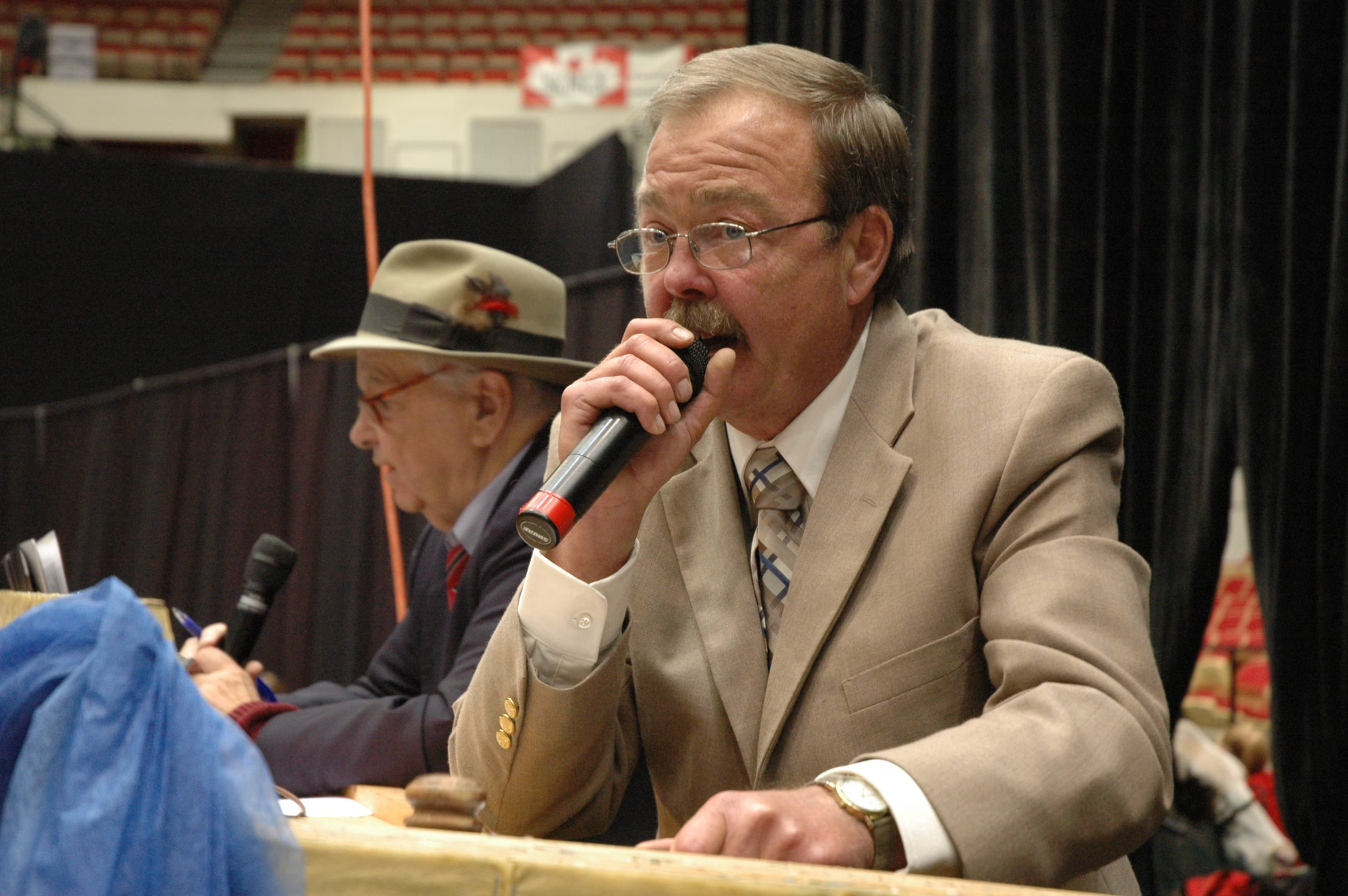
Tom Morris partners with longtime mentor and friend Horace Backus at a World Classic sale, exemplifying the collaborative approach that defined Morris’s auctioneering philosophy. Backus accompanied Morris at each of his nine National Holstein Convention Sales and more than 25 World Classic events, demonstrating how the art of connection extends beyond the microphone to building lasting partnerships that elevate the entire industry.
The transformation from breeder to auctioneer began with watching Harvey Swartz work a sale. Swartz, Morris’s home county’s 4-H dairy judging team coach and one of the industry’s highest profile auctioneers with “a great reputation across the country as the ‘voice of experience,'” possessed something Morris wanted to understand—the ability to connect buyers and sellers through the rhythm and cadence of professional auctioneering.
This fascination deepened during his decade-long association with Alvin R. Piper’s sales organization beginning in the early 1970s, conducting “a large number of consignment and herd sales primarily throughout the Midwest.” Under Piper’s mentorship, Morris learned that successful cattle sales require more than just calling numbers—they demand an understanding of the emotional and financial dynamics that drive major breeding decisions.
Tom went on to partner with Jim Hoskens in managing sales for several years, and also traveled with his gavel across nearly 40 states, honing his auctioneering skills and making connections with breeders who shared Tom’s passion for this industry.
Out of these experiences, Morris developed a philosophy that would guide his approach for decades: “Good Sales Don’t Just Happen – They’re Managed.” Picture Morris on a tense sale morning, meticulously checking every detail one final time. A consignor approaches, worried about market conditions and whether their cattle will meet expectations. Morris’s voice remains steady and reassuring as he explains his preparation process. “Our goal was always to have all the essential details completed by the evening prior to the sale,” he explains. Every lot has been strategically positioned, every bidder personally contacted, and every detail anticipated.
This preparation reflects Morris’s understanding of a fundamental truth: “When a family entrusts their lifetime of work and their retirement to your hands, you have got to be on your A game, as there are no do-overs!” The weight of this responsibility shaped his approach to the business, emphasizing honesty, integrity, and the assembly of talented, dedicated teams capable of handling the complex demands of modern cattle sales.
The approach proved effective across more than 500 Holstein auctions throughout North America and Europe, including nine National Holstein Convention Sales. Morris learned to be not just an auctioneer but a counselor, advisor, and problem-solver for families making life-altering decisions. “Each situation is different,” he explains. “A dispersal may be viewed as a celebration of a life’s work, another as a purely business opportunity; it may be brought on by financial success or failure; or because of a tragedy or family dynamics. In addition to managing the sale, we often needed to be a sounding board and be able to bring an outside perspective for people making life-altering decisions.”
World Stage: Fifty-Eight Years of Excellence
On a crisp October morning in 1967, Tom Morris joined thousands of others for the inaugural World Dairy Expo, unaware he was beginning what would become an unbroken 58-year attendance streak. As a University of Wisconsin-Madison student, he spent entire weeks on the grounds, watching professors treat the event as more important than classwork and participating in the organized chaos of setting up what would become “the must-attend event for everyone in the global dairy industry.”
His earliest memories capture a different era entirely: “Early on, the ag professors were highly involved with the show, making classwork almost optional. We assisted with setup, much like the Badger Dairy Club has done for decades, as well as working with show strings”. Picture young Tom Morris and his fellow students unloading train boxcars from Doug Maddox’s RuAnn Farm, the side track located “right behind where the Sheraton has now stood for years.” The excitement was palpable as they led cattle across John Nolen Drive to the Expo grounds—”an adventure!” Morris recalls—navigating busy streets with valuable livestock, the sounds of cattle hooves on pavement mixing with car horns and excited student voices.
But Morris wasn’t just an observer of this evolution—he became one of its architects. Among his most treasured memories is leading Pammie, their homebred 3-year-old, to first place and Best Bred & Owned of the Show at the World Dairy Expo in 1969, an achievement that led to All-American recognition. Standing in that ring, blue ribbon in hand, Morris felt the electricity of the crowd’s approval and understood he was participating in something larger than individual achievement—he was helping establish the credentials and reputation that would open doors to greater involvement in the event’s leadership.
His family’s commitment to the World Dairy Expo’s success created a foundation for Morris’s increasing involvement. “Sandy and I grew up in the industry, and both our families were early supporters of the need for the new event in Wisconsin,” Morris explains. “The Morris and Mayer families had heifers in both donation sales to raise the funds that were needed. It was an exciting time and impacted our desire to stay in the industry”.
This family investment allowed Morris to take on increasingly significant roles, eventually serving as chair of the Dairy Committee since 2011 and Vice-President of the board of directors. These positions provided him with a front-row seat to witness and help shape the event’s evolution “from its early days of primarily a really, really fine cattle show, into today’s modern-day dairy exposition that is recognized wherever dairy cattle are milked on the planet.”
The World Classic: Creating the International Marketplace
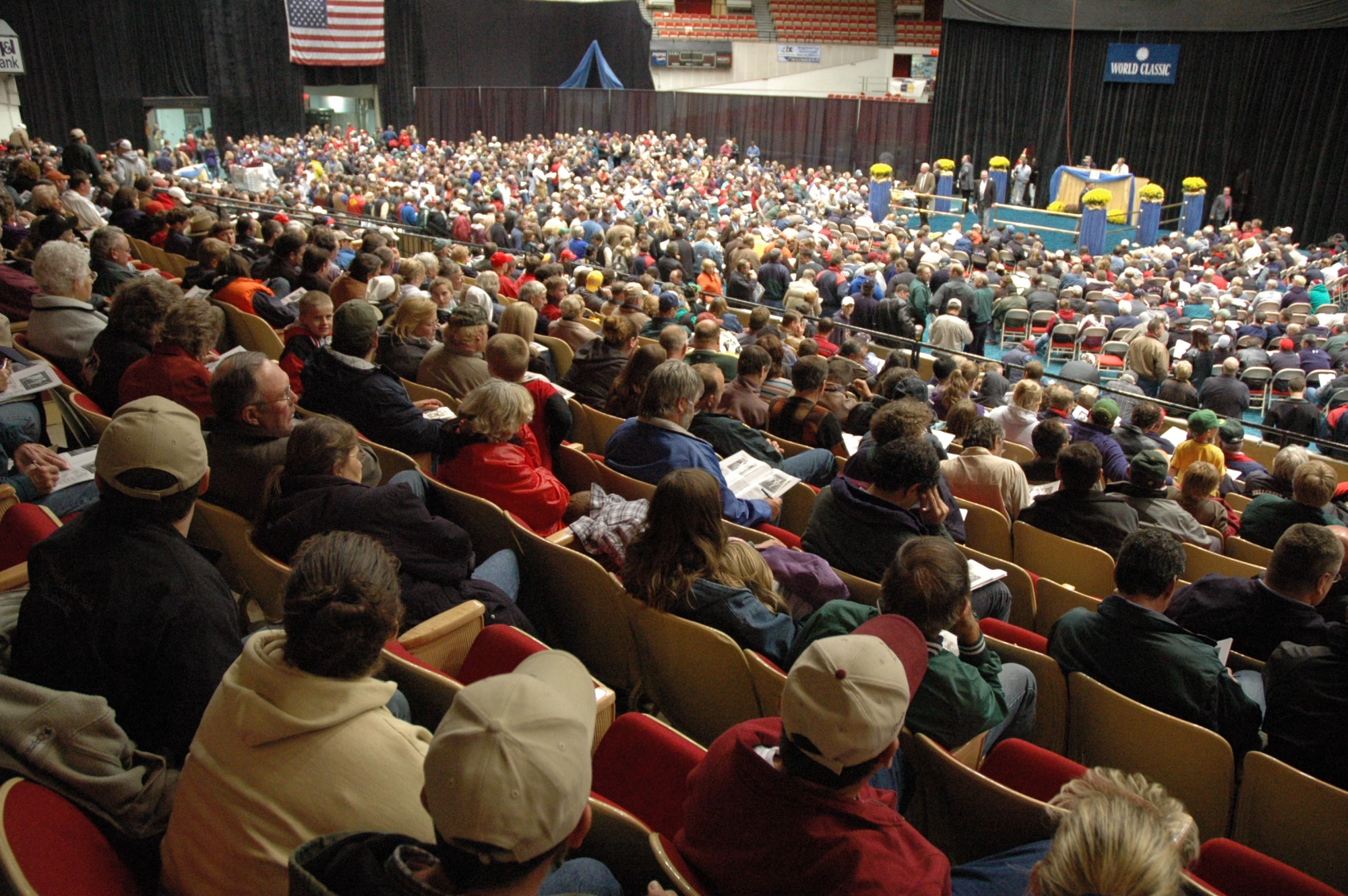
The packed Wisconsin Coliseum during an early 2000s World Classic Holstein Sale demonstrates the magnetic draw of Tom Morris’s vision for “The International Marketplace.” Under Morris’s management since 1989, the sale transformed from a regional cattle auction into a global gathering that regularly attracted thousands of Holstein enthusiasts from around the world, with more than 25% of offerings being exported during its first decades.
When Morris took over management of the World Classic Holstein Sale in 1989, he didn’t just inherit another cattle auction—he received an opportunity to create what he would brand as “The World Classic – The International Marketplace.” The vision was ambitious: to present “a limited offering of the world’s most sought-after genetics” in a setting that would attract Holstein enthusiasts from around the globe.
Picture the Wisconsin Coliseum transformed for that inaugural World Classic under Morris’s direction: “From the first sale, we utilized the lighting and sound system in the Coliseum to design a unique opening that helped draw thousands of Holstein enthusiasts from far and near, marking a special event.” This wasn’t just about selling cattle but creating an experience that would elevate the entire transaction to something approaching theater.
The results validated the approach immediately and consistently. Under Morris’s management, the World Classic has grossed over $1 million fourteen separate times and $2 million three times, with the 2021 sale being the highest grossing sale ever recorded at the World Dairy Expo, when 49 lots averaged $44,250. “Although the averages over the years have consistently ranked among the highest, its impact on genetics worldwide has been just as impressive,” Morris notes. During the sale’s first couple of decades, more than 25% of the offerings were exported, literally exploding top genetics around the globe.
Morris’s commitment to innovation kept the World Classic relevant as the industry evolved rapidly around it. To maintain pace with accelerated genetic progress, the World Classic introduced groundbreaking elements: “selections from breeders from 5 European countries, early frozen embryo packages, contract flushes, the first clone to sell at public auction. A pair of calves imported from Germany that spent months in quarantine offshore then sold live. Young sire groups, and other innovations”.
Morris’s recognition that great events require great teams was central to this success. “It is essential to surround yourself with talented, gifted, dedicated, and hard-working people to put on the World Classic,” he emphasizes. For nearly twenty years, Scott Culbertson has served as “the Captain of the World Classic,” handling the majority of selections and assisting in every area. Jason Danhoff has headed up the care and preparation of the heifer lineup, working with experts like Fenja Boekhoff and Jonas Melbaum to ensure every animal looks its absolute best under the bright lights.
Connecting the Industry: The Communication Revolution
The Cattle Connection team celebrates Tom Morris’s recognition as 2023 World Dairy Expo Industry Person of the Year. For 32 years, this dedicated group of industry professionals helped build North America’s largest dairy breed publication, embodying Morris’s philosophy that “our editors were all part of the dairy world” and “truly connected with advertisers.” Their commitment to authentic, timely communication transformed how the industry connects buyers and sellers across the continent.
In 1990, Tom and Sandy Morris sat in their office, frustrated by a problem that seemed both insurmountable and straightforward. “For years, we spent a lot of money promoting our Deronda Holsteins and the auctions we managed, utilizing the available state and national breed magazines and local farm newspapers,” Morris recalls. The challenge was cost, turnaround time, and effectiveness of existing advertising options—particularly as full-colored photo ads became the new standard but came with “hefty price tags and long turnaround times.”
The question that drove innovation was elegantly simple: “Why can’t our industry have a low-cost, fast turnaround (prior to the internet), easy-to-use, on-time, no-nonsense publication to ‘Connect Buyers and Sellers Coast to Coast’?” Picture Tom Morris finally put his agricultural journalism minor to work as he and his team designed a publication prioritizing speed, affordability, and direct connection between industry participants.
“After a few months of designing and developing it and compiling a mailing list in an attempt to reach only active dairymen,” they launched The Cattle Connection at the 1990 World Dairy Expo. The market response exceeded all expectations. “The remarkable acceptance from the industry allowed it to grow rapidly into one of the dominant communications for the industry,” eventually achieving the largest circulation of any dairy breed publication in North America.
What made The Cattle Connection particularly effective was the authenticity of its editorial approach. “As our editors were all part of the dairy world, they truly connected with advertisers and were committed to timely and accurate publication.” This wasn’t journalism about the dairy industry from the outside—it was communication from within the industry by people who understood both the business and editorial challenges involved.
The publication’s impact extended far beyond simple advertising. For 32 years, it served as the connective tissue for all breeds of the North American dairy industry, helping breeders find markets, buyers discover genetics, and the entire community stay informed about opportunities and developments. The decision to sell to Holstein International represented both validation of what had been built and recognition of changing industry dynamics, ensuring the publication’s continued evolution under ownership that understood its mission and value.
The Mentor’s Legacy: Fifty Years of Heart
Every summer for fifty consecutive years, Tom Morris has climbed into the auctioneer’s booth at the Polk County Fair, watching nervous 4-H members lead their projects into the ring for the junior livestock sale. Picture a sweltering August afternoon in 2024: a young girl approaches the ring with her first big steer, hands shaking as she adjusts the halter one more time. Morris catches her eye from the auctioneer’s stand and nods encouragingly. His voice, steady and reassuring, calls out the bids as her hard work is validated by enthusiastic buyers. In that moment—watching her face light up as the final bid far exceeds her hopes—Morris sees the future of agriculture and remembers why he calls this “one of my favorite endeavors.”
This annual tradition represents more than just professional service—it embodies Morris’s fundamental belief that “the next generation is our greatest national resource.” This conviction has driven his involvement in youth programs spanning five decades, from his decade in post-secondary education to coaching judging teams, assisting at college club sales, and supporting local school and athletic teams.
The scope of his mentorship extends far beyond formal programs. “We have also had the privilege to work with a long list of young people over the years across the country that prepared thousands of head prior to entering the auction ring,” Morris reflects. “Many have gone on to become extremely successful in the industry. As I reflect, I am hopeful that we have made a small impact on their lives, as they have impacted ours”.
His involvement in establishing the Merle Howard Award at the World Dairy Expo demonstrates how personal relationships can be transformed into lasting institutional recognition. Presented annually to an outstanding youth exhibitor, the award honors “Uncle Merle,” who was “a great mentor to so many in our generation.” In 2025, the award will mark its 20th year, representing two decades of recognizing excellence while preserving the memory of someone who shaped Morris’s own development.
Partnership in Excellence: The Foundation of Success
Tom and Sandy Morris at World Dairy Expo, wearing their signature Cattle CONNECTION jackets beneath the World Classic banner—a perfect snapshot of the partnership that has defined both their personal and professional success for over half a century.
Stand in the office at Deronda Farm today, and you can still feel the energy of decisions made together, dreams pursued in partnership, and successes shared equally. For Tom Morris, his marriage to Sandy represents more than just personal happiness—it embodies a shared vision that has shaped every aspect of their professional and personal lives. “There’s no question the best thing that ever happened to me is having Sandy as a partner, in every way and in everything that we have ever done, for over a half century,” Morris acknowledges with the conviction of someone who has seen too many careers falter without such support.
Their backgrounds and shared understanding created a foundation that eliminated many of the tensions that can arise when career demands conflict with family priorities. “Our backgrounds and families are very similar. At an early age, we both knew we wanted to spend our lives involved in the Holstein industry,” Morris explains. “But the most important part of our lives was raising Moriah and Adam.”
Today, watching their daughter Moriah and her family at Cycle Farm provides both personal satisfaction and ongoing education for Tom Morris. Brothers Tony and Jacob Brey and their wives Moriah and Lauren own and manage this modern dairy, home to over 1,600 registered Holstein cows while farming over 2,000 acres. Tom marvels at innovations that seemed impossible during the Deronda days. Tom & Sandy’s grandkids, Evan and Alexa, plus Jake & Lauren’s kids Rosella, Willem, and Gigi, represent another generation of family involvement in the Holstein industry, validating decades of careful attention to both genetic and family development.
“Every time I visit I learn a semester’s worth of education,” Morris admits, his willingness to continue learning from the next generation reflecting the humility and curiosity that have characterized his entire career. This ongoing education demonstrates that true expertise includes recognizing how much there is still to discover and that the greatest teachers often learn as much as they teach.
Lessons for Today’s Producers: Timeless Principles in a Digital Age
As Tom Morris reflects on more than five decades in the dairy industry, his insights offer practical guidance for today’s producers facing unprecedented challenges. His approach to business success rests on principles that transcend technological change: “In order to have a successful business for decades, it’s essential for it to be built on honesty and integrity, and to assemble and surround yourself with a talented, organized, and dedicated team.”
Technology continues to reshape business operations, but Morris views these changes as opportunities rather than threats. “Technology continues to rapidly change the world we live in and is evident throughout our dairy industry,” he observes. He recalls that “bringing a temporary phone line into the auction box was an exciting step,” contrasting it with today’s reality, where “cell phones, the internet, and live online auctions have brought new options for buyers and sellers to connect.”
Morris has also witnessed some of the industry’s most innovative moments, including “the Lylehaven Satellite Adventure sale at Disneyworld that was beamed via satellite to several sites worldwide, long before the internet.” This early embrace of technology to connect global audiences foreshadowed the digital transformation that would eventually reshape the entire industry.
His approach to adaptation offers a template for today’s producers: embrace innovation while maintaining focus on fundamental relationships and values. “As always, it will be essential to stay abreast with technology,” he notes. While understanding that the tools may change, the essential human elements of trust, quality, and service remain constant.
Morris’s sales management philosophy provides practical guidance for producers struggling with marketing their genetics or managing their operations. His systematic approach—completing all essential details by the evening before any important event—applies to planning a sale, preparing for a show, or managing any critical farm operation. His emphasis on surrounding yourself with talented, dedicated people speaks to the importance of building strong teams, whether family members, employees, or trusted advisors.
Looking Forward: Industry Bright Spots and Enduring Values
“The future of our industry is as bright as ever,” Morris declares with the optimism of someone who has witnessed continuous adaptation and growth throughout his career. “As always, those who adapt to changes within our industry will thrive.” This optimism isn’t based on naive hope but on demonstrated patterns of innovation and resilience that Morris has observed throughout his career—from the transformation of the World Dairy Expo into a global gathering place to the evolution of genetic marketing from regional sales to international marketplaces.
For Morris, the key to thriving lies in adapting to change and embracing it while maintaining core values. His own career exemplifies this balance—from the early days of unloading train boxcars at the World Dairy Expo through satellite-transmitted sales to today’s digital marketplace innovations. Each technological advancement has been adopted in service of the same fundamental goal: connecting people who share a passion for Holstein excellence.
The industry Morris sees today—with its sophisticated genomic evaluation systems, global genetic transfer capabilities, and instant communication networks—would seem miraculous to the young man who watched cattle load into boxcars bound for distant shows. Yet the essential elements remain unchanged: quality genetics, honest relationships, and the satisfaction of seeing excellent animals reach their full potential under careful management.
The Enduring Message: Relationships Above All
As afternoon light filters through the windows of an office where a 1954 red ribbon still hangs as a reminder of dreams achieved, Tom Morris offers a final observation that captures the essence of his entire career: “Great cows come and go, but it’s the great friendships that last a lifetime.”
This simple statement contains the wisdom of someone who has navigated the complex intersection of business success, family priorities, and industry leadership for more than five decades. His career demonstrates that authenticity and integrity aren’t just moral imperatives—they’re practical necessities for anyone hoping to build lasting success in agriculture.
Morris’s story offers practical strategies and enduring principles for today’s dairy producers facing unprecedented consolidation and technological change. His systematic approach to preparation, emphasis on building talented teams, and willingness to embrace innovation while maintaining core values provide a template for adapting to new challenges without losing sight of fundamental relationships.
The friendships Morris references aren’t just personal benefits—they’re the foundation upon which the entire industry operates. From the young students at Northwoods Technical College who became lifelong connections to the international buyers and sellers who trust his judgment in high-stakes transactions, relationships have been both the means and the end of his professional success.
As that red ribbon continues to hang in his office, it serves not just as a memento of past achievement but as a symbol of continuity—connecting the dreams of a young boy watching cattle load into boxcars with the reality of a man who helped shape how those dreams could be realized across generations and around the world. That ribbon whispers of a truth Tom Morris discovered long ago—that the greatest victories aren’t measured in sale averages or show wins but in the young faces that light up when they realize they, too, can transform impossible dreams into lasting legacies that will inspire generations yet to come.
KEY TAKEAWAYS
Relationship-driven sale management delivers higher auction averages: Morris’s World Classic sales consistently ranked among America’s highest-grossing Holstein auctions, with systematic buyer relationship protocols generating sustained premium pricing over 35+ years of market volatility
Strategic mentorship programs create measurable business returns: 50 consecutive years of youth development through county fair auctioneering generated hundreds of industry connections that became lifelong clients, proving mentorship investment delivers quantifiable networking ROI for dairy operations
Systematic preparation protocols outperform reactive marketing: Morris’s “evening-before completion” approach to sale management eliminated day-of-sale stress while maximizing buyer participation, demonstrating how operational discipline directly impacts profitability metrics
Technology adoption with relationship foundation scales faster: From temporary phone lines to satellite sales to digital auctions, Morris’s tech integration succeeded because established trust networks provided immediate user adoption, proving relationship infrastructure accelerates technology ROI
EXECUTIVE SUMMARY
The dairy industry’s obsession with genomic testing and digital platforms is missing the $2+ million opportunity hiding in plain sight: strategic relationship building. Tom Morris’s 58-year career managing over 500 Holstein auctions—including sales grossing $2+ million three separate times—proves that systematic relationship management outperforms technology-only approaches by measurable margins. His World Classic Holstein Sale achieved the highest averages in America for decades while exporting 25%+ of offerings globally, generating sustained premium pricing through trust-based buyer networks. Morris’s “Good Sales Don’t Just Happen—They’re Managed” philosophy delivered consistent results across multiple market cycles, proving that prepared relationship strategies trump reactive digital marketing every time. His systematic approach to team building and mentorship created a 50-year county fair auctioneering streak that developed hundreds of industry leaders who became lifelong business partners. While competitors chase genomic rankings and social media metrics, Morris built lasting wealth through authentic industry connections and systematic preparation protocols. Every dairy operation spending money on digital marketing should audit their relationship ROI—the profit gap is likely costing six figures annually.
Learn More:
Profit-Driven Persistence: How Dairy Farmers Overcome Challenges to Boost Production – Demonstrates practical strategies for maintaining herd productivity during industry challenges, showing how Morris’s relationship-first approach translates into actionable crisis management techniques that protect profitability and operational continuity.
Case Studies: Success Stories from Modern Farms – Provides real-world examples of technology adoption and innovation in dairy operations, illustrating how Morris’s mentorship principles and systematic preparation methods apply to implementing cutting-edge solutions like robotic milking systems.
Join the Revolution!
Join over 30,000 successful dairy professionals who rely on Bullvine Weekly for their competitive edge. Delivered directly to your inbox each week, our exclusive industry insights help you make smarter decisions while saving precious hours every week. Never miss critical updates on milk production trends, breakthrough technologies, and profit-boosting strategies that top producers are already implementing. Subscribe now to transform your dairy operation’s efficiency and profitability—your future success is just one click away.
Women are shattering dairy’s glass ceiling, but the industry’s gender gap persists. Discover how female leaders are reshaping the future of milk production.
As International Women’s Day 2025 approaches, a powerful transformation is reshaping the dairy landscape. This transformation challenges century-old perceptions and proves that milk isn’t the only thing flowing through modern dairy operations. Behind milking parlors and research laboratories nationwide, women are not just participating in dairy farming—they’re redefining it.
The latest statistics from the IDFA’s 2025 State of Women in the Dairy report reveal that more than half (54%) of women are actively asking for promotions compared to 47% of men, and 62% of those women successfully earn them—on par with their male counterparts. Yet these statistics only begin to tell the story of how women’s leadership, innovation, and persistence are fundamentally altering an industry that has historically overlooked their contributions.
Innovation born from necessity: Rita Maunsell, who sold her house and relocated her family to Limerick to pursue dairy farming, transformed a workplace challenge into entrepreneurial opportunity by designing a milking gown specifically for women farmers. Her creation addresses the practical needs female dairy operators face daily, exemplifying how women aren’t just adapting to the industry but actively reshaping it through purpose-built solutions that traditional male-dominated manufacturing overlooked.
The Silent Force Behind Dairy’s Success: Women’s Hidden History
The perception of dairy farming as exclusively male territory has persisted despite women’s omnipresence throughout agricultural history. Today’s reality shatters this outdated image as women step from behind-the-scenes roles into recognized leadership and innovation positions. The transformation is remarkable not because women are newly arriving in dairy but because their long-standing contributions are finally receiving acknowledgment.
This historical oversight continues despite striking evidence to the contrary. According to the IDFA’s comprehensive 2025 survey of 608 industry professionals—including 519 women and 89 men—63% of women expressed satisfaction with their opportunities for career advancement. Furthermore, half of female respondents across generations acknowledge having access to programs designed to foster career growth and retention. These statistics reveal that women aren’t merely surviving in dairy—they’re increasingly finding pathways to thrive.
The question we must confront is stark: If women increasingly take charge of their careers and succeed, why do nearly half (48%) still believe they have fewer advancement opportunities than their male counterparts? This disconnect between progress and persistent barriers reveals how deeply entrenched gender assumptions remain in agricultural sectors, including dairy.
The rise of women to leadership positions represents one of the most significant disruptions to traditional dairy industry power structures in decades. The IDFA’s groundbreaking research confirms this trajectory toward leadership: more than half (54%) of women reported asking for promotions compared to 47% of men, with 62% of those women saying they received those promotions—a rate equal to men.
Becky Rasdall Vargas, Senior Vice President of Trade and Workforce Policy at IDFA, leads the Women in Dairy initiative transforming gender equality in the industry. Under her guidance, the comprehensive 2025 State of Women in Dairy report has become the industry’s most authoritative research on women’s advancement challenges and opportunities. “Women in the U.S. dairy industry are better represented than ever before,” notes Vargas, “yet despite this progress, we still see roadblocks.
Becky Rasdall Vargas, senior vice president at IDFA and leader of the Women in Dairy initiative, has been at the forefront of measuring and addressing gender equality in the industry. The survey, conducted between October 16 and November 7, 2024, provides the most comprehensive picture of women’s experiences across the dairy sector.
These leadership inroads become even more apparent when considering the broader implications for industry innovation and competitiveness. The 2025 report reveals that dairy companies are increasingly investing to support women, yet disparities continue to impact job satisfaction and retention, particularly for women in frontline roles. This gap between institutional commitments and on-the-ground experiences raises a provocative question: What transformative innovations are we missing when barriers prevent qualified women from reaching their full potential?
Tech Transformation: How Innovation is Leveling the Dairy Playing Field
Perhaps nowhere is the gender landscape shifting more dramatically than in technologically advanced dairy operations. Automation is rendering physical strength increasingly irrelevant and creating unprecedented opportunities for women producers. From robotics to automated milking systems, technology, and data are helping create a more rewarding life on the farm for today’s female dairy farmers.
What’s most revolutionary about this technological shift is it’s rendering outdated gender assumptions obsolete. When robotic milking systems, automated feeding technology, and data-driven herd management become standard, the question becomes not whether women can handle dairy farming but why their unique perspectives weren’t more central to the industry’s development.
As farms increasingly run on brainpower rather than just physical labor, women’s capabilities in problem-solving, animal health management, and operational efficiency emerge as competitive advantages. As highlighted at the IDFA annual Dairy Forum in San Antonio this January, business success requires “a group of diverse and capable people,” even in artificial intelligence and automation.
The International Dairy Foods Association has focused on six key areas impacting gender equality: treatment, compensation, mentorship and support, opportunities for advancement, factors in recruiting and retention, and discrimination policies and gender equality goals. This holistic approach recognizes that technological advancement must be paired with cultural evolution to create genuinely inclusive workplaces where all talent can thrive.
Jackie Klippenstein, Senior Vice President and Chief Government and Industry Relations Officer at Dairy Farmers of America, was honored with the prestigious 2024 Dairy Girl Network Leading Impact Award. As the first female board member of the National Milk Producers Federation and chair of Newtrient, Klippenstein champions sustainability initiatives, pioneering efforts to reduce dairy’s environmental footprint while advocating for inclusivity across the industry. “She embodies the spirit of progress and dedication vital for the future of dairy farming,” notes DGN President Laura Daniels.
Profit & Progress: The Business Case for Women’s Leadership
The business case for women’s leadership in dairy extends far beyond equity—it’s about profitability and sustainability in an increasingly competitive global market. While historical barriers have limited women’s advancement, new data reveals how gender diversity drives financial performance and innovation throughout the dairy supply chain.
Gender Comparison: By the Numbers
Metric
Women
Men
Asked for promotions
54%
47%
Received promotions when asked
62%
62%
Believe gender negatively impacts pay
55%
5%
Believe they have fewer advancement opportunities
48%
N/A
The IDFA’s 2025 State of Women in Dairy report offers compelling evidence that women’s leadership capabilities remain underutilized despite clear benefits. The survey found that gender inequalities persist in the dairy sector. Nearly half of women (48%) believe they have fewer advancement opportunities than their male counterparts, and the gender pay gap remains a significant concern.
Fifty-five percent of women reported that gender negatively influences their compensation, compared to only 5% of men. This pay gap doesn’t just affect individual women—it represents a strategic vulnerability for an industry that cannot afford to undervalue talent in an increasingly competitive global marketplace.
These findings align with broader research from the previous year, which confirmed that women in the dairy industry report feeling overlooked, undervalued, and underpaid. Despite growing awareness, the persistence of these challenges suggests that systemic change requires more than surface-level commitments to diversity and inclusion.
Networks of Change: Programs Accelerating Women’s Success
The growth of dedicated networks supporting women in dairy has dramatically accelerated progress toward gender equality in the industry. The International Dairy Foods Association’s (IDFA) Women in Dairy network stands as a prominent example, working to improve gender equality within the U.S. dairy sector through data-based metrics and tools, C-suite engagement, and fostering networking and professional and leadership development.
Becky Rasdall Vargas, IDFA Senior Vice President of Trade and Workforce Policy, leads these efforts, including mentoring circles, professional development webinars, and networking events. This comprehensive approach recognizes that advancing women in dairy requires individual development and systemic change.
The latest findings from the 2025 report reveal both progress and persistent challenges. While 63% of women expressed satisfaction with their opportunities for career advancement, the gender pay gap remains a significant concern. Similarly, while half of female respondents acknowledge having access to professional development programs, nearly half (48%) still believe they have fewer advancement opportunities than their male counterparts.
What makes these networks truly revolutionary is their systemic approach. Rather than focusing solely on helping individual women navigate existing structures, they’re gathering data, creating benchmarks, and holding the industry accountable for measurable progress. This strategic approach transforms what could be dismissed as “women’s issues” into industry-wide imperatives for competitiveness and growth.
Persistent Roadblocks: What’s Still Holding Women Back?
Despite remarkable progress, women in dairy continue facing systemic barriers that limit both individual advancement and industry innovation. The 2025 IDFA survey reveals that gender inequalities persist in the dairy sector. Nearly half of women (48%) believe they have fewer advancement opportunities than their male counterparts, and 55% of women reported that their gender negatively influences their compensation.
The Generational & Workplace Divide
Demographic
Key Findings
Gen Z & Millennial Women
41% believe gender will make career advancement harder
Gen Z & Millennial Women
Cite career advancement as major concern for retention
Female Frontline Workers
29% have left jobs due to lack of opportunities
Female Frontline Workers
Face unique challenges in processing plants and farms
The generational divide highlighted in the 2025 report is particularly concerning, with 41% of Gen Z and Millennial women believing it will be harder to advance due to their gender. This perception threatens the industry’s ability to attract and retain the next generation of female talent.
Similarly, the report reveals that 29% of female frontline employees have left jobs due to lacking opportunities. These findings reflect persistent structural challenges rather than individual limitations.
The gender pay gap represents a significant hurdle that has shown slight improvement. The 2025 data confirms this remains a pressing issue, with 55% of women reporting that their gender negatively influences their compensation, compared to only 5% of men. This stark contrast in perception underscores how differently men and women experience the same workplace environments.
Mary Creek, 62, a third-generation dairy farmer from Hagerstown, Maryland, represents the pioneering spirit that has long existed in dairy despite limited recognition. Working 300 acres alongside her brother, Creek reflects on breaking gender norms throughout her career: “Growing up it was not common to have a woman as involved in showing cattle as I was. Our parents raised us to do what was necessary and I used to be able to keep up with just about any man with my chore accomplishments.” Her experience highlights how women’s contributions to dairy farming have often been present but historically overlooked.
Breaking New Ground: Dairy’s Female-Powered Future
As we look toward the remainder of 2025 and beyond, the implications of women’s increasing leadership in dairy will fundamentally reshape the industry’s trajectory. Having broken through initial barriers to participation and recognition, women are now positioned to drive transformative change in areas ranging from sustainability practices to consumer engagement and technological innovation.
The IDFA’s comprehensive research from 2025 provides a roadmap for continued progress. The fact that 54% of women are now actively asking for promotions compared to 47% of men, with 62% of those women successfully earning the promotion, indicates a growing confidence and assertiveness among women in the industry.
However, the persistence of the gender pay gap and the fact that nearly half (48%) of women still believe they have fewer advancement opportunities than their male counterparts indicates that significant work remains. As IDFA continues its work through the Women in Dairy initiative, its approach of using data-based metrics and tools, C-suite engagement, and fostering networking and professional and leadership development offers a promising framework for continued progress.
The findings presented at the Dairy Forum 2025 in San Antonio this January make clear that creating a “people-first culture” is essential for “a strong dairy future.” As the industry continues to navigate challenges from automation to market pressures, leveraging the entire talent pool—regardless of gender—will be crucial for maintaining competitive advantage.
Amber Craswell, a dairy farmer from Prince Edward Island, represents the new generation of women agricultural leaders reshaping Canada’s dairy landscape. Like many women across North America, she navigates the complex demands of modern dairy production while helping transform industry perceptions of who belongs in farm leadership. As automation and data-driven practices become increasingly central to successful operations, farmers like Craswell demonstrate how women’s contributions are essential to the industry’s future sustainability and innovation.
Conclusion: The Unfinished Revolution
The dairy industry is at a pivotal juncture—where women’s increasing influence, leadership, and innovation are fundamentally reshaping its trajectory. The statistics from the IDFA’s comprehensive 2025 research are unequivocal: 54% of women are actively asking for promotions compared to 47% of men, with 62% successfully earning them; yet 48% still believe they have fewer advancement opportunities than their male counterparts and a concerning 55% report that their gender negatively influences their compensation compared to only 5% of men.
These numbers tell a story of remarkable progress and persistent challenges—a reflection of an industry in transformation rather than one that has completed its journey toward gender equality. The IDFA’s 2025 State of Women in Dairy Report, based on a survey of 608 industry professionals conducted between October 16 and November 7, 2024, provides the most comprehensive picture to date of advancements made and remaining barriers.
As International Women’s Day 2025 approaches, the dairy industry would be wise to recognize that women’s advancement isn’t merely a matter of equity—it’s an economic and strategic imperative. The glass milking parlor is cracking if not yet entirely shattered. The question is no longer whether women can lead in dairy but how quickly the industry will transform to fully leverage the talent, perspective, and innovation that women have always brought to agriculture.
Key takeaways:
54% of women in dairy are asking for promotions, with a 62% success rate equal to men, indicating growing assertiveness and recognition of women’s capabilities.
A significant gender perception gap exists, with 55% of women believing their gender negatively impacts pay, compared to only 5% of men.
Technological advancements create new opportunities for women in dairy, but cultural and systemic barriers hinder full equality.
Gen Z and Millennial women face unique challenges, with 41% believing their gender will make career advancement harder.
Industry initiatives like IDFA’s Women in Dairy network are crucial in driving progress, but data shows persistent inequalities require continued focus and action.
Executive Summary:
The dairy industry is experiencing a significant transformation as women take on increasingly prominent roles in leadership and innovation. The IDFA’s 2025 State of Women in Dairy report reveals progress and persistent challenges. While 54% of women actively seek promotions, with a 62% success rate matching their male counterparts, nearly half still perceive fewer advancement opportunities. The gender pay gap remains a critical issue, with 55% of women believing their gender negatively impacts compensation. Technological advancements level the playing field, but cultural barriers persist, particularly for younger women and frontline workers. Industry initiatives like IDFA’s Women in Dairy network drive change, but the data suggests that achieving true gender equality in dairy requires ongoing commitment and systemic transformation.
Join over 30,000 successful dairy professionals who rely on Bullvine Daily for their competitive edge. Delivered directly to your inbox each week, our exclusive industry insights help you make smarter decisions while saving precious hours every week. Never miss critical updates on milk production trends, breakthrough technologies, and profit-boosting strategies that top producers are already implementing. Subscribe now to transform your dairy operation’s efficiency and profitability—your future success is just one click away.
To provide the best experiences, we use technologies like cookies to store and/or access device information. Consenting to these technologies will allow us to process data such as browsing behavior or unique IDs on this site. Not consenting or withdrawing consent, may adversely affect certain features and functions.
Functional
Always active
The technical storage or access is strictly necessary for the legitimate purpose of enabling the use of a specific service explicitly requested by the subscriber or user, or for the sole purpose of carrying out the transmission of a communication over an electronic communications network.
Preferences
The technical storage or access is necessary for the legitimate purpose of storing preferences that are not requested by the subscriber or user.
Statistics
The technical storage or access that is used exclusively for statistical purposes.The technical storage or access that is used exclusively for anonymous statistical purposes. Without a subpoena, voluntary compliance on the part of your Internet Service Provider, or additional records from a third party, information stored or retrieved for this purpose alone cannot usually be used to identify you.
Marketing
The technical storage or access is required to create user profiles to send advertising, or to track the user on a website or across several websites for similar marketing purposes.
To provide the best experiences, we and our partners use technologies like cookies to store and/or access device information. Consenting to these technologies will allow us and our partners to process personal data such as browsing behavior or unique IDs on this site and show (non-) personalized ads. Not consenting or withdrawing consent, may adversely affect certain features and functions.
Click below to consent to the above or make granular choices. Your choices will be applied to this site only. You can change your settings at any time, including withdrawing your consent, by using the toggles on the Cookie Policy, or by clicking on the manage consent button at the bottom of the screen.
Functional
Always active
The technical storage or access is strictly necessary for the legitimate purpose of enabling the use of a specific service explicitly requested by the subscriber or user, or for the sole purpose of carrying out the transmission of a communication over an electronic communications network.
Preferences
The technical storage or access is necessary for the legitimate purpose of storing preferences that are not requested by the subscriber or user.
Statistics
The technical storage or access that is used exclusively for statistical purposes.The technical storage or access that is used exclusively for anonymous statistical purposes. Without a subpoena, voluntary compliance on the part of your Internet Service Provider, or additional records from a third party, information stored or retrieved for this purpose alone cannot usually be used to identify you.
Marketing
The technical storage or access is required to create user profiles to send advertising, or to track the user on a website or across several websites for similar marketing purposes.








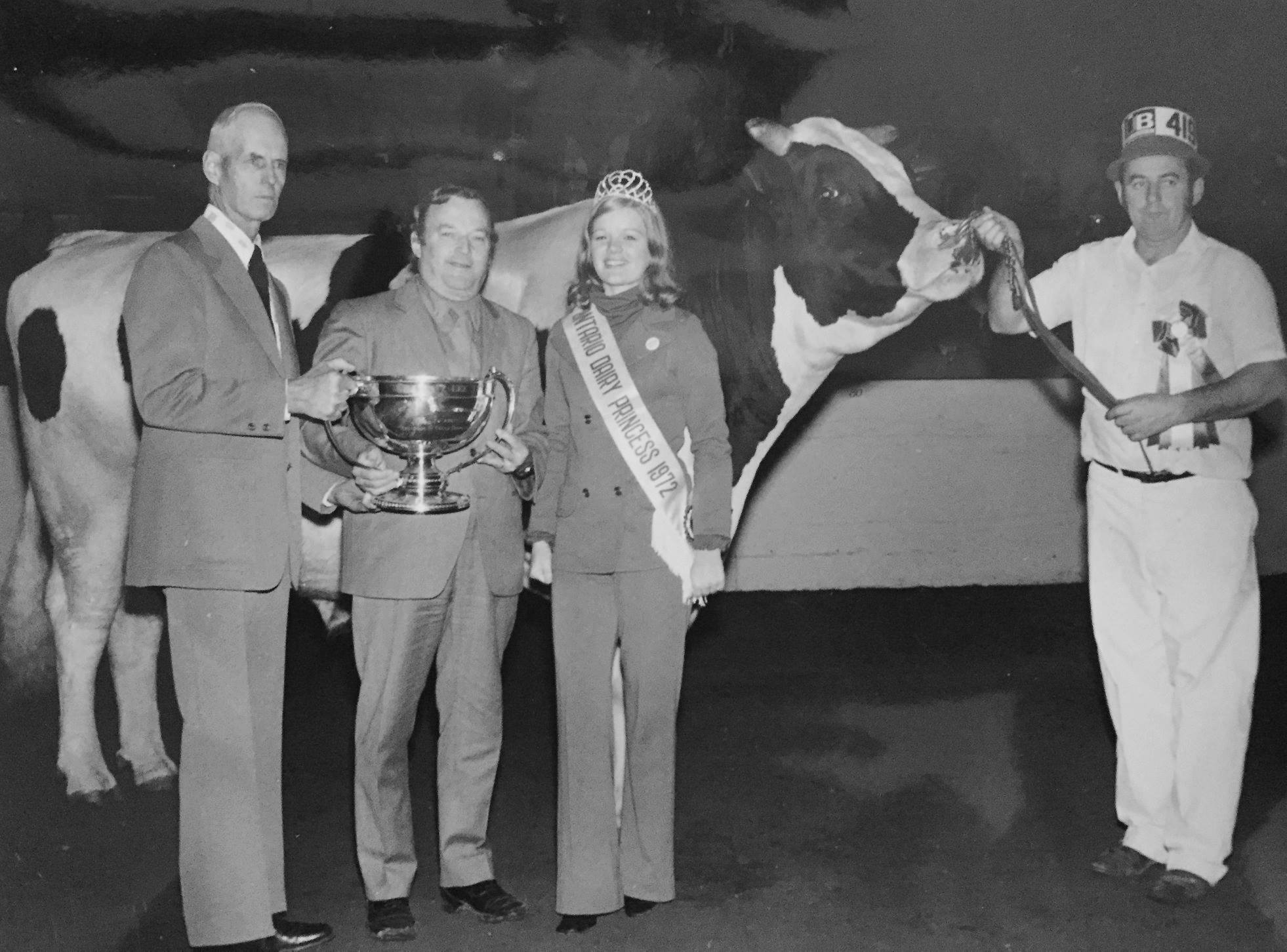


 Join the Revolution!