Archive for dairy farm safety

From $1 Million Cows to 6 Dead Workers: The 10 Stories That Defined Dairy’s 2025 Reckoning

Six workers dead in a manure pit. A $75M dairy bankrupt. A cow sells for $1M. One industry. One year. Ten lessons you can’t afford to skip.

What farmers need to know: The year 2025 brought record-breaking highs and gut-wrenching lows to dairy operations across North America. From a single cow selling for $1 million at the International Intrigue Sale to six workers dying in a Colorado manure pit, this year exposed the stark divide between those thriving and those struggling to survive. North Dakota’s collapse from 1,810 dairy farms in 1987 to just 24 today offers a sobering preview of what’s coming for operations that fail to adapt. Whether you’re milking 100 cows or 5,000, this analysis breaks down the 10 stories that shaped our industry—and what they mean for your operation heading into 2026.

A Year That Demanded Answers

Look, I’ve been covering this industry for a while, and I can’t remember a year quite like this one. The headlines of 2025 felt like they were written by someone with a cruel sense of irony—one day we’re celebrating million-dollar genetics, the next we’re mourning families torn apart by preventable tragedies.

What’s interesting here is how interconnected these stories actually are. The financial pressures driving consolidation in North Dakota aren’t separate from the safety lapses in Colorado or the infrastructure failures in Quebec. They’re all threads in the same fabric. When margins tighten, something gives. Sometimes it’s a maintenance schedule. Sometimes it’s a safety protocol. Sometimes it’s a family’s entire future.

Here’s something the industry doesn’t want to admit: our obsession with scale is killing us. Literally. The pressure to grow bigger, milk more cows, and cut more costs has created conditions in which safety equipment becomes “optional,” and electrical inspections are pushed to “next quarter.” We saw the consequences play out in real time this year.

These aren’t just news items to scroll past. They’re lessons—expensive ones paid for by our neighbors—that every dairy professional needs to internalize before the calendar flips to 2026.

The Countdown: What 2025 Taught Us

#10. External Threats: The Lancaster County Livestock Shootings

dairy farm security, Lancaster County shootings, livestock protection, agricultural crime, dairy cow value

Here’s something that shouldn’t happen in America: dairy farmers waking up to find their cows shot dead in their barns.

In a coordinated pre-dawn attack on March 15, shooters targeted multiple dairy farms in Lancaster County, Pennsylvania, killing productive Holstein cows and injuring a horse. Pennsylvania State Police confirmed the attacks hit operations in both Colerain Township and Sadsbury Township within hours of each other.

The economic impact goes way beyond what most people realize. Each slain cow didn’t just represent her $2,000-2,500 replacement cost—she represented up to $92,000 in lifetime milk production potential. Years of careful breeding decisions. Gone in seconds.

What really struck me about this story was the community response. Within days, local farmers had organized a GiveSendGo fundraiser for the affected families, demonstrating what agricultural solidarity actually looks like when the chips are down.

The uncomfortable truth? Rural security can’t be an afterthought anymore. Isolated locations and limited law enforcement presence make dairy operations uniquely vulnerable. If you haven’t evaluated your surveillance systems and community alert networks lately, this is your wake-up call.

Read more: Senseless Livestock Shootings Rock Lancaster County: Community Rallies Behind Affected Farmers

#9. Infrastructure Risk: The Buckland Holsteins Barn Fire

barn fire prevention, dairy farm safety, Holstein cattle losses, agricultural fire detection, dairy farm insurance

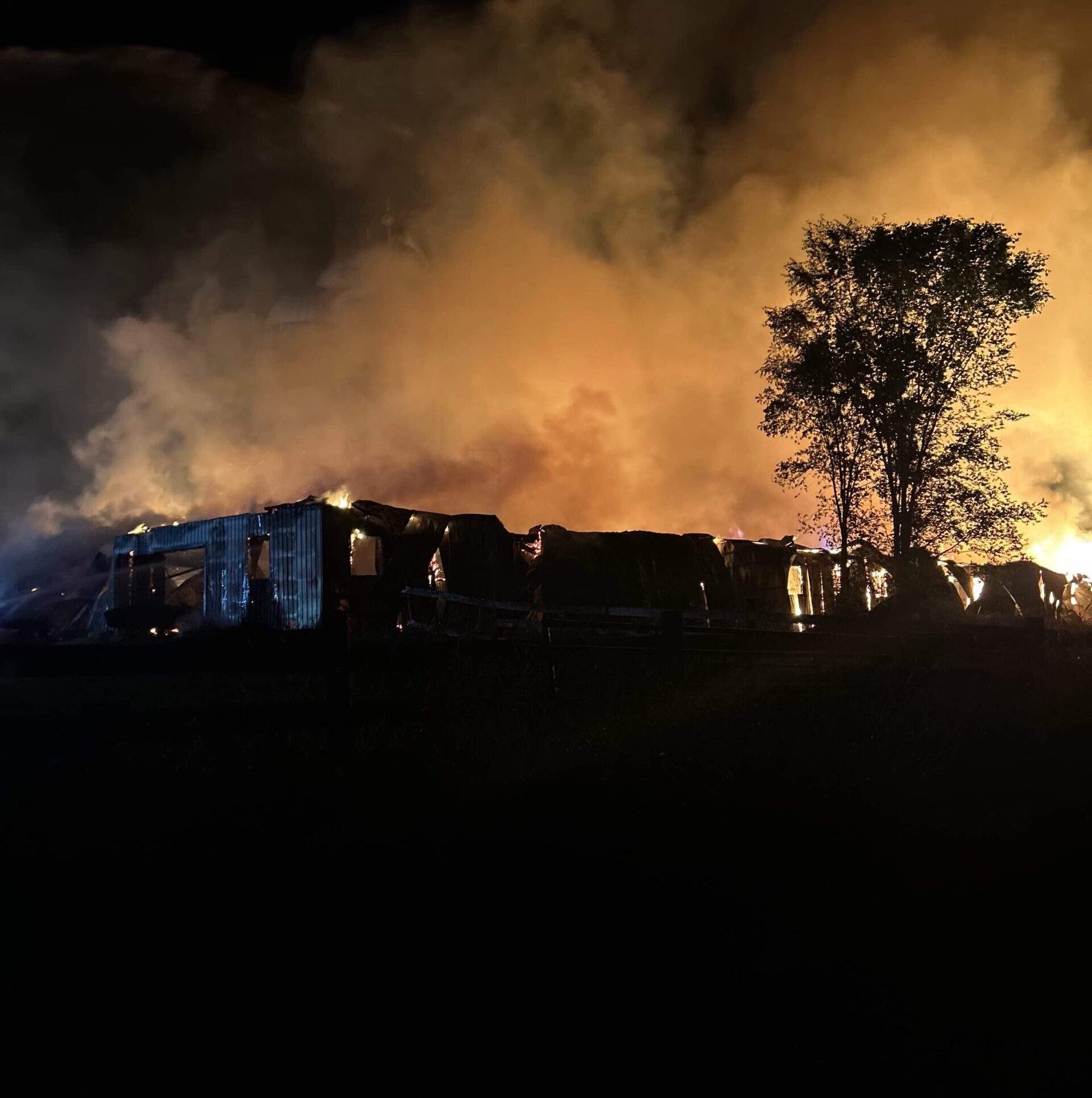
On June 26, a seven-generation dairy operation near Coaticook, Quebec, went up in flames. Over 160 Holstein cattle—including approximately 100 milking cows and 65 bred heifers—perished in the early-morning blaze at Buckland Holsteins.

Angus MacKinnon, owner and seventh-generation operator of Buckland Holsteins, told reporters the family’s electrical monitoring system detected a spike at 1:35 AM—nearly 30 minutes before anyone noticed the fire. By the time his brother alerted him just after 2:00 AM, “the building was entirely consumed. There was nothing we could do.”

This development suggests a troubling aspect of our industry’s approach to risk management. The MacKinnon family had monitoring equipment in place. They were doing things right. But detection without automated response only gets you so far.

The financial losses are staggering. Based on current Holstein replacement costs of $1,500-2,000 per head, the livestock losses alone represent $240,000-320,000 (The Bullvine, June 26, 2025). But that’s just the cows. A concrete silo containing 400 tons of silage continues to smolder and is expected to burn for approximately 6 months due to its inaccessibility—another $100,000-plus in losses.

Here’s what farmers are finding: when financial margins tighten, infrastructure investment gets deferred. Electrical systems in livestock facilities are constantly exposed to humid, corrosive atmospheres that accelerate degradation. And only five U.S. states mandate agricultural fire protection (National Fire Protection Association data, 2024). That gap between what we should be doing and what we can afford to do? That’s where catastrophes happen.

Read more: Devastating Quebec Barn Fire at Buckland Holsteins Claims 160+ Holstein Cattle

#8. Farm Safety: Reed Hostetler’s Final Legacy

dairy farm safety, manure pit dangers, hydrogen sulfide gas, farm accident prevention, dairy farmer fatality

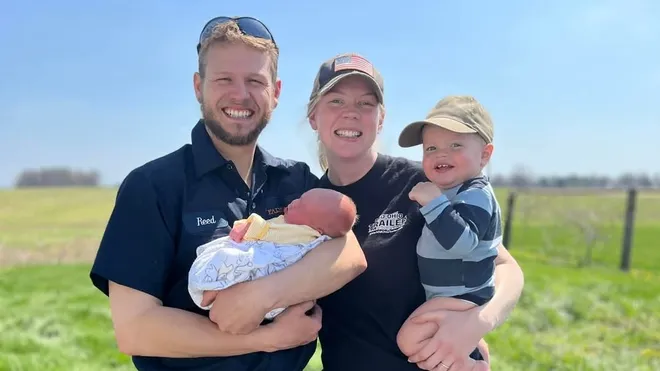
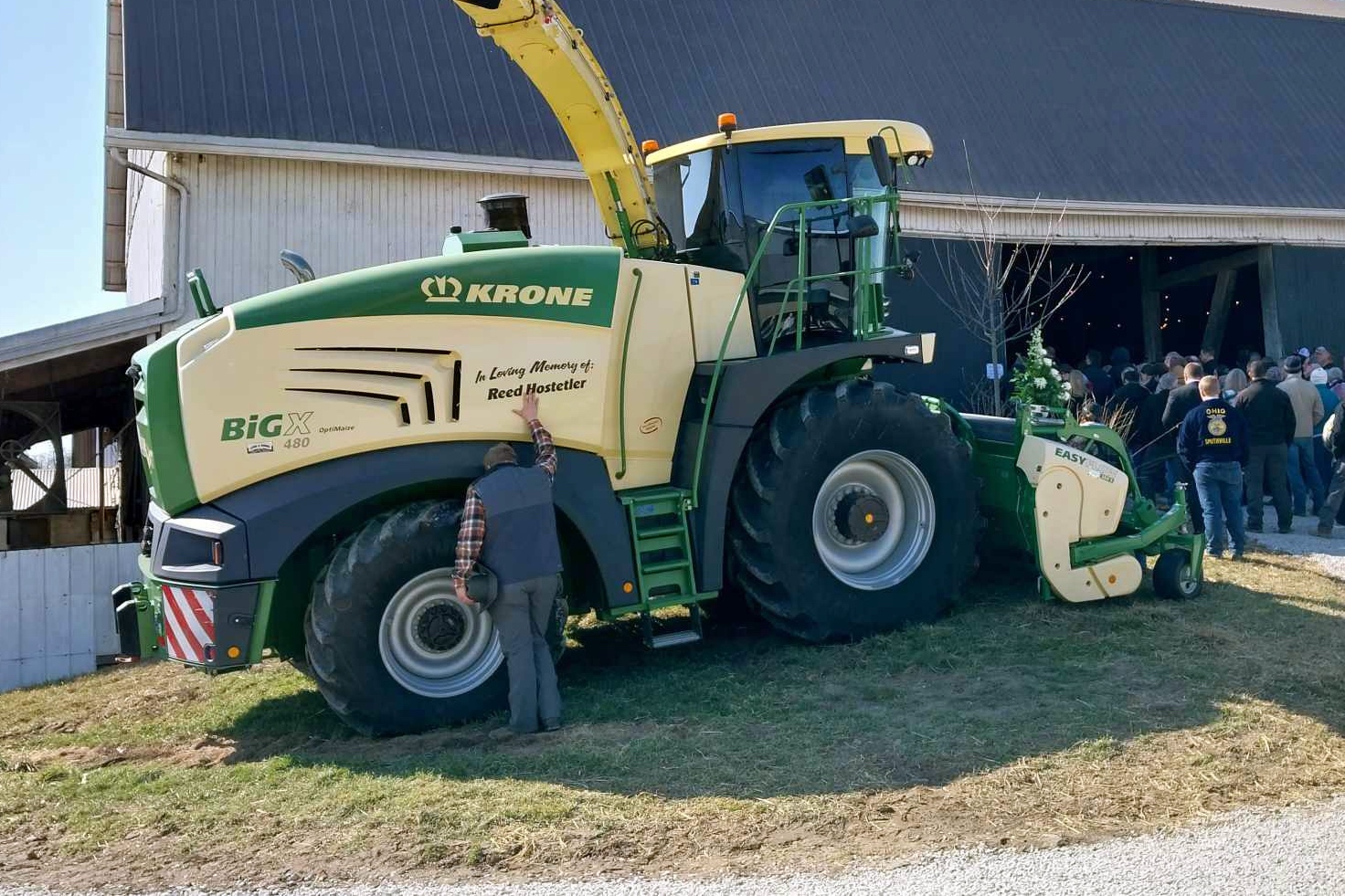
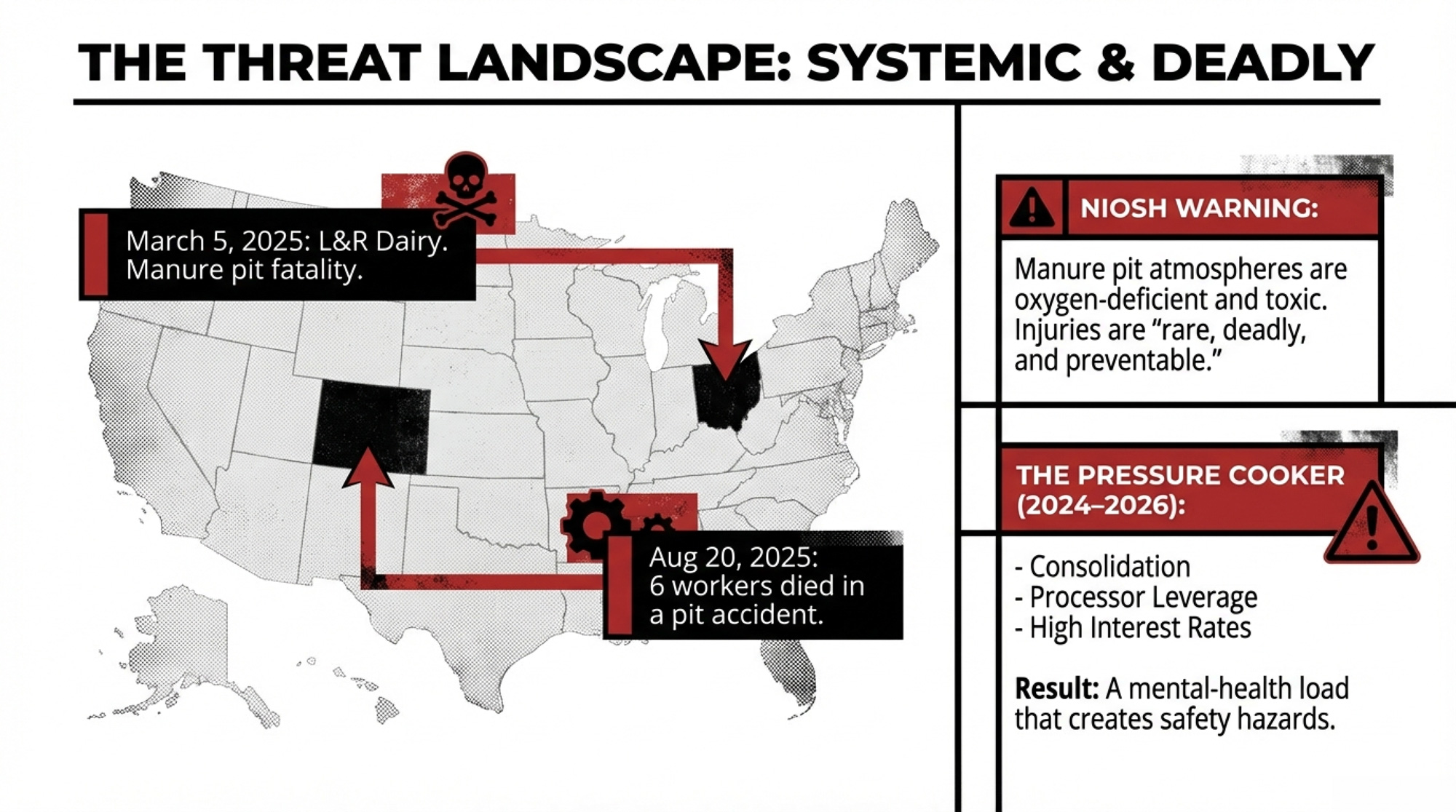
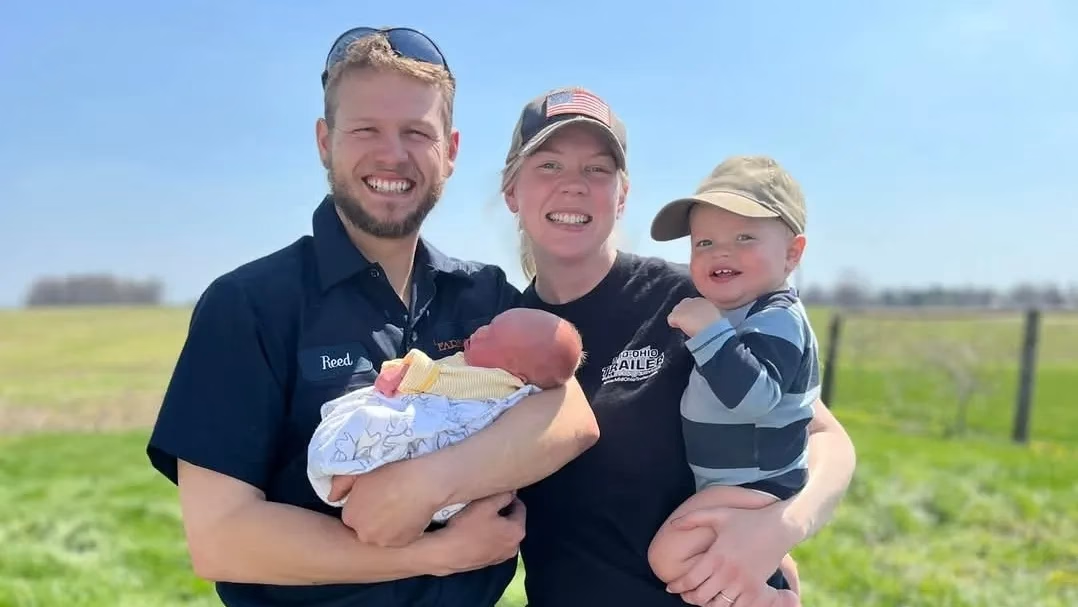
On March 5, 2025, the dairy community lost Reed Hostetler—a 31-year-old Ohio dairy farmer, husband, and father of three young children—in a farm accident at his family’s operation in Marshallville.

According to news reports, Reed drowned in a manure pit after the tractor he was operating tipped over. His two brothers acted immediately to try to save him, but the lagoon proved impossible to navigate in time.

What makes this loss especially heartbreaking isn’t just the statistics—though they’re damning enough. It’s who Reed was. He had hiked the entire Appalachian Trail. Rode bulls. Did mission work in Thailand. He was co-owner of L&R Dairy Farm and, by all accounts, one of those people who made everyone around him better.

He leaves behind his wife, Abby, and their children: Baer (4), Claire (2), and Axe (1).

I’ve noticed that we tend to talk about farm safety in abstract terms—statistics, protocols, equipment recommendations. But behind every number is a family like the Hostetlers. The Marshallville community rallied around them, organizing support and holding Reed’s funeral service right there on the family dairy. That’s beautiful. It’s also a reminder that these aren’t distant tragedies. They’re our neighbors.

Read more: A Father’s Final Legacy: What Reed Hostetler’s Tragic Loss Can Teach Every Dairy Farm

#7. Financial Peril: Dykman Dairy’s $75 Million Collapse

Dykman Dairy Farm, British Columbia dairy crisis, financial uncertainty agriculture, legal battle Bank of Nova Scotia, $75 million debt dairy farm, climate change impact farming, interest rates land values, B.C. Dairy Association support, local economy dairy suppliers, government aid dairy farming viability

When one of British Columbia’s largest dairy operations buckled under $75 million in debt, it sent shockwaves through an industry already grappling with rising interest rates and tightening margins.

In late 2024, a B.C. Supreme Court judge placed Dykman Dairy into creditor protection following a default application from the Bank of Nova Scotia (CBC News, December 10, 2024). By early 2025, the case had become a cautionary tale studied across the industry.

The numbers tell a story of ambition outpacing discipline. For decades, the farm’s debt increased by approximately $800,000 annually as it expanded facilities and acquired quota. When interest rates climbed from 2% to 7%, monthly interest payments soared to $465,000, against income from 27,000 liters of daily milk production that couldn’t keep pace (The Bullvine, January 3, 2025).

Then came the 2021 floods. The Sumas Lake disaster added unexpected costs to an already stretched operation, exposing just how thin the margins had become.

The case ignited fierce debate about lender responsibility. Critics argued Scotiabank engaged in over-lending that enabled the farm’s precarious expansion (The Bullvine Industry Analysis, January 2025). But here’s the thing: pointing fingers doesn’t fix broken balance sheets. What Dykman’s collapse really demonstrates is how quickly aggressive growth strategies can unravel when external conditions shift.

This is the microeconomic reality behind the consolidation trend. When the average producer sees mega-dairies struggling with debt loads like this, it raises uncomfortable questions about scale itself.

Read more: Dykman Dairy’s $75 Million Debt Crisis: Mismanagement or Misfortune?

#6. Genetic Gold Rush: Million-Dollar Madness at International Intrigue

And then there’s the other side of the coin.

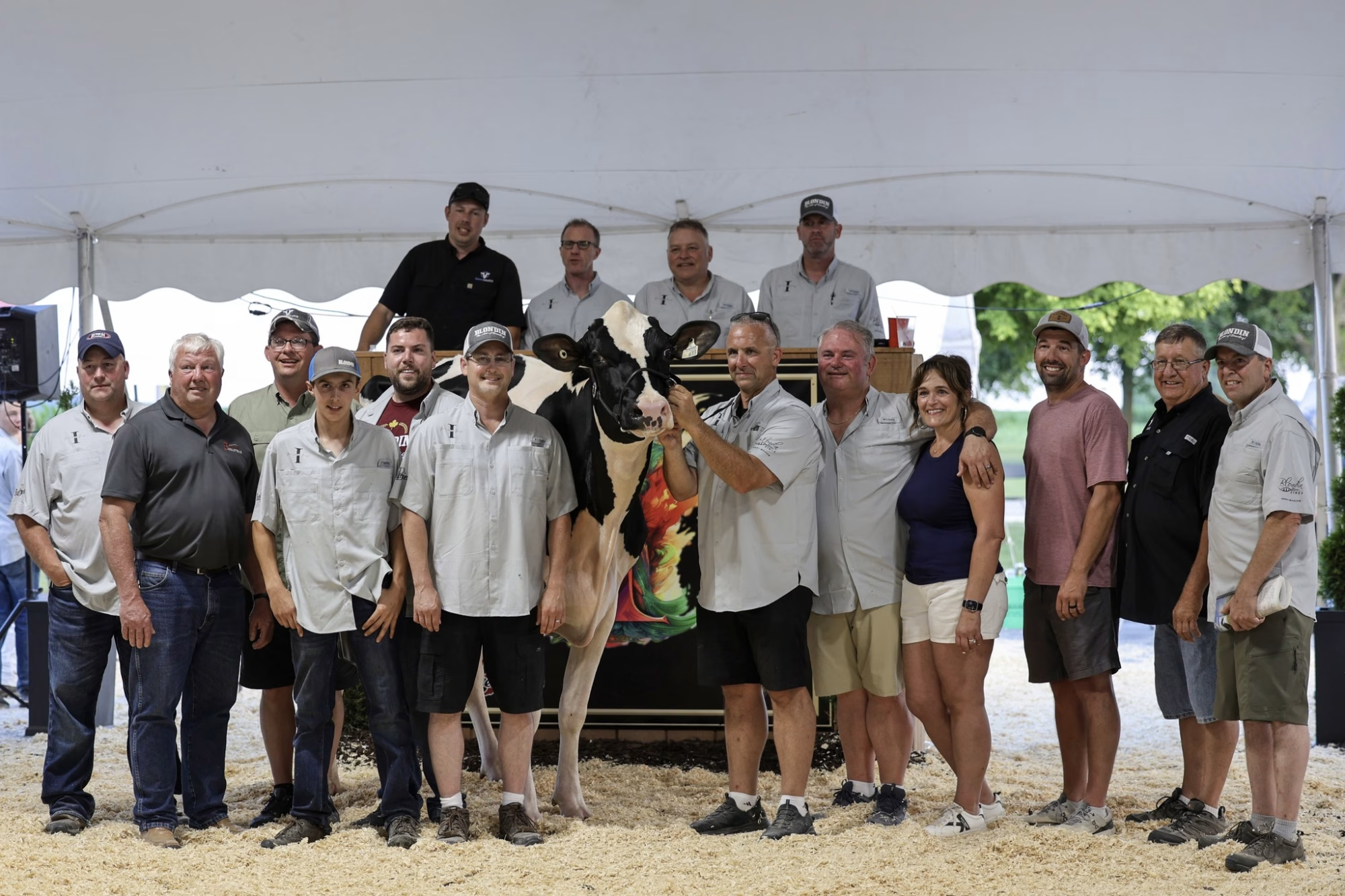
On July 2, the International Intrigue Sale at Butlerview Farm in Chebanse, Illinois, shattered expectations when 173 live lots sold for a combined $4.3 million—an average of over $25,000 per animal.

But the real headline came after the catalog closed. Olortine Avenger Design VG-89-CAN 2yr., an Ontario-bred senior three-year-old who had already won Grand Champion at Western Dairy Expo 2025, the All-Canadian Winter Two-Year-Old in 2024, and Intermediate Champion at the Royal Agricultural Winter Fair, received a substantial post-sale offer from GenoSource. Rather than accept privately, her owners opened bidding to the room.

GenoSource’s $1 million bid held. Just like that, Design became the newest million-dollar cow—and a symbol of the extreme polarization defining today’s dairy market.

What this tells us is pretty straightforward: the demand for elite, high-performance genetics has never been stronger. While operations like Dykman Dairy collapse under debt, buyers are writing seven-figure checks for animals with exceptional type scores and show-ring pedigrees.

The second-highest seller reinforced the point even more dramatically for genomics-focused buyers. Jacobs Lambda Baz commanded $320,000—and her appeal went far beyond the ring. Sired by the genomic powerhouse Farnear Delta-Lambda-ET (+753M, GTPI +2909), Lambda Baz represents everything today’s component-focused market demands: her production record of 128 pounds with 5.1% fat and 3.9% protein demonstrates the butterfat and protein premiums that drive modern milk checks (The Bullvine, July 2, 2025).

Two economies. Same industry. Pick which one you’re competing in.

Read more: Million-Dollar Madness Rocks International Intrigue Sale

#5. Strategic Success: What the USDA Study Revealed

top farming, Best Places to Farm, financial performance, farms, economic viability, profitability, weighted ranks, return on assets, profit margins, asset turnover, extensive land, high-grade land, superior soil quality, larger plots, economies of scale, exceptional farming locations, weather patterns, market dynamics, agricultural output, livestock health, calamities, droughts, floods, market prices, expansive plots, fertile plots, weather conditions, market volatility, climatic challenges, strategic investments, efficient machinery, infrastructure, best practices, crop management, livestock management, market demands, climatic conditions

When Farm Futures released their “Best Places to Farm” analysis—a comprehensive 20-year study examining financial performance across 3,056 U.S. counties—the results challenged some long-held assumptions about what makes agricultural regions successful.

The methodology was rigorous: counties were ranked by average weighted scores for return on assets, profit margins, and asset turnover, using USDA Census of Agriculture data from 2002 through 2022.

The winner? Kershaw County, South Carolina.

Not Iowa. Not Wisconsin. South Carolina.

Here’s why that matters: Kershaw County’s average farm size is just 175 acres, and fewer than one in five operations earns more than $100,000 annually. By conventional wisdom, that profile shouldn’t produce top financial performance.

But Kershaw’s farmers figured something out. Poultry accounts for 97% of the county’s agricultural sales, allowing operators to achieve remarkable returns on assets and superior profit margins through high turnover and lower land costs. They’ve insulated themselves from weather volatility and commodity price swings by specializing in exactly the right enterprise for their conditions.

The contrast with traditional Corn Belt regions is instructive. High land prices and weather exposure continue to pressure crop-focused counties, while Southeast operations excelling in cost-effective poultry and integrated livestock systems consistently outperform.

This isn’t an argument against dairy. It’s an argument for strategic adaptation—understanding your specific geographic, economic, and market context and optimizing accordingly rather than chasing scale for its own sake.

Read more: Top 10 Best Places to Farm in the U.S. Revealed by 20-Year USDA Study

#4. Systemic Shock: The FDA’s Milk Testing Suspension

On April 21, 2025, just days after the NCIMS Conference concluded, the FDA abruptly suspended its Grade A milk proficiency testing program—and most state regulators learned about it from media reports.

The program doesn’t test individual farms’ milk directly. Instead, it ensures that the hundreds of laboratories analyzing dairy samples across the country produce consistent, accurate results. It’s the federal quality assurance check that keeps the entire system calibrated.

An internal FDA email obtained by Reuters explained the suspension: the agency’s Moffett Center Proficiency Testing Laboratory “is no longer able to provide laboratory support for proficiency testing and data analysis” following workforce reductions at the Department of Health and Human Services that eliminated roughly 20,000 positions.

The timing couldn’t have been worse. Labs had already tested the 2025 annual proficiency samples—results were due April 11—but there was suddenly no capacity to analyze or validate them.

To be clear: milk remains safe. Jim Mulhern, President and CEO of the National Milk Producers Federation, issued a statement emphasizing that rigorous testing continues at state and processor levels. The International Dairy Foods Association echoed this assurance. But the lab oversight gap creates real risk. Without federal proficiency verification, laboratories may struggle to maintain accreditation, testing consistency could erode, and consumer confidence—hard-won over decades—could be damaged.

Here’s what the industry PR statements won’t tell you: we got lucky. If this suspension had coincided with another avian influenza outbreak in dairy herds, the confidence gap could have become a full-blown crisis. The H5N1 detections in dairy cattle throughout 2024-2025 prompted consumers to ask questions about milk safety (USDA APHIS, 2025). Removing the federal testing backstop at exactly that moment was playing with fire.

What this episode exposed is systemic vulnerability. Even well-managed farms that follow best practices are exposed when the regulatory infrastructure protecting the entire industry is dismantled. Some things you can control. Federal budget priorities aren’t one of them.

Read more: FDA Pulls Plug on Milk Testing: What You Need to Know Now

#3. The Human Spirit: Brady Martin’s Choice

dairy farm succession, family dairy operations, young farmer retention, agricultural diversification, dairy farm work ethic

In a year defined by crisis and loss, Brady Martin’s story offered something different: a reminder of why farming still matters.

The 18-year-old from Elmira, Ontario, was projected as a first-round pick in the 2025 NHL Draft. Scouts raved about his combination of skill and “farm strength”—natural power developed through years of physical labor rather than gym training. NHL Central Scouting ranked him 11th among North American skaters.

On draft night, Martin skipped the ceremony in Los Angeles. Instead, he listened from his family’s 250-cow dairy operation, exactly where he wanted to be.

“The cows don’t care if I’m drafted sixth or sixteenth,” Martin told NHL reporters. “The morning milking starts at 5:30 AM, whether I’m an NHL prospect or not, and we’ve got over 250 dairy cows that need tending to”.

The Nashville Predators selected him fifth overall. He celebrated on the farm with the people who’d been there all along.

What resonated about Martin’s story wasn’t just the headline. It was the context. The Martin operation represents exactly the kind of diversified family farm that consolidation pressure threatens: dairy cows, beef cattle, several thousand acres of crops, and a poultry operation all integrated under multi-generational management.

His long-term plan? “Hopefully I play in the NHL. But if that doesn’t work out, then the farm is definitely where I’ll be heading”.

That’s not hedging. That’s understanding what matters.

Read more: NHL Prospect Chooses Family Dairy Over Draft Night Fame

#2. Unthinkable Tragedy: The Colorado Disaster

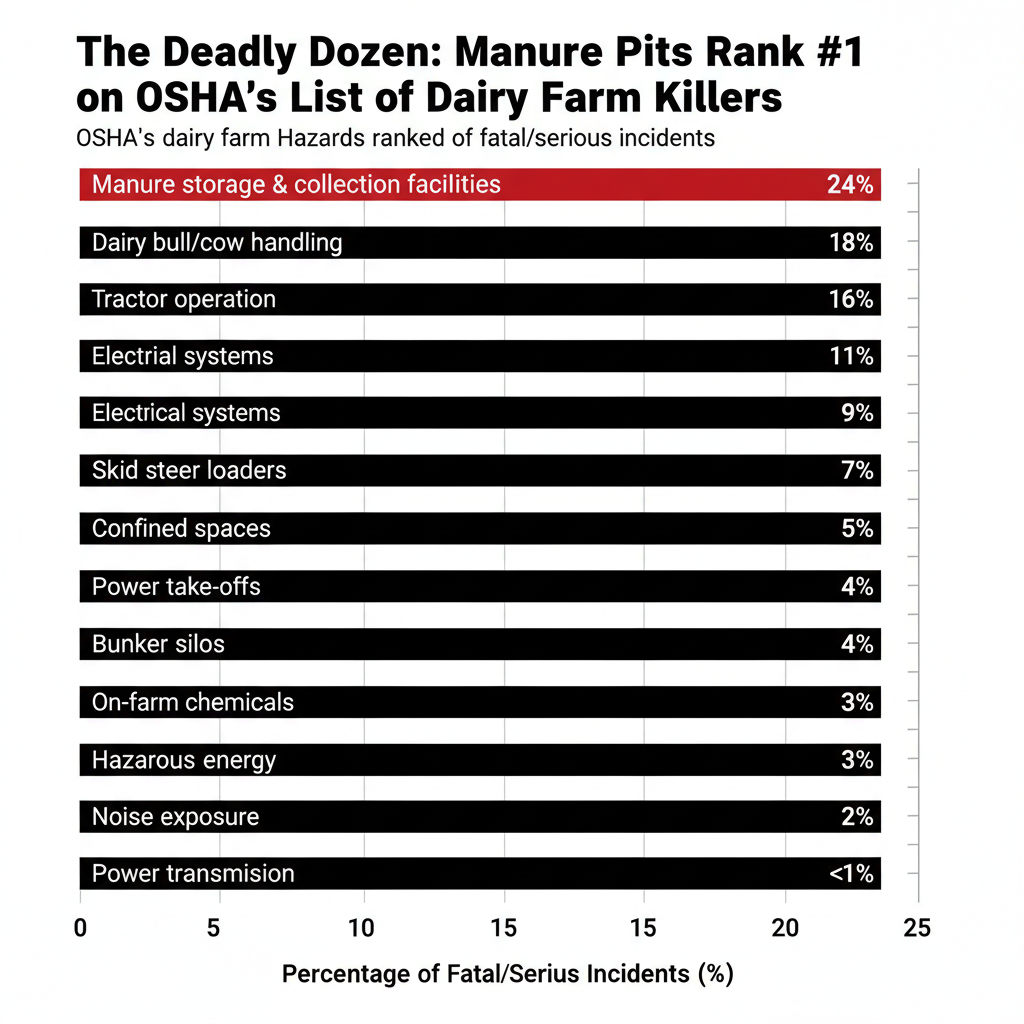
On August 20, 2025, six workers died at Prospect Valley Dairy in Colorado after being overcome by hydrogen sulfide gas in a manure pit. It was, by every measure, the worst confined space tragedy our industry has ever seen.

Six people. One valve. Zero monitors.

The details are almost unbearable. A contractor working on an underground manure pit adjusted a valve that inadvertently released a surge of hydrogen sulfide. He collapsed almost instantly. Five others—including a 17-year-old high school student who was one worker’s son—rushed into the pit to save him, disregarding a supervisor’s warnings not to enter the dangerous space.

All six died trying to save each other.

Hydrogen sulfide is uniquely lethal. At concentrations of 1,000-2,000 ppm, exposure causes instant death. The gas is heavier than air, accumulates in low-lying spaces, and—critically—can cause olfactory fatigue, meaning workers may stop smelling the characteristic “rotten egg” odor even as concentrations climb to deadly levels.

Dr. Daniel Andersen, Associate Professor of Agricultural and Biosystems Engineering specializing in Manure Management and Water Quality at Iowa State University, has documented approximately 150 U.S. deaths from manure-related gas incidents since the 1960s. This single event added six more.

The coroner’s reports, released in late October, confirmed what everyone already knew: these were accidental deaths from toxic gas exposure in a confined space.

Here’s what keeps me up at night: proven safety precautions exist. A self-contained breathing apparatus costs a few hundred dollars. Continuous gas monitors run under $500. Strict no-entry protocols cost nothing but discipline.

Six people are dead because basic safety equipment and procedures weren’t in place—or weren’t followed. There’s no way to sugarcoat that.

Read more: Mourning the Six Men Lost in the Prospect Valley Dairy Tragedy

#1. An Industry at the Tipping Point: North Dakota’s Collapse

The top story of 2025 wasn’t a single event. It was a trend reaching its conclusion.

North Dakota’s dairy sector has gone from 1,810 farms in 1987 to just 24 today, according to USDA Census of Agriculture data. That’s a 98.7% decline in less than 40 years.

And it’s not stopping. The state recently approved what could become one of the largest dairy operations in the region—a development that prompted environmental protests in Winnipeg over potential impacts to the Red River watershed.

What’s happening in North Dakota is a preview of where the entire industry is headed. The economics are brutally simple: large operations enjoy transportation cost advantages of approximately $1.50 per hundredweight, while volume purchasing delivers 10-20% savings on feed—potentially $150,000 annually for a 5,000-cow dairy.

The rise of beef-on-dairy programs has further accelerated herd reduction as producers exit conventional dairy genetics. Farm Credit Canada projects a 35% reduction in beef-on-dairy calves relative to 2025 baselines if dairy expansion resumes—but for now, the cross-breeding trend gives marginal operations another reason to avoid replacement heifer investment. When you’re not sure your dairy has a future, why raise the next generation of milking cows?

Rural sociologists have documented consistent patterns when regions transition from many small farms to a few large ones. A 2023 Iowa State University Department of Sociology study found that counties experiencing rapid dairy consolidation saw average drops in school enrollment of 15-20% within a decade. Equipment dealers consolidate or close. Feed stores disappear. The social fabric frays.

Here’s the uncomfortable question: Can one mega-dairy replace 1,800 family farms?

In terms of milk volume? Probably. In terms of everything else, what does a farm community provides? Absolutely not.

But acknowledging that tension doesn’t make the economics go away. USDA baseline projections suggest that by 2035, 70% of milk production could come from operations with over 2,000 cows.

So what do you do?

Read more: 1,810 Dairy Farms to 24: Inside North Dakota’s Collapse – and Why You’re Next

Survival Strategies: A Comparison

The paths forward exist—but they require capital, risk tolerance, and strategic clarity. Here’s how the options stack up:

StrategyInitial InvestmentAnnual ROI PotentialBest FitKey Risk
Organic Transition$15,000-50,000 (certification + feed adjustments)~$9.50/cwt premium above conventional; reflects current butterfat/protein component pricing Pasture-based operations, smaller herds3-year transition period with no premium
Robotic Milking$180,000-250,000 per unit15-20% labor cost reduction; improved cow comfort metricsOperations struggling with labor; 100-250 cow herdsHigh upfront cost; technical learning curve
Anaerobic Digesters$2-5 million (varies by scale)$200-400/cow annually via RNG creditsLarge operations in favorable regulatory statesPolicy-dependent revenue; significant capital
Direct Sales/Agritourism$25,000-100,000 (processing, licensing, marketing)40-50% profit margins possibleOperations near population centersLabor-intensive; requires marketing skills
A2/Specialty Milk$10,000-30,000 (testing, herd adjustments)$2-4/cwt premium in established marketsHerds with favorable genetics; niche market accessLimited processor availability

None of these paths are easy. All of them beat waiting for the economics to improve magically.

The Bottom Line

Three takeaways from 2025:

  1. Financial discipline, safety protocols, and infrastructure investment form a three-legged stool. When any one collapses—whether through aggressive over-leveraging like Dykman Dairy, deferred maintenance like Buckland Holsteins, or inadequate safety measures like Prospect Valley—the entire operation is at risk. You can’t cut corners on one without increasing exposure elsewhere.
  2. The market is splitting into two distinct economies. At the top, elite genetics command million-dollar prices, and specialized operations capture premium margins. At the foundation, average producers face relentless consolidation pressure. The middle ground is disappearing. Operations milking 200-800 cows without a clear differentiation strategy face the highest structural risk—too big for premium niche markets, too small for commodity scale advantages. Identify which economy you’re competing in and optimize accordingly.
  3. Adaptation beats scale. Kershaw County’s poultry specialists outperformed traditional dairy regions. Rockland County’s direct-to-consumer farms captured 45% profit margins on small acreages. Brady Martin’s diversified family operation is exactly the model that creates resilience. The survivors of the next decade won’t necessarily be the biggest—they’ll be the most strategically aligned with their specific circumstances.

Your action items for Q1 2026:

  • Schedule a comprehensive electrical system inspection before spring
  • Install continuous gas monitoring in all confined spaces—no exceptions
  • Review your debt-to-asset ratio against industry benchmarks (Penn State Extension recommends below 30% for established dairies; Farm Financial Scorecard flags above 60% as vulnerable)
  • Identify one differentiation strategy from the table above and build a 24-month implementation timeline
  • Update your farm succession plan and emergency protocols
  • Have an honest conversation with your lender about interest rate exposure

The future of this industry belongs to those who learn from 2025. The lessons are there in every headline—bought at terrible cost by our neighbors. Honor that cost by acting on what they’ve taught us.

What’s your operation doing differently heading into 2026? Share your strategies in the comments below—or tell us where we got it wrong. That’s how we all get better.

EXECUTIVE SUMMARY 

Six workers dead in a manure pit. A $75 million dairy company went bankrupt. A single cow sells for $1 million. Same industry. Same year. The brutal contrast tells you exactly where dairy is headed—and 2025 made the split impossible to ignore. North Dakota’s collapse from 1,810 farms to 24 isn’t history; it’s a preview of what’s coming for operations stuck in the 200-800 cow middle zone without a differentiation strategy. Yet the year also revealed what works: elite genetics commanding record premiums, robotic dairies cutting labor costs 20%, diversified family farms building multi-generational resilience. This is the definitive breakdown of the 10 stories that defined dairy’s year of reckoning—and the survival playbook for landing on the right side of the divide before 2026 decides for you.

Join the Revolution!

Join over 30,000 successful dairy professionals who rely on Bullvine Weekly for their competitive edge. Delivered directly to your inbox each week, our exclusive industry insights help you make smarter decisions while saving precious hours every week. Never miss critical updates on milk production trends, breakthrough technologies, and profit-boosting strategies that top producers are already implementing. Subscribe now to transform your dairy operation’s efficiency and profitability—your future success is just one click away.

NewsSubscribe
First
Last
Consent

Six Men Died in a Manure Pit This August. Here’s the $450 Fix That Could Have Saved Them

How the August tragedy at Prospect Valley Dairy reveals critical gaps in manure storage safety protocols—and the practical steps farms are taking to protect workers

Executive Summary: Six experienced dairy workers died in a Colorado manure pit this August—five of them trying to rescue each other, a pattern that causes 60% of confined space deaths. The tragedy exposed an uncomfortable truth: oil and gas operations face identical hydrogen sulfide hazards but prevent deaths through mandatory protocols, while dairy farms still treat these as accidents. Manure pits, especially with gypsum bedding, can produce H₂S levels that kill in seconds—up to 40 times the lethal threshold. Prevention costs less than treating mastitis: $450 for monitors, $1,800 for retrieval equipment, and free Extension training. But what actually changes behavior is asking yourself whether you’d send your own kid into that pit with your current safety measures in place. If that makes you uncomfortable, you know what needs to change today.

You know, when six men died from hydrogen sulfide exposure at Prospect Valley Dairy in Keenesburg, Colorado, on August 20, it sent a different kind of shockwave through our community. We’ve all dealt with equipment failures, weather disasters, and market crashes. But this? This hit differently.

The Weld County Coroner confirmed on October 30 what many of us suspected—all six victims died from hydrogen sulfide exposure in a confined space during what should’ve been routine maintenance work. And here’s what’s keeping me up at night: these weren’t greenhorns. We lost Ricardo Gomez Galvan, 40, the dairy manager. Noe Montañez Casañas, 32, assistant dairy manager. Jorge Sanchez Pena, 36, who managed services for High Plains Robotics. Alejandro Espinoza Cruz, 50, an experienced service technician, along with his two sons—17-year-old Oscar Espinoza Leos and 29-year-old Carlos Espinoza Prado.

What I’ve learned from sources familiar with the incident—Denver7 did some solid reporting on this—is that maintenance work was being performed on underground manure storage when a worker may have accidentally activated a valve or pump. That triggered a massive release of hydrogen sulfide. When the first person collapsed, the others rushed in attempting a rescue.

Here’s the thing that really gets me: Denver7 reported that a supervisor on-site was screaming at workers not to enter. But you know how it is—when you see someone you work with every day gasping for air, that instinct to help overrides everything. Dennis Murphy, up at Penn State, has been documenting this for years, and his research shows this “would-be rescuer” pattern accounts for about 60% of confined space fatalities nationally. Sixty percent. Think about that.

What Oil and Gas Has Already Figured Out

Safety StandardOil & Gas IndustryDairy Industry (Typical)Gap/Risk
H2S Entry Threshold<5 ppmOften not definedNo baseline safety
No Entry Above50 ppm (strict)No standard setUnlimited exposure
Gas Testing RequiredAlways mandatoryFrequently skippedWorkers unprotected
Atmospheric MonitoringContinuous real-timeRarely implementedNo early warning
Worker TrainingMandatory pre-workOften optionalLack of awareness
Rescue EquipmentRequired on-siteRarely presentNo rescue capability
Violations ConsequenceImmediate terminationWarnings onlyNo accountability

Maria Espinoza’s comment to Colorado Public Radio really stuck with me. She lost her husband, Alejandro, and both their sons in this tragedy, and she pointed out something we need to hear: her other son works in oil and gas and received extensive toxic gas training before he could even approach a wellhead. As she put it, everything they do with toxic gases is impossible to do without protection because it’s so dangerous.

So why don’t dairies have that same commitment?

I pulled up Chevron’s publicly available confined space standards—you can find them online if you’re curious—and it’s eye-opening. They require H₂S levels below five ppm for safe entry. That’s half OSHA’s standard, by the way. Above 50 ppm? No entry allowed, period. No exceptions, no “we’ll just be quick about it.”

What’s interesting is the difference isn’t technology or even cost. They’ve simply made safety completely non-negotiable. A roughneck who skips atmospheric testing gets fired, no questions asked. Can we honestly say the same on our operations? I know I couldn’t until recently.

This comparison matters because—and this is what many of us miss—oil and gas faces the exact same hydrogen sulfide hazards we do. Same deadly gas, same confined spaces. But they treat it as a predictable, manageable risk requiring systematic controls. Meanwhile, we’re still treating these incidents as unforeseeable “accidents.” They’re not.

Understanding What We’re Really Dealing With

I’ve been around manure pits my whole life, and I’ll bet many of you have, too. But what’s interesting here is how hydrogen sulfide plays tricks on our senses in ways most of us never learned about.

At low concentrations, H₂S smells like rotten eggs. We all know that smell. But once it hits about 100 parts per million, it actually paralyzes your olfactory nerves. You literally can’t smell the danger anymore. Your body’s warning system shuts off right when you need it most.

From a rotten-egg smell to unconsciousness in one breath: This is why you can’t trust your nose around manure pits. At 100 ppm, H2S paralyzes your olfactory nerves—you literally can’t smell the danger anymore, even as concentrations climb to instantly fatal levels.

The National Institute for Occupational Safety and Health has benchmarks we all need burned into memory:

  • 10 ppm: That’s OSHA’s permissible exposure limit for an 8-hour workday
  • 100 ppm: Immediately dangerous to life and health—this is where smell disappears
  • 500-700 ppm: You’re staggering and collapsing within 5 minutes
  • 700-1000 ppm: Unconscious within 1-2 breaths
  • Above 1,000 ppm: Death is nearly instantaneous

Now here’s what really caught my attention. Eileen Wheeler’s team at Penn State has been monitoring dairy farms across Pennsylvania for years, and they’ve found that manure pits—especially those containing gypsum bedding—can produce hydrogen sulfide concentrations 17 to 39 times these fatal thresholds during agitation. We’re not talking about slightly over the limit. We’re talking about concentrations that kill in seconds.

The Gypsum Connection Nobody Saw Coming

This development really surprised me when I first learned about it. Gypsum bedding has become pretty popular over the last decade, and honestly, for good reasons. It absorbs moisture like nothing else, maintains that neutral pH cows prefer, and I’ve seen operations cut their mastitis incidence dramatically after switching. Plus, with lumber prices these days, recycled wallboard gypsum can be a real money-saver. Many Wisconsin operations have been using it with great success—from a cow comfort perspective.

But here’s what Wheeler’s research team discovered that should concern all of us: farms using gypsum bedding showed dangerous levels of hydrogen sulfide during manure agitation. Farms using traditional organic bedding—sawdust, straw, that sort of thing? Almost no H₂S release at all.

The chemistry, once you understand it, makes perfect sense. Under those anaerobic conditions in your manure storage, sulfate-reducing bacteria—mainly Desulfovibrio species, if you want to get technical—convert gypsum’s calcium sulfate into hydrogen sulfide gas. Lab work has shown that adding just 1% gypsum to cattle slurry can increase H₂S levels to nearly 4,000 ppm. That’s 40 times what NIOSH considers immediately dangerous to life and health.

The cow comfort choice that’s killing workers: Gypsum bedding slashes mastitis but produces H2S concentrations 20 times higher than sawdust or straw. Pennsylvania research found gypsum-containing manure storages hitting 100+ ppm during agitation—well into the ‘immediately dangerous to life’ zone. 

Mike Hile put it simply when I talked to him about this: “Any time you work around manure storage, it is dangerous, but gypsum elevates the level of hydrogen sulfide. We want people to be aware of the hazards.”

Now, I’m not saying abandon gypsum if it’s working for your herd health. What I am saying is that if you’re using it, you need different safety protocols than your neighbor using sawdust. It’s worth noting that several insurance companies are starting to ask about bedding types in their risk assessments. That should tell us something.

Practical Steps Dairy Operations Are Taking

The agitation death window: H2S concentrations spike from 5 ppm to 120 ppm within 30 minutes of starting agitation—a 24-fold increase that turns a routine task into a lethal environment. Penn State researchers found the highest gas levels occur in the first hour, with peaks at 30 minutes. 

I’ve been talking to operations across the Midwest since August, and what’s encouraging is seeing farms take concrete action. Here’s what’s actually working:

Changes You Can Make Today—And I Mean Today

Lock Down Your Confined Spaces

Walk your operation this afternoon. I’m serious—put down this article and do it if you haven’t already. Get your supervisors together and identify every single confined space. Your underground pits, obviously, but also above-ground tanks, those old concrete silos, feed bins, and even that bulk tank if someone has to crawl inside to clean it. Mark them all.

Then make this announcement, and make it stick: “Nobody enters any confined space without my direct authorization. If someone collapses, you don’t enter. You call 911.”

I know of several operations that went through this after near-misses, and they now treat violations as immediate termination offenses. Their incident rates? Dropped from double digits down to under 4%. That’s not a typo.

Order Gas Monitors Now

I called around to suppliers this week. BW Technologies makes a four-gas monitor that runs about $450 through Grainger. The Dräger X-am 2500 is around $650. Both detect oxygen, hydrogen sulfide, carbon monoxide, and methane. Most industrial safety suppliers offer next-day shipping to dairy regions—I had mine the next afternoon.

Here’s the thing that should motivate you: that’s less than the average workers’ comp claim for agricultural injuries, which the National Safety Council puts at over $40,000. We’re talking about equipment that costs less than a decent set of tires for your mixer wagon.

For those wondering about ongoing costs, calibration gas runs about $85 per bottle and lasts 6-12 months, depending on use. Most manufacturers recommend bump testing weekly—it takes only 2 minutes. My milkers do it while they’re waiting for the parlor to fill.

Have the Hard Conversation

Gather everyone who works on your place. And I mean everyone—your milkers, your feeder, that high school kid who helps on weekends, the nutritionist who comes monthly. If they set foot on your operation, they need to hear this.

Tell them exactly what happened in Colorado. Be blunt about it. Then drill in three things:

  1. Someone down in a confined space? You don’t go in. You call 911.
  2. Nobody approaches manure storage without testing the air first.
  3. Don’t understand English? Speak up now. We’ll get Spanish training.

Tom Schaefer from the National Education Center for Agricultural Safety has been taking their confined space rescue simulator around the country for years. What he’s found—and this is crucial—is that the biggest challenge is overriding that rescue instinct. You have to give workers something else to do, like operating retrieval equipment, or they’ll go in anyway. Human nature is powerful.

Your 30-Day Action Plan

Get Your Paperwork Right

OSHA regulation 29 CFR 1910.146 requires written confined space procedures. Now, I know paperwork isn’t fun, but your Extension office has templates that make this painless. Dennis Murphy at Penn State has developed some excellent ones, and Cheryl Skjolaas at Wisconsin has materials specifically for dairy operations. Iowa State’s ag safety team has good resources, too. The key elements are atmospheric testing results, equipment checks, and rescue procedures—all documented before anyone goes in.

Buy Retrieval Equipment

Tripod and winch setups from companies like 3M Fall Protection or Miller by Honeywell run $1,500-3,000. That gets you the tripod, a 50-foot winch cable rated for 310 pounds, and a full-body harness. FallTech makes an entry-level system for about $1,800 that several Wisconsin dairies tell me works really well in our conditions.

As one safety investigator with decades of experience told me, the retrieval system lets you channel that rescue instinct into something that actually saves lives instead of creating more victims. Think about it—if High Plains Robotics had retrieval equipment staged that day, maybe we’d be telling a different story.

Schedule Real Training

Most states offer free Extension training. Wisconsin’s program through UW-Madison includes hands-on practice—they bring the equipment right to your farm. Michigan State trains hundreds of workers annually. The Texas A&M AgriLife Extension team has developed excellent bilingual training specifically for Hispanic workers, and they’ve reached thousands over the past few years.

If your state doesn’t have strong offerings—and I know some don’t—the National Safety Council offers online confined space training for around $195 per person. It’s worth every penny.

Learning from Farms Getting It Right

Let me share what I’m hearing from operations that have made safety transformation work.

One Nebraska dairy I know—they milk about 850 cows—had a near-miss a couple of years back where an employee lost consciousness near their reception pit. Fortunately, he was outside where fresh air revived him. But it was a wake-up call. They spent about $15,000 total on monitors for every building, retrieval equipment at both pits, and professional training for all 30 employees. Their insurance company—one of the big agricultural mutuals—cut their premiums substantially. The safety investment basically paid for itself in the first year.

But what really changed was the culture. They now start every shift with what they call a “safety minute”—just checking in about hazards for that day’s work. Are we agitating today? Anyone working near the pits? New people on site who need orientation? The owner tells me it’s actually made them more efficient, not less. When people feel safe, they work better. Simple as that.

Another operation I’m familiar with in Minnesota implemented what they call “Stop Work Authority” after attending a safety workshop. Any employee—from the newest hire to the herd manager—can stop any job if they see a safety issue. No questions asked, no punishment, no grief about it later. They’ve used it several times over the past couple of years, and each time it prevented what could have been serious incidents.

The Economics Nobody Wants to Discuss

Look, I know what you’re thinking. Money’s tight, milk price is volatile, and here’s another expense. So let’s be real about the numbers.

Research from the University of Texas School of Public Health lays it out pretty clearly:

  • Average dairy injury workers’ comp claim: Over $40,000
  • Cost of a workplace fatality, including indirect costs: Over $1 million
  • OSHA serious violations: Up to $161,323 as of 2025
  • Comprehensive safety program implementation: $10,000-25,000, depending on operation size
The math is brutal and simple: A $450 gas monitor costs less than treating a bout of mastitis, yet one workplace fatality runs over $1 million in direct and indirect costs. Nebraska dairy that spent $15K on full safety package? Insurance cut paid for it in 12 months.

But here’s what’s harder to quantify—can you find workers after a fatality? What happens to your milk contract if you’re shut down during an investigation? How does your community look at you?

I’ve talked to three operations that had fatalities in the last decade. They all say the same thing: finding workers afterward was their biggest challenge. One operation told me they had to increase wages significantly across the board just to get applicants. The financial hit lasted years.

What This Means for Different Types of Operations

If you’re running a smaller dairy (under 100 cows): Your close relationships with everyone on the farm are actually an advantage. The safety conversations might be easier because everyone knows everyone. But the equipment is just as necessary. And remember, OSHA’s small farm exemption only applies to operations with 10 or fewer employees—it doesn’t exempt you from liability if someone gets hurt.

For mid-size operations (100-500 cows): You’re in that tough spot where you’re too big for everyone to know everyone, but maybe not big enough for dedicated safety staff. Consider sharing resources with neighboring farms. I know of three farms in Wisconsin that went together on confined space rescue equipment they share. Cost each farm a fraction of what they’d have paid individually, and they train together quarterly.

Large dairies (500+ cows): Your challenge is consistency across shifts and with contractors. Prospect Valley had High Plains Robotics doing service work—that contractor relationship adds complexity. Every shift, every crew, every contractor needs the same standards. Consider appointing safety champions on each shift—workers who get extra training and maybe a small pay bump to help maintain standards.

Custom operators and contractors: You folks are walking onto different farms every day, each with its own hazards. You need portable equipment and—this is crucial—the authority to refuse unsafe work. Several states have developed model safety policies for custom applicators that are worth looking into.

For operations outside North America or those without strong Extension services nearby, online resources from the National Safety Council, OSHA’s website, and university programs offer downloadable materials. Many are available in Spanish, and some in other languages too.

Moving Forward: What Actually Changes Behavior

The heartbreak behind the statistics: 60% of confined space deaths are would-be rescuers who rushed in to save a coworker without proper equipment. At Colorado’s Prospect Valley Dairy, five of six victims died trying to rescue each other—the exact pattern NIOSH has documented for decades. 

After reviewing dozens of successful safety transformations, here’s what I’ve noticed actually works:

Make it personal. One milker told me, through a translator, that when his supervisor explained the retrieval equipment was so his kids wouldn’t lose their dad, like those families in Colorado, everything clicked. Safety became about family, not rules.

Start small, but start now. You don’t need a perfect system tomorrow. But you need something better than what you have today. Even just buying monitors and requiring their use is progress.

Learn from near-misses. Every farm that successfully transformed its safety culture had stories of close calls that became teaching moments rather than secrets. Create an environment where people can report near-misses without fear.

Share what works. This isn’t competitive intelligence—it’s keeping our people alive. If you find a training program that really resonates with your Hispanic workers, tell your neighbor. If a certain monitor brand holds up better in our conditions, spread the word.

Quick Reference: Resources That Can Help

For immediate help setting up protocols:

  • Your state Extension safety specialist
  • OSHA Consultation: 1-800-321-OSHA (it’s free for small businesses)
  • National Education Center for Agricultural Safety: (319) 557-0354

Equipment suppliers who understand ag:

  • Grainger: 1-800-GRAINGER
  • MSA Safety: 1-800-MSA-2222
  • Industrial Scientific: 1-800-DETECTS

Visual resources: Search online for “confined space retrieval equipment setup” or “H2S concentration effects chart” for diagrams that complement this information.

What Happens Next

The six men who died in Colorado—Ricardo, Noe, Jorge, Alejandro, Oscar, and Carlos—they weren’t statistics. They were the guys who kept operations running, who knew which cows were off feed before anyone else noticed, who could fix that temperamental mixer wagon when nobody else could.

Their deaths were preventable with technology that costs less than we spend on hoof trimming and protocols that have been available for decades. The question now is what we do with that knowledge.

You can finish reading this, feel bad for a few days, then go back to business as usual. Or you can pick up the phone, order those monitors, and start changing how your operation values safety. Not eventually. Not after you talk to your banker. Today.

Every dairy owner needs to ask themselves: would I send my own kid into that pit with our current safety measures in place? If the answer makes you uncomfortable, you know what needs to change.

The technology exists. The knowledge exists. The training exists. What’s needed now is the decision that no production goal, no maintenance deadline, no economic pressure is worth the price of someone not coming home.

That’s a decision each of us has to make. And after Colorado, we can’t pretend we didn’t know better.

Key Takeaways for Your Operation

Looking at everything we’ve learned from Prospect Valley and farms that have successfully improved their safety:

  • Every dairy with manure storage faces these hazards—size and experience don’t eliminate risk
  • Bedding choices have safety implications—if you’re using gypsum, you need enhanced protocols
  • The technology is affordable—we’re talking about monitors that cost less than a decent bull calf
  • Culture beats compliance every time—workers follow what management demonstrates, not what’s written in the manual
  • Training must be ongoing and hands-on—that safety video from 2015 isn’t cutting it anymore
  • Engineering controls beat willpower—make the safe choice the only available choice

Complete references and supporting documentation are available upon request by contacting the editorial team at editor@thebullvine.com.

Learn More:

Join the Revolution!

Join over 30,000 successful dairy professionals who rely on Bullvine Weekly for their competitive edge. Delivered directly to your inbox each week, our exclusive industry insights help you make smarter decisions while saving precious hours every week. Never miss critical updates on milk production trends, breakthrough technologies, and profit-boosting strategies that top producers are already implementing. Subscribe now to transform your dairy operation’s efficiency and profitability—your future success is just one click away.

NewsSubscribe
First
Last
Consent

H₂S Poisoning: Your No-BS Guide to Preventing Manure Gas Deaths on Your Dairy

57% of manure incidents end in death—let’s fix that before it hits your farm.

EXECUTIVE SUMMARY: Ever heard that farm safety is just another line item? Here’s the thing—six workers died from H₂S at a Colorado dairy this summer, and ASABE data show a staggering 57% fatality rate in manure incidents. Shortening lagoon holds from 30 to 21 days cuts gas alarms by nearly half (industry trend), saving thousands in labor downtime and potential carbon credit hits. Weekly bump-tests on monitors cost ten minutes but protect against $50,000 lawsuits or lost livestock. Skim off that foam—one Ontario farm saw a 40% drop in spikes. VR drills boost compliance above 90% globally. You should try this.

KEY TAKEAWAYS

  • Cutting lagoon retention to 21 days slashes H₂S alarms by ~50% (boosts uptime, lowers risk) — skim foam right after agitation.
  • Weekly bump-testing takes 10 minutes but prevents faulty readings — integrate into your morning safety check.
  • Dual-valve purge systems reduce rupture risk compared to single valves (according to Purdue Extension) — upgrade before fall agitation.
  • Tire pressure + controlled speed reduce slurry-trailer sway by 30% (Cornell Ext.) — check before every haul.
  • Confined space entry only with ventilation & SCBA drills — VR training lifts recall to 90% (SafeWork NSW), schedule annual sessions.

You ever get that nagging feeling in your gut when you’re about to pull the plug on a lagoon and see that thick crust of foam? What strikes me is how routine it’s become—like checking tire pressure—until it isn’t. This past August, six people died in Colorado from hydrogen sulfide (H₂S) exposure at a dairy. That 57% fatality rate in manure incidents, flagged by a 2021 ASABE study, isn’t just a stat—it’s a wake-up call, and it’s 100% preventable.

I’m not here to lecture. This is peer-to-peer, real-world advice drawn from the latest research and farm floor observations. Let’s dig in.

The lethal science you can’t afford to ignore

The thing about manure pits is they’re chemical mixers—H₂S, CH₄, NH₃, CO₂. Foam on top? That’s a gas trap. Puncture it and boom—either an explosive release or a silent asphyxiation hazard in seconds. According to OSHA standards, sensing 100 ppm of H₂S means your smell’s gone within minutes; at 700 – 1,000 ppm, you won’t survive long. I’ve checked it against field monitors in Idaho and Wisconsin—once you lose that rotten-egg warning, you’re in real trouble.

Managing lagoon risk: time, foam, and H₂S levels

Here’s a nugget: a 300-cow Ontario dairy cut lagoon hold from 30 to 21 days and saw a sharp drop in H₂S alarms (industry observations; shorter retention correlates with lower risk). Shorter holds—21 days in the U.S., 18 days in Canada, 14 days in New Zealand—are now widely recommended. And foam? Aggressively break it up or skim it off; keeping that surface clear is your frontline defense against hidden gas pockets.

Day-to-day protocols that save lives

Listen, a single clip-on H₂S badge is basically a smoke detector without a fire drill. Dragline crews in South Dakota swear by a scripted “Ready, Swing, Secure” sequence—they say close calls have plummeted since adoption (anecdotal, but telling). Alarm tiers need to be dialed in: 10 ppm for low alert, 15 ppm for high alert, and 100 ppm for evacuation—straight from OSHA/NIOSH guidelines. UMASH runs weekly bump tests on every monitor. Ten minutes per week. No excuses.

‘A gas monitor is only as good as the protocol it’s part of. Consistent bump testing and clear, drilled communication turn a gadget into a life-saving system.’

Embed these drills into SOPs; make them as routine as checking your morning milk.

Essential equipment upgrades: purge valves and tanker tires

Those single-valve purge systems? Purdue Extension flags them for whipping hoses that can maim. Dual-valve or electronic purge systems cost more, but they’re worth every dollar when the alternative is a break-away hose. And transport safety: skirt boards, hitch points, and—crucially—tanker tire pressure. Cornell Extension notes that correct inflation, combined with speed control, reduces sway and rollover risk (especially on uneven paddocks or in windy regions). In Montana’s blustery fall, this step is a life saver.

Valve TypeRupture RiskCostMaintenance
SingleHigh~$500Quarterly
DualLow~$1,200Quarterly
ElectronicVery Low~$4,000Monthly

Confined space entry: the ultimate red line

Confined-space entry into manure pits must never be taken lightly. OSHA’s 29 CFR 1910.146 and Penn State’s guidance insist on forced ventilation plus Self-Contained Breathing Apparatus (SCBA) before you even think about climbing down. VR drills from SafeWork NSW boost recall and compliance above 90%—proof that practice pays off.

The ultimate manure gas checklist

  • Atmosphere Monitoring: Bump-test H₂S monitors weekly; set your alarms to 10, 15, or 100 ppm.
  • Lagoon Management: Document agitation schedules; aggressively eliminate foam.
  • Communication: Drill “Gas! Evacuate Now!” until it’s muscle memory.
  • Confined Space Entry: Lock out permits; no SCBA-free entries.
  • Equipment: Dual-valve purge; tire checks before every haul.
  • Training: Annual hands-on gas safety and rescue drills for everyone.

The Bottom Line

Safety isn’t a corporate line item—it’s what ensures your people walk home every night. This week, pick one checklist item. Schedule a 15-minute huddle. Make it real. What’s the one change you’ll drive this week? Post it in the comments—let’s keep each other honest and safe.

Complete references and supporting documentation are available upon request by contacting the editorial team at editor@thebullvine.com.

Learn More:

  • The Ultimate Guide to Dairy Manure Management – This guide provides practical, operational strategies for handling, storing, and utilizing manure. It’s a great next step for farms looking to implement a comprehensive system that maximizes nutrient value while minimizing environmental and safety risks discussed in our article.
  • Manure: Is It a Waste Stream or a Revenue Stream? – Shifting from safety to strategy, this article explores the economic potential locked in your manure. It reveals methods for turning a hazardous liability into a valuable asset through nutrient sales or energy production, offering a compelling financial incentive for better management.
  • Next-Generation Manure Application: The Future Is Here – Looking ahead, this piece showcases innovative technologies like manure injection and sensor-based application. It demonstrates how to leverage cutting-edge tools to enhance nutrient precision, reduce emissions, and improve both operational efficiency and long-term sustainability on your dairy.

Join the Revolution!

Join over 30,000 successful dairy professionals who rely on Bullvine Weekly for their competitive edge. Delivered directly to your inbox each week, our exclusive industry insights help you make smarter decisions while saving precious hours every week. Never miss critical updates on milk production trends, breakthrough technologies, and profit-boosting strategies that top producers are already implementing. Subscribe now to transform your dairy operation’s efficiency and profitability—your future success is just one click away.

NewsSubscribe
First
Last
Consent

Mourning the Six Men Lost in the Prospect Valley Dairy Tragedy

Six families, one heartbreak: A deadly gas leak at Prospect Valley Dairy leaves Colorado’s dairy community reeling and united in grief.

You sometimes hear about accidents in this business. Barn fires, slips in the yard, maybe the odd equipment mishap on a cold night. But nothing—absolutely nothing—prepares you for a loss like what happened at Prospect Valley Dairy in Weld County, Colorado.

For so many of us this past week, this hasn’t just been another news headline. It’s felt like a punch right to the gut.

On a Wednesday most folks thought would be another routine shift, six lives were cut short. The emergency calls began just before evening chores. By the time the dust settled, a tragedy reportedly linked to hydrogen sulfide gas in a confined space had left the news shattering for everyone who heard it.

Look, we toss around words like “tight-knit” a lot, but in dairying, you know it’s true. These men weren’t just coworkers. They were dads, brothers, sons.

Ricardo Gomez Galvan wasn’t just a dairy manager. Word is that he knew every cow by number and always made time to check in with new hires, just to ensure they were getting along okay.

Noe Montanez Casanas, assistant manager—everyone says he brought coffee for the crew before overtime milkings and could fix just about any leak, sometimes with nothing but a bit of wire and determination.

Jorge Sanchez Pena was the guy who’d show up to work on the latest robot, but stayed late if you needed help bleeding a line.

Alejandro Espinoza Cruz—a friend to a lot of us, and the kind of dad who never minded taking his sons, Oscar and Carlos, along to get their hands dirty and learn the trade.

Oscar Espinoza Leos, only seventeen, was just starting to dream about a future in dairying, following his dad’s footsteps.

And Carlos Espinoza Prado, twenty-nine, was his father’s right hand and already a pro with robot retrofits.

Honestly, that’s where it hits hardest. No family should have to bury so many at once. No crew can fill boots that big overnight.

What weighs on me—and on so many of us—is imagining those final moments. Reports indicate that there was confusion and fear—people trying to help, rushing in when someone else fell. That’s just who we are. When your friend’s in trouble, you don’t think. You react. But sometimes, even that courage isn’t enough.

It’s easy in dairy to breeze past safety warnings, to grumble about broken sensors or laugh off a false alarm—but this kind of heartbreak makes all that seem so small. No barn, no parlor, no job is worth what these families are facing right now.

If there’s one bright spot, it’s how the community has come together. GoFundMe pages for Oscar, Carlos, Alejandro, and Jorge quickly filled up, with friends from across the industry pitching in. I’ve seen folks from Wisconsin and Ontario—places you might never expect—offering prayers, meals, and whatever they could.

You can support the families directly through their verified GoFundMe pages:

DeLaval and High Plains Robotics both rushed to offer condolences and real help. Their words of grief aren’t just PR, they’re as real as the solidarity we see every time disaster strikes in this line of work.

And here’s where my head goes—maybe yours too. How many of us have become a little lax with checking those gas alarms, cleaning fans, ensuring there’s a real emergency protocol, and that everybody actually knows it? I read stories like this, and yeah, the usual response is, “That couldn’t happen here, our barn’s newer than theirs.” However, the evidence—what OSHA and farm safety trainers are seeing—actually suggests otherwise. Modern facilities and new technology can mask risks just as easily as they can mitigate them. All it takes is one filter gone bad, one vent jammed.

If you’re reading this and thinking, “We haven’t checked those H₂S detectors in a while,” just take a minute—right now. Call your crew. Double-check your plan. Don’t try to tough it out if you smell something off.

Nobody goes to work expecting their barn will end up as the latest headline. But after a week like this, I hope each of us pauses. Not to be scared, but to be smart—for ourselves, our teams, and all the families waiting for us to come home.

OSHA’s still piecing things together. The Bullvine will have more as this develops. For now, we hold the six lost and their families close in our thoughts, hoping we can all honor their memory by doubling down on safety and community.

From one barn to another, stay safe out there. We grieve with you.

If you’d like to share your own stories, thoughts, or how your crew handles gas hazards, our inbox is open. This is our world. Let’s keep it safe—for everyone who calls dairy home.

Learn More:

  • Don’t Let Your Guard Down: The Dangers Lurking in Your Manure Pit – This article provides a tactical breakdown of the specific dangers of manure gases, including hydrogen sulfide. It offers practical, immediate steps for improving ventilation and implementing safety protocols to mitigate the exact risks highlighted in the tragedy.
  • Building a Positive Dairy Farm Culture: It Starts with You – Moving from physical safety to team well-being, this piece explores strategic methods for fostering a workplace culture where every team member feels valued and psychologically safe. It offers insights on leadership and communication that are crucial for rebuilding team morale.
  • The Unblinking Eye: How Advanced Monitoring Is Transforming Dairy Safety – Looking to future solutions, this article showcases innovative sensor and camera technologies that provide real-time environmental monitoring. It reveals how forward-thinking farms are using data to proactively identify invisible threats like gas leaks, preventing tragedies before they happen.

Join the Revolution!

Join over 30,000 successful dairy professionals who rely on Bullvine Weekly for their competitive edge. Delivered directly to your inbox each week, our exclusive industry insights help you make smarter decisions while saving precious hours every week. Never miss critical updates on milk production trends, breakthrough technologies, and profit-boosting strategies that top producers are already implementing. Subscribe now to transform your dairy operation’s efficiency and profitability—your future success is just one click away.

NewsSubscribe
First
Last
Consent

Devastating Quebec Barn Fire at Buckland Holsteins Claims 160+ Holstein Cattle

160+ Holstein cattle died in one night. Your operation could be next—here’s why $3M+ genetic losses are preventable with today’s technology.

EXECUTIVE SUMMARY:  The devastating Buckland Holsteins fire that killed 160+ cattle isn’t just a tragedy—it’s a wake-up call exposing the dairy industry’s $48 million annual barn fire crisis that most operators are ignoring. While electrical monitoring detected the fault 30 minutes before anyone noticed flames, the MacKinnon family’s 100 milking cows and 65 bred heifers became casualties of this devastating fire.

KEY TAKEAWAYS

  • Electrical System Audits Generate 300% ROI: Thermal imaging detection prevents the electrical faults causing 40% of barn fires, protecting average $1,500-2,000 per cow replacement costs plus irreplaceable genetic merit worth $200-400 annually per animal.
  • Detection Technology Pays for Itself: Automated fire suppression systems responding within 15 seconds cost fraction of $2.4-3.2 million livestock losses, while electrical monitoring systems provide real-time alerts during off-peak hours when 60% of barn fires occur undetected.
  • Genetic Setbacks Cost More Than Insurance Covers: Modern Holstein operations with 3,600+ GTPI genetic merit require 5-7 years to rebuild breeding programs, creating production losses and feed efficiency setbacks that standard insurance policies don’t address—making prevention the only viable risk management strategy.
  • Building Code Gaps Create Systematic Vulnerability: Only five U.S. states mandate agricultural fire protection despite North American barn fires killing 30% more animals annually since 2022, while European regulations require suppression systems that could prevent 85% of livestock mortality events.
  • Community Resilience Multiplies Recovery Success: Operations with strong local networks and multi-generational planning recover 40% faster from disasters, but prevention technology adoption remains the critical factor determining whether rebuilding becomes necessary or profitable expansion continues uninterrupted.
barn fire prevention, dairy farm safety, Holstein cattle losses, agricultural fire detection, dairy farm insurance

A catastrophic barn fire at Buckland Holsteins near Coaticook, Quebec, on June 26th killed over 160 Holstein cattle and destroyed the main dairy facility, representing the latest incident in a barn fire crisis that has claimed at least 2.5 million farm animals across North America since 2022.

The MacKinnon family’s seven-generation dairy operation suffered complete destruction of their primary milking facility, with approximately 100 milking cows and 65 bred heifers perishing in the early-morning blaze that began around 2:00 AM. The incident underscores systemic vulnerabilities in agricultural fire safety that continue to devastate livestock operations across the continent.

Multi-Department Response Overwhelmed by Fire’s Intensity

Ayer’s Cliff Fire Department received the emergency call at 2:02 AM, arriving to find the facility “completely engulfed in flames” and “fully evolved from one end to the other,” according to Battalion Chief Dany Brus. The coordinated response required five regional departments—Ayer’s Cliff, Stanstead, North Hatley, Coaticook, and Stanstead Township—battling the inferno for over seven hours before gaining control around 9:30 AM.

Farm owner Angus MacKinnon was alerted by his brother just after 2:00 AM, discovering the building entirely consumed by fire. “There was nothing we could do,” MacKinnon stated, as the rapid fire progression rendered internal rescue efforts impossible.

The emergency response succeeded in saving approximately twelve calves housed in outdoor hutches, but the scale of livestock losses places this incident among the most significant cattle mortality events in recent North American barn fire history.

Electrical Malfunction Suspected in Latest Industry Tragedy

Initial investigation points to electrical system failure as the probable cause, with MacKinnon reporting an electrical spike detected at 1:35 AM—nearly 30 minutes before fire discovery. “We have an electrical monitoring system, and there was a spike at 1:35 a.m. on one of the entrance panels,” MacKinnon explained. “There aren’t many motors working at that time of night, so we think that may have been the root cause.”

According to fire prevention specialists, this suspected electrical origin aligns with broader industry patterns, where electrical faults are responsible for approximately one-third of farm fires. The humid, corrosive atmosphere in livestock facilities accelerates electrical system degradation, creating conditions where faults can occur even during off-peak operational hours.

North American Barn Fire Crisis Reaches Critical Levels

The Buckland Holsteins incident occurs within a devastating broader crisis affecting agricultural operations. Data from the Animal Welfare Institute reveals that at least 2,534,800 farmed animals perished in barn fires between 2022 and 2024, representing 30% of the 8.35 million animals killed since systematic tracking began in 2013.

While poultry operations account for the majority of individual animal losses, cattle operations face significant single-incident mortality events, with one recorded fire resulting in 548 cattle deaths. The Buckland Holsteins fire, with over 160 animals lost, represents a major livestock mortality event within this statistical context.

The financial impact extends beyond immediate livestock losses. According to the National Fire Protection Association, barn fires caused an average of $48 million in property damage annually between 2014 and 2018. Individual incidents can reach staggering levels—fire officials estimated $12 million in damage from a single 2022 barn fire that killed 250,000 hens.

Prevention Technology Exists but Adoption Remains Limited

Few jurisdictions have adopted specific building codes mandating fire protection measures in agricultural buildings despite available fire prevention technologies. The absence of mandated fire protection in farmed animal housing “undoubtedly exacerbates this tragic situation,” according to animal welfare experts.

Electrical monitoring systems like those used at Buckland Holsteins are available but not widely implemented across the industry. PrevTech Innovations, a Quebec-based company, offers 24/7 electrical monitoring systems that can detect faults and notify farmers through real-time alerts. However, adoption remains limited despite electrical faults causing an estimated one-third of farm fires.

Automated fire suppression systems designed for agricultural facilities are also available, but are rarely installed. Companies like Tungus Corp. offer pressure-free, automatic extinguishing systems that can respond within 15 seconds of heat detection, covering areas up to 850 square feet. These systems require no maintenance and can operate in unheated areas, which are common in agricultural settings.

Regulatory Gaps Leave Agricultural Facilities Vulnerable

Current building codes reveal systematic gaps in agricultural fire protection. The National Building Code of Canada requires fire alarms and smoke detectors only in animal-housing facilities exceeding three stories and 600 square meters. Smaller facilities—representing the majority of operations—remain subject to relaxed requirements under the National Farm Building Code.

The codes themselves have no legal authority unless adopted by provincial or territorial governments, creating inconsistent protection across jurisdictions. This regulatory patchwork leaves many agricultural operations operating under outdated fire safety standards despite housing livestock worth millions of dollars.

Economic and Genetic Losses Extend Beyond Immediate Impact

The destroyed livestock at Buckland Holsteins represented more than immediate economic losses. Based on current Holstein replacement costs of $1,500-2,000 per milking cow, the livestock losses alone represent $2.4-3.2 million in replacement value. However, the genetic setback proves more devastating for long-term operations.

Beyond livestock losses, one concrete silo containing 400 tons of silage continues smoldering and is expected to burn for approximately six months due to inaccessibility. Current feed prices represent additional losses exceeding $100,000 while creating extended operational constraints during rebuilding.

Family Resilience Drives Rebuilding Determination

Despite devastating losses, the MacKinnon family remains committed to reconstruction. “We’re well insured, and the next generation was in place to take over the farm over the next four, five, six years,” Angus MacKinnon stated. “The master plan is to keep the eighth generation here and going.”

The family’s comprehensive insurance coverage and multi-generational vision position them for recovery, but the broader community impact extends beyond individual farm operations. Battalion Chief Brus emphasized the regional significance: “The McKinnon family is well known in the region. This is a big loss for them—it’s also a big loss for the community.”

Prevention Measures Require Industry-Wide Implementation

Fire prevention specialists recommend several critical measures that could prevent similar tragedies:

  • Regular electrical system inspections with thermal imaging to identify hot spots before they cause ignitions
  • Installation of smoke detectors with phone alert capabilities for early warning systems
  • Implementation of fire safety plans, including livestock evacuation procedures and emergency access protocols
  • Proper storage of equipment and flammable materials away from livestock areas

Thermal imaging equipment for electrical inspections is available free of charge through Farm & Food Care Ontario, yet many operations fail to utilize these resources. Regular barn inspections remain critical to identifying hidden electrical issues that standard visual inspections cannot detect.

The Latest: Systemic Change Required to Prevent Future Tragedies

The Buckland Holsteins fire represents both a devastating individual loss and a stark reminder of systemic vulnerabilities affecting North American agricultural infrastructure. With over 2.5 million farm animals killed in barn fires since 2022 and electrical faults causing approximately one-third of incidents, the dairy industry faces mounting pressure to implement comprehensive fire safety standards.

The MacKinnon family’s determination to rebuild for the eighth generation exemplifies agricultural resilience, but preventing future tragedies requires immediate industry-wide action on fire safety infrastructure, regulatory reform, and prevention technology adoption. The ongoing recovery at Buckland Holsteins will serve as a critical test case for comprehensive agricultural disaster response, demonstrating whether the industry can transform individual tragedy into systematic improvement, benefiting all dairy operations.

Current prevention technologies exist and have been proven effective, but adoption remains limited without regulatory mandates and industry-wide commitment to fire safety investment. The time for voluntary compliance has passed; the scale of losses demands mandatory implementation of fire protection measures across all agricultural facilities housing livestock.

Complete references and supporting documentation are available upon request by contacting the editorial team at editor@thebullvine.com.

Learn More:

Join the Revolution!

Join over 30,000 successful dairy professionals who rely on Bullvine Weekly for their competitive edge. Delivered directly to your inbox each week, our exclusive industry insights help you make smarter decisions while saving precious hours every week. Never miss critical updates on milk production trends, breakthrough technologies, and profit-boosting strategies that top producers are already implementing. Subscribe now to transform your dairy operation’s efficiency and profitability—your future success is just one click away.

NewsSubscribe
First
Last
Consent

Dairy Employee Onboarding 2025: The Hidden Profit Leak Costing You Thousands

Your onboarding program is leaking profits. Learn how dairies slash turnover and boost safety with immigrant workforce solutions.

Executive Summary:

Dairy farms lose thousands annually from poor onboarding and preventable accidents. This guide reveals how structured onboarding cuts turnover by 82%, accelerates productivity, and integrates safety training for immigrant workers. By blending compliance, culture-building, and OSHA-aligned protocols, farms create resilient teams that reduce injuries and boost milk checks. The article provides actionable checklists, regional resources, and a 5-phase framework tailored to Upper Midwest operations. Treating employees as assets – not expenses – becomes the ultimate competitive advantage.

Key Takeaways:

  • Poor onboarding costs $4,425+ per hire in turnover and lost productivity
  • Structured 30-60-90 day plans with safety integration cut training time by 50%
  • Bilingual visual training slashes immigrant worker injuries by 40% (UMASH data)
  • OSHA-compliant programs reduce accidents while improving milk quality metrics
  • Free regional resources (UMASH/Extension) provide ready-to-use checklists and curricula

While you meticulously track somatic cell counts and scrutinize your pregnancy rates, your employee onboarding program (if you even have one) is bleeding money from your operation through turnover, accidents, and lost productivity. The hard data is clear: dairy farms that apply the same analytical rigor to employee development as they do to their nutrition and breeding programs outperform their peers by margins that should make every producer sit up and notice.

The Brutal Truth About Your Current Approach

Let’s be honest: most dairy farms are terrible at bringing new employees into the fold. Without proper transition management, you wouldn’t throw a fresh heifer into the milking string. Yet, we routinely throw new employees into complex, hazardous jobs with minimal preparation and then wonder why they quit or make costly mistakes.

The numbers tell a damning story:

  • Only 12% of employees across industries strongly agree their organization excels at onboarding
  • Most employees decide whether to stay or leave within their first six months
  • Significant turnover occurs within the first 45-120 days of employment
  • The average cost of hiring a new employee is around $4,425

Think about that last figure. Suppose your 200-cow dairy has a 50% annual turnover among five employees. In that case, you’re burning through over $11,000 yearly just in recruitment costs—before accounting for lost productivity, training time, and mistakes made by inexperienced workers. That’s equivalent to losing the milk check from 4-5 cows annually, just on hiring costs.

Would you tolerate a 5-cow loss in any other area of your operation? Then why accept it with your workforce?

Orientation vs. Onboarding: You’re Confusing the Two

The first mistake most farms make is confusing orientation with onboarding. That’s like mistaking heat detection for a complete reproductive program. Orientation is a one-time event focused on paperwork and basic introductions. Onboarding, by contrast, is a comprehensive process spanning months that technically and socially integrates employees.

Effective onboarding encompasses four critical components, often called the “4 Cs”:

Compliance: Basic legal and policy requirements (I-9s, W-4s, safety rules)

Clarification: Ensuring new hires understand their specific job duties, performance expectations, and how their role contributes to farm success

Culture: Introducing the farm’s values, norms, communication styles, and decision-making processes

Connection: Facilitating relationships with managers, coworkers, and mentors

The Undeniable ROI of Proper Onboarding

Do you still think this is just HR fluff? The financial impact of effective onboarding is as real as your milk check:

Accelerated Productivity: Research shows that productivity increases by 60-70% with effective onboarding. At Texas Instruments, an updated onboarding process helped new employees reach full productivity two months faster than traditional methods. For dairy farms, this means fewer mistakes in critical areas like milking procedures, feeding, and animal handling, which directly impact production and quality.

📌 Pro Tip: When a new milker properly identifies clinical mastitis early or correctly follows post-dipping protocols, your bulk tank SCC stays low, and quality premiums remain intact.

Enhanced Engagement: New employees who experience exceptional onboarding are 2.6 times more likely to be satisfied with their jobs and demonstrate an 18-fold increase in dedication to their employer. On a dairy farm, this translates to better attention to detail, more proactive problem-solving, and greater care in following protocols.

An engaged night milker who notices a cow with early signs of milk fever and promptly treats her might save you thousands in veterinary bills and lost production.

Stronger Retention: Organizations with structured onboarding report up to 82% improvement in retention rates. New hires who experience effective onboarding are 69% more likely to remain with the company for at least three years. This advantage cannot be overstated in an industry where finding qualified workers is increasingly challenging.

When you keep an experienced milker or feeder from leaving, you preserve institutional knowledge that no SOP manual can fully capture.

Safety Integration: The Non-Negotiable Element

Many farms miss a critical opportunity: treating safety as a separate, compliance-driven checkbox rather than integrating it throughout onboarding. This approach fails to protect workers and undermines productivity and retention.

The dairy industry has one of the highest injury rates in agriculture, with significant hazards including:

  • Animal handling (kicks, crushes, and transmissible diseases like ringworm and leptospirosis)
  • Machinery and equipment (PTO entanglements, tractor rollovers, skid steer accidents)
  • Chemical exposure (teat dips, footbath solutions, cleaning agents, veterinary medicines)
  • Confined spaces (manure pits with deadly H2S gas, grain storage)
  • Slips, trips, and falls (wet parlor floors, icy walkways, uneven terrain)
  • Needlestick injuries (accidental punctures during vaccination or treatment)

The most successful farms don’t treat safety as separate from job training—they weave it into every skill development aspect. For example, when teaching milking procedures, they teach proper chemical handling, ergonomic positioning to prevent repetitive strain injuries, and safety for animal handling. This integrated approach reinforces that working safely works correctly, just as proper milking technique naturally incorporates mastitis prevention.

John Vosters, a Wisconsin dairy owner, slashed injury rates by 40% after implementing an integrated safety and onboarding program. “We used to treat safety as a separate training module,” he explains. “Now it’s built into every procedure we teach. The result? Fewer accidents, lower turnover, and better-quality milk.”

The Immigrant Workforce Reality: Are You Setting Them Up to Fail?

For Upper Midwest dairy farms, addressing the needs of immigrant workers—many of whom are native Spanish speakers with limited English proficiency—is not optional. It’s a business necessity as fundamental as having a reliable cooling system for your bulk tank.

OSHA mandates that safety training must be provided in a language workers understand. But effective training goes beyond mere translation to address:

Language Barriers: Using qualified bilingual trainers or professional interpreters who understand regional dialects and industry terminology—recognizing the difference between Mexican, Guatemalan, and Honduran Spanish just as you’d realize the difference between Holstein, Jersey, and crossbred management needs

Cultural Differences: Recognizing variations in risk perception, communication styles, and familiarity with U.S. workplace norms—as important as understanding the different management needs of your heifers versus your mature cows

Literacy Considerations: Minimizing dense text and relying heavily on visuals, demonstrations, and simple language—like how you might use visual guides for identifying clinical mastitis or proper teat dipping coverage

Are you still handing out English-only manuals and expecting your Spanish-speaking employees to figure it out? How’s that working for you?

The reality is stark: immigrant workers comprise nearly half of the dairy labor force, and dairies employing immigrants produce 79% of the U.S. milk supply. Yet most of these workers receive no safety training whatsoever. Is it any wonder that turnover and accident rates remain stubbornly high?

Dairy Farm Onboarding & Safety Checklist

PhaseKey ActionSafety IntegrationSource
Pre-BoardingSend PPE list + bilingual farm mapHighlight chemical storage zones, emergency exitsUMASH 96
Day 1Tour manure pits + demonstrate gas monitorsTeach “3-minute escape rule” for H₂S exposureOSHA 61
Week 1Train on parlor protocolsEmbed “Lockout/Tagout” steps for equipment cleaningUW-Extension 89
First 90 DaysImplement 30-60-90-day goalsInclude monthly safety refreshers (e.g., calving pen protocols)UMASH 6
OngoingQuarterly safety auditsTrack near-misses like slip hazards in milking alleysMN WSC 81

Culturally Competent Training Tactics

ChallengeSolutionExampleSource
Language BarriersUse visual SOPsPhoto guides for mastitis checks with color-coded severity levelsMCN 98
Low LiteracyImplement peer training“Promotores” demonstrate safe calf pulls using birthing simulatorsSeguridad 6
Fear of ReportingAnonymous hazard reportingQR code system in break rooms (Spanish/English)UIC 95
Machinery RisksHands-on PTO trainingTagout drills with bilingual instructorsOSHA 76

Common Challenges and No-Nonsense Solutions

Even with the best intentions, implementing a comprehensive onboarding and safety program faces obstacles. Here are practical solutions to common challenges:

Challenge: Information Overload

Solution: Break down complex information into smaller segments delivered over time. Prioritize essential information needed immediately and introduce other topics gradually.

Think of it like transition cow management—you wouldn’t suddenly switch a dry cow to a high-energy lactation diet; you gradually adapt her rumen.

Challenge: Lack of Role Clarity

Solution: Develop clear, written job descriptions and SOPs. Set specific expectations and goals for the first 30, 60, and 90 days.

This provides the same clarity as a well-defined breeding protocol where everyone knows when to check heats, when to breed, and when to check pregnancy.

Challenge: Inconsistent Experiences

Solution: Use standardized checklists and processes to ensure every employee receives the same critical information and training.

This creates the consistency you strive for in your milking routine or feeding program.

Challenge: Poor First Impressions

Solution: Prepare thoroughly for the new hire’s arrival. Have workspace, tools, and PPE ready. Plan a warm welcome and structure the first day.

First impressions matter as much with employees as they do with fresh heifers entering the milking string.

The Bottom Line: Invest in People or Keep Bleeding Money

Let’s be clear: implementing a comprehensive onboarding and safety program requires investment—in time, resources, and potentially new skills like cross-cultural communication or structured training delivery. However, the evidence overwhelmingly supports the claim that this investment yields substantial returns.

Consider these compelling statistics:

  • Companies with superior onboarding achieve 2.5 times the revenue growth
  • Effective onboarding leads to productivity increases of 60-70%
  • Structured programs improve retention rates by up to 82%
  • New hires who experience exceptional onboarding are 2.6 times more likely to be satisfied

Success for dairy farms in the Upper Midwest, particularly those employing immigrant workers, hinges on moving beyond basic orientation and compliance checklists. It requires a deliberate commitment to technically and socio-culturally integrating new hires, providing clear expectations, consistent support, and task-specific training that incorporates safety at every step.

The most progressive dairy operations recognize that in an era of labor challenges, tight margins, and increasing regulatory scrutiny, their competitive advantage lies in cow genetics or feed efficiency and how effectively they develop their human capital. Just as you wouldn’t expect genetic progress without a strategic breeding program or optimal milk production without balanced nutrition, you can’t expect workforce excellence without systematic development.

These farms build more resilient, productive, and ultimately more profitable businesses by treating employees as valuable assets worthy of systematic investment rather than interchangeable parts. The question isn’t whether you can afford to implement a comprehensive onboarding and safety program. It’s whether you can afford not to—just as you can’t afford to skip teat dipping or feed a ration without proper forage testing.

What You Can Do Today

  1. Assess your current onboarding process. Is it structured or informal? Does it address all four Cs (Compliance, Clarification, Culture, Connection)?
  2. Review your safety training. Is it integrated with job training or treated as a separate compliance activity?
  3. Evaluate your materials for cultural appropriateness. Are they available in workers’ primary languages? Do they rely heavily on visuals?
  4. Contact your state’s Extension service or UMASH for dairy farm onboarding and safety resources.
  5. Develop a written onboarding plan with clear responsibilities, timelines, and checkpoints.

Remember: Your employees aren’t just a cost center but your most asset. Isn’t it time you started treating them with the same care and precision you give to your top genetics?

Learn more:

Join the Revolution!

Join over 30,000 successful dairy professionals who rely on Bullvine Weekly for their competitive edge. Delivered directly to your inbox each week, our exclusive industry insights help you make smarter decisions while saving precious hours every week. Never miss critical updates on milk production trends, breakthrough technologies, and profit-boosting strategies that top producers are already implementing. Subscribe now to transform your dairy operation’s efficiency and profitability—your future success is just one click away.

NewsSubscribe
First
Last
Consent

A Father’s Final Legacy: What Reed Hostetler’s Tragic Loss Can Teach Every Dairy Farm

Remembering Reed Hostetler: How one dairy family’s heartbreaking loss reminds us that farming community bonds and safety practices save lives.

dairy farm safety, manure pit dangers, hydrogen sulfide gas, farm accident prevention, dairy farmer fatality

In memory of Reed Hostetler (1993-2025), a beloved father, husband, farmer, and friend to many

The dairy community mourns the loss of Reed Hostetler, a 31-year-old dairy farmer from Marshallville, Ohio who passed away in a farm accident on March 5, 2025. As we remember Reed’s life and extend our deepest sympathies to his family, we also reflect on the inherent risks all farmers face and the safety measures that can protect our dairy community.

A LIFE OF PURPOSE: REMEMBERING REED HOSTETLER

Reed Hostetler lived a life that exemplified the very best qualities found in our dairy farming community. At just 31, this Marshallville, Ohio dairy producer touched countless lives through his dedication to family, faith, and farming.

As co-owner of L&R Dairy Farm, Reed worked tirelessly to enhance the legacy passed down to him. Those who knew him speak of his remarkable mechanical abilities – he could fix nearly any piece of equipment on the farm. Beyond his technical skills, Reed developed the sharp business mind required to navigate today’s complex dairy economics, forming strong relationships throughout the industry.

A MAN OF FAMILY, FAITH AND ADVENTURE

Reed’s life extended far beyond the barn walls. He had hiked the entire Appalachian Trail, competed in bull riding events, and conducted mission work in Thailand. These experiences reflect a man who lived his values and embraced life’s challenges with courage and faith.

What makes this loss especially heartbreaking is the family he leaves behind: his wife Abby and their three young children – Baer (4), Claire (2) and Axe (1). The Marshallville community has rallied around the Hostetler family, demonstrating the powerful bonds that unite farming communities in times of crisis.

THE DAIRY COMMUNITY STANDS TOGETHER

In the aftermath of this tragedy, the response from the dairy community has been a testament to the strength and compassion that defines our industry. Neighbors have stepped forward to help with farm operations, provide meals, and offer emotional support to the Hostetler family.

For those wishing to provide support, a GoFundMe has been established to assist Abby and the children during this difficult time. This outpouring of generosity reminds us that while farming can sometimes feel solitary, we never truly stand alone.

UNDERSTANDING MANURE PIT SAFETY: A SHARED COMMITMENT

Manure storage facilities are essential components of modern dairy operations, but they require specific safety considerations. As an industry that values continuous improvement, we can honor Reed’s memory by reviewing these important safety protocols.

THE SCIENCE OF MANURE STORAGE RISKS

Manure pits present two primary hazards that all dairy farmers should be aware of:

  1. Toxic Gas Formation: Decomposing manure produces several gases including hydrogen sulfide (H₂S), methane, carbon dioxide, and ammonia. These gases can rapidly accumulate, especially during agitation or disturbance.
  2. Physical Entrapment: The semi-liquid nature of stored manure creates physical dangers that can make self-rescue difficult if accidental entry occurs.

Dr. Thomas Sanderson, Professor of Agricultural Engineering at Iowa State University, explains: “Understanding the behavior of these gases is essential. During agitation or disturbance, gas concentrations can increase dramatically in a very short time. This knowledge helps us develop appropriate safety measures.”

SAFETY PROTOCOLS THAT PROTECT FARMING FAMILIES

Every dairy operation can benefit from reviewing these key safety measures:

SAFEGUARDING MANURE STORAGE AREAS

Physical Barriers and Warnings

  • Install secure fencing around pit perimeters
  • Use gates with proper locking mechanisms
  • Place clear warning signage at all approaches
  • Create barriers preventing equipment from operating too close to edges

Monitoring and Detection

  • Consider personal H₂S monitors that provide early warning
  • Maintain proper ventilation systems in enclosed areas
  • Keep detection equipment regularly calibrated
  • Establish procedures that minimize exposure risks

OPERATIONAL SAFETY PRACTICES

The Farm Safety Association recommends these best practices when working near manure storage:

  • Work with a partner using a buddy system
  • Maintain communication systems during high-risk activities
  • Follow established protocols for agitation and transfer
  • Ensure adequate ventilation during all manure handling
  • Keep a safe distance from edges when operating equipment

COMMUNITY RESOURCES FOR FARM SAFETY

Many resources exist to help farmers implement safety measures:

  • Local extension offices provide safety consultations
  • Farm insurance providers often offer safety assessments
  • OSHA’s agricultural safety resources include manure pit guidelines
  • Farm safety organizations provide training and education materials

Catherine Reynolds, Agricultural Insurance Specialist, notes: “Many insurance companies provide free safety consultations that can identify risks before they lead to tragedy. These services focus on practical solutions that work within the realities of dairy farming.”

SUPPORTING EACH OTHER: THE STRENGTH OF DAIRY COMMUNITIES

The farming community’s response to the Hostetler family’s loss demonstrates the powerful bonds that unite us. This same spirit of mutual support can extend to our safety practices through:

  • Sharing knowledge about effective safety measures
  • Checking in on neighboring farms during high-risk operations
  • Organizing community safety equipment sharing programs
  • Creating support networks for implementing safety improvements

A CALL TO COMPASSIONATE ACTION

As we honor Reed Hostetler’s memory, let’s embrace safety measures that protect every farming family. The dairy industry has always evolved through shared knowledge and mutual support. By approaching safety with the same collaborative spirit, we strengthen not just individual farms but our entire community.

Reed’s legacy lives on through his family, his farm, and the countless lives he touched. May our commitment to supporting each other—both in times of grief and in daily farm operations—be part of that enduring legacy.

The Bullvine extends our deepest condolences to the Hostetler family and the Marshallville community during this difficult time.

There has been a GoFundMe set up to support his family at this time.

Learn more

Join the Revolution!

Join over 30,000 successful dairy professionals who rely on Bullvine Daily for their competitive edge. Delivered directly to your inbox each week, our exclusive industry insights help you make smarter decisions while saving precious hours every week. Never miss critical updates on milk production trends, breakthrough technologies, and profit-boosting strategies that top producers are already implementing. Subscribe now to transform your dairy operation’s efficiency and profitability—your future success is just one click away.

NewsSubscribe
First
Last
Consent
Send this to a friend