






Stop assuming your milk pickup is guaranteed forever. 1,000+ Teamsters could paralyze 29% of US milk supply—here’s your survival plan.
EXECUTIVE SUMMARY: While most dairy producers worry about feed costs and milk prices, they ignore the biggest threat to their operation: labor disputes that could shut down milk pickup overnight. Over 1,000 Teamsters working at Dairy Farmers of America facilities just authorized strikes targeting 65.4 billion pounds of annual milk production—nearly one-third of America’s total supply. DFA’s $24.5 billion in yearly revenue and strategic control of processing facilities in Colorado, California, Minnesota, New Mexico, and Utah creates a single point of failure that could force farms to dump milk within 48-72 hours of a work stoppage. The union’s demand for “automation protection” represents a fundamental shift that will influence technology adoption timelines across every dairy processor in North America, potentially delaying efficiency gains worth $0.23/cwt in feed cost savings alone. Most critically, this dispute exposes how supply chain complacency has left producers vulnerable to catastrophic losses—farms with only 1-2 days storage capacity face immediate dumping decisions, while operations with emergency contingencies could weather disruptions and maintain profitability. Smart producers are already diversifying milk marketing agreements, securing emergency storage capacity, and accelerating technology investments before labor agreements constrain automation adoption and drive equipment costs higher.
KEY TAKEAWAYS
- Supply Chain Vulnerability Assessment: Farms with single-day storage capacity face immediate milk dumping at current $21+/cwt prices during any pickup disruption, while operations investing in 4-5 day emergency storage (portable tanks lease for $0.003/pound) create survival buffers worth thousands in avoided losses.
- Technology Adoption Timeline Acceleration: If automation protection becomes standard in labor agreements, robotic milking systems, and precision feeding technology costs will increase while availability decreases—current AMS financing at 4.2% interest may look generous compared to future constrained supply affecting operations seeking 12-15% feed efficiency improvements.
- Buyer Diversification Strategy: Producers relying on single cooperative relationships risk catastrophic exposure—split milk marketing agreements cost minimal additional handling fees compared to dumping premium milk, with current butterfat premiums of $0.15-0.25/lb and protein advantages at $3.20/lb base pricing.
- Labor-Technology Nexus Impact: DFA’s financial strength ($107.9 million net income, 29% market share) enables extended negotiations, while automation protection demands could delay genetic selection progress for traits supporting robotic systems, potentially costing operations $89/cow in annual feed efficiency improvements.
- Regional Concentration Risk: Colorado’s processing concentration (Henderson facility: 40% capacity increase, Fort Morgan: 2.5 million lbs/day, Greeley: 6.5+ million lbs/day combined) creates domino effects where single facility strikes immediately impact high-volume robotic operations milking 4,000+ cows with nowhere to redirect milk flow.
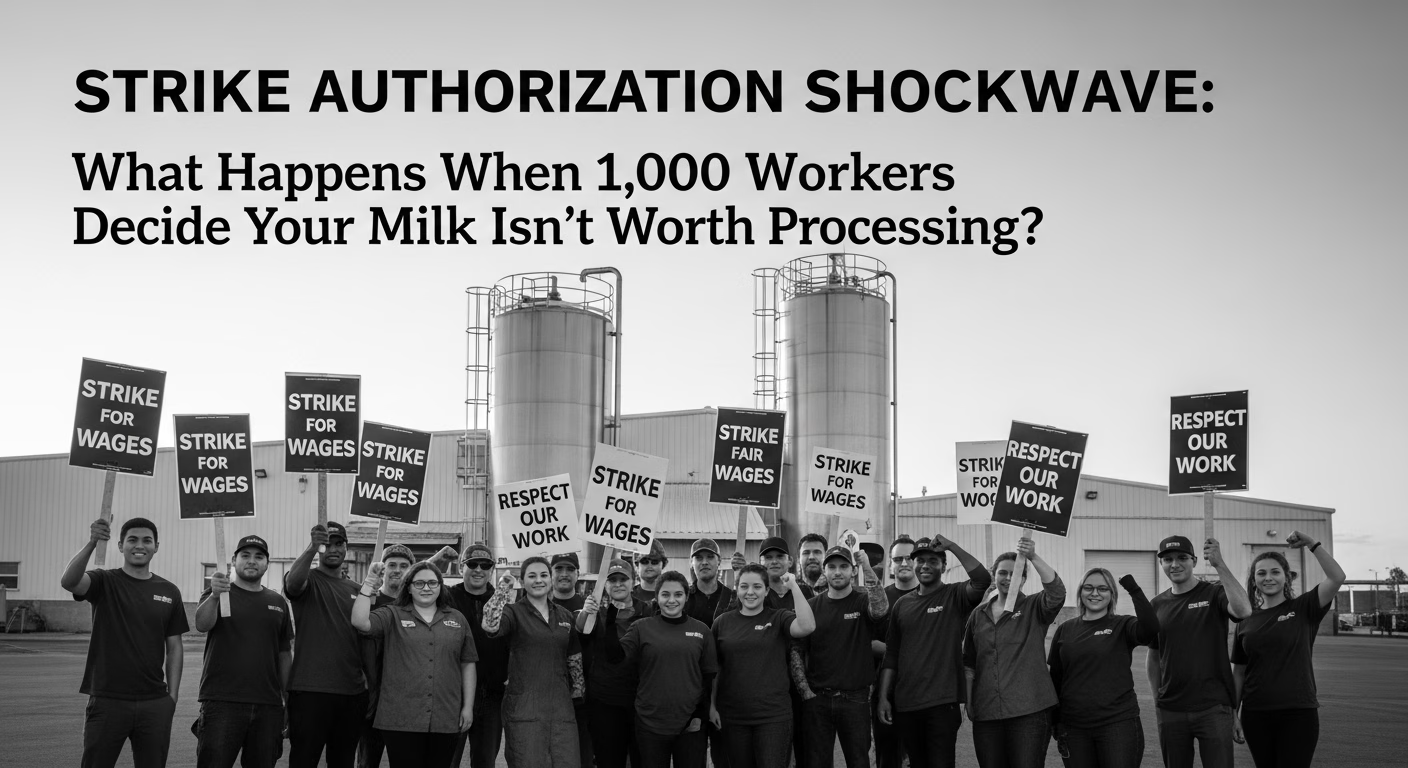
Here’s a wake-up call every dairy producer needs to hear: Over 1,000 Teamsters just voted to authorize strikes against Dairy Farmers of America—the cooperative that processes 29% of America’s milk supply. While you’re worried about feed costs and milk prices, the workers who actually handle your product are ready to walk off the job, potentially forcing you to dump millions of pounds of milk. Are you planning like your milk pickup is guaranteed forever?
What happens when the people who process your milk decide your cooperative doesn’t deserve their labor? You’re about to find out because more than 1,000 Teamsters working at Dairy Farmers of America facilities just authorized strikes that could paralyze nearly one-third of US milk production.
This isn’t some distant labor dispute you can ignore. This is a calculated assault on the dairy industry’s most vulnerable pressure point—and if you think it won’t affect your operation, you’re dangerously wrong.
Why Every Dairy Producer Should Be Losing Sleep Over This
Let’s cut through the noise and focus on what really matters. DFA isn’t just another milk buyer—they’re the 800-pound gorilla controlling 65.4 billion pounds of milk annually. When Lou Villalvazo, Chairman of DFA’s National Bargaining Committee, says, “Our members are ready to walk,” he’s holding a gun to the head of your entire livelihood.
Here’s the brutal math: DFA handles milk from operations across California, Colorado (Henderson, Greeley, Fort Morgan), Minnesota, New Mexico, and Utah. If even one major facility shuts down, the domino effect hits immediately. Your cows don’t care about labor disputes—they keep producing milk every 12 hours whether there’s somewhere to send it or not.
Think about your current storage capacity. How many days can you hold milk if pickup stops? Two days? Three? After that, you dump product down the drain while watching your cash flow evaporate.
The union knows exactly what they’re doing. They’ve warned that strikes at “just one or two” DFA facilities could trigger major supply chain problems. This isn’t bluffing—it’s dairy economics 101.
The Automation Demand That Changes Everything
Most coverage is missing here: This isn’t just about wages and benefits. The Teamsters are demanding “protection against job displacement caused by automation”—and that single demand could reshape how every dairy operation approaches technology for the next decade.
DFA has invested heavily in facilities like their Garden City, Kansas plant, designed for 24/7 continuous operation with minimal human intervention. If the union succeeds in securing broad automation protections, expect similar demands to ripple across every dairy processor in North America.
Why This Matters for Your Operation: Your milk buyer’s labor agreements directly impact your farm’s technology timeline. If processors slow automation adoption due to labor pressure, efficiency gains that could lower your processing costs and improve premiums for quality components are delayed.
Are you factoring labor relations into your technology investment decisions? Because you should be. The outcome of this dispute will influence everything from robotic milking adoption to automated feeding systems across the entire industry.
The Financial Reality: DFA Can Afford to Fight or Settle
Let’s examine the numbers that really matter. DFA reported $24.5 billion in net sales and $107.9 million in net income for 2022. They began in 2024, exceeding projected earnings for both January and February.
The union’s argument about DFA’s “ability to pay” is compelling. When Peter Rosales, a Local 630 shop steward, says, “We know how much money DFA makes, and we know what we deserve,” he’s pointing to over $100 million in annual net income.
But here’s the strategic calculation DFA faces: Settling quickly might resolve the immediate crisis but could set precedents for future negotiations across the entire food processing sector. Other companies are watching to see whether aggressive union tactics against financially strong cooperatives prove successful.
Why This Matters for Your Operation: Four Critical Questions
1. Supply Chain Vulnerability Assessment How many days can your operation survive without milk pickup? Most farms have 1-2 days of storage capacity. If you’re at single-day capacity, you face immediate dumping decisions during any disruption.
2. Alternative Buyer Relationships Do you have relationships with alternative milk buyers? The cost of split milk pickup is nothing compared to dumping milk worth $21+ per hundredweight.
3. Technology Adoption Timeline: Technology costs and availability will rise if automation protection becomes standard in labor agreements. Current financing at favorable rates may look generous compared to future constrained supply.
4. Contract Force Majeure Provisions Have you reviewed your milk marketing agreements for language covering labor disputes? Understanding your rights and obligations during supply disruptions could save thousands of dollars.
The Domino Effect You Can’t Ignore
Think of regional concentration as having all your breeding stock in one barn during a disease outbreak—convenient for efficiency and catastrophic for risk management.
Colorado’s dairy processing concentration creates a particular vulnerability:
- Henderson DFA facility: Increased daily capacity by 40% in recent expansions
- Fort Morgan operations: Processing 2.5 million pounds daily
- Greeley region: Combined processing of 6.5+ million pounds daily
A Colorado strike wouldn’t just impact DFA. The state’s concentration of large-scale operations, including robotic dairies milking nearly 4,000 cows, means processing disruptions would immediately force high-volume producers to make impossible choices about where to send their milk.
What Smart Producers Are Doing Right Now
Emergency Storage Assessment: Calculate your critical storage timeline. If you’re currently at 1.5 days capacity, portable tanks can extend that to 4-5 days. They lease for approximately $0.003/pound—cheap insurance against catastrophic loss.
Buyer Diversification: Don’t put all your milk in one cooperative’s tank truck. Develop relationships with alternative buyers now, before you need them. The cost of managing split loads is minimal compared to dumping premium milk.
Technology Acceleration: If automation protection becomes standard in labor agreements, equipment costs and availability will increase. Lock in current pricing for planned investments while supply and financing remain favorable.
The Broader Industry Transformation
This dispute represents something larger than labor negotiations—it’s a defining moment for how the dairy industry balances innovation, worker rights, and operational efficiency.
The resolution will establish precedents for:
- Automation implementation timelines across food processing
- Worker protection models that other unions will emulate
- How cooperatives balance farmer-owner interests with workforce demands
International competitors are watching closely. If US labor agreements constrain automation adoption, it hands competitive advantages to countries with more flexible technology implementation.
The Bottom Line: Prepare Now or Pay Later
The Teamsters have demonstrated they understand exactly where the dairy industry is vulnerable. Their strategic targeting of DFA’s cooperative structure, geographic concentration, and perishable supply chain shows sophisticated thinking that other unions will likely emulate.
Immediate action items for smart producers:
This Week:
- Assess your emergency storage capacity and financing options
- Review force majeure clauses in all milk marketing contracts
- Identify and contact alternative milk buyers in your region
This Month:
- Diversify milk marketing agreements to reduce single-buyer dependency
- Lock in pricing for planned automation investments
- Model cash flow impacts of 7-14 day milk marketing disruptions
This Quarter:
- Secure credit lines for potential short-term disruptions
- Hedge nearby milk prices at current levels
- Evaluate labor-reducing technologies that may become costlier post-settlement
The fundamental question every dairy producer must answer: Are you planning like your milk pickup is guaranteed forever, or are you preparing for the reality that labor disputes can shut down your operation’s lifeline overnight?
Your cows are depending on you to plan ahead. The time for contingency thinking is now before the first truck stops rolling, and you’re watching liquid profit disappear down the drain.
The Teamsters have just shown you exactly how vulnerable your operation really is. What are you going to do about it?
Based on the search results provided, here’s the “Learn More” section using actual articles from The Bullvine website:
Learn More:
- DFA’s Union War: Is Your Milk Check Collateral Damage in This Billion-Dollar Battle? – Reveals tactical strategies for building supply chain resilience against labor disruptions, including contract analysis, outlet diversification, and early warning systems that protect your operation when processors face union battles.
- 2025 Dairy Market Reality Check: Why Everything You Think You Know About This Year’s Outlook is Wrong – Demonstrates how component optimization and Federal Milk Marketing Order reforms create profit opportunities for strategic producers while trade policy uncertainty threatens $1.90/cwt price reductions for unprepared operations.
- Robotic Milking Revolution: Why Modern Dairy Farms Are Choosing Automation in 2025 – Explores how AI-enhanced automation delivers $1.75/cwt cost advantages and predictive health monitoring that prevents clinical cases, directly addressing the automation protection demands driving current labor disputes.
 The Sunday Read Dairy Professionals Don’t Skip.
 The Sunday Read Dairy Professionals Don’t Skip.
Every week, thousands of producers, breeders, and industry insiders open Bullvine Weekly for genetics insights, market shifts, and profit strategies they won’t find anywhere else. One email. Five minutes. Smarter decisions all week.




