Archive for dairy cooling systems

Protect Milk Production: Climate Adaptation Strategies That Preserve Your Yields

Heat stress is bleeding your operation dry to the tune of $1.2-1.5 billion annually across the U.S. dairy industry—and it’s getting worse.

Executive Summary

The dairy industry’s biggest lie? That heat stress is just a seasonal inconvenience you can cool your way out of. New comprehensive research reveals that climate stress is already bleeding $1.2-1.5 billion annually from U.S. dairy operations, with smaller farms losing 1.6% of annual yield compared to larger operations’ ability to limit losses through superior cooling infrastructure. Every single unit increase in Temperature-Humidity Index above 68 triggers a devastating 3.25% drop in energy-corrected milk yield while reproductive performance crashes from 83% to 37% fertilization rates in heat-stressed cows. Global analysis shows that even the most sophisticated cooling systems hit a critical “adaptation gap,” offsetting at best 40-50% of production losses when they’re needed most during extreme heat events. The farms that will dominate the next decade won’t be those with the highest peak production potential—they’ll be the ones with the most consistent performance despite volatile climate conditions. Stop betting your farm’s future on fans and sprinklers alone, and start implementing the integrated three-pillar adaptation framework that’s already protecting progressive operations worldwide.

Key Takeaways

  • Challenge conventional cooling wisdom with economic precision: Traditional reactive cooling strategies demonstrate sharply diminishing returns during severe heat events, with effectiveness dropping below 40% when THI exceeds critical thresholds. Smart producers are prioritizing holding pen cooling systems that deliver 2-3 year payback periods through targeted intervention at the most dangerous heat stress environment on most dairies.
  • Unlock transgenerational profit protection through dry cow cooling: The industry’s most overlooked ROI opportunity lies in cooling close-up dry cows, as daughters from heat-stressed dams produce significantly less milk across multiple lactations. This transgenerational damage creates a compounding economic liability that progressive operations are preventing through moderate cooling investments that protect multi-year productivity.
  • Integrate heat tolerance genomics into your breeding program immediately: Holstein and Jersey sires now carry genomic breeding values for heat stress performance, allowing producers to incorporate thermotolerance into existing AI programs without additional service costs. The SLICK gene offers targeted genetic enhancement for natural heat dissipation, positioning herds for sustained competitive advantage as climate conditions intensify.
  • Implement precision summer nutrition for immediate DMI recovery: Heat stress triggers a 4.13% drop in dry matter intake per THI unit increase, but strategic ration reformulation with rumen-protected fats and electrolyte supplementation can offset production losses while maintaining optimal milk components during peak stress periods.
  • Execute strategic investment prioritization for maximum climate ROI: Current market fundamentals support climate adaptation investments with immediate interventions like water system optimization and feeding time adjustments providing measurable production benefits, while long-term genetic selection and advanced ventilation systems position operations for sustained competitiveness as projected 30% increases in heat stress losses materialize by 2050.
heat stress management, dairy cooling systems, milk production losses, climate adaptation strategies, dairy farm ROI

You walk into your barn on what should be a routine July morning. Your top-producing Holsteins are already panting, clustered around water troughs, avoiding the feed bunk. By evening, your milk tank tells the brutal truth: another day of lost production, compromised reproduction, and vanishing profits.

This isn’t just a bad weather story. This is your new reality.

The modern dairy cow is a biological paradox—genetically engineered for extraordinary milk production, yet metabolically programmed to be vulnerable to heat stress. Every unit of Temperature-Humidity Index (THI) above 68 triggers a cascade of losses: energy-corrected milk yield drops 3.25%, and dry matter intake plummets 4.13%. These aren’t temporary setbacks—the damage lingers 7-12 days after conditions normalize.

But here’s what most producers miss: the reproductive carnage is where the real money disappears. Fertilization rates crash from 83% in comfortable cows to a devastating 37% in heat-stressed animals. At $35-40 per AI service, that’s not just a fertility problem—it’s a financial hemorrhage.

The Economic Reality Nobody Talks About

Let’s cut through the industry pleasantries and discuss the numbers that matter to your survival. The U.S. dairy sector is losing $1.2 billion to $1.5 billion annually due to the impacts of heat stress. That’s not some distant projection—that’s money vanishing from farm accounts right now.

For your operation specifically, A 500-cow herd averaging 80 pounds per cow daily faces approximately $270 in daily revenue loss for every THI unit increase during heat stress events. Multiply that across extended summer periods, and you’re looking at tens of thousands in lost income.

The biological assault is systematic and merciless. Modern high-producing dairy cows operate within a thermoneutral zone of just 5°C to 20°C. Step outside that narrow comfort range, and you’re watching your investment deteriorate in real-time.

Here’s the part that should terrify every producer: Heat stress doesn’t just steal today’s milk—it sabotages tomorrow’s production. When pregnant cows overheat during late gestation, their daughters suffer reduced lifetime productivity across multiple lactations. Their granddaughters also show decreased yields. You’re not just losing current production; you’re mortgaging your herd’s genetic future.

Why Your Current Strategy Is Failing

Most producers treat heat stress like a facility’s problem. Install larger fans, add more sprinklers, and increase ventilation. This approach is fundamentally flawed.

Even the most sophisticated cooling systems demonstrate a critical “adaptation gap”—they can offset about 50% of losses during moderate heat, but their effectiveness drops below 40% during severe stress events. When you need them most, they’re throwing in the towel.

The physics are unforgiving: Your high-producing cows are biological furnaces generating massive internal heat loads. A Holstein producing 100 pounds daily creates enough metabolic heat to warm a small house. External cooling can only do so much against that internal inferno.

Common cooling mistakes bleeding your budget:

  • Continuous sprinkling instead of cycling — Creates humidity without cooling; cycle 2 minutes wet, 13 minutes off
  • Ignoring water access — Heat-stressed cows increase consumption by 50% or more; you need at least 2 inches of linear trough space per cow
  • Neglecting the holding pen — The most dangerous heat stress environment on most dairies due to stocking density
  • Forgetting dry cows — The most expensive oversight, damaging unborn calves for life

The Integrated Adaptation Framework That Actually Works

Smart producers have moved beyond reactive cooling to proactive adaptation. The winning strategy demands three synchronized pillars: facility optimization, genetic selection, and precision management.

Pillar 1: Strategic Facility Investment

Start with the highest-return targets:

Prioritize your holding pen. This is the epicenter of heat stress intensity. High-capacity fans, combined with soaker systems in the parlor holding area, deliver the most immediate production protection per dollar invested.

Master the fan-and-soaker combination. In North America’s humid climates, this combination outperforms every other cooling method. Install high-velocity circulation fans over freestalls and feed bunks, coupled with low-pressure soakers operating on precise cycles.

Optimize water access religiously. Provide abundant, clean water with high flow rates. Inadequate water access during heat stress is like trying to fight a fire with a garden hose—futile and expensive.

Pillar 2: Genetic Selection for Climate Reality

The dairy industry has bred itself into a corner. Decades of selecting cows purely for milk yield have created animals with extremely high metabolic rates, which generate more internal heat. We accidentally selected against heat tolerance.

Actionable genetic strategies:

Incorporate heat tolerance genomic evaluations. Holstein and Jersey sires now carry breeding values for heat stress performance. Start integrating these into your AI decisions immediately.

Consider the SLICK gene. This naturally occurring mutation creates a short, sleek hair coat that enhances heat dissipation. SLICK Holsteins maintain lower body temperatures and higher milk production under heat stress.

Understand the trade-off. Heat tolerance has a negative genetic correlation with milk production parameters. Selecting for high production actively works against heat tolerance. As heat stress intensifies, this trade-off increasingly favors resilience over raw production potential.

Pillar 3: Precision Management Revolution

Summer nutrition requires sophisticated reformulation. The goal is to increase energy density to offset lower dry matter intake without triggering acidosis. Add rumen-protected fats, ensure adequate effective fiber, and supplement critical electrolytes lost through increased sweating.

Timing is everything. Shift main feeding times to cooler evening and early morning hours. Increase feed push-up frequency to ensure fresh availability and discourage slug-like feeding patterns that increase the risk of acidosis.

Reduce stocking density strategically. Overcrowding increases heat load through animal-to-animal radiant heat transfer. Target high-risk pens housing fresh cows and top producers.

Investment Priorities That Maximize Returns

Not all adaptations deliver equal returns. Here’s your strategic investment hierarchy:

Immediate (High ROI, Universal Application):

  1. Holding pen cooling — Addresses the most intense heat stress environment
  2. Water system optimization — Supports increased consumption at minimal cost
  3. Feeding time adjustments — Management change with zero capital requirement

Medium-term (Moderate Cost, High Impact):

  1. Fan-and-soaker systems over feed bunks and freestalls
  2. Dry cow cooling — Protects transgenerational productivity
  3. Summer ration reformulation with qualified nutritionist support

Long-term (High Cost, Strategic Value):

  1. Heat tolerance genetic integration — Fundamental herd improvement
  2. Advanced ventilation systems — For severe climate regions
  3. Crossbreeding evaluation — In consistently hot climates

The Bottom Line: Your Competitive Advantage Depends on Climate Readiness

The harsh reality: Heat stress losses are projected to increase approximately 30% by 2050 under current climate models. The farms that will dominate the next decade won’t necessarily have the highest peak production potential—they’ll have the most consistent performance despite volatile environmental conditions.

Your strategic action plan:

  1. Assess current vulnerability using THI monitoring and production tracking during heat events
  2. Implement immediate adaptations, starting with holding pen cooling and water optimization
  3. Develop a long-term resilience strategy integrating facility improvements, genetic selection, and precision management

The economics are crystal clear: Current heat stress costs the industry $1.2 to $ 1.5 billion annually. Proactive adaptation costs less than reactive crisis management. The operations that invest in climate resilience today will capture market share from those that wait.

Start your climate adaptation assessment immediately. Calculate your THI exposure, evaluate the effectiveness of your cooling infrastructure, and identify your highest-risk areas. The data proves that proactive adaptation isn’t just about animal comfort—it’s about securing your farm’s competitive future.

The question isn’t whether climate stress will affect your operation. The question is whether you’ll be positioned to profit while others struggle. Your next milk check depends on the decisions you make right now.

Complete references and supporting documentation are available upon request by contacting the editorial team at editor@thebullvine.com.

Learn More:

Join the Revolution!

Join over 30,000 successful dairy professionals who rely on Bullvine Weekly for their competitive edge. Delivered directly to your inbox each week, our exclusive industry insights help you make smarter decisions while saving precious hours every week. Never miss critical updates on milk production trends, breakthrough technologies, and profit-boosting strategies that top producers are already implementing. Subscribe now to transform your dairy operation’s efficiency and profitability—your future success is just one click away.

NewsSubscribe
First
Last
Consent

Beat the Heat: How Elite Dairies Are Weaponizing Genetics and Smart Tech to Turn Summer into Profit

Stop believing the 80°F heat stress myth. New research proves 68°F THI destroys milk yield while elite dairies profit from thermal genetics.

Heat stress isn’t just stealing your milk check – it’s sabotaging your genetics for generations while your competitors master the integration of heat-tolerant genomics, precision cooling, and smart monitoring to protect $700 per cow annually. With University of Illinois research documenting $245 million in industry losses and climate projections showing 100-300 annual heat stress days by 2050, the operations that crack the heat stress code will dominate markets while others watch profits evaporate. The difference? A systematic approach combining SLICK gene selection, precision THI monitoring, and facility integration that delivers compound returns protecting both immediate cash flow and generational genetic potential.

Summer heat hits dairy operations like a poorly timed breeding decision – the damage compounds for years after you think the problem’s over. While you’re debating whether 75°F “feels hot,” your highest-producing genetics are already gasping like fresh heifers in their first lactation.

Here’s a question that should shake you out of your comfort zone: What if your grandfather’s heat management wisdom is actually bankrupting your operation one summer day at a time?

A groundbreaking University of Illinois study analyzing over 56 million production records from 18,000 dairy farms revealed heat stress led to a cumulative loss of approximately 1.4 billion pounds of milk over five years, costing the industry a staggering $245 million in revenue (Extreme heat impacts dairy production, small farms most vulnerable). But here’s what should really keep you awake at night – that heat-stressed dry cow panting under inadequate cooling isn’t just costing this lactation. She’s programming her daughter’s genetic potential backward by decades.

Why Your Industry Leaders Have Been Lying About Heat Thresholds

The Industry’s 80°F Heat Stress Myth vs Scientific Reality
Threshold TypeTHI ValueTemperature at 50 RHImpact Level
Traditional Industry Claim8084Mild concern
High-Producing Holstein Reality6868Production decline begins
Research Consensus7275Heat stress confirmed
Emergency Level8489Emergency

Here’s the industry’s most expensive deception: waiting until 80°F to worry about heat stress. Modern-day breeds of dairy cattle are the result of intensive genetic selection aimed primarily at increasing milk productivity, but this increased productivity is genetically linked to physiological traits such as greater metabolic rates and increased feed intake, both of which augment endogenous heat generation, making high-productivity breeds particularly susceptible to heat stress (Global projections of heat stress at high temporal resolution).

The brutal truth that breeding companies don’t want to discuss: While they’ve marketed genetic progress in milk production, they’ve simultaneously created thermal disasters waiting to happen. Every additional pound of milk production generates increased metabolic heat, yet no major breeding company has prominently featured heat tolerance in their marketing materials until recently.

Why This Matters for Your Operation: Your best genetics – the ones with superior genomic estimated breeding values for production traits – suffer thermal stress at just 68°F Temperature Humidity Index while you’re still comfortable in short sleeves. Heat stress causes behavioral changes, including increased water intake and reduced dry matter intake, along with physiological responses, including electrolyte imbalances, acid-base disruptions, respiratory alkalosis with metabolic acidosis, and disturbances in sodium homeostasis (Heat Stress in Dairy Cows: Impacts, Identification, and Mitigation).

Consider this economic reality: A 500-cow operation experiencing just 30 days of inadequate heat management at 70°F THI could lose 150,000 pounds of milk annually. At current pricing, that’s $31,650 in lost revenue – enough to fund significant cooling infrastructure improvements that most operations refuse to make.

How the Genetics Industry Created This Thermal Crisis

Here’s the uncomfortable truth your AI technician won’t tell you: The same genetic selection that created your high-producing herd also engineered thermal vulnerability into every animal. For small farms, taking a 1.6% hit is equivalent to operating unpaid for nearly six days yearly solely because their cows are overheating (Small Dairy Farms Suffer more from Heat Stress), while large operations with sophisticated cooling systems maintain more stable production levels.

However, the most progressive operations have discovered something revolutionary: genomic selection for heat tolerance reduces thermal stress and improves overall animal efficiency. Research published in Nature demonstrates that dairy cattle predicted by genomic breeding values to be heat tolerant have less decline in milk production and reduced increases in core body temperature during simulated heat wave events compared to cows predicted to be heat susceptible (Genomic Selection Improves Heat Tolerance in Dairy Cattle).

Cooling System Return on Investment Comparison
Genetic TypeRumen Temperature Reduction CelsiusMilk Production Advantage PercentReproductive PerformanceHeat Tolerance RatingEconomic Benefit Per Cow
SLICK Gene Carriers0.7515Superior9700
Non-SLICK Controls00Standard50

The SLICK gene represents the most dramatic single-gene solution discovered so far. LIC New Zealand research found that cows carrying the SLICK gene had lower rumen temperatures (0.5-1.0°C) compared to their non-SLICK counterparts when the Temperature Humidity Index exceeded 73 (SLICK – developing heat tolerant dairy animals). After 9 years of breeding, LIC now has SLICK sires with breeding worth approaching that of the best dairy sires in the New Zealand industry, with only 1/32nd average content of Senepol genes (SLICK – developing heat tolerant dairy animals).

Are you breeding for production at the expense of thermal resilience? This question challenges every genetic selection decision you’ve made while your breeding company representatives focus solely on milk, fat, and protein numbers.

Validated genetic markers beyond SLICK include SNPs in the TLR4, GRM8, and SMAD3 genes, which are proven predictors of both milk production and thermotolerance in heat-stressed Holstein cows (Genetic Markers Associated with Milk Production and Thermotolerance). Heat-stressed Holstein cows with favorable markers were able to reduce rectal temperature and respiratory rate, which allowed them to maintain adequate milk production levels (Genetic Markers Associated with Milk Production and Thermotolerance).

What Your Cooling Strategy Consultant Isn’t Telling You

Here’s the uncomfortable truth about your current cooling strategy: You’re probably spending more on genetic testing with less ROI than you’d get from proper cooling infrastructure. Most operations are still managing heat stress like it’s 1995, relying on basic fans and hoping for mild summers.

The economic reality is brutal but clear: While breeding companies charge thousands for genomic testing that may or may not improve production, comprehensive cooling infrastructure delivers measurable returns through avoided production, reproductive, and health losses. Yet most operations resist investing in proven cooling technologies while eagerly purchasing genetic products with uncertain outcomes.

Cooling SystemPayback Period YearsBenefit Cost RatioInvestment Per CowAnnual Return Per Cow
Dry Cow Cooling (existing barn)0.273.15150556
Dry Cow Cooling (new barn)5.681.452000352
Tunnel Ventilation3.21.75332175
Basic Fan Systems2.11.25100125
Precision Soaking1.82200222

Precision cooling isn’t about more fans but strategic placement and timing. Advanced soaking systems can reduce water usage by 50-70% compared to traditional setups while providing more effective cooling through precision cycling – short, effective soaking periods (30-45 seconds) followed by longer fan-only drying periods (4-5 minutes) (Heat Stress 2.0: Why Your Current Cooling Strategy Is Costing You Big Money).

Why This Matters for Your Operation: Every degree above 68°F THI costs you money through reduced milk production, compromised reproduction, and increased health problems. Yet most operations wait for visible panting before implementing cooling measures – by then, significant economic damage has already occurred.

Can Technology Predict What Your Eyes Can’t See?

What if you could detect heat stress 24 hours before your cows show any visible symptoms? Recent advances in sensor technologies and wireless transmission enable body surface temperature and respiration rate measurement through wearable devices, providing real-time monitoring for heat strain-related data (Recent Advances on Early Detection of Heat Strain in Dairy Cows).

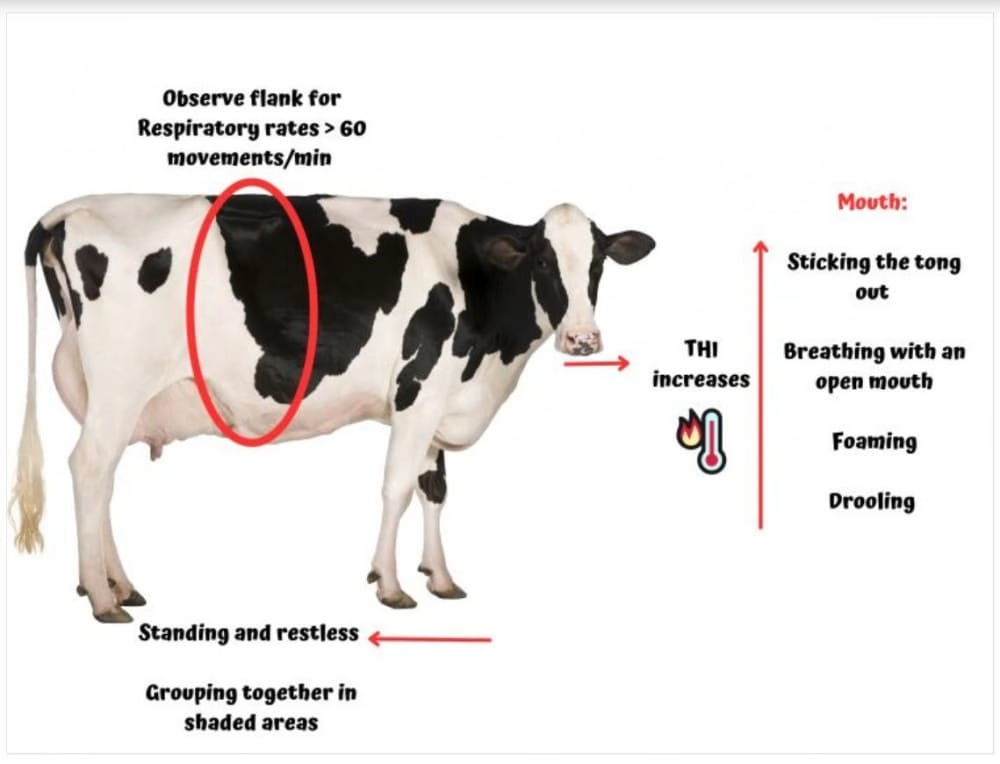
Current research in New Zealand uses on-farm technology, including sensory data collected from collars and rumen boluses, to understand individual cow heat stress responses, identifying indicators such as respiration rate, eating and drinking patterns, activity levels, rumination, and rumen temperature (Heat Stress and Technology).

Visual indicators of heat stress in dairy cows, including increased respiratory rates, restless behavior, and oral symptoms like open-mouth breathing and drooling

Body surface temperature and respiration rate are concluded to be the best early indicators of heat strain due to their high feasibility of measurement and sensitivity to heat stress (Recent Advances on Early Detection of Heat Strain in Dairy Cows). Combined with the internet of things technologies, comprehensive strategies based on both animal- and environment-based indicators are expected to increase the precision of early detection (Recent Advances on Early Detection of Heat Strain in Dairy Cows).

But here’s what technology vendors won’t tell you: The existing thresholds should be used carefully considering differences in experimental conditions and animal information, with further studies required to evaluate and customize thresholds based on different influencing factors (Recent Advances on Early Detection of Heat Strain in Dairy Cows).

Why Small Farms Are Systematically Being Eliminated

Time PeriodHeat Stress Days Per YearMilk Loss Increase PercentSmall Farm VulnerabilityEconomic Impact Billions
2020s Current450High1.2
2030s Projection6515Very High1.8
2040s Projection8525Critical2.4
2050s Projection12030Severe3.1

Here’s the uncomfortable truth the industry won’t discuss: Heat stress is systematically eliminating small family farms while corporate operations invest millions in climate-controlled facilities. University of Illinois research found that while average milk yield losses due to heat stress amount to about 1% annually, smaller farms see nearly twice this loss (Small Dairy Farms Suffer more from Heat Stress).

“To some extent, it’s only 1.6%. But if you’re really making every dollar from your paycheck count because you’re living in a time with high costs, then 1.6% of your paycheck being gone in a given year is meaningful,” explains study co-author Marin Skidmore (Small Dairy Farms Suffer more from Heat Stress).

Are we creating a system where only corporate dairies can afford to stay cool? This question should challenge every policy maker and industry leader who claims to support family farming while promoting genetic selection strategies that increase thermal vulnerability.

The economic barriers are real: Having access to enough capital to make really big investments is difficult, and grants or loans to help small farms adopt management technologies could be one avenue to help small farms cope with heat stress and keep them competitive (Small Dairy Farms Suffer more from Heat Stress).

The consolidation pressure created by heat stress management costs is fundamentally reshaping American dairy farming. While large operations can justify $75,000+ investments in precision cooling, small farms need cost-effective solutions that don’t require corporate-level capital – yet the industry provides few viable options.

Tunnel ventilation system featuring a row of large fans installed on the side of a dairy barn to combat heat stress 

The Real Cost of Genetic Sabotage in Your Maternity Pen

Here’s the genetic sabotage happening in your maternity pen right now: Heat-stressed dry cows program their daughters for lifetime underperformance through epigenetic mechanisms that affect mammary development, immune function, and metabolic efficiency.

The mathematical brutality is staggering: Research documents that heat-stressed daughters produce significantly less milk throughout their productive lives. An 8-pound daily reduction across a 305-day lactation equals 2,440 pounds of lost milk per daughter. At current pricing, that’s $515 in lost revenue per lactation – before considering reproductive impacts, longevity effects, and component losses.

Heat stress can lead to reduced mammary growth during the dry period, with increased prolactin concentration causing decreased expression of prolactin receptor genes in the mammary gland, liver, and lymphocytes, resulting in impaired lactogenesis and reduced milk production in subsequent lactations (Heat Stress in Dairy Cows: Impacts, Identification, and Mitigation).

Every pregnant cow panting under inadequate cooling isn’t just costing this lactation – she’s programming her daughter’s genetic potential backward by decades. Yet most operations focus on immediate cooling comfort rather than protecting long-term genetic investments.

The Bottom Line: Your Competitive Future Depends on Decisions You Make Today

Heat stress management has evolved from seasonal comfort measures into sophisticated systems determining competitive survival. With global projections showing increasing heat stress frequency and intensity, thermal resilience separates industry leaders from casualties. The study projects that the frequency of extreme heat days will increase, potentially raising milk yield losses by about 30% within the next 25 years (Small Dairy Farms Suffer more from Heat Stress).

Your action plan starts now:

  1. Challenge your genetic selection strategy – demand heat tolerance data from your breeding company and prioritize SLICK gene carriers alongside production traits
  2. Calculate your thermal losses honestly – quantify production drops, reproductive impacts, and component losses during heat events using verified THI data
  3. Invest in precision cooling with proven ROI – move beyond basic fans to systems delivering measurable returns through strategic placement and timing
  4. Implement early warning monitoring – detect thermal stress 24 hours before visible symptoms devastate performance and genetic potential
  5. Protect genetic investments systematically – ensure comprehensive dry cow cooling to prevent generational performance sabotage

Here’s the critical question every dairy manager must answer: Are you building thermal resilience into your operation’s DNA, or are you gambling your genetic future on increasingly unreliable weather patterns while your breeding company profits from thermal vulnerability?

The choice is stark: invest in comprehensive thermal management now or watch genetic potential and profit margins evaporate with every heat wave. The most successful operations have already been decided. They’re building herds that thrive when others merely survive, creating generational competitive advantages that compound with every breeding decision.

Climate change isn’t slowing down. With modern genetics suffering thermal stress at 68°F THI and projections showing dramatic increases in extreme heat events, thermal resilience is no longer optional – it’s survival. The technology exists. The genetics are available. The research is conclusive. The only question is whether you’ll implement comprehensive heat management before your competition does or whether you’ll be another casualty of an industry that is bred for production while ignoring the thermal consequences.

In five years, the operations that master thermal resilience today will set milk prices while others struggle to survive another summer. The genetic sabotage happening in your maternity pen right now will determine whether your operation thrives or merely survives the climate challenges ahead.

KEY TAKEAWAYS

  • Genetic Selection Revolution: SLICK gene carriers maintain 0.5-1.0°C lower rumen temperatures when THI exceeds 73, while genomic selection for heat tolerance improves feed efficiency (+0.45 correlation) and fertility (+0.25 correlation) alongside thermal resilience
  • Economic Survival Strategy: Comprehensive cooling infrastructure delivers 5.67-year payback with 1.45 benefit-cost ratio, while tunnel ventilation justifies $332 per cow space investment through measurable milk loss prevention compared to basic fan systems
  • Technology-Driven Early Detection: Advanced sensor systems detect heat stress 24 hours before visible symptoms through body surface temperature and respiration monitoring, preventing production losses before they devastate milk checks and genetic potential
  • Generational Genetic Protection: Heat-stressed dry cows program daughters for lifetime underperformance (8-10 pounds daily reduction), costing $515 per lactation in lost revenue while compromising genetic investments made through genomic testing and superior sire selection
  • Industry Consolidation Reality: Small farms face systematic elimination as heat stress costs require corporate-level capital investments, creating urgent need for cost-effective thermal management solutions that protect family farming operations from climate-driven consolidation pressure

EXECUTIVE SUMMARY

Your breeding company has been selling you genetic disasters disguised as production improvements, creating cattle that suffer thermal stress at just 68°F while marketing 80°F comfort zones. University of Illinois research analyzing 56 million production records revealed $245 million in industry losses, with small farms losing 1.6% of annual yield – equivalent to working unpaid for six days yearly because their cows can’t handle heat. Elite operations are weaponizing SLICK gene carriers and heat tolerance genomic breeding values to maintain production while competitors watch profits evaporate with every heat wave. LIC New Zealand proves you don’t sacrifice production for thermal resilience, developing SLICK sires with breeding worth approaching top industry performers using only 1/32nd Senepol genetics. With climate projections showing 100-300 annual heat stress days by 2050, thermal resilience separates tomorrow’s market leaders from casualties. Stop gambling your genetic future on increasingly unreliable weather patterns and start building herds that thrive when others merely survive.

Learn More:

Join the Revolution!

Join over 30,000 successful dairy professionals who rely on Bullvine Weekly for their competitive edge. Delivered directly to your inbox each week, our exclusive industry insights help you make smarter decisions while saving precious hours every week. Never miss critical updates on milk production trends, breakthrough technologies, and profit-boosting strategies that top producers are already implementing. Subscribe now to transform your dairy operation’s efficiency and profitability—your future success is just one click away.

NewsSubscribe
First
Last
Consent
Send this to a friend